Showing posts with label marvel cinematic universe. Show all posts

Monday, December 19, 2022

December 20, 1940: Captain America Debuts

December 20, 1940: Captain America Comics #1, with a publication date of March 1941, is published. It will still be nearly a full year before America enters World War II, but the cover shows the titular superhero giving Chancellor Adolf Hitler of Nazi Germany a right cross. The publisher is Timely Comics, which will become Marvel Comics in 1961.

As created by writer Joe Simon (1913-2011) and artist Jack Kirby (1917-1994), both of them Jewish and with a vested interest in the defeat of the Nazis, Steve Rogers is a young man from Brooklyn, New York City, rejected for service in the U.S. armed forces because he's too skinny and weak. But his persistent patriotism gets him recommended for a new project, the U.S. Army's "super-soldier serum."

It's a success, and now, he is, ironically, the Aryan ideal: A tall, blond, blue-eyed man with great strength and superior reflexes. But the scientist who developed the serum is killed by a Nazi saboteur before he can use the serum, whose formula only he knows, on anyone else. There will be no army of American super-soldiers, just one, and Steve becomes "Captain America."

Under both his real name (with the mere rank of Private) and as Cap, Steve fights the Nazis all through World War II, along with his Army camp's teenage mascot, James Buchanan "Bucky" Barnes, acting, to use an analogy to DC Comics, as Robin to his Batman. They fight Nazi super-soldiers such as the Red Skull and Baron Zemo, and lesser threats. Steve's star-spangled shield, whose design was adjusted from the first issue, becomes an item of offense as well as defense, as he becomes an expert at throwing it.
Cap became Timely's most popular character, and in 1944, he became the 1st character from what would become Marvel to appear in the movies, in a serial where he was portrayed by Dick Purcell. But after World War II, superhero stories declined in popularity, and Cap's appeal faded with the Nazis no longer a threat. The series was discontinued in 1950.
Dick Purcell as Cap

In 1964, Marvel revived the character, making him part of their superhero team The Avengers. They explained his absence by saying that he and Bucky were believed to have died on a mission just before V-E Day, May 8, 1945. Cap ended up frozen in the North Atlantic Ocean, revived by the Avengers, and had to adjust to a modern world, knowing that someone like him was needed again. It would be decades before Marvel explained that Bucky had survived, leaving Cap thinking that he hadn't, thus saddling him with survivor's guilt.

In addition to the Avengers, Cap forms alliances with Rick Jones, formerly sidekick to the Hulk, and who bears a freaky resemblance to Bucky (the first thing Cap noticed about him); and with Sam Wilson, a flying superhero known as the Falcon, who in 1969 became the 1st black American superhero in mainstream comics. (Black Panther debuted in 1966, but, as the king of a fictional African nation, was not American.)

After experimenting with Spider-Man and the Hulk in the late 1970s, CBS aired 2 Captain America TV-movies in 1979, starring Reb Brown with a somewhat different take on the character, one who was not involved in World War II, although his father was, and was heroic enough to be nicknamed "Captain America."
Reb Brown as a motorcyclist Cap,
complete with helmet

In 1990, a feature film was made, with Matt Salinger, son of author J.D. Salinger, playing a Cap that's revived in the present day, stunned to see that the Germans are now America's allies, but that the Red Skull has survived and leads a criminal organization, much like the comics' Hydra but not named as such in the film.
Matt Salinger as Cap

In 2001, Marvel launched the Ultimate Marvel series, with the idea of starting their legendary characters over in the present day, but otherwise getting them back to their roots. The twist with Cap was that he and Bucky started out as the same age, and as friends in Brooklyn, but that Bucky survived the war, and when Cap is thawed out in the present day, Bucky is an old man.

In 2011, the Marvel Cinematic Universe got around to Cap, releasing Captain America: The First Avenger. Chris Evans, who had previously played the Human Torch in 2 Fantastic Four movies, plays a Steve who has Bucky (Sebastian Stan) as a contemporary, and sees Bucky apparently die well before his own apparent sacrifice, but is otherwise the character previously known.
Chris Evans, the definitive Cap

The retcon (introduced in the 1960s) of his romance with British secret agent Peggy Carter, played in the MCU by Hayley Atwell, is played up, to the point where, when The Infinity Saga was finished with Avengers: Endgame, after putting the swiped Infinity Stones back to where and when they belonged, Cap stayed in the past, and lived out his life with Peggy, and, as an old man, handed his shield over to Sam Wilson (Anthony Mackie), who becomes the new Captain America.

There have been occasional DC and Marvel crossovers. One was Amalgam Comics, which imagined DC heroes combined with Marvel heroes. Batman and Wolverine became Darkclaw, Wonder Woman and Storm became Amazon, and so on. Superman and Captain America were merged to become Super-Soldier.

I'd like to believe that each company's stories exist in the other's universe -- so that Superman's hero is Captain America, and vice versa.

*

December 20, 1940 was a Friday. Baseball and football were out of season. The NBA hadn't been founded yet. And the NHL scheduled no games for this date. So there were no scores on this historic day.

Sunday, June 5, 2022

June 5, 1962: Spider-Man Debuts

June 5, 1962: Amazing Fantasy #15 is published. It was already set to be the last issue for the magazine, so there was nothing left for its publisher, Marvel Comics, to lose. So they chose to debut a new character: Spider-Man.

Created by Marvel boss and main writer Stan Lee, and artist Steve Ditko, "Spidey" was designed to be a hero that teenagers could relate to without being a child version of an adult hero like Superboy, or a sidekick to an adult hero like Batman's Robin.

Peter Parker was a nerdy, scrawny New York teenager with genius intellect and a love for science. While attending a science fair and seeing an experiment in radioactivity, a spider becomes irradiated, and bites him. The radioactivity gives Peter the proportionate strength and agility of a spider, and a "spider-sense" that acts as a warning system. He designs a substance that acts as a "spider's web," and wrist gadgets that allow him to shoot them and trap criminals.

His parents dead, Peter was raised by his Aunt May and his Uncle Ben. One day, early in his career, Spider-Man is interviewed for a local talk show. As he's leaving a man runs past, and a security guard tells Spidey he should have stopped the man, saying he'd robbed the box office. Spidey said it wasn't his problem.

When Peter gets home, he find out Uncle Ben has been murdered, and the police have the killer surrounded in a building. He goes after him in his Spidey costume, and discovers it's the robber: f Peter had stopped him, Uncle Ben would still be alive. At the end of the issue, Lee wrote, "With great power, there must also come great responsibility!" This was later retconned as advice from Uncle Ben.

Spidey was a hit immediately. It didn't save Amazing Fantasy, but it did lead to his own comic line. The Amazing Spider-Man #1 showed him auditioning to join Marvel's original superhero team, the Fantastic Four. Despite having had many adventures with them, the Avengers, and the X-Men over the decades, Spidey works best alone.

While still in high school, Peter gets a job as a photographer for a New York newspaper, the Daily Bugle. Their publisher, J. Jonah Jameson, is... complicated. On the one hand, he's a crusader to make the City better, having made his name exposing organized crime. On the other hand, he's a nasty boss, bullies his employees, including Peter, and when the city sees Spidey as a hero, "JJJ" prints editorials claiming Spidey is actually a menace who must be stopped, as giving "real heroes" a bad name -- real heroes like his son, John Jameson, an astronaut (who later becomes the unwilling villain Man-Wolf).

Peter's best friend is Harry Osborn, whose father Norman is a brilliant scientist. When an experiment goes wrong, it drives Norman insane, but it also gives him super-strength, and he becomes Spidey's greatest enemy, the Green Goblin. They fight, and the Goblin discovers Peter's dual identity. In their next fight, Peter knocks Norman out, and when Norman recovers, he has no memory of his Goblin identity.

Peter's first girlfriend is a blonde named Gwen Stacy, daughter of a hero cop. Eventually, he starts dating a redheaded aspiring actress named Mary Jane Watson, In 1971, while Peter was dating Mary Jane, daughter of Aunt May's best friend, Stan Lee agreed to work with the federal government to print an anti-drug message in The Amazing Spider-Man #s 96, 97 and 98. The Goblin returns, but, again, loses his memory after Spidey beats him.

By 1973, Spidey was back with Gwen, but in The Amazing Spider-Man #121, the Goblin came back, and killed her. The title of the issue was not revealed until the last page: "The Night Gwen Stacy Died!" Still, despite his vow to kill the Goblin over this, Peter remembered his great responsibility, and didn't do it. Eventually, the Goblin died without his "help." He got back with Mary Jane, but never forgot Gwen.

In 1967, Paul Frees became the voice of Spider-Man in a cartoon series. In 1974, Danny Seagren began playing Spidey on the PBS kids series The Electric Company. From 1977 to 1979, concurrent with their series The Incredible Hulk and 2 movies featuring Captain America, CBS aired The Amazing Spider-Man, with Nicholas Hammond. Despite being good as both Peter and Spidey, he was too old to play a teenage science prodigy, and so played Peter as an adult photographer, and it didn't really work.

In 2002, Tobey Maguire was cast in the 1st of 3 Spider-Man movies, making the character more popular than ever. In 2012 and 2014, Andrew Garfield starred in 2 The Amazing Spider-Man movies. In 2016, with legal issues having been resolved, allowing the character to appear in "The Marvel Cinematic Universe," Tom Holland played Spidey in Captain America: Civil War, leading to his appearances in 3 standalone movies and the Avengers films Infinity War and Endgame.

While DC Comics had explored the idea of a "multiverse" since 1961, Spider-Man was the 1st Marvel hero to have the idea explored. Marvel began its What If series in 1977, starting with "What If Spider-Man Had Joined the Fantastic Four?" It also explored:

* What if someone else besides Spider-Man had been bitten by the radioactive spider?

* What if a spider had been bitten by a radioactive human? (Ew.)

* What if Spider-Man had stopped the burglar who killed his uncle? (As it turned out, not as advantageous as you might have guessed. Marvel later flipped the story, and had Aunt May be the one killed, while a widowed Uncle Ben became "Alfred" to Peter's "Batman.")

* What if Spider-Man had rescued Gwen Stacy?

* What if Spider-Man's clone lived? ("The Clone Saga" was a storyline that most Spidey fans hated.)

* What if the alien costume had possessed Spider-Man? (In other words, what if Spidey had totally given in to the Venom symbiote.)

* What if Kraven The Hunter had killed Spider-Man?

* What if Spider-Man had not married Mary Jane Watson? With a B-story: What if Spider-Man had a son? (Peter had married Mary Jane by this point, but their daughter May died at birth.) Corollary: What if Spider-Man married the Black Cat?

* What if Spider-Man had not lost his cosmic powers? (I don't remember this one at all, so I can't explain it.)

* What if Spider-Man had kept his six arms? (In The Amazing Spider-Man #100, he grew four new arms. This didn't last. But in a later issue, he grew them back, and kept going, until he became more spider than man, and had to be stopped, though not killed, by a merciful Kraven.)

* What if Spider-Man killed the Lizard?

* What if the Punisher had killed Spider-Man?

* What if Spider-Man's parents destroyed his family? 

* What if Spider-Man became a murderer?

* What if Peter Parker had to destroy Spider-Man?

* What if J. Jonah Jameson adopted Spider-Man? (In other words, if, after Uncle Ben's death, Jameson, not yet knowing of Peter's dual identity, adopted him.)

* What if Scarlet Spider had killed Spider-Man?

This led to, among other things, Marvel's "MC2" universe, in which the newborn May Parker survived, and inherited her father's abilities, eventually becoming Spider-Girl. Another universe had the radioactive spider biting Gwen Stacy, and she became Spider-Girl -- or, to fans of the character, "Spider-Gwen" -- when Peter was murdered.

And another had the radioactive spider surviving years after Peter had become Spider-Man, long enough to bite another kid, a black Puerto Rican teenager named Miles Morales, who, after Peter was killed in action, became the new Spider-Man. This led to the Spider-Verse cartoon series, in which Miles meets many versions of Spider-Man, including the one from the main "Marvel Universe," and Spider-Gwen.

It also led to the 2021 live-action MCU film Spider-Man: No Way Home, in which the multiverse begins a dangerous overlap, leading to Holland's Peter having to fight the Green Goblin, Doctor Octopus and the Sandman from the Tobey Maguire Spidey's Earth; and Electro and the Lizard from the Andrew Garfield's Spidey's Earth. These were villains that he had never faced before, and may not even have existed on his Earth. This leads to the Goblin killing Holland's Aunt May (played by Marisa Tomei, way too young to play a character always depicted in the comics as elderly), and his friends bringing the Maguire and Garfield versions of Peter to their Earth, to stop the villains.

Although Bill Bixby's David Banner and Lou Ferrigno's Hulk would interact with versions of Daredevil and Thor in TV-movies in the 1980s, they never interacted with Nicholas Hammond's Spidey. And, despite still being alive at the time, neither Seagren nor Hammond were included in No Way Home. Nor were they included in the Spider-Verse cartoons. And Paul Frees died in 1986, so he was not included in any of those.

On a 1996 episode of Friends, the fact comes up that, unlike most superheroes with the "man" suffix, Spidey's name is hyphenated. Phoebe Buffay (Lisa Kudrow) asks why his name isn't pronounced "SPIGH-der-mun." Chandler Bing (Matthew Perry) explains that it's not his last name, "Spiderman": "He's a Spider... Man. There's Goldman, but there's no Gold-Man."

Phoebe says there should be a Gold-Man. Chandler asks what his powers would be. Phoebe says, "He turns things to gold." Clearly, she'd never heard of the Greek myth of King Midas, whose lust for gold led to the gods giving him that power, which betrays him when he touched his food, and eventually his daughter.

More than Captain America, the Hulk, or anyone else, Spider-Man remains Marvel's most popular hero, rivaling DC's Superman and Batman as the most popular superhero of all.

UPDATE: Danny Seagren died in 2025.

*

June 5, 1962 was a Tuesday. These baseball games were played:

* The Baltimore Orioles beat the Washington Senators, 6-5 at Memorial Stadium in Baltimore. Brooks Robinson went 1-for-4. Hitting a home run for the Orioles was Whitey Herzog, whose 1st managing job would be in 1973, with the Senators franchise, after they moved to become the Texas Rangers.

* The Los Angeles Dodgers swept a doubleheader from the Pittsburgh Pirates, 3-2 and 8-3 at Forbes Field in Pittsburgh. Don Drysdale won the nightcap, with Sandy Koufax pitching the 9th inning for a save. Over the 2 games, Roberto Clemente went 1-for-8.

* The San Francisco Giants beat the Chicago Cubs, 11-4 at Wrigley Field in Chicago. Willie Mays went 1-for-4 with a walk and an RBI. Ernie Banks went 0-for-4.

* The Kansas City Athletics beat the Minnesota Twins, 4-3 at Metropolitan Stadium in the Minneapolis suburb of Bloomington, Minnesota. Harmon Killebrew went 0-for-3 with a walk.

* The St. Louis Cardinals beat the Cincinnati Reds, 10-9 at Busch Stadium (formerly Sportsman's Park) in St. Louis. At age 41, Stan Musial was, again, Stan the Man, hitting a home run in the bottom of the 11th inning. Frank Robinson and Reds starting pitcher Bob Purkey both hit home runs, to no avail.

* The Houston Colt .45s beat the Milwaukee Braves, 7-1 at Colt Stadium in Houston. Hank Aaron went 0-for-4. The Colts were renamed the Houston Astros in 1965.

* The Los Angeles Angels beat the Chicago White Sox, 9-5 at Dodger Stadium in Los Angeles. The Angels groundshared there until 1966, when their Anaheim stadium opened.

* The Boston Red Sox and the Detroit Tigers were rained out at Fenway Park in Boston. The game was made up as part of a doubleheader the next day. The Red Sox won the 1st game, 2-1. Frank Malzone won it with a home run in the bottom of the 9th. Carl Yastrzemski went 0-for-4.

The Tigers won the 2nd game, 3-2. In the top of the 11th inning, Norm Cash scored on a suicide squeeze bunt by Dick Brown. Cash had homered earlier in the game. Jim Bunning went the distance for the win. Yaz went 1-for-5 with an RBI. Al Kaline did not play in either game.

* The New York Mets and the Philadelphia Phillies were rained out at Connie Mack Stadium in Philadelphia. The game was made up as part of a doubleheader on August 28. The Mets won the 1st game, 2-0. Al Jackson pitched a 3-hit shutout. The Phils won the 2nd game, 10-1.

* And the New York Yankees and the Cleveland Indians were rained out at Yankee Stadium. This game was made up as part of a doubleheader on August 29. The Indians swept, 3-2 and 9-5. Roger Maris hit home runs in both games. Mickey Mantle went 2-for-4 with an RBI in the 1st game, but sat out the 2nd. Yogi Berra did not start either game, but pinch-hit in each, hitting a single in the 1st game.

Monday, May 2, 2022

May 2, 2008: The Marvel Cinematic Universe Begins

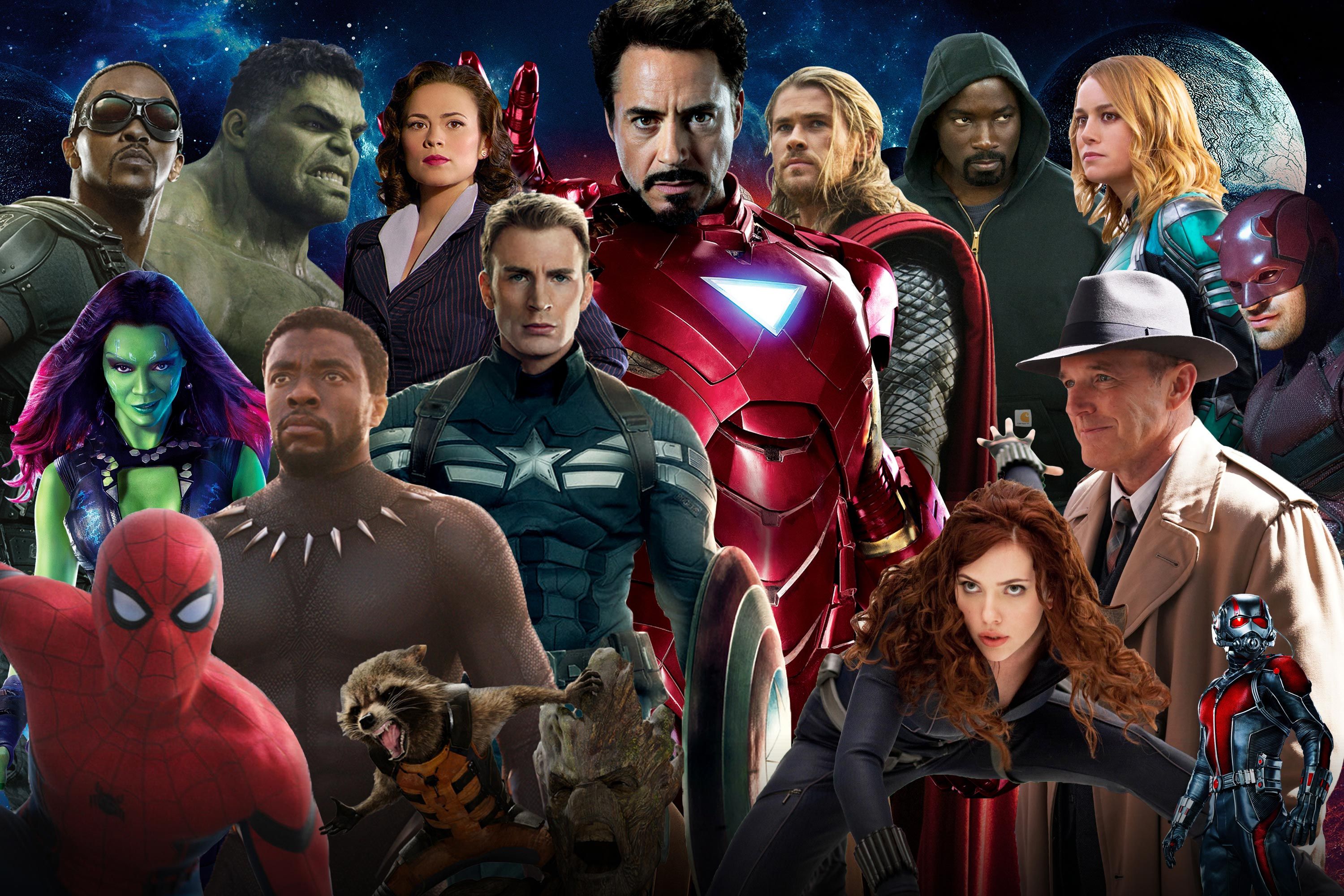
May 2, 2008: The Marvel Cinematic Universe begins, with the release of the film Iron Man, starring Robert Downey Jr. as Tony Stark, a billionaire scientist who uses his genius to become a superhero and fight injustice.

The character of Iron Man had debuted in Tales of Suspense #39 in March 1963, and had led the Avengers since the group's debut in The Avengers #1 in September of that year. But he had never been in the top tier of Marvel Comics characters in terms of popularity, unlike Spider-Man, the Hulk, Captain America, Thor, Daredevil, the Fantastic Four and the X-Men.

Example: Spider-Man had been seen in live-action on TV in 2 separate series, one in 1974-77, another in 1977-79, and 3 movies starting in 2002; the Hulk on TV in 1977-82, 3 TV-movies based on the series in 1988-90, and in a film in 2003; Captain America had been in a movie all the way back in 1944, and then in TV-movies in 1979 (2 of them) and 1990; Thor and Daredevil had each been in one of the Hulk TV-movies, and Daredevil headlined a 2003 movie; and there had been 3 movies each for the F4 and the X-Men.

Until the release of Spider-Man: No Way Home in 2021 brought the Tobey Maguire (2002-07) and Andrew Garfield (2012-14, in other words not yet seen in 2008) versions of Spidey together with the Tom Holland version (2016-onward), none of those productions was considered part of the MCU.

But Iron Man not only launched Stark to the forefront of Marveldom, but also symbolized Downey's comeback from a fine acting career that had seemed ruined by drug use.

Other films followed:

* 2008: The Incredible Hulk.
* 2010: Iron Man 2.
* 2011: Thor and Captain America: The First Avenger.
* 2012: Marvel's The Avengers.
* 2013: Iron Man 3 and Thor: The Dark World.
* 2014: Captain America: The Winter Soldier and Guardians of the Galaxy.
* 2015: Avengers: Age of Ultron and Ant-Man.
* 2016: Captain America: Civil War and Doctor Strange.
* 2017: Guardians of the Galaxy Vol. 2, Spider-Man: Homecoming and Thor: Ragnarok.
* 2018: Black Panther, Avengers: Infinity War and Ant-Man and the Wasp.
* 2019: Captain Marvel, Avengers: Endgame and Spider-Man: Far From Home.
* 2021: Black Widow, Shang-Chi and the Legend of the Ten Rings, Eternals, and Spider-Man: No Way Home.
* Scheduled for release in 2022: Doctor Strange in the Multiverse of Madness, Thor: Love and Thunder, and Black Panther: Wakanda Forever.
* Planned for 2023: Ant-Man and the Wasp: Quantumania, Guardians of the Galaxy Vol. 3, The Marvels.

In addition, there have been TV series: Agents of S.H.I.E.L.D., 2013-20; Agent Carter, 2015-16; Daredevil, 2015-18; Jessica Jones, 2015-19; Luke Cage, 2016-18; The Defenders, 2017; Inhumans, 2017; Iron Fist, 2017-18; The Punisher, 2017-19; Runaways, 2017-19; Cloak & Dagger, 2018-19; Helstrom, 2020; WandaVision, The Falcon and the Winter Soldier, Loki and Hawkeye, all 2021; the animated (and thus far cheaper to make) What If..., 2021-22; and Moon Knight, starting in 2022 and possibly continuing beyond.

The MCU, produced by The Walt Disney Company, forced Warner Brothers' hand: It owned the rights to movies for the characters in DC Comics, but the DC Extended Universe has had its problems -- the unsuitability of some of its writers and directors being more important than the quality of the stories and the acting.

In hindsight, it is interesting that the greatest crisis in each brand's live-action history was set in 2019: For Marvel, "The Snap" by Thanos in the film Avengers: Infinity War, on May 31 in their continuity, though the film was released on April 27, 2018; and for DC, the titular event in their miniseries Crisis On Infinite Earths, on December 10, the day it aired on The CW Network. And, in both cases, the man who was then President in real life, Donald Trump, couldn't save anyone.

*

May 2, 2008 was a Friday. These games were played in Major League Baseball:

* The New York Yankees beat the Seattle Mariners, 5-1 at Yankee Stadium. Chien-Ming Wang was the winning pitcher. Derek Jeter went 0-for-4, but Melky Cabrera had a 2-RBI double.

* The New York Mets beat the Arizona Diamondbacks, 7-2 at Chase Field in Phoenix.

* The Boston Red Sox beat the Tampa Bay Rays, 7-3 at Fenway Park in Boston.

* The Philadelphia Phillies beat the San Francisco Giants, 6-5 at Citizens Bank Park in Philadelphia. The Phils got home runs from Chase Utley, Pedro Feliz, and a walkoff in the 10th inning from Pat Burrell.

* The Pittsburgh Pirates beat the Washington Nationals, 11-4 at Nationals Park in Washington.

* The Atlanta Braves beat the Cincinnati Reds, 2-0 at Turner Field (now Center Parc Stadium) in Atlanta. Tim Hudson pitched a 3-hit shutout, 10 strikeouts, no walks. Brian McCann hit a home run.

* The Florida Marlins beat the San Diego Padres, 6-4 at Dolphin Stadium (now Hard Rock Stadium in Miami Gardens, Florida.

* The Houston Astros beat the Milwaukee Brewers, 7-4 at Minute Maid Park (now Daikin Park) in Houston.

* The Toronto Blue Jays beat the Chicago White Sox, 2-0 at the Rogers Centre in Toronto. It took 5 Jays pitchers to complete a 5-hit shutout. In contrast, Mark Buehrle went the distance for the South Siders, but lost.

* The St. Louis Cardinals beat their arch-rivals, the Chicago Cubs, 5-3 at Busch Stadium in St. Louis. Skip Schumaker won it with a home run in the bottom of the 11th.

* The Minnesota Twins beat the Detroit Tigers, 11-1 at the Metrodome in Minneapolis.

* The Los Angeles Dodgers beat the Colorado Rockies, 11-6 at Coors Field in Denver.

* The Baltimore Orioles beat the Los Angeles Angels of Anaheim, 4-3 at Angel Stadium of Anaheim.

* The Texas Rangers beat the Oakland Athletics, 4-3 at the Oakland Coliseum (then named the McAfee Coliseum).

* And the Cleveland Indians and the Kansas City Royals got rained out at Kauffman Stadium in Kansas City. It was made up as part of a doubleheader on September 13. The Royals won both games, 8-3 and 8-4.

Football was out of season. The NBA Playoffs were in the 1st Round:

* The Atlanta Hawks beat the Boston Celtics, 103-100 at the Philips Arena (now the State Farm Arena) in Atlanta. That was a Game 6, and the Hawks won Game 7 2 nights later.

* The Cleveland Cavaliers beat the Washington Wizards, 105-88 at the Verizon Center (now the Capital One Arena) in Washington, to win Game 6 and the series. LeBron James had 27 points, 13 rebounds and 13 assists.

* And the Utah Jazz beat the Houston Rockets, 113-91 at the Delta Center (then named the EnergySolutions Arena) in Salt Lake City, to win Game 6 and the series. Tracy McGrady scored 40 points.

One Stanley Cup Playoff game was played that night, but it was a doozy. The San Jose Sharks beat the Dallas Stars, 3-2 at the HP Pavilion (now the SAP Center) in San Jose. Joe Pavelski scored 1:05 into overtime. That was in Game 6 of an NHL Western Conference Semifinal. But, 2 nights later, Game 7 went to 4 overtimes, and Brenden Morrow won it for Dallas.

December 31, 1999 & January 1, 2000: The Millennium

December 31, 1999:  The Millennium arrives. The people of planet Earth survived. At a terrible cost. But we hadn't destroyed ourselves. ...