Showing posts with label imperial japan. Show all posts

Tuesday, October 25, 2022

October 25, 1944: The Last Battle Between Battleships

Admiral Jesse Oldendorf

October 25, 1944: The Battle of Surigao Strait is fought, as part of the larger battle to liberate the Philippines from the Empire of Japan. It was 1 of only 2 battleship-versus-battleship naval battles in the Pacific campaign of World War II (after one during the 1942-43 Battle of Guadalcanal), and it remains the last battleship-to-battleship action in history.

A battleship is defined as "a large, heavily armored warship with a main battery, consisting of large guns, designed to serve as a capital ship." A capital ship is defined as a navy's most important warships, generally the larger ships when compared to other warships in their respective fleet. From their advent in the late 1880s, battleships were among the largest and most formidable weapon systems ever built, until they were surpassed by aircraft carriers beginning in the 1940s. 

As the Japanese Southern Force approached the Surigao Strait, it ran into a deadly trap set by Seventh Fleet. Rear Admiral Jesse Oldendorf had a substantial force comprising 4 heavy cruisers, including his flagship, the USS Louisville; 4 light cruisers, 28 destroyers, 39 motor torpedo boats (Patrol/Torpedo or "PT" boats, like the one John F. Kennedy had commanded); and 6 battleships: The California, the Maryland, the Mississippi, the Pennsylvania, the Tennessee and the West Virginia.

All but one had been in the attack on Pearl Harbor 3 years earlier: The Mississippi had been on convoy-escort duty in Iceland at the time. The California and the West Virginia had been repaired, while new versions of the Maryland, the Pennsylvania and the Tennessee had to be built.

At 22:36 on October 24, ship time, PT-131 sighted approaching Japanese ships. At about 03:00 on October 25, 2 Japanese battleships, the Yamashiro and the Fusō were torpedoed; the former got away, but the latter was sunk, along with 4 Japanese destroyer.

Jesse Oldendorf held the rank of Real Admiral, 2 stars, at the time of the battle. On December 15, 1944, he was promoted to Vice Admiral, given a 3rd star. He was wounded in 2 separate Japanese attacks on ships he was commanding in 1945. After The War, he commanded the San Diego Naval Base, and retired in 1948, upon which he was given the rank of full Admiral, 4 stars. He lived until 1974. In 1975, the destroyer USS Oldendorf (DD-972) was named for him and commissioned. It was in service until 2003.

In World War II, the U.S. Navy had 27 battleships, all named for States. The Arizona, the Oklahoma and the Utah were sunk at Pearl Harbor. The Arizona and the Utah became part of the official memorial to the battle. The Oklahoma was raised, and sunk under tow in 1947.

The Mississippi, the Colorado, the Iowa, the New Jersey, the Wisconsin, and the Missouri also saw service in the Korean War. The Iowa, the New Jersey, the Wisconsin and the Missouri all lasted through the Vietnam War era, and even into the Persian Gulf War before being retired, the Missouri being the last American battleship, on March 31, 1992. Most likely, the reason the "Mighty Mo" was kept in service the longest was symbolic, as it was on its deck that the Japanese signed the articles of surrender on September 2, 1945.

Four were sunk as target practice: The Arkansas in 1946; and the New York, the Nevada and the Pennsylvania in 1948. Most of the battleships were ultimately scrapped: The Idaho, the New Mexico and the Wyoming in 1947; the Mississippi in 1957; the California, the Colorado, the Maryland, the Tennessee and the West Virginia in 1959; the Washington in 1960; the South Dakota in 1962; and the Indiana in 1963.

Some were saved as "museum ships." The USS Texas, BB-35, the last surviving U.S. battleship from World War I, had its longtime home adjacent to the San Jacinto Monument in the Houston Ship Channel. As of October 25, 2022, it is undergoing repairs, with the intent of moving it to a new location in Galveston, on the Gulf of Mexico.

The USS North Carolina, BB-55, is in its namesake State, across the Cape Fear River from downtown Wilmington. Wilmington, North Carolina is known as the home city of TV newscaster David Brinkley, basketball icon Michael Jordan, and TV screenwriter and producer Kevin Williamson.

The USS Massachusetts, BB-59, is in its namesake State, at Battleship Cove, a maritime museum in Fall River, on Mount Hope Bay. Battleship Cove contains the largest collection of World War II-era naval vessels, anywhere in the world.

Fall River is famous for two other things: Being the location of the murders of Andrew and Abby Borden in 1892, with Andrew's daughter Lizzie being accused, but acquitted; and being one of the founding cities of American soccer, as its large Portuguese community led to the founding of one of the earliest great U.S. teams, the Ponta Delgada Soccer Club, which sometimes got around Massachusetts' "blue laws" by playing Sunday games a few miles away, across the State Line, in Tiverton, Rhode Island.

The USS Alabama, BB-60, is in its namesake State, on Mobile Bay.

The USS Iowa, BB-61, survived a 1989 explosion that killed 47 crewmen, was retired 2 years later, after service in the Persian Gulf War, and is now a museum ship at the Port of Los Angeles, which, with the USS California having long since been scrapped, couldn't have that ship.

The USS New Jersey, BB-62, is in its namesake State, on the Delaware River in Camden, across from Center City Philadelphia, upriver from the naval shipyard where it was constructed in 1943. (UPDATE: In 2024, it returned to the Philadelphia Naval Shipyard for renovations, which lasted a few weeks.)

The USS Missouri, BB-63, is at Pearl Harbor in Honolulu, Hawaii. As with keeping it in service the longest, the ship's final resting place is symbolic: Its bow is pointed at the USS Arizona Memorial, so that the ship where America's role in The War ended can "watch over" the ship where America's role in The War effectively began. The Missouri's bell was removed, and taken to the Missouri State Museum, in the State capital of Jefferson City, where it is on display.

And the USS Wisconsin, BB-64, is at its "birthplace," the Norfolk Naval Shipyard in Virginia.

*

October 25, 1944 was a Wednesday. Jon Anderson, lead singer of British rock band Yes, and political consultant James Carville were born. This was also the day that Nazi Germany began a crackdown on the resistance group known as the Edelweiss Pirates. I have a separate entry for that event.

Baseball season had ended 16 days earlier, when the St. Louis Cardinals won the World Series by beating the St. Louis Browns in 6 games. Football was in midweek. The NBA hadn't been founded yet. And the NHL season started 3 days later. So there were no scores on this historic day.

Friday, September 16, 2022

September 16, 1940: America's 1st Peacetime Draft

September 16, 1940: President Franklin D. Roosevelt signs the Selective Training and Service Act of 1940 into law, marking America’s 1st peacetime draft.

He does this even though he's running for an unprecedented 3rd term, and that it will lose him votes of draft-age men and the people who care about them. He doesn't yet know when America will have to get into World War II, but he wants us ready when we do need to face Nazi Germany and Imperial Japan.

More than 16 million Americans would serve in the war, with about 10 million of them entering the armed forces through the draft. Over 400,000 of them would die in service, although not all of those would be from battle wounds and injuries: The total includes accidents and illnesses.

*

September 16, 1940 was a Monday. These baseball games were played that day:

* The New York Yankees lost to the St. Louis Browns, 16-4 at Yankee Stadium. Vern Kennedy went the distance for the Browns, while Marius Russo didn't even get out of the 1st inning, when the Browns tagged him and then Bump Hadley for 7 runs. Johnny Lucadello hit 2 home runs. The Yankees got 6 hits, including a home run and a single by Joe DiMaggio.

* The New York Giants lost to the Pittsburgh Pirates, 7-6 at the Polo Grounds. Mel Ott hit 2 home runs, but they were solo shots.

* The Brooklyn Dodgers lost to the Cincinnati Reds, 4-3 at Ebbets Field. Bill Baker got Mike McCormick home on a sacrifice fly in the top of the 10th inning.

* A doubleheader was split at Shibe Park in Philadelphia. The Philadelphia Phillies won the opener, 3-2. The St. Louis Cardinals won the nightcap, 7-1.

* A doubleheader was split at Cleveland Municipal Stadium. The Cleveland Indians won the 1st game, 8-3. The Philadelphia Athletics won the 2nd game, 3-2.

* The Detroit Tigers beat the Washington Senators, 9-2 at Briggs Stadium (later renamed Tiger Stadium) in Detroit. Hank Greenberg went 2-for-5 with a home run and 3 RBIs. The Tigers went on to win the American League Pennant, the only one not won by the Yankees between 1936 and 1943.

* The Boston Red Sox beat the Chicago White Sox, 6-2 at Comiskey Park in Chicago. Ted Williams went 2-for-5 with 2 RBIs. Jimmie Foxx went 0-for-3 with a walk.

* And the Boston Bees and the Chicago Cubs had agreed on a schedule change, which was occasionally done in the era before air travel, to give players more rest. So their game that was scheduled for this day, at National League Park in Boston, was moved back to be part of a doubleheader the previous day -- the opposite procedure from a rainout. The Bees won the 1st game, 7-3. The Cubs won the 2nd game, 7-4.

This was the last of 5 seasons in which the Boston team of the National League, following a disastrous 1935 season, was known as the Bees, also renaming their ballpark. The new names never caught on, and, in 1941, the team went back to the former name, the Boston Braves, and restored the Braves Field name to their ballpark.

Sunday, August 14, 2022

August 14, 1945: World War II Ends with V-J Day


August 14, 1945: Japan surrenders, ending World War II. President Harry S Truman proclaims it is V-J Day, Victory over Japan Day.

Emperor Hirohito delivered Japan's surrender over radio. It was the 1st time the people of that country had ever heard their Emperor's voice. Since they revered him as something like a god, they accepted his surrender.

It had been 8 days since the atomic bombing of Hiroshima. It had been 5 days since the atomic bombing of Nagasaki and the Soviet invasion of Manchuria.

The Soviets were planning to invade Hokkaido, the northernmost of Japan's "home islands," on August 15. The Americans and the British were planning to invade Kyushu, the southernmost island, on November 1.

The Emperor knew it was over. Some in his Cabinet, including the military leaders, wanted to fight to the last man. But the Emperor knew that surrendering now would mean he could work with the Americans, and keep the Soviets out. There would be an East and West Germany, a North and South Korea, and, eventually, a North and South Vietnam, and a Yemen and South Yemen. There would be no North and South Japan.

Truman made the announcement at 7:00 PM, U.S. Eastern Time. Hirohito made his speech at 12:00 Noon on August 15, Japan Standard Time (11:00 PM on August 14, U.S. Eastern). The formal surrender took place on the deck of the battleship USS Missouri, docked in Tokyo Bay, on September 2.

World War II cost 75 million lives, military and civilian combined. America rebuilt its defeated enemies, not just because it was a generous thing to do, but because it made West Germany and a still-united Japan our allies against the Communist world.

For all the decisions he had to make on such short notice, between April 12 and August 14, just 4 months, Time magazine named President Truman its Man of the Year for 1945.

The photo above was taken by Alfred Eisenstaedt in Times Square in New York, and put on the cover of Life magazine. The identities of the sailor and the "nurse" have not been definitively established, but it is generally agreed that they are, respectively, George Mendonsa, on leave from the USS The Sullivans, identified because his actual girlfriend, and later wife, can also be seen in the photo, her face over his right shoulder, as they were attending a movie together, which doesn't explain why he kissed someone else; and Greta Zimmer, a 21-year-old Austrian-born Jewish dental hygienist, who, like Mendonsa, later married someone else, and had 2 children.

George Mendonza and Greta Zimmer Friedman were guests of honor at a veterans parade in 2009. Greta lived until 2016; George, until 2019.

Despite some close calls, there has never been a World War III. That is a testament to the way Roosevelt and then Truman set up the post-World War II world.

*

August 14, 1945 was a Tuesday. Comic actor Steve Martin and German film director Wim Wenders were born that day.

The following Major League Baseball games were scheduled, and all were played rather than postponed:

* New York Giants 5, Cincinnati Reds 2, at the Polo Grounds in Manhattan.

* St. Louis Cardinals 2, Brooklyn Dodgers 1 at Ebbets Field in Brooklyn.

* Philadelphia Phillies 2, Chicago Cubs 1 at Shibe Park in Philadelphia.

* The Pittsburgh Pirates sweep a doubleheader from the Boston Braves, 7-5 in 10 innings, and 6-2, at Braves Field in Boston.

* Cleveland Indians 3, Boston Red Sox 0 at League Park in Cleveland. 

* St. Louis Browns 5, Washington Senators 4 at Sportsman's Park in St. Louis.

* The New York Yankees, the Philadelphia Athletics, the Detroit Tigers and the Chicago White Sox did not play.

Comedian and actor Steve Martin, and Dutch film director Wim Wenders, were born on this day. 

Tuesday, August 9, 2022

August 9, 1945: The Nagasaki Bomb

August 9, 1945: For the 2nd time, and the 2nd time in 3 days, an atomic bomb is used in warfare.

It is World War II. Nazi Germany has already been defeated. The Empire of Japan, however, is holding out. American forces have reached Okinawa, just 400 miles from the Japanese home Islands. 

President Harry S Truman has demanded that Japan surrender. They have refused. On August 6, he authorized the dropping of a uranium bomb codenamed Little Boy on the port city of Hiroshima, a tactical choice that would not only kill as many people as possible, but hurt Japan's war effort. The bomb had roughly the force of 15,000 tons of TNT -- 15 kilotons. It is estimated that 66,000 people were killed instantly, and another 100,000 or so may have died of radiation poisoning within the next year. 

Despite this destruction, Japan still did not surrender. So a 2nd bomb, a 21-kiloton plutonium bomb codenamed Fat Man, was dropped on Nagasaki, on the home island of Kyushu, on August 9. As a smaller city to begin with, about 40,000 were killed at once, and at least that many through radiation sickness.

Also on August 9, the Soviet Union invaded Manchuria, a section of China occupied by Imperial Japan. It has been suggested that the real reason Japan finally surrendered on August 14 was less the atomic bombs, and more the fact that the Soviets had gotten into the Pacific Theater of the war.

But it has also been suggested that the reason a 2nd -- or even a 1st -- atomic bomb was dropped was to show the Soviets, "We have The Bomb, and you don't." That would remain true until 1949. But, for now, it showed the Communist world that they were not going to get their hands on Japan, the way they had already gotten some of China (and, eventually, all of it except for Taiwan) and some of Korea (eventually, about half of it).

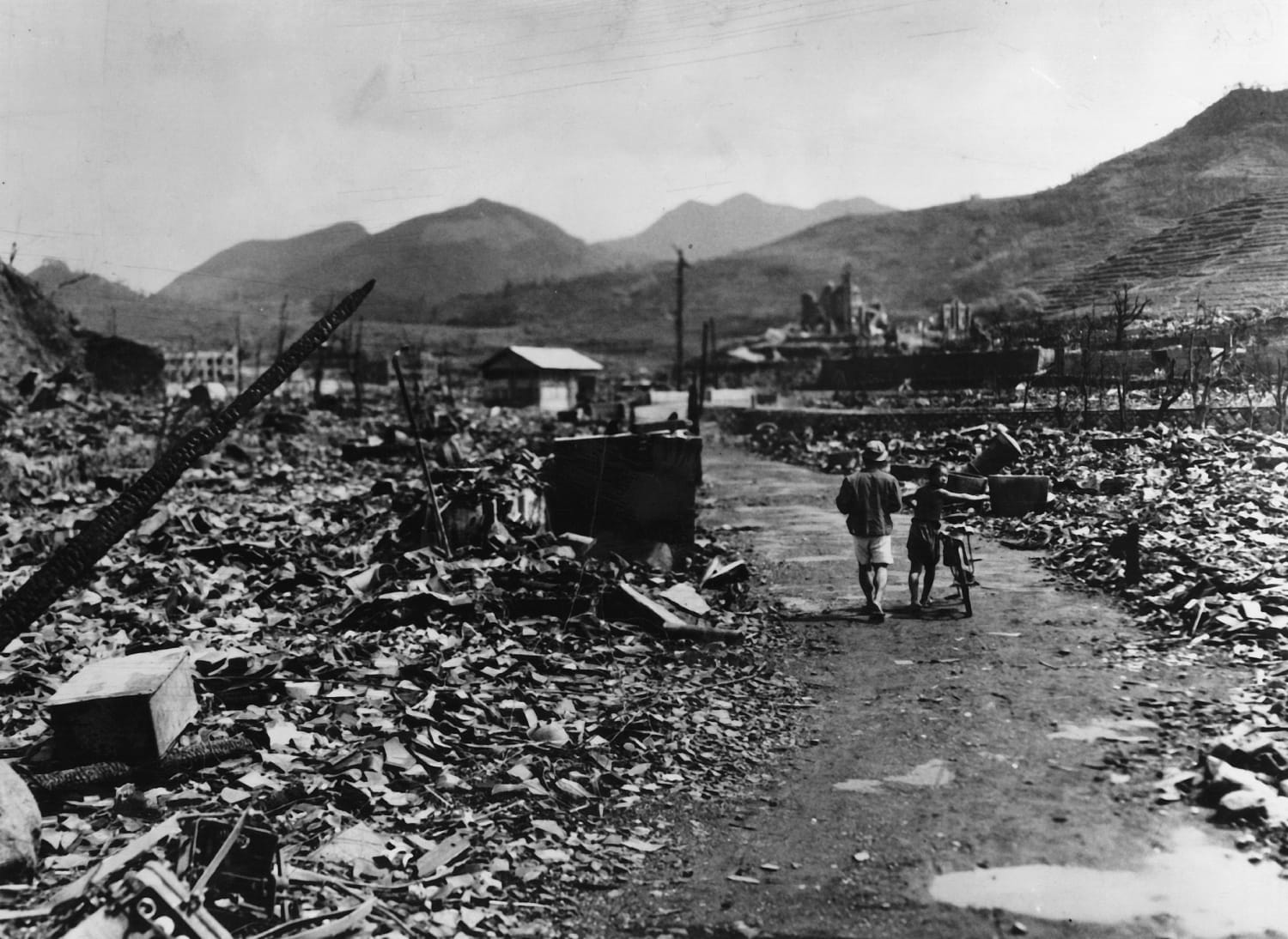
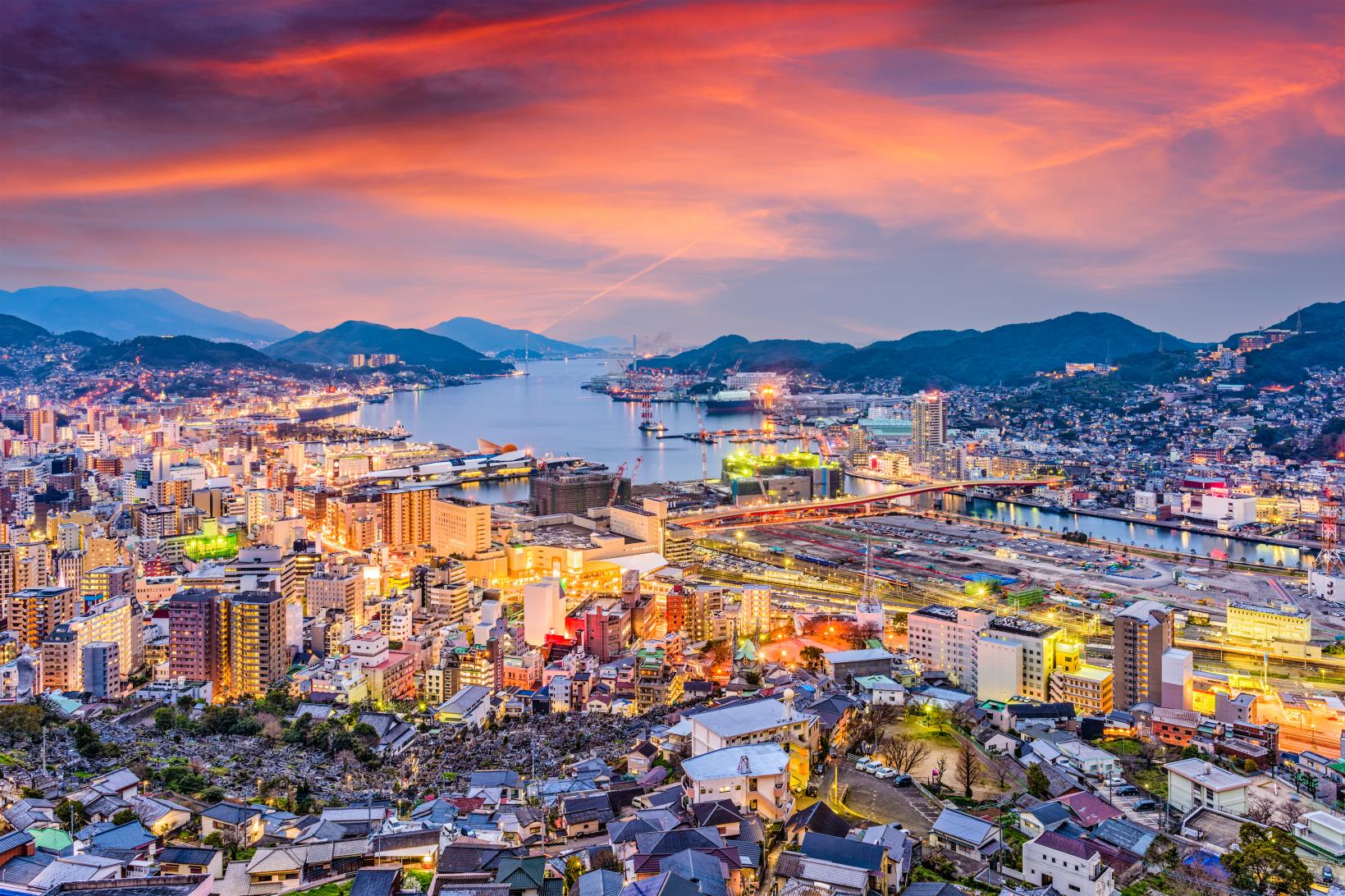
As part of the U.S. occupation of Japan, both cities were rebuilt. Today, Hiroshima is a thriving city of about 1.2 million. Nagasaki is now home to about 400,000.
Nagasaki today

In spite of a few close calls between America and the Soviet Union, atomic bombs have never been used in warfare again. May that remain so.

*

August 9, 1945 was a Thursday. These baseball games were played:

* The New York Yankees beat the Cleveland Indians, 3-2 at League Park in Cleveland. Bud Metheny hit a sacrifice fly to bring Don Savage home with the winning run in the top of the 9th inning.

* The New York Giants lost to the St. Louis Cardinals, 5-3 at the Polo Grounds. Giant player-manager Mel Ott went 1-for-4.

* The Brooklyn Dodgers swept a doubleheader from the Cincinnati Reds, 9-2 and 4-3 at Ebbets Field. In the nightcap, Babe Herman, returning to the major leagues after 8 years due to the wartime manpower drain, singled Frenchy Bordagaray home with the winning run in the bottom of the 12th inning.

* The Boston Braves beat the Chicago Cubs, 7-3 at Braves Field in Boston.

* The Pittsburgh Pirates beat the Philadelphia Phillies, 3-1 at Shibe Park in Philadelphia.

* The Detroit Tigers beat the Boston Red Sox, 11-5 at Briggs Stadium (later Tiger Stadium) in Detroit. Ted Williams had not yet come home from The War -- as my grandmother, a Brooklyn Dodger fan from Queens, who lived through it, taught us, always Capital T, Capital W -- and was unavailable to the Red Sox. But Hank Greenberg had come home, and was available to the Tigers, and went 3-for-4 with 2 RBIs. Rudy York hit 2 home runs.

* The Washington Senators beat the Chicago White Sox, 7-2 at Comiskey Park in Chicago.

* And the St. Louis Browns beat the Philadelphia Athletics, 1-0 at Sportsman's Park in St. Louis. Al Hollingsworth pitched a 3-hit shutout, outpitching Bobo Newsom.

Saturday, July 16, 2022

July 16, 1945: The Trinity Test

July 16, 1945: The Trinity test takes place. It is successful.

In June 1942, the U.S. Army Corps of Engineers started the Manhattan Project. This walled-off, super-secure facility in Los Alamos, New Mexico was kept as secret as they could, in order to keep Nazi Germany from knowing what they were doing. As it turned out, the real worry was with the Soviet Union, and their spies.

Due to the Allied bombings of German facilities, the Nazis never came close to developing an atomic bomb. They surrendered on May 8, 1945. But the new President, Harry Truman, wanted to avoid a full-scale invasion of the remaining enemy, Japan, if at all possible. The atomic bomb was the solution.

The Project's director was J. Robert Oppenheimer. He had a concern that the bomb might ignite the atmosphere and eliminate all life on Earth. But he said the chance of that happening was "near zero."
The first bomb was completed, and its test, codenamed "Trinity," was set for July 16, 1945, at what is now White Sands Missile Range, in a sparsely populated area outside Bingham, New Mexico. The detonation was at 5:29 AM Mountain Time, 7:29 U.S. Eastern Time. The test was successful. But every witness knew that this was both good news in the short term and, potentially, very bad news in the long run. They knew that America wouldn't have a monopoly on the bomb forever. Oppenheimer later said:

We knew the world would not be the same. A few people laughed, a few people cried. Most people were silent. I remembered the line from the Hindu scripture, the Bhagavad Gita. Vishnu is trying to persuade the Prince that he should do his duty, and, to impress him, takes on his multi-armed form, and says, "Now, I am become Death, the destroyer of worlds." I suppose we all thought that, one way or another.

On August 6, Truman ordered the dropping of the 1st available atomic bomb on Hiroshima, Japan. On August 9, he ordered another, dropped on Nagasaki. On August 14, Japan surrendered.

In 1949, the Soviets announced that they had successfully tested an atomic bomb.

A 2019 episode of the YouTube series Epic Rap Battles of History featured "Nice" Peter Shukoff playing Oppenheimer, and "Epic" Lloyd Ahlquist playing Marvel Comics villain Thanos.

*

July 16, 1945 was a Monday. These baseball games were played:

* The New York Yankees lost to the Detroit Tigers, 9-4 at Yankee Stadium.

* The New York Giants lost to the Chicago Cubs, 4-3 at the Polo Grounds.

* The Brooklyn Dodgers beat the Pittsburgh Pirates, 8-4 at Forbes Field in Pittsburgh.

* The Cleveland Indians beat the Boston Red Sox, 3-2 at Fenway Park in Boston.

* A doubleheader was split at Shibe Park in Philadelphia. The Chicago White Sox won the opener, 6-2. The Philadelphia Athletics won the nightcap, 7-1.

* The St. Louis Browns swept a doubleheader from the Washington Senators, 7-3 and 5-1 at Griffith Stadium in Washington.

* The St. Louis Cardinals beat the Boston Braves, 2-0 at Sportsman's Park in St. Louis. Harry Brecheen pitched a 7-hit shutout.

* And the Cincinnati Reds and the Philadelphia Phillies were not scheduled.

Friday, May 27, 2022

May 28, 1905: The Battle of Tsushima

Marshal-Admiral Tōgō Heihachirō

May 28, 1905: The Battle of Tsushima is fought in the Strait of Tsushima, between southern Korea and the Japanese "home island" of Kyushu. It was a major victory of Japan, the decisive battle of the Russo-Japanese War.

What were Russia and Japan fighting over? They both wanted Korea and the Manchuria region of China. About the only thing they agreed upon was that neither the people of Korea nor the people of Manchuria should have any say in it.

The Japanese were ahead in the war the whole way, and their actions with Russian civilians in China -- especially the women -- presaged what they would do in the lands they took in World War II. Finally, the Japanese fleet engaged the Russian one at the Tsushima Straits, virtually wiping them out. Only 3 Russian vessels escaped to their main Pacific Ocean port at Vladivostok. 

President Theodore Roosevelt invited the belligerents to send representatives to a peace conference at the port city of Portsmouth, New Hampshire. The Treaty of Portsmouth was signed on September 5, and it got TR the Nobel Peace Prize.

A year later, George Sydenham Clarke, 1st Baron Sydenham of Combe, a British colonial administrator (and author of some stuff that was terribly racist even by the standards of his day), wrote, "The battle of Tsushima is by far the greatest and the most important naval event since Trafalgar," referring to Britain's win over Napoleon's France in 1805, led by Admiral Horatio Nelson, who nonetheless died in that battle.

This comparison is reflected in the fact that the Japanese commander in this war, Tōgō Heihachirō, became known as "the Nelson of the East." He died in 1934, and remains the most decorated naval officer in his country's history. His flagship, the battles hip Mikasa, is a museum ship in the port city of Yokosuka, outside Tokyo.

In contrast, the Russian commander, Zinovy Rozhestvensky, sustained a head wound from a shell fragment in mid-battle, and taken to another ship while his flagship, the battleship Borodino, was sunk. Taking command, Admiral Nikolai Nebogatov surrendered the fleet.

Rozhestvensky was later visited in the hospital by Togo, who comforted his opponent by saying, "Defeat is a common fate of a soldier. There is nothing to be ashamed of in it. The great point is whether we have performed our duty."

The various Admirals faced courts-martial. Despite his incapacitation during the battle, Rozhestvensky took responsibility for the defeat. Recognizing his honor, Czar Nicholas II pardoned him and a few others, and commuted the death sentences for others. Nevertheless, the Russian Revolution of 1905 had already taken place, due to the deprivations of the war, and nobody in the Empire -- not the Navy, not the Czar, not the Czar's opponents, and certainly not the common people -- came out ahead. Another revolution was no longer a matter of it, but when.

The victory at Tsushima helped to solidify Japan's view of itself as not only a modern military power, but as an unbeatable machine. This was further enhanced by the fact that they were on the winning side of World War I. That's something that a lot of people forget: In that war, Japan and the United States were on the same side. That would not be the case in World War II, in large part because they reached the point where they thought they could take it on the far larger China and win -- and were winning, until they made the mistake of bombing Pearl Harbor, Hawaii.

*

May 28, 1905 was a Sunday. Sunday sports were still illegal in many States. But these baseball games were played that day:

* The Cincinnati Reds beat the Pittsburgh Pirates, 12-3 at The Palace of the Fans in Cincinnati. Honus Wagner went 2-for-2 with a walk.

* The St. Louis Cardinals beat the Chicago Cubs, 6-1 at the West Side Grounds in Chicago. Win Kellum outpitched Mordecai "Three-Finger" Brown.

* The Boston Americans beat the Chicago White Sox, 8-5 at South Side Park in Chicago. The Americans became the Red Sox in 1908.

* And the St. Louis Browns beat the Washington Senators, 5-1 at the 1898-1908 version of Sportsman's Park in St. Louis.

Saturday, April 9, 2022

April 9, 1942: The Bataan Death March

April 9, 1942: This was a bad day for the Allies in World War II. The Nazis sank the British aircraft carrier HMS Hermes, with the loss of 307 men; and the Australian destroyer HMAS Vampire, whose crew was luckier, in that only 9 of the 119 on board died, although her commanding officer was one of them.

In tribute, Britain's Royal Navy named an aircraft carrier that was soon to be launched HMS Hermes, and a submarine that was soon to be launched HMS Vampire. Australian would launch a new destroyer named HMAS Vampire in 1956, and it now serves as a museum ship at the Australian National Maritime Museum in Sydney.

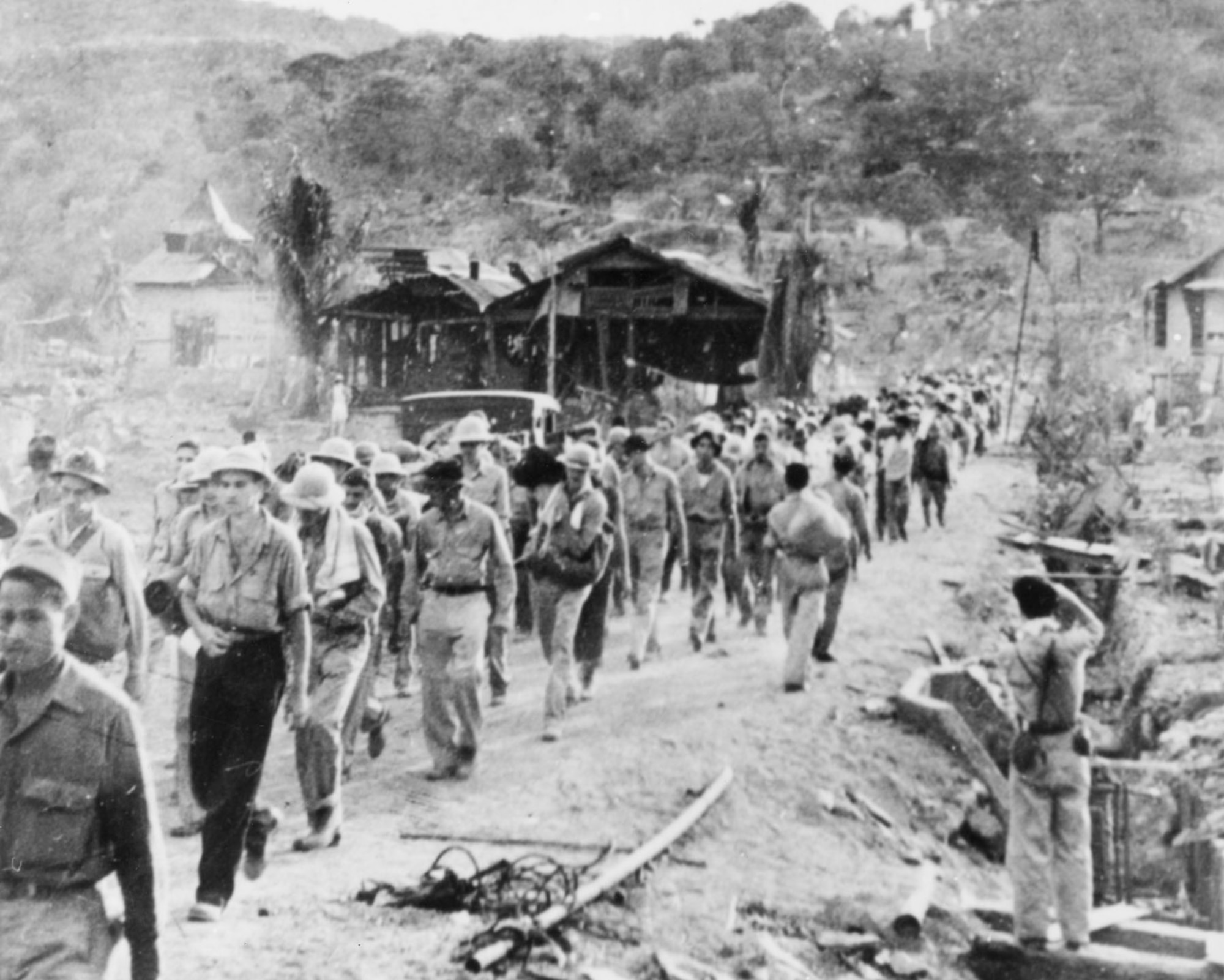
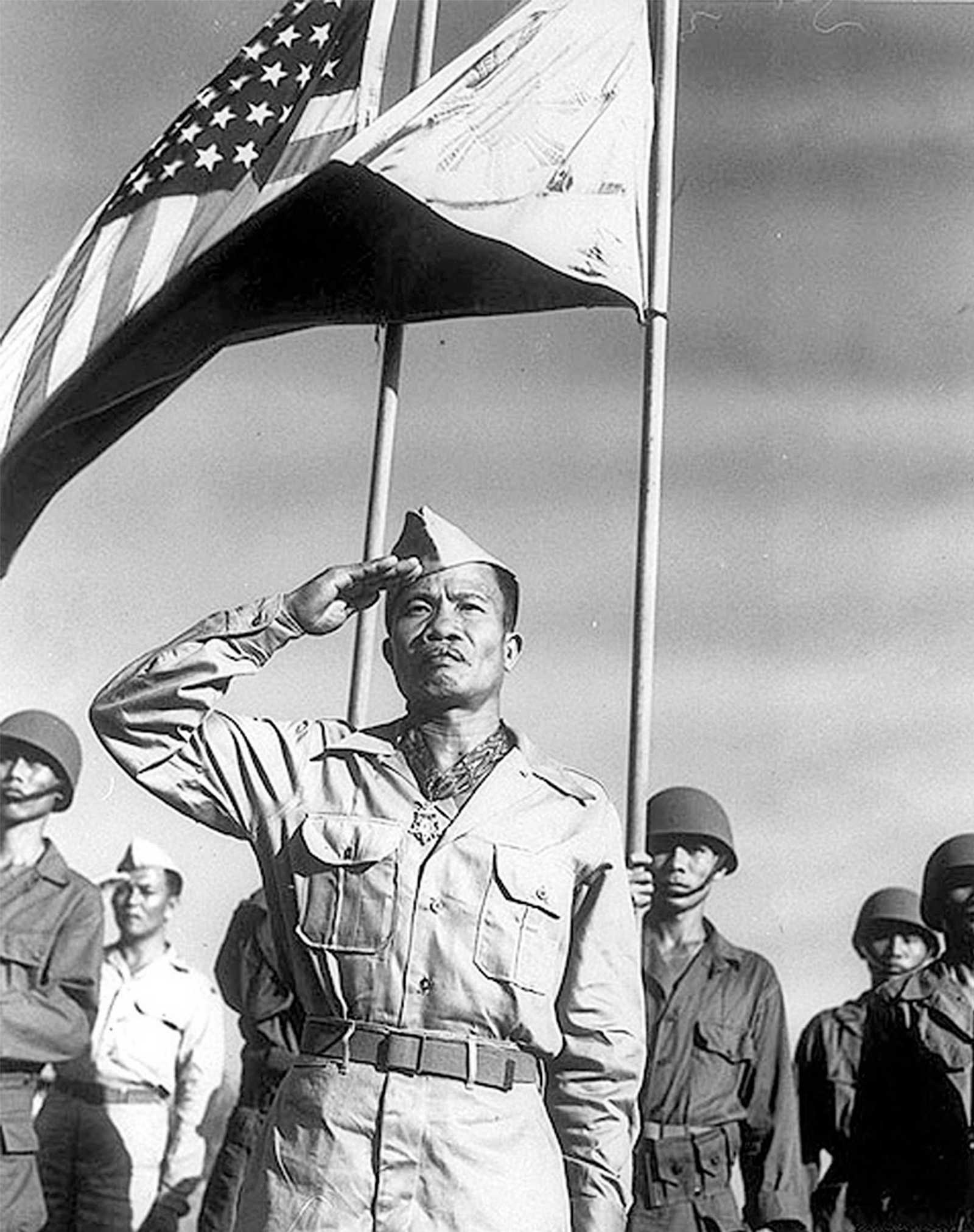
Also on this day, the Bataan Death March began. It was the forcible transfer by the Imperial Japanese Army of 75,000 American and Filipino prisoners of war (POWs) from the municipalities of Bagac and Mariveles, on the Bataan Peninsula, on the main Philippine island of Luzon, to Camp O'Donnell, via San Fernando.

The transfer began after the 3-month Battle of Bataan in the Philippines during World War II. The total distance marched from Mariveles to San Fernando and from the Capas Train Station to various camps was 65 miles. Sources also report widely differing prisoner of war casualties prior to reaching Camp O'Donnell: From 5,000 to 18,000 Filipino deaths, and 500 to 650 American deaths during the march.

The march was characterized by severe physical abuse and wanton killings. If an American or Filipino POW was caught on the ground or fell, he was instantly shot. After the war, the Japanese commander, General Masaharu Homma and 2 of his officers, Major General Yoshitaka Kawane and Colonel Kurataro Hirano, were tried by United States military commissions for war crimes, and sentenced to death on charges of failing to prevent their subordinates from committing atrocities. Homma was executed in 1946, while Kawane and Hirano were executed in 1949.

*

April 9, 1942 was a Thursday. Baseball was in Spring Training. Football was out of season. The NBA hadn't been founded yet. There was only 1 score on this historic day, in Game 3 of the Stanley Cup Finals: The Detroit Red Wings beat the Toronto Maple Leafs, 5-2 at the Olympia Stadium in Detroit. The Wings took a 3-0 lead in the series. But the Leafs shocked the hockey world by winning the next 4. Yes, I have a separate entry for this event.

Wednesday, March 9, 2022

March 9, 1945: The Firebombing of Tokyo

March 9, 1945: The U.S. Army Air Force launches Operation Meetinghouse, bombing raids on the Japanese capital of Tokyo. It is the most destructive bombing raid in human history.

A total of 334 B-29 bombers took off to raid, with 279 of them dropping 1,665 tons of bombs on Tokyo. The bombs were mostly the 500-pound E-46 cluster bomb, which released 38 napalm-carrying M-69 incendiary bomblets at an altitude of 2,000–2,500 feet. The M-69s punched through thin roofing material or landed on the ground. In either case, they ignited 3 to 5 seconds later, throwing out a jet of flaming napalm globs. A lesser number of M-47 incendiaries were also dropped. The M-47 was a 100-pound jelled-gasoline and white phosphorus bomb, which ignited upon impact.

The 1st B-29s to arrive dropped bombs in a large X pattern, centered in Tokyo's densely populated working-class district near the docks. Later aircraft simply aimed near this flaming X. The individual fires caused by the bombs joined to create a general conflagration, which would have been classified as a firestorm but for prevailing winds gusting at 17 to 28 mph.

Officially, it was known as Operation Meetinghouse. Its commanding officer, Major General Curtis LeMay, described it as follows: "The U.S. had finally stopped swatting at flies and gone after the manure pile." (That was for his official report. I suspect that, privately, he used a word other than "manure." The man known as "Old Iron Pants" eventually rose to become a full General, 4 stars.)

Approximately 16 square miles of the city were destroyed, killing an estimated 100,000 people, and leaving over 1 million homeless. Over half of the city's industrial capacity was said to be taken out. In contrast, 27 of the B-29s were lost: They were either shot down by Japanese air defenses, crashed due to mechanical failure, or were caught in updrafts caused by the fires.

For comparison's sake: The atomic bomb dropped on Hiroshima on August 6, 1945 is believed to have killed about 150,000 people; the one on Nagasaki on August 9, 80,000. The implication of those was that, if Japan did not surrender, Tokyo would be the next target.

*

March 9, 1945 was a Friday. Dennis Rader, the serial murderer known as the BTK Killer, was born on this day.

Baseball and football were out of season. The NBA hadn't been founded yet. And no games were scheduled for the NHL. So there were no scores on this historic day.

Thursday, March 3, 2022

March 3, 1945: The Liberation of the Philippines

March 3, 1945: U.S. forces liberate Manila, the capital of the Philippines. Naval warfare, aerial warfare, jungle warfare, mountain warfare, and nasty street-to-street fighting: The Battle of Manila had it all. The Japanese didn't leave much for the Americans to liberate. But the people of the Philippines were finally free.

Following the Spanish-American War of 1898, when the United States took the Philippine Islands from Spain, the Islands were governed by the U.S., under the Insular Government of the Philippine Islands. This lasted until 1935, when it was reorganized as the Commonwealth of the Philippines, considered a step toward full independence.

That Commonwealth was attacked by the Empire of Japan on December 8, 1941, the day after the attack on Pearl Harbor. The combined Filipino-American army was defeated in the Battle of Bataan, which saw many war crimes committed, and the Battle of Corregidor, in April 1942, forcing the evacuation of U.S. forces under General Douglas MacArthur, who, upon reaching safety in Australia, made his famous radio broadcast in which he told the Islands, "I shall return."

Guerrilla 
resistance against the Japanese continued throughout the war. Uncaptured Filipino army units, a Communist insurgency, and supporting American agents all played a role in the resistance. Due to the huge number of islands, the Japanese never occupied many of the smaller and more minor islands. The Japanese control over the countryside and smaller towns were often tenuous at best.

MacArthur returned with the U.S. Army and Commonwealth troops on October 20, 1944. On February 3, 1945, the fight to liberate the capital of Manila began. A city of nearly 2 million people at its peak, the fight between the Japanese troops on one side, and the U.S. and Filipino troops on the other, became urban warfare, resembling gang warfare in American cities. The Japanese High Command ordered their marines to leave the city, but they refused.

It took until March 3 to finally gain a Japanese surrender of the city, which was heavily damaged. Estimates of Filipino war dead reached 1 million. The Commonwealth was restored, and a one-year transitional period in preparation for independence began. Elections followed in April 1946, with Manuel Roxas winning as the 1st President of the independent Republic of the Philippines.

*

March 3, 1945 was a Saturday. Actress Hattie Winston and film director George Miller were born.

Baseball was in Spring Training. Football was out of season. The NBA hadn't been founded yet. There was 1 game played in the NHL: The Toronto Maple Leafs beat the Montreal Canadiens, 3-2 at Maple Leaf Gardens in Toronto.

Friday, February 25, 2022

February 25, 1942: The Battle of Los Angeles

February 25, 1942: An incident called "The Battle of Los Angeles" takes place. It turns out to be a false alarm.

Following the surprise attack on Pearl Harbor in Hawaii on December 7, 1941, 7 Japanese submarines patrolled the American West Coast. They sank 2 merchant ships and damaged 6 more, skirmishing twice with U.S. Navy air or sea forces. By the end of December, the submarines had all returned to friendly waters to resupply.

The Japanese government, concerned about President Franklin D. Roosevelt's radio speech scheduled for February 23, 1942, ordered a Japanese submarine to shell the California coast on that day. The Imperial submarine I-17 bombarded coastal targets near Santa Barbara, California. This was the 1st attack on the U.S. mainland since Pancho Villa's raid on Columbus, New Mexico in 1916; and the 1st sanctioned by a foreign country's government since the Battle of New Orleans in 1815.

Though the damage was minimal, the event was key in triggering the West Coast invasion scare, and influenced the decision to intern Japanese-Americans. Most of the Coast was blacked out. Schools were closed in the San Francisco Bay Area.

On February 24, 1942, the Office of Naval Intelligence issued a warning that an attack on mainland California could be expected within the next 10 hours. On February 25, air raid sirens sounded at 2:25 AM throughout Los Angeles County. A total blackout was ordered, and thousands of air raid wardens were summoned to their positions.

At 3:16 AM, the 37th Coast Artillery Brigade began firing .50-caliber machine guns and 12.8-pound anti-aircraft shells into the air at reported aircraft. Over 1,400 shells were eventually fired. Pilots of the 4th Interceptor Command were alerted, but their aircraft remained grounded. The artillery fire continued sporadically until 4:14 AM. The "all clear" was sounded, and the blackout order was lifted at 7:21 AM.

Several buildings and vehicles were damaged by shell fragments, and 5 civilians died as an indirect result of the anti-aircraft fire: 3 in car accidents in the ensuing chaos, and 2 of heart attacks attributed to the stress of the hour-long action. The incident was front-page news along the West Coast and across the nation. It was a more damaging incident than the "War of the Worlds" misunderstanding in 1938.

Within hours of the end of the air raid, Secretary of the Navy Frank Knox held a press conference, saying the entire incident had been a false alarm due to anxiety and "war nerves." When documenting the incident in 1949, the United States Coast Artillery Association identified a meteorological balloon sent aloft at 1:00 AM as having "started all the shooting" and concluded that "once the firing started, imagination created all kinds of targets in the sky and everyone joined in."

It was the same story given for the incident at Roswell, New Mexico in 1947. And, for all we know, it may have been true in both cases.

Two months later, on April 18, came Colonel James Doolittle's raid on Tokyo, which shows both sides that America could hit Japan at home, too. It didn't totally eliminate the fear of a Japanese attack on America's West Coast, but it did show Japan that further attacks on the American mainland would face retaliation.

*

February 25, 1942 was a Wednesday. Baseball and football were out of season. The NBA hadn't been founded yet. And no games were scheduled in the NHL. So there were no scores on this historic day.
Tuesday, February 15, 2022

February 15, 1933: The Attempted Assassination of Franklin D. Roosevelt

Anton Cermak (left) and Franklin Roosevelt

February 15, 1933: An assassination attempt is made against President-elect Franklin D. Roosevelt, at Bayfront Park in Miami. The shooter, an Italian immigrant named Giuseppe Zangara, missed him, but hit Mayor Anton Cermak of Chicago, who died on March 6. Zangara was executed 14 days later.

Had the attempt succeeded, Vice President-elect John Nance Garner would have become President on March 4. We don't know who would have been next in line: Under the Presidential Succession Act of 1886, the Secretary of State would have been next, but there's no way to know if Garner would have appointed Senator Cordell Hull of Tennessee to the post, as FDR did.

There would have been an attempt to ease the Great Depression, but it wouldn't have been what we know as the New Deal. The Depression would still have been going on in 1941, and there would have been no effort from whoever was President at that point to oppose Nazi Germany and Imperial Japan, including no Atlantic Charter with Britain. The Nazis would have beaten Britain, likely without attacking the Soviet Union.

This would have set up a Cold War against the Soviets, with the U.S., the Nazis and the Japanese on the same side. And of those 3 big nations on that side, the U.S. would be the weakest, since it would still be in a post-Depression hangover, with a post-World War I attitude of isolation and a post-World War I minimal Army and Navy.
 
This likely means that the Civil Rights Movement would have gained very little traction. Jackie Robinson is a forgotten former UCLA running back. Martin Luther King dies in a Southern jail sometime between 1955 and 1968.

There might have been a President Kennedy, but it would have been Joe Jr., especially since, in this case, Joe Sr. would not have been disgraced for supporting the Nazis. And, aside from being the 1st Catholic President, Joe Jr. wouldn't have had the kind of impact that the President Kennedy that we know had. The Nazis would have gotten to space first, and to the Moon first.

Woody Guthrie, Pete Seeger, Bob Dylan and Paul Simon all end up as quirky folksingers who don't really catch on in mainstream America. Rock and roll is a fad that dies out by 1960. Elvis Presley becomes a renowned country singer, with a voice that puts him on a level with, say, George Jones; but not the "King" of anything. Chuck Berry and Little Richard both end up in prison, on morals charges -- Chuck with girls, Richard with boys. Buddy Holly might have become a country star, but, like Jim Reeves and Patsy Cline, he still might have died young in a plane crash.

John Lennon is one of many British rockers we know who, without the outlet of rock, end up in jail -- especially if Britain has a Nazi-friendly government, similar to Vichy France. Paul McCartney becomes a minor musical figure outside Britain. Mick Jagger is a frustrated economics professor.

Motown singers like Smokey Robinson, Marvin Gaye, Diana Ross, and even Michael Jackson get to be no bigger than cabaret acts. David Bowie becomes an experimental filmmaker who never gets the credit he deserves. Elton John and Billy Joel remain piano players in lounges. Bruce Springsteen is a mechanic. Madonna is a waitress who used to dance on Broadway. Prince becomes a Jehovah's Witness preacher. Britney Spears and Taylor Swift never cross over from country. If Beyoncé becomes famous, it might also be as a country singer. And as for rappers, forget it: The market for their skills will never be allowed to develop.

Eventually, the Soviets' part in the Cold War is to launch insurgencies in the colonies that Germany took from Britain, France and the rest in Africa; and Japan took from them in Asia. This means that the Nazis, the Japanese, and, at their insistence, the U.S. fight the Vietnam War, and each is weakened by it, but not defeated. The Soviet Union falls on schedule in 1991. And then there were 3. But America is still an economic and technical backwater compared to the Nazi-led European Union and the Empire of Japan.

Rights for women? A struggle few accept. Rights for black people and other nonwhites? A nonstarter. Rights for gay people? We don't even talk about that kind of people, because we don't talk about that kind of behavior. Social Security? Medicare? Medicaid? OSHA? The Environmental Protection Agency? What the hell are those things?

Donald Trump has never become President. He's never needed to run for the office. He says, "I'm thrilled with how America is run. Believe me!"

*

But Zangara did not hit Roosevelt. And the only thing we had to fear was fear itself.

*

February 15, 1933 was a Monday. Baseball and football were out of season. The NBA hadn't been founded yet. And there were no games scheduled in the NHL. So there were no scores on this historic day.
December 31, 1999 & January 1, 2000: The Millennium

December 31, 1999:  The Millennium arrives. The people of planet Earth survived. At a terrible cost. But we hadn't destroyed ourselves. ...