Showing posts with label jazz. Show all posts

Thursday, December 15, 2022

December 15, 1943: The Death of Fats Waller

December 15, 1943: Fats Waller, one of the giants of jazz, dies. He was only 39 years old.

Thomas Wright Waller was born on May 21, 1904 in Manhattan. He started playing the piano at the age of 6, and at 15, he dropped out of DeWitt Clinton High School to work as the organist at the Lincoln Theater in Harlem. In 1922, only 18 years old, he made his first recordings.

By 1928, he was not only appearing in Broadway musicals, he was composing for them. Contrary to an urban legend, he did not write "I Can't Give You Anything But Love." But he did write "Ain't Misbehavin'," "Honeysuckle Rose," "This Joint Is Jumpin'" and "Your Feet's Too Big." Oscar Levant called Waller "the black Horowitz," honoring him by comparing him to fellow classical pianist Vladimir Horowitz.

Waller had appeared in "soundies," the music videos of the time; and in films such as Stormy Weather, an all-black musical released on July 21, 1943. He had stayed in Los Angeles after making that film, with a long, successful engagement at the Zanzibar Room in Santa Monica.

But he got sick, and headed for home on the the Atchison, Topeka & Santa Fe Railroad's Super Chief, which ran from Chicago to Los Angeles and back, and was known as "The Train to the Stars." He never made it: On December 15, as the train pulled into Union Station in Kansas City, Missouri, Waller was found dead in his compartment, from pneumonia.

His funeral was held at the Abyssinian Baptist Church in Harlem, whose pastor, Adam Clayton Powell Jr., was preparing his 1st run for Congress. More than 4,200 people got inside, and Powell told them, "Fats always played to a packed house."

Fats left a wife, an ex-wife, and 3 sons. Darren Waller, a Pro Bowl tight end for the Las Vegas Raiders, is his great-grandson. (UPDATE: In 2023, Darren Waller was traded to the New York Giants.) In 1978, Fats returned to Broadway, in a way, when the musical Ain't Misbehavin' was produced. It was based around his songs, starred Ken Page as the Waller analogue, and helped to make a star out of singer-actress Nell Carter.

*

December 15, 1943 was a Wednesday. Baseball was out of season. Football was in midweek. The NBA hadn't been founded yet. And no games were scheduled for the NHL. Therefore, there were no scores on this historic day. 

Wednesday, December 14, 2022

December 14, 1959: Dave Brubeck Calls "Time Out"

December 14, 1959: The Dave Brubeck Quartet release their album Time Out. It concludes perhaps the most emotional year in jazz history, with epochal releases by Miles Davis and John Coltrane, and Jack Kerouac appearing on The Steve Allen Show to talk about how jazz influenced the Beat Generation writers -- but also the deaths of legends Sidney Bechet, Lester Young and Billie Holiday.

Time Out includes the best-selling single in jazz history, "Take Five." The title comes from the expression, meaning, "Take five minutes to rest"; but also for its 5/4 time signature, which is unusual for any piece of music. Film composer Lalo Schifrin used 5/4 time for his "Tar Sequence" in the film Cool Hand Luke, which became the theme song for ABC's local Eyewitness News broadcasts; and for the theme for the TV show Mission: Impossible.

David Warren Brubeck was born on December 6, 1920 in Concord, in the East Bay region of California. He formed the Dave Brubeck Quartet in 1952, with alto saxophonist Paul Desmond, bass player Eugene Wright (who was also an esteemed cornet player), and drummer Joe Morello. The Quartet made Brubeck the leader of the West Coast jazz scene.

"Take Five" had been written by Desmond in 1954. It was recorded in the same Columbia Records studio, the 30th Street Studio in Midtown Manhattan, in which Miles Davis recorded his album Kind of Blue earlier in the year, and in which Bob Dylan and Simon & Garfunkel would make their signature recordings. Sadly, the building has been demolished.

Brubeck married jazz lyricist Iola Whitlock in 1942; the couple were married for 70 years. They had 5 sons and a daughter, Catherine. Of the sons, 4 also became professional musicians: Darius, a pianist; Dan, a percussionist; Chris, a composer who played multiple instruments; and Matthew, a cellist. Michael, the son who did not go into the music business, predeceased his parents, dying in 2009.

Dave Brubeck died on December 5, 2012, a day before his 92nd birthday. Iola followed him in 2014. Desmond died in 1977, Morello in 2011, and Wright in 2020.

*

December 14, 1959 was a Monday. Baseball was out of season. Football was in midweek: Monday Night Football did not debut for another 11 years. And no games were scheduled in the NBA or the NHL. So there were no scores on this historic day.

Sunday, December 11, 2022

December 11, 1992: The End of the Big Band Era

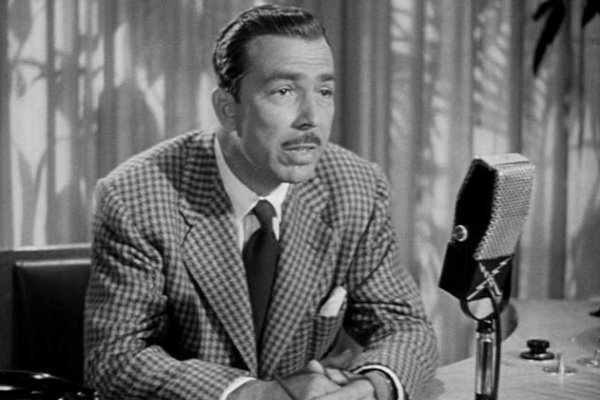
William B. Williams

December 11, 1992: Perhaps it was fitting that the end of the era of "Big Band" music came while George H.W. Bush, the last President who served in World War II, was a "lame duck," and Bill Clinton, the 1st President born after The War, and the 1st President to grow up in the Rock and Roll Era, was President-elect.

Radio station WNEW debuted February 13, 1934, as "New York's newest radio station," at 1280 on the AM dial, and with new call letters representing its city of license: "NEWark, NEW Jersey."

In 1935, WNEW moved into a new studio in New York, at 501 Madison Avenue at 53rd Street. That year, pioneered the concept of a disc jockey when staff announcer Martin Block needed to fill time between news bulletins during his coverage of the trial of Bruno Hauptmann, accused (and eventually convicted) of kidnapping Charles Lindbergh Jr., a.k.a. "The Lindbergh Baby." Block did not have access to a live orchestra to play music during the breaks, as most network stations did, so he played records instead.

Soon afterward, he piloted a 15-minute experimental show called the Make Believe Ballroom, during which he played records from popular bands and singers, posed as a live performance in an imaginary ballroom. During Block's tenure as host of Make Believe Ballroom, the show attracted 25 percent of the listening audience in New York City.
Martin Block

Thus did WNEW -- its call letters eventually redefined, with retroactive irony, as "the NEWest thing in radio" -- become known for its popular adult music selection, as well as its staff of radio personalities including Block, Dee Finch, Gene Klavan, Al "Jazzbo" Collins, Ted Brown, William B. Williams, and, from 1948 to 1952, future TV game show host Gene Rayburn. From 1935 to 1959, its general manager was a woman, a rarity for that era: Bernice Judis.

In addition to its music and entertainment programming, WNEW featured an award-winning news staff and became "The Voice of New York Sports," for broadcasting games of the NFL's New York Giants, the NBA's New York Knicks, and the NHL's New York Rangers.

As an independent radio station, WNEW lacked the funds larger networks like NBC, CBS and Mutual Broadcasting System used to produce daily programming, such as comedy shows, soap operas, game shows and dramatic programs. However, Judis was not discouraged, and welcomed the opportunity to develop her own schedule of innovative programming that included creating the first all-night radio show, dubbed Stan Shaw's Milkman's Matinee, and cultivating a line-up of popular morning radio show personalities.

On November 12, 1941, WNEW moved to 1130 on the AM dial, where it remained. In 1957, the DuMont Broadcasting Company, having given up the ghost on television, tried to expand its radio base, and bought WNEW, making it a sister station of their TV station, WADB (named for founder Allen B. DuMont) on Channel 5. In 1958, DuMont was bought out by Metromedia, and Channel 5's call letters were changed to reflect the flagship radio station, WNEW.

The rise of rock and roll in the mid-1950s led some stations to change their formats, including New York's WINS, WMCA and WABC. Not WNEW: They continued to play popular adult standards, or softer hits from the current charts. People called them "Middle of the Road," or "MOR for short -- and while young rock and roll fans considered this an insult, grownups and the WNEW staff and executives did not. Martin Block kept playing it until his death in 1967.

By 1972, some radio stations, like WCBS-FM, were treating early rock and roll, from the mid-1950s to the early 1960s, essentially the pre-Beatles era, as "oldies." But WNEW kept on playing songs from the Big Band Era, the late 1920s (when it replaced "Tin Pan Alley") to the late 1950s (when rock and roll fully took over).

I remember a TV commercial with a woman dressed like a showgirl, complete with top hat and cane, dancing around a stage, with names of old-time bandleaders hung on a stage behind her. Nearly all of them were already dead. The refrain of her song was "Where the music is king!" (As if it wasn't on other stations?")

One of my grandmothers, who grew up on that kind of music, kept her radio on in her house, always tuned to 1130, no matter what, until her death. (The other grandmother was younger, but she liked music even older than that, the kind that Guy Lombardo and Mitch Miller played.)

But, as that story suggests, the core audience for WNEW was dying of old age. Symbolizing this, William B. Williams, who was to Big Band what "Cousin" Brucie Morrow was to early rock and roll, and appeared in some of the station's commercials, died in 1986. They began a "Sundays with Sinatra" show, trying to get the people who may have listened to both early rock and Frank Sinatra's peak music in the 1950s, hoping to peel off some people now in their 50s and 60s.

But Williams wasn't the only departure in 1986: Fox Broadcasting Company bought WNEW-Channel 5, converting it into a Fox Network station and switching the call letters to WNYW. In 1988, Metromedia sold WNEW 1130 to Westwood One. They convinced Larry King to do an overnight show, since he grew up on the Big Band music. This didn't work, so they went back to their 1960s format of playing softer songs current to that era. That alienated both those artists' fans and the station's aging fans, and they backed off from it in 1991.

Finally, on August 15, 1992, Westwood One sold the station to Michael Bloomberg's company, Bloomberg L.P. As a fan of that kind of music, but more a fan of business-themed programming on both radio and television, Bloomberg gave them a chance to say goodbye. On December 11, 1992, at 8:15 PM, with several former WNEW personalities by his side, Mark Simone played the last song: Sinatra's version of the World War II song "We'll Meet Again."

The station became WBBR, and remains at 1130 AM, broadcasting business news and business-themed talk shows.

A few Big Band Era performers outlived the station. Sinatra lived until 1998. The last of the old Big Band leaders, Artie Shaw, lived until 2004, having lived long enough to sit for an interview with Ken Burns for his 2001 documentary miniseries Jazz.

*

December 11, 1992 was a Friday. This was also the day the film version of Aaron Sorkin's play A Few Good Men premiered. I have a separate entry for that event.

Baseball was out of season. Football was in midweek. There were 8 games played in the NBA:

* The Seattle SuperSonics beat the Boston Celtics, 100-90 at the Boston Garden.

* The Los Angeles Clippers beat the Philadelphia 76ers, 125-110 at The Spectrum in Philadelphia. Jeff Hornacek led all scorers on the night with 36 in defeat for the Sixers.

* The Atlanta Hawks beat the Denver Nuggets, 112-107 in overtime at The Omni in Atlanta. Dominique Wilkins scored 33 points.

* The Phoenix Suns beat the Orlando Magic, 108-107 at the Orlando Arena.

* The Detroit Pistons beat the Cleveland Cavaliers, 107-103 at The Palace in the Detroit suburb of Auburn Hills, Michigan.

* The Houston Rockets beat the Chicago Bulls, 110-96 at the Chicago Stadium.

* The Los Angeles Lakers beat the Washington Bullets, 118-93 at The Forum outside Los Angeles in Inglewood, California.

* And the Indiana Pacers beat the Portland Trail Blazers, 134-124 in double overtime at the Veterans Memorial Coliseum in Portland. Detlef Schrempf scored 32 for the Pacers.

And there were 6 games in the NHL:

* The New York Rangers beat the Tampa Bay Lightning, 5-4 at the ThunderDome (now Tropicana Field) in St. Petersburg, Florida.

* The New Jersey Devils beat the Pittsburgh Penguins, 2-1 at the Brendan Byrne Arena at the Meadowlands.

* The Washington Capitals beat the Winnipeg Jets, 8-6 at the Capital Centre in the Washington suburb of Landover, Maryland. Teemu Selänne scored a hat trick in defeat for the Jets.

* The Calgary Flames beat the Toronto Maple Leafs, 6-3 at Maple Leaf Gardens in Toronto.

* The Buffalo Sabres beat the Hartford Whalers, 9-3 at the Buffalo Memorial Auditorium.

* And the Detroit Red Wings beat the Philadelphia Flyers, 4-2 at the Joe Louis Arena in Detroit.

Friday, December 9, 2022

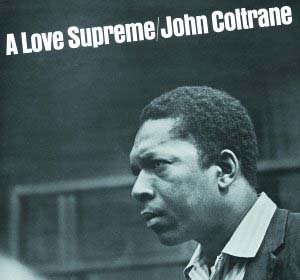
December 9, 1964: John Coltrane Records "A Love Supreme"

December 9, 1964: Jazz saxophonist John Coltrane records his album A Love Supreme. For a man known for his innovation, it is regarded as his greatest work. Or, as a saxophonist not yet born, Joshua Redman, put it in an interview for Ken Burns' miniseries Jazz, "That's one of the first records I can ever remember hearing, and I hope it's the last record I ever hear."

John William Coltrane was born on September 23, 1926 in Hamlet, North Carolina, and grew up there. After graduating from high school, he moved to Philadelphia, in the hope of making it as a musician there. He enlisted in the U.S. Navy toward the end of World War II, serving a full year, and returned to Philadelphia, where he used the G.I. Bill to enroll in the Granoff School of Music.

Originally influenced by saxophonists Lester Young and Johnny Hodges, he became a fan of Coleman Hawkins, Ben Webster and Tab Smith, citing them in a later interview as doing things "that I didn't understand, but that I felt emotionally." A Philadelphia-based pianist, Hasaan Ibn Ali, became an influence on him. The leading saxophonist of the immediate post-World War II years was Charlie Parker, and Coltrane was fortunate enough to work with him, and with Hodges, and the trumpeter with whom Parker developed "bebop," John "Dizzy" Gillespie.

In 1955, trumpeter Miles Davis invited Coltrane to play with him. This lasted for 2 years, before, like so many other jazz musicians had, including Davis, Coltrane fell to heroin addiction. Once past that, he worked with pianist Thelonious Monk for a few months, then rejoined Davis, working with him and Julian "Cannonball" Adderley on Davis' magnum opus, Kind of Blue.

In 1960, Coltrane went solo, and recorded the album Giant Steps on Atlantic Records. The following year, he formed a new quartet, with pianist McCoy Tyner, bass fiddler Jimmy Garrison, and drummer Elvin "The Emperor" Jones.

They recorded My Favorite Things, including the title track, a number from the Broadway show The Sound of Music, which, with extended solos from Coltrane on soprano saxophone and Tyner, became something completely different, something composers Richard Rodgers and Oscar Hammerstein had never imagined. It was a revelation, but not a total shock, as Davis had already done something similar with George & Ira Gershwin's Porgy and Bess.

Shortly thereafter, Impulse! Records (officially, with the exclamation point) bought Coltrane's contract. Label owner Rudy Van Gelder had worked with Davis while Coltrane was with him, and offered Coltrane full creative control at his studio in Englewood Cliffs, Bergen County, New Jersey, across the Hudson River from New York.

This period included a collaboration with Duke Ellington, and albums titled Ballads (all standards, including "All Or Nothing at All") and Impressions. And then, on a single day, December 9, 1964, the John Coltrane Quartet recorded A Love Supreme, in four parts, with Coltrane on tenor saxophone: "Acknowledgement," "Resolution," "Pursuance," and "Psalm."

A critic suggested that the album was intended to represent a struggle for purity, an expression of gratitude, and an acknowledgement that the musician's talent comes from a higher power. Indeed, in 1966, approaching his 40th birthday, Coltrane was asked what his goal was, and he said, "To become a saint."

The choice was taken out of his hands. He developed liver cancer, and died on July 17, 1967, at Huntington Hospital, not far from his home in Dix Hills, Long Island, New York. He had kept the illness quiet, and Miles Davis spoke for most when he said, "Coltrane's death shocked everyone, took everyone by surprise. I knew he hadn't looked too good... But I didn't know he was that sick, or even sick at all."

In 1982, the African Orthodox Church canonized Coltrane as a saint within their faith. His shrine is at St. John Coltrane Church, 2097 Turk Boulevard in San Francisco, even though he had little connection to that city.

His 1st wife, Naima Grubbs, died in 1996; his 2nd wife, pianist Alice MacLeod, continued to record and perform after his death, and lived until 2007. Son John Coltrane Jr. was 17 and already getting some recognition as a musician when he was killed in a car crash in Los Angeles in 1982. Son Ravi Coltrane, also a saxophonist, is better known as a music producer. Son Oranyan Coltrane, born shortly before his father's death, is also a producer, and plays multiple instruments.

As for the rest of his quartet: Garrison died of lung cancer in 1976, only 42; Elvin Jones lived until 2004; and McCoy Tyner was the last survivor, living until 2020, dying from a long-term illness, not COVID, although it was at the start of the COVID pandemic in America. Eric Dolphy, the brilliant flute player who sometimes joined them, had died of complications of diabetes while on tour in West Berlin earlier in 1964, rendering him unable to participate in A Love Supreme.

*

December 9, 1964 was a Wednesday. Baseball was out of season. Football was in midweek. There were 2 games played in the NBA. The New York Knicks beat the Baltimore Bullets, 111-90 at the Baltimore Civic Center (now the CFG Bank Arena). And the Cincinnati Royals beat the Detroit Pistons, 122-114 at Cobo Hall (now Huntington Place) in Detroit.

And there were 2 games played in the NHL. The New York Rangers lost to the Chicago Black Hawks, 6-1 at the old Madison Square Garden. And the Montreal Canadiens beat the Toronto Maple Leafs, 3-2 at Maple Leaf Gardens in Toronto. The Boston Bruins and the Detroit Red Wings were not scheduled.

Thursday, December 8, 2022

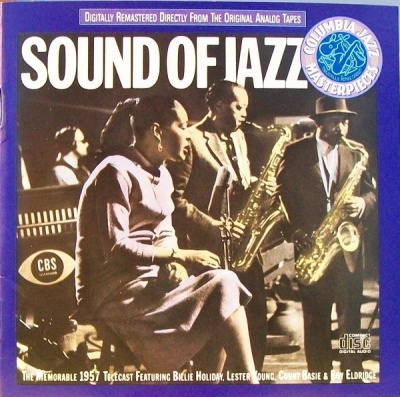
December 8, 1957: "The Sound of Jazz" Airs On CBS

December 8, 1957: As part of its anthology series The Seven Lively Arts, CBS airs "The Sound of Jazz." It aired live from the Town Theater, a.k.a. CBS Studio 58, at 851 9th Avenue at 56th Street, in Midtown Manhattan. John Crosby, then the media critic for the New York Herald-Tribune, was the host.

This was an All-Star Game. It was the closest thing a national audience would ever get to getting a Justice League, or an Avengers, of jazz. The performers included pianists Count Basic and Thelonious Monk; saxophonists Lester Young, Coleman Hawkins, Ben Webster and Gerry Mulligan; trumpeters Red Allen and Doc Cheatham; drummer Jo Jones, clarinetist Pee Wee Russell, and bass fiddle player Milt Hinton. And Billie Holiday sang.

Nat Hentoff, the jazz critic for The Village Voice, was a consultant for the show. He knew that Young was ill, and told him that he could skip the "Big Band" section of the show, and could sit instead of standing while performing during Holiday's section.

Although they were never a couple, Lester and Billie were as close as friends could be in show business, but hadn't performed together for a while, due to their respective illnesses and Billie's legal troubles. When she began to sing "Fine and Mellow," which she wrote and recorded in 1939, Webster played the 1st solo. Hentoff remembered:

Then, Lester got up, and he played the purest blues I have ever heard, and they were looking at each other, their eyes were sort of interlocked, and she was sort of nodding and half–smiling. It was as if they were both remembering what had been, whatever that was. And in the control room, we were all crying. When the show was over, they went their separate ways.

It was the last time they performed together. Within 2 years, both were dead from the effects of alcoholism, Lester at age 49, Billie at 44. In other words, we are damn lucky that CBS made this special when they did, and left us this recording. 

*

December 8, 1957 was a Sunday. It was the off-season for baseball. But there were NFL games:

* The Washington Redskins beat the Philadelphia Eagles, 42-7 at Griffith Stadium in Washington.

* The Detroit Lions beat the Cleveland Browns, 20-7 at Briggs Stadium in Detroit. This was a preview of the season's NFL Championship Game, in which the Lions would blow the Browns out again. Briggs Stadium was renamed Tiger Stadium in 1961.

* The Chicago Bears beat their crosstown rivals, the Chicago Cardinals, 14-6 at Comiskey Park on the South Side.

* The Los Angeles Rams beat the Green Bay Packers, 42-17 at the Los Angeles Memorial Coliseum.

* The San Francisco 49ers beat the Baltimore Colts, 17-13 at Kezar Stadium in San Francisco.

* The New York Giants played the day before, losing to the Pittsburgh Steelers, 21-10 at Forbes Field in Pittsburgh.

There were 2 NBA games played that day:

* The New York Knicks beat the St. Louis Hawks, 113-110 at the Kiel Auditorium in St. Louis. Ron Sobie scored 32 points for New York. Despite this, it would not be a good season for the Knicks, and the Hawks would win what remains the only NBA Championship for the franchise, which has been in Atlanta since 1968.

* And the Cincinnati Royals beat the Philadelphia Warriors, 99-88 at the Cincinnati Gardens. Jack Twyman of the Royals led all scorers with 24 points.

And all of the NHL's "Original Six" were in action:

* The New York Rangers lost to the Toronto Maple Leafs, 2-1 at the old Madison Square Garden, just 7 blocks from CBS Studio 58.

* The Montreal Canadiens beat the Detroit Red Wings, 3-1 at the Olympia Stadium in Detroit.

* And the Boston Bruins beat the Chicago Black Hawks, 3-0 at the Chicago Stadium. 

Saturday, November 19, 2022

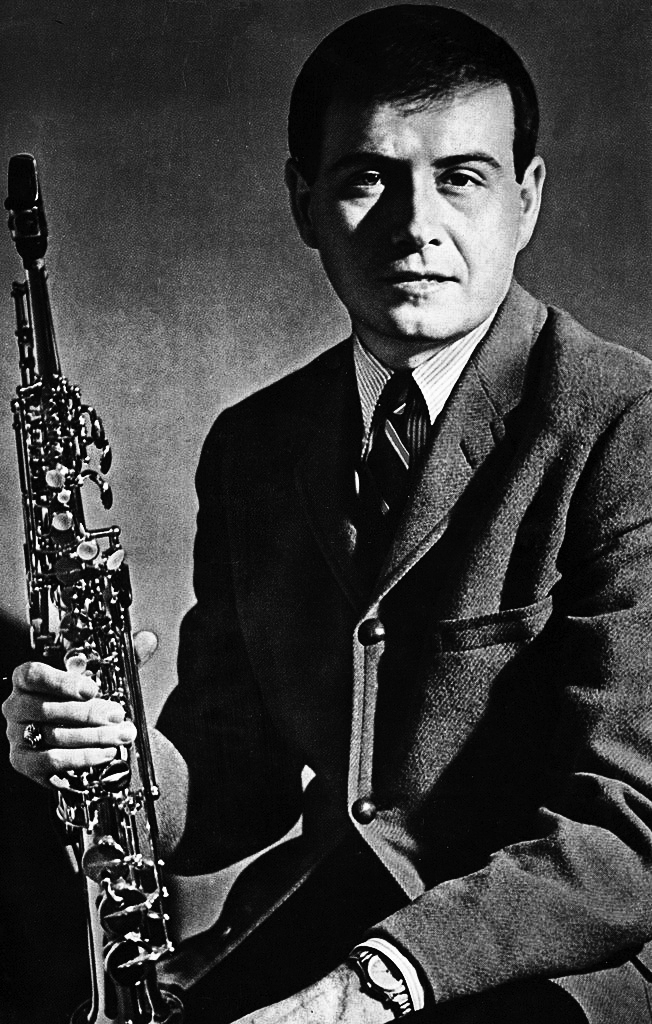
November 19, 1962: The Paul Winter Sextet Performs at the White House

November 19, 1962: For the 1st time, a jazz group performs at the White House. It's the Paul Winter Sextet. The group is racially integrated. As far as I can tell, the performance was not recorded, either audio or video.

Although rock and roll was now the dominant form of American popular music, it's a little bit of a surprise that President John F. Kennedy liked jazz, but less so when you consider that he counted Frank Sinatra as a friend. Cheap Joke Alert: Less surprising was that he would invite a "sextet." The term has nothing to do with sex: It just means that there were six members of the group.

A saxophonist from Altoona, Pennsylvania, Winter loved the bebop form of jazz pioneered in the 1940s by Charlie Parker and Dizzy Gillespie. Coming out of high school, he played in the Ringling Brothers Circus Band. He formed his Sextet while studying at Northwestern University outside Chicago. Encouraged by Gillespie, Columbia Records superscout John Hammond -- whose career spanned from signing Count Basie to signing Bruce Springsteen -- signed the Sextet to Columbia Records in 1961.

He was accepted at the Law School of the University of Virginia, founded by President and classical music fan and performer (violin) Thomas Jefferson, and of which JFK's brother, new Senator-elect Ted Kennedy of Massachusetts, was a graduate. But before Winter could begin his studies there, the federal government asked the Sextet to go on a goodwill tour of Latin America. The performance at the White House was a reward, and originally suggested not by the President, but by the First Lady, Jacqueline Kennedy.

In 1967, Winter formed the Paul Winter Consort, incorporating Latin musicians and their styles into his recordings and concerts, making him a pioneer of what came to be called "world music." In the 1970s, he began adding sounds of animals in the wild as background for his performances. In 1971, the Apollo 15 astronauts took his album Road aboard the command module Endeavour to the Moon with them.
Between 1962 and 2011, Winter released 39 albums. Between 1993 and 2010, he won 6 Grammy Awards. As of November 19, 2022, he is still alive and performing, at age 83. As the sextet never had a permanent lineup, listing the others, and how long they lived, or if they are still living, would be a cumbersome task.

*

November 19, 1962 was a Monday. Actress and director Jodie Foster was born.

Baseball was out of season. Football was in midweek. And neither the NBA nor the NHL scheduled any games. So there were no scores on this historic day.

Thursday, November 3, 2022

November 3, 1951: The 1st "Crossover" Hit Song

November 3, 1951: Tony Bennett succeeds himself at Number 1, as "Because of You" gives way to "Cold, Cold Heart."

It was the first exposure outside the South for the song's writer, Hank Williams. Hank called Tony and asked, "Tony, why did you ruin my song?" Hank had to assure him he was only joking: He loved it.

Born in Queens on August 3, 1926, Anthony Benedetto served in the U.S. Army, and saw combat near the end of World War II. "Because of You" was his 1st big hit. After "Cold, Cold Heart," he hit Number 1 again in 1953 with "Rags to Riches," and kept singing standards in the "Big Band" style, even as rock and roll took over, becoming a regular on The Ed Sullivan Show.

In 1962, he recorded George Cory and Douglass Cross' song "I Left My Heart In San Francisco," and while it only reached Number 19 on Billboard's Hot 100 chart, it became one of the most beloved songs of the 1960s, and his signature song.

In 1970, upon the advice of Columbia Records' Clive Davis, he recorded Tony Sings the Great Hits of Today! It flopped. He spent the 1970s going around record companies, and developed a cocaine addiction. His son Danny realized that they had the opposite problem: Tony could sing, but couldn't handle the business side of things; Danny had a head for business, but had no luck performing with his rock band. So Danny became Tony's manager, got him clean, and by 1986 was back with Columbia and recording successful albums.

Tony began the trend of older singers recording standards in "Great American Songbook" albums, including one of songs associated with Frank Sinatra in 1992, titled Perfectly Frank. Sinatra returned the compliment by calling Tony his favorite singer. He began recording with up-to-date performers like Flavor Flav of Public Enemy, Red Hot Chili Peppers, and, in his final records, Lady Gaga. He and Gaga, both New Yorkers of Italian descent, born 60 years apart, adored each other.

He never intended to retire, but had to in 2021, at the age of 95, as he had become frail and had begun decline into dementia, having trouble remembering lyrics as he was recording them. (UPDATE: He died on July 21, 2023, shortly before what would have been his 97th birthday.)

*

November 3, 1951 was a Saturday. Among the college football games played on this day were these:

* Number 1 Tennessee beat North Carolina, 27-0 at Kenan Stadium in Chapel Hill, North Carolina. Tennessee went undefeated in the regular season.

* Number 2 Michigan State had the week off. They finished the season undefeated, and claimed the National Championship. However, they were not yet members of the Big Ten Conference, and thus were not invited to any of the bowl games.

* Number 3 Illinois beat Number 15 Michigan, 7-0 at Memorial Stadium in Champaign, Illinois.

* Number 4 Maryland beat Missouri, 35-0 at Byrd Stadium (now SECU Stadium) in the Washington suburb of College Park, Maryland. Maryland went undefeated in the regular season, and beat previously undefeated Tennessee in the Sugar Bowl. Both Tennessee and Maryland were awarded the National Championship by some of the deciders at the time, but, with Tennessee having lost the Sugar Bowl to Maryland, their claim is bogus.

* Number 5 Georgia Tech were held to a tie by Duke, 14-14 at Grant Field in Atlanta. It would be the only blot on Tech's record that season.

* Number 6 Princeton beat Brown, 12-0 at Palmer Stadium in Princeton. Led by two-way back Dick Kazmaier, who was awarded the Heisman Trophy, Princeton finished the season undefeated, but this was beyond the years when Ivy League schools accepted bowl bids. 

* Number 7 University of Southern California, USC, beat Army, 28-6 at Yankee Stadium.

* Number 8 Baylor were upset by Texas Christian University (TCU), 20-7 at Baylor Stadium in Waco, Texas. Baylor were invited to the Orange Bowl, where they lost to Georgia Tech, who claimed the National Championship. But, having a tie on their record, anyone recognizing them as such would have to contend with the perfect records of Maryland and Michigan State.

* Number 9 University of California are upset by the University of California at Los Angeles, UCLA, 21-7 at the Los Angeles Memorial Coliseum.

* Number 10 Wisconsin beat Indiana, 6-0 at Camp Randall Stadium in Madison, Wisconsin.

* Number 11 Stanford beat Number 16 Washington State, 21-13 at the original Stanford Stadium in the San Francisco suburb of Palo Alto, California. Stanford went to the Rose Bowl, where they lost to Illinois.

* Number 13 Notre Dame beat Navy, 19-0 at Municipal Stadium in Baltimore. Municipal Stadium was in the process of being converted into Memorial Stadium, as which it was dedicated when the Orioles debuted there on April 15, 1954.

* Number 14 Kentucky beat Number 19 Miami, 32-0 at McLean Stadium in Lexington, Kentucky. Kentucky went on to beat TCU in the Cotton Bowl.

* In a cross-State rivalry, Utah beat Utah State, 28-20 at Romney Stadium in Logan, Utah.

* And Rutgers beat Fordham, 13-7 at the old Rutgers Stadium in Piscataway, New Jersey.

Baseball was out of season. There were 4 games in the NBA:

* The New York Knicks beat the Milwaukee Hawks, 68-66 at the Milwaukee Exposition and Convention Center Arena. (Later nicknamed "The MECCA," it is now named the UW-Milwaukee Panther Arena).

* The Philadelphia Warriors beat the Fort Wayne Pistons, 70-69 at the Philadelphia Arena.

* The Indianapolis Olympians beat the Baltimore Bullets, 90-86 at the Baltimore Coliseum. The Olympians folded in 1953. The Bullets folded the next year, and the Baltimore Bullets that began play in 1963, now the Washington Wizards, have no connection to them.

* And the Minneapolis Lakers beat the Rochester Royals, 93-74 at the Edgerton Park Arena in Rochester, New York.

There were 2 games in the NHL. The New York Rangers beat the Toronto Maple Leafs, 2-1 at Maple Leaf Gardens in Toronto. And the Detroit Red Wings beat the Montreal Canadiens, 3-2 at the Montreal Forum. The Boston Bruins and the Chicago Black Hawks were not scheduled.

And in English soccer, Arsenal, the North London team I would eventually support, traveled to Yorkshire, and beat Middlesbrough, 3-0 at Ayresome Park in Middlesbrough.

Friday, October 28, 2022

October 29, 1923: The Birth of the Charleston

October 29, 1923: The musical Runnin' Wild premieres at the Colonial Theatre in New York, with a tune by James P. Johnson: "Charleston." It inspires the dance of the same name, which becomes every bit as synonymous with "The Roaring Twenties" as the jazz music that inspired it.

Runnin’ Wild was a two-act musical comedy taking place in Jimtown and St. Paul, Minnesota, about the adventures of two likable scamps played by F.E. Miller and Aubrey Lyles. The feature tune of the show was "Old Fashioned Love." But what would now be called the "breakout" song was "Charleston," along with its accompanying dance. The show ran through June 28, 1924, but the dance outlived it.

The kicks, and the crossing of the hands on the knees, became an absolute craze. Josephine Baker, the black American entertainer who was even bigger in Europe than at home, became identified with it.
Josephine Baker

The dance caught on with white American audiences when Bessie Love did it in the 1925 film The King on Main Street, and got another boost in 1926 in when she did it in The Song and Dance Man. The 1946 film It's a Wonderful Life, with a scene set in 1929, featured a Charleston contest. In the 1980s, when impersonating the film's star, James Stewart, on Saturday Night Live, Dana Carvey would do the Charleston.

The 1952 musical Singin' in the Rain, set in 1927, includes a demonstration of the dance. So does the 1974 adaptation of F. Scott Fitzgerald's The Great Gatsby, set in the Summer of 1922 -- an anachronism, because that was over a year before the dance's Broadway debut. But that film, and It's a Wonderful Life and Singin' in the Rain, helped to cement the Charleston in the public memory as the dance of the Jazz Age.

The Colonial Theatre was on Broadway at 62nd Street. It hosted black-produced, black-starring entertainment from 1905 to 1925. It was bought, renamed Hampden's Theatre, and became a whites-only theater. In 1932, it became the RKO Colonial Theatre, and a movie house only. In 1951, NBC bought it, and used it as a TV studio until 1971. It became the Harkness Theatre in 1974, showing live entertainment again, but closed in 1977, and was then torn down. A new movie theatre, Lincoln Plaza, opened on the site.

*

October 29, 1923 was a Monday. The baseball season had ended 13 days earlier, when the New York Yankees beat the New York Giants in the World Series. Football was in midweek. Professional basketball barely existed. And the NHL season was several weeks away. So there were no scores on this historic day.

Saturday, September 17, 2022

September 18, 1899: Scott Joplin Copyrights "Maple Leaf Rag"

September 18, 1899: Scott Joplin copyrights his composition "Maple Leaf Rag." It becomes the model for subsequent "ragtime" compositions, gives him the nickname "The King of Ragtime" and a steady income for the rest of his life, and stands as a precursor to jazz music, and thus also to rock and roll.

In spite of Canada's use of the maple leaf as a symbol, the song has nothing to do with the country. Instead, it was named after the Maple Leaf Club, a prominent social and dance hall for African Americans located in Sedalia, Missouri, where Joplin lived when he published the piece in 1899. He was then 30 years old, and a native of Texarkana, Texas. Today, Sedalia is the home of the Missouri State Fair, and hosts the annual Scott Joplin Ragtime Festival.

Today, Joplin is best known for his 1902 composition "The Entertainer," although its use as the theme for the 1973 film The Sting has led to the film's title being incorrectly cited as the song's title.

Sadly, he fell victim to neurosyphilis, and had to be committed in 1916. He died the following year, only 48 years old, having tried to get operas he'd composed published and staged. His opera Treemonisha would finally be staged in 1972.

*

September 18, 1899 was a Monday. These games were played in the National League that day:

* The New York Giants and the St. Louis Cardinals were not scheduled.

* The Brooklyn Superbas and the Chicago Orphans played to a 10-10 tie at Washington Park in Brooklyn, before the game was called due to darkness. The Superbas were managed by Ned Hanlon, and named for a circus troupe called Hanlon's Superbas. They won the Pennant relatively early, ending up doing so by 8 games, so there was no need to make this game up. In 1911, they became the Dodgers.

"Orphans"? The Chicago team, long known as the White Stockings, were led by 1st baseman and manager Adrian Constantine Anson. He was known as Cap, short for Captain. By 1890, the number of young players on the team, certainly youthful in comparison to Anson, led to them being called the Chicago Colts, and Anson gaining the new nickname "Pop." Anson retired after the 1897 season, and, the team began to be called the Orphans, because "they missed their Pop." They became the Chicago Cubs in 1903.

* A doubleheader was split at the South End Grounds in Boston. The Pittsburgh Pirates won the opener, 7-5. The Boston Beaneaters won the nightcap, 11-4. The Beaneaters became the Braves in 1912.

* The Louisville Colonels beat the Philadelphia Phillies, 6-1 at National League Park in Philadelphia, later to be renamed Baker Bowl.

* The Baltimore Orioles beat the Cincinnati Reds, 3-2 at Oriole Park in Baltimore.

* A doubleheader was split at Boundary Field in Washington. The Cleveland Spiders won the 1st game, 5-4. The Washington Senators won the 2nd game, 8-5.

That opener was the last game the Spiders ever won. In fact, due to reasons to stupid to explain here, they had been so weakened, it was the only one of the last 41 games they won. It broke a 24-game losing streak, still the longest in the history of what would eventually be named "Major League Baseball." (The longest since is 23, by the 1961 Phillies.) They finished 20-134 (most losses ever, far beyond the 1962 New York Mets with 120), with a "winning" percentage of .130 (lowest ever, far below the 1916 Philadelphia Athletics with .235), and 84 games behind Brooklyn (most ever, easily outpacing the 1906 Braves' 66 1/2 back).

The Spiders were 1 of 4 teams contracted out of existence after this season. The others were the Orioles (despite their having won 3 Pennants and just missed 2 others in the 1890s), the Senators and the Colonels.

That gave the American League a chance in 1901, and most of their teams took on names that had been used in the National League at some point: Baltimore Orioles (two separate teams, one of which quickly folded and replaced by a separate franchise, the New York Yankees), Boston Red Stockings (Red Sox), Chicago White Stockings (White Sox), Cleveland Blues (a previous name for the Spiders, later became the Bronchos, the Naps, the Indians, and now the Guardians), Milwaukee Brewers, Philadelphia Athletics and Washington Senators. The only AL team that never had a name used by an NL team was the Detroit Tigers.

Thursday, September 15, 2022

September 15, 1930: Hoagy Carmichael Records "Georgia On My Mind"

September 15, 1930: Hoagy Carmichael records his composition "Georgia On My Mind" at RCA Victor's studio at 155 East 24th Street in New York City.

Hoagland Howard Carmichael was born on November 22, 1899 in Bloomington, Indiana. Sidney Zion, a columnist for the New York Daily News, listed him as one of "The Century Seven," 7 people born in 1899, the last year of the 19th Century, whose work guided American popular culture through much of the 20th Century. They were: Duke Ellington, born on April 29; Fred Astaire, May 10; James Cagney, July 17; Alfred Hitchcock, August 13; Hoagy Carmichael, November 22; NoĂ«l Coward, December 16; and Humphrey Bogart, December 25.

A pianist and composer, "Hoagy" attended Indiana University in his hometown, and, on visits to Chicago, became a professional pianist, meeting the great trumpeters Louis Armstrong and Leon "Bix" Beiderbecke. In 1925, he began recording with his own band, with "Washboard Blues." He became a star with his 1927 recording "Stardust," with lyrics by Mitchell Parish. The song's opening, "Sometimes, I wonder" became the title of his memoir.

His saxophone player, Frankie Trumbauer, was from St. Louis, but suggested to him that he write a song about the State of Georgia, contributing the opening: "Georgia, (pause), Georgia... " Carmichael's IU roommate was Stuart Gorrell, another Indiana native, and he wrote the lyrics.

Gorrell's name was absent from the copyright, but Carmichael sent him royalty checks anyway, so he could enjoy the benefits of the song's fame. Beiderbecke would not: He died from the effects of alcoholism on August 6, 1931.

In 1938, with Frank Loesser, Carmichael wrote "Heart and Soul." In 1942, with Johnny Mercer, he wrote "Skylark." In 1946, with Jack Brooks, he wrote "Ole Buttermilk Sky." In 1951, with Mercer, he wrote "In the Cool, Cool, Cool of the Evening."

In his 1st James Bond novel, Casino Royale, Ian Fleming had 2 characters remark that Bond looked like Carmichael. Fleming would repeat the comparison in his 3rd Bond novel, Moonraker.

On September 23, 1930, 8 days after Carmichael recorded "Georgia On My Mind," Ray Charles was born in Albany, Georgia. In 1960, Charles recorded the song, and made it a Number 1 hit, something that wasn't possible for Carmichael, as Billboard magazine didn't start its popular music chart until 1940. In 1979, the State of Georgia made Charles' recording the official State Song.

Frankie Trumbauer died in 1956, Stuart Gorrell in 1963. Hoagy Carmichael developed a 2nd career as a character actor, appearing in films and on television, and lived until December 27, 1981, when a heart attack took his life in Rancho Mirage, California. He was 82.

The RCA studio at 155 East 24th Street would also be the site of the recordings of such classics as Benny Goodman's "King Porter Stomp," Artie Shaw's "Begin the Beguine," Bunny Berigan's "I Can't Get Started," Glenn Miller's "Moonlight Serenade," Tommy Dorsey's "I'm Getting Sentimental Over You," Coleman Hawkins' "Body and Soul" and Duke Ellington's "Harlem Air Shaft." And, moving on to rock and roll, both sides of the greatest double-sided hit in music history: "Don't Be Cruel" and "Hound Dog" by Elvis Presley.

In 1968, RCA opened a new main recording studio to 110 West 44th Street, just off Times Square. They sold the 24th Street building to the City University of New York. CUNY tore it down in 1998, and built a "vertical campus" for Baruch College on the site.

*

September 15, 1930 was a Monday. These baseball games were played that day:

* The New York Yankees beat the Detroit Tigers, 5-3 at Navin Field in Detroit. (It was later renamed Briggs Stadium and Tiger Stadium.) Babe Ruth went 3-for-4 with a walk and an RBI. Lou Gehrig went 0-for-4.

* The New York Giants beat the Pittsburgh Pirates, 6-1 at the Polo Grounds in New York. Bill Terry went 4-for-5 with 2 RBIs. Mel Ott went 1-for-2 with 2 walks. Paul Waner and Lloyd Waner each went 1-for-4, with Lloyd adding an RBI.

* The Brooklyn Robins (as the Dodgers were known under the managing of Wilbert Robinson from 1914 to 1931) beat the Cincinnati Reds, 13-5 at Ebbets Field. Babe Herman and Del Bissonette each went 4-for-5 with 2 RBIs. Glenn Wright and Al Lopez each had 3 RBIs.

* A doubleheader was split at Baker Bowl in Philadelphia. The Philadelphia Phillies won the opener, 12-11. The Chicago Cubs won the nightcap, 6-4. With its 280-foot right-field pole, and a 60-foot wall, Baker Bowl was amenable to lefthanded hitters and slugfests, as these numbers show:

Over the 2 games, the Cubs' 5 Hall-of-Famers batted as follows: Rogers Hornsby went 2-for-6 with an RBI; Charles "Gabby" Hartnett went 2-for-4 with an RBI in the opener, but did not play in the nightcap; Lewis "Hack" Wilson went 3-for-8 with a walk and 2RBIs; Hazen "Kiki" Cuyler went 3-for-9 with an RBI; and former Giants legend George "High Pockets" Kelly went 5-for-8 with an RBI. In addition, Woody English went 3-for-10 with 3 RBIs, and Cliff Heathcote went 5-for-10 with 2 RBIs. The Phillies' only Hall-of-Famer, Chuck Kline, went 3-for-8 with 4 RBIs, while Don Hurst went 5-for-8.

* The Washington Senators beat the Chicago White Sox, 14-9 at Comiskey Park in Chicago.

* A doubleheader was split at Sportsman's Park in St. Louis. The St. Louis Browns won the opener, 3-1. The Boston Red Sox won the nightcap, 2-1, when Russ Scarritt singled home the winning run in the top of the 11th inning.

* To get a bigger gate, the game scheduled for this day between the Boston Braves and the Cincinnati Reds at Braves Field in Boston was moved to the day before, for a Sunday doubleheader. The Braves won the opener, 9-2. The Reds won the nightcap, 6-4.

* And the Cleveland Indians and the Philadelphia Athletics were not scheduled.

Wednesday, August 17, 2022

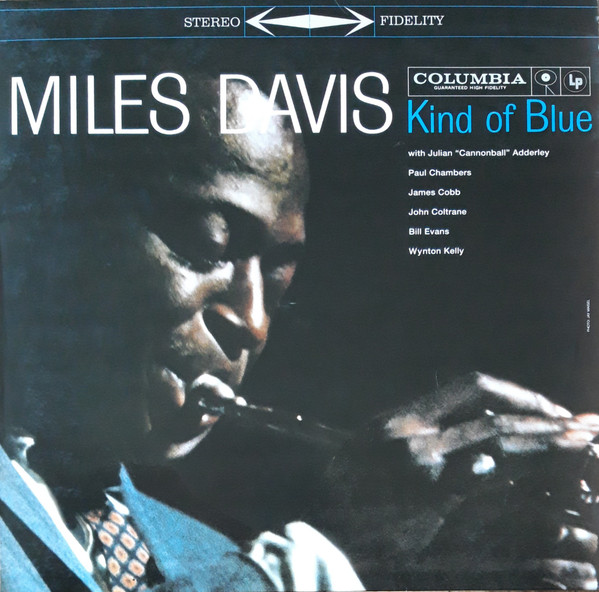
August 17, 1959: Miles Davis Releases "Kind of Blue"

August 17, 1959: Miles Davis releases Kind of Blue. It is the biggest-selling album in jazz history, certified in 2019, on its 60th Anniversary, by the Recording Industry Association of America as having sold 5 million copies.

Trumpeter Davis began releasing albums under his own name in 1951, and had previously used "Blue" in a title in 1953, with Blue Period, a reference not only to jazz having grown out of the blues, but to the paintings produced by a clinically depressed Pablo Picasso in Paris from 1901 to 1904.

And Davis did for jazz what Picasso did for art: He dragged it kicking and screaming into the modern world, with albums titled Walkin', Cookin', Relaxin', Workin', Steamin', 'Round About Midnight, Miles Ahead, Milestones and Porgy and Bess.

Like Picasso, Davis was always looking for the next step. So, on March 2, 1959, with a 2nd session on April 2, he gathered saxophonists John Coltrane (tenor) and Julian "Cannonball" Adderley (alto), bass fiddler Paul Chambers, drummer Jimmy Cobb, and pianist Bill Evans at Columbia Records' 30th Street Studio in New York on March 2, with an additional session on April 22.

Evans had joined Davis on Milestones in 1958, and served as his arranger on that and on Kind of Blue -- only 2 albums, but enough to make their combination a legend, as Davis shifted from what had been called "hard bop" to "modal jazz." Having Coltrane and Adderley on the album, both of whom went on to became stars leading their own groups, makes Kind of Blue something like "The Avengers of Jazz."
Left to right: Evans, Chambers, Davis, Coltrane, Adderley

Side One consisted of "So What," at 9 minutes and 22 seconds, probably Davis' best-known song; "Freddie Freeloader," based on the character by comedian Red Skelton; and "Blue in Green." Side Two was 11 1/2 minutes of "All Blues" and 9 1/2 minutes of "Flamenco Sketches," which presaged Davis' next album, Sketches of Spain. Because "Freddie the Freeloader" was more of a blues song, Davis had Wynton Kelly play piano on it instead of Evans. Evans is listed as co-writer with Davis of "Blue in Green" and "Flamenco Sketches," while Davis is listed as sole writer of the others.

Davis continued making modal jazz albums until 1969, when Sly & the Family Stone performed at Woodstock, and their combination of jazz and rock blew his mind. He shifted gears again, and recorded Bitches Brew, and continued his "fusion" of jazz and rock until his death. He refused to play his earlier work, saying, "They were done in that era, the right hour, the right day, and it happened. It's over... What I used to play with Bill Evans, all those different modes, and substitute chords, we had the energy then, and we liked it. But I have no feel for it anymore. It's more like warmed-over turkey."

Nearly everybody on the album, including Davis himself, had been a serious drug user, although both Davis and Coltrane had kicked heroin by the time it was recorded. Coltrane, whose 1964 A Love Supreme often contends with Kind of Blue among jazz fans for the title of best album ever, died of cancer in 1967, only 40 years old. Chambers was hooked on heroin, and it contributed to his death from tuberculosis in 1969, at 33. Kelly had epilepsy, and died in 1971 due to a particularly violent seizure, only 39. Adderley suffered a stroke and died in 1975, just 47. Evans suffered from cirrhosis, an ulcer and cocaine addiction, and died in 1980, just 51. Davis died in 1991, from a cerebral hemorrhage at 65. Cobb was the last survivor of the musicians on the album, living until 2020, when lung cancer took him at age 91.

*

August 17, 1959 was a Monday. These baseball games were played that day:

* The St. Louis Cardinals beat the Philadelphia Phillies, 5-4 at Connie Mack Stadium in Philadelphia. Stan Musial did not play.

* The Pittsburgh Pirates beat the Chicago Cubs, 7-6 at Forbes Field in Pittsburgh. Roberto Clemente went 2-for-3 with an RBI. Ernie Banks went 2-for-4 with a home run and 3 RBIs.

* The San Francisco Giants beat the Cincinnati Redlegs, 6-3 at Crosley Field in Cincinnati. This was the last of 7 seasons in which the Reds were known as the Redlegs, due to the stupidity of McCarthyism. Willie Mays went 0-for-3, but drove in a run with a sacrifice fly. Frank Robinson went 1-for-4.

* The Detroit Tigers beat the Cleveland Indians, 5-4 at Briggs Stadium in Detroit. The ballpark was renamed Tiger Stadium in 1961. Al Kaline went 0-for-4. This was the only game in the American League: The New York Yankees, the Baltimore Orioles, the Boston Red Sox, the Chicago White Sox, the Kansas City Athletics and the Washington Senators were not scheduled.

* A doubleheader was split at Milwaukee County Stadium. The Milwaukee Braves beat the Los Angeles Dodgers in the opener, 8-1. Bob Buhl was the winning pitcher, and Sandy Koufax, who hadn't yet found the control that would make him the best pitcher in baseball from 1962 to 1966, wsa knocked out of the box in the 2nd inning. Hank Aaron (off Clem Labine), Eddie Mathews and Joe Adcock (both off Koufax) hit home runs. The Dodgers won the nightcap, 6-3. Don Zimmer hit a home run.

Novelist Jonathan Franzen was born on this day. So was David Koresh, the leader of the Branch Davidian cult that murdered 4 federal agents outside Waco, Texas in 1993, before the FBI closed in, leading Koresh to kill himself and his remaining followers.

Friday, August 12, 2022

August 12, 1958: "A Great Day In Harlem"

August 12, 1958: Art Kane takes a photograph of 57 jazz musicians on the stoop of an apartment building at 17 East 126th Street, between 5th Avenue and Madison Avenue, in the Harlem section of Upper Manhattan, America's most famous African-American neighborhood and a major jazz center.

Esquire magazine publishes the photo in its January 1959 issue, under the title A Great Day in Harlem, as part of an article titled The Golden Age of Jazz.

In alphabetical order, they were: Red Allen, Buster Bailey, Count Basie, Emmett Berry, Art Blakey, Lawrence Brown, Scoville Browne, Buck Clayton, Bill Crump, Vic Dickenson, Roy Eldridge, Art Farmer, Bud Freeman, Dizzy Gillespie, Tyree Glenn, Benny Golson, Sonny Greer, Johnny Griffin, Gigi Gryce, Coleman Hawkins, J.C. Heard, Jay C. Higginbotham, Milt Hinton, Chubby Jackson, Hilton Jefferson, Osie Johnson, Hank Jones, Jo Jones (not to be confused with Philly Joe Jones), Jimmy Jones, and Taft Jordan.

Also: Max Kaminsky, Gene Krupa, Eddie Locke, Marian McPartland, Charles Mingus, Miff Mole, Thelonious Monk, Gerry Mulligan, Oscar Pettiford, Rudy Powell, Luckey Roberts, Sonny Rollins, Jimmy Rushing, Pee Wee Russell, Sahib Shihab, Horace Silver, Zutty Singleton, Stuff Smith, Rex Stewart, Maxine Sullivan, Joe Thomas, Wilbur Ware, Dickie Wells, George Wettling, Ernie Wilkins, Mary Lou Williams and Lester Young.

Of the 57, 15 of them had also been in the CBS broadcast The Sound of Jazz, 8 months earlier: Allen, Berry, Dickenson, Eldridge, Hawkins, Hinton, Johnson, Jo Jones, Monk, Mulligan, Rushing, Russell, Stewart, Wells and Young.

Quincy Jones, not in the photo, would later say, "The importance of this photo transcends time and location, leaving it to become not only a symbolic piece of art but a piece of history."

He added: "The fact that all 57 musicians agreed to show up for a 10 AM photoshoot is a true testament to how dedicated they were. These musicians did not gather together on this early morning because they thought they would be paid or instantly be made an international superstar. Rather, they did it to celebrate the golden age of jazz and all that it stood for. Jazz was never just a genre, it was a way of life. And it still is." 

Golson said, "There was going to be an unusual shooting of a photograph for Esquire Magazine and I was being invited to be a part of it. I couldn’t believe it! Nobody really knew me that early in my career. But zippo, I was there on the intended date. When I arrived, there were all of my heroes."

It was lucky that the picture was taken then: Lester Young died on March 15, 1959, a little over 7 months later.

Almost as notable is who isn't in the photo. Willie "the Lion" Smith was standing just out of the camera's range. Billie Holiday, who also died the following year, wasn't there. It's not clear if she wasn't invited, or if she was but was too ill to make it.

Also not there, because they were touring, were Louis Armstrong, Duke Ellington, Ella Fitzgerald, Miles Davis and John Coltrane. Benny Goodman was invited, but was in Los Angeles, and couldn't get there in time. Ronnie Free, Mose Allison and Charlie Rouse got to the site too late for the photo. And I don't know the status of Cab Calloway, who, at the least, should have been invited.

In 2004, Tom Hanks starred in The Terminal, playing Viktor Navorski, a jazz fan from Eastern Europe, who had gotten autographs from 56 out of the 57 musicians, and was flying to New York to get one from the last holdout, Golson. Golson, presumably chosen because he was still alive and thus available, did appear as himself in the film, and signed the autograph for Navorski.

As of August 12, 2022, Golson, who is 93 years old, Sonny Rollins, who stands to turn 92 next month, are the last 2 survivors of the photo. Photographer Kane died in 1995.

UPDATE: Golson died on September 21, 2024, leaving Rollins as the last survivor. Rollins died on May 25, 2026, at 95 -- in Woodstock, New York, a town associated with not what "hippies" were in the 1950s, jazzmen, but what they were in the 1960s, long-haired peace singers.

*

August 12, 1958 was a Tuesday. It was the off-season for the NFL, the NBA and the NHL. But there were Major League Baseball games played on that day:

* The New York Yankees beat the Baltimore Orioles, 7-2 at Yankee Stadium. Mickey Mantle and Gil McDougald hit home runs, to back the pitching of Tom Sturdivant. So it was a pretty good day, if not a great day, in the South Bronx.

* The Cincinnati Redlegs beat the Philadelphia Phillies, 12-4 at Connie Mack Stadium in Philadelphia. (Due to Cold War hysteria, the Cincinnati team had been officially named the Redlegs since 1953. They went back to the name Reds in 1959.)

* The Pittsburgh Pirates beat the Milwaukee Braves, 10-0 at Forbes Field in Pittsburgh. Red Witt pitched a shutout, allowing only 2 hits: A double by Frank Torre in the 2nd inning, and a double by Hank Aaron in the 9th.

* The Chicago White Sox beat the Cleveland Indians, 4-1 at Cleveland Municipal Stadium.

* The Detroit Tigers beat the Kansas City Athletics, 7-6 at Briggs Stadium in Detroit. (It was renamed Tiger Stadium in 1961.)

* The Chicago Cubs beat the Los Angeles Dodgers, 9-3 at the Los Angeles Memorial Coliseum.

* The St. Louis Cardinals beat the San Francisco Giants, 7-3 at Seals Stadium in San Francisco.

* And a game at Griffith Stadium in Washington was rained out, and made up on September 26. The Boston Red Sox beat the Washington Senators, 6-4.

December 31, 1999 & January 1, 2000: The Millennium

December 31, 1999:  The Millennium arrives. The people of planet Earth survived. At a terrible cost. But we hadn't destroyed ourselves. ...