Showing posts with label washington senators. Show all posts

Thursday, November 3, 2022

November 3, 1908: William Howard Taft Is Elected President

November 3, 1908: William Howard Taft, the U.S. Secretary of War, is elected the 27th President of the United States. The nominee of the Republican Party defeats William Jennings Bryan, who had been nominated by the Democratic Party for the 3rd time. Taft gets 51.6 percent of the popular vote, and wins the Electoral Vote 321 to 162.

Theodore Roosevelt chose not to run for what would have been a 3rd term, and chose Taft, who would really have preferred to have been named Chief Justice of the U.S. Supreme Court. TR warned Taft to not let the press take his picture on the golf course. Despite this warning, and his weight, which made him look ridiculous on the golf course, it happened, and TR called him onto the carpet.

Taft was a physical heavyweight, reaching a peak of 355 pounds, our heaviest President -- although Donald Trump may have broken this record. Taft was no lightweight intellectually, either: He was a graduate of Yale University, although he returned to his hometown to go to law school, at the University of Cincinnati. When TR read him the riot act over the golf pictures, Taft stood up for himself, and said, "Mr. President, you play tennis. That's a more elitist sport than golf!" TR said, "Yes, but I don't let the press take my picture while I do it!"

Taft won anyway, mainly because Bryan was running for the 3rd time, and the issue that had first vaulted him to prominence, the free coinage of silver, was no longer as effective when there wasn't a depression on, as there was when he first ran in 1896. One of the Taft slogans was, "Vote for Taft this time. You can vote for Bryan anytime."

The Democrats tried to suggest that Taft would be nothing but Roosevelt's puppet. That only helped him, as the Republicans made buttons and signs reading, "U-N-I, Ted." A campaign song was launched: "Get on the raft with Taft, boys, get in the winning boat!"

Taft is remembered largely for his, well, largeness. However, the story that he got stuck in a bathtub in the White House is not true. Nor is it true that, on Opening Day at the Washington Senators' American League Park (predecessor to Griffith Stadium) on April 14, 1910, he inadvertently invented the seventh-inning stretch, by getting up to stretch his legs, making everyone else stand out of respect to the President. That may have happened at some point in the game, but the stretch had been invented years earlier. What Taft did start that day was the tradition of the President throwing out the ceremonial first ball at the Washington team's home opener.

And while TR was known as "the trust buster," Taft actually broke up more monopolies than Roosevelt did. Nevertheless, Taft ended up running his Presidency as a conservative, far from the progressive vision that TR had expected.

As a result, TR tried to regain the office in 1912. But, as the incumbent, Taft controlled the party machinery. TR ran as a 3rd party candidate, and finished 2nd. They split the Republican vote, and Democrat Woodrow Wilson got elected as a plurality candidate. Wilson appointed Bryan his Secretary of State, but Bryan resigned in 1915, because he was a pacifist, Wilson seemed to be inching too closely to going to war.

Roosevelt and Taft patched things up, and Wilson's successor, Warren Harding, appointed Taft to be Chief Justice -- the only President to also have served on the Supreme Court. Today, "Teddy 26" and "Bill 27" are part of the Washington Nationals' "Racing Presidents."

Taft was the 1st President to be buried at Arlington National Cemetery, across the Potomac River from Washington, in Arlington, Virginia. Only John F. Kennedy has joined him. There are high schools named for Taft in New York (The Bronx), Chicago, San Antonio and Los Angeles. There's a William Howard Taft University in Denver, and a Taft Law School in the Los Angeles suburb of Santa Ana, California.
Statue of Taft as Chief Justice,
University of Cincinnati Law School

His father Alphonso Taft had served as U.S. Attorney General and Secretary of War. His son Robert Taft served as Senate Majority Leader, and ran for President in 1940, 1948 and 1952. Robert's son, Robert Taft Jr., served Ohio in both houses of Congress. And his son, Bob Taft, served as Governor.

Taft was played by Ross Durfee in The Winds of Kitty Hawk in 1978, Victor Buono in Backstairs at the White House in 1979, and Walter Massey in The Greatest Game Ever Played in 2005.

Henry L. Stimson served as Secretary of War under Taft, and later again under Franklin Roosevelt. He lived until 1950, making him last surviving member of Taft's Cabinet.

*

November 3, 1908 was a Tuesday. The baseball season -- one of the wildest ever, with 3-team races going down to the wire in both Leagues, including "Merkle's Boner" and its aftermath -- was over. Saturday had been standardized as the weekday for college football. Football barely existed on a professional level, and basketball and hockey were still all-amateur. So there were no scores on this historic day.

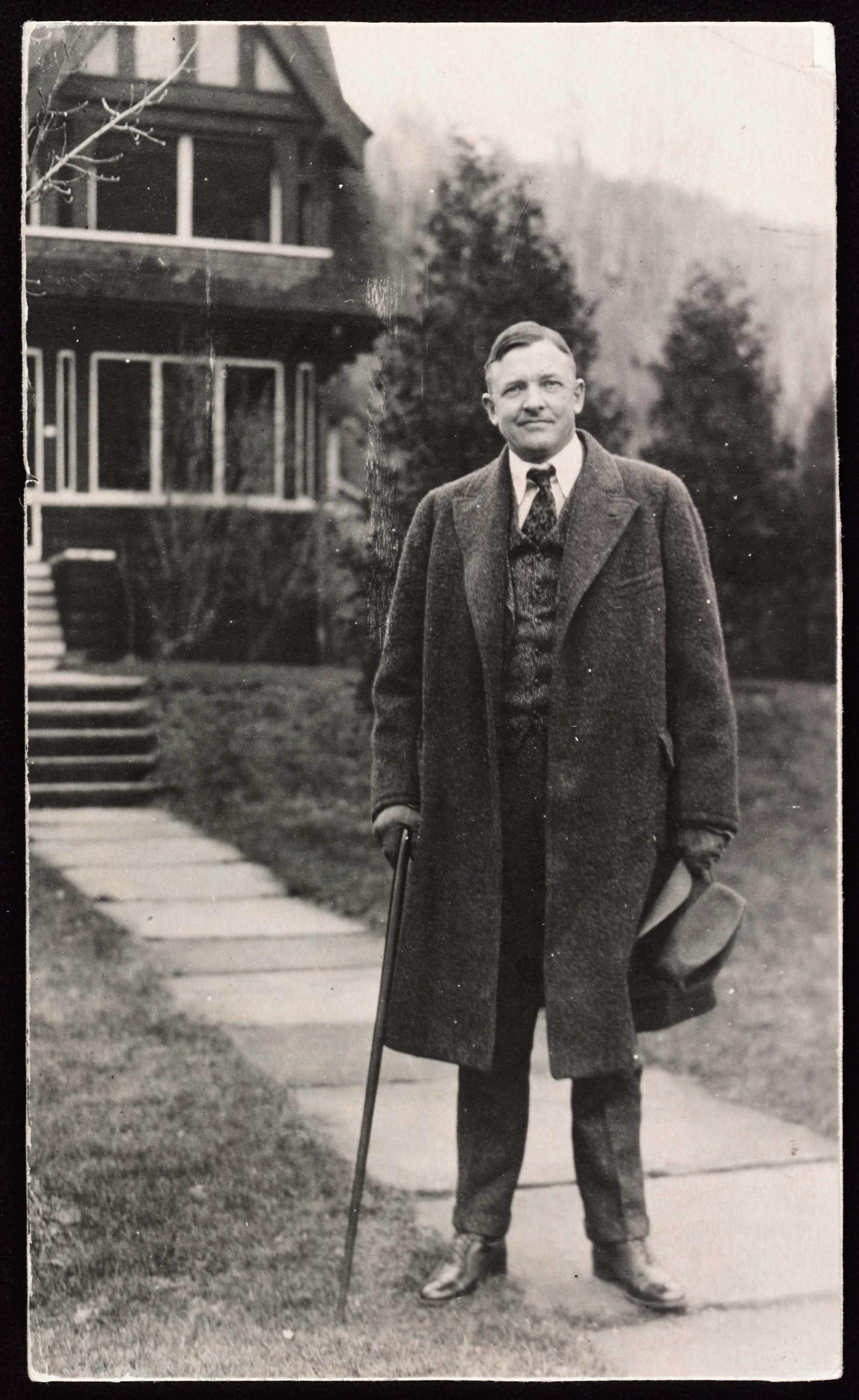
But there was an event on this day that would have an effect on sports: Bronislau Nagurski was born in Rainy River, Ontario. He grew in International Falls, Minnesota. "Bronko" wasn't big by today's standards, but, at 6-foot-3 and 230 pounds, he was enormous for his era. He could do it all: Block, run, catch, tackle, even throw every once in a while. He helped the Chicago Bears win the NFL Championship in 1932 and 1933, and, during the manpower shortage of World War II, came out of retirement to help them do it again in 1943.

He was a charter inductee into the Pro Football Hall of Fame in 1963. When John Madden named his "All-Madden All-Millennium Team" in 1999, the 1st 3 names he chose were Jim Thorpe, and the 1930-34 Chicago running tandem of Red Grange and Nagurski -- the prototypes, respectively, of the modern speedy halfback and the big, bruising fullback.

Thursday, October 27, 2022

October 28, 1913: Christy Mathewson vs. Walter Johnson

Walter Johnson (left) and Christy Mathewson

October 28, 1913: In the only time the 2 greatest pitchers of their time face each other -- baseball would have no All-Star Game until 1933, and no Interleague Play until 1997, and they never faced each other in a World Series -- Walter Johnson and Christy Mathewson square off, at South Main Park in Tulsa‚ Oklahoma.

Normally, Johnson pitched for the Washington Senators. This time, he is backed by the Chicago White Sox‚ with the addition of another superstar, Boston Red Sox center fielder Tris Speaker. Johnson wins the battle‚ as the White Sox beat the New York Giants, 6-0. Johnson went the distance, striking out 8, while Matty exited after 4 innings.

Speaker and White Sox regular Buck Weaver did the hitting for the Pale Hose‚ while Oklahoma native, Sac and Fox Indian, and fan favorite Jim Thorpe got 2 hits for the Giants off Johnson. 

The game had been delayed for nearly 2 hours when the stands collapsed‚ injuring 52 people and killing a soldier. Governor R.L. Williams of Oklahoma narrowly escaped injury in the tragedy.

This was part of a world tour undertaken by the Giants and White Sox from late October 1913, after the Giants lost the World Series to the Philadelphia Athletics, until February 1914, through the Western United States, then to Asia, Australia, Egypt and Europe, although some of their intended games were rained out.

Mathewson won more games in the 1900s (1900 through 1909) than any other pitcher: 236. Johnson was the winningest pitcher of the 1910s: 265. Each would be among the 1st 5 inductees into the Baseball Hall of Fame in 1936, along with Ty Cobb, Babe Ruth and Honus Wagner. Unfortunately, both men would die too soon: Mathewson from tuberculosis in 1925, at the age of 45; Johnson from a brain tumor in 1946, at 59.

*

October 28, 1913 was a Tuesday. Football was in midweek. Professional basketball barely existed. And it was too early for hockey season. So this was the only score on this historic day.

Wednesday, October 26, 2022

October 26, 1934: The Joe Cronin Trade

October 26, 1934: Washington Senators owner Clark Griffith sells his shortstop and manager, Joe Cronin, to the Boston Red Sox for shortstop Lyn Lary and $225‚000 (about $4.9 million in 2022 money). Recently married to Mildred Robertson‚ Griffith's niece and adopted daughter‚ Cronin is signed by the Red Sox to a 5-year contract, a real rarity in those days.

This trade not only helps return the Red Sox to contention for the first time since Harry Frazee sold off several stars to the Yankees from 1919 to 1923, but it also helps wreck the Senators franchise, which had won the Pennant just 1 year earlier: For 77 years, from 1934 to 2011, only once, in 1945, had a Washington baseball team been in a major league Pennant race; only twice had they finished as high as 2nd, only 3 times as high as 3rd, and only 5 times had they had winning seasons.

This includes the "old Senators," from 1935 to 1960, when they moved to become the Minnesota Twins; the "new Senators," from 1961 to 1971, when they moved to become the Texas Rangers; the Washington Nationals, who had been terrible with flashes of fun since arriving in 2005; and the 1972-2004 interregnum when D.C.-area fans either had to go up to Baltimore, go to only the occasional exhibition game at RFK Stadium, check out minor-league teams (the Maryland cities of Salisbury, Frederick and Hagerstown, or Virginia teams like nearby Prince William), or stick to TV and go without live major league ball. 
It took the Nats until 2019 to finally bring D.C. its 1st Pennant since 1933 -- 86 years.

And yet, in spite of all the money that Yawkey spent from his 1933 purchase of the team until his death in 1976, the Red Sox didn't fare a lot better, as the New York Yankees kept winning Pennants. Cronin managed the Sox to a Pennant in 1946, then they didn't win another one until 1967, another in 1975, and another under Yawkey's widow Jean in 1986. It took until 2004 for the Red Sox to win their 1st World Series since 1918 -- also, 86 years.

Cronin served as Red Sox manager from 1934 to 1947, their general manager from 1948 until 1958, and as President of the American League from 1959 to 1973. He was elected to the Baseball Hall of Fame, the Red Sox retired his Number 4, and the Nationals elected him to their Ring of Honor.

Cronin's 1st major league team was the Pittsburgh Pirates. On April 1, 1928, they sold him to the Kansas City Blues of the American Association. On July 18, the Senators bought him from the Blues. The Pirates had won the National League Pennant in 1925 and 1927, but didn't win it again until 1960. So selling him was a really dumb transaction for them, right?

Not really: The Pirates stayed in contention the next 3 seasons, before having a losing record in 1931. The next season, they called up Joseph "Arky" Vaughan, who became one of the best shortstops of all time. He helped them come close to the Pennant in 1932, '33 and '38. Whatever prevented the Pirates from winning the Pennant for the remainder of Cronin's playing career, it wasn't the lack of a Hall of Fame shortstop.

*

October 26, 1934 was a Friday. Basketball player turned broadcaster Rod Hundley was born.

The baseball season had ended 17 days earlier, when the St. Louis Cardinals beat the Detroit Tigers in the World Series. The NBA hadn't been founded yet. The NHL season started 13 days later. There were some college football games played that night, but only one was between two teams that are now in the NCAA Division I Football Bowl Subdivision (formerly known as Division I-A): New Mexico State and Arizona played to a 0-0 tie at Arizona Stadium in Tucson.

Saturday, October 15, 2022

October 15, 1925: Walter Johnson's Last Stand

October 15, 1925: A steady downpour yesterday and today has left the field at Forbes Field in Pittsburgh a muddy mess, as Game 7 of the World Series is scheduled to be played. The weather forecast suggested rain for the next 3 days for both cities involved, Pittsburgh and Washington, making the moving of Game 7 to Washington pointless, and Commissioner Kenesaw Mountain Landis was anxious to get it over with.

I've never seen film of this game. I don't even know if any survives, although YouTube has footage from earlier in the Series, and of the Game 7s of 1924 and 1926. Maybe the film crews didn't want to risk getting electrocuted in the rain. At any rate, all we have to go on for the inclement weather are news reports.

UPDATE: On August 8, 2025, as commemorations for the 100th Anniversary of this Series began, I saw a photograph of a rather dubious method of drying the infield: Dousing it with gasoline and setting it on fire.
This insane tactic actually happened. It wasn't the only time, either.

But it would have been just plain wrong to play if the rain were as bad as what Philadelphia and Tampa Bay faced when Game 5 of the 2008 Series was suspended. There was a 6-day delay due to rain in 1911, and there were 3-day delays in 1962 and 1975. It could have been done again.

It was a short day for Pirate starter Vic Aldridge: 3 walks and 2 hits‚ and he was out of there with just 1 out in the 1st. Walter Johnson, the winningest pitcher in American League history, who finally became a World Series hero the year before, took a 4-0 lead to the mound. In what became known as "Johnson's Last Stand," the Bucs clobbered the 38-year-old Big Train for 15 hits‚ good for 24 total bases. Max Carey's 4-for-5 gave him a Series-high batting average of .458.

The Senators made the most of 7 hits‚ scoring 7 runs‚ including shortstop Roger Peckinpaugh's home run‚ the 12th homer of the Series by both teams combined‚ then a Series record, despite Forbes Field and Washington's Griffith Stadium both having some of the most distant fences in the game. Johnson would have fared better but for 2 more errors by Peckinpaugh‚ his 7th and 8th‚ still the Series record for any position. The Senators made only 1 other error in the 7 games.

Ray Kremer picked up his 2nd win with a 4-inning relief effort‚ as the Pirates won, 9-7. This was the Pirates' 1st World Championship in 16 years, and only one player remains from that 1909 title with Honus Wagner: Charles "Babe" Adams, who had pitched and won 3 games in '09, and was riding out the string in '25. It would take until 2019 for another Washington team to get that close to a World Series win.

In the next day's New York TimesJames Harrison wrote, "In a grave of mud was buried Walter Johnson's ambition to join the select panel of pitchers who have won three victories in one World Series. With mud shackling his ankles and water running down his neck, the grand old man of baseball succumbed to weariness, a sore leg, wretched support and the most miserable weather conditions that ever confronted a pitcher."

The last surviving member of the 1925 Pirates was shortstop Glenn Wright, who lived until 1984.

UPDATE: The Pirates have a team Hall of Fame. From their 1925 and 1927 National League Champions, including the 1925 World Series win, they have inducted 3rd baseman Harold "Pie" Traynor, center fielder Max Carey (who left after 1926), right fielders Hazen "Kiki" Cuyler and Paul Waner (who arrived in 1926), and Paul's brother, center fielder Lloyd Waner (who arrived in 1927).

*

October 15, 1925 was a Thursday. There was 1 other score on this historic day, a college football rivalry: North Carolina beat North Carolina State, 17-0 at Riddick Field on the N.C. State campus in Raleigh.

Thursday, October 13, 2022

October 14, 1892: Football Pushes Baseball Back

The 1892 Princeton University football team

October 14, 1892: The scheduled game between the Boston Beaneaters and the Washington Senators is postponed, because the Senators' ballpark, Boundary Field, has already been reserved by the Columbia Athletic Club for a football game against The College of New Jersey.
The Beaneaters were the forerunners of the Braves. The Senators went on to fold in 1899, and are not to be confused with any later D.C. team. The Columbia Athletic Club was based in D.C., and is not to be confused with Columbia University in New York City. In 1896, The College of New Jersey was renamed Princeton University, and should not be confused with the current TCNJ, formerly Trenton State College.
As far as I know, this is the 1st time football has ever asserted its authority, whatever that might be, over baseball.
It's just as well: Princeton were a juggernaut that year. They began the season beating Rutgers 30-0 at home, beat Lehigh 16-0 away just 4 days later, beat Lafayette 40-0 at home only 3 days after that, won this game 42-0, beat Navy 28-0 in Annapolis the very next day, beat Lehigh 52-0 at home only 4 days later, beat the New York Athletic Club 40-0 at the Polo Grounds only 2 days later, beat the Crescent Athletic Club 42-0 at Eastern Park in Brooklyn (then the home of the team that would become known as the Dodgers) the very next day, beat the Manhattan Athletic Club 46-0 at home 5 days later, beat Wesleyan University 60-0 at Manhattan Field only 2 days later, and beat the Chicago Athletic Association 12-0 at home only 4 days later. That's 11-0, by an average score of 39-0.
Finally, it all caught up with them. Three days after beating the Chicago A.A., they went to Philadelphia, and lost 6-4 to the University of Pennsylvania at the Germantown Cricket Club. Three days later, they beat the Orange Athletic Club, 23-0 at the Orange Oval in East Orange, New Jersey. Then they had their longest break of the season, 16 days, playing again on Thanksgiving, again at Manhattan Field, next-door to the Polo Grounds and the home of baseball's New York Giants in the 1890 season only, and lost to Yale, 12-0. This finished them at 12-2, and handed the National Championship to Yale.
Boundary Park became the home of the American League's Washington Senators in 1904, after 3 seasons at American League Park. In 1907, it became the 1st major league home field of the Senators' greatest player, Walter Johnson, perhaps the best pitcher in baseball history. On April 14, 1910, President William Howard Taft began the tradition of the President throwing out the ceremonial first ball, at Boundary Field.
The wooden stands were destroyed by fire on March 17, 1911. The clubhouse in the northeast corner and a portion of the open bleachers in left field were saved. A meeting of the directors of the club was held that afternoon to discuss the future of the field. The option to start the season on the old Union League grounds or have Boston or New York host the opening series of the games at their parks were considered.
By Opening Day, April 12, 16,000 temporary stands were up, allowing the team to open the season at home. Piece by piece, a new concrete-and-steel stand went up, and the renamed National Park was declared open on July 24. It hosted Washington baseball for the next 50 years, mostly under the name Griffith Stadium.
*
October 14, 1892 was a Friday. The Beaneaters probably didn't mind much that their game for this day was postponed, because they'd already clinched the National League Pennant. Here's the 3 games that were played as scheduled:
* The New York Giants lost to the Philadelphia Phillies, 3-1 at the Philadelphia Base Ball Grounds. This facility would burn down in 1894, and be rebuilt the next year, eventually becoming known as Baker Bowl.
* The Brooklyn Bridegrooms and the Baltimore Orioles played to a 2-2 tie. Baseball-Reference.com has no indication as to why they did not play until a winner was found. It could have been due to darkness, but that usually didn't happen in those days unless a game went to extra innings, and there's no mention of a number of innings played. There wouldn't be, unless it was anything other than 9. More than that would suggest being called due to darkness; fewer would suggest rain. But neither is mentioned.
* The Cleveland Spiders beat the Louisville Colonels, 16-10 at League Park in Cleveland. Yes, that's a baseball game, not a football game.
* At any rate, the Beaneaters and Senators played a doubleheader the next day, the last day of the regular season. The Beaneaters swept, 7-4 and 4-0.
* The Chicago Colts and the St. Louis Browns were not scheduled. The Browns became the Cardinals in 1900, and the Colts became the Cubs in 1903. These teams, already having faced each other in postseason play in 1885 and 1886, would become arch-rivals in the 20th Century.
* And the Cincinnati Reds and the Pittsburgh Pirates were also not scheduled. They would also form something of a rivalry, though it took until the 1970s to develop.
The Bridegrooms became the Superbas in 1899, and the Dodgers in 1911. The Beaneaters became the the Doves in 1907, the Rustlers in 1911, and the Braves in 1912. The Senators, Orioles, Spiders and Colonels went out of business after the 1899 season.

Monday, October 10, 2022

October 11, 1925: The 1st FBI Agent Killed In the Line of Duty

October 11, 1925: Special Agent Edwin C. Shanahan becomes the 1rst FBI Agent killed in the line of duty. He was 32 years old.

He was born in 1893 in Chicago, and joined the Federal Bureau of Investigation in 1920. On October 11, 1925, he and the team he was working with received word from underworld sources that Martin J. Durkin, a car thief who had previously wounded 4 police officers to avoid capture in Chicago, was planning to hide a stolen automobile in a certain Chicago garage.

Born in 1901 in Ireland, Durkin was investigated for violation of the Dyer Act, a law that made transporting stolen cars across State borders a federal crime, to be prosecuted by federal law enforcement. Hence, it fell under the jurisdiction of the FBI.

Shanahan and officers of the Chicago Police Department proceeded to that garage to wait for Durkin to appear. When Durkin drove the stolen car into the garage, Shanahan, who was alone at the time, attempted to arrest him. However, Durkin swept a revolver from the front seat of the car, and shot the Agent in the chest. Shanahan returned fire, but Durkin escaped as his victim collapsed. Death was almost instantaneous.

J. Edgar Hoover, then 31 years old, had been Director of the FBI for a little under a year and a half at that point, and with the 1st federal agent to be murdered, from any agency, happening to one from his agency, he took it personally. He launched a nationwide manhunt for Durkin, saying, "We've got to get Durkin. If one man from the Bureau is killed, and the killer is permitted to get away, our agents will never be safe. We can't let him get away with it."

It lasted 3 months through 5 States, before Durkin was captured at a train station outside St. Louis on January 20, 1926. He was sentenced to 35 years in prison for the murder, and received an additional 15 years on stolen motor vehicle charges.

Because the murder of a federal agent was not yet a federal crime, he served in State prison for it, for 20 years. Parole on the State charges meant that the federal government then took custody of him on the federal car theft charge, and he served an addition 9 years, being released in 1954. He died in 1981, outliving his victim by 55 years, and Hoover by 9 years.

As of October 11, 2022, 98 FBI employees have died in the line of duty, 62 of them by murder, 1 of them in the terrorist attacks on September 11, 2001, and another 11 from long-term illnesses that have been ascribed to those attacks.

*

October 11, 1925 was a Sunday. Writer Elmore Leonard was born.

Game 4 of the World Series was played at Griffith Stadium in Washington. The Washington Senators beat the Pittsburgh Pirates, 4-0, with Walter Johnson pitching a shutout. The Senators were up 3 games to 1, but the Pirates won the next 3 games to take the Series.

And these 9 games were played in the NFL:

* The New York Giants, a 1st-year team, played their 1st game against another NFL team, losing to the Providence Steam Roller (no S on the end), 14-0 at the Cycledrome in Providence, Rhode Island.

* The Pottsville Maroons beat the Canton Bulldogs, 28-0 at Minersville Park in Pottsville, Pennsylvania.

* The Buffalo Bisons and the Akron Pros played to a tie, 0-0 at Bison Stadium, later Offermann Stadium, in Buffalo.

* The Cleveland Bulldogs beat the Kansas City Cowboys, 16-13 at League Park in Cleveland.

* The Detroit Panthers beat the Frankford Yellow Jackets, 3-0 at Navin Field (later Briggs Stadium and Tiger Stadium) in Detroit.

* The Chicago Cardinals beat the Columbus Tigers, 19-9 at Normal Park in Chicago.

* The Chicago Bears beat the Hammond Pros, 28-7 at Cubs Park (renamed Wrigley Field the next year) in Chicago.

* The Green Bay Packers beat the Milwaukee Badgers, 31-0 at Green Bay City Stadium.

* And the Rock Island Independents beat the Duluth Kelleys, 12-0 at Athletic Park, the minor-league baseball park in Duluth, Minnesota.

October 10, 1924: The Washington Senators Win the World Series

Bucky Harris

October 10, 1924: With the score tied at 3-3 and one out in the bottom of the 12th in Game 7 of the World Series at Griffith Stadium in Washington, Muddy Ruel, catcher for the Washington Senators, lifts a high catchable foul pop-up, which New York Giants catcher Hank Gowdy misses when he stumbles over his own mask.
Given a second chance, Ruel doubles. Earl McNeely then hits a grounder that strikes a pebble, and soars over the head of rookie Giant 3rd baseman Freddie Lindstrom, and drives home Ruel with the winning run making the Senators World Champions.
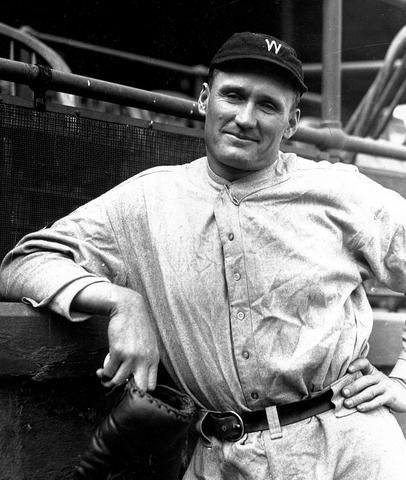
Walter Johnson, who had brilliantly toiled 18 seasons for a team known as "Washington: First in war, first in peace, and last in the American League," and had lost Games 1 and 4, pitched the 9th through 12th innings in relief, and not only had finally won a World Series game, but had won a World Series.
Walter Johnson
President Calvin Coolidge, running for a term in office in his own right after succeeding the late Warren Harding the year before, and his wife Grace were in attendance. He didn't like baseball, but Grace did.
Left to right: Grace Coolidge, Calvin Coolidge, Secretary of State Frank Kellogg
The Senators had their 1st World Championship in 24 years of trying. Outfielder George "Showboat" Fisher was the last survivor of the 1924 Senators, living until 1994, age 95. It took 95 years for another Washington baseball team has won another postseason series, but Nationals, having squandered National League Eastern Division titles in 2012, '14, '16 and '17, won the 2019 World Series.
In 1981, baseball historian John Thorn published Baseball's 10 Greatest Games. He included this game as one of them.

*

October 10, 1924 was a Monday. There were no other baseball games. The NHL season hadn't started yet. The NBA hadn't been founded yet. The NFL played the previous day.

But there were other scores on this historic day, 2 of them, in college football. Kansas State beat Emporia State, 19-6 at World War Memorial Stadium in Manhattan, Kansas. And Southern Methodist University (SMU) beat Austin College, 7-0 at Fair Park Stadium in Dallas. (The Cotton Bowl would be built on the site of Fair Park Stadium.)

And film director Ed Wood was born on this day.

Sunday, October 9, 2022

October 10, 1904: The Jack Chesbro Game

Photo colorized, but otherwise real.

October 10, 1904: For the first time, and not for the last, an American League Pennant comes down to New York and Boston. The last day of the season features a doubleheader at Hilltop Park, at 165th Street & Broadway in Manhattan's Washington Heights.

The New York Highlanders, forerunners of the Yankees, need to sweep the Boston Americans, forerunners of the Red Sox, in order to win. Otherwise, Boston will win it. Hilltop Park seats about 16,000, but there's perhaps 30,000 jammed into the confines, including thousands of standees roped off in the massive outfield area.
Pitching the 1st game for the Highlanders is Jack Chesbro, who has already won 41 games, which remains the single-season record for pitching from 60 feet, 6 inches away. And that's pronounced CHEESE-bro, not CHEZ-bro.

With the score 2-2 in the top of the 9th and Lou Criger on 3rd base, Chesbro throws a spitball – then a legal pitch – but it's a wild pitch, going over the head of his catcher, Jim "Deacon" McGuire, and Criger scores the Pennant-winning run. The Yankees win the nightcap, 1-0, but it's meaningless, as the Red Sox-to-be win the Pennant.

But, faced with the prospect of losing a postseason series not just to the champions of what they view as "an inferior league," but to the other New York team, the National League Champion New York Giants refuse to participate in the World Series. Manager John McGraw, on this day, issues a statement that it was his decision, not that of owner John T. Brush, to refuse to play the AL Champions, regardless of who they turned out to be. The 1904 World Series is called off, and it will be 90 years before such a thing happens again – over a very different kind of stupidity, and a more egregious one at that.

Brush and McGraw were so shamed in the press for chickening out that they agreed that they would participate in any future World Series – and they participated in 14 before moving to San Francisco, their total now 20.

Today, over a century later, the Red Sox organization does not claim a forfeit win and call themselves the 1904 World Champions, which would give them 9 World Championships, rather than 8. But they might as well -- after all, who can stop them, and how? Certainly, they have a more legitimate claim to the title of 1904 than they do to those of 2004, 2007, 2013 and 2018.

And yet, the plaque at Polo Grounds Towers lists the Giants as World Champions for 1904, as well as for 1905, 1921, 1922, 1933 and 1954 -- but not for 1888 and 1889, possibly because those titles were not won at that location, but rather at a different location with a facility called the Polo Grounds.

After 1904, the Americans/Red Sox would win 4 more Pennants in the next 14 seasons. The Highlanders/Yankees would have to wait another 17 years before winning their 1st, but then, they would pretty much keep winning them for the next 43 years.

John Dwight Chesbro, a.k.a. Happy Jack, won 41 games that season, and 198 in his Hall of Fame career for the Pirates and the Yankees (and, for the very last game of his career, the North Adams, Massachusetts native came home and pitched and lost one for the Red Sox). Sadly, he is mainly remembered not for all the games he won, but for one he lost, basically for one bad pitch that he threw. He died in 1931, age 57.

A shocking percentage of the 1904 Americans died young, what with that being the pre-antibiotic era, although the man named Denton True Young, a.k.a. Cy Young, lived to be 87. The last survivor of the 1904 Americans, and the 1903 team that won the 1st World Series, was shortstop Freddy Parent, a New England native, from Biddeford, Maine, who lived on until 1972, at the age of 96. The last surviving 1904 Highlander was 2nd baseman Jimmy Williams (no relation to later Red Sox manager Jimy Williams), who died in 1965.

*

October 10, 1904 was a Monday. This was before what became North America's other major sports, football, basketball and hockey, really went professional. There were only 2 other games that day in what would later be called Major League Baseball, and they were a doubleheader.

It was played at Boundary Field in Washington, D.C. The host Washington Senators lost the opener to the Philadelphia Athletics, 7-6. Then they were leading the nightcap, 4-3, when the game was called after 5 innings, due to darkness, as no ballparks had lights in those days.

Boundary Field burned down early in the 1911 season, as did the Polo Grounds in New York. Both were quickly rebuilt. The new Washington ballpark was named National Park, until 1922, when Clark Griffith -- the 1st manager of the Highlanders/Yankees and also a pitcher for them -- bought the Senators, and renamed it Griffith Stadium. Baseball continued to be played there until 1961. It was demolished in 1965, and Howard University Hospital was built on the site.

The Highlanders became the Yankees in 1913. That same year, they moved into the Polo Grounds, invited to do so as a return courtesy for the Yankees letting the New York Giants use Hilltop Park while the Polo Grounds was rebuilt after their fire. They moved into the original Yankee Stadium in 1923.

Hilltop Park was torn down in 1914. For a while, Billy Sunday, a former major league pitcher turned nationally-known evangelist, had a church on the site. In 1928, the site of Hilltop Park, like that of Griffith Stadium, had a hospital built on it, Columbia-Presbyterian Medical Center. At each hospital, the location of home plate is marked with a plaque.

And the home of the Americans/Red Sox? The Huntington Avenue Grounds didn't last much beyond the team moving to Fenway Park in 1912. Northeastern University built athletic facilities on the site. A statue of Cy Young now stands where the pitcher's mound once stood. 

October 9, 1924: Soldier Field Opens

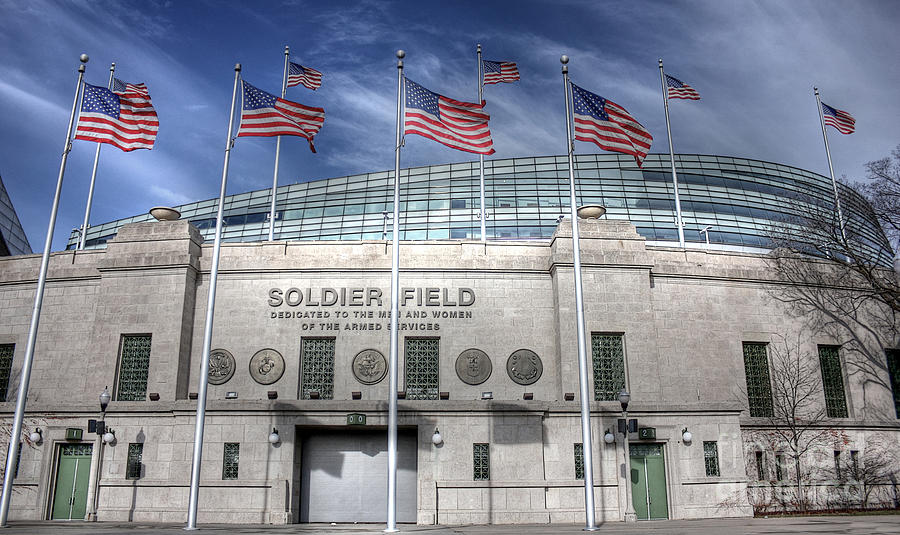
October 9, 1924: Municipal Grant Park Stadium opens on Chicago's lakefront. It would be renamed Soldier Field the next year. It would host many big college football games, including the annual Chicago College All-Star Game between a team of recently graduated players and the defending NFL Champions (who nearly always won) from 1934 to 1976.

And the name is "Soldier" Field. Never "Soldiers" or "Soldiers' Field." There is a Soldiers Field in Boston, part of Harvard University's sports complex.

Its best-known event was the 2nd fight between Heavyweight Champion Gene Tunney and the man from whom he took the title, Jack Dempsey, on September 22, 1927. In the 7th round, Dempsey knocked Tunney down, but he forgot to obey a new rule (which he, himself, had demanded): The referee would not start the count until the standing fighter retreated to a neutral corner. This gave Tunney an extra 5 seconds to regain his bearings, and he got up at the count of 9 (14), and went on to beat Dempsey in a decision.

It became known as the Long Count Fight, and, to this day, some people think Dempsey was robbed. He wasn't: The film clearly shows Tunney watching the referee's count. He could have gotten up at the count of 4, which should have been 9. Dempsey wasn't robbed. He didn't even blow it. He got beat, fair and square. 
may have had what remains the greatest attendance ever for a U.S. sporting event, with figures ranging from 104,000 to 130,000, depending on who you believe.
It definitely was the site of the largest football crowd ever, 123,000, to see Notre Dame play USC a few weeks after the Long Count. That record stood until a 2016 Tennessee-Virginia game was staged at Bristol Motor Speedway in front of 156,990. The 1926 Army-Navy Game was played there, in front of over 100,000.
The original south side gate. Along with the columns,
it was the only thing saved from the original stadium.
The Chicago Rockets of the All-America Football Conference played at Soldier Field in 1946, '47 and '48, changing their name to the Chicago Hornets in '49. They were not admitted into the NFL with their AAFC brethren in Cleveland, San Francisco and Baltimore. The Chicago Cardinals played their last season there, in 1959, before moving to St. Louis. The Chicago Fire of the World Football League played there in 1974. And the Chicago Blitz of the United States Football League played there in 1983 and 1984.

Amazingly, the Chicago Bears played at Wrigley Field from 1921 to 1970, with the occasional single-game exception. The story I heard is that Bears founder-owner-coach George Halas was a good friend of both the Wrigley and Veeck families, and felt loyalty to them, and that's why he stayed at Wrigley even though it had just 47,000 seats for football.

But I heard another story that Halas was a Republican, and didn't like Chicago's Democratic Mayor, Richard J. Daley (whose son Richard M. later broke his father's record for longest-serving Mayor), and didn't want to pay the city Parks Department a lot of rent. This is believable, because Halas was known to be cheap. The real reason the Bears moved to Soldier Field in 1971 was Monday Night Football: Halas wanted the revenue, and Wrigley didn't have lights until 1988.
Games of the 1994 World Cup and the 1999 Women's World Cup were also held at the old Soldier Field. MLS' Chicago Fire made it their 1st home ground, playing at the old version from 1998 to 2001, and the new version from 2003 to 2005, and returning there starting in 2020.
Soldier Field during the 1994 World Cup

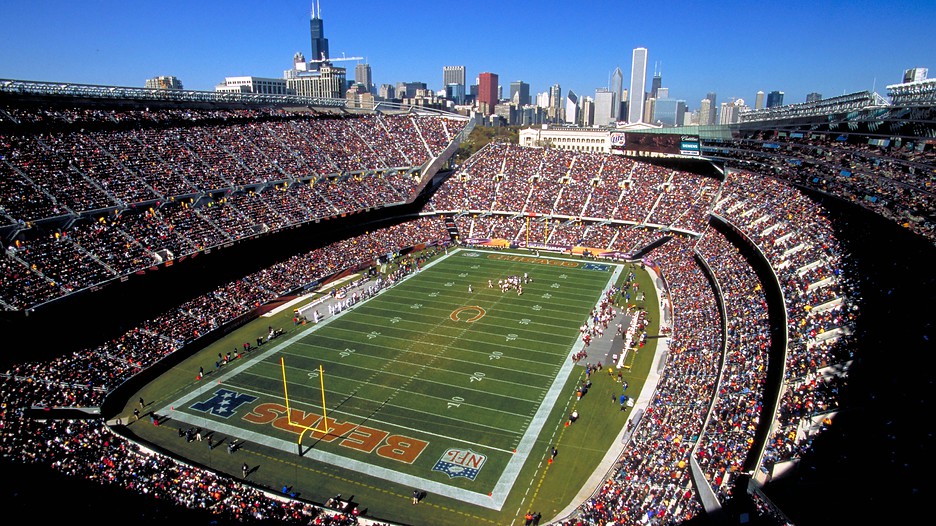
A 2002-03 renovation, during which the Bears played "home" games at the University of Illinois' Memorial Stadium in Champaign, demolished all but the south gate, and the iconic (if not Ionic, they're in the Doric style) Greek-style columns that used to hang over the stadium, and are now visible only from the outside. It doesn't look like "Soldier Field" anymore: One critic called it The Eyesore on the Lake Shore.
Capacity is now roughly what it was in the last few years prior to the renovation, 61,500. And while the Bears won 8 Championships while playing at Wrigley (it took the Cubs until 2016 to win even 1 title there), they've only won one more at Soldier Field, the 1985 title capped by Super Bowl XX. The Monsters of the Midway have been tremendous underachievers since leaving Wrigley, having been to only 1 of the last 35 Super Bowls, and losing it.
The reduced atmosphere, and thus the reduced home-field advantage, may be a part of that, much as similar reductions in atmosphere, passion and on-field performance has been blamed by Washington Redskins fans on the 1997 move from the in-the-District Robert F. Kennedy Stadium to the suburban FedEx Field, Yankee Fans on the 2009 move from the old Yankee Stadium to the new one, and Arsenal fans on the 2006 move from Arsenal Stadium (a.k.a. "Highbury") to the Emirates Stadium.
UPDATE: In 2023, the Bears announced a plan to tear down the Arlington Park horse-racing track, 27 miles northwest of the Loop in Arlington Heights -- nearly twice as far from downtown as O'Hare International Airport -- and build a dome there, possibly groundsharing with baseball's White Sox. Nearly every Bears fan was against this.
So an alternative plan was drawn up, to build a stadium on the parkland just south of the current one, keeping the only parts that remained from the original stadium: The columns on each sideline, and the southern gate with its dedication to the military personnel.
*
October 9, 1924 was a Thursday. There was only one score on this historic day. Game 6 of the World Series was played at Griffith Stadium in Washington. The Washington Senators beat the New York Giants, 2-1. The next day, the Senators won the World Series for what turned out to be the only time.

Friday, October 7, 2022

October 7, 1933: Ott Homers Giants to Title

October 7, 1933: Prior to Game 5 of the World Series‚ at Griffith Stadium in Washington, flags are lowered to half-staff to honor William L. Veeck‚ president of the Chicago Cubs, who died suddenly. He is not well remembered with the passage of more than 80 years, but his son, Bill Veeck, already working in the Cubs' front office by 1933, will become one of baseball’s most remarkable men.

In the meantime, the Series comes to a close when Mel Ott homers in the top of the 10th inning, for a 4-3 New York Giants victory over the Washington Senators. Adolfo "Dolf" Luque, Cuban but light-skinned enough to play in the majors of the time, gets the win in relief. The Giants are World Champions for the 4th time, tying the Yankees and the Philadelphia Athletics for the most all-time.
However, it was the 1st title for the Giants with a manager other than John McGraw. The previous year, he had handed the job over to his 1st baseman, Bill Terry. Terry, Ott, shortstop Travis Jackson and pitcher Carl Hubbell would all be elected to the Baseball Hall of Fame.
Terry retired as a player after the 1936 season, having led the Giants to another Pennant. He led them to another in 1937. However, on both of those occasions, the Giants lost the World Series to the New York Yankees. They would win one more World Series in New York, in 1954, before moving to San Francisco for the 1958 season. And then, they wouldn't win another until 2010.
Because the Giants didn't have a Roger Kahn to write a book about them, the way the Brooklyn Dodgers did in The Boys of Summer, their achievements tend to get forgotten. Few people are alive today who remember the 3 Pennants and the World Series that the Giants won in the 1930s. Fans not old enough to remember them in New York at all tend to overlook Ott, Terry, Hubbell, and earlier stars like Frankie Frisch, Ross Youngs and Christy Mathewson. Because of the clips we've seen on TV, time and time again, we tend to limit our thinking of the New York baseball Giants to only the Bobby Thomson home run of 1951 and the Willie Mays catch of 1954.
And that's not fair: The Giants achieved a great deal in New York, and should be remembered.
For 86 years, this was the last World Series game played by a Washington team, and the last one played in the District of Columbia. The Washington Nationals finally put an end to that in 2019.
The last surviving member of the 1933 Giants was left fielder Joseph "Jo-Jo" Moore, who lived until 2001. 
*

October 7, 1933 was a Saturday. This was also the day that the Depression-themed film Wild Boys of the Road premiered. I have a separate entry for that event.

The only other scores on this historic day were in college football:

* The University of Michigan, with future President Gerald Ford as center on both their offensive and their defensive line, beat Michigan State, 20-6 at Michigan Stadium in Ann Arbor. The Wolverines would go on to be Big Ten and National Champions.

* Ohio State beat Virginia, 75-0 at Ohio Stadium in Columbus.

* Notre Dame and Kansas played to a 0-0 tie at Notre Dame Stadium in South Bend, Indiana. It was the 1st game of a bad season for Notre Dame: They went 3-5-1, although they did close the season with a win over Army at Yankee Stadium.

* The University of Pittsburgh won their annual "Backyard Brawl" with West Virginia, 21-0 at the old Mountaineer Field in Morgantown, West Virginia.

* Alabama and Mississippi played to a 0-0 tie at Legion Field in Birmingham, Alabama. 'Bama would end up winning the Championship of the Southeastern Conference, in this 1st season of SEC history.

* Most SEC schools had previously been members of the Southern Conference, which was also a progenitor of the Atlantic Coast Conference. Duke won the Southern Conference, including, on this day, beating Wake Forest, 22-0 at Duke Stadium in Durham, North Carolina. In 1967, the stadium would be renamed Wallace Wade Stadium, for Duke's coach at this time, and previously a National Championship winner at Alabama.

* Arkansas beat Texas Christian University (TCU), 13-0 at The Hill in Fayetteville, Arkansas, their home field before Razorback Stadium was built in 1938. They finished 1st in the Southwest Conference, but it was discovered that they had unknowingly used an ineligible player. The SWC did not recognize a champion for that season, but since intentional misrepresentation on the Razorbacks' part could not be proven, that denial was the only punishment they received.
 
* Nebraska beat Texas, 26-0 at Memorial Stadium in Lincoln, Nebraska. The Cornhuskers went on to win the Big Six Conference, which would become the Big Eight (and, later, most of the Big Twelve).

* Stanford beat Santa Clara, 7-0 at the old Stanford Stadium in Palo Alto, California. Stanford and Oregon were named Co-Champions of the Pacific Coast Conference, forerunner of the Pac-12, but Stanford was selected as the league's Rose Bowl participant.

* Army beat Virginia Military Institute (VMI), 32-0 at Michie Stadium in West Point, New York.

* Navy beat Mercer University, 25-6 at Thompson Stadium in Annapolis, Maryland.

* In New York City, Columbia beat Lehigh, 39-0 at Baker Field in the Inwood section of Upper Manhattan. The Lions went 8-1, and were invited to play Stanford in the Rose Bowl on New Year's Day. Columbia won, 7-0, in a great upset. It remains the last time that any of the teams now in the Ivy League participated in a bowl game.

* New York University lost to West Virginia Wesleyan, 3-0 at Yankee Stadium. Located in Buckhannon, West Virginia, WVW now plays in NCAA Division II. Even at that time, this was considered an upset.

* City College of New York had an embarrassing loss of their own, 33-0 to Rensselaer Polytechnic Institute, at (Class of 18) '86 Field in Troy, New York, across the Hudson River from Albany. RPI now play in NCAA Division III.

* Fordham beat Muhlenberg, 57-0 at Murphy Field in The Bronx. Muhlenberg now compete in NCAA Division III.

* In New Jersey, Princeton beat Amherst, 40-0 at Palmer Stadium in Princeton. Amherst now compete in NCAA Division III.

* And Rutgers beat Providence College, 21-0 at Neilson Field in New Brunswick. Providence suspended their program after the 1941 season, due to World War II, and have never restarted it.

October 7, 1925: The Death of Christy Mathewson

October 7, 1925: Christy Mathewson dies of tuberculosis at the health-spa town of Saranac Lake‚ New York‚ at the age of 45. At the time of his death, the Giant pitching legend was part owner and president of the Boston Braves.

A native of Factoryville, Pennsylvania, Mathewson had been the greatest pitcher in the National League, maybe in all of baseball, in a career lasting from 1900 to 1916, mostly with the New York Giants. A graduate of Bucknell University, whose football stadium is named for him, known as "the Christian Gentleman" for his demeanor, he proved to the nation at large, which had previously refused to believe it, that a man could play major league baseball and still be a good person.

But when his playing career came to an end, he volunteered for service in World War I, despite already being 36 years old. He rose to the rank of Captain, and was assigned to the U.S. Army's Chemical Weapons Division, serving alongside Captain Ty Cobb. The war ended before he could be sent off to combat. But a training exercise left him exposed to poison gas, and it ruined his lungs.

He also caught the Spanish Flu during the 1918-19 epidemic. And his lungs got a 3rd socking-to with tuberculosis. He went to Saranac Lake because of its health spa, in the hope that its methods, and the air of the Adirondack Mountains, would strengthen his lungs. It didn't work, and he died at the age of 45.

Later in the day, as word reaches Forbes Field in Pittsburgh, the flag is lowered to half-staff, and will remain so there and at Griffith Stadium in opposing Washington for the remainder of the Series. Commissioner Landis orders that black armbands be applied to both teams' uniforms, even though Mathewson had never been involved with either of the teams playing.

In 1936, along with Cobb, Babe Ruth, Honus Wagner and Walter Johnson, was 1 of the 1st 5 inductees into the Baseball Hall of Fame.

*

October 7, 1925 was a Wednesday. The only sporting event played was Game 1 of the World Series, in spite of the loss of Mathewson. The aforementioned Walter Johnson started for the defending World Champion Washington Senators, and "the Big Train" is aided by a home run by Joe Harris, as the Senators win, 4-1 over the Pittsburgh Pirates. Harold "Pie" Traynor, the 3rd baseman who will join Johnson in the Baseball Hall of Fame, hits a home run for the Pirates.

In 1961, the Senators moved to the Minneapolis area, and became the Minnesota Twins. Since this day in 1925, their World Series record has been 14-4 at home -- 8-0 since losing Game 7 in 1965 -- and 0-14 on the road.

Saturday, October 1, 2022

October 1, 1961: America's National Stadium

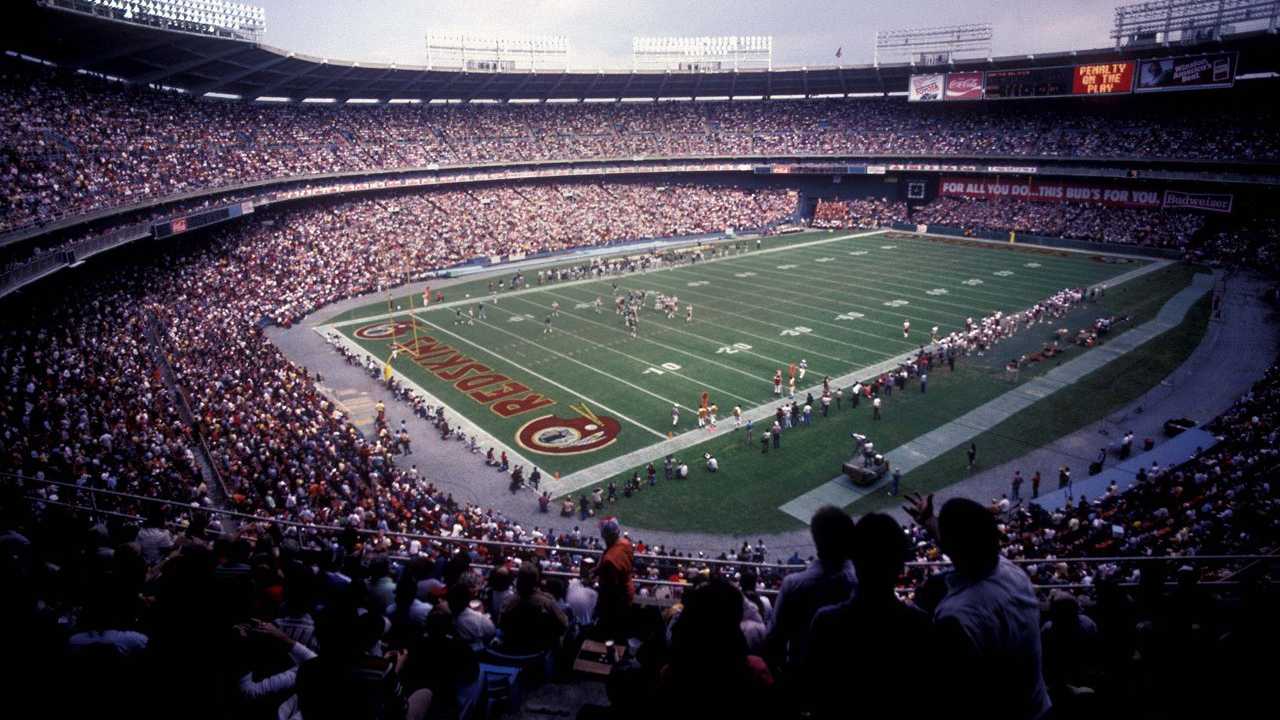
October 1, 1961: District of Columbia Stadium opens in Washington, D.C. The Washington Redskins lose to the New York Giants, 24-21.

As with most major American cities early in the 20th Century, the biggest stadiums were the baseball parks. The biggest stadiums built for football were on the campuses of State universities, which tended to be in or near State capitals, which were not necessarily the biggest city in their State.

In 1916, Representative George Hulbert, a Democrat, proposed the construction of a 50,000-seat "national stadium" -- not in New York City, where the Rochester native had practiced law, but in the nation's capital, Washington, D.C.. The idea was that it would host the 1920 Olympics, the Army-Navy football game, and Davis Cup tennis matches. It wasn't taken seriously.

Later, another Representative from New York, Representative Hamilton Fish III, and D.C.'s Director of Public Buildings and Parks, Ulysses S. Grant III -- the former's grandfather had been Secretary of State under the latter's grandfather -- decided to build a 100,000-seat national stadium, as a memorial to President Theodore Roosevelt, either on the island in the Potomac River that bore TR's name, or on the National Mall, as a bookend to the Lincoln Memorial. In addition to the preceding events, it was thought that Presidential Inaugurations could be held there. But Los Angeles won America's bid to host the 1932 Olympics, and, eventually, the National World War II Memorial became the Lincoln Memorial's bookend.

In 1944, a 9-man National Memorial Stadium Commission was appointed, and a site was chosen for a national stadium, next to the D.C. Armory, which opened in 1941, where East Capitol Street met the Anacostia River. But, with World War II still ongoing, getting Congress to fund a 100,000-seat stadium for the 1948 Olympics was impossible, and the Games were held in London.

In 1956, Representative Charles R. Howell, Democrat of New Jersey (I wasn't born yet, but, had I lived then where I live now, he would have been "my Congressman") proposed legislation funding a national stadium, after the National Capital Planning Commission re-proposed "the East Capitol Site."

Clark Griffith, longtime owner of baseball's Washington Senators, had recently died, leaving the team to his nephew, Calvin Griffith, and he didn't want to play at Griffith Stadium, a 27,000-seat stadium, expandable to only 35,000 for the NFL's Washington Redskins, and in a neighborhood that was growing increasingly black -- to the point where, after the ballpark was demolished, Howard University, the school known as "the Black Harvard," built its hospital on the site. It was thought that a national stadium could not only attract the Olympics and the Army-Navy Game, but save the Senators and Redskins from moving.

This time, Congress passed the District of Columbia Stadium Act, authorizing a 50,000-seat stadium, and President Dwight D. Eisenhower signed it into law on July 29, 1958. It was the 1st stadium built from scratch for both baseball and football -- up the Parkway, Baltimore repurposed the existing Municipal Stadium as Memorial Stadium for both sports in a conversion process from 1950 to 1954 -- and it opened in time for the Redskins to open the 1961 season there. (By a weird coincidence, both that stadium and DC/RFK Stadium would be built across the street from a school named Eastern High School.)

There was a snag, though: The Redskins were the last NFL team that hadn't racially integrated, and the stadium was on federal government property. When John F. Kennedy became President on January 20, 1961, he appointed Representative Stewart Udall of Arizona as Secretary of the Interior, overseeing the site. (Stew's brother, Morris "Mo" Udall, won his seat, and each of them had a son who went on to be elected to the U.S. Senate.) The Secretary told Redskins owner George Preston Marshall, a known racist, that he had to integrate the team, or he couldn't have D.C. Stadium. Marshall caved.

Griffith moved the Senators for the 1961 season, anyway, making them the Minnesota Twins. An expansion franchise was placed at Griffith Stadium for 1961, named the Washington Senators. D.C. Stadium became their home on April 9, 1962, and they beat the Detroit Tigers, 4-1. It hosted the 1962 and 1969 Major League Baseball All-Star Games. JFK threw out the ceremonial first ball at both Opening Day and the All-Star Game in 1962.
JFK is flanked by Vice President Lyndon Johnson
and White House aide Dave Powers. Also identifiable behind him:
Senators Hubert Humphrey, Everett Dirksen and Mike Mansfield;
and White House aide Larry O'Brien, later Chairman of the Democratic Party
(his offices at the Watergate were bugged in 1972) and NBA Commissioner.

On January 18, 1969, having served the entirety of the JFK and Lyndon B. Johnson Administrations, Secretary Udall announced that the stadium had been renamed Robert F. Kennedy Memorial Stadium, for JFK's brother and Attorney General, who had been elected to the Senate in 1964, had run for President in 1968, and, like JFK, had been assassinated. A formal rededication ceremony was held on June 7. (Most people dropped the "Memorial" when talking about it, and called it "RFK Stadium," or even just "RFK.")

On July 1, 1977, the Washington Metropolitan Area Transit Authority opened the Stadium-Armory subway station, serving RFK Stadium and the D.C. Armory on the Blue Line and the Orange Line, with the Silver Line later added. It was a bit of a walk, though: The station was at 19th and A Streets Southeast, a 10-minute walk from the Stadium, whose mailing address was 2400 East Capitol Street Northeast.

Not having subway access hurt the Senators, who left after the 1971 season, and, with a few exceptions such as preseason exhibitions and old-timers' games, baseball did not return until 2005. The Washington Nationals arrived, and remained through the 2007 season, then moved into Nationals Park.

The Redskins played there until 1996, building the NFL's most intimidating home-field advantage, reaching 4 Super Bowls, winning 3. Their last game there was on December 22, 1996, a 37-10 pasting of their arch-rivals, the Dallas Cowboys. Moving out to the far larger stadium in suburban Landover, Maryland turned the 'Skins from the team with the best home-field advantage in the NFL to the worst.
This seat would have been behind home plate
in the stadium's baseball configuration.
You can make out the dugouts.

Unlike most countries, the United States does not have an official "national stadium." RFK is the closest we come to it: Not only is it in the nation's capital, but it has hosted the national soccer team more times than any other venue, 24 times. (The Los Angeles Memorial Coliseum is 2nd, with 20; with the now-demolished Orange Bowl in Miami right behind, with 19.) Which become more amazing when you realize that the 1st such match wasn't until 1977, and the 2nd not until 1991. Why? Interest in the team was too low: RFK Stadium was too big for them until they reached the 1990 World Cup.

In those 24 matches, the U.S. won 15, lost 3, and drew 6. These matches include the 100th Anniversary match of the U.S. Soccer Federation, held on June 2, 2013, a 4-3 U.S. win over Germany. I was there -- it was hot and humid, and it had rained earlier -- and I took this photo.
This seat would have been in center field
in the stadium's baseball configuration.
Again, you can make out the dugouts.
After hosting the Washington Wolves and the Washington Diplomats of the old North American Soccer League, the latter including Dutch superstar Johan Cruyff, in 1996, RFK Stadium became the home of D.C. United, a charter team in Major League Soccer. It continued to be DCU's home through the 2017 season, after which they moved into Audi Field. DCU won the MLS Cup while playing there in 1996, 1997, 1999 and 2004, with the MLS Cup Final being played there in 1997, 2000 and 2007.
The last event at RFK Stadium was on October 22, 2017, a 2–1 D.C. United loss to the New York Red Bulls. It has been announced that RFK Stadium will be demolished in 2021. The 1st of the multi-purpose oval stadiums built in America in the 1960s, '70s and '80s, it is one of the last to still be standing. The only one still in use is the Oakland Coliseum, although the Astrodome is still standing.
In the 2014 film X-Men: Days of Future Past, Erik Lensherr, a.k.a. the supervillain Magneto (played in the flashback sequences by Michael Fassbender, and as an old man by Ian McKellen), ripped the circular stadium off its foundation, levitated it, and moved it across town, surrounding the White House, with the intention of killing President Richard Nixon. He failed. Computer-generated imagery was used to simulate the stadium's appearance in 1973, complete with period-appropriate advertising.
UPDATE: Demolition was delayed until 2025. That year, the District, the NFL, and the renamed Washington Commanders agreed on a deal to built a new stadium on the site, intending to open it in time for the 2030 season.
In "death," RFK Stadium still holds the record for most times hosting the U.S. Men's National Team (USMNT), with 24. The L.A. Coliseum is still 2nd, with 20. But Dignity Health Sports Park, in the Los Angeles suburb of Carson, California, has tied the Orange Bowl for 3rd, with 19. The Landover replacement for RFK Stadium, currently named Northwest Stadium? Only 2.
*
October 1, 1961 was a Sunday. This was also the day that television network CTV went on the air in Canada. I have a separate entry for that event.
These other games were played in the NFL:
* The football version of the St. Louis Cardinals beat the Philadelphia Eagles, 30-27 at Franklin Field in Philadelphia.
* The Baltimore Colts beat the Minnesota Vikings, 34-33 at Memorial Stadium in Baltimore.
* The Cleveland Browns beat the Dallas Cowboys, 25-7 at Cleveland Municipal Staidum.
* The San Francisco 49ers beat the Detroit Lions, 49-0 at Tiger Stadium in Detroit.
* The Green Bay Packers beat their arch-rivals, the Chicago Bears, 24-0 at Green Bay City Stadium (later renamed Lambeau Field).
* And the Los Angeles Rams beat the Pittsburgh Steelers, 24-14 at the Los Angeles Memorial Coliseum.
In the American Football League:
* The New York Titans beat the Boston Patriots, 37-30 at the Polo Grounds. The Titans became the Jets in 1963, and the Patriots became the New England Patriots in 1971.
* The Dallas Texans beat the Houston Oilers, 26-21 at the Cotton Bowl in Dallas. The Texans became the Kansas City Chiefs in 1963, and the Oilers became the Tennessee Titans in 1999.
* The Oakland Raiders beat the Denver Broncos, 33-19 at Candlestick Park in San Francisco. The Raiders wouldn't actually play a game in Oakland until 1962, moved to Los Angeles in 1982, moved back to Oakland in 1995, and moved to Las Vegas in 2020.
* And, the day before, the San Diego Chargers beat the Buffalo Bills, 19-11 at War Memorial Stadium in Buffalo. This was the Chargers' 1st game as a San Diego team, after spending the AFL's founding year of 1960 in Los Angeles. They returned to Los Angeles in 2017.
And it was the last day of baseball's regular season:
* The New York Yankees beat the Boston Red Sox, 1-0 at Yankee Stadium. The only run of the game came in the 4th inning, when Roger Maris hit his record-breaking 61st home run of the season, off Tracy Stallard. Bill Stafford (3 hits over 6 innings), Hal Reniff (a perfect 7th) and Luis Arroyo (1 hit over 2) combined on a 4-hit shutout. I have a separate entry for this game.
* The St. Louis Cardinals beat the Philadelphia Phillies, 2-0 at Connie Mack Stadium in Philadelphia. Bob Gibson pitched a 6-hit shoutout. Stan Musial appeared only as a pinch-hitter, and did not reach base.
* The Pittsburgh Pirates beat the Cincinnati Reds, 3-1 at Forbes Field in Pittsburgh. Roberto Clemente did not play. Frank Robinson went 0-for-2 with a walk. Despite this game, the Reds had dethroned the Pirates as National League Pennant winners, and would face the Yankees in the World Series. The Yankees won in 5 games.
* The Los Angeles Dodgers beat the Chicago Cubs, 8-2 at Wrigley Field in Chicago. Ernie Banks went 1-for-4 with an RBI. Duke Snider drew a walk as a pinch-hitter.
* A doubleheader was split at Milwaukee County Stadium. The San Francisco Giants won the opener, 8-2. The Milwaukee Braves won the nightcap, 3-2. Al Spangler singled Hank Aaron home with the winning run in the bottom of the 10th inning. Over the 2 games, Aaron went 4-for-9, and Willie Mays went 3-for-7 with a home run and 3 RBIs.
* The Detroit Tigers beat the Minnesota Twins, 8-3 at Metropolitan Stadium in the Minneapolis suburb of Bloomington, Minnesota. Norm Cash hit a home run, and Al Kaline had an RBI double as a pinch-hitter. This was the Tigers' 101st win of the year, but the Yankees won 109 to take the American League Pennant.
For the Twins, completing their 1st season after being "the old Washington Senators," Harmon Killebrew went 0-for-3 with a walk, and relief pitcher Pedro Ramos hit a home run, 1 of 3 he hit on the season, and 1 of 15 he hit in a surprisingly powerful career for a pitcher who was mainly a reliever.
* The Kansas City Athletics beat "the new Washington Senators," 3-2 at Kansas City Municipal Stadium.
After providing a venue for the Pacific Coast League's Los Angeles Angels from 1925 through 1957, and the major league expansion team with the same name this season, the West Coast version of Wrigley Field hosts its last professional baseball game. The Halos are defeated by the Cleveland Indians, 8-5 in front of 9,868 fans. Wrigley West will be torn down in 5 years, to make room for an eventual public playground and senior center.
* And the Baltimore Orioles and the Chicago White Sox completed their seasons the day before, against each other, with the O's winning, 4-3 at Memorial Stadium in Baltimore.

December 31, 1999 & January 1, 2000: The Millennium

December 31, 1999:  The Millennium arrives. The people of planet Earth survived. At a terrible cost. But we hadn't destroyed ourselves. ...