Showing posts with label cbs. Show all posts

Friday, December 16, 2022

December 16, 1975: "One Day at a Time" Premieres

Left to right: Mackenzie Phillips, Bonnie Franklin,
Pat Harrington and Valerie Bertinelli

December 16, 1975: One Day at a Time premieres on CBS, a new creation of All In the Family producer Norman Lear. Bonnie Franklin stars as Ann Romano, a mother of 2 teenage daughters, picking up and starting over in Indianapolis after her divorce.

To give you an idea of how big this was: Franklin was a real-life divorced woman (but no kids, only stepchildren after remarrying), playing a divorced woman with 2 teenage daughters, and this was just 5 years after CBS gave Mary Tyler Moore, divorced with a child in real life, a show with her own name on it, but wouldn't let her play a divorced woman without kids.

The theme song, "This Is It," was written by legendary songwriter Jeff Barry and his wife at the time, Nancy Barry. (Jeff had long since divorced Ellie Greenwich.) Polly Cutter sang it.

The Romano apartment was said to be at 1344 Hartford Drive, a fictional address. Indianapolis was chosen because it was a big enough city to be recognized, but not one of the usual TV show locations, such as New York, Chicago or Los Angeles. (In 1977, Dan Wakefield created the show James at 15, selecting Boston for the same reason. Unlike Indianapolis, Boston would go on to become a popular location for TV show settings.)

Ann Romano begins the show newly divorced from Ed Cooper (Joseph Campanella), moving from Logansport, Indiana to Indianapolis with daughters Julie (Mackenzie Phillips, daughter of John Phillips of The Mamas & the Papas) and Barbara (Valerie Bertinelli). They move into an apartment building where the superintendent is Dwayne Schneider (Pat Harrington, who was usually credited as "Pat Harrington Jr." prior to this). At first, Schneider tries to romance Ann, who's not interested. Once he understands it's not going to happen, he takes a kind of guardian role for the Romanos.

In Season 1, Ann dated her divorce lawyer, David Kane (Richard Masur). This confused me as a boy, since I thought he was playing her ex-husband, and I wondered why they were getting back together. This impression further deepened when they broke up at the end of the season.

In Season 2, Mary Louise Wilson played Ginny Wroblicki, a cocktail waitress who lives in the same building, and becomes Ann's best friend. But Wilson didn't like what the show was doing with her character, and left after just the one season.

In Season 3, Shelley Fabares was introduced as Francine Webster, a work rival of Ann's. They eventually settled their differences, and opened their own advertising agency. Fabares' real-life aunt was actress Nanette Fabray (she kept the pronunciation, but not the spelling), and she was already a recurring character, Ann's mother, Katherine Romano.

In Season 5, Julie begins dating Max Horvath (Michael Lembeck), a flight attendant, who calls Ann "Shorty." (Franklin was 5-foot-3.) But Phillips' growing drug problem led to her being fired. As Season 6 began, it was explained that Julie and Max had gotten married. Phillips checked into drug rehab, with the irony that the recovery movement's theme is, literally, "One day at a time."

Ann begins dating Nick Handris (Ron Rifkin), who has a teenage son, Alex (Glenn Scarpelli). The character was definitely brought in to fill Julie's void, but was probably also brought in because CBS wanted to compete with ABC's success with the Chachi character on Happy Days. After just 1 season, Rifkin left the show. The writers explained that Nick had died in a car crash, and Ann took Alex in as a foster child.

In Season 7, Barbara, by now in college, begins dating Mark Royer (Boyd Gaines), a dental student. Phillips was briefly brought back, and Julie and Max became the parents of a daughter, Annie. But, again, Phillips' substance abuse issues got in the way. She appeared briefly in Season 9, and that was it.

By the start of Season 8, CBS' WKRP in Cincinnati had run its course, so Howard Hesseman became available to play Mark's father, Sam Royer. At the end of that season, Barbara married Mark, and Ann married Sam. Season 9 showed Barbara and Mark living in their own apartment, and the previous one was just Ann and Sam, as Alex had left, and it just wasn't the same.

The final episode aired on May 28, 1984. Ann moved to London for a job, and Schneider moved to Florida to take care of family (intended as a backdoor pilot that wasn't picked up), leaving Barbara and Julie, and their husbands, to each raise their 1st child.

Three castmembers were panelists on CBS' game show Match Game: Harrington had already been one before the show started, and Franklin and Bertinelli followed. At the age of 18 1/2, Bertinelli became the youngest panelist in the show's history. When it was revived on ABC in 2016, she became the only panelist from the 1973-82 version to appear as one, although Kirstie Alley appeared as one after having been a contestant in 1979.

Bonnie Franklin died in 2013. Pat Harrington died in 2016. Nanette Fabray and Joseph Campanella died in 2018. Howard Hesseman died in 2022.

As of December 16, 2022, Mackenzie Phillips, Valerie Bertinelli, Richard Masur, Mary Louise Wilson, Shelley Fabares, Ron Rikfin, Glenn Scarpelli, Michael Lembeck, Boyd Gaines, Jeff Barry, Nancy Barry and Polly Cutter are still alive.

In 2017, Netflix produced a remake, centered around a Cuban-American family living in Los Angeles. The divorced mother was now an Army veteran, and one of her daughters, rather than a later foster son, was named Alex. But aside from the basic premise, the 2 daughters, and the building super being named Schneider, the show had little in common with the original. It ran for 4 seasons, and was deeply embraced by Hispanic Americans, but white Americans basically ignored it, not even curious to see how a show they once loved could be modernized. Even having Rita Moreno play the grandmother didn't help.

*

December 16, 1975 was a Tuesday. This was also the day that Bill Veeck regained control of baseball's Chicago White Sox. I have a separate entry for that event.

Baseball was out of season. Football was in midweek. There were 6 games played in the NBA:

* The New York Knicks beat the Atlanta Hawks, 97-96 at Madison Square Garden.

* The Washington Bullets beat the Buffalo Braves, 100-94 at the Capital Centre in the Washington suburb of Landover, Maryland.

* The Golden State Warriors beat the Chicago Bulls, 91-87 at the Chicago Stadium.

* The Houston Rockets beat the Kansas City Kings, 111-100 at the Kansas City Municipal Auditorium.

* The Cleveland Cavaliers beat the Los Angeles Lakers, 123-103 at The Forum outside Los Angeles in Inglewood, California. Kareem Abdul-Jabbar led all scorers on the night with 34 points, and grabbed 22 rebounds.

* And the Philadelphia 76ers beat the Portland Trail Blazers, 105-98 at the Portland Memorial Coliseum.

There were 2 games in the American Basketball Association. The New York Nets beat the Kentucky Colonels, 98-96 at the Nassau Coliseum. And the Spirits of St. Louis beat the San Antonio Spurs, 106-103 at the St. Louis Arena.

There was 1 game in the NHL: The Atlanta Flames beat the Kansas City Scouts, 3-1 at The Omni in Atlanta. There were 5 games in the World Hockey Association:

* The Quebec Nordiques beat the Calgary Cowboys, 7-3 at the Colisée de Québec.

* The Winnipeg Jets beat the Toronto Toros, 4-3 at Maple Leaf Gardens in Toronto.

* The Edmonton Oilers beat the Indianapolis Racers, 3-1 at the Market Square Arena in Indianapolis.

* The San Diego Mariners beat the Houston Aeros, 4-2 at The Summit in Houston. (It's now the Central Campus of televangelist Joel Osteen's Lakewood Church.

* The Denver Spurs beat the Cincinnati Stingers, 3-2 in overtime at the McNichols Arena in Denver.

Friday, December 9, 2022

December 9, 1965: "A Charlie Brown Christmas" Premieres

December 9, 1965: A Charlie Brown Christmas airs for the 1st time. Charles Schulz had been drawing the comic strip Peanuts since 1950, and CBS was ready to take a gamble on a holiday TV special about Charlie Brown, his dog Snoopy, and the other kids in the strip. (It was around this time that such a program began to be called a "special." Previously, it would have been a "spectacular.")

I have a theory, and, as far as I can tell, there is nothing in the images or the script of the special that disproves it. Charlie Brown is depressed during the Christmas season, and everyone else has thrown themselves into the superficial and commercial sides of it, for the same reason: The special takes place in December 1963, after the assassination of President John F. Kennedy, and they want to forget.

Charlie Brown (voiced here by Peter Robbins) wasn't the 1st fictional character to wonder what Christmas was all about, nor the last. Nor was he the first, nor the last, to get his Christmas hopes laughed at.

But, as his best friend Linus Van Pelt (voiced by Chris Shea) points out (after quoting The Gospel According to Luke, Chapter 2, Verses 8 through 14, to remind us of "what Christmas is all about"), like the scrawny little tree that he'd found, ol' Chuck just needed a little love.

The special was a great success, and it remains the most popular Peanuts TV special, maybe the most popular Christmas TV special. And, today, when someone describes a Christmas tree as "a Charlie Brown tree," we still know exactly what that means. It's not about the quality of the tree, it's about the hearts of the people decorating it.

The Halloween special It's the Great Pumpkin, Charlie Brown premiered on October 27, 1966. It featured the 1st animated sequence of Lucy, Linus' crabby older sister, pulling the football away from Charlie Brown. It also featured the 1st animated sequence of Snoopy as "The World War I Flying Ace," imagining himself taking on Manfred von Richtofen, the German ace known as the Red Baron.

A Charlie Brown Thanksgiving premiered on November 20, 1973. Again, Lucy is shown pulling the football away from him. In 2021, having watched the special for around the 20th time, I noticed something for the 1st time. When Peppermint Patty suggests that the kids have their own separate Thanksgiving meal at Charlie Brown's house, Lucy doesn't get invited. Her brother Linus does, and, in the spirit of the holiday, helps Charlie Brown with the "cooking." But Lucy isn't invited. Serves her right. (She doesn't crash it, either.)

It's the Easter Beagle, Charlie Brown premiered on April 9, 1974. After that, though, they kind of ran out of major holidays, so that was the last special to be considered a classic. Be My Valentine, Charlie Brown premiered on January 28, 1975, a little early for Valentine's Day, February 14. On March 16, 1976, CBS kinda pushed their luck with It's Arbor Day, Charlie Brown.

They redeemed themselves on Memorial Day, May 30, 1983. A sequel to Bon Voyage, Charlie Brown (And Don't Come Back), the 1980 feature film that showed the Peanuts gang as exchange students in France, What Have We Learned, Charlie Brown? A Tribute sees them visit battlefields of World War I and World War II. A reference is made to Snoopy as the Flying Ace, but, for the most part, it's deadly serious.

On New Year's Day, January 1, 1986, they aired Happy New Year, Charlie Brown! And on November 27, 1992, the day after Thanksgiving, they came full circle, sort of, with It's Christmastime Again, Charlie Brown. It was a series of short stories featuring the gang in Christmas situations, which would be done again on December 8, 2002 with Charlie Brown's Christmas Tales. That was the 1st special aired after Peanuts creator Charles Schulz died in 2000, ending the strip. It was also the 1st special after the move from CBS to ABC. ABC aired I Want a Dog for Christmas, Charlie Brown on December 9, 2003.

*

December 9, 1965 was a Thursday. This was also the day that the great baseball executive Branch Rickey died. And it was the day the Baltimore Orioles traded Milt Pappas to the Cincinnati Reds for Frank Robinson. I have a separate entry for that event.

Baseball was out of season. Football was in midweek. Only 1 NBA game was played that night. The San Francisco Warriors beat the Cincinnati Royals, 110-109 -- in Dayton, Ohio, at the University of Dayton Fieldhouse, now known as the Thomas J. Frericks Center, 45 miles northeast of the Royals' usual home court, the Cincinnati Gardens.

And only 1 NHL game was played that night. The New York Rangers lost to the Detroit Red Wings, 7-3 at the Olympia Stadium in Detroit. The Wings pulled off a rare feat, one which might even be worthy of a "Scores On This Historic Day" post all by itself: 7 different goalscorers. Floyd Smith and Doug Barkley scored in the 1st period; Norm Ullman, Gordie Howe and Ab McDonald in the 2nd; and Alex Delvecchio and former Ranger star Andy Bathgate in the 3rd. 

Thursday, December 8, 2022

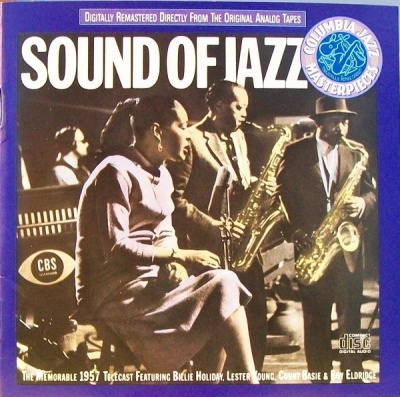
December 8, 1957: "The Sound of Jazz" Airs On CBS

December 8, 1957: As part of its anthology series The Seven Lively Arts, CBS airs "The Sound of Jazz." It aired live from the Town Theater, a.k.a. CBS Studio 58, at 851 9th Avenue at 56th Street, in Midtown Manhattan. John Crosby, then the media critic for the New York Herald-Tribune, was the host.

This was an All-Star Game. It was the closest thing a national audience would ever get to getting a Justice League, or an Avengers, of jazz. The performers included pianists Count Basic and Thelonious Monk; saxophonists Lester Young, Coleman Hawkins, Ben Webster and Gerry Mulligan; trumpeters Red Allen and Doc Cheatham; drummer Jo Jones, clarinetist Pee Wee Russell, and bass fiddle player Milt Hinton. And Billie Holiday sang.

Nat Hentoff, the jazz critic for The Village Voice, was a consultant for the show. He knew that Young was ill, and told him that he could skip the "Big Band" section of the show, and could sit instead of standing while performing during Holiday's section.

Although they were never a couple, Lester and Billie were as close as friends could be in show business, but hadn't performed together for a while, due to their respective illnesses and Billie's legal troubles. When she began to sing "Fine and Mellow," which she wrote and recorded in 1939, Webster played the 1st solo. Hentoff remembered:

Then, Lester got up, and he played the purest blues I have ever heard, and they were looking at each other, their eyes were sort of interlocked, and she was sort of nodding and half–smiling. It was as if they were both remembering what had been, whatever that was. And in the control room, we were all crying. When the show was over, they went their separate ways.

It was the last time they performed together. Within 2 years, both were dead from the effects of alcoholism, Lester at age 49, Billie at 44. In other words, we are damn lucky that CBS made this special when they did, and left us this recording

*

December 8, 1957 was a Sunday. It was the off-season for baseball. But there were NFL games:

* The Washington Redskins beat the Philadelphia Eagles, 42-7 at Griffith Stadium in Washington.

* The Detroit Lions beat the Cleveland Browns, 20-7 at Briggs Stadium in Detroit. This was a preview of the season's NFL Championship Game, in which the Lions would blow the Browns out again. Briggs Stadium was renamed Tiger Stadium in 1961.

* The Chicago Bears beat their crosstown rivals, the Chicago Cardinals, 14-6 at Comiskey Park on the South Side.

* The Los Angeles Rams beat the Green Bay Packers, 42-17 at the Los Angeles Memorial Coliseum.

* The San Francisco 49ers beat the Baltimore Colts, 17-13 at Kezar Stadium in San Francisco.

* The New York Giants played the day before, losing to the Pittsburgh Steelers, 21-10 at Forbes Field in Pittsburgh.

There were 2 NBA games played that day:

* The New York Knicks beat the St. Louis Hawks, 113-110 at the Kiel Auditorium in St. Louis. Ron Sobie scored 32 points for New York. Despite this, it would not be a good season for the Knicks, and the Hawks would win what remains the only NBA Championship for the franchise, which has been in Atlanta since 1968.

* And the Cincinnati Royals beat the Philadelphia Warriors, 99-88 at the Cincinnati Gardens. Jack Twyman of the Royals led all scorers with 24 points.

And all of the NHL's "Original Six" were in action:

* The New York Rangers lost to the Toronto Maple Leafs, 2-1 at the old Madison Square Garden, just 7 blocks from CBS Studio 58.

* The Montreal Canadiens beat the Detroit Red Wings, 3-1 at the Olympia Stadium in Detroit.

* And the Boston Bruins beat the Chicago Black Hawks, 3-0 at the Chicago Stadium. 

Tuesday, December 6, 2022

December 6, 1964: The Rankin/Bass Empire Premieres

December 6, 1964: Rudolph the Red-Nosed Reindeer premieres on CBS, the 1st animated holiday special produced by Rankin/Bass Productions, Inc., now known as Rankin/Bass Animated Entertainment.

Arthur Gardner Rankin Jr. was born on July 19, 1924 in Manhattan, and both of his parents were actors. Julius Bass, known professionally as Jules Bass, was born on September 16, 1935 in Philadelphia. In 1955, ABC hired Rankin as an art director, and Bass as a copywriter. Together, they made TV commercials, using animation.

In 1960, they founded Videocraft International, which became Rankin/Bass Productions. In 1964, they made their 1st stop-motion animation special, based on the 1947 Christmas-themed song "Rudolph, the Red-Nosed Reindeer."
Arthur Rankin Jr. (left) and Jules Bass

The story, narrated by Burl Ives as Sam the Snowman (who has a mustache and a goatee, like Ives himself did), follows the song, with some embellishments. In this version, Rudolph is the son of Donner, who is listed here as Santa Claus' lead reindeer, and Donner's wife, whose name is never mentioned. (This was before "the Second Wave of Feminism.") Rudolph, voiced by actress Billie Mae Richards, has the bright red nose from birth. Santa (voiced by Stan Francis) agrees with Donner that the nose has to be hidden. It has been noted that it's not just "all of the other reindeer" who were mean to Rudolph: This is not one of the nicer versions of Big Red.

After running away with Hermey (voice of Paul Soles, a voiceover legend, including the 1st person to play Spider-Man, albeit animated), an Elf who doesn't want to make toys for Santa, and would rather be a dentist, they find adventure with a miner, an abominable snowman, and an island of "misfit toys." Upon returning to the North Pole, they gain new respect. On Christmas Eve, the fog is so thick that Santa and the reindeer can't see through it, but Rudolph, with his nose so bright can guide the sleigh that night. It has occurred to me that neither Santa nor any of the other reindeer ever apologized to Rudolph.

The special is a musical, and it closes with Ives, as Sam, singing a song that became a Christmas classic: "A Holly Jolly Christmas."
The success of this special led to other holiday-themed specials, most of them based around Christmas legends, even though Rankin and Bass were both Jewish. In 1968, they produced The Little Drummer Boy, a stop-motion animation that aired on NBC, narrated by a woman voiced by actress Greer Garson. The drummer boy is voiced by Teddy Eccles, and the Vienna Boys' Choir sings the title song.

That special is not widely remembered today. Their next one is: In 1969, for CBS, they produced, with traditional animation, Frosty the Snowman. Jimmy Durante narrated, and was represented by a lookalike resident of the town where Frosty was "born," complete with big nose.

Comedian Jackie Vernon voiced Frosty. Because the original 1950 song doesn't have an antagonist, aside from the weather, the magic hat that brings Frosty to life previously belonged to Professor Hinkle, an evil magician voiced by Billy De Wolfe. Paul Frees returns, playing a much kindlier Santa than seen in Rudolph.

In 1970, Rankin & Bass returned to stop-motion, for Santa Claus is Comin' To Town. Fred Astaire voiced the narrator, a mailman named S.D. Kluger -- "S.D." for "Special Delivery." He gives the first truly detailed origin story for Santa Claus, although others have been put forth. Mickey Rooney voices Santa from infancy to jolly old elf. Robie Lester voices schoolteacher Miss Jessica, who becomes Mrs. Claus.

In 1971, they produced a special for Easter, Here Comes Peter Cottontail. It was not based on the 1950 song of that title, but on a 1957 novel The Easter Bunny That OversleptDanny Kaye played narrator Seymor S. Sassafrass. Casey Kasem, star Los Angeles disc jockey, who voiced Shaggy on Scooby-Doo (and would later voice Robin in the Super Friends cartoons), voiced Peter. And the master of horror, Vincent Price, voiced the villain, evil rabbit January Q. Irontail.

In 1974, Mickey Rooney once again played St. Nick, in the stop-motion The Year Without a Santa Claus, premiering on ABC. Santa doesn't feel up to delivering the presents this year. His doctor says it's because not enough people believe in him anymore. So Mrs. Claus, this time voiced by Shirley Booth, sends a pair of Elves named Jingle Bells and Jangle Bells out on the sleigh, pulled by Vixen, the lone female reindeer of the usual crew of 8 (9, when Rudolph is leading the way).

What everyone tends to remember about this special, more so than the outcome (Santa is convinced to go for it, of course), is the antagonists, Snow Miser and Heat Miser, bickering brothers, both sons of Mother Nature. Each of them, true to their alternating song, is "too much."

Rudolph's Shiny New Year premiered on ABC in 1976. Red Skelton voices Father Time, who narrates. Billie Richards returns as Rudolph. Father Time tells his friend Santa that the Baby New Year must be found before the 12th "bong" at midnight on New Year's Eve, or else there will be no new year. As it's snowing, Santa sends Rudolph out to find him. Father Time considers Rudolph a good choice, because he would understand: The Baby, a.k.a. Happy, ran away from home because of his own unusual physical feature, enormous ears.

Rudolph goes to the Archipelago of Last Years (a variation on the Island of Misfit Toys). Each island represents a past year. On 1,000,000 BC Island, they meet a caveman named O.M. (for "One Million," voiced by Morey Amsterdam). He agrees to help Rudolph. So does Sir 1023, a Scottish knight (Frank Gorshin), who leaves his island of the year 1023, where all the fairy tales you've ever heard are real. Also agreeing to help is Sev (short for "1776," who looks like Benjamin Franklin and is voiced by Paul Frees), who leaves his island where every day is the 4th of July.

Other islands are no use: On 4,000 BC Island, all the people there want to do is build pyramids; on 1492 Island, people are too busy discovering things; everybody on 1893 Island is depressed, since there was a depression that year; and 1965 Island is "too noisy," as people are yelling about rock bands and a war. Nevertheless, Happy is found, rescued from a monster bird, and is brought back just in time.

Like Rudolph, Frosty returned in 1976, with Frosty's Winter Wonderland. By this point, Jimmy Durante was too ill to participate, so Andy Griffith was hired to narrate. With a new snowfall, Frosty returned to the town where he was "born," but the kids' love of Frosty makes Jack Frost, the symbol of Winter (Paul Frees), jealous, and he fights Frosty.

Frosty buys him off, by asking him to be the best man at his wedding to a snowwoman named Crystal (as snowflakes are crystals, and she's voiced by Shelley Winters). She came to life with a snow-corsage. The Parson Brown mentioned in the original song can't marry them, as he can only marry humans. So a snow parson is made, and Brown's Bible brings him to life. (Dennis Day voices both parsons.) Frosty and Crystal have to go north again, but promise to return.

Next, in 1977, again with Astaire as S.D. Kluger, was The Easter Bunny Is Comin' to Town. Keep in mind: Peter Cottontail and the Easter Bunny are separate characters, and this special told of a possible origin for the Easter Bunny, voiced by Skip Hinnant, already known to kids as Fargo North, Decoder on PBS' The Electric Company.

On Thanksgiving Weekend 1979 came the Justice League or Avengers of Christmas specials: Rudolph and Frosty's Christmas in July. Returning are Billie Richards as Rudolph, Jackie Vernon as Frosty, Shelley Winters as Crystal, Mickey Rooney as Santa, and Paul Frees as Jack Frost. Frees also plays the villain, a snow wizard named Winterbolt, who wants to reclaim the North Pole from Santa, and plans to discredit Rudolph and Frosty to achieve this.

Red Buttons returns, but as Milton, an ice cream salesman, not as Father Time. Don Messick, the original voice of Scooby-Doo, plays several roles, including taking over as Rudolph's father, Donner. Darlene Conley voices Mrs. Claus. Thurl Ravenscroft, best known as the voice of Kellogg's cereals' Tony the Tiger, but also the singer of "You're a Mean One, Mr. Grinch" from How the Grinch Stole Christmas! (not a Rankin/Bass special), plays the Genie of the Ice Scepter, and Ethel Merman plays Lilly Loraine, owner of the circus where Milton works. The only things that seem to be missing are the Miser Brothers.

Finally, a few days after that special, came Jack Frost, as the Winter sprite got his own special, although this time, he is voiced by Robert Morse instead of Frees. His story is told by Pardon-Me-Pete, a groundhog voiced by Buddy Hackett, who has a vested interest in a longer Winter: More sleep. He and a human girl, voiced by Debra Clinger, fall in love, but, in the end, he loses her to a human boy. The girl's name is Elisa; maybe if her name had been Elsa, it would have worked out, but Jack has to let it go.

In 1987, Rankin and Bass sold their company to Lorimar Productions. Jimmy Durante, the narrator of Frosty, died in 1980. Paul Frees, voice of many characters in these specials, including the original Jack Frost, died in 1986. Jackie Vernon, the voice of Frosty, died in 1987. So did Fred Astaire, the narrator of Santa Claus is Comin' To Town. So did Danny Kaye, the narrator of Here Comes Peter Cottontail. Burl Ives, the narrator of Rudolph the Red-Nosed Reindeer, died in 1995. Red Skelton, the narrator of Rudolph's Shiny New Year, died in 1997.

Billie Mae Richards, the voice of Rudolph, died in 2010. Andy Griffith, the narrator of Frosty's Winter Wonderland, died in 2012. Arthur Rankin died on January 30, 2014, at age 89. Mickey Rooney, twice the voice of Santa in Rankin/Bass specials, also died in 2014. Robert Morse, star of Jack Frost, died in 2022. Jules Bass died on October 25, 2022, at 87.

Still alive as of December 6, 2022 is Skip Hinnant, the '77 voice of the Easter Bunny, but better known for his performance on the PBS kids' show The Electric Company, as characters including Fargo North, Decoder.

*

December 6, 1964 was a Sunday. These NFL games were played that day:

* The New York Giants lost to the Minnesota Vikings, 30-21 at Yankee Stadium.

* The Detroit Lions beat the Baltimore Colts, 31-14 at Memorial Stadium in Baltimore.

* The Pittsburgh Steelers beat the Washington Redskins, 14-7 at District of Columbia Stadium (later Robert F. Kennedy Memorial Stadium) in Washington.

* The football version of the St. Louis Cardinals beat the Cleveland Browns, 28-19 at Busch Stadium (formerly Sportsman's Park) in St. Louis.

* The Philadelphia Eagles beat the Dallas Cowboys, 24-14 at Franklin Field in Philadelphia.

* The San Francisco 49ers beat their arch-rivals, the Los Angeles Rams, 28-7 at Kezar Stadium in San Francisco.

* And the day before, the Green Bay Packers beat the Chicago Bears, 17-3 at Wrigley Field in Chicago.

In the American Football League:

* The New York Jets lost to the San Diego Chargers, 38-3 at Shea Stadium.

* The Boston Patriots beat the Kansas City Chiefs, 31-24 at Kansas City Municipal Stadium.

* The Oakland Raiders beat the Buffalo Bills, 16-13 at Frank Youell Field in Oakland.

* And the Denver Broncos and the Houston Oilers had the week off.

Baseball was out of season. There were 3 games played in the NBA:

* The New York Knicks lost to the St. Louis Hawks, 115-94 at the Kiel Auditorium in St. Louis.

* The Cincinnati Royals beat the Baltimore Bullets, 124-113 at the Baltimore Civic Center (now the CFG Bank Arena).

* And the Los Angeles Lakers beat the Philadelphia 76ers, 109-104 at the Los Angeles Memorial Sports Arena.

And there were 2 games in the NHL:

* The New York Rangers beat the Chicago Black Hawks, 4-1 at the Chicago Stadium.

* The Detroit Red Wings beat the Montreal Canadiens, 4-1 at the Olympia Stadium in Detroit.

* And the Boston Bruins and the Toronto Maple Leafs were not scheduled.

Wednesday, November 23, 2022

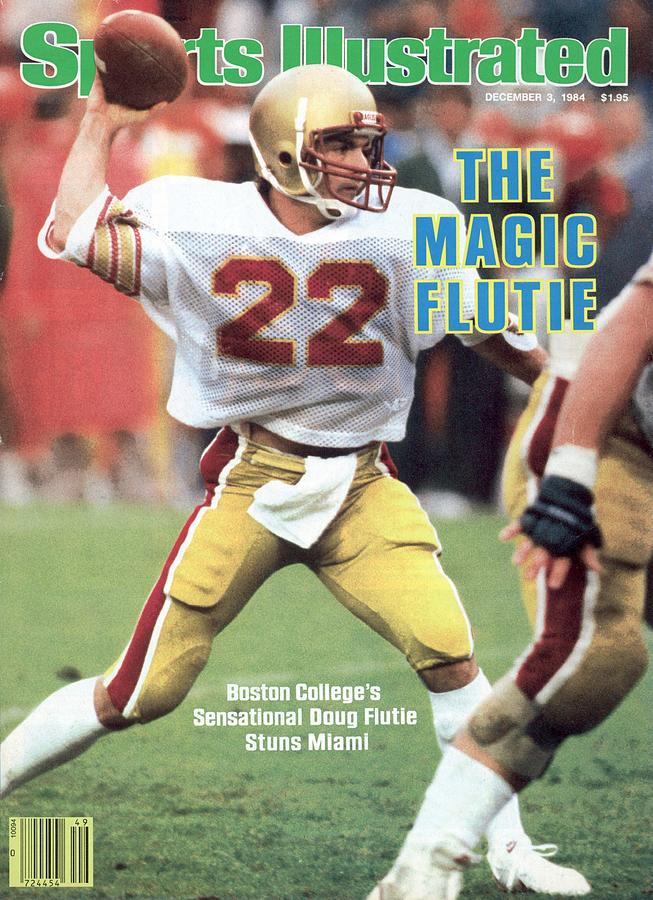
November 23, 1984: Doug Flutie's Miracle In Miami

November 23, 1984: It is the day after Thanksgiving, and this was the early days of retail treating it as "Black Friday," the biggest shopping day of the year, which has come to, traditionally, set the tone for the Christmas season: Either they will make big profits, and be "in the black"; or they will be wearing black for mourning.

Thanksgiving weekend is also a time for football. The day before, many high school games were played, much more so than are played today. I was a sophomore at East Brunswick High School in Central New Jersey, and my Bears came back from a 27-13 deficit to beat Colonia High School of Woodbridge, 33-27, and clinch the Championship of the Middlesex County Athletic Conference and an undefeated regular season. It's often regarded as the greatest football game in the school's history. Unfortunately, we lost the Central Jersey Group IV Final, costing us a "State Championship" and an undefeated full season, something, to this day, we've never had.

There was only one college football game that Thanksgiving Day, a minor rivalry to everyone but those connected to the schools playing: Miami University of Ohio beat the University of Cincinnati, 31-26 at Nippert Stadium in Cincinnati. Miami University, in Oxford, Ohio, was founded in 1809, 8 years before Ohio gained Statehood. In contrast, the University of Miami, in suburban Coral Gables, Florida, wasn't founded until 1925.

In the NFL, both of the traditional home teams won: The Detroit Lions beat the Green Bay Packers, 31-28 at the Silverdome in Pontiac, Michigan; and the Dallas Cowboys beat the New England Patriots, 20-17 at Texas Stadium in Irving.

There was only one college game played on the day after Thanksgiving, on CBS. So anybody who wanted to watch a football game at that point was watching it. At the time, there was a Big East Conference, but they did not sponsor a football competition. If they did, this game would have decided its Championship. The fact that both teams involved have since moved to the Atlantic Coast Conference (ACC) should not attract from what that meant.

The University of Miami were the defending National Champions, having shocked the University of Nebraska in the previous season's Orange Bowl game, in the stadium of the same name, which was the Hurricanes' usual home field.

Bernie Kosar quarterbacked them as a freshman, and now, as a sophomore, had led them to an 8-3 record. They had won the Kickoff Classic at the Meadowlands, beating then-Number 1 Auburn. They beat Number 17 Florida on neutral ground in Tampa. They beat Number 16 Notre Dame away. But they had lost to Number 14 Michigan away, losing the Number 1 ranking in the process. They had lost to Number 15 Florida State at home.

And, in their last game before this one (they had a week off in between), they lost an embarrassing one: They led Maryland 31-0 at the half, and lost, 42-40. For many years thereafter, it was the biggest comeback in NCAA Division I-A (now FBS, the Football Bowl Subdivision) history. The Maryland quarterback was Frank Reich, substituting for the injured Boomer Esiason. In the 1992 NFL Playoffs, subbing for the injured Jim Kelly -- who had played at Miami -- Reich led the Buffalo Bills to what is still the biggest comeback in NFL history, from 35-3 down to beat the Houston Oilers, 41-38 in overtime.

Their opponents for this game would be Boston College. BC had some good teams in the 1930s and '40s, but hadn't done much since. In 1981, they were struggling, losing to the University of Pittsburgh, ranked Number 2 in the country, and coach Jack Bicknell turned to a 5-foot-9 3/4-inch freshman quarterback from nearby Natick, Massachusetts, and said, "Okay, Flutie, see what you can do."

And Doug Flutie went in, and nearly pulled the upset. They ended the season 5-6. The next season, Sports Illustrated noted that Flutie would be the starting quarterback, and whoever was writing the article finished with, "Good luck, Flutie."

Flutie made his own luck, leading BC to an 8-3-1 record. Their non-wins were all against then-ranked teams: A tie away to Number 16 Clemson, and losses away to Number 16 West Virginia, home to Number 8 Penn State, and to Number 18 Auburn in the Citrus Bowl. It was their 1st bowl game in 39 years.

As a junior in 1983, Flutie led them to a 9-3 season, losing at home to Number 12 West Virginia, away to unranked Syracuse, and in the Liberty Bowl to Notre Dame. On October 29, in a game too big for their 32,000-seat on-campus Alumni Stadium, they played defending National Champion (but, at the time, unranked) Penn State at Sullivan Stadium, home of the NFL's New England Patriots (later renamed Foxborough Stadium). Before a crowd of 56,605, and millions more watching on ABC, the Eagles beat the Nittany Lions, 27-17. Flutie, already the classic "local boy makes good," became a national star.

BC were 7-2 going into their game with Miami. They had beaten Number 9 Alabama in Birmingham, but had lost 2 games, away to Number 20 West Virginia and away to Penn State -- by a combined 8 points. BC were ranked Number 10, Miami Number 12. In spite of these rankings, Miami were a 6-point betting favorite. (Keep in mind: In football, home-field advantage is traditionally said to be worth 3 points.) Flutie was the favorite for the Heisman Trophy, although Kosar was also a contender for it. The winning quarterback would get his Heisman vote totals boosted significantly.

The game was played at the Orange Bowl, in a driving rainstorm throughout. It was almost as if there was a real hurricane going on. It kicked off at 2:30 PM Eastern Time, and BC jumped out to a 14-0 lead. Miami scored a touchdown before the 1st quarter ran out, and tied the game with a touchdown early in the 2nd quarter.

BC scored on a run by Flutie, then Miami scored on a Kosar touchdown pass, then BC did so on a touchdown pass from Flutie to his college roommate, Gerard Phelan. At halftime, the score was Boston College 28, Miami 21. So there had already been as much action as in most full games.

In the 3rd quarter, Miami scored another touchdown, and the teams traded field goals. The quarter ended with the game tied, 31-31. BC kicked another field goal to make it 34-31, but Melvin Bratton broke off a 52-yard run to make it 38-34 Miami. It seemed like Miami had the game won. Flutie led a drive that ended with a touchdown, and it was 41-38 BC. But Kosar led a drive that ended with another touchdown run by Bratton, and it was 45-41 Miami.

BC got the ball back with 28 seconds left in regulation, on their own 20 yard line. Flutie got the Eagles to the Hurricanes' 48-yard line. There were 6 seconds left. Time for one more play. A field goal wouldn't have helped, it would have been 65 yards anyway, and the weather and the wet grass would have made it a tricky proposition regardless of how close it was. There was no choice: The play had to result in a touchdown.

Before the play, CBS announcer Brent Musberger said, "One thing is certain: Those brave folks who sat out here in the Orange Bowl, and put up with this terrible weather, saw a whale of a football game, and they should give both teams a rousing ovation when this one is over." His broadcast partner, former Notre Dame coach Ara Parseghian, whose career included a 10-10 tie with Michigan State in 1966, known as "The Game of the Century," followed this with, "This is one of the better ones that I've seen."

Flutie called "55 Flood Tip": No running backs, and all eligible receivers run straight routes to the end zone. He was flushed out of the pocket by the Miami defense, and had to scramble. He had to attempt his 46th pass of the game, on the run, throwing from his own 37-yard line, meaning the ball had to fly at least 63 yards, into a 30-mile-per-hour wind, and through the rain.

Flutie heaved the ball. Since a Roger Staubach to Drew Pearson play in the 1975 NFL Playoffs, such a pass had been known as a "Hail Mary." Some Catholics find the expression offensive. In this case, given that Boston College is a Catholic school -- specifically, Jesuit -- it might have been appropriate.

Three Miami defensive backs blanketed receiver Kelvin Martin. There would be no way he could catch the ball. Phelan was behind them. It would require perfect placement of both man and ball for him to catch it. He did. Boston College 47, Miami 45. Ballgame. No chance to try for an extra point, with everyone running onto the field, and no need for it.

"Caught by Boston College!" Musberger yelled. "I don't believe it! It's a touchdown! The Eagles win it! I don't believe it! Phelan is at the bottom of that pile!" The entire team piled onto Phelan. As Musberger noted, "Jack Bicknell is the only person over there on the sidelines! He couldn't get the headset off fast enough! Doug Flutie has done it! And your heart goes out to Bernie Kosar. He did everything he could."

Kosar had passed for 447 yards, then a school record, with 2 touchdowns. And Bratton had run for 4 touchdowns. It was all for naught, as Flutie passed for 472 yards, becoming the 1st major college quarterback with 10,000 career passing yards. He also threw for 3 touchdowns. Miami punted only once all game; BC, just 3 times.

The game became known as the Miracle in Miami, and if there was any doubt before the game that Flutie would win the Heisman Trophy, that doubt disappeared into Phelan's hands. Ohio State running back Keith Byars finished 2nd. Robbie Bosco, who quarterbacked Brigham Young University to a controversial National Championship, finished 3rd. Kosar was 4th. Jerry Rice of Mississippi Valley State, who went on to become the greatest receiver in football history, finished 9th. Bo Jackson of Auburn, who would win it the next season, did not finish in the Top 10 this season.

Miami went on to lose the Fiesta Bowl to UCLA. Kosar would have a good pro career with the Cleveland Browns, before winning a Super Bowl ring as Troy Aikman's backup on the Dallas Cowboys.

Flutie's last college game was in the Cotton Bowl, and BC beat the University of Houston. But NFL teams passed on him due to his lack of height. This was so dumb. How dumb was it? Well, let's absolve the following teams, because they drafted Hall-of-Famers: The San Francisco 49ers, Rice; the Buffalo Bills, Bruce Smith; and the Minnesota Vikings, Chris Doleman. And, besides, the 49ers had Joe Montana, while the Bills had the rights to Jim Kelly. And several other teams drafted All-Pros. But lots of teams needed a quarterback, and didn't draft Flutie, and struggled for years to come.

Flutie signed with the New Jersey Generals of the United States Football League, and led them to the Playoffs. When the USFL folded, the Chicago Bears signed him, against the wishes of head coach Mike Ditka. Ditka refused to start him over an already-injured Jim McMahon, and the Bears haven't won a Super Bowl since. In 1987, the Bears traded Flutie to his hometown New England Patriots, but they kept him as a backup to Tony Eason, and didn't get too far, and released him after the 1989 season, and got even worse.

Flutie signed with the Vancouver-based BC Lions of the Canadian Football League. In 1992, he was traded to the Calgary Stampeders, and he led them to the CFL Championship, the Grey Cup. He did the same for the Toronto Argonauts in 1996 and '97. All 3 times, he was named the game's Most Valuable Player. He was named the CFL's Most Outstanding Player 6 times in 7 years from 1991 to 1997.

Finally, at the age of 36, the NFL could ignore him no longer. With Kelly having retired after the 1996 season, the Bills signed Flutie, and he led them to the Playoffs, made the Pro Bowl, and was named the NFL Comeback Player of the Year. He got them back into the Playoffs in 1999, but coach Wade Phillips benched him for the Playoff game against the Tennessee Titans, in favor of Rob Johnson. The Bills lost, and didn't make the Playoffs again for 18 years.

Flutie played 4 years for the San Diego Chargers, and closed his career with the Patriots, as a backup to Tom Brady. In his last game, against the Miami Dolphins, on New Year's Day 2006, he did something no NFL player had done since 1941: He converted a dropkick. It was good for a point-after-touchdown, and the Patriots won.

Doug Flutie is not in the Pro Football Hall of Fame. It is, quite specifically, not "The National Football League Hall of Fame." It includes a few players who would not have made it if not for their performances in the All-America Football Conference (1946-49) and the 1960s version of the American Football League, including Billy Shaw, who played 9 seasons for the Bills, all in the AFL, and never played a down in the NFL.

Still, voters for it tend not to consider CFL statistics. There are really only 2 NFL players who are not in the Hall whose qualifications would be noticeably boosted if their CFL tenures were included, and they're both quarterbacks: Joe Theismann and Doug Flutie. Another quarterback, Warren Moon, is the only player in the Hall with significant CFL performance, although Bud Grant won 4 Grey Cups as a coach in Winnipeg before becoming a Hall of Fame coach in Minnesota.

Oddly, for all the exposure BC got from the Flutie years, their Alumni Stadium wasn't expanded to its present 44,500 seats until the 1994 season.

*

November 23, 1984 was a Friday. As I said, this was the only college game played that day. No pro games were played. Baseball was out of season, although future player Justin Turner was born. There were 7 games played in the NBA:

* The New York Knicks beat the Detroit Pistons, 120-97 at the Silverdome in the Detroit suburb of Pontiac, Michigan. Bernard King led all scorers on the day with 45 points.

* The Boston Celtics beat the Washington Bullets, 118-110 at the Boston Garden. Larry Bird scored 29 points. So it was a good day for Boston sports.

* The Golden State Warriors beat the Cleveland Cavaliers, 107-106 at The Coliseum in the Cleveland suburb of Richfield, Ohio.

* The Kansas City Kings beat the Indiana Pacers, 122-105 at the Market Square Arena in Indianapolis.

* The Utah Jazz beat the Houston Rockets, 111-98 at the Salt Palace in Salt Lake City.

* The Philadelphia 76ers beat the Phoenix Suns, 119-107 in overtime at the Arizona Veterans Memorial Coliseum. Julius "Dr. J" Erving had 31 points. Moses Malone had 23 points. A rookie named Charles Barkley came off the bench to score 17 points and grab 19 rebounds.

* And the Chicago Bulls beat the Seattle SuperSonics, 113-94 at the Seattle Center Coliseum. A rookie named Michael Jordan led all scorers in this game with 23 points.

And there were 6 games played in the NHL:

* The New York Islanders beat the Washington Capitals, 5-1 at the Capital Centre in the Washington suburb of Landover, Maryland.

* The Philadelphia Flyers beat the Buffalo Sabres, 4-2 at the Buffalo Memorial Auditorium.

* In an "Original Six" matchup, the Detroit Red Wings beat the Toronto Maple Leafs, 6-5 at the Joe Louis Arena in Detroit.

* The New Jersey Devils lost to the Minnesota North Stars, 5-4 at the Metropolitan Sports Center in the Minneapolis suburb of Bloomington, Minnesota. Craig Hartsburg scored the winning goal with 1:25 left in overtime.

* The St. Louis Blues beat the Calgary Flames, 3-1 at the Saddledome in Calgary.

* And the Winnipeg Jets beat the Vancouver Canucks, 5-1 at the Pacific Coliseum in Vancouver.

Monday, November 21, 2022

November 21, 1980: "Dallas" Reveals Who Shot J.R.

November 21, 1980: The CBS nighttime soap opera Dallas airs the episode "Who Done It," answering the question that had been on everyone's mind for 8 months: "Who shot J.R.?"

Dallas had premiered on April 2, 1978, and was originally meant to be a "Romeo and Juliet" story, as Bobby Ewing (played by Patrick Duffy) married Pamela Barnes (Victoria Principal). Each was the child of a fabulously wealthy Dallas oil baron: Bobby was the son of John Ross "Jock" Ewing (Jim Davis), and Pam was the daughter of Willard "Digger" Barnes (David Wayne, later replaced by Keenan Wynn). Jock and Digger had been friends and partners, and got rich together, but split when Digger's girlfriend, Ellie Southworth (Barbara Bel Geddes), left him over his drinking, and married Jock.

The Ewings and the Barneses were arch-rivals from then onward. Jock's son, John Ross Ewing Jr., a.k.a. J.R. Ewing (Larry Hagman, Broadway star Mary Martin's son, formerly a good guy on I Dream of Jeannie), and Digger's son Cliff Barnes (Ken Kercheval) hated each other most of all. Soon, the greedy, tomcatting, amoral J.R. -- People magazine called him "the phallus of Dallas" -- became the show's breakout character.

This changed the producers' plans. In a move that would have presaged Game of Thrones nearly 30 years later, they planned to kill Bobby off at the end of the 1st season, and make Pam the show's main focus. But with J.R. becoming the star, they decided it would be better if the show's "hero" were male, so they kept Bobby.

J.R. treated everybody badly, including his wife, Sue Ellen Shepard (Linda Gray). He cheated on her with her sister, Kristin (Mary Crosby, daughter of Bing). Sue Ellen became an alcoholic, and started cheating on J.R., first with Cliff -- and it takes a post-birth paternity test to determine that John Ross Ewing III is J.R.'s son, not Cliff's -- and later with rodeo cowboy Dusty Farlow (Jared Martin).

Hagman, one of the few real Texas natives in the cast, knowing he had become the star of the show, wanted more money for Season 4. Lorimar Productions didn't want to give him more money. So, in the Season 3 finale, "A House Divided," airing on March 21, 1980, J.R. was shot at his office at Ewing Oil in downtown Dallas. The season-ending cliffhanger had been invented.
(Five years earlier, M*A*S*H had killed off Henry Blake in a season finale, one of the most shocking TV episodes ever. But that event, and the question of who would be the MASH's new commanding officer, didn't qualify as a "cliffhanger.")

If Lorimar -- or CBS -- wanted to show Hagman that they could get along without him, the move massively backfired. Not that CBS minded: The reruns, pored over by fans looking for clues as to the shooter's identity as if they were Beatle albums with clues to Paul McCartney's alleged death, got higher ratings than the episodes got when originally broadcast. All the attention meant that Lorimar and CBS were now making enough money that they could afford to cave in to Hagman's demands, and not care about saving face. 

And so, in the Season 4 premiere, we find out that J.R. had done in 1980 what President John F. Kennedy couldn't do in 1963: Survive being shot in downtown Dallas. At first, he is paralyzed, but this is overcome within a few weeks. And, when asked by the police at the end of the Season 4 premiere, he doesn't answer. At the start of the next episode, he gives his answer, but it's unsatisfying: He said it was too dark to see the shooter.

Jock finds a gun, which turns out to have Sue Ellen's fingerprints on it. She is arrested, and begins to think that, maybe, she shot J.R. while drunk, and that's why she doesn't remember it. The entire Ewing family abandons her, leaving her to rot in jail, before Cliff bails her out -- and confesses that he had gone to Ewing Oil that night, with the intention to kill J.R., but that someone had beaten him to the attempt.
Sue Ellen figures it out. It had to be someone who knew her habits and J.R.'s, and could take advantage of both. "It was you, Kristin!"

J.R. was ready to call the police when he saw Sue Ellen approach him by the pool at Southfork Ranch. Now, he begins to call them, but Kristin tells him that if he does, his child would be born in prison: "I can see the headline now: 'Jock Ewing's Grandchild: Jailbaby!'" It looks like checkmate for J.R. But he closes the episode by telling Sue Ellen that will deal with Kristin himself.
"Who Done It" -- the word "Whodunit" is often a noun, a slang term for a murder mystery -- becomes the most-watched program in the history of American episodic television, with 90 million viewers, 76 percent of all TV viewers, and a Nielsen rating of 53.3. It surpasses the record set in 1967, by the final episode of The Fugitive. It only holds the record for a little over 2 years, until the final episode of M*A*S*H. The M*A*S*H finale and "Who Done It" remain 1st and 2nd all-time, and the proliferation of cable TV networks means that this will likely remain so for as long as television is a form of entertainment.

In the next episode, we find out how J.R. has decided to "deal with Kristin": Instead of pressing charges, J.R. arranges for Kristin to move to Los Angeles with a monthly check, which she will get as long as she never returns to Dallas. But at the end of the season, she does, having had a baby boy.

And in the last scene of Season 4, Cliff visits Southfork, and sees a woman floating in the pool, and J.R. standing on the balcony, appearing to have pushed her over. Cliff thinks this is Pam, and yells up at J.R., "You bastard!"

The Season 5 premiere reveals it's not Pam: It's Kristin. J.R. didn't push her: She had a drug overdose, the cause and the location perhaps poetic justice for how she took advantage of Sue Ellen's drinking. And, as it turns out, her son Christopher is not J.R.'s son, but that of another man with the same blood type. In another twist in this show of many twists, Christopher is adopted by Bobby and Pam.

In 1986, by which point J.R. and Sue Ellen are married in law only, and have had various affairs, J.R. threw Sue Ellen's boyfriend over a balcony, killing him. Enraged, 6 years after originally being accused of it, Sue Ellen finally shot J.R. But he lived, and neither was criminally charged over these events. They finally divorced 2 years later.

The series concluded in 1991, with Bobby appearing to have found J.R. having shot himself, a "permanent cliffhanger." A 1996 reunion movie showed that this was not the case.

The sequel series that began airing in 2012 focused on the next generation, especially cousins John Ross (Josh Henderson) and Christopher (Jesse Metcalfe). Most of the original characters appeared, although Jim Davis and Barbara Bel Geddes had already been dead for a few years (Davis while still playing Jock in the original series).

But Hagman had cancer, and so a storyline was set up where J.R. would be shot one more time, this time for keeps, but by his own plan, so he could avoid a lingering death from cancer, and finally win the Ewings' war against the Barneses by framing Cliff for it. It was titled "J.R.'s Masterpiece." Hagman died on November 23, 2012, and the episode aired 4 months later.

The revived series was canceled after its 3rd season, due to declining ratings, and ended on September 22, 2014, on a permanent cliffhanger, with Christopher apparently killed by a car bomb.

*

November 21, 1980 was a Friday. This was also the day of the MGM Grand Fire in Las Vegas. I have a separate entry for that event.

This was also the day that rock band REO Speedwagon released their album Hi Infidelity. It is their biggest album, and contains their 1st Number 1 hit, “Keep On Loving You,” and also their best-known song, "Take It On the Run." ("Heard it from a friend who... ")

Baseball was out of season. Football was played the next 2 days. There were 8 games played in the NBA that night:

* The New York Knicks lost to the Chicago Bulls, 130-121 at the Chicago Stadium. Ray Williams scored 36 points for the Knickerbockers, but it wasn't enough.

* The New Jersey Nets lost to the Houston Rockets, 116-108 at the Rutgers Athletic Center in Piscataway, Middlesex County, New Jersey. Moses Malone dropped 33 on the Nets.

* The Philadelphia 76ers beat the Indiana Pacers, 97-88 at The Spectrum in Philadelphia.

* The Washington Bullets beat the San Diego Clippers, 102-90 at the Capital Centre in the Washington suburb of Landover, Maryland.

* The Boston Celtics beat the Golden State Warriors, 108-106 at the Boston Garden.

* The Seattle SuperSonics beat the expansion Dallas Mavericks, 101-91 at the Reunion Arena in Dallas.

* The Denver Nuggets beat the Kansas City Kings, 134-121 at Mile High Stadium in Denver.

* And the Los Angeles Lakers beat the Phoenix Suns, 116-88 at The Forum outside Los Angeles in Inglewood, California.

And there was 1 NHL game: The Buffalo Sabres beat the Winnipeg Jets, 4-2 at the Winnipeg Arena. 

November 21, 1972: CBS' Big Gamble With "Maude"

November 21, 1972: CBS takes a big risk – a few weeks before the Supreme Court’s decision was announced in Roe v. Wade – and airs the "abortion episode" of Maude, the 2nd half of a two-part episode.

The character of Maude Findlay, played by Beatrice Arthur, debuted on December 11, 1971, on an episode of All in the Family. Based largely on Frances Lear, then married to the show's creator, Norman Lear, Maude was a cousin of Edith Bunker (Jean Stapleton), and was as hard to the political left as her husband Archie (Carroll O'Connor) was to the right. The episode was well-received, and a pilot was ordered for a spinoff based on Maude. It debuted on September 12, 1972.

She lived in Tuckahoe, Westchester County, 16 miles north of Midtown Manhattan, with her 4th husband, Walter Findlay (Bill Macy -- not to be confused with later actor William H. Macy); and her grown daughter from a previous marriage, Carol Traynor (Adrienne Barbeau) and her son, Phillip (Brian Morrison).

Maude wasn't quite a parody of a liberal feminist, as much as Archie was a parody of a conservative bigot, but her big mouth did occasionally get her in trouble. Their next-door neighbors were Dr. Arthur Harmon (Conrad Bain), a Republican who had been Walter's best friend since they served together in World War II; and his wife Vivian (Rue McClanahan), a nice but not very bright lady who had been Maude's best friend since college. Arthur had introduced Walter and Maude, and, turning the tables, Maude introduced Arthur and Vivian after the former was widowed and the latter divorced.

For the show's 1st 2 years, Maude had a black housekeeper, Florida Evans (Esther Rolle). That character proved so popular that, for the 1st time ever, CBS created a spinoff of a spinoff, based around the character and her family: Good Times.

On November 14, 1972, CBS broadcast the 1st part of a 2-part episode, "Maude's Dilemma." Maude discovers that she is pregnant. Ordinarily, this would not have been a big deal. After all, she and Walter were happily married. But Maude was 47, so this was probably a record for a pregnant woman on American TV at the time. And she was already a grandmother. (For comparison's sake: The most famous pregnancy in sitcom history after this was on Murphy Brown, and the title character was 43 at the time.)

Carol pointed out to Maude that abortion was now legal in the State of New York. The State legislature had passed a bill legalizing in on April 10, 1970, and Governor Nelson Rockefeller signed it into law the next day. In the 2nd part, airing on November 21, Maude discussed it with Walter, who had no children of his own. He said he would support her decision, no matter what.

She decided that, given their ages (Walter was even older, 49), raising a baby at their stage of life was not what they should be doing. The episode ended with the decision being made: She was not shown going to the doctor, or at the doctor's office, or coming back from it. If she ever had any qualms about her decision, they were never shown onscreen.

Two CBS affiliates in Illinois, WCIA-Channel 3 in Champaign and WMBD-Channel 31 in Peoria, refused to air the episode. It was the 1st time any CBS station had ever refused to run an episode of a continuing series. Roe v. Wade was decided on January 22, 1973, 2 months after the episode. The episode was run again that August and, with abortion legalized throughout the country, 25 affiliates refused to air it.

The shown ran for 6 seasons. At the end, Carol and Phillip moved to Colorado, Arthur and Vivian moved to Idaho, and Maude ran for Congress, to fill a seat vacated by the death of her friend, the incumbent, and won, leading to she and Walter moving to Washington, D.C.

Ironically, after having son Cody Carpenter with her 1st husband, film director John Carpenter, in 1984, at age 39, Barbeau would marry actor Billy Van Zandt, brother of Bruce Springsteen's guitarist Little Steven, and gave birth to twin boys at the age of 51, 4 years older than the character of Maude was when she decided to have the abortion, and the same age at which the character lamented, "I'm old!" But, just as fictional Maude made her choice, real-life Adrienne made her choice, saying, "I was the only one on the maternity ward who was also a member of AARP."

In 1985, TV producer Tony Thomas -- son of Danny and brother of Marlo -- created the sitcom The Golden Girls. He got Betty White, formerly the man-hungry Sue Ann Nivens on The Mary Tyler Moore Show, to play the lovable but dimwitted Rose Nylund; and got McClanahan to play the man-hungry Blanche Devereaux. Thomas asked McClanahan to talk Arthur into playing the wisecracking feminist Dorothy Zbornack.

When Rue approached Bea with the idea, Bea said she didn't want Rue playing "another Vivian." "Oh, but you don't understand," Rue said. "This time, Betty's playing Vivian, and I'm playing Sue Ann!" Bea immediately got the reference, and said, "Interesting!" And so my generation, not old enough to really remember Maude or The MTM Show, will forever remember Bea as Dorothy, Rue as Blanche, and Betty as Rose -- instead of as Maude, Vivian and Sue Ann, respectively.

In that show's 2nd season premiere, Blanche, then age 48, 1 year older than Maude was at the time, thought that she was pregnant, and didn't know what she would do. As it turned out, instead of being pregnant, she was going through menopause, something that had been touched on in an early episode of All in the Family. That Golden Girls episode was written by one of the show's co-creators, Susan Harris, who, 14 years earlier, had written "Maude's Dilemma."

*

November 21, 1972 was a Tuesday. Baseball was out of season. Football was in midweek. There were 7 games played in the NBA:

* The New York Knicks beat the Portland Trail Blazers, 108-80 at Madison Square Garden.

* The Baltimore Bullets beat the Buffalo Braves, 124-88 at the Buffalo Memorial Auditorium.

* The Cleveland Cavaliers beat the Seattle SuperSonics, 98-88 at the Cleveland Arena.

* The Detroit Pistons beat the Atlanta Hawks, 113-110 in overtime at Cobo Hall (now Huntington Place) in Detroit.

* The Chicago Bulls beat the Houston Rockets, 113-105 at the Chicago Stadium.

* The Boston Celtics beat the Milwaukee Bucks, 116-102 at the Milwaukee Exposition and Convention Center Arena. Kareem Abdul-Jabbar scored 33 points for the Bucks. He had recently announced his conversion to Islam and his change of name from Lew Alcindor. He has never publicly stated his feelings about his home court being known by its initials, "The MECCA" -- of those about his hometown's arena, Madison Square Garden, being known as "The Mecca of Basketball."

* And the Kansas City-Omaha Kings beat the Phoenix Suns, 101-96 at the Kansas City Municipal Auditorium. Nate "Tiny" Archibald scored 37 points for the Kings.

There were 3 games in the American Basketball Association:

* The Indiana Pacers beat the Memphis Tams, 121-120 at the Mid-South Coliseum in Memphis. George McGinnis of the Pacers led all scorers on the night with 42 points.

* The Denver Rockets beat the Utah Stars, 106-100 at the Denver Auditorium Arena.

* And the San Diego Conquistadors beat the Dallas Chaparrals, 105-101 at the San Diego Sports Arena (now the Pechanga Arena).

There were 3 games in the NHL:

* The New York Rangers beat the Atlanta Flames, 3-1 at The Omni in Atlanta.

* The New York Islanders beat the California Golden Seals, 4-2 at the Nassau Coliseum.

* And the St. Louis Blues beat the Vancouver Canucks, 4-2 at the St. Louis Arena.

And there were 3 games in the brand-new World Hockey Association:

* The Minnesota Fighting Saints beat the Alberta Oilers, 4-3 at the St. Paul Civic Center in St. Paul, Minnesota. The Oilers were renamed the Edmonton Oilers the next season.

* The Winnipeg Jets beat the Houston Aeros, 4-2 at the Sam Houston Coliseum in Houston.

* And the Cleveland Crusaders beat the Los Angeles Sharks, 5-2 at the Los Angeles Memorial Sports Arena.

December 31, 1999 & January 1, 2000: The Millennium

December 31, 1999:  The Millennium arrives. The people of planet Earth survived. At a terrible cost. But we hadn't destroyed ourselves. ...