Showing posts with label coal. Show all posts

Sunday, December 18, 2022

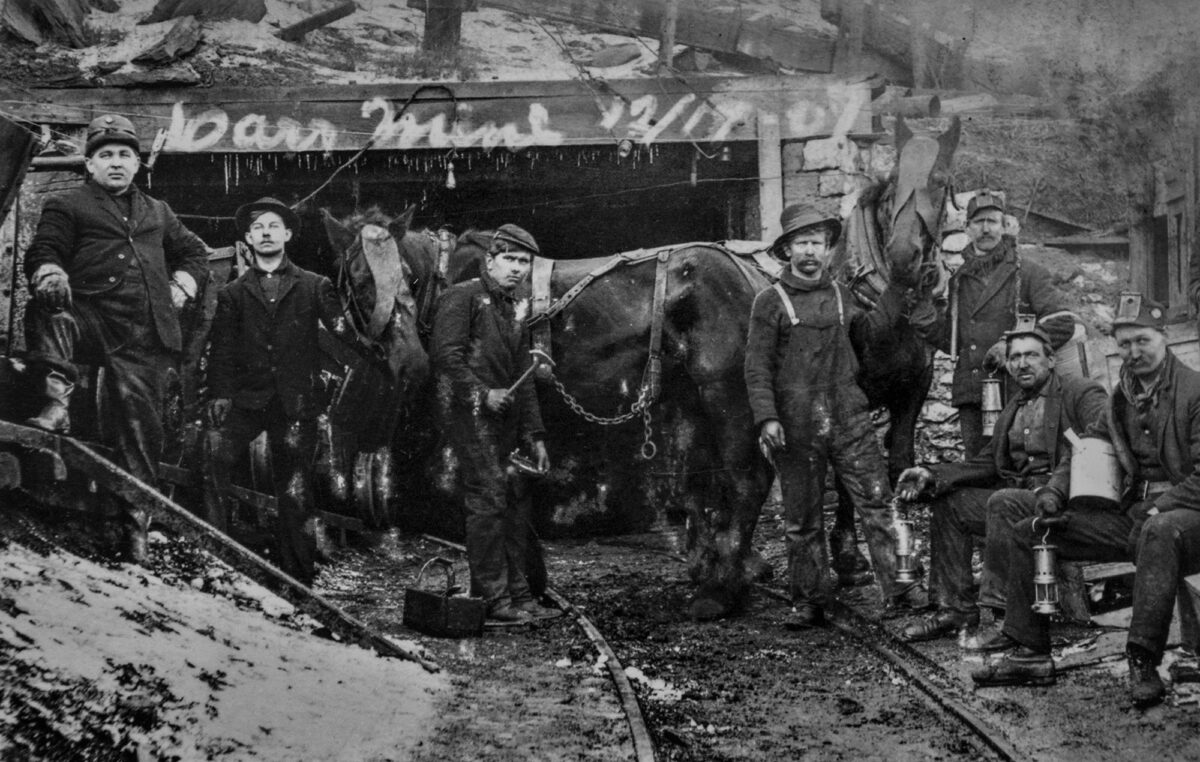
December 19, 1907: The Darr Mine Disaster

December 19, 1907: The Darr Mine Disaster occurs in Rostraver Township, Pennsylvania, outside Pittsburgh. With 239 deaths, it remains the worst coal mining disaster in the history of America's foremost coal mining State.

The mine was operated by the Pittsburgh Coal Company. It was located on the west side of the Youghlogheny River, and along the route of the Pittsburgh and Lake Erie Railroad. Most of the miners and other mine laborers lived in the nearby community of Jacobs Creek, and took a "sky ferry" (aerial tramway) across the river to the mine entrance.

Many of the workers were immigrants from central Europe, particularly from the eastern part of what was then the Austro-Hungarian Empire: Hungarians, Slovaks and Rusyns. Others were Germans, Poles and Italians.

An inquiry carried out after the disaster determined that the blast was the result of miners carrying open lamps in an area cordoned off the previous day by the fire boss. The Pittsburgh Coal Company was not held responsible, but did abandon the use of open lamps after the disaster.

The Darr Mine blast was the 4th major mine disaster in December 1907, which would become the deadliest mine fatality month in U.S. history. It followed the Yolande mine explosion in Alabama on December 16, the Monongah Mining disaster in West Virginia that killed 362 on December 6, and the Naomi Mine explosion in Pennsylvania that killed 35 people on December 1.

The Darr Mine was abandoned, and is now overgrown with forest.

*

December 19, 1907 was a Thursday. Baseball was out of season. Football season had just ended. And professional basketball and hockey barely existed. So there were no scores on this historic day.

Friday, December 16, 2022

December 16, 1907: The Yolande Mine Disaster

December 16, 1907: An explosion at the Number 1 Mine of the Yolande Coal and Coke Company kills at least 75 men in Yolande, outside Birmingham, Alabama. It was 1 of 4 major mining disasters in America in December 1907 alone.

Post-disaster inspectors couldn't even approach the mine for 2 days, as it was still too hot -- in December. From this, they concluded that the explosion was caused by a "windy shot" bringing about a dust explosion.

Among the dead taken out early was Robert Arnold, the bank boss and Assistant Superintendent of the Yolande Company. Such was the nature of the South at the time that even The New York Times' reporter listened the names of the dead white miners, but not those of the dead black miners.

*

December 19, 1907 was a Monday. This was also the day the Great White Fleet set sail. I have a separate entry for that event.

Baseball was out of season. Football season had just ended. And professional basketball and hockey barely existed. So there were no scores on this historic day.

Tuesday, December 6, 2022

December 6, 1962: The Robena Coal Mine Explosion

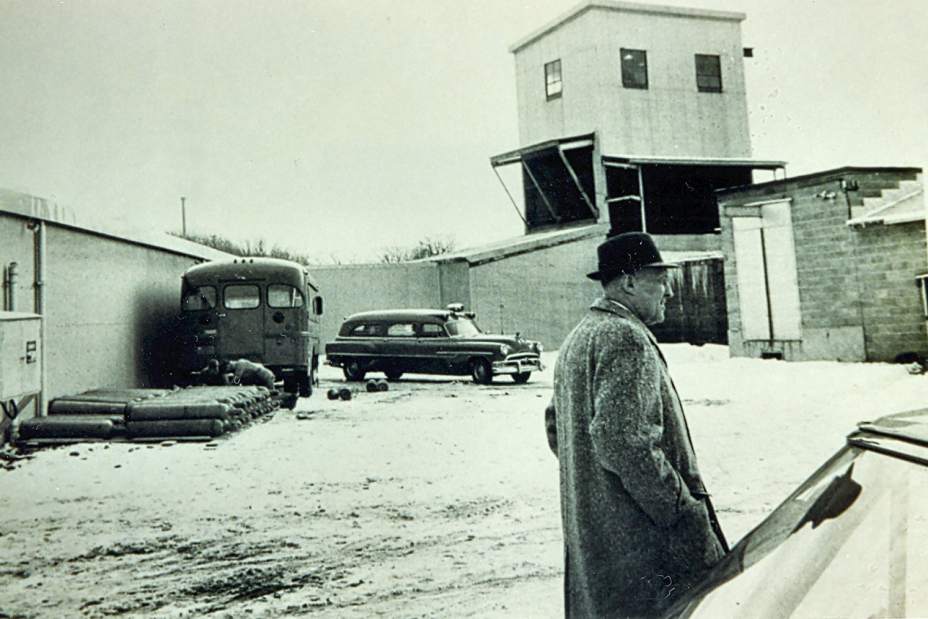
December 6, 1962: An explosion at the United States Steel Corporation's Robena #3 mine near Carmichaels, in the southwestern corner of Pennsylvania, kills 37 coal miners, most of them suffocating from carbon monoxide gas.

A snowstorm raged through Carmichaels that day. While the snow fell, two explosions ripped through Frosty Run shaft. The first blast occurred around 1:05 PM, the second about 20 minutes later.

According to a December 7 article from the Daily Courier of Connellsville, "Workers in the corrugated structure got their first indication that something was wrong at 1 p.m. EST Thursday when the ventilator fan at the Frosty Run shaft stopped operating. Shortly after that miners came rushing out of the shaft." 

Miners from as far away as two miles from the blast site said, "they heard a 'thud,' some felt a rush of air. Some said the blast waves knocked their helmets off their heads." 

Some of the escaped miners would join the rescue teams that began to arrive on scene in hopes of rescuing the 37 trapped within the mine. Hope remained that the miners survived the explosions, although the odds were against them, and no communication had been heard since the explosion. Two of the miners trapped below were "crack rescue men," and hopes were that they would find an escape route.

Recovery operations began soon after the second explosion. Emergency equipment and supplies began to arrive, but with difficulty due to the heavy snow and strong winds. Many roads closed that night due to increasingly bad weather. 

*

December 6, 1962 was a Thursday. Actress Janine Turner was born. And Bob Dylan recorded “Oxford Town,” “I Shall Be Free,” and “A Hard Rain’s A-Gonna Fall.”

Baseball was out of season. Football was in midweek. There were 2 games played in the NBA. The New York Knicks beat the Cincinnati Royals, 99-96 at the Cincinnati Gardens. And the Chicago Zephyrs beat the St. Louis Hawks, 106-93 at the Chicago Coliseum.

And there was 1 game played in the NBA: The Detroit Red Wings beat the Boston Bruins, 5-3 at the Olympia Stadium in Detroit.

December 6, 1907: America's Worst Mining Disaster

December 6, 1907: The Fairmont Coal Company's Number 6 and Number 8 mines explode, in Monongah, West Virginia, 25 miles southwest of Morgantown, and about 100 miles south of Pittsburgh. The disaster claimed 362 lives, making it the worst mining accident in American history.

Of the miners who died, 171 were Italian immigrants. There were 4 Italians who managed to escape alive, and 1 Polish miner was successfully rescued. But for most of those who died, it was instantaneous. The rescue attempts were dangerous due to gas buildup, and would have been pointless even if perfectly safe.

Beyond the men who died, 216 women were widowed, and the miners left behind 475 children, with a further 31 born after the disaster.

The public began demanding additional oversight to help regulate the mines. In 1910, Congress created the United States Bureau of Mines, under the control of the U.S. Department of the Interior, with the goal of investigating and inspecting mines, to reduce explosions and to limit the waste of human and natural resources. In addition, the Bureau of Mines set up field officers that would train mine crews, provide rescue services, and investigate disasters.

Housing has been built on the site.

*

December 6, 1907 was a Friday. Baseball was out of season. Football season had just ended. Professional basketball and hockey barely existed. So there were no scores on this historic day.

Thursday, December 1, 2022

December 1, 1907: The Naomi Mine Explosion

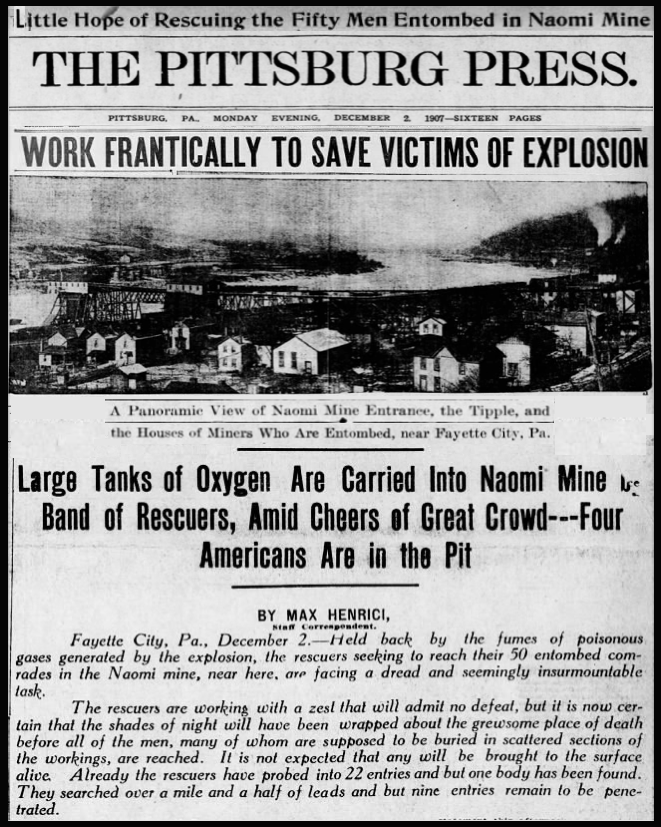
December 1, 1907: The Naomi Mine explosion kills 35 people outside Fayette City, in the southwest corner of Pennsylvania.

The Naomi Mine was operated by Hillman Coal and Coke Company, on the Monongahela River. The mine was built to exploit the Pittsburgh coal seam, which was positioned at a depth of 160 feet below the surface of the mine. Coal was hauled out of the mine with carts that were equipped with electric motors. From 1870, the earliest year records were kept, to December 1, 1907, a total of 63 men were killed in the Naomi Mine.
The explosion happened at about 7:15 on a Sunday night. Inadequate ventilation allowed pockets of explosive gas to accumulate in the interior of the mine. The gas was most likely ignited by an open light or electric arc, both of which would have been present at the time.
Several miners who lost their jobs in the closing of the Naomi Mine would soon find work in the Darr Mine located in nearby Westmoreland County. Just 18 days later, many of these displaced miners would be killed in the deadliest coal mining disaster in Pennsylvania history.
The Naomi Mine blast was the 1st of 4 major mine disasters in December 1907, which would become the deadliest mine fatality month in U.S. history. It was followed by the Monongah Mining disaster in West Virginia that killed 362 on December 6, the Yolande mine explosion in Alabama on December 16, and the Darr Mine explosion in Pennsylvania that killed 239 people on December 19.
*
December 1, 1907 was a Sunday. Baseball season was over. Professional football, basketball and hockey barely existed. And college football's regular season was over. So there were no scores on this historic day.

Sunday, November 27, 2022

November 28, 1908: The Marianna Mine Disaster

November 28, 1908: An an explosion occurs in the Marianna Mine, which kills 154 men and leaves only 1 survivor.

Marianna, about 40 miles south of Pittsburgh, was built as a mining town for the Pittsburgh Buffalo Company in 1907, and was incorporated in 1910. At the time of its construction, the Marianna Mine was among the most modern and well equipped in the world. The town's brick homes were designed to offer indoor bathrooms, fenced yards and other amenities making living conditions very attractive for the time.

The explosion occurred at 10:55 AM. Although the mine was quickly refurbished by the Pittsburgh Buffalo Company, the colliery's fortunes flagged. This was one of several disasters, including a few in 1908 alone, that catalyzed public advocacy for mine safety, leading to the establishment of the U.S. Bureau of Mines in 1910. USBM research on safer blasting material and the prevention of mine gas and dust explosions resulted in reduced occurrence of mine disasters.

By 1914, the mine was sold to the Union Coal and Coke Company, and later to Bethlehem Steel, which continued to extract coal until 1988, when the main conveyor caught fire. The fire was extinguished, but the mine closed anyway.

*

November 28, 1908 was a Saturday. This was Thanksgiving Weekend, and most of the major rivalry games were played 2 days before, on Thanksgiving Day itself. Only 2 games of note were played on this day. Army beat Navy, 6-4 at Franklin Field in Philadelphia; and the University of Denver beat Colorado College, 6-4 at Washburn Field in Colorado Springs. Remember: At the time, a touchdown was worth 5 points, to be followed by an attempt at an extra point; and a field goal was worth 4 points.

Thursday, September 22, 2022

September 22, 1934: The Gresford Colliery Disaster

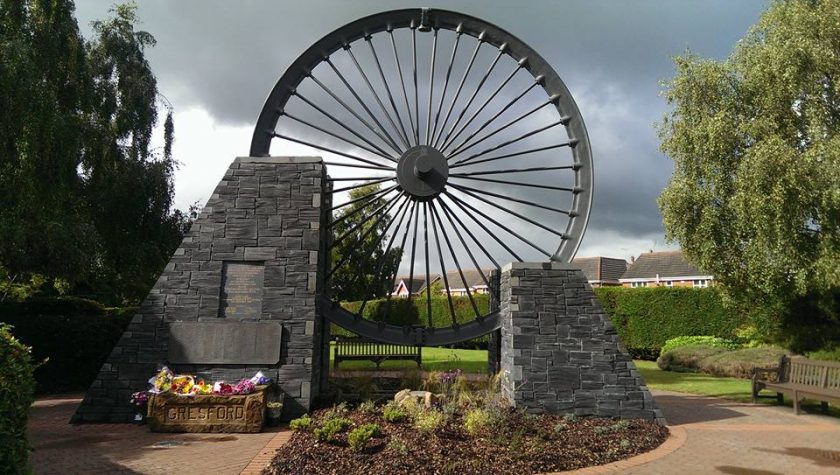
The memorial to the Disaster

September 22, 1934: The Gresford Colliery Disaster occurs in Gresford, about 3 miles north of Wrexham, Wales. A total of 266 deaths is attributed to it.

Like the rest of the island on which Great Britain rests, also including England and Scotland, Wales is coal-mining country. The Gresford Colliery had opened in 1911, and, by 1934, in spite of the Great Depression, employed 2,200 people.

Tthe mine was extremely dry, unlike mines to the west of the fault, and was therefore prone to firedamp: Any flammable gas found in coal mines, typically coalbed methane. The gas accumulates in pockets in the coal and adjacent strata. When they are penetrated, the release can trigger explosions.

This is what happened in Gresford's Dennis Shaft, at 2:08 AM on September 22, 1934, with about 500 men working the overnight shift. Because of the intense heat, only 6 men were recovered alive, and 11 were recovered dead. The rest were presumed incinerated.

Without any decisive evidence, the report of the investigation, issued 3 years later, could not attribute any outright blame or definitive cause for the disaster.

In 1947, the Labour government created the National Coal Board, nationalizing the industry. Gresford Colliery finally closed on economic grounds in 1973. In the 1980s the site was redeveloped as an industrial estate. In 1982, a memorial to the victims of the disaster was erected nearby; it was constructed using a wheel from the old pit-head winding gear. The last direct link to the disaster, Eddie Edwards, who began work in the mine aged 14, and who participated in the rescue efforts, died on January 6, 2016, at the age of d 102.

*

September 22, 1934 was a Saturday. The British soccer team I would one day begin supporting, Arsenal F.C. of North London, traveled to Yorkshire, and played Sheffield Wednesday to a 0-0 draw at Hillsborough Stadium in Sheffield.

In America, it was early in the college football season, and most schools in what would later be called the major conferences hadn't yet begun their seasons. Most games played that day ended up having little significance. But these baseball games were played:

* The New York Giants lost to the Boston Braves, 3-2 at Braves Field in Boston. Hal Schumacher walked Les Mallon with the bases loaded in the bottom of the 12th inning, forcing Randy Moore home with the winning run. Giants player-manager Bill Terry went 1-for-4 with a walk. Mel Ott went 2-for-4 with a walk and an RBI.

* The Pittsburgh Pirates swept a doubleheader from the Chicago Cubs, 2-1 and 11-7 at Forbes Field in Pittsburgh.

* The Cleveland Indians beat the Chicago White Sox, 9-8 at Comiskey Park in Chicago.

* The Detroit Tigers swept a doubleheader from the St. Louis Browns, 8-3 and 15-7 at Sportsman's Park in St. Louis.

* The New York Yankees and the Boston Red Sox were rained out at Yankee Stadium. The game was made up the next day, as part of a doubleheader. The Yankees swept, 1-0 and 5-4. Lefty Gomez pitched a 3-hit shutout in the opener. In the nightcap, Ben Chapman singled Red Rolfe home with the winning run in the bottom of the 10th inning. Red Ruffing went the distance for the win. Over the 2 games, Babe Ruth, in his last few days on the Yankee roster, went 0-for-5 (he only appeared in the 2nd game as a pinch-hitter), and Lou Gehrig went 3-for-7 with 2 walks and an RBI.

* The Cincinnati Reds and the St. Louis Cardinals were rained out at Crosley Field in Cincinnati. The game was made up as part of a doubleheader the next day. 

* The Brooklyn Dodgers and the Philadelphia Phillies were rained out at Ebbets Field. The game was made up as part of a doubleheader on the following Monday, September 24. The Dodgers swept, 5-3 and 10-1. The Cardinals won the 1st game, 9-7. Jesse Haines was the winning pitcher, and Dizzy Dean got the save, not that anyone knew what a save was at the time. The Reds won the 2nd game, 4-3. In the bottom of the 9th, Dizzy's brother Paul Dean was done in by his own throwing error, and Dizzy had to come in to relieve him. But Mark Koenig, of the 1927 Yankees, hit a sacrifice fly to win the game.

* The Philadelphia Athletics and the Washington Senators were rained out at Shibe Park in Philadelphia. This game was also made up as part of a doubleheader on the following Monday, September 24. The A's swept, 5-4 and 3-0. In the nightcap, Bill Dietrich pitched a 3-hit shutout against the defending AL Champions.

Friday, September 2, 2022

September 2, 1921: The Battle of Blair Mountain

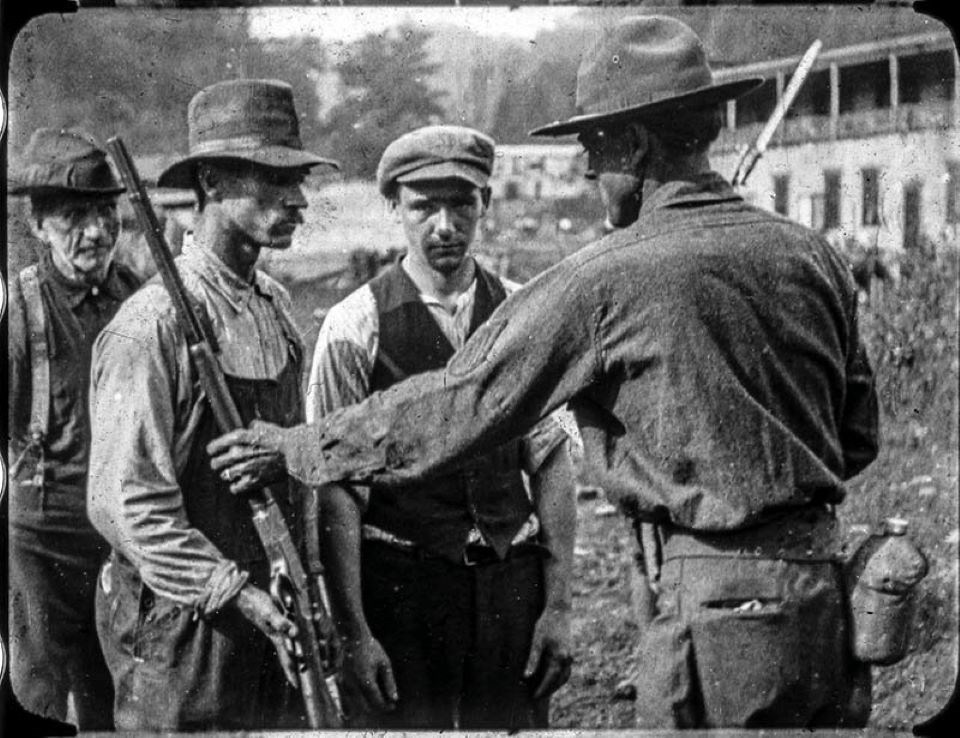
September 2, 1921: The largest labor uprising in American history takes place in Logan County, West Virginia. It becomes known as the Battle of Blair Mountain.

Coal companies had been exploiting their workers for decades. Due to the prosecution of miners' union leaders, things came to a head in the Summer of 1921. The United Mine Workers called for a rally at the State Capitol in Charleston for August 7. The UMW's leaders, including organizer Bill Blizzard, met with Governor Ephraim Morgan, who owed his election to the coal companies, and rejected their demands.

Labor leader Mary "Mother" Jones, for whom a liberal magazine would later be named, feared a bloodbath between the union men and the better-armed Logan County Sheriff's Department, led by Sheriff Don Chafin. So she warned the union men against taking further action.

Nevertheless, on August 24, 13,000 men began marching toward the Logan County mine, to try to force the strikebreakers out of their jobs. The next day, President Warren Harding threatened to send federal troops to protect the mine -- not the miners. A meeting was arranged between Chafin and the union leaders, and a truce was called. It seemed to be over.

It wasn't: Chafin wanted to break the union for once and for all, and assembled a "private army." Rumor got around that this army had shot union sympathizers, and caught families in the crossfire, in Sharples, just north of Blair Mountain. The union men turned back, believing that Chafin had done more than just front up with a private army, and that he had flat-out broken his word.

The Chafin army, now including some State Police officers, was outnumbered, but had the high ground and better weapons. On August 29, private planes dropped homemade bombs on the miners. One did not explode, and that proved crucial. The next day, Governor Morgan called out the West Virginia National Guard. On September 2, federal troops arrived. Many of the miners were World War I veterans, and refused to fire on the U.S. Army. The miners surrendered.

The number of casualties is unclear. The actual Army reported 3 deaths, because one of their planes crashed upon its return. On the Chafin side, the number of deaths has been reported as being between 10 and 30; on the miners' side, anywhere from 50 to 100. After the battle, 985 miners were indicted for murder, conspiracy to commit murder, accessory to murder, and treason -- not against the United States of America, but against the State of West Virginia.

At Blizzard's trial, the unexploded bomb was used as evidence of the government and companies' brutality, and he was acquitted. Though some were acquitted by sympathetic juries, others were imprisoned. The last was paroled in 1925.
Bill Blizzard

The UMW was crippled, and was a spent force throughout the 1920s. The Great Depression enabled them to come back, and they appealed to President Franklin D. Roosevelt in the 1930s. FDR's New Deal programs gave them much of what they wanted.

Mother Jones, already elderly by the time of Blair Mountain, died in 1930. In 1924, Sheriff Chafin was arrested in connection with moonshining, and sentenced to two years in prison. He died in 1954. UMW leader John L. Lewis expelled Blizzard, but the union revolted, and he had to be hired back. The two men were never friendly, and Lewis expelled Blizzard again in 1955. Blizzard died in 1958.

*

September 2, 1921 was a Friday. These baseball games were played that day:

* The New York Yankees beat the Washington Senators, 9-3 at the Polo Grounds. Babe Ruth, Bob Meusel and Roger Peckinpaugh hit home runs for the Yankees. Waite Hoyt was the winning pitcher.

* The Boston Red Sox beat the Philadelphia Athletics, 4-3 at Fenway Park in Boston.

* The St. Louis Cardinals beat the Pittsburgh Pirates, 1-0 at Forbes Field in Pittsburgh. Bill Doak started for the Cardinals, and pitched to 1 batter, giving up a single to Carson Bigbee. Manager Branch Rickey then took him out, and put in Jesse Haines, who went the rest of the way, pitching shutout ball for 9 innings, allowing 6 hits and a walk.

I don't know why Rickey did this. Both Doak and Haines were righthanded pitchers, so it wasn't as if Rickey was trying to trick Pirate manager George Gibson into loading his lineup with lefthanded hitters, with the intention of then switching to a lefthanded pitcher.

Doak does have 2 distinctions worth mentioning. He was 1 of the 17 pitchers who, at the start of the season, was allowed to continue using various pitches that fell under the category of "spitball" until they retired, with the pitches banned for everyone else. Doak may have been the only one who actually did spit on the ball, instead of licking his fingers or putting some other "foreign substance," such as grease or Vaseline, on the ball, earning him the nickname "Spittin' Bill."

And, in 1920, he suggested to sporting goods company Rawlings, maker of all major league baseball gloves, that a "web" should be laced between the index finger and the thumb, saying it would create a natural pocket. This design soon replaced all other baseball gloves, and remains the standard.

* The Chicago Cubs beat the Cincinnati Reds, 7-0 at Redland Field in Cincinnati. (It was renamed Crosley Field in 1934.) Grover Cleveland Alexander pitched a 5-hit shutout.

* The Cleveland Indians beat the Detroit Tigers, 12-1 at Navin Field in Detroit. (It was renamed Briggs Stadium in 1938, and Tiger Stadium in 1961.) Tris Speaker went 2-for-5 with an RBI for Cleveland. Ty Cobb went 1-for-3 for Detroit. Each was, by this point, his team's manager.

* The St. Louis Browns beat the Chicago White Sox, 3-0 at Comiskey Park in Chicago. Urban Shocker pitched a 4-hit shutout. George Sisler went 4-for-5 with 2 RBIs. Eddie Collins went 0-for-3 with a walk for the White Sox.

* Concerned about possible bad weather on September 2, the New York Giants and the Brooklyn Dodgers (or the Brooklyn Robins as they were known from 1914 to 1931, due to their manager being Wilbert Robinson), arch-rivals, moved their game at Ebbets Field back to September 1. Brooklyn won, 5-1. Zack Wheat went 2-for-4, in support of Burleigh Grimes, who turned out to be the last legal spitballer, retiring in 1934.

* As it turned out, there was enough rain to postpone the game in Brooklyn, though not in Upper Manhattan, as the Yankees played. There was also enough rain to postpone the game in Philadelphia, and a doubleheader was set up for Baker Bowl the next day. The Philadelphia Phillies won the opener, 4-1. The Boston Braves won the nightcap, 15-4. So the Phillies scored the same number of runs in both games, winning one comfortably and getting blown out in the other.
Monday, June 20, 2022

June 21, 1877: The Execution of the Molly Maguires

June 21, 1877: Ten members of the pro-labor "Molly Maguires" are executed for a group of murders in northeastern Pennsylvania's coal-mining country. It is a setback for both the American labor movement and justice in general.

The Molly Maguires originated in Ireland, where secret societies were common beginning in the 18th century and through most of the 19th century. Agrarian rebellion can be traced to local concerns and grievances relating to land usage, particularly as traditional socioeconomic practices such as small-scale potato cultivation were supplanted by the fencing and pasturing of land.

Agrarian resistance often took the form of fence destruction, night-time ploughing of croplands that had been converted to pasture, and killing, mutilating, or driving off livestock. The Mollies blackened their faces with burnt cork. At a time when there were few people of African descent in the British Isles, there was no reason to consider this to be racist.

The Irish potato famine of the 1840s led to large-scale immigration, not just immediately but for the remainder of the 19th Century, to England, Scotland, and to the New World, including America and Canada. In 2022, there are about 32 million Americans of Irish descent, while there are only about 7.2 million people in Ireland (the Republic and Northern Ireland combined).

Many of the immigrants when to major cities like New York, Philadelphia and Boston; but many were from rural parts of Ireland, and went to rural parts of America, where there was work, including mining, where their Anglo-Saxon bosses treated them no better than they had been treated back home.

Some Mollies came with them, and they are believed to have been present in the anthracite coal fields of Pennsylvania since at least the Panic of 1873, making themselves welcome in the accompanying labor unions.

Members of the Mollies were accused of murder, arson, kidnapping, and other crimes, in part based on allegations by Franklin B. Gowen, president of the Philadelphia and Reading Railroad, whose business depended largely on the transportation of coal from around the Commonwealth of Pennsylvania to the big cities of Philadelphia and Pittsburgh.

They also relied on the testimony of an agent of the Pinkerton Detective Agency, James McParland, a native of County Armagh, in what is now Northern Ireland, and a very anti-Catholic Protestant. Gowen acted as a prosecutor in some of the trials, which wipes out any notion of fairness right off the bat.

The first trials were for the killing of John P. Jones. The 3 defendants, Michael J. Doyle, Jimmy Kerrigan and Edward Kelly, had elected to receive separate trials. Doyle went first, with a conviction for first-degree murder being returned on February 1, 1876. Before the trial was completed, Kerrigan had decided to become a state's witness, and gave details about the murders of Jones and Benjamin Yost. Kelly was convicted on April 6.

On June 21, 1877, at the State Prison in Pottsville, Pennsylvania, 6 men -- Doyle, Kelly, Alexander Campbell, Hugh McGeehan, They were followed by Thomas Munley, James Roarity and "Yellow Jack" Donahue, all still proclaiming their innocence -- were hanged.

On the same day, at the State Prison in Mauch Chunk (a small city that would later rename itself Jim Thorpe, for the right to host the great Native American athlete's tomb), 5 others were hanged for a different murder: Hugh McGeehan, James Carroll, Thomas Duffy, James Boyle and James Roarity.

The Mollies declined, and American mining and railroad management grew more confident in their power. It would take until the 1890s for them to be seriously challenged again.

In 1889, Benjamin Gowen committed suicide. His family, not satisfied with the coroner's determination, hired the Pinkertons to find a killer. Certainly motivated by their past relationship with Gowen, the Agency was more than willing to blame the Mollies. But they could find no connection, and honesty won out: They determined, based on the word of members of the Gowen family, that he had been acting strangely lately, and that there was a history of insanity in the family. No one was ever charged in connection with his death.

*

June 21, 1877 was a Thursday. There were 2 games were played in the National League. The Hartford Dark Blues beat the Chicago White Stockings, 6-0 at the Union Grounds in Brooklyn, where, in spite of their Hartford name, the Dark Blues were playing their home games that season. And the St. Louis Brown Stockings beat the Boston Red Stockings, 13-11 at the South End Grounds in Boston.

Friday, April 8, 2022

April 8, 1911: The Banner Mine Disaster

April 8, 1911: The Banner Mine Disaster kills 128 people in a coal mine explosion near Littleton, Alabama.

The exact cause of the early-morning blast is unknown. It is likely that an accidental spark ignited gas in the air, which directly killed 7 men and knocked out a ventilation fan. Without the fan, levels of "blackdamp" rose in the mine. Another 121 miners suffocated. About 40 other workers were able to dig their way through rubble and escape.

The Banner Mine was run by Pratt Consolidated Coal Company, then owned by Tennessee Coal & Iron. Seventy-two of the casualties were black convicts leased from the State and from Jefferson County.

The explosion brought enough attention to horrific mine conditions for new Governor Emmet O'Neal to push a mine safety bill through the legislature.

*

April 8, 1911 was a Saturday. Baseball was in Spring Training. Football was out of season. Professional basketball barely existed. The Ottawa Senators had wrapped up the Stanley Cup on March 16, beating the Port Arthur Bearcats.

In English soccer, while this was not yet a North London Derby, the team then known as Woolwich Arsenal beat Tottenham Hotspur, 2-0 at the Manor Ground in Plumstead, South-East London.

Saturday, February 19, 2022

February 20, 1905: The Virginia City Mine Explosion

February 20, 1905: An explosion at the Virginia City Mine kills 112 coal miners at Virginia City, Alabama.

This mine should not be confused with the famous Comstock Lode, a silver mine that inspired the growth of Virginia City, Nevada, helped gain Nevada Statehood, and inspired the TV show Bonanza. Nor should it be confused with cities named Virginia City in Texas and Montana. Oddly, Virginia does not have a city named Virginia City.

The Jefferson County Coroner, operating out of nearby Birmingham, determined that the explosion was caused by the use of too much powder in a charge made at the 5th entry left. The presence of large amounts of coal dust in the mine's air carried the explosive reaction through the entire mine, and caused water pumps and pipes to break, flooding chambers below the water line. The mine itself suffered little damage except for a rock collapse at the entrance.

The mine was operated by a pair of brothers, George and Everett Schuler. They and their partners were charged with criminal negligence that April. Republic Steel purchased the mine in 1936, and operated it until 1963. The property was subsequently redeveloped as the Virginia Estates and Edenwood residential subdivisions. 

*

February 20, 1905 was a Monday. Baseball and football were out of season. Professional basketball barely existed. And the Ottawa Silver Seven were between Stanley Cup challenges from the Dawson City Nuggets and the Rat Portage (later Kenora) Thistles. So there were no scores on this historic day.

December 31, 1999 & January 1, 2000: The Millennium

December 31, 1999:  The Millennium arrives. The people of planet Earth survived. At a terrible cost. But we hadn't destroyed ourselves. ...