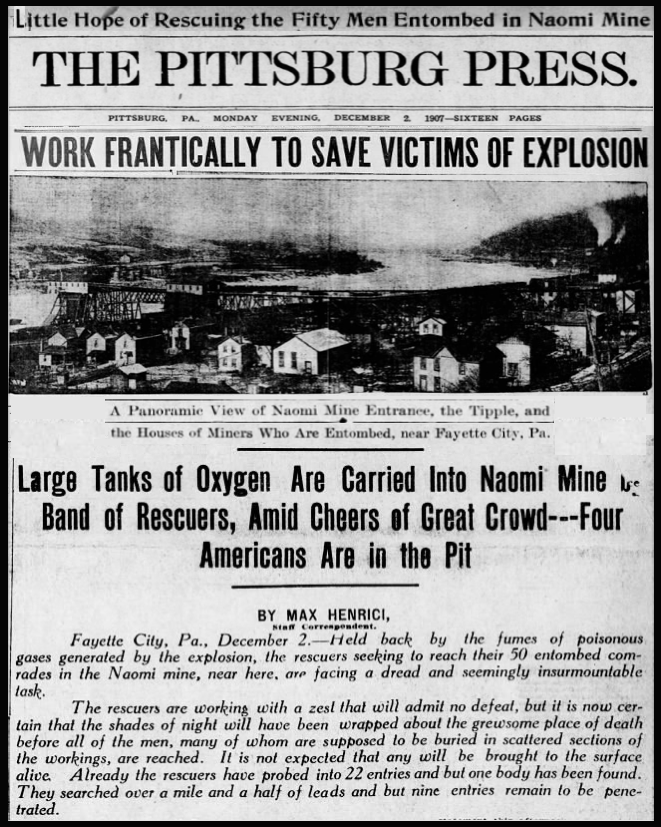
December 1, 1907: The Naomi Mine explosion kills 35 people outside Fayette City, in the southwest corner of Pennsylvania.
The Naomi Mine was operated by Hillman Coal and Coke Company, on the Monongahela River. The mine was built to exploit the Pittsburgh coal seam, which was positioned at a depth of 160 feet below the surface of the mine. Coal was hauled out of the mine with carts that were equipped with electric motors. From 1870, the earliest year records were kept, to December 1, 1907, a total of 63 men were killed in the Naomi Mine.
The explosion happened at about 7:15 on a Sunday night. Inadequate ventilation allowed pockets of explosive gas to accumulate in the interior of the mine. The gas was most likely ignited by an open light or electric arc, both of which would have been present at the time.
Several miners who lost their jobs in the closing of the Naomi Mine would soon find work in the Darr Mine located in nearby Westmoreland County. Just 18 days later, many of these displaced miners would be killed in the deadliest coal mining disaster in Pennsylvania history.
The Naomi Mine blast was the 1st of 4 major mine disasters in December 1907, which would become the deadliest mine fatality month in U.S. history. It was followed by the Monongah Mining disaster in West Virginia that killed 362 on December 6, the Yolande mine explosion in Alabama on December 16, and the Darr Mine explosion in Pennsylvania that killed 239 people on December 19.
*
December 1, 1907 was a Sunday. Baseball season was over. Professional football, basketball and hockey barely existed. And college football's regular season was over. So there were no scores on this historic day.


No comments:
Post a Comment