Showing posts with label opening day. Show all posts

Thursday, November 3, 2022

November 3, 1908: William Howard Taft Is Elected President

November 3, 1908: William Howard Taft, the U.S. Secretary of War, is elected the 27th President of the United States. The nominee of the Republican Party defeats William Jennings Bryan, who had been nominated by the Democratic Party for the 3rd time. Taft gets 51.6 percent of the popular vote, and wins the Electoral Vote 321 to 162.

Theodore Roosevelt chose not to run for what would have been a 3rd term, and chose Taft, who would really have preferred to have been named Chief Justice of the U.S. Supreme Court. TR warned Taft to not let the press take his picture on the golf course. Despite this warning, and his weight, which made him look ridiculous on the golf course, it happened, and TR called him onto the carpet.

Taft was a physical heavyweight, reaching a peak of 355 pounds, our heaviest President -- although Donald Trump may have broken this record. Taft was no lightweight intellectually, either: He was a graduate of Yale University, although he returned to his hometown to go to law school, at the University of Cincinnati. When TR read him the riot act over the golf pictures, Taft stood up for himself, and said, "Mr. President, you play tennis. That's a more elitist sport than golf!" TR said, "Yes, but I don't let the press take my picture while I do it!"

Taft won anyway, mainly because Bryan was running for the 3rd time, and the issue that had first vaulted him to prominence, the free coinage of silver, was no longer as effective when there wasn't a depression on, as there was when he first ran in 1896. One of the Taft slogans was, "Vote for Taft this time. You can vote for Bryan anytime."

The Democrats tried to suggest that Taft would be nothing but Roosevelt's puppet. That only helped him, as the Republicans made buttons and signs reading, "U-N-I, Ted." A campaign song was launched: "Get on the raft with Taft, boys, get in the winning boat!"

Taft is remembered largely for his, well, largeness. However, the story that he got stuck in a bathtub in the White House is not true. Nor is it true that, on Opening Day at the Washington Senators' American League Park (predecessor to Griffith Stadium) on April 14, 1910, he inadvertently invented the seventh-inning stretch, by getting up to stretch his legs, making everyone else stand out of respect to the President. That may have happened at some point in the game, but the stretch had been invented years earlier. What Taft did start that day was the tradition of the President throwing out the ceremonial first ball at the Washington team's home opener.

And while TR was known as "the trust buster," Taft actually broke up more monopolies than Roosevelt did. Nevertheless, Taft ended up running his Presidency as a conservative, far from the progressive vision that TR had expected.

As a result, TR tried to regain the office in 1912. But, as the incumbent, Taft controlled the party machinery. TR ran as a 3rd party candidate, and finished 2nd. They split the Republican vote, and Democrat Woodrow Wilson got elected as a plurality candidate. Wilson appointed Bryan his Secretary of State, but Bryan resigned in 1915, because he was a pacifist, Wilson seemed to be inching too closely to going to war.

Roosevelt and Taft patched things up, and Wilson's successor, Warren Harding, appointed Taft to be Chief Justice -- the only President to also have served on the Supreme Court. Today, "Teddy 26" and "Bill 27" are part of the Washington Nationals' "Racing Presidents."

Taft was the 1st President to be buried at Arlington National Cemetery, across the Potomac River from Washington, in Arlington, Virginia. Only John F. Kennedy has joined him. There are high schools named for Taft in New York (The Bronx), Chicago, San Antonio and Los Angeles. There's a William Howard Taft University in Denver, and a Taft Law School in the Los Angeles suburb of Santa Ana, California.
Statue of Taft as Chief Justice,
University of Cincinnati Law School

His father Alphonso Taft had served as U.S. Attorney General and Secretary of War. His son Robert Taft served as Senate Majority Leader, and ran for President in 1940, 1948 and 1952. Robert's son, Robert Taft Jr., served Ohio in both houses of Congress. And his son, Bob Taft, served as Governor.

Taft was played by Ross Durfee in The Winds of Kitty Hawk in 1978, Victor Buono in Backstairs at the White House in 1979, and Walter Massey in The Greatest Game Ever Played in 2005.

Henry L. Stimson served as Secretary of War under Taft, and later again under Franklin Roosevelt. He lived until 1950, making him last surviving member of Taft's Cabinet.

*

November 3, 1908 was a Tuesday. The baseball season -- one of the wildest ever, with 3-team races going down to the wire in both Leagues, including "Merkle's Boner" and its aftermath -- was over. Saturday had been standardized as the weekday for college football. Football barely existed on a professional level, and basketball and hockey were still all-amateur. So there were no scores on this historic day.

But there was an event on this day that would have an effect on sports: Bronislau Nagurski was born in Rainy River, Ontario. He grew in International Falls, Minnesota. "Bronko" wasn't big by today's standards, but, at 6-foot-3 and 230 pounds, he was enormous for his era. He could do it all: Block, run, catch, tackle, even throw every once in a while. He helped the Chicago Bears win the NFL Championship in 1932 and 1933, and, during the manpower shortage of World War II, came out of retirement to help them do it again in 1943.

He was a charter inductee into the Pro Football Hall of Fame in 1963. When John Madden named his "All-Madden All-Millennium Team" in 1999, the 1st 3 names he chose were Jim Thorpe, and the 1930-34 Chicago running tandem of Red Grange and Nagurski -- the prototypes, respectively, of the modern speedy halfback and the big, bruising fullback.

Monday, April 18, 2022

April 18, 1929: The Yankees Introduce Uniform Numbers to Baseball

Babe Ruth batting at Yankee Stadium,
sometime between 1929 and 1934.
The right field stands were extended
around the foul pole in 1937.

April 18, 1929: The New York Yankees beat the Boston Red Sox, 7-3 at the original Yankee Stadium. It had been 6 years to the day since they opened the Stadium, also by beating the Sox. Current Yankee pitcher George Pipgras outpitched future Yankee ace Red Ruffing. Thrilling most, but surprising few, both Babe Ruth and Lou Gehrig hit home runs.

Today is another innovation: The Yankees take the field wearing numbers on the backs of their uniforms.

In 1894, a man whose name has been lost to time suggested to James Hart, president of the Chicago Colts, that his players should wear uniform numbers. At the time, players were listed on scorecards at a particular position. But it was very common then for a play more than one position, and if he did, or even if he didn't play at all, and a substitute played his position, it confused the fans, especially those who didn't come often enough to know the players by face. But the Colts didn't go for the suggestion.

In 1903, the team had taken on its permanent name, the Chicago Cubs. In 1906, they assigned each player a number that would appear on the scoreboard, which could then be put on the scoreboard, and inform fans of who is playing, including in-game substitutions. But they didn't put those numbers on the players' uniforms. The idea was to encourage the sale of scorecards, and it worked well enough that every other team adopted it over the next few years.

The 1st time that a major league team wore numbers was on June 26, 1916. Inspired by the recent adoption of numbers in football and hockey, the Cleveland Indians added large numbers to their left sleeves for a game at League Park. This experiment was tried for a few weeks, then again the next season, before being abandoned. In 1923, the St. Louis Cardinals adopted uniform numbers on their sleeves, but this didn't last long, either.

In 1929, both the Indians and the Yankees were planning to start the season with uniform numbers on the back of the jersey. Both teams were scheduled to begin their seasons on April 16. However, a rainout forced the Yankees to postpone their season opener. The Indians played their game as scheduled, in the process becoming the first major league team to wear uniform numbers on the back of the jersey.

The Yankees had a system, though this didn't last: The players wore numbers that reflected their usual position in the batting order:

* 1 Earle Combs, center field
* 2 Mark Koenig, shortstop
* 3 Babe Ruth, right field
* 4 Lou Gehrig, 1st base
* 5 Bob Meusel, left field
* 6 Tony Lazzeri, 2nd base
* 7 Leo Durocher, 3rd base

At the time, in spite of all their talent, the Yankees did not have a regular catcher. So the catcher usually batted 8th, and the 3 catchers they used that season had the next 3 numbers: 8, Johnny Grabowski; 9, Benny Bengough; 10, Bill Dickey.

After that, the pitchers got the next few numbers; after them, reserve hitters; in each case, according to seniority. Therefore, these pitchers wore these numbers: 11, Herb Pennock; 12, Waite Hoyt; 13, not used, given its traditional status as an "unlucky number"; 14, George Pipgras; 15, Hank Johnson; 16, Tom Zachary; 17, Fred Heimach; 18, Wilcy Moore; 19, Ed Wells; 20, Myles Thomas; 21, Gordon Rhodes.

And these other players wore these numbers: 21, George Burns, not to be confused with the legendary comedian; 22, Gene Robertson; 23, not assigned; 24, Lyn Lary; 25, Ben Paschal; 26, Cedric Durst; 27, Sammy Byrd, who would fill in for Ruth for defensive purposes as Ruth's weight problems returned, to the point where Byrd was nicknamed "Babe Ruth's Legs"; 28, Elias "Liz" Funk.

Manager Miller Huggins never wore a number. Nor did coach Harry Mathews. Former pitcher turned pitching coach Bob Shawkey was given 29. Three players acquired later in the season got higher numbers: 30, Francis "Bots" Nekola, a pitcher who later became a scout for the Red Sox, and signed Carl Yastrzemski; 31, Roy Shend; and 32, Art Jorgens. Coaches Charley O'Leary wore 33 and Art Fletcher wore 34.

By 1931, all teams had numbers on the back, with the Philadelphia Athletics being the last to adopt them. That year, Joe McCarthy became the Yankees' manager. He managed in the major leagues as late as the 1950 season, but never wore a number. Hence, the Yankees have not retired one for him, although they did give him a Plaque in their Monument Park, in addition to the Monument for Huggins, who died in office near the end of the 1929 season.

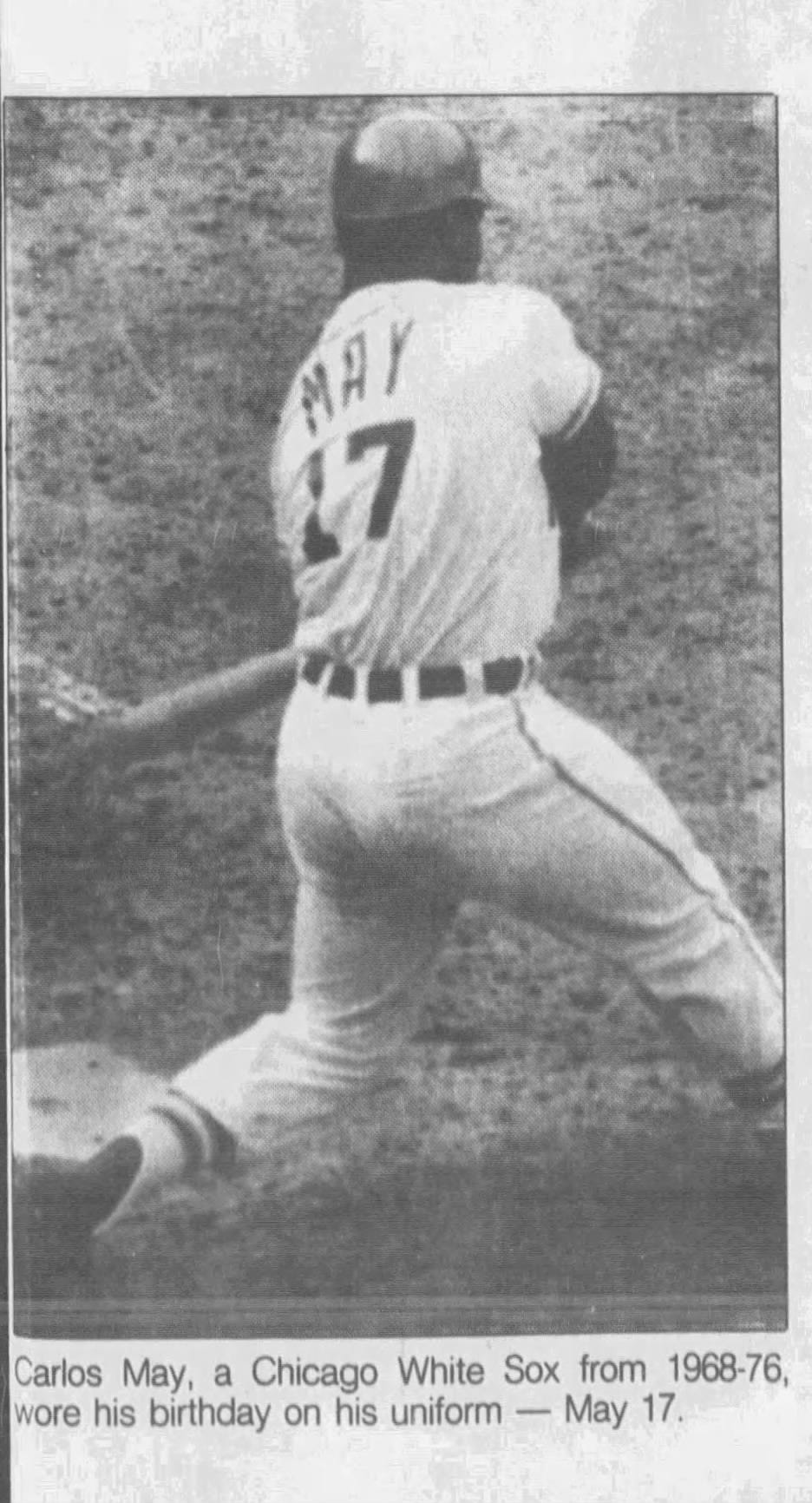
In 1952, the Brooklyn Dodgers made a concession to television, and added bright red numbers to the front of their jerseys, under the blue script "Dodgers." In 1960, the Chicago White Sox not only became the 1st team to wear numbers on their sleeves, to help for easier identification on TV, but also the 1st team to have names on the back. This resulted in Carlos May, an outfielder who played for them from 1968 to 1976, becoming, through the 2021 season, the only player ever to wear his birthday on his back: "MAY 17."
Football long preceded baseball in using uniform numbers. The Detroit Heralds are the first professional team known to have done so, in 1905. The NFL "suggested" numbers at its founding in 1920, and by 1930, all teams were using them. In 1952, the policy of assigning numbers by position, to make it easier for referees to call penalties, went into place.

The teams that had been in the AFL adopted this in 1970, though the players who had previously worn numbers in defiance of this were allowed to keep them. With names on the back, it was the other way around: The AFL did it at its founding in 1960, to aid TV, while the NFL adopted it with the merger.

The NBA had numbers from its founding in 1946, but, unlike the college game, did not prohibit digits higher than 5 to make it easier for referees to use hand signals for fouls. They began using names on the back in 1968.

The National Hockey Association, the predecessor of the NHL, put numbers on the back in 1911. The NHL added names in 1977.

The Yankees did not keep the number-by-batting-order policy for long. Indicative of this is the fact that, over the course of that 1929 season, Dickey became the regular catcher, and a Hall-of-Famer, eventually getting his Number 8 retired, along with his (sort-of) successor, Yogi Berra.

Most teams adopted a policy of having good hitters be given low numbers, pitchers be given high numbers, and the manager and his coaches having numbers close to one another. This made it weird on some teams, where the manager's number would be a single digit, and so would that of his pitching coach, nearly always a former pitcher (but sometimes a former catcher).

With the retirement of Derek Jeter in 2014, it was believed that the Yankees would never have another player wear a single digit. But in 2019 and 2020, pitcher Adam Ottavino was acquired, and he insisted on continuing to do what a few other players whose first or last name began with O had done: Wearing the number zero. (UPDATE: In 2023, Domingo Germán, who had previously worn 55, wore 0, including in the perfect game he pitched that season. Marcus Stroman wore 0 in 2024 and 2025.)

The fact that the Yankees have retired so many numbers, starting with Gehrig's 4 in 1939, has meant that team numbers have gotten higher and higher, to where several players have had numbers in the 80s and the 90s, and their current biggest star, Aaron Judge, wears Number 99.

*

April 18, 1929 was a Thursday. These other baseball games were played that day:

* The New York Giants beat the Philadelphia Athletics, 11-9 at Baker Bowl in Philadelphia. This one was wild. It was tied 4-4 after 7. The Giants scored a run in the 8th, and 6 in the top of the 9th. But the Phils scored 5 in the bottom of the 9th, and almost came back. Almost. Carl Hubbell went 7 innings for the win. Bill Terry went 2-for-4 with a walk. Mel Ott went 1-for-5 with an RBI. Lefty O'Doul hit 2 home runs for the Phils.

* The Brooklyn Dodgers lost to the Boston Braves, 13-12 at Braves Field in Boston. The Robins, as the Dodgers were officially known while Wilbert Robinson was their manager from 1914 to 1931, may have been in an even wilder game than their crosstown arch-rivals. Boston led 11-4 after 5 innings. Brooklyn closed to within 11-10 in the top of the 8th, the Braves scored 2 in the bottom of the 8th, and the Robins scored 2 in the top of the 9th, but it wasn't quite enough.

Babe Herman went 4-for-6 with a home run and 3 RBIs. George Sisler, playing out the string with the Braves, went 3-for-5 with 2 RBIs.

* The Philadelphia Athletics beat the Washington Senators, 8-2 at Griffith Stadium in Washington. Although they had future Hall-of-Famers Jimmie Foxx, Mickey Cochrane and Al Simmons (although Simmons didn't play in this game), it was Edmund "Bing" Miller who was the offensive star, going 3-for-5 with an RBI.

* The Cleveland Indians beat the Detroit Tigers, 8-4 at League Park in Cleveland.

* The St. Louis Cardinals beat the Cincinnati Reds, 3-1 at Redland Field (later renamed Crosley Field) in Cincinnati.

* The Chicago Cubs beat the Pittsburgh Pirates, 11-1 at Wrigley Field in Chicago. Hack Wilson and Charlie Grimm each had 4 RBIs for the Cubs.

* And the St. Louis Browns beat the Chicago White Sox, 4-1 at Sportsman's Park in St. Louis.

Saturday, April 16, 2022

April 16, 1935: "Fibber McGee and Molly" Premieres

April 16, 1935: Fibber McGee and Molly premieres on NBC radio. By 1940, when the running gag of the overloaded hall closet debuted, it was the most popular radio show in America.

Show stars Jim and Marian Jordan were married in real life, too. But Marian was often absent due to, officially, "fatigue" -- a cover first for alcoholism, then for the cancer that took her life in 1961. Jim lived on until 1988.

Fibber's catchphrase was, "Gotta clean out that closet!" Molly's was, "Taint funny, McGee!" (As in, "It ain't funny.")

They remained on radio until Marian's health began to fail for good, long after TV had replaced radio. While they made films as Fibber and Molly, they never wanted to switch to TV. When NBC finally ended the radio show due to Marian's illness in 1959, they cast younger actors in a TV version. It bombed. Times had changed too much.

*

April 16, 1935 was a Tuesday. Singer Bobby Vinton was born.

Football was out of season. The NBA hadn't been founded yet. The hockey season had ended a week earlier, when the Montreal Maroons beat the Toronto Maple Leafs to win the Stanley Cup. But it was Opening Day of the baseball season, and these games were played:

* The New York Yankees lost to the Boston Red Sox, 1-0 at Yankee Stadium. Wes Ferrell outpitched Lefty Gomez, allowing only 2 baserunners: A single to George Selkirk in the 4th inning, and a double to Lou Gehrig in the 7th. (He had pitched a no-hitter in 1931.)

Oddly, the only run of the game came on misplays by the Yankees' 2 best players. In the top of the 6th, Gomez struck Carl Reynolds out, but catcher Bill Dickey dropped the 3rd strike. Reynolds ran to 1st base, and Gehrig dropped Dickey's throw, allowing former Yankee Billy Werber to score.

This turned out to be the interim year, between the last Yankee season of Babe Ruth, and the 1st Yankee season of Joe DiMaggio. The Yankees won 89 games, and finished 2nd in the American League, 3 games behind perhaps the best Detroit Tigers team ever.

* The New York Giants lost to the Boston Braves, 4-2 at Braves Field in Boston. Ed Brandt outpitched Carl Hubbell. Giants 1st baseman and manager Bill Terry went 1-for-4 with 2 RBIs. Mel Ott also went 1-for-4.

Playing left field for the Braves, and making his triumphal return to Boston after 15 seasons with the Yankees, was Babe Ruth. He went 2-for4 with 3 RBIs, including a home run off Hubbell, the 709th of his career. But an elbow injury, his increasing weight, and the slowly dawning realization that the Braves were never going to make him their manager troubled Ruth, and he retired in June, with 714 homers.

The Braves went on to lose 115 games, the most by any National League team between 1899 and 1962. Maybe they should have named Ruth manager. In practical terms, he couldn't have done any worse.

* The Brooklyn Dodgers beat the Philadelphia Phillies, 12-3 at Baker Bowl in Philadelphia. Van Lingle Mungo went the distance for the win. He, Danny Taylor, and Jersey Joe Stripp each got 3 hits. Lonny Frey hit a home run.

* The Pittsburgh Pirates beat the Cincinnati Reds, 12-6 at Crosley Field in Cincinnati. Paul Waner went 2-for-3 with 3 walks and an RBI, and Lloyd Waner went 2-for-6.

* The Chicago Cubs beat the St. Louis Cardinals, 4-3 at Wrigley Field in Chicago. Dizzy Dean got hurt, and left the game in the 1st inning. Gabby Hartnett hit a home run.

* The Cleveland Indians beat the St. Louis Browns, 2-1 at Sportsman's Park in St. Louis. Cliché Alert: Walks can kill you, especially the leadoff variety. In the top of the 14th inning, Bobo Newsom started by walking Boze Berger, then gave up a game-winning double to Glenn Myatt. Newsom and the Indians' Mel Harder had each pitched all 14 innings.

* The Chicago White Sox and the Detroit Tigers debuted the next day, against each other, at Navin Field (later renamed Briggs Stadium and Tiger Stadium) in Detroit. The White Sox won, 7-6

* And the Washington Senators and the Philadelphia Athletics also debuted the next day, against each other, at Griffith Stadium in Washington. President Franklin D. Roosevelt threw out the ceremonial first ball, and the Senators won, 4-2.

Thursday, April 14, 2022

April 14, 1936: Orson Welles' "Voodoo" Version of "Macbeth"

April 14, 1936: Orson Welles' Federal Theatre Project premieres its all-black "Voodoo Macbeth" at the Lafayette Theatre at 2225 7th Avenue, at 132nd Street in Harlem.

For the record, there really was a Macbeth who was King of Scotland, from 1040 to 1057, and he is generally regarded as one of the better Scottish monarchs. The play seems to suggest he was a good man gone bad, and getting worse as he gains more power, and that he only reigned for a few weeks, as opposed to 17 years. He is egged on by his wife, and "Lady Macbeth" has become an insult for any woman who plots to become "the power behind the throne."

William Shakespeare first produced Macbeth in 1606. It tells of a nobleman whose ambition gets the better of him. The highlight comes near the end, when the title character realizes he's lost his kingdom, his wife, everything but his own life, all through his own fault. He says:

Tomorrow, and tomorrow, and tomorrow,
Creeps in this petty pace from day to day,
To the last syllable of recorded time;
And all our yesterdays have lighted fools
The way to dusty death. Out, out, brief candle!
Life's but a walking shadow, a poor player,
That struts and frets his hour upon the stage,
And then is heard no more. It is a tale
Told by an idiot, full of sound and fury,
Signifying nothing.

William Faulkner took this soliloquy, and titled his greatest noel The Sound and the Fury. And the Star Trek franchise titled an episode of its original series "All Our Yesterdays," and one of the later (though taking place earlier) series Strange New Worlds "Tomorrow and Tomorrow and Tomorrow." Another episode, "Dagger of the Mind," also takes its title from Macbeth.

The duel scene between Macbeth and Macduff was filmed in 1905. The 1st full-length film version was a 1908 American one. The 1st sound version was a British one in 1945, with Wilfrid Lawson. Welles filmed it, starring himself, in 1948. The series Hallmark Hall of Fame, then on NBC, produced it for TV in 1954 and 1960, both with Maurice Evans.

Laurence Olivier, having spectacularly succeeded with film versions of Shakespeare's plays Henry V in 1944, Hamlet in 1948, and Richard III in 1955, tried to get funding for a film version of Macbeth in the late 1950s, but failed.

Sean Connery, not yet having playing James Bond, starred in a version for Canada's CBC in 1961. Roman Polanski directed a film version in 1971, with Jon Finch. Ian McKellen starred in a version for Britain's ITV in 1979. Jeremy Brett starred in a feature film in 1981, Nicol Williamson in a BBC TV version in 1983, and Brian Cox voiced an animated version for BBC2 in 1992.

Jason Connery followed his father into the role for a 1997 feature film, Sean Pertwee (also the son of a major British actor, former Doctor Who star Jon Pertwee) in a Channel 4 TV production in 1998, Patrick Stewart in a 1960s-styled TV version for BBC Four in 2010, Michael Fassbender in a 2015 feature film, and Denzel Washington starred in the 2021 American film The Tragedy of Macbeth.

There are stories of accidents, misfortunes and even deaths taking place during runs of Macbeth. And so, actors and others in the theatre industry often consider it bad luck to mention Macbeth by name while inside a theatre, and sometimes refer to it indirectly, for example as, "The Scottish Play" -- although it is not considered bad luck to utter the name "Macbeth" when referring to the character himself. Welles himself was a student of the occult, and with Shakespeare's use of witches, Macbeth is his most occult play. But Welles didn't take the superstition seriously.
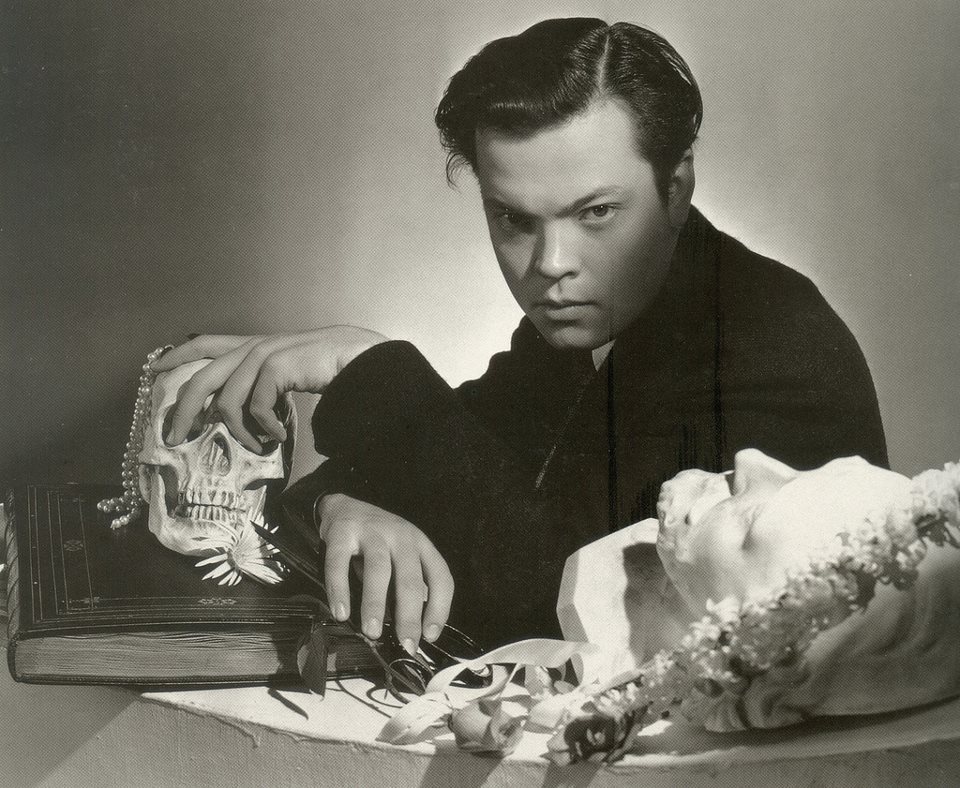
Orson Welles, age 20

He was also a believer in civil rights, and it was his idea to produce and direct a version of the play with all black actors. Jack Carter played the usurper king. The action was moved from Scotland to a Caribbean island, and the three witches were replaced by witch doctors. Welles pulled this imaginative idea off despite being just 20 years old.

The good news is, a portion of this play survives on film. The bad news is, the Lafayette Theatre does not: It was demolished in 2013.

Jack Carter had played Crown in the original 1927 Broadway production of Porgy and Bess, and would work with Welles again in 1937, playing the Devil role, Mephistopheles, in Doctor Faustus, with Welles directing and playing Faust. He appeared in films with mostly-black casts in the 1940s, and lived until 1967.

*

April 14, 1936 was a Tuesday. Actress Arlene Martel was born. So was Frank Serpico, the undercover detective who blew the whistle on police corruption in New York in the early 1970s, was nearly killed by his fellow cops over it, and was immortalized in film by Al Pacino.

Football was out of season. The NBA hadn't been founded yet. And the hockey season had ended 3 days earlier, when the Detroit Red Wings beat the Toronto Maple Leafs to win the Stanley Cup. But it was not just Opening Night for Welles' Macbeth, it was Opening Day for the season in what would later be called Major League Baseball, and there was a full slate of games:

* The New York Yankees lost to the Washington Senators, 1-0 at Griffith Stadium in Washington. President Franklin D. Roosevelt threw out the ceremonial first ball. Louis "Bobo" Newsom pitched a 4-hit shutout, outpitching Vernon "Lefty" Gomez. The game was scoreless until the bottom of the 9th inning, when Gomez gives up a single to Cecil Travis and a double to Carl Reynolds.

Lou Gehrig went 1-for-4. The Yankees' much-hyped rookie, Joe DiMaggio, had a foot injury, and did not make his major league debut until May 3.

* New York City's National League arch-rivals opened against each other. The New York Giants beat the Brooklyn Dodgers, 8-5 at the Polo Grounds. The Giants scored 3 runs in the bottom of the 8th to win it. Dick Coffman was the winning pitcher in relief of Hal Schumacher, while George Earnshaw went the distance for the Dodgers. Mel Ott and Dick Bartell hit home runs. Giant manager Bill Terry put himself in as a pinch-hitter, but did not reach base.

* The Boston Red Sox beat the Philadelphia Athletics, 9-4 at Fenway Park in Boston. Wes Ferrell went the distance for the win. Jimmie Foxx, making his Sox debut after they essentially paid the A's $150,000 for him (with additional, marginal players going each way), went 3-for-5 with an RBI.

* The Philadelphia Phillies beat the Boston Bees, 4-1 at Baker Bowl in Philadelphia. After a terrible season in 1935, the Boston franchise of the National League "rebranded" as we would say today, dropping the name "Braves" for "Bees," and renaming Braves Field "National League Park." The change never caught on, and the old names were restored in 1941.

* The Detroit Tigers beat the Cleveland Indians, 3-0 at League Park in Cleveland. Lynwood "Schoolboy" Rowe outpitched Mel Harder. Hank Greenberg went 1-for-4 with 2 RBIs. Charlie Gehringer went 3-for-4. Catcher-manager Mickey Cochrane went 0-for-5.

* The Pittsburgh Pirates beat the Cincinnati Reds, 8-6 at Crosley Field in Cincinnati. Paul Waner went 2-for-5. Lloyd Waner did not play, but, in his place in center field, Daniel "Bud" Hafey, a cousin of Hall-of-Famer Charles "Chick" Hafey, went 2-for-5 with a home run and 3 RBIs. Former Yankee Waite Hoyt, a Hall-of-Famer, pitched the last 6 innings in relief, and was the winning pitcher.

* The Chicago White Sox beat the St. Louis Browns, 7-6 at Comiskey Park in Chicago. The ChiSox scored 3 runs in the bottom of the 8th to win it. Luke Appling went 2-for-4.

* And the Chicago Cubs beat the St. Louis Cardinals, 12-7 at Sportsman's Park in St. Louis. Lon Warneke went the distance for the Cubs, outpitching Dizzy Dean. The Cards decided that if you can't beat him, get him, and acquired Warneke the next season. Frank Demaree hit 2 home runs for the Cubs, and they got 1 each from 3 future Hall-of-Famers: Gabby Hartnett, Billy Herman and former Phillies star Chuck Klein added 1.

Wednesday, April 13, 2022

April 13, 1964: The Sheffield Wednesday Betting Scandal

Peter Swan

April 13, 1964: Three players for South Yorkshire soccer team Sheffield Wednesday -- Peter Swan, Tony Kay and David Layne -- are revealed to have bet on Wednesday to lose their match away to Suffolk team Ipswich Town on December 1, 1962. Ipswich were defending League Champions at the time, so, at the time, it didn't arouse any suspicion that they won, 2-0.

A centre half, Swan had played for Wednesday since 1952, helping them win the Football League's Division Two in 1956 and 1959, and to finish 2nd in Division One in 1961. He was selected for the England team at the 1962 World Cup, but fell ill and didn't get into a game.

In a 2006 interview, Swan admitted his guilt in the fix of the Ipswich match: "We lost the game fair and square, but I still don't know what I'd have done if we'd been winning. It would have been easy for me to give away a penalty, or even score an own goal. Who knows?"

All 3 players -- Kay had moved on to Everton, and helped them win the 1963 League title -- were banned from English football for life. FIFA, the governing body for world soccer, made the ban worldwide. All 3 were convicted of conspiracy to defraud -- a crime for which the 8 banned players from the 1919 Chicago White Sox were found not guilty.

Their careers were ruined. They were sentenced to 4 months in jail, but were released after 10 weeks. Swan and Kay were only 27, and "Bronco" Layne was just 24. Swan had been told by England manager Alf Ramsey that he was "top of the list" for centre halves for the 1966 England squad, which won the World Cup without him. He also missed the 1966 FA Cup Final, as did Kay, whose Everton team beat Wednesday.

Swan and Layne were reinstated in 1972. Swan, 35, rejoined Wednesday. Layne, 32, tried, but didn't make the team, and retired a year later after playing for a lower-division side. Swan remained in the game until 1976, including serving as player-manager for lower-division Matlock Town. Kay was never reinstated, but was among the players honored at Everton's Goodison Park in 2003, on the 40th Anniversary of the League title.

Swan ran a pub in Chesterfield, but became afflicted with Alzheimer's disease, and died on January 20, 2021, at the age of 84. He should not be confused with the man of the same name who played the same position for several teams, including Leeds United, in the 1980s and '90s.

Layne also ran a pub, in Sheffield. Kay became a groundskeeper. As of April 13, 2022, both are still alive.

*

April 13, 1964 was a Monday. Actress Caroline Rhea was born.

In America, football was in its off-season. The NBA was between the end of its regular season and the start of its Playoffs. Game 2 of the Stanley Cup Finals was played, and the Detroit Red Wings beat the Toronto Maple Leafs, 4-3 at Maple Leaf Gardens in Toronto. Larry Jeffrey scored the winning goal, 7:52 into the 1st overtime. But the Leafs would win the series in 7 games.

And it was Opening Day of the season in what would soon be named Major League Baseball. President Lyndon B. Johnson threw out the ceremonial first ball at District of Columbia Stadium in Washington. (It would be renamed Robert F. Kennedy Memorial Stadium in 1969.) But the host Washington Senators lost to the Los Angeles Angels, 4-0. Ken McBride allowed just 1 hit, but walked the bases loaded in the top of the 7th inning. Angels manager Fred Haney brought Julio Navarro in to relieve, and he not only got out of the jam, but finished the 1-hit shutout.

In the other game played that day, the traditional National League opener in Cincinnati, the Houston Colt .45s beat the Cincinnati Reds, 6-3 at Crosley Field. Jimmy Wynn, a Cincinnati native known as the Toy Cannon for being short but strong, hit a home run. Frank Robinson went 1-for-4, and Pete Rose went 0-for-4.

April 13, 1954: A Big Day of Baseball Debuts

Curt Roberts

April 13, 1954: A big day in baseball. The Baltimore Orioles, formerly the St. Louis Browns, debut on the road, losing to the Detroit Tigers, 3-0 at Briggs Stadium. (It is renamed Tiger Stadium in 1961.) Their 1st batter is 2nd baseman Bobby Young, who grounds out to 1st base. Steve Gromek pitches a 7-hit shutout. The losing pitcher will see better days: His name is Don Larsen.

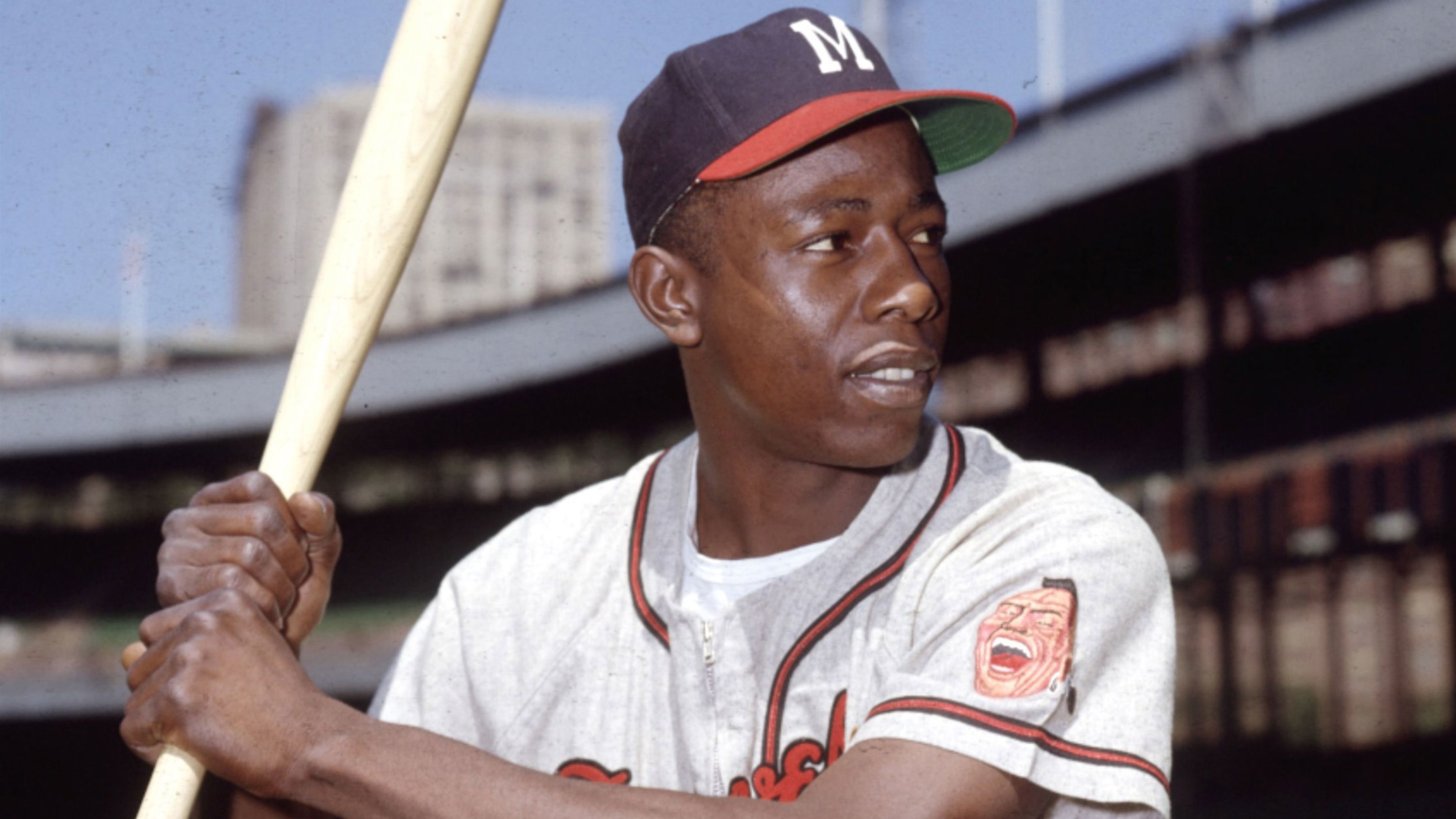
The Cincinnati Reds beat the Milwaukee Braves, 9-8 at Crosley Field in Cincinnati. Making his major league debut for the Braves is Hank Aaron, batting 5th, playing left field, and wearing Number 5. In the 1st inning, batting against Clarence "Bud" Podbelian, he grounds to short, starting an inning-ending double play. He grounds out to 3rd base in the 3rd. He pops up to 2nd in the 4th. He leads off the top of the 7th, and flies to right. And he flies out to right again in the 8th.
Hank Aaron at the Polo Grounds, early in his career

He ends the day at 0-for-5. Over the next 23 seasons, wearing Number 44 from the 2nd season onward, he would collect 3,771 hits, 755 of them home runs.

The Pittsburgh Pirates beat the Philadelphia Phillies, 4-2 at Forbes Field in Pittsburgh. 2nd baseman Curt Roberts becomes the 1st black player to play for the Pirates, and goes 1-for-3.

The Chicago Cubs beat their arch-rivals, the St. Louis Cardinals, 13-4 at Busch Stadium, formerly Sportsman's Park, in St. Louis. 1st baseman Tom Alston becomes the 1st black player to play for the Cardinals, and goes 0-for-4. The previous September Ernie Banks had become the Cubs' 1st black player.
Tom Alston

Four days later, on April 17, Saturnino "Nino" Escalera, an outfielder from Puerto Rico, became the 1st black player for the Cincinnati Reds, who were known as the Cincinnati Redlegs from 1953 to 1958, because the only thing dumber than caving in to McCarthyism was McCarthyism itself.

In 2014, 60 years later, New York Daily News baseball columnist Bill Madden published 1954: The Year Willie Mays and the First Generation of Black Superstars Changed Major League Baseball Forever. In the introduction, he wrote, "Whether baseball and America realized it, 1954 was the launching pad for a new era, when the dominant players in baseball were to be blacks and Hispanics."

The Pirates' pioneer would not be one of those dominant players: Curt Roberts, who had previously been a teammate of Banks on the Kansas City Monarchs of the Negro Leagues, only lasted 2 years in the majors, last playing on June 8, 1956, as the emergence of Bill Mazeroski made other 2nd basemen surplus to requirements. He starred in the high minors, with teams like the Denver Bears, the Montreal Royals and the Spokane Indians, but a broken leg in 1961 led to the end of his career in 1963. In 1969, he was changing a tire on his car in Oakland, California when he was hit by a drunk driver, and killed. He was only 40 years old, and should still have been playing.

The Cards' barrier-breaker also felt short of stardom: Tom Alston played 4 full seasons for them, but fell victim to neurasthenia, a neurotic disorder, and never played again after the 1957 season. He spent the rest of his life in hospitals, dying in 1993, at 67.

And Escalera only played 73 games in the majors, all for the '54 Redlegs. He does have the distinction of being the last lefthanded thrower to play shortstop in the National League. He played in the high minors until 1962, then scouted Puerto Rico for the New York Mets and the San Francisco Giants. Among the players he discovered were Jerry Morales, Ed Figueroa and José Oquendo. He lived until 2021, at 91.

All 3 franchises would find more suitable representatives. After being openly hostile to the integration of the sport in 1947, the Cardinals began to develop black players like Bob Gibson, and acquire Curt Flood, Bill White and Lou Brock; while developing Hispanic players like Julián Javier and Mike Cuellar, eventually acquiring Orlando Cepeda. That team would win 3 Pennants in the 1960s.

In 1955, the Pirates obtained Roberto Clemente, and he was a key figure in their team that won the 1960 World Series. In 1971, with Clemente and Mazeroski still there, and Willie Stargell building a career that would allow him to join them in the Baseball Hall of Fame, they fielded the 1st starting lineup in MLB history to be entirely made up of players who were black, Hispanic, or both; and went on to win another World Series.

In 1956, the Reds brought Frank Robinson up, and followed him with other black and/or Hispanic players like Vada Pinson, winning the Pennant in 1961.

*

April 13, 1954 was a Tuesday. These other games were played in Major League Baseball that day:

* The New York Yankees lost to the Washington Senators, 5-3 at Griffith Stadium in Washington. President Dwight D. Eisenhower threw out the ceremonial first ball. Uncharacteristically, Whitey Ford didn't get out of the 4th inning. The Yankees used 5 pitchers, the last of them Allie Reynolds. Mickey Mantle and Yogi Berra each went 0-for-5. 

Cliché Alert: Walks can kill you, especially the leadoff variety. In the bottom of the 10th inning, Reynolds walked Eddie Yost -- known as the Walking Man, with 8 seasons of 100 or more walks, leading the American League 6 times, so his lifetime batting average was .254 but his on-base percentage was .394 -- and gave up a game-winning home run to Mickey Vernon, to make a winning pitcher out of Chuck Stobbs.

* The National League's New York arch-rivals played each other at the Polo Grounds. The New York Giants beat the Brooklyn Dodgers, 4-3. Sal Maglie outpitched Carl Erskine. Mays, Hank Thompson (who became the Giants' 1st black player in 1949), and Alvin Dark each hit home runs. Roy Campanella hit 2 for the Dodgers, while Jackie Robinson went 1-for-4, and Duke Snider went 2-for-5. From 1951 to 1956, either the Giants or the Dodgers won the Pennant every year.

* The Philadelphia Athletics beat the Boston Red Sox, 6-4 at Connie Mack Stadium in Philadelphia. Bobby Shantz outpitched Mel Parnell. Gus Zernial hit a home run, and A's 2nd baseman Forrest "Spook" Jacobs went 4-for-5. Ted Williams did not play, but in his place in left field, Billy Goodman went 4-for-5. Sammy White and Jackie Jensen hit home runs for Boston. No one knew it at the time, but this would be the last season in Philadelphia for the A's.

* And the Cleveland Indians beat the Chicago White Sox, 8-2 at Comiskey Park in Chicago. Early Wynn, later to be the ace for the White Sox' 1959 American League Pennant winners, outpitched Billy Pierce. Wally Westlake and George Strickland hit home runs. The Indians went on to break the Yankees' streak of 5 straight Pennants, and win 111 games, to break the Yankees' AL record of 110 wins in 1927. But the Giants swept them in the World Series.

Football was out of season. The NBA season, and an era, ended the night before, as the Minneapolis Lakers beat the Syracuse Nationals, 87-80 at the Minneapolis Auditorium, to win the Finals in 7 games. George Mikan retired, and the NBA instituted the 24-second shot clock for the next season.

And Game 6 of the Stanley Cup Finals was played. The Montreal Canadiens beat the Detroit Red Wings, 4-1 at the Montreal Forum, to send the Finals to a Game 7. Floyd Curry scored 2 goals, while Bernie "Boom-Boom" Geoffrion and Maurice "the Rocket" Richard each added 1. But the Wings would win Game 7 in Detroit, 3 days later, on an overtime goal by Tony Leswick.

Tuesday, April 12, 2022

April 13, 1921: The 1st MLB Player With Glasses

April 13, 1921: Opening Day at Cubs Park in Chicago, later to be renamed Wrigley Field. The Chicago Cubs beat the St. Louis Cardinals 5-2. This rivalry was not yet what it would become.

Rogers Hornsby went 1-for-3 with a walk for the Cards. Bob O'Farrell hit a home run for the Cubs, in support of Grover Cleveland Alexander.

George Toporcer made his major league debut, as the Cards’ 2nd baseman, and got a hit. The 22-year-old Manhattan native also became the 1st player to wear eyeglasses in a major league game. He was known as Specs Toporcer thereafter, for his spectacles.

He played 8 seasons in the major leagues, and helped the Cardinals win the 1926 World Series. That team would also include Hornsby, O'Farrell and Alexander. Also in 1926, Cubs Park was renamed Wrigley Field.

Toporcer later became a minor league manager and scout, but his eyesight further degraded, and he was blind from 1951 onward. He became a motivational speaker, known as Baseball's Blind Ambassador. In 1966, Lawrence Ritter included an interview with Toporcer in his book The Glory of Their Times. He lived until 1989, and was both the last survivor of that book's interviewees and the 1926 Cardinals.

Players who wore glasses, rather than sunglasses, have been rare. A few, like Dom DiMaggio, Joe's brother, were nicknamed "Professor," because glasses made them look like intellectuals. Oddly, the next-best player nicknamed "Spec" was Frank Shea, a Yankee pitcher of the 1940s, and he got his nickname because he had freckles, or speckles.

By the 1990s, contact lenses and laser-eye surgery made sunglasses on a ballfield obsolete. Of course, headhunting pitchers like Pedro Martinez made glasses dangerous.

*

April 13, 1921 was a Wednesday. Football was out of season. The NBA hadn't been founded yet. And the Stanley Cup had been won 9 days earlier, by the Ottawa Senators. These other baseball games were played that day:

* The New York Yankees beat the Philadelphia Athletics, 11-1 at the Polo Grounds. Babe Ruth went 5-for-5 with 2 RBIs. Oddly, none of those 5 hits was a home run. Aaron Ward hit one for the Yankees, in support of Carl Mays. Mays gave up only 3 hits: 2 singles by Tillie Walker, and a triple by future Yankee Joe Dugan.

* The New York Giants beat the Philadelphia Phillies, 10-8 at Baker Bowl in Philadelphia. George "High Pockets" Kelly went went 1-for-5 with a home run and 3 RBIs. Frankie Frisch went 3-for-5 with 3 RBIs.

* The Brooklyn Robins (as the Dodgers were known under the 1914-31 managership of Wilbert Robinson) beat the Boston Braves, 5-4 at Braves Field in Boston. Zack Wheat went 1-for-4 with 2 RBIs.

* The Boston Red Sox beat the Washington Senators, 6-3 at Griffith Stadium in Washington.

* The Cincinnati Reds beat the Pittsburgh Pirates, 5-3 at Redland Field in Cincinnati. (It was renamed Crosley Field in 1934.)

* The St. Louis Browns beat the Cleveland Indians, 4-2 at Sportsman's Park in St. Louis. George Sisler went 2-for-4 with an RBI. Indians player-manager Tris Speaker went 0-for-4.

* And the Chicago White Sox and the Detroit Tigers debuted the next day, at Navin Field in Detroit. (It was renamed Briggs Stadium in 1938, and Tiger Stadium in 1961.) The Tigers won, 6-5. In his 1st game as Tiger manager, Ty Cobb went 1-for-4. Eddie Collins went 0-for-4 for the White Sox.

April 12, 1966: Atlanta: "The City Too Busy to Hate"

Atlanta, 1966

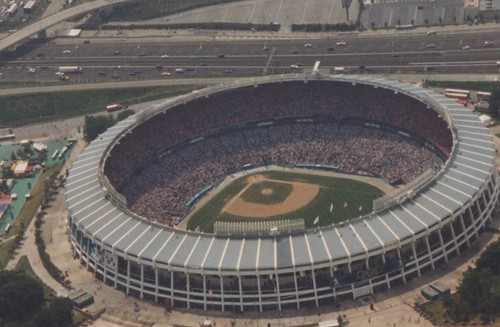
April 12, 1966: The Braves play their 1st game in Atlanta. Joe Torre hits the 1st major league home run in Atlanta Stadium, but the Pittsburgh Pirates spoil the festivities in 13 innings, 3-1, on a home run by Willie Stargell. (The stadium was renamed Atlanta-Fulton County Stadium in 1975.)

The Braves announced their move to Atlanta in 1965. That year was the high-water mark of the Civil Rights Movement. The Voting Rights Act was signed into law. The Selma-to-Montgomery March had just happened. The Civil Rights Act had been signed into law the year before. The lunch-counter sit-ins, the Freedom Rides, the March On Washington for Jobs and Freedom, and the integrations of the universities of Georgia, Mississippi and Alabama had all taken place, with mixed success in some cases and total success in others. All this had happened within the last 5 years. And Dr. Martin Luther King Jr. was the current holder of the Nobel Peace Prize.

Dr. King was from Atlanta. The Mayor at the time was Ivan Allen Jr. He ran his father's office-supply company, and took it to new heights, making himself one of the South's richest men. He lived long enough to get an offer he couldn't refuse: Staples bought him out in 1999.

In 1961, Allen ran for Mayor against segregationist Lester Maddox, who would later be elected Governor of Georgia. Allen won, and began to build on the work of his predecessor, William Hartsfield, for whom the city's famous airport is named.

As a businessman, Allen understood that he had the chance to change the image of his city. More than that, he had the chance to help change perceptions of the State of Georgia and of the South itself. The city underwent its greatest construction phase since after its burning in the Civil War 100 years earlier. He built the Memorial (now the Woodruff) Arts Center, in effect Atlanta's version of New York's Lincoln Center. He created MARTA, the Metropolitan Atlanta Rapid Transit Authority, which reworked the city's bus system, and, after he left office, built its subway. He also got Interstate 285, a beltway, a.k.a. "The Perimeter" and "The O Around the A," built.

He got Atlanta Stadium (later Atlanta-Fulton County Stadium) built and, although it wouldn't open until after he left office, he got the Omni Coliseum approved. This enabled the city to go from no major league teams when he took office on January 1, 1962 to 3 of them when he left on January 1, 1970.
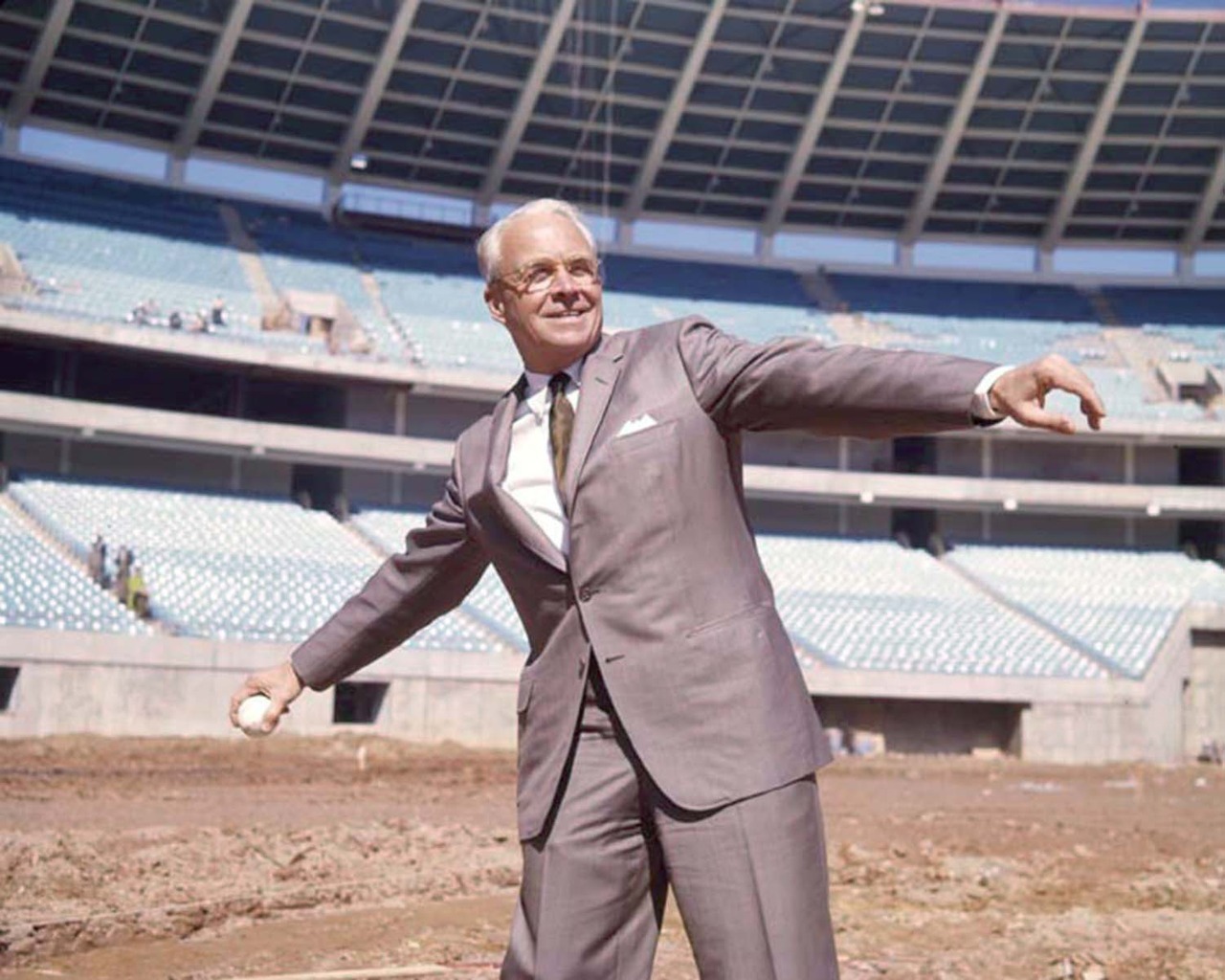
Allen posing inside the stadium his Administration was building, 1964.
It opened in 1965, and hosted the Beatles
before it hosted the Braves or the Falcons.

More low-income housing was built in his 8 years in office than in the previous 30. He needed to do this to alleviate the concerns of local black leaders, including Dr. Martin Luther King Sr., that he wasn't doing enough for the poor and was focusing too much on business, especially downtown -- a criticism since leveled at many urban mayors, black and white alike (including Newark's Sharpe James in the 1980s and '90s).

"It is wonderful to be idealistic and to speak about human values," Allen said, "but you are not going to be able to do one thing about them if you are not economically strong. If there is any one slogan I lived by as Mayor of Atlanta, that would be it."

So, with the concerns of both business and civil rights in mind, he brought the 2 concepts together. The day he was sworn in, he ordered all "WHITE" and "COLORED" signs removed from City Hall, and personally desegregated the City Hall cafeteria by dining with local black activists. He desegregated municipal hiring. He hired the city's first black firemen. He let it be known that black Atlanta policemen would be allowed to arrest white criminals. He desegregated the city's pools. By January 1964, 6 months before President Lyndon Johnson signed the Civil Rights Act into law, 14 Atlanta hotels had already desegregated themselves.

Allen billed Atlanta as "The City Too Busy to Hate." That made the sports establishments stand up and take notice. Atlanta also offered a bigger stadium, if not necessarily a better one, than Milwaukee County Stadium: 52,000 to 44,000. (Milwaukee County Stadium would later expand to 53,000.) Today, the Braves' team museum is named for Allen.

Atlanta-Fulton County Stadium was a multipurpose facility, designed to host both baseball and football, and it didn't do a good job with either one, so much so that, by 1997, both the Braves and the Falcons had gotten new stadiums and their 1st home was demolished. That process was repeated in 2017, as both teams abandoned their still relatively new stadiums for brand-new ones, the Falcons with a retractable-roof stadium next-door, the Braves for a "ballpark village" in the city's northwest suburbs.
Just another oversized concrete ashtray.
At least it had real grass, not artificial turf.

But Atlanta has seen little success. From 1966 to 1990, the Braves won just 2 Division titles and no Pennants. Then, they won their Division in every completed season from 1991 to 2005, and won 5 Pennants, but just 1 World Series. They eventually won another in 2021. The Falcons have been to just 2 Super Bowls, and lost both ignominiously.

The NBA's Hawks should be so lucky: They reached the Conference Finals their 1st 2 seasons after moving from St. Louis, 1968-69 and 1969-70; then didn't make the Conference Finals again until 2015, and again in 2021. They haven't made the NBA Finals since 1961, or won them since 1958, both times in St. Louis.

And the city has failed with 2 NHL teams: The Flames arrived in 1972 and moved to Calgary in 1980, and the Thrashers arrived in 1999 and moved to Winnipeg in 2011. A Sun Belt city that lost 2 teams to Canada: This is NHL Commissioner Gary Bettman's nightmare.

The city has had decent success with soccer. The Atlanta Chiefs won the North American Soccer League title in 1968, and reached the Final again in 1969. Atlanta United debuted in 2017, won the MLS Cup the next season, and won the U.S. Open Cup the year after that.

UPDATE: The Braves have a team Hall of Fame. Their inductees from their Atlanta years are: Players Hank Aaron, Rico Carty, Phil Niekro, Ralph Garr, Dale Murphy, Tom Glavine, John Smoltz, David Justice, Terry Pendleton, Javy López, Greg Maddux, Larry "Chipper" Jones, Andruw Jones (no relation) and Tim Hudson; plus managers Joe Torre and Bobby Cox, and coach Leo Mazzone; team owners Bill Bartholomay and Ted Turner; executives Bill Lucas, Paul Snyder and John Schuerholz; trainer Dave Pursley; and broadcasters Ernie Johnson Sr., Pete Van Wieren, Skip Caray, Don Sutton and Joe Simpson.

The Falcons have a Ring of Honor. Their inductees are: Tommy Nobis, Claude Humphrey, Jeff Van Note, Steve Bartkowski, Mike Kenn, William Andrews, Gerald Riggs, Jessie Tuggle, Deion Sanders, Todd McClure, Warrick Dunn, Roddy White, Matt Ryan, and team owner Arthur Blank.

The Hawks don't have a team Hall of Fame, but they do retire numbers: 9, for Bob Pettit from their St. Louis years; 21, Dominique Wilkins; 23, Lou Hudson; 44, Pete Maravich; and 55, Dikembe Mutombo. They have also witheld 40 from circulation since Jason Collier died as an active player. They also have banners honoring former owner Ted Turner and former Mayor Kasim Reed, who was involved in keeping the team from moving.

There is also a Georgia Sports Hall of Fame, in Macon. It honors State natives who excelled in sports, stars from colleges such as the University of Georgia and Georgia Tech, and these major league stars:

* Braves: Aaron, Nierko, Murphy, Smoltz, Glavine, both Joneses, Tim Hudson, Cox, Mazzone, Bartholomay, Turner, Lucas, Schuerholz, Johnson, Van Wieren, Caray, Bob Horner, Brian Jordan, Jeff Treadway (more for being a Georgia native than for being a Brave), Marquis Grissom, and executive Stan Kasten.

* Falcons: Nobis, Humphrey, Van Note, Bartkowski, Tuggle, Blank, Alfred Jenkins, Billy "White Shoes" Johnson, founding owner Rankin Smith, coach Mario Campbell, and coach Dan Reeves, elected more for being a Georgia native and a UGa player than for coaching the Falcons into their 1st Super Bowl.

* Hawks: Wilkins, Lou Hudson, Wayne "Tree" Rollins, and Shareef Abdur-Rahim.

* Through 2025, no Flames, Thrashers, Chiefs or Atlanta United have been honored.

*

April 12, 1966 was a Tuesday. Future football star Lorenzo White was born. Two days later, on April 14, two Atlanta Braves legends were born: Greg Maddux in San Angelo, Texas; and David Justice in Cincinnati.

These other baseball games were played that Opening Day:

* The New York Yankees lost to the Detroit Tigers, 2-1 at Yankee Stadium. Mickey Lolich outpitched Whitey Ford. The Yankees' only run came on a home run by Joe Pepitone. Mickey Mantle went 2-for-3, before being replaced to ease his aching legs. Roger Maris went 1-for-3 with a walk. Al Kaline went 0-for-3 with a walk.

After winning 5 straight Pennants, and 13 of the last 16, the Yankees fell to 6th place the season before, as everybody seemed to get hurt, or old, or both, all at once. And 1966 would be their only last-place finish between 1912 and 1990.

* The Baltimore Orioles beat the Boston Red Sox, 5-4 at Fenway Park in Boston. This game went 13 innings, and in a rarity, the winning run, Luis Aparicio, scored on a bases-loaded balk by pitcher Jim Lonborg. It was a weird beginning for what turned out to be the greatest season in Orioles history.

New acquisition Frank Robinson went 2-for-4 with a walk. Brooks Robinson went 3-for-6. Each of them hit a home run. Brooks had 3 RBIs. For the Sox, Carl Yastrzemski went 1-for-6.

* The Los Angeles Dodgers beat the Houston Astros, 3-2 at Dodger Stadium in Los Angeles. With Sandy Koufax and Don Drysdale both still working into shape following their Spring Training holdouts, Claude Osteen was the winning pitcher, outpitching Robin Roberts, who was entering his final season.

* The San Francisco Giants beat the Chicago Cubs, 9-1 at Candlestick Park in San Francisco. Juan Marichal outpitched Larry Jackson. Willie Mays and Len Gabrielson hit home runs for the Jints. Ernie Banks went 0-for-3 with the Cubs.

* The Chicago White Sox beat the California Angels, 3-2 at Comiskey Park in Chicago. Tommy McCraw singled Floyd Robinson home with the winning run in the bottom of the 14th inning.

* The Minnesota Twins beat the Kansas City Athletics, 2-1 at Metropolitan Stadium in the Minneapolis suburb of Bloomington, Minnesota. Sandy Valdespino singled Zoilo Versalles home off Jim "Catfish" Hunter in the bottom of the 9th, making a winning pitcher out of Jim "Mudcat" Grant. So, 2 Jims, 2 fishing nicknames. Harmon Killebrew went 0-for-3.

* The day before, in the traditional American League opener in the nation's capital, the Cleveland Indians beat the Washington Senators, 5-2 at District of Columbia Stadium in Washington. (It was renamed Robert F. Kennedy Memorial Stadium in 1969.) President Lyndon B. Johnson was unavailable for the traditional first ball ceremony, so Vice President Hubert Humphrey stepped in for him. Sam McDowell outpitched Pete Richert.

* And these teams had yet to debut for the season: The New York Mets, the Cincinnati Reds, the Philadelphia Phillies and the St. Louis Cardinals. In the Reds' case, this was unusual: They traditionally hosted the 1st National League game of the season, because of their predecessors, the 1869-70 Cincinnati Red Stockings, baseball's 1st openly professional team.

The NBA Playoffs were underway. The Boston Celtics beat the Philadelphia 76ers, 120-112, in Game 5 of the Eastern Division Finals, at the Philadelphia Civic Center, to advance to the NBA Finals. They did this despite 46 points and 34 rebounds from Wilt Chamberlain. John Havlicek led the Celtics with 32 points, and Bill Russell had 31 rebounds.

The Los Angeles Lakers went on to beat the St. Louis Hawks in the Western Division Finals, and the Celtics beat the Lakers in the NBA Finals.

The Stanley Cup Playoffs were also underway. In Game 3 of one Semifinal, the Montreal Canadiens beat the Toronto Maple Leafs, 5-2 at Maple Leaf Gardens in Toronto. In Game 3 of the other, the Chicago Black Hawks beat the Detroit Red Wings, 2-1 at the Olympia Stadium in Detroit. The Canadiens went on to beat the Black Hawks in the Finals.

December 31, 1999 & January 1, 2000: The Millennium

December 31, 1999:  The Millennium arrives. The people of planet Earth survived. At a terrible cost. But we hadn't destroyed ourselves. ...