Showing posts with label northwestern university. Show all posts

Thursday, December 15, 2022

December 16, 1893: Antonín Dvořák's "New World Symphony"

December 16, 1893: Antonín Dvořák's Symphony No. 9 "From the New World" receives its première at Carnegie Hall in New York.

Antonín Leopold Dvořák was born on September 8, 1941 in Nelahozeves, in Bohemia, in what was then the Austrian Empire, now in Czechia or "the Czech Republic." A talented violinist as a boy, by 1873 he was regarded as one of the best in the world.

He began submitting the scores of symphonies and other works to German and Austrian competitions. In 1874, he won the Austrian State Competition, with Johannes Brahms on the jury of the Austrian State Competition. In 1877, Brahms recommended Dvořák to his publisher, Simrock, who commissioned what became the Slavonic Dances, Opus 46. This led to commissions that spread his fame to Britain and America in the 1880s, and Russia in 1890.

In 1892, he was appointed the director of the National Conservatory of Music of America in New York. While there, he wrote his 2 most successful orchestral works: His Symphony No. 9, titled From the New World, which spread his reputation worldwide; and his Cello Concerto, one of the most highly regarded ever written.

But he was a patriot, for a country that was then subsumed by another, and wrote many pieces extolling what was then called "Czechoslovakia." Homesickness led him to return to Prague, the Czech capital, in 1895. He died on May 1, 1904, at the age of 62.

*

December 16, 1893 was a Saturday. There was 1 score on this historic day, a football game between schools 21 miles apart: The University of Chicago beat Northwestern University, 22-14, in a then-rare indoor football game, at Tattersall's Pavilion, at 17th and Dearborn Streets on the southern edge of downtown Chicago.

Monday, March 28, 2022

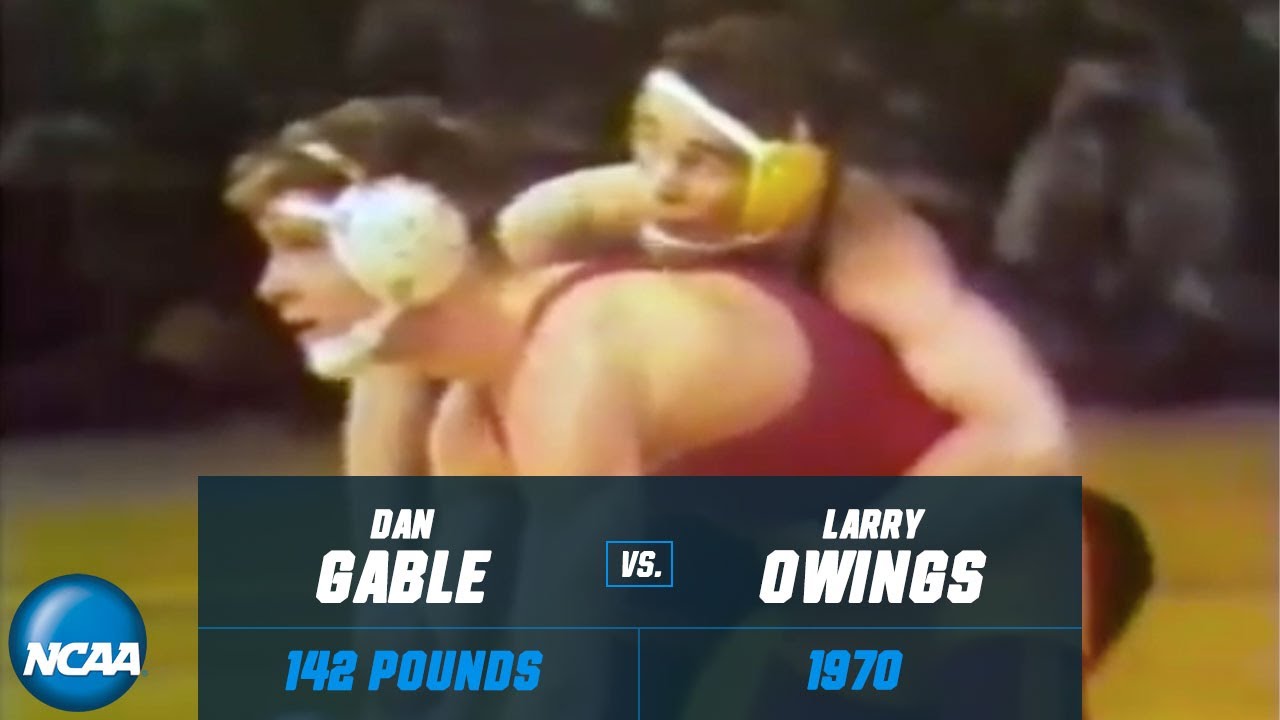
March 28, 1970: Dan Gable Falls to 181-1

March 28, 1970: The NCAA Wrestling Championships are held, at McGaw Hall (now known as Welsh-Ryan Arena), on the campus of Northwestern University in Evanston, Illinois, just north of Chicago.

The team title is won by Iowa State University. They had previously won in 1950, 1965 and 1969. On an individual basis, however, the tournament is known not for any of its winners, but for a defeated finalist: Dan Gable.

He is the greatest wrestler who ever lived, and the greatest wrestling coach who ever lived, and you can take all your WWE stars and stick them where the Sun don't shine.

At Waterloo West High School in Waterloo, Iowa, his career record as a wrestler was 64-0, winning 3 State Championships. He was also a State Champion swimmer, their quarterback, and a baseball player. At Iowa State University, he went 117-1, winning 2 National Championships, losing only in the NCAA Final in his senior year. In other words, he won 225 amateur wrestling matches before he was finally beaten.

(Gable could have won 3 National Championships, but, until 1972, the NCAA didn't allow freshmen to compete on varsity teams in any sport, with a few exceptions, such as during wartime or following a team tragedy, as happened later in 1970 with the football teams at Wichita State and Marshall universities.)

That loss was in the 142-pound weight class, which would be Welterweight in boxing. The bout was close: 13-11. The wrestler who defeated him was Larry Owings of the University of Washington, who was named the tournament's outstanding wrestler.

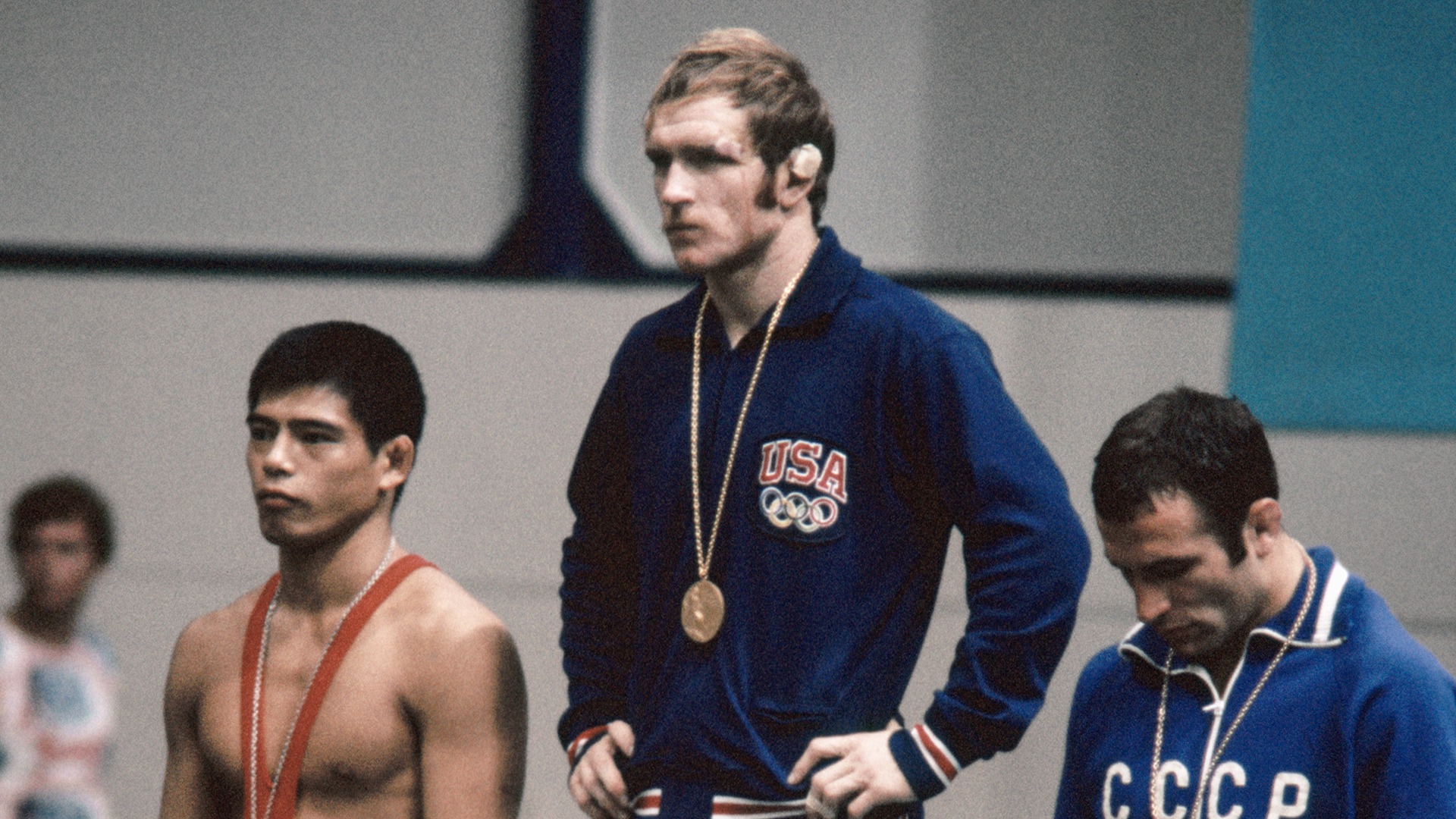
He kept competing as an amateur, winning Gold Medals in 1971, at the Pan American Games in Cali, Colombia; and at the World Championships in Sofia, Bulgaria, behind the Iron Curtain. That got the attention of the Soviet Union athletic machine: Rightly proud of their wrestling achievements, and looking to the 1972 Olympic Games in Munich, West Germany, they vowed to "scour the Eastern Bloc to find a wrestler who could take down Dan Gable."

They were unsuccessful: Despite an injured knee and stitches in his head after an injury in his 1st match, he won the Gold Medal in the 150-pound weight class, without surrendering a single point in any match, an absolutely dominating performance.

He defeated Safer Sali of Yugoslavia (the part that is now the Republic of North Macedonia), Klaus Rost of West Germany, Stefanos Ioannidis of Greece, Kikuo Wada of Japan, and Włodzimierz Cieślak of Poland. In the Final, with 3 wrestlers, each competing against the other 2, Gable beat Wada again, and both beat the Soviet contender, Ruslan Ashuraliyev. So Gable beat 3 wrestlers from Warsaw Pact nations.
Despite having been an Iowa State graduate, he went to their arch-rivals, the University of Iowa, in 1976. He coached them to 9 straight National Championships from 1978 to 1986, finally being dethroned in 1987 by... Iowa State.

He coached until 1997, with a dual meet record of 355-21-5, 16 team National Championships, 152 All-Americans, 45 individual National Champions, and 4 Olympic Gold Medalists. He also coached the U.S. Olympic team in 1980 (boycotted), 1984 and 2000. He also, literally, wrote the book on coaching the sport: Coaching Wrestling Successfully, published in 1999. Of course, he is in the National Wrestling Hall of Fame. He should be: He is both the Babe Ruth and the Casey Stengel of his sport.

And what, you might ask, happened to Larry Owings? The native of Canby, Oregon was unable to follow up his great achievement, losing in the NCAA Tournament Final in 1971 and 1972, and was not selected to the U.S. Olympic Team for Munich. He became a high school wrestling coach and a building contractor in Oregon and Washington State. He has particularly been an advocate for women's wrestling, and has also been elected to the National Wrestling Hall of Fame. As of March 28, 2022, both Gable and Owings are still alive.
Larry Owings (left) and Dan Gable, 2018

The NCAA first conducted a National Championship Tournament for wrestling in 1928, and Iowa State were the 1st hosts. They did not win: Oklahoma A&M did. Changing their name to Oklahoma State in 1958, they have won by far the most titles, 34, although none since 2006. Iowa have won 24, Penn State 10, Iowa State 8, Oklahoma 7, Minnesota 3; and 1 each by Indiana, Cornell, Northern Iowa, Michigan State, Arizona State and Ohio State.

(UPDATE: Penn State won in 2023 and 2024, raising their total to 12.)

*

March 28, 1970 was a Saturday. Actor Vince Vaughn was born. This was also the day that Major League Baseball held a preseason exhibition game to raise money for Dr. Martin Luther King's Southern Christian Leadership Conference. I have a separate entry for that event.

Baseball was otherwise in Spring Training. Football was out of season. One game was played in the NBA. Appropriately, it was in Dr. King's hometown: The Atlanta Hawks beat the Chicago Bulls, 124-104 at the Alexander Memorial Coliseum (now the McCamish Pavilion), on the Georgia Tech campus in Atlanta. Three games were played in the American Basketball Association:

* The New York Nets lost to the New Orleans Buccaneers, 100-92 at the New Orleans Municipal Auditorium. After this season, the Bucs would become the Memphis Pros, then the Memphis Tams, then the Memphis Sounds, and fold in 1975. The Nets would enter the NBA in 1976, moving to New Jersey in 1977 and Brooklyn in 2012. 

* The Kentucky Colonels beat the Carolina Cougars, 101-98 at the Greensboro Coliseum in Greensboro, North Carolina. The Cougars became the Spirits of St. Louis in 1974. The Spirits and the Colonels both survived to the end of the ABA in 1976, but neither team was admitted to the NBA.

* And the Dallas Chaparrals beat the Denver Rockets, 150-126 at the Moody Coliseum in Dallas. Both of these teams still exist, though not under those names: The Chaparrals became the San Antonio Spurs in 1973; and the Rockets, anticipating entering the NBA, which already had the Houston Rockets, took on the name of the 1st NBA team from their city, the Denver Nuggets. Both teams entered the NBA in 1976, along with the Nets and the Indiana Pacers.

There were 5 games in the NHL:

* The New York Rangers and the Montreal Canadiens played to a tie, 1-1 at the Montreal Forum.

* The Boston Bruins and the Detroit Red Wings played to a tie, 5-5 at the Boston Garden.

* The Pittsburgh Penguins beat the Philadelphia Flyers, 2-1 at The Spectrum in Philadelphia.

* The Chicago Black Hawks and the Toronto Maple Leafs played to a tie, 1-1 at Maple Leaf Gardens in Toronto.

* The Los Angeles Kings beat the Minnesota North Stars, 4-2 at The Forum outside Los Angeles in Inglewood, California.

* And the St. Louis Blues and the California Golden Seals were not scheduled.

And in English soccer, Arsenal played Birmingham-area team Wolverhampton Wanderers to a draw, 2-2 at the Arsenal Stadium, a.k.a. Highbury, in North London.

Sunday, March 27, 2022

March 27, 1939: The 1st NCAA Basketball Tournament Final

March 27, 1939: The National Collegiate Athletic Association holds the Final of its 1st men's basketball tournament, at the original Patten Gymnasium on the campus of Northwestern University, in the Chicago suburb of Evanston, Illinois.

Only 8 teams were invited to the 1st NCAA Tournament, 2 independents and 6 Conference Champions. The East Regional was played at The Palestra on the campus of the University of Pennsylvania. Villanova, an independent from just outside Philadelphia, beat the other independent, now in the Ivy League, Brown University of Providence, Rhode Island, 42-30. Big Ten Champion Ohio State beat Southern Conference Champion Wake Forest, 64-52. And Ohio State beat Villanova, 53-36, to advance to the Final.

The West Regional was played at the California Coliseum in San Francisco. Oregon, Champions of the Pacific Coast Conference, beat Texas, Champions of the Southwest Conference, 56-41. Oklahoma, Champions of the Big Six (forerunner of the Big Eight and Big Twelve), beat Utah State, Champions of the Mountain States Conference, 50-39. And Oregon beat Oklahoma, 55-37.

Oregon's teams were known as the Webfoots, and, originally, it had nothing to do with ducks. The name originally applied to a group of fishermen from the coast of Massachusetts who had been heroes during the War of the American Revolution. Their descendants had settled in Oregon's Willamette Valley in the 19th Century, and the name stayed with them. Having used the name since the dawn of their athletic program in the 1890s, the University of Oregon made it official in 1926. Eventually, "Webfoots" became associated with ducks, but the switch to "Ducks" was not made official until 1978, and "Webfoots" is still sometimes used, out of sentiment.

Coached by Howard Hobson, the '39 Webfoots were known as the "Tall Firs," comparing them to trees that grew in the State. They did usually have a height advantage: Center Urgel "Slim" Wintermute was 6-foot-8, and forwards Lauren "Laddie" Gale and John Dick were 6-foot-4. Wintermute was from Longview, Washington. Also from Washington State were guards Ford Mullen from Olympia and Matt Pavalunas from Raymond. The other 8 players were from Oregon.

Patten Gym seated about 9,000 people, and contemporary reports suggest that it was only half-full. (History would repeat itself with the 1st Super Bowl: That game only saw about 2/3rds of its available seats bought.) But one of the people in attendance was Dr. James Naismith, who invented basketball 48 years earlier, and later served as head coach at the University of Kansas, and would die later in the year, at age 78.
Patten Gym

Guard Robert Anet, the Oregon Captain, scored the 1st basket, after rebounding a missed shot. Oregon scored the 1st 6 points of the game, before Ohio State closed to within 12-11, but Oregon regained the momentum to lead 21-16 at the half.

Early in the 2nd half, Ohio State closed to within 21-20. But Oregon jumped out to a 40-29 lead, and, with no shot clock, started stalling, keeping the ball away from Ohio State. At one point, Anet chased a loose ball toward the scorer's table, where the trophy was being kept. He knocked the trophy off the table, breaking the little brass basketball player off the top of it. When the game ended, 46-33 in Oregon's favor, Anet, as Captain, was handed the two pieces of the trophy.

Howard Hobson was among the honorees in Kansas City in 1988, when the NCAA celebrated the 50th Final Four. He lived until 1991. Ford Mullen was the last survivor of the 1939 Oregon team, living until 2013. We think: It's possible, but highly unlikely, that one other lived longer. In 1977, Slim Wintermute, by then an executive with Boeing, took a friend aboard his yacht on Lake Union in Seattle. When the yacht didn't return, a search party found it, and found the friend, asleep in his bunk on board, but not Wintermute. The friend said Wintermute was alive and well when he went to sleep. Wintermute's remains have never been found. He was already 60 years old, so, even if he did survive, he is unlikely to still be alive.

At the time, no one knew that the NCAA Tournament would grow into a 68-team "March Madness," culminating in a "Final Four," that would obsess a big chunk of the country. Still, it is a little jarring to know that the site of the 1st Final Four was soon gone: Patten Gym, at 2145 Sheridan Road, was torn down in 1940, and Northwestern's Technological Institute was built on the site.

The current Patten Gym opened immediately thereafter, 3 blocks to the north, at Sheridan Road and Lincoln Street. It was the home of Northwestern basketball until 1952, when Welsh-Ryan Arena opened a mile to the northwest, at 2705 Ashland Avenue, in the north end zone of Ryan Field (formerly Dyche Stadium).

In spite of this initial success, Oregon wouldn't reach the Final Four again until 2017. In contrast, Ohio State have made the Final Four 10 more times, most recently in 2012, including the 1960 National Championship.

*

March 27, 1939 was a Monday. Baseball was in Spring Training. Football was out of season. The NBA hadn't been founded yet. And this was an off-day in the Stanley Cup Playoffs. So there were no other scores on this historic day.

Saturday, January 1, 2022

January 1, 1949: Northwestern Win the Rose Bowl

Ed Tunnicliff

January 1, 1949: The football team at Northwestern University wins the Rose Bowl.

Stop laughing. Yes, NU, the only private school in the Big Ten Conference, by far the smallest school in the league, and the Big 10 school most identified with football ineptitude, won the Rose Bowl. At the time, it wasn't thought of as especially shocking.

Ed Tunnicliff served under General George Patton, earning a Purple Heart, before attending Northwestern, where he distinguished himself on the track and field team. But he is best known for scoring the winning touchdown for Northwestern in the Rose Bowl.

The Wildcats were ranked Number 7, and the University of California were ranked Number 4. In a trick strategy that coach Bob Voigts had the team practiced many times but had never previously played on the field, the ball was surreptitiously snapped to Tunnicliff, who ran 45 yards and was almost stopped by Cal's much larger Frank Brunk en route to the end zone. At the 7-yard line, Brunk grabbed Tunnicliff and tried to bring him to the ground, but Tunnicliff’s momentum pushed him forward enough to score the touchdown. Northwestern won, 20-14.

When interviewed about the game-winning play, Tunnicliff recalled thinking, "I'm going to get to that goal line if I have to carry the whole stadium."

Jackie Jensen played in this game for Cal. He had previously played in the 1st 2 College World Series, in 1947 and 1948. In 1950, he played for the New York Yankees in the World Series. He remains the only person to play in all 3. Chuck Essegian, of Stanford's 1950 team and the 1959 Los Angeles Dodgers, is the only other man to play in both the Rose Bowl and the World Series.
Jackie Jensen

Although he was drafted by the Philadelphia Eagles in the 18th round of the 1950 National Football League draft, Tunnicliff opted to coach high school football instead. He coached at Pekin High School in Pekin, Illinois, for 2 years, followed by 5 years at Reavis High School in Oak Lawn, Illinois. He went on to become a life insurance salesman for the Equitable Life Assurance Society in 1957, and was promoted to District Manager in 1966. He lived until 2021.

Northwestern won the title in the league now known as the Big Ten Conference in 1903, 1926, 1930, 1931 and 1936. They finished 2nd to Michigan in 1948, and because of the Big Ten's rule that stood until 1974, Michigan couldn't go to the Rose Bowl in back-to-back seasons, Northwestern went instead.

Northwestern is the only private school in the Big Ten (UPDATE: That changed when USC joined in 2024), and easily the smallest by enrollment. Since 1948, they have struggled against the league's big State schools.

They finished 3rd in 1962, earning coach Ara Parseghian the job at Notre Dame. They finished 2nd in 1970 and 1971, under coach Alex Agase, but a loss to Ohio State in '70 cost them the title, while they beat Ohio State but lost to Michigan in '71. And the Big Ten's dumb rule, in place until 1974, that only the League Champion could go to a bowl game, cost them a late December or New Year's Day visit to a warm-weather city. From 1979 to 1982, they lost 34 straight games, which remains a record in the NCAA's Football Bowl Subdivision (FBS, formerly known as Division I-A).

Finally, in 1995, coach Gary Barnett led them to another Big Ten title. They received the accompanying bid to the Rose Bowl, where they lost to USC. In 1996, they tied for the title, but, not having played Co-Champions Ohio State head-to-head, the Big Ten's rule was that the team that had waited longer got the Rose Bowl bid, and, for once, Ohio State had waited longer than Northwestern, who were sent to the Citrus Bowl, which they lost. Again in 2000, they tied for the title, but were sent to the Alamo Bowl instead.

They didn't win another bowl game until the 2012 Gator Bowl, also winning the 2016 Pinstripe Bowl, the 2017 Music City Bowl, the 2018 Holiday Bowl, and the 2020 Citrus Bowl. (UPDATE: They've added the 2023 Las Vegas Bowl.) They won the Big Ten West Division in 2018 and 2020, but lost the Conference Championship Game both times.

*

January 1, 1949 was a Saturday. As I said, Number 1 Michigan did not play. Nor did Number 2 Notre Dame. These other college football bowl games were played that day:

* Sugar Bowl, at Tulane Stadium, New Orleans: Number 3 North Carolina were upset by Number 5 Oklahoma, 14-6.

* Orange Bowl, at Burdine Stadium (later renamed the Orange Bowl) in Miami: Number 8 Georgia were upset by Texas, 41-28.

* Cotton Bowl, at the stadium of the same name, Dallas: Number 9 Oregon were upset by Number 10 Southern Methodist University, 21-13. It was SMU star Doak Walker's last college game.

* Gator Bowl, at the stadium of the same name, Jacksonville, Florida: Number 11 Clemson beat Missouri, 24-23.

* Tangerine Bowl, at the stadium of the same name (now Camping World Stadium), Orlando, Florida: Sul Ross State and Murray Stadium played to a 21-21.

* Delta Bowl, at Crump Stadium in Memphis: Number 17 William & Mary beat Oklahoma State, 20-0.

* Dixie Bowl, at Legion Field in Birmingham, Alabama: Baylor beat Wake Forest, 20-7.

* Sun Bowl, at Kidd Field in El Paso, Texas: West Virginia beat Texas West (later Texas-El Paso), 21-12.

* Salad Bowl, at Montgomery Stadium in Phoenix: Drake University beat Arizona, 14-13.

* Harbor Bowl, Balboa Stadium in San Diego: Villanova beat Nevada, 27-7.

* Raisin Bowl, at Ratcliffe Stadium in Fresno, California: Occidental College beat Colorado A&M (later Colorado State), 21-20.

* Pineapple Bowl (yes, fans of the TV show Coach, there actually was one once), at Honolulu Stadium: Oregon State beat Hawaii, 47-27.

Baseball was out of season. There were 6 games in the NBA:

* The New York Knicks beat the Philadelphia Warriors, 88-80 at the old Madison Square Garden.

* The Indianapolis Jets beat the Providence Steam Rollers, 78-77 at the Rhode Island Auditorium in Providence.

* The Baltimore Bullets beat the Boston Celtics, 72-67 at the Baltimore Coliseum.

* The Washington Capitols beat the Chicago Stags, 92-90 at the Uline Arena (later the Washington Coliseum).

* The Rochester Royals beat the St. Louis Bombers, 106-83 at the Edgerton Park Arena in Rochester, New York.

* And the Minneapolis Lakers beat the Fort Wayne Pistons, 92-72 at the Minneapolis Auditorium.

The NHL's entire "Original Six" was in action:

* The New York Rangers lost to the Boston Bruins, 4-1 at the Boston Garden.

* The Toronto Maple Leafs beat the Montreal Canadiens, 5-3 at Maple Leaf Gardens in Toronto.

* And the Chicago Black Hawks beat the Detroit Red Wings, 5-3 at the Chicago Stadium.

And in English soccer, Manchester United beat North London team Arsenal, 2-0 at Old Trafford in Salford, outside Manchester. 

December 31, 1999 & January 1, 2000: The Millennium

December 31, 1999:  The Millennium arrives. The people of planet Earth survived. At a terrible cost. But we hadn't destroyed ourselves. ...