Showing posts with label 14th century. Show all posts

Tuesday, October 18, 2022

October 18, 1991: The Film "Edward II" Premieres

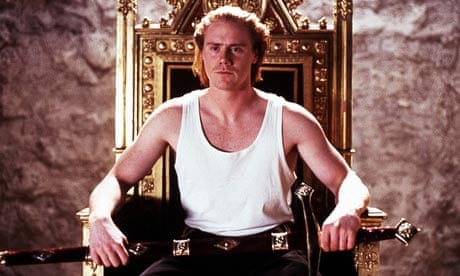
October 18, 1991: The film Edward II premieres, based on the play The Troublesome Reign and Lamentable Death of Edward the Second, King of England, with the Tragical Fall of Proud Mortimer. It was first staged in 1594 -- after the death of its author, Christopher Marlowe.

The film is very loosely based on that play. Director Derek Jarman wanted to do a similar story in a modern setting, and mixed in modern clothes, machines and devices into a story that takes place in the early 14th Century. He was gay, a gay rights activist, and, as it turned out, HIV-positive, and went on to die from the effects of AIDS in 1994.

Steven Waddington plays Edward, of the House of Plantagenet. He becomes King of England upon the death of his father, Edward I, on July 7, 1307. Andrew Tiernan plays Piers Gaveston, 1st Earl of Cornwall, whom history shows to have been Edward's best friend, and surviving evidence suggests they were a homosexual couple.

Edward and his wife, Isabella, daughter of France's King Philip IV and brother of Kings Louis X, Philip V and Charles IV, did manage to have 4 children: Edward, the eventual King Edward III; John of Eltham, who died at age 20 with no wife and no heirs; Eleanor of Woodstock, who married a Dutch duke and had 2 sons; and Joan of the Tower, who married King David II of Scotland but had no children. Isabella is played in this film by Tilda Swinton. With some irony, She identifies as queer, while Waddington is straight.

The English nobles finally had enough of Gaveston, and assassinated him on July 19, 1312. But Edward still rejects Isabella's advances, and turns to a new boyfriend, Hugh Despenser the Younger, son of the Earl of Winchester. Father and son have stolen lands from the nobles, and Hugh the Elder has no problem with his son's affair with a man, since it's the King and it gives him access to royal favors.

Edward was losing wars with both Scotland and France, and the Battle of Bannockburn, on June 24, 1314, with Edward personally leading troops that were defeated by King Robert I of Scotland, a.k.a. Robert the Bruce, was devastating. People also revolted against high taxes. One such revolt was led by a man named Robert Hood (pronounced "hoad"), and he is regarded as one of the men on whom the character of Robin Hood is based, though that legend is set in the time of Edward's great-grandfather, John, and his brother, Richard I.
A portrait said to be of King Edward II of England

In 1322, Isabella fled to France with pretty much only the clothes on her back, but also with the ultimate bargaining chip, the Prince of Wales, King Edward's heir. She turned to her brother, Charles IV, for help. There, she meets Roger Mortimer, 1st Earl of March, played by Nigel Terry (the eventual King John in The Lion in Winter, and King Arthur in Excalibur). Mortimer had been imprisoned in the Tower of London for leading an army against the Despensers, which was seen as tantamount to opposing the King himself. But he escaped, and made his way to France.

He having long been separated from his wife, and she having gone without for so long, Roger and Isabella began an affair. Charles couldn't been seen in England as having committed French troops to an invasion of England, so he and Roger set up a combined Dutch-German fleet that invaded England. The Despensers were captured and executed, the Elder on October 27, 1326; the Young on November 24.

On January 20, 1327, having been captured himself, Edward II bowed to the inevitable, and abdicated in favor of his 14-year-old son. The film follows the legend that the deposed King's death, on September 21, 1327, at the age of 43, at Berkeley Castle in Gloucestershire, was "poetic justice," being sodomized by a red-hot poker.

So Edward III was officially King, but Isabella was his Regent, and Roger Mortimer was operationally the dictator of England. They ended the Scottish War of Independence with the Treaty of Northampton. This turned the English people against the dictatorial couple, and Isabella became known as "The She-Wolf of France."

The play and film end with Edward III imprisoning them; the film ends with him wearing his mother's earrings and lipstick, listening to classical music on his Sony Walkman, and walking atop a cage holding them -- obviously, director Jarman taking a lot of poetic license.

In reality, Edward III did not copy his father's effeminiate ways. He was already engaged to Philippa of Hainault, daughter of a Dutch ally of his mother and her boyfriend, and married her in 1328, and seems to have truly loved her, despite eventually taking mistresses.

On March 19, 1330, Mortimer executed the King's uncle, Edmund of Woodstock, 1st Earl of Kent. That was the last straw. Having turned 18 on November 13, Edward asserted his majority,  and had Mortimer arrested at Nottingham Castle on November 19, and he was executed on November 29, 1330.

Edward showed mercy on his mother: All the hardships of his father's time were blamed on Mortimer, and his mother's affair with him was not publicly mentioned. Nevertheless, he refused her pleas to show Mortimer mercy. He imprisoned her for 2 years, then let her live at Castle Rising in Norfolk, where she was permitted to live in luxury, and to have her grandchildren visit, until her death in 1358.

Edward III reigned for 50 years, including a modernization of England and military victories over Scotland and France, dying in 1377. Unfortunately, his eldest son, Edward, a great general known as the Black Prince, died a year before him, leaving the Black Prince's son to become King Richard II. And things got to be every bit as bad as they were under his great-grandfather, Edward II.

Christopher Marlowe became famous for his play Tamburlaine, and was England's top playwright before William Shakespeare. He was murdered on May 30, 1593, possibly for reasons relating to his homosexual relationships. Or maybe it had nothing to do with it: Like Edward II, and Richard II, and Oscar Wilde, and Joe Orton, he was a gay Englishman who was murdered because he simply angered the wrong people.

*

October 18, 1991 was a Friday. Future New York Mayor Zohran Mamdani and actor Tyler Posey were born.

Baseball's World Series began the next day. The Minnesota Twins went on to beat the Atlanta Braves in 7 games. The NBA season started 14 days later.

There were 2 games in the NHL. The New Jersey Devils lost to the Washington Capitals, 6-5 at the Capital Centre in the Washington suburb of Landover, Maryland. And the Buffalo Sabres beat the Montreal Canadiens, 3-1 at the Buffalo Memorial Auditorium.

Tuesday, August 23, 2022

August 23, 1935: The Film "Dante's Inferno" Premieres

No wonder Spencer Tracy later played priests
in Boys Town and Angels with Dirty Faces.

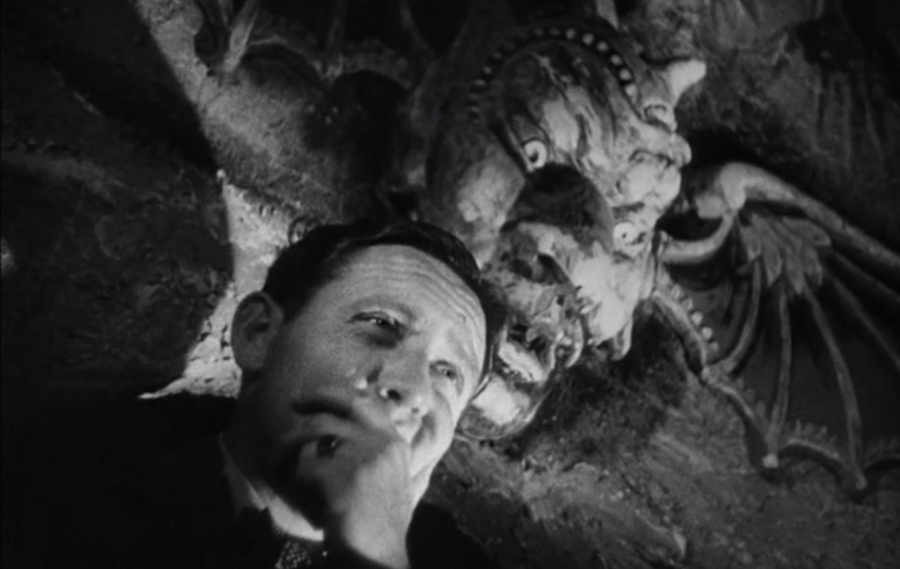
August 23, 1935: The film Dante's Inferno premieres, the last film produced by Fox Film Corporation before merging with Twentieth Century Pictures, forming 20th Century-Fox Film Corporation.

It was directed by Harry Lachman, who got his start as a painter, honored by France with their Legion d'Honneur, and then as a set designer for films. He directed 37 films between 1928 and 1942, before giving it up and returning to painting. He died in 1975.

Spencer Tracy plays Jim Carter, a former stoker, who takes over a fairground show, run by "Pop" McWade (Henry B. Walthall), which depicts scenes from Dante's Inferno. He marries Pop's niece Betty (Claire Trevor), and they have a son, Alexander.

The show becomes a great success, with Carter making it larger and more lurid. An inspector declares the fair unsafe, but Carter bribes him into silence. There is a partial collapse at the fair which injures Pop. Recovering in the hospital, he admonishes Carter, and we see a 10-minute vision of the Inferno, Hell as imagined by Dante. Undeterred, Carter establishes a new venture with an unsafe floating casino, only for disaster to strike again at sea. Since Carter was ultimately punished for his misdeeds, the Hays Code allowed the film's version of Hell to be portrayed, as a foreshadowing.

The film is loosely based on the Divine Comedy, an epic poem written between 1308 and 1321 by Dante Aligheri. At the time, and even into the time of William Shakespeare, a "comedy" was not something funny, merely a story with a happy ending. And the Divine Comedy sure didn't look, early on, like it would have one.

The poem explores the condition of the soul following death, and portrays a vision of divine justice, in which individuals receive appropriate punishment or reward based on their actions. It describes Dante's travels through Hell, Purgatory, and Heaven

Allegorically, the poem represents the soul's journey towards God, beginning with the recognition and rejection of sin (Inferno), followed by the penitent Christian life (Purgatorio), which is then followed by the soul's ascent to God (Paradiso).

Dante draws on medieval Catholic theology and philosophy, especially Thomistic philosophy, derived from the Summa Theologica, written by Thomas Aquinas and left unfinished at the time of his death in 1274, nearly half a century earlier.

In the poem, the pilgrim Dante, age 35 -- "halfway along our life's path," so perhaps he's having what would now be called a "midlife crisis" -- is accompanied by three guides: Virgil, who wrote the Aeneid and lived through the Roman transition from Republic to Empire in the 1st Century BC, who represents human reason, and who guides him for all of Inferno and most of Purgatorio; Beatrice, who may have been based on Beatrice Portinari, a wealthy banker's daughter Dante had fallen in love with but couldn't have, who died at age 25, and represents divine revelation, grace, and faith, and who guides him from the end of Purgatorio onwards; and Saint Bernard of Clairvaux, a 12th Century French abbot, co-founder of the Knights Templar, who represents contemplative mysticism, and devotion to St. Mary, mother of Jesus, guiding him in the final cantos of Paradiso.

The Gates of Hell include a phrase that has lived in human memory for 700 years: "Abandon all hope, ye who enter here." There is an edge area, called Limbo, home to "virtuous pagans," people stay who should have been allowed to enter Heaven, but cannot, because they lived in the time before Christ. As examples, Dante gives Virgil himself, his contemporaries Julius Caesar (who was certainly not virtuous) and Cicero, and the great philosophers of classical Greece: Socrates, Plato and Aristotle.

But then, there are nine "circles of Hell," in which people's punishments get worse depending on the nature of their sins, and the punishments are considered appropriate. For example, fortune-tellers and soothsayers must walk with their heads on backwards, unable to see what is ahead, because that was what they had tried to do in life.

The 9th circle is reserved for the worst sin of all: Betrayal. And at the very bottom is the Devil himself. He is forever chewing on three damned souls: Those of Judas, who betrayed Jesus; and Brutus and Cassius, who betrayed the other great hero of medieval Italy, Julius Caesar.

This would seem at odds with Dante's admiration for Cicero, whose relationship with Caesar was complicated, going back and forth between support and opposition. He was pleased that Caesar was assassinated, thinking it would save the Republic. But Brutus and Cassius didn't let Cicero in on their conspiracy, for fear he would betray them to Caesar. And Mark Antony, who picked up Caesar's fight, and within 3 years of Caesar's assassination, Cicero was assassinated, and Brutus and Cassius were defeated in battle by Antony and Caesar Augustus, and committed suicide rather than be captured. Antony and Augustus would later split, and Augustus would win and establish the Empire. Neither is mentioned in the Divine Comedy.

Dante and Virgil escape Hell by sliding down the Devil's body, and  ascend out of the undergloom to the Mountain of Purgatory on the far side of the world. The Mountain is on an island, and has seven terraces, corresponding to the seven deadly sins: Pride, Envy, Greed, Wrath, Sloth, Lust and Gluttony.

The classification of sin here is more psychological than that of the Inferno, being based on motives, rather than actions. It is also drawn primarily from Christian theology, rather than from classical sources. However, Dante's illustrative examples of sin and virtue draw on classical sources, as well as on the Bible and on contemporary events.

As Virgil is a "virtuous pagan," he can take Dante no further, so it is Beatrice who brings him from the Purgatorio to the Paradiso, with its 9 celestial spheres. The seven lowest spheres of Heaven deal the four cardinal virtues: Prudence, Fortitude, Justice and Temperance; then the three theological virtues: Faith, Hope and Charity. (The numbers 7 and 9 both feature in the story a few times.)

Dante meets and converses with several great saints of the Church, including Thomas Aquinas, Bonaventure, Peter and John the Evangelist. Near the end, Beatrice departs, and Bernard of Clairvaux takes over as the guide. The story ends with Dante seeing the Triune God: Father, Son and Holy Spirit. He admits that the vision of Heaven he receives is merely the one his human eyes permit him to see, and thus his personal vision.

Dante had been born in Florence, around 1265. During his time, most Northern Italian city states were split into two political factions: The Guelphs, including Dante's family, who supported the Papacy, and the Ghibellines, who supported the Holy Roman Empire. He became a physician, and held some political offices.
After the Battle of Campaldino on June 11, 1289, in which Dante fought on the victorious Guelph side, the Guelps split into the White Guelphs, supporting the Pope, to whom Dante stayed loyal, and the Black Guelphs, who wanted more freedom. The Black Guelphs took over Florence in 1301, and Dante was exiled the following year. In 1312, Henry VII, the Holy Roman Emperor, invaded Florence and defeated the Black Guelphs. But he died of a fever the next year, ending Dante's chances of ever returning to Florence, and he remained in Verona. (The story of Romeo and Juliet took place in Verona, and is said to have occurred at around this time.)

A local prince invited Dante to live in Ravenna, where he died of malaria on September 14, 1321, at the age of 56. He appears to have finished the Divine Comedy not long before his death. But it would be 1472 before a printed edition appeared. Some historians consider that appearance to be the beginning of the Italian Renaissance.

Because of his reaction to the leading forces of the time, the Protestant Reformation looked upon Dante as a hero. In 1841, the Scottish historian Thomas Carlyle, known for promoting "The Great Man Theory of History," wrote of Dante, "He is world-great not because he is worldwide, but because he is world-deep... Dante is the spokesman of the Middle Ages; the Thought they lived by stands here, in everlasting music."

In 1921, in honor of the 600th Anniversary of his death, Pope Benedict XV promulgated an encyclical naming Dante as one "of the many celebrated geniuses of whom the Catholic faith can boast" and the "pride and glory of humanity." In 1965, in honor of the 700th Anniversary of his birth, Pope Paul VI promulgated a motu proprio celebrating him. In 2008, the Municipality of Florence officially apologized for expelling him over 700 years earlier. (Even Galileo didn't have to wait that long for a Papal apology.)

There are many references to Dante's work in literature. Franz Liszt was one of many composers to write works based on the Divine Comedy. He inspired multiple statues by the sculptor Auguste Rodin. In 2021, London's Royal Opera House staged The Dante Project, a ballet based on the Divine Comedy.

The sheer scope of the poem makes a single film covering the whole thing problematic. The 1935 Dante's Inferno became the best-known attempt at covering even part of it, until 1975, when Piero Paolo Pasolini's film Salò, or the 120 Days of Sodom, was released, horrifying viewers, with one critic calling it "the sickest film ever made." It was heavily influenced by the Inferno, and, by a macabre coincidence, was also completed just before the author's death, in 1975. Unlike Dante, who managed to avoid it, Pasolini was murdered.

*

August 23, 1935 was a Friday. These baseball games were played:

* The New York Yankees beat the St. Louis Browns, 6-3 at Sportsman's Park in St. Louis. Lou Gehrig hit a 3-run home run in the top of the 13th inning, making Johnny Murphy a winning pitcher in relief of Lefty Gomez.

* The New York Giants lost to the Chicago Cubs, 7-4 at the Polo Grounds. Larry French outpitched Clydell "Slick" Castleman. Augie Galan went 4-for-5 with a walk and an RBI. Stan Hack went 4-for-4 with a walk. For the Giants, 1st baseman and manager Bill Terry went 1-for-5, and Mel Ott went 0-for-4.

* The Brooklyn Dodgers were swept in a doubleheader by the St. Louis Cardinals, 6-1 and 11-5 at Ebbets Field. Neither Dizzy Dean nor his brother Paul, who hated the nickname "Daffy," pitched in either game, although the winning pitcher in the nightcap had a name that would live in history -- music history. His name was Phil Collins.

Over the 2 games, Terry Moore went 6-for-8 with a walk and an RBI, future Dodger shortstop and manager Leo Durocher went 5-for-10 with 2 RBIs, Pepper Martin went 3-for-10 with 4 RBIs, Joe Medwick went 4-for-10 with an RBI, and Cards 2nd baseman and manager Frankie Frisch went 3-for-10 with 2 RBIs.

* The Pittsburgh Pirates beat the Boston Braves, 7-5 at Braves Field in Boston. 3rd baseman and manager Harold "Pie" Traynor and shortstop Joseph "Arky" Vaughan each went 1-for-4 with a walk, right fielder Paul "Big Poison" Waner went 3-for-5, center fielder Lloyd "Little Poison" Waner went 2-for-5, and each of them had an RBI.

* The Cleveland Indians beat the Philadelphia Athletics, 10-1 at League Park in Cleveland. Mel Harder outpitched Carl Doyle. Joe Vosmik and Hal Trosky hit home runs for the Tribe. Jimmie Foxx went 1-for-4 with an RBI for the A's.

* The Detroit Tigers beat the Boston Red Sox, 6-0 at Navin Field (later Briggs Stadium and Tiger Stadium) in Detroit. Lynwood "Schoolboy" Rowe pitched a 4-hit shutout. In his own cause, he went 2-for-4 with a home run and 3 RBIs. Hank Greenberg went 0-for-4, but had an RBI on a sacrifice fly. Mickey Cochrane, catcher and manager, went 1-for-3 with a walk.

* The Washington Senators beat the Chicago White Sox, 4-3 at Comiskey Park in Chicago. Les Tietje walked John Stone with the bases loaded, forcing Heinie Manush home with the winning run in the top of the 10th inning.

* And, with the Great Depression in mind, the Cincinnati Reds and the Philadelphia Phillies agreed to move their game set for today, at Baker Bowl in Philadelphia, to the next day, in the hopes that a Saturday doubleheader would bring a bigger crowd. If so, we'll never know if it worked, because the attendances for both Thursday afternoon and Saturday afternoon were not recorded. The Reds swept, 9-5 and 13-2.

Tuesday, May 24, 2022

May 24, 1995: "Braveheart" Premieres

Mel Gibson as William Wallace

May 24, 1995: The film Braveheart premieres. Mel Gibson co-produced, directed, and starred as William Wallace, the Scottish warrior whose nickname gives the film its title.

Gibson and historical films have gone well together. Gibson and historical accuracy have not. If you've never seen it, take it as fiction, and you might enjoy it.

The story begins in 1280, when King Edward I of England (Patrick McGoohan), known for his long legs as "Edward Longshanks," conquers Scotland. Wallace sees his father and brother resist and end up executed. Years later, he launches a rebellion. Edward orders his son, Edward of Caernarvon, the eventual King Edward II (Peter Hanley), to stop him. The result is the Battle of Stirling Bridge, on September 11, 1297, a Scottish victory. Wallace invades England, sacking York, and meets Robert the Bruce (Angus McFadyen), a contender for the vacant title of King of Scotland.
Patrick McGoohan as King Edward I

King Edward takes matters into his own hands, and beats Wallace at the Battle of Falkirk on July 22, 1298. But his health fails. Wallace is captured, and the film suggests that, after being tortured but refusing to submit, Wallace and Edward die at the same time. On June 24, 1314, in Wallace's memory, the Bruce leads Scotland to victory over England, establishing Scotland as a fully separate country -- until the union of the crowns under King James I of England and VI of Scotland in 1603, anyway.

The historical inaccuracies were many. It would be another 200 years or so before Scots wore belted plaid, let alone kilts, and they had long since stopped painting their faces in battle. Edward I was pretty mean, but he was also faithful to his wife.

What the real Edward I is alleged to have looked like

The real Wallace was wealthy, and did seek a peaceful resolution with Edward. And while Wallace was executed on August 23, 1305, probably at the age of 35, Edward lived another 2 years, aged 68, after 35 years on the throne.
What the real Wallace is alleged to have looked like

The British comedy writer John O'Farrell has said that the film could not have been more historically inaccurate if there had been a Claymation dog added and the film titled William Wallace and Gromit.

In a 2014 episode of Epic Rap Battles of History, "Epic" Lloyd Ahlquist played the Gibson version of William Wallace, against "Nice" Peter Shukoff as George Washington.

*

May 24, 1995 was a Wednesday. This was also the day that Ajax Amsterdam defeated AC Milan in the -UEFA Champions League Final, 1-0 at the Ernst-Happel-Stadion in Vienna, Austria. I have a separate entry for that event.

These Major League Baseball games were played:

* The New York Yankees lost to the California Angels, 3-1 at Anaheim Stadium (now Angel Stadium of Anaheim). Jack McDowell blew a 1-0 lead as the Halos scored 3 runs in the bottom of the 8th inning. Don Mattingly went 0-for-4.

* The New York Mets lost to the Los Angeles Dodgers, 5-0 at Shea Stadium. Pedro Astacio pitched a 6-hit shutout.

* The Montreal Expos beat the San Diego Padres, 3-2 at the Olympic Stadium in Montreal. Tony Gwynn was 2-for-5 with an RBI.

* The Philadelphia Phillies beat the San Francisco Giants, 2-1 at Veterans Stadium in Philadelphia.

* The Kansas City Royals beat the Toronto Blue Jays, 8-5 at the SkyDome (now the Rogers Centre) in Toronto.

* The Milwaukee Brewers beat the Cleveland Indians, 7-5 at Jacobs Field (now Progressive Field) in Cleveland.

* The Cincinnati Reds beat the Houston Astros, 4-2 at Riverfront Stadium in Cincinnati.

* The Detroit Tigers beat the Minnesota Twins, 14-3 at Tiger Stadium in Detroit.

* A doubleheader was split at the new Comiskey Park (now Rate Field) in Chicago. The Chicago White Sox won the opener, 10-8. The Texas Rangers won the nightcap, 13-6.

* The Atlanta Braves beat the St. Louis Cardinals, 9-5 at Busch Stadium in St. Louis.

* The Chicago Cubs beat the Colorado Rockies, 5-3 at Coors Field in Denver.

* The Oakland Athletics beat the Baltimore Orioles, 5-3 at the Oakland Coliseum. It looked like Mike Mussina would outpitch Dave Stewart, but the A's scored 2 runs in the 7th and 2 in the 8th to win it, making a winning pitcher out of Jim Corsi. Rickey Henderson went 1-for-4. Cal Ripken went 0-for-4.

* And the Seattle Mariners beat the Boston Red Sox, 15-6 at the Kingdome in Seattle. Ken Griffey Jr. went 2-for-3 with 2 walks. Alex Rodriguez went 1-for-5 with an RBI.

Football was out of season. There was 1 game in the NBA Playoffs: The Houston Rockets beat the San Antonio Spurs, 106-95 at the Alamodome in San Antonio. Hakeem Olajuwon scored 41 points and grabbed 16 rebounds.

And there were 2 games in the Stanley Cup Playoffs, both Eastern Conference Semifinals, within 7 miles of each other. The Philadelphia Flyers beat the New York Rangers, 5-2 at Madison Square Garden. And the New Jersey Devils beat the Pittsburgh Penguins, 5-1 at the Brendan Byrne Arena in the Meadowlands.

Monday, January 24, 2022

January 24, 1954: "King Richard II" Airs On NBC

Sarah Churchill and Maurice Evans

January 24, 1954: King Richard II airs on NBC, as part of the anthology series Hallmark Hall of Fame. A version of William Shakespeare's play Richard II, first staged in 1595, this is no Christmas movie, and there is not a happy ending.

Maurice Evans played Richard II, of the House of Plantagent, who became King of England upon the death of his grandfather, Edward III. The son of Edward III, Edward of Woodstock, a great battle commander nicknamed the Black Prince, was supposed to become King, but he died of dysentery in 1376, only 45 years old. The Black Prince's eldest son, Edward of AngoulĂŞme, was supposed to become King after him, but he died of bubonic plague in 1370, only 5 years old. This left the Black Prince's 2nd son, Richard of Bordeaux, as heir apparent.

And when Edward III died on June 21, 1377, at 64 and after 50 mostly successful years on the throne, it left Richard the King at age 10. For the most part, he was guided by John of Gaunt, so named because he was born in Ghent, in present-day Belgium. A grandson of Edward III, a brother of the Black Prince, and thus an uncle of Richard II, he was the Duke of Lancaster, and proved an able advisor, but, when Richard needed him most, he was old and frail, and died on February 3, 1399.

What we now call the Hundred Years' War, a series of wars between England and France, were in progress when Richard ascended to the throne, and lasted well beyond his time on it. England, and all of Europe, was still recovering from the Black Plague of the 1340s, which may have killed one-third of the people both in the British Isles and on the Continent. This led to labor being more valuable, and workers being able to demand more money for the first time, and being more willing to revolt against high taxes. There was a Peasants' Revolt in 1381, and the 14-year-old Richard decided to have it brutally put down.
Portrait of Richard II, dated to his lifetime

The next few years were relatively peaceful, and Richard became known as a patron of the arts. But a move against him by a group called the Lords Appellant changed him. In 1397, he had many of them killed, and some of them exiled, including Henry Bolingbroke, so named because he was born at Bolingbroke Castle in Lincolnshire. The son of John of Gaunt, and thus Richard's cousin, Henry was Duke of Hereford. But Richard did not just exile him, he disinherited him, angering Gaunt.

In the movie, as Gaunt, Frederick Worlock delivered one of Shakespeare's best-remembered soliloquies. But it, too, does not have a happy ending, as he knows that the now-adult Richard isn't listening to him anymore: "Though Richard my life's counsel would not hear, My death's sad tale may yet undeaf his ear." Then he goes on:

This royal throne of kings, this scepter'd isle,
This earth of majesty, this seat of Mars,
This other Eden, demi-paradise,
This fortress built by Nature for herself
Against infection and the hand of war,
This happy breed of men, this little world,
This precious stone set in the silver sea,
Which serves it in the office of a wall,
Or as a moat defensive to a house,
Against the envy of less happier lands,
This blessed plot, this earth, this realm, this England,
This nurse, this teeming womb of royal kings,
Fear'd by their breed and famous by their birth,
Renowned for their deeds as far from home,
For Christian service and true chivalry,
As is the sepulchre in stubborn Jewry,
Of the world's ransom, blessed Mary's Son,
This land of such dear souls, this dear dear land,
Dear for her reputation through the world,
Is now leased out, I die pronouncing it,
Like to a tenement or pelting farm:
England, bound in with the triumphant sea
Whose rocky shore beats back the envious siege
Of watery Neptune, is now bound in with shame,
With inky blots and rotten parchment bonds:
That England, that was wont to conquer others,
Hath made a shameful conquest of itself.
Ah, would the scandal vanish with my life,
How happy then were my ensuing death!

In real life, Richard had been married to Anne of Bohemia, daughter of Holy Roman Emperor Charles IV. Richard was 15 years old, and Anne was 16. But she died in 1394, at 28, having produced no children.

Sarah Churchill, actress, dancer, and daughter of Sir Winston, played Queen Isabel, a representation of Isabella of Valois, daughter of King Charles VI of France, who married Richard in 1396 -- when she was 6 years old, but is portrayed here as an adult. As part of the marriage agreement between Richard II and Charles VI, the marriage would not be consummated until Isabella was... 12.

Gaunt had been the richest man in England, and upon his death, in the play as in real life, Richard seizes his property. This angers the nobles, and when Richard leaves England to tend to his army in Ireland, the nobles contact Henry Bolingbroke, played by Kent Smith. As a grandson of Edward III, he does have a claim to the crown, though not as strong as Richard's.

Henry invades the north of England, and heads south, killing some of Richard's allies, and winning over others. Learning of this, Richard reaches Wales, but his allies there capture him, and send him to London, where he is forced to abdicate, after 22 years on the throne. On September 29, 1399, Bolingbroke became King Henry IV, the 1st monarch of the House of Lancaster.

Richard still has supporters, however, and they launch a rebellion. It is quickly put down, and, perhaps in a dramatic nod to the alleged plea of Henry II, "Will no one rid me of this troublesome priest?" Shakespeare has Henry IV, great-great-great-great-grandson of the preceding, ask, "Have I no friend will rid me of this living fear?" Sir Piers Exton hears this, goes to Richard's cell at Pomfret Castle in Pontefract, West Yorkshire, and kills him.

While admitting that he "did wish him dead," Henry is appalled by the murder, dismisses Exton from his court, and vows a pilgrimage to Jerusalem to cleanse himself of his part in Richard's death.

In reality, it's not clear how, or when, Richard II died. History suggests that he was starved to death, and died on February 14, 1400, just 33. What is certain is that, 3 days after that date, his coffin was on display at St. Paul's Cathedral in London.

Henry IV never did make his pilgrimage to Jerusalem, and when he died on March 20, 1413, at the age of 45 and after 13 1/3 years on the throne, he had a disfiguring skin disease, possibly leprosy or psoriasis, and he believe that it was punishment for both his ordering of the assassination of Richard II and his failure to go to Jerusalem.

In the public mind, Henry paid for these things in another way: While Shakespeare wrote 2 plays, Henry IV Part 1 and Henry IV Part 2, he followed a standard convention of naming a play involving a king after him, even if he was not the main character. And in both halves, Henry is a secondary character, to both his son, "Prince Hal," a dissolute young man who has to grow up and become the heroic Henry V; and Sir John Falstaff, a once-great knight and friend of Henry the father, now a fat, drunken slob, who aids in the dissoluteness of Henry the son.

Also considered more important characters in the plays than the King himself are two challengers to him, Henry Percy, Lord Hotspur, whose name would be given to a soccer team, Tottenham Hotspur Football Club; and Owen Glendower, the last Welshman to actually claim the title of the Prince of Wales.

Falstaff's association with weight has led to a fat man being called "Falstaffian," and his association with drinking led to a brewing company in St. Louis being named Falstaff. 

Isabella survived Richard, and married Charles I, Duke of OrlĂ©ans, but only lived to be 19. Richard fathered no children with either wife, and is not believed to have any illegitimate children. The best evidence of this is that history records none that were sought out by Henry IV, or Henry V, to be removed from the line of succession. It is suspected by some historians that Richard II was homosexual. If so, he wouldn't have been the first King of England to be so (Richard I and Edward II are believed to have been), nor the last (James I probably was).

Frederick Worlock died in 1973, Sarah Churchill in 1982, Kent Smith in 1985, and Maurice Evans in 1989.

Other actors to have played Richard II include (in productions of Shakespeare's Richard II, unless otherwise stated) Andrew Osborn in a 1938 BBC radio production of Richard of Bordeaux, Alan Wheatley in a 1950 version for the BBC, Peter Cushing in the 1955 BBC adaptation of Richard of Bordeaux, David William in the 1960 BBC series An Age of Kings (telling all the Shakespeare history plays from Richard II to Richard III), Ian McKellen for the BBC in 1976, Michael Pennington in the BBC's The Wars of the Roses in 1989 (again covering all the Shakespeare histories), Roger Allam at the beginning of the BBC's 1995 version of Henry IV, Fiona Shaw in a gender-bending performance for the BBC in 1997, Mark Rylance for the BBC in 2003, and Ben Wishaw in the BBC's 2012 series The Hollow Crown (again doing all the history plays).

*

January 24, 1954 was a Sunday. Baseball and football were out of season. There were 4 games in the NBA:

* There was a doubleheader at the Boston Garden. In the 1st game, the Milwaukee Hawks beat the New York Knicks, 68-66. In the 2nd game, the Rochester Royals beat the Boston Celtics, 93-85.

* The Philadelphia Warriors beat the Syracuse Nationals, 80-78 at the Onondaga County War Memorial Auditorium (now the Upstate Medical University Arena) in Syracuse. In 1962, the Warriors moved to San Francisco. In 1963, the Nationals replaced them, becoming the Philadelphia 76ers.

* And the Fort Wayne Pistons beat the Baltimore Bullets, 79-70 at the Allen County War Memorial Coliseum in Fort Wayne, Indiana.

And the NHL's entire "Original Six" were in action:

* The New York Rangers lost to the Boston Bruins, 2-1 at the Boston Garden -- meaning "the Gahden" hosted an NHL game and 2 NBA games on the same day.

* The Detroit Red Wings beat the Toronto Maple Leafs, 2-0 at the Olympia Stadium in Detroit.

* And the Chicago Black Hawks beat the Montreal Canadiens, 8-3 at the Chicago Stadium.

December 31, 1999 & January 1, 2000: The Millennium

December 31, 1999:  The Millennium arrives. The people of planet Earth survived. At a terrible cost. But we hadn't destroyed ourselves. ...