Showing posts with label santa claus. Show all posts

Thursday, December 15, 2022

December 15, 1968: Philadelphia Eagles Fans Boo Santa Claus

This photograph is alleged to show Frank Olivo
at the game in question, before the pageant.

December 15, 1968: Philadelphia Eagles fans boo Santa Claus. You've heard of the legend. And this one is true.

In 1960, the Eagles won the NFL Championship, under head coach Buck Shaw and quarterback Norm Van Brocklin. They both retired. But Van Brocklin retired as a player because Eagle management had led him to believe he would be named the new head coach, with his backup, Sonny Jurgensen, becoming the new starting quarterback.

Instead, Nick Skorich was named the new head coach. Van Brocklin was offered the head job of the expansion Minnesota Vikings, and he took it. Skorich was not a good coach, and was fired after 3 seasons.

In 1964, former Notre Dame coach Joe Kuharich was named Eagles head coach and general manager, and made one of the worst trades in football history, sending Jurgensen to the Washington Redskins for Norm Snead. Jurgensen was a carouser, and the moralistic Kuharich hated that. Snead was a straight arrow. With the Redskins, Jurgensen continued his Hall of Fame career, throwing the most touchdown passes of any quarterback in the 1960s, 207 -- more than Johnny Unitas, more than Bart Starr, and more than Norm Snead with 153. The quarterback with the most interceptions in that decade? You may have guessed: Snead, with 174.

As recently as 1966, the Eagles had finished 9-5, 2nd in the NFL Eastern Division, a game and a half behind the 10-3-1 Dallas Cowboys. But age and injuries caught up with them, and Kuharich, regarded by Notre Dame fans as one of the worst coaches they ever had, was in over his head. In 1967, they fell to 6-7-1. In 1968, the Eagles lost their 1st 11 games, and fans began wearing buttons reading "JOE MUST GO" to games.

At least the Eagles looked like they were going to come out of their worst season ever with the top pick in the 1969 NFL Draft. Except they won 2 straight, beating Detroit away and New Orleans at home. So they weren't even going to get the chance to draft a running back who looked like he was headed for the Heisman Trophy and a shot at back-to-back National Championships for his school. They would have to settle for the 2nd pick.

So as 54,530 fans, about 13,000 short of a sellout, filed into Franklin Field at the University of Pennsylvania -- forming a dichotomy of the NFL's most blue-collar fan base watching their team play its home games at an Ivy League university's stadium -- on December 15, 1968, to see their team close the season by taking on the Vikings. (Van Brocklin had since moved on, to the Atlanta Falcons.)

Eagle fans were in one of their occasional very nasty moods. This was not helped by the fact that there was a snowstorm the night before, and that the stadium maintenance crew did a poor job of clearing the snow, and that it was about 20 degrees Fahrenheit at gametime.

It was the last game of the regular season, and it was 10 days before Christmas. A short Christmas pageant was scheduled for halftime. Now, part of the legend that everybody gets wrong is believing that, perhaps confusing this story with the parade at the start of the movie Miracle On 34th Street, the man hired to play Santa Claus was drunk. The truth was, the hired Santa couldn't get his car out of the snow, and called ahead to say he couldn't make it.

Bill "Moon" Mullen was the Eagles' entertainment director. He figured, someone in the stands must have come dressed as Santa Claus, and could be hired for the pageant. He figured correctly: Frank Olivo was a 20-year-old college student, and for a few years now, even as a teenager, had gone to the last game of the season dressed as Santa.

The game began, and the Eagles took a 7-0 over the Vikings, who tied the game 7-7 going into halftime. Then the pageant began. The Eagle cheerleaders were dressed as elves. The idea was that "Santa" would appear on a large motorized float "pulled" by 8 life-size fiberglass reindeer. But, typical Eagles luck, the float got stuck in the mud. So Olivo had to walk out onto the field with his "bag of toys" (actually filled with locker room towels) slung over his shoulder, as a record of "Here Comes Santa Claus" played over the loudspeaker.

Fans saw what was obviously not a jolly old fat man with a beard and a costume that at least looked authentic, but a kid in a fake beard and a bad copy of a Santa suit. They booed. He tried to mollify them by throwing candy canes. The canes didn't get anywhere near the stands. The fans responded by throwing snowballs -- Olivo later estimated being hit by over 100 of them -- and other objects, such as beer bottles and even hoagies.

Olivo later said that he understood, even telling one fan, "You're not getting anything for Christmas!" Was he at least paid for his trouble? No, he didn't get any money, but the Eagles did give him football-shaped cufflinks and a tie tack. As for the game, the Eagles lost, 24-17, ensuring them a 2-12 finish and the 3rd pick in the Draft.

The Philadelphia newspapers mentioned the incident the next day, but not with big headlines. And there is no surviving footage of the incident: With videotape being expensive, CBS just taped over their broadcast, so we don't even know if they showed the incident, or just the game; and NFL Films didn't capture it, either.

Indeed, this incident might have remained a legend, with nothing to back it up, had it not been for one person: Howard Cosell. At the time, ABC aired a Weekend Report after the Sunday night local news, and Cosell gave a sports round-up. He didn't have footage of the game, let alone the incident, but he mentioned it, and people all over the country heard about it.

In 1970, ABC began airing Monday Night Football. And every time the Eagles were on it, and every time the ABC cameras caught a fan at a game wearing a Santa costume (regardless if the Eagles were one of the teams), Cosell would mention the time the Eagles fans booed Santa Claus.

Incidents among Philadelphia sports fans are legion, but most are one person's (or group's) word against another's. The Philadelphia Catholic League includes some suburban high schools, including Archbishop Wood of Bucks County and Monsignor Bonner of Delaware County. That's a nasty rivalry. Legend has it that, after years of basketball games hearing Wood fans chant, "We smell B-O -- N-N-E-R!" the Bonner fans finally waited for them to chant, "We smell B-O" and immediately chanted back, "It's your mother!" I have no doubt that this actually happened, but there's no footage.

Likewise, there's no surviving footage of the 1968 Philadelphia Eagles Christmas Pageant, so the only people who saw a man dressed as Santa Claus getting booed and hit with snowballs were the people watching in the stadium and on TV at the time. But there's enough testimony to back it up to know that it happened.

Kuharich was indeed fired after the 1968 season. But the Eagles still didn't make the Playoffs again until 1978, or the Super Bowl until the 1980 season.

And that Number 3 draft pick they "earned" for 1969? They selected Leroy Keyes, a running back from Purdue University. He had a decent rookie season for the Eagles, but didn't play much in 1970. He was moved to strong safety and had 2 good seasons there, before being traded to the Kansas City Chiefs, and playing his last pro down at age 26. He went back to Purdue, working in its athletic department, and died of cancer in 2021, at age 74.

The 2nd pick in that draft, that the Eagles also couldn't get? Van Brocklin and the Falcons used it on George Kunz, who had helped Notre Dame win the 1966 National Championship. He played 12 seasons in the NFL, making 7 Pro Bowls, and became a successful lawyer. As of December 15, 2022, he is still alive, at 75.

And the Number 1 pick? Well, he did win the Heisman, after finishing 2nd the year before. But he fell 1 game short of making it back-to-back National Championships for the University of Southern California. The Buffalo Bills drafted him. His name was Orenthal James Simpson. The Eagles organization has much for which to answer, but no Eagles fan will ever have to explain to his children that the Eagles once had O.J. Simpson.

In 1969, the Eagles offered Frank Olivo the chance to reprise his performance, under better conditions. He declined, but continued to go to games as the team moved to Veterans Stadium in 1971 and Lincoln Financial Field in 2003. He remembered:

It happened years ago. You know, time to move on... It went away for a while, but, every now and then, you hear some guy on TV who only knows Philly for the cheesesteaks and the Liberty Bell talk about the time fans threw snowballs at Santa. It was cool to hear it back then, when it went national, and Howard Cosell is saying your name on TV. But, today, when you hear it, it's like, "Shut up already."

In 2003, the Philadelphia 76ers tried a publicity stunt, gathering the most people dressed as Santa Claus in one location, and Olivo participated -- presumably, wearing a better costume. All this time, he had kept going to Eagles games, but had stopped wearing the Santa suit at the last game after the '68 edition. Finally, in 2009, he did it again, and was cheered.
In 2015, after a longtime battle with heart trouble, Frank Olivo died at age 66. He did not get to see the Eagles finally win the Super Bowl in 2018.

UPDATE: It says something about the Eagles' operations that, from between their 1960 NFL Championship and their 1980 NFC Championship, they have only elected the following figures to their team Hall of Fame through the 2025 season: Jim Ringo, Bob Brown, Ollie Matson and Bill Bradley (not to be confused with the basketball star who was later elected to the U.S. Senate). And Ringo, Brown and Matson were elected because they were elected to the Pro Football Hall of Fame in Canton, Ohio, and the Eagles have a rule that every player they have who gets elected to that gets elected to their team Hall of Fame, even if their best years were elsewhere.

Brown and Bradley have also been elected to the Philadelphia Sports Hall of Fame.

*

December 15, 1968 was a Sunday. These other games were played in the NFL that day:

* The New York Giants lost to the Dallas Cowboys, 28-10 at Yankee Stadium.

* The Washington Redskins beat the Detroit Lions, 14-3 at District of Columbia Stadium in Washington. (It was renamed Robert F. Kennedy Memorial Stadium the next year.)

* The San Francisco 49ers beat the Atlanta Falcons, 14-12 at Atlanta Stadium. (It was renamed Atlanta-Fulton County Stadium in 1975.)

* The New Orleans Saints beat the Pittsburgh Steelers, 24-14 at Tulane Stadium in New Orleans.

* The Green Bay Packers beat their arch-rivals, the Chicago Bears, 28-27 at Wrigley Field in Chicago.

* The football version of the St. Louis Cardinals lost to the Cleveland Browns, 27-16 at Busch Memorial Stadium in St. Louis.

* And the Baltimore Colts beat the Los Angeles Rams, 28-24 at the Los Angeles Memorial Coliseum.

In the American Football League:

* The New York Jets beat the expansion Cincinnati Bengals, 27-14 at Shea Stadium.

* The Miami Dolphins beat the Boston Patriots, 38-7 at the Orange Bowl in Miami.

* The Houston Oilers beat the Buffalo Bills, 35-6 at the Astrodome in Houston.

* The Kansas City Chiefs beat the San Diego Chargers, 40-3 at San Diego Stadium.

* And the Oakland Raiders beat the Denver Broncos, 33-27 at the Oakland Coliseum.

There were 3 games played in the NBA that day:

* The New York Knicks lost to the Philadelphia 76ers, 110-104 at The Spectrum in Philadelphia. There is no record of anybody at this game being hit by a snowball or anything else.

* The Cincinnati Royals beat the expansion Phoenix Suns, 119-101 at the Cincinnati Gardens.

* And the Los Angeles Lakers beat the Seattle SuperSonics, 115-114 at The Forum outside Los Angeles in Inglewood, California.

There were 3 games in the American Basketball Association:

* The New York Nets lost to the Houston Mavericks, 105-103 at the Sam Houston Coliseum in Houston. The Mavericks became the Carolina Cougars in 1969 and the Spirits of St. Louis in 1974, before folding in 1976.

* The Kentucky Colonels beat the Miami Floridians, 123-102 at Freedom Hall in Louisvlle. Neither team was among the ABA teams admitted to the NBA in 1976.

* And the Denver Rockets beat the Los Angeles Stars, 113-110 in overtime at the Auditorium Arena in Denver. The Rockets became the Denver Nuggets in 1974. The Stars became the Utah Stars in 1970, won the ABA title in 1971, reached the Finals again in 1974, and folded in 1976, after they, unlike the Nets, Nuggets, Indiana Pacers and San Antonio Spurs, were denied admission into the NBA.

There were 5 games played in the NHL:

* The New York Rangers lost to the Philadelphia Flyers, 3-1 at the new Madison Square Garden.

* The Boston Bruins beat the Pittsburgh Penguins, 5-3 at the Boston Garden.

* The Detroit Red Wings beat the Minnesota North Stars, 5-2 at the Olympia Stadium in Detroit.

* The Chicago Black Hawks beat the Oakland Seals, 7-4 at the Chicago Stadium.

* The St. Louis Blues beat the Los Angeles Kings, 3-1 at the St. Louis Arena.

* And the Montreal Canadiens and the Toronto Maple Leafs were not scheduled.

Tuesday, December 6, 2022

December 6, 1964: The Rankin/Bass Empire Premieres

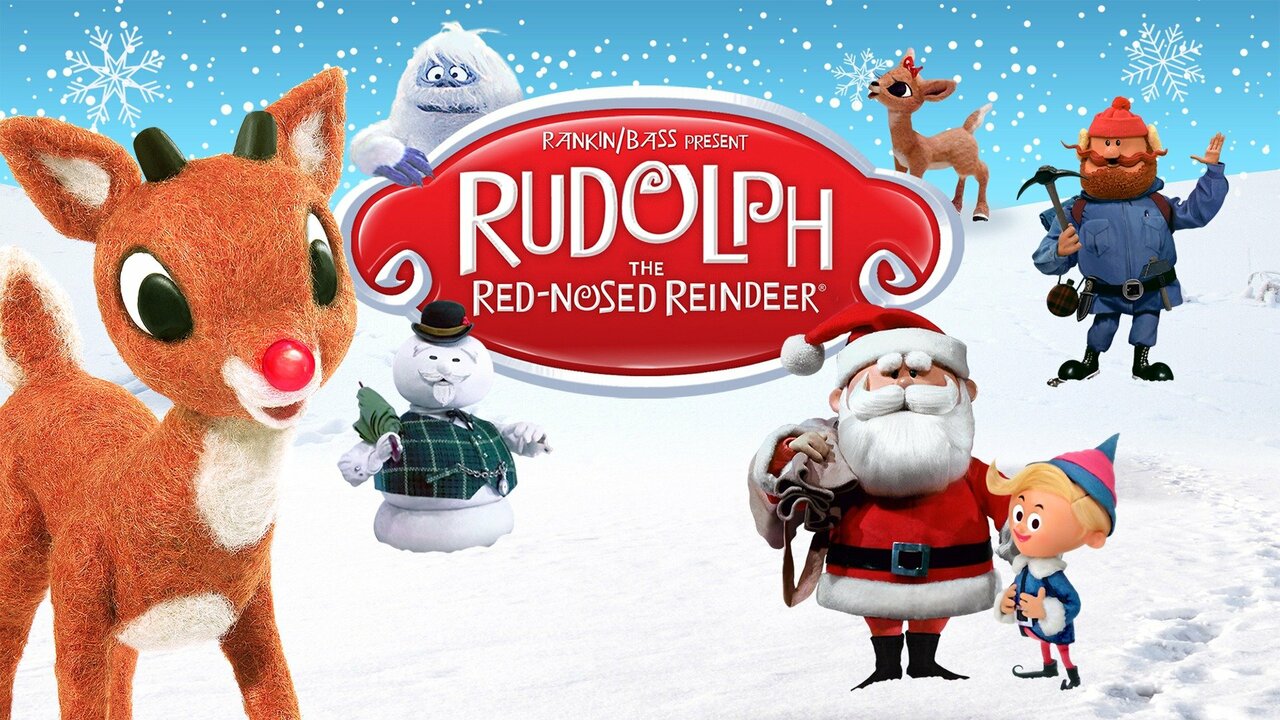
December 6, 1964: Rudolph the Red-Nosed Reindeer premieres on CBS, the 1st animated holiday special produced by Rankin/Bass Productions, Inc., now known as Rankin/Bass Animated Entertainment.

Arthur Gardner Rankin Jr. was born on July 19, 1924 in Manhattan, and both of his parents were actors. Julius Bass, known professionally as Jules Bass, was born on September 16, 1935 in Philadelphia. In 1955, ABC hired Rankin as an art director, and Bass as a copywriter. Together, they made TV commercials, using animation.

In 1960, they founded Videocraft International, which became Rankin/Bass Productions. In 1964, they made their 1st stop-motion animation special, based on the 1947 Christmas-themed song "Rudolph, the Red-Nosed Reindeer."
Arthur Rankin Jr. (left) and Jules Bass

The story, narrated by Burl Ives as Sam the Snowman (who has a mustache and a goatee, like Ives himself did), follows the song, with some embellishments. In this version, Rudolph is the son of Donner, who is listed here as Santa Claus' lead reindeer, and Donner's wife, whose name is never mentioned. (This was before "the Second Wave of Feminism.") Rudolph, voiced by actress Billie Mae Richards, has the bright red nose from birth. Santa (voiced by Stan Francis) agrees with Donner that the nose has to be hidden. It has been noted that it's not just "all of the other reindeer" who were mean to Rudolph: This is not one of the nicer versions of Big Red.

After running away with Hermey (voice of Paul Soles, a voiceover legend, including the 1st person to play Spider-Man, albeit animated), an Elf who doesn't want to make toys for Santa, and would rather be a dentist, they find adventure with a miner, an abominable snowman, and an island of "misfit toys." Upon returning to the North Pole, they gain new respect. On Christmas Eve, the fog is so thick that Santa and the reindeer can't see through it, but Rudolph, with his nose so bright can guide the sleigh that night. It has occurred to me that neither Santa nor any of the other reindeer ever apologized to Rudolph.

The special is a musical, and it closes with Ives, as Sam, singing a song that became a Christmas classic: "A Holly Jolly Christmas."
The success of this special led to other holiday-themed specials, most of them based around Christmas legends, even though Rankin and Bass were both Jewish. In 1968, they produced The Little Drummer Boy, a stop-motion animation that aired on NBC, narrated by a woman voiced by actress Greer Garson. The drummer boy is voiced by Teddy Eccles, and the Vienna Boys' Choir sings the title song.

That special is not widely remembered today. Their next one is: In 1969, for CBS, they produced, with traditional animation, Frosty the Snowman. Jimmy Durante narrated, and was represented by a lookalike resident of the town where Frosty was "born," complete with big nose.

Comedian Jackie Vernon voiced Frosty. Because the original 1950 song doesn't have an antagonist, aside from the weather, the magic hat that brings Frosty to life previously belonged to Professor Hinkle, an evil magician voiced by Billy De Wolfe. Paul Frees returns, playing a much kindlier Santa than seen in Rudolph.

In 1970, Rankin & Bass returned to stop-motion, for Santa Claus is Comin' To Town. Fred Astaire voiced the narrator, a mailman named S.D. Kluger -- "S.D." for "Special Delivery." He gives the first truly detailed origin story for Santa Claus, although others have been put forth. Mickey Rooney voices Santa from infancy to jolly old elf. Robie Lester voices schoolteacher Miss Jessica, who becomes Mrs. Claus.

In 1971, they produced a special for Easter, Here Comes Peter Cottontail. It was not based on the 1950 song of that title, but on a 1957 novel The Easter Bunny That OversleptDanny Kaye played narrator Seymor S. Sassafrass. Casey Kasem, star Los Angeles disc jockey, who voiced Shaggy on Scooby-Doo (and would later voice Robin in the Super Friends cartoons), voiced Peter. And the master of horror, Vincent Price, voiced the villain, evil rabbit January Q. Irontail.

In 1974, Mickey Rooney once again played St. Nick, in the stop-motion The Year Without a Santa Claus, premiering on ABC. Santa doesn't feel up to delivering the presents this year. His doctor says it's because not enough people believe in him anymore. So Mrs. Claus, this time voiced by Shirley Booth, sends a pair of Elves named Jingle Bells and Jangle Bells out on the sleigh, pulled by Vixen, the lone female reindeer of the usual crew of 8 (9, when Rudolph is leading the way).

What everyone tends to remember about this special, more so than the outcome (Santa is convinced to go for it, of course), is the antagonists, Snow Miser and Heat Miser, bickering brothers, both sons of Mother Nature. Each of them, true to their alternating song, is "too much."

Rudolph's Shiny New Year premiered on ABC in 1976. Red Skelton voices Father Time, who narrates. Billie Richards returns as Rudolph. Father Time tells his friend Santa that the Baby New Year must be found before the 12th "bong" at midnight on New Year's Eve, or else there will be no new year. As it's snowing, Santa sends Rudolph out to find him. Father Time considers Rudolph a good choice, because he would understand: The Baby, a.k.a. Happy, ran away from home because of his own unusual physical feature, enormous ears.

Rudolph goes to the Archipelago of Last Years (a variation on the Island of Misfit Toys). Each island represents a past year. On 1,000,000 BC Island, they meet a caveman named O.M. (for "One Million," voiced by Morey Amsterdam). He agrees to help Rudolph. So does Sir 1023, a Scottish knight (Frank Gorshin), who leaves his island of the year 1023, where all the fairy tales you've ever heard are real. Also agreeing to help is Sev (short for "1776," who looks like Benjamin Franklin and is voiced by Paul Frees), who leaves his island where every day is the 4th of July.

Other islands are no use: On 4,000 BC Island, all the people there want to do is build pyramids; on 1492 Island, people are too busy discovering things; everybody on 1893 Island is depressed, since there was a depression that year; and 1965 Island is "too noisy," as people are yelling about rock bands and a war. Nevertheless, Happy is found, rescued from a monster bird, and is brought back just in time.

Like Rudolph, Frosty returned in 1976, with Frosty's Winter Wonderland. By this point, Jimmy Durante was too ill to participate, so Andy Griffith was hired to narrate. With a new snowfall, Frosty returned to the town where he was "born," but the kids' love of Frosty makes Jack Frost, the symbol of Winter (Paul Frees), jealous, and he fights Frosty.

Frosty buys him off, by asking him to be the best man at his wedding to a snowwoman named Crystal (as snowflakes are crystals, and she's voiced by Shelley Winters). She came to life with a snow-corsage. The Parson Brown mentioned in the original song can't marry them, as he can only marry humans. So a snow parson is made, and Brown's Bible brings him to life. (Dennis Day voices both parsons.) Frosty and Crystal have to go north again, but promise to return.

Next, in 1977, again with Astaire as S.D. Kluger, was The Easter Bunny Is Comin' to Town. Keep in mind: Peter Cottontail and the Easter Bunny are separate characters, and this special told of a possible origin for the Easter Bunny, voiced by Skip Hinnant, already known to kids as Fargo North, Decoder on PBS' The Electric Company.

On Thanksgiving Weekend 1979 came the Justice League or Avengers of Christmas specials: Rudolph and Frosty's Christmas in July. Returning are Billie Richards as Rudolph, Jackie Vernon as Frosty, Shelley Winters as Crystal, Mickey Rooney as Santa, and Paul Frees as Jack Frost. Frees also plays the villain, a snow wizard named Winterbolt, who wants to reclaim the North Pole from Santa, and plans to discredit Rudolph and Frosty to achieve this.

Red Buttons returns, but as Milton, an ice cream salesman, not as Father Time. Don Messick, the original voice of Scooby-Doo, plays several roles, including taking over as Rudolph's father, Donner. Darlene Conley voices Mrs. Claus. Thurl Ravenscroft, best known as the voice of Kellogg's cereals' Tony the Tiger, but also the singer of "You're a Mean One, Mr. Grinch" from How the Grinch Stole Christmas! (not a Rankin/Bass special), plays the Genie of the Ice Scepter, and Ethel Merman plays Lilly Loraine, owner of the circus where Milton works. The only things that seem to be missing are the Miser Brothers.

Finally, a few days after that special, came Jack Frost, as the Winter sprite got his own special, although this time, he is voiced by Robert Morse instead of Frees. His story is told by Pardon-Me-Pete, a groundhog voiced by Buddy Hackett, who has a vested interest in a longer Winter: More sleep. He and a human girl, voiced by Debra Clinger, fall in love, but, in the end, he loses her to a human boy. The girl's name is Elisa; maybe if her name had been Elsa, it would have worked out, but Jack has to let it go.

In 1987, Rankin and Bass sold their company to Lorimar Productions. Jimmy Durante, the narrator of Frosty, died in 1980. Paul Frees, voice of many characters in these specials, including the original Jack Frost, died in 1986. Jackie Vernon, the voice of Frosty, died in 1987. So did Fred Astaire, the narrator of Santa Claus is Comin' To Town. So did Danny Kaye, the narrator of Here Comes Peter Cottontail. Burl Ives, the narrator of Rudolph the Red-Nosed Reindeer, died in 1995. Red Skelton, the narrator of Rudolph's Shiny New Year, died in 1997.

Billie Mae Richards, the voice of Rudolph, died in 2010. Andy Griffith, the narrator of Frosty's Winter Wonderland, died in 2012. Arthur Rankin died on January 30, 2014, at age 89. Mickey Rooney, twice the voice of Santa in Rankin/Bass specials, also died in 2014. Robert Morse, star of Jack Frost, died in 2022. Jules Bass died on October 25, 2022, at 87.

Still alive as of December 6, 2022 is Skip Hinnant, the '77 voice of the Easter Bunny, but better known for his performance on the PBS kids' show The Electric Company, as characters including Fargo North, Decoder.

*

December 6, 1964 was a Sunday. These NFL games were played that day:

* The New York Giants lost to the Minnesota Vikings, 30-21 at Yankee Stadium.

* The Detroit Lions beat the Baltimore Colts, 31-14 at Memorial Stadium in Baltimore.

* The Pittsburgh Steelers beat the Washington Redskins, 14-7 at District of Columbia Stadium (later Robert F. Kennedy Memorial Stadium) in Washington.

* The football version of the St. Louis Cardinals beat the Cleveland Browns, 28-19 at Busch Stadium (formerly Sportsman's Park) in St. Louis.

* The Philadelphia Eagles beat the Dallas Cowboys, 24-14 at Franklin Field in Philadelphia.

* The San Francisco 49ers beat their arch-rivals, the Los Angeles Rams, 28-7 at Kezar Stadium in San Francisco.

* And the day before, the Green Bay Packers beat the Chicago Bears, 17-3 at Wrigley Field in Chicago.

In the American Football League:

* The New York Jets lost to the San Diego Chargers, 38-3 at Shea Stadium.

* The Boston Patriots beat the Kansas City Chiefs, 31-24 at Kansas City Municipal Stadium.

* The Oakland Raiders beat the Buffalo Bills, 16-13 at Frank Youell Field in Oakland.

* And the Denver Broncos and the Houston Oilers had the week off.

Baseball was out of season. There were 3 games played in the NBA:

* The New York Knicks lost to the St. Louis Hawks, 115-94 at the Kiel Auditorium in St. Louis.

* The Cincinnati Royals beat the Baltimore Bullets, 124-113 at the Baltimore Civic Center (now the CFG Bank Arena).

* And the Los Angeles Lakers beat the Philadelphia 76ers, 109-104 at the Los Angeles Memorial Sports Arena.

And there were 2 games in the NHL:

* The New York Rangers beat the Chicago Black Hawks, 4-1 at the Chicago Stadium.

* The Detroit Red Wings beat the Montreal Canadiens, 4-1 at the Olympia Stadium in Detroit.

* And the Boston Bruins and the Toronto Maple Leafs were not scheduled.
Saturday, December 3, 2022

December 3, 1978: "Christmas Eve On Sesame Street" Premieres

December 3, 1978: The special Christmas Eve On Sesame Street airs on PBS for the 1st time. It was early in the 10th season of Sesame Street, and the producers and writers for the show's production company, The Children's Television Workshop, felt like it was the right time to do a holiday special.

It begins with some of the show's characters, human and Muppet alike, at an ice-skating rink. They sing "True Blue Miracle," a song written for the special, even though Christmas is not mentioned in it.

There are 3 main storylines in the hourlong special. Spoiler Alerts for a 44-year-old TV special for kids:

On the way home from the skating party, Oscar the Grouch plays a dirty trick on Big Bird. Carroll Spinney wore the Big Bird costume, and also operated the Oscar puppet, and voiced both characters. So this was an unusual instance of Spinney's characters interacting, meaning someone else had to operate Oscar.

Oscar askes Big Bird how big fat Santa Claus gets down those skinny little chimneys on the roofs of city apartment buildings. Big Bird comes up with all kinds of ideas, but, each time, Oscar says something along the lines of, "Ding-dong, you're wrong." While they're on the Subway trying to get back to Sesame Street (So that's how to get, how to get there), Big Bird comes up with another, and a train rushes past, interrupting Oscar's apparently profane response: "You are the stupidest (train sound for about 10 seconds) bird I have ever seen!"

So now, Big Bird gets worried that Santa might not be able to come to Sesame Street, and nobody would get any presents. He enlists friends like Mr. Snuffleupagus, Grover and Kermit the Frog to find out. They come up with various ideas, but none of them seem to make sense.

Well, now, it's Christmas Eve, and Big Bird is sure that Santa can't come to Sesame Street, and that nobody will get any presents. Well, in a rare (for that period of the show, anyway) example of seeing the inside of the main apartment building of the show, with the address of 123 Sesame Street, we see the Christmas tree of Susan and Gordon's apartment, and there's presents underneath. Gordon (Roscoe Orman) explains to Big Bird that it didn't matter how it happened, only that it did, and he sings the song's closing line one more time: "And if that isn't a true blue miracle, I don't know what one is."

Storyline 2: Muppet roommates Bert and Ernie unwittingly recreate the 1905 O. Henry story The Gift of the Magi. Neither one of them has enough money to buy the other a Christmas present. So Ernie (operated by Muppets creator Jim Henson, as was Kermit) traded his beloved rubber duckie to Mr. Hooper (Will Lee) for a cigar box, so Bert would have a good place to store his beloved paper clip collection.

But a moment later, after Ernie leaves Hooper's store, Bert (Frank Oz) shows up, and trades that collection to Mr. Hooper for a soap dish, so Ernie's rubber duckie wouldn't keep slipping off the edge and into the bathtub.

That night, they open their presents, and get the explanations. Each wonders how he can tell the other that he traded the item the present he received was made for, for the present he gave the other.

But, before either one tries, in one of the rare appearances by one of the show's human characters in Bert and Ernie's apartment, Mr. Hooper shows up. He gives Ernie a present. He unwraps it, and it's his rubber duckie. And he gives Bert a present. He unwraps it, and it's a box containing his paper clip collection.

Now, the boys realize what has happened, and they're relieved. Then they felt guilty that they hadn't gotten Mr. Hooper anything. Being Jewish, and having been wished a Happy Hannukah by Bob (Bob McGrath) earlier in the show, Mr. Hooper tells Bert and Ernie, "I got the best Christmas present ever: I got to see that everybody got exactly what they wanted!"

Storyline 3: This one is considerably funnier. Cookie Monster (also operated by Oz) writes a letter to Santa Claus, telling him what he wants for Christmas: An Atari video game system. Just kidding: That's what I wanted that year. (And I didn't get it for another 4 years, until I had saved up the $197 needed to buy what turned out to be the next-generation system. It was worth it!)

Of course, what Cookie Monster wants Santa Claus to give him for Christmas is cookies. A reasonable request: Cookies are a food associated with Christmas. Not only that, but the Dutch, the original European settlers of what became New York City, not only introduced the concept of St. Nicholas, a.k.a. Sinterklaas, a.k.a. Santa Claus to these shores, but they also introduced cookies.

Unfortunately, Cookie Monster starts thinking about the cookies, and he gets hungry, and he looks at his pencil, and imagines that it's a cookie. I've never seen a cookie in the shape of a pencil. A candy bar, yes; a licorice wrap or a Twizzler, yes; a cookie, no. Anyway, he eats the pencil. When he's finished, he breaks the fourth wall, looks in the camera, and says, in his usual bad grammar, "Where pencil?"

A few minutes later, after pieces of the other storylines, we see Cookie Monster using a typewriter to write a letter to Santa. He finishes the letter, and ruminates on what kind of cookies he will get. Maybe oatmeal raisin cookies. Suddenly, he starts to eat the typewriter keys, as if they're raisins. Then he speculates that Santa might give him "fortune cookies, with delicious paper inside them!" And he eats the letter. And the typewriter's roller. And then he thinks of round cookies, round like the ribbon reel. 

And then he yells, "Cowabunga!" and destroys the typewriter and eats the pieces. Finally, he looks in the camera, and asks, "Where typewriter?" Then he pulls the ribbon out of his mouth, and realizes what he's done.

In the next segment, it finally dawns on him that Christmas Eve is too late to send a letter to Santa. It will never reach him in time. (Unless the U.S. Postal Service has flying reindeer.) So he calls Santa on the phone. (How did he get Santa's number? And did it occur to him that Santa might be a bit busy that night?)

So he dials the number, and holds the phone in his hand. The phone is black, and the ends are round, and, to him, it looks like "cuppy-cakes." And he eats the receiver. And Santa picks up the phone, and we hear jingling bells, and "Ho ho ho, hello?" And Cookie Monster looks into the camera and says, "Oh, boy."

So Cookie Monster tells Gordon what happened, and Gordon assures him that Santa will come and give him cookies. Then he suggests that maybe Cookie Monster could leave something for Santa, and that the traditional gift is... cookies. Actually, milk and cookies. Oh, boy.

I was just about to turn 9 when the special aired. I never believed in Santa Claus, but, as an adult, I love the concept. And I knew that Oscar was being a total jerk to Big Bird. And while I hadn't yet read The Gift of the Magi, I understood the pathos (not yet having heard the word "pathos") of what Bert and Ernie had done for each other, and the decency of Mr. Hooper for giving them a resolution that O. Henry never gave Jim and Della Young 73 years earlier.

Christmas Eve On Sesame Street remains my favorite Christmas special, ahead of even A Charlie Brown Christmas. Will Lee died 4 years after it aired, and some of it might seem strange to generations who associate Sesame Street with Elmo (who didn't come along until 1985), and only know Hooper's Store, not Mr. Hooper himself. But, like the holiday and its traditions, it remains timeless, and people of any age can enjoy it.

And if that isn't a true blue miracle, I don't know what one is.

*

December 3, 1978 was a Sunday. These NFL games were played: 

* The New York Giants lost to the Los Angeles Rams, 20-17 at Giants Stadium in the Meadowlands.

* The New York Jets beat the Baltimore Colts, 24-16 at Shea Stadium.

* The Miami Dolphins beat the Washington Redskins, 16-0 at Robert F. Kennedy Stadium in Washington.

* The Green Bay Packers beat the Tampa Bay Buccaneers, 17-7 at Tampa Stadium. There were times, though this was not one of them, when both Green Bay and Tampa Bay were so bad (How bad were they?), their twice-yearly NFC Central Division matchup was known as the Bay of Pigs.

* The New Orleans Saints beat the San Francisco 49ers, 24-13 at the Superdome in New Orleans.

* The Pittsburgh Steelers beat the Houston Oilers, 13-3 at the Astrodome in Houston.

* The Dallas Cowboys beat the New England Patriots, 17-10 at Texas Stadium in the Dallas suburb of Irving, Texas.

* The Cincinnati Bengals beat the Atlanta Falcons, 37-7 at Riverfront Stadium in Cincinnati.

* The Minnesota Vikings beat the Philadelphia Eagles, 28-27 at Metropolitan Stadium in the Minneapolis suburb of Bloomington, Minnesota.

* The football version of the St. Louis Cardinals beat the Detroit Lions, 21-14 at Busch Memorial Stadium in St. Louis.

* The Kansas City Chiefs beat the Buffalo Bills, 14-10 at Arrowhead Stadium in Kansas City.

* The Denver Broncos beat the Oakland Raiders, 21-6 at the Oakland Coliseum.

* The Seattle Seahawks beat the Cleveland Browns, 47-24 at the Kingdome in Seattle.

* And in the Monday Night Football game the next night, the San Diego Chargers beat the Chicago Bears, 40-7 at San Diego Stadium.

Only 1 game was played in the NBA that day. The New Jersey Nets beat the Los Angeles Lakers, 107-105 at The Forum outside Los Angeles in Inglewood, California.

There were 4 games played in the NHL:

* The New York Rangers lost to the Boston Bruins, 3-2 at Madison Square Garden.

* The Philadelphia Flyers beat the Toronto Maple Leafs, 7-2 at The Spectrum in Philadelphia.

* The Montreal Canadiens beat the Buffalo Sabres, 4-1 at the Buffalo Memorial Auditorium.

* And the Chicago Black Hawks beat the Colorado Rockies, 4-3 at the Chicago Stadium. The Rockies became the New Jersey Devils in 1982. In 1993, a baseball team named the Colorado Rockies began play.

And there were 3 games played in the World Hockey Association:

* The Quebec Nordiques beat the Winnipeg Jets, 5-3 at the Colisee de Quebec.

* The Cincinnati Stingers, with 17-year-old Mark Messier, beat the Indianapolis Racers, with 17-year-old Wayne Gretzky, 4-2 at the Market Square Arena in Indianapolis.

* And the New England Whalers beat the Edmonton Oilers, 7-0 at the Northlands Coliseum in Edmonton. Within days, Gretzky would be an Oiler. Within weeks, so would Messier. And the rest is history. 

Thursday, November 24, 2022

November 25, 1920: The 1st Thanksgiving Day Parade

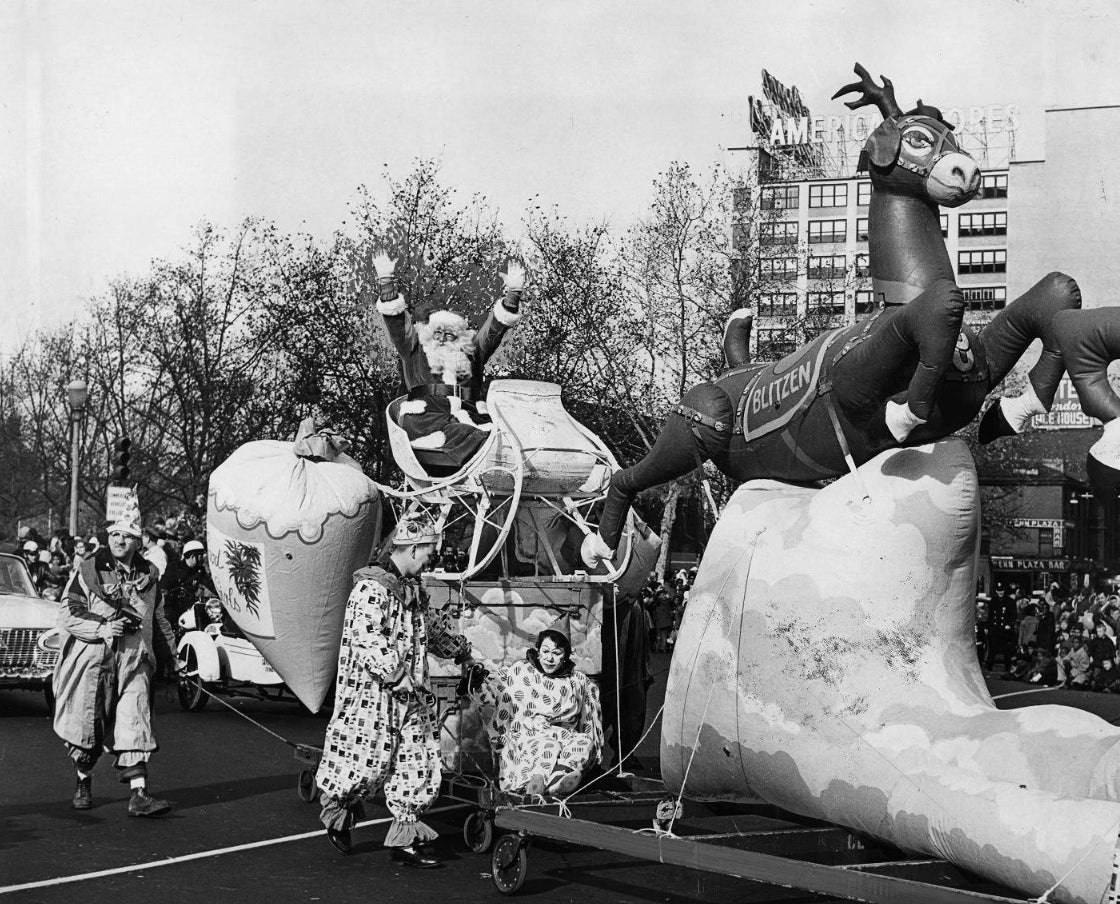
Judging by the cars in the background,
this is an old parade in Philadelphia, but not the first one.

November 25, 1920: The 1st Thanksgiving Day Parade in America is held. It goes down Market Street in Center City Philadelphia, sponsored by Gimbels department store.

In the modern era, Philadelphia's parade begins on John F. Kennedy Boulevard at 20th Street, goes down JFK Blvd. to Penn Square, around City Hall, then up the Benjamin Franklin Parkway to the Philadelphia Museum of Art. (You know: The Rocky Steps.) That's where the "big production numbers" are held for the TV broadcast.

Gimbels would sponsor the parade every year until 1986, going out of business the next year. WPVI-Channel 6, Philadelphia's ABC affiliate, which had broadcast the parade since 1966 (it was WFIL until 1971), took over sponsorship, partnering with another department store, Boscov's.

Boscov's is still in business, but ended their co-sponsorship after the 2007 Parade. IKEA did it the next 3 years. Since 2011, "6abc" has done it with Dunkin'. Being a restaurant chain, Dunkin' teams up with 6abc to run a holiday food drive every year.

In 2020, due to COVID, the Parade "went virtual." It was the 1st cancellation of a full parade: Even the Great Depression and World War II couldn't stop it. Fortunately, in 2019, the 100th Parade was celebrated, so the 100th Anniversary was not ruined.

New York would get into the act in 1924, with Macy's holding the Parade. It starts at 77th Street and Central Park West, across from the American Museum of Natural History, goes down Central Park West to Columbus Circle, then down Central Park South (59th Street), then down 6th Avenue to Macy's flagship store at Herald Square: 34th Street, 6th Avenue and Broadway. (It used to turn from Central Park South to 7th Avenue, then down Broadway at Times Square, to Herald Square. The route was changed in 2009, to provide more room for the floats and balloons.)

The Macy's Thanksgiving Day Parade became a legend in 1947, with the release of the holiday film Miracle On 34th Street, which has been remade in 1973 and 1994. In the 1st 2 versions, Macy's and Gimbels permitted the use of their names, because it was good publicity. By 1994, Gimbels was gone, and Macy's did not give permission, so fictional store names were used.

NBC has broadcast the Macy's Parade nationally since 1953. CBS also does so. Like the one in Philadelphia, it features high school marching bands from around the country. Since the Parade is literally on Broadway, stars of Broadway musicals participate, doing their production numbers in front of Macy's front entrance.

Large balloons in the shape of popular children's characters are used, including, at various times, cartoon characters like Popeye and Underdog, Peanuts characters Charlie Brown and Snoopy, Muppet characters like Kermit the Frog and Big Bird (even when characters from Sesame Street, including the Muppets used on the show, participate), and superheroes like Superman and Spider-Man.

The Macy's Parade always begins with a large animatronic turkey, flapping its wings and raising and lowering its head and eyelids; and, like the one in Philadelphia, always ends with a float containing Santa Claus' sleigh, to signal that, yes, the Christmas season -- and, more importantly from the sponsors' standpoint, the Christmas shopping season -- has begun in earnest. In New York, a small building representing Santa's Workshop is part of the float, and Mrs. Claus waves from it. In Philadelphia, Mrs. Claus rides in the sleigh with Santa.

McDonald's, headquartered in Chicago, sponsors that city's Thanksgiving parade. Other cities with them include Detroit, Houston and Seattle. Pittsburgh hosts a Celebrate the Season Parade on the Saturday after Thanksgiving.

*

November 25, 1920, like all Thanksgiving Days, was a Thursday. Up until 1938, it was celebrated on the last Thursday in November, which might be the 4th one in the month, or the 5th one. Since 1939, it's been officially the 4th Thursday in November, meaning it can fall on the 22nd, the 23rd, the 24th, the 25th, the 26th, the 27th or the 28th.

Two prominent actors were born on this day: Ricardo Montalbán, who starred as Mr. Roarke on Fantasy Island and as the villainous Khan Noonien Singh on both an episode of Star Trek and one of the movies based on the series; and Noel Neill, who played Lois Lane on the 1950s TV series The Adventures of Superman.

The American Professional Football Association was founded in 1920, and became the National Football League in 1922. Games on Thanksgiving Day are almost as old as the sport of American football itself, although the tradition of doing so in high school has significantly shrunk, due to State governing bodies wanting to make more money by expanding State Playoffs.

But on that 1st Thanksgiving Day in what is now NFL history, there were 6 games involving teams in the league:

* The Decatur Staleys beat the Chicago Tigers, 6-0 at Cubs Park. The Decatur Whats? The Chicago Who? Which Park? The Tigers went out of business after that 1st season. The Staley Starch Company sponsored a football team, and got former University of Illinois end George Halas to play, coach and manage it. The following season, he moved it to Cubs Park, renamed it the Chicago Staleys, and won the NFL Championship. The season after that, he renamed them the Chicago Bears. In 1926, Cubs Park was renamed Wrigley Field.

* The Chicago Boosters beat the Hammond Pros, 27-0 at DePaul University Field in Chicago. The Pros, from the Chicago satellite city of Hammond, Indiana, went out of business after the 1925 season. The Boosters were never an APFA/NFL member, were playing their 1st season, played 1 more, and folded.

* The Dayton Triangles beat the Detroit Heralds, 28-0 at Triangle Park in Dayton, Ohio. Both of these teams, despite Detroit being in Michigan, were members of the Ohio League, the NFL's predecessor as the leading league in professional football. The Heralds played 1 more year and folded. In 1934, the Portsmouth Spartans of southern Ohio became the Detroit Lions, and founded the tradition of Detroit playing at home on Thanksgiving.

The Triangles were charter APFA/NFL members, and folded after the Crash of 1929. But, in a way, they still exist. Bill Dwyer, a Prohibition bootlegger who owned the NHL's New York Americans, bought the rights to the Triangles, and established a football team named the Brooklyn Dodgers.

That team lasted until 1945, merging with the team with the oddest name in NFL history: The Boston Yanks. In 1949, that team became the New York Bulldogs. In 1951, they became the New York Yanks (not "Yankees," although they did play at Yankee Stadium).

They folded, but the rights to their players were bought by a Texas group that moved them, to become the Dallas Texans. No, this is not the team that founded the AFL and became the Kansas City Chiefs. This Texans team lasted just 1 season. Their rights were sold to the men who owned the Baltimore Colts from 1947 to 1950, and they became the new Baltimore Colts. In 1984, they became the Indianapolis Colts.

So, while the NFL, and the Colts themselves, do not consider them to be a corporate continuation of the Dayton Triangles -- which would lead them back to 1913, making them the 2nd-oldest franchise in the League, behind the Arizona Cardinals, who trace themselves back to Chicago in 1898 -- they are now playing just 117 miles from their "birthplace." And they've never missed a season, which is not something that can be said by the Pittsburgh Steelers, the Philadelphia Eagles (who merged for the 1943 season), the Los Angeles Rams (who suspended operations for 1943), or the Cardinals (who merged with the Steelers for 1944).

* The Akron Pros beat the Canton Bulldogs, 7-0 at League Park in Akron. Both of these teams came from the Ohio League. The Pros, led by player-coach Frederick Douglass "Fritz" Pollard, the 1st black head coach in any sport, and the only one until 1966 and the only one in the NFL until 1989, won the league's 1st title in 1920.

The Bulldogs were led by Jim Thorpe, who soon left to start a team of all Native Americans in Marion, Ohio: The Oorang Indians. Without him, the Bulldogs won the title in 1922, 1923 and 1924. However, the Pros folded after the 1926 season, and the Bulldogs only lasted 1 more year. 

* The Columbus Panhandles and the Elyria Athletics played to a 0-0 tie, in Elyria. Both teams came from the Ohio League, which Elyria won in 1912. But the Athletics never joined the proto-NFL, and folded after this season. The Panhandles joined the NFL, but folded after 1926.

* And the All-Tonawanda Lumberjacks beat the Rochester Jeffersons, 14-3 at the Bay Street Baseball Grounds in Rochester, New York. The Jeffersons were charter APFA/NFL members, but folded after the 1925 season.

The Lumberjacks, employees of American Kardex, based on Tonawanda, outside Buffalo, joined the APFA in 1921, under the name Tonawanda Kardex, but only played 1 game before dropping out, making them the briefest-existing team in NFL history.

There were also college football games played on this Thanksgiving Day:

* Georgia beat Clemson, 55-0 at Sanford Field in Athens, Georgia. Georgia Tech beat Auburn, 34-0 at Grant Field in Atlanta. Usually, Georgia plays Georgia Tech during Thanksgiving Weekend, although the day varies from year to year.

* Virginia beat North Carolina, 14-0 at Lambeth Field in Charlottesville, Virginia. Usually, Virginia plays Virginia Tech during Thanksgiving Weekend, while North Carolina wraps up its schedule against Duke the preceding Saturday.

* Alabama beat Mississippi A&M, later known as Mississippi State, 24-7 at Rickwood Field in Birmingham. Usually, Alabama plays Auburn during Thanksgiving Weekend, although the day varies from year to year. Mississippi State plays the University of Mississippi, a.k.a. Ole Miss, usually on Thanksgiving night. Ole Miss did not play on Thanksgiving in 1920.

* Tulane beat Louisiana State, 21-0 at State Field in Baton Rouge.

* The Big Ten wrapped up its games the preceding Saturday but one of its teams was in action: Michigan Agricultural College, who became Michigan State in 1925, lost to Notre Dame, 25-0 at College Field in East Lansing.

* Washington State beat Nebraska, 21-20 at Nebraska Field in Lincoln.

* Oklahoma beat Drake University of Des Moines, Iowa, 44-7 at Boyd Field in Norman, Oklahoma.

* USC beat Oregon, 21-0 at Tournament Park in Pasadena, where the Rose Bowl was played before the stadium of the same name was built.

Back East:

* Penn State and the University of Pittsburgh played to a tie, 0-0 at Forbes Field in Pittsburgh.

* Maryland beat Johns Hopkins, 24-7 at College Field in College Park.

* Penn beat Cornell, 28-0 at the original Franklin Field in Philadelphia.

* And Rutgers went to the University of Detroit, and lost, 27-0 at Drinan Field in Detroit. 

Tuesday, September 20, 2022

September 21, 1897: "Yes, Virginia, There Is a Santa Claus"

Francis P. Church

September 21, 1897: The New York Sun newspaper prints an editorial, confirming to a local girl that Santa Claus exists.

In 1897, Philip O'Hanlon, a coroner's assistant, was asked by his 8-year-old daughter, Laura Virginia O'Hanlon, who went by her middle name, whether Santa Claus really existed. O'Hanlon suggested she write to The Sun. In her letter, Virginia wrote:

DEAR EDITOR: I am 8 years old.
Some of my little friends say there is n190o Santa Claus.
Papa says, "If you see it in THE SUN it’s so."
Please tell me the truth; is there a Santa Claus?

VIRGINIA O’HANLON.
115 WEST NINETY-FIFTH STREET.

Virginia O'Hanlon, age 8, 1897

The Sun's editor-in-chief, Edward Page Mitchell, received the letter, and gave it to Francis Pharcellus Church. Since 1878, Church had written many editorials for the paper, having previously written for several other publications. Mitchell reported that Church, who was initially reluctant to write a response, produced it "in a short time" during an afternoon.

As with the best-known description of Santa Claus to that point, Clement C. Moore's 1823 story A Visit from St. Nicholas, and with a prominent baseball poem of 1888, Ernest L. Thayer's Casey at the Bat, this editorial was published anonymously, and it would be years before its author was identified. In fact, Mitchell convinced Church to write it by saying that he would never reveal its author for as long as they both lived. Indeed, it wasn't until Church died in 1906 that Mitchell publicly identified him as the author.

On September 21, 1897, the editorial appeared in The Sun, preceded by Virginia's letter:

VIRGINIA, your little friends are wrong. They have been affected by the skepticism of a skeptical age. They do not believe except they see. They think that nothing can be which is not comprehensible by their little minds. All minds, Virginia, whether they be men’s or children’s, are little. In this great universe of ours man is a mere insect, an ant, in his intellect, as compared with the boundless world about him, as measured by the intelligence capable of grasping the whole of truth and knowledge.

Yes, VIRGINIA, there is a Santa Claus. He exists as certainly as love and generosity and devotion exist, and you know that they abound and give to your life its highest beauty and joy. Alas! how dreary would be the world if there were no Santa Claus. It would be as dreary as if there were no VIRGINIAS. There would be no childlike faith then, no poetry, no romance to make tolerable this existence. We should have no enjoyment, except in sense and sight. The eternal light with which childhood fills the world would be extinguished.

Not believe in Santa Claus! You might as well not believe in fairies! You might get your papa to hire men to watch in all the chimneys on Christmas Eve to catch Santa Claus, but even if they did not see Santa Claus coming down, what would that prove? Nobody sees Santa Claus, but that is no sign that there is no Santa Claus. The most real things in the world are those that neither children nor men can see. Did you ever see fairies dancing on the lawn? Of course not, but that’s no proof that they are not there. Nobody can conceive or imagine all the wonders there are unseen and unseeable in the world.

You may tear apart the baby’s rattle and see what makes the noise inside, but there is a veil covering the unseen world which not the strongest man, nor even the united strength of all the strongest men that ever lived, could tear apart. Only faith, fancy, poetry, love, romance, can push aside that curtain and view and picture the supernal beauty and glory beyond. Is it all real? Ah, VIRGINIA, in all this world there is nothing else real and abiding.

No Santa Claus! Thank God! he lives, and he lives forever. A thousand years from now, Virginia, nay, ten times ten thousand years from now, he will continue to make glad the heart of childhood.
Fred Astaire, in the 1979 film The Man in the Santa Claus Suit

The editorial proved so successful, and sold so many copies of The Sun that its publisher, Charles Dana, who described it as "real literature," ordered it reprinted in his paper every year. In 1950, the paper was absorbed by The New York World-Telegram. After the World Telegram & Sun (still nicknamed the World-Telly) folded in 1966, the New York Daily News began reprinting it every Christmas Eve, and still does.

The story of Virginia's letter and The Sun's response has been adapted into an NBC radio show in 1932, as a segment of the film The Santa Claus Story in 1945, an ABC special in 1974, a TV-movie starring Charles Bronson as Church in 1991, and a CBS animated special in 2009.

And what of Virginia? She grew up, and got degrees from 3 different New York City schools: A Bachelor of Arts from Hunter College in 1910, a Master of Education from Columbia University in 1912, and a Doctorate of Education from Fordham University in 1930.

Shortly after getting her master's, she married Edward Douglas, but he left her right before the birth of their daughter Laura. Still, for the rest of her life, she signed her name "Laura Virginia O'Hanlon Douglas." She taught in New York's public schools starting in 1912, became a junior principal in 1935, and retired in 1959. She always answered letters from people who wrote to her about how her 1897 letter and Church's response had affected them.
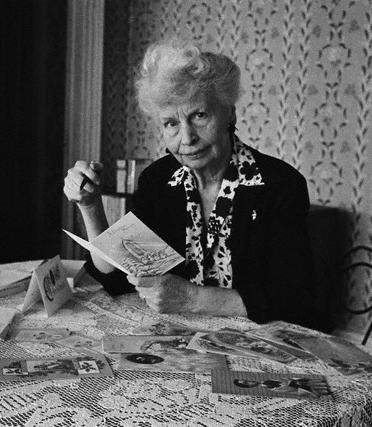
Laura Virginia O'Hanlon Douglas, 1970

She died on May 13, 1971, at age 81. Santa Claus? In the hearts of children, he still lives.

In a 2012 episode of the YouTube series Epic Rap Battles of History, "Nice" Peter Shukoff played Santa Claus, with "Epic" Lloyd Ahlquist played 3 different elves, against rapper Snoop Dogg as Moses.

*

September 21, 1897 was a Tuesday. These National League games were played that day:

* The New York Giants lost to the Baltimore Orioles, 10-3 at the 1890-1911 version of the Polo Grounds.

* A doubleheader was split at the South End Grounds in Boston. The Brooklyn Bridgegrooms (forerunners of the Dodgers) won the opener, 22-5. The Boston Beaneaters (forerunners of the Braves) won the nightcap, 9-1.

* The Washington Senators beat the Philadelphia Phillies, 5-4 at National League Park (later to be renamed Baker Bowl) in Philadelphia.

* The Cincinnati Reds beat the Pittsburgh Pirates, 11-3 at Exposition Park in Pittsburgh.

* The Cleveland Spiders beat the Chicago Colts (forerunners of the Cubs), 8-7 at the West Side Grounds in Chicago.

* And the Louisville Colonels and the St. Louis Browns (forerunners of the Cardinals) were not scheduled to play.

Saturday, June 11, 2022

June 11, 1947: "Miracle On 34th Street" Premieres

June 11, 1947: Miracle On 34th Street premieres, released by 20th Century Fox, directed by George Seaton, based on a story by Valentine Davies. Why a Christmas movie was released when Summer was just around the corner, perhaps only that era's Fox executives at the time knew.

A man known only as Kris Kringle (played by Edmund Gwenn) is hired to work as Santa Claus at the main Macy's store in New York's Herald Square, facing Broadway between 34th and 35th Streets. One thing leads to another, and he is committed, and his lawyer, Fred Gailey (John Payne), can find only one way to get this harmless, if apparently delusional, old man out of the psych ward: By proving to a court that, just as Kris claims, he really is Santa Claus.

It works, and Fred wins the heart of Doris Walker (Maureen O'Hara), who had hired Kris, and her daughter Susan (Natalie Wood, 8 years old at the time of filming, but playing 6).

Miracle On 34th Street was remade in 1973 and 1994. In those versions, Santa was played by Sebastian Cabot and Richard Attenborough, respectively; the lawyer by David Hartman and Dylan McDermott (by then starring as a lawyer on the ABC TV drama The Practice); Mrs. Walker by Jane Alexander and Elizabeth Perkins; and Susan by Suzanne Davidson and Mara Wilson.


For the 1973 version, the lawyer's name was changed to Bill Schafner, and Mrs. Walker's name was changed from Doris to Karen -- definitely not to be confused with the Karen Walker played by Megan
 Mullally on Will & Grace!

For the 1994 version, the lawyer is named Bryan Bedford, Mrs. Walker goes back to being named Doris (or, rather, "Dorey"), and, this time, fictional store names had to be used: Macy's had refused to give permission to use their name, and became "Cole's" (not to be confused with the real-life chain Kohl's); while Gimbel's had gone out of business in 1987, so the scriptwriters used "Shoppers Express."


And the scriptwriters decided to add the wrinkle of the U.S. military "proving" that there is no Santa Claus, citing their vast technological expertise which had proven that there's no Santa's Workshop at or near the North Pole, thus forcing Bedford to figure out a way around that.

The film's title has been adapted for sports purposes. When the New York Mets won the 1969 World Series, Shea Stadium's Queens address was invoked as "Miracle On 126th Street." When the New York Knicks won the 1970 NBA Championship, the address of Madison Square Garden, 1 block west of Macy's Herald Square, was invoked as "Miracle On 33rd Street." Baltimore's Memorial Stadium was also on a 33rd Street, and the title was used when the Baltimore Orioles won the 1966 World Series. And when the New York Yankees came from 14 games back to win the 1978 World Series, Yankee Stadium's Bronx address was invoked as "Miracle On 161st Street."

*

June 11, 1947 was a Wednesday. These baseball games were played that day:

* The New York Yankees lost to the Chicago White Sox, 3-2 at Comiskey Park in Chicago. Don Kolloway led off the bottom of the 11th inning with a triple off Frank "Spec" Shea, and George Dickey, no relation to recently-retired Yankee catcher Bill, singled him home with the winning run. Shea and ChiSox pitcher Joe Haynes had both gone the distance. Joe DiMaggio went 1-for-4.

* The New York Giants lost to the Pittsburgh Pirates, 8-7 at the Polo Grounds. Billy Cox, whom the Dodgers would acquire the next season along with pitcher Preacher Roe, hit a home run. Ralph Kiner went 2-for-5 with 2 RBIs, although neither hit was a home run. Hank Greenberg, in his last season, did not get into the game.

* The Brooklyn Dodgers lost to the Cincinnati Reds, 5-4 at Ebbets Field. Jackie Robinson went 4-for-4 with an RBI. Another rookie, Duke Snider, went 2-for-5 with 2 RBIs. And Johnny "Spider" Jorgensen went 3-for-5. But all that wasn't enough.

* The Chicago Cubs swept a doubleheader from the Boston Braves, 4-0 and 5-2 at Braves Field. Doyle Lade pitched a 7-hit shutout to beat Warren Spahn in the 1st game.

* The Philadelphia Phillies beat the St. Louis Cardinals, 5-4 at Shibe Park in Philadelphia. Stan Musial went 1-for-4.

* The Boston Red Sox beat the Cleveland Indians, 3-0 at Cleveland Municipal Stadium. Mickey Harris went 7 innings, and 2 relievers completed the 6-hit shutout. Ted Williams went 1-for-4.

* A doubleheader was split at Briggs Stadium in Detroit. (It was renamed Tiger Stadium in 1961.) The Detroit Tigers won the opener, 7-1. The Philadelphia Athletics won the nightcap, 4-0. Carl Scheibe allowed 7 hits and walked 7 batters, but, somehow, still kept a shutout.

* And the Washington Senators beat the St. Louis Browns, 4-2 at Sportsman's Park in St. Louis.

December 31, 1999 & January 1, 2000: The Millennium

December 31, 1999:  The Millennium arrives. The people of planet Earth survived. At a terrible cost. But we hadn't destroyed ourselves. ...