Showing posts with label pennsylvania railroad. Show all posts

Friday, October 28, 2022

October 28, 1963: The Demolition of the Old Penn Station

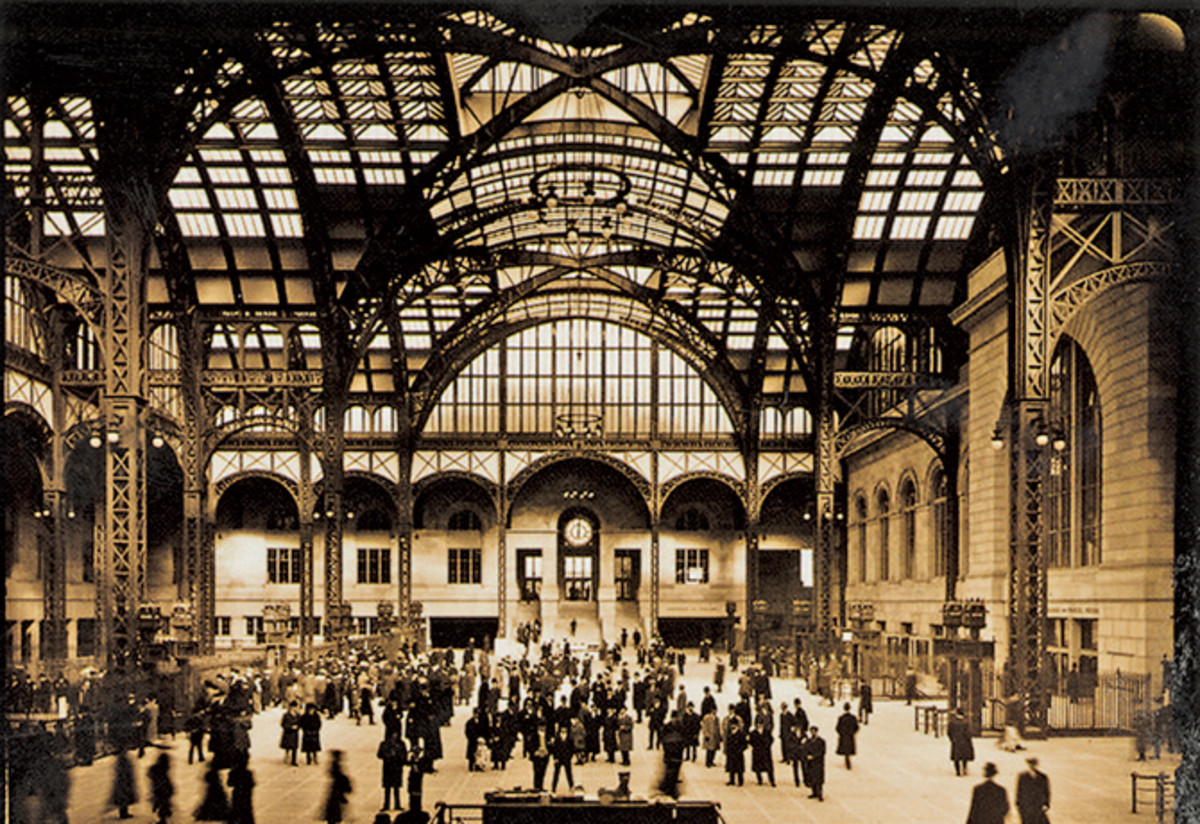
October 28, 1963: Demolition begins on the original Pennsylvania Station in Midtown Manhattan, built in 1910. Since most of the station's operations were underground, there wasn't much disruption of service.

By this point, the most beloved train station in America didn't look so good. That photo above is not colorized: The marble had been stained by over half a century of pollution. (Note the tailfins on the taxi.) And with the decline in train travel compared to the rise of driving and flying, a train station this grand was no longer necessary. The successor station would be utilitarian at best -- and a commuter's nightmare at worst.

When the Pennsylvania Plaza complex opened in 1968, including the new Madison Square Garden above it, Penn Station had become completely subterranean, and it went from being one of the most beloved transit centers in America to one of the most hated.

But the original station's destruction spurred the landmark preservation movement in New York City, which helped to save Grand Central Terminal in the 1970s, Carnegie Hall in the 1980s, and so many other great buildings. Still, not every great building was saved: Once Lincoln Center opened, the original Metropolitan Opera House was demolished in 1967, and a boxy skyscraper was put up in its place.

*

October 28, 1963 was a Monday. Actress Lauren Holly was born.

Baseball season had ended 3 weeks earlier, with the  Los Angeles Dodgers beating the New York Yankees in the World Series. And there would be no Monday Night Football for another 7 years. And while the NBA and NHL seasons were underway, no games were scheduled. So there were no scores on this historic day.

Thursday, October 27, 2022

October 27, 1907: Union Station Opens In Washington

October 27, 1907: Union Station opens in Washington, D.C., 6 blocks north of the U.S. Capitol, replacing 2 earlier stations. It hosts service for the Pennsylvania Railroad and the Baltimore and Ohio Railroad (a.k.a. the B&O).

The New Jersey Avenue Station opened in 1851, 2 blocks north of the U.S. Capitol Building. It was the city's terminal for the B&O. The Baltimore and Potomac Railroad Station opened in 1872, 5 blocks west of the Capitol. It was the city's terminal for the railroad of the same name, and also for the Pennsylvania Railroad. It was there that President James Garfield was shot on July 2, 1881.

Both stations were phased out when Union Station opened. The Senate Fountain now stands on the site of New Jersey Avenue Station, and the National Gallery of Art, a unit of the Smithsonian Institution, is on the site of the Baltimore and Potomac Station.

In 1971, in the wake of the bankruptcies of most of America's passenger railroads, it becomes the headquarters of Amtrak. In 1976, Washington's subway system, the Metro, opened, with Union Station being a stop on its Red Line. In 1988, a hall was converted into the District of Columbia's premier upscale shopping center.

In 1984, MARC (Maryland Area Rail Commuter) began operating there, providing service to Baltimore, and to western Maryland, all the way to Martinsburg, West Virginia. In 1992, VRE (Virginia Railway Express) began service to Manassas and Fredericksburg, both sites of Civil War battles. In 2012, Greyhound moved its intercity bus service to a station in the Station's parking deck.

*

October 27, 1907 was a Sunday. Baseball season was over. Pro football and hockey records from this era were sketchy. Pro basketball did not exist. So there were no scores on this historic day.

Wednesday, September 7, 2022

September 8, 1910: Pennsylvania Station Opens In New York

September 8, 1910: Pennsylvania Station -- or "Penn Station" for short -- opens in Manhattan, between 31st and 33rd Streets, and between 7th and 8th Avenues. It is hailed as the greatest train station ever built, and eliminated the need for trans-Hudson ferries.

It serves New Jersey and beyond via the Pennsylvania Railroad, and the Counties of Nassau and Suffolk via the Long Island Rail Road. To get to points north, such Upstate New York, New England and Canada, one must still use Grand Central Depot, or, after its replacement in 1913, Grand Central Terminal.
The growth of highways and the auto industry ruined passenger rail travel in America, beyond the commuter level. In 1963, New York's Penn Station was a dirty relic, and hardly resembled the great temple of transit that people who hate its replacement want to think of it as.
The upper structure was demolished, and service continued below ground, protected by a temporary steel roof, until 1968, when the new Penn Station opened, with the new Madison Square Garden above.
Penn Station II, New York, which opened in 1968

By 1968, both the Pennsylvania and its great rival, the New York Central Railroad, were bankrupt. They merged, forming the Penn Central Transportation Company. It didn't work: They filed for bankruptcy in 1970, their regional service was taken over by the newly-formed Amtrak in 1971, and Conrail took over their local service in 1976. In 1983, New Jersey Transit took over. All the while, the LIRR kept rolling in and out. Penn Station remains America's busiest passenger rail terminal.

*

September 8, 1910 was a Thursday. There was no NFL, NBA or NHL yet. But there were games in what would later be called Major League Baseball:

* The New York Highlanders beat the Washington Senators, 8-2 at League Park in Washington. Jack Warhop went the distance, backed by a 4-for-4 performance by his 1st baseman, who was also his manager -- who was also a man throwing games, though not on this day: Hal Chase. In 1913, the Highlanders officially changed their name to what people were already calling them: The New York Yankees.

* The New York Giants played the Boston Doves at the Polo Grounds, and the game was called due to darkness after 10 innings, tied 1-1. The Doves were named for their owner, John Dovey. He sold them to William Russell in 1911, and they were renamed the Boston Rustlers. Russell died after the season, and the team was bought by James Gaffney, an officer, or "Brave," in New York's Tammany Hall political organization. So they were renamed the Braves.

* The Brooklyn Superbas lost to the Philadelphia Phillies, 8-1 at Baker Bowl in Philadelphia. Named for a circus troupe, Hanlon's Superbas, because they had once been managed by Ned Hanlon, they resumed using one of their former names the next season: The Brooklyn Dodgers.

* The Philadelphia Athletics beat the Boston Red Sox, 3-2 at the Huntington Avenue Grounds in Boston.

* The St. Louis Cardinals beat the Pittsburgh Pirates, 4-2 at Forbes Field in Pittsburgh.

* The Cleveland Naps beat the Detroit Tigers, 7-4 at League Park in Cleveland. The home team was named for their 2nd baseman and manager, Napoleon "Nap" Lajoie. After he left in 1914, they were renamed the Cleveland Indians. Lajoie went 2-for-4 with 2 RBIs. Ty Cobb did not play for the Tigers in this game.

Lajoie and Cobb would famously battle for the American League batting title to the end of that season, with Cobb sitting out the last 2 games and Lajoie going 8-for-8 in the finale, and Cobb still winning it -- until 1981, when someone discovered that one of Cobb's games was counted twice, giving him 2 more hits than he should have had.

* The Chicago Cubs beat the Cincinnati Reds, 8-3 at West Side Park in Chicago.

* And a doubleheader was played at Sportsman's Park in St. Louis. The Chicago White Sox won the opener, 1-0. Fred Olmstead pitched a 1-hit shutout. The St. Louis Browns won the nightcap, 6-4.

Sunday, May 1, 2022

May 1, 1971: Amtrak Begins Service

May 1, 1971: The National Railroad Passenger Corporation, popularly known as Amtrak, begins operation. It takes over intercity passenger rail service from all other railroads, most of them bankrupt.

There had been the New York, New Haven & Hartford Railroad; the New York Central Railroad; the Pennsylvania Railroad; the Baltimore & Ohio Railroad; the Chesapeake & Ohio Railway; the Southern Railroad; the Seaboard Line; the Illinois Central Railroad; the Rock Island Line, the Burlington Northern; the Atchison, Topeka and Santa Fe; the Union Pacific, the Central Pacific, and the Southern Pacific; and many others.

But with the growth of the automobile industry, the Interstate Highway System, and the airline industry, railroads lost their market, and most of them went bankrupt. On February 1, 1968, the New York Central and the Pennsylvania, both bankrupt, merged to form the Penn Central. That went bankrupt, too, on June 21, 1970, the biggest bankruptcy in American history until Enron in 2001.

Amtrak is better than bus service on Greyhound. But it is flawed. There are lots of places it doesn't go, including a few big cities like Nashville and Columbus. The food is good in the dining car, but on short trips, the fast food they have is barely tolerable, partly due to being over-microwaved: By the time it cools off, you're at your destination. And in cities with commuter rail lines, Amtrak has precedence, so the commuter lines get backed up. This gets particularly bad at Pennsylvania Station in New York, with residual effects on New Jersey Transit and its Northeast Corridor stations.

In 1976, Conrail took over freight service from the remaining railroads. In the 1987 film Planes, Trains and Automobiles, neither Amtrak nor Conrail wanted their name on the train that breaks down, so the made-up name "Contrack" was used.

*

May 1, 1971 was a Saturday. This was also the day the film Billy Jack premiered, and Marvel Comics issued their Spider-Man story about drug use. I have separate entries for those events.

These Major League Baseball games were played that day:

* The New York Yankees lost to the Milwaukee Brewers, 1-0 at Yankee Stadium. Lew Krausse Jr., son of another major league pitcher, outpitched Stan Bahnsen. Tommy Harper's 8th inning home run provided the only home run of the game.

* The New York Mets lost to the Houston Astros, 3-1 at the Astrodome in Houston. Larry Dierker outpitched Tom Seaver.

* The Minnesota Twins beat the Boston Red Sox, 7-3 at Fenway Park in Boston. Harmon Killebrew went 1-for-3 with 2 walks and an RBI. Rod Carew did not play. Luis Aparicio (not really known as a slugger, or as a Red Sock) and Reggie Smith hit home runs in defeat. Carl Yastrzemski went 2-for-4.

* The Chicago White Sox beat the Washington Senators, 5-3 at Robert F. Kennedy Memorial Stadium in Washington.

* The Atlanta Braves beat the Los Angeles Dodgers, 7-5 at Atlanta Stadium (later Atlanta-Fulton County Stadium). Hank Aaron hit the 601st and 602nd home runs of his career.

* The Pittsburgh Pirates beat the San Diego Padres, 5-4 at Three Rivers Stadium in Pittsburgh. Gene Alley singled home the winning run in the bottom of the 11th inning. Willie Stargell went 3-for-5. Roberto Clemente was a late defensive replacement, and went 0-for-1.

* The Cincinnati Reds beat the San Francisco Giants, 3-2 at Riverfront Stadium in Cincinnati. Pete Rose went 1-for-3 with a walk. Johnny Bench went 1-for-4. Willie Mays only appeared as a pinch-hitter, and did not reach base.

* The Chicago Cubs beat the Philadelphia Phillies, 7-4 at Wrigley Field in Chicago. Fergie Jenkins outpitched Rick Wise, although Wise hit a home run. Ernie Banks went 1-for-2 with a walk. Billy Williams went 3-for-3 with 2 homers and 4 RBIs.

* The Montreal Expos and the St. Louis Cardinals were tied, 2-2 after 7 innings, when the game at Busch Memorial Stadium was called due to rain.

* The Kansas City Royals beat the Baltimore Orioles, 5-2 at Kansas City Municipal Stadium. Brooks Robinson went 1-for-3 with a walk. Frank Robinson went 1-for-4 with an RBI.

* The California Angels beat the Detroit Tigers, 9-1 at Anaheim Stadium (now Angel Stadium). Andy Messersmith went the distance, while Dean Chance got knocked out of the box in the 2nd inning. Al Kaline went 0-for-2, then was hit by a pitch and replaced by a pinch-runner.

* And the Cleveland Indians beat the Oakland Athletics, 2-1 at the Oakland Coliseum. Steve Dunning outpitched Diego SeguĂ­. Reggie Jackson went 1-for-4.

Football was out of season. The NBA Championship had been decided the day before, as the Milwaukee Bucks beat the Baltimore Bullets 118-106 at the Baltimore Civic Center (now the CFG Arena) to complete a 4-game sweep of the Finals. The ABA Playoffs were between the Divisional Finals and the Finals. The Utah Stars would win, defeating the Kentucky Colonels.

The Stanley Cup Playoffs were in the Semifinals. The Montreal Canadiens had eliminated the Minnesota North Stars 2 days earlier, and the Chicago Black Hawks would eliminate the New York Rangers in Game 7 the next night. The Canadiens would win the Cup over the Hawks in 7 games.

And in English soccer, Arsenal beat Staffordshire team Stoke City, 1-0 at the Arsenal Stadium, a.k.a. Highbury. That should have been their last game of the Football League season. However, an earlier game against their North London arch-rivals, Tottenham Hotspur, had been postponed, and would be played 2 days later. This allowed Arsenal to win the League title at the home of their arch-rivals.

Sunday, February 6, 2022

February 6, 1951: The Woodbridge Wreck

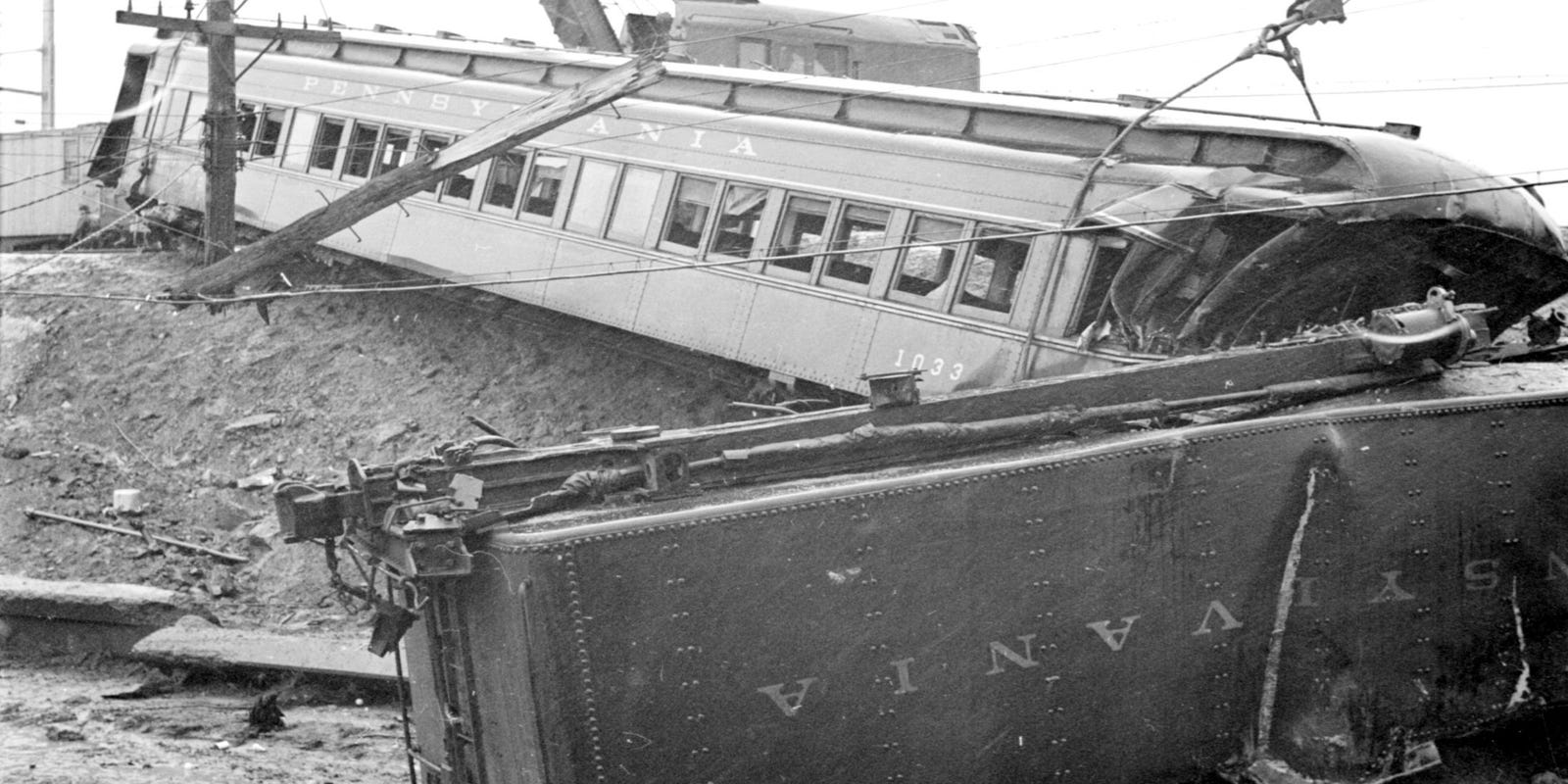
February 6, 1951: A Pennsylvania Railroad train derails on a temporary wooden trestle in Woodbridge, Middlesex County, New Jersey, killing 85 passengers. It is the deadliest rail disaster in New Jersey history, and the deadliest rail disaster anywhere in America since the Malbone Street Wreck, outside Prospect Park in Brooklyn, on November 1, 1918. 

Around 5:00 PM, Pennsylvania Railroad train Number 733 left Exchange Place station in Jersey City. It was to head down the PRR's Main Line to Rahway, where it would branch onto the North Jersey Coast Line. The Central Railroad of New Jersey was on strike, so No. 733 had more passengers than usual: Over 1,000 people on 11 cars.

At the time, there was a temporary wooden trestle near the Woodbridge station. The express was meant to bypass that station. The normal speed limit for a train doing so was 60 miles per hour. On the temporary trestle, the limit was 25.
A recent photo of the Woodbridge Station

But as the train approached the station at 5:43, the engineer, Joseph Fitzsimmons, only dropped the speed to 50. The tracks shifted under the weight of the locomotive, and 8 of the 11 cars derailed. The 3rd and 4th cars fell down a 26-foot-high embankment. Most of the 85 people killed were in one of these cars. The 5th and 6th cars were left hanging in mid-air over a street, and some people jumped out, some of those dying.

No one was charged with any crime as a result of the wreck. Fitzsimmons was kept on the payroll by the Railroad, but he never operated a train again.

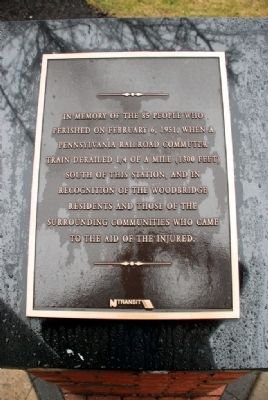
Today, there is a memorial plaque outside the Woodbridge station. New Jersey Transit operates commuter lines, but even their express trains on the Coast Line usually stop at Woodbridge.
The successor to the main line of the Pennsylvania Railroad, NJT's Northeast Corridor, has a station on the other side of the Township of Woodbridge, in the Iselin section of town, known as Metropark. Amtrak also uses that station. It should not be confused with the main Woodbridge station, which is in downtown Woodbridge.

*

February 6, 1951 was a Tuesday. Major League Baseball and the NFL were in their off-seasons. There were no NHL games played on the day. But there were 3 NBA games:

* The New York Knicks beat the Baltimore Bullets, 91-82 at the Baltimore Coliseum. Harry "the Horse" Gallatin led all scorers with 29 points. This version of the Bullets went out of business in 1954. A new one started in 1963, moved to Washington in 1973, and became the Washington Wizards in 1997.

* The Philadelphia Warriors beat the Tri-Cities Blackhawks, 97-77 at the Philadelphia Arena. The Warriors moved to San Francisco in 1962, and changed their name to the Golden State Warriors in 1971. The Blackhawks represented the region now known as the Quad Cities: Moline (where they actually played) and Rock Island, Illinois; and Davenport and Bettendorf, Iowa. After this season, they became the Milwaukee Hawks; in 1955, the St. Louis Hawks; and in 1968, the Atlanta Hawks.

* The Indianapolis Olympians beat the Rochester Royals, 78-76 at the Butler Fieldhouse in Indianapolis. This arena was renamed the Hinkle Fieldhouse in 1966, after Butler University's longtime coach Tony Hinkle.

The Olympians were named for the members of the 1948 U.S. Olympic Team they'd signed, including Alex Groza, Ralph Beard and Cliff Barker of the 1948 and '49 National Champions from Kentucky. They won a Division Championship in 1950. The point-shaving scandal of 1951 got those 3 guys banned, and the franchise folded in 1953.

The Royals became the Cincinnati Royals in 1957, the Kansas City Kings in 1972, and the Sacramento Kings in 1985. 

December 31, 1999 & January 1, 2000: The Millennium

December 31, 1999:  The Millennium arrives. The people of planet Earth survived. At a terrible cost. But we hadn't destroyed ourselves. ...