Showing posts with label salt lake city. Show all posts

Friday, November 18, 2022

November 19, 1915: Joe Hill Is Executed

November 19, 1915: Labor activist Joe Hill is executed by firing squad at Sugar House Prison in Salt Lake City, Utah. He was 36 years old.

Born on October 7, 1879 as Joel Emmanuel Hägglund in Gävle, Sweden, he and his brother Paul immigrated to America in 1902. He went across the country, ending up in San Francisco, and was there when the 1906 earthquake hit.

In 1910, he took the name Joe Hillstrom, began working on the docks in the San Pedro section of Los Angeles, and joined the Industrial Workers of the World (IWW, a.k.a. "The Wobblies"). They were leftists, and were already celebrating labor in song. He took to this, and began writing poems and songs under the name Joe Hill, never knowing that he would be immortalized in song under that name.

In 1868, S. Fillmore Bennett and Joseph P. Webster wrote the Christian hymn "The Sweet By-and-By." It is mostly forgotten today. Better-remembered is Hill's parody of it, "The Preacher and the Slave":

Long-haired preachers come out every night
try to tell you what's wrong and what's right
but when asked, How 'bout something to eat?
they will answer in voices so sweet:

You will eat, bye and bye
in that glorious land above the sky.
Work and pray, live on hay
you'll get pie in the sky when you die.

Thus was coined the phrase "pie in the sky." And whenever Joe sang all 3 verses and 3 full choruses, his audience would respond, "And that's a lie!"

On January 10, 1914, Hill was working in the Silver King Mine in Park City, Utah, outside Salt Lake City. That night, John G. Morrison and his son Arling Morrison were killed in their grocery store in Salt Lake City by two armed intruders, masked in red bandanas. It had not been all that long since the days of the Wild West: Robert LeRoy Parker, a.k.a. Butch Cassidy, had committed his last robbery in his home State of Utah only 13 years earlier.

Nothing was stolen from the store, so the police first considered that the motive was revenge: John Morrison had been a police officer, and had enemies. There were 12 different people arrested before Hill was considered a suspect.

That same night, Hill met a doctor. He said he'd been shot in the chest, in an argument over a woman, though he wouldn't give her name. The doctor reported that Hill had a pistol with him. When his room at a boarding house was searched, a red bandana was found.

Hill denied killing the Morrisons. He denied ever having met them. The murder weapon was never found. The red bandana that was found proved nothing: Lots of men had one. There was no evidence that he was at the store that night. And four other men were treated for bullet wounds in Salt Lake City that night.

At his trial, the prosecution produced 12 eyewitnesses who said the killer resembled Hill. One was Merlin Morrison, age 13, son of one victim and brother of the other. At the trial, he identified Hill as the killer. But when originally question, Merlin said, "That's not him."

The jury took only a few hours to find Hill guilty. Hill appealed, but the Utah Supreme Court upheld the earlier verdict. Orrin Hilton, who represented him in the appeal, said, "The main thing the State had on Hill was that he was a Wobbly, and therefore sure to be guilty."

Hill never testified on his own behalf. A recent biographer has suggested that he saw himself worth more to the movement as a martyr than as a living songwriter and agitator. At any rate, the real killer of the Morrisons has never been identified.

On November 19, 1915, Hill wrote to IWW leader Big Bill Haywood, whom he knew: "Goodbye Bill. I die like a true blue rebel. Don't waste any time in mourning. Organize." He also wrote, "Could you arrange to have my body hauled to the state line to be buried? I don't want to be found dead in Utah."

That day, he was led out to a wall, to be executed by firing squad. The order was given: "Ready, aim... " But, having had so little control over his life, he exercised a sliver of control over his death, shouting the last word: "Fire!"

In 1925, Alfred Hayes wrote the poem, "I Dreamed I Saw Joe Hill Last Night." In 1936, Earl Robinson set it to music, and it became the song "Joe Hill" that is remembered today:

I dreamed I saw Joe Hill last night,
alive as you and me.
Says I, "But Joe, you're ten years dead."
"I never died," says he.

"In Salt Lake City, Joe," says I,
him standing by my bed,
"They framed you on a murder charge."
Says Joe, "But I ain't dead."

"The Copper Bosses killed you Joe,
they shot you Joe," says I.
"Takes more than guns to kill a man."
Says Joe, "I didn't die."

And standing there as big as life
and smiling with his eyes
says Joe, "What they can never kill
went on to organize,
went on to organize."

From San Diego up to Maine,
in every mine and mill,
where workers strike and organize
it's there you'll find Joe Hill,
it's there you'll find Joe Hill!"


Paul Robeson, Woody Guthrie and Pete Seeger all made "Joe Hill" a featured song in their concerts. In his 1939 novel The Grapes of Wrath, John Steinbeck wrote a speech for the character of Tom Joad whose repeated line, "I'll be there" seems to echo "It's there you'll find Joe Hill." Henry Fonda recited it in the 1940 film version. Joan Baez sang the song at the Woodstock concert in 1969. Ken Burns used it in his 1994 miniseries Baseball, whenever the subject turned to the relationship between the players and the team owners.

And the song has become known to millions of people who have no idea about the particulars of who Joe Hill was, or why he died.

*

November 19, 1915 was a Friday. Baseball was out of season. There was no NFL, no NBA, and no NHL. And while there were major college football games played on November 20, none were played on November 19. So there were no scores on this historic day.

Wednesday, May 18, 2022

May 18, 1971: A Title for Utah

Zelmo Beaty

May 18, 1971: The Utah Stars beat the Kentucky Colonels, 131-121 at the Salt Palace in Salt Lake City, to win Game 7 and the Championship of the American Basketball Association.

As the Anaheim Amigos, the Stars lost the 1st ABA game to the Oakland Oaks in 1967, then moved up the Freeway to become the Los Angeles Stars. They lost the 1970 ABA Finals to the Indiana Pacers, then moved to Utah and won them. They would reach the ABA Finals again in 1974, losing to the New York Nets. But they kept losing money, and folded after 1 more season.

Bill Sharman, who won 4 NBA Championships playing for the Boston Celtics, coached them to the 1971 title, then took the Los Angeles Lakers to the next season's NBA Championship. He and Alex Hannum are the only coaches to win NBA and ABA titles.

The '71 Stars were led by center Zelmo Beaty, forwards Austin "Red" Robbins and Willie Wise, and guards Ron Boone and Glen Combs. All but Wise were named to that season's ABA All-Star Game.

Sharman and Beaty are in the Basketball Hall of Fame. So are Moses Malone and Roger Brown, who played for the Stars in their last season, 1974-75.

In 1979, the New Orleans Jazz moved to Utah. They reached the NBA Finals in 1997 and 1998, but have never won a title. The only Utah-based team to win a North American professional sports championship since is Major League Soccer’s Real Salt Lake, winners of the 2009 MLS Cup.

*

May 18, 1971 was a Tuesday. American soccer goalkeeper Brad Friedel was born.

This was also the day the Montreal Canadiens defeated the Chicago Black Hawks, 3-2, in Game 7 of the Finals to win the Stanley Cup. I have a separate entry for that event.

The NBA title had been won by the Milwaukee Bucks 18 days earlier. Football was out of season. These games were played in Major League Baseball:

* The Montreal Expos lost the the Pittsburgh Pirates, 3-2 at Three Rivers Stadium in Pittsburgh, in front of 10,226 fans. I wonder if any of them were from Montreal. I wonder if anyone back in Montreal noticed. Dave Cash, who later played for the Expos, singled Gene Alley home to win the game in the bottom of the 9th inning. Roberto Clemente went 2-for-4 with an RBI. Willie Stargell did not play.

* The New York Yankees lost to the Baltimore Orioles, 6-2 at Yankee Stadium. Mike Cuellar outpitched Fritz Peterson. Bobby Murcer went 3-for-4 with a home run. Brooks Robinson and Paul Blair homered for the O's, while Frank Robinson went 2-for-5 with an RBI.

* The New York Mets lost to the Atlanta Braves, 8-6 at Atlanta Stadium (later renamed Atlanta-Fulton County Stadium). Hank Aaron hit his 605th career home run. The Mets got a home run from Tommie Agee, and 2 from Bob Aspromonte, who, that season, retired as the last active former Brooklyn Dodger.

* The Boston Red Sox beat the Detroit Tigers, 5-3 at Fenway Park in Boston. Carl Yastrzemski went 2-for-4. Al Kaline went 1-for-3 with a walk and 2 RBIs.

* The Cleveland Indians beat the Washington Senators, 7-3 at Robert F. Kennedy Memorial Stadium in Washington.

* The Cincinnati Reds beat the Philadelphia Phillies, 4-3 at Riverfront Stadium in Cincinnati. Pete Rose and Johnny Bench each went 1-for-4, with Rose's hit being a solo home run.

* The San Francisco Giants beat the Chicago Cubs, 7-3 at Wrigley Field in Chicago. Willie Mays went 2-for-4 with a walk. Ernie Banks, in his final season, struck out as a pinch-hitter.

* The St. Louis Cardinals beat the Los Angeles Dodgers, 6-5 at Busch Memorial Stadium in St. Louis. Lou Brock went 2-for-4 with a walk. 

* The Houston Astros beat the San Diego Padres, 3-2 at the Astrodome in Houston.

* The California Angels beat the Minnesota Twins, 3-1 at Anaheim Stadium (now Angel Stadium of Anaheim). Harmon Killebrew went 2-for-4. Rod Carew went 1-for-4 with an RBI.

* And the Oakland Athletics beat the Milwaukee Brewers, 5-2 at the Oakland Coliseum. Reggie Jackson went 0-for-4, but the A's got home runs from Rick Monday, Joe Rudi and Sal Bando.

Thursday, April 7, 2022

April 7, 1993: “The Sandlot” Premieres

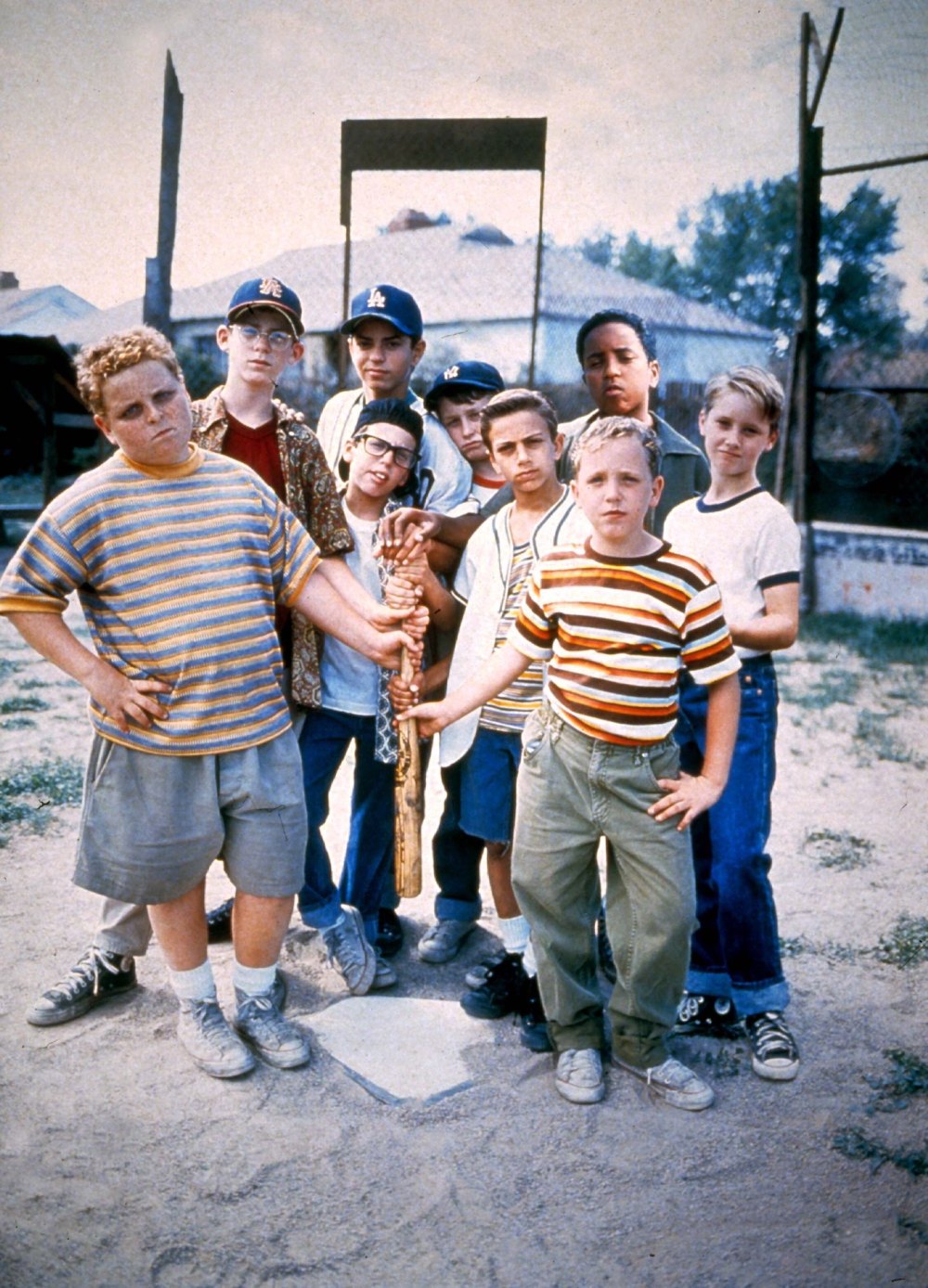
April 7, 1993: The Sandlot premieres, set in Los Angeles in 1962 -- but filmed in Salt Lake City. It's not the best baseball-themed movie with James Earl Jones in it, but it’s pretty good. Think of it as A Christmas Story, but in Summer, and after World War II.

"So what is the best baseball-themed movie with James Earl Jones in it?" Yer killin' me, Smalls. (It's Field of Dreams.)

Scott Smalls (played by Tom Guidry) is a 10-year-old boy whose mother (Karen Allen) has remarried after his father's death. The stepfather (Denis Leary) has a baseball signed by Babe Ruth, who, at this point, has been dead for 14 years, and last played 27 years earlier.

Scott finds a sandlot where a group of neighborhood kids play baseball. The leader -- in such a group, there's always a leader -- is Benjamin Franklin Rodriguez (Mike Vitar), who's so fast, he's known as Benny the Jet. He can hit, too.

Scott -- the other kids call him by his last name, Smalls -- has never played before, and they think he's a square: Michael Palledorous (Chauncey Leopardi), the center fielder whose horn-rim glasses give him the nickname "Squints," calls him "An L7 weenie!" with the letter L and the number 7 forming a square. But Benny teaches him how to play ball, and he gets the hang of it. But not the hang of all they do: The catcher, Hamilton "Ham" Porter (Patrick Renna) -- In baseball movies, why is the catcher always a fat kid? -- hears him say something unaware, and says the movie's most-quoted line: "Yer killin' me, Smalls."

Benny hits a ball over the fence, into a junkyard. Game over: They have no more balls, and none of the boys has 98 cents to buy a new one. (About $9.35 in 2022 money.) So Smalls goes home, and grabs the Babe Ruth ball. Benny also hits that ball into the junkyard. Smalls tells the boys he's in trouble, because the ball was his father's, and it was signed by Babe Ruth -- only he doesn't know who Ruth was. The other kids know, and they know Smalls is really in trouble.

Because, as Squints tells it, in "The Legend of The Beast," the junkyard is owned by Mr. Mertle, supposedly a mean old man with a giant dog known as "The Beast," which has eaten kids who went in there. The kids try several methods of getting the ball back, all of which fail, because the Beast sabotages them. The movie really does make the Beast out to be a merciless monster, like the shark in Jaws.

Finally, in a dream, Benny is visited by the ghost of Ruth (Art LaFleur), who tells him he can beat the Beast and get the ball back: "Just remember, kid: Heroes get remembered, but legends never die." The next day, Benny goes over the fence and gets the ball back -- but the Beast chases him. Benny vaults over the fence to escape -- and so does the beast, breaking the chain that had tied him to his doghouse.

We now get to see that this is just a dog. A big dog, to be sure, but not a monster. Finally, Benny gets back to the sandlot, and jumps over the fence, knocking it down onto the Beast, stopping him. The Beast isn't seriously hurt, and turns out to be a nice dog, who just wanted "his" ball back. And the ball is already badly chewed up, with Ruth's autograph barely even visible. It's worthless now.

The kids take the Beast back to Mr. Mertle (James Earl Jones), who turns out to be a blind old black man who had played in the Negro Leagues, before a beaning cost him his sight. He offers the boys a deal: Come over once a week to talk baseball, and he'll give Smalls a ball signed by Ruth, Lou Gehrig, and all the legendary 1927 New York Yankees. Smalls gives that ball to his stepfather, and explains it all, and is only grounded for a week.

According to the narration of the adult Smalls (voice of David Mickey Evans, who directed the film and co-wrote the script, physical form by Arliss Howard), the boys stayed together in the sandlot for 3 full Summers, with the Beast, who Mr. Mertle had actually named Hercules. Which made sense, since Hamilton had called Ruth "The Hercules of Baseball."

But that 1st Summer, 1962, would never be topped, for reasons that also included time by the pool, a 4th of July fireworks display, and the Pennant race that the hometown Dodgers would eventually lose to the arch-rival San Francisco Giants, despite Sandy Koufax pitching his 1st no-hitter and Maury Wills setting a new single-season record of 104 stolen bases (since broken).

Smalls gives an overview of what happened to the other kids. A pair of brothers went into real estate and "invented mini-malls," which is an anachronism, because they already existed in 1962. One boy served in Vietnam, and another went into the 1960s counterculture and "disappeared." Hamilton becomes a professional wrestler, calling himself "The Great Hambino," in Ruth's memory. The black kid, who was the team's pitcher, got as far as Class AAA ball, started a business, and had that business sponsor his son's Little League team, which he coaches and plays on the sandlot.

And Smalls becomes a broadcaster for the Dodgers, who signed Benny the Jet, and he (played as an adult by Mike's brother, Pablo Vitar) becomes a major league star. He now owns both balls: The chewed-up one he inherited from Mr. Mertle, and the '27 Yanks ball Mr. Mertle gave to him and he then gave to his stepfather. In the broadcast booth at Dodger Stadium, he keeps the balls on display, along with a picture of the sandlot boys.

The Sandlot became one of the most beloved baseball movies ever made. Unfortunately, a sequel was made, The Sandlot 2, in 2005, and 20th Century Fox, who made the original, thought so little of it that it went direct-to-video.

Set 10 years after the original, it is implied that Smalls' mother and stepfather had another kid right after the events of the first movie, and Johnnie meets the next generation of sandlot kids. The only returning character is Mr. Mertle, and this time, Hamilton's old insult at the local bullies' team's pitcher, "You throw like a girl!" gets turned on its head: Since this is 1972, the height of "second-wave feminism," an all-girls team challenges the boys.

Surely, Fox wouldn't have been dumb enough to make a 3rd movie. They were, and don't call me "Shirley." In 2007, The Sandlot: Heading Home went direct-to-video. Luke Perry played a 2004 player who gets knocked back to 1976, and relives his childhood at the Sandlot, where his coach is Squints, with a now-adult Leopardi reprising his role.

In 2018, a prequel film was announced. What were they going to do, set in 1947, with the backdrop of Jackie Robinson integrating baseball? The idea was dropped. In 2019, with Disney having bought 20th Century Fox out, a TV series was announced for Disney+, with the original cast, but nothing came of it. Perhaps it's for the best: The Sandlot was lightning in a bottle, a lucky break, a great moment that had its moment, and was going, going, gone.

*

April 7, 1993 was a Wednesday. These games were played in Major League Baseball:

* The New York Yankees lost to the Cleveland Indians, 4-2 at Cleveland Municipal Stadium. Albert Belle hit a home run off John Habyan in the bottom of the 8th inning, and that made the difference. Bernie Williams homered for the Yankees. Don Mattingly went 2-for-4.

* The New York Mets beat the Colorado Rockies, 6-1 at Shea Stadium. Bret Saberhagen outpitched Bruce Ruffin. Todd Hundley went 3-for-3 with an RBI.

* The Texas Rangers beat the Baltimore Orioles, 3-1 at Camden Yards in Baltimore. Doug Strange hit a home run in the top of the 11th inning. Cal Ripken went 2-for-4 with a walk.

* The Los Angeles Dodgers beat the Florida Marlins, 4-2 at Joe Robbie Stadium (now Hard Rock Stadium) in Miami Gardens, Florida.

* The Montreal Expos beat the Cincinnati Reds, 5-1 at Riverfront Stadium in Cincinnati.

* The Atlanta Braves beat the Chicago Cubs, 5-4 at Wrigley Field in Chicago. The Braves led 3-0 going into the bottom of the 8th, but the Cubs scored 2 in the 8th and 1 in the 9th. Ron Gant hit a 2-run home run in the top of the 10th, and the Cubs could only pull 1 run back in the bottom of the 10th.


* The Minnesota Twins beat the Chicago White Sox, 6-1 at the Metrodome in Minneapolis.

* The St. Louis Cardinals beat the San Francisco Giants, 6-2 at Busch Memorial Stadium in St. Louis. Barry Bonds went 2-for-4, including, after 176 for the Pirates, his 1st home run as a Giant. There would be more.

* The Boston Red Sox beat the Kansas City Royals, 3-2 at Royals Stadium (now Kauffman Stadium) in Kansas City. Frank Viola outpitched David Cone. George Brett, in his final season, went 1-for-3 with an RBI.

* The Philadelphia Phillies beat the Houston Astros, 6-3 at the Astrodome in Houston. Milt Thompson hit a bases-loaded double in the top of the 10th inning. This was the 1st sign that this might be a special season in Philadelphia.

* The Milwaukee Brewers beat the California Angels, 3-2 at Anaheim Stadium (now Angel Stadium of Anaheim).

* The Oakland Athletics beat the Detroit Tigers, 12-7 at the Oakland Coliseum. Rickey Henderson went 1-for-2 with 3 walks. Mark McGwire went 2-for-3 with a walk and 4 RBIs. For the Tigers, Tony Phillips went 4-for-5 against his former team, and Cecil Fielder had 5 RBIs including a grand slam.

* And the Toronto Blue Jays beat the Seattle Mariners, 2-0 at the Kingdome in Seattle. Al Leiter pitched 7 innings of 2-hit shutout ball, and 2 relievers finished a 3-hit shutout. Ken Griffey Jr. went 0-for-4.

Football was out of season. There were 3 games in the NBA:

* The Philadelphia 76ers beat the Washington Bullets, 98-90 at the Capital Centre in the Washington suburb of Landover, Maryland.

* The Orlando Magic beat the Charlotte Hornets, 109-96 at the Charlotte Coliseum.

* And the Indiana Pacers beat the Minnesota Timberwolves, 113-105 at the Target Center in Minneapolis. Rik Smits led all scorers with 34 points.

And there were 4 games in the Stanley Cup Playoffs:

* The New Jersey Devils beat their arch-rivals, the New York Rangers, 5-2 at the Brendan Byrne Arena at the Meadowlands.

* The Hartford Whalers beat the Ottawa Senators, 6-1 at the Ottawa Civic Centre (now the TD Place Arena).

* The Pittsburgh Penguins beat the Montreal Canadiens, 4-3 at the Civic Arena in Pittsburgh. Ulf Samuelsson scored the winning goal with 2:49 left in overtime.

* And the Vancouver Canucks beat the Edmonton Oilers, 5-4 at the Pacific Coliseum in Vancouver. Geoff Courtnall scored the winning goal with 3:27 left in overtime.

Saturday, March 26, 2022

March 26, 1979: Magic & Larry Make March Go Mad

March 26, 1979: The Camp David Accords are signed at the White House, by President Jimmy Carter, President Anwar Sadat of Egypt, and Prime Minister Yitzhak Rabin of Israel.

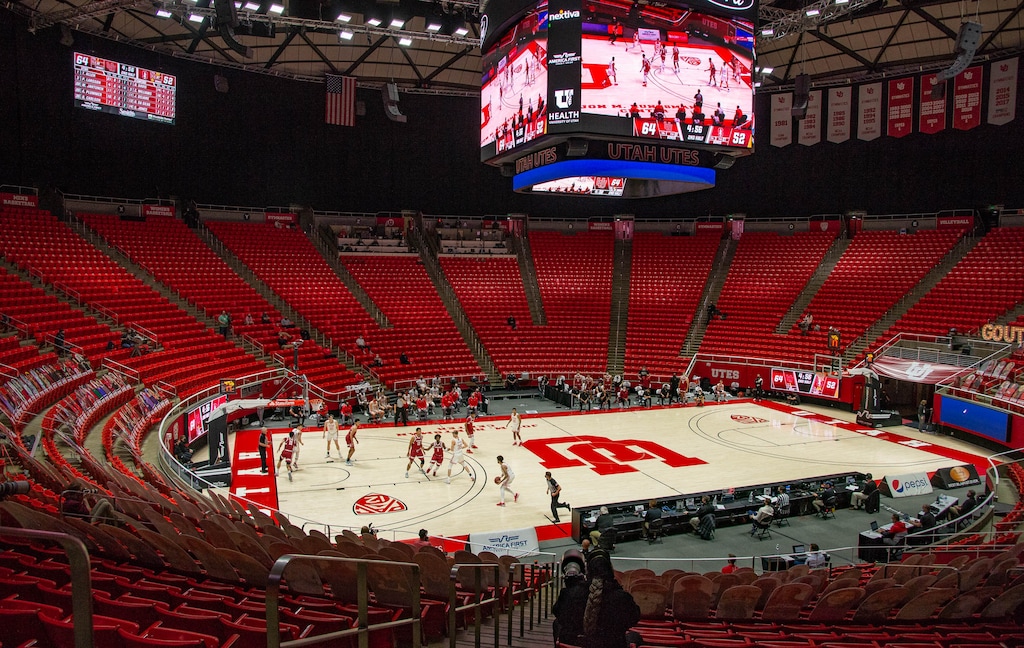
It is a momentous day for another reason, although hardly anybody knew it at the time. The NCAA held the Final of its Division I Basketball Tournament, at the Special Events Center at the University of Utah, in Salt Lake City.

As CBS college basketball analyst Seth Davis put it in the title of a book he wrote, it was When March Went Mad.
Built in 1969, the building is still used by the Utah Runnin' Utes, and has since been renamed the Jon M. Huntsman Center, in honor of the chemical magnate whose son, also named Jon Huntsman, would later serve as Governor of Utah and U.S. Ambassador to Russia.
Indiana State University, of Terre Haute, coached by Bill Hodges, undefeated at 33-0, Champions of the Missouri Valley Conference in both its regular season and its tournament, and in its 1st-ever Final Four (the term had officially been adopted the year before), took on Michigan State University, of East Lansing, coached by George "Jud" Heathcote, 25-6, Co-Champions of the Big Ten Conference (which then had no tournament), and in its 2nd Final Four, the 1st coming in 1957.

A crowd of 15,410 saw it live. About 40 million saw it on NBC, making it the most-watched basketball game ever to that point, college or pro -- and probably the best thing to happen to the Peacock Network all year. The announcers Dick Enberg, Billy Packer, and Al McGuire, who had won this game 2 years earlier in his final game as head coach at Milwaukee's Marquette University.

Why such a huge audience? Because of each team's respective stars. ISU, the Sycamores, had senior forward Larry Bird. Portland Trail Blazers star Bill Walton was so frequently hurt. Ernie DiGregorio had flamed out. And John Havlicek, Dave Cowens, Rick Barry and Pete Maravich were winding down their careers. So white basketball fans wanted to believe in a "Great White Hope." "The Hick from French Lick" seemed to be it.

But MSU, the Spartans, had Earvin Johnson, a sophomore guard nicknamed "Magic." Like Michael Jackson, he had a million-dollar smile -- at a time when the phrase "million-dollar" still meant something. Like Julius "Dr. J" Erving of the Philadelphia 76ers, he had amazing moves and a fabulous nickname. Unlike the moody Los Angeles Lakers star Kareem Abdul-Jabbar, he had a winning personality, and a name that was easy to spell and pronounce.

Both men wore Number 33. When Magic was drafted by the Lakers, Kareem had 33, so Magic switched to 32. Bird was able to keep 33 with the Boston Celtics.

The game was close for a little while, with Michigan State leading 9-8. But the Spartans were able to cover Bird tightly, enabling them to go on a 9-0 run, and led 37-28 at the half. In the 2nd half, they jumped out to a 50-34 lead. 

But Bird got the Sycamores on a good run, and with 10 minutes left (college basketball uses halves but not quarters, but this would have been the end of the 3rd quarter), Indiana State had climbed to within 52-46. The game was far from over.

There was no shot clock in college basketball at the time. For the last 5 minutes, Michigan State held onto the ball as much as they could, eating the clock, stalling. At one point, Johnson tried to inbound the ball, and Bird stole it -- presaging a famous play he would make for the Celtics against the Detroit Pistons in the 1987 NBA Playoffs. But since this was not done for the Celtics in the Boston Garden, the referee applied the rule book, and called Bird for a technical foul.

That was Indiana State's last real gasp. Michigan State won, 75-64. It was Indiana State's only loss of the season. Bird scored 19 points, but only made 7 of his 21 field goal (2-point) attempts. Johnson scored 24, shooting 8 of 15. Following his 29-point performance in the Semifinal win over Bob Weinhauer's University of Pennsylvania (still the last Ivy League team to reach the Final Four), Magic was named the Tournament's Most Outstanding Player.

Many observers credit this game with "saving basketball." This was ridiculous. As I said, the NBA already had Kareem, Dr. J and Walton. It also had Elvin Hayes and Moses Malone. It was not wanting for stars. Just for white stars.

Bird graduated, and the Celtics had traded up to acquire his draft rights, and he signed with them between the end of his eligibility and the deadline for the draft -- which would soon be banned by what became known as "The Larry Bird Rule." Johnson forewent his last 2 years of college eligibility, and made himself eligible for the 1979 NBA Draft. He was the top pick, as the Lakers had acquired the pick from the Utah Jazz.

Johnson would be key to the Lakers winning the NBA Championship in 1980 and 1982; Bird would be key to the Celtics doing so in 1981. They would face each other in 3 out of 4 NBA Finals: The Celtics won in 1984, the Lakers won in 1985 and 1987.

The Celtics also won in 1986, over the Houston Rockets; while the Lakers won in 1988 over the Detroit Pistons, and also lost Finals to the 76ers (with Erving and Malone) in 1983, the Pistons in 1989, and the Chicago Bulls (with Michael Jordan) in 1991, before the Magic Era came to a stunning end, with 3 letters none of us knew in 1979: HIV. Bird played on until 1992. Both of them, and Jordan, played on the U.S. "Dream Team" that won the Gold Medal at the 1992 Olympics in Barcelona, Spain.

The term "March Madness" had been used in high school basketball before 1979. But it began to be applied to the NCAA Tournament as well. The NCAA now owns the trademark.

As of March 26, 2022, the 1979 NCAA Tournament Final remains the most-watched college basketball game of all time, although its 40 million viewership has been surpassed by a few NBA games.

*

March 26, 1979 was a Monday. Baseball was in Spring Training. Football was out of season. No NBA games were scheduled. Nor were any games scheduled in the World Hockey Association.

Only 1 game was played in the NHL: The Buffalo Sabres beat the St. Louis Blues, 4-2 at the Checkerdome in St. Louis. At the time, St. Louis-based Ralston Purina owned the Blues, and they renamed the St. Louis Arena after their "Checkerboard Square" logo. The Arena regained its old name in 1980.

Thursday, February 24, 2022

February 24, 2002: Canada End Their Hockey Gold Medal Drought

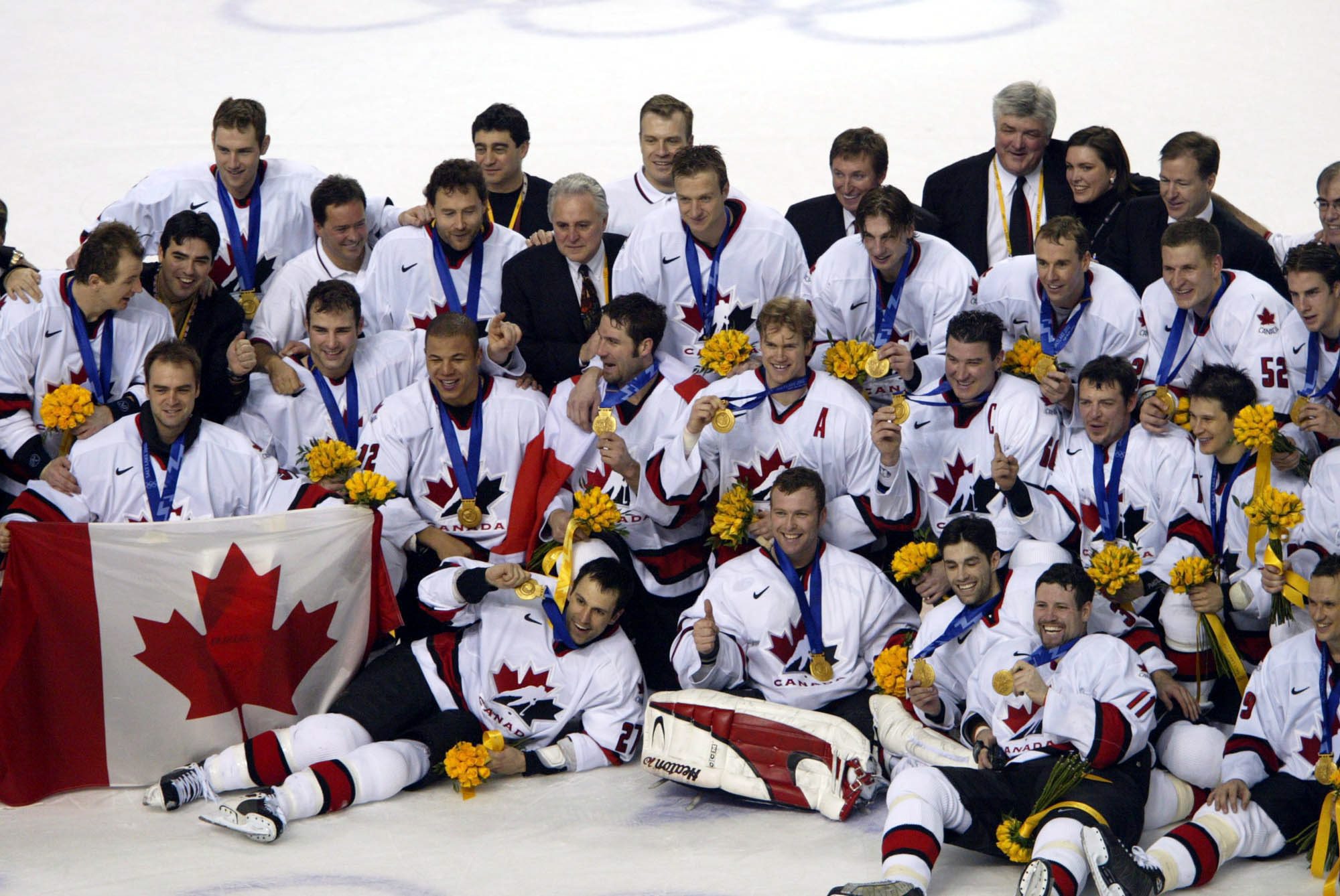
February 24, 2002: Canada wins the Gold Medal in the Winter Olympic hockey tournament, defeating the U.S. team, 5-2 at the E Center (now the Maverik Center) in the Salt Lake City suburb of West Valley City, Utah.

Jarome Iginla and Joe Sakic each score 2 goals. Herb Brooks, the coach who took the U.S. team to the Gold Medal in Lake Placid in 1980, was brought back, but could only lead them to the Silver Medal this time.

Canada's amateur players had fallen short against the "amateur" players of Eastern Europe, especially the Soviet Union and Czechoslovakia, since their last Gold Medal in 1952. And the efforts of NHL teams to sign the best amateur players before they could reach the Olympic team prevented the best players from leading them to Gold Medals.

Bobby Orr and Bobby Clarke in 1964; Guy Lafleur, Ken Dryden and Denis Potvin in 1968; Mike Bossy in 1972; Wayne Gretzky in 1976; Mario Lemieux, Patrick Roy and Steve Yzerman in 1980; Martin Brodeur and Eric Lindros in 1988 -- they weren't ready. Orr and Clarke in 1968; Lafleur, Dryden and Potvin in 1972; Bossy in 1976; Gretzky in 1980; Lemieux, Roy and Yzerman in 1984; Brodeur and Lindros in 1992 -- they were already professionals, and thus ineligible for the Olympics under the rules of the time.

In for Nagano, Japan in 1998, professionals were allowed to play. Canada put together perhaps the most talented group of hockey players ever assembled: Centers Gretzky, Yzerman, Lindros, Joe Nieuwendyk, Keith Primeau, Rod Brind'Amour; left wings Joe Sakic, Brendan Shanahan, Shayne Corson and Rob Zamuner; right wings Theoren Fleury, Trevor Linden and Mark Recchi; defensemen Ray Bourque, Scott Stevens, Al MacInnis, Éric Desjardins, Chris Pronger, Rob Blake, Adam Foote; and goaltenders Roy, Martin Brodeur and Curtis Joseph.

And it was a disaster. After eliminating the United States in the Quarterfinals -- and the American team, also loaded, were badly behaved, including trashing their hotel rooms -- Canada lost the Semifinal to the Czech Republic, which then beat Russia for the Gold Medal.

Gretzky retired as an active player in 1999, and was named general manager for the 2002 team. This team was younger on the average, but also better-coached: Pat Quinn had taken the Philadelphia Flyers and the Vancouver Canucks to the Stanley Cup Finals; Wayne Fleming and Jacques Martin had been assistants to Quinn; and assistant Ken Hitchcock had coached the Dallas Stars to the 1999 Stanley Cup.

The team they assembled to end a half-century's Gold drought was a mixture of '98 players and newcomers: Centers Lemieux, Yzerman, Lindros, Nieuwendyk, Michael Peca and Ryan Smyth; left wings Sakic, Shanahan, Paul Kariya and Simon Gagné; right wings Fleury, Owen Nolan and Jarome Iginla; defensemen MacInnis, Blake, Pronger, Foote, Scott Niedermayer, Eric Brewer and Ed Jovanovski; and goaltenders Brodeur, Joseph and Ed Belfour.

This time, the letdown came in the 1st game, when they were beaten 5-2 by Sweden. They beat Germany 3-2, and were held to a 3-3 tie by the Czech Republic, qualifying for the knockout stage by the skin of their teeth. Then they got serious, beating Finland 2-1 in the Quarterfinal, and Belarus 7-1 in the Semifinal. The Final would have them face a U.S. team, coming off a win over Russia on home ice that had their fans thinking it was 1980 all over again.

It was a weird situation for me. There were Martin Brodeur and Scott Niedermayer of the New Jersey Devils, wearing red and white; and Brian Leetch and Mike Richter of the New York Rangers, wearing red, white and blue. Both what I was used to. And yet, this was international hockey, so my usual rooting was reversed: I had to root for the American Rangers against the Canadian Devils.

Tony Amonte opened the scoring at 8:49 of the 1st period. But it was mostly Canada from then onward. Kariya scored at 14:50, and Iginla gave Canada the lead at 18:33.

Brian Rafalski, the only Devils player on the U.S. team, tied the game at 15:30 of the 2nd period, but Sakic gave Canada the lead back at 18:19. It was still only 3-2 Canada with 4 minutes left in regulation, but Iginla put the game away. With 1:20 left, Sakic put the cherry on the sundae.

Canada won, 5-2. It was their 1st Gold Medal in the sport they invented in 50 years. And it was the happiest moment for Canadian hockey since the 1972 Summit Series against the Soviet Union.

Canada beat the U.S. in the Final again in 2010, on home ice in Vancouver; and beat Sweden in the Final in Sochi, Russia in 2014.

*

February 24, 2002 was a Sunday. Baseball and football were out of season. The NHL had, naturally, suspended play for the length of the Olympic Games.

There were 8 games in the NBA:

* The New York Knicks lost to the Los Angeles Lakers, 107-91 at Madison Square Garden.

* The New Jersey Nets beat the Charlotte Hornets, 95-93 at the Continental Airlines Arena at the Meadowlands.

* The Miami Heat beat the Washington Wizards, 92-80 at the American Airlines Arena (now the Kaseya Center) in Miami.

* The Seattle SuperSonics beat the Toronto Raptors, 101-92 at the Air Canada Centre (now the Scotiabank Arena) in Toronto.

* The Cleveland Cavaliers beat the Orlando Magic, 111-96 at the Gund Arena (now the Rocket Arena) in Cleveland.

* The Milwaukee Bucks beat the Detroit Pistons, 89-82 at the Bradley Center in Milwaukee.

* The Atlanta Hawks beat the Denver Nuggets, 89-84 at the Pepsi Center (now the Ball Arena) in Denver.

* And the Phoenix Suns beat the San Antonio Spurs, 92-83 at the America West Arena (now the Mortgage Matchup Center) in Phoenix. Stephon Marbury of the Suns led all scorers on the day with 36 points.

Monday, January 3, 2022

January 4, 1896: Utah Is Admitted As the 45th State

January 4, 1896: Utah is admitted to the Union as the 45th State.

Utah was in the Rocky Mountains. It had been acquired as part of the Mexican Cessation of 1848, after the Mexican-American War. The year before, Brigham Young led the Church of Jesus Christ of Latter-Day Saints there. As a result, it has become known for being home to the Church, a.k.a. the Mormons.

The Mormons have led to Utah having traditionally conservative politics. The State's highest-ranking politician was George H. Dern, who was President Franklin D. Roosevelt's 1st Secretary of War. But the State hasn't voted for a Democratic nominee for President since 1964.

Salt Lake City is the State's capital, and easily its largest city, home to the NBA's Utah Jazz and Major League Soccer's Real Salt Lake. It is also home to the University of Utah. Utah State University is in Logan, and Brigham Young University is in Provo.

*

January 4, 1896 was a Saturday. Everett McKinley Dirksen was born. He became a longtime U.S. Senator from Illinois and Minority Leader from 1959 until his death in 1969.

Baseball was out of season. Football season had just ended. Basketball barely existed. There was 1 hockey game of note: The Ottawa Hockey Club, forerunners of the original Ottawa Senators, beat the Montreal Shamrocks, 2-1 at the Rideau Rink in Ottawa.

In English soccer, Woolwich Arsenal, which would evolve into the North London team I would one day support, beat Loughborough F.C., of Leicestershire in the West Midlands, 5-0 at the Manor Ground in Plumstead, then in Kent, now in South-East London.

December 31, 1999 & January 1, 2000: The Millennium

December 31, 1999:  The Millennium arrives. The people of planet Earth survived. At a terrible cost. But we hadn't destroyed ourselves. ...