Showing posts with label philadelphia. Show all posts

Friday, December 30, 2022

December 30, 1962: The Birth of NFL Films

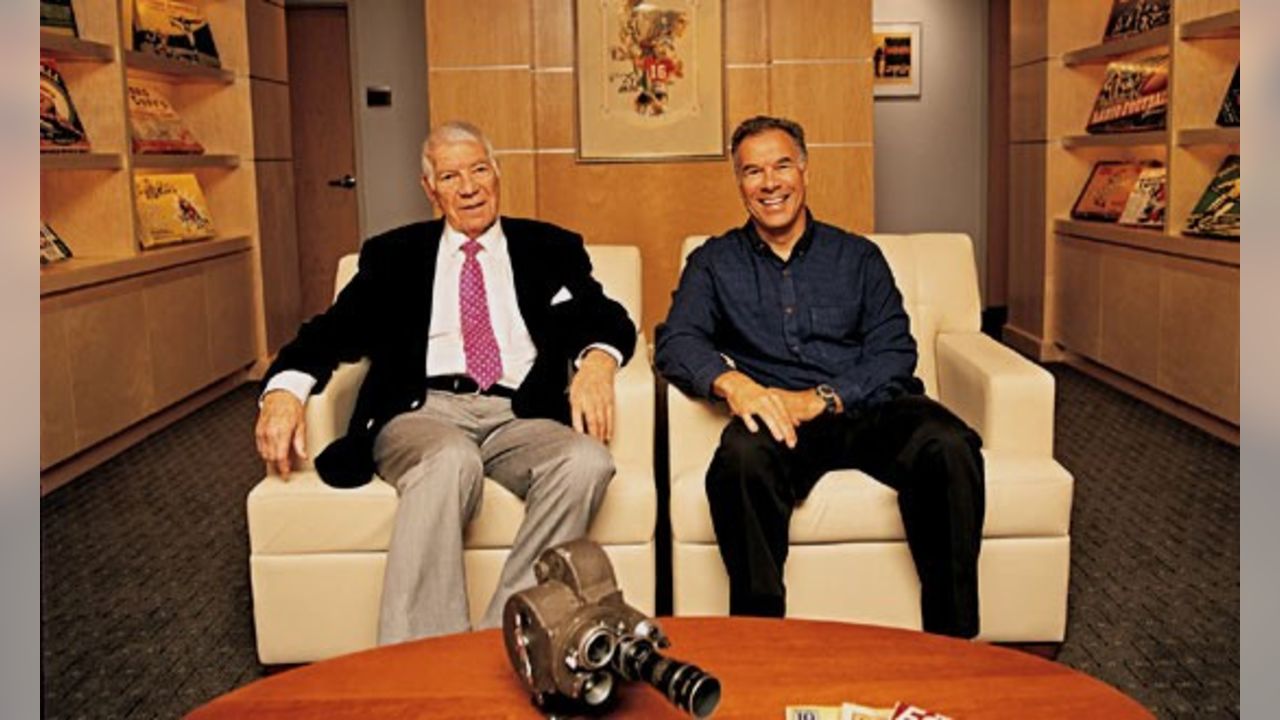
Ed Sabol (left), Steve Sabol,
and the camera that started it all.

December 30, 1962: The Green Bay Packers beat the New York Giants, 16-7 at Yankee Stadium in The Bronx. Aside from being bitterly cold, with New York dealing with the kind of weather that Green Bay was used to, the game itself was not especially remarkable.

But it was filmed by a crew from Blair Motion Pictures of Philadelphia. This was the birth of NFL Films. That company would be nearly as responsible for the League's growth in popularity as Commissioner Pete Rozelle and the various television network executives.

A son of Romanian Jewish immigrants, growing up in Blairstown, Warren County, New Jersey, Ed Sabol served in World War II, then sold topcoats. But he got a home movie camera as a wedding present. He used it to record his son Steve's high school football games. Then he formed a small film company, named for his daughter, Blair. In 1962, he won the rights to film the NFL Championship Game, by bidding $5,000. And even that was double the winning bid of the season before.

Rozelle was impressed by the resulting film, and in 1965, the NFL team owners bought Blair Motion Pictures, renaming it NFL Films. Each of the League's 14 team owners gave Ed $20,000, and the right to shoot all NFL games, and produce an annual highlight film for each team.

In 1967, NFL Films released a half-hour documentary, The Call It Pro Football, including footage of the game that was retroactively renamed Super Bowl I. It began with the narrator, Philadelphia newscaster John Facenda, saying, "It starts with a whistle, and ends with a gun. Sixty minutes of close-in action from kickoff to touchdown. This is pro football: The sport of our time." It was one of the earliest successes for the company.

In 1970, ABC began broadcasting Monday Night Football, and, during halftime, showed NFL Films' footage of the previous day's games. In 1971, the company began producing This Is the NFL, a Saturday show that showed highlights of the previous week's games, on CBS, featuring the network's lead announcing team, former New York Giants tackle and kicker Pat Summerall, and former Philadelphia Eagles cornerback Tom Brookshier. That program did such a great job of raising the NFL's profile, it inspired Major League Baseball to start Major League Baseball Productions, and start the series This Week In Baseball in 1977.

Three things stood out in NFL Films' broadcasts: The marching-band music, the use of slow motion to capture things like the spinning of a passed football in flight, and the narration of Facenda. Let the record show, however, that he never described the field in Green Bay as "the frozen tundra of Lambeau Field." That was later ESPN announcer Chris Berman, imitating him.

ESPN eventually began doing historical programs, featuring footage from NFL Films' vault at their massive headquarters in Mount Laurel, Burlington County, New Jersey, a suburb of Philadelphia; and interviews with surviving figures from those films, conducted by Steve Sabol.

These included Old Leather, from 1976, about stars of the 1920s, with Red Grange, Fritz Pollard, and Johnny "Blood" McNally among those alive and well enough to sit for interviews; and Their Deeds and Dogged Faith, from 1977, about some of the toughest figures in NFL history, including Chicago Bears (and NFL) founder George Halas.

Facenda died in 1984, his last film being the highlights of Super Bowl XVIII. Another Philadelphia broadcast legend, Phillies announcer Harry Kalas, took over until his death in 2009. They have used various announcers since.

Ed Sabol was elected to the Pro Football Hall of Fame as a "Contributor" in 2011. It seemed to be just in time: He was 95 years old and in a wheelchair; and Steve was dealing with brain cancer. Steve died the next year, at age 69. Ed lived until 2015, age 98. Steve was posthumously elected to the Hall in 2020.

*

December 30, 1962 was a Sunday. There were no other football games that day: The NCAA had college football bowl games scheduled for the day before and the day after, but not this day; and the AFL Championship Game was the week before, with the Dallas Texans (soon to be the Kansas City Chiefs) beating the Houston Oilers in double overtime.

There were 2 games played in the NBA. The Los Angeles Lakers beat the Detroit Pistons, 135-130 at Cobo Hall (now Huntington Place) in Detroit. Elgin Baylor scored 38 points. And the St. Louis Hawks beat the Chicago Zephyrs, 107-100 at the Chicago Coliseum. The failing Zephyrs moved the next season, becoming the Baltimore Bullets. They moved to Washington in 1973, and became the Washington Wizards in 1997.

There were 2 games played in the NHL. The New York Rangers and the Montreal Canadiens played to a 4-4 tie at the old Madison Square Garden. And the Chicago Black Hawks beat the Boston Bruins, 4-2 at the Chicago Stadium. The Toronto Maple Leafs and the Detroit Red Wings were not scheduled. 

Tuesday, December 20, 2022

December 21, 1918: The Death of Hobey Baker

December 21, 1918: Hobey Baker, America's 1st great hockey player, is killed in a plane crash. He was only 26 years old.

Hobart Amory Hare Baker was born on January 15, 1892 outside Philadelphia in Bala Cynwyd, Pennsylvania. His family was rich, and could have gotten him into any college he wanted. Instead of the nearby University of Pennsylvania, he chose Princeton University, helping them win National Championships in football in 1911, and in hockey in 1912 and 1914.

He graduated in 1914, and moved to New York where he went to work for J.P. Morgan Bank and helped the St. Nicholas Hockey Club win the national amateur championship in 1915.

In 1917, he enlisted in the U.S. Army Air Service, a precursor of the U.S. Air Force. By the time the Armistice was signed on November 11, 1918, he held the rank of Captain, and was commander of the 141st Aero Squadron.

On December 21, 1918, 40 days after the Armistice, and the day before he was set to return to America, he was test-piloting a plane in Toul, France, when the engine failed, and crashed nose-first. He was pulled out of the wreckage, but died in the ambulance.

In 1921, Princeton opened the Hobey Baker Memorial Rink. He was the only American among the 1st 9 inductees into the Hockey Hall of Fame in 1945. In 1975, he was elected to the College Football Hall of Fame. In 1980, the Hobey Baker Award was introduced, a hockey version of the Heisman Trophy.

*

December 21, 1918 was a Saturday. Born on this day were Kurt Waldheim, the Austrian diplomat who served as Secretary-General of the United Nations 1972 to 1981, and President of Austria from 1986 to 1992, but was later exposed as having committed war crimes during World War II; and Donald Regan, who served President Ronald Reagan as Secretary of the Treasury during his 1st term and White House Chief of Staff for the 1st half of his 2nd, before his resignation over the Iran-Contra scandal.

Baseball was in the off-season. Football season was also over, except for the Rose Bowl, which was an all-military affair: George Halas led the Great Lake Naval Training Station, north of Chicago, to a 17-0 win over the Mare Island Marines, based outside San Francisco, led by former Washington State quarterback Dick Hanley. Both teams went into the game undefeated. Hanley would coach Marine teams in World War II. Halas, of course, went on to found the team that became the Chicago Bears, and co-found the NFL.

There was no serious professional basketball league. But the NHL season opened on this date, with 1 game: The Ottawa Senators beat the Montreal Canadiens, 5-2 at the Jubilee Arena in Montreal.

Sunday, December 18, 2022

December 18, 1926: Philadelphia's 1st NFL Championship

Henry "Two-Bits" Homan

December 18, 1926: The Frankford Yellow Jackets can only manage a 0-0 tie against the Pottsville Maroons, despite being at home at Frankford Stadium in Northeast Philadelphia. But it's enough to win them the NFL Championship.

The Yellow Jackets were founded in 1899, as the Frankford Athletic Association. This was a community-based non-profit organization of local residents and businesses. In keeping with its charter, which stated that "all profits shall be donated to charity," all of the team's excess income was donated to local charitable institutions. The beneficiaries of this generosity included Frankford Hospital, the Frankford Day Nursery, the local Boy Scouts, and the local American Legion Post 211. The officers of the Association never received a salary or compensation for their work on behalf of the team.

In 1922, Frankford absorbed the Philadelphia City Champion team, the Union Quakers, and won the unofficial City Championship. Over the course of the 1922 and '23 seasons, they compiled a 6-2-1 record against teams from the National Football League. The NFL thus offered them a franchise for 1924, making them the 1st Pennsylvania-based team in the League.

They played at Frankford Stadium, a small stadium located at 6101 Frankford Avenue, also bordered by Devereaux Avenue, Hawthorne Street and Benner Street. It was 8 miles northeast of City Hall.
They were coached by Guy Chamberlin. The Nebraska native, just 32 years old, also played end on both offense and defense. He is the only man to play on 4 consecutive NFL Champions: The 1921 Chicago Staleys (who became the Bears the next season), the 1922 and '23 Canton Bulldogs, and the 1924 Cleveland Bulldogs. So the Jackets made it 5 in 6 years. And he was player-coach for all but the 1st of these.

His best player was his smallest: At 5-foot-5 and 150 pounds, quarterback and safety Henry Homan was known as "Two-Bits." He only played 6 seasons in the NFL, all for Frankford, but there are those who believe there is an unfair bias against the pioneer players of the NFL when it comes to voting for the Pro Football Hall of Fame, and that Homan should be among the players elected. If he ever is, he will be the smallest player in it.

They were immediately one of the NFL's better teams, going 11-2-1 in 1924, to finish 3rd; and 13-7 in 1925, to finish 6th. They began the 1926 season on September 25, with a 6-6 home tie against the Akron Indians. To get around Pennsylvania's "blue laws," they often scheduled back-to-back games: A home game on a Saturday, and an away game against the same team the next day, Sunday. They hosted the Hartford Blues, beating them 13-0; then went to Hartford, and beat them again, 10-0.

They beat the Buffalo Rangers, 30-0 at home, then swept a home-and-home with the New York Giants, winning each game by a 6-0 score. They beat the Canton Bulldogs, 17-0 at home. Then came a home loss to the Providence Steam Roller (no S on the end), 7-6, followed the next day, Halloween, by a 6-3 win in Providence.

The loss to Providence would prove to be the only one of the season. They beat the defending NFL Champions, the Chicago Cardinals, 33-7 at Frankford. They beat the Duluth Eskimos, 10-0 at home; then the Dayton Triangles, 35-0 at home. On November 25, Thanksgiving, they hosted the Green Bay Packers, and won, 20-14. Two days later, they beat the Detroit Panthers, 7-6 at home.

The demand for tickets was too much for Frankford Stadium, and so their December 4 game with the Chicago Bears was moved to Shibe Park, home of baseball's Philadelphia Athletics. (It was later home to the Phillies and the Eagles as well, and renamed Connie Mack Stadium.) The Jackets won, 7-6, and that game effectively decided the title.. They avenged their loss again by beating the Steam Roller, 24-0 at home, before closing the season with the tie with Pottsville.

The day after that game, the Bears and the Packers played to a 3-3 tie at Wrigley Field in Chicago, but it wouldn't have mattered: The Yellow Jackets were 14-1-2, while the Bears were 12-1-3, and a win would only have brought them to 13-1-2. Under the format that was put in place in 1933, the Jackets and the Bears would have met somewhere in Philadelphia in the NFL Championship Game. (This being an even-numbered year, the Eastern Division Champions would have hosted.) But the Championship Game hadn't been developed yet, and the NFL was still a single-division League, so the Jackets were the Champions. Philadelphia had its 1st NFL title.

Guy Chamberlin was offered more money by the Cardinals, and so he left for them for 1927. The Jackets fell to 6-9-3 in 1927. They bounced back, going 11-3-2 in 1928, to finish 2nd; and 10-4-5 (that's right, 5 ties) in 1929, to finish 3rd.

Then came the Great Depression. The Jackets were just 4-13-1 in 1930. On July 27, 1931, Frankford Stadium burned down. Retail shops are now on the site. For the 1931 season, the team played their 1st 2 home games at Municipal Stadium (later renamed John F. Kennedy Stadium), and their last 2 at the Phillies' Baker Bowl, and finished only 2-6-1. Their last home game was, appropriately, on Halloween, a 14-0 loss to the Portsmouth Spartans. Their farewell was on November 8, a 13-0 loss to the Giants at the Polo Grounds. The Frankford Athletic Association turned ownership of the team back over to the League.

Under the belief, confirmed in November 1933, that Pennsylvania would legalize professional sports on Sundays, former University of Pennsylvania teammates and assistant coaches Bert Bell and James Ludlow "Lud" Wray bought the rights to the NFL franchise in Philadelphia; while Art Rooney did so for Pittsburgh, which had not previously had one. Rooney named his team the Pirates, and renamed them the Steelers in 1940. Bell and Wray named their team the Eagles, for the "Blue Eagle" logo of the National Recovery Administration, and the original colors were blue and yellow, before switching to green and white in 1935.

Contrary to popular belief, although playing in the same city, and their 1st home being Baker Bowl, the Yellow Jackets' last home, the Eagles are not the same franchise as the Yellow Jackets: Bell and Wray had bought only the right to operate an NFL team in Philadelphia, not the team itself. They never approached the Frankford Athletic Association with an offer to buy the Yellow Jackets' name or any of the team's assets, and no player on the '33 Eagles had ever played for the Yellow Jackets. 

The Eagles won the NFL Championships for the seasons of 1948, 1949, 1960 and 2017, but they properly do not claim the Frankford title of 1926, any more than the Philadelphia Phillies claim the Pennants and World Series won by the Athletics, or the Philadelphia 76ers claim the 1947 and 1956 NBA titles won by the Philadelphia Warriors, or MLS' Philadelphia Union claim the 1973 NASL title won by the Philadelphia Atoms.

*

December 18, 1926 was a Saturday. There was 1 other football game, a college game: The University of Utah beat the University of Hawaii, 17-7 at Honolulu Stadium. That ballpark was brand-new, and UH would play there until the opening of Aloha Stadium in 1975, while the Pacific Coast League's Hawaii Islanders played there from 1961 to 1975, before also moving to the new stadium. It was demolished in 1976.

Baseball was out of season, and the NBA hadn't been founded yet. There were 4 games in the NHL:

* The New York Americans lost to the Chicago Black Hawks, 4-2 at the Chicago Coliseum.

* The Ottawa Senators and the Montreal Maroons played to a tie, 0-0 at the Montreal Forum.

* The Boston Bruins beat the Pittsburgh Pirates 3-0 at the Boston Arena (now the Matthews Arena, used by Northeastern University, the oldest remaining arena in the country).

* The Montreal Canadiens beat the Toronto Maple Leafs, 2-0 at the Mutual Street Arena in Toronto.

* And the New York Rangers and the Detroit Cougars -- forerunners of the Red Wings -- were not scheduled.

Thursday, December 15, 2022

December 15, 1968: Philadelphia Eagles Fans Boo Santa Claus

This photograph is alleged to show Frank Olivo
at the game in question, before the pageant.

December 15, 1968: Philadelphia Eagles fans boo Santa Claus. You've heard of the legend. And this one is true.

In 1960, the Eagles won the NFL Championship, under head coach Buck Shaw and quarterback Norm Van Brocklin. They both retired. But Van Brocklin retired as a player because Eagle management had led him to believe he would be named the new head coach, with his backup, Sonny Jurgensen, becoming the new starting quarterback.

Instead, Nick Skorich was named the new head coach. Van Brocklin was offered the head job of the expansion Minnesota Vikings, and he took it. Skorich was not a good coach, and was fired after 3 seasons.

In 1964, former Notre Dame coach Joe Kuharich was named Eagles head coach and general manager, and made one of the worst trades in football history, sending Jurgensen to the Washington Redskins for Norm Snead. Jurgensen was a carouser, and the moralistic Kuharich hated that. Snead was a straight arrow. With the Redskins, Jurgensen continued his Hall of Fame career, throwing the most touchdown passes of any quarterback in the 1960s, 207 -- more than Johnny Unitas, more than Bart Starr, and more than Norm Snead with 153. The quarterback with the most interceptions in that decade? You may have guessed: Snead, with 174.

As recently as 1966, the Eagles had finished 9-5, 2nd in the NFL Eastern Division, a game and a half behind the 10-3-1 Dallas Cowboys. But age and injuries caught up with them, and Kuharich, regarded by Notre Dame fans as one of the worst coaches they ever had, was in over his head. In 1967, they fell to 6-7-1. In 1968, the Eagles lost their 1st 11 games, and fans began wearing buttons reading "JOE MUST GO" to games.

At least the Eagles looked like they were going to come out of their worst season ever with the top pick in the 1969 NFL Draft. Except they won 2 straight, beating Detroit away and New Orleans at home. So they weren't even going to get the chance to draft a running back who looked like he was headed for the Heisman Trophy and a shot at back-to-back National Championships for his school. They would have to settle for the 2nd pick.

So as 54,530 fans, about 13,000 short of a sellout, filed into Franklin Field at the University of Pennsylvania -- forming a dichotomy of the NFL's most blue-collar fan base watching their team play its home games at an Ivy League university's stadium -- on December 15, 1968, to see their team close the season by taking on the Vikings. (Van Brocklin had since moved on, to the Atlanta Falcons.)

Eagle fans were in one of their occasional very nasty moods. This was not helped by the fact that there was a snowstorm the night before, and that the stadium maintenance crew did a poor job of clearing the snow, and that it was about 20 degrees Fahrenheit at gametime.

It was the last game of the regular season, and it was 10 days before Christmas. A short Christmas pageant was scheduled for halftime. Now, part of the legend that everybody gets wrong is believing that, perhaps confusing this story with the parade at the start of the movie Miracle On 34th Street, the man hired to play Santa Claus was drunk. The truth was, the hired Santa couldn't get his car out of the snow, and called ahead to say he couldn't make it.

Bill "Moon" Mullen was the Eagles' entertainment director. He figured, someone in the stands must have come dressed as Santa Claus, and could be hired for the pageant. He figured correctly: Frank Olivo was a 20-year-old college student, and for a few years now, even as a teenager, had gone to the last game of the season dressed as Santa.

The game began, and the Eagles took a 7-0 over the Vikings, who tied the game 7-7 going into halftime. Then the pageant began. The Eagle cheerleaders were dressed as elves. The idea was that "Santa" would appear on a large motorized float "pulled" by 8 life-size fiberglass reindeer. But, typical Eagles luck, the float got stuck in the mud. So Olivo had to walk out onto the field with his "bag of toys" (actually filled with locker room towels) slung over his shoulder, as a record of "Here Comes Santa Claus" played over the loudspeaker.

Fans saw what was obviously not a jolly old fat man with a beard and a costume that at least looked authentic, but a kid in a fake beard and a bad copy of a Santa suit. They booed. He tried to mollify them by throwing candy canes. The canes didn't get anywhere near the stands. The fans responded by throwing snowballs -- Olivo later estimated being hit by over 100 of them -- and other objects, such as beer bottles and even hoagies.

Olivo later said that he understood, even telling one fan, "You're not getting anything for Christmas!" Was he at least paid for his trouble? No, he didn't get any money, but the Eagles did give him football-shaped cufflinks and a tie tack. As for the game, the Eagles lost, 24-17, ensuring them a 2-12 finish and the 3rd pick in the Draft.

The Philadelphia newspapers mentioned the incident the next day, but not with big headlines. And there is no surviving footage of the incident: With videotape being expensive, CBS just taped over their broadcast, so we don't even know if they showed the incident, or just the game; and NFL Films didn't capture it, either.

Indeed, this incident might have remained a legend, with nothing to back it up, had it not been for one person: Howard Cosell. At the time, ABC aired a Weekend Report after the Sunday night local news, and Cosell gave a sports round-up. He didn't have footage of the game, let alone the incident, but he mentioned it, and people all over the country heard about it.

In 1970, ABC began airing Monday Night Football. And every time the Eagles were on it, and every time the ABC cameras caught a fan at a game wearing a Santa costume (regardless if the Eagles were one of the teams), Cosell would mention the time the Eagles fans booed Santa Claus.

Incidents among Philadelphia sports fans are legion, but most are one person's (or group's) word against another's. The Philadelphia Catholic League includes some suburban high schools, including Archbishop Wood of Bucks County and Monsignor Bonner of Delaware County. That's a nasty rivalry. Legend has it that, after years of basketball games hearing Wood fans chant, "We smell B-O -- N-N-E-R!" the Bonner fans finally waited for them to chant, "We smell B-O" and immediately chanted back, "It's your mother!" I have no doubt that this actually happened, but there's no footage.

Likewise, there's no surviving footage of the 1968 Philadelphia Eagles Christmas Pageant, so the only people who saw a man dressed as Santa Claus getting booed and hit with snowballs were the people watching in the stadium and on TV at the time. But there's enough testimony to back it up to know that it happened.

Kuharich was indeed fired after the 1968 season. But the Eagles still didn't make the Playoffs again until 1978, or the Super Bowl until the 1980 season.

And that Number 3 draft pick they "earned" for 1969? They selected Leroy Keyes, a running back from Purdue University. He had a decent rookie season for the Eagles, but didn't play much in 1970. He was moved to strong safety and had 2 good seasons there, before being traded to the Kansas City Chiefs, and playing his last pro down at age 26. He went back to Purdue, working in its athletic department, and died of cancer in 2021, at age 74.

The 2nd pick in that draft, that the Eagles also couldn't get? Van Brocklin and the Falcons used it on George Kunz, who had helped Notre Dame win the 1966 National Championship. He played 12 seasons in the NFL, making 7 Pro Bowls, and became a successful lawyer. As of December 15, 2022, he is still alive, at 75.

And the Number 1 pick? Well, he did win the Heisman, after finishing 2nd the year before. But he fell 1 game short of making it back-to-back National Championships for the University of Southern California. The Buffalo Bills drafted him. His name was Orenthal James Simpson. The Eagles organization has much for which to answer, but no Eagles fan will ever have to explain to his children that the Eagles once had O.J. Simpson.

In 1969, the Eagles offered Frank Olivo the chance to reprise his performance, under better conditions. He declined, but continued to go to games as the team moved to Veterans Stadium in 1971 and Lincoln Financial Field in 2003. He remembered:

It happened years ago. You know, time to move on... It went away for a while, but, every now and then, you hear some guy on TV who only knows Philly for the cheesesteaks and the Liberty Bell talk about the time fans threw snowballs at Santa. It was cool to hear it back then, when it went national, and Howard Cosell is saying your name on TV. But, today, when you hear it, it's like, "Shut up already."

In 2003, the Philadelphia 76ers tried a publicity stunt, gathering the most people dressed as Santa Claus in one location, and Olivo participated -- presumably, wearing a better costume. All this time, he had kept going to Eagles games, but had stopped wearing the Santa suit at the last game after the '68 edition. Finally, in 2009, he did it again, and was cheered.
In 2015, after a longtime battle with heart trouble, Frank Olivo died at age 66. He did not get to see the Eagles finally win the Super Bowl in 2018.

UPDATE: It says something about the Eagles' operations that, from between their 1960 NFL Championship and their 1980 NFC Championship, they have only elected the following figures to their team Hall of Fame through the 2025 season: Jim Ringo, Bob Brown, Ollie Matson and Bill Bradley (not to be confused with the basketball star who was later elected to the U.S. Senate). And Ringo, Brown and Matson were elected because they were elected to the Pro Football Hall of Fame in Canton, Ohio, and the Eagles have a rule that every player they have who gets elected to that gets elected to their team Hall of Fame, even if their best years were elsewhere.

Brown and Bradley have also been elected to the Philadelphia Sports Hall of Fame.

*

December 15, 1968 was a Sunday. These other games were played in the NFL that day:

* The New York Giants lost to the Dallas Cowboys, 28-10 at Yankee Stadium.

* The Washington Redskins beat the Detroit Lions, 14-3 at District of Columbia Stadium in Washington. (It was renamed Robert F. Kennedy Memorial Stadium the next year.)

* The San Francisco 49ers beat the Atlanta Falcons, 14-12 at Atlanta Stadium. (It was renamed Atlanta-Fulton County Stadium in 1975.)

* The New Orleans Saints beat the Pittsburgh Steelers, 24-14 at Tulane Stadium in New Orleans.

* The Green Bay Packers beat their arch-rivals, the Chicago Bears, 28-27 at Wrigley Field in Chicago.

* The football version of the St. Louis Cardinals lost to the Cleveland Browns, 27-16 at Busch Memorial Stadium in St. Louis.

* And the Baltimore Colts beat the Los Angeles Rams, 28-24 at the Los Angeles Memorial Coliseum.

In the American Football League:

* The New York Jets beat the expansion Cincinnati Bengals, 27-14 at Shea Stadium.

* The Miami Dolphins beat the Boston Patriots, 38-7 at the Orange Bowl in Miami.

* The Houston Oilers beat the Buffalo Bills, 35-6 at the Astrodome in Houston.

* The Kansas City Chiefs beat the San Diego Chargers, 40-3 at San Diego Stadium.

* And the Oakland Raiders beat the Denver Broncos, 33-27 at the Oakland Coliseum.

There were 3 games played in the NBA that day:

* The New York Knicks lost to the Philadelphia 76ers, 110-104 at The Spectrum in Philadelphia. There is no record of anybody at this game being hit by a snowball or anything else.

* The Cincinnati Royals beat the expansion Phoenix Suns, 119-101 at the Cincinnati Gardens.

* And the Los Angeles Lakers beat the Seattle SuperSonics, 115-114 at The Forum outside Los Angeles in Inglewood, California.

There were 3 games in the American Basketball Association:

* The New York Nets lost to the Houston Mavericks, 105-103 at the Sam Houston Coliseum in Houston. The Mavericks became the Carolina Cougars in 1969 and the Spirits of St. Louis in 1974, before folding in 1976.

* The Kentucky Colonels beat the Miami Floridians, 123-102 at Freedom Hall in Louisvlle. Neither team was among the ABA teams admitted to the NBA in 1976.

* And the Denver Rockets beat the Los Angeles Stars, 113-110 in overtime at the Auditorium Arena in Denver. The Rockets became the Denver Nuggets in 1974. The Stars became the Utah Stars in 1970, won the ABA title in 1971, reached the Finals again in 1974, and folded in 1976, after they, unlike the Nets, Nuggets, Indiana Pacers and San Antonio Spurs, were denied admission into the NBA.

There were 5 games played in the NHL:

* The New York Rangers lost to the Philadelphia Flyers, 3-1 at the new Madison Square Garden.

* The Boston Bruins beat the Pittsburgh Penguins, 5-3 at the Boston Garden.

* The Detroit Red Wings beat the Minnesota North Stars, 5-2 at the Olympia Stadium in Detroit.

* The Chicago Black Hawks beat the Oakland Seals, 7-4 at the Chicago Stadium.

* The St. Louis Blues beat the Los Angeles Kings, 3-1 at the St. Louis Arena.

* And the Montreal Canadiens and the Toronto Maple Leafs were not scheduled.
Sunday, December 11, 2022

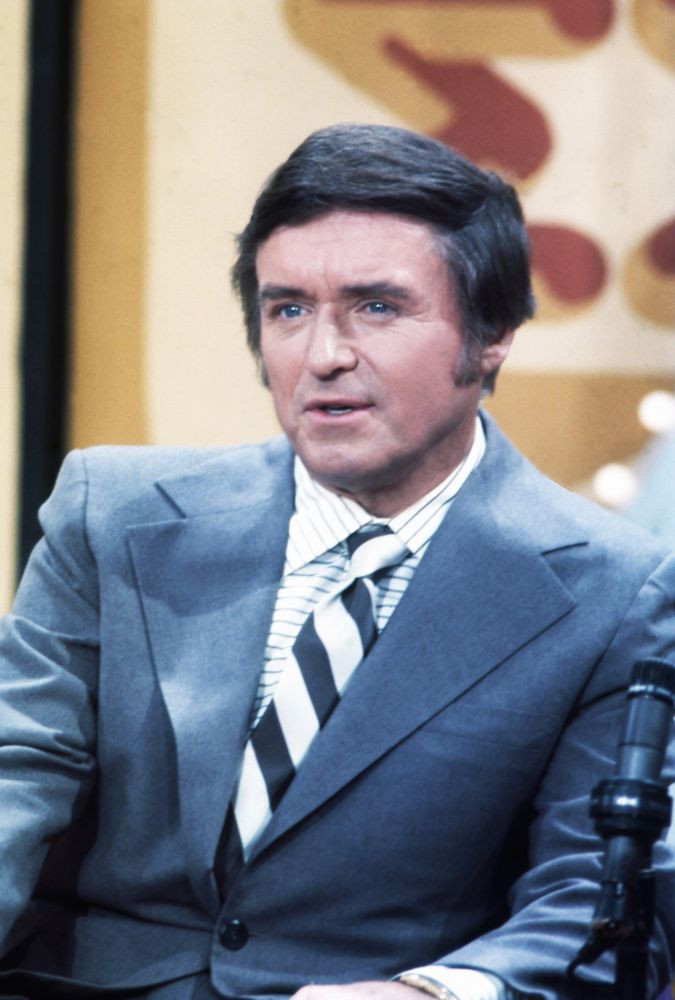
December 11, 1961: “The Mike Douglas Show” Premieres

December 11, 1961: The Mike Douglas Show premieres, at the studio of KYW-Channel 3 in Cleveland, owned by Westinghouse Broadcasting. It became one of America's top TV talk shows.

In September 1963, the show was syndicated to 4 other television stations owned by Westinghouse: WBZ-Channel 4 in Boston, WJZ-Channel 13 in Baltimore, KDKA-Channel 2 in Pittsburgh, and KPIX-Channel 5 in San Francisco. Less than 1 year later, the show had expanded to a total of 27 cities.

In August 1965, the show moved from Cleveland to Philadelphia to a small basement studio located in the KYW-TV building at 1619 Walnut Street in Center City Philadelphia. At that time, Westinghouse began syndicating the show nationally, bought Philadelphia's Channel 3, and gave it the KYW call letters. (Cleveland's Channel 3 became WKYC.) In July 1972, the show moved to a new studio in the newly constructed KYW-TV studios at 5th and Market Streets in Center City.

In 1978, the show was moved to CBS Television City in the Los Angeles suburb of Burbank, California. There, it ran until November 30, 1981.

Douglas would do a week's worth of shows with a different guest host every week. In early February 1972, his guest hosts for a week were John Lennon and Yoko Ono, and that's what The Mike Douglas Show is best known for today.

Mike Douglas' real name was Michael Delaney Dowd Jr. Michael Douglas, whose birth name was Michael Kirk Douglas but whose father was born Issur Danielovitch, appeared on the show 9 times from 1976 to 1980. And Michael Keaton, whose real name is Michael John Douglas, appeared on the show 5 times in 1979 and 1980. Early in his career, he told both Mike Douglas and Michael Douglas, "I had to change my name because of you!"

Douglas died in 2006, not long after publishing a memoir titled I'll Be Right Back, in which he wrote that the TV industry would like to dedicate a statue to the inventor of the infomercial: “Imagine: Half an hour of advertising, without all that pesky programming.”  

*

December 11, 1961 was a Monday. Steve Nichol, later to star in soccer for Liverpool Football Club, was born.

Baseball was out of season. Football was in midweek: There would be no Monday Night Football for another 9 years. And no games were scheduled for the NHL.

There were 2 games in the NBA. The Cincinnati Royals beat the Chicago Packers, 133-117 at the University of Dayton Fieldhouse in Dayton, Ohio, a "home game" for the Royals, who got 32 points from Oscar Robertson.

Yes, the Chicago Packers. I'm guessing the name didn't draw a lot of Bears fans. For the 1962-63 season, they became the Chicago Zephyrs. That didn't help. For the 1963-64 season, they became the Baltimore Bullets, and are now the Washington Wizards. The Royals are now the Sacramento Kings.

And the Los Angeles Lakers beat the St. Louis Hawks, 132-119 at the Los Angeles Memorial Sports Arena. Elgin Baylor scored 52 points.

Friday, December 9, 2022

December 10, 1876: New York & Philadelphia Are Kicked Out of the National League

William Hulbert.
I looked for photos of the teams' operators,
William Cammeyer of New York and Al Wright of Philadelphia,
but it appears none of either survive.

December 10, 1876: The teams representing New York, the biggest city in the country, and Philadelphia, the 3rd-biggest, are kicked out of the National League, the only major league in the sport, or in any sport in North America, at the time.

The NL had begun play in 1876, with 8 teams. Going east to west, they were: The Boston Red Caps, the Hartford Dark Blues, the New York Mutuals, the Philadelphia Athletics, the Cincinnati Reds, the Louisville Grays, the Chicago White Stockings and the St. Louis Brown Stockings. (At this point, coming up with a clever name for your team was not necessary.)

The 1st game was played on April 22, at the Jefferson Street Grounds in Philadelphia. Boston beat Philadelphia, 6-5. There was a decent Pennant race, with Chicago finishing 6 games ahead of both Hartford and St. Louis, 15 ahead of Boston (who had won the last 4 titles in the National Association, and would win the next 2 titles in the NL), 22 ahead of Louisville, 26 ahead of New York, and 34 1/2 ahead of Philadelphia.

It was not treated as odd that the top 2 teams were Chicago, owned by NL founder William Hulbert; and Hartford, owned by the NL's President, Morgan Bulkeley, a Hartford banker who would later be elected Mayor of Hartford, and as Connecticut's Governor and U.S. Senator. But it was a bit odd that New York and Philadelphia hadn't done well.

The New York Mutuals had been founded in 1857, and won more games recognized as "official" than any other team in 1863 and 1864. While the Boston Red Stockings (who became the Red Caps, and went through several name changes before settling in 1912 on "Braves") dominated the National Association, the "Mutes" finished 3rd in 1872 and 2nd in 1874.

They played their home games not in Manhattan, but in Brooklyn, which would be a separate city until 1898. Their owner, William Cammeyer, had built the first enclosed baseball facility, the Union Grounds, in the Williamsburg section of Brooklyn, in 1862, and the Mutes continued to play there.

Like the Mutes, the Philadelphia Athletics were considered one of the top teams in baseball's amateur era, before professionalism came in 1869. They had been founded in 1860, won more games than any other team in 1867, and finished 2nd in 1865, 1866 and 1868. In 1871, they won the NA's 1st Pennant.

But the depression that began with the Panic of 1873 hit baseball hard. NA teams couldn't afford to complete their schedules by going on roadtrips. This was a major reason that Hulbert founded the NL: He wanted teams to stick to their schedules, to make the Pennant race more honest. Chicago beat Hartford at home, 7-6, on September 26, to clinch the Pennant. (As early as 1858, the team with the best overall record would be permitted to fly a flag, or "pennant," reading, "CHAMPIONS" at their ballpark, and the name stuck.)

On September 11, 1876, Al Wright, manager of the Athletics, informed the NL office that they could not afford to make their last Western roadtrip, to Chicago and St. Louis. He did, however, have a backup officer: The White Stockings and Brown Stockings could come east, play additional games in Philadelphia, and take a larger than normal portion of the gate receipts, so they could raise enough money to finish their schedule. The NL denied this reasonable suggestion. On September 16, the Mutuals announced that they couldn't afford to make their last roadtrip, either.

And so, on December 10, the NL held its Winter Meetings in Cleveland. After Bulkeley declined to run for re-election, Hulbert was elected President. He immediately moved for the expulsion of the Mutuals and the Athletics from the League. In spite of the role each already had in baseball's relatively short history, the other team owners did Hulbert's bidding.

It would be 1883 before both cities returned to the NL, with the teams that would become known as the New York Giants and the Philadelphia Phillies. By the start of the 1878 season, only 2 of the original 8 teams would be left: Boston and Chicago. But those 2 teams still exist, as the Atlanta Braves and the Chicago Cubs.

*

December 10, 1876 was a Sunday. The NL forbid games on Sundays, but, apparently, they were more than willing to make decisions affecting any and all League teams on the day. Since basketball did not yet exist, hockey barely did, and college football, itself in its early days, did not play on Sundays, there were no scores on this historic day.

Thursday, December 1, 2022

December 1, 1906: "Anchors Aweigh" Is First Played

The original sheet music, with a photo of Zimmerman

December 1, 1906: The Army-Navy football game is played, at the original Franklin Field in Philadelphia. Navy win, 10-0. As their team took the field before the game, the Navy's marching band played a new song: "Anchors Aweigh."

The music was composed by Charles A. Zimmerman, who served as the bandmaster at the U.S. Naval Academy in Annapolis, Maryland from 1887 until his death in 1916. (It was from a brain hemorrhage, not due to military service.) In 1902, he had composed the music for a stage play version of The Wizard of Oz.

The lyrics were written by Alfred Hart Myles, then a Midshipman First Class (equivalent to a college senior), and it was his idea to write a fight song for the football team. He asked Zimmerman to compose the music.

"Weigh anchor" is an old English sailors' expression, an order that a ship's anchors be raised. In response to the order, the phrase "anchors aweigh" reports back that all anchors are clear of the sea bottom; therefore the ship is officially under way.

"Anchors aweigh," both in general and in writing the title of the song, is often misspelled as "Anchor's away," leading to confusing the terms, and sometimes misunderstanding the order as meaning "to drop anchor."

While "Anchors Aweigh" is the official fight song of the Naval Academy's football team, it is only through informal adoption that it is associated with the U.S. Navy as a whole. Despite proposals, it has never been made the branch's official song.

*

December 1, 1906: was a Saturday. Baseball was out of season. Basketball barely existed. Hockey was still mostly amateur. In English soccer, Woolwich Arsenal, the South-East London team that would eventually becomes Arsenal F.C., the North London team I would one day support, traveled to the North-East of England, and lost to Sunderland, 1-0 at Roker Park in Sunderland.

Wednesday, November 30, 2022

December 1, 1898: The 1st Professional Basketball League

The 1900 Trenton Nationals

December 1, 1898: The 1st professional basketball league debuts. It is called the National Basketball League. The 1st game is played at Textile Hall, in the Kensington section of Philadelphia. The Trenton Nationals beat the Hancock Athletic Association, 21-19. Attendance was estimated at 900.

The 1898–99 season saw 6 teams in the league. Three were in Philadelphia: The aforementioned Hancock A.A., the Clover Wheelmen, and the Germantown Nationals. Three were in New Jersey: The aforementioned Nationals, the Camden Electrics, and the Millville Glass Blowers. Two of the Philly teams folded within days, but the other 4 teams finished the season.
Trenton went 18-2-1, to win the title. Their starting five averaged 5-foot-10, 161 pounds. Needless to say, there was no dunking. No one even took a jump shot or, God forbid, a skyhook. They hadn't been invented yet.
The following season was more stable for the new league. The season was divided into 2 halves. Teams in the first half were the Nationals, the Electrics, the New York Wanderers, the Pennsylvania Bicycle Club, the Bristol Pile Drivers, and the Chester Basketball Club of Chester, Pennsylvania. Chester dropped out, and were immediately replaced by the Millville Glass Blowers, who had originally elected not to participate that season. Trenton and Millville provided the best teams in the loop, with Trenton gaining a disputed championship, in which the team won both halves of the season.
The Masonic Temple, in downtown Trenton, converted its 3rd-floor banquet hall into a home court. The court was ringed by a 12-foot, chain-link "cage" separating players from fans. "The Trentons had conceived the idea that a cage would make the game faster by stopping all out-of-bounds delays," wrote Marvin Riley, the referee at that historic game. "That cage was an object of both interest and sarcasm for a long time. It was called 'Trenton's monkey cage.'"

By the 1920s, the cage had been phased out of the game. Still, headline writers fell in love with the word as a synonym for basketball, and players are sometimes still called "cagers."

When introduced, the cage made pro basketball a rough sport, as players engaged in hockey-style body checks against the wire. Frenzied fans would stick hatpins and lit cigars through the cage and into opposing players' flesh.
The NBL began the 1900–01 season with 7 teams and an expanded schedule of 32 games. The Nationals, the Glass Blowers, the Pile Drivers, the Wanderers and the Penn B.C. stayed. So did the Electrics, although they changed their name to the Camden Skeeters. Only the newest team, from Burlington, New Jersey, failed to complete the season. With the split season dropped, no playoffs were necessary, and the New York Wanderers captured the League title by 3 games.
The 1901–02 season may have been the most successful year of the NBL in terms of stability, with six strong franchises, namely the Bristol, New York, Trenton, Camden, Millville, and Philadelphia teams from the previous year. The schedule expanded once again, to 40 games. Every game save one was played as scheduled, no teams dropped out, and there was only one really weak team in the league. Camden finally became more than a .500 team, and lost the league crown to the Pile Drivers by only 3 games.
In 1902-03, the NBL went back to a split-season format. There were 8 1st-half teams: The Camden Electrics (back to the old name), the New York Wanderers, the Bristol Pile Drivers, the Philadelphia Phillies (named for the baseball team), the Trenton Potters (replacing the Nationals), Conshohocken, and the Burlington Shoe Pegs. The 2nd half of the season saw only 6 teams: Camden, Burlington, Trenton, New York, Conshohocken, and the Delaware-based Wilmington Peaches.
Burlington did so poorly that its owner-coach, Frank Reber, fired his entire team, purchased the Bristol franchise, and used Bristol's players to represent Burlington. Phillies manager and future member of the Basketball Hall of Fame, Frank Morgenweck, disbanded his Phillies team to purchase the Wilmington team. Camden, coached by Billy Morgenweck (Frank's brother), cruised to 36 wins against only 9 defeats, a winning percentage of .800.
Things did not go very well during the offseason in 1903. Only 5 teams elected to play that year. More importantly, New York, Burlington, and Wilmington, all with experienced owners and coaches, failed to return. The league began the season with only the Camden Electrics, the Trenton Potters, Conshohocken, the Millville Glass Blowers, and St. Bridget's Biddies.
Trenton dropped out on December 26, 1903, and Camden left on December 31. The National Basketball League was disbanded on January 4, 1904, not without controversy, and at least one lawsuit followed its demise. Billy Morgenweck was subsequently sued by investors in the Camden Electrics.
*

December 1, 1898 was a Thursday. If any games were played in the NBL other than the Trenton-Hancock lid-lifter, I can find no record of them. Baseball was out of season. Football was in midweek. And hockey was still all-amateur. So, as far as I can tell, Trenton 21, Hancock 19 was the only score on this historic day.

November 30, 1951: The New Jersey Turnpike Opens

November 30, 1951: The New Jersey Turnpike opens, mostly. For the moment, it runs from Exit 1 in Penns Grove, near the newly-opened Delaware Memorial Bridge, to Exit 11 in Woodbridge, an interchange with U.S. Route 1, U.S. Route 9, State Route 440, and, by 1956, the Garden State Parkway. (On that road, that interchange will be Exit 129.)

Like the later Garden State Parkway, the Turnpike was the brainchild of Governor Alfred E. Driscoll. He set a November 30, 1951 deadline, and there were delays that suggested they wouldn't make it. They did.

The Turnpike was extended to its full 117-mile length the next year, connecting with New York City via the Lincoln Tunnel (Exit 16) and the George Washington Bridge (Exit 18). One notable problem was the Pulaski Skyway, which has carried Routes 1 and 9 from Newark to Jersey City since 1932. If they built the Turnpike under the Skyway, there might not be enough room for trucks to fit. If they built the Turnpike over the Skyway, there would be room, but construction would take a lot more time and money. They decided to build under, and no truck has ever gotten stuck under it. Just in case, a few years ago, a big construction project was undertaken, and it lowered the roadway.

In 1956, the Newark Bay Extension opened at Exit 14, near Newark International Airport. This includes the Newark Bay Bridge, and 3 new exits in Jersey City: Exit 14A for Bayonne, Exit 14B for downtown, and Exit 14C for the Holland Tunnel into New York.

That same year, an extension was built from Exit 6 to the new Delaware River-Turnpike Toll Bridge, connecting the New Jersey Turnpike with the Pennsylvania Turnpike. It is named the Pearl Harbor Memorial Turnpike Extension. From here on north, the New Jersey Turnpike is bannered as part of Interstate 95.

In 1970, the Western Spur was opened, designed to aid travelers going around New York City to New England (taking the Tappan Zee, now Mario Cuomo, Bridge to the New England Thruway). It was also meant to access the planned Meadowlands Sports Complex in East Rutherford. The new exits were labeled 15W, 16W and 18W; while the former Exits 15, 16 and 18 were relabeled 15E, 16E and 18E. In 2005, the newest exit opened: Exit 15X, for the Secaucus Junction Rail Station.

The Turnpike has become not just a great method for getting people from one point in New Jersey to another, or from New York to points south and west (or vice versa) without having to go through Philadelphia, but it's become a cultural icon. Chuck Berry, The Mamas & the Papas, Paul Simon and Bruce Springsteen have all written songs mentioning it. And the opening montage of The Sopranos showed James Gandolfini as Tony Soprano, driving out of the Lincoln Tunnel and down the Turnpike.

Of course, for a lot of people not from New Jersey, the Turnpike is all they see of the State: Things like the Meadowlands' stadiums and swamps, the Skyway, the Airport, the big oil refinery in Linden, and vast swaths of not much of anything taking up the space south of Trenton. These people never see the nice parts of New Jersey, and never understand why it's called "The Garden State."

The Turnpike's exit numbers are sequential, not by milepost as the Parkway's will be. As a result, when new exits need to be built, they require letters. Between Exit 7 in Bordentown Township and Exit 8 in East Windsor is Exit 7A in Robbinsville; and between Exit 8 and Exit 9 in East Brunswick is Exit 8A in Monroe.

If the exits were by mileposts, they would be, as follows: 

* Exit 1, Penns Grove, Salem County, connecting with Interstate 295, U.S. Routes 40 and 130, New Jersey Route 49 and the Delaware Memorial Bridge: Exit 0, or Exit 1.

* Exit 2, Woolwich, Gloucester County, U.S. Route 322 and the Commodore Barry Bridge: Exit 13.

* Exit 3, Runnemede, Camden County, N.J. Route 168 and, by extension, the Atlantic City Expressway and the Walt Whitman Bridge to Philadelphia: Exit 26. Oddly, despite the access to the Expressway, this exit, unlike Exits 7A and 11, is not labeled "Shore Points."

* Exit 4, Mount Laurel, Burlington County, N.J. Route 73 and, by extension, the Ben Franklin Bridge to Philadelphia: Exit 34.

* Exit 5, Westampton, Burlington County, County Route 541: Exit 44.

* Exit 6, Mansfield, Burlington County, Interstate 95 and, by extension, Interstate 276 and the Pennsylvania Turnpike: Exit 51.

* Exit 7, Bordentown Township (surrounding Bordentown City), Burlington County, U.S. Route 206: Exit 53.

* Exit 7A, Robbinsville, Mercer County, Interstate 195: Exit 60. This exit can be used for both the State capital of Trenton and the Six Flags Great Adventure theme park. For drivers going north on the Turnpike, this exit is labeled "Shore Points," due to the access to I-195.

* Exit 8, East Windsor, Mercer County, N.J. Routes 33 and 133: Exit 67.

* Exit 8A, Monroe, Middlesex County, N.J. Route 32 for access to U.S. Route 130 and County Route 535: Exit 74. For me, growing up in East Brunswick in the 1970s and '80s, this was the exit we used for southbound points like Philadelphia, Washington and Virginia.

* Exit 9, East Brunswick, Middlesex County, N.J. Route 18 for access to U.S. Route 1: Exit 83. This was the exit we used for North Jersey and New York City. East Brunswick's main bus terminal was here, and, from 1991 to 2020, I lived 1 mile away, for relatively easy access to The City.

* Exit 10, Edison, Middlesex County, Interstate 287 and N.J. Route 440, and, by extension, the Outerbridge Crossing into Staten Island, New York City: Exit 88.

* Exit 11, Woodbridge, Middlesex County, the Garden State Parkway, U.S. Routes 1 and 9: Exit 91. For drivers going south on the Turnpike, this exit is labeled "Shore Points," due to the Parkway access.

* Exit 12, Carteret, Middlesex County, County Route 602: Exit 96.

* Exit 13, Elizabeth, Union County, Interstate 278 and the Goethals Bridge into Staten Island: Exit 99.

* Exit 13A, Elizabeth, Union County, N.J. Route 81 and, by extension, Newark Liberty International Airport and Elizabeth Seaport: Exit 101. It also provides access to the Jersey Gardens Mall and that big IKEA store visible from the road.

* Exit 14, Newark, Essex County, Interstate 78, U.S. Routes 1, 9 and 22, with access to the Airport and the Newark Bay Extension: Exit 104.

* Exit 15E, Newark, Essex County, U.S. Routes 1 and 9, and thus the Pulaski Skyway toward Jersey City: Exit 107.

* Exit 15W, Kearny, Hudson County, Interstate 280: Exit 108. Theoretically, any of Exits 14, 15E or 15W can be used for downtown Newark and the Prudential Center arena. For Red Bull Arena, Exit 15W is the most convenient.

* Exit 15X, Secaucus, Hudson County, the Secaucus Junction Rail Station: Exit 110.

* Exit 16E, Secaucus, Hudson County, N.J. Routes 3 and 495, accessing the Lincoln Tunnel into Manhattan: Exit 112.

* Exit 16W, East Rutherford, Bergen County, N.J. Route 3 and the Meadowlands Sports Complex: Exit 112.

* Exit 18E and Exit 18W, Carlstadt, Bergen County, Interstates 80 and 95, U.S. Routes 1, 9 and 46: Exit 114.

*

November 30, 1951 was a Friday. Baseball was out of season. There were 3 college football games played that night:

* The University of Richmond beat George Washington University, 20-19 at Griffith Stadium in Washington.

* The University of Miami beat Nebraska, 19-7 at Burdine Stadium (later renamed the Orange Bowl) in Miami. This would happen a few more times in the decades to come.

* And the University of Houston beat North Texas State University (now the University of North Texas), 20-14 at Eagle Field in Denton, Texas.

There was only 1 game played in the NHL that night, at the Montreal Forum, and the Montreal Canadiens and the Toronto Maple Leafs played to a 0-0 tie. There were 3 games played in the NBA that night:

* In a rematch and a reverse of the previous season's NBA Finals, the New York Knicks beat the Rochester Royals, 79-74 at the old Madison Square Garden.

* The Philadelphia Warriors beat the Syracuse Nationals, 81-78 at the Philadelphia Arena. When the Warriors moved to San Francisco in 1962, the Nationals replaced them a year later, as the Philadelphia 76ers.

* And the Washington Capitols beat the Boston Celtics, 85-81 at the Boston Garden. Ironically, the Celtics had just hired a former Capitols coach, who quit because he didn't have the team owner's backing to acquire what he thought were the necessary players. With Walter Brown, owner of the Garden, the Celtics and the Bruins, and making more money on the Ice Capades than on the rest of it combined, paid for the players his new coach wanted.

That new coach was a native of Brooklyn, but went to George Washington University, and seemed at first to be a natural to coach the Caps. And, for the rest of his life, despite being involved with the Celtics in one capacity or another, he kept his home in Washington. He was Arnold Jacob "Red" Auerbach.

Tuesday, November 29, 2022

November 29, 1894: William Penn, On Top of the World

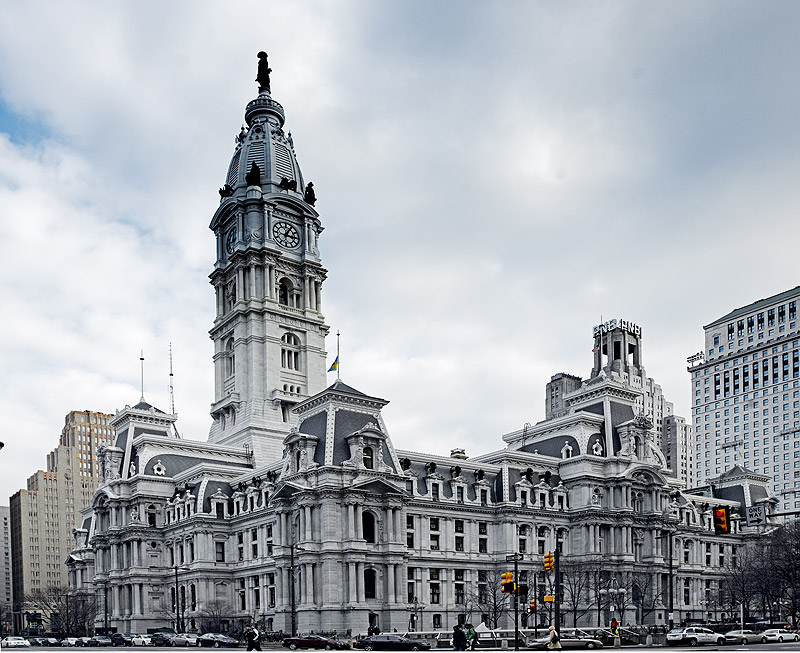
November 29, 1894: A 37-foot-high statue of William Penn, founder of the City of Philadelphia and the British Province that became the State of Pennsylvania (or, officially, "The Commonwealth of Pennsylvania"), is raised to the top of the City Hall that had been under construction in the French-inspired "Second Empire" style since 1871, and would continued to be worked on until being declared complete in 1901.

William Penn (1644-1718) was a writer, religious thinker, and influential Quaker from London, who founded the Province of Pennsylvania, receiving a charter from King Charles II on October 27, 1682. Penn was an advocate of democracy and religious freedom, known for his amicable relations and successful treaties with the Lenape tribe of Native Americans who had resided in present-day Pennsylvania prior to European settlements in the State.
The hat on Penn's statue is 548 feet above street level. This makes City Hall the tallest building in the world, surpassing the New York World Building in New York City, until the opening of the Singer Building in New York in 1908.
(Note: The Council on Tall Buildings and Urban Habitat (CTBUH) maintains a set of criteria for determining the height of tall buildings, and defines a "building" as "a structure that is designed for residential, business or manufacturing purposes" and that "has floors." Although the Eiffel Tower, which had opened in Paris in 1889, was considerably taller, less than half of it was habitable; therefore, while it was classified as the world's tallest structure, it was not a "building" at all.)

It remains the tallest City Hall in the country. Its location, at the junction of Broad Street and Market Street, at the center of Center City Philadelphia, makes it the transfer point for the City's 2 main Subway lines, the Broad Street Line (north-to-south) and the Market-Frankford Line (east-to-west). And, as the City of Philadelphia and the County of Philadelphia are contiguous, it also serves as the Philadelphia County Courthouse.

While many American cities embraced the concept of the skyscraper, a "gentlemen's agreement" forbade any structure from rising above the hat on the Penn statue. The idea was that Penn could look out over his city, in any direction, without his view being blocked. (The statue, of course, is in a fixed position, facing northeast.)

With that agreement in place, the World Series was won by the Philadelphia Athletics in 1910, 1911, 1913, 1929 and 1930, and the Philadelphia Phillies in 1980; the NFL Championship was won by the Frankford Yellow Jackets in 1926, and the Philadelphia Eagles in 1948, 1949 and 1960; the NBA Championship was won by the Philadelphia Warriors in 1947 and 1956, and the Philadelphia 76ers in 1967 and 1983; and the Stanley Cup was won by the Philadelphia Flyers in 1974 and 1975.

On May 27, 1987, One Liberty Place broke the gentleman's agreement, rising to 945 feet. For the first time, something in the city could "block Billy Penn's view." And, apparently, he didn't like this. Just 4 days after One Liberty Place opened, the Flyers lost Game 7 of the Stanley Cup Finals to the Edmonton Oilers.

In 1993, the Phillies lost the World Series. This included blowing a 14-9 lead in the 8th inning of Game 4, at home, before Joe Carter of the Toronto Blue Jays hit a Series-winning home run in Game 6. In 1995, the Flyers were tied 2-2 with the New Jersey Devils in the NHL Eastern Conference Finals, but lost Game 5 in the last minute of regulation, and then lost Game 6. In 1997, the Flyers were swept by the Detroit Red Wings in the Stanley Cup Finals. In 2000, the Flyers led the Devils 3-1 in the Eastern Conference Finals, and lost 3 straight, including losing Eric Lindros to a concussion. In 2001, the 76ers won the NBA Eastern Conference title, but lost the Finals to the Lakers. This remains their only Finals appearance since 1983.

In 2002, the Eagles lost the NFC Championship Game to the St. Louis Rams. In 2003, in their last game at Veterans Stadium, before moving into Lincoln Financial Field, the Eagles lost the NFC Championship Game to the Tampa Bay Buccaneers. Since entering the NFL in 1976, the Bucs had never won a Playoff game on the road, and had never won when the temperature was less than 32 degrees Fahrenheit. With this game, they had done both. If that could happen, and it could happen to the Eagles, then, it was reasoned, larger forces could be at work. This is when the idea of a "curse" began to be discussed. People looked to the last title won by a Philly team, and it was the 1983 76ers, so it had to be something after that.

Between that title and the rise of Liberty Place, the Flyers had lost the 1985 Stanley Cup Finals, but that was while Liberty Place was still under construction, so it's not counted. Nor was the death, early the next season, of Flyer goaltender Pelle Lindbergh, from drunk driving. There was the 76ers' 1986 Draft Day debacle, but that was also before Liberty Place was topped off. So a Curse of Howard Katz, or a Curse of Pelle Lindbergh, was possible. The city's media decided, instead, on Penn, for "blocking his view." (The fact that the two Liberty Place skyscrapers are behind his back, and weren't in his line of sight, seems not to have occurred to them.)

In 2004, the Eagles made it 3 straight NFC Championship Game losses, 2 straight at home, losing to the Carolina Panthers. That same year, it appeared that the curse even extended to horse racing. Smarty Jones, a horse bred and trained in suburban Chester County, Pennsylvania, won the Kentucky Derby and the Preakness Stakes, but fell short of the Triple Crown when he lost the Belmont Stakes by blowing a late lead. In 2005, finally winning an NFC Championship Game on their 4th straight try, the Eagles beat the Atlanta Falcons. But, despite threatening late, they could not beat the New England Patriots in Super Bowl XXXIX.

Someone must have decided that enough was enough. On June 18, 2007, ironworkers helped raise the final beam in the construction of the 974-foot Comcast Center. In addition to the Philadelphia tradition of finishing a building with an American flag and a small evergreen tree, they attached a statue of William Penn. Now, atop the new tallest building in town, his view was, again, unblocked.

Did it work? Not yet: Three months later, the Phillies came from 7 games back in the National League Eastern Division with 17 games to go, surged past the New York Mets, and won the Division title. But lost the NL Division Series to the Colorado Rockies -- the 1st postseason series win for the Rockies, who began play in 1993, the year of the Phillies' most recent Pennant.

But it all came together in 2008. The Phillies beat the Mets out for the Division again, beat the Milwaukee Brewers in the NLDS, and then beat the Los Angeles Dodgers in the NL Championship Series for their 1st Pennant in 15 years. It was on to the World Series, with a first: A father and son broadcasting for the opposing teams, Harry Kalas for the Phils, and Todd Kalas for the Tampa Bay Rays.

The Phillies won Game 1 in St. Petersburg, 3-2, before losing Game 2, 4-2. Coming home to Citizens Bank Park, they won Game 3, 5-4; and Game 4, 10-2. Game 5 began on Monday, October 27, but it rained throughout. The Phillies led 2-1 after 5 innings. Under normal conditions, games are considered to be official games after 5 innings, or 4 1/2 if the home team is leading at that point. However, both Rays and Phillies management knew before the first pitch that Commissioner Bud Selig, who was responsible for the scheduling of post-season games, would not allow a team to clinch the Series by winning a rain-shortened game.

The umpires let the game continue, and the Rays tied the game in the top of the 6th. When that half-inning ended, as Phils 2nd baseman Chase Utley remembered, "The infield was basically underwater." The umpires suspended the game. Rain continued to fall in Philadelphia on Tuesday, October 28, further postponing the game to Wednesday, October 29.

Game 5 was resumed in the bottom of the 6th, with the Philadelphia Phillies batting, and needing 1 run plus 9 outs to win the World Series. Geoff Jenkins doubled, was bunted to 3rd by Jimmy Rollins, and was driven in by a Jayson Werth single.

Rocco Baldelli tied the game with a home run in the 7th. Later in the inning, Utley took a grounder, faked a throw to 1stn base, then threw Jason Bartlett out at home for the 3rd out in a play later described as having saved the Series for the Phillies.

In the bottom of the 7th, Pat Burrell led off with a double. Eric Bruntlett, pinch-running for Burrell, scored on a single by Pedro Feliz to put the Phillies up by a run again, 4–3.

In the 2004 NLCS, pitching for the Houston Astros, Brad Lidge had given up a tremendous home run to Albert Pujols of the St. Louis Cardinals, to lose a game. It was said that he was never the same after that. That wasn't true: The Astros won the Pennant the next year. In 2008, Lidge was the Phillies' closer, and, going into Game 5, was 47-for-47 in save opportunities over the season. For fans still traumatized by the 1993 World Series, he was no Mitch Williams.

In the top of the 9th, Lidge gave up a single and a stolen base, but faced Eric Hinske with the chance to give the city its 1st World Series win since 1980, and its 1st World Championship in any sport since the 1983 76ers. Harry Kalas, the Hall of Fame voice of the Phils, had the call:

One strike away, nothing-and-two to Hinske. Fans on their feet. Brad Lidge stretches. The oh-two pitch: Swing and a miss! Struck him out! The Philadelphia Phillies are 2008 World Champions of baseball!

Brad Lidge does it again, and stays perfect for the 2008 season, 48-for-48 in save opportunities! And let the city celebrate! Don't let the 48-hour wait diminish the euphoria of this moment and celebration! Twenty-five years in this city that a team has enjoyed a World Championship, and the fans are ready to celebrate. What a night! Phils winning, 4–3, Brad Lidge gets the job done once again!

Harry would die early the next season. He deserved that title.

Three months later, the Eagles reached the NFC Championship Game, with a shot at Super Bowl XLIII, but lost to the Arizona Cardinals, a team that hadn't reached an NFL Championship Game, under any name, since 1948. That was embarrassing. 

The Phils won the Pennant again in 2009, but lost the World Series to the New York Yankees. They won the NL East again in 2010 and 2011, then fell apart for a few years. The Flyers reached the Stanley Cup Finals in 2010, but lost to the Chicago Blackhawks. It was beginning to look like the Phillies had broken a curse that had been put on them sometime after 1980, and the other teams in town were under seaprate curses. But in 2018, the Eagles broke a 57-year drought, beating the New England Patriots in Super Bowl LII.

Also in 2018, a new tallest building in the city opened: The Comcast Technology Center, at 1,121 feet, making it the tallest building in America not in either New York City or Chicago. As with its predecessor and sort-of namesake, a small statue of William Penn was put on top, just in case.

*

November 29, 1894, was a Thursday. Under the law of the time, being the last Thursday in November, it was Thanksgiving Day. Not until 1942 was it changed to the 4th Thursday in November, regardless of whether that was the last one. As a result of being Thanksgiving, before the era of professional football, the only sport played was college football, but there were 9 games, including 1 in Philadelphia:

* The University of Pennsylvania beat Harvard, 18-4 at the University Grounds in Philadelphia, 2 miles west of City Hall. Decades later, Penn would be retroactively awarded this season's National Championship.

* The Chicago Athletic Club beat Dartmouth, 4-0 at the Alumni Oval in Hanover, New Hampshire.

* Tufts beat Andover, 6-4 at Andover, Massachusetts.

* Brown beat MIT (Massachusetts Institute of Technology), 16-4 at Lincoln Field in Providence, Rhode Island.

* Cornell beat Lehigh, 10-6 at Percy Field in Ithaca, New York.

* Lafayette beat Bucknell, 44-0 at March Field in Easton, Pennsylvania.

* Purdue beat DePauw University (of Greencastle, Indiana, not DePaul of Chicago), 28-0 at the Fair Grounds in Indianapolis.

* Michigan beat the University of Chicago, 6-4 at Marshall Field in Chicago.

* And Illinois beat the Pastime Athletic Club of St. Louis, 10-0 at Sportsman's Park in St. Louis.

Friday, November 25, 2022

November 25, 1966: The Genesis of "Black Friday" Shopping

November 25, 1966: "Black Friday" becomes a thing on the day after Thanksgiving. According to a 2022 article on Cracked.com:

A common explanation of the name "Black Friday" is that is has to do with accounting. In older accounting practices, negative numbers were written in red ink and positive numbers in black ink. Thus, a business losing money is "in the red" and a profitable business is "in the black." Black Friday is supposedly the first day many stores turn a profit for the year.

In reality, Black Friday earned its name because it sucks. The term was coined in Philadelphia in 1966. "Black" was an adjective given to disastrous days in history. "Black Friday" also refers to the stock market crash in 1929 that started the Great Depression, as well as a flood in Cincinnati in 1937. 

In 1966, the Philadelphia police hated the first day of the holiday shopping season, because of the massive traffic jams and the packed sidewalks it caused. Also, presumably because they wished they could be off from work like everyone else. Frazzled retail workers and exhausted shoppers were more than willing to accept the term.

The red ink/black ink explanation was never heard of until the early 1980s. Store owners who were satisfied with their sales started to become disturbed by the negative-sounding nickname. The president of Strawbridge & Clothier said, "It sounds like the end of the world, and we really like the day. If anything it should be called "Green Friday." Another department store executive was even more hot and bothered, calling the name "the most disgusting thing I've ever heard. Why would anyone call a day, when everyone is happy and has smiles on their faces, Black Friday?"

*

Two mistakes: The Crash of 1929 began on a Thursday, and hit rock bottom on the following Tuesday. However, there were stock market "panics" (the pre-1929 term for a crash) in 1869, which became known as Black Friday; and in 1893, although that one didn't get the name. And the 1937 Mill Creek Flood in Cincinnati crested on a Sunday. Strawbridge & Clothier, a Philly retail icon, like so many other local department store chains, was bought out by Macy's, in their case in 2005.

In New York, the Macy's Thanksgiving Day Parade always concludes with a float with a man dressed as Santa Claus on it. This means that the next day is the semi-official beginning of the Christmas shopping season. Macy's had the clout to promote that, as they had successfully promoted their Herald Square (34th Street, 6th Avenue and Broadway) flagship store as "the world's biggest store." (Whether it is actually the world's largest department store is in dispute.)

The earliest known use of the phrase "Black Friday" to refer to the day after Thanksgiving occurred in the journal Factory Management and Maintenance, in its issue for November 1951, and again in 1952. There, it referred to the practice of workers calling in sick on the day after Thanksgiving, in order to have a four-day weekend. However, this use does not appear to have caught on. By the time I started school in the Autumn of 1975, schools were already giving the day after Thanksgiving off. But I hadn't yet heard of the day being called "Black Friday."

Also in 1975, on November 29, the Saturday after Thanksgiving that year, the phrase first appeared in The New York Times, referring to "the busiest shopping and traffic day of the year." However, acknowledging that their city was the 1st to use it, The Philadelphia Inquirer reported in 1985 that retailers in Cincinnati and Los Angeles were still unaware of the term.

By that time, I was in high school in Central Jersey, a little closer to New York than to Philadelphia, and I had heard of it. That year, on Black Friday, I went to the Monmouth Mall in Eatontown, near the Jersey Shore, and it was a mistake. It was the 1980s, a decade of conspicuous consumerism, and "Black Friday" had really become a thing.

For many years, it was common for retailers to open with "Doorbusters" sales at 6:00 AM, with some people lining up outside earlier than that, sometimes camping out all night long. Sometimes, people began pounding on the stores' front doors, trying to get them to open earlier. Sometimes, opening the doors -- on time or otherwise -- led to big crowd rushes, shoppers getting trampled, and fights over the year's most-wanted items, which led to arrests.

In the late 2000s, some stores moved their openings back to 4:00, then to 12:01 AM. In 2010, Toys 'R' Us broke the taboo against stores being open on T-Day itself, opening at 10:00 PM on Thanksgiving night. In 2012, Walmart moved it back to 8:00 PM. In 2014, some stores had just said the hell with it, and opened at 6:00 AM on Thanksgiving Day itself.

In response to the "big box stores" like Walmart and Home Depot that had forced many smaller companies and "mom-and-pop stores" out of business, some cities and States began promoting "Small Business Saturday." With the growth of the Internet, many retailers, including some that only exist online, had been promoting sales on "Cyber Monday," the day after the end of Thanksgiving weekend.

When I worked in retail, I always volunteered to work on the day after Thanksgiving, and also on Christmas Eve, New Year's Eve and New Year's Day, the last 3 of those usually having the stores close at 6:00 PM, partly in order to give a break to other workers who might want those days off, and partly so that I could get December 18, my birthday, off.

In 1995, I worked at a JCPenney store. There was a One Day Sale 2 Saturdays before Thanksgiving, and that was more crowded, and the shoppers less courteous, than they were on Black Friday. On that day, they were comparatively tame and reasonable.

*

November 25, 1966 was, as suggested, a Friday. Baseball was out of season. There were no football games: Not in the NFL, not in the AFL, not even in college ball. And there were no games scheduled in the NHL. But there were 4 games in the NBA:

* The New York Knicks lost to the Cincinnati Royals, 115-109 at the Cincinnati Gardens. Oscar Robertson had 27 points.

* The Philadelphia 76ers beat the Baltimore Bullets, 129-115 at the Baltimore Civic Center (now the CFG Bank Arena). It was just another day at the office for Wilt Chamberlain: 41 points and 19 rebounds.

* The Detroit Pistons beat the Boston Celtics, 107-105 at Cobo Hall (now Huntington Place) in Detroit.

* And the Chicago Bulls beat the Los Angeles Lakers, 121-117 at the Los Angeles Memorial Sports Arena. In defeat, Elgin Baylor had 32 points and 18 rebounds.

December 31, 1999 & January 1, 2000: The Millennium

December 31, 1999:  The Millennium arrives. The people of planet Earth survived. At a terrible cost. But we hadn't destroyed ourselves. ...