Showing posts with label christmas. Show all posts

Sunday, December 25, 2022

December 25, 1991: Mikhail Gorbachev Resigns, the End of the Soviet Union

December 25, 1991: Mikhail Gorbachev resigns as President of the Soviet Union. The next day, the Supreme Soviet dissolved, its last act being to dissolve the Soviet Union itself after 74 years.
Gorbachev had been named President in 1985, after the death of Konstantin Chernenko, the last of the old-line Communists. Born in 1931, Gorbachev was the 1st Soviet leader who did not remember the Bolshevik Revolution of 1917. So he was uniquely poised to lead reforms, which he called "perestroika" (reconstruction) for domestic change, and "glasnost" (openness) for foreign relations.
That gave the West a chance to make peaceful overtures to a changing adversary. Britain's Prime Minister, Margaret Thatcher, said in an interview, "I like Mr. Gorbachev. We can do business together." The equally conservative American President, Ronald Reagan, met with him in 5 summits: In Geneva, Switzerland in 1985; in Reykjavik, Iceland in 1986; in Washington in 1987, signing the Intermediate-Range Nuclear Forces (INF) Treaty; in Moscow in the Summer of 1988; and in New York toward the end of the year, including President-elect George H.W. Bush.
In 1987, Time magazine named Gorbachev its Man of the Year, recognizing him as the person who had most affected the news during the calendar year. (Remember: It's not an "award" that a person "wins.") In 1989, suggesting that he deserved it again, and then som, Time named him Man of the Decade. In 1990, he was awarded the Nobel Peace Prize.
But the hardline Communists of Gorbachev's generation didn't like the changes he was making to what those of their forefathers had done. In August 1991, he was overthrown in a coup. But Boris Yeltsin, already President of the substate the Russian Federation, rallied the country, getting the Red Army on his side. With several of the Soviet "republics" having already declared their independence, the plotters could not expect help from elsewhere, and the coup collapsed. After 4 days, Gorbachev was back in power.
But he had very little support. The country had still rallied around Yeltsin, who was seen as even more of a reformer. Gorbachev become the opposite of "a man without a country": He was, in effect, a one-man country. On Christmas Day, he bowed to the inevitable, and resigned his office.
Gorbachev continued to advocate for social-democratic reform, was a critic of current Russian President Vladimir Putin, and died on August 30, 2022, at the age of 91.
The sad part is, the end of the Soviet Union was not the end of tyranny in its former lands. Putin ruled the Russian Federation with an iron fist from 2000 until 2008, when the country's Constitution term-limited him out. So his Prime Minister, Dmitry Medvedev, became President, while Putin became Prime Minister. Before Medvedev's term ran out in 2012, the Constitution was amended to allow Putin to return in 2012, and to have no limits.
Meanwhile, some of the other former Soviet "republics" had their own dictators: Saparmurat Niyazov, Turkmenistan, 1990-2006; Islam Karimov, Uzbekistan, 1991-2016; Nursultan Nazarbayev, Kazakhstan, 1991-2019; Alexander Lukashenko, Belarus, since 1994; Emomali Rahmon, Tajikistan, since 1994; and Ilham Aliyev, Azerbaijan, since 2003.
It's as if these countries decided, "We don't want to be a part of the Soviet Union, but we do like what the Soviets do, we just want to do it ourselves."

Following viewer demands for a battle with a Russian, a 2013 episode of the YouTube series Epic Rap Battles of History, featured a five-man "battle royale": "Nice" Peter Shukoff played Rasputin, Vladimir Lenin and Vladimir Putin; while "Epic" Lloyd Ahlquist played Joseph Stalin and Mikhail Gorbachev.

*
December 25, 1991 was a Wednesday. Baseball was in midseason. There was 1 college football game: Georgia Tech beat Stanford, 18-17, in the Aloha Bowl at Aloha Stadium in Honolulu, Hawaii.
The NHL, as usual, did not play on Christmas Day. The NBA usually does, and there were 2 games. The Chicago Bulls beat the Boston Celtics, 121-99 at the Chicago Stadium. Michael Jordan scored 14 points; on his own team, he was outscored by Scottie Pippen (27), B.J. Armstrong (18) and Horace Grant (17). But the Celtics were crumbling, and this would be the last season for Larry Bird.
And the Los Angeles Lakers went back to their 1st home in L.A., the Los Angeles Memorial Sports Arena, and beat the Los Angeles Clippers, 85-75.

December 25, 1984: Bernard King Decks the Halls

December 25, 1984: For about a year now, the best basketball player in the world has not been Kareem Abdul-Jabbar, or Magic Johnson, or Larry Bird, or Julius Erving, and certainly not newly-minted NBA rookie Michael Jordan. It's been Bernard King.

The Brooklyn native, who had starred at the University of Tennessee with later Knick teammate Ernie Grunfeld -- they called it "The Bernie and Ernie Show" -- had just turned 28, and was dropping stunning performances, game after game. On January 31 and February 1, 1984, he became the 1st NBA (or ABA) player in 17 years to score at least 50 points in back-to-back games.

On this Christmas Day, he came down the chimney at Madison Square Garden and scored 60 points, a record for the "new" Garden that opened in 1968. He scored 21 points in the 1st quarter, 19 in the 2nd, 11 in the 3rd, and 9 in the 4th.

In spite of this performance for the New York Knicks, the cross-river New Jersey Nets beat them, 120-114. Micheal Ray Richardson scored 36 for New Jersey. (Yes, he spells his name "Micheal," not "Michael.")

King was only the 10th player in NBA history to score at least 60 in a game. Joe Fulks was the 1st to do it, with 63 in a 1949 game for the Philadelphia Warriors. George Mikan scored 61 in a 1952 game for the Minneapolis Lakers. Fulks and Mikan were the only players to do it before the 1954 institution of the 24-second shot clock.

Wilt Chamberlain had done it 32 times, topping out at 100. At the time, the record for anyone other than Chamberlain was 73, by David Thompson, on the last day of the 1977-78 season. On the exact same day, George Gervin scored 63, and won the scoring title for the season.

Elgin Baylor had scored 60 or more 4 times, including a Playoff record 61 in 1962. On November 15, 1960, Baylor topped out at 71, against the Knicks at "the old Garden," and that remains a record for any building named Madison Square Garden, college or pro.

The other players to score 60 in an NBA game before King were Jerry West with 63 in 1962, Rick Barry with 63 in 1974, and Pete Maravich with 68 in 1977.

Sadly, 'Nard saw his reign come to an end on March 23, 1985, with a terrible knee injury in Kansas City. He had been averaging 32.9 points per game up until then, and that would lead the league. That game ended up being the 1st of 12 straight games the Knicks, already plagued with injuries, lost to end the season. Then they got the 1st pick in the 1985 NBA Draft, and selected Patrick Ewing.

King came back for 6 games at the end of the 1986-87 season. The Knicks thought that was all they could get out of him, so they traded him to the Washington Bullets. Incredibly, he played 4 seasons for them, including 1988-89, when he played in 81 out of 82 games; and 1989-90, when he played in all 82. He missed 1991-92 in its entirety, again due to the knee, and closed his career with the team with whom he started -- the Nets, playing 32 games in 1992-93.

He was 37 years old. Knick fans can only wonder what they could have done from the Autumn of 1985 to the Spring of 1993 with a healthy Bernard King added to Patrick Ewing, Mark Jackson and Charles Oakley.

His injuries kept his career numbers down. He was belatedly elected to the Basketball Hall of Fame. He was not named to the NBA's 50th Anniversary 50 Greatest Players in 1996, but was named to their 75th Anniversary 75 Greatest Players in 2021.

King's 60 remained a record for the new Garden until January 24, 2014, when Carmelo Anthony set a building record, and a Knick franchise record, with 62 points in a 125-96 win over the team then known as the Charlotte Bobcats. Baylor's 71 remains a record for any Garden. The college record was set by Oscar Robertson of the University of Cincinnati, scoring 56 points to outscore Seton Hall all by himself on January 9, 1958.

Scoring 60 points in an NBA game has now been done 87 times.

*

December 25, 1984 was a Tuesday. Elsewhere in the NBA that Christmas Day:

* The Cleveland Cavaliers beat the Atlanta Hawks, 109-106 at The Coliseum in the Cleveland suburb of Richfield, Ohio.

* The Philadelphia 76ers beat the Detroit Pistons, 109-108 at the Silverdome in the Detroit suburb of Pontiac, Michigan.

* And the Portland Trail Blazers beat the Golden State Warriors, 106-97 at the Portland Memorial Coliseum.

The day saw no games in the NHL, and no bowl games in college football.

Also on this day, twin Australian singers, actresses and fashion designers Jessica and Lisa Origliasso were born.

December 25, 1959: The Film "Solomon and Sheba" Premieres

Yes, that's Yul Brynner, with hair,
and with Gina Lollobrigida.

December 25, 1959: The film Solomon and Sheba premieres. Because most businesses are closed on Christmas Day, and Jews don't celebrate the day, with a big meal or otherwise, movie theaters stay open, in the hopes that Jews will come and spend money there. For this reason, December 25 is often a premiere day for blockbuster films. The fact that Solomon and Sheba was an Old Testament tale helped, and the film was a hit.

In the Bible, where his story is told in 2nd Samuel, 1st Kings and 2nd Chronicles, Solomon was the son of King David and Queen Bathsheba, reigning for 40 years in the middle of the 10th Century BC, building the Temple that became the center of Jewish life, and being the wisest man in the known world. This last belief may have been contradicted by his marrying 700 women, having 300 concubines, and fathering countless children.

He is said to have met "the Queen of Sheba," who is not otherwise named in the text. 1st Kings 10:2 says she came to Jerusalem "with a very great retinue, with camels bearing spices, and very much gold, and precious stones." 2nd Chronicles 9 says, "Never again came such an abundance of spices."

1st Kings 10:13 says that when Solomon gave her "all her desire, whatsoever she asked," she left satisfied. That's a bit vague, and it could imply a sexual relationship between them. But that's the end of her mention in the Bible. Aside from a few inscriptions found in modern times, suggesting that there was trade between Israel and Sheba at the time, the land that is now "The Holy Land" (Israel, Jordan, Lebanon, and the Palestinian Territories) has given no known evidence. The Bible's Song of Songs, also known as The Song of Solomon, is an epic poem that is often suggested to be about the love between Solomon and the Queen of Sheba, but this remains speculation.

There are other stories, which contradict the West's habit of calling the Queen by the name "Sheba." The Arab world, including the Quran, suggests that her name was Bilquis, that the land of Sheba was "Saba," including what is now southern Saudi Araba, Oman and Yemen. Modern Ethiopia suggests that her name was Makeda, and that Sheba was Ethiopia, Eritrea, Djibouti and Somalia, across the Red Sea and the Gulf of Aden from Saudi Arabia and Yemen. Historians are not convinced that the woman existed, but concede that it is possible that her kingdom did, on either side, or even that she (or someone) ruled over both.

And both Arabic tradition and Ethiopian tradition says that, when the Queen left Jerusalem, she was pregnant with Solomon's child. He became her successor, the Emperor Menelik, who eventually copied his mother's journey, and met Solomon at the Temple, where he was received with joy. They also say that, upon his return, he took the Ark of the Covenant back with him, something not backup by any Jewish text.

In the film, Sheba is an enemy of Israel, as is Egypt, and the Queen (played by Italian actress Gina Lollobrigida) conspires with their Pharoah (British actor David Farrar) to undermine Solomon (the Russian-born American actor Yul Brynner, who had famously played a different Pharoah in The Ten Commandments). She seduces him, but as she spends more time with him, she finds herself falling in love with him as well.

The Queen introduces Sheban worship to the Temple Solomon has built, and an angry God damages the Temple and destroys the Sheban altar. Solomon's brother, Adonijah (British actor George Sanders), who was older and thought he should have been named successor by David, conspires with the Pharoah to raise an army to defeat Solomon. It succeeds, and Adonijah takes the throne.

The Hays Code still being in effect, the Queen repents of the harm she has done, and prays for God to restore Solomon. He wins a battle, and returns to Jerusalem. Adonijah finds that the people are not behind him, so he decides to win them over by sacrificing the Queen. Solomon arrives to find her already wounded and near death, but kills Adonijah. He prays for the Queen to be healed, and she is. But the price for regaining his throne and her health is that they be separated. The film ends as the Queen leaves for Sheba, knowing that she is pregnant with Solomon's child.

Sanders died in 1972, Vidor in 1982, Brynner in 1985, Farrar in 1995. As of December 25, 2022, Lollobrigida is still alive. (UPDATE: She died in 2023.)

Solomon, or Suleiman as he is known to Muslims, is revered by all 3 Abrahamic faiths, and by Ethiopian Jews and Christians. The Queen of Sheba is claimed by both Arabs and black Africans as one of their own. Both the Asiatic Russian Brynner and the Roman Lollobrigida looked "exotic" enough to have filled their roles to the satisfaction of Eisenhower-era Americans.

In the 1995 Showtime film Solomon & Sheba, the couple were played, respectively, by Hispanic actor Jimmy Smits and African-American actress Halle Berry; in the 1997 TNT film Solomon, by English actor Ben Cross and African-American actress Vivica A. Fox; and in the 2022 film Three Thousand Years of Longing by Lebanese actor Nicolas Mouawad and Ugandan model-actress Aamito Lagum. The story has been modernized in the 2001 film Brooklyn Babylon and the 2014 country-music-themed film The Song.

*

December 25, 1959 was a Friday. Baseball was out of season. There were no college bowl games. The NFL was between the end of its regular season and its Championship Game, which the Baltimore Colts would win over the New York Giants in a rematch of the previous year's event.

There were 4 games in the NBA:

* The New York Knicks lost to the Boston Celtics, 123-119 at the old Madison Square Garden.

* The Philadelphia Warriors beat the Syracuse Nationals, 129-121 at the Hershey Sports Arena (now the Hersheypark Arena), outside Harrisburg in Hershey, Pennsylvania. Rookie Wilt Chamberlain scored 45 points and grabbed 34 rebounds. On March 2, 1962, he would have an even bigger game at that arena, scoring 100 points.

After that season, the Warriors moved to San Francisco. After another season, the Nationals moved to replace them, becoming the Philadelphia 76ers.

* The Cincinnati Royals beat the Detroit Pistons, 121-103 at the Cincinnati Gardens.

* And the St. Louis Hawks beat the Minneapolis Lakers, 112-96 at the Kiel Auditorium in St. Louis. The Lakers moved to Los Angeles in 1960, and the Hawks moved to Atlanta in 1968.

There were 2 games in the NHL. The New York Rangers beat the Detroit Red Wings, 5-2 at the Olympia Stadium in Detroit. And the Boston Bruins beat the Chicago Black Hawks, 5-1 at the Boston Garden.

While the NBA has made Christmas Day a traditional showcase for their league, the NHL last scheduled games for December 25 in 1971 -- not for religious reasons, but because the NFL began playing games on the day, and the NHL didn't want to compete for attention.

December 25, 1954: The Death of Johnny Ace

December 25, 1954: Johnny Ace dies, because somebody shouldn't have had access to a gun: Himself.

John Marshall Alexander Jr. was born on June 9, 1929 in Memphis. In 1951, Ike Turner, already a music-business veteran but still years away from meeting the woman who would become Tina, hired him to play piano on recording sessions for blues guitarist B.B. King. In 1952, now calling himself Johnny Ace, apparently after the vocal group The Four Aces, he began singing his own songs, mostly ballads.

By 1954, he was one of the biggest-selling singers in America, regardless of race or style. He had already recorded "Pledging My Love," and was booked for the City Auditorium in Houston on Christmas Day. Among the other performers booked for the show was Willie Mae "Big Mama" Thornton, the 1st performer to record "Hound Dog." If you only know this song, by Jerry Lieber and Mike Stoller, from Elvis Presley's version, you'll be surprised at how different it is. Nevertheless, she topped the rhythm & blues chart with it in 1953.

Between sets, Johnny was drinking with Big Mama and her band. Suddenly, he pulled out a .32 caliber revolver, and started playing with it. Thornton later told police that he pointed it at a few people (not at her), but didn't fire. But she also said, contrary to what was later reported, that it was not a game of "Russian roulette." Nor was it a suicide: Johnny had just bought a brand-new Oldsmobile, and was looking forward to driving it.

Curtis Tillman, Thornton's bass player, told what happened next:

I will tell you exactly what happened! Johnny Ace had been drinking, and he had this little pistol he was waving around the table, and someone said, "Be careful with that thing!" And he said, "It’s okay! Gun’s not loaded! See?" And pointed it at himself with a smile on his face, and "Bang!" Sad, sad thing. Big Mama ran out of the dressing room yelling, "Johnny Ace just killed himself!"

Johnny Ace was only 25 years old, and was really just starting to become a star. Not surprisingly, "Pledging My Love" hit Number 1 on the R&B charts. But it also hit Number 17 on Billboard magazine's pop chart, making him the 1st performer to debut on it only after his death.

Some people consider Johnny Ace to be "the first dead rock star." His death came nearly 2 years after that of Hank Williams, who has also received that distinction. Neither man had really performed rock and roll as that term would later be used, though. Maybe they would have.

In 1983, Paul Simon wrote and recorded "The Late Great Johnny Ace." It tells of a boy who had never known Johnny Ace was alive until he knew that he was dead, and became a fan of his. Years later, the song has the boy growing up to be a fan of 2 other "Johnny Aces" who died from gunshot wounds: John F. Kennedy and John Lennon.

But maybe rock and roll broke even this day: Annie Lennox, lead singer of Eurythmics, was born.

*

December 25, 1954 was a Saturday. In England, North London's Arsenal hosted West London's Chelsea at Highbury, and won, 1-0, on a goal by former Everton star Tommy Lawton. But Chelsea went on to win the League title for the 1st time in their 50-year history. They did so the 1st man ever to win the League as both a non-managing player and a non-playing manager. And he's an Arsenal man: Ted Drake.

Four games were played in the NBA. The New York Knicks beat the Syracuse Nationals, 109-101 at the old Madison Square Garden. The Rochester Royals beat the Fort Wayne Pistons, 80-73 at the Edgerton Park Arena in Rochester. The Boston Celtics beat the Milwaukee Hawks, 108-99 at the Milwaukee Arena. In 1974, it was renamed the Milwaukee Exposition, Convention Center and Arena, or "The MECCA." Since 2014, it has been named the UW-Panther Arena. And the Minneapolis Lakers beat the Philadelphia Warriors, 99-91 at the Minneapolis Auditorium.

For the 1st time in 5 years, the entire NHL played on Christmas. The New York Rangers lost to the Montreal Canadiens, 4-1 at the Montreal Forum. The Boston Bruins and the Chicago Black Hawks played to a 3-3 tie at the Boston Garden. And the Detroit Red Wings beat the Toronto Maple Leafs, 3-2 at Maple Leaf Gardens in Toronto.

December 25, 1940: Tommy Lawton's Christmas Doubleheader

Tommy Lawton

December 25, 1940: On this Christmas Day, a Wednesday, South Side Park burns down in Chicago. As far as anyone knows, the fire is not purposely set. It was the 1st home of the American League's Chicago White Sox (1901 to 1910), and of the Negro Leagues' Chicago American Giants (1910 to 1940). The American Giants won 7 Pennants while playing there, the White Sox 2.
There were 3 games played in the NHL. The New York Rangers played the Chicago Black Hawks to a tie, 3-3 at Madison Square Garden. The New York Americans lost to the Boston Bruins, 8-1 at the Boston Garden. And the Detroit Red Wings beat the Toronto Maple Leafs, 3-2 at the Olympia Stadium.
Also on this day, under the wartime conditions of depleted rosters, Tommy Lawton plays for Everton against Liverpool at Anfield in the morning. Liverpool win, 3-1. Then he is asked to play as a guest player for Merseyside club Tranmere Rovers at nearby Cheshire club Crewe Alexandra in the afternoon. As he recalled, "The Tranmere people came into the dressing room, and asked if anyone wanted to play, as they were two men short. I said, 'Go on, I'll help you out.' And I did."
He didn't help much: Crewe won the match, 2-1. Still, on Christmas Day 1940, Lawton played a full 90 minutes in the afternoon, after having already done so in the morning. Given the heavy leather balls and ragged pitches (especially in Winter) of the era, this may qualify as a Christmas miracle.
Just 4 days after Christmas, the Luftwaffe bombed the Rolls-Royce factory in Crewe, which had been making Spitfire planes for the Royal Air Force.
Also on this day, Arsenal lose 4-2 away to West Ham United. They finished 4th in the Southern Regional, the Hammers 2nd, and Crystal Palace of Southeast London won. 

December 25, 1932: The 1st Royal Christmas Message

December 25, 1932: King George V delivers a Royal Christmas Message to the British Empire, broadcast live over the British Broadcasting Corporation and its Worldwide Service, thus beginning a tradition.

John Reith, founder of the BBC, had first approached the King about the idea in 1922, but the King declined, saying that radio was mainly an entertainment. Reith waited 10 years before trying again. This time, he was smart: He gave the idea to Queen Mary first. When she told her husband it was a good idea, he relented. To be on the safe side, he also talked to the Prime Minister, James Ramsay MacDonald, who was prepared to be an additional voice to try to talk the King into it.

The tradition of the British royal family staying at Sandringham House, their country retreat in Norfolk, East Anglia, for the Christmas season had been put in place ever since it was bought in 1862, as a summer home for the King's father, then the Prince of Wales, later King Edward VII. A temporary studio was set up there, eventually replaced by a permanent one.

The address was written for the King by one of Britain's most honored (if not "greatest") authors then living, Rudyard Kipling, and is said to have been heard by 20 million people. The broadcast began at 3:00 PM London time, for the best possible distribution across the time zones: Eastern Canada, 10:00 AM; South Africa, 5:00 PM; New Dehli, 8:30 PM; Hong Kong, 11:00 PM; Sydney and Melbourne, 1:00 AM on December 26.

The speech was introduced by a local shepherd named Walton Handy. The town church rang its bells, and its choir sang Christmas carols. Finally, the King spoke, for a little over 3 minutes:

Through one of the marvels of modern science, I am enabled, this Christmas Day, to speak to all my peoples throughout the Empire.

I take it as a good omen that Wireless should have reached its present perfection at a time when the Empire has been linked in closer union. For it offers us immense possibilities to make that union closer still.

It may be that our future may lay upon us more than one stern test. Our past will have taught us how to meet it unshaken.

For the present, the work to which we are all equally bound is to arrive at a reasoned tranquility within our borders; to regain prosperity without self-seeking, and to carry with us those whom the burden of past years has disheartened or overborne.

My life's aim has been to serve as I might, towards those ends. Your loyalty, your confidence in me has been my abundant reward.

I speak now from my home and from my heart to you all.

To men and women so cut off by the snows, the desert or the sea, that only voices out of the air can reach them; to those cut off from fuller life by blindness, sickness, or infirmity; and to those who are celebrating this day with their children and grandchildren.

To all, to each, I wish a Happy Christmas. God Bless You!

George V delivered such Messages again in 1933 and 1934. In 1935, it was noticed that his voice sounded weaker. Sure enough, he died less than a month later, on January 20, 1936.

His son, King Edward VIII, abdicated the throne on December 11, 1936, so not only did he never get a Coronation, he never got to deliver a Royal Christmas Message. His brother became King George VI. He did not deliver a Royal Christmas Message in 1936. He did in 1937, but not in 1938. But in 1939, all through World War II, and into his final illness, he and delivered them every year through 1951. He died on February 6, 1952.

Since then, his daughter, Queen Elizabeth II, has delivered the Message every December 25. Her 1st Message, in 1952, was simulcast, in sound only, on BBC television. Not until 1957 would it be broadcast live on TV.

In 1953, as she and her husband, Prince Philip, Duke of Edinburgh, were on a tour of the British Commonwealth, she delivered her Message from Auckland, New Zealand. Since then, it has been pre-recorded at either Sandringham House or Buckingham Palace.

*

December 25, 1932 was a Sunday. Baseball was out of season. The NBA hadn't been founded yet. The NFL season had ended the previous Sunday, with the Chicago Bears defeating the Portsmouth Spartans (of Ohio) for the Championship.

There were 2 games played in the NHL that day. The New York Rangers beat the Montreal Maroons, 2-0 at the old Madison Square Garden. And the Detroit Red Wings beat the Chicago Black Hawks, 4-0 at the Olympia Stadium in Detroit.

"Back in Blighty," this was the era when England's Football League still regularly played games on Christmas Day. But not on Sundays, so there were no games played in that League.

December 25, 1914: The Christmas Truce

A recreation of the match for the BBC's Centennial coverage, 2014

December 25, 1914: Upon hearing German soldiers sing Christmas carols in their trench on the Western Front of what was then called The Great War (later World War I), the British soldiers start to do so in theirs. Soon, the men on both sides come out of their trenches, and stop treating each other as enemies for a few hours, exchanging food, drinks, and trinkets. It becomes known as the Christmas Truce.

Legend has it that there was even a soccer game. Sorry, forgot to "speak English" there: A football match. It's not clear which side produced the ball, but according to most accounts that discuss the match, the Germans beat the English, 3-2.


This is the 1st time that Englishmen would be defeated by Germans at their national game. There have been many more. But, as England manager Alf Ramsey pointed out before the 1966 World Cup Final, twice in the 20th Century, the English (well, the British, and their allies) would beat the Germans at their 
national game (war), and on their soil no less.

Military historian Andrew Robertshaw, a technical advisor for the film version of the World War I story War Horse, says such a truce would have been unthinkable a year later: "This was before the poisoned gas, before aerial bombardment. By the end of 1915, both sides were far too bitter for this to happen again."

In 1997, Garth Brooks and Joe Henry wrote a song titled "Belleau Wood" for Brooks' album Sevens.  It describes a Christmas truce between American and German soldiers at Belleau Wood in 1917. But this is fiction, as the battle of Belleau Wood took place in June 1918, in Aisne, Picardy, France.


The Football League did not suspend operations until the conclusion of the 1914-15 season. On Christmas, Arsenal began a home-and-home series, defeating Leicester Fosse away 4-1 on the 25th, and 6-0 at home on the 26th.

December 25, 1914 was a Sunday. Baseball was in the off-season. American football had just ended its season. Professional basketball barely existed. And the National Hockey Association didn't start their 1914-15 season until the day after Christmas. So there were no scores in North America on this historic day.

December 25, 1894: The 1st Intersectional College Football Game

Walter Camp

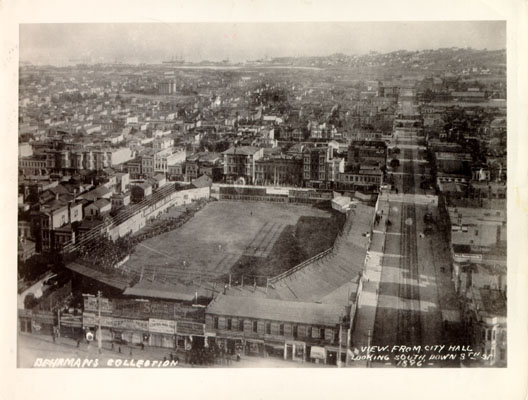
December 25, 1894: In a manner of speaking, the 1st holiday-season college bowl game is played on this day. Certainly, it was the 1st college football game, ever, between teams from 2 different parts of the country. And it was the 2 men most responsible for the development of American football who set it up and opposed each other in it.

Walter Camp had been one of the 1st great college football players, at Yale University in the late 1870s. In 1888, he became Yale's head coach, and one of his players on that great team was Amos Alonzo Stagg. Between them, they invented pretty much every feature that turned American football from a game resembling soccer and rugby to the game that became so popular in the 20th Century.
Amos Alonzo Stagg

Both men went West to start college football programs, Stagg at the University of Chicago, Camp at the newly-founded Stanford University in the San Francisco Bay Area. They played at the Haight Street Grounds in San Francisco. Chicago beat Stanford 24-4.
The Haight Street Grounds stood from 1887 to 1895. It was actually not at Haight Street, but at the southeastern corner of Stanyan and Waller Streets, in the Haight-Ashbury district that would become the seat of the Hippie movement in the 1960s, at the southeastern corner of Golden Gate Park, about a block from where Kezar Stadium would later be built.

*

December 25, 1894 was a Tuesday. Baseball was out of season, hockey was all-amateur, basketball was a recent invention, and this was before college football was playing bowl games, let alone on Christmas Day.

But in England, soccer, or "football" as they call it, had a tradition: To keep traveling to a minimum, and thus families together, 2 nearby teams would play at one's home ground on Christmas Day, and at the other's on the next day, December 26, Boxing Day. This tradition began to die out in the 1950s, but Boxing Day games are still played.

On December 25, 1894, the London-based team which I would eventually support, then known as Woolwich Arsenal, played, but not against a nearby team: They hosted Burslem Port Vale, at the Manor Ground in Plumstead, Kent, later to be a part of Southeast London, and won, 7-0. Patrick O'Brien scored 3 goals -- not yet known as a "hat trick" in either ice hockey or association football.

Saturday, December 24, 2022

December 25, 1875: The Death of Young Tom Morris

Young Tom Morris

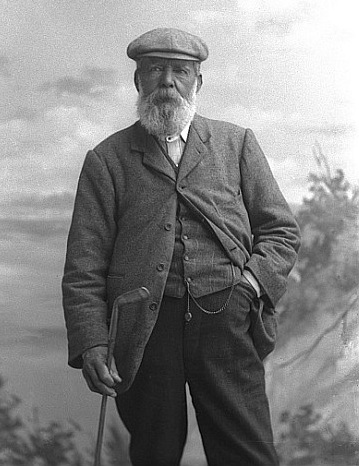
December 25, 1875: It is not a merry Christmas in St. Andrews, Fife, Scotland. "Young Tom" Morris, an early golf legend, and the son of an early golf legend known as "Old Tom" Morris, dies there. He is only 24 years old. He had recently played a match in terrible weather, and probably caught pneumonia.
Old Tom Morris

Although it would be a Scotsman, Alexander Fleming, who discovered penicillin, it would be decades before it could have saved Young Tom, who had also recently lost his wife and child in childbirth, and, between his grief and his illness, may have lost the will to live.

Thomas Mitchell Morris, born in 1821 in St. Andrews, lived on until 1908, as "The Grand Old Man of Golf." His son, named only Thomas Morris, was born in 1851 in St. Andrews. That town, home of the Royal and Ancient Golf Club, and the site of 30 British Opens (but never, through 2022, a Ryder Cup), is still "the Home of Golf," partly because of the legacy of the Tom Morrises.

NOTE: For a long time, with this project, I resisted putting in references to golf, because of the kind of people who tend to play it. I finally caved in, although I haven't included as many references as I would if it were a real sport, which it is not.

*

December 25, 1875 was a Saturday. There were no American sports on this day: Although both football and basketball would come to be associated with Christmas Day, the former barely existed, and its last game of the season was played on December 4; and the latter wasn't even invented for another 16 years.

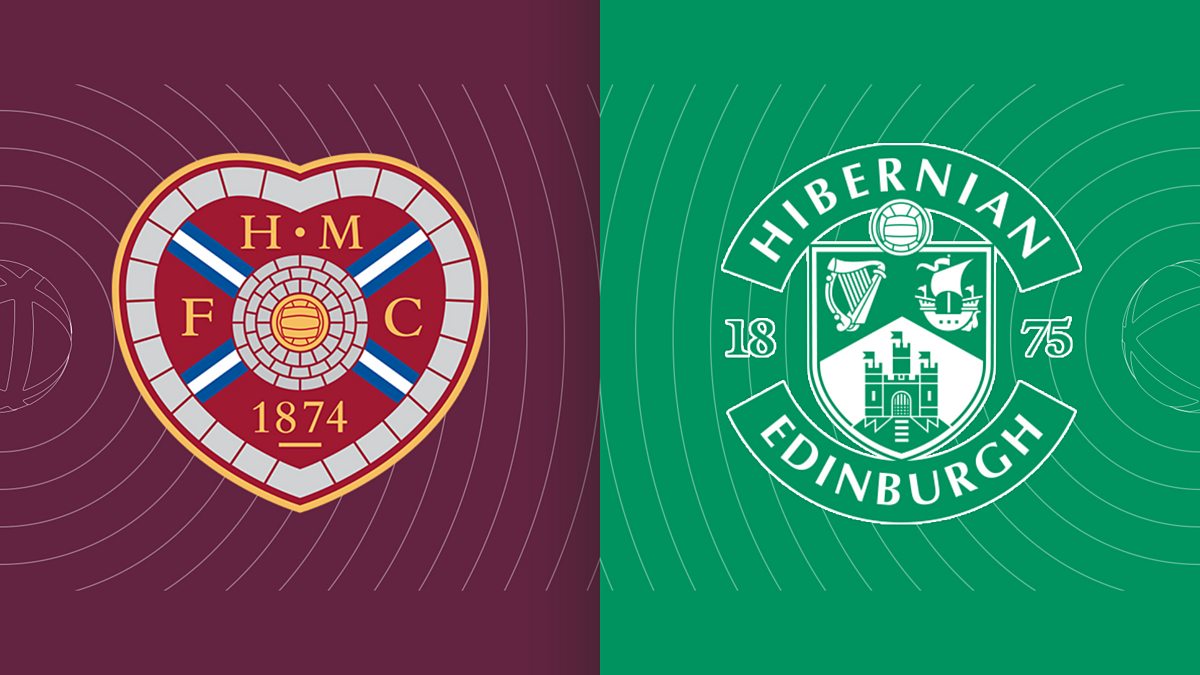
But there was soccer in Britain, including in the Morrises' native Scotland. The 1st Edinburgh Derby is played at a park known as The Meadows. Heart of Midlothian defeat Hibernian 1-0.

This is the oldest remaining senior "derby" in the world, older than the "Old Firm" in Glasgow, with similarities: Like Rangers, "Hearts" were founded as an all-Protestant side; while, like Celtic, "Hibs" ("Hibernia" was the Roman Empire's name for Ireland) were founded as a team for Catholic immigrants from Ireland. The colors are also similar: Like Celtic, Hibs wear green and white stripes; while Hearts wear blue, albeit a darker blue than Rangers.
In the modern era, the teams frequently play each other on the day after Christmas, Boxing Day, but not in the 1875 season.

December 24, 1977: The Dave Casper Game, "Ghost to the Post"

December 24, 1977: An NFL Playoff game is played on Christmas Eve, at Memorial Stadium in Baltimore. The Baltimore Colts, Champions of the AFC Eastern Division, face the Oakland Raiders, Champions of the AFC Western Division and defending World Champions.

The only score of the 1st quarter was a 30-yard touchdown run by the Raiders' Clarence Davis. In the 2nd quarter, the Colts' Bruce Laird intercepted Ken Stabler, and returned it 62 yards for a touchdown. Later in the quarter, Toni Linhart, the Colts' Austrian kicker, kicked a 36-yard field goal, and it was 10-7 Baltimore at the half.

Stabler capped the Raiders' 1st drive of the 2nd half with an 8-yard touchdown pass to tight end Dave Casper. He was nicknamed "Ghost," after the cartoon character Casper the Friendly Ghost. That touchdown was immediately canceled out by Marshall Johnson returning the ensuing kickoff 87 yards for a touchdown, and the Colts were back up, 17-14. Later in the 3rd quarter, former Colt Ted Hendricks, a linebacker known as "The Mad Stork," blocked a punt, setting up another Stabler-to-Casper touchdown, and it was 21-17 Oakland.

Early in the 4th quarter, Ron Lee ran the ball in to make it 24-21 Baltimore. The Raiders struck back, and Pete Banaszak scored to make it 28-24 Oakland. With less than 8 minutes to go, Lee ran the ball in to make it 31-28 Colts.

Stabler went to work, and got into Colt territory with 2:17 left. Tom Flores, a former Raider quarterback, now the offensive coordinator under head coach John Madden, and later his replacement as head coach, told Stabler, "Take a peek at the Ghost to the post," meaning a deep pattern by Casper, who would then turn toward the goalpost, a play designed to draw the Colts' safeties away so that the receivers could catch the ball. Casper later said that the play had been effective, but he hadn't caught a pass on it in the entire regular season.

Stabler threw a pass that looked like it would fall well beyond Casper. But Casper changed direction, and made a sensational catch, going down at the Colts' 14-yard line. With 29 seconds left, Errol Mann kicked a 31-yard field goal, and the game went to overtime.

The 1st overtime, the 5th quarter, was scoreless. The game went to a 2nd overtime, a 6th quarter, making it the 3rd-longest game in NFL or AFL history to that point. (As of the 2022 season, it is the 5th-longest.) Just 43 seconds into that period, Stabler ended the game with his 3rd touchdown pass of the game to Casper: Raiders 37, Colts 31.

This would be the last Playoff game that Memorial Stadium would ever host: After 3 straight Division titles, the Colts never made the Playoffs in Baltimore again, and moved to Indianapolis in 1984. The original version of the Cleveland Browns became the Baltimore Ravens in 1996, played 2 seasons at Memorial Stadium, and then moved into what is now known as M&T Bank Stadium.

By that point, the Raiders had gone to the 1977 AFC Championship Game, lost it to the Denver Broncos, won Super Bowl XV, moved to Los Angeles, won Super Bowl XVIII, and moved back to Oakland.

A 5-time Pro Bowler, Casper became a financial planner, and was elected to the Pro Football Hall of Fame in 2002. As of December 24, 2022, he is still alive. A 4-time Pro Bowler, Stabler became a broadcaster, died in 2015, and was elected to the Hall of Fame the next year.

*

December 24, 1977 was a Saturday. Baseball was out of season. There were no college football bowl games on this day. Neither the NHL nor the WHA played any games, as usual for Christmas Eve and Christmas Day. The NBA usually plays on Christmas Day, but not on Christmas Eve, and didn't play on this day, either. Neither did the ABA.

There was 1 other NFL Playoff game that day: The Denver Broncos beat the Pittsburgh Steelers, 34-21 at Mile High Stadium in Denver. The next day being a Sunday, but also being Christmas Day, the NFL had previously been ripped for playing a 1971 Playoff game on Christmas.

So they pushed these games back to Monday, the 26th: The Dallas Cowboys beat the Chicago Bears, 37-7 at Texas Stadium in the Dallas suburb of Irving, Texas; and the Minnesota Vikings beat the Los Angeles Rams, 14-7 at the Los Angeles Memorial Coliseum. That's one of the first football games I can ever remember seeing on television. Despite Southern California being known for not much rain, this game became was known as the Mud Bowl: The players got so muddy, I couldn't tell the difference between the blue and gold Rams and the purple and white Vikings.

In the Conference Championship Games, the Broncos beat the Raiders, and the Cowboys beat the Vikings. In Super Bowl XII, the Cowboys beat the Broncos.

December 24, 1968: The Earth As Seen From the Moon

December 24, 1968: Apollo 8 becomes the 1st Earth spacecraft to orbit Earth's Moon. It shows 2 images never before seen on Earth: The far side of the Moon, and Earth as seen from the Moon.

The mission was commanded by Colonel Frank Borman, U.S. Air Force. The pilot of the command module was Commander James Lovell, U.S. Navy. This was the first "space reunion": They had flown together on Gemini 7. Lovell was set to fly on Apollo 9, but was moved up to this mission after the intended CM pilot, Michael Collins, required back surgery. The pilot of the lunar module was Colonel William A. Anders, U.S. Air Force. 

It was Borman's 2nd spaceflight, and Lovell's 3rd, and it remains the only U.S. spaceflight on which the commanding officer was not the most-experienced in space. Lovell had also flown aboard Gemini 12. It was Anders' 1st spaceflight, and, as it turned out, his only one.

The entire setup, with command, service and lunar modules, was being sent even though the lunar module was not going to be separated, much less land on the Moon. Unlike later Apollo missions, neither the command module nor the lunar module had a codename.

The mission was launched on December 21. They entered lunar orbit on December 24, Christmas Eve. They became the 1st humans to see the Far Side of the Moon, and the 1st to see not a sunrise, or a moonrise, but an Earthrise, with the Earth in "phase," like the Moon is usually seen in from Earth.

"Look at that picture over there!" Anders called out. "Here's the Earth coming up. Wow, is that pretty!" He then took the photo at the top of this post. Borman called it "the most beautiful, heart-catching sight of my life."

They knew that they would be the 1st people from Earth to spend Christmas away from Earth. They wanted to express a Christmas-style message of "Peace on Earth, good will toward men." But instead of something actually Christmas-related, they instead read back to the people of Earth, through television, the Bible's Creation story.

At 9:30 PM, Eastern Time, Anders said, "We are now approaching lunar sunrise, and for all the people back on Earth, the crew of Apollo 8 has a message that we would like to send to you: In the beginning, God created the Heaven and the Earth. And the Earth was without form, and void; and darkness was upon the face of the deep. And the Spirit of God moved upon the face of the waters. And God said, 'Let there be light.' And there was light. And God saw the light, that it was good: and God divided the light from the darkness."

Lovell: "And God called the light Day, and the darkness He called Night. And the evening and the morning were the first day. And God said, 'Let there be a firmament in the midst of the waters, and let it divide the waters from the waters.' And God made the firmament, and divided the waters which were under the firmament from the waters which were above the firmament, and it was so. And God called the firmament Heaven. And the evening and the morning were the second day."

Borman: "And God said, 'Let the waters under the Heaven be gathered together unto one place, and let the dry land appear.' And it was so. And God called the dry land Earth; and the gathering together of the waters called he Seas, and God saw that it was good.' And from the crew of Apollo 8, we close with good night, good luck, a Merry Christmas, and God bless all of you, all of you on the good Earth."

After a very hard year, of war, of assassinations, of civil strife, this was a message of hope, a sign that, maybe, just maybe, things would be all right in the years to come. That was not to be, but the people of Earth had reason to believe that it might be. Because of this, in spite of the Vietnam War, and the election of Richard Nixon as the next President of the United States, Time magazine named Borman, Lovell and Anders their Men of the Year.
Apollo 8 was significant for another reason: It made the Soviet Union surrender in the race to the Moon. Their Zond project had originally planned a manned flyby of the Moon in late 1967, and a landing in December 1968. But they fell behind, due to various failures. The success of Apollo 8 showed them that trying to beat the U.S. to a manned Moon landing was pointless, and that their resources would be better spent in other ways.

Michael Collins would become the command module pilot for Apollo 11, the 1st mission to land on the Moon. Borman was offered the role of commanding Apollo 11, which would have made him the 1st human to walk on the Moon. He declined, saying he was done with spaceflights, and retired from the Air Force in 1970. So the 1st Moonwalker was the backup to Borman as the commander for Apollo 8, Neil Armstrong. It happened on July 20, 1969, beating the late President John F. Kennedy's deadline of doing it by the end of the 1960s by 164 days.

Lovell would command Apollo 13, the only Moon landing mission that had to be aborted.

As of December 24, 2022, the entire crew of Apollo 8 is still alive. They are the earliest surviving specific Time Persons of the Year. (Time had named American fighting men in 1950, and would again in 2003; American scientists in 1960, and people age 25 and under in 1966.)

UPDATE: Borman died on November 7, 2023; Anders, on June 7, 2024; Lovell, on August 7, 2025.

None of them lived to see the return of humans to lunar orbit, aboard Artemis II. On April 6, 2026, crewmember Reid Wiseman took a new photo, a companion piece to Anders' Earthrise, naming it Earthset.
It had been so long than none of the Artemis II astronauts had even been born yet when humans last left the Moon on Apollo 17 in 1972.

*

December 24, 1968 was a Tuesday. No NBA, ABA, NHL or college football bowl games were scheduled for that Christmas Eve. So there were no scores on that historic day.

December 24, 1966: The 1st "Yule Log" Special

December 24, 1966: At 9:30 PM, New York television station WPIX, Channel 11, begins airing a six-minute loop of a Yule log burning in a fireplace. The program, titled simply Yule Log, was in color, and aired all through Christmas Day, December 25. In the years to come, other TV stations -- usually "independent" stations, not aligned with a major network -- would also run it.

The original footage was filmed on 16-millimeter film, at Gracie Mansion, the official residence of the Mayor of New York. (At the time, John Lindsay.) It was replaced in 1970, with a seven-minute loop, on 35-millimeter film.

In recent years, WPIX usually runs a marathon of 1950s sitcom The Honeymooners on Christmas Day. But it usually takes 5 hours out of the day to run Yule Log. (On both the 4th of July and New Year's Eve, they run a marathon of The Twilight Zone.)

The Yule log was originally one of the traditions that Christmas borrowed from the Winter Solstice. It was believed that burning one fended off evil spirits. Eventually, it became a symbol of Christmas cheer.

*

December 24, 1966 was a Saturday. Actor Diedrich Bader was born.

There was only one college football game played on this Christmas Eve, the Sun Bowl, at the stadium of the same name, in El Paso, Texas. The University of Wyoming beat Florida State, 28-20.

Baseball was out of season. The NFL and the AFL were between their regular seasons and their Championship Games. And no games were played in the NBA.

There were 2 games played in the NHL. The New York Rangers beat the Montreal Canadiens, 4-3 at the Montreal Forum. And the Toronto Maple Leafs beat the Boston Bruins, 3-0 at Maple Leaf Gardens in Toronto. The Chicago Black Hawks and the Detroit Red Wings were not scheduled.

December 24, 1951: The 1st Hallmark Christmas Movie

When was the 1st "Hallmark Christmas Movie"? It seems like a recent phenomenon. Indeed, the Hallmark Channel has made the sappy, holiday-themed romance films a regular feature of its October, November and December programming since 2009.

But before there was a Hallmark Channel, there was the anthology TV series Hallmark Hall of Fame. And the 1st one of those goes back a lot further than that. It's not a sappy romance story. And it's not an original story, either. Unless you mean a variation on the original Christmas story.

December 24, 1951: Amahl and the Night Visitors is broadcast on NBC, live from Studio 8H at 30 Rockefeller Plaza in New York. It is the 1st program in the Hallmark Hall of Fame series, sponsored by the Hallmark greeting-card company.

It is an opera, the 1st ever composed specifically for television, by Gian Carlo Menotti. He was born in 1911, in Cadegliano-Viconago, in Lombardy near the Italian border with Switzerland. In the booklet for the original cast recording, Menotti wrote:

This is an opera for children because it tries to recapture my own childhood. You see, when I was a child I lived in Italy, and in Italy we have no Santa Claus. I suppose that Santa Claus is much too busy with American children to be able to handle Italian children as well. Our gifts were brought to us by the Three Kings, instead.

I actually never met the Three Kings -- it didn't matter how hard my little brother and I tried to keep awake at night to catch a glimpse of the Three Royal Visitors, we would always fall asleep just before they arrived. But I do remember hearing them. I remember the weird cadence of their song in the dark distance; I remember the brittle sound of the camel's hooves crushing the frozen snow; and I remember the mysterious tinkling of their silver bridles.

(In fact, Italy does have a version of Santa Claus, although he's closer to St. Nicholas, the original bishop form of the character, known as Father Christmas in Britain, Père Noël in France, and, in Italy, Babbo Natale.)

The lead character is Amahl, a boy who, like Tiny Tim in Charles Dickens' A Christmas Carol, can walk only with a crutch. He compensates for his disability by telling tall tales. His mother does not believe him when he tells her there is an amazing star "as big as a window" outside over the roof of their house in Bethlehem.

After bedtime, there is a knock at the door and the mother tells Amahl to go see who it is. He is amazed when he sees three splendidly dressed kings, the Magi. (The Bible does not specifically call them kings. Nor does it specify the number of "wise men.") At first, the mother does not believe Amahl, but when she goes to the door to see for herself, she is stunned.

The Three Kings tell the mother and Amahl they are on a long journey, to give gifts to a wondrous Child, and they would like to rest at their house, to which the mother agrees, saying that all she can offer is "a cold fireplace and a bed of straw." The mother goes to fetch firewood, and Amahl seizes the opportunity to speak with the kings.

King Balthazar answers Amahl's questions about his life as a king, and asks what Amahl does. Amahl responds that he was once a shepherd, but his mother had to sell his sheep. Now, he and his mother will have to go begging.

Amahl then talks with King Kaspar, who is childlike, eccentric, and a bit deaf. Kaspar shows Amahl his box of magic stones, beads, and licorice, and offers Amahl some of the candy. The mother returns. He defends himself, saying "They kept asking me questions," when of course it has in fact been Amahl asking the kings questions. Amahl is told to go fetch the neighbors, so the kings may be fed and entertained properly.

After the neighbors have left and the kings are resting, the mother attempts to steal for her son some of the kings' gold that was meant for the Christ Child. She is thwarted by the kings' page. When Amahl wakes to find the page grabbing his mother, he attacks him. Seeing Amahl's defense of his mother and understanding the motives for the attempted theft, King Melchior says she may keep the gold, as the Holy Child will not need earthly power or wealth to build his kingdom.

The mother says she has waited all her life for such a king and asks the kings to take back the gold. She wishes to send a gift but has nothing to send. Amahl, too, has nothing to give the Child except his crutch. When he offers it to the kings, his leg is miraculously healed. With permission from his mother, he leaves with the kings to see the Child, and give his crutch in thanks for being healed.

Thomas Schippers conducted the orchestra. Chet Allen, then 12 years old, played Amahl. Rosemary Kuhlmann played the Mother, Andrew McKinley played King Kaspar, David Aiken played King Melchior, Leon Lishner played King Balthazar, and Francis Monachino played the page. Melissa Hayden, Glen Tetley and Nicholas Magallanes played "Dancing Shepherds."

Amahl and the Night Visitors was the 1st network television Christmas special to become an annual tradition. Until 1963, Amahl was nearly always presented with many of the same singers and production staff. From 1951 until 1966 it was presented every year on NBC on or around Christmas Eve. A 1978 production of Amahl also premiered on NBC, before it went to cable television in the early 1980s. A British film version was made in 1996.

Nicholas Magallanes and later Thomas Schippers died in 1977. Chet Allen became depressed over his failing career, and died by suicide in 1984. Leon Lishner died in 1995, Andrew McKinley in 1996, Francis Monachino in 2003, Melissa Hayden in 2006, Glen Tetley and later Gian Carlo Menotti in 2007, David Aiken in 2011, and Rosemary Kuhlmann was the last survivor of the cast, living until 2019.

Studio 8H has been the home of NBC's Saturday Night Live since 1975. Most of Menotti's work is forgotten. Arturo Toscanini, NBC's Italian-born main conductor, knew it when he heard the rehearsal for Amahl, telling him, "This is the best you've ever done."

*

December 24, 1951 was a Monday. Baseball was out of season. No games were scheduled in the NBA or the NHL And the NFL Championship Game was played the previous day, with the Los Angeles Rams beating the Cleveland Browns, 24-17 at the Los Angeles Memorial Coliseum. So there were no scores on this historic day.

December 24, 1931: The 1st Rockefeller Center Christmas Tree

December 24, 1931: This is the 1st Christmas with a Christmas tree in Rockefeller Center in New York, even though the project is still under construction. 30 Rockefeller Plaza -- a.k.a. 30 Rock, and known as the RCA Building, then the GE Building from 1988 to 2015, and now the Comcast Building -- opened on May 1, 1933, and the Rockefeller Center Skating Rink in 1936. The tree has been placed between 30 Rock's front entrance and the Rink ever since.

The tree is usually a Norway Spruce, nearly always cut from somewhere in New York State, and tends to rise to between 70 and 100 feet. It is decorated only with lights, not "ornaments" as we now understand that term. With 30 Rock's most famous tenant being NBC, the tree-lighting ceremony, presided over by the Mayor of New York, was televised locally beginning in 1951 and nationally since 1997.

Some cities, including Philadelphia, Baltimore, Pittsburgh, Miami and Denver,  have their main trees at City Hall. Other cities:

* Atlanta: Colony Square.
* Boston: Boston Common.
* Chicago: Millennium Park.
* Cincinnati: Fountain Square.
* Cleveland: Public Square.
* Dallas: The Galleria Dallas, a shopping mall.
* Detroit: Campus Martius Park.
* Kansas City: Crown Center.
* Los Angeles: The Grove at The Farmers' Market.
* Milwaukee: Fiserv Forum, the new sports arena.
* Minneapolis: Nordic Plaza.
* New Orleans: The French Market.
* St. Louis: Kiener Plaza Park, in front of the Old Courthouse.
* San Diego: Liberty Station.
* San Francisco: Union Square.
* Seattle: Pike Place Market.
* Washington, D.C.: In front of the White House.

*

December 24, 1931 was a Thursday. Baseball was in the off-season. Football was in midweek: There was a college game on Christmas Day, but no college or pro games on this Christmas Eve. The NBA hadn't been founded yet.

There was 1 game in the NHL: The Toronto Maple Leafs beat their arch-rivals, the Montreal Canadiens, 2-1 at the Montreal Forum. Harvey "Busher" Jackson, the left wing on the Leafs' "Kid Line" with right wing Charlie Conacher and center Joe Primeau, scored the winning goal 9:55 into overtime.

December 31, 1999 & January 1, 2000: The Millennium

December 31, 1999:  The Millennium arrives. The people of planet Earth survived. At a terrible cost. But we hadn't destroyed ourselves. ...