Showing posts with label 1879. Show all posts

Friday, October 21, 2022

October 22, 1879: Thomas Edison Invents the Light Bulb

October 22, 1879Thomas Alva Edison successfully tests his "incandescent lamp," with a carbon filament that glows for 13 1/2 hours at his lab in the Menlo Park section of Raritan Township, Middlesex County, New Jersey. Raritan would be renamed The Township of Edison in 1954.

Soon, he could make it last 1,500 hours -- over 2 months. So while Edison didn't really "invent the light bulb," he did make the 1st practical one, thus he gets the credit for its invention. (What credit he deserves for other things is debatable, so if anyone posts this on Reddit, let the record show that he did screw over Reddit's secular god, Nikola Tesla.)

This made artificially lit sporting events possible. The 1st night football game will be played in 1892, the 1st night game in the NFL and the 1st night game in professional baseball in 1930, and the 1st night game in Major League Baseball in 1935. This also makes the indoor sports of basketball and hockey possible without windows large enough to let in enough sunlight to get in the players' eyes.

Thomas Edison loved baseball, calling it "the greatest of American games." He lived to see some amazing things, but he never saw a night game. He died in 1931, having looked out his window and spoken his last words: "It's very beautiful over there."

A 2013 episode of the YouTube series Epic Rap Battles of History followed the rivalry between Edison and Nikola Tesla, which had become a running gag on the Internet. "Epic" Lloyd Ahlquist played Edison, and ERB crewmember Dante Cimadamore played Tesla.

*

October 22, 1879 was a Wednesday. There were no sporting events played.

Monday, June 20, 2022

June 21, 1879: MLB's 1st Black Player

June 21, 1879: For the 1st time, a black man plays in Major League Baseball. This was 40 years before the birth of Jackie Robinson, and 5 years before the arrival of Moses and Weldy Walker. What's more, it seems that nobody knew it at the time -- except for the player himself.

William Edward "Bill" White plays 1st base for the Providence Grays. He went 1-for-4 and scored a run, and the Grays beat the Cleveland Blues, 5-3 at the Messer Street Grounds in Providence, Rhode Island.

Joe Start was the Grays' regular 1st baseman, and one of the best all-around players of that era. He was injured on that occasion, and White played in his place.

Little is known about White, including his exact birthdate: He appears to have been born sometime in October 1860, right before the American Civil War, in Milner, Georgia, the son of a white planation owner and a black slave -- which, if true, would make him the only former slave to play in MLB.

Having a white father and, figuratively and literally, a White name, Bill White chose to "pass as white," something the Walker brothers could not do. As a result, there is no recorded objection to his having played: It's possible that no one on either team knew he was black.

Furthermore, it took a lot of searching to determine that White was the 1st black major leaguer: For a long time, it was thought that Moses Walker was. But in 2007, researcher Pete Morris found White and determined his heritage. But since he passed as white, many baseball historians still consider Walker the first black player, because he was the first to, as we would say now, identify as black.

White died on March 29, 1937, in Chicago. He was 76. Jackie Robinson debuted with the Brooklyn Dodgers 10 years and 17 days later.

This Bill White appears to be no relation to the Bill White who would later be a star 1st baseman for the St. Louis Cardinals, become the 1st black broadcaster for a major league team, and become the 1st black President of a major league.

*

June 21, 1879 was a Saturday. There were 2 other games played in the National League that day. The Cincinnati Reds beat the Boston Red Stockings, 15-13 at the South End Grounds in Boston. These Reds folded at the end of the season, and the current team with the name began play in the American Association in 1882. The Red Stockings are the forerunners of the team now known as the Atlanta Braves.

And the Chicago White Stockings beat the Syracuse Stars, 5-3 at Newell Park in Syracuse, New York. The Stars folded after the season, while the White Stockings became known as the Chicago Cubs in 1903.

Sunday, May 29, 2022

May 30, 1879: The 1st College Football Game in the Midwest

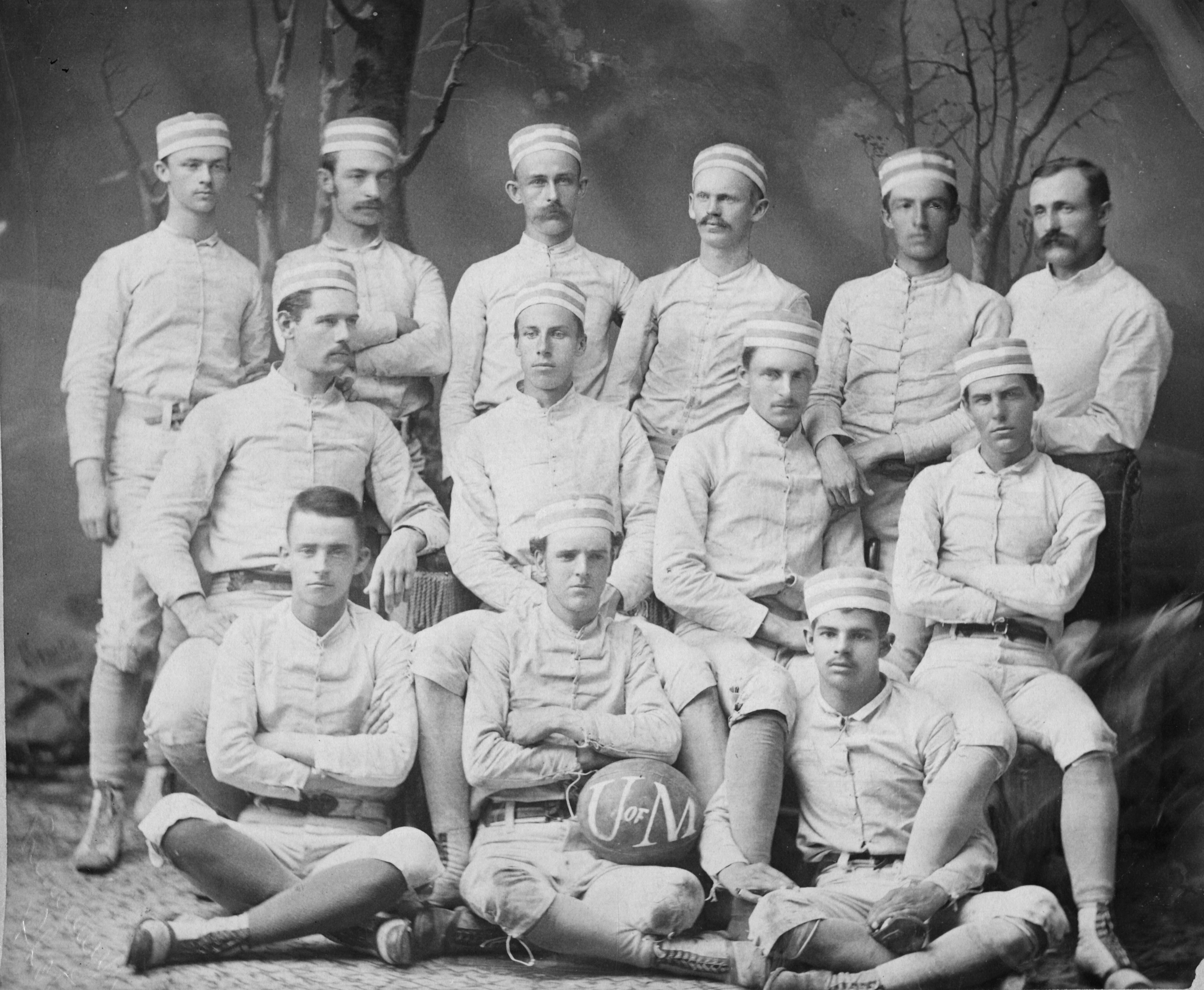
The 1879 University of Michigan football team

May 30, 1879: For the 1st time, a college football game is played in the Midwest. The game is played at the home field of the Chicago White Stockings of baseball's National League, the team that will one day be known as the Chicago Cubs. The facility was variously known as the Union Base-Ball Grounds, White-Stocking Park, Lake-Shore Park, Lake Front Park, or just Lake Park. Like the later home of the New York Giants, the Polo Grounds, this facility had a shape that made it much better suited to football than to baseball.

The University of Michigan met Racine College, of Wisconsin, and won 1-0, on a place-kick by David DeTarr. In modern terms, it was a field goal. Under today's rules, the score of the game would have been 3-0.

Racine College was run by the Episcopal Church between 1852 and 1933, when it had to close due to the Great Depression. The DeKoven Foundation took over the campus, and has run various events there ever since.

The University of Michigan, of course, went on to become the first true college football power in the Midwest. In 1896, it was a founding member of the Western Conference, along with the Universities of Chicago, Illinois, Minnesota, and Wisconsin; and Northwestern and Purdue Universities. Indiana University and the University of Iowa joined in 1899, and it was renamed the Big Nine Conference. Ohio State University joined in 1912, and it was renamed the Big Ten Conference.

The University of Chicago dropped football after the 1940 season, and the league was again known as the Big Nine. Michigan State University joined in 1950, and it was again the Big 10. Despite new arrivals, the Big 10 name has stuck.

*

May 30, 1879 was a Friday. These National League baseball games were played that day:

* The Chicago White Stockings beat the Boston Red Stockings, 8-0 at the original South End Grounds in Boston. These teams are known today as the Chicago Cubs and the Atlanta Braves.

* The Providence Grays beat the Buffalo Bisons, 4-0 at the Messer Street Grounds in Providence, Rhode Island. The Grays won the NL Pennant in 1879, and did so again in 1884. Yet, after just 1 more season, the Grays went out of business. The Bisons did, too. As it turned out, they played their last game against each other.

* The Cincinnati Reds beat the Troy Trojans, 4-2 at the Putnam Grounds in Troy, New York, across the Hudson River from the State capital in Albany. Not the same team as the 1st openly professional team, the 1869-70 Cincinnati Red Stockings, these Reds were charter members of the NL in 1876, but went out of business after this season. In 1882, the American Association was founded, with a new Cincinnati Reds. That team joined the NL in 1892, after the AA folded, and that is the current team with the name.

The Trojans are often said to have moved in 1883, to become the New York Giants. That's not what happened, although the confusion is understandable: The Trojans folded; the Giants, then known as the New York Gothams, took their place in the NL; and 4 Trojan players joined the Gothams.

* And the Syracuse Stars beat the Cleveland Blues, 4-2 at Newell Park in Syracuse, New York. The Stars folded before the end of the season.

Sunday, January 30, 2022

January 31, 1879: Washington's Birthday Is Declared a Federal Holiday

January 31, 1879: Congress establishes the anniversary of the birth of the 1st President of the United States, George Washington, as a federal holiday: "Washington's Birthday."

Washington was born on February 22, 1732, at Popes Creek, in Westmoreland County, Virginia, 70 miles south of the national capital that would be built at a site he chose and would be named after him. His great-grandfather, John Washington, had settled a plantation there in 1657, during the Protectorate of Oliver Cromwell, between the reigns of the House of Stuart. His father, Augustine Washington, built what became the birth house there in 1718, during the reign of King George I of Britain. The future "Father of Our Country" was born there during the reign of King George II.

The house burned down on Christmas Day, December 25, 1779, during the War of the American Revolution, and thus during the reign of King George III. However, it appears to have been an accident, not the work of the British Army. The Memorial House was built on the site in 1932, to commemorate the 200th Anniversary of Washington's birth.
Washington's Birthday was celebrated on February 22 from 1879 until 1970. To give federal employees a three-day weekend, in 1968, the Uniform Monday Holiday Act moved it to the 3rd Monday in February, which can occur between February 15 and 21, starting in 1971.

The day soon became known as Presidents(') Day -- the presence and placement of the apostrophe varies -- and provides an occasion to remember all the U.S. Presidents, to honor Abraham Lincoln's and Washington's birthdays together, or any single President of choice.
Lincoln was born on February 12, 1809, in Hodgenville, Kentucky, 59 miles south of Louisville, in, yes, a log cabin. But the cabin in question had been dismantled at some point prior to his death from assassination on April 15, 1865. A replica was built in 1911.
Contrary to popular belief, Lincoln's Birthday has never been a federal holiday, although some States, including my own New Jersey, observed it as a State holiday. When I started in public school in 1975, we got both Lincoln's Birthday on February 12 and Washington's Birthday on the 3rd Monday in February off from school. By the time I reached junior high school in 1981, we were observing just one February holiday, Presidents Day.

*

January 31, 1879 was a Friday. There were no scores on this day: Baseball and football were both out of season, basketball didn't exist yet, and hockey barely did.

Friday, January 21, 2022

January 22, 1879: The Battle of Isandlwana

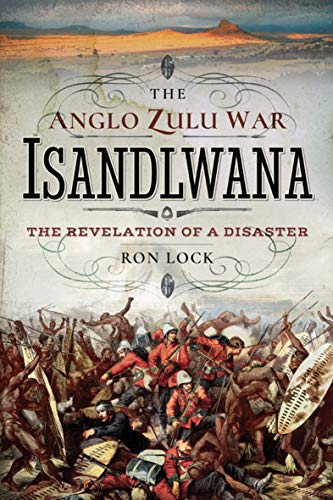
January 22, 1879: The Battle of Isandlwana is fought, at the hill of the same name near Kwa-Nyoni, in what's now KwaZulu Natal province, South Africa. It was the greatest victory any African military force has achieved since the days of ancient Egypt, and the greatest defeat suffered by the British Army during the Victorian era.

The Anglo-Zulu War had broken out on January 11, when Cetshwayo, King of the Zulu Kingdom, nephew of the early 19th Century King Shaka, refused to disband his army so that Britain could create a confederation in South Africa the way they had done in Canada.

Isandlwana was the first major engagement of the war. A Zulu force of 20,000 attacked 1,800 British troops. Despite the British having mountain guns and a rocket battery, while the Zulus had muskets at best and spears at worst, the British lost 1,300 men (about 72 percent of their force), while the Zulus lost about 3,000 (about 15 percent).

British troops withdrew to Rorke's Drift, 10 miles to the west. The next day, 4,000 Zulus attacked Rorke's Drift, defended by only 150 British men, who managed to drive them back. This was considered a victory, and 11 Victoria Crosses were awarded.

When word of Isandlwana and Rorke's Drift got back to London, Prime Minister Benjamin Disraeli ordered a lot more troops sent to South Africa. It worked: On July 4, the war was over, and Cetshwayo was sent into exile. He was allowed to return to his homeland, and died in 1884.

In 1887, the Zulu Kingdom was absorbed into the Colony of Natal, and became part of the Union of South Africa in 1910.

Harry Figg, a male Army nurse, was the last survivor of the Anglo-Zulu War, living until 1953, long enough to see Elizabeth II become Queen. In 1964, the film Zulu premiered, telling the story of Rorke's Drift, and making a star out of Michael Caine. In 1979, Zulu Dawn premiered, telling the story of Isandlwana.

Around that time, one of the first integrated "hooligan firms" developed, supporting English soccer team Birmingham City. Because they were integrated, and believed there were heroes on both sides, they named themselves the Zulu Army.

*

January 22, 1879 was a Wednesday. This was the off-season for baseball and American football. Basketball had not yet been invented, and hockey barely existed. Therefore, there were no scores on this historic day.

December 31, 1999 & January 1, 2000: The Millennium

December 31, 1999:  The Millennium arrives. The people of planet Earth survived. At a terrible cost. But we hadn't destroyed ourselves. ...