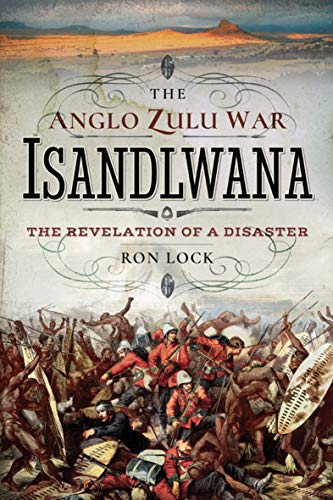
January 22, 1879: The Battle of Isandlwana is fought, at the hill of the same name near Kwa-Nyoni, in what's now KwaZulu Natal province, South Africa. It was the greatest victory any African military force has achieved since the days of ancient Egypt, and the greatest defeat suffered by the British Army during the Victorian era.
The Anglo-Zulu War had broken out on January 11, when Cetshwayo, King of the Zulu Kingdom, nephew of the early 19th Century King Shaka, refused to disband his army so that Britain could create a confederation in South Africa the way they had done in Canada.
Isandlwana was the first major engagement of the war. A Zulu force of 20,000 attacked 1,800 British troops. Despite the British having mountain guns and a rocket battery, while the Zulus had muskets at best and spears at worst, the British lost 1,300 men (about 72 percent of their force), while the Zulus lost about 3,000 (about 15 percent).
British troops withdrew to Rorke's Drift, 10 miles to the west. The next day, 4,000 Zulus attacked Rorke's Drift, defended by only 150 British men, who managed to drive them back. This was considered a victory, and 11 Victoria Crosses were awarded.
When word of Isandlwana and Rorke's Drift got back to London, Prime Minister Benjamin Disraeli ordered a lot more troops sent to South Africa. It worked: On July 4, the war was over, and Cetshwayo was sent into exile. He was allowed to return to his homeland, and died in 1884.
In 1887, the Zulu Kingdom was absorbed into the Colony of Natal, and became part of the Union of South Africa in 1910.
Harry Figg, a male Army nurse, was the last survivor of the Anglo-Zulu War, living until 1953, long enough to see Elizabeth II become Queen. In 1964, the film Zulu premiered, telling the story of Rorke's Drift, and making a star out of Michael Caine. In 1979, Zulu Dawn premiered, telling the story of Isandlwana.
Around that time, one of the first integrated "hooligan firms" developed, supporting English soccer team Birmingham City. Because they were integrated, and believed there were heroes on both sides, they named themselves the Zulu Army.
*
January 22, 1879 was a Wednesday. This was the off-season for baseball and American football. Basketball had not yet been invented, and hockey barely existed. Therefore, there were no scores on this historic day.


No comments:
Post a Comment