Showing posts with label north korea. Show all posts

Wednesday, September 21, 2022

September 21, 1953: Operation Moolah

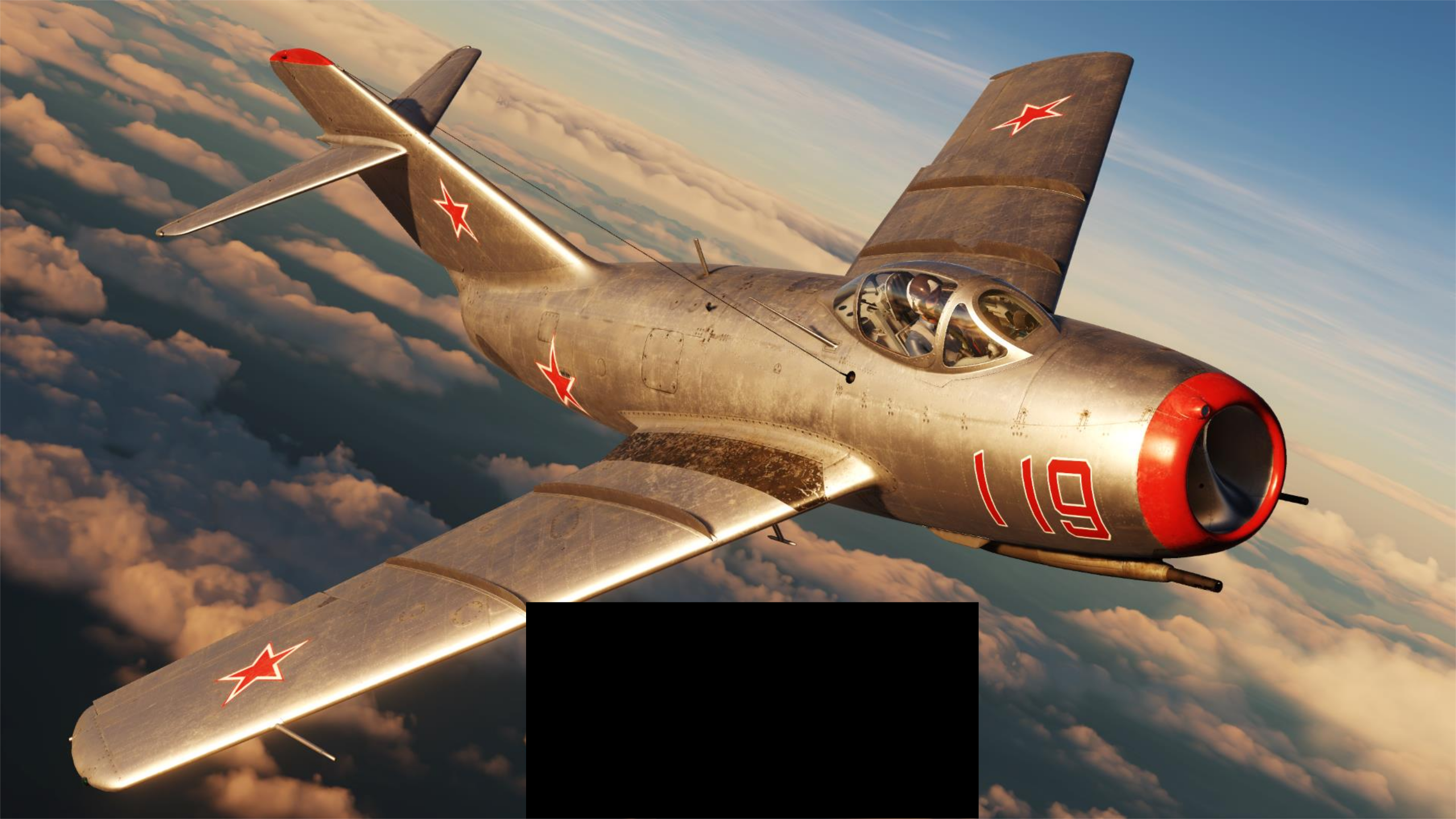
September 21, 1953: No Kum-Sok, a pilot in North Korea's air force, defects, flying his Soviet-made MiG-15 jet into South Korea.

The American government offered him $100,000. He turned the money down. All he wanted was political asylum, to no longer have to live under Communism. He got his wish.

The United States Department of Defense launched "Operation Moolah" on April 27, 1953. The Pentagon offered $50,000 -- double that for the first one to do so -- to any pilot bringing them a Soviet-made MiG-15, fighter jet, because U.S. Air Force pilots, forced to engage in "dogfights" with them, said it was a better plane than their main jet, the F-86 Sabre. (That $50,000 sum works out to about $544,000 in 2022 money.)
The "MiG" was named for its designers:
Artem Mikoyan and Mikhail Gurevich.
Operation Moolah turned out to be something of a damp squib: The Korean War ended in an armistice just 3 months after the operation began, with no takers. What did happen was that MiGs were grounded for several days right after the public bribe campaign began. And when the MiGs started flying again, Americans began blowing them out of the sky at an unprecedented rate.

Two months after the war ended, on September 21, No Kum-Sok showed up in his MiG at Kimpo Air Base, outside the South Korean capital of Seoul, having no knowledge of the financial reward for doing so. He said he'd heard rumors that his loyalty was being investigated, and in a Communist country like North Korea, that is a bad thing. So he flew his MiG-15 and flew the coop, defecting.

Chuck Yeager, the 1st man to break the sound barrier in a plane, flew the captured MiG, and said it was "the most demanding situation I ever faced." The North's aerial victories were not due to the plane being amazing, he said, but that their pilots were well trained in dogfight tactics.

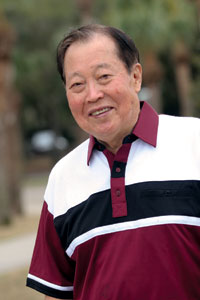
No immigrated to the United States, changed his name to Kenneth Rowe, went to school, and worked as an aeronautical engineer for companies such as Boeing, Grumman, Pan Am, and Lockheed. As of September 21, 2022, he is still alive.
(UPDATE: He died on December 26, 2022, in Daytona Beach, Florida, at the age of 90.)

*

September 21, 1953 was a Monday. Arie Luijendijk, the Dutch auto racer known as "The Flying Dutchman," winner of 2 Indianapolis 500s, was born on that day. 

There was 1 baseball game played: The St. Louis Cardinals beat their arch-rivals, the Chicago Cubs, 4-0 at the first ballpark to be named Busch Stadium, which, until that season, had been the last ballpark to be named Sportsman's Park. Harvey Haddix pitched a 4-hit shutout. Stan Musial went 1-for-4. Rookie Ernie Banks went 1-for-3.

Thursday, September 15, 2022

September 15, 1950: The Incheon Landing

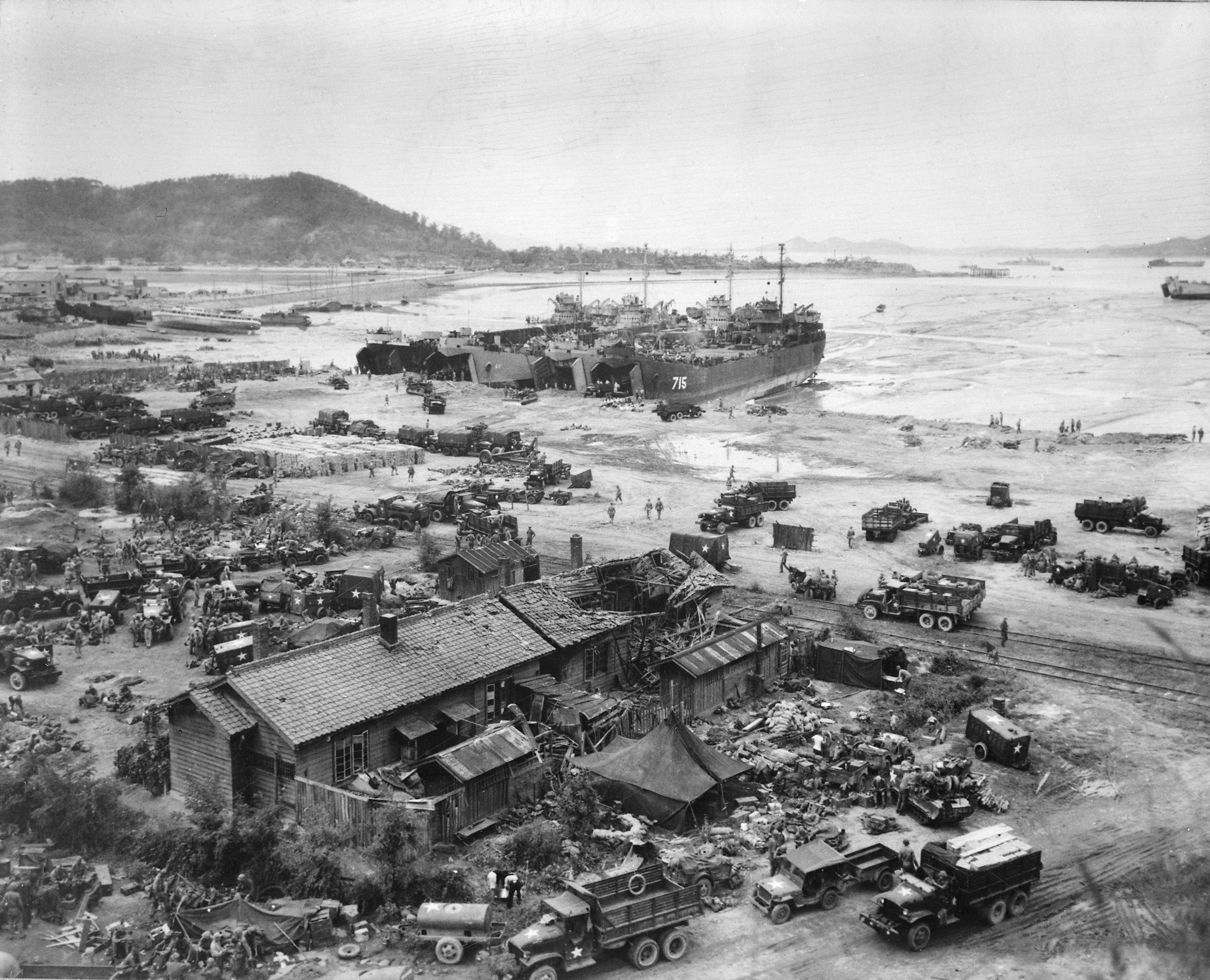
September 15, 1950: General of the Army Douglas MacArthur, supreme commander of United Nations forces, launches what amounts to the Korean War's "D-Day," an amphibious landing of 40,000 infantry from 230 ships.

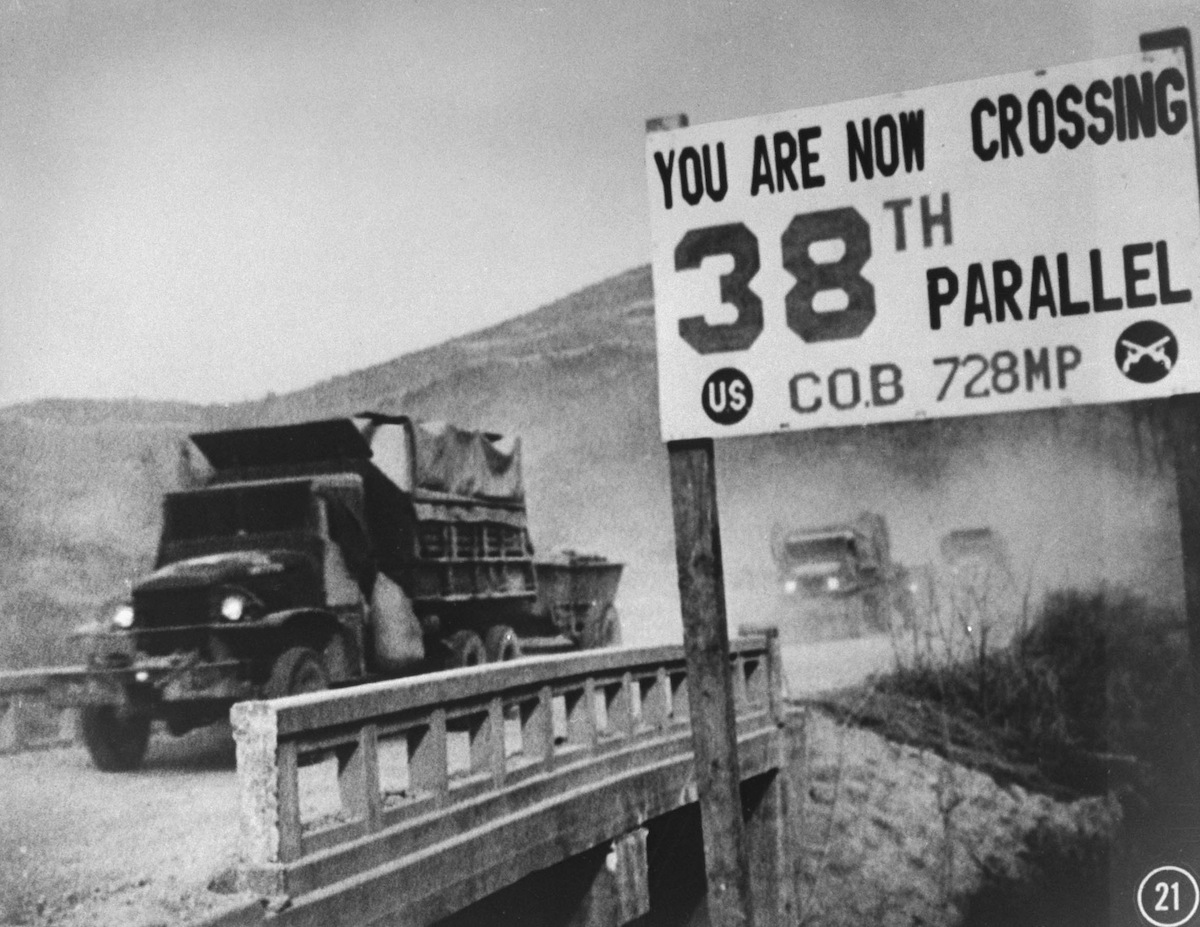
On June 25, troops of the Democratic People's Republic of Korea (a.k.a. North Korea), a Communist nation, and by no means democratic or a republic -- crossed the parallel of 38th degrees north latitude, and invaded the Republic of Korea (a.k.a. South Korea), which was capitalist, but hardly free.

Two days later, President Harry S Truman announced that American and other NATO forces would come to the aid of South Korea. The next day, North Korean troops took the South Korean capital of Seoul. But it was not just NATO troops, but 15 United Nations countries that came to the South's aid.

At first, it looked like that aid might be too late. On August 5, North Korea had South Korean troops backed up into the southeastern corner of the peninsula, centered on the city of Pusan (now usually written in English as "Busan"). They held what became known as the Pusan Perimeter. It was a siege, but the ROK troops were holding on.

There would be no evacuation, the way the Nationalist Chinese had gone to Taiwan the previous year; the American troops had done in the Philippines in 1942, by escaping to Australia; or the British troops had done at Dunkirk in 1940 by retreating to their home island.

It wasn't just a matter of pride: The South Koreans had no place to go. American troops could have evacuated them to the nearest friendly country, but that would be Japan, where "friendly" was a bit of a stretch: That nation had occupied them from 1910 (and had effectively ruled them from 1876) until the end of World War II in 1945 -- just 5 years earlier. And Japan was still in the rebuilding process: Taking on millions of Korean refugees was not part of the plan of their military governor.

That was MacArthur, the 70-year-old 5-star General who had been commander of Allied forces in the Pacific. In spite of his age, there was no one more qualified to lead the mission than "Big Mac." As with D-Day, the invasion of Normandy in France in 1944, the U.S. had a deception operation underway, to convince the enemy that the invasion would be elsewhere -- in this case, at Kunsan, 105 miles to the south. The Communist spy network bought it.

After 5 days of bombing to provide air support, MacArthur, invading with his troops as he had at Leyte Gulf in the Philippines in 1944, gave the green light on September 15. The invasion began at 6:30 AM, local time. As with Normandy, there were invasion points given different code names: Green Beach, Red Beach and Blue Beach. The U.N. lost 224 troops; the North Koreans, 1,350.
MacArthur famously didn't like the photo
of him wading ashore in the Philippines in 1944.
I'm thinking he liked this one much more.

Within 2 days, U.S. forces were able to take Kimpo, Seoul's international airport. Within 2 more, they were able to use it to bring more troops in. By September 22, they had over 53,000 men on the ground. By September 25, Red troops had abandoned the Pusan Perimeter, and were attempting to defend their ill-gotten gains at Seoul. On September 28, they had to abandon that.

In a span of 2 weeks, MacArthur had led, for all intents and purposes, the liberation of South Korea. He wanted more: He wanted to kick the Commies completely off the peninsula. He nearly did it: By November 26, 10 weeks after the Incheon landing, he had them backed up to the Yalu River, which separates the Korean peninsula from mainland China (and, technically, makes Korea not a peninsula but an island).

China then intervened on behalf of its Communist "little brother." Again, U.N. troops were pushed below the 38th parallel. By April 1951, they had gained back most of South Korea's territory, and a line cutting southwest-to-northeast across the peninsula became like the trench warfare of World War I, 35 years earlier.

At the end of the calendar year 1950, Time magazine named its first collective "Men of the Year": "The American Fighting Man." In 2000, on the 50th Anniversary of the war, it published a special issue on the year, calling it "the fulcrum point of the 20th Century," not just the midpoint.

MacArthur wanted to use tactical nuclear weapons against China. Truman told him no, because that would get the Soviet Union involved, and it would be World War III. MacArthur let his objections be known to the Republican leader of the House of Representatives, Joe Martin of Massachusetts. Martin leaked this to the press. Truman found out, and fired MacArthur for subordination, replacing him with 4-star General Matthew Ridgeway, and later replacing him with 4-star General Mark Clark.

The war became a stalemate, lasting 3 years. About 327,000 Americans served in the conflict, and 36,574 were killed, with another 103,000 wounded but surviving.

It's not clear how many of those wounded, but surviving, were treated at Mobile Army Surgical Hospitals, or MASHes, which, due to the 1972-83 CBS TV series M*A*S*H, became popular culture's most familiar story of the Korean War. But, by being close to the front, they were able to save soldiers who surely would have died in the conditions of World War II. But that, and the addition of antibiotics and sulfa in World War II, saved a lot of lives that would have been lost in the conditions of World War I.

Today, Incheon is home to just under 3 million people, making it the 3rd-largest city in South Korea, behind Seoul, with 9.4 million; and Busan, with 3.3 million. Pyongyang, the North Korean capital, has 3.1 million.

*

September 15, 1950 was a Friday. These baseball games were played:

* The New York Yankees lost to the Detroit Tigers, 9-7 at Briggs Stadium (later Tiger Stadium) in Detroit. Johnny Mize hit 3 home runs and had 6 RBIs, but it wasn't enough. Tommy Byrne got knocked out of the box in the 2nd inning, and Allie Reynolds ended up the losing pitcher in relief. The winning pitcher, in relief? Hank Borowy, a former Yankee, from nearby Bloomfield, New Jersey. (Not to be confused with the Detroit suburb of Bloomfield Hills, Michigan.)

* The New York Giants lost to the Chicago Cubs, 4-3 at the Polo Grounds. Hal Jeffcoat singled home Johnny Klippstein with the winning run in the top of the 10th inning.

* The Brooklyn Dodgers lost to the St. Louis Cardinals, 6-2 at Ebbets Field. At first, it looked like the Dodgers had caught a break: Cloyd Boyer, older brother of Ken and Clete, was scheduled to start, but took the mound, and left during his warmups. But George "Red" Munger stepped in, and went the distance. Duke Snider hit a home run for the Dodgers, and Don Newcombe went the distance, singling in his own cause. Jackie Robinson did not play. But Stan Musial went 1-for-4 with a walk, and Albert "Red" Schoendienst went 3-for-5 with 2 RBIs.

* The Boston Braves beat the Pittsburgh Pirates, 7-4 at Braves Field in Boston. Ralph Kiner went 1-for-3 with 2 walks.

* The Philadelphia Phillies swept a doubleheader from the Cincinnati Reds, 2-1 and 8-7 at Shibe Park in Philadelphia. The 2nd game saw the Phils trailing 5-0 after 5 innings, but a double by Granville "Granny" Hamner sent the game to extra innings. And I do mean "extra": They played what amounted to another game, and then some.

The Reds scored 2 runs in the top of the 18th inning, The Phils tied it, with a double by Del Ennis, a single by Dick Sisler, a sacrifice fly by Hamner, and a triple by Stan Lopata. Then they won it in the bottom of the 19th: Eddie Watkus and Richie Ashburn singled, Willie "Puddin' Head" Jones walked to load the bases with nobody out, and Ennis singled Waitkus home. So fans got to have 28 innings for the price of 9, and, if they were root, root, rooting for the home team, won 2 games.

The Phils, known as the "Whiz Kids" for being mostly a young team, were now 7 1/2 games ahead of the Dodgers with 17 games to play. And yet, they had to go to extra innings of the last game of the season to clinch the Pennant, on a 10th-inning home run by Sisler off Newcombe.

* A doubleheader was split at Cleveland Municipal Stadium. The Cleveland Indians won the opener, 4-2. Luke Easter hit a 2-run home run in the bottom of the 9th to win it. The Washington Senators won the nightcap, 4-1.

* The Philadelphia Athletics beat the Chicago White Sox, 4-1 at Comiskey Park in Chicago.

* And the Boston Red Sox beat the St. Louis Browns, 12-9 at Sportsman's Park in St. Louis. Just another day at the office -- or, rather, business trip -- for Ted Williams: The Splendid Splinter went 4-for-6 with a home run and 3 RBIs.

Monday, August 8, 2022

August 8, 1952: Bob Neighbors Is Killed In Action


August 8, 1952: Major Robert Neighbors, U.S. Air Force, is shot down over North Korea. He is believed to be the only major league athlete to have been killed in action in the Korean War. He was 34 years old.

Robert Otis Neighbors was born on November 9, 1917 in Talihina, Oklahoma. After playing baseball for a season at Oklahoma Baptist University, he signed with the St. Louis Browns, who had a farm team in the area. He moved up through their system as a power-hitting shortstop, a rarity in those days.

On September 16, 1939, Bob Neighbors made his major league debut. He entered the game as a late-inning defensive replacement, and the Browns lost to the Washington Senators, 4-0 at Griffith Stadium in Washington. (By a twist of fate, his uniform number has been lost to history: Neither Baseball-Reference.com nor Baseball-Almanac.com nor Wikipedia have it recorded, and no surviving photographs reveal it.)

Neighbors played 7 of the Browns' last 17 games, 5 at shortstop and 2 as a pinch-runner. He fielded 12 chances, with 6 assists, 5 putouts, participating in 1 double play, and making only 1 error. He got 2 hits in 11 at-bats, one of them a home run off Denny Galehouse in a 6-2 Browns loss to the Boston Red Sox at Fenway Park. The Browns finished 43-111, the rock-bottom worst finish for the worst franchise in American League history.

(Galehouse would later help the Browns win their only Pennant in 1944, then go back to the Red Sox, and start and lose their 1948 Playoff for the Pennant with the Cleveland Indians. The Browns became the Baltimore Orioles in 1954, and found some success, but their 111 losses as the '39 Browns remained the worst in the franchise's history, until, in 2018, they lost 115. )

Neighbors never played another major league game. He played for the Toledo Mud Hens in the American Association in 1940. In 1941, he married Winifred Wilcox, and played for the San Antonio Missions in the Texas League. That Summer, while the Missions were on the road, "Winnie" was hit by a car and killed.

"It had a bad effect on Bob," his younger brother Morris said later. "Bob was on the road, and Winnie back home in San Antonio when it happened. He felt that if he had been there, if he had a job where he wasn't traveling, it wouldn't have happened." His hitting also seemed to die, as he fell to a .216 batting average. When Pearl Harbor was bombed at the end of the year, he felt he had enough reason to quit baseball, and joined what was then called the U.S. Army Air Corps.

While serving at Maxwell Field in Montgomery, Alabama, he met Katherine "Kitty" Burke, and she became his 2nd wife. He didn't quit baseball entirely, playing for base teams. But when World War II ended, he decided to keep the military as his career, including as player-manager for the Maxwell Field team. In 1947, the Army Air Corps was separated from the Army to become its own branch of the armed forces, the U.S. Air Force. In 1950, Bob became the father of Robert Cameron Neighbors. All seemed well.

Then North Korea invaded South Korea, and President Harry S Truman rallied the United Nations to South Korea's aid. Major Neighbors flew a Douglas Invader with the 13th Bomb Squadron of the 3rd Bomb Group.

On August 8, 1952, he and his crew, also including 1st Lieutenant William Holcom and Staff Sergeant Grady Weeks, flew a night mission over North Korea. They reported being hit by enemy fire, and said they were bailing out. There was no further contact, and they failed to return. They were reported as "Missing In Action" (MIA). After the Truce of Panmunjom ended the war, and all prisoners of war were repatriated, Neighbors, Holcom and Weeks were not among them. It became accepted that they had died in action.

The Browns moved to Baltimore after the 1953 season. The Orioles make no mention of Neighbors in their historical displays at Oriole Park at Camden Yards. Although the St. Louis Cardinals have honored Browns legend George Sisler with a statue outside the new Busch Stadium, and have some Browns memorabilia in their in-park Hall of Fame Museum, they make no mention of Neighbors, either.

By a macabre coincidence, like Neighbors, the only Major League Baseball Player who died in the Korean War, the 2 Major League Baseball players to die in combat in World War II also played very briefly, just in the 1939 season, for teams that no longer exist under the names they used at the time.

Elmer Gedeon, a multi-sport star athlete at the University of Michigan, played 5 games in the outfield for the Washington Senators, and was shot down over France in 1944. Harry O'Neill made 1 appearance as a catcher for the Philadelphia Athletics, and died on Iwo Jima in early 1945.

*

August 8, 1952 was a Friday. These baseball games were played that day:

* The New York Giants lost to the Boston Braves, 2-0 at Braves Field in Boston. Max Surkont pitched a 4-hit shutout, and Bob Thorpe went 3-for-4 with an RBI. Willie Mays was serving in the Korean War, and unavailable to the Giants.

* The Brooklyn Dodgers beat the Philadelphia Phillies, 6-3 at Shibe Park in Philadelphia. Andy Pafko went 2-for-5 with 5 RBIs, including a 3-run home run in the top of the 10th inning, to make a winning pitcher out of Preacher Roe. Jackie Robinson went 1-for-4. Richie Ashburn went 3-for-4 for the Phillies.

* The Pittsburgh Pirates beat the Chicago Cubs, 1-0 at Forbes Field in Pittsburgh. Murry Dickson went the distance and beyond for the Pirates, winning his own game with a single in the bottom of the 10th inning, allowing just 6 hits in his extra-inning shutout.

* The Cincinnati Reds beat the St. Louis Cardinals, 8-5 at Crosley Field in Cincinnati. Stan Musial went 1-for-4.

* The Chicago White Sox swept a doubleheader from the Detroit Tigers, 4-3 and 2-1 at Comiskey Park in Chicago.

* The Cleveland Indians beat the St. Louis Browns, 10-9 at Sportsman's Park in St. Louis. Bob Feller had the worst performance of his Hall of Fame career, getting knocked out of the box in the 1st inning, allowing 6 runs without getting an out. But the Indians came back from an 8-0 2nd inning deficit, as Bill Glynn won it with a home run leading off the top of the 12th inning, to make a winner in relief out of Early Wynn. That's the kind of franchise the Browns were.

* The New York Yankees and the Boston Red Sox were rained out at Yankee Stadium. The game was made up on August 11, and the Yankees won, 7-0. Allie Reynolds pitched a 2-hit shutout. Mickey Mantle hit 2 home runs. Ted Williams was serving in the Korean War, and unavailable to the Red Sox.

* And the Philadelphia Athletics and the Washington Senators were rained out at Griffith Stadium in Washington. The game was made up as part of a doubleheader on September 2, and the Senators swept, 3-2 and 5-0. Jackie Jensen won the opener with a bases-loaded walk in the bottom of the 10th. Mike Fornieles pitched a 1-hit shutout in the nightcap.

Wednesday, July 27, 2022

July 27, 1995: The Korean War Veterans Memorial Is Dedicated

July 27, 1995: The Korean War Veterans Memorial is dedicated in Washington, D.C., memorializing the 36,516 American service personnel who died in that war, from June 25, 1950 to July 27, 1953. (That's the official count of the U.S. Department of Defense.) It is dedicated on the 42nd Anniversary of the Truce of Panmunjom that ended the war. President Bill Clinton and President Kim Young Sam speak at the dedication ceremony.

Long called "the forgotten war," most people who weren't involved, especially those too young to remember it, like myself, knew the Korean War best through the TV show M*A*S*H, which aired on CBS from 1972 to 1983, and, at least early on, was considered an allegory for the Vietnam War, which ended during its 1st season on the air. When the Vietnam Veterans Memorial was dedicated in 1982, it seemed only fair that a memorial to the Korean War join it.

The main part is a triangle intersecting a circle, with a mural, designed by Louis Nelson, images representing the land, sea and air troops. There are 38 soldiers depicted, matching not only the 38 months of the war, but the 38th parallel, the degree of latitude that, until the Truce, was the border between North Korea and South Korea.

Within the walled triangle are 19 statues, of men in combat gear, together called The Column, designed by Frank Gaylord. To the north of The Column is the United Nations Wall, listing the 22 countries of the UN that contributed troops or medical support. And the circle is a 30-foot-diameter Pool of Remembrance.

Unlike the Vietnam Memorial, to a war in which 64 percent more Americans died, the Korean War Memorial did not initially have a display of every soldier, sailor, airman and Marine who died in the war. Work on such a display began in April 2021, and is set to open later this year.

*

July 27, 1995 was a Tuesday. These Major League Baseball games were played that day:

* The New York Yankees beat the Kansas City Royals, 1-0 at Kauffman Stadium in Kansas City. Mike Stanley singled home Dion James with the only run of the game in the top of the 4th inning. Andy Pettitte pitched 7 1/3 innings, but needed Bob Wickman to finish the 8th inning and John Wetteland to pitch the 9th, to finish the 5-hit shutout. Don Mattingly went 0-for-3 with a walk.

* The Montreal Expos beat the St. Louis Cardinals, 2-1 at the Olympic Stadium in Montreal.

* The Texas Rangers beat the Baltimore Orioles, 2-1 at Camden Yards. Cal Ripken went 1-for-4.

* The Chicago White Sox beat the Boston Red Sox, 5-4 at Fenway Park in Boston.

* The Philadelphia Phillies beat the Pittsburgh Pirates, 6-4 at Veterans Stadium in Philadelphia.

* A doubleheader was split at Joe Robbie Stadium (now Hard Rock Stadium) in Miami Gardens, Florida. The San Diego Padres won the opener, 8-2. Tony Gwynn went 1-for-4 with 2 RBIs, then got the nightcap off. The Florida Marlins won it, 8-5.

* The Toronto Blue Jays beat the Minnesota Twins, 9-2 at the SkyDome (now the Rogers Centre) in Toronto. 

* The Oakland Athletics beat the Detroit Tigers, 11-3 at Tiger Stadium in Detroit. Rickey Henderson went 2-for-4 with an RBI and a stolen base. Mark McGwire was injured and did not play.

* The California Angels beat the Milwaukee Brewers, 9-3 at Milwaukee County Stadium.

* The Houston Astros beat the Colorado Rockies, 5-4 at the Astrodome in Houston. Orlando Miller singled home Jeff Bagwell with the winning run in the bottom of the 12th inning.

* The Los Angeles Dodgers beat the Atlanta Braves, 9-4 at Dodger Stadium in Los Angeles.

* The Cincinnati Reds beat the San Francisco Giants, 14-6 at Candlestick Park (then named 3Com Park at Candlestick Point) in San Francisco. Barry Larkin hit 2 home runs and had 5 RBIs. Barry Bonds also hit a home run.

* The Seattle Mariners beat the Cleveland Indians, 11-5 at the Kingdome in Seattle. Mike Blowers hit 2 home runs. Ken Griffey Jr. was injured, and did not play. Manny Ramirez and Dave Winfield hit home runs for the Tribe. In Winfield's case, it was the 465th home run of his career, and the last.

* And the Chicago Cubs and the New York Mets were not scheduled to play.

July 27, 1953: The Korean War Armistice

July 27, 1953: The Korean Armistice Agreement is signed at Panmunjom, just on the South side of the newly-established border between the Republic of Korea, a.k.a. South Korea; and the Democratic People's Republic of Korea, a.k.a. North Korea. It ends the Korean War, which had begun over 3 years earlier, on June 24, 1950.

As stated in the final episode of the TV show M*A*S*H, airing 30 years later, the Armistice was signed at 10:01 AM local time, and the guns fell silent at 10:00 PM, 12 hours later -- 8:00 AM, U.S. Eastern Time.

The signatories were:

* For the United Nations, including the United States and South Korea, Lieutenant General William Kelly Harrison Jr.

* For North Korea, Minister of Foreign Affairs Nam Il.

* For the People's Republic of China, Marshal Peng Dehuai.
Deaths in the war: For the U.S., 36,574; for South Korea, 162,000 military, and nearly 1 million civilians; for North Korea, no one knows for sure, but including civilians, it may be over 1.5 million.

Peng died in 1974, Nam Il in 1976, and Harrison was the last surviving, living until 1987.

*

July 27, 1953 was a Monday. It was the off-season for the NFL, the NBA and the NHL. And Monday is often a travel day in Major League Baseball. As a result, there was only one game played that day.

The Milwaukee Braves beat the New York Giants, 13-0 at Milwaukee County Stadium. It was only 1-0 Braves going into the bottom of the 4th inning, when the Braves scored 8 runs. Eddie Mathews hit 2 home runs. Warren Spahn allowed 7 hits, but kept his shutout.

The best-known players on each team were not in this game. Hank Aaron was still in the minor leagues, on the way up. He debuted on the Braves' next Opening Day, April 13, 1954. And Willie Mays was in the U.S. Army, serving in the Korean War. Fortunately for him, he was kept stationed stateside, and never went into combat, and rejoined the Giants in Spring Training 1954.

In 1970, Aaron became the 1st player to collect 3,000 hits with 500 of them being home runs. He beat Mays to this distinction by 2 months. 

Saturday, July 23, 2022

July 23, 1966: Eusébio vs. North Korea

July 23, 1966: Coming off perhaps the greatest upset in World Cup history, North Korea faces Portugal, and the man who might be, for the moment, the greatest soccer player in the world.

Eusébio da Silva Ferreira was born on January 25, 1942, in Lourenço Marques, in Mozambique, on the east coast of southern Africa, then a colony of Portugal. In 1975, after the Carnation Revolution overthrew Portugal's fascist government, the overseas empire was broken up, and Mozambique gained its independence. Lourenço Marques was the capital, and its name was changed to Maputo.

By the age of 18, Sport Lisboa e Benfica, the Lisbon-based soccer team that was, then as now, the most successful, the most loved, and the most hated sports team in Portugal, signed him. Benfica won Portugal's Primeira Liga and the European Cup (the precursor tournament to today's UEFA Champions League) in 1961, but Eusébio played only 1 senior game that season. But in 1961-62, the season in which he turned 20, he became a world "football" superstar, leading them to win the Taça de Portugal (Portuguese Cup) and a repeat of the European Cup, scoring 5 goals in the tournament, including 2 goals in the Final against Real Madrid. 

(Infamously, Benfica have not won a European Final since, losing the European Cup/Champions League Final in 1963, '65, '68, '88 and '90; and the 2014 UEFA Europa League Final.)

With Eusébio, Benfica won the Premeira Liga 11 times between 1961 and 1975, and the Taça de Portugal 5 times between 1962 and 1972. In other words, they "did The Double" twice, in 1964 and '72. He scored 638 goals in 614 official matches for Benfica. In 1965, he was awarded the Ballon d'Or (Golden Ball) for world player of the year. He became known as O Rei (The King), the Black Pearl and the Black Panther. I don't know how Portuguese natives generally treated black people on the soil of the empire's seat, but he remained beloved in Portugal throughout his life. (Brazil's Pelé was also nicknamed O Rei and the Black Pearl.)

In 1966, Portugal qualified for the World Cup, and were placed in Group 3 with another of their former colonies, Brazil, the 2-time defending Champions; and 2 Eastern Bloc nations, Hungary and Bulgaria. On July 13, at Old Trafford, home ground of Manchester United, they beat Hungary, 3-1, with José AugustoEusébio's Benfica teammate, scoring 2 goals. On July 16, also at Old Trafford, they beat Bulgaria, 3-0, with Eusébio scoring. And on July 19, at Goodison Park in Liverpool, home of Everton F.C., they beat Brazil, 3-1, with Eusébio scoring twice.

Portugal and the Soviet Union were the only countries, out of the 16 to qualify, who got through the Group Stage 3-0. However, some bad fouls by Portuguese and Bulgarian defenders left Pelé injured, and so it was Hungary that joined Portugal in advancing to the knockout stage from Group 3.

The Quarterfinal was set for July 23, at Goodison: Portugal vs. North Korea. No one expected North Korea, coming off its epic upset of Italy in the last game of the Group Stage, to pull off a 2nd huge upset within 5 days. But Pak Seung-zin scored in the 1st minute, before many people had even gotten to their seats. Li Dong-woon scored in the 22nd, and Yang Seung-kook scored in the 25th. Portugal had only allowed 2 goals in the entire Group Stage, 270 minutes plus stoppage time. Now, in 25 minutes, they had allowed 3.

Eusébio to the rescue. He scored in the 27th. In the 43rd, Portugal were rightly awarded a penalty, and Eusébio took it, closing his team to within 3-2. In the 56th he hit a screamer that tied the game. The North Koreans decided to follow the Bulgarians' path, and foul the opposing star like crazy. In the 59th, a tackle worthy of an immediate dismissal -- yellow and red cards hadn't come into use yet -- injured Eusébio's knee. He took the penalty, anyway, and gave Portugal a 4-3 lead, completing the comeback. Somehow, he finished the game, and José Augusto capped the performance with a goal in the 80th. Portugal 5, North Korea 3 -- 3-0 to North Korea in the 1st 25 minutes, 5-0 to Portugal thereafter.

North Korea's fairy tale was over. Portugal's lasted just 1 more game. In the Semifinal, at Wembley Stadium in London, Bobby Charlton of Manchester United scored 2 goals for England. Portugal were awarded a penalty in the 82nd minute, and Eusébio took it, but they couldn't find an equalizer. West Germany beat the Soviet Union in the other Semifinal, and England won the Final, 4-2 after extra time.

Eusébio continued to be one of the world's best players for a few more years. In 1975, 33 years old, he did what so many aging soccer players were doing, and would do, and continue to do today: He came to North America to make a lot of money. He played in the original North American Soccer League.

In 1975, he played for the Boston Minutemen. In 1976, he played for Toronto Metros-Croatia (a merger of the Toronto Metros and Toronto Croatia), and they won the NASL title. In 1977, he played for the Las Vegas Quicksilvers. But he was 35, and dealing with constant pain and medical treatment on his knees. He scored only 2 goals. 

In 1978, he signed with the New Jersey Americans of the American Soccer League, who played their home games at Memorial Stadium in New Brunswick, Middlesex County. As a native of East Brunswick, I've seen many sporting events at that complex: Football, soccer, baseball. But I didn't know Eusébio played at Memorial Stadium until 2011 -- 33 years later. In 1979, he played with the Buffalo Stallions of the Major Indoor Soccer League, and then he retired, to work for Portugal's national team.

Eusébio died on January 5, 2014. He was just short of turning 72. The outpouring of memories of other legends of the sport showed that he was still held in very high esteem, all over the world.

*

July 23, 1966 was a Saturday. The other World Cup Quarterfinals were also played that day. England beat Argentina, 1-0 at Wembley. West Germany beat Uruguay, 4-0 at Hillsborough Stadium in Sheffield, Yorkshire. And the Soviets beat Hungary, 2-1 at Roker Park in Sunderland, in the North-East.

And these baseball games were played:

* The New York Yankees lost to the California Angels, 7-6 at Yankee Stadium. Mickey Mantle hit a grand slam, and the Yankees chased Angel starting pitcher Marcelino Lopez after 3 innings. But it wasn't enough, as Al Downing and Pedro Ramos couldn't hold the lead.

* The New York Mets lost to the Los Angeles Dodgers, 6-2 at Dodger Stadium in Los Angeles. Sandy Koufax went the distance for the win.

* The Minnesota Twins beat the Boston Red Sox, 10-4 at Fenway Park in Boston. Harmon Killebrew hit a home run. Carl Yastrzemski went 1-for-4 with an RBI.

* The Baltimore Orioles beat the Chicago White Sox, 5-4 at Memorial Stadium in Baltimore. Brooks Robinson went 0-for-3 with a walk, but Frank Robinson went 2-for-3 with a home run, a walk, and 3 RBIs.

* The Washington Senators beat the Kansas City Athletics, 8-1 at District of Columbia Stadium in Washington. (It was renamed Robert F. Kennedy Memorial Stadium in 1969.)

* The Cleveland Indians beat the Detroit Tigers, 6-5 at Cleveland Municipal Stadium. Al Kaline did not play.

* The St. Louis Cardinals beat their arch-rivals, the Chicago Cubs, 4-0 at Wrigley Field in Chicago. Bob Gibson pitched a 6-hit shutout, outpitching Robin Roberts, in his final season. Lou Brock hit a home run. Ernie Banks went 1-for-4.

* The Pittsburgh Pirates beat the Houston Astros, 4-3 at the Astrodome in Houston. Roberto Clemente went 2-for-5.

* The Philadelphia Phillies beat the San Francisco Giants, 8-0 at Candlestick Park in San Francisco. Jim Bunning pitched a 3-hit shutout, the hits all singles, by Willie Mays, Hal Lanier, and, oddly, the opposing starting pitcher, Bobby Bolin.

* And the Atlanta Braves and the Cincinnati Reds were rained out at Crosley Field in Cincinnati. The game was made up as part of a doubleheader the next day. Both games went 10 innings. The Reds won the opener, 4-3. Vada Pinson scored on a wild pitch by Dick Kelley. The Braves won the nightcap, 5-4. Joe Torre hit 2 home runs in the 2nd game, including the winner in the top of the 10th. Hank Aaron went 1-for-7 with a home run in the 2nd game, 2 walks and 2 RBIs. Pete Rose went 1-for-10.

Tuesday, July 19, 2022

July 19, 1966: North Korea Shocks Italy at the World Cup

July 19, 1966: Aside from the 1950 win of the United States over England, this may be the greatest upset in the history of soccer's World Cup.

Italy has been one of the most successful countries in soccer. They have won the World Cup 4 times, reached the Final but lost twice, and reached the Semifinals twice. But the 1966 edition, in England, would not be one of those times.

North Korea, with a team made up entirely of soldiers in their army, made the World Cup for the 1st time. Their official name, when translated into English, is the Democratic People's Republic of Korea. Then as now, they were neither democratic nor a republic: They were, and are, an insanely repressive Communist nation, a pariah state -- except when it comes to sports. They always get invited to the Olympic Games, and, for this World Cup, they won the tournament to be the lone qualifier from Asia.

Italy, North Korea, the Soviet Union, and the South American nation of Chile were placed together in Group 4, with all games played at Ayresome Park in Middlesbrough, in the North-East of England. On July 12, the action opened with the Soviets beating their fellow Communists, North Korea, 3-0. On July 13, Italy beat Chile, 2-0. Neither of these results was a surprise.

But on July 15, North Korea managed a 1-1 draw with Chile. And, on July 16, the Soviets beat Italy, 1-0. So the July 19 match between Italy and North Korea turned out to be critical: The winner would qualify for the knockout stage, while the loser would be out -- unless Chile could manage an upset over the Soviets on July 20.

Italy had Fiorentina's Enrico Albertosi in goal, Inter Milan's Giacinto Facchetti leading the defense, and an attack led by Inter's Sandro Mazzola and A.C. Milan's Gianni Rivera. It didn't matter: In the 42nd minute, Pak Doo-ik, age 22, put the ball past Albertosi, and that goal held up: North Korea won, 1-0.

Only 17,829 fans could fit into Ayersome Park, most of them cheering the North Koreans for their pluck, despite the political differences between their nations. North Korea's 25 million people, hearing the broadcast on state radio, were ecstatic: For once, they were known for something other than Communism, starving their people, and starting a nasty 3-year war in 1950.

Italy's 50 million people went into shock, and their newspapers, always blowing sporting results out of proportion, went into overdrive with their recriminations. Some blamed Pierre Schwinte, the referee, from France, a nation often at odds with Italy, though the surviving film of the game does not suggest that he called the game inappropriately. Some blamed Edmondo Fabbri, the Italy manager.

The Soviets' 2-1 win over Chile the next day confirmed their position, and North Korea's, in the knockout stage. Italy were out. Fabbri was fired after the tournament, and later managed Torino, Bologna, Cagliari, Torino again, Ternana and Pistoiese, but never recovered from the disgrace of 1966, and died in 1995. Italy rebounded, and reached the Final in 1970, falling to the Brazil squad that might have been the greatest soccer team ever assembled.

North Korea advanced to the Quarterfinal, and nearly pulled off another upset, but Portugal came from behind to beat them. After that game, Pak never played the sport again, and became a gymnastic instructor.
In 2008, with China hosting the Olympic Games, they allowed the Olympic Torch Relay to pass through North Korea, and Pak was the 1st of his countrymen to carry the Torch. As of July 19, 2022, he is still alive.

*

July 19, 1966 was a Tuesday. There were 3 other games played in the World Cup that day. Mexico and Uruguay played to a 0-0 draw at Wembley Stadium in London. Argentina beat Switzerland, 2-0 at Hillsborough Stadium in Sheffield. And Portugal beat their former colony of Brazil, 3-1 at Goodison Park, home of Everton Football Club in Liverpool.

And these baseball games were played:

* The Baltimore Orioles beat the Detroit Tigers, 13-3 at Memorial Stadium in Baltimore. Eddie Watt was the winning pitcher, and helped his own cause with a home run. Frank Robinson went 3-for-4 with 2 home runs and 5 RBIs. Brooks Robinson went 3-for-5 with 2 RBIs. Al Kaline went 0-for-1 with a walk, before leaving the game with an injury.

* The Minnesota Twins swept a doubleheader from the Washington Senators, 5-4 and 4-0 at District of Columbia Stadium in Washington. (It was renamed Robert F. Kennedy Memorial Stadium in 1969.) Harmon Killebrew went 2-for-7 with an RBI. Jim Perry pitched a 2-hit shutout in the nightcap.

* The Chicago White Sox beat the Cleveland Indians, 5-4 at Cleveland Municipal Stadium.

* The Cincinnati Reds beat the Chicago Cubs, 3-2 at Wrigley Field in Chicago. The game went 18 innings, risking getting called due to darkness at the last ballpark without lights, before Don Pavelitch hit a home run off Fergie Jenkins, who was in his 4th inning of relief. Joe Nuxhall, once the youngest player in baseball, was the winning pitcher in his last season as a player. Robin Roberts, in his last season before retiring, pitched 11 innings for the Cubs, while Jim Maloney pitched 10 for the Reds. Ernie Banks went 2-for-3 with 2 walks and an RBI before being replaced by a pinch-runner. Pete Rose went 0-for-7, but reached base on a forceout and scored.

* The St. Louis Cardinals also needed extra innings to beat the Atlanta Braves, 10-9 at Busch Memorial Stadium. Charley Smith singled home Bobby Tolan in the bottom of the 12th. Lou Brock went 2-for-6 with an RBI. Hank Aaron went 1-for-5 with a walk and an RBI. Joe Torre went 2-for-6 with 2 home runs and 5 RBIs.

Smith had homered earlier in the game. Tracy Stallard was the Cards' starting pitcher. Stallard was the pitcher who gave up Roger Maris' 61st home run of the 1961 season. After this season, the Yankees traded Maris to the Cardinals, even-up, for Smith.

* The Houston Astros beat the Philadelphia Phillies, 8-2 at the Astrodome in Houston.

* The Boston Red Sox and the California Angels were rained out at Fenway Park in Boston. The game was made up as part of a doubleheader the next day. The Red Sox won the 1st game, 6-1. The Angels won the 2nd game, 1-0. Buck Rodgers singled John Wyatt home with the winning run in the top of the 10th inning. The Angels got 10 shutout innings, with Dean Chance allowing 1 hit over 8, Minnie Rojas pitching a perfect 9th, and Jack Sanford allowing 1 hit in the 10th. Over the 2 games, Carl Yastrzemski went 0-for-5, but had 4 walks and an RBI.

* The New York Yankees and the Kansas City Athletics were rained out at Yankee Stadium. The game was made up as part of a doubleheader on August 19. The Yankees won the opener, 7-5. The A's won the nightcap, 1-0. Lew Krausse Jr. pitched 6-hit shutout ball for 8 innings, but needed Joe Grzenda and Jack Aker to pitch the 9th. Roger Maris went 3-for-8 over the 2 games, but Mickey Mantle didn't play in either one.

* And the New York Mets, the Los Angeles Dodgers, the Pittsburgh Pirates and the San Francisco Giants were not scheduled.

Saturday, June 25, 2022

June 25, 1950: The Korean War Begins

June 25, 1950: Troops of the Democratic People's Republic of Korea -- a.k.a. North Korea, a Communist nation, and by no means was it democratic or a republic -- cross the parallel of 38th degrees north latitude, and invade the Republic of Korea -- a.k.a. South Korea, which is capitalist, but hardly free.

Two days later, President Harry S Truman announced that American and other NATO forces would come to the aid of South Korea. The next day, North Korean troops took the South Korean capital of Seoul. A total of 15 United Nations countries came to the South's aid: America, Canada, Britain, France, Belgium, the Netherlands, Luxembourg, Greece, Turkey, Colombia, Ethiopia, South Africa, the Philippines, Thailand, Australia and New Zealand.

On September 15, Korea had its "D-Day," as General of the Army Douglas MacArthur, despite being 70 years old, personally led an amphibious landing at Inchon. Within weeks, not only was Seoul liberated, but the North's troops were backed up to the Yalu River, separating the Korean peninsula from the People's Republic of China.

That country then intervened on behalf of its Communist "little brother." The war became a stalemate, lasting 3 years. Truman ended up relieving MacArthur of duty in April 1951, for disobeying orders, replacing him with Matthew Ridgeway. He commanded UN troops in Korea until May 1952, when he was transferred to command U.S. troops in Europe. He was replaced as UN commander by Mark Clark, who held that role until the Armistice was signed on July 27, 1953.

About 327,000 Americans served in the conflict, and 36,574 were killed, with another 103,000 wounded but surviving.

Kim Il-Sung, the founder of the DPRK, remained in power until his death in 1994. His son, Kim Jong-Il, was then in charge until his own death in 2011. And his son, Kim Jong-Un, is now in charge, and is every bit as bad as his father and his grandfather. The military is well-supplied, but the civilians are poor, and many are starving.

Not that Syngman Rhee, the founder of the ROK, was a saint. South Korea may have been capitalist, but it was hardly democratic. He remained in power until being deposed in 1960, and died in 1965. South Korea's path to democracy has been difficult, including the assassination of President Park Chung-hee over fears he was bringing dictatorship back in 1979; and the impeachment and removal of his daughter, President Park Geun-hye, on corruption charges in 2017.

MacArthur died in 1964, Eisenhower in 1969, Truman in 1972, Clark in 1984, and Ridgeway in 1993. South Korea's leading General, Chung Il-kwon, served as Prime Minister from 1964 to 1970, and lived until 1994. Kim Il-Sung operated as his own commanding General.

Coming between the epic of World War II and the more recent national trauma of the Vietnam War, Korea became "the forgotten war." Even the TV series M*A*S*H, running on CBS from 1972 to 1983, didn't help much, as details were frequently gotten wrong.

A memorial to the American troops of the Korean War opened in 1995 on the National Mall in Washington, across from a counterpart to the Vietnam War, between the Washington Monument and the Lincoln Memorial. Surviving veterans are now age 87 and up.
The Korean War Veterans Memorial, Washington

U.S. forces remain on South Korean soil. These included an engineering unit to which my father was assigned in 1967 and 1968.

*

June 25, 1950 was a Sunday. It was the off-season for the NFL, the NBA and the NHL. But, being a Sunday, not only was a full slate of Major League Baseball games played, but there were some doubleheaders:

* The New York Yankees split a doubleheader with the Detroit Tigers at Briggs Stadium in Detroit, which was renamed Tiger Stadium in 1961. In the opener, Joe DiMaggio and Hank Bauer supported Eddie Lopat with home runs, allowing him to beat Hal Newhouser, and the Yankees won, 8-2. In the nightcap, Tommy Henrich hit a home run, but Vic Raschi allowed a 3-run homer by Hoot Evers in the 8th inning, and the Tigers won, 6-3.

* The New York Giants got swept by the Cincinnati Reds in a doubleheader at the Polo Grounds. The Reds won the 1st game 6-3, and the 2nd game 6-4.

* The Brooklyn Dodgers played only 1 game, and, apparently, it was a football game. They lost to the Pittsburgh Pirates, 16-11 at Ebbets Field. Don Newcombe didn't get out of the 3rd inning for the Brooks, and Vernon Law, winner of the Cy Young Award and the World Series 10 years later, only went 4. Gil Hodges hit a home run for Dem Bums, but Ralph Kiner hit 2 and Ted Beard 1 for the Buccos.

* The Boston Braves beat the St. Louis Cardinals, 4-0 at Braves Field. Vern Bickford pitched a 5-hit shutout.

* A doubleheader was split at Shibe Park in Philadelphia. The Chicago Cubs won the 1st game 11-8, and the Philadelphia Phillies won the 2nd game 2-1.

* A doubleheader was split at Cleveland Municipal Stadium. The Cleveland Indians won the 1st game 7-6, and the Washington Senators won the 2nd game 5-3.

* A doubleheader was split at Comiskey Park in Chicago. The Chicago White Sox won the 1st game 7-6, and the Philadelphia Athletics won the 2nd game 13-4.

* And the Boston Red Sox swept a doubleheader from the St. Louis Browns at Sportsman's Park in St. Louis. The Sox won the 1st game 11-5, and the 2nd game 8-2.

This invasion took place during the World Cup in Brazil. In Group Stage games:

* America lost to Spain, 3-1 at Estádio Vila Capanema in Curitiba.

* England beat Chile, 2-0 at Estádio Maracanã in Rio de Janeiro. 

* Sweden beat Italy, 3-2 at Estádio do Pacaembu in São Paulo.

* And Yugoslavia beat Switerland, 3-0 at Estádio Independência in Belo Horizonte.

Friday, April 15, 2022

April 15, 1969: The EC-121 Shootdown Incident

A Lockheed EC-121M Warning Star

April 15, 1969: A U.S. Navy Lockheed EC-121M Warning Star, of Fleet Air Reconnaissance Squadron One (VQ-1),  on a reconnaissance mission, was shot down by a North Korean MiG-21 aircraft over the Sea of Japan.

The plane crashed 90 nautical miles off the North Korean coast, and all 31 Americans on board -- a Marine and 30 Navy sailors -- were killed. This was the largest single loss of U.S. aircrew during the Cold War era, 1946 to 1991.

The plane was an adaptation of a Lockheed Super Constellation, and was fitted with a fuselage radar, so the primary tasks were to act as a long range patrol, conduct electronic surveillance, and act as a warning device.

Despite this being a high point in the Cold War, the Soviet Union quickly provided assistance in the recovery efforts. Two Soviet destroyers were sent to the Sea of Japan, and their involvement highlighted Moscow's disapproval of the attack on the EC-121.

The Nixon Administration did not retaliate against North Korea, apart from staging a naval demonstration in the Sea of Japan a few days later, which was quickly removed. It resumed the reconnaissance flights within a week, to demonstrate that it would not be intimidated by the action while at the same time avoiding a confrontation.

The Warning Star first flew in 1949, and was first used by the U.S. Department of Defense in 1954. The U.S. Air Force retired theirs in 1978, and the Navy followed suit in 1982.

*

April 15, 1969 was a Tuesday. Baseball player Jeromy Burnitz was born. These Major League Baseball games were played:

* The New York Yankees beat the Washington Senators, 8-2 at Yankee Stadium. Fritz Peterson went the distance for the win. Bobby Murcer and Joe Pepitone hit home runs.

* The New York Mets beat the Philadelphia Phillies, 6-3 at Connie Mack Stadium in Philadelphia. The Mets scored 3 runs in the top of the 8th inning to win it. No one knew it yet, but a special season had begun.

* The St. Louis Cardinals beat the expansion Montreal Expos, 4-3 at Jarry Park in Montreal. Mike Shannon and Vada Pinson hit home runs for the Cards, while Lou Brock went 1-for-5 with an RBI.

* The Baltimore Orioles beat the Boston Red Sox, 10-5 at Fenway Park in Boston. The O's scored 5 runs in the top of the 8th inning to win it, including a home run by Frank Robinson, part of a 3-for-5 with 3 RBIs day for him. Brooks Robinson went 0-for-5. Carl Yastrzemski went 0-for-4 with a walk.

* The Cleveland Indians beat the Detroit Red Wings, 3-2 at Cleveland Municipal Stadium. José Cardenal hit a sacrifice fly to score Max Alvis with the winning run in the bottom of the 10th inning. For the Tigers, Willie Horton hit a home run, and Al Kaline went 1-for-4 with a walk.

* The Cincinnati Reds beat the San Francisco Giants, 11-10 at Crosley Field in Cincinnati. Johnny Bench singled Alex Johnson home with the winning run in the bottom of the 12th inning.

Bench went 3-for-7 with 2 RBIs. Johnson went 4-for-7 with 2 home runs and 5 RBIs. Bobby Tolan went 4-for-7. Pete Rose went 2-for-5 with 2 walks. For the Giants, Willie Mays went 3-for-7 with a home run and 2 RBIs, while Dave Marshall went 2-for-5 with 4 RBIs. Mike McCormick only pitched 4 batters, and gave up 2 runs, but also hit a home run.

* The Chicago Cubs beat the Pittsburgh Pirates, 7-4 at Wrigley Field in Chicago. Billy Williams and Don Young hit home runs, and Ernie Banks went 1-for-4. Roberto Clemente went 2-for-4 with a home run, a walk, and 3 RBIs. Willie Stargell went 0-for-5.

* The Houston Astros beat the Atlanta Braves, 4-2 at the Astrodome in Houston. Hank Aaron went 0-for-4.

* The Los Angeles Dodgers beat the expansion San Diego Padres, 14-0 at Dodger Stadium in Los Angeles. Claude Osteen pitched a 3-hit shutout. Former Dodger hero Johnny Podres got tagged with 6 runs in 5 innings. Andy Kosco and former Giant Tom Haller homered for the Dodgers.

* The Minnesota Twins beat the Oakland Athletics, 5-4 at the Oakland Coliseum. The A's led, 2-0 after 6 innings, but the Twins scored 2 in the 7th, 2 in the 8th and 1 in the 9th. The A's scored 2 in the bottom of the 9th, but it wasn't enough. Jim "Kitty" Kaat outpitched Jim "Catfish" Hunter. Harmon Killebrew, Tony Oliva and Rich Reese hit home runs for the Twins, while Rod Carew went 1-for-5. Reggie Jackson went 0-for-4 for the A's.

* And the California Angels, the Chicago White Sox, and the AL's expansion teams, the Kansas City Royals and the Seattle Pilots, were not scheduled.

There was 1 game in the NBA Playoffs: The Atlanta Hawks beat the Los Angeles Lakers, 99-86 at the Alexander Memorial Coliseum, on the Georgia Tech campus in Atlanta. The arena is now known as the Hank McCamish Pavilion. This was the only game the Hawks won in the series. The Lakers went on to lose the NBA Finals to the Boston Celtics.

There was 1 game in the Stanley Cup Playoffs: The St. Louis Blues beat the Los Angeles Kings, 4-0 at the St. Louis Arena. Red Berenson had a hat trick. The Blues went on to sweep the series, then got swept in the Stanley Cup Finals by the Montreal Canadiens.

Saturday, January 29, 2022

January 29, 2002: George W. Bush Speaks of "An Axis of Evil"

Bush, flanked by Vice President Dick Cheney (left)
and the Speaker of the House, Dennis Hastert of Illinois

January 29, 2002: George W. Bush, the 43rd President of the United States, delivers the State of the Union Address before a Joint Session of Congress.

His speech was largely written by David Frum, a Toronto native who had volunteered for candidates of Canada's socialist New Democratic Party, but converted to conservatism after reading The Gulag Archipelago, Aleksandr Solzhenitsyn's 1973 account of the Soviet Union's prison system. He got degrees from Yale, then a law degree from Harvard, and worked for conservative publications: The Wall Street Journal, Forbes, and The Weekly Standard. The last of these got the attention of the incoming Bush Administration, which hired Frum as a speechwriter.

The night of the speech, it had been a little more than 4 months after the 9/11 attacks, and a few months since the Administration announced that the man who ordered them, Osama bin Laden, was "surrounded" in the mountains of Afghanistan. And then... nothing. No mention of killing him. No mention of an arrest of him. No mention of progress on catching him. Nothing.

Oh yeah: The economy was in recession. The financial hit the country took as a result of the attack didn't help, but the cause was Bush's tax cuts for the wealthiest 1 percent of Americans.

Bush began the speech by saying:

Thank you very much. Mr. Speaker, Vice President Cheney, members of Congress, distinguished guests, fellow citizens: As we gather tonight, our nation is at war, our economy is in recession, and the civilized world faces unprecedented dangers. Yet the state of our Union has never been stronger. 

Not the dumbest thing Bush had ever said, but not smart. Not a flat-out lie, because deciding how strong the nation is at a given time is a matter of opinion, but an opinion that the facts simply did not support.

Bush welcomed special guests, including the restored President of Afghanistan, Hamid Karzai; and Shannon Spann, widow of CIA officer Michael Spann, who had been killed in the line of duty in Afghanistan.

The speech lasted 48 minutes. Not once in it did Bush mention Osama bin Laden by name, or mention bin Laden's terrorist group, al-Qaeda. He did mention Iraq, Iran, and North Korea:

Our second goal is to prevent regimes that sponsor terror from threatening America or our friends and allies with weapons of mass destruction. Some of these regimes have been pretty quiet since September the 11th.  But we know their true nature. North Korea is a regime arming with missiles and weapons of mass destruction, while starving its citizens.

Iran aggressively pursues these weapons and exports terror, while an unelected few repress the Iranian people's hope for freedom.

In both of these cases, Bush was telling the truth. However, neither nation then represented what the early 20th Century Supreme Court Justice Oliver Wendell Holmes would have called "a clear and present danger" to America.

But Bush brought a 3rd nation into the mix:

Iraq continues to flaunt its hostility toward America and to support terror. The Iraqi regime has plotted to develop anthrax, and nerve gas, and nuclear weapons for over a decade. This is a regime that has already used poison gas to murder thousands of its own citizens -- leaving the bodies of mothers huddled over their dead children. This is a regime that agreed to international inspections -- then kicked out the inspectors. This is a regime that has something to hide from the civilized world.

States like these, and their terrorist allies, constitute an axis of evil, arming to threaten the peace of the world. By seeking weapons of mass destruction, these regimes pose a grave and growing danger. They could provide these arms to terrorists, giving them the means to match their hatred. They could attack our allies or attempt to blackmail the United States. In any of these cases, the price of indifference would be catastrophic.

That last line was correct: America did need to keep its eyes on North Korea, Iran and Iraq. However, as we later found out, Bush was lying: Iraq did not have weapons of mass destruction, nor were they about to develop them anytime soon. Their dictator, President Saddam Hussein, had used poison gas on his own people, but it was all used up.

Having let bin Laden slip away, Bush wanted to change the subject before people realized that. So he tried to refocus America's attention to those 3 countries, and in particular to Iraq, to set up the war he was going to launch.

We eventually found out the truth: On January 27, 2001, Vice President Dick Cheney convened a meeting in the Old Executive Office Building, next-door to the White House, to discuss how a war with Iraq could be waged. Why? Not to stop their possession, or development, of WMDs, but to take its oil. Cheney had been an executive with energy company Halliburton, and he was still trying to make money for it, and saw a golden opportunity.

But first, he had to get into the White House. And he knew that his own candidacy wouldn't have a chance, despite having been Secretary of Defense under Bush's father, and House Minority Whip before that, and White House Chief of Staff even earlier, under President Gerald Ford. So he put together a group of business lords and evangelical leaders who bankrolled Bush, one thing led to another, and there they were. Now, as "the power behind the throne" -- or to use the Wizard of Oz analogy, "the man behind the curtain" -- he had the power, but not the responsibility.

In hindsight, the real axis of evil was on that podium: Bush, flanked by Cheney and the Speaker of the House, Dennis Hastert of Illinois, who would later be imprisoned for child molestation.

Frum left the White House shortly thereafter that speech, joining the conservative think tank the American Enterprise Institute, supporting the Iraq War. He was fired in 2010, because he criticized the intensity of the AEI's opposition to Obamacare. He began to turn away from the right wing, writing for The Atlantic, and supporting Hillary Clinton for President in 2016. (UPDATE: In 2024, disgusted with the return to the Presidency of Donald Trump, he officially left the Republican Party.)

In 2002, George W. Bush said Iran, Iraq and North Korea were "an axis of evil." It was a lie.

Weeks later, he said of President Vladimir Putin of Russia, "I looked in his eyes, and got a sense of his soul. He's a good man."

Many years later, Donald Trump praised Putin and North Korea's leader. (UPDATE: In 2026, Trump launched a war against Iran. Gulf War II was a disaster, now, here was Gulf War III.)

*

January 29, 2002 was a Tuesday, as the State of the Union Address usually is. (Sometimes, it's a Wednesday.) Baseball was out of season. The NFL was between its Conference Championship Games and the Super Bowl. There were 11 games in the NBA:

* The New York Knicks beat the Philadelphia 76ers, 78-71 at Madison Square Garden.

 * The Detroit Pistons beat the Washington Wizards, 89-86 at the MCI Center (now the Capital One Arena) in Washington. Michael Jordan scored 32.

* The Los Angeles Lakers beat the Atlanta Hawks, 127-93 at the Philips Arena (now the State Farm Arena) in Atlanta. Kobe Bryant scored 32 points.

* The Cleveland Cavaliers beat the Minnesota Timberwolves, 114-81 at the Gund Arena (now the Rocket Arena) in Cleveland.

* The Milwaukee Bucks beat the Boston Celtics, 109-90 at the Bradley Center in Milwaukee.

* The Los Angeles Clippers  beat the Dallas Mavericks, 117-100 at the American Airlines Center in Dallas.

* The Houston Rockets beat the Golden State Warriors, 100-96 in overtime at at The Summit in Houston. It's now the Central Campus of televangelist Joel Osteen's Lakewood Church. Steve Francis had 33 points.

* The Charlotte Hornets beat the San Antonio Spurs, 78-73 at the Alamodome in San Antonio.

* The Miami Heat beat the Denver Nuggets, 100-94 in overtime at the Pepsi Center (now the Ball Arena) in Denver. Eddie Jones scored 37 for the Heat.

* The Phoenix Suns beat the Chicago Bulls, 91-90 at the America West Arena in Phoenix.

* The Portland Trail Blazers beat their arch-rivals, the Seattle SuperSonics, 92-86 at the KeyArena in Seattle.

And there were 4 games in the NHL:

* The New Jersey Devils beat the New York Islanders, 3-1 at the Nassau Coliseum.

* The Philadelphia Flyers beat their arch-rivals, the Pittsburgh Penguins, 3-2 at the First Union Center (now the Xfinity Mobile Center) in Philadelphia. Marty Murray scored the winning goal with 3:13 left in overtime.

* The Buffalo Sabres and the Carolina Hurricanes played to a tie, 2-2 at the Raleigh Sports and Entertainment Center (now the Lenovo Center) in Raleigh, North Carolina.

* And the Toronto Maple Leafs beat the San Jose Sharks, 4-3 at the Air Canada Centre (now the Scotiabank Arena) in Toronto.

December 31, 1999 & January 1, 2000: The Millennium

December 31, 1999:  The Millennium arrives. The people of planet Earth survived. At a terrible cost. But we hadn't destroyed ourselves. ...