Showing posts with label san francisco. Show all posts

Sunday, December 25, 2022

December 25, 1894: The 1st Intersectional College Football Game

Walter Camp

December 25, 1894: In a manner of speaking, the 1st holiday-season college bowl game is played on this day. Certainly, it was the 1st college football game, ever, between teams from 2 different parts of the country. And it was the 2 men most responsible for the development of American football who set it up and opposed each other in it.

Walter Camp had been one of the 1st great college football players, at Yale University in the late 1870s. In 1888, he became Yale's head coach, and one of his players on that great team was Amos Alonzo Stagg. Between them, they invented pretty much every feature that turned American football from a game resembling soccer and rugby to the game that became so popular in the 20th Century.
Amos Alonzo Stagg

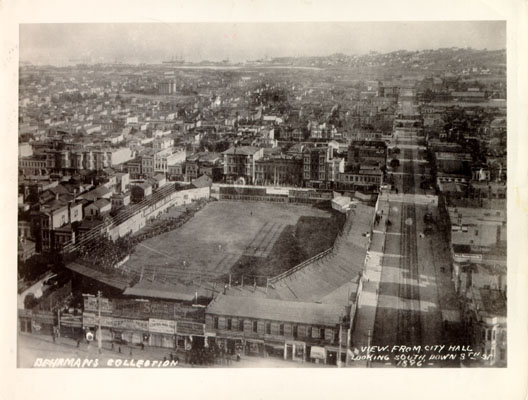
Both men went West to start college football programs, Stagg at the University of Chicago, Camp at the newly-founded Stanford University in the San Francisco Bay Area. They played at the Haight Street Grounds in San Francisco. Chicago beat Stanford 24-4.
The Haight Street Grounds stood from 1887 to 1895. It was actually not at Haight Street, but at the southeastern corner of Stanyan and Waller Streets, in the Haight-Ashbury district that would become the seat of the Hippie movement in the 1960s, at the southeastern corner of Golden Gate Park, about a block from where Kezar Stadium would later be built.

*

December 25, 1894 was a Tuesday. Baseball was out of season, hockey was all-amateur, basketball was a recent invention, and this was before college football was playing bowl games, let alone on Christmas Day.

But in England, soccer, or "football" as they call it, had a tradition: To keep traveling to a minimum, and thus families together, 2 nearby teams would play at one's home ground on Christmas Day, and at the other's on the next day, December 26, Boxing Day. This tradition began to die out in the 1950s, but Boxing Day games are still played.

On December 25, 1894, the London-based team which I would eventually support, then known as Woolwich Arsenal, played, but not against a nearby team: They hosted Burslem Port Vale, at the Manor Ground in Plumstead, Kent, later to be a part of Southeast London, and won, 7-0. Patrick O'Brien scored 3 goals -- not yet known as a "hat trick" in either ice hockey or association football.

Friday, December 23, 2022

December 23, 1971: "Dirty Harry" Premieres

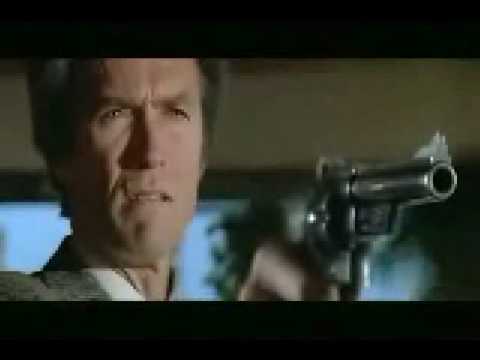
December 23, 1971: The film Dirty Harry premieres, directed by Don Siegel. Clint Eastwood, having already created one iconic film character with his Western hero known only as "The Man With No Name," creates another: Inspector Harry Callahan of the San Francisco Police Department.

As with SFPD Lieutenant Frank Bullitt, played by Steve McQueen in the 1968 film Bullitt, Callahan was based on Inspector Dave Toschi (1931-2018), who worked on the case of the serial killer known as the Zodiac, a case that, to this day, has never been solved.

In Dirty Harry, the killer becomes known as The Scorpio Killer. He is played by Andy Robinson. Robinson got so much hate mail from this role that he had to change his Screen Actors Guild name to Andrew J. Robinson. He is now best known for having played Elim Garak -- not a tinker, but a tailor, a soldier, and a spy -- on the TV series Star Trek: Deep Space Nine.

The film includes Callahan chasing Scorpio through San Francisco's trolley system, and also through Kezar Stadium, which had been the home of the NFL's San Francisco 49ers from 1946 to 1970.

Twice during the film -- once near the beginning after breaking up a robbery, and again near the end, facing Scorpio down -- Callahan delivers these lines, written by the husband-and-wife team of Harry and Rita Fink:

I know what you're thinking, punk: "Did he fire six shots, or only five?" Well, to tell you the truth, in all this excitement, I've kinda lost track myself.

But being this is a .44 Magnum, the most powerful handgun in the world, and would blow your head clean off, you've got to ask yourself one question: "Do I feel lucky?"

Well, do ya, punk?

The first time, the robber doesn't feel lucky, and puts his gun down, but says, "Hey, I got to know." Callahan pulls the trigger, but the gun is empty. The second time, Scorpio feels lucky, and goes for his gun. As it turned out, Callahan had one bullet left, and used it. Both outcomes suggest that Callahan was lying, and that he knew exactly how many bullets were left both times.

Eastwood was 41 years old at the time, a little young to be an Inspector in a major city's police department, equivalent to the rank of Captain in the U.S. Navy and Colonel in the other branches of the U.S. armed forces. For comparison's sake: In the last episode of the TV series Barney Miller, in 1982, Barney was 52, and had been a Captain in the NYPD for at least the last 7 years, and, after having been passed over a couple of times, was promoted to Deputy Inspector.

A sequel to Dirty Harry was made in 1973, titled Magnum Force. This was followed by The Enforcer in 1976. In 1983, Sudden Impact was released. It led to Dirty Harry's other well-known quote. Callahan was no longer a 1970s-style "antihero": He was a hero for the Reagan Years. He was no longer interested in whether you felt lucky. He was giving you a direct order, punk: "Go ahead. Make my day."
In 1984, Eastwood starred as a New Orleans detective, Wes Block, in Tightrope. When asked if Block was like Dirty Harry, he said, "I don't think Dirty Harry would even like this guy."

The 5th and last Dirty Harry film came in 1988, The Dead Pool. By this point, Eastwood was 58 years old, and too old to be playing a cop running around chasing killers. But advancing age didn't stop him from playing a very active Secret Service Agent in the 1993 film In the Line of Fire.

Then again, Roger Moore last played James Bond at 58, and was mocked for being too old to do so. Eastwood last played Harry Callahan at 58, and nobody said anything. As 2022 comes to a close, Tom Cruise is 60, and filming movies in his Mission: Impossible franchise; Liam Neeson, who co-starred in The Dead Pool, is playing Raymond Chandler's private eye Philip Marlowe in Marlowe, still taking down bad guys at 70; and Harrison Ford is filming Indiana Jones and the Dial of Destiny at 80. Only Ford is facing mockery about his age.

Dirty Harry was released 4 days after the film version of A Clockwork Orange. How would Harry Callahan have handled Alex DeLarge?

Today, the .500 Smith & Wesson Magnum, with a bullet .06 inches wider than the .44, is considered the most powerful handgun in the world.

*

December 23, 1971 was a Thursday. Baseball was out of season. The NFL was in the middle of its Playoffs. There 3 were 3 games played in the NBA:

* The New York Knicks beat the Portland Trail Blazers, 120-117 at the Veterans Memorial Coliseum in Portland, Oregon. Walt Frazier scored 36 points.

* The Cleveland Cavaliers beat the Atlanta Hawks, 115-110 at the Cleveland Arena. 

* And the Chicago Bulls beat the Phoenix Suns, 117-108 in overtime at the Arizona Veterans Memorial Coliseum.

There were 5 games in the American Basketball Association:

* The New York Nets lost to the Pittsburgh Condors, 124-123 in overtime at the Island Garden in West Hempstead, New York. John Brisker scored 44 for the Condors.

* The Kentucky Colonels beat the Virginia Squires, 139-123 at The Scope in Norfolk, Virginia. Dan Issel matched his uniform number by scoring 44 points.

* The Miami Floridians beat the Carolina Cougars, 125-109 at the Greensboro Coliseum.

* The Utah Stars beat the Memphis Pros, 112-104 at the Mid-South Coliseum in Memphis. Willie Wise scored 32 for the Stars.

* The Indiana Pacers beat the Denver Rockets, 104-101 at the Indiana State Fairgrounds Coliseum (now the Corteva Coliseum) in Indianapolis. Ralph Simpson (not to be confused with Ralph Sampson) scored 37 points in defeat for the team that became the Denver Nuggets in 1974.

There was 1 game played in the NHL: The Boston Bruins and the Buffalo Sabres played to a tie, 4-4 at the Buffalo Memorial Auditorium.

Tuesday, December 20, 2022

December 20, 1968: The Zodiac Killings Begin

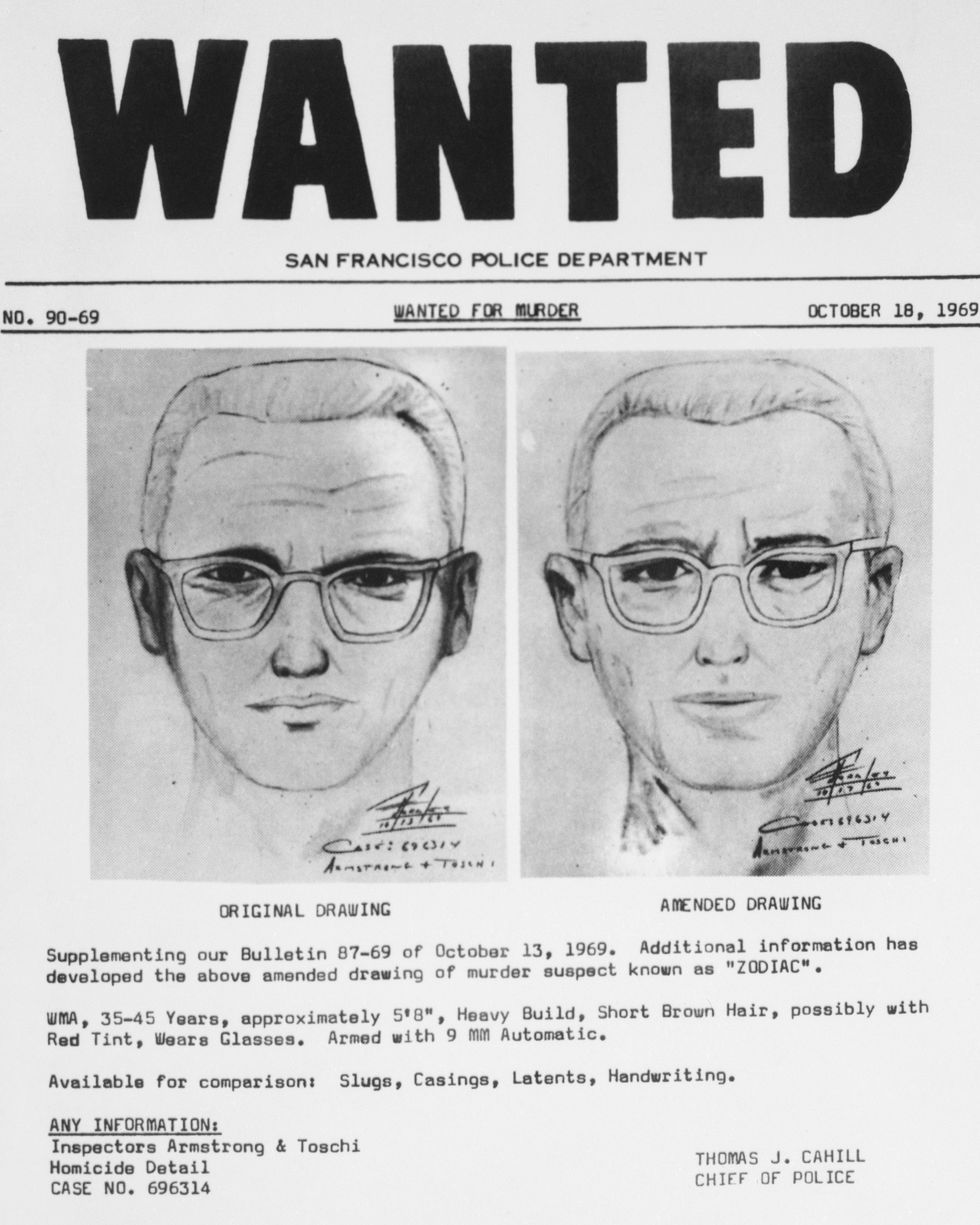
December 20, 1968: The Zodiac killings begin in the San Francisco Bay Area. Murders claimed over the next year: 37. Confirmed by the San Francisco Police Department: 5. The killer: Officially, still unknown.

The Zodiac's known attacks took place in the City and County of San Francisco proper (the City and the County are contiguous); Benicia and Vallejo, in the East Bay region; and unincorporated Napa County, to the north of the city. He attacked three young couples and a lone male cab driver. Two of these victims survived.

The Zodiac coined his name in a series of taunting messages that he mailed to regional newspapers, in which he threatened killing sprees and bombings if they were not printed. He also said that he was collecting his victims as slaves for the afterlife. He included four cryptograms or ciphers in his correspondence. Two were solved in 1969 and 2020, and two remain unsolved.

In 1974, the Zodiac claimed 37 victims in his last confirmed letter. This tally included victims in Southern California, such as Cheri Jo Bates, who was murdered in Riverside in 1966. Despite many theories about the Zodiac's identity, the only suspect authorities ever named was Arthur Leigh Allen, a former elementary school teacher and convicted sex offender, who died in 1992.

Detective Dave Toschi, the lead investigator on the case, told Mark Ruffalo, who played him in the 2007 film Zodiac, about Allen, "As soon as that guy walked in the door, I knew it was him." Ruffalo told an interviewer, "He was sure he had him, but he never had a solid piece of evidence. So he had to keep investigating every other lead." And the evidence against Allen was only circumstantial. But the letters did stop after Allen was convicted and sent to prison on a separate charge.

Toschi served as the model for 2 fictional San Francisco lawmen: Steve McQueen as Lieutenant Frank Bullitt in the 1968 film Bullitt; and Clint Eastwood as Inspector Harry Callahan, starting in the 1971 film Dirty Harry. In that film, Callahan faces a serial killer who calls himself "Scorpio," one of the signs of the zodiac. The real Toschi died in 2018.

The unusual nature of the case led to international interest that has been sustained throughout the years. The SFPD marked the case "inactive" in 2004 but re-opened it prior to 2007. The case also remains open in the California Department of Justice, the FBI, the City of Vallejo, as well as in Napa County and Solano County.

The last message the killer sent to the police and the newspapers was in 1974. He may even still be alive.

*

December 20, 1968 was a Thursday. Baseball was out of season. Football was in midweek. There were 5 games played in the NBA:

* The New York Knicks beat the Detroit Pistons, 135-87 at Cobo Hall (now Huntington Place) in Detroit.

* The Baltimore Bullets beat the Chicago Bulls, 125-102 at the Baltimore Civic Center (now the CFG Bank Arena).

* The Milwaukee Bucks beat the Seattle SuperSonics, 100-92 at the Milwaukee Exposition & Convention Center Arena, a.k.a. The MECCA. (It's now the UW-Milwaukee Panther Arena.)

* The Philadelphia 76ers beat the San Diego Rockets, 116-109 at the San Diego Sports Arena (now the Pechanga Arena).

* And the Los Angeles Lakers beat the San Francisco Warriors, 133-101 at The Forum outside Los Angeles in Inglewood, California.

There was 1 game in the American Basketball Association: The Minnesota Pipers beat the Houston Mavericks, 123-103 at the Sam Houston Coliseum in Houston. Connie Hawkins of the Pipers led all scorers in both leagues on the day, with 35 points.

There was 1 game in the NHL: The St. Louis Blues beat the Oakland Seals, 1-0 at the Oakland Coliseum Arena. Tim Ecclestone scored the only goal, with 2:43 left in the 2nd period.

Friday, December 16, 2022

December 16, 1907: The Great White Fleet Sets Sail

USS Nebraska

December 16, 1907: The Great White Fleet sets sail. It was Theodore Roosevelt's idea.

The 26th President of the United States was fond of quoting what he called an African proverb: "Speak softly and carry a big stick. You will go far." He was also a big believer in a big navy: The 1st of the 42 books he wrote, still a record for any President, was The Naval War of 1812, published in 1882, when he was only 23 years old.

After long neglecting the Navy, Congress started generous appropriations in the late 1880s, upon the request of President Benjamin Harrison and Secretary of State James G. Blaine, who famously ran for President the 3 previous times. Beginning with just 90 small ships, over one-third of them wooden and obsolete, the Navy quickly added new steel fighting vessels. 

TR dispatched 16 U.S. Navy battleships of the Atlantic Fleet on a worldwide voyage of circumnavigation from December 16, 1907 to February 22, 1909. The hulls were painted white, the Navy's peacetime color scheme, and decorated with gilded scrollwork with a red, white, and blue banner on their bows. The superstructures were painted buff. These ships later came to be known as the Great White Fleet.

The purpose of the fleet deployment was multifaceted. Ostensibly, it served as a showpiece of American goodwill, as the fleet visited numerous countries and harbors. In this, the voyage was not unprecedented. Naval courtesy calls, many times in conjunction with the birthdays of various monarchs and other foreign celebrations, had become common in the 19th Century. Port calls showcased pomp, ceremony, and militarism during a period of rising prewar nationalism.

Additionally, the voyage of the Great White Fleet demonstrated both at home and on the world stage that the U.S. had become a major sea power in the years after its triumph in the Spanish-American War of 1898.

With the battleship USS Connecticut as flagship, under the command of Rear Admiral Robley D. Evans, the fleet sailed from Hampton Roads, Virginia for Trinidad, British West Indies; thence to Rio de Janeiro, Brazil; Punta Arenas, Chile; Callao, Peru; Magdalena Bay, Mexico; and north along the West Coast, arriving at San Francisco on May 6, 1908.

Leaving that port on July 7, the fleet visited Honolulu; Auckland, New Zealand; Sydney, Melbourne and Albany, Australia; Manila, Philippines; Yokohama, Japan; and Colombo, Ceylon (now Sri Lanka); then arriving at Suez, Egypt, on January 3, 1909. While there, word was received of an earthquake in Sicily, thus affording an opportunity for the United States to show its friendship to Italy by offering aid to its victims.

Leaving Messina on January 9, 1909, the fleet stopped at Naples, Italy; thence to Gibraltar; arriving at Hampton Roads on February 22, 1909. There, President Roosevelt, in his last 10 days in office, reviewed the fleet as it passed into the roadstead. He was very pleased with the results of the tour.

In 1984, a nuclear-powered aircraft carrier was launched, named the USS Theodore Roosevelt. Although its official call sign is "Rough Rider," it is nicknamed "The Big Stick."

*

December 16, 1907 was a Monday. This was also the day of the Yolande coal mine explosion in Alabama. I have a separate entry for that event.

Baseball was out of season. Football season had just ended. And professional basketball and hockey barely existed. So there were no scores on this historic day. 

Sunday, November 27, 2022

November 27, 1978: The Moscone-Milk Assassination

Harvey Milk (left) and George Moscone

November 27, 1978: A city still reeling from losing hundreds of its citizens in a cult suicide the week before suffers a shocking double assassination.

On November 18, nearly 1,000 people, most of them from the San Francisco Bay Area, died in a mass suicide ordered by the Rev. Jim Jones in the South American nation of Guyana. By the 27th, there were still funerals to conduct, when the next awful thing happened.

Before his descent into paranoia, Jones had been active in city politics, and had been helpful in the election of George Moscone as Mayor in 1975, and that of Harvey Milk to the Board of Supervisors, San Francisco's version of a City Council, in 1977.

Moscone served in the U.S. Navy in the Korean War, became a lawyer, and an ally of the Burton family's Democratic political machine in San Francisco. He was elected to the Board of Supervisors in 1962, and to the State Senate in 1966, rising to the rank of Majority Leader.

He was known for his support of poor people, minorities, small business owners, and, before most politicians dared, gay rights. He also helped block construction of a freeway that would have cut the city in half and destroyed Golden Gate Park and some neighborhoods. He sponsored bills creating a State school lunch program and legalizing abortion in the State. And both of these bills were signed into law by Governor Ronald Reagan.

He wanted to run for Governor of California in 1974, but was talked out of it, in favor of Jerry Brown, who won. (Jerry's father, Pat Brown, had been elected in 1958, and had beaten Richard Nixon in 1962, but had lost to Reagan in 1966.) Moscone was rewarded for this by being elected Mayor in 1975. Within weeks of taking office, he was instrumental in preventing the San Francisco Giants from moving to Toronto.

He also led the move away from the Board of Supervisors having all at-large seats to having neighborhood seats. This led to the 1977 election of Milk, the 1st openly gay elected official in America; Gordon Lau, the 1st Asian-American elected official in San Francisco; and Dan White, a cop-turned-fireman.

Milk was Jewish, and a native of Bay Shore, Long Island, outside New York City. Like Moscone, he served in the Navy during the Korean War. Unlike Moscone, he was gay, and this was discovered, so had to accept an "other than honorable" discharge. He returned to Long Island and taught in high school, then worked as an insurance actuary in Manhattan.

In 1970, he left New York, and arrived in San Francisco. In 1973, he opened a camera shop on Castro Street, the center of the Castro District, the city's premier gay neighborhood. In 1973, he ran for the Board of Supervisors, but finished 10th among 32 candidates for the at-large seats. In 1975, he ran again, and finished 7th. Under the old system, he had to finish at least 6th.

But with the new system in place in 1977, he only had to finish 1st in his own District, and he did. Part of it was leading the fight against singer Anita Bryant's move to ban gay people from teaching in Florida's public schools. This meant a boycott of the product for which Bryant was a spokeswoman: Florida oranges.

In 1978, Milk was among the leaders of the fight to stop a similar move in California, Proposition 6. He began to get death threats. He made a public statement: "If a bullet should enter my brain, let that bullet destroy every closet door."

Milk had clashed with White on a few issues. White got more and more frustrated in his job, and, on November 10, he resigned, saying a salary of $9,600 -- $43,000 in 2022 money -- was not enough to support his family.

But on November 15, he changed his mind, and asked Moscone to reinstate him. At first, Moscone was willing. But the other Supervisors, including Milk and the Board's President (and thus next in line to be Mayor), Dianne Feinstein, talked him out of it.

The Peoples Temple suicide happened on November 18, and word reached San Francisco on November 19. White told his aides, "One day, I'm on the front page; and the next, I'm swept right off."

Moscone announced a press conference for November 27, at which he would announce his appointment to serve as an interim holder of White's seat, until a special election could be held. White went to City Hall, with its dome making it look more like a State Capitol, and got in through a basement window, avoiding metal detectors. Because he had a gun, his former police issue revolver.
San Francisco City Hall

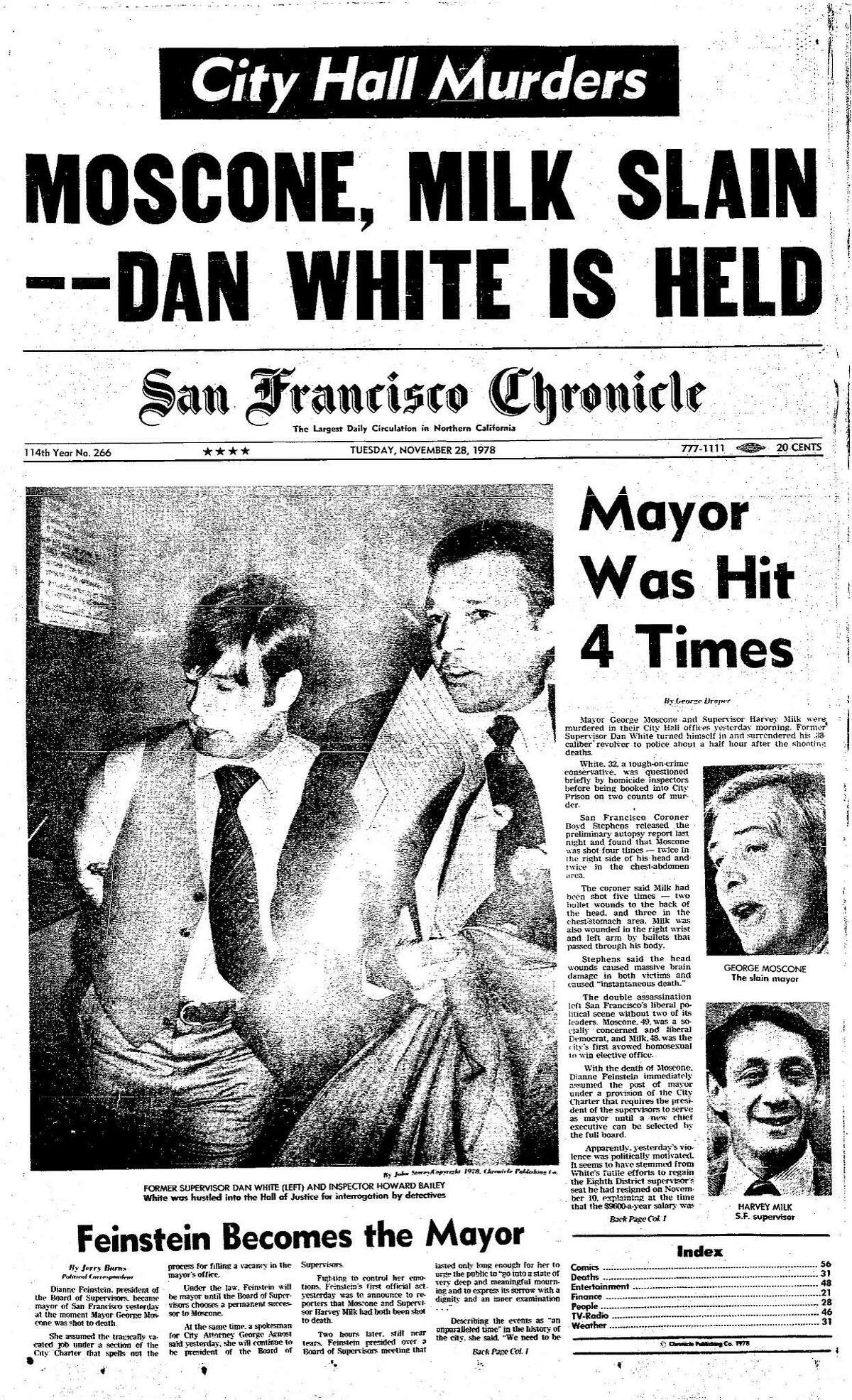
He went to Moscone's office. People nearby heard shouting, then gunshots. White shot Moscone in the shoulder, then the chest, and then finished him off with 2 shots to the head. White then walked over to his former office, and reloaded his gun. He walked into the corridor, and came face to face with Milk. From her office, Feinstein heard gunshots, and called the police. She went into the corridor, and found Milk down, shot 5 times -- like Moscone, twice in the head.
Moscone had just turned 49 years old. Milk was 48. Feinstein was 45. White was 33.

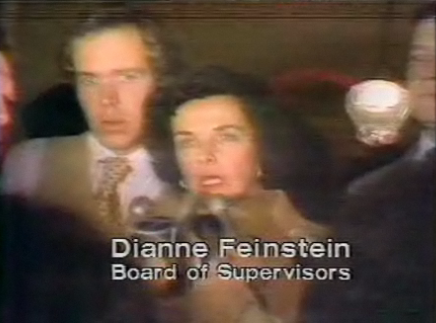
Now the Acting Mayor, the 1st woman and the 1st Jewish person to hold that post, Feinstein was forced to call a press conference to announce the assassinations, and say that White the suspect. White turned himself in after about an hour.
Flowers were left on the steps of City Hall, and when darkness fell, 40,000 people marched in a candlelight vigil from Castro Street to City Hall. The next day, both men lay in state in City Hall's rotunda.

White's trial was fixed. There were no gay people on the jury, nor any ethnic minorities, nor poor people. It was all white middle-class people, most of them Catholic. White's attorney blamed the dual assassination on his mistreatment by his colleagues, and also on a junk-food binge that messed with his blood sugar. Although Hostess' Twinkies were never mentioned, this became known as "the Twinkie defense." (This dovetailed with the Jonestown Massacre: The tainted drink was Flavor Aid, but everybody remembers it as Kool-Aid.)

On May 21, 1979, White was found not guilty on both counts of first degree murder, and found guilty on two counts of voluntary manslaughter. He was sentenced to 7 years in prison. Seven years for murdering two men -- and the Mayor and another major politician of his hometown, no less.

The sadness of the gay community 6 months earlier turned to rage. People began throwing rocks at the front doors of City Hall. Allies of Milk tried to reason with them, but there was no listening. Several downtown buildings were damaged, and a police car was set on fire. It became known as the White Night Riot. When a reporter asked a rioter why they were "destroying parts of the city," the rioter said, "Just tell people that we ate too many Twinkies."

San Francisco-based punk rocker Eric Boucher, taking the stage name Jello Biafra and fronting a band named for assassinated politicians, the Dead Kennedys, ran for Mayor in the 1979 election. A part of his platform was for a statue to be erected to Dan White, and to supply eggs, tomatoes and stones nearby, to give people something to throw at it. Apparently, despite being only 21 years old, he was serious about his campaign.

Appearing on the ballot with both his real name and his stage name, as "Eric 'Jello Biafra' Boucher," he actually finished 4th, with 6,591 votes, a little less than 4 percent of the vote, ahead of 6 other people who were on the ballot. Feinstein barely won, with 46.6 percent of the vote to the 44.7 of Supervisor Quentin Kopp, a margin of 3,331 votes. Kopp was later elected to the State Senate.

Things would get worse. The 1980s would bring the AIDS epidemic. It would take pretty much the entire decade for the disease to be stripped of its stigma as "gay cancer," or as "God's punishment for homosexuals." Per capita, San Francisco was hit harder by the disease than even the much larger cities of New York and Los Angeles.

In 1981, a Convention Center for which Moscone had lobbied was finished. It was named for him, and it hosted the 1984 Democratic National Convention. It remains the last building smaller than a professional sports arena to host a Democratic Convention.
The George R. Moscone Convention Center

Also in 1984, White was released from prison, having served a little over 5 years -- for murdering 2 men. On October 21, 1985, having won his case, but having lost pretty much everything else, including his wife to divorce, he committed suicide. He was 39 years old.

Feinstein was re-elected in 1983. Leaving office at the beginning of 1988, she ran for Governor in 1990, losing to Senator Pete Wilson. In 1992, she was elected to an unexpired term in the U.S. Senate, and was re-elected in 1994, 2000, 2006, 2012 and 2018. She is still alive, 89 years old, and still fighting for the rights of all Americans. It is not yet known if she will run for re-election in 2024, and people who hate her -- being female, Jewish, liberal, and outspoken, she pushes a lot of buttons -- claim that she has dementia. There is no reliable evidence of this. (UPDATE: She died in office in 2023.)

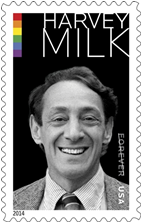
Milk has gone down in history as a pioneer of gay rights, a "Martin Luther Queen." In 2014, the U.S. Postal Service made him the 1st openly gay American politician to be honored with a postage stamp.
In 1980, Representative Robert Bauman, Republican of Maryland, was outed, making him the 1st member of Congress known to be gay. What's more, he was caught soliciting a teenage male prostitute. He was the 1st Republican politician, but by no means the last, to blame his indiscretion on alcoholism. He apologized for said indiscretion, but lost his bid for re-election. As of November 27, 2022, he is still alive.

In 1983, Representative Gerry Studds, Democrat of Massachusetts, was outed, and had his relationship with a 17-year-old Congressional page exposed. He was censured, but won re-election in 1984, making him the 1st openly gay person to win an election for Congress. He continued to serve his District -- which includes Cape Cod, which includes Provincetown, one of the most gay-friendly places in America -- until retiring in 1996, and died in 2006.

In 1998, Tammy Baldwin of Wisconsin was elected to Congress, the 1st openly gay non-incumbent to be elected, and the 1st openly gay woman to serve. In 2012, she became the 1st openly gay person elected to the U.S. Senate.

In 2004, Governor Jim McGreevey, Democrat of New Jersey, exposed as having appointed an unqualified lover to public office, came out, and resigned. He has never run for public office again. In 2018, Jared Polis, Democrat of Colorado, having previously been elected to Congress, was the 1st openly gay person elected Governor of any State. (UPDATE: In 2023, McGreevey announced that he was running for Mayor of his birthplace, Jersey City, in the 2025 election.)

In 2020, Mayor Pete Buttigieg of South Bend, Indiana became the 1st openly gay person to win delegates for a Presidential nomination. When Joe Biden was elected President, he appointed Buttigieg to be Secretary of Transportation, making him the 1st openly gay member of a President's Cabinet. And a few transgender politicians have been elected to local and State offices, though not yet to Congress or Governorships.

One last thing. I was 8 years old, almost 9, in November 1978. I remember seeing the Jonestown story on the news, dominating coverage for a few days, leading into Thanksgiving weekend, November 23 to 26. But I have no memory of seeing the national news cover the assassinations of Moscone and Milk on the 27th. I knew Moscone's name from having watched the 1984 Democratic Convention. But I don't recall hearing Milk's name until I was already out of high school. And I have no idea why that is.

*

November 27, 1978 was a Monday. The White Shadow, perhaps the best sports-themed TV show of all time, premiered on this night.

Baseball was out of season, although there was a notable event in the sport that day: Jimmy Rollins, Captain of the Philadelphia Phillies' 2007-11 quasi-dynasty, including the 2008 World Series win, was born, in Oakland, California, and grew up in neighboring Alameda.

There were no games scheduled that day for the NBA, the NHL, or the World Hockey Association. But Monday Night Football aired on ABC. And in the "You can't make this stuff up" department, the game that night happened to be set for Candlestick Park, between the San Francisco 49ers and the Pittsburgh Steelers.

Pete Rozelle, Commissioner of the NFL, and a former publicity director for the University of San Francisco, had been through this before. In 1963, President John F. Kennedy had been assassinated about 48 hours before NFL games were to kick off. Knowing that some teams scheduled to play on the road were already at their respective airports, and may even have been in the air, he decided to let the games go ahead as scheduled. He later called that his biggest mistake of his career.

This time, with only a few hours to make a decision, he decided to let the game be played, but ordered a moment of silence in memory of Moscone and Milk, to be held right before the National Anthem. But right between them, a truck backed into a wooden flagpole near the south end zone. The sound the pole made when it hit the ground unnerved many people who had been on edge, some for a few hours, some for a few days. At any rate, the Steelers, on their way to winning Super Bowl XIII, won the game, 24-7.

Friday, November 25, 2022

November 25, 1976: The Band's "Last Waltz"

November 25, 1976: Once upon a time, there was a rock and roll band named simply "The Band." On this Thanksgiving Night, their original lineup played its last concert. It led to what has often been called the greatest rock documentary, titled The Last Waltz.

In 1957, in his native Arkansas, high school senior Levon Helm met singer Ronnie Hawkins. Hawkins invited Helm to drum with his band, The Hawks. Hawkins hadn't gotten very far in America, but was popular in Canada. The rest of the band was from the Canadian Province of Ontario: Lead guitarist Robbie Robertson from Toronto, bass guitarist Rick Danko from Blayney, and keyboard players Richard Manuel from Stratford, and Garth Hudson from Windsor, across the Detroit River from Detroit.

In 1963, tired of playing the same old songs instead of original material, the Hawks left Hawkins. In 1965, they joined Bob Dylan, and became his touring band until his motorcycle wreck in 1966. As Dylan recovered in 1967, together, in the basement of Dylan's house in Saugerties, New York, they recorded what became known as The Basement Tapes. These songs wouldn't be released until 1975.

But they did form the basis for the group's 1968 debut album, named for the house: Music from Big Pink. Because the locals called them simply "the band," that's what they called themselves. Three of the songs on the album were written by Dylan: "Tears of Rage," written with Manuel; "This Wheel's On Fire," written with Danko; and one of the best songs Dylan's ever written, "I Shall Be Released." But the album is best known for "The Weight," written by Robertson, who became the group's main songwriter.

In 1969, The Band played at the Woodstock festival, and then released their follow-up album, also titled simply The Band. It included their 2 best-known songs: "Up On Cripple Creek," a truck driver's tale of his mistress (clearly, "my big mama" and "my Bessie," both mentioned in the last verse, are 2 different women); and "The Night They Drove Old Dixie Down," in which a Confederate civilian laments what the Civil War did to his people (who, of course, started it, for an incredibly evil reason).

The continued to record and tour together, but got weary of touring. In 1976, Robertson said they should retire from live performances. On October 30, they appeared on Saturday Night Live. They played 1 more show, on November 25, at the Winterland Ballroom in San Francisco, and it was filmed for a documentary by Martin Scorcese, who was coming off making Taxi Driver.

It was Thanksgiving Night, and free turkey dinners were provided for the 5,000 people in attendance. The night was loaded with guests. The Band had made peace with Hawkins, and he was on hand. So was Dylan. So was blues legend Muddy Waters, whom the whole Band admired. So were ex-Beatle Ringo Starr, Rolling Stone Ron Wood, Eric Clapton, Neil Young, Joni Mitchell, Neil Diamond, Van Morrison, Emmylou Harris and Paul Butterfield. The show ended with Dylan leading the ensemble singing "I Shall Be Released." The film about the show, The Last Waltz, was released on April 26, 1978.

In 1983, without Robertson, who didn't want to get back together, the rest of the band went back on tour. But on March 4, 1986, after a performance outside Orlando in Winter Park, Florida, Manuel, struggling with substance abuse, hanged himself in his motel room. He was only 42 years old.

In 1992, The Band played "When I Paint My Masterpiece" at the Dylan tribute concert at Madison Square Garden. At that point, The Band consisted of Helm, Danko, Hudson, guitarist Jim Weider, keyboardist Richard Bell and drummer Randy Ciarlante (as Helm switched to mandolin).

Danko died on December 10, 1999; Bell on June 15, 2007; Helm on April 19, 2012; and Hawkins on May 29, 2022. As of November 25, 2022, Robertson, Hudson, Weider and Ciarlante are still alive.

UPDATE: Robertson died on August 9, 2023. Garth Hudson died on January 21, 2025. And it took me until 2024 to think of this, but the 1970s were Schrödinger's Decade. There was too much overwrought music, and, at the same time, not enough of it.

*

November 25, 1976, like all Thanksgiving Days, was a Thursday. There were 2 games played in the NFL.

* The Detroit Lions beat the Buffalo Bills, 27-14 at the Silverdome in the Detroit suburb of Pontiac, Michigan. In a losing effort for the Bills, O.J. Simpson rushed for 273 yards, a new single-game NFL record. I have a separate entry for this event.

Walter Payton would break that record the next season. O.J., of course, would go on to have a very different kind of "record."

* And the Dallas Cowboys beat the football version of the St. Louis Cardinals, 19-14 at Texas Stadium in suburban Irving, 10 miles northwest of downtown Dallas. The leading rusher in that game only had 54 yards, and it was the Cowboys' quarterback, Roger "the Dodger" Staubach.

There were 3 college games:

* Number 11 Texas A&M beat arch-rival Texas, 27-3 at Memorial Stadium in Austin.

* Number 17 Rutgers beat Colgate, 17-9 at Rutgers Stadium in Piscataway, New Jersey. This completed an 11-0, undefeated season for Rutgers. I have a separate entry for that event.

* And Kent State beat Northern Illinois, 42-0 at Dix Stadium in the Cleveland suburb of Kent, Ohio.

One more note from football on this day: Philadelphia Eagles quarterback Donovan McNabb was born.

Baseball was out of season. In recent times, the NBA and the NHL have avoided playing on Thanksgiving, so as not to compete for TV ratings with the NFL. But, this time, there were 3 NBA games:

* The Cleveland Cavaliers, beat the Detroit Pistons, 111-105 at The Coliseum in the Cleveland suburb of Richfield, Ohio.

* The Houston Rockets beat the New Orleans Jazz, 105-99 at the Superdome in New Orleans. In defeat, "Pistol" Pete Maravich scored 35 points.

* And the Phoenix Suns beat the Washington Bullets, 104-98 at the Arizona Veterans Memorial Coliseum.

There were 2 NHL games. The New York Islanders lost to the Detroit Red Wings, 3-1 at the Nassau Coliseum. And the Boston Bruins beat the Vancouver Canucks, 4-2 at the Boston Garden.

And there were 2 games in the World Hockey Association. The New England Whalers beat the Birmingham Bulls, 5-3 at the Jefferson County Civic Center in Birmingham. And the Quebec Nordiques beat the Indianapolis Racers, 5-0 at the Market Square Arena in Indianapolis.

Monday, November 21, 2022

November 21, 1934: Joe DiMaggio Becomes a Yankee

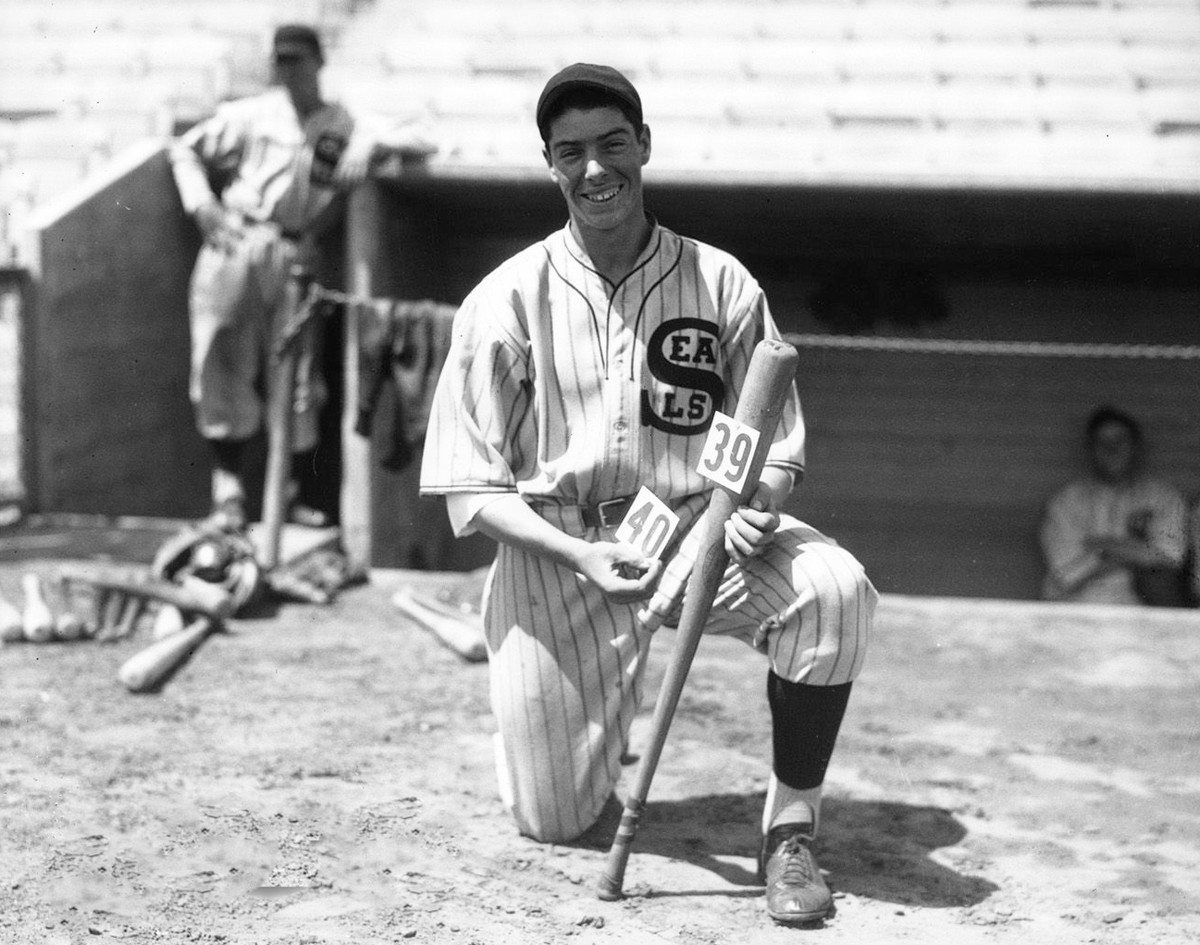
November 21, 1934: The New York Yankees purchase the contract of Joe DiMaggio from the San Francisco Seals of the Pacific Coast League for $50,000, also sending the Seals 5 players.

The Seals played in the PCL from its founding in 1903 until 1957, when the New York Giants moved to San Francisco. They were named for Seal Rock, an island in San Francisco Bay where seals gathered. They won 14 Pennants: 1909, 1915, 1917, 1922, 1923, 1925, 1928, 1931, 1935, 1943, 1944, 1945, 1946, 1957. And they formed a rivalry across the Bay with the Oakland Oaks. From 1931 onward, they played at Seals Stadium, considered one of the best minor-league ballparks. The Giants used it in 1958 and 1959, before Candlestick Park opened.

A minor-league hockey team would also be named the San Francisco Seals. When the NHL expanded to the Bay Area, the team played in Oakland, and was known as the Oakland Seals, and then as the California Golden Seals, before moving.

Giuseppe DiMaggio was an immigrant from Sicily, who immigrated first to Martinez, California, in what's now called the East Bay, and then to San Francisco. He was a professional fisherman, and he expected his sons to fish with him. He forbid his boys to play the American game of baseball.

In 1932, his oldest son, Vince disobeyed him, and signed with the Seals. Giuseppe told him not to come back. A month later, he came back, and slammed a wad of cash down on the kitchen table. Seeing more money at once than he'd ever had in his life, Giuseppe welcomed Vince back, and also let sons Giuseppe Jr. (Joe) and Dominic (Dom) play pro ball.

They also signed with the Seals. In 1933, Joe became a star, putting together a 61-game hitting streak, foreshadowing the 56-game streak he would have with the Yankees in 1941. But a knee injury in 1934 had scared the Eastern major league teams away. The Yankees took a chance on him, wanting him so badly that they let the Seals keep him for one more season in 1935. (In international soccer, it would have been considered a "loan deal.") Joe led the Seals to the Pennant that year.

Joe debuted with the Yankees in 1936, just 21 years old, and was instantly a star. Babe Ruth had retired, but Lou Gehrig was still there, and took Joe under his wing. For 3 years, Gehrig and DiMaggio pounded American League pitching. In 1939, Gehrig fell to the illness that would kill him, but Joe, catcher Bill Dickey, and some great pitching carried the Yankees to a 106-win season and a World Series win. Joe won the AL's batting title, and the 1st of his 3 AL Most Valuable Player awards.

He only played 13 seasons, losing 3 in the middle due to serving in World War II, and more at the end because he retired at age 37 due to a heel injury that had bothered him for his last 4 seasons. In those 13 seasons, he made the All-Star Game every year, helping the Yankees win 10 Pennants and 9 World Series.

The Yankees of Ruth and Gehrig had been "Murderers' Row." It was the DiMaggio era, 1936 to 1951, that made them more than a single-generation great team. It was "The Yankee Clipper," with his stoic greatness and resistance to injury, that made them, as the saying went, "the lordly Yankees."

Vince, who played his best years with the Pittsburgh Pirates, was an All-Star in the 1943 and 1944 seasons. Dom, who played his entire career with the Boston Red Sox, was an All-Star 7 times: 1941, 1942, 1946, 1949, 1950, 1951 and 1952. There are still Red Sox fans who say he was a better center fielder than Joe. They also say he should join Joe in the Baseball Hall of Fame. The 1st claim is ridiculous: The number of men who have played center field on Joe's level is very small. The 2nd claim has some merit.

Vince died in 1986, Joe in 1999, Dom in 2009.

*

November 21, 1934 was a Wednesday. This was also the day that American newspapers broke the story of the "Business Plot," a proposed military coup that would be backed by some of America's richest men to depose President Franklin D. Roosevelt and install a fascist government, a plan torpedoed when their intended commander, Marine General Smedley Butler, blew the whistle on it in a Congressional committee hearing. I have a separate entry for that event.

This was also the day the Cole Porter musical Anything Goes, starring Ethel Merman, debuted on Broadway. I have a separate entry for that event.

Baseball was out of season. Football was in midweek. The NBA hadn't been founded yet. And while the NHL season began on November 8, there were no games scheduled for this day. So there were no scores.

Friday, November 18, 2022

November 18, 1978: The Jonestown Massacre

November 18, 1978: The Jonestown Massacre takes place. When I was a kid, there were 3 stories that really freaked me out: The Son of Sam case, the Three Mile Island nuclear plant meltdown, and the Jonestown story.

James Warren Jones was born on May 13, 1931 in Crete, Indiana, a small town just west of the State Line with Ohio, thus about halfway between the capitals of Indianapolis and Columbus. He became a Pentecostal minister, and founded what would become the Peoples Temple (note the lack of an apostrophe, a sign that it was for all peoples) in Indianapolis in 1955.

At a time and in a place when it was dangerous to do so -- Indiana was one of the few Northern States where the Ku Klux Klan made serious inroads -- the Rev. Jim Jones reached out to black people and supported civil rights causes.

In 1965, he moved his organization to San Francisco, and became involved with charities and political groups there. He preached what he called "Apostolic Socialism," probably safer to do in traditionally leftist San Francisco than in any other American city.

He helped to get George Moscone elected Mayor in 1975, and also built alliances with City Supervisor Harvey Milk (America's 1st openly gay elected public official), Assemblyman Willie Brown (later to be Mayor himself), and even Governor Jerry Brown. He even met First Lady Rosalynn Carter, who spoke well of him.
But he had spent years with a paranoia building inside him. His move to California brought him into contact with drugs, which expanded his paranoia. He began thinking that the U.S. government was against him and his Temple.

He began to look to establish a colony elsewhere, and found it in the South American nation of Guyana. He brought many of his followers down with him to "Jonestown" -- some willingly, some by coercion. He said he was building a "socialist paradise." But by the Autumn of 1978, reports had reached America that there were human rights abuses in Jonestown, including some San Franciscans saying their family members were being held there against their will.
Leo Ryan, a Congressman whose District included many of the families, went to Guyana to investigate. He took some people who wanted to leave back to his plane. But before they could board, they were ambushed by gunmen. Ryan and 4 others were shot to death.

Jones knew that he couldn't get away with killing a Congressman. The game was up. And so, like so many cult leaders before him and after him, he decided that it was time to tell his followers that the end times had arrived. He served his followers Flavor Aid laced with cyanide. Some drank it willingly. Some did not. When it was over, 918 people, 304 of them children, were dead. Jones was 47 years old.

(It is from this story that the expression "drank the Kool-Aid," meaning "believed the ridiculous lie," came about, but it wasn't Kool-Aid, it was Flavor Aid.)

The story shocked the world. The story hit San Francisco particularly hard. As if that city hadn't been through enough over the years.

Things would get worse for San Francisco. The next week, there would be a double assassination, the assassin would come close to getting away with it, a deadly disease would devastate the city, and an earthquake that many feared would be "The Big One" would hit, all within the next 11 years.

Within a few months, there was a feature film, Guyana: Cult of the Damned, a fictionalized account, with Stuart Whitman as "Reverend James Johnson." In 1980, CBS aired the TV-movie The Guyana Tragedy, The Story of Jim Jones, starring Powers Boothe. Apparently, Leonardo DiCaprio is now in talks with Metro-Goldwyn-Mayer to star in a new film about Jones.

*

November 18, 1978 was a Saturday. These key games were played in college football that day:

* Number 1 Penn State were not scheduled. The following week, they beat their arch-rivals, the University of Pittsburgh, then ranked Number 15. Since, at the time, the Nittany Lions were not in any league, and were thus not tied to any bowl game, this pretty much guaranteed a de facto National Championship Game against whoever ended up Number 2 in the country.

* Number 3 Alabama also did not play that week. The week before, they beat Number 10 Louisiana State. Two weeks after, they beat Auburn to clinch the Southeastern Conference Championship. They rose to Number 2, and that set up a Number 1 vs. Number 2 showdown with Penn State in the Sugar Bowl. Alabama won, 14-7, and won the National Championship.

* Number 2 Nebraska was upset by Missouri, 35-31 at Memorial Stadium in Lincoln, Nebraska.

* Number 4 Oklahoma beat Oklahoma State, 62-7 at Memorial Stadium in Norman, Oklahoma. A week earlier, Oklahoma had been Number 1, but lost to Nebraska, 17-14. That gave Nebraska the Big Eight Conference Championship, and the Big 8's automatic bid to the Orange Bowl. But Nebraska's loss to Missouri led to the Orange Bowl committee setting up the 1st ever bowl game rematch. Oklahoma won it, 31-24.

* Number 5 USC beat UCLA, 17-10 at the Los Angeles Memorial Coliseum. That got USC the Pacific-Ten Conference title.

* Number 7 Michigan beat Number 15 Purdue, 24-6 at Michigan Stadium in Ann Arbor, Michigan. The Wolverines went on to beat Ohio State the next week. But they had lost to Michigan State earlier in the season. Due to violations before this season, Michigan State was on probation, therefore, while they shared the Big Ten Conference title with Michigan, they were ineligible for the league's Rose Bowl bid. So Michigan got it. But USC beat them in the Rose Bowl, on an alleged "phantom touchdown," as Charles White appeared to have fumbled as he crossed the goal line.

* Number 8 University of Houston had the week off, a week after beating Number 6 Texas in Austin. But the following week, having moved up to Number 5, they went to Lubbock and lost to Texas Tech. But their win the next week over crosstown rival Rice clinched the Southwest Conference title.

* Number 10 Notre Dame, with a quarterback named Joe Montana, beat Number 20 Georgia Tech, 38-21 at Grant Field in Atlanta. The next week, they went to Los Angeles and lost to USC. They closed the season at the Cotton Bowl, where Montana led a tremendous comeback for the Fighting Irish to win, 35-34.

* Number 12 Clemson beat Number 11 Maryland, 28-24 at Byrd Stadium in the Washington suburb of College Park, Maryland. (It's now named SECU Stadium.) This clinched the Atlantic Coast Conference title for Clemson, who went on to beat Ohio State in the Gator Bowl. Clemson won a game that ended in great controversy, through no fault of theirs.

* Rutgers beat Holy Cross, 31-21 at Fitton Field in Worcester, Massachusetts. But they weren't in a league, and they had only played 1 game against what would then have been considered a major college football team. It was their season opener, losing to Penn State, 20-17. So they weren't ranked.

Maybe they could have gone to a decent bowl game. But the next week, they lost at home to Colgate. A quickie game was set up for December 16 in the Meadowlands, called the Garden State Bowl, the 1st bowl game in the Scarlet Knights' history. It was a joke. And they lost it, 34-18 to Arizona State.

The football team at my high school, East Brunswick in Middlesex County, New Jersey, was not scheduled for that day, as it was the Semifinals of the State Playoffs, and we did not qualify.

There were 10 games played in the NBA: 

* The New York Knicks beat the Milwaukee Bucks, 102-100 at Madison Square Garden.

* The New Jersey Nets lost to the Kansas City Kings, 114-100 at the Kemper Arena in Kansas City. (It's now named the Hy-Vee Arena.

* The Washington Bullets beat the Denver Nuggets, 119-114 at the Capital Centre in the Washington suburb of Landover, Maryland. The Bullets overcame 35 points from Nuggets star David Thompson.

* The Atlanta Hawks beat the Philadelphia 76ers, 124-116 at The Omni in Atlanta. The Sixers lost despite 32 points from Julius "Dr. J" Erving.

* The Boston Celtics beat the Cleveland Indians, 92-90 at The Coliseum in the Cleveland suburb of Richfield, Ohio.

* The Phoenix Suns beat the Detroit Pistons, 119-105 at the Silverdome in the Detroit suburb of Pontiac, Michigan.

* The Houston Rockets beat the San Antonio Spurs, 126-120 at The Summit in Houston. Rick Barry, playing out the string with the Rockets after a fine career with Golden State, scored 38 points. (The arena has since been converted into the Central Campus of the Lakewood Church, Dr. Joel Osteen's "megachurch.")

* The San Diego Clippers beat the New Orleans Jazz, 114-111 at the San Diego Sports Arena. (The arena is now named the Pechanga Arena. The Clippers moved to Los Angeles in 1984. The Jazz moved to Utah the next season.) Randy Smith, an All-Star for the Clippers while they were still the Buffalo Braves, scored 36 points.

* The Golden State Warriors beat the Seattle SuperSonics, 112-104 at the Oakland Coliseum Arena.

* And the Portland Trail Blazers beat the Indiana Pacers, 123-111 at the Veterans Memorial Coliseum in Portland.

There were 7 games played in the NHL:

* The New York Rangers beat the Minnesota North Stars, 7-2 at the Metropolitan Sports Center in the Minneapolis suburb of Bloomington, Minnesota. Carol Vadnais scored 2 goals for the Broadway Blueshirts.

* The New York Islanders beat the Philadelphia Flyers, 8-2 at the Nassau Coliseum. Mike Bossy and Clark Gillies each scored 2 goals.

* The Toronto Maple Leafs beat the St. Louis Blues, 3-1 at Maple Leaf Gardens in Toronto.

* The Buffalo Sabres beat the Detroit Red Wings, 3-1 at the Olympia Stadium in Detroit.

* The Colorado Rockies beat the Chicago Black Hawks, 8-3 at the McNichols Arena in Denver. Gary Croteau and Joe Contini each scored 2 goals for the New Jersey Devils-to-be.

* The Pittsburgh Penguins beat the Los Angeles Kings, 3-1 at The Forum outside Los Angeles in Inglewood, California.

* And the Montreal Canadiens beat the Vancouver Canucks, 4-2 at the Pacific Coliseum in Vancouver.

Only 1 game was played in the World Hockey Association, in its final season: The Birmingham Bulls beat the New England Whalers, 3-2 at the Springfield Civic Center in Springfield, Massachusetts. (It's now known as the MassMutual Center. The Whalers were playing there temporarily because the roof at the Hartford Civic Center collapsed earlier in the year. The Hartford Civic Center is now named the XL Center, the Whalers are now the Carolina Hurricanes, and the Bulls did not survive the NHL-WHA merger.)

Also, Arsenal drew with Everton, 2-2 at Highbury in North London. 

Saturday, November 12, 2022

November 12, 1936: The Bay Bridge Opens

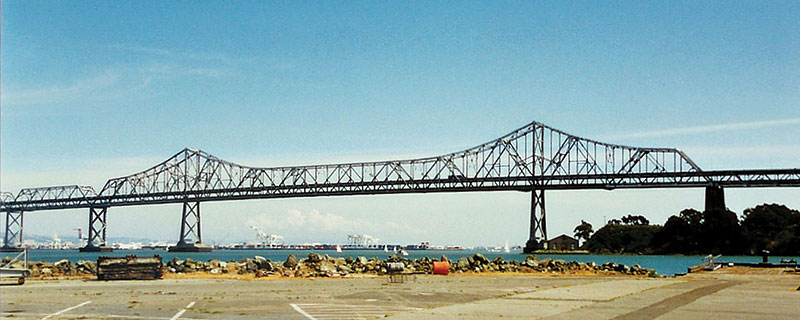
The western span

November 12, 1936: The San Francisco-Oakland Bay Bridge opens to automobile, bus and commuter rail traffic.

It often gets short shrift in comparison to the more famous Golden Gate Bridge. But the Bay Bridge (for simplicity's sake, I'm going to call it that from here on out) not only came first, but is longer (4.4 miles to 1.7), and carries more cars every day (260,000 to 110,000).

There are 2 sections. The western section, a suspension bridge, connects downtown San Francisco to Yerba Buena Island. It has 2 decks, with westbound (SF) traffic on the upper level and eastbound (Oakland) traffic on the lower level. The eastern section connects Yerba Buena Island to Oakland, and marks the western end of the transcontinental Interstate 80.
The original eastern span

The original eastern section was a cantilever bridge, also double-decked. In 1989, the Loma Prieta Earthquake not only interrupted the World Series between the San Francisco Giants and the Oakland Athletics, but it caused a part of the eastern section's upper deck to collapse onto the lower deck. On the official World Series highlight film, Giants catcher Terry Kennedy can be seen telling his teammates, "The Bay Bridge collapsed!" as it turned out, it was not the entire bridge, just one section; but people did die as a result.

The immediate fix took a month. But it was decided to replace the eastern section with a more quake-safe structure. On September 2, 2013, the new eastern section opened, a suspension bridge that took both directions of traffic on one level, then the widest bridge in the world.
The Key System ended commuter rail service in 1958, and bus service when it went out of business in 1960. Thus, the bridge has been all-car (and truck, and bus) since then. The Bay Area Rapid Transit (BART) system began service between the cities in 1972, but uses an underwater tunnel, not the Bay Bridge.

*

November 12, 1936 was a Thursday. Baseball was out of season. Football was in midweek. The NBA hadn't yet been founded. Two games were played in the NHL. The New York Americans and the Chicago Black Hawks played to a 0-0 tie at the old Madison Square Garden. And the Montreal Canadiens beat the Montreal Maroons, 2-1 at the Montreal Forum. 

Friday, November 11, 2022

November 11, 1980: "Too Close for Comfort" Premieres

Left to right: Deborah Van Valkenburgh, Nancy Dussault
Jim J. Bullock, Ted Knight, Lydia Cornell and Audrey Meadows.

November 11, 1980: Too Close for Comfort premieres on ABC. It was based on Keep It In the Family, a British sitcom created by Johnny Speight, who also created That Was the Week That Was and Till Death Us Do Part, on which All In the Family was based.

Ted Knight played Henry Rush, a cartoonist in San Francisco. In real life, Knight dropped out of high school to serve in World War II, and never went to college, so, as Henry -- a much smarter and, though a bit gruff, nicer guy than Ted Baxter of The Mary Tyler Moore Show -- he wore college sweatshirts, 4 years before Bill Cosby started doing it on The Cosby Show. This proved popular enough that fans began donating sweatshirts, some of which he wore on the show.

Nancy Dussault played his wife Muriel, a photographer. Deborah Van Valkenburgh, previously known for her role in The Warriors, played their daughter Jackie. Lydia Cornell played their daughter Sara. In the pilot episode, the daughters moved out of the upstairs apartment in their house to the downstairs apartment. At the start of the 3rd season, despite their parents both being in their late 40s, they were joined by a baby brother, Andrew.

Jim J. Bullock (then billed as "JM J.") played Monroe Ficus, a friend of the daughters, intended as a one-time role, but became popular enough to be the show's "Cousin Oliver" or "Urkel." Ray Middleton played Henry's father. Audrey Meadows played Muriel's mother, coming full circle from her role on The Honeymooners: Now she was playing the battleaxe mother-in-law.
The show ran for 6 seasons, until Knight died of cancer in 1986. As of November 11, 2022, the rest of the main cast have all retired from acting, although Cornell has mostly produced and directed since 2005.

*

November 11, 1980 was a Tuesday. Baseball was out of season. Football was in midweek. There were 9 games in the NBA:

* The New York Knicks beat the Detroit Pistons, 149-118 at Madison Square Garden. In spite of the Knicks' high point total, the game's leading scorer was Michael Campanella "Campy" Russell, with 28 points.

* The Washington Bullets beat the Denver Nuggets, 107-92 at the Capital Centre in the Washington suburb of Landover, Maryland.

* The Los Angeles Lakers beat the Atlanta Hawks, 126-97 at The Omni in Atlanta.

* The Houston Rockets beat the expansion Dallas Mavericks, 105-94 at the Reunion Arena in Dallas.

* The Indiana Pacers beat the San Antonio Spurs, 119-113 at the HemisFair Arena in San Antonio. Billy Knight led all scorers on the night with 52 points. Despite being a basketball player for an Indiana team, he was black, and thus not related to Indiana University coach Bobby Knight, who was about to start a season that would see him win the 2nd of his 3 National Championships at IU.

* The Milwaukee Bucks beat the Cleveland Cavaliers, 100-96 at The Coliseum in the Cleveland suburb of Richfield, Ohio.

* The Philadelphia 76ers beat the Chicago Bulls, 121-80 at the Chicago Stadium.

* The Phoenix Suns beat the San Diego Clippers, 109-107 at the San Diego Sports Arena (now the Pechanga Arena).

* And the Kansas City Kings beat the Portland Trail Blazers, 102-101 at the Veterans Memorial Coliseum in Portland.

And there were 6 games in the NHL:

* The New York Rangers lost to the Calgary Flames, 7-3 at the Stampede Corral in Calgary. Guy Chouinard had a hat trick.

* The New York Islanders and the Minnesota North Stars played to a tie, 6-6 at the Nassau Coliseum. Mike Bossy scored 4 goals, and it still wasn't enough to give the Isles the win.

* The Chicago Black Hawks and the Quebec Nordiques played to a tie, 6-6 at the Colisée de Québec. The Nords blew a 5-0 lead.

* In an "Original Six" matchup, the Boston Bruins and the Detroit Red Wings played to a tie, 4-4 at the Joe Louis Arena in Detroit.

* The Montreal Canadiens beat the Colorado Rockies, 8-2 at the McNichols Arena in Denver. Les Habitantes got goals from 8 different players: Larry Robinson, Mark Napier, Pierre Mondou, Serge Savard, Gaston Gingras, Brian Engblom, Keith Acton and Bob Gainey.

* And the St. Louis Blues beat the Vancouver Canucks, 8-2 at the Pacific Coliseum in Vancouver.

Tuesday, November 8, 2022

November 8, 1977: Ed Koch: Last Man Standing

November 8, 1977: Election Day in New York City. The City needed help. There was no money to pay for anything. Crime was rampant, and the police didn't have the manpower or the resources to properly fight it. (The shock isn't that it took over a year from the first killing to catch the Son of Sam, it's that they got him at all, and it took a lucky break.) The Subway system was a mess (although that was under the jurisdiction of the Metropolitan Transportation Authority, and the MTA is a State agency, not a City agency, something a lot of people still don't realize). The City's business climate was bad.

Everybody, from Wall Street to 42nd Street, from Riverdale to Coney Island, felt as if they were under siege. And Abe Beame, elected Mayor in 1973 as a financial whiz who could bail the City out, seemed unable to do anything, a good man in way over his head. (And that's not just a reference to him being only 5-foot-2.)

The 1977 Mayoral election was a fantastic story, and was detailed in Jonathan Mahler's book Ladies and Gentlemen, The Bronx Is Burning -- as was the Son of Sam case, the Yankees' turbulent Pennant race, and the City's pop culture scene, including disco, punk rock, art, and the struggles of women, racial minorities and gays.

There were 7 candidates on the Democratic side. In addition to Koch and the Brooklynite Beame, they were:

* Mario Cuomo, the crusading Queens lawyer who was then Secretary of State for the State under Governor Hugh Carey.

* Bella Abzug, a Bronx lawyer who'd become the 1st woman elected to Congress from the City.

* Percy Sutton, who had been Malcolm X's lawyer and was elected in Manhattan to become the 1st black Borough President in the City.

* Herman Badillo, a Bronx lawyer who was the 1st Hispanic elected to Congress from the City and the 1st Puerto Rican elected to Congress from anywhere.

* And Joel Hartnett, a Brooklyn advertising executive (the only non-lawyer in the race aside from former accountant Beame) who chaired a "watchdog group" that had accused the Beame Administration of corruption.

Sutton and Badillo pretty much split the minority vote in early polling, meaning that neither blacks nor Hispanics were going to decide the race unless there was a runoff. They and Hartnett never really had a chance.

The rest all went after the City's liberal vote, and all had reason to think they could get it: Beame because he'd been seen working hard, if not well, on their behalf; Koch because he'd been anti-war, pro-civil rights, and on President Richard Nixon's infamous Enemies List; Cuomo because he'd made his name fighting for fair housing and because he was the only candidate who seemed able to appear to the "Outer Boroughs" (The Bronx, Queens, Brooklyn and Staten Island); and Abzug because she was even more anti-war than Koch (the Vietnam War was over but the memory was still fresh), had proposed the first gay-rights bill ever brought before Congress, and because she was sure, as the biggest feminist ever elected to Congress, she could get the women's vote. (With 3 Jewish candidates in the race -- Beame, Koch and Abzug -- the Jewish vote figured to be pretty much split.)

But on July 13, there was a blackout, and the resulting riot put the City's crime and racial problems front and center. And Koch, figuring he'd already made his case that "Abe Beame is an incompetent Mayor," was smart enough to figure out that Beame should no longer be the target: The arch-liberals Cuomo and Abzug should be, as they were the strongest remaining candidates aside from himself.

Without really mentioning them by name, he got tough. He realized that he could be all things to all people. The race was full of brains, but only Koch's brain seemed to figure out that this election would not be won with brains. He knew it would be won in people's hearts.

And if those hearts were cold in the middle of the biggest heat wave New York City had seen in recent memory, so be it. He knew that the winner of the election would need the votes of the Archie Bunkers, as well as those of the Mike Stivics.

And he was not afraid to be the one candidate in the race to call for bringing back the death penalty (which isn't the call of the Mayor at all, but a lot of people were glad he was saying it), or the one candidate in the race to suggest that, if elected, he would crack down on the City's welfare fraud. Translation: "I'm not just the middle-class candidate, I'm the white man's candidate." Or, as the great columnist Jimmy Breslin put it in the Daily News: "Koch got the job as mayor because he promised whites that he could keep the blacks under control."

Once he began suggesting that, he was able to bring liberal-but-scared Jews away from Beame and Abzug, and angry Italians and other Catholics away from Cuomo, whom they might have supported simply because he was the only Italian in the race, and, with Badillo reduced to a fringe candidate, the only Catholic who had a chance.

When the primary was held on September 8, it was very close. Less than 30,000 votes separated 1st place from 4th: Koch got just under 20 percent of the vote, Cuomo nearly 19, Beame 18, and Abzug 16. Since the winner did not get 40 percent, a runoff between the top 2 would be held 10 days later, and it was between Koch and Cuomo. Beame, one of the City's leading politicians for a long time, just missed the runoff, and saw his career come to a sad end.

The runoff got ugly. Koch's appeals to working-class and middle-class whites were seen as terribly cynical. And someone in the Cuomo camp (it's still not clear who) dropped a public suggestion that Koch was gay. Signs appeared a Cuomo events saying "VOTE FOR CUOMO NOT THE HOMO."

Koch blunted this by appearing at events with Bess Myerson, who in 1945 became the 1st New Yorker and the 1st Jewish woman to be named Miss America, and later became a game show panelist and chaired the City's Commission on Consumer Affairs. Signs saying "BESS FOR FIRST LADY" began appearing.

Looking back, years later, Koch said most of the voters didn't care whether or not he was gay. In perhaps no other city, not even San Francisco (more about that in a moment), could that statement have been made. He never married (not Bess nor anyone else), but he never came out, either, and did once publicly deny that he was gay.

The race was decided when Badillo went to see Cuomo, and heard Cuomo talk for an hour, basically saying nothing; then went to see Koch, and heard Koch tell him that Hispanics would be represented in his administration.

Koch was smart enough to know that it was no longer enough to appeal to angry whites: He knew that now, with Sutton and Badillo no longer running, whoever won the minority vote would win the election. Cuomo was smart enough to know that, too, but he wasn't practical enough to get enough of those votes. Beame also threw the last of the old machine vote Koch's way, and even Governor Carey, who seemed to be supportive of Cuomo, endorsed Koch.

Koch won the runoff with 55 percent of the vote. Cuomo still ended up getting the Liberal Party nomination, but when the general election was held, Koch got just under 50 percent, Cuomo 41, and State Senator Roy Goodman, the Republican nominee, and radio talk-show host Barry Farber, nominated by the Conservative Party, got just 4 percent each.

Cuomo's career, of course, was not finished, or even seriously damaged. In 1978, when Carey ran for re-election, he ran with Cuomo as Lieutenant Governor. In 1982, Koch opposed him in the primary for Governor, but made ill-advised comments about the State's rural areas. Cuomo easily won the primary, and then won a close-fought general election against Republican investment banker Lew Lehrman.

Mario Cuomo would serve 3 terms, and his son Andrew also would. Mario once said that New York is the only City in the country where the Mayor wants to be Governor, and the Governor wants to be Mayor. But who's kidding who? Ed Koch never wanted to be Governor. He just liked the attention.

After losing the primary, Koch told his supporters gathered in the hotel ballroom, "It's not the end of the world." Dead silence. Then he gave a big grin and said, "And I'm still the Mayor!" Big cheers.

He would win 3 terms, and help bring the City back from economic ruin. But, despite his bold promises, crime would continue to be out of control -- including, as it turned out, in the City government, which ended up dooming his chances for a 4th term in 1989.

In 2018, seeing an article on New York's new "speakeasies," trying to recreate the Prohibition era without the fear of being raided by federal agents or shot up by Al Capone's boys, led me to imagine an "Old New York" theme park, where you could have the thrill of the 1970s and '80s decay and crime, but you have a gun, and can be Charles Bronson in Death Wish or Robert DeNiro in Taxi Driver.

If this were a movie, the park's suppliers would run out of bullets for you. Now you can't fight back. And the robot thugs are coming for you. And neither the cops (half of whom have been laid off due to budget cuts), nor the hookers, nor the Andy Warhol people, nor the '86 Mets, nor Robot Mayor Ed, uh, Koch can save you.

You're on your own, unless you can form alliances. And then you hear bottles clink together, and, "Warriors! Come out and play!"

Not Westworld. Lowereastsideworld.

*

November 8, 1977 was also Election Day in New Jersey. Governor Brendan Byrne, a Democrat, was re-elected. He had been an Essex County Prosecutor and a Judge of the State Superior Court. The FBI had released a wiretap of a Mob boss calling him "the man who couldn't be bought," and Byrne used that in his 1973 campaign for Governor, and he won his 66 percent of the vote, against Charles Sandman, a Congressman from South Jersey, whose support of Nixon to the end of Watergate cost him his seat the next year.
Byrne, with the State House in Trenton behind him

But his signing of the State's 1st sales tax infuriated people, dropping him to 17 percent in the polls, and earning him the nickname "One-Term Byrne." The anger faded, and he won 56 percent of the vote against State Senator Ray Bateman.

In his 2nd term, he got the Meadowlands Arena built in 1981, just before he was term-limited out of office, and his name was placed on it. In 1996, the naming rights expired, and, still angry over his tax hike, a vengeful Republican legislators sold the name to Continental Airlines. "I was immortal for 15 years," Byrne said.

In San Francisco, where the city council is known as the Board of Supervisors, Harvey Milk was elected to a seat that includes the Castro district, along with New York's Greenwich Village then the most famous "gay neighborhood" in America. The 47-year-old Long Island native and camera store owner became the 1st openly gay public official to win elective office anywhere in America.
Milk thus became a gay icon, and many people hoped he would become their "Martin Luther Queen." Unfortunately, within a year, he faced the same end as Martin Luther King: Assassination and martyrdom.

Sandman lived until 1985, Abzug until 1998, Beame until 2001, Hartnett until 2006, Sutton until 2009, Carey until 2011, Koch until 2013, Badillo and Myerson until 2014, Cuomo until 2015, Bateman until 2016, and Byrne until 2018.

*

November 8, 1977 was, like most modern Election Days in America, a Tuesday. Baseball season was over. Football was in midweek. There were 4 games played in the NBA:

* The New York Knicks beat the San Antonio Spurs, 123-117 at Madison Square Garden. Despite the Spurs' loss, George Gervin led all scorers on the night with 35 points.

* The Chicago Bulls beat the Houston Rockets, 117-104 at the Chicago Stadium.

* The Denver Nuggets beat the Milwaukee Bucks, 111-101 at the Milwaukee Exposition, Convention Center and Arena, or "The MECCA." Since 2014, it has been named the UW-Panther Arena.

* And the Portland Trail Blazers beat the Kansas City Kings, 130-104 at the Veterans Memorial Coliseum in Portland.

Only 1 game was played in the NHL: The Minnesota North Stars beat the Montreal Canadiens, 5-3 at the Montreal Forum.

There were 2 games played in the World Hockey Association. The Quebec Nordiques beat the Edmonton Oilers, 7-3 at the Colisée de Québec. And the New England Whalers beat the Birmingham Bulls, 4-3 at the Birmingham-Jefferson Civic Center in Birmingham, Alabama.

December 31, 1999 & January 1, 2000: The Millennium

December 31, 1999:  The Millennium arrives. The people of planet Earth survived. At a terrible cost. But we hadn't destroyed ourselves. ...