Showing posts with label nasa. Show all posts

Saturday, December 24, 2022

December 24, 1968: The Earth As Seen From the Moon

December 24, 1968: Apollo 8 becomes the 1st Earth spacecraft to orbit Earth's Moon. It shows 2 images never before seen on Earth: The far side of the Moon, and Earth as seen from the Moon.

The mission was commanded by Colonel Frank Borman, U.S. Air Force. The pilot of the command module was Commander James Lovell, U.S. Navy. This was the first "space reunion": They had flown together on Gemini 7. Lovell was set to fly on Apollo 9, but was moved up to this mission after the intended CM pilot, Michael Collins, required back surgery. The pilot of the lunar module was Colonel William A. Anders, U.S. Air Force. 

It was Borman's 2nd spaceflight, and Lovell's 3rd, and it remains the only U.S. spaceflight on which the commanding officer was not the most-experienced in space. Lovell had also flown aboard Gemini 12. It was Anders' 1st spaceflight, and, as it turned out, his only one.

The entire setup, with command, service and lunar modules, was being sent even though the lunar module was not going to be separated, much less land on the Moon. Unlike later Apollo missions, neither the command module nor the lunar module had a codename.

The mission was launched on December 21. They entered lunar orbit on December 24, Christmas Eve. They became the 1st humans to see the Far Side of the Moon, and the 1st to see not a sunrise, or a moonrise, but an Earthrise, with the Earth in "phase," like the Moon is usually seen in from Earth.

"Look at that picture over there!" Anders called out. "Here's the Earth coming up. Wow, is that pretty!" He then took the photo at the top of this post. Borman called it "the most beautiful, heart-catching sight of my life."

They knew that they would be the 1st people from Earth to spend Christmas away from Earth. They wanted to express a Christmas-style message of "Peace on Earth, good will toward men." But instead of something actually Christmas-related, they instead read back to the people of Earth, through television, the Bible's Creation story.

At 9:30 PM, Eastern Time, Anders said, "We are now approaching lunar sunrise, and for all the people back on Earth, the crew of Apollo 8 has a message that we would like to send to you: In the beginning, God created the Heaven and the Earth. And the Earth was without form, and void; and darkness was upon the face of the deep. And the Spirit of God moved upon the face of the waters. And God said, 'Let there be light.' And there was light. And God saw the light, that it was good: and God divided the light from the darkness."

Lovell: "And God called the light Day, and the darkness He called Night. And the evening and the morning were the first day. And God said, 'Let there be a firmament in the midst of the waters, and let it divide the waters from the waters.' And God made the firmament, and divided the waters which were under the firmament from the waters which were above the firmament, and it was so. And God called the firmament Heaven. And the evening and the morning were the second day."

Borman: "And God said, 'Let the waters under the Heaven be gathered together unto one place, and let the dry land appear.' And it was so. And God called the dry land Earth; and the gathering together of the waters called he Seas, and God saw that it was good.' And from the crew of Apollo 8, we close with good night, good luck, a Merry Christmas, and God bless all of you, all of you on the good Earth."

After a very hard year, of war, of assassinations, of civil strife, this was a message of hope, a sign that, maybe, just maybe, things would be all right in the years to come. That was not to be, but the people of Earth had reason to believe that it might be. Because of this, in spite of the Vietnam War, and the election of Richard Nixon as the next President of the United States, Time magazine named Borman, Lovell and Anders their Men of the Year.
Apollo 8 was significant for another reason: It made the Soviet Union surrender in the race to the Moon. Their Zond project had originally planned a manned flyby of the Moon in late 1967, and a landing in December 1968. But they fell behind, due to various failures. The success of Apollo 8 showed them that trying to beat the U.S. to a manned Moon landing was pointless, and that their resources would be better spent in other ways.

Michael Collins would become the command module pilot for Apollo 11, the 1st mission to land on the Moon. Borman was offered the role of commanding Apollo 11, which would have made him the 1st human to walk on the Moon. He declined, saying he was done with spaceflights, and retired from the Air Force in 1970. So the 1st Moonwalker was the backup to Borman as the commander for Apollo 8, Neil Armstrong. It happened on July 20, 1969, beating the late President John F. Kennedy's deadline of doing it by the end of the 1960s by 164 days.

Lovell would command Apollo 13, the only Moon landing mission that had to be aborted.

As of December 24, 2022, the entire crew of Apollo 8 is still alive. They are the earliest surviving specific Time Persons of the Year. (Time had named American fighting men in 1950, and would again in 2003; American scientists in 1960, and people age 25 and under in 1966.)

UPDATE: Borman died on November 7, 2023; Anders, on June 7, 2024; Lovell, on August 7, 2025.

None of them lived to see the return of humans to lunar orbit, aboard Artemis II. On April 6, 2026, crewmember Reid Wiseman took a new photo, a companion piece to Anders' Earthrise, naming it Earthset.
It had been so long than none of the Artemis II astronauts had even been born yet when humans last left the Moon on Apollo 17 in 1972.

*

December 24, 1968 was a Tuesday. No NBA, ABA, NHL or college football bowl games were scheduled for that Christmas Eve. So there were no scores on that historic day.

Wednesday, December 14, 2022

December 14, 1972: The Last Men On the Moon

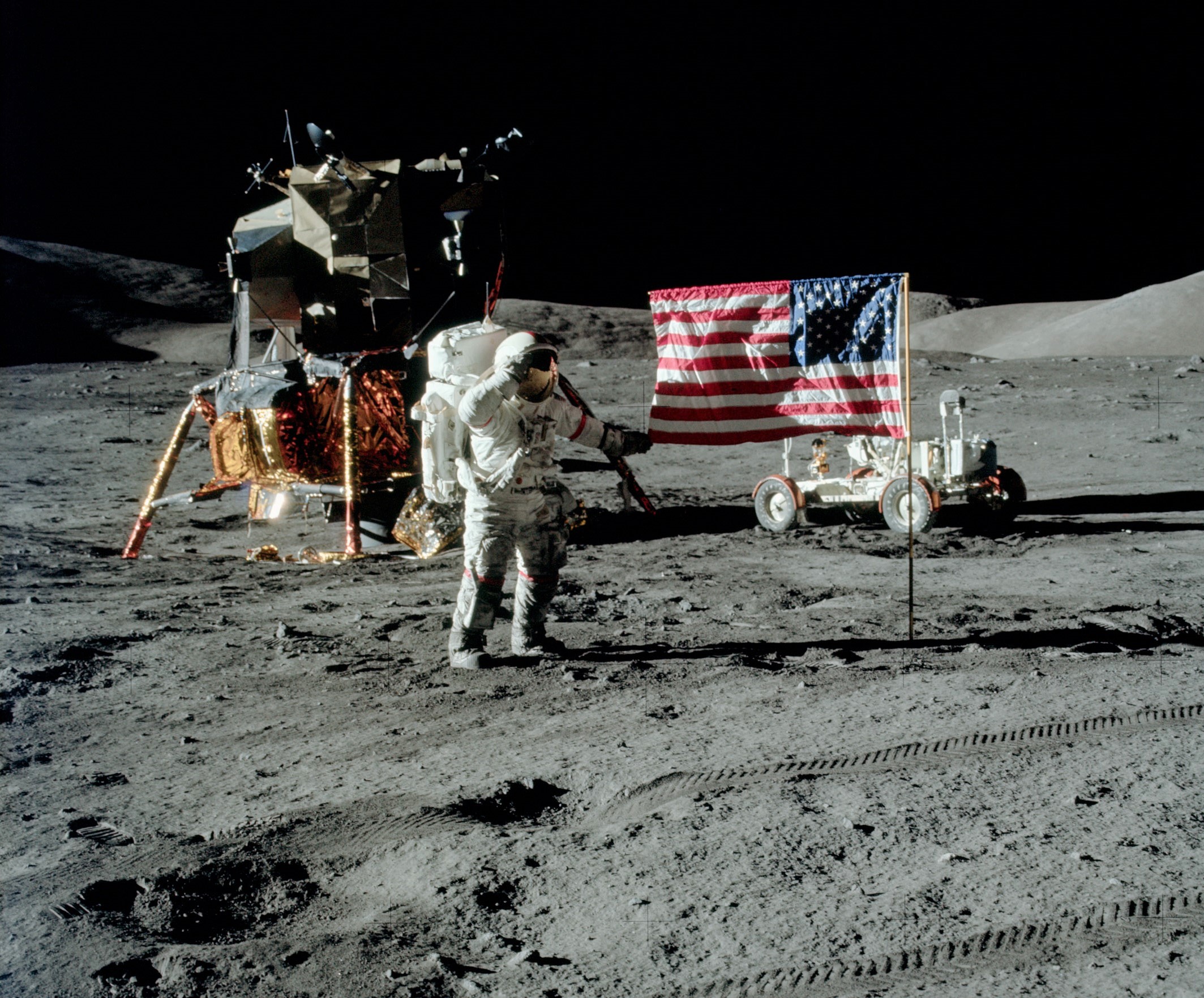
December 14, 1972: Challenger, the lunar module of Apollo 17 blasts off from the surface of the Moon, to rejoin the command module in orbit, to head back to Earth. Human beings have not been on the Moon since.

The mission launched from Cape Canaveral, Florida on December 7. The commanding officer was Captain Eugene A. Cernan, U.S. Navy, who had flown on Gemini 9, and was the lunar module pilot on Apollo 10. The pilot of the command module, America, was Captain Ronald E. Evans Jr., U.S. Navy. The pilot of Challenger was Dr. Harrison H. "Jack" Schmitt, a civilian scientist.

The mission reached lunar orbit on December 10, and Challenger landed on the surface the next day. The mission broke several records for crewed spaceflight, including the longest crewed lunar landing mission, 12 days, 14 hours; greatest distance from a spacecraft during an extravehicular activity of any type, 4.7 miles; longest total duration of lunar-surface extravehicular activities, 22 hours, 4 minutes; largest lunar-sample return, (approximately 254 pounds; longest time in lunar orbit, 6 days, 4 hours; and greatest number of lunar orbits, 75.

They took off from the Moon at 10:54 PM, U.S. Eastern Time, on December 14. As Cernan boarded Challenger after Schmitt, that made Cernan -- so far -- the last human being to walk on the Moon. They splashed down on Earth on December 19.

None of the Apollo 17 astronauts ever flew in space again. Ron Evans died in 1990. Gene Cernan became a consultant for ABC News' space-themed broadcasts, and died in 2017. Schmitt was elected to the U.S. Senate as a Republican from New Mexico, serving 1 term. As of December 14, 2022, he is still alive.

Challenger would later be used for the name of a Space Shuttle, which was first launched in 1983, and was destroyed due to a fuel leak in 1986, killing all 7 astronauts board.

In 2022, NASA announced the Artemis program, intending to put Americans back on the Moon, possibly as soon as 2024.

UPDATE: It took until April 6, 2026 for Artemis II to reach lunar orbit. It had been 53 years, 3 months and 23 days since humans were there. None of the 4 Artemis II crewmembers had yet been born when Apollo 17 left.

*

December 14, 1972 was a Thursday. Baseball was out of season. Football was in midweek. The NBA scheduled no games for this date. The ABA scheduled 4:

* The Indiana Pacers beat the San Diego Conquistadors, 111-104 at the Indiana State Fairgrounds Coliseum (now the Corteva Coliseum) in Indianapolis.

* The Dallas Chaparrals beat the Kentucky Colonels, 121-113 at the Moody Coliseum in Dallas. Artis Gilmore scored 36 points in defeat.

* The Denver Rockets beat the Virginia Squires, 103-99 at the Auditorium Arena in Denver.

* And the Utah Stars beat the Memphis Tams, 147-97 at the Salt Palace in Salt Lake City.

There were 2 games in the NHL. The New York Rangers lost to the Boston Bruins, 4-2 at the Boston Garden. And the Philadelphia Flyers beat the St. Louis Blues, 5-3 at The Spectrum in Philadelphia.

And there were 3 games in the World Hockey Association:

* The New York Raiders beat the Ottawa Nationals, 4-3 at the Ottawa Civic Centre (now the TD Place Arena).

* The Minnesota Fighting Saints beat the Chicago Cougars, 6-3 at the International Amphitheatre in Chicago.

* And the New England Whalers beat the Los Angeles Sharks, 5-2 at the Los Angeles Memorial Sports Arena.

Saturday, December 3, 2022

December 3, 1973: The 1st Close-Up Pictures of the Planet Jupiter

December 3, 1973: The probe Pioneer 10 sends photographs of Jupiter, the largest planet in the solar system, back to Earth. These were the first close-up pictures of any of the system's 4 outer "gas giants."

Pioneer 10 was launched from Cape Canaveral, Florida on March 2, 1972, and was intended for a flyby only of Jupiter, no other planets. It was followed a year later by Pioneer 11, which was designed for flybys (flybies? flysby?) of both Jupiter and Saturn, becoming the 1st probe to take close-up photos of the latter.

On the suggestion of astronomer Carl Sagan, each of them carried a 6-by-9-inch gold-anodized aluminum plaque, in case either of them is ever found by intelligent life-forms from another planetary system. The plaques feature the nude figures of a human male and female, along with several symbols that are designed to provide information about the origin of the spacecraft. The plaque is attached to the antenna support struts, where it would be shielded from interstellar dust.
On June 13, 1983, Pioneer 10 crossed the orbit of Neptune, making it the 1st human-made object to leave the Solar System. On April 27, 2002, NASA had its last successful reception of telemetry from Pioneer 10, from a distance of 80.22 AU -- an "astronomical unit" being the distance between the Earth and the Sun, about 93 million miles, so 80.22 AU is about 1.16 billion miles from Earth. A last signal, too weak to learn anything from it, was received on January 23, 2003.

*

December 3, 1973 was a Monday. Actress Holly Marie Combs was born.

Baseball was out of season. There were no games scheduled in the NBA, the ABA, the NHL or the WHA. There was one score on this historic day: On ABC Monday Night Football, the Miami Dolphins beat the Pittsburgh Steelers, 30-26 at the Orange Bowl in Miami.

Saturday, November 19, 2022

November 19, 1969: Apollo 12: The Great Anticlimax

Left to right: Pete Conrad, Richard Gordon and Alan Bean

November 19, 1969: Apollo 12 lands on the Moon. Charles "Pete" Conrad becomes the 3rd man to walk on the Moon, and Alan Bean becomes the 4th.

Apollo 11 had landed 4 months before. So every Moon landing thereafter was an anticlimax: It was, like, "Right, what else ya got?

All 3 astronauts were in the U.S. Navy, and held the rank of Captain. Conrad, the mission commander, was 39 years old, from Philadelphia, and had been awarded 2 Distinguished Flying Crosses. He had previously flown on Gemini 5 and Gemini 11. Bean, the lunar module pilot, was also a Captain in the Navy, 37 years old, from the Texas Panhandle. It was his 1st spaceflight. And the command module pilot, Richard Gordon, was 40 and from Seattle, and had flown with Conrad on Gemini 11.

The command module was named Yankee Clipper, and the lunar module was named Intrepid. It was launched on November 14, 1969, at the John F. Kennedy Space Center in Cape Canaveral, Florida, with President Richard Nixon becoming the 1st sitting President to attend a spaceflight launch.

(The site was known as Cape Kennedy from 1963 to 1973. It was the Florida legislature, rather than Nixon himself, with his grudge against the Kennedy family, who changed the name back to Cape Canaveral. The Kennedy family raised no objection.)

The Intrepid landed on November 19, near where the probe Surveyor 3 had landed in 1967. While Neil Armstrong had very carefully chosen serious and inspirational words to be the first spoken by a human being on the Moon, Conrad was considerably more flip: As he stepped onto the lunar surface, he said, "Whoopie! Man, that may have been a small one for Neil, but that's a long one for me."

He and Bean examined Surveyor 3, and took some parts back with them to Earth to be studied. The Yankee Clipper splashed down in the Pacific Ocean on November 24, the mission a complete success, even if it was the greatest anticlimax in the history of spaceflight -- if not of humanity itself.

Gordon never flew in space again. Conrad flew in space once more, on the Skylab 2 mission. Bean was on Skylab 3. Conrad died in 1999, Gordon in 2017, and Bean in 2018.

*

November 19, 1969 was a Wednesday. Actress Erika Alexander, best known as Maxine Shaw, Attorney-at-Law, on the 1990s sitcom Living Single, was born. This was also the day that Pelé scores the 1,000th goal of his professional soccer career. I have a separate entry for that event.

Baseball was out of season. Football was in midweek. There were 5 games played in the NBA:

* The Boston Celtics beat the Chicago Bulls, 122-106 at the Boston Garden.

* The San Diego Rockets beat the Philadelphia 76ers, 125-116 at The Spectrum in Philadelphia. Despite the loss, Hal Greer of the Sixers led all scorers on the day with 35 points.

* The Baltimore Bullets beat the Phoenix Suns, 133-118 at the Baltimore Civic Center (now the CFG Bank Arena).

* The Los Angeles Lakers beat the Cincinnati Royals, 116-103 at the Cincinnati Gardens.

* And the Atlanta Hawks beat the Seattle SuperSonics, 137-116 at the Seattle Center Coliseum.

There were 2 games in the American Basketball Association. The New York Nets beat the Miami Floridians, 115-110 at the Island Garden in West Hempstead, Long Island, New York. And the New Orleans Buccaneers beat the Washington Capitols, 122-115 at the Tulane Gym in New Orleans.

And there were 5 games in the NHL:

* The New York Rangers and the Chicago Black Hawks played to a tie, 1-1 at the Chicago Stadium.

* The Montreal Canadiens and the Detroit Red Wings played to a tie, 5-5 at the Montreal Forum.

* The Toronto Maple Leafs and the Los Angeles Kings played to a tie, 4-4 at Maple Leaf Gardens in Toronto.

* The St. Louis Blues beat the Pittsburgh Penguins, 4-0 at the Civic Arena in Pittsburgh.

* The Oakland Seals beat the Minnesota North Stars, 4-2 at the Metropolitan Sports Center in the Minneapolis suburb of Bloomington, Minnesota.

* And the Boston Bruins and the Philadelphia Flyers were not scheduled.

Wednesday, November 2, 2022

November 2, 2000: The International Space Station Is First Occupied

November 2, 2000: Expedition 1, launched 2 days earlier from the Baikonur Cosmodrome in Kazakhstan, arrives at the International Space Station, carrying American astronaut William Shepherd and Russian "cosmonauts" Yuri Gidzenko and Sergei Krikalev. For the 1st time, the ISS has people on board.

The Russian Federation, and its predecessor, the Soviet Union, had space stations for nearly 30 years by that point, running the Salyut (meaning "Salute") program from 1971 to 1986, and the Mir (meaning "Peace") from 1986 to 2001. The last Mir craft became a component of the ISS.

America's experience with space stations wasn't nearly as successful: Our one and only attempt before this, Skylab, was launched in 1973, and had 2 manned missions that year, and a 3rd that carried over into the new year of 1974, before it was deemed unfit for use, and burned up upon re-entry in 1979.

On the other hand, the U.S. was well ahead of the U.S.S.R. in terms of reusable spacecraft. We had 5 different Space Shuttles, though we eventually lost 2 of them; while their 1 and only, Buran (meaning "Blizzard"), flew only once, unmanned in 1988, was put into storage, and was destroyed when heavy snow caused its hangar's roof to collapse in 2002. So, they had the stations, while we had the means of getting to them.

The 1st module of the ISS was launched on November 20, 1998, a joint projected between NASA (the National Aeronautics and Space Administration), Roscosmos (Russia), the CSA (Canadian Space Agency), the ESA (European Space Agency), and the JAXA (Japanese Aerospace Exploration Agency).

The ISS averages 260 miles above the Earth, and usually has a crew of 7. In addition to America and Russia, it has hosted astronauts from Canada, Japan, Brazil, and the European nations of Britain, France, Spain, Belgium, the Netherlands, Norway, Sweden, Denmark, Germany, Switzerland and Italy.

Currently, the ISS is projected to be in operation until 2031, at which point it will be directed to fall out of Earth orbit, and splash down into the Pacific Ocean, where it would be least likely to harm any people. However, no serious plan to replace it has yet been suggested.

*

November 2, 2000 was a Tuesday. Baseball season had ended 7 days earlier, when the New York Yankees beat the New York Mets in the World Series. Football was in midweek. There were 7 games played in the NBA:

* The New York Knicks beat the Atlanta Hawks, 94-69 at Madison Square Garden.

* The Dallas Mavericks beat the Indiana Pacers, 94-88 at the Reunion Arena in Dallas.

* The Houston Rockets beat the Milwaukee Bucks, 115-93 at The Summit in Houston. (The arena has since been converted into the Central Campus of the Lakewood Church, Dr. Joel Osteen's "megachurch.")

* The San Antonio Spurs beat the Minnesota Timberwolves, 103-91 at the Alamodome in San Antonio.

* The Denver Nuggets beat the Golden State Warriors, 101-97 at the Pepsi Center (now the Ball Arena) in Denver.

* The Phoenix Suns beat the Portland Trail Blazers, 108-82 at the America West Arena (now the Mortgage Matchup Center) in Phoenix.

* And the Vancouver Grizzlies beat the Los Angeles Clippers, 99-91 at the Los Angeles Memorial Sports Arena.

And there were 6 games played in the NHL:

* The New York Rangers lost to the Ottawa Senators, 6-5 at the Corel Centre in the Ottawa suburb of Kanata, Ontario. (It's now the Canadian Tire Centre. The town was absorbed into Ottawa proper in 2001.)

* The New Jersey Devils lost to the Toronto Maple Leafs, 5-3 at the Air Canada Centre (now the Scotiabank Arena) in Toronto.

* In an "Original Six" matchup, the Boston Bruins beat the Chicago Blackhawks, 5-4 at the FleetCenter (now the TD Garden) in Boston.

* The Nashville Predators beat the Philadelphia Flyers, 3-1 at the First Union Center (now the Xfinity Mobile Arena) in Philadelphia.

* The Los Angeles Kings beat the Atlanta Thrashers, 5-2 at the Philips Arena (now the State Farm Arena) in Atlanta.

* And the St. Louis Blues beat the Washington Capitals, 2-0 at the Savvis Center (now the Enterprise Center) in St. Louis.

Saturday, October 29, 2022

October 29, 1998: John Glenn Returns to Space at Age 77

October 29, 1998: The Space Shuttle Discovery is launched on mission STS-95. Among its crew is John Glenn. He had been the 1st American to orbit the Earth in 1962, was wrapping up his 4th term as a U.S. Senator from Ohio, and was now, at 77, the oldest person ever to travel in space. Also among the crew is Pedro Duque, the 1st native of Spain to fly in space.

Glenn had been a fighter pilot in the Korean War, a squadron-mate of baseball legend Ted Williams. After the war, he set a speed record flying from coast to coast. Of the "Mercury 7" -- who called him "Mr. Clean the Marine" -- he was the oldest, and the one with the most flying experience.

Because Glenn was the 1st American in orbit, he ended up being celebrated far more than Alan Shepard, whose Mercury-Redstone 3 launch in 1961 made him the 1st American in space, because his capsule, Freedom 7, never got into orbit.

Following his return to Earth, Glenn received a ticker-tape parade in New York, and a welcome to the White House from President John F. Kennedy. He became so useful as an example of American excellence that they didn't let him fly in space again. This might not have been fair, but it became more logical in 1968, when Soviet astronaut (they used the term "cosmonaut") Yuri Gagarin, the 1st person in space and the 1st person to orbit the Earth, was killed in a test flight.

In 1964, he ran for the Democratic nomination for U.S. Senator from Ohio, but dropped out when an injury interfered with his ability to campaign. He tried again in 1970, narrowly losing the primary. He tried again in 1974, and won, the 1st of 4 terms he would win. His opponents liked to say, "John, what on Earth have you done for us?" The voters of Ohio seemed to think he was doing enough. He ran for the Democratic nomination for President in 1984, but didn't get far.

On October 25, 1998, as he was retiring from the Senate, he finally returned to space, aboard the Space Shuttle Discovery, on mission STS-95. His fellow crewmembers: Air Force Colonels Curtis Brown and Steve Lindsey, mechanical engineer Stephen Robinson, physicians Scott Parazynski and Chiaki Mukai (the only woman on the crew), and the 1st astronaut from Spain, aeronautics engineer Pedro Duque. The mission lasted 10 days, and reported no problems.

Glenn was 77, at the time the oldest person ever to travel in space. This record would later be broken by several "space tourists," including William Shatner, the actor who played Star Trek's Captain James T. Kirk, who was 90 years old when he finally reached "space, the final frontier" in real life, aboard Jeff Bezos' Blue Origin on October 13, 2021.

Glenn died in 2016, the last survivor of the Mercury 7.

*

October 29, 1998 was a Thursday. Baseball season had ended 8 days earlier, when the New York Yankees completed a 4-game World Series sweep of the San Diego Padres. There was one college football game: Brigham Young University (BYU) beat San Diego State, 13-0 at Cougar Stadium (now LaVell Edwards Stadium) in Provo, Utah.

The NBA team owners had locked the players out, and the season didn't start until February 5, 1999. There were 5 games played in the NHL:

* The New Jersey Devils beat the New York Islanders, 2-1 at the Nassau Coliseum.

* In an "Original Six" matchup, the Montreal Canadiens and the Boston Bruins played to a tie, 1-1 at the FleetCenter (now the TD Garden) in Boston.

* The Ottawa Senators beat the Philadelphia Flyers, 3-1 at the Corel Centre in the Ottawa suburb of Kanata, Ontario. (It's now the Canadian Tire Centre. The town was absorbed into Ottawa proper in 2001.)

* The St. Louis Blues beat the Detroit Red Wings, 3-1 at the Kiel Center (now the Enterprise Center) in St. Louis.

* And the Colorado Avalanche beat the San Jose Sharks, 4-2 at the McNichols Arena in Denver.

Thursday, August 25, 2022

August 25, 1989: The 1st Close-Up Pictures of the Planet Neptune

August 25, 1989: The probe Voyager 2 sends the 1st close-up pictures of the planet Neptune back to Earth.

The 8th planet from the Sun, and the furthest if one doesn't count Pluto, it was discovered, independently, in 1846 by British astronomer John Couch Adams and French astronomer Urbain Le Verrier. They based their findings on the fact that the planet Uranus did not move across the sky as expected, leading to the belief that an additional, further-out planet must have a gravitational effect on it. It was named after the ancient Roman god of the sea, known as Poseidon to the Greeks.

Like Jupiter, Saturn, and what turned out to be the 8th planet, Neptune, Uranus is a "gas giant." Also like them, it has rings, the result of a moon that didn't quite form. The rings were not discovered until 1977, making it the 2nd planet, after the considerably more obvious Saturn, to be found to have them. But the most notable feature of Uranus, emphasized by the rings, is its 98-degree axis tilt, easily the most extreme in Earth's solar system.

It was also in 1977 that the Voyager 2 probe was launched, with the intent of providing the 1st close-up pictures of Uranus and Neptune. It did the job, reaching Neptune on August 25, 1989, and providing pictures of the blue gases of the atmosphere.

Among the discoveries is that, like Jupiter, Saturn and Uranus, Neptune has rings. It also discovered that, just as Jupiter has an apparently permanent storm known as "The Great Red Spot," Neptune has a similar storm, known as "The Great Blue Spot." The probe also raised the planet's number of known moons from 2 to 15.

Voyager 2 is now the furthest-out probe ever launched from Earth, but is still providing telemetry.

*

August 25, 1989 was a Friday. These Major League Baseball games were played:

* The New York Yankees lost to the Baltimore Orioles, 3-1 at 3-1 at Yankee Stadium. Jeff Ballard outpitched Clay Parker. Cal Ripken Jr. went 3-for-4 with a walk. Don Mattingly went 0-for-4.

* The New York Mets lost to the San Diego Padres, 5-3 at Jack Murphy Stadium in San Diego. Chris James won it with a home run off Randy Myers in the bottom of the 11th inning. Tony Gwynn went 2-for-5. Howard Johnson hit a home run for the Mets.

* The Boston Red Sox swept a doubleheader from the Detroit Tigers, 4-2 and 11-3 at Fenway Park in Boston.

* The Toronto Blue Jays beat the Milwaukee Brewers, 3-1 at the SkyDome (now the Rogers Centre) in Toronto. Robin Yount went 0-for-3, and Paul Molitor went 1-for-4.

* The Chicago White Sox beat the Cleveland Indians, 5-4 at Cleveland Municipal Stadium.

* The Pittsburgh Pirates beat the Cincinnati Reds, 12-3 at Riverfront Stadium in Cincinnati. This was the day after manager Pete Rose was banned for life, for betting on baseball. Barry Bonds hit a home run. Gary Redus went 4-for-5 with a home run and 4 RBIs.

* The Chicago Cubs beat the Atlanta Braves, 4-3 at Wrigley Field in Chicago. Ryne Sandberg singled Rick Wrona home with the winning run in the bottom of the 12th inning.

* The Minnesota Twins beat the Seattle Mariners, 2-1 at the Metrodome in Minneapolis. Ken Griffey Jr. went 2-for-4 with an RBI.

* The Kansas City Royals beat the Oakland Athletics, 3-1 at Royals Stadium (now Kauffman Stadium) in Kansas City. George Brett went 1-for-3 with a walk. Rickey Henderson went 1-for-2 with 2 walks and a stolen base.

* The California Angels beat the Texas Rangers, 4-1 at Arlington Stadium in the Dallas suburb of Arlington, Texas.

* The St. Louis Cardinals beat the Houston Astros, 7-4 at the Astrodome in Houston.

* The Philadelphia Phillies beat the Los Angeles Dodgers, 3-2 at Dodger Stadium in Los Angeles.

* And the Montreal Expos beat the San Francisco Giants, 12-2 at Candlestick Park in San Francisco.

Sunday, July 31, 2022

July 31, 1964: The 1st Close-Up Pictures of the Moon

July 31, 1964: Ranger 7 provides the people of Earth with the first close-up pictures of the surface of the planet's only Moon.

Ranger 6 was supposed to be the probe that did that. It was launched on January 30, 1964 from Cape Canaveral on the Atlantic coast of Florida, and it reached the Moon 3 days later. Everything worked -- except the cameras. Like the hockey team in New York and the later baseball team in Texas named the Rangers, when its big moment came, Ranger 6 choked.

The source of the problem was found and corrected. On July 28, Ranger 7 was launched, also from Cape Canaveral. It arrived 3 days later, and worked perfectly, taking over 4,300 photographs in 17 minutes before it crash-landed on the lunar surface.
It would be another 5 years, to the month, before human beings landed on the Moon.

*

July 31, 1964 was a Friday. This was also the day on which country music singer Jim Reeves was killed in a plane crash. I have a separate entry for this event.

These baseball games were played that day:

* The New York Yankees lost to the Minnesota Twins, 4-3 at Metropolitan Stadium in the Minneapolis suburb of Bloomington, Minnesota. Al Downing took a 3-1 lead into the bottom of the 8th, but gave up a home run to Bob Allison. In the bottom of the 9th, he allowed a single to Rich Rollins, and a game-winning home run to Harmon Killebrew. Mickey Mantle went 1-for-4.

* The New York Mets swept a doubleheader from the Houston Colt .45s, 3-0 and 6-2 at Shea Stadium. Frank Lary pitched a 2-hit shutout against the Astros-to-be in the opener.

* The Philadelphia Phillies beat the Los Angeles Dodgers, 6-1 at Connie Mack Stadium in Philadelphia.

* The Chicago White Sox beat the Washington Senators, 6-0 at District of Columbia Stadium in Washington. (It was renamed Robert F. Kennedy Memorial Stadium in 1969.) Juan Pizarro pitched a 4-hit shutout, striking out 14 and walking just 1.

* The San Francisco Giants beat the Pittsburgh Pirates, 8-6 at Forbes Field in Pittsburgh. Willie Mays went 3-for-4 with a walk and an RBI. Roberto Clemente went 1-for-5 with 2 RBIs.

* The Cleveland Indians swept a doubleheader from the Detroit Tigers, 12-3 and 4-2 at Cleveland Municipal Stadium. Al Kaline went 3-for-8 with 3 RBIs over the 2 games.

* The Milwaukee Braves beat the Chicago Cubs, 13-3 at Wrigley Field in Chicago. Hank Aaron, Joe Torre and Denis Menke hit home runs for the Braves. Ernie Banks went 0-for-3 with a walk.

* The Cincinnati Reds beat the St. Louis Cardinals, 7-6 at Busch Stadium (formerly Sportsman's Park) in St. Louis. Frank Robinson went 2-for-3 with 2 walks and an RBI. Pete Rose went 1-for-5 with an RBI.

* A doubleheader was split at Kansas City Municipal Stadium. The Baltimore Orioles won the opener, 6-1. The Kansas City Athletics won the nightcap, 7-6. Brooks Robinson went 1-for-8 with a home run, a walk and an RBI. Dick Brown hit 2 home runs for the O's, but the A's won, scoring 6 runs in the 8th, and with Ed Charles hitting a home run in the bottom of the 9th.

* The Boston Red Sox beat the Los Angeles Angels, 4-3 at Dodger Stadium in Los Angeles. The Angels groundshared with the Dodgers until their Anaheim stadium was built. Carl Yastrzemski went 0-for-3 with 2 walks.

Thursday, July 21, 2022

July 21, 1961: The Unsinkable Gus Grissom

July 21, 1961: Project Mercury launches America's 2nd manned space mission, a capsule called Liberty Bell 7. Aboard is Lieutenant Colonel Gus Grissom of the U.S. Air Force.

Born in 1926 in Indiana, he was an aviation cadet in World War II and a fighter pilot in the Korean War. He was chosen as one of America's original astronauts, "The Mercury Seven," all of whom -- except for Donald "Deke" Slayton, who was initially grounded for a medical reason -- would fly aboard Mercury capsules with the number 7 on their missions.

Some people at NASA weren't happy that Grissom went by his nickname, Gus. But his real first name was Virgil, and that seemed a big too nerdy. So they asked him what his middle name was. It was Ivan. That wasn't going to work at the height of the Cold War. So they allowed Virgil Ivan Grissom to be listed as "Gus Grissom."

Like his only American predecessor, Alan Shepard aboard Freedom 7, Grissom's flight was only meant to be suborbital: Up, then down, taking about 15 minutes. The flight went as expected until just after splashdown in the Atlantic Ocean, when the hatch cover, designed to release explosively in the event of an emergency, accidentally blew. Grissom was at risk of drowning, but was recovered safely via a U.S. Navy helicopter. The spacecraft sank into the Atlantic and was not recovered until 1999.

Before airplane flights that crossed the "Karman Line" were retroactively listed as "spaceflights," Grissom was the 1st American astronaut to be given a 2nd spaceflight. It was aboard Gemini 3, the 1st manned flight of Project Gemini, so named because it would have 2 men aboard.

On March 23, 1965, Grissom and John Young made 3 orbits of the Earth aboard a capsule that was nicknamed Molly Brown, after the heroic socialite who saved some of the Titanic's passengers in 1912, and lived to be called "The Unsinkable Molly Brown." The idea was, this capsule wouldn't sink after splashdown, and it didn't. The mission was a complete success. (In another odd connection with Grissom, "Molly" was a nickname: Her real name was Margaret.)

Grissom was meant to fly a 3rd time, aboard the 1st Apollo mission. But in 1967, he, Ed White and Roger Chaffee were killed during an engine test for Apollo 1. It was the world's 1st space program tragedy. Grissom was 40 years old, and died not by water, as had once been feared, but by fire.

In the 1983 film The Right Stuff, he was played by Fred Ward.

*

July 21, 1961 was a Friday. These baseball games were played:

* The New York Yankees beat the Boston Red Sox, 11-8 at Fenway Park in Boston. The Yankees scored 5 runs in the top of the 9th inning to win it, including a grand slam by Johnny Blanchard, making Luis Arroyo a winning pitcher in relief of Whitey Ford. Ford went 25-4 that season, winning the Cy Young Award, but, on this day, allowing 7 runs in 4 innings, this may have been his worst start of the season.

Roger Maris hit his 36th home run of the season, Mickey Mantle his 37th, and Yogi Berra his 12th. Blanchard's slam was his 10th homer. Maris would end the season with 61, Mantle with 54, Berra with 22 and Blanchard with 21.

* The Philadelphia Phillies beat the Chicago Cubs, 4-3 at Connie Mack Stadium in Philadelphia. Tony González hit a home run to win it in the bottom of the 10th inning. Ernie Banks did not play for the Cubs, but Billy Williams hit a home run.

* The Milwaukee Braves beat the Pittsburgh Pirates, 5-3 at Forbes Field in Pittsburgh. Hank Aaron hit 2 home runs. Roberto Clemente went 1-for-5.

* The Minnesota Twins beat the Cleveland Indians, 4-3 at Metropolitan Stadium in the Minneapolis suburb of Bloomington, Minnesota. Harmon Killebrew went 1-for-4.

* The St. Louis Cardinals beat the Los Angeles Dodgers, 10-1 at the 1st Busch Stadium (formerly the last Sportsman's Park) in St. Louis.

* The Kansas City Athletics beat the Detroit Tigers, 3-2 at Kansas City Municipal Stadium. Al Kaline went 1-for-4.

* The Los Angeles Angels beat the Washington Senators, 16-5 at the Los Angeles version of Wrigley Field.

* The Baltimore Orioles and the Chicago White Sox were rained out at Comiskey Park in Chicago. The game was made up as part of a doubleheader the next day. The White Sox swept, 7-4 and 11-4. Brooks Robinson went 2-for-5 in each game.

* And the Cincinnati Reds and the San Francisco Giants were rained out at Crosley Field in Cincinnati. The game was made up as part of a doubleheader on August 22. The Giants swept, 12-2 and 5-3. Over the 2 games, Willie Mays went 6-for-10 with a home run and 4 RBIs, and Willie McCovey went 5-for-10 with 2 home runs and 3 RBIs. Frank Robinson went 0-for-3 with a walk in the opener, and appeared only as a pinch-hitter in the nightcap, not reaching base.

Sunday, July 17, 2022

July 17, 1975: The Apollo-Soyuz Mission

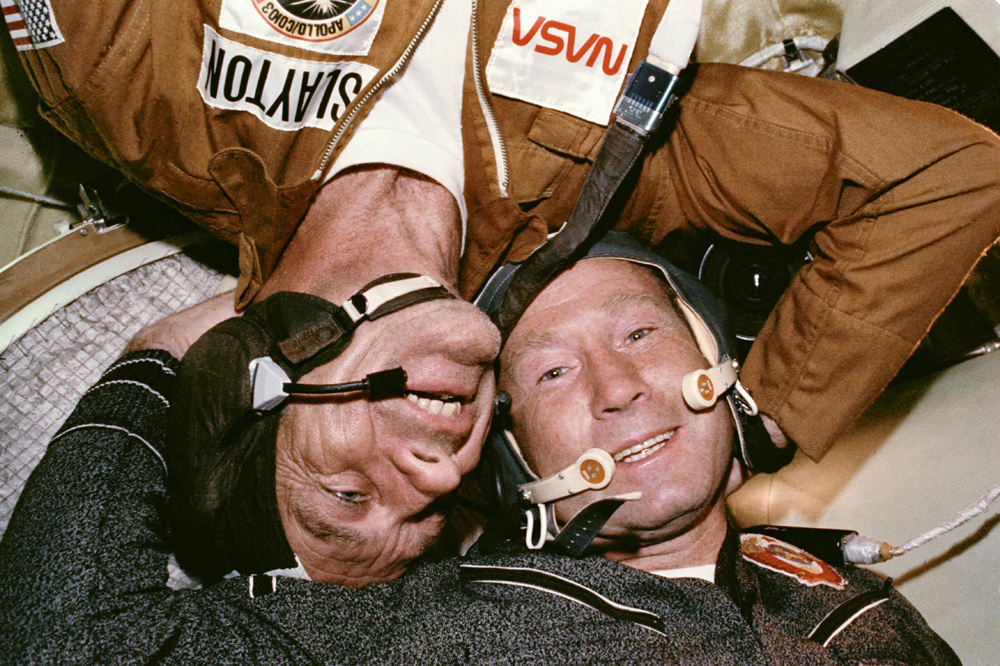
Back row, left to right: Tom Stafford and Alexei Leonov.
Front row, left to right: Deke Slayton, Vance Brand and Valeri Kubasov.

July 17, 1975: For the 1st time, the only 2 nations that have yet sent human beings into space team up.

The 1972 arms talks between American President Richard Nixon and Soviet Premier Leonid Brezhnev, and the subsequent end of the Vietnam War, improved relations between the United States of America and the Union of Soviet Socialist Republics, a condition that became known as DĂ©tente, a French word meaning "relaxation."

But a meeting of American and Soviet spacecraft, in space? There were issues beyond politics. Engineering, for one. Each side had concerns over the way the others' craft were designed, and whether they could actually work together. By 1975, these concerns were alleviated, and the combined Apollo-Soyuz flight could go forward.

The American commander was Thomas P. Stafford, who had flown on Gemini 6 and Gemini 9, and commanded Apollo 10. The command module pilot was Vance Brand, making his 1st spaceflight. And the docking module pilot was Donald K. Slayton.

"Deke" Slayton had been one of the original Mercury 7, the only one who hadn't flown in Project Mercury, as he was grounded for health reasons. He was cleared for spaceflight in 1972, but, by then, Project Apollo was winding down, and he didn't fly on any of the Skylab missions, either.

The Soviet commander was Alexei Leonov. In 1965, aboard Voskhod 2, he became the 1st person to make a spacewalk. He was chosen to be the 1st "cosmonaut" on the Moon, but mechanical issues led to the cancellation of the Soviet Moon-landing program. The "flight engineer" was Valery Kubasov, who had flown on Soyuz 6.

Soyuz 19 launched on July 15, 1975, at 8:20 AM U.S. Eastern Time, from the Baikonur Cosmodrome in Kazahkstan. Apollo 18 launched from Cape Canaveral, Florida, at 3:50 PM the same day. On July 17, at 12:12 PM Eastern, the capsules docked. At 3:17, Stafford and Leonov entered their respective docking capsules, opened the door between them, and shook hands, with the docked craft over Metz, France.
A few minutes later, Slayton and Leonov
posed for this zero-gravity picture.

Mission Control at the Lyndon B. Johnson Space Center in Houston patched in a phone call from President Gerald Ford. The Soviet equivalent read a message from Brezhnev. Music from each country was played: "Tenderness," a 1966 hit by Maya Kristalinskaya; and "Why Can't We Be Friends?" a recent hit with an ironic title by the funk band War.

Scientific experiments were conducted aboard each capsule, which couldn't have been easy, since each capsule had a seating capacity of three. Because of Stafford's drawl, Leonov said 3 languages were spoken on the mission: English, Russian and "Oklahomski."

They separated on July 19, both having stayed in Earth orbit without heading for the Moon. Soyuz 19 landed (the Soviets always landed on land) on July 21, and Apollo 18 splashed down (the Americans always landed on water) on July 24.

This was the end of Project Apollo. The decay of Skylab's orbit and delays on the Space Shuttle program meant that America did not return to spaceflight for 6 years.

The Apollo 18 command module is on display at the California Science Center, next-door to the Los Angeles Memorial Coliseum. The Space Shuttle Endeavour is also there. The Soyuz 19 descent module is at the RKK Energiya museum in Korolyov, outside Moscow. An Apollo module and a Soyuz module, but not the ones from this mission, are at the Smithsonian Institution's National Air and Space Museum in Washington.

In the 1983 film The Right Stuff, Slayton was played by Scott Paulin.

Kubasov was the only member of the Apollo-Soyuz crew who ever flew in space again, aboard Soyuz 36 in 1980. Slayton died in 1993, Kubasov in 2014, Leonov in 2019. As of July 17, 2022, Stafford is still alive, age 91; as is Brand, 90. Stafford delivered one of the eulogies at Leonov's funeral. (UPDATE: Stafford died in 2024.)

*

July 17, 1975 was a Thursday. These games were played in Major League Baseball:

* The New York Yankees lost to the Texas Rangers, 7-2 at Arlington Stadium in the Dallas suburb of Arlington, Texas. Pat Dobson got knocked out of the box in the 2nd inning, while Ferguson Jenkins limited the Yankees to 3 baserunners, all singles, by Thurman Munson, Roy White, and Rich Coggins, whose hit drove in both Yankee runs.

* The New York Mets beat the Atlanta Braves, 4-3 at Shea Stadium. Rusty Staub, Dave Kingman and Joe Torre hit home runs for the Metropolitans.

* The Montreal Expos beat the Cincinnati Reds, 3-0 at Jarry Park in Montreal. Steve Rogers (6 innings) and Dale Murray (3) combined on a 7-hit shutout. Pete Rose, Johnny Bench and Joe Morgan went 0-for-11 between them. Pepe Mangual and Pete Mackanin hit home runs for the Expos.

* The Boston Red Sox beat the Kansas City Royals, 8-3 at Fenway Park in Boston. Carl Yastrzemski went 0-for-5, but Cecil Cooper and Rick Burleson hit home runs for the Sox. George Brett went 0-for-3 with a walk, and Harmon Killebrew, playing for the Royals in his final season, went 2-for-2 with a walk.

* The Philadelphia Phillies beat the Houston Astros, 6-5 at Veterans Stadium in Philadelphia. Mike Schmidt and Tim McCarver homered for the Phils, but the winning run came in the bottom of the 11th, when Jay Johnstone bunted and Astro 2nd baseman Larry Milbourne made a bad throw, allowing Larry Bowa to score. Tug McGraw got the win in relief of Steve Carlton.

* The Baltimore Orioles beat the Minnesota Twins, 6-3 at Memorial Stadium in Baltimore. Elrod Hendricks won it with a home run in the bottom of the 12th inning. Lee May also homered for the Birds, and Brooks Robinson went 1-for-4. Dan Ford homered for the Twins, and Rod Carew went 1-for-5.

* The Oakland Athletics beat the Cleveland Indians, 6-3 at Cleveland Municipal Stadium. Reggie Jackson and Sal Bando homered for the A's. Indians manager Frank Robinson, still active as a player, did not put himself into the game.

* A doubleheader was split at Comiskey Park in Chicago. The Chicago White Sox won the opener, 4-0. Wilbur Wood pitched a 2-hit shutout, to outpitch Mickey Lolich. The Detroit Tigers won the nightcap, 9-1.

* The California Angels beat the Milwaukee Brewers, 6-1 at Milwaukee County Stadium. Hank Aaron went 0-for-3 with a walk. Robin Yount went 0-for-4.

* The Chicago Cubs beat the San Diego Padres, 6-5 at San Diego Stadium (later renamed Jack Murphy Stadium and Qualcomm Stadium).

* The Pittsburgh Pirates beat the Los Angeles Dodgers, 5-2 at Dodger Stadium in Los Angeles. Dave Parker and Willie Stargell homered for the Bucs.

* And the St. Louis Cardinals beat the San Francisco Giants, 1-0 at Candlestick Park in San Francisco. Ted Simmons won the game in the top of the 9th with an RBI double.

Thursday, July 14, 2022

July 14, 1965: The 1st Close-Up Pictures of the Planet Mars

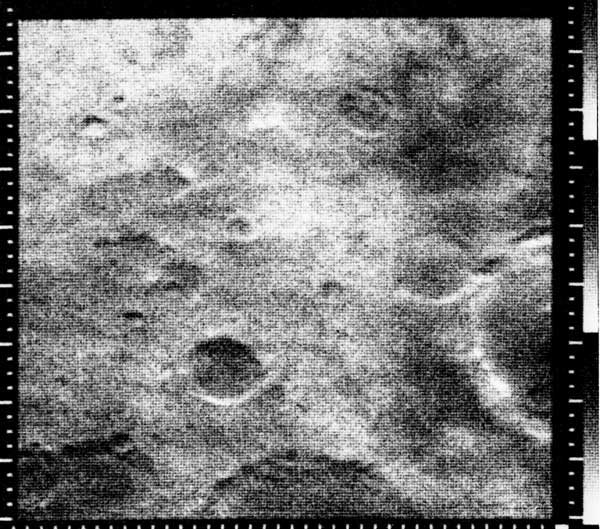
July 14, 1965: Mariner 4 takes the 1st close-up pictures of Mars, the planet in the solar system most like the Earth.
Mariner 4 was launched at Cape Canaveral on November 28, 1964. It captured the 1st images of another planet ever returned from deep space. Their depiction of a cratered, dead planet largely changed the scientific community's view of life on Mars: While many had hoped to find it, the photos returned by Mariner 4 all but wiped out the possibility. Later missions, including the Viking landers of the mid-1970s, pretty much ruled it out.
Despite most American TV shows that had not already done so
switching to color for the 1965-66 TV season,
NASA wouldn't spring for all-color photos.

Other mission objectives were to perform field and particle measurements in interplanetary space in the vicinity of Mars, and to provide experience in and knowledge of the engineering capabilities for interplanetary flights of long duration. Initially expected to remain in space for eight months, Mariner 4's mission lasted about 3 years in solar orbit. On December 21, 1967, with NASA having gotten all it asked for from it, communications with Mariner 4 were terminated.

Mariner 3 was launched on November 5, 1964, but it failed to operate. Mariners 6 and 7 were launched in 1969, and returned new photos and information from Mars. Mariner 8 failed at launch on May 9, 1971. Mariner 9 became the 1st Earth probe to orbit Mars, on October 27, 1972.

Mariners 1, 2 and 5 went to Venus, but only Mariner 5 accomplished its mission: Not to return photographs, but to measure magnetic fields and various emissions of the Venusian atmosphere. Mariner 10, the last mission of the project, went to Venus in 1974, and got the 1st detailed photos of that planet. It then went on to do the same with Mercury.

*

July 14, 1965 was a Wednesday. Adlai Stevenson, U.S. Ambassador to the United Nations, former Governor of Illinois, and the Democratic Party's 1952 and 1956 nominee for President, died on this day.

There were 3 baseball games played:

* A doubleheader was split at Wrigley Field in Chicago. The Chicago Cubs won the opener, 5-2. The Milwaukee Braves won the nightcap, 6-3. Over the 2 games, Ernie Banks went 3-for-5 with 3 walks, and Hank Aaron went 0-for-6, but did have an RBI on a sacrifice fly in the 1st game, and drew a walk in the 2nd game. Also in the 2nd game, Gene Oliver hit 2 home runs for the Braves.

* And the Chicago White Sox beat the Cleveland Indians, 12-10 at Cleveland Municipal Stadium. The Indians led 8-6 after 8 innings. In the 9th, the White Sox scored 3, and the Indians 1 to send it to extra innings. This was repeated in the 12th: The White Sox scored 3 runs, the Indians only 1.

Wednesday, July 13, 2022

July 13, 2015: The 1st Close-Up Pictures of the Planet Pluto

July 13, 2015: The New Horizons probe sends the 1st close-up pictures of the planet Pluto back to Earth.

Yes, I know: Pluto is officially no longer a planet. I'm still calling it a planet.

The 9th "planet" from the Sun is so far out, it takes 248 years to make a single revolution around the Sun. In other words, the last time that Pluto was in the position from the Sun that it is in 2022 was in 1774 -- before the independence of the United States of America. Andrew Jackson was 7 years old, Napoleon Bonaparte was 5, and Wolfgang Amadeus Mozart was 4. Its elliptical orbit means that, for 20 of those 248 years -- including, recently, from 1979 to 1999 -- it was closer to the Sun than the 8th planet, Neptune.

Pluto is so far out, it took New Horizons 9 years to get there from Earth. It was launched by NASA from Cape Canaveral, Florida on January 19, 2006. New Horizons then went on to study the Kuiper Belt, something of a 2nd asteroid belt, beyond Pluto.

*

July 13, 2015 was a Monday. There were no scores on this historic day: The only major league sport in season was baseball, and this was during their All-Star Break. 

Monday, July 11, 2022

July 11, 1979: The Fall of Skylab

July 11, 1979: Skylab falls from Earth orbit, ending its troubled 6-year voyage.

Skylab was launched on May 14, 1973, by the modified Saturn V. The launch is sometimes referred to as Skylab 1. Severe damage was sustained during launch and deployment, including the loss of the station's micrometeoroid shield/sun shade and one of its main solar panels. Debris from the lost micrometeoroid shield further complicated matters by becoming tangled in the remaining solar panel, preventing its full deployment and thus leaving the station with a huge power deficit.

The first crewed mission, Skylab 2, launched on May 25, 1973, atop a Saturn IB, and involved extensive repairs to the station. The crew -- Apollo 12 commander Pete Conrad, Joseph Kerwin and Paul Weitz -- deployed a parasol-like sunshade through a small instrument port from the inside of the station, bringing station temperatures down to acceptable levels and preventing overheating that would have melted the plastic insulation inside the station and released poisonous gases. The crew conducted further repairs via two spacewalks. The crew stayed in orbit with Skylab for 28 days, returning on June 22.

Skylab 3 was launched on July 28, 1973, with Apollo 12 lunar module pilot Alan Bean, Owen Garriott and Jack Lousma. They returned on September 25, having conducted several successful experiments, including one which eventually led to a Nobel Prize.

Skylab 4 was launched on November 16, 1973, with he 1st-ever American spaceflight of more than 1 person to made up entirely of spaceflight rookies: Gerald Carr, Edward Gibson and William Pogue. In fact, this was the only spaceflight for all 3.

But they made up for lost time, not only conducting even more successful experiments than had the Skylab 3 crew, but returning on February 8, 1974, 84 days after arrival, marking the longest U.S. spaceflight ever to that point, the 1st to span a New Year; and the 2nd, after Apollo 8, to include a Christmas Day.

But it was also the last time men were aboard Skylab. The 1975 Apollo-Soyuz mission didn't use it. And Americans did not return to space after that until the 1st Space Shuttle, the Columbia, was launched in 1981.

In the interim, it was determined that Skylab's orbit was decaying, and that it would crash into the Indian Ocean, far from any habited place and thus with no risk to humanity, on July 11, 1979. The prediction turned out to be correct.

Skylab was a disappointment, but neither a failure nor a waste: It proved that humanity could stay in space for more than a few days at a time, with no ill effects; and the work done there has benefited humanity in many ways.

For comparison's sake, the Soviet Union did manage to get it right, but their 1st attempt at a permanent space station was even worse than ours. Their space agency, Kosmicheskaya programma, had wanted to launch Salyut 1, the 1st intended-permanent space station, on April 12, 1971, to coincide with the 10th Anniversary of Yuri Gagarin becoming the 1st man in space, but had to delay it until April 19. ("Salyut" means "salute" or "fireworks.")

The 1st mission launched toward it, Soyuz 10, was unable to dock with it. Soyuz 11 did, but it malfunctioned upon re-entry to Earth, killing its 3-man crew, still the worst disaster in the history of the Soviet or Russian space program. Kosmicheskaya programma decided to start over, and cut off Salyut 1's support, allowing it to fall to Earth on October 11, not even 6 months later.

Salyut 2 only lasted 55 days in 1973, before malfunctioning and falling to Earth, never having hosted a crew. Salyut 3 was launched in 1974, and lasted 6 months, hosting just 1 successful mission, Soyuz 14. Salyut 4 was also launched in 1974, and lasted 2 years, hosting Soyuz 17 and 18. Salyut 5 was launched in 1976, lasted a little over a year, and hosted Soyuz 21 and 23.

Salyut 6 was launched in 1977, and lasted almost 5 years -- the Soviets' best attempt yet, but still not as long as Skylab. It hosted Soyuz 25, 26, 27, 28, 29, 30, 31, 32, 34, 35, 36, 37, 38, 39 and 40 (but not 33, which failed to dock and had to abort its mission).

Salyut 7 topped this by being launched in 1982, and lasted until 1991, almost 9 years. It hosted 6 missions, labeled Soyuz T-5, T-9, T-10, T-13, T-14 and T-15. Soyuz T-15 remains the only spacecraft, from any country, to dock at 2 different space stations: It was the 1st to dock at the Soviets' new Mir, on March 15, 1986; and then became the last to dock at Salyut 7, on May 6.

Mir would be far more successful than either Skylab or the Salyut series, lasting until 2001. By that point, the International Space Station was in use.

*

July 11, 1979 was a Wednesday. These Major League Baseball games were played that day:

* The New York Yankees fell apart almost as badly as Skylab did, losing to the Seattle Mariners, 16-1 at the Kingdome in Seattle. No matter how good or bad either team was, the Yankees never seemed to do well at the Kingdome, where the Mariners played from their 1977 inception until their move to Safeco Field (now T-Mobile Park) in 1999.

The M's scored 9 runs in the 1st inning, shelling veteran Tommy John and prospect Ken Clay. They got home runs from Ruppert Jones, Bruce Bochte and Leon Roberts. Floyd Bannister went the distance for the win, allowing only 3 hits: A home run by Lou Piniella, and singles by Thurman Munson and Willie Randolph. Reggie Jackson went 0-for-2 with a walk.

* The New York Mets beat the Los Angeles Dodgers, 4-3 at Shea Stadium. John Stearns singled home Lee Mazzilli in the bottom of the 10th inning. Elliott Maddox went 3-for-5 with an RBI.

* The San Francisco Giants beat the Montreal Expos, 1-0 at the Olympic Stadium in Montreal. The only run of the game came on a home run by Mike Ivie in the top of the 7th. John Curtis pitched a 4-hit shutout.

* The San Diego Padres beat the Philadelphia Phillies, 7-3 at Veterans Stadium in Philadelphia. The Padres got home runs from Dave Winfield, Gene Tenace and Jerry Turner. The Phillies got one from Garry Maddox. Mike Schmidt went 1-for-5 with an RBI. Pete Rose drew a walk as a pinch-hitter.

* The Atlanta Braves beat the Chicago Cubs, 6-5 at Atlanta-Fulton County Stadium.

* The Milwaukee Brewers beat the Toronto Blue Jays, 2-1 at Exhibition Stadium in Toronto. Robin Yount tripled home the winning run in the top of the 10th inning.

* The Cleveland Indians beat the Kansas City Royals, 9-8 at Cleveland Municipal Stadium. George Brett went 2-for-5 with 2 RBIs.

* The Cincinnati Reds beat the St. Louis Cardinals, 6-1 at Riverfront Stadium in Cincinnati. Johnny Bench went 1-for-4. Lou Brock went 0-for-4.

* The Minnesota Twins beat the Detroit Tigers, 3-0 at Tiger Stadium in Detroit. Darrell Jackson had a 4-hit shutout going after 6 innings, but allowed a double and a walk in the bottom of the 7th, and manager Gene Mauch panicked and brought in Pete Redfern. He finished the 6-hit shutout. In contrast, Sparky Anderson, in his 1st year managing the Tigers after being known as "Captain Hook" for his frequently relieving of pitchers while managing in Cincinnati, led Jack Morris pitch a complete game, but while he only allowed 3 hits, he was the losing pitcher.

* The Chicago White Sox beat the Texas Rangers, 5-3 at Comiskey Park in Chicago.

* The Pittsburgh Pirates beat the Houston Astros, 5-1 at the Astrodome in Houston. Willie Stargell and Dave Parker hit home runs.

* The Boston Red Sox beat the California Angels, 9-3 at Anaheim Stadium (now Angel Stadium of Anaheim). They did this despite Carl Yastrzemski going 0-for-5.

* And the Baltimore Orioles beat the Oakland Athletics, 3-1, in front of only 2,586 fans at the Oakland Coliseum. Eddie Murray went 3-for-4 with a solo home run.

December 31, 1999 & January 1, 2000: The Millennium

December 31, 1999:  The Millennium arrives. The people of planet Earth survived. At a terrible cost. But we hadn't destroyed ourselves. ...