Showing posts with label planet. Show all posts

Thursday, December 15, 2022

December 15, 1970: The 1st Probe to Land on the Planet Venus

December 15, 1970: Venera 7 lands on the surface of the planet Venus, the closest planet to Earth. The Soviet probe is the 1st man-made object from Earth to land on the surface of any of the solar system's other planets.

The Soviet space program launched it from the Baikonur Cosmodrome in Kazakhstan on August 17, 1970. The lander was designed to be able to survive pressure of up to 18 megapascals (2,600 psi) and temperatures of 1,076° Fahrenheit. This was significantly greater than what was expected to be encountered, but significant uncertainties as to the surface temperatures and pressure of Venus resulted in the designers' opting for a large margin of error.

The probe appeared to go silent on impact, but recording tapes kept rolling. A few weeks later, upon a review of the tapes by the radio astronomer Oleg Rzhiga, another 23 minutes of very weak signals were found on them. The spacecraft had landed on Venus, and probably bounced onto its side, leaving the medium gain antenna aimed incorrectly for proper signal transmission to Earth.

The probe transmitted information to Earth for 53 minutes, which included about 20 minutes from the surface. It was found that the temperature at the surface of Venus was 475° Celsius. Using the temperature, and models of the atmosphere, a pressure of 9.0 MPa (1,300 psi) was calculated.

In those 53 minutes, the probe still managed to provide information about the surface of Venus, which could not be seen through a thick veil of atmosphere. The spacecraft confirmed that humans cannot survive on the surface of Venus. It excluded the possibility that there is any liquid water on the planet.

So Venera 7 didn't manage to do its job for long, but it did enough of its job to justify later Soviet missions. Venera 8 landed on March 27, 1972, and is considered the 1st fully successful landing of an Earth probe on another planet. It would be followed by Venera 9 and 10 in 1975, Venera 11 and 12 in 1978, Venera 13 and 14 in 1981, Venera 15 and 16 in 1983, and Vega 1 and 2 in 1984.

It would take until February 5, 1974, with the American probe Mariner 10, for the 1st close-up photographs of Venus to be sent back to Earth. Even more detailed photos were sent back by the American probe Pioneer Venus in 1979.

*

December 15, 1970 was a Tuesday. Baseball was out of season. Football was in midweek. There were 6 games played in the NBA:

* The New York Knicks beat the Cleveland Cavaliers, 110-92 at Madison Square Garden.

* The Philadelphia 76ers beat the San Diego Rockets, 122-98 at The Spectrum in Philadelphia.

* The Buffalo Braves beat the Los Angeles Lakers, 113-111 in overtime at the Buffalo Memorial Auditorium.

* The Chicago Bulls beat the Baltimore Bullets, 115-97 at the Chicago Stadium. Bob Love scored 37 points.

* The San Francisco Warriors beat the Phoenix Suns, 129-123 at the Arizona Veterans Memorial Coliseum in Phoenix.

* And the Detroit Pistons beat the Portland Trail Blazers, 111-103 at the Portland Memorial Coliseum.

There were 2 games in the American Basketball Association. The Memphis Pros beat the Texas Chaparrals, 146-141 at the Mid-South Coliseum in Memphis. And the Denver Rockets beat the Carolina Cougars, 126-116 at the Auditorium Arena in Denver.

And there were 2 games in the NHL. The St. Louis Blues beat the Minnesota North Stars, 2-1 at the St. Louis Arena. And the Vancouver Canucks beat the Philadelphia Flyers, 3-2 at the Pacific Coliseum in Vancouver.

Saturday, December 3, 2022

December 3, 1973: The 1st Close-Up Pictures of the Planet Jupiter

December 3, 1973: The probe Pioneer 10 sends photographs of Jupiter, the largest planet in the solar system, back to Earth. These were the first close-up pictures of any of the system's 4 outer "gas giants."

Pioneer 10 was launched from Cape Canaveral, Florida on March 2, 1972, and was intended for a flyby only of Jupiter, no other planets. It was followed a year later by Pioneer 11, which was designed for flybys (flybies? flysby?) of both Jupiter and Saturn, becoming the 1st probe to take close-up photos of the latter.

On the suggestion of astronomer Carl Sagan, each of them carried a 6-by-9-inch gold-anodized aluminum plaque, in case either of them is ever found by intelligent life-forms from another planetary system. The plaques feature the nude figures of a human male and female, along with several symbols that are designed to provide information about the origin of the spacecraft. The plaque is attached to the antenna support struts, where it would be shielded from interstellar dust.
On June 13, 1983, Pioneer 10 crossed the orbit of Neptune, making it the 1st human-made object to leave the Solar System. On April 27, 2002, NASA had its last successful reception of telemetry from Pioneer 10, from a distance of 80.22 AU -- an "astronomical unit" being the distance between the Earth and the Sun, about 93 million miles, so 80.22 AU is about 1.16 billion miles from Earth. A last signal, too weak to learn anything from it, was received on January 23, 2003.

*

December 3, 1973 was a Monday. Actress Holly Marie Combs was born.

Baseball was out of season. There were no games scheduled in the NBA, the ABA, the NHL or the WHA. There was one score on this historic day: On ABC Monday Night Football, the Miami Dolphins beat the Pittsburgh Steelers, 30-26 at the Orange Bowl in Miami.

Thursday, September 1, 2022

September 1, 1979: The 1st Close-Up Pictures of the Planet Saturn


September 1, 1979: The probe Pioneer 11 sends the 1st close-up photographs of the planet Saturn back to Earth.

It was launched from Cape Canaveral, Florida on April 6, 1973, and reached Jupiter on December 3, 1974, exactly 1 year after its predecessor, Pioneer 10, sent the 1st close-up pictures of that planet back to Earth.

But Pioneer 11, and later Voyager 1 and Voyager 2, would vastly improve upon the previous probe's work. The pictures of Saturn's famed rings became better than ever. And the moons! Where Saturn was once believed to have had 8 moons, 2nd to Jupiter's 15, it is now known to have at least 146 -- to Jupiter's 95.

Like Pioneer 10, it carries a 6-by-9-inch gold-anodized aluminum plaque, in case either of them is ever found by intelligent life-forms from another planetary system. The plaques feature the nude figures of a human male and female, along with several symbols that are designed to provide information about the origin of the spacecraft. The plaque is attached to the antenna support struts, where it would be shielded from interstellar dust.

In 1990, Pioneer 11 passed the orbit of Pluto. NASA defined this as having left the solar system. The last signal from it was received on November 24, 1995. 

*

September 1, 1979 was a Saturday. There were 11 college football games, but only 1 was between 2 teams from major conferences: Arizona beat Colorado State, 33-17 at Arizona Stadium in Tucson.

And these Major League Baseball games were played:

* The New York Yankees lost to the Kansas City Royals, 9-8 at Yankee Stadium. The Yankees scored 5 runs in the bottom of the 1st, knocking Rich Gale out of the box, and blew it. The Royals took an 8-5 lead in the top of the 4th, and neither Ken Clay nor Jim Kaat could get through that inning. Jim Spencer hit a home run, and Reggie Jackson went 1-for-4 with 3 RBIs, with a 2-run single and an RBI groundout. George Brett and Al Cowens hit home runs for the Royals. Al Hrabosky, "The Mad Hungarian," was the winning pitcher, Kaat the loser, and both became esteemed broadcasters.

* The New York Mets lost to the Houston Astros, 3-1 at the Astrodome in Houston.

* The Montreal Expos beat the Cincinnati Reds, 7-2 at the Olympic Stadium in Montreal. Warren Cromartie went 4-for-4. Johnny Bench hit a home run.

* The Texas Rangers beat the Boston Red Sox, 5-4 at Fenway Park in Boston. Carl Yastrzemski went 1-for-4.

* The Minnesota Twins beat the Baltimore Orioles, 3-2 at Memorial Stadium in Baltimore. Paul Hartzell outpitched Jim Palmer. Eddie Murray went 0-for-4.

* The Philadelphia Phillies beat the Atlanta Braves, 6-4 at Atlanta-Fulton County Stadium. Mike Schmidt, Greg Luzinski and Manny Trillo hit home runs. Pete Rose went 2-for-5 with an RBI.

* The Seattle Mariners beat the Toronto Blue Jays, 3-2 at Exhibition Stadium in Toronto. Willie Horton doubled home the winning run in the top of the 10th inning.

* The California Angels beat the Cleveland Indians, 7-4 at Cleveland Municipal Stadium. Rod Carew did not play.

* The Oakland Athletics beat the Detroit Tigers, 6-3 at Tiger Stadium in Detroit. Rookie Rickey Henderson singled home the winning run in the top of the 10th.

* The Chicago White Sox were leading the Milwaukee Brewers, 4-3 after 5 innings at Comiskey Park in Chicago, when the game was called due to rain.

* The St. Louis Cardinals beat the San Diego Padres, 5-3 at San Diego Stadium (later Jack Murphy Stadium and Qualcomm Stadium).

* The Los Angeles Dodgers beat the Chicago Cubs, 5-4 at Dodger Stadium in Los Angeles.

* And the Pittsburgh Pirates swept a doubleheader from the San Francisco Giants, 5-3 and 7-2 at Candlestick Park in San Francisco.

Thursday, August 25, 2022

August 25, 1989: The 1st Close-Up Pictures of the Planet Neptune

August 25, 1989: The probe Voyager 2 sends the 1st close-up pictures of the planet Neptune back to Earth.

The 8th planet from the Sun, and the furthest if one doesn't count Pluto, it was discovered, independently, in 1846 by British astronomer John Couch Adams and French astronomer Urbain Le Verrier. They based their findings on the fact that the planet Uranus did not move across the sky as expected, leading to the belief that an additional, further-out planet must have a gravitational effect on it. It was named after the ancient Roman god of the sea, known as Poseidon to the Greeks.

Like Jupiter, Saturn, and what turned out to be the 8th planet, Neptune, Uranus is a "gas giant." Also like them, it has rings, the result of a moon that didn't quite form. The rings were not discovered until 1977, making it the 2nd planet, after the considerably more obvious Saturn, to be found to have them. But the most notable feature of Uranus, emphasized by the rings, is its 98-degree axis tilt, easily the most extreme in Earth's solar system.

It was also in 1977 that the Voyager 2 probe was launched, with the intent of providing the 1st close-up pictures of Uranus and Neptune. It did the job, reaching Neptune on August 25, 1989, and providing pictures of the blue gases of the atmosphere.

Among the discoveries is that, like Jupiter, Saturn and Uranus, Neptune has rings. It also discovered that, just as Jupiter has an apparently permanent storm known as "The Great Red Spot," Neptune has a similar storm, known as "The Great Blue Spot." The probe also raised the planet's number of known moons from 2 to 15.

Voyager 2 is now the furthest-out probe ever launched from Earth, but is still providing telemetry.

*

August 25, 1989 was a Friday. These Major League Baseball games were played:

* The New York Yankees lost to the Baltimore Orioles, 3-1 at 3-1 at Yankee Stadium. Jeff Ballard outpitched Clay Parker. Cal Ripken Jr. went 3-for-4 with a walk. Don Mattingly went 0-for-4.

* The New York Mets lost to the San Diego Padres, 5-3 at Jack Murphy Stadium in San Diego. Chris James won it with a home run off Randy Myers in the bottom of the 11th inning. Tony Gwynn went 2-for-5. Howard Johnson hit a home run for the Mets.

* The Boston Red Sox swept a doubleheader from the Detroit Tigers, 4-2 and 11-3 at Fenway Park in Boston.

* The Toronto Blue Jays beat the Milwaukee Brewers, 3-1 at the SkyDome (now the Rogers Centre) in Toronto. Robin Yount went 0-for-3, and Paul Molitor went 1-for-4.

* The Chicago White Sox beat the Cleveland Indians, 5-4 at Cleveland Municipal Stadium.

* The Pittsburgh Pirates beat the Cincinnati Reds, 12-3 at Riverfront Stadium in Cincinnati. This was the day after manager Pete Rose was banned for life, for betting on baseball. Barry Bonds hit a home run. Gary Redus went 4-for-5 with a home run and 4 RBIs.

* The Chicago Cubs beat the Atlanta Braves, 4-3 at Wrigley Field in Chicago. Ryne Sandberg singled Rick Wrona home with the winning run in the bottom of the 12th inning.

* The Minnesota Twins beat the Seattle Mariners, 2-1 at the Metrodome in Minneapolis. Ken Griffey Jr. went 2-for-4 with an RBI.

* The Kansas City Royals beat the Oakland Athletics, 3-1 at Royals Stadium (now Kauffman Stadium) in Kansas City. George Brett went 1-for-3 with a walk. Rickey Henderson went 1-for-2 with 2 walks and a stolen base.

* The California Angels beat the Texas Rangers, 4-1 at Arlington Stadium in the Dallas suburb of Arlington, Texas.

* The St. Louis Cardinals beat the Houston Astros, 7-4 at the Astrodome in Houston.

* The Philadelphia Phillies beat the Los Angeles Dodgers, 3-2 at Dodger Stadium in Los Angeles.

* And the Montreal Expos beat the San Francisco Giants, 12-2 at Candlestick Park in San Francisco.

Thursday, July 14, 2022

July 14, 1965: The 1st Close-Up Pictures of the Planet Mars

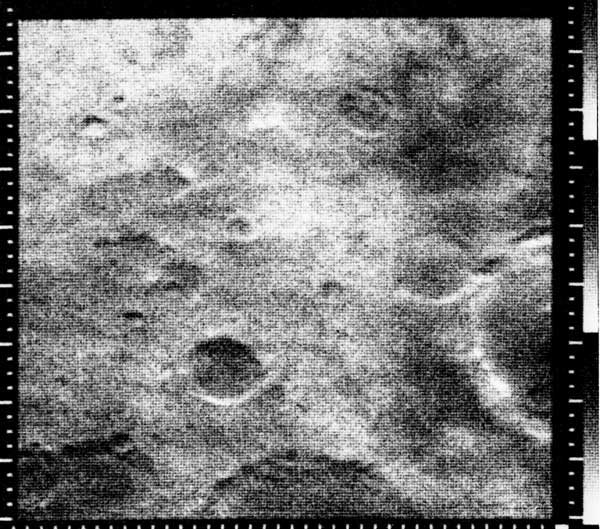
July 14, 1965: Mariner 4 takes the 1st close-up pictures of Mars, the planet in the solar system most like the Earth.
Mariner 4 was launched at Cape Canaveral on November 28, 1964. It captured the 1st images of another planet ever returned from deep space. Their depiction of a cratered, dead planet largely changed the scientific community's view of life on Mars: While many had hoped to find it, the photos returned by Mariner 4 all but wiped out the possibility. Later missions, including the Viking landers of the mid-1970s, pretty much ruled it out.
Despite most American TV shows that had not already done so
switching to color for the 1965-66 TV season,
NASA wouldn't spring for all-color photos.

Other mission objectives were to perform field and particle measurements in interplanetary space in the vicinity of Mars, and to provide experience in and knowledge of the engineering capabilities for interplanetary flights of long duration. Initially expected to remain in space for eight months, Mariner 4's mission lasted about 3 years in solar orbit. On December 21, 1967, with NASA having gotten all it asked for from it, communications with Mariner 4 were terminated.

Mariner 3 was launched on November 5, 1964, but it failed to operate. Mariners 6 and 7 were launched in 1969, and returned new photos and information from Mars. Mariner 8 failed at launch on May 9, 1971. Mariner 9 became the 1st Earth probe to orbit Mars, on October 27, 1972.

Mariners 1, 2 and 5 went to Venus, but only Mariner 5 accomplished its mission: Not to return photographs, but to measure magnetic fields and various emissions of the Venusian atmosphere. Mariner 10, the last mission of the project, went to Venus in 1974, and got the 1st detailed photos of that planet. It then went on to do the same with Mercury.

*

July 14, 1965 was a Wednesday. Adlai Stevenson, U.S. Ambassador to the United Nations, former Governor of Illinois, and the Democratic Party's 1952 and 1956 nominee for President, died on this day.

There were 3 baseball games played:

* A doubleheader was split at Wrigley Field in Chicago. The Chicago Cubs won the opener, 5-2. The Milwaukee Braves won the nightcap, 6-3. Over the 2 games, Ernie Banks went 3-for-5 with 3 walks, and Hank Aaron went 0-for-6, but did have an RBI on a sacrifice fly in the 1st game, and drew a walk in the 2nd game. Also in the 2nd game, Gene Oliver hit 2 home runs for the Braves.

* And the Chicago White Sox beat the Cleveland Indians, 12-10 at Cleveland Municipal Stadium. The Indians led 8-6 after 8 innings. In the 9th, the White Sox scored 3, and the Indians 1 to send it to extra innings. This was repeated in the 12th: The White Sox scored 3 runs, the Indians only 1.

Wednesday, July 13, 2022

July 13, 2015: The 1st Close-Up Pictures of the Planet Pluto

July 13, 2015: The New Horizons probe sends the 1st close-up pictures of the planet Pluto back to Earth.

Yes, I know: Pluto is officially no longer a planet. I'm still calling it a planet.

The 9th "planet" from the Sun is so far out, it takes 248 years to make a single revolution around the Sun. In other words, the last time that Pluto was in the position from the Sun that it is in 2022 was in 1774 -- before the independence of the United States of America. Andrew Jackson was 7 years old, Napoleon Bonaparte was 5, and Wolfgang Amadeus Mozart was 4. Its elliptical orbit means that, for 20 of those 248 years -- including, recently, from 1979 to 1999 -- it was closer to the Sun than the 8th planet, Neptune.

Pluto is so far out, it took New Horizons 9 years to get there from Earth. It was launched by NASA from Cape Canaveral, Florida on January 19, 2006. New Horizons then went on to study the Kuiper Belt, something of a 2nd asteroid belt, beyond Pluto.

*

July 13, 2015 was a Monday. There were no scores on this historic day: The only major league sport in season was baseball, and this was during their All-Star Break. 

Tuesday, March 29, 2022

March 29, 1974: The 1st Close-Up Pictures of the Planet Mercury

March 29, 1974: Mariner 10 takes the 1st close-up pictures of Mercury, the closest planet to the Sun. It had been 52 days since the same probe had taken the 1st close-up pictures of the planet Venus.

Mariner 10 was launched at Cape Canaveral on November 3, 1973, reached its closest approach to Venus on February 5, 1974, and made 3 flybys (flysby?) of Mercury: March 29 and September 21, 1974; and March 16, 1975.
The probe revealed that the surface of Mercury resembled that of Earth's Moon (Mercury has no moons), with no water and lots of craters. It also found a tenuous atmosphere consisting primarily of helium, as well as a magnetic field and a large iron-rich core.

Mariner 10 stopped transmitting on March 24, 1975. It could have fallen into the Sun, but, most likely, is still orbiting the Sun, unable to transmit any data.

It was the only craft of the Mariner project designed to investigate Mercury, and was the last mission of the project. Mariners 1, 2 and 5 went to Venus, but only Mariner 5 accomplished its mission: Not to return photographs, but to measure magnetic fields and various emissions of the Venusian atmosphere. Mariners 4, 6, 7 and 9 went to Mars. Mariners 3 and 8 were intended as such, but failed at launch. Mariner 10 was the last mission of the project.

*

March 29, 1974 was a Friday. Baseball was in Spring Training. Football was out of season. There were 2 games played in the NBA Playoffs:

* The New York Knicks beat the Capital Bullets, 102-91 at Madison Square Garden. Elvin Hayes scored 40 points, and grabbed 14 rebounds. Earl Monroe led the Knicks with 26 points.

Having played the previous 10 seasons as the Baltimore Bullets, they moved for 1973-74, taking on the name "Capital Bullets." They played 9 home games at the Cole Field House on the campus of the University of Maryland in College Park. They moved into the Capital Centre on December 2, 1973, and remained there until the 1997-98 season, when they moved into the District of Columbia, to the arena now known as the Capital One Arena.

* And the Milwaukee Bucks beat the Los Angeles Lakers, 99-95 at the Milwaukee Exposition & Convention Center Arena (a.k.a. The MECCA). Kareem Abdul-Jabbar scored 35 points and grabbed 21 rebounds.

There were 2 games played in the American Basketball Association:

* The New York Nets beat the Virginia Squires, 108-96 at the Nassau Coliseum.

* And the San Diego Conquistadors beat the Denver Rockets, 131-111 at the San Diego Sports Arena (now the Pechanga Arena). Both teams would change their name the next season: The Conquistadors became the San Diego Sails; and the Rockets, anticipating being brought into the NBA, where there was already a Houston Rockets, took on the name of the 1st NBA team that played in their city, the Denver Nuggets.

One game was played in the NHL: The Montreal Canadiens beat the California Golden Seals, 4-3 at the Oakland Coliseum Arena. Three games were played in the World Hockey Association:

* The Edmonton Oilers beat the Minnesota Fighting Saints, 3-1 at the St. Paul Civic Center in St. Paul, Minnesota.

* The Winnipeg Jets beat the Houston Aeros, 7-5 at the Winnipeg Arena.

* And the Chicago Cougars beat the Vancouver Blazers, 5-2 at the Pacific Coliseum in Vancouver.

Friday, February 18, 2022

February 18, 1930: Clyde Tombaugh Discovers the Planet Pluto

February 18, 1930: Astronomer Clyde Tombaugh discovers the planet Pluto, raising the number of known planets in Earth's solar system to 9.

The 6 planets closest to the Sun had all been known since antiquity. In ascending order of distance from the Sun, they are: Mercury, Venus, Earth, Mars, Jupiter and Saturn. From the naked eye on Earth, each of the others can be seen.

When 2 or more of them are close together in the sky, it is known as a "conjunction." It has been speculated that a conjunction of of 3 of them -- perhaps Venus, the closest to Earth; Mars, the next-closest; and Jupiter, the largest in the system -- formed the Star of Bethlehem, which led the the Wise Men to the birth of Christ. (The Bible never calls them "kings," and it has been credibly suggested that they were astronomers, or perhaps astrologers; either way, they would have studied the planets known at the time.)

In 1781, British astronomer William Herschel discovered a new planet. He named it "Georgium Sides," meaning "Georgian Star," after the King at the time, George III. Eventually, like the other planets, it was given a name from mythology: Uranus.

But this 7th planet didn't move the way astronomers had predicted. Using Isaac Newton's Laws of Motion, they predicted that there must be an 8th planet out there. In 1846, German astronomer Johann Galle discovered Neptune. But it still didn't affect Uranus enough to explain all of its odd movements, and Neptune didn't always move as expected, either. American astronomer Percival Lowell suggested a 9th planet was out there, but died in 1916, before it could be found.

Clyde William Tombaugh was born on February 4, 1906 outside Chicago in Streator, Illinois, and grew up in Burdett, Kansas. As a boy, he built his own telescopes, and sent his findings to the Lowell Observatory in Flagstaff, Arizona. Impressed, they offered him a job in 1926.

Eventually, his job became to take the data already available, and use it to find Planet 9. Using Lowell's predictions, he examined photographs he took from the Observatory's 13-inch astrograph in January 1930, and, on February 11, wrote his paper confirming that Planet 9 had been found. On May 1, 1930, the American Astronomical Society and Britain's Royal Astronomical Society jointly announced the discovery, and the official naming, of the planet Pluto. Not only was it a name from mythology, but its 1st 2 letters were Percival Lowell's initials.

In 1978, it was discovered that Pluto was actually the smallest planet in the solar system, taking that presumed status away from Mercury. So speculation began that there had to be a 10th planet out there. But when Voyager 2 sent data back from Neptune in 1989, it was discovered that Neptune's mass had been overestimated, and that explained any remaining questions about Uranus' orbit. Later, more powerful telescopes proved beyond any doubt that there is no Planet 10 in our solar system. They were also, by 1992, able to discover planets orbiting distant stars.

On August 24, 2006, the size of Pluto, and the relatively large size of its moon Charon, suggesting a "double planet," led to a reconsideration of Pluto's definition. But instead of promoting Charon and ruling that there were actually 10 planets, the International Astronomical Union demoted Pluto, reclassifying it as a "dwarf planet," leaving 8 planets in the solar system, and Neptune as the furthest from the Sun.

Tombaugh went on to discover 15 asteroids, several variable stars, star clusters, and one known comet. He served in World War II, and taught at New Mexico State University.
He was not available for reaction to the denigration of his discovery: He died on January 17, 1997, at 90. Through his brother, Robert, he is the great uncle of Los Angeles Dodgers pitching star Clayton Kershaw.

Nor did Tombaugh live to see the first close-up pictures of his discovery, taken by the unmanned New Horizons spacecraft in 2015.

*

February 18, 1930 was a Tuesday. Baseball and football were out of season. The NBA had not yet been founded. But the entire NHL, 10 teams, were in action:

* The New York Rangers lost to the Toronto Maple Leafs, 5-1 at the old Madison Square Garden.

* The New York Americans beat the Chicago Black Hawks, 6-4 at the Chicago Stadium.

* The Boston Bruins beat the Montreal Maroons, 3-2 at the Boston Garden. The Maroons folded after the 1938 season.

* The Ottawa Senators beat the Pittsburgh Pirates, 3-2 at the Ottawa Auditorium. The Pirates moved after the season, becoming the Philadelphia Quakers. The Senators moved in 1934, becoming the St. Louis Eagles. Each team lasted only one more year after its respective move, and folded. 

* And the Montreal Canadiens beat the Detroit Cougars, 2-0 at the Olympia Stadium in Detroit. In 1932, the Cougars were renamed the Detroit Red Wings.

Saturday, February 5, 2022

February 5, 1974: The 1st Close-Up Pictures of the Planet Venus

February 5, 1974: Mariner 10 takes the 1st close-up pictures of Venus, the 2nd planet from the Sun, and the closest planet to Earth. In just 52 more days, it will do the same for the planet Mercrury.

Mariner 10 was launched at Cape Canaveral on November 3, 1973, reached its closest approach to Venus on February 5, 1974, and made 3 flybys (flysby?) of Mercury: March 29 and September 21, 1974; and March 16, 1975.
The probe revealed that the surface of Mercury resembled that of Earth's Moon (Mercury has no moons), with no water and lots of craters. It also found a tenuous atmosphere consisting primarily of helium, as well as a magnetic field and a large iron-rich core.

During its flyby of Venus, Mariner 10 discovered evidence of rotating clouds and a very weak magnetic field. Using a near-ultraviolet filter, it photographed Venus's chevron clouds, and performed studies of the planet's sulfurous, broiling-hot atmopshere.

Mariner 10 stopped transmitting on March 24, 1975. It could have fallen into the Sun, but, most likely, is still orbiting the Sun, unable to transmit any data.

Previously, Mariner 1 had been launched on July 22, 1962, with the intention of reaching Venus, but it had a guidance failure shortly after launch, and was destroyed by a system activated from the ground. Mariner 2 made the 1st flyby of Venus on January 3, 1963, but it returned only data, not photographs. Mariner 5 flew by Venus on December 4, 1967, and it accomplished its mission: Not to return photographs, but to measure magnetic fields and various emissions of the Venusian atmosphere. The Soviets landed Venera 7 on Venus on December 15, 1970, but it only returned information, not photos.

Mariners 4, 6, 7 and 9 went to Mars. Mariners 3 and 8 were intended as such, but failed at launch. Mariner 10 was the last mission of the project.

*

February 5, 1974 was a Tuesday. Baseball and football were out of season. There were 7 games played in the NBA:

* The New York Knicks beat the Phoenix Suns, 106-90 at Madison Square Garden.

* The Atlanta Hawks beat the Capital Bullets, 121-103 at The Omni in Atlanta. In their 1st season after moving from Baltimore, the Bullets used the geographic identifier "Capital." For 1974-75, they became the Washington Bullets, until 1997-98, when they became the Washington Wizards.

* The Milwaukee Bucks beat the Cleveland Cavaliers, 102-87 at the Cleveland Arena. Kareem Abdul-Jabbar had 33 points and 18 rebounds.

* The Chicago Bulls beat the Boston Celtics, 100-98 at the Chicago Stadium.

* The Houston Rockets beat the Los Angeles Lakers, 116-112 in overtime at the Hofheinz Pavilion (now the Fertitta Center) in Houston. Rudy Tomjanovich scored 30 points for the Rockets, while Gail Goodrich scored 44 in defeat for the Lakers.

* The Golden State Warriors beat the Seattle SuperSonics, 129-113 at the Oakland Coliseum Arena.

* And the Detroit Pistons beat the Portland Trail Blazers, 104-102 at the Portland Memorial Coliseum.

There was 1 game in the American Basketball Association: The Denver Rockets beat the San Antonio Spurs, 82-79 at the Auditorium Arena in Denver. The following season, anticipating being let into the NBA, where there was already a Houston Rockets, the Denver team changed its name to the Denver Nuggets.

There were 2 games in the NHL. The New York Islanders beat the Minnesota North Stars, 6-2 at the Nassau Coliseum. And the Montreal Canadiens beat the St. Louis Blues, 3-2 at the St. Louis Arena. And there were 4 games in the World Hockey Association:

* The Jersey Knights lost to the Houston Aeros, 4-0 at the Sam Houston Coliseum in Houston.

* The Chicago Cougars beat the Winnipeg Jets, 3-1 at the International Amphitheatre in Chicago.

* The Minnesota Fighting Saints beat the Cleveland Crusaders, 4-1 at the St. Paul Civic Center in St. Paul, Minnesota.

* And the Vancouver Blazers beat the Edmonton Oilers, 8-0 at the Pacific Coliseum in Vancouver.

Monday, January 24, 2022

January 24, 1986: The 1st Close-Up Pictures of the Planet Uranus

January 24, 1986: The probe Voyager 2 sends the 1st close-up pictures of the planet Uranus back to Earth.

The 7th planet from the Sun, and the closest one that can't really be seen with the naked eye (except on a really clear night), it was discovered by British astronomer William Herschel in 1781. Just as the 5th planet, Jupiter, was named for the king of the Roman gods (known as Zeus to the Greeks), and the 6th was named for his father, the Titan Saturn, the 7th was named for Uranus (or "Ouranos" to the Greeks), father of Saturn and the other Titans.

Astronomers prefer to pronounce it "YUR-in-uss." Most people pronounce it "Yur-AY-niss," which leads to juvenile "Your anus" jokes. Not that "Urine-us" jokes would be much of an improvement.

Like Jupiter, Saturn, and what turned out to be the 8th planet, Neptune, Uranus is a "gas giant." Also like them, it has rings, the result of a moon that didn't quite form. The rings were not discovered until 1977, making it the 2nd planet, after the considerably more obvious Saturn, to be found to have them. But the most notable feature of Uranus, emphasized by the rings, is its 98-degree axis tilt, easily the most extreme in Earth's solar system.
It was also in 1977 that the Voyager 2 probe was launched, with the intent of providing the 1st close-up pictures of Uranus and Neptune. It did the job, reaching Uranus on January 24, 1986, and providing pictures of the blue gases of the atmosphere, the rings, and the planet's moons that did form, raising the total from the 5 that were previously established by telescopes to 27 -- which would have been a record, had not Pioneers 10 and 11 and Voyagers 1 and 2 not previously established far more than that for Jupiter and Saturn.

The 1st close-up pictures of a planet should have been a major event in science. But it got quickly forgotten, for 2 reasons: Two days later, the Super Bowl was played, with the Chicago Bears blowing out the New England Patriots; and, two days after that, NASA suffered its worst tragedy ever, the explosion of the Space Shuttle Challenger.

*

January 24, 1986 was a Friday. Actress Mischa Barton was born.

Baseball was out of season. As I said, the Super Bowl was played 2 days later. There were 7 games played in the NBA:

* The New York Knicks lost to the Atlanta Hawks, 117-100 at The Omni in Atlanta. Dominique Wilkins scored 36 points for the Hawks.

* The Boston Celtics beat the Golden State Warriors, 135-114 at the Boston Garden.

* The Philadelphia 76ers beat the Cleveland Cavaliers, 121-114 at The Coliseum in the Cleveland suburb of Richfield, Ohio.

* The Milwaukee Bucks beat the Indiana Pacers, 117-92 at the Market Square Arena in Indianapolis.

* The Detroit Pistons beat the Dallas Mavericks, 129-120 at the Reunion Arena in Dallas. Kelly Tripucka, from Bloomfield, New Jersey, scored 32 for the Pistons. Mark Aguirre scored 35 in defeat for the Mavs.

* The San Antonio Spurs beat the Denver Nuggets, 113-98 at the McNichols Arena in Denver.

* And the Los Angeles Clippers beat their arch-rivals, and the defending NBA Champions, the Los Angeles Lakers, 120-109 at the Los Angeles Memorial Sports Arena. 

And there were 4 games played in the NHL:

* The New York Islanders beat the Washington Capitals, 6-5 at the Capital Centre in the Washington suburb of Landover, Maryland.

* The New Jersey Devils lost to the Edmonton Oilers, 7-6 at the Northlands Coliseum in Edmonton. The Devils blew leads of 5-3 and 6-4 against the defending Stanley Cup Champions. They held Wayne Gretzky scoreless in regulation. Unfortunately, Gretzky scored the winner with 3:31 left in overtime.

* The Chicago Black Hawks beat the Buffalo Sabres, 5-3 at the Buffalo Memorial Auditorium.

* And the Vancouver Canucks beat the Pittsburgh Penguins, 4-3 at the Pacific Coliseum in Vancouver.

December 31, 1999 & January 1, 2000: The Millennium

December 31, 1999:  The Millennium arrives. The people of planet Earth survived. At a terrible cost. But we hadn't destroyed ourselves. ...