Showing posts with label the beatles. Show all posts

Wednesday, December 21, 2022

December 21, 1970: President Richard Nixon Meets Elvis Presley

December 21, 1970: The President of the United States meets the King of Rock and Roll. It doesn't go quite the way the fans of either would have imagined.

Richard Nixon, who had been Vice President when rock and roll debuted in the mid-1950s, had been elected in 1968 by, essentially, running as "the adult in the room," against youth culture and its running wild in the streets, promoting rock music and civil rights and opposing the Vietnam War.

In contrast, Elvis Presley, who became a star in the South in 1954 and nationally in 1956, was seen as a disruptive figure, pitting teenagers against their parents and other authority figures. And he had made a big comeback with a TV special in 1968 and a Las Vegas residency in 1969.

What people tended to overlook was that Elvis had accepted being drafted into the U.S. Army in 1958 (between the Korean and Vietnam Wars), had served without controversy, and was discharged with the rank of Sergeant, and remained proud of his service, entirely in peacetime though it was.

Furthermore, while he had recorded and had hits with "If I Can Dream" and "In the Ghetto" in 1969, and appeared to be without either racial or religious prejudice, he was not a flaming liberal. He was a man of his time when it came to relating to women. More to the point of this post, he was disturbed by the rise in illegal drug use, including by major rock performers, despite his own rising use of prescription drugs.

*

Let's take a step back, to April 24, 1970. Nixon's daughter, Tricia -- who, the following year, would marry lawyer Edward Cox at the White House -- hosted a White House tea party for her fellow alumnae of Finch College, a since-closed all-women's school in New York City. One of the invitees was Grace Wing. (She was of Scandinavian descent, not Chinese.)

That was her maiden name. Legally, she was using the married name Grace Slick. Professionally, she was using the name Grace Slick, as lead singer of The Jefferson Airplane, which was led by guitarist Paul Kantner, who whom she was in a relationship. (Their daughter, actress China Wing Kantner, was born almost exactly 9 months later.)

Grace knew she would never have been invited under her married/show biz name. She decided to take advantage of this by bringing Abbie Hoffman, leader of the Yippies and the recently-acquitted "Chicago Seven" defendant. Together, they intended to spike President Nixon's tea with LSD.

But White House security knew it was an "all ladies" event, and, even before they realized who he was, they told Abbie they wouldn't let him in. So Grace didn't go in, either. What could have been an epic event was thwarted.

*

Elvis had landed in Washington on the morning of December 21, 1970, fresh off a red-eye flight from Los Angeles, on which he had penned a letter to the President on 6 pages of American Airlines stationery. This is what he wrote, without my having changed any spelling or grammar:

Dear Mr. President.

First, I would like to introduce myself. I am Elvis Presley and admire you and have great respect for your office. I talked to Vice President Agnew in Palm Springs three weeks ago and expressed my concern for our country. The drug culture, the hippie elements, the SDS, Black Panthers, etc. do not consider me as their enemy or as they call it the establishment. I call it America and I love it. Sir, I can and will be of any service that I can to help the country out. I have no concern or motives other than helping the country out.

So I wish not to be given a title or an appointed position. I can and will do more good if I were made a Federal Agent at Large and I will help out by doing it my way through my communications with people of all ages. First and foremost, I am an entertainer, but all I need is the Federal credentials. I am on this plane with Senator George Murphy and we have been discussing the problems that our country is faced with.

Sir, I am staying at the Washington Hotel, Room 505-506-507. I have two men who work with me by the name of Jerry Schilling and Sonny West. I am registered under the name of Jon Burrows. I will be here for as long as long as it takes to get the credentials of a Federal Agent. I have done an in-depth study of drug abuse and Communist brainwashing techniques and I am right in the middle of the whole thing where I can and will do the most good.

I am Glad to help just so long as it is kept very private. You can have your staff or whomever call me anytime today, tonight, or tomorrow. I was nominated this coming year one of America's Ten Most Outstanding Young Men. That will be in January 18 in my home town of Memphis, Tennessee. I am sending you the short autobiography about myself so you can better understand this approach. I would love to meet you just to say hello if you're not too busy.

Respectfully,
Elvis Presley

P. S. I believe that you, Sir, were one of the Top Ten Outstanding Men of America also.
I have a personal gift for you which I would like to present to you and you can accept it or I will keep it for you until you can take it.

On the 6th and last page, he included his private telephone numbers, and those of his manager, "Colonel" Tom Parker, at his homes in Memphis, Beverly Hills and Palm Springs, and at his hotel in Washington.

Once they landed, the King directed his limo to Pennsylvania Avenue. He jumped out to hand the note to Secret Service guards, who didn’t immediately recognize him, despite his high-collared topcoat and cane.

What Elvis really wanted was a special badge from the Bureau of Narcotics and Dangerous Drugs -- not so much as to be a real federal agent, but to add to his personal collection of police badges.

Jerry Schilling, a close friend of Elvis' who joined the visit to Washington, later described the King's penchant for flashy signals of authority in a conversation with the Nixon Presidential Library: "It was kind of a James Bond thing to him as well, but with a lot of respect for it."

Dwight Chapin, then a Deputy Assistant to the President, ended up arranging the meeting. He said, “This was a very humorous situation among us. Everybody thought we were joking."

Another Deputy Assistant, Egil "Bud" Krogh, went to the hotel to meet Elvis. "There was an interrogation," Schilling said. "That's a tough word, but, you know, 'Why do you want to meet the President? What do you want to talk about?' And it was a real nice, serious conversation between Bud and Elvis."

And so, Elvis, in purple velvet pants and a matching cape blazer, was led into the Oval Office, and shook hands with the President. It's the most requested photograph from the U.S. National Archives, an item more coveted than copies of the Constitution.

Krogh, the sole staffer who witnessed the Elvis-Nixon exchange in the Oval Office, with Schilling and Sonny West also in the room, later wrote meeting notes that sketched out the conversation: After the legendary photo-op, Elvis told the President that he was on his side, and he wanted to help reach young people to discourage drug use.

He also added a dig at The Beatles, who had broken up 8 months earlier, but whom Elvis told Nixon had promoted "anti-American spirit," much to Nixon's surprise. While Nixon would later try to get John Lennon deported, he had not, as yet, made any negative public statement against the group, or any member thereof, or, indeed, against any musical performer.

At first, Nixon was annoyed by what he saw as a public-relations stunt. But over the course of the meeting, he found that they had much in common: They were both "self-made men," who came from humble beginnings, and worked hard for their success, and both felt under-appreciated by an American culture they no longer understood, and had appeared to have passed them by. (It wasn't brought up, but another thing they had in common was being major "mama's boys.")

As for the gift, it was a gun. Yes, Elvis brought a gun into the White House. It was a Colt .45 pistol made for the U.S. Army during World War II, in what Nixon called a "handsome wooden chest" in the thank-you note he sent, dated on December 31. Elvis and Dick parted on good terms.

And the badge that Elvis so badly wanted? It came in the mail a few days later. This was one occasion on which Richard Nixon kept his word.
Despite the fame of both men, the meeting was not reported in the media at the time, and went unnoticed for more than a year until Jack Anderson's nationally syndicated newspaper column of January 27, 1972.

The revelation of the meeting shocked pretty much everybody. Nixon's supporters couldn't believe that Elvis the Pelvis was allowed in. Elvis' supporters figured he was too liberal to meet with the much-despised Tricky Dick. For Nixon-haters, it got worse: At the 1972 Republican Convention, Nixon was seen on TV getting hugged by Sammy Davis Jr., and applauded by Frank Sinatra, who had publicly supported Democratic Presidential nominees from Franklin Roosevelt in 1940 to Hubert Humphrey in 1968, especially John F. Kennedy against Nixon in 1960.

Dwight Chapin was convicted of perjury for lying to a grand jury over the Watergate case, and served 8 months in federal prison.

The meeting has been the subject of 2 movies. In 1997, Elvis Meets Nixon starred Rick Peters, Bob Gunton, Alyson Court as Priscilla Presley, Denny Doherty of The Mamas & The Papas as Elvis' father Vernon, and Richard Beymer (Tony in the film version of West Side Story) as White House Chief of Staff Bob Haldeman. In 2016, Elvis & Nixon starred Michael Shannon, Kevin Spacey, Tate Donovan as Haldeman, and Johnny Knoxville as West. No one in Elvis' family appears as a character.

Elvis died in 1977, his heart weakened by his prescription drug use. Senator George Murphy died in 1992, Nixon in 1994, Bud Krogh in 2020, and Sonny West in 2022. As of December 21, 2022, Dwight Chapin and Jerry Schilling are still alive.

*

December 21, 1970 was a Wednesday. Baseball was out of season. Football was in midweek. There were no games scheduled in the NHL.

There was 1 game in the NBA: The Milwaukee Bucks beat the Los Angeles Lakers, 113-88 at the Milwaukee Arena. In 1974, it was renamed the Milwaukee Exposition, Convention Center and Arena, or "The MECCA." Since 2014, it has been named the UW-Panther Arena. Lew Alcindor scored 37 points and grabbed 16 rebounds. He went on to lead the Bucks to the NBA Championship that season. After another year, he changed his name to Kareem Abdul-Jabbar. In 1975, he was traded to the Lakers, and would lead them to 6 titles.

There were 2 games played in the American Basketball Association, and they were a doubleheader at the Indiana State Fairgrounds Coliseum (now the Corteva Coliseum) in Indianapolis. The Miami Floridians beat the Kentucky Colonels, 125-119. Dan Issel scored 37 in defeat for the Colonels. And the Indiana Pacers beat the Pittsburgh Condors, 144-115. Bill Netolicky scored 36 for the Pacers.

Thursday, December 8, 2022

December 8, 1980: John Lennon is Killed

Howard Cosell and John Lennon, December 9, 1974.
Six years later, John would be dead.

December 8, 1980: The New England Patriots are playing the Miami Dolphins at the Orange Bowl in Miami, a game being broadcast on ABC Monday Night Football. As John Smith of the Patriots comes onto the field to attempt a last-play game-winning field goal, Howard Cosell gives an announcement about another Englishman named John:

Cosell: But it's suddenly been placed in total perspective for us. I'll finish this. They're in the hurry-up offense.

Frank Gifford: Third down, four. Foreman. (Chuck Foreman is stopped on a run.) It'll be fourth down. (Quarterback Matt) Cavanaugh will let it run down for one final attempt. He'll let the seconds tick off to give Miami no opportunity whatsoever. (Whistle blows.) Timeout is called with three seconds remaining. John Smith is on the line. And I don't care what's on the line, Howard: You have got to say what we know in the booth.

Cosell: Yes, we have to say it. Remember: This is just a football game, no matter who wins or loses. An unspeakable tragedy confirmed to us by ABC News in New York City: John Lennon, outside of his apartment building on the West Side of New York City -- the most famous, perhaps, of all of The Beatles -- shot twice in the back, rushed to Roosevelt Hospital, dead on arrival. Hard to go back to the game after that newsflash, which, in duty bound, we have to take. Frank?

Gifford: Indeed, it is.

Lennon had been shot at 10:50 PM, Eastern Standard Time. Cosell had read an initial report, before the full facts were known: Five shots had been fired, four of them hit Lennon, and, according to the doctors who tried in vain to save him, any one of the four that hit him, had it been the only one, would have done enough damage to kill him. He was pronounced dead at 11:15. He was 40 years old.

Cosell made the announcement a few minutes later. On December 9, 1974, Monday Night Football had broadcast a game between the Los Angeles Rams and the Washington Redskins at the Los Angeles Memorial Coliseum. The Redskins won, 23-17. Lennon had attended, and Cosell interviewed him at halftime.

Cosell was already 43 years old when The Beatles first arrived in America, and hardly in their target group, but his journalistic instincts kicked in, and, surprising those of us who knew him only as a blowhard who tried to convince people he knew more about things than he did, he handled it like a complete professional.

Lennon had been living in America for a little over 3 years, and knew who Cosell was, and said of American football, "It makes rock concerts look like tea parties." The interview went very well, and, off-camera, Cosell even introduced Lennon to another attendee, the outgoing Governor of California, Ronald Reagan. (I was sure I had seen video footage of Lennon and Reagan talking and laughing together that night, but I can't find a still photo of it anywhere.)

Now, 6 years earlier, almost to the day, Lennon was dead, and Reagan was the President-elect, having defeated incumbent President Jimmy Carter a month earlier. Less than 4 months later, Reagan would be shot as well, but would barely survive.

When Cosell spoke the words, "dead on arrival," the camera caught Smith looking right into it, and nodding, as if he had heard what Cosell had said. Of course, none of the players knew anything about it until the game was over. Smith missed his game-winning field goal. The game went to overtime, and Uwe von Schamann, born in West Berlin, Germany but raised in Fort Worth, Texas, won it for the Dolphins with a field goal, 16-13.

This being a Monday, the Pats-'Phins game was the only NFL game scheduled. This being December, no MLB games were scheduled. Only one game was played in the NBA: The Seattle SuperSonics beat the San Antonio Spurs, 104-99 at the Seattle Center Coliseum.

Only one game was played in the NHL: The Calgary Flames beat the Los Angeles Kings, 4-2 at the Forum in the Los Angeles suburb of Inglewood, California.

Saturday, December 3, 2022

December 3, 1965: The Greatest Day In British Rock

December 3, 1965: This might have been the greatest day in the history of British rock and roll.

The Beatles release their album Rubber Soul. Rock historian Dave Marsh said it proved they could have been stars even if they never released a single uptempo song.

John Lennon songs, listed in the order in which they appear on the album: "Norwegian Wood (This Bird Has Flown)," supposedly about an affair the married John had with British journalist Maureen Cleave, who soon did the interview in which John said, "We're more popular than Jesus now"; "Nowhere Man," which he later said was describing his own feelings of feeling "lost" at that point; "The Word"; "Girl," which upset some people with its reference to death; "In My Life," which might be my favorite Beatles song; "Wait"; and "Run for Your Life."

That last one starts by borrowing a line from an early Elvis Presley song, "Baby Let's Play House": "I'd rather see you dead, little girl, than to be with another man." John later regretted using that line, among the many things he came to regret, including his own history of domestic violence toward his 1st wife, Cynthia Twist, and some of the women he used to cheat on Cynthia.

Paul McCartney songs: "Drive My Car," inspiring many radio stations' traffic reports; "You Won't See Me"; "Michelle," which translates the words, "These are words that go together well" into French as "Sont des mots qui vont très bien ensemble"; and "I'm Looking Through You." This was much more a John album than a Paul album. Every remaining Beatle album, all 7 of them, would be more of a Paul albums, in some cases much more.

George Harrison songs: "Think for Yourself" and "If I Needed Someone." Having begun his study of Eastern music and philosophy, George also made "Norwegian Wood" the 1st recorded song outside India to have a sitar on it. Ringo Starr's obligatory one song on the album: "What Goes On," which he co-wrote with John and Paul.

On the exact same day, The Rolling Stones released December's Children (And Everybody's). It included the original Mick Jagger & Keith Richards-written "Get Off of My Cloud," which hit Number 1, and "As Tears Go By," which had already been a hit for Marianne Faithfull, soon to leave her husband and become Jagger's girlfriend.
It also included covers, of Sonny & Cher's "She Said Yeah," Chuck Berry's "Talkin' About You," Arthur Alexander's "You Better Move On," Muddy Waters' "Look What You've Done," Bobby Troup's "Route 66," and Hank Snow's "I'm Moving On."

And The Who released their debut album, My Generation. It included the title track, with its unforgettable line, "Hope I die before I get old." Songwriter and guitarist Pete Townshend explained that lead singer Roger Daltrey was stuttering because the character he was playing was high on amphetamines, the main drug of choice for English "mods." There was also the line, "Why don't you all just... f... f... f... fade away!" It was lost on American audiences: They only heard the stutter, because they were not yet familiar with the English expression, "Fuck off!"
The album also included "The Kids Are Alright," and covers of James Brown's "Please, Please, Please" and Bo Diddley's "I'm a Man."

While The Beatles were trying to move forward as songwriters and musicians, the Stones and The Who were embracing their roots as fans of American blues and rhythm & blues (R&B), or in the case of the Snow cover, country music -- exemplified by their album's cover photo being in black & white. The Who would come to call what they played "Maximum R&B," even though it sounded nothing like R&B as Americans understood the term.

Later British acts would follow in the footsteps of these 2 bands, with Led Zeppelin covering blues songs in such a way that they seemed to be among the inventors of what became known as "heavy metal."

John Mayall had formed a band known as the Bluesbreakers, whose members, at various times, included Eric Clapton and Jack Bruce of Cream; Mick Taylor, who would replace Brian Jones in the Stones, before being himself replaced by Faces guitarist Ron Wood; Peter Green, John McVie and Mick Fleetwood of Fleetwood Mac; and drummer Aynsley Dunbar of Frank Zappa's Mothers of Invention, Journey, and Jefferson Starship.

And there was a band named Bluesology, whose members included saxophonist Elton Dean, singer Long John Baldry, and a young pianist named Reginald Dwight, who took the names of each of the preceding, becoming Elton John.

*

December 3, 1965 was a Friday. Olympic figure skater Katarina Witt, arguably both the first and the last person from the nation known in the West as "East Germany" to be popular in the West, was born.

Baseball was out of season. Football was in midweek. And no games were scheduled for the NHL. There were 2 games in the NBA. The Philadelphia 76ers beat the Boston Celtics, 119-103 at the Boston Garden. Just another day at the office for Wilt Chamberlain: With Bill Russell guarding him, he scored 28 points and grabbed 30 rebounds. And the Cincinnati Royals beat the Los Angeles Lakers, 122-118 at the Los Angeles Memorial Sports Arena. Jerry West scored 51 points.

Monday, November 28, 2022

November 28, 1974: Elton John & John Lennon at The Garden On Thanksgiving

November 28, 1974: On Thanksgiving night, close to the height of his musical talent, fame and charisma, Elton John rocked Madison Square Garden in New York with considerable gusto. But that, by itself, wouldn't have put this concert on this blog.

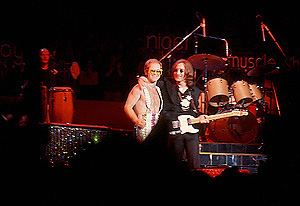
At the end of the show, Elton brought on a special guest. He had made a bet with an old friend, former Beatle John Lennon, that if John's song "Whatever Gets You Through the Night," on which Elton had sung backup, hit Number 1 in the U.S., John would join him for this show. It did.

John kept his word, and the audience, totally unaware that he was coming, gave the building its greatest ovation ever, with the possible exception of the one when Willis Reed limped onto the court for the New York Knicks before Game 7 of the 1970 NBA Finals.

Together, the Walrus and the Rocket Man played 3 songs: "Whatever Gets You Through the Night," Elton's reworking of John's Beatle classic "Lucy in the Sky with Diamonds," and a song John introduced as being "by an old friend named Paul": "I Saw Her Standing There."

Those 3 songs -- possibly the inspiration for Lorne Michaels' never-accepted (except by George alone) invitation for the Beatles to reunite for 3 songs, getting paid $3,000, on Saturday Night Live in 1976 -- made this show a legend.

That, and the fact that it was John's last concert appearance of any kind. In 1982, referencing flower gardens and, perhaps, also Madison Square Garden, Elton had a hit with "Empty Garden (Hey, Hey, Johnny)":

And I've been knocking
but no one answers.
And I've been knocking
for most of the day.
Oh, and I've been calling:
Oh, hey, hey, Johnny
can you come out to play?

*

November 28, 1974, like all Thanksgiving Days, was a Thursday. The Dallas Cowboys beat the Washington Redskins, 24-23 at Texas Stadium in the Dallas suburb of Irving, Texas. This was the Clint Longley Game, and I have a separate entry for it.

And the Denver Broncos beat the Detroit Lions, 31-27. This was the Lions' last game at Tiger Stadium. They played their last 2 regular-season games on the road, did not make the Playoffs, and moved into the Silverdome in suburban Pontiac, Michigan the next season.

There was one college football game that day, and, at the time, it was a major rivalry. Penn State, then ranked Number 10 in the country beat the 18th-ranked University of Pittsburgh, 31-18 at Three Rivers Stadium in Pittsburgh. Since Pitt joined the Big East Conference in 1991, Penn State joined the Big Ten Conference in 1993, and especially since Pitt switched to the Atlantic Coast Conference in 2013, this rivalry has not been played annually anymore.

In recent times, to avoid losing television viewers to football, the NBA and the NHL usually don't play on Thanksgiving Day. However, there were 2 games in the NBA. The Cleveland Cavaliers beat the Philadelphia 76ers, 110-103 at The Coliseum in the Cleveland suburb of Richfield, Ohio. And the Portland Trail Blazers beat the Phoenix Suns, 88-85 at the Arizona Veterans Memorial Coliseum in Phoenix.

And 1 game was played in the American Basketball Association. The Kentucky Colonels beat the Virginia Squires, 108-95 at The Scope in Norfolk.

There was 1 game in the NHL, and Detroit was involved, but not at home. The Detroit Red Wings lost to the Buffalo Sabres, 5-2 at the Buffalo Memorial Auditorium. There were 4 games played in the World Hockey Association:

* The Vancouver Blazers beat the Toronto Toros, 6-2 at Maple Leaf Gardens in Toronto.

* The Quebec Nordiques beat the Indianapolis Racers, 7-5 at the new Market Square Arena in Indianapolis.

* The Houston Aeros beat the Edmonton Oilers, 2-0 at the Sam Houston Coliseum in Houston.

* And the Chicago Cougars beat the San Diego Mariners, 3-2 at the San Diego Sports Arena (now the Pechanga Arena).

Thursday, November 24, 2022

November 24, 1974: Lucy In the Ground with Fossils

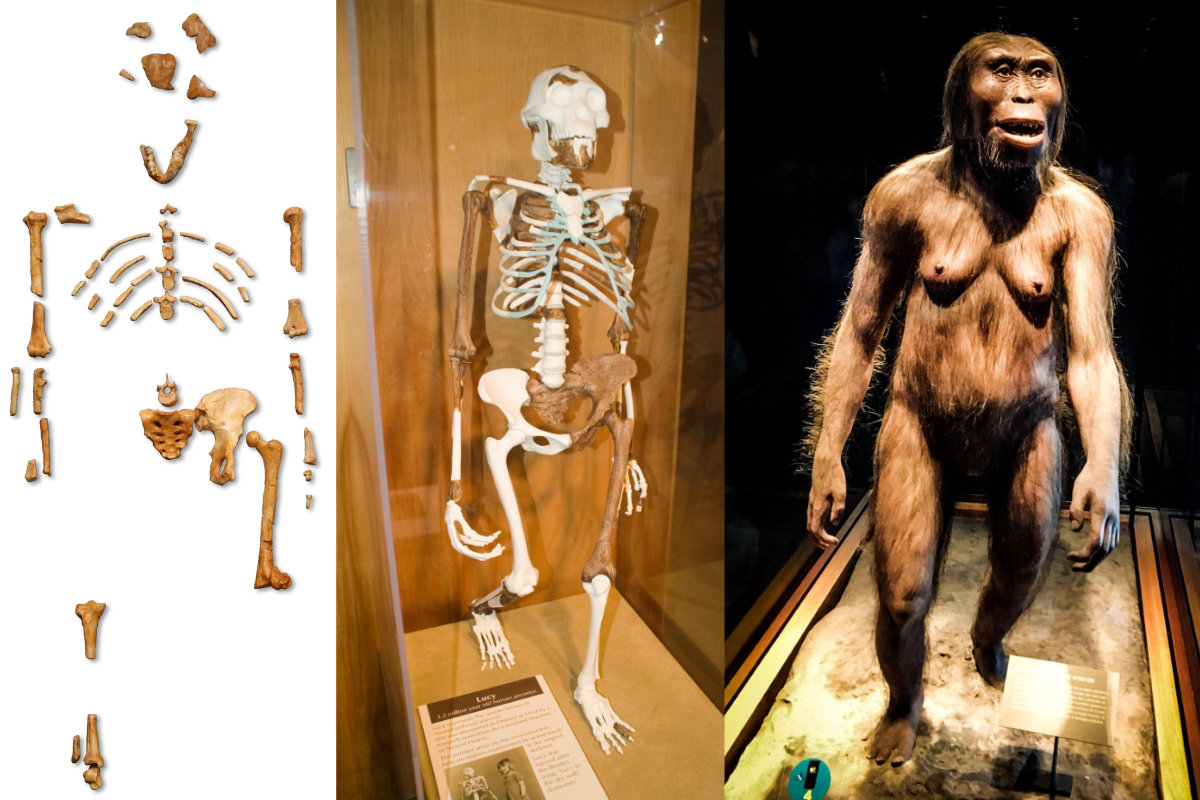
Left to right: The bones that were found, laid out on a table;
the bones arranged properly;
and a model of what Lucy might have looked like.

November 24, 1974: The most complete "early human" skeleton ever found is discovered, in the Afar region outside Hadar, Ethiopia. It is a teenage female, later classified as Australopithecus afarensis, dated to about 3.2 million years ago, about 40 percent complete.

It was found by a team led by American paleoanthropologist Donald Johanson, and he names her Lucy, as the team had been listening to Elton John's soon-to-be-Number 1 cover of The Beatles' "Lucy in the Sky with Diamonds."

As of November 24, 2022, Johansen, now 79, still insists that Lucy is the elusive "Missing Link" between apes and humans. The British-Kenyan Richard Leakey, until his death at 77 earlier in 2022 the other serious contender for the title of greatest living paleoanthropologist, was equally sure that Lucy is another point along the extinct Australopithecus line, not connected with Homo sapiens, and that the Missing Link remains out there somewhere.
Johanson with a model of Lucy's skull

The original Lucy is stored in a safe at the National Museum of Ethiopia, in the capital of Addis Ababa. The model shown in the photo above is a re-creation, on display at the Naturmuseum Senckenberg in Frankfurt, Germany.

*

November 24, 1974 was a Sunday. This day also saw the premiere of a new version of Agatha Christie’s Murder On the Orient Express. It had an “all-star cast” that was typical for big movies of the 1970s, led by Albert Finney as Hercule Poirot.

These NFL games were played:

* The New York Giants lost to the football version of the St. Louis Cardinals, 23-21 at the Yale Bowl in New Haven, Connecticut.

* The New York Jets beat the Miami Dolphins, the team then considered their arch-rivals, 17-14 at Shea Stadium.

* The New England Patriots beat the Baltimore Colts, 27-17 at Memorial Stadium in Baltimore.

* The Washington Redskins beat the Philadelphia Eagles, 26-7 at Robert F. Kennedy Stadium in Washington.

* The Buffalo Bills beat the Cleveland Browns, 15-10 at Cleveland Municipal Stadium.

* The Cincinnati Bengals beat the Kansas City Chiefs, 33-6 at Riverfront Stadium in Cincinnati.

* The Detroit Lions beat the Chicago Bears, 34-17 at Tiger Stadium in Detroit. Five days later, on Thanksgiving, the Lions played the Denver Broncos to a tie in their last game at Tiger Stadium. They moved into the Silverdome in suburban Pontiac, Michigan the next season.

* The Green Bay Packers beat the San Diego Chargers, 34-0 at Lambeau Field in Green Bay, Wisconsin.

* The Dallas Cowboys beat the other Texas team, the Houston Oilers, 10-0 at Texas Stadium in the Dallas suburb of Irving.

* The Los Angeles Rams beat the Minnesota Vikings 20-17 at the Los Angeles Memorial Coliseum.

* The San Francisco 49ers beat the Atlanta Falcons, 27-0 at Candlestick Park in San Francisco.

* The Denver Broncos beat the Oakland Raiders, 20-17 at the Oakland Coliseum.

And the next night, on ABC Monday Night Football, the Pittsburgh Steelers beat the New Orleans Saints, 28-7 at Tulane Stadium in New Orleans.

The World Football League was between rounds of its Playoffs. Baseball was out of season. There were 4 games played in the NBA:

* The Chicago Bulls beat the Buffalo Braves, 91-89 at the Chicago Stadium. In defeat, Bob McAdoo of the Braves led all scorers on the day with 31 points.

* The Kansas City-Omaha Kings beat the Cleveland Cavaliers, 109-94 at the Kemper Arena (now the Hy-Vee Arena) in Kansas City.

* The Washington Bullets beat the Los Angeles Lakers, 111-108 at The Forum outside Los Angeles in Inglewood, California.

* And the Houston Rockets beat the Seattle SuperSonics, 124-109 at the Seattle Center Coliseum.

There were 3 games in the American Basketball Association:

* The New York Nets beat the newly-renamed Denver Nuggets, 99-90 at the Nassau Coliseum. The Nuggets had been the Denver Rockets, but, anticipating a merger deal with the NBA, which already had the Houston Rockets, they took on the name of the long-gone 1st Denver team in the NBA.

* The Memphis Sounds beat the Spirits of St. Louis, 103-94 at the Mid-South Coliseum in Memphis.

* And the San Diego Conquistadors beat the Utah Stars, 117-97 at the San Diego Sports Arena (now the Pechanga Arena).

One game was played in the NHL: The St. Louis Blues and the Toronto Maple Leafs played to a tie, 2-2 at Maple Leaf Gardens in Toronto. In contrast, 6 games were played in the World Hockey Association:

* The Cleveland Crusaders beat the Quebec Nordiques, 3-1 at The Coliseum, newly opened in the Cleveland suburb of Richfield, Ohio.

* The Michigan Stags beat the Minnesota Fighting Saints, 3-2 at Cobo Hall (now Huntington Place).

* The Toronto Toros beat the Indianapolis Racers, 9-2 at the Market Square Arena in Indianapolis.

* The New England Whalers beat the Chicago Cougars, 9-5 at the International Amphitheatre in Chicago.

* The Phoenix Roadrunners beat the Winnipeg Jets, 3-1 at the Winnipeg Arena.

* And the Houston Aeros beat the Edmonton Oilers, 4-3 in overtime at the newly-opened Northlands Coliseum in Edmonton.

Friday, November 4, 2022

November 4, 1963: The Beatles at the Royal Variety Show

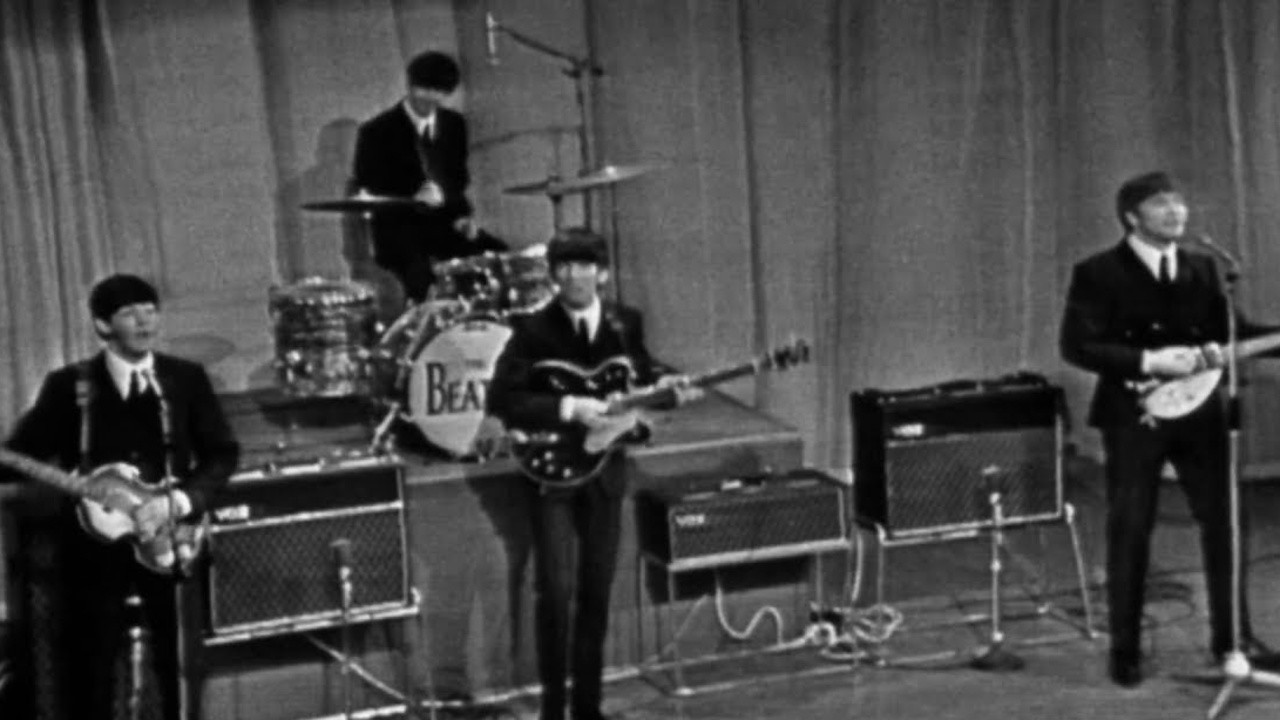
November 4, 1963: The Beatles appear at the annual Royal Variety Show at the Prince of Wales Theatre in London. Among the attendees is Elizabeth the Queen Mother.

Among the other acts performing were actress Marlene Dietrich, doing her cabaret singing act; American songwriter Burt Bacharach; comedian Charlie Drake; Wifred Brambell (who would play Paul McCartney's grandfather in A Hard Day's Night) and Harry Corbett, as the sketch comedy duo Steptoe & Son, the basis for the U.S. TV show Sanford and Son; magician Harry Secombe; Joe Loss and his orchestra; singer Dickie Henderson; and singer Tommy Steele. 

Then the biggest musical act in Europe -- but not yet the world -- The Beatles played "From Me to You," "She Loves You" and "Till There Was You." They courted trouble when John Lennon told someone that said he would ask, prior to their closing number, a cover of The Isley Brothers' "Twist and Shout," for the people in the cheaper seats to clap their hands, and for everyone else (who would be richer), to "rattle your fucking jewelry." In other words, he was going to use a profanity not just on live national television, but in front of the mother of the Queen of England.

After "Till There Was You," John told the crowd, "For our last number, I'd like to ask your help. Will the people in the cheaper seats, clap your hands? And the rest of you, if you'd just rattle your jewelry." The audience laughed, and the Queen Mother smiled. John gave the TV camera a cheeky smile and a thumbs-up gesture.

I'm guessing either Paul McCartney or manager Brian Epstein talked him out of it. Whatever caused him to not use the profanity, the result was that the teenagers screamed, the Queen Mum enjoyed herself, and there was no televised scandal.

*

November 4, 1963 was a Monday. On the same day, with First Lady Jacqueline Kennedy away, President John F. Kennedy let a photographer into the Oval Office, and a picture is taken of him playing with his children Caroline and John Jr. I have a separate entry for that event.

Baseball was out of season. Football was in midweek: There would be no Monday Night Football for another 7 years. The NBA and NHL seasons were underway, but no games were scheduled for either league on this day.

Friday, October 21, 2022

October 21, 1969: Jack Kerouac Is Dead, Paul McCartney Is Not

October 21, 1969: Jack Kerouac dies in St. Petersburg, Florida. The novelist and poet whose works led the Beat Generation writing genre had been a football and track star at Lowell High School in Massachusetts, but injuries and squabbles with coach Lou Little ended his football scholarship at Columbia.
By the mid-Sixties, his fellow Beat writer and close friend Allen Ginsberg noticed that he no longer looked like the handsome young athlete he had been when they met in 1944, or even the mature (physically if not emotionally) writer who became famous with the publication of On the Road in 1957. Rather, Allen though that Jack now looked like his father Leo, the result of 25 years of massive drinking. That drinking burned an ulcer in his esophagus, and that's what killed him.
As a guest on William F. Buckley's Firing Line, 1968.
These two images are only about 10 years apart.

(In contrast, Ginsberg, who rather enjoyed various mind-altering drugs, but wasn't a serious boozer, lived to be 70, before he was claimed by brain cancer on April 5, 1997; and the other member of the Beats' Big Three, William S. Burroughs, who abused himself in countless ways, turned out to be the last survivor, outliving Ginsberg by 4 months, dying of a heart attack at 83 on August 2, 1997.)
The Beatnik copycats of the late 1950s and the Hippies of the 1960s missed the point of the Beats. They were essentially embracing a lifestyle that the Beats themselves had realized was pointless. Even their escapes provided only short-term respite from American life.

And while Ginsberg accepted the copycats, and the subsequent Hippies, as kindred spirits, Kerouac sure didn't. As he got older, his innate Catholicism and conservatism kicked in, and he treated the copycats as poseurs. He lived long enough to see the rise of the Hippies, and he was as repulsed by them as any Catholic (or Protestant) conservative. By the time he died due to the excesses of his drinking at the end of the 1960s, Kerouac was only 47 years old, but he was in full "Get off my lawn, you filthy kids!" mode.

Kerouac and the early Beats loved jazz, especially bebop, whose 2 main leaders were saxophonist Charlie "Bird" Parker and trumpeter John "Dizzy" Gillespie. Parker died in 1955, on March 12, Kerouac's birthday, which crushed Jack. Jack himself then died on an October 21, which was Gillespie's birthday.
*
Also on this day, the "Paul Is Dead" rumor reaches New York. A disc jockey at the University of Michigan's radio station had put together a few "clues," from Beatles album covers and in song lyrics, that suggested that Paul McCartney had been killed in a car crash in 1966, and replaced with a lookalike. It certainly explained why the Beatles weren't touring anymore.
On this night, Roby Yonge was the overnight host on New York's biggest radio station, WABC, 770 on the AM dial. It called itself "W-A-Beatle-C" in those heady "British Invasion" days of 1964 and '65. Yonge had already been told that his contract would not be renewed. This is a fact that a lot of people forget. In other words, he really had nothing to lose, and, perhaps, had something to gain.
Roby Yonge

Yonge mentioned the rumor, and the clues, and continued talking about it for an hour and a half. The ABC switchboard lit up like Times Square, and program director Rick Sklar, who had built the most successful station in the history of music radio, was awakened by phone. He got the station's regular newsman, Les Marshak, to go in and tell Roby he was relieved. Marshak ran the rest of the show, and told the listeners that the rumor about Paul being dead was not true.
Oddly, on WABC's sister station, WABC-FM -- 95.5, which became WPLJ in 1971 -- Bob Lewis, a.k.a. "Bob-a-Loo," a former WABC-AM jock, did a full "Paul Is Dead" show on November 14. Since Sklar had no authority over him anymore, he was not fired.
Another part of the story that people get wrong is saying that Yonge never worked in New York again, that Sklar blackballed him, and that Yonge had to flee to his native Florida. In truth, he was hired at WCBS-FM, not yet "New York's Oldies Station" (it became that in 1972), and worked there for a while before heading to Miami, where he worked at various stations until his death from a heart attack in 1997. He was only 54. In Miami, Roby Yonge is a legend. In New York's he's a different kind of "legend."
The clues as to Paul being dead are too many to list here, and some make more sense than others. A few came from the Abbey Road cover. On the crosswalk, going right to left, and thus front to back from their own perspective, John Lennon is first, dressed all in white, and he -- with irony already in place, and even more so retroactively -- is either the minister at the funeral, or God Himself. Next is Ringo Starr, dressed in black, and he's the undertaker. Next is Paul, and while the others have their left leg forward -- almost certainly a coincidence -- Paul's right leg is forward. He's out of step with the others, "because he's dead." And he's barefoot: In some cultures, the dead are buried barefoot. And last is George Harrison, dressed in denim, because he's the gravedigger.
Parked behind George was a Volkswagen Beetle (not "Beatle") with a license plate that included "28IF," meaning Paul would have been 28 years old if he had lived. Except he was 27. In 1993, Paul re-created that cover for a live album, titled Paul Is Live. He had a Beetle parked in the exact same spot, with a license plate reading "51IS," which did match his age at the time.
On the 1989 tour for his album Flowers in the Dirt, Paul was asked during a press conference about how his next show was in Detroit, where the rumor started, and how it had been 20 years since. As each of the Beatles had done at various points in their careers, he found the right thing to say: "'Paul is dead.' I didn't believe that one for a minute."
As rock historian Dave Marsh pointed out, this stuff was a whole lot funnier before John Lennon was killed. Since he wrote that, we've also seen the deaths of Linda McCartney, George Harrison, John's 1st wife Cynthia Lennon, Ringo's 1st wife Maureen Starkey, and many other people connected with The Beatles in various ways.
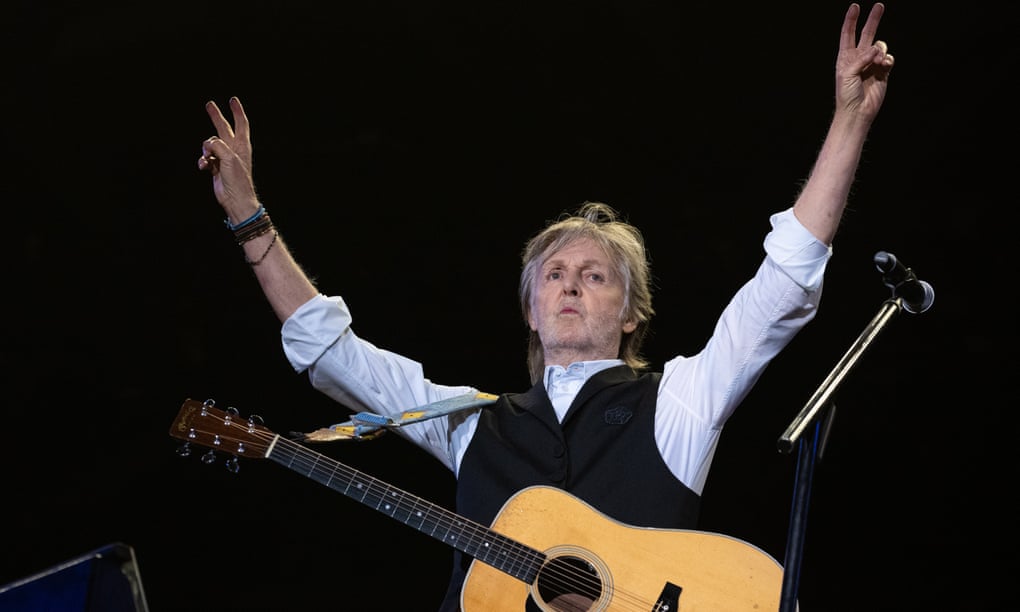
Pictured: Paul McCartney, alive, at the 2022 Glastonbury Festival
Paul McCartney turned 80 on June 20, 2022, and was in mid-tour at the time. Ringo Starr turned 82 on July 7, 2022, and is also still performing.
*
October 21, 1969 was a Tuesday. Baseball season had ended 5 days earlier, when the New York Mets completed their "Miracle" World Series win over the Baltimore Orioles. Football was in midweek. There were 3 NBA games played:

* The New York Knicks beat the Phoenix Suns, 140-116 at the new Madison Square Garden. Walt Frazier led the World Champions-to-be with 28 points.

* The Los Angeles Lakers beat the Baltimore Bullets, 142-137 in overtime at the Baltimore Civic Center (now the CFG Bank Arena). Jerry West scored 39, Wilt Chamberlain 38, and Kevin Loughery of the Bullets 35.

* And the Detroit Pistons beat the Boston Celtics, 98-97 at Cobo Hall (now Huntington Place) in Detroit.

There were 3 games played in the American Basketball Association:

* The Kentucky Colonels beat the Washington Capitols, 127-115 at the Louisville Convention Center (now named the Louisville Gardens).

* The Los Angeles Stars beat the New Orleans Buccaneers, 119-99 at the New Orleans Municipal Auditorium.

* And the Dallas Chaparrals beat the Denver Rockets, 120-108 at the Moody Coliseum in Dallas. The Rockets were renamed the Denver Nuggets in 1974.

There was 1 NHL game played that day: The Oakland Seals beat the Pittsburgh Penguins, 4-3 at the Oakland Coliseum Arena.

Wednesday, October 5, 2022

October 5, 1962: The 1st James Bond Film

His name was Connery. Sean Connery.

October 5, 1962: A film premieres, Doctor No. It is the 1st film based on a character created by Ian Fleming, a former officer in the intelligence division of Britain's Royal Navy. His agent number is 007. His name? "Bond. James Bond."

Eon Productions Ltd. was formed by Albert R. "Cubby" Broccoli and Harry Saltzman to make films based on Fleming's James Bond novels, which began in 1953 with Casino Royale.

On October 21, 1954, the CBS anthology series Climax! adapted Casino Royale. They Americanized it: Barry Nelson was cast as American CIA agent Jimmy Bond, while the CIA agent Felix Leiter became British MI6 agent Clarence Leiter. Peter Lorre played Le Chiffre, the villain played by Orson Welles in the 1967 spoof version, and Mads Mikkelsen in the 2006 reboot.

This version is not well-regarded. Nevertheless, Nelson was the first man who played a live-action version of Bond.

Broccoli and Saltzman didn't know if turning the novels into films would work, especially in America. If successful, they would make more money there than in the rest of the world put together. If unsuccessful in the U.S., it wouldn't matter how successful it was in the U.K. and elsewhere: They would be doomed. So they chose Doctor No, the Bond novel that they thought would be the cheapest to produce. It worked, and subsequent Bond films had bigger budgets.

Most of the familiar Bond tropes started here:

* The opening "gunbarrel sequence" and opening titles, both designed by Maurice Binder, who would continue to design opening titles until his death in 1991.
* The iconic theme song, composed by Monty Norman, and performed by an orchestra conducted by John Barry.

* James Bond, Agent 007 of MI6, Britain's international security agency, played by Scottish actor Sean Connery, then 32 years old, looking cool as hell, killing the bad guys, getting the girls, and dropping mad quips.

* Bond's boss, known only as M, played by Bernard Lee, approving of his results, but not always his methods.

* Bond's playful banter with M's secretary, Miss Moneypenny, played by Lois Maxwell. (The character doesn't get a first name, Eve, until Skyfall in 2012).

* Exotic locations, in this case Jamaica, which had been granted independence by Britain after filming was completed, hence it was still a colony in the film.

* A spectacular lead "Bond Girl": Swiss actress Ursula Andress, as the revenge-minded Honey Rider. There wouldn't always be a suggestive name, but Goldfinger would have Honor Blackman as Pussy Galore, You Only Live Twice would have Mie Hama as Kissy Suzuki, The Man With the Golden Gun would have Britt Ekland as Mary Goodnight, Barbara Bach's Anya Amasova in The Spy Who Loved Me would be Agent XXX, Moonraker would have Lois Chiles as Dr. Holly Goodhead (at least they made her a brilliant Ph.D.), Maud Adams would have the title role in Octopussy (though not mentioned in the film, her real name was given as Octavia Smythe in the book), GoldenEye would have Famke Janssen as Xenia Onatopp, and The World Is Not Enough would have Serena Scott Thomas as Dr. Molly Warmflash.
* And an insidious villain: Joseph Wiseman as Dr. Julius No, with a nefarious plot: Sabotaging an American space launch, so that the Soviet Union would get blamed, starting World War III, and allowing No's superiors in SPECTRE to take over what was left of the world.

* Unfortunately, as was all too common in Fleming's novels, there was also racism: Dr. No is portrayed as half-Chinese, and Wiseman wears "yellowface" makeup. This would be even worse in the 1967 film You Only Live Twice, when Connery was made up to "look Japanese."
Not yet in place: Q and his gadgets (the only new equipment Bond gets is a new sidearm, a .32-caliber Walther PPK, which the films made internationally famous), a tricked-out car (the most famous being the Aston Martin DB5 introduced 2 years later, in Goldfinger), and a plot tying in with a current cultural phenomenon (which has been done a few times, and usually hasn't aged well).

If you can get past Bond's hyper-macho attitude, and the fact that the film views the world through a lens that is still tinted by the British Empire (which had, in real life, already given way to the British Commonwealth), the film is a good adventure with a satisfying conclusion.

Dr. No was a big success, allowing Eon to spend big thereafter. The 3rd film, Goldfinger in 1964, is generally considered to be where they hit their stride. Connery stepped aside temporarily for George Lazenby in On Her Majesty's Secret Service in 1969, and was asked back for one last go-round in Diamonds Are Forever in 1971.

Roger Moore took the role up from 1973 to 1985. Timothy Dalton played 007 in 1987 and 1989. After a bit of a gap, due to legal proceedings, Pierce Brosnan held the role from 1995 to 2002. It was then rebooted with Daniel Craig in 2006, and his 5th and last Bond film, No Time to Die, was released in 2021. Since Craig became the 1st Bond to die onscreen, the series will have to be rebooted with a new actor.

The Bond films inspired other spy films, such as The Ipcress File and The Spy Who Came In From the Cold. And TV shows, like The Avengers (not to be confused with the Marvel Comics superhero team), The Prisoner, and, in America, The Man from U.N.C.L.E. and Mission: Impossible. There were also spoofs: The TV show Get Smart, Dean Martin's Matt Helm films, and James Coburn's Flint films. Eventually, Mike Myers would produce and star in the Austin Powers films.

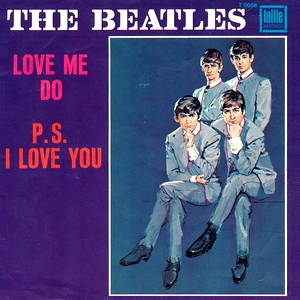
October 5, 1962 was also the day that "Love Me Do," The Beatles' 1st single, was released. It only hit Number 17, but it launched the one British phenomenon of the next 60 years that was bigger than the Bond films. In an article for the BBC's website yesterday, Mark Allison wrote:

The serendipity of this moment probably passed entirely unnoticed at the time, but the world we inhabit today is still enjoying its aftershocks...

Bond represents an explicit projection of imperial power, conveniently arriving at just the time that Britain's ability to wield such power in the real world was on the wane...

The Beatles themselves might have recoiled at the idea that the peace-and-love mantra of their music had anything to do with the violence and destruction wrought on screen by 007. But together, these two fashionable institutions wove a new national myth that Britain was not only benevolent and exciting, but cool. From the ashes of former imperial power had risen a cultural behemoth.

ClichĂ© Alert: Timing is everything. Indeed, Dr. No's director, Terence Young, felt that the secret to his film's financial success was little more than timing. "I think we arrived not only in the right year, but the right week of the right month of the right year."

In a 2016 episode of the YouTube series Epic Rap Battles of History, Ben Atha of the British rock band Ivan Camp played the then-current Craig version of Bond, "Nice" Peter Shukoff played Mike Myers' copycat Austin Powers, and "Epic" Lloyd Ahlquist stepped in as the Connery version of Bond.

*

October 5, 1962 was a Friday. It was midweek for football, and preseason for the NBA and the NHL. But baseball was played. Specifically, Game 2 of the World Series, at the old Yankee Stadium. The San Francisco Giants beat the New York Yankees, 2-0. Jack Sanford pitched a 3-hit shutout, outpitching Ralph Terry.

From 1956 to 1966, there was only one Cy Young Award for all of Major League Baseball, and Terry should have won it. Had there been one for both Leagues, as there has been since 1967, Sanford should have won it for the National League. Instead, it was given to Don Drysdale of the Los Angeles Dodgers, who didn't win a Pennant, having lost a Playoff for it to the Giants, as they had back in New York in 1951.

Willie McCovey hit a home run. This was the 1st Series where neither team won back-to-back games. The Giants won Games 2, 4 and 6. The Yankees won Games 1, 3, 5 and 7. Game 7 was won by the Yankees, 1-0, at Candlestick Park in San Francisco, with Terry pitching a 4-hit shutout. In the bottom of the 9th, the Giants got the tying run on 3rd base and the winning run on 2nd, with McCovey at bat. But this was not the modern era: No closer was brought in. Terry got McCovey to hit a line shot that 2nd baseman Bobby Richardson caught, and the Yankees won the World Series.

Auto racing is not a sport, but Michael Andretti, part of a racing dynasty, was born on this day.

Sunday, September 4, 2022

September 4, 1962: The Beatles' 1st Recording Session

September 4, 1962: The Beatles have their 1st recording session with EMI-Parlophone Records. No one could yet foresee that the band would be so successful, they would pretty much own what was once Electrical & Mechanical Industries, and it would be renamed Apple Records.

To set the scene: For less than a year, the band from Liverpool, England had been managed by Brian Epstein, who took them out of their black leather jackets and pants, and put them in business suits, but encouraged their continued efforts to write their own songs with nice harmonies.

He had gotten them signed to EMI, on the provision that rhythm guitarist John Lennon, bass guitarist Paul McCartney and lead guitarist George Harrison fire drummer Pete Best, and replace him with Richard Starkey, a.k.a. Ringo Starr, a drummer from another Liverpool band, with whom they were already familiar and liked.

Now, they were at EMI's Abbey Road Studios in London, ready to record professionally for the first time. And what would become famous as their "quirky Liverpool sense of humor" was already apparent. Producer George Martin, who would become integral in their success, told them, "Let me know if there's anything you don't like." And Harrison said, "Well, for starters, I don't like your tie."

The band rehearsed 6 songs. One was "Please Please Me," which would become their 2nd single and their 1st really big hit. One was "How Do You Do It?" which Mitch Murray had written for Adam Faith, one of the earliest British rock stars. Martin insisted that this be the band's 1st single. They recorded it, but it wasn't very good. John sang lead, and it's clear that none of them had their hearts in it. The song would be recorded the next year as the 1st single by another Liverpool band, Gerry & The Pacemakers, and there version was a lot better.

Martin wanted them to play a pre-written song: "It wasn't a question of what they could do, as they hadn't written anything great at that time. But what impressed me most was their personalities. Sparks flew off them when you talked to them."

But he let them record 2 songs that they had written. One was "Love Me Do." In later interviews, John said that it was mostly Paul's composition, saying, "Maybe I helped out in the middle." But Paul, for once deflecting some credit, said it was a 50-50 writing effort, as a lot of their early songs were. The other was "P.S. I Love You," which, clearly, was all Paul. Paul sang lead on both.

Martin agreed to let them record "Love Me Do" because he liked the harmonica that John played on it. Although Martin was used to recording jazz, he said John's harmonica part on a version of the song they had previously recorded with Best on drums reminded him of blues records he liked by Sonny Terry and Brownie McGhee. So it was recorded, the 1st session with what would become the familiar lineup: "John, Paul, George and Ringo."

And Martin didn't like it. He had them come back in a week later, on September 11, 1962, and record it again. This time, a session drummer, Andy White, was brought in to play drums, and Ringo was relegated to playing the tambourine.

The version with Ringo on drums was released as the single -- and proved Martin's point. It only reached Number 17 on the British music charts. The version with White on drums was put on the group's 1st album, titled Please Please Me, after the 2nd single which was released around the same time. This would be the version released as the U.S. version of the single. The way to tell the difference is that the one where Ringo plays drums has no tambourine on it. I have to admit: The White version is better. Even the vocals are better on it.

By the time that album was recorded, in a single all-day session on February 11, 1963, Ringo had been with the band a bit longer, and was more integrated into them, and they sounded better together. "Please Please Me" was their 1st U.K. Number 1, and even Mimi Smith, John's hyper-critical aunt, who practically raised him, and told them "Love Me Do" was no good, said she liked it. The rest is history. 

Andy White, a Scotsman, was 32 years old at the time, 10 years older than Ringo, the oldest Beatle. He was the drummer every British producer wanted, a Scottish version of New York's Buddy Saltzman, New Orleans' Earl Palmer and Los Angeles' Hal Blaine. He would end up drumming on some of the biggest soloists' hits to come off the Sceptered Isle in the Swinging Sixties, including "It's Not Unusual" by Tom Jones and Lulu's version of The Isley Brothers' "Shout."

Despite his name, he had nothing to do with The Beatles, the 1968 production nicknamed "The White Album" for its all-white cover. In the 1980s, he moved to New Jersey, taught drumming, and lived until 2015, at the age of 85.

*

September 4, 1962 was a Tuesday. It was a few days before the NFL and AFL seasons would begin, and several weeks before the starts of the NBA and NHL seasons. These Major League Baseball games were played that day:

* The New York Yankees lost to the Los Angeles Angels, 7-6 at the old Yankee Stadium. Mickey Mantle did not play. Clete Boyer hit a home run, but Whitey Ford ran out of gas in the 7th inning, and the Angels scored 6 runs, including a home run by Lee Thomas. The Yankees tied it 6-6 in the 8th, but a single by future Angels, Milwaukee Brewers and Montreal Expos manager Robert "Buck" Rodgers off Bud Daley won it for the Halos in the 9th.

* The New York Mets lost to the Pittsburgh Pirates, 5-1 at Forbes Field in Pittsburgh. The expansion Mets went 40-120 that year, the most losses in any season in the 20th Century. There would be only 14 days in 1962 that the Mets won and the Yankees lost, and this was not one of them.

* The Kansas City Athletics beat the Boston Red Sox, 7-2 at Fenway Park in Boston.

* The Chicago White Sox beat the Cleveland Indians, 3-2 at Comiskey Park in Chicago. Dick Donovan, on the staff of Chicago's 1959 Pennant-winning "Go-Go White Sox," pitched all 13 innings for the Indians. This was a mistake by manager Al Lopez, as Al Smith singled home the winning run off him.

* The Cincinnati Reds beat the Milwaukee, Braves, 9-6 at Milwaukee County Stadium. Warren Spahn didn't have it that day. Eddie Mathews hit 2 home runs, and Hank Aaron hit a double, but it wasn't enough.

* The St. Louis Cardinals beat the Chicago Cubs, 7-1 at the original Busch Stadium, formerly Sportsman's Park, in St. Louis. Stan Musial hit a home run.

* The Houston Colt .45s beat the Philadelphia Phillies, 4-1 at Colt Stadium in Houston. In 1965, the Colts would move into the Astrodome, and change their name to the Houston Astros.

* The Baltimore Orioles were supposed to host the Detroit Tigers at Memorial Stadium, but the game was rained out. It was played the next day, as part of a doubleheader. The Tigers won both games, taking the 1st 5-2, and the 2nd 6-0, as Hank Aguirre pitched a 5-hit shutout.

* The Minnesota Twins and the Washington Senators were also rained out that day -- not surprising, as Washington and Baltimore are so close, although the Yankees' game with the Angels in New York was played as scheduled. This game was also rescheduled as part of a doubleheader the next day. The Twins won the opener 9-7, on a Vic Power double in the 11th inning. The Senators won the 2nd game 3-0, as Claude Osteen pitched a 3-hit shutout.

* And the Los Angeles Dodgers beat the San Francisco Giants, 5-4 at Dodger Stadium in Los Angeles. Tom Haller and Jose Pagan hit home runs in defeat. Willie Mays went 0-for-3. This win put the Dodgers 3 1/2 games ahead of the Giants with 23 games left to play (24 for the Giants). But they would finish tied for the Pennant, and, as in 1951 on the other coast, the Giants would win the Playoff. Also as in 1951, the Giants would lose the World Series to the Yankees.

Tuesday, August 30, 2022

August 30, 1972: John Lennon Performs the One to One Concert

August 30, 1972: The "One To One Concert" is held at Madison Square Garden in Midtown Manhattan. It is a benefit for developmentally disabled children. The headliners are John Lennon and Yoko Ono.

The former Beatle was asked to do it by journalist Geraldo Rivera, as a benefit for the children at Willowbrook State School on Staten Island in New York City. Rivera, in his first big scoop as a journalist, had exposed abuses of the children there. Lennon had seen Rivera's report on WABC-Channel 7, and contacted him about the story. Rivera asked him to do a benefit concert, he agreed, and Rivera introduced him.

There were actually 2 concerts at The Garden that day, an afternoon show and an evening show. Among the other performers were Stevie Wonder, Roberta Flack and the doo-wop tribute group Sha Na Na.

The concerts were filmed and recorded, and later served as the basis for the live album Live in New York City, released in 1986. Backed by the band Elephant's Memory, John sang mostly his solo material, plus a cover of "Hound Dog," which Elvis Presley had sung there a few weeks earlier, and exactly one Beatle song: "Come Together."

Of his own material, he sang, "New York City," "It's So Hard," "Well Well Well," "Instant Karma," "Mother," "Cold Turkey" and "Power to the People." Yoko sang "Sisters, O Sisters" and "Born in a Prison. Together, John and Yoko sang "Woman Is the (N-word) of the World" and "Imagine," and closed the show with "Give Peace a Chance." The Vietnam War was still going on.

These turned out to be Lennon's only full-length concerts after leaving The Beatles, and the evening show was his last full concert anywhere. Two years later, he returned to The Garden to play 3 songs with Elton John. But that would be it, for the worst of reasons.

When Elton wrote a tribute song, it was titled "Empty Garden (Hey, Hey, Johnny)."

A few years ago, somebody took footage of John singing "Come Together" at the One To One Concert, and matched it up with George Harrison and Ringo Starr from the Concert for Bangladesh in 1971, and Paul McCartney from the Wings Over America tour in 1976, all at Madison Square Garden, so it looked like they were all together again. But that video no longer seems to be on YouTube.

*

August 30, 1972 was a Wednesday. American actress Cameron Diaz and Czech soccer player Pavel NedvÄ›d were born on this day.

These Major League Baseball games were played that day:

* The New York Yankees beat the Texas Rangers, 3-1 at Yankee Stadium. Rob Gardner was the winning pitcher, and helped his own cause with an RBI single in the bottom of the 2nd inning, something that American League pitchers can only do for another month, as the designated hitter was coming in.

* The New York Mets lost to the Cincinnati Reds, 4-2 at Riverfront Stadium in Cincinnati. Don Gullett outpitched Jon Matlack. Willie Mays appeared as a pinch-hitter, and did not reach base. Pete Rose went 1-for-3 and was hit with a pitch. Johnny Bench went 0-for-2 with 2 walks. Joe Morgan went 0-for-4.

* The Boston Red Sox beat the Chicago White Sox, 4-2 at Fenway Park in Boston. Carl Yastrzemski went 0-for-4.

* The Montreal Expos beat the Atlanta Braves, 3-2 at Atlanta Stadium (later Atlanta-Fulton County Stadium). Ernie McAnally came into the game 2-14, but outpitched Phil Niekro. Hank Aaron appeared as a pinch-hitter, and drew a walk.

* The Pittsburgh Pirates beat the San Diego Padres, 11-0 at Three Rivers Stadium in Pittsburgh. Willie Stargell hit a home run. Roberto Clemente went 2-for-5 with an RBI.

* The Chicago Cubs beat the Los Angeles Dodgers, 9-8 at Wrigley Field in Chicago. Jim Hickman won the game with a home run in the bottom of the 11th inning.

* The Kansas City Royals beat the Milwaukee Brewers, 6-2 at Milwaukee County Stadium.

* The Minnesota Twins beat the Baltimore Orioles, 7-1 at Metropolitan Stadium in the Minneapolis suburb of Bloomington, Minnesota. Harmon Killebrew went 1-for-3. Rod Carew went 3-for-4 with 2 RBIs. Brooks Robinson went 1-for-4.

* The San Francisco Giants beat the St. Louis Cardinals, 3-2 at Busch Memorial Stadium in St. Louis.

* The Houston Astros beat the Philadelphia Phillies, 5-3 at the Astrodome in Houston.

* The California Angels beat the Detroit Tigers, 4-1 at Anaheim Stadium (now Angel Stadium of Anaheim). Al Kaline appeared as a pinch-hitter, and did not reach base.

* And the Oakland Athletics beat the Cleveland Indians, 2-0 at the Oakland Coliseum. John "Blue Moon" Odom went 7 1/3 innings, with with Darold Knowles and Rollie Fingers finishing off a 7-hit shutout, beating Gaylord Perry. Mike Epstein, who apparently didn't mind being called "Superjew" but was traded away after the season because he couldn't get along with his teammates, hit a home run. Reggie Jackson went 1-for-4.

December 31, 1999 & January 1, 2000: The Millennium

December 31, 1999:  The Millennium arrives. The people of planet Earth survived. At a terrible cost. But we hadn't destroyed ourselves. ...