Showing posts with label white house. Show all posts

Saturday, December 31, 2022

December 31, 1934: The Oval Office Opens

December 31, 1934: The modern Oval Office opens, in the West Wing of the White House in Washington. It has been the seat of power for every President of the United States from Franklin Delano Roosevelt onward.

There is an Oval Room on the 2nd floor of the main building of the White House, and it inspired previous Oval Offices. In 1903, Theodore Roosevelt had the greenhouse on the west side of the building torn down, to make for more office space. He took a corner office, and had it built in an oval shape.

His successor, William Howard Taft, didn't like the design, and had it totally rebuilt. In 1929, a fire gutted the West Wing, and Herbert Hoover had to have it redone. Finally, FDR, wanting to remove every last vestige of Hoover, had it torn down and rebuilt.

That office has been the site of some of the most important speeches broadcast from the White House: FDR's "Fireside Chats" from 1935 to 1944, Dwight D. Eisenhower's announcement of sending federal troops to desegregate Little Rock Central High School in 1957, his Farewell Address warning of the dangers of the military-industrial complex in 1961, John F. Kennedy's announcement of the naval blockade during the Cuban Missile Crisis in 1962, his announcement of a civil rights bill in 1963, Lyndon Johnson's announcement that he wouldn't seek re-election in 1968, Richard Nixon's "Silent Majority" address in 1969, his resignation in 1974, Jimmy Carter's "Crisis of Confidence" speech in 1979, and Ronald Reagan's memorial to the Space Shuttle Challenger victims in 1986.

To this day, people working in the West Wing feel that others measure their influence by how close they are to "The Oval." Its importance is emphasized in its recreation in every Presidential Library from FDR's onward, decorated to look as it did during that President's tenure.

*

December 31, 1934 was a Monday. Baseball was out of season. The NFL season had ended 22 days earlier, with the New York Giants beating the Chicago Bears in the Championship Game. No college bowl games were played. The NBA hadn't been founded yet. And the NHL had no games scheduled for this date. So there were no scores on this historic day.

Wednesday, December 21, 2022

December 21, 1970: President Richard Nixon Meets Elvis Presley

December 21, 1970: The President of the United States meets the King of Rock and Roll. It doesn't go quite the way the fans of either would have imagined.

Richard Nixon, who had been Vice President when rock and roll debuted in the mid-1950s, had been elected in 1968 by, essentially, running as "the adult in the room," against youth culture and its running wild in the streets, promoting rock music and civil rights and opposing the Vietnam War.

In contrast, Elvis Presley, who became a star in the South in 1954 and nationally in 1956, was seen as a disruptive figure, pitting teenagers against their parents and other authority figures. And he had made a big comeback with a TV special in 1968 and a Las Vegas residency in 1969.

What people tended to overlook was that Elvis had accepted being drafted into the U.S. Army in 1958 (between the Korean and Vietnam Wars), had served without controversy, and was discharged with the rank of Sergeant, and remained proud of his service, entirely in peacetime though it was.

Furthermore, while he had recorded and had hits with "If I Can Dream" and "In the Ghetto" in 1969, and appeared to be without either racial or religious prejudice, he was not a flaming liberal. He was a man of his time when it came to relating to women. More to the point of this post, he was disturbed by the rise in illegal drug use, including by major rock performers, despite his own rising use of prescription drugs.

*

Let's take a step back, to April 24, 1970. Nixon's daughter, Tricia -- who, the following year, would marry lawyer Edward Cox at the White House -- hosted a White House tea party for her fellow alumnae of Finch College, a since-closed all-women's school in New York City. One of the invitees was Grace Wing. (She was of Scandinavian descent, not Chinese.)

That was her maiden name. Legally, she was using the married name Grace Slick. Professionally, she was using the name Grace Slick, as lead singer of The Jefferson Airplane, which was led by guitarist Paul Kantner, who whom she was in a relationship. (Their daughter, actress China Wing Kantner, was born almost exactly 9 months later.)

Grace knew she would never have been invited under her married/show biz name. She decided to take advantage of this by bringing Abbie Hoffman, leader of the Yippies and the recently-acquitted "Chicago Seven" defendant. Together, they intended to spike President Nixon's tea with LSD.

But White House security knew it was an "all ladies" event, and, even before they realized who he was, they told Abbie they wouldn't let him in. So Grace didn't go in, either. What could have been an epic event was thwarted.

*

Elvis had landed in Washington on the morning of December 21, 1970, fresh off a red-eye flight from Los Angeles, on which he had penned a letter to the President on 6 pages of American Airlines stationery. This is what he wrote, without my having changed any spelling or grammar:

Dear Mr. President.

First, I would like to introduce myself. I am Elvis Presley and admire you and have great respect for your office. I talked to Vice President Agnew in Palm Springs three weeks ago and expressed my concern for our country. The drug culture, the hippie elements, the SDS, Black Panthers, etc. do not consider me as their enemy or as they call it the establishment. I call it America and I love it. Sir, I can and will be of any service that I can to help the country out. I have no concern or motives other than helping the country out.

So I wish not to be given a title or an appointed position. I can and will do more good if I were made a Federal Agent at Large and I will help out by doing it my way through my communications with people of all ages. First and foremost, I am an entertainer, but all I need is the Federal credentials. I am on this plane with Senator George Murphy and we have been discussing the problems that our country is faced with.

Sir, I am staying at the Washington Hotel, Room 505-506-507. I have two men who work with me by the name of Jerry Schilling and Sonny West. I am registered under the name of Jon Burrows. I will be here for as long as long as it takes to get the credentials of a Federal Agent. I have done an in-depth study of drug abuse and Communist brainwashing techniques and I am right in the middle of the whole thing where I can and will do the most good.

I am Glad to help just so long as it is kept very private. You can have your staff or whomever call me anytime today, tonight, or tomorrow. I was nominated this coming year one of America's Ten Most Outstanding Young Men. That will be in January 18 in my home town of Memphis, Tennessee. I am sending you the short autobiography about myself so you can better understand this approach. I would love to meet you just to say hello if you're not too busy.

Respectfully,
Elvis Presley

P. S. I believe that you, Sir, were one of the Top Ten Outstanding Men of America also.
I have a personal gift for you which I would like to present to you and you can accept it or I will keep it for you until you can take it.

On the 6th and last page, he included his private telephone numbers, and those of his manager, "Colonel" Tom Parker, at his homes in Memphis, Beverly Hills and Palm Springs, and at his hotel in Washington.

Once they landed, the King directed his limo to Pennsylvania Avenue. He jumped out to hand the note to Secret Service guards, who didn’t immediately recognize him, despite his high-collared topcoat and cane.

What Elvis really wanted was a special badge from the Bureau of Narcotics and Dangerous Drugs -- not so much as to be a real federal agent, but to add to his personal collection of police badges.

Jerry Schilling, a close friend of Elvis' who joined the visit to Washington, later described the King's penchant for flashy signals of authority in a conversation with the Nixon Presidential Library: "It was kind of a James Bond thing to him as well, but with a lot of respect for it."

Dwight Chapin, then a Deputy Assistant to the President, ended up arranging the meeting. He said, “This was a very humorous situation among us. Everybody thought we were joking."

Another Deputy Assistant, Egil "Bud" Krogh, went to the hotel to meet Elvis. "There was an interrogation," Schilling said. "That's a tough word, but, you know, 'Why do you want to meet the President? What do you want to talk about?' And it was a real nice, serious conversation between Bud and Elvis."

And so, Elvis, in purple velvet pants and a matching cape blazer, was led into the Oval Office, and shook hands with the President. It's the most requested photograph from the U.S. National Archives, an item more coveted than copies of the Constitution.

Krogh, the sole staffer who witnessed the Elvis-Nixon exchange in the Oval Office, with Schilling and Sonny West also in the room, later wrote meeting notes that sketched out the conversation: After the legendary photo-op, Elvis told the President that he was on his side, and he wanted to help reach young people to discourage drug use.

He also added a dig at The Beatles, who had broken up 8 months earlier, but whom Elvis told Nixon had promoted "anti-American spirit," much to Nixon's surprise. While Nixon would later try to get John Lennon deported, he had not, as yet, made any negative public statement against the group, or any member thereof, or, indeed, against any musical performer.

At first, Nixon was annoyed by what he saw as a public-relations stunt. But over the course of the meeting, he found that they had much in common: They were both "self-made men," who came from humble beginnings, and worked hard for their success, and both felt under-appreciated by an American culture they no longer understood, and had appeared to have passed them by. (It wasn't brought up, but another thing they had in common was being major "mama's boys.")

As for the gift, it was a gun. Yes, Elvis brought a gun into the White House. It was a Colt .45 pistol made for the U.S. Army during World War II, in what Nixon called a "handsome wooden chest" in the thank-you note he sent, dated on December 31. Elvis and Dick parted on good terms.

And the badge that Elvis so badly wanted? It came in the mail a few days later. This was one occasion on which Richard Nixon kept his word.
Despite the fame of both men, the meeting was not reported in the media at the time, and went unnoticed for more than a year until Jack Anderson's nationally syndicated newspaper column of January 27, 1972.

The revelation of the meeting shocked pretty much everybody. Nixon's supporters couldn't believe that Elvis the Pelvis was allowed in. Elvis' supporters figured he was too liberal to meet with the much-despised Tricky Dick. For Nixon-haters, it got worse: At the 1972 Republican Convention, Nixon was seen on TV getting hugged by Sammy Davis Jr., and applauded by Frank Sinatra, who had publicly supported Democratic Presidential nominees from Franklin Roosevelt in 1940 to Hubert Humphrey in 1968, especially John F. Kennedy against Nixon in 1960.

Dwight Chapin was convicted of perjury for lying to a grand jury over the Watergate case, and served 8 months in federal prison.

The meeting has been the subject of 2 movies. In 1997, Elvis Meets Nixon starred Rick Peters, Bob Gunton, Alyson Court as Priscilla Presley, Denny Doherty of The Mamas & The Papas as Elvis' father Vernon, and Richard Beymer (Tony in the film version of West Side Story) as White House Chief of Staff Bob Haldeman. In 2016, Elvis & Nixon starred Michael Shannon, Kevin Spacey, Tate Donovan as Haldeman, and Johnny Knoxville as West. No one in Elvis' family appears as a character.

Elvis died in 1977, his heart weakened by his prescription drug use. Senator George Murphy died in 1992, Nixon in 1994, Bud Krogh in 2020, and Sonny West in 2022. As of December 21, 2022, Dwight Chapin and Jerry Schilling are still alive.

*

December 21, 1970 was a Wednesday. Baseball was out of season. Football was in midweek. There were no games scheduled in the NHL.

There was 1 game in the NBA: The Milwaukee Bucks beat the Los Angeles Lakers, 113-88 at the Milwaukee Arena. In 1974, it was renamed the Milwaukee Exposition, Convention Center and Arena, or "The MECCA." Since 2014, it has been named the UW-Panther Arena. Lew Alcindor scored 37 points and grabbed 16 rebounds. He went on to lead the Bucks to the NBA Championship that season. After another year, he changed his name to Kareem Abdul-Jabbar. In 1975, he was traded to the Lakers, and would lead them to 6 titles.

There were 2 games played in the American Basketball Association, and they were a doubleheader at the Indiana State Fairgrounds Coliseum (now the Corteva Coliseum) in Indianapolis. The Miami Floridians beat the Kentucky Colonels, 125-119. Dan Issel scored 37 in defeat for the Colonels. And the Indiana Pacers beat the Pittsburgh Condors, 144-115. Bill Netolicky scored 36 for the Pacers.

Saturday, November 19, 2022

November 19, 1962: The Paul Winter Sextet Performs at the White House

November 19, 1962: For the 1st time, a jazz group performs at the White House. It's the Paul Winter Sextet. The group is racially integrated. As far as I can tell, the performance was not recorded, either audio or video.

Although rock and roll was now the dominant form of American popular music, it's a little bit of a surprise that President John F. Kennedy liked jazz, but less so when you consider that he counted Frank Sinatra as a friend. Cheap Joke Alert: Less surprising was that he would invite a "sextet." The term has nothing to do with sex: It just means that there were six members of the group.

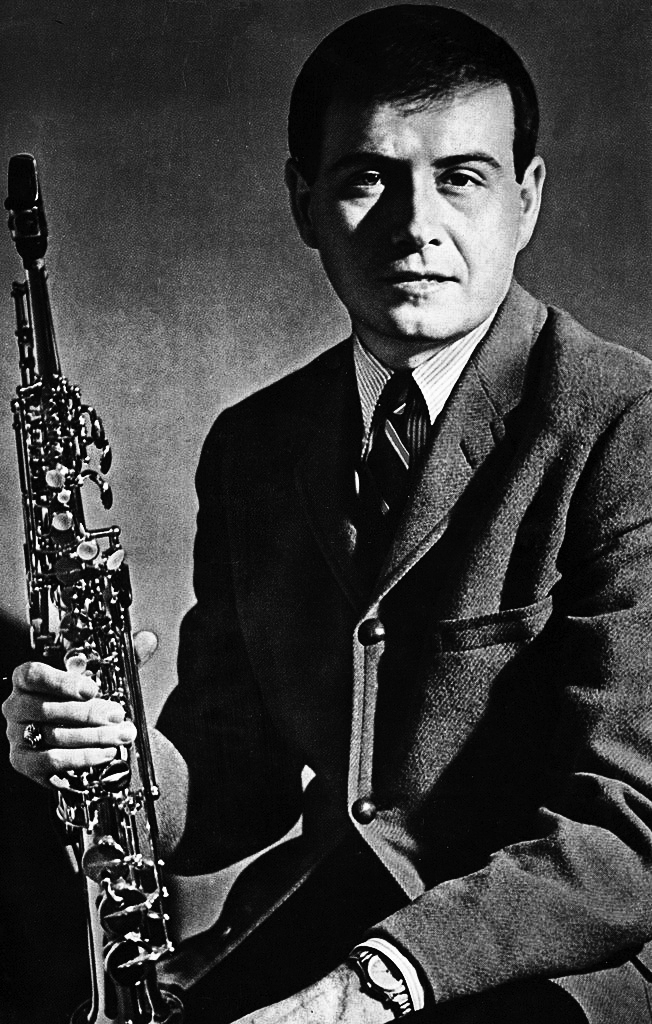
A saxophonist from Altoona, Pennsylvania, Winter loved the bebop form of jazz pioneered in the 1940s by Charlie Parker and Dizzy Gillespie. Coming out of high school, he played in the Ringling Brothers Circus Band. He formed his Sextet while studying at Northwestern University outside Chicago. Encouraged by Gillespie, Columbia Records superscout John Hammond -- whose career spanned from signing Count Basie to signing Bruce Springsteen -- signed the Sextet to Columbia Records in 1961.

He was accepted at the Law School of the University of Virginia, founded by President and classical music fan and performer (violin) Thomas Jefferson, and of which JFK's brother, new Senator-elect Ted Kennedy of Massachusetts, was a graduate. But before Winter could begin his studies there, the federal government asked the Sextet to go on a goodwill tour of Latin America. The performance at the White House was a reward, and originally suggested not by the President, but by the First Lady, Jacqueline Kennedy.

In 1967, Winter formed the Paul Winter Consort, incorporating Latin musicians and their styles into his recordings and concerts, making him a pioneer of what came to be called "world music." In the 1970s, he began adding sounds of animals in the wild as background for his performances. In 1971, the Apollo 15 astronauts took his album Road aboard the command module Endeavour to the Moon with them.
Between 1962 and 2011, Winter released 39 albums. Between 1993 and 2010, he won 6 Grammy Awards. As of November 19, 2022, he is still alive and performing, at age 83. As the sextet never had a permanent lineup, listing the others, and how long they lived, or if they are still living, would be a cumbersome task.

*

November 19, 1962 was a Monday. Actress and director Jodie Foster was born.

Baseball was out of season. Football was in midweek. And neither the NBA nor the NHL scheduled any games. So there were no scores on this historic day.

Monday, November 7, 2022

November 7, 1948: The Reconstruction of the White House Begins

Extreme Makeover: White House Edition

November 7, 1948: The Reconstruction of the White House begins. Just 5 days earlier, President Harry Truman, having called the building "the Great White Jail," and "the crown jewel of the federal penal system," was elected to what amounted to a 2nd term. As it turns out, he, First Lady Elizabeth "Bess" Truman, and their only child, Margaret Truman, then 24 years old, would have to spend most of that term across Pennsylvania Avenue, at Blair House.

The White House was completed in 1800. It had been largely reconstructed after the British Army burned it in 1814, as part of the War of 1812. While there had been additions, such as parts of what is now called the West Wing from 1902 to 1934, and the East Wing from 1902 to 1942, the original building hadn't had a significant renovation since James Monroe moved in shortly after his 1817 Inauguration.

In June 1948, a leg of Margaret's piano crashed through the floor in her second floor sitting room and through the ceiling of the Family Dining Room below. Investigators found the floor boards had rotted, the main floor beam was split completely through, and the ceiling below had dropped 18 inches. The investigators determined that the west end of the second floor was sinking.

The First Family was relocated from the west to the east end of the floor. Steel bracing was added to support the second floor and ceilings throughout the residence. The investigation concluded that the problem was a collapsing building, not just a floor, and "heroic remedies" would be required.

But 1948 was an election year, and the President feared that news of the collapsing White House would serve as an unflattering metaphor for his Administration. On September 30, 1948, the White House Architect announced that the White House's "structural nerves" had been damaged, the second floor would need to be rebuilt, but that overall the building was in "good shape."

The on-site forensic investigations continued while the first family was away campaigning. In October, the ceiling of the East Room began to collapse and required wood supports. The structure under the Grand Staircase was found to be crumbling. The President's bathtub had begun sinking into the floor. The investigators discovered that the foundations of the interior walls supporting the upper floors and roof were all but non-existent.

As they sank into the ground, the interior walls and floors were pulling away from the exterior walls leaving large gaps. They determined that the interior of the house was sinking and in danger of collapsing inward; the entire mansion was unsafe, except for the new Truman Balcony.

Upon returning to the White House on November 3, the day after winning the election, the President was informed by the Federal Works Agency that he would need to vacate the White House so critical repairs could be made. On November 7, the news was made public. The Trumans departed town, and, within 2 weeks, the White House was vacated. Furniture, staff, and the first family moved into Blair House, the President's guest house, across Pennsylvania Avenue.

The exterior walls were left standing, but the interior was completely gutted, including the expanding of the third floor. As a result, the floor plan was noticeably changed. The second floor room known as the Lincoln Bedroom became a bedroom, but it was an office in Abraham Lincoln's time: Ol' Abe never slept in the "Lincoln Bedroom." Unless he fell asleep at his desk, something more likely to have been done by Calvin Coolidge, Ronald Reagan or Donald Trump.

The original schedule called for the work to be finished in late 1951. By the end of 1950, the contractor estimated it would take until 1952. The First Family returned to the White House on the evening of March 27, 1952. It was ready for its residents, but the work was not complete. Deficiencies included the main kitchen not being operable in time for a state visit; some rooms without electrical outlets; drafty fireplaces rendering rooms unfit to sleep in; and kitchen sinks found to be too small for the dinner service.

On May 3, 1952, Truman led a tour of the restored White House, broadcast on all 3 TV networks, with each network having sent a correspondent.

For some people, the work still wasn't enough. In spite of her French background, First Lady Jacqueline Kennedy disliked the European decor, and wanted the White House redecorated with American items, including as much furniture used by former Presidents as could be found. Some historical sites relating to Presidents were willing to donate, and on February 14, 1962, she was ready to lead a nationally-televised tour of the White House. While praising President Truman for the restoration and the donors for their efforts, she deflected whatever credit she and President John F. Kennedy, who joined the tour at the end, might have deserved.

Since 1952, the White House has needed regular maintenance, but no additional major renovations have been necessary.

UPDATE: In 2025, Donald Trump had the East Wing demolished to make way for a ballroom that only he seemed to think was necessary.

*

November 7, 1948 was a Sunday. John Albert "Buck" Martinez, catcher, manager, and broadcaster for the Toronto Blue Jays, was born. And, unlike most people with the surname, he pronounces it "MAR-tin-ez," instead of the usual "Mar-TEE-nez."

Baseball was out of season. These games were played in the NFL:

* The New York Giants lost to the Philadelphia Eagles, 35-14 at the Polo Grounds.

* The Washington Redskins beat the Boston Yanks, 23-7 at Fenway Park in Boston. Yes, "Boston Yanks." Yes, playing home games at Fenway, though when there was a scheduling conflict with the Red Sox, they moved a mile away to Braves Field.

The team was owned by Ted Collins, manager of singer Kate Smith. To be fair, the term "Yankee" was applied to New Englanders before New Yorkers, and Collins named the team the Yanks because he wanted to put them in Yankee Stadium, but Dan Topping owned the rights to a football team named the New York Yankees (which had been used before, and put such a team in the All-America Football Conference. The team played from 1944 to 1948.

In 1949, Collins did move them to New York, but called them the New York Bulldogs. In 1951, with Topping having bought into the baseball Yankees, Collins renamed his team the New York Yanks, but they failed. He moved them again in 1952, and they became the Dallas Texans. They failed, and he sold the team -- and the rights to the Dayton Triangles, who had long ago left the NFL and gone semi-pro before Collins bought them -- and the new owners moved them, making them the Baltimore Colts. So today's NFL Indianapolis Colts have roots in New York, Boston, Baltimore and Dayton.

* The Pittsburgh Steelers beat the Green Bay Packers, 38-7 at Forbes Field in Pittsburgh.

* The Chicago Cardinals beat the Detroit Lions, 56-20 at Comiskey Park in Chicago. The Cards were the defending NFL Champions, and they were even better this year, though the Eagles reversed the result of the 1947 Championship Game and beat the Cards in it.

* And the Chicago Bears beat the Los Angeles Rams, 21-6 at the Los Angeles Memorial Coliseum.

In the aforementioned AAFC:

* The aforementioned New York Yankees beat the Los Angeles Dons, 38-6 at Yankee Stadium.

* The Brooklyn Dodgers (yes, there was a football team by that name, too) lost to the Buffalo Bills (not the later AFL and current NFL team by that name), 26-21 at Ebbets Field.

* The Cleveland Browns beat the Baltimore Colts (the original version), 28-7 at Cleveland Municipal Stadium.

* And the San Francisco 49ers beat the Chicago Rockets, 44-21 at Kezar Stadium in San Francisco.

There was one game in college football, and it was an upset: Santa Clara University beat Number 11 Nevada, 14-0 on neutral ground at Charles C. Hughes Stadium in Sacramento, California. In 1973, Santa Clara, named for its base city outside San Jose, were downgraded to NCAA Division II, and have remained there ever since.

There were 2 games in the Basketball Association of America, the league that became the NBA the next season. The Boston Celtics beat the Philadelphia Warriors, 85-77 at the Boston Arena (now the Matthews Arena). And the Baltimore Bullets beat the Fort Wayne Pistons, 78-77 at the gymnasium of North Side High School in Fort Wayne, Indiana. That's right: The early NBA was so small-time, one of its teams played in a high school gym.

And there were 2 games in the NHL. The New York Rangers lost to the Chicago Black Hawks, 4-2 at the Chicago Stadium. And the Detroit Red Wings beat the Boston Bruins, 7-3 at the Olympia Stadium in Detroit. The Montreal Canadiens and the Toronto Maple Leafs were not scheduled. 

Friday, November 4, 2022

November 4, 1963: The Kennedy Kids In the Oval Office

November 4, 1963: With First Lady Jacqueline Kennedy away, President John F. Kennedy did something she would not have allowed: He let Cecil Stoughton, the official White House photographer, into the Oval Office. He took pictures of JFK playing with his children Caroline and John Jr.

Always protective of her privacy, and her family's, Jackie didn't like it when pictures were taken of the kids, but Jack knew it helped the family's image. Both the photo of Caroline and John dancing, and John under the Resolute Desk, became icons of the "Camelot" era.
The desk was a gift from Britain's Queen Victoria to President Rutherford B. Hayes in 1880, and was built from the oak timbers of the British Arctic exploration ship HMS Resolute, which the U.S. Navy had rescued from its own failed mission to rescue a lost ship. (The ship they were looking for was later found by another ship, but all hands they were looking for had long been lost.)

The 1,300-pound desk was created by William Evenden, a skilled joiner at Chatham Dockyard in Kent, probably from a design by Morant, Boyd, & Blanford. The kneehole panel that John Kennedy Jr. played in was added in 1945.

President Kennedy was assassinated 18 days later. The desk was put in storage, and later became part of a traveling exhibit of items that would later be put into his Presidential Library in Boston. But it never made it there: President Jimmy Carter asked for it to be returned to the White House, which it was, and every President since has used it. Every Presidential Library, including JFK's, has a replica of the Oval Office as it looked during his Presidency, including a replica of the desk then in use.

Interviewed by Oprah Winfrey in 1997, John F. Kennedy Jr., then 36 years old, said that he didn't remember playing under the desk. He also said he didn't remember giving the salute to the coffin at the funeral, which took place on his 3rd birthday. He did say he remembered his father calling him "Sam," which he didn't like.

Apparently, it was the President yelling, "John! John!" after his son that led to John Jr. being nicknamed "John-John," which followed him for the rest of his life.

Cecil Stoughton, the photographer, was an Iowa native, and 43 years old at the time of the photos. He had also taken several photos of JFK on his yacht off the coast of Hyannis Port, Massachusetts; the photo of John and Robert Kennedy with Marilyn Monroe at the old Madison Square Garden in 1962; and the photo Lyndon Johnson's swearing-in aboard Air Force One after the assassination.
From 1967 to 1973, he was the official photographer for the National Park Service. He died in 2008, and, like President Kennedy and his brothers, was buried at Arlington National Cemetery.

*

November 4, 1963 was a Monday. This was also the day The Beatles played the Royal Variety Show in London, in front of Elizabeth the Queen Mother. I have a separate entry for that date.

Baseball was out of season. Football was in midweek: There would be no Monday Night Football for another 7 years. The NBA and NHL seasons were underway, but no games were scheduled for either league on this day. 

Thursday, November 3, 2022

November 3, 1969: President Richard Nixon's "Silent Majority" Speech

November 3, 1969: In the face of a massive demonstration against the Vietnam War on October 15 -- during Game 4 of the World Series between the New York Mets and the Baltimore Orioles -- and knowing that he had both lost the election for President in 1960 and won it in 1968 by razor-thin margins, and that he needed support from wherever he could get it, President Richard Nixon delivers a speech from the Oval Office, written by William Safire, later a Pulitzer Prize-winning longtime conservative columnist for The New York Times.

In 1956, when Nixon was Vice President, Senator John F. Kennedy of Massachusetts gave him a copy of his book Profiles In Courage, which included these words in its introduction: "Some of them may have been representing the actual sentiments of the silent majority of their constituents in opposition to the screams of a vocal minority." Nixon took note of those words, and never forgot them, even as the friendship between them was fractured when they ran against each other for President in 1960, and Kennedy won by said slim margin.

In 1967, George Meany, President of America's largest labor organization, the AFL-CIO, gave a press conference in which he said union members who supported the Vietnam War were "the vast, silent majority in the nation." Nixon heard this, and remembered Kennedy having used the phrase.

So, needing support for his his policies, especially the one he announced at the beginning of the speech, called "Vietnamization" -- steadily taking U.S. troops out, and turning responsibility for the war over to South Vietnam -- Nixon gave Safire the phrase, and this section was the result: "And so, tonight, to you, the great silent majority of my fellow Americans, I ask for your support."

It worked, mostly. In 1966, Time magazine named "The Inheritor" -- or, as they said on the cover, "Twenty-Five and Under" -- as their collective "Man of the Year." People born after 1940 then made up nearly half the American population, and were most of those serving in Vietnam and most of those in the counterculture that, among other things, was opposing that war. In 1969, just 3 years later, as "Man and Woman of the Year," Time chose "The Middle Americans" -- clearly, a synonym for "The Silent Majority."
Despite an even bigger demonstration in Washington on November 15, the protests against Nixon's "Cambodian incursion" the following May, and the "May Day" demonstrations of May 3, 1971, those who opposed the war didn't turn up at the polls to punish pro-war Congressmen in 1970 and 1972, or Nixon himself when he ran for re-election in 1972. Those who supported the war had ceased to be a majority of the people in 1968, but they remained a majority of those who actually voted.

Nixon announced an end to the war within days of his 2nd Inauguration, on January 23, 1973. And when he was forced to resign on August 9, 1974, the war had only a tangential connection to it: Trying to get information on antiwar Congressmen and activists was why the Democratic Party offices at the Watergate were broken into and bugged.

Nixon was probably not aware of this, but the day before the speech, the band Creedence Clearwater Revival released an album titled Willy and the Poor Boys. For it, bandleader John Fogerty, one of the few genuine rock stars to have served in the U.S. armed forces (U.S. Army, 1966-67, before the band hit it big, serving stateside with no combat), wrote the song "Effigy," in which he sang, "Silent majority weren't keeping quiet anymore."

This was also the day on which PBS, the Public Broadcasting Service, was founded. I have a separate entry for that.

*

November 3, 1969 was a Monday. The baseball season was over. There was no football: The NFL and ABC began partnering for Monday Night Football the following season. And while the NHL season had begun, no games where scheduled for that day.

Only 1 game was scheduled in the NBA: The New York Knicks beat the Milwaukee Bucks, 109-93 at the Milwaukee Arena. In 1974, it was renamed the Milwaukee Exposition, Convention Center and Arena, or "The MECCA." Since 2014, it has been named the UW-Panther Arena. Willis Reed scored 35 points, Bill Bradley 19, Dave DeBusschere 18, Dick Barnett 14, and Walt Frazier and Cazzie Russell each scored 10. Kareem Abdul-Jabbar, then a rookie and still using his birth name of Lew Alcindor, scored 17 for the Bucks.

There was 1 game in the American Basketball Association: The New Orleans Buccaneers beat the Washington Capitols, 125-115 at the New Orleans Municipal Auditorium. Neither team survived to be admitted to the NBA. 

Saturday, October 22, 2022

October 22, 1962: "The First Family" Is Recorded Amid the Cuban Missile Crisis

October 22, 1962: Eight days after finding out that the Soviet Union has set up missiles in Cuba, which could reach the United States, and debating what to do about it, President John F. Kennedy addresses the nation from the Oval Office at the White House.

Obviously, JFK couldn't simply do nothing, and let the missiles stay there. It would have been nuclear extortion on America and its allies. He also knew that standard diplomacy, trying to get the Soviets to remove the missiles that way, or to convince Castro to refuse them, wouldn't work.

Most of the President's military advisors had recommended a first strike on Cuba -- not nuclear, but with conventional weapons, meaning planes and bombs. This would be followed by a land invasion.

JFK knew that this would be considered an act of war, not just on Cuba, but on Cuba's ally, the Soviet Union, and might lead to that country launching its missiles on the West, including any missiles that the hypothetical bombing raid failed to take out. If ever there was a President who, as Donald Trump once suggested he did, "knew more than the Generals do," it was Kennedy.

Secretary of Defense Robert McNamara suggested a naval blockade, preventing any more Soviet supplies from arriving in Cuba by sea -- including aircraft carriers whose planes could enforce the blockade by air.

But this, too, was problematic: According to international law, a blockade is an act of war. Admiral George Anderson, Chief of Naval Operations, told JFK to, instead, call it a "quarantine." JFK's Attorney General, his brother, Robert F. Kennedy, told him that this would provide legal justification, under the Rio Treaty, effectively establishing the Organization of American States (OAS) as a NATO for the Western Hemisphere, and also backing up the Monroe Doctrine, prohibiting European interference in the Hemisphere. And so, JFK announced the "quarantine."

For the next week, the world was terrified that this is it: World War III is coming, and, as JFK had said before, "The living would envy the dead."

And while this speech was being broadcast, among the few people not seeing it were in Fine Recording Studio in Manhattan, watching the recording of the comedy album The First Family, a parody of the Kennedy family. Presidents had been portrayed before, and comedians had made jokes about incumbent Presidents. But comedian Vaughn Meader, a fellow New Englander (from Waterville, Maine) had already made a name for himself impersonating JFK, including the accent, the phrasing and the gestures.
Unlike some later Presidential parodies, this was mostly in good fun, riffing on various facets of Kennedy life: JFK's comparative youth and inexperience, his reliance on his brother Bobby's counsel and their father Joe's money, his bad back and the rocking chair he used instead of a stiffer chair, his affinity for cigars, Jackie's redecoration of the White House, the raising of daughter Caroline and baby John Jr., and the family's love of sports, including football and water-skiing.

Naomi Brossart played Jackie. She was a model, and this album was her recording debut. Canadian actress Norma McMillan, an experienced cartoon voice actress, and older than either Meader or Brossart, ironically provided the voices of both Caroline and "John-John."

Also among the cast were Earle Doud and Bob Booker, who co-produced the album; and Chuck McCann, a comedian known for his commercials ("Hi, guy!" for Right Guard antiperspirant, and he was the voice of Sonny the Cuckoo Bird who went "cuckoo for Cocoa Puffs" cereal). McCann also starred in a kids' science-fiction comedy, Far Out Space Nuts, with a post-Gilligan's Island John Denver. That show, too, was produced by Earle Doud, for the Krofft Superstars, as was another McCann vehicle, Magic Mongo. Also for Sid & Marty Krofft, Doud created and produced Wonderbug.

Meader later said, "A lot of people don't know this, but we recorded The First Family on the night of October 22, 1962, the same night as John F. Kennedy's Cuban Missile Crisis Speech. The audience was in the studio and had no idea of the drama that was taking place. But the cast had heard the speech and our throats almost dropped to our toes, because if the audience had heard the Cuban Missile Speech, we would not have received the reaction we did."

"Mr. President, we recently learned that you sent an agent into Cuba.
Did he return with any useful information?"
"Well, I didn't send him for information. I sent him for cigars!"

Cadence Records almost cancelled the distribution of the record, assuming America would be going to war. But the crisis was resolved on October 28, so the album was released a few days later. It rode JFK's post-crisis popularity to became the fastest-selling record in American history, until The Beatles came along a year later, and in 1963 it won the Grammy Award for Album of the Year. Since the music business is a copycat's business, Jewish comedians Buck Henry, Joan Rivers and George Segal recorded The Other Family, imagining the Khrushchevs at home.


On November 22, 1963, JFK was assassinated. The night before, Meader had done a show in character in Milwaukee. Right after the news of the assassination hit the media, he hailed a taxi to take him to the airport. The driver recognized him, and said, "Did you hear about Kennedy in Dallas?" Since Meader hadn't heard, he presumed this was the setup for a joke, and said, "No, how does it go?" The driver told him, and turned on the radio so Meader could hear.


That night, a far more controversial comedian, Lenny Bruce, was due to go onstage at a nightclub in New York's Greenwich Village. He wondered if it were possible to be funny that night. He wondered if anybody would even show up. He decided to go out, and there were 12 people in the audience. He sat on a stool for a moment, and then, his usual bad taste kicked in, and he said, "Boy, is Vaughn Meader fucked!" And the 12 people laughed like crazy. Bruce walked offstage, knowing it wouldn't get any better than that, and collected his pay from a satisfied club owner.


Sadly, Bruce was right: Nobody wanted to hear from Meader anymore. He couldn't do JFK material anymore, but anything else he tried reminded people of the sadness of those 4 days in November. He went back to Maine, and ran a bar.


Earle Doud, who produced the original album, tried again, with Welcome to the LBJ Ranch and Lyndon Johnson's Lonely Hearts Club Band. But instead of impressionists, they did it as a "cut-in" album, in the style of Dickie Goodman's "Flying Saucer" records: They would ask a question, and then use a recording of LBJ, a figure in his Administration, or another politician, the result intending to be funny. It didn't work.


David Frye was an amazing impressionist, who managed to not only sound like, but use his facial expressions to even look like, not just LBJ, but also Robert Kennedy, Richard Nixon, Nelson Rockefeller, and even William F. Buckley. Sometimes, he would play talk show host David Susskind, interviewing each of them. He recorded the albums I Am the President and Radio Free Nixon.


Of course, once Nixon's own recordings were released, the paradigm was changed: Since the world had heard just how mean a President of the United States could be, it was okay to really skewer him in comedy routines.


Meader had a brief revival in 1981, with The First Family Rides Again! But Doud made him just a supporting player on that album: Rich Little provided the voice of Ronald Reagan. Meader died in 2004, at the age of 68. Norma MacMillan died in 2001, Chuck McCann in 2018. As of October 22, 2022, Earle Doud, Bob Booker and Naomi Brossart are still alive.


*


October 22, 1962 was a Monday. Actor Bob Odenkirk was born.

The baseball season ended 6 days earlier, with the New York Yankees winning Game 7 of the World Series over the San Francisco Giants. Football was in midweek: There wouldn't be Monday Night Football until 1970. The NBA and NHL seasons were underway, but no games were scheduled for either. So there were no scores on this historic day.

Saturday, October 15, 2022

October 16, 1901: Booker T. Washington at the White House

October 16, 1901: Fresh off the publication of his memoir Up from Slavery, Booker T. Washington, leader of what is now Tuskegee University in Alabama, is invited by President Theodore Roosevelt to have dinner with him at the White House.
The South was outraged. The Memphis Scimitar called it "the most damnable outrage which has ever been perpetrated by any citizen of the United States." Senator Benjamin Tillman of South Carolina -- known as Pitchfork Ben for his declaration as Governor that, while Grover Cleveland was President, Cleveland "is an old bag of beef, and I am going to Washington with a pitchfork and prod him in his old fat ribs" -- said, "We shall have to kill a thousand (N-word)s to get them back in their places!"
Today, outside of their respective home States, Theodore Roosevelt and Booker T. Washington are remembered, while Ben Tillman is not. And if the Memphis Scimitar, and its successor the Memphis Press-Scimitar, are remembered today, it is for the August 17, 1977 headline, "A Lonely Life Ends on Elvis Presley Boulevard." the combined paper folded in 1983.
*
October 16, 1901 was a Wednesday. The baseball season had just ended. Saturday had been standardized as the day for football. And basketball and hockey were still all-amateur. So there were no scores on this historic day.

Friday, October 7, 2022

October 7, 1958: The Fall of Sherman Adams

October 7, 1958: Sherman Adams, arguably the 2nd-most powerful man in America, ceases to be so. And for reasons that would have seemed rather tame after 1974, let alone in the 21st Century.

Llewelyn Sherman Adams was born on January 8, 1899 in East Dover, Vermont, and grew up in Providence, Rhode Island. He served in the U.S. Marine Corps in World War I, and graduated from Dartmouth College, an Ivy League school in Hanover, New Hampshire.

He went into the lumber and banking businesses in New Hampshire, and was elected to the State House of Representatives in 1940 and 1942, briefly serving as Speaker in 1944. That year, he was elected to the U.S. House of Representatives. He ran for Governor, losing in 1946, then winning in 1948 and 1950.

When General Dwight D. Eisenhower ran for President in 1952, Adams aided his win in the New Hampshire Primary. Impressed by this, "Ike" made Adams a major part of his campaign, which paid off at the Republican Convention.

Upon winning the general election, Ike appointed Adams to be White House Chief of Staff, a position which came to be known as "the gatekeeper to the President": If the Chief of Staff doesn't tell you that you can see the President, or doesn't tell you that your concerns will reach him, you're out of luck. Although several men had held positions like this in the past -- Colonel Edward House to Woodrow Wilson, Harry Hopkins to Franklin Roosevelt -- the official post hadn't really existed before. Ike borrowed the title from military parlance.

And Adams relished it. Memos with "OK, S.A." written on them became prized possessions among the staff. On the other hand, he easily dismissed requests, often with a simple, "No." He became known as "The Abominable No Man" and "The Iceberg." When Eisenhower had his heart attack in 1955, and his less serious but still worrying stroke in 1957, he proved invaluable to Vice President Richard Nixon in carrying out official duties until Ike could return.

He was willing to make public statements that were less than "presidential," taking criticism from Ike's opponents, whether they be Democrats or the occasional Republican with whom Ike disagreed, like Senator Joseph McCarthy of Wisconsin. Adams was instrumental in Ike's contribution to McCarthy's downfall in 1954, after seeing what McCarthy and his handlers had asked Ike to do in Wisconsin in the 1952 campaign.

Because of his heroic status in World War II, and his overwhelming popularity, Eisenhower was unattackable -- one might even say, "unimpeachable." So his critics would attack Adams instead. After all, if the word of Adams was the word of Eisenhower, then an attack on Adams was a safe way of attacking the President. A joke circulated around Washington in the 1950s: Two Democrats were talking, and one said, "Wouldn't it be terrible if Eisenhower died, and Nixon became President?" The other replied, "Wouldn't it be terrible if Sherman Adams died, and Eisenhower became President!"

But on October 7, 1958, Adams was fired, for hypocrisy more than anything else. Washington Post columnist Jack Anderson discovered that Adams had accepted an expensive vicuña coat and an oriental rug from Bernard Goldfine, a Boston textile manufacturer, then under investigation for Federal Trade Commission violations. Goldfine, who had business with the federal government, was cited for contempt of Congress when he refused to answer questions regarding his relationship with Adams.

By the standards of the time, this conflict of interest was considered a resignation-necessary offense. But it was the hypocrisy: During the 1952 campaign, the Republicans had ripped the Democrats for "corruption." Their platform was "C2K1," , meaning, "Communism, Corruption, and Korea."

Although they never cited outgoing President Harry Truman, outgoing Vice President Alben Barkley, Presidential nominee Adlai Stevenson, or Vice Presidential nominee John Sparkman, for any particular legal questions, they noted that wives of Democratic officials had received fur coats -- sometimes mink, always the byword for fur coats, although vicuña coats were popular in the 1950s -- in apparent attempts to influence those officials on policy.

So when it became clear that Adams had done pretty much the same thing he and his '52 campaign aides had accused the Democrats of doing, he had to go. Ike resisted this, telling a press conference, in a voice seemingly too meek to have come from the man who was once the world's leading military man, "I need him."

By October 7, the outcry had become too much, and, instead of doing it face-to-face, man-to-man, Ike sent Meade Alcon, the Chairman of the Republican National Committee, to tell Adams he was fired. The Eisenhower Administration has been called "The Hidden-Hand Presidency," but this was too hidden: Not telling Adams himself was a cowardly move by the ultimate modern Army man.

Retroactively speaking, however, it was a just punishment, because Adams ended up costing the Republican Party, and thus Ike himself, very badly in the next 2 elections. The Adams scandal and a recession, minor compared to later ones from the 1970s onward, combined to make the Congressional elections a month later a Democratic landslide: The Democrats gained 49 seats in the House, a total they haven't topped since (they matched it in the post-Watergate election of 1974), and 15 seats in the Senate, a total neither party has matched since (the Republicans gained 12 in 1980).

And Adams' successor, Wilton "Jerry" Persons, simply was not as skilled. Had Adams not accepted those gifts, or had they not been discovered, he surely would still have been Chief of Staff in the Spring of 1960, and helped Ike better handle the U-2 "spy plane" incident, and also advised him to help Vice President Nixon out as he campaigned to succeed him. That failure, and the U-2 incident, among other things, were key to helping Senator John F. Kennedy win a close election over Nixon.

Adams returned to New Hampshire, and built and ran the popular Loon Mountain ski resort. He died on October 27, 1986, all but forgotten -- but, with Watergate having happened, and Iran-Contra having happened right after his death, any thought of his scandal quickly disappeared.

*

October 7, 1958 was a Tuesday. There was no scores on this historic day: It was a travel day in the World Series that the New York Yankees would win over the Milwaukee Braves, it was midweek for football, the NHL season started the next night, and the NBA season started 12 days later.

There was one notable event on this day, connected with sports: Scott Morrison was is born. A hockey writer for the Toronto Sun, he has contributed to Rogers Sportsnet and the CBC's Hockey Night In Canada. He has been awarded the Hockey Hall of Fame's media award, the Elmer Ferguson Memorial Award.

Wednesday, October 5, 2022

October 5, 1947: The 1st Televised White House Speech

President Harry S Truman (left) and Charles Luckman,
Chairman of the President's Citizens Food Committee,
under a portrait of President Ulysses S. Grant

October 5, 1947: President Harry S Truman becomes the 1st President to deliver a speech from the White House that is broadcast on television.

With World War II only a little over 2 years in the past, there are still food shortages. The Marshall Plan, devised by his Secretary of State, former General George C. Marshall, is trying to do something about this, but it hasn't yet been approved by Congress. (That will take until the following March.) So Truman asks the American people to voluntarily observe meatless Tuesday and poultryless Thursdays. Most do.

Truman said:

The situation in Europe is grim and forbidding as Winter approaches. Despite the vigorous efforts of the European people, their crops have suffered so badly from droughts, floods, and cold that the tragedy of hunger is a stark reality.

The nations of Western Europe will soon be scraping the bottom of the food barrel. They cannot get through the coming Winter and Spring without help, generous help, from the United States, and from other countries which have food to spare.

I know every American feels in his heart that we must help to prevent starvation and distress among our fellow men in other countries.

But more than this, the food-saving program announced tonight offers an opportunity to each of you to make a contribution to the peace. We have dedicated ourselves to the task of securing a just and a lasting peace. No matter how long and hard the way, we cannot turn aside from that goal.

An essential requirement of lasting peace is the restoration of the countries of Western Europe as free self-supporting democracies. There is reason to believe that those countries will accomplish that task if we aid them through this critical Winter, and help them get back on their feet during the next few years. They must do most of the job themselves. They cannot do it if thousands of their people starve. We believe they can, and will, do the job if we extend to them that measure of friendly aid which marks the difference between success and failure.

Their most urgent need is food. If the peace should be lost because we failed to share our food with hungry people there would be no more tragic example in all history of a peace needlessly lost. 

As a gesture of bipartisanship, Truman asked former President Herbert Hoover to assist. Hoover had become known as the President who presided over the start of the Great Depression and didn't do enough to solve it. But one of the reasons he was elected in the first place is that, during World War I, he led a food drive for the starving nations of Europe. Truman knew that he could do it again, and Hoover was moved by Truman's invitation.

*

October 5, 1947 was a Sunday. Game 6 of the World Series was played at Yankee Stadium. The Brooklyn Dodgers beat the New York Yankees, 8-6, and forced a Game 7, which the Yankees won. I have a separate entry for this event. On this day, Harry Truman giveth, and Al Gionfriddo taketh away.

These games were played in the National Football League:

* The New York Giants lost to the Philadelphia Eagles, 23-0 at the Polo Grounds.

* The Detroit Lions beat the Boston Yanks (yes, baseball fans, a team with that name existed), 21-7 at Fenway Park in Boston.

* The Washington Redskins beat the Pittsburgh Steelers, 27-26 at Griffith Stadium in Washington.

* The Chicago Cardinals beat their crosstown rivals, the Chicago Bears, 31-7 at Comiskey Park.

* The Green Bay Packers beat the Los Angeles Rams, 17-14 at the Dairy Bowl in the Milwaukee suburb of West Allis, Wisconsin. The Dairy Bowl was a football stadium built in the infield of a speedway, now known as the Milwaukee Mile, at the Wisconsin State Fair Park.

And in the All-America Football Conference:

* The New York Yankees lost to the Cleveland Browns, 26-17 at Cleveland Municipal Stadium.

* The Baltimore Colts and the San Francisco 49ers played to a tie, 28-28 at Baltimore Municipal Stadium (later converted into Memorial Stadium).

* The Buffalo Bills beat the Los Angeles Dons, 27-25 at the Los Angeles Memorial Coliseum. In old Spanish California, a "Don" was equivalent to an English "Lord." The title was also in Italy, which is why Mafia boss were called "Dons."

As for the Bills, this is not the team we know today: When the NFL absorbed the Browns, the Colts and the 49ers after the 1949 season, many people expected them to take the Bills as well, but they didn't. It became known as "The Screwing of Buffalo." When the AFL was founded in 1960, a new Bills team was established, and that's the team we know today.

* Two days earlier, the football version of the Brooklyn Dodgers beat the Chicago Rockets, 35-31.

Also on this day, Brian Johnson, who was hired to replace the late Bon Scott as lead singer of rock band AC/DC, was born.

Saturday, September 24, 2022

September 24, 1957: President Eisenhower Sends Troops to Little Rock

September 24, 1957: The President of the United States, Dwight D. Eisenhower, cuts short a vacation in Newport, Rhode Island, then considered a rich man's resort, to come back to Washington, and announce on TV and radio that he has ordered the U.S. Army's famed 101st Airborne Division to Little Rock, Arkansas, and federalized the Arkansas National Guard, to integrate that city's Central High School, to enforce the federal law that racial segregation in public schools was unconstitutional.

It has been said that he disagreed with the U.S. Supreme Court's 1954 decision to strike down public school segregation laws; but that, having sworn an oath to "preserve, protect and defend the Constitution of the United States," he had to send the troops in.

And he made a point of leaving his vacation to deliver the address, not just from the White House, but from the Oval Office. He said:

I could have spoken from Rhode Island, where I have been staying recently. But I felt that, in speaking from the house of Lincoln, of Jackson, and of Wilson, my words would better convey both the sadness I feel in the action I was compelled today to make, and the firmness with which I intend to pursue this course until the orders of the Federal Court at Little Rock can be executed without unlawful interference.

It was Ike's finest hour -- since 1945, anyway.

After the 1957-58 schoolyear, Governor Faubus shut Central High down. Those students who hadn't graduated had to go elsewhere. Many of the white students' parents paid through the nose to have their kids attend all-white private schools. Served those bigots right. Central reopened, integrated, for the 1959-60 schoolyear.
The Nine, and what became of them:

* Thelma Mothershed, born November 29, 1940 in Bloomburg, Texas, to parents from Little Rock, where she grew up. Despite the school's closure, she had the credits necessary to graduate. She earned Bachelor of Arts and Master of Guidance and Counseling degrees from Southern Illinois University, and, under her married name of Thelma Mothershed-Wair, taught home economics in East St. Louis, Illinois. (UPDATE: She died on October 19, 2024, a few weeks short of her 84th birthday.)

* Minnijean Brown, born September 11, 1941 in Rogers, Arkansas. She was the only one of the Nine to respond to the racial taunts at Central: After getting hit with a thrown object, she yelled out that the student who did it was "white trash." For this, she was expelled. Students at Central passed a note around which stated, "One down, eight to go." She was taken in by NAACP members in New York City, and graduated from the New Lincoln School. (At the time, naming a school for Abraham Lincoln was code for "school for black kids," the way naming one for Martin Luther King would later.)

She earned a Bachelor of Journalism degree from Southern Illinois University. Under her married name of Minnijean Brown-Trickey, and became a social worker. After her divorce, she moved to Canada and went back to school, earning a Master of Social Work degree at Carleton University in Ottawa. She returned to America, and, under the 1st President from Arkansas, Bill Clinton, she served as Deputy Assistant Secretary of Workforce Diversity in the U.S. Department of the Interior.

* Ernest Green, born September 22, 1941 in Little Rock. He graduated from Central in 1958, went to Michigan State University, where he earned Bachelor of Arts and Master of Sociology degrees. He became a social worker, and an Assistant Secretary of Labor under President Jimmy Carter. He later ran a charter school in Washington, D. C. before retiring.

* Elizabeth Eckford, born October 4, 1941 in Little Rock. She was the student photographed, from two different angles, walking into the building, carrying her books and wearing sunglasses, with white student Hazel Bryan screaming behind her, which became the defining image of the whole story. When Central closed, she went to night school, and got her diploma.
She earned a Bachelor of Arts degree from Central State University in Wilberforce, Ohio, served in the U.S. Army, married, had children, and worked several jobs, including as a history teacher, a welfare worker, and a probation officer.

* Terrence Roberts, born December 3, 1941 in Little Rock. After Central was closed, he moved in with his father in Los Angeles, and graduated from Los Angeles High School. He earned a Bachelor of Arts degree from California State University, Los Angeles (CSULA), a Master of Social Welfare from UCLA, and a Ph.D. in psychology at Southern Illinois University. He later taught at Pacific Union College and Antioch University, both in California; and served as director of mental health services at a hospital and Assistant Dean of the UCLA School of Social Welfare, before retiring.

* Melba Pattillo, born December 7, 1941, the day of the Pearl Harbor bombing, in Little Rock. With the closing of Central, she and her family moved to the San Francisco suburb of Santa Rosa, California, where she graduated from Montgomery High School. She earned a Bachelor of Arts degree from San Francisco State University, and a Master of Journalism degree from Columbia University. She married, becoming known as Melba Pattillo Beals, and divorced. She taught journalism, and later went back to school, earning a Doctor of Education degree from the University of San Francisco.

* Jefferson Thomas, born September 19, 1942 in Little Rock. He graduated from Central in 1960, and earned a Bachelor of Business Administration degree from Los Angeles State College. He served in the U.S. Army in the Vietnam War, and worked in civil service in Columbus, Ohio. He was the 1st of the Nine to die, on September 5, 2010, at the age of 67.

* Gloria Ray, born September 26, 1942 in Little Rock. After graduating from Central, she went to Chicago, and got a Bachelor of Science degree from the Illinois Institute of Technology. Under her married name of Gloria Ray Karlmark, she worked for IBM in Sweden and Philips in the Netherlands, where she stayed after retiring. 

* Carlotta Walls, born December 18, 1942 in Little Rock. She outlasted the "Lost Year," and survived being the only one of the Nine to face genuine violence, as her house was bombed on February 9, 1960. Thankfully, damage was minor, and no one was hurt. She graduated from Central 4 months later. She went to Michigan State, but her father was unable to find a job in Little Rock, so the family moved to Denver, where she graduated from what's now the University of Northern Colorado. She became a real estate broker, under her married name of Carlotta Walls LaNier.

*

September 24, 1957 was a Tuesday. This was also the day the Camp Nou stadium opened in Barcelona, Spain. I have a separate entry for that.

No NFL games were played. And the starts of the NBA and NHL seasons were a month away. But a full slate of Major League Baseball games was played:

* The most significant was, as already widely believed but not yet officially confirmed, the last game  at Ebbets Field in Brooklyn. I have a separate entry for that.

The Brooklyn Dodgers beat the Pittsburgh Pirates 2-0 on a 5-hit shutout by rookie lefthander Danny McDevitt. The Dodgers would have the next 2 days off, and close their history as a Brooklyn-based team away to the Philadelphia Phillies, losing the finale.

Two nights earlier, Duke Snider had hit the last 2 home runs at the ballpark. The last play was Dee Fondy grounding to short, where, appropriately, Pee Wee Reese, a Dodger since 1940, threw to Gil Hodges for the last out.

* The New York Giants, who had already announced their move to San Francisco for the 1958 season, lost to the Phillies, 5-0 at Connie Mack Stadium in Philadelphia. Curt Simmons pitched a 4-hit shutout. Willie Mays went 0-for-3. Five days later, on Sunday, September 29, the Giants would play their last game at the Polo Grounds, and lost to the Pirates, 9-1.

For the next 4 seasons, New York's National League baseball fans, unwilling to give up baseball, but unwilling to switch to the American League's New York Yankees, took the Pennsylvania Railroad from Penn Station in New York to the North Philadelphia station, and walked the 7 blocks from Broad Street down Lehigh Avenue to 21st Street, and walked into Connie Mack Stadium to watch the Phillies play the Los Angeles Dodgers or the San Francisco Giants.

If they were feeling particularly adventurous, they would drive down, and risk their cars, parking in the North Philly ghetto. Some would cheer their old heroes. Some would boo them.

In 1962, the New York Mets arrived, and the former fans of the Dodgers and the Giants would join in a "marriage of convenience" -- one which produced "The New Breed," the Met fans too young to really remember the former teams.

* The Yankees? They didn't play that night. Nor did the Baltimore Orioles, the Cleveland Indians, or the Detroit Tigers.

* The Boston Red Sox beat the Washington Senators, 2-1 at Griffith Stadium in Washington. Ted Williams hit a home run.

* The Cincinnati Redlegs -- from 1954 to 1958, the Reds used that name due to the stupidity of the Red Scare -- swept a doubleheader from the Chicago Cubs, at Crosley Field in Cincinnati. The Reds won the opener 4-3, and the nightcap 11-9. Over the 2 games, Ernie Banks went 2-for-9 with a home run and 2 RBIs for the Cubs; while, for the Reds, Frank Robinson went 1-for-6 with an RBI, and Wally Post homered in both games.

* The Milwaukee Braves, having clinched their 1st NL Pennant the night before on an 11th-inning home run by Hank Aaron, beat the St. Louis Cardinals at Milwaukee County Stadium again, this time 6-1 in the regulation 9 innings. In this game, Aaron went 1-for-5, but the hit was a grand slam. Stan Musial went 1-for-2 with 2 walks.

* And the Chicago White Sox beat the Kansas City Athletics, 7-6 at Kansas City Municipal Stadium.

December 31, 1999 & January 1, 2000: The Millennium

December 31, 1999:  The Millennium arrives. The people of planet Earth survived. At a terrible cost. But we hadn't destroyed ourselves. ...