Showing posts with label hillary clinton. Show all posts

Tuesday, November 8, 2022

November 8, 2016: Donald Trump Is "Elected" President

November 8, 2016: A Presidential election is held. The Democratic Party's nominee for President was Hillary Clinton. She was, perhaps, the most qualified candidate the Presidency has ever had. The nation's First Lady for 8 years. A U.S. Senator for 8 years. The nation's Secretary of State for 4 years.

But some people could never forgive her for being a woman, for being a liberal, for being married to former President Bill Clinton, or for staying married to him through all his infidelities.

The Republican Party's nominee was Donald Trump. He was, beyond any question, the most underqualified candidate ever nominated for President by a major party. He had never held public office, either elective or appointive. He had never served in the armed forces, much less held a command in them, like some other men who were not previously politicians. This, alone, should have convinced people that he wasn't fit to be President.

As if that wasn't enough: He was a pathological liar, a known bigot, and a damn fool. Having grown up watching the New York local news, and having seen him on it for over 30 years, I could legitimately tell people that, in spite of being 70 years old, which would have made him the oldest first-time President ever to that point, he was not in mental decline: He was always an idiot.

Even the main argument in his favor, that he was a successful businessman, should have worked against him. For one thing, running a government -- national, state or local -- and running a business are two very different things. Businessmen don't know a damn thing about governing. In other words, even if Trump were a good person with good intentions, he would still have been a lousy President, because he wouldn't have known what the hell he was doing.

For another thing, he wasn't a successful businessman. He was a real estate mogul, and lost money on just about every building he built. He built and operated casinos, and lost money running them. How the hell do you lose money running a casino? And he bought a professional football team, the New Jersey Generals of the United States Football League, and ended up destroying the entire league.

As they used to say on the TV show Match Game, Dumb Donald is so dumb!

But not completely dumb. He tapped into the anger that some people had at Hillary. And he let the nation's bigots -- whether they hated people because of race, religion, gender, sexual orientation, or any  other category -- know that he hated the same people, and would hurt those people at the benefit of those who hated them. It would be government by spite. Essentially, he was giving them permission to be openly bigoted again.

And there were enough people who ate that up that, when combined with those people who, whether they liked Trump personally or not, or whether they thought he was intelligent enough or mentally stable enough to be President or not, were going to vote for the Republican nominee no matter what, because they wanted tax cuts, deregulation and right-wing judges, that he had a chance.

In the election, Clinton won 65.8 million votes, to Trump's 62.9 million. She won 48.2 percent of the popular vote to Trump's 46.1 percent. Gary Johnson, a former Republican Governor of New Mexico, nominated by the Libertarian Party, won 4.5 million votes, or 3.3 percent. Jill Stein, a doctor and the nominee of the Green Party, openly appealed to the supporters of Senator Bernie Sanders, Independent of Vermont, who finished a distant 2nd to Clinton in the Democratic Primaries, and got 1.4 million votes, or 1.1 percent.

So, nearly 63 million people saw that he was unqualified, dishonest, stupid, and bigoted, and voted for him anyway. Or, as someone else put it, not everybody who voted for Trump considered themselves racist, but they knew that he was, even if they weren't willing to publicly admit that, and they did not consider that fact to be a dealbreaker.

But, fairly or not, it's the Electoral Vote that matters. Clinton won 20 States, plus the District of Columbia, for 232 Electoral Votes. Trump won 30 States, plus 1 Electoral Vote in Maine, for 306. In the end, there were "faithless electors" who voted for candidates other than those for whom he popular votes in their States said they should, so the final count was Trump 304, Clinton 227.

Two Electors in Texas refused to vote for Trump. One voted for a Republican former Congressman from that State, Ron Paul, who had run for President in 2008 and 2012, and whose son, Rand Paul, was now a Republican Senator from Kentucky, and had run for President in this election. Another voted for Governor John Kasich of Ohio, another of the Republicans that Trump had defeated in the 2016 Primaries. An Elector in Hawaii refused to vote for Clinton. Instead, he voted for Sanders.

And 4 Electors in the State of Washington refused to vote for Clinton. Three of them voted for former General and Secretary of State Colin Powell, who had considered running for President in 1996, and had endorsed Clinton in this election.

The other voted for Faith Spotted Eagle, at the time a 68-year-old member of the Yankton Sioux Nation in South Dakota, who had been among the leaders of the attempt to block oil pipelines being built through Native land in her State. She thus became the 1st Native American ever to receive an Electoral Vote, and along with Clinton 1 of the 1st 2 women to receive one. She had run for the State House of Representatives in 2006, coming in 3rd in a Democratic Primary, and went on to repeat this performance in 2018.

Trump won 6 States that the outgoing President, Democrat Barack Obama, won in 2012: Pennsylvania, Michigan, Ohio, Wisconsin, Iowa and Florida. And some of those votes were close enough to be suspicious: Trump won Michigan by 10,704 votes, Wisconsin by 22,748, and Pennsylvania by 44,292. 

Those 3 States were won by a total of 77,744 votes -- less than the seating capacity of MetLife Stadium. In Michigan, Johnson got 172,000 votes, Stein 51,000. In Wisconsin, Johnson 106,000, Stein 31,000. In Pennsylvania, Johnson 146,000, Stein 50,000.

Had Hillary gotten another 11,000 votes in Michigan, 23,000 in Wisconsin, and 45,000 in Pennsylvania, it would have swung the Electoral Vote in her favor, 278-260 (not counting faithless electors).

And as the votes climbed high into the night to light the sacrificial rite, I developed a headache. That's right: Donald Trump literally makes me sick.

Why did Hillary "lose"?

Say what you want about Trump, and I have. But, however despicable, his racist/populist campaign was very effective. It brought out people who had never voted before, because even the Republican nominees weren't bigoted enough for them. Had any other Republican been nominated, these people wouldn't have voted at all.

Trump also had outside help: Vladimir Putin and the Russian government, and Julian Assange and his WikiLeaks (pro-Russian, and therefore nicknamed "RusskiLeaks"), fabricated statements that spoke to the "Crooked Hillary" lie, and a bunch of gullible people believed it. Furthermore, Russians hacked America's voting machines. This is not, as Trump called it, a hoax: The U.S. Senate confirmed this. The Republican-controlled Senate, mind you.

Then there was James Comey. The Director of the FBI, in effect, turned the election with 2 weeks to go by revealing... nothing at all, but raising suspicions about Hillary. Comey went on to get fired by Trump anyway, for apparent disloyalty. He is the one guy who has gone through this who became hated by both sides.

Then there was the media. They were absolutely terrified of being called "liberal," and of the charge that the election was "rigged." So they weren't willing to call Trump out on his crimes and lies, as they had been against the many lies told by John McCain in 2008 and Mitt Romney in 2012.

Then there were those media outlets that actually promoted Trump, because they either had a financial interest in a close election, or actually wanted a conservative to be President, or wanted the "entertainment" of a Trump Presidency. For the ratings, therefore for the money. You know, like when the entertainer Ronald Reagan was in office. In each of these cases, you people know who you are. And we will not forget.

As usual, conservatives said CNN was against Trump. That's insane: They wanted Trump. But if Ted Turner -- who, I'd heard, was already not well -- were still running CNN, Trump would have been properly investigated well before he was going to make it official, and would have been arrested by the FBI when he got to the bottom of the damn escalator at his candidacy announcement at Trump Tower.

But the biggest culprits of all were the progressive purists. The people who wanted Sanders, but didn't go along with him when he endorsed Hillary. The people who voted for Stein instead. The people who voted for Johnson instead. The people who were stupid enough to actually consider Trump to be more progressive than Hillary. And the people who stayed home, and didn't vote at all. Stein's vote totals, let alone Johnson's, in what turned out to be the 3 key States -- Pennsylvania, Michigan and Wisconsin -- were greater than Trump's margin of victory.

"The left" -- a term conservatives throw around, as if they have a clue as to what it means -- does this at least once every generation:

* In 1948, they refused to vote for Harry Truman, and instead voted for Henry Wallace. That time, the Democratic nominee won anyway.

* In 1968, they didn't get Robert Kennedy or Gene McCarthy, so they refused to vote for Hubert Humphrey, a champion of liberalism for 25 years, and mostly stayed home. And we got Richard Nixon.

* In 1980, they didn't get Ted Kennedy or Jerry Brown, so they refused to vote for Jimmy Carter, and mostly stayed home. And we got Ronald Reagan.

* In 2000, they didn't get Ralph Nader, so they refused to vote for Al Gore, and either stayed home, or voted for Nader anyway. And we got George W. Bush.

* In 2016, they didn't get Bernie Sanders, so they refused to vote for Hillary Clinton, and either stayed home, or voted for Jill Stein. And we got Donald Trump.

In 1968, 1980, 2000 and 2016, each time, the left caused the election of the President who was the least like the one they wanted. Fool me once, shame on you. Fool me four times, and I'm a progressive purist.

Hillary got more votes than any Presidential candidate had ever gotten, to that point, except for Barack Obama in 2008 and 2012. So don't tell me she was "unpopular." That is a lie. And don't tell me she was "a flawed candidate." They all are. And no candidate has ever been more flawed than Trump. Does the Democratic nominee have to be without flaws? It wouldn't matter: The Republicans would make flaws up. And Hillary proved to be more popular than he was. But the Constitution says Electoral Votes matter more, and those went for Trump -- suspiciously.

In spite of the vote for Trump, the Democrats actually gained 6 seats in the U.S. House of Representatives, and 2 seats in the U.S. Senate. Among the new Senators elected were Democrats Kamala Harris of California, Tammy Duckworth of Illinois; and Republican John Kennedy of Louisiana. He may have been a Senator named John Kennedy, but, to paraphrase the late Senator Lloyd Bentsen of Texas, this Senator was no Jack Kennedy.

As they usually do with the winner of the Presidential election, Time magazine named Trump its Person of the Year for 2016.

On October 22, 2018, at a campaign rally, at the Toyota Center, home of the NBA's Houston Rockets, for the re-election of Senator Ted Cruz of Texas -- who, during the 2016 campaign, opposed Donald Trump, and Trump called his wife ugly and said that his father was involved in the assassination of President John F. Kennedy -- Trump told the crowd, "You know what I am? I'm a nationalist. Okay? I'm a nationalist. Use that word. Use that word."

An idealist might say that he wanted to draw a contrast between himself and "globalists," people who want to bring the world together; that a "nationalist" was someone who was for his own country first. A cynic would say that "nationalist" was short for "white nationalist," and that "globalist" really means "Jew," and that both terms are bigoted.

The problem is that it doesn't really matter if Trump is bigoted: The bigots believe he is, and thus they believe that he's with them, and that's why they chose him. Therefore, either he is a bigot, which would be a terrible thing; or he isn't one, and he's just playing the bigots to gain and keep power, in the biggest confidence game in world history, which is a different, but still terrible, thing.

On May 31, 2017, I wrote the following:

It's almost June. Let's take a look at Donald Trump's report card, shall we?

Math: F. He doesn't know that tax cuts don't increase revenue.

English: F. His grammar and spelling are atrocious, and what's "covfefe," anyway? (He had just issued the tweet that contained that word. Although he was complaining about the "press," and could have meant "coverage," as of November 8, 2022, we still don't know for sure what it meant.)

Science: F. He denies that climate change is real.

History: F. He doesn't know that antagonizing allies is not a good thing. He doesn't know that allying with dictators is bad, too.

Civics: D. He seems to slightly grasp the fact that he needs Congress to pass his plans, but doesn't seem to understand that people, including journalists, are constitutionally entitled to question and criticize him.

Geography: F. He doesn't know that Israel is in the Middle East. He doesn't know that Palm Beach is not in D.C. He doesn't seem to know that Trump Tower is not in D.C., either, and, thus, neither is his wife. (This was before he used a Sharpie on a map to make a statement he made about a hurricane affecting Alabama as well as Florida "correct.")

Physical Education: F. We went from an athlete to... this.

Sex Education: F. He still hasn't learned that you don't grab a woman by any body part unless you have her consent.

Home Economics: F. Did he sew that toupee himself?

Arts: F. It's not that he has BAD taste, it's that he has NO taste. No wonder he once sold "Trump Vodka": Vodka has no taste, either! Also, it's Russian.

Recommendation: Expulsion. Granted, this won't teach him anything, either, but it will leave the country better off.

If you had told me on the night of November 8 into 9, 2016 that Trump's tenure in office would lead to the deaths of over 1 million Americans, I would have believed it. But I would have guessed it was due to some stupid war he got us into, not an epidemic that his supporters would have been too goddamned stupid to protect themselves from. I would have guessed they wouldn't have cared about protecting others, but not even themselves? They stockpile guns and food for self-preservation, but won't wear a mask for that reason? Dumb Donald is so dumb, but his fans are still dumber.

Now, Joe Biden is the President, and things are so much better, in every way. Some of the problems of the Trump Administration are still there. But at least now, we've got a government that's working on them.

More things in America have been named after Donald Trump than any President other than George Washington, Thomas Jefferson and Abraham Lincoln. However, he named most of them after himself, and before he went into active politics. There are no schools or roads in America named for him. And, after calling American servicemen who died in service to their country "losers" and "suckers," there will never be an American military base or ship named for him.

As of November 8, 2022, the Donald J. Trump Presidential Library only exists online. That is somewhat appropriate, since brick-and-mortar libraries, and museums, encourage learning, while Trump said, the day after his "win," "We won with the poorly educated. I love the poorly educated!"

(UPDATE: On September 30, 2025, it was announced that the library would be built at Miami Dade College's Wolfson Campus in downtown Miami.)

Trump followed Theodore Roosevelt as the 2nd President born in New York City, and Franklin Roosevelt as the most recent President born in, or representing, New York. But, infamously, he moved to Florida to take advantage of its lower taxes.

(UPDATE: Trump appointed Senator Marco Rubio, who ran against him in the 2016 Republican Presidential Primaries, to be Secretary of State in his 2nd term. This made Rubio Florida's highest-ranking politician ever.)

Trump played himself in movies and on TV shows before running for office. He was played by Alec Baldwin on Saturday Night Live from 2016 to 2020. Thereafter, on the show, James Austin Johnson played both Trump and Joe Biden.

In a Christmas 2013 episode of the YouTube series Epic Rap Battles of History, Trump was played by "Nice" Peter Shukoff, in the Jacob Marley role. Ebenezer Scrooge was played by Zach Sherwin. The "three spirits" were played by "Epic" Lloyd Ahlquist as J.P. Morgan, as "Christmas Past" (even though he would still have been in Scrooge's future); DeStorm Power as Kanye West, as "Christmas Present"; and Peter again as the Grim Reaper, as "Christmas Yet to Come."

But when Trump ran for President in 2016, it was Lloyd who played him, against Kimmy Gatewood as Hillary Clinton. In 2020, Lloyd played him again, against Peter as Joe Biden. (UPDATE: In 2024, Lloyd played Trump again, against Kimberly Michelle Vaughn as Kamala Harris.)

*

November 8, 2016, like all modern U.S. Election Days, was a Tuesday. The baseball season was over. Football was in midweek. These 6 games were played in the NBA that night:

* The Brooklyn Nets beat the Minnesota Timberwolves, 119-110 at the Barclays Center. Andrew Wiggins scored 36 points for the T-Wolves, but Brook Lopez scored 26 to let the Nets to victory.

* The Atlanta Hawks beat the Cleveland Cavaliers, 110-106 at Quicken Loans Arena in Cleveland. (It's now named the Rocket Arena.)

* The Memphis Grizzlies beat the Denver Nuggets, 108-107 at the FedEx Forum in Memphis.

* The Dallas Mavericks beat the Los Angeles Lakers, 109-97 at the Staples Center in Los Angeles.

* The Sacramento Kings beat the New Orleans Pelicans, 102-94 at the new Golden 1 Center in Sacramento. Anthony Davis scored 34 in defeat for the Pels.

* And the Portland Trail Blazers beat the Phoenix Suns, 124-121 at the Moda Center in Portland. Damian Lillard scored 38 to lead all NBA players on the night.

And there were 10 games played in the NHL:

* The New Jersey Devils beat the Carolina Panthers, 3-2 at the Prudential Center in Newark. The Devils won a game in a shootout. And yet, Trump's win made this only the 2nd-most-shocking event of the night. Certainly, I approved of this one a lot more.

* The New York Rangers lost to the Vancouver Canucks, 5-3 at Madison Square Garden.

* The Detroit Red Wings beat the Philadelphia Flyers, 3-2 in a shootout at the Wells Fargo Center (now the Xfinity Mobile Arena) in Philadelphia.

* The San Jose Sharks beat the Washington Capitals, 3-0 at the Capital One Arena in Washington.

* In an "Original Six" matchup, the Montreal Canadiens beat the Boston Bruins, 3-2 at the Bell Centre in Montreal.

* The Los Angeles Kings beat the Toronto Maple Leafs, 7-0 at the Air Canada Centre in Toronto. (It's now named the Scotiabank Arena.)

* The Pittsburgh Penguins beat the Edmonton Oilers, 4-3 at the PPG Paints Arena in Pittsburgh.

* The Nashville Predators beat the Ottawa Senators, 3-1 at the Bridgestone Arena in Nashville.

* The Winnipeg Jets beat the Dallas Stars, 8-2 at the MTS Centre in Winnipeg. (It's now named the Canada Life Centre.)

* And the Arizona Coyotes beat the Colorado Rockies, 4-2 at the Pepsi Center in Denver. (It's now named the Ball Arena.)

Thursday, November 3, 2022

November 3, 1992: Bill Clinton Is Elected President

November 3, 1992: Governor Bill Clinton of Arkansas is elected President of the United States, defeating incumbent President George H.W. Bush and computer billionaire H. Ross Perot, who ran an independent campaign.

The popular vote: Clinton, 44.9 million, Bush 39.1 million, Perot 19.7 million. This was the 1st time that over 100 million people voted in a Presidential election. Clinton won 43.0 percent of the vote, Bush 37.4, Perot 18.9. States: Clinton 32, Bush 18, Perot none. Electoral Votes: Clinton 370, Bush 168, Perot none.

At 10:47 PM, Eastern Time, CBS called Ohio for Clinton. That put him over 270 Electoral Votes giving him the win.

It had once been a longshot that things would reach this point. In April 1991, after winning the Persian Gulf War, Bush had an approval rating of 91 percent. And some of the biggest names in the Democratic Party got scared out of running: Senator Bill Bradley of New Jersey, Senator and former Governor Bob Graham of Florida, Representative Pat Schroeder of Colorado; 1988 candidates like the Rev. Jesse Jackson, Representative Dick Gephardt of Missouri, and former Gov. Bruce Babbitt of Arizona; even the 1988 Vice Presidential nominee, Senator Lloyd Bentsen of Texas. Certainly, the defeated 1988 Presidential nominee, former Governor Michael Dukakis of Massachusetts, wasn't going to try again.

Others had good excuses for not running. Senator Ted Kennedy of Massachusetts found his personal life in a mess at that point; Senator Al Gore of Tennessee (a candidate in '88) had to deal with a family emergency at the time his candidacy would have had to start; and Governor Mario Cuomo of New York was facing a budget crisis in his home State, interfering with his ability to file as a candidate, as the deadlines coincided.

That left a comparatively weak field. Senator and former Governor Bob Kerrey of Nebraska, a wounded veteran of the Vietnam War, seemed like a great candidate. But he won only the Primary in neighboring South Dakota, and ran out of money. Doug Wilder of Virginia, the 1st black Governor of a Southern State, didn't get anywhere. Senator Tom Harkin won the Caucuses in his home State of Iowa, but since he had them locked up anyway, nobody else ran there, and so that victory, so meaningful to Jimmy Carter in 1976, may have ended up hurting him.

The Governor of California was a Republican, Pete Wilson, who ended up running in 1996. One of the State's former Governors, Jerry Brown ran, but his image as a flake -- his nickname was "Governor Moonbeam" -- hurt him. By the time campaigning in the New Hampshire Primary got serious, there were only 2 candidates with any traction.

And one of them was Paul Tsongas, a former Congressman from a neighboring State, Massachusetts. Anything he got in New Hampshire could be attributed to proximity. And his location and his Greek ancestry, and his "face made for radio" all evoked Dukakis' failed campaign. At least Dukakis didn't have a speech impediment: Tsongas did.

That left Clinton, who'd been elected Governor of Arkansas in 1978, lost in 1980, regained the office in 1982, and was re-elected in 1984, 1986 (then it became a 4-year term) and 1990. He was young (45), and a good-looking guy whose Southern accent seemed charming. He certainly wasn't a "dumb Southerner": He was a Rhodes scholar at Oxford, with degrees from Georgetown and Yale Law. He seemed like just the guy to break the Republicans' hammerlock on the South, and like just the guy to appeal to young people.

But his youth led to problems. He was the 1st Presidential candidate from the "Baby Boom" generation to be taken this seriously. (Gore tried to be, 4 years earlier, but he didn't get very far, through little fault of his own.) Every President going back to Franklin Roosevelt had some sort of role in World War II. Clinton wasn't even born until after that war. He was the 1st serious candidate where serving in Vietnam, or not, would be a serious issue. And he didn't serve. The way he avoided it was legal, but it was sketchy, and a lot of people who served, or loved someone who served, held that against him.

He was also the 1st Presidential candidate taken this seriously for whom the use of marijuana and other drugs associated with 1960s youth culture were an issue. By his own admission, he handled it badly. But what really threatened to derail him was his lack of marital fidelity. His wife, the former Hillary Rodham, whom he'd met at Yale Law, defended him a joint interview on 60 Minutes, broadcast on CBS after that network broadcast the Super Bowl, so millions were still watching. Her angry defense of him ended up polarizing more people than he did.

But it worked: He finished 2nd to Tsongas in New Hampshire, and the nickname "The Comeback Kid," first used on him when he regained the Governorship 10 years earlier, was revived. The questions about his lovelife, drug use and war avoidance didn't go away, though: It took until June 2, when he won the California Primary, before he clinched the Democratic nomination. (It didn't help that Brown made a big effort to win his home State, but failed.)

But Bush wasn't running away with the race, either. The American economy was in tatters. And a race riot had broken out in Los Angeles on April 29. There was little confidence in him. The conservative wing of the Republican Party had never fully trusted him. When, in June 1990, he saw the recession deepening and the federal budget deficit skyrocketing, he broke his 1988 Republican Convention promise of "Read my lips: No new taxes." Reasonable people realized that he had to do it. But conservatives, as has usually been the case since the Barry Goldwater campaign of 1964, were not interested in being reasonable people.

Pat Buchanan, a journalist who had worked in the Administrations of Richard Nixon (as a speechwriter, with a brief holdover under Gerald Ford) and Ronald Reagan (as White House Director of Communications), had some credibility with the hard right wing, and challenged Bush in the Primaries, gaining 38 percent of the vote in New Hampshire. This pushed Bush to the right for the rest of the campaign: Buchanan "lost the nomination, but won the nominee."

But that pushed moderates, and independents, people who didn't belong to any party, away. So Perot, a Dallas businessman who became a billionaire through early investing in the computer industry, and, years earlier, a household name when he worked to bring prisoners of war back from Vietnam, ran as an independent candidate.

For a while, he was ahead of Clinton in the polls, and not that far behind Bush. People were actually willing to trust a struggling economy, and a quickly-changing "world chessboard," to a completely unqualified, and apparently "nutty" (to use one of Bush's favorite words), businessman, because they no longer trusted the establishments of either major party. Oh yes: Perot also had odd hair.

Sound familiar? Not quite: Unlike Donald Trump, Ross Perot was (as far as we know) faithful to his wife, wasn't obsessed with golf, never acted like he had to be the center of attention, and had never expressed appreciation for foreign dictators. (He did seem to be obsessed with Fidel Castro of Cuba, but in a negative way, which helped feed his paranoia.)

So there it was: Three major candidates for President, and it didn't look like any of them could win -- or should win. Had a more qualified candidate than Buchanan -- say, 1988 Republican candidates Bob Dole or Jack Kemp -- challenged Bush from the right, that candidate might have won the whole thing.

But the night after the California Primary, Clinton stuck around in the Golden State, and appeared as a guest on The Arsenio Hall Show. Hall was the 1st black person to succeed as a late-night talk show host, and had more credibility with young people than did the retiring Johnny Carson, Carson's replacement Jay Leno, or even David Letterman. It is hard to explain to today's kids just how big Arsenio was at that point. After all, he did something neither Carson, nor Leno, nor Letterman ever did: He made a man President. (As much as any man, including the candidate himself, did.)

The show began with Clinton, wearing sunglasses, jamming with The Posse, Arsenio's band, playing "Heartbreak Hotel" by Elvis Presley on the saxophone he'd played since he was a kid. This was considerably hipper than the classical piano playing that Presidents Harry Truman and Nixon had done: This was a President who appreciated rock and roll, which Jimmy Carter and Bush had accepted, but that was about it.

After a careful examination of what Hall called "the smokin' the joint thing," in which Clinton admitted he should've just answered the original question, "Yes," they got serious, talking about job creation and educational opportunities, especially in the inner cities. Hall's Hollywood studio was just a short bus ride from the epicenter of the riot, and Clinton's comments really resonated with his studio audience. Hall brought Hillary on as well, and the appearance helped to humanize her as much as it did him.

At the Democratic Convention at Madison Square Garden in New York, Clinton took Gore, whose family emergency had been resolved, as his Vice Presidential nominee. It was a very inclusive Convention, with Cuomo, Kennedy and Jackson all giving good speeches for Clinton. And then, the morning of the last day of the Convention, Perot dropped out of the race. Suddenly, Clinton had all of the energy, and all of the momentum -- or, as Bush called it in a previous campaign, "The Big Mo."

So the Republican Convention, at the Astrodome in Houston, Bush's adopted hometown, became the nastiest major-party convention ever. (At least, until 2016.) Buchanan gave a speech with the most reluctant of endorsements of Bush, and saying, "There is a religious war going on in our country, for the soul of America." Speaker after speaker ripped the Democrats for favoring civil rights, gay rights, single mothers and public schools -- to the detriment of, respectively, white people, straight people, "traditional families" and religious schools.

It seemed like a Nuremberg rally in 1930s Germany. The Texas-based newspaper columnist Molly Ivins said of Buchanan's speech, and could have said it of others, "It probably sounded better in the original German."

The Republican attacks on Clinton got worse. They even attacked him for a trip he took to the Soviet Union -- in 1969, when he was 23 and a Rhodes scholar at Oxford, 5 years before he ran his 1st campaign for public office. And things got more complicated when Perot got back in the race, resulting in the 1st-ever 3-way Presidential debate.

That happened on October 11, which just happened to be the Clintons' 17th wedding anniversary, at Washington University in St. Louis. In the debate, citing his experience, Bush mentioned the '69 Soviet trip. But, remembering how Bush had done similar things to Dukakis 4 years earlier, Clinton was ready, and he ended Bush's campaign, right there:

When Joe McCarthy went around this country, questioning people's patriotism, he was wrong. He was wrong. And a Senator from Connecticut stood up to him, named Prescott Bush. Your father was right to stand up to Joe McCarthy. You were wrong to attack my patriotism.

If Clinton could stand up to Bush, people realized, he could stand up to nations and terrorist groups that would attack America. 

The 2nd Presidential debate, at Robbins Field House, at the University of Richmond in Virginia, deepened Bush's problems. As moderator Carole Simpson of ABC News solicited a question from the audience in the "town hall" format used for this debate, Bush stood up and looked at his watch. By doing this, he made it look like the debate, facing those undecided voters, wasn’t worth his time.

The question that Simpson received, to be fair, was poorly worded. She had to clarify that the questioner, asking, “How has the national debt personally affected each of your lives?” probably meant, “How has the recession affected you?” Perot answered by saying it made him interrupt what he said was a pretty good life to take on the campaign.

Bush fumbled with his answer, saying, "I think the national debt affects everybody. Obviously, it has a lot to do with interest rates," and then asked, "Are you saying that if a person has means, he can't understand hardship?" When Simpson clarified that the question was really about the recession, Bush went off on a tangent about a visit to a black church, seeming to find his bearings, but still not convincing anyone.

In contrast, when it was his turn, Clinton stood up, and said to the questioner, "Tell me again how it's affected you?" She said she knew people who had lost their jobs. He said that, as Governor, when a business in Arkansas went under, chances were he knew the people who ran it. All the Republican mockery of him being "Governor of a small State" -- according to the 1990 Census, Arkansas was home to 2.35 million people -- paid off at that moment. It was another example of a line Clinton had used in other forums: "I feel your pain."

(The 3rd debate, at Michigan State University in East Lansing, was inconclusive: It was Bush's best performance, but the other two were also judged to have done well.)

The Republican campaign continued to get nastier, but it had little effect. The Republicans made slight gains in each house of Congress, but Clinton won solidly in the popular vote, and overwhelmingly in the Electoral Vote, largely because young people, who hadn't really had a candidate to back since the assassination of Robert Kennedy in 1968, finally had someone who seemed to understand their needs.

To this day, many conservatives blame Perot, with his big spending on October half-hour infomercials full of charts, and his overly folksy manner, for throwing the election to Clinton. This is a stupid idea, mainly because exit polls taken on Election Night showed that about half of Perot's voters wouldn't have voted at all, and the other half were pretty much evenly split between Bush and Clinton.

What's more, those very conservatives pushed Bush too far to the right, making him seem as crazy as they were, when he wasn't. Bush himself ran a bad campaign, looking in his speeches like he'd rather be anywhere else on the planet but at that podium; whereas Clinton looked like he was happy to be among the voters at his rallies. And the economy, though slightly better in the 2nd half of 1992 than it was in the 1st half, was still working against an incumbent; 

Perot finished 2nd in 2 States: Utah, ahead of Clinton; and, surprisingly, Maine, ahead of Bush, who had a family home there. It is possible that Perot siphoned off enough conservative (or, at least, non-liberal) votes to throw the following States to Clinton: Georgia, Kentucky, Montana, Nevada, New Hampshire, possibly New Jersey, and Ohio. That's a shift of 68 Electoral Votes, which would have turned a 370-168 Clinton win into a 302-236 Clinton win. And it could be just as easily argued that Perot siphoned enough votes to swing Arizona, Florida, North Carolina, South Dakota and Texas to Bush. That's 82 EVs: Clinton could have won 452-86.

Perot ran again in 1996, and in the last days, told his audiences that Clinton would have pending criminal charges against him. This turned out not to be true. Perot didn't do nearly as well, but still did well enough to deny Clinton a majority.

He never ran for office again, and endorsed Bush's son, George W. Bush in 2000. He supported Mitt Romney in 2008 (Romney didn't get the Republican nomination for President) and 2012 (he did, but lost to Barack Obama). He did not endorse anyone in 2016, and died in 2019.

George Herbert Walker Bush told his audience in his concession announcement, "I intend to get fully involved in the grandchild business." He certainly did, and kind of became America's Grandpa. Oddly, his son George W. Bush's Presidency, 2001-09, resembled Nixon's and Reagan's -- right down to the international swagger and the domestic corruption -- much more than his father's. Every mistake he made seemed to be the opposite of a decision his father got right. As Dubya's reputation tumbled, his father's rose. Clinton worked with both George Bushes on disaster relief in the 2000s and 2010s. The elder George Bush died in 2018, and was remembered fondly.

In 1990, Time magazine got creative with its Man of the Year distinction: "Men of the Year: The Two George Bushes." The idea was that Bush, working through Operation Desert Shield, the leadup to the Gulf War, which became Operation Desert Storm, was having success; but, also working through the recession, and having to raise taxes, was struggling, so it was as if 2 different men were President. Clinton ran against the "second George Bush," and won, and Time named him Man of the Year for 1992.

In spite of Clinton's win, the Democrats only broke even in the U.S. Senate, and the Republicans gained 9 seats in the House of Representatives. Following the treatment of Dr. Anita Hill in the Senate confirmation hearings for Supreme Court Justice Clarence Thomas, Democrats called 1992 "The Year of the Woman," and among the new Senators elected were Dianne Feinstein (special election) and Barbara Boxer (regularly-scheduled election) in California, Carol Moseley Braun of Illinois, and Patty Murray of Washington.

Bill Clinton's 2 terms were full of controversy, but, in terms of accomplishments and leaving the country better off when he arrived, he was the most successful President since Lyndon Johnson. He fully supported his wife Hillary's political career, and seemed more hurt than she was when the 2016 election was stolen from her.

The 1992 campaign was a very nasty one, or so it seemed by the standards of the time. This built an odd friendship, to the point where both preferred Bill's wife Hillary for President in 2016 -- though that could also be due to how Donald Trump treated Jeb Bush in that year's campaign.

Clinton's Presidential Library opened on November 18, 2004 in Little Rock, Arkansas. And the city's main airport is named Bill and Hillary Clinton National Airport. The headquarters of the Environmental Protection Agency, in Washington, is named the William Jefferson Clinton Federal Building. Clinton remains the only President born in Arkansas, or to represent it in politics.

Aside from the "Presidential City" in Rapid City, South Dakota, the only known statue of Bill Clinton is in Pristina, the capital of Kosovo, a country he helped liberate.
On Saturday Night Live, he was played by Phil Hartman from 1992 to 1994, Michael McKean in the 1994-95 season, and Darrell Hammond has played him ever since. Dennis Quaid played him in The Special Relationship in 2010 -- not about Bill's relationship with Hillary, or with Monica Lewinsky, but about America's relationship with Britain, with Michael Sheen playing Prime Minister Tony Blair.

*

November 3, 1992 was, like all modern Election Days in U.S. history, a Tuesday. This was also the day that the New York Yankees traded Roberto Kelly to the Cincinnati Reds for Paul O'Neill, a major transaction in the Yankees' 1990s restoration. I have a separate entry for that event.

The baseball season was over. Football was in midweek. And there were no NBA games played that day. But there were 5 NHL games:

* The only team from the New York Tri-State Area in action was the New York Islanders, and they lost to the Pittsburgh Penguins, 2-0 at the Civic Arena in Pittsburgh.

* The Quebec Nordiques and the Hartford Whalers played to a tie, 3-3 at the Hartford Civic Center (now the PeoplesBank Arena).

* The Washington Capitals beat the Chicago Blackhawks, 4-1. This was one of the NHL's early-1990s experiments with neutral-site games. It was played at the Market Square Arena in Indianapolis, formerly home to the World Hockey Association's Indianapolis Racers. This made it a lot closer to a home game for the Hawks than it was for the Caps, but the Caps won.

* The expansion Tampa Bay Lightning beat the St. Louis Blues, 6-4 at the Florida State Fairgrounds Expo Hall in Tampa.

* And the Edmonton Oilers beat the expansion Ottawa Senators, 5-2 at the Northlands Coliseum in Edmonton.

Friday, October 28, 2022

October 28, 2016: James Comey Kneecaps Hillary Clinton

October 28, 2016: James Comey, Director of the Federal Bureau of Investigation, sends a letter to members of Congress, advising them that the FBI was reviewing more emails written by, and to, the Democratic Party's nominee for President, former U.S. Secretary of State Hillary Clinton. Members of Congress revealed the information to the public within minutes.

It may have made all the difference in the election, throwing it to the nominee of the Republican Party: A spectacularly failed businessman with no political experience, of malignant narcissism, of disgusting racism, of unacceptable misogyny, and compromised in disastrous ways. His name was Donald Trump.

Trump won 306 Electoral Votes, Clinton 232 -- although, with "faithless electors" kicking in, it turned out to be 304-227 in Trump's favor. Trump won Michigan by less than 11,000 votes, Wisconsin by less than 23,000, and Pennsylvania by less than 45,000. Had those 3 States gone the other way, presuming no faithless electors, the Electoral Vote would have been 278-260 in Clinton's favor.

To borrow a term Trump would appreciate, given his love of the Mob: Comey kneecapped Clinton.

And how did Trump thank Comey for this? By firing him.

James Comey ended up as the one figure from the 2016 Presidential election who was hated by both sides -- although, in the Republicans' case, it was for what he did after it.

*

October 28, 2016 was a Friday. Game 3 of the World Series was played, the 1st World Series game played at Wrigley Field in 71 years. The Cleveland Indians beat the Chicago Cubs, 1-0. Coco Crisp singled Michael Martínez home with the game's only run in the top of the 7th inning. Josh Tomlin, Andrew Miller (winning pitcher), Bryan Shaw and Cody Allen combined on a 5-hit shutout. But the Cubs won the World Series in Game 7.

There were 3 games in college football:

* Number 22 Navy were upset by the University of South Florida, 52-45 at Raymond James Stadium in Tampa.

* San Diego State beat Utah State, 40-13 at Maverik Stadium in Logan, Utah.

* And the Air Force Academy beat Fresno State, 31-21 at Bulldog Stadium in Fresno, California.

There were 8 games in the NBA:

* The Brooklyn Nets beat the Indiana Pacers, 103-94 at the Barclays Center.

* The Charlotte Hornets beat the Miami Heat, 97-91 at the American Airlines Arena (now the Kaseya Center) in Miami.

* The Golden State Warriors beat the New Orleans Pelicans, 122-114 at the Smoothie King Center in New Orleans. Anthony Davis scored 45 points in defeat.

* The Detroit Pistons beat the Orlando Magic, 108-82 at The Palace in the Detroit suburb of Auburn Hills, Michigan.

* The Cleveland Cavaliers beat the Toronto Raptors, 94-91 at the Air Canada Centre (now the Scotiabank Arena) in Toronto.

* The Oklahoma City Thunder beat the Phoenix Suns, 113-110 in overtime at the Chesapeake Energy Arena (now the Paycom Center) in Oklahoma City. Russell Westbrook scored 51 points.

* The Houston Rockets beat their arch-rivals, the Dallas Mavericks, 106-98 at the American Airlines Center in Dallas.

* And the Utah Jazz beat the Los Angeles Lakers, 96-89 at the Vivint Smart Home Arena (as the Delta Center was then known) in Salt Lake City, Utah.

There were 6 games in the NHL:

* The New York Rangers lost to the Carolina Hurricanes, 3-2 at the PNC Arena (now the Lenovo Center) in Raleigh, North Carolina.

* The New Jersey Devils lost to the Chicago Blackhawks, 3-2 at the Prudential Center. Artem Anisimov scored the winning goal, 3:45 into overtime.

* The Winnipeg Jets beat the Colorado Avalanche, 1-0 at the Pepsi Center (now the Ball Arena) in Denver.

* The Calgary Flames beat the Ottawa Senators, 5-2 at the Saddledome in Calgary.

* The Columbus Blue Jackets beat the Anaheim Ducks 4-0 at the Honda Center in Anaheim.

* And the Edmonton Oilers beat the Vancouver Canucks, 2-0 at the Rogers Arena in Vancouver.

And in New Jersey high school football, my Alma Mater, East Brunswick in Middlesex County, lost away to Freehold Township in Monmouth County, 36-21.

Friday, October 7, 2022

October 7, 2016: The Trump "Access Hollywood" Tape Is Released

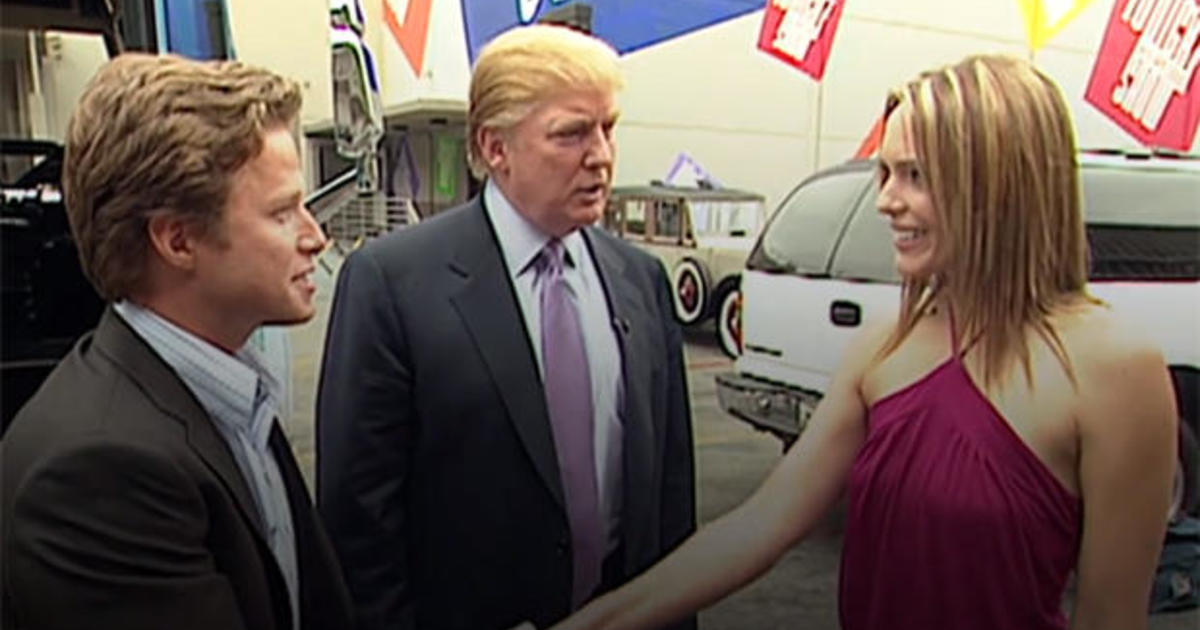
Left to right: Billy Bush, Donald Trump and Arianne Zucker

October 7, 2016: It is 32 days until the Presidential election, between the Democratic Party's nominee, Hillary Clinton, former First Lady, Senator from New York, and Secretary of State; and the Republican Party's nominee, Donald Trump, a man with no political experience, and whose experience as a billionaire businessman was built on lies -- for example, the lie that he was a billionaire, rather than a billion dollars in debt.

The Washington Post releases a videotape from a never-aired interview on the NBC show Access Hollywood that correspondent Billy Bush -- a cousin of then-President George W. Bush -- did of The Apprentice star Donald Trump in September 2005. On the tape, Trump and Bush are on a tour bus, outside the Hollywood studio where NBC taped the soap opera Days of Our Lives. Arianne Zucker, one of the show's stars, was waiting to greet them.

While waiting for the signal to get off the bus, Trump started talking about Bush's co-host on Access Hollywood, Nancy O'Dell:

I moved on her, and I failed. I'll admit it. I did try and fuck her. She was married. And I moved on her very heavily. In fact, I took her out furniture shopping. She wanted to get some furniture. I said, "I'll show you where they have some nice furniture." I took her out furniture -- I moved on her like a bitch. But I couldn't get there. And she was married. Then, all of a sudden, I see her, she's now got the big phony tits and everything. She's totally changed her look.


That was bad enough. But there's a difference between sounding like a sexist pig who cheats on his wife, which Trump was already known to be; and sounding like a violent criminal. As they got ready to get off the bus, Trump started talking about Zucker, and then confessed to committing sexual assault on multiple occasions:

I better use some Tic Tacs, just in case I start kissing her. You know, I'm automatically attracted to beautiful -- I just start kissing them. It's like a magnet. Just kiss. I don't even wait. And when you're a star, they let you do it. You can do anything. Grab 'em by the pussy. You can do anything.

Zucker was also married at the time, to her co-star, Kyle Lowder. They have since divorced.

NBC kept the tape hidden, because Trump's reality show, The Apprentice, meant big ratings, and thus big money, for them. At the time, the tape would have destroyed Trump, and ruined the show.

But by the time the tape was released, Trump was the Republican nominee for President, running against a woman. It should have destroyed him.

Representative Paul Ryan of Wisconsin, Speaker of the House of Representatives and the Republicans' 2012 nominee for Vice President, canceled a campaign appearance with him set for the next day, saying in a released statement, "I am sickened by what I heard today. Women are to be championed and revered, not objectified."

In a televised interview, Senator Mike Lee of Utah directed these words at Trump: "Step down. Allow someone else to carry the banner of these principles, rather than weighing down the very principles that will help us win in November." And Republican National Committee Chairman Rance Preibus told Trump, "You need to step aside, or you are going to suffer a historic landslide of a defeat."

Trump released this statement: "This was locker room banter, a private conversation that took place many years ago. Bill Clinton has said far worse to me on the golf course -- not even close. I apologize if anyone was offended."

Of course: The classic "if anyone was offended" apology, when he knew damn well that millions of people, including millions in his own Party, were offended. Equally "of course": "Whataboutism," bringing the opposition, and in particular his opponent's husband, the former President, into it.

Trump was lying, of course. There is no way in hell that Bill Clinton would say something worse than what Trump said. You gotta be an actual Ku Klux Klansman to say something worse than that.

Trump doubled down. In a televised interview that night, he said, "Bill Clinton has actually abused women. And Hillary has bullied, attacked, shamed and intimidated his victims."

Bill Clinton is the most-investigated President in American history, much more so than Trump was while in office. There is no proof that Clinton has ever abused a woman.

Trump did not give a damn what the truth was. He knew that there were millions of people in America who would believe every word he said, because he had given them permission to be bigoted in public again, and they were grateful to him for this, to the point of near-worship. He also knew that there were millions of people in America who wanted tax cuts for the rich, deregulation of business, an end to civil rights progress, and the overturning of Roe v. Wade; and that they wanted these things so much, that they would vote for the Devil himself if he were the Republican nominee for President.

The one thing Trump believed could stop him is if he stopped himself. He saw dropping out of the race as a sign of weakness. And the appearance of weakness was the one thing he hated more than nonwhite people. So he made himself look defiant, bullish, strong, standing up to his enemies.

The RNC could have removed him from the ticket. They gambled that they had a better chance of winning with him than without him.

Trump's wife Melania said, "The words my husband used are unacceptable and offensive to me. This does not represent the man that I know." She added that she hoped "people will accept his apology, as I have." Only she knew for sure whether she was telling the truth at that moment.

Things actually got worse for Trump that day: U.S. intelligence agencies publicly accused the Russian government of using computer hacking to interfere with the U.S. election process. Trump had previously invited them to do it: At a news conference the preceding July 27, he said, “Russia, if you’re listening, I hope you’re able to find the 30,000 emails that are missing, I think you will probably be rewarded mightily by our press.”

And, also on October 7, WikiLeaks -- run by convicted rapist Julian Assange, who had ties to Russia -- released thousands of private emails from inside the Clinton campaign. And that may have, literally, made all the difference in the world: It gave a little more life to Trump's claims of his opponent as "Crooked Hillary," even though there was nothing in the emails that suggested any criminal activity on her part. Clinton.

Two nights later, there was a Presidential debate, at Washington University in St. Louis, which had hosted such debates before. Trump not only invited, but held a press conference with, and seated in the front row of the debate, 3 women who had previously accused Bill Clinton of sexual misconduct: Paula Jones, Kathleen Willey and Juanita Broaddrick, all of whose accusations had been proven false. Interestingly, he did not invite Monica Lewinsky, whose story, which did not include any form of abuse on the President's part, was proven true. Or, if he did invite her, she turned him down.

The idea of putting those women in the front row was that Hillary would have seen them, been reminded of Bill's cheating on her, and been thrown off her game. She wasn't: As she did in the other 2 debates, she kicked his ass.

Nevertheless, Trump again reiterated his lies about Bill, and his lies about Hillary, and his lies about the Democrats, and his lies about himself. And the rubes bought it. As the historian Will Durant put it, "You can't fool all of the people all of the time, but you can fool enough of them to be elected the leader of a country."

As a result of the tape being released, the only person who had to step down from any role was Billy Bush, who did nothing wrong -- except, I suppose, remain silent about the tape for 11 years. By 2016, he was a correspondent on NBC's The Today Show, and he had to resign that post. In 2019, he was back on the air, on another show-business-themed show, Extra! -- which had been on NBC, but had since moved to, of course, Fox.

*

October 7, 2016 was a Friday. The NBA and NHL seasons were about to start. There were 4 college football games:

* Number 3 Clemson beat Boston College, 56-10 at Alumni Stadium in the Boston suburb of Chestnut Hill, Massachusetts.

* Number 19 Boise State beat New Mexico, 49-21 at University Stadium in Albuquerque, New Mexico.

* Old Dominion beat the University of Massachusetts, 36-16 at S.B. Ballard Stadium in Norfolk, Virginia.

* And the University of Tulsa beat Southern Methodist (SMU), 43-40 at Skelly Field in Tulsa, Oklahoma.

And Major League Baseball had begun its Division Series:

* Both American League series were in Game 2. The Toronto Blue Jays beat the Texas Rangers, 5-3 at Globe Life Park (now Choctaw Stadium) in the Dallas suburb of Arlington, Texas. The Jays completed the sweep 2 days later.

* And the Cleveland Indians beat the Boston Red Sox, 6-0 at Progressive Field in Cleveland. Corey Kluber (7 innings) and 2 relievers completed a 3-hit shutout. The Indians completed the sweep 3 days later, and beat the Jays for the Pennant.

* Both National League series were in Game 1. The Chicago Cubs beat the San Francisco Giants, 1-0 at Wrigley Field in Chicago. Jon Lester pitched 8 innings of 5-hit shutout ball. The Cubs went on to win the series, 3 games to 1.

* And the Los Angeles Dodgers beat the Washington Nationals, 4-3 at Nationals Park in Washington. Clayton Kershaw outpitched Max Scherzer. The series would go the full 5 games, before the Dodgers won it. The Cubs beat them for their 1st Pennant in 71 years, then beat the Indians for their 1st World Series win in 108 years.

Monday, September 26, 2022

September 26, 1994: President Clinton's Health Care Reform Effort Dies

September 26, 1994: What had been considered a great chance at achieving some form of health care reform dies. It would take another 16 years, and 2 Presidents, before another serious attempt was made.

In 1992, Governor Bill Clinton of Arkansas ran for President, and national health care was a big part of his platform. He made the point that there were only two industrialized nations without national health care: The United States of America, and South Africa. At the time, South Africa was not a country you wanted your own to be compared to.

Clinton won in a landslide, mainly due to the state of the American economy as a whole, but health care was a big part of it. On September 22, 1993, Clinton made a major speech to Congress, announcing a program that was aimed at achieving universal coverage through a national health care plan. This was one of the most prominent items on Clinton's legislative agenda, and resulted from a task force headed by First Lady Hillary Clinton.

The plan was hardly extreme, or radical. It was not as far to the left as the plan put forward by former President Theodore Roosevelt when he ran to regain the office in 1912; or as far to the left as the plan put forward by President Harry Truman as part of his Fair Deal program in 1949; or even as far to the left as the plan put forward by President Richard Nixon in 1974. (He may have thought it would convince Democrats to focus on that instead of Watergate. They didn't.)

But pretty much every conservative in America, in public office and in the media, called the Clinton plan "Communism," "Socialism," "socialized medicine," "extreme," and, in reflection of the fact that the First Lady was unpopular, "Hillarycare."

There had been a tradition where, since the Presidency had to be respected, and the President himself couldn't be attacked, another major figure in the office faced the vitriol. For Franklin Roosevelt, it was his wife and chief advisor, Eleanor. For Harry Truman, it was Secretary of State Dean Acheson. For Dwight D. Eisenhower, it was Chief of Staff Sherman Adams. For John F. Kennedy, it was his brother and Attorney General, Robert F. Kennedy.

The Vietnam War made it possible for Lyndon Johnson to become the 1st President to really face that kind of anger, and so every President since has faced it. Still, conservatives hated Hillary more than they hated Bill.

Senator Bob Dole of Kansas, the Minority Leader, practically already running for President in the 1996 election, led the chorus of Republicans saying, "America has the best health care system in the world" (ignoring the fact that America had the worst way of paying for it), and, "There isn't any crisis in health care" (which, for millions of Americans, was a bald-faced lie).

The American Medical Association, which led the opposition that stopped Truman's measure when it looked like a done deal, launched a multimedia assault. On September 8, 1993, the Health Insurance Association of America (HIAA) launched the "Harry and Louise" ads, a series showing a couple, played by Harry Johnson and Louise Clare Clark, worrying about what the Clinton plan would do to their lives.

Not to America on the whole, as they never mentioned the dreaded words "socialized medicine." To themselves, on a personal level, in a way that was intended to resonate with the average American family. It sure did: Support for Hillarycare crashed.

Clinton was willing to compromise a little, as long as whatever bill that hit his desk covered everybody. But on January 25, 1994, he delivered the State of the Union Address, and threw down the gauntlet. He held up a pen, and told Congress:

I want to make this very clear. I am open, as I have said repeatedly, to the best ideas of concerned Members of both Parties. I have no special brief for any specific approach, even in our own bill, except this: If you send me legislation that does not guarantee every American private health insurance that can never be taken away, you will force me to take this pen, veto the legislation, and we'll come right back here and start all over again.
But I don't think that's going to happen. I think we're ready to act now. I believe that you're ready to act now. And if you're ready to guarantee every American the same health care that you have, health care that can never be taken away, now -- not next year, or the year after -- now is the time to stand with the people who sent us here, now.
He thought he had the cards. Or maybe he didn't think so, and he thought he could bluff. He couldn't. On January 10, the Chairman of the Senate Finance Committee, which was key to drafting a bill, had gone on NBC's Sunday morning news program, Meet the Press. His name was Daniel Patrick "Pat" Moynihan.

He told the show's moderator, Tim Russert, who had once been an aide of his, "We don't have a health care crisis in this country. But we do have a welfare crisis." It was a shocking remark to a Democratic viewer not old enough to remember 1965. It was not shocking to those old enough to remember that year, when, as Assistant Secretary of Labor under President Lyndon B. Johnson, Moynihan had issued a report that essentially blamed black people for their own poverty.

Such a belief forced him out of the Administration, but also led the next President, Nixon, a Republican, to bring him back. Moynihan got elected to the Senate in 1976, and was beloved by his New York constituents for bring home helpful projects -- "pork-barrel spending," or just "pork," in Washington lingo -- but he never lifted a finger for health care reform in his long political career.

This time, when it was absolutely necessary, he refused to even hold a hearing on a reform bill, Clinton's or anyone else's. Not even the Republicans' own alternative to it, which was basically a compromise that kept private insurance, but allowed Medicaid to accept costs.

Other Committee Chairmen -- Ted Kennedy of Massachusetts on Senate Labor and Human Resources, Robert Byrd of West Virginia on Senate Appropriations, Jim Sasser of Tennessee on Senate Budget, Dan Rostenkowski of Illinois on House Ways and Means -- held hearings. Moynihan, on Senate Finance? Not one hearing. I have never forgiven him for that.

That same year, South Africa held its first all-races election. Nelson Mandela's party won. He was sworn in as President. The first bill he signed into law had nothing specific to do with easing race relations. It was to establish national health care.

That left only one industrialized nation without it. "God bless America."

Clinton had been juggling priorities, "spending his political capital" as best he could, basically running out of that capital to get the Crime Bill passed on September 13, 1994. On September 26, Senator George Mitchell of Maine, the Majority Leader, announced that no further hearings would be held, accepting the truth that they would be a waste of time. Clinton accepted this. It was a surrender.

The Democrats paid for their successful effort to pass a crime bill with gun control legislation, and for their failed effort to pass "socialized medicine": On November 8, the Republicans won the Congressional elections, winning majorities in both houses.

Times changed. In 2008, the same actors who played Harry and Louise appeared in a short film that aired at the Democratic National Convention, saying that it was time to reform health care. In 2010, the Affordable Care Act, a.k.a. Obamacare -- basically, the main Republican alternative to Hillarycare in 1993-94 -- passed, without one single Republican vote. Again, the Republicans called it "extreme" and "socialized medicine." This time, they lost, and the American people won.

As of September 26, 2022, Harry Johnson and Louise Clare Clark are still alive. (UPDATE: Harry died in 2024.)

*

September 26, 1994 was a Monday. Baseball's Strike of '94 was on, and the remainder of the season, including the postseason, had been canceled. It was too early for the NBA and NHL seasons to start. There was 1 score on this historic day: On ABC Monday Night Football, the Buffalo Bills beat the Denver Broncos, 27-20 at Rich Stadium in the Buffalo suburb of Orchard Park, New York. The stadium would later be renamed Ralph Wilson Stadium, New Era Field, Bills Stadium and Highmark Stadium.

Friday, June 3, 2022

June 3, 1992: Bill Clinton Appears On "The Arsenio Hall Show"

June 3, 1992: Governor Bill Clinton of Arkansas, having wrapped up the Democratic Party's nomination for President by winning the previous day's California Primary, appears on The Arsenio Hall Show, in syndication. He opens the show by sitting in with Arsenio's band, The Posse, and playing Elvis Presley's "Heartbreak Hotel" on his saxophone.
 
He and Arsenio discuss big issues, such as the current economic recession, the recent race riot in Los Angeles, and the disillusionment of young people, and what can be done about these issues. Late in the show, the Governor's wife, Hillary, joins him, and takes questions from Arsenio. There was one other guest that night, actress Teri Garr.
 
When the night began, Clinton was trailing the Republican incumbent, George H.W. Bush, in pretty much every poll. In some of them, he was actually 3rd, behind independent candidate H. Ross Perot, a wealthy but strange businessman, who hadn't even announced his candidacy yet. Clinton was in trouble.
 
The interview not only secured Arsenio's place in TV history, and showed that Jay Leno had a long way to go as the new host of NBC's The Tonight Show; it made Clinton not the candidate of "draft dodging," "sex scandals," and "I didn't inhale," or any other silly things the opposition tried to define him with, but the candidate that understood struggling people, especially the young – and now, they understood him, too.

As much as Hillary, or campaign manager James Carville, or Bush himself with his incompetent campaign, Arsenio Hall made Bill Clinton the 42nd President of the United States.

*

June 3, 1992 was a Wednesday. Football was out of season. The NHL had just wrapped up its season, 2 days earlier, when the Pittsburgh Penguins swept the Chicago Blackhawks in the Stanley Cup Finals. Game 1 of the NBA Finals was played that night, and the Chicago Bulls walloped the Portland Trail Blazers, 122-89 at Chicago Stadium. Michael Jordan scored 39 points, including 7 3-point shots. The Bulls would win the Finals in 6 games.

These Major League Baseball games were played that day:

* The New York Yankees lost to the Texas Rangers, 4-3 at Arlington Stadium in the Dallas suburb of Arlington, Texas. Danny Tartabull and Kevin Maas each got 2 hits, but it wasn't enough. In the bottom of the 13th inning, Yankee pitcher Shawn Hillegas tried to pick John Cangelosi off 3rd base, and made a bad throw, allowing him to score the winning run.

* The Philadelphia Phillies beat the Atlanta Braves, 4-1 at Atlanta-Fulton County Stadium. Curt Schilling outpitched John Smoltz, and Darren Daulton hit a home run. This was a preview of the National League Championship Series, and the Phillies pulled the upset there, too.

* The Pittsburgh Pirates beat the Los Angeles Dodgers, 6-5 at Three Rivers Stadium in Pittsburgh. Barry Bonds was 0-for-2, but did draw 2 walks -- neither of them intentional.

* The Cleveland Indians beat the Seattle Mariners, 8-3 at Cleveland Municipal Stadium. Ken Griffey Jr. went 1-for-5 with 2 RBIs.

* The Cincinnati Reds beat the St. Louis Cardinals, 8-7 at Riverfront Stadium in Cincinnati.

* The San Diego Padres beat the Chicago Cubs, 5-1 at Wrigley Field in Chicago. Tony Gwynn went 0-for-4, but he did draw a walk.

* The Detroit Tigers beat the Milwaukee Brewers, 10-4 at Milwaukee County Stadium. Robin Yount went 2-for-4 with a solo home run. Paul Molitor went 0-for-4.

* The Minnesota Twins beat the Toronto Blue Jays, 11-3 at the Metrodome in Minneapolis.

* The Kansas City Royals beat the Chicago White Sox, 3-1 at Royals Stadium in Kansas City. George Brett went 1-for-4 with an RBI.

* The Houston Astros beat the Montreal Expos, 5-3 at the Astrodome in Houston.

* The California Angels beat the Baltimore Orioles, 4-3 at Anaheim Stadium. (It was renamed Edison International Field in 1997, and Angel Stadium of Anaheim in 2004. With the bases loaded in the bottom of the 10th inning, Lee Stevens grounded up the middle, and no play was possible at any base. Cal Ripken went 1-for-4.

* The Oakland Athletics beat the Boston Red Sox, 7-6 at the Oakland Coliseum.

* And the New York Mets and the San Francisco Giants were not scheduled to play.

And Mario Götze, who scored the winning goal for Germany in the 2014 World Cup Final, was born on this day.

Friday, February 18, 2022

February 18, 1992: New Hampshire: Second Place Was the First Winner

February 18, 1992: The New Hampshire Primary is held. President George H.W. Bush wins on the Republican side. On the Democratic side, the winner is former Senator Paul Tsongas of neighboring Massachusetts.

But, in each case, you'd never know it from what the media said that night, and thereafter. For once, the old saying, "Nobody remembers who came in second place" was put aside.

George Herbert Walker Bush was running for a 2nd term as President. Things weren't going so well: He had a 91 percent approval rating in April 1991, in the wake of the Persian Gulf War. As a result, many of the would-be Democratic Party candidates to defeat chickened out of the chance to do so.

Governor Mario Cuomo of New York began the race as the front-runner, but did not enter. He had a convenient excuse: The deadline for filing for the New Hampshire Primary, the first in the nation, came on the same day as the deadline for getting the State budget passed. He had a plane on the ground in Albany, the State capital, ready to fly him to Concord, also a State capital, so he could properly file the papers to be a candidate. The plane never left the ground, nor did his campaign.

Former President Jimmy Carter was eligible to return to office, but he would have been too easy a target. So would his Vice President, and the Party's 1984 Presidential nominee, Walter Mondale. So would former Governor of Massachusetts, and the Party's 1988 Presidential nominee, Michael Dukakis. None of them ran.

Civil rights advocate Jesse Jackson and former Senator Gary Hart of Colorado, both candidates in 1984 and 1988, were damaged goods. Senator Ted Kennedy of Massachusetts, American politics' leading legacy figure, was even more so as calendar year 1991 wound down. Senator Lloyd Bentsen of Texas, the 1988 Vice Presidential nominee, and Senator Bill Bradley of New Jersey, a member of the Basketball Hall of Fame, refused to run.

Those who were running didn't seem all that interesting. Former Governor Jerry Brown of California appeared to have had his chance in 1976, and his brand of liberalism, which led to Tonight Show host Johnny Carson nicknaming him "Governor Moonbeam," had long since been passed by.

Senator Bob Kerrey of Nebraska, a former Governor who had lost a leg fighting in Vietnam, seemed to have everything going for him -- except money and a First Lady. (He was between marriages.) Governor Doug Wilder of Virginia was the 1st black man elected Governor of a Southern State, but he didn't have much campaign money, either. He ended up being the first candidate who got in to drop out.

Tsongas didn't have much experience, didn't have much hair, had a speech impediment, and his ethnicity and regional origin reminded too many people of Dukakis. Senator Tom Harkin of Iowa was a "prairie populist" in the mold of Hubert Humphrey, George McGovern and Mondale, and had the advantage of a stranglehold on the Iowa Caucus, which also meant that if he didn't do well in the New Hampshire Primary, it wouldn't be so bad. This would also free the other candidates from having to spend any money in Iowa -- but it made New Hampshire so much more important for them.

Governor Bill Clinton of Arkansas seemed to excite voters: He was a good-looking guy, a Rhodes scholar, and despite having served 12 years as Governor, he was still young: At 45, he stood to become the 1st person of the Baby Boom generation to become President.

But there were drawbacks. He had not served in the Vietnam War, and while his means of avoiding service was legal, it seemed shifty. He badly mishandled the question of whether he'd ever used marijuana. And he had a reputation as a womanizer: In the month before the Primary, a singer named Gennifer Flowers told the media that she had a 12-year affair with him.

On January 26, CBS followed its broadcast of Super Bowl XXVI with an installment of their "newsmagazine" show 60 Minutes, with Steve Krofft interviewing Clinton and his wife, Hillary, a lawyer who'd worked for women's and children's rights.

Bill admitted, "I have caused pain in my marriage," but did not elaborate. Hillary responded to the question of Bill's infidelities by angrily saying, "You know, I'm not some little woman, sitting here, standing by my man like Tammy Wynette!"

Some people liked that reference to country legend Wynette and her song "Stand By Your Man," but many didn't. The interview seemed to help him, but it hurt her image for the long term: It made her look like an angry woman who is unlikable and stands by a man she clearly doesn't love, to gain power by any means possible.

And Bush had problems, too: The economy had fallen into a recession in mid-1990, and the war didn't pull the country out of it. The economy got worse through 1991, and by the dawn of 1992, things had bottomed out. Many people were angry with Bush for the recession, angry with him for breaking his promise not to raise taxes, and angry with him for (from their perspective) not being conservative enough.

And so many Republicans got behind the insurgent campaign of Patrick J. Buchanan. He had been a speechwriter for Presidents Richard Nixon and Gerald Ford, and White House Communications Director for President Ronald Reagan. It should be noted that he was never investigated for any of the crimes committed in those Administrations.

In between serving in the Ford and Reagan Administrations, he had a nationally-syndicated newspaper column, pushing his archconservative views, which struck some people as racist and anti-Semitic. He had also been an original panelist on the NBC weekly political program The McLaughlin Group, hosted by John McLaughlin, who had also been one of Nixon's speechwriters. Since the end of the Reagan Administration, Buchanan had resumed his column, and had co-hosted the politically-themed talk show Crossfire on CNN, in each case being as far to the right as a political pundit could safely be at the time.

When the votes were tallied on February 18, Bush won on the Republican side, but not by as much as he wanted: He got 92,271 votes, for 53.2 percent. Buchanan got 65,106, for 37.5 percent. Scattered other candidates got 3,779, for 2.3 percent.

No one seriously thought that Buchanan was going to take the nomination from Bush. But it now appeared that Bush's Party was not united behind him, and that he was going to have to make some concessions to get the "Buchanan Brigades" to back him in November.
On the Democratic side, Tsongas got 55,663 votes; Clinton, 41,540; Kerrey, 18,504; Harkin, 17,063; Brown, 13,659. Although he'd never entered the race, Cuomo got 6,577 as a write-in candidate. Although he had already dropped out, Wilder got 103. Percentage-wise, that was: Tsongas, 33.2; Clinton, 24.8; Kerrey, 11.1; Harkin, 10.2; Brown, 8.1; Cuomo, 3.9; Wilder, 0.06.

Among the more interesting features was the remaining part of the Democratic vote. It included some Republican crossovers. Bush got 1,433, for 0.86 percent; Buchanan, 1,248, for 0.74 percent. Tom Laughlin, the actor and civil rights activist who was the brains, such as they were, behind the Billy Jack movies, got 3,251 votes, for 1.94 percent. Consumer advocate Ralph Nader got 3,054 votes, for 1.82 percent, foreshadowing the role he would play in the election of 2000.

Former Senator Eugene McCarthy, who nearly won this Primary in 1968, and got 1 percent of the national general-election vote in 1976, apparently hadn't realized he wasn't famous anymore, but was still famous enough in New Hampshire to get 211 people to vote for him in this Democratic Primary. Perennial candidate and wacko conspiracy theorist Lyndon LaRouche got 115 votes.

So not only had Buchanan come out of the New Hampshire Primary looking better than Bush, who actually won it; but Clinton came out of it looking stronger than Tsongas. He had taken some of the worst attacks that any Primary candidate had ever faced, and had finished 2nd behind a candidate with an enormous geographic advantage. He began calling himself "The Comeback Kid."

Both Bill Clinton and Pat Buchanan -- as far apart on the American political spectrum as two people could be at that point -- could both legitimately claim that finishing in second place had made them the "first winner."

*

February 18, 1992 was a Tuesday. Baseball and football were out of season. There were 5 games played in the NBA:

* The New York Knicks beat the Sacramento Kings, 110-97 at Madison Square Garden. Patrick Ewing scored 34 points.

* The Philadelphia 76ers beat the Dallas Mavericks, 94-90 at the Reunion Arena in Dallas.

* The Detroit Pistons beat the Orlando Magic, 117-95 at The Palace in the Detroit suburb of Auburn Hills, Michigan.

* The Milwaukee Bucks beat the Cleveland Cavaliers, 128-116 at the Bradley Center in Milwaukee.

* And the Portland Trail Blazers beat the Phoenix Suns, 129-116 at the Portland Memorial Coliseum. Kevin Johnson scored 40 points in defeat for the Suns.

There were 4 games in the NHL:

* The New Jersey Devils beat the Philadelphia Flyers, 4-3 at the Brendan Byrne Arena at the Meadowlands. Viacheslav Fetisov scored the winning goal with 3: 18 left in overtime.

* The Quebec Nordiques beat the Minnesota North Stars, 4-0 at the Colisée de Québec.

* The Quebec Nordiques beat the Toronto Maple Leafs, 7-1 at the Civic Arena in Pittsburgh.

* And the Washington Capitals beat the San Jose Sharks, 4-2 at the Cow Palace outside San Francisco in Daly City, California.

December 31, 1999 & January 1, 2000: The Millennium

December 31, 1999:  The Millennium arrives. The people of planet Earth survived. At a terrible cost. But we hadn't destroyed ourselves. ...