Showing posts with label los angeles memorial coliseum. Show all posts

Friday, December 23, 2022

December 23, 1951: The 1st Title for Los Angeles

"Crazy Legs" (left) and "Deacon Dan"

December 23, 1951: The City of Los Angeles, and all of the State of California, gets its 1st World Championship in a major league sport.

It wasn't won by the Dodgers: They were 6 years away. It wasn't the Lakers, either: They were 9 years away.

In 1945, the Cleveland Rams won the NFL Championship. But they barely drew enough fans to fill the Cleveland Indians' 22,000-seat League Park. They got to host the NFL Championship Game, and they put it in the 86,000-seat Cleveland Municipal Stadium. But it was the coldest Championship Game in American football history, 8 degrees above zero Fahrenheit -- the 1967 "Ice Bowl" was an NFL Championship Game, but not a world championship -- and only 32,178 fans paid their way into the big stadium on the shore of Lake Erie.

Dan Reeves -- no relation to the later football coach of the same name -- lost $64,000 owning the Rams in the 1945 season. And, with the war over, a new league was being formed, the All-America Football Conference. And they would have a Cleveland team, soon to be named the Browns. Reeves knew that it would be folly to stay in Cleveland.

So he went to the previously untapped market of Los Angeles, and moved the Rams there. It worked: With quarterback Bob Waterfield winning games, the minds of male fans, and the hearts of female fans -- he was married to actress Jane Russell -- and an offense that included the 1st black players in the NFL in 12 years, Kenny Washington and Woody Strode, the Rams averaged 42,475 fans per game at the Los Angeles Memorial Coliseum.

It took the Rams until 1949 to reach the Championship Game again. In a rare Southern California rainstorm, they lost to the Philadelphia Eagles at the Coliseum. They got back to the title game in 1950, but had to go back where they came from, playing their replacements, the Cleveland Browns, at a once-again-frigid Municipal Stadium, and lost on a last-minute field goal by Lou Groza.

Washington bowed out due to injury, and Strode was making more money as an actor. But, under head coach Joe Stydahar, one of the Chicago Bears' 1940s "Monsters of the Midway," the Rams got better. They got a 2nd great quarterback, Norm Van Brocklin. Their running backs included 2 black stars, Paul "Tank" Younger and "Deacon" Dan Towler, a Heisman Trophy winner in Glenn Davis, and Verda Thomas Smith, known as "V.T." or "Vitamin" Smith. And in Tom Fears and Elroy "Crazy Legs" Hirsch, Waterfield and Van Brocklin had the 2 best receivers in the NFL.

They went 8-4. They scored 52 and 48 points in their 2 games against the New York Yanks (that's correct: Not "Yankees," and the team folded after the season), hung 45 on the Chicago Cardinals, 42 on the Bears, and another 42 on the Green Bay Packers. But a not-so-good defense meant that they lost regular-season games to the Browns, the Washington Redskins, the Detroit Lions, and the team that was now firmly established as their regional arch-rivals, the San Francisco 49ers.

But it was enough to win the NFL Western Division, by half a game over the 49ers and the Lions, both of whom went 7-4-1; and a full game over the Bears, who went 7-5. And, since it was an odd-numbered year, it was the Western Division Champion's turn to host the NFL Championship Game. It was their 3rd straight season making the Game, and, this time, the weather would not be a problem: It was a beautiful Sunday afternoon at the Coliseum, and 59,475 fans came out, the most that had yet seen an NFL Championship Game.

It should have been more: While it was the 1st one broadcast coast-to-coast, on the DuMont Network, it was blacked out in Southern California: If you lived there at the time, and you didn't buy a ticket, you had to listen on the radio.

It was a rematch with the Browns. Paul Brown's even more powerful offense, led by quarterback Otto Graham, had lost their season opener to the 49ers, but had won the next 11 straight, and were favored going in, even on the road.

But Groza missed a field goal on their opening drive, and Waterfield led the Rams down the field, resulting in a 1-yard touchdown run by Dick Hoerner early in the 2nd quarter. Groza kicked a 52-yard field goal, at the time the longest in NFL Championship Game history, and Waterfield threw 2 interceptions. Though leading, 7-3, Stydahar, replaced Waterfield with Van Brocklin. Before halftime, Graham threw a 17-yard touchdown pass to Dub Jones, and the Browns took a 10-7 lead.

In the 3rd quarter, Larry Brink hit Graham and forced a fumble. Andy Robustelli, later a Hall of Fame defensive end for the New York Giants, picked it up on the Browns' 24, and returned it to their 2 before being stopped. Towler ran the ball in, and it was 14-10 Los Angeles.

It was Graham's turn to throw 2 interceptions, and Waterfield kicked a field goal to make it 17-10. But Graham recovered, and led a 70-yard drive ending with Ken Carpenter's 5-yard touchdown run, tying the game at 17-17.

But the Rams struck right back, with Van Brocklin finding Fears, who hauled a pass in for a 73-yard touchdown. The Rams won, 24-17, and had their 1st title in Los Angeles. While the Los Angeles Angels and the Hollywood Stars had won Pennants, that was in the Pacific Coast League. Despite the PCL's pretensions, it was not major league. By this point, there was no longer any question that the NFL was, and the Rams were Champions.

The Browns returned to the NFL Championship Game in 1952, losing to the Lions; 1953, losing to the Lions; 1954, beating the Lions; and 1955, beating the Rams. Despite having some good teams over the years, the Rams didn't reach another NFL championship game, under any name, until the 1979 season, when they lost Super Bowl XIV to the Pittsburgh Steelers.

They moved to St. Louis for the 1995 season, and selfish choice by team ownership, and won Super Bowl XXXIV, beating the Tennessee Titans, in 2000; and lost Super Bowl XXXVI to the New England Patriots in 2002. Once the novelty of "The Greatest Show On Turf" wore off, and the team began to be broken up, they stopped drawing fans in St. Louis. A new owner moved them back to Los Angeles for the 2016 season.

UPDATE: The Rams reached Super Bowl LIII, losing to the Patriots; and Super Bowl LVI, beating the Cincinnati Bengals. That game the Rams 4 NFL Championships: 2 in Los Angeles, 1 in Cleveland, and 1 in St. Louis.

The Rams do not have a team Hall of Fame, but they have several members of the Pro Football Hall of Fame:

* From their 1951 NFL Champions: Founding owner Dan Reeves (no relation to the later Denver and Atlanta coach), head coach Joe Stydahar (elected mainly on the basis of his playing with the Chicago Bears), quarterback-defensive back-kicker Bob Waterfield, quarterback Norm Van Brocklin, receiver Elroy "Crazy Legs" Hirsch, and end Tom Fears.

* From later in the 1950s and in the 1960s: Reeves, head coach George Allen, running back Ollie Matson, defensive end David "Deacon" Jones, defensive tackle Merlin Olsen, and linebacker Les Richter. Jones, Olsen, defensive tackle Roosevelt "Rosey" Grier and defensive end Lamar Lundy formed the line known as "The Fearsome Foursome."

* From their 1979 NFC Championship: Guard Tom Mack, defensive end Jack Youngblood, and offensive tackle Jackie Slater.

* From their appearance in the 1985 NFC Championship Game: Slater, running back Eric Dickerson, and linebacker Kevin Greene. Slater and Greene would also play for the Rams in the 1989 NFC Championship Game.

* So far, no players from their Super Bowl LIII defeat have been honored -- and any players from their Super Bowl LVI win wouldn't be eligible yet, anyway.

The Rams have retired 8 uniform numbers: Waterfield's 7, Dickerson's 29, Olsen's 74, Jones' 75, Slater's 78, Youngblood's 85; and 2 players from their St. Louis era, the 28 of running back Marshall Faulk and the 80 of receiver Isaac Bruce.

*

December 23, 1951 was a Sunday. Baseball was out of season. There were 3 games played in the NBA:

* The New York Knicks beat the Syracuse Nationals, 75-72 at the Onondaga War Memorial (now the Upstate Medical University Arena) in Syracuse, New York.

* The Boston Celtics beat the Indianapolis Olympians, 91-88 in overtime at the Boston Garden.

* And the Fort Wayne Pistons beat the Minneapolis Lakers, 81-79 in the gymnasium at North Side High School in Fort Wayne, Indiana. Clearly, calling the NBA "major league" at this point was still a little premature.

Not so for the NHL, and its entire "Original Six" was in action:

* The New York Rangers beat the Chicago Black Hawks, 3-2 at the old Madison Square Garden.

* The Boston Bruins beat the Toronto Maple Leafs, 4-2 at the Boston Garden. Yes, it hosted the NBA and the NHL on the same day.

* And the Detroit Red Wings beat the Montreal Canadiens, 4-0 at the Olympia Stadium in Detroit.

Friday, November 18, 2022

November 18, 1967: USC vs. UCLA: "The Game of the Century"

O.J. Simpson's 4th quarter touchdown

November 18, 1967: One of college football's occasional "Games of the Century" is played. And the schools involved were based just 10 miles apart, and even shared a stadium at the time.

The University of California at Los Angeles (UCLA) was founded in 1919 as the southern branch of the University of California, with its main branch in Berkeley, outside San Francisco. It became a separate school in 1927.

Located 12 miles west of downtown Los Angeles, in a neighborhood called Westwood, it is a State-sponsored school, and by 1967, it had already produced such legendary athletes as Jackie Robinson, Bob Waterfield and Rafer Johnson. At the time, it had a quarterback who was a favorite for the Heisman Trophy, Gary Beban; and the best player in college basketball, Lew Alcindor, who would later change his name to Kareem Abdul-Jabbar.

Since 1967, it's produced football quarterback Troy Aikman; basketball legends Bill Walton, Ann Meyers, Reggie Miller and Russell Westbrook; baseball players Chase Utley and Gerrit Cole; tennis legends Arthur Ashe and Jimmy Connors; track icons Jackie Joyner-Kersee and her sister-in-law Florence Griffith Joyner; and soccer stars Cobi Jones and Brad Friedel.

The University of Southern California (USC) was founded in 1880, and is a private school. Its campus, 4 miles south of City Hall, effectively marks the border between downtown L.A. and the South Central ghetto.

Its football program then had the other favorite for the 1967 Heisman Trophy, running back Orenthal James "O.J. Simpson." It had already produced the 1965 Heisman winner, Mike Garrett; and also Red Badgro, Frank Gifford and Willie Wood. In the late 1920s, they had a player named Marion Morrison, but his misbehavior got him kicked off the team. He stayed in L.A., became an actor, and changed his name to John Wayne.

Since 1967, USC has produced Heisman winners Charles White, Marcus Allen, Carson Palmer, Matt Leinart and Reggie Bush, and other football stars like Ron Mix, Sam Cunningham, Lynn Swann, Anthony Munoz, Ronnie Lott, Willie McGinest, Junior Seau, Troy Polamalu, Bruce Matthews, Bruce's brother Clay Matthews Jr., and Clay's son Clay Matthews III.

Their highly successful baseball program had already produced Tom Seaver, and has since gone on to produce Bobby Valentine, Dave Kingman, Fred Lynn, Mark McGwire, Randy Johnson, Mark Prior, Barry Zito, and Bret and Aaron Boone.

In basketball, they had already produced Bill Sharman, and went on to produce Paul Westphal, Cheryl Miller, Lisa Leslie and Cynthia Cooper. They produced Olympic swimming Gold Medalist and actor Buster Crabbe, diving Gold Medalist Dr. Sammy Lee, swimming Gold Medalist Murray Rose, shot put Gold Medalist Parry O'Brien; and have since produced pole vault Gold Medalist Bob Seagren and swimming Gold Medalist John Naber.

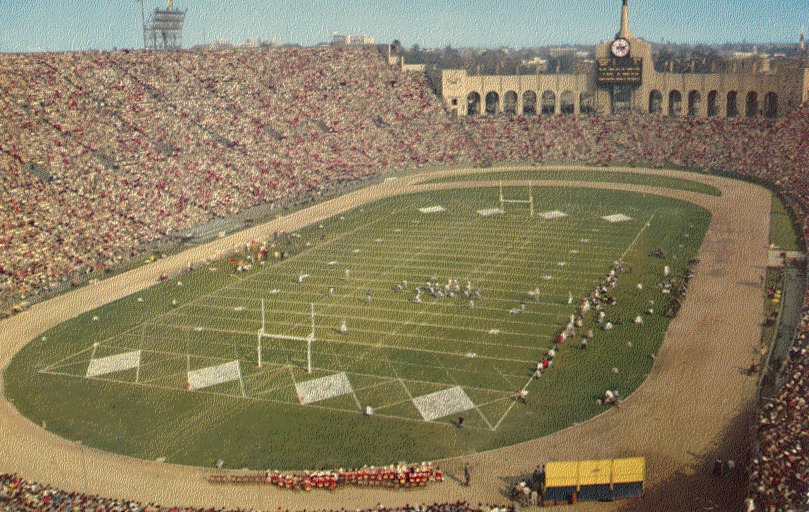
The Los Angeles Memorial Coliseum opened in 1923, and USC had played football there ever since. UCLA began playing there in 1933. The Coliseum had hosted the Olympic Games in 1932, the NFL's Los Angeles Rams since 1946, and, 10 months earlier, the 1st Super Bowl. But, to Los Angelenos, it never hosted a bigger game than this one.

UCLA started the season by beating then-Number 9 Tennessee at home. They won away to Pittsburgh, Washington State and Penn State. They beat Cal at home, and Stanford away. Then came a blemish on their record: A 16-16 draw against Oregon State. 

USC started with home wins over Washington State and then-Number 5 Texas, beating Michigan State away, rising to Number 1. They continued, beating Stanford at home, beating then-Number 5 Notre Dame away, Washington away, Oregon at home, and Cal away.

But, 7 days after forging the tie with UCLA, Oregon State struck again, beating USC in Corvallis. That same day, UCLA rebounded with a 48-0 home win over Washington.

They rebounded with a 48-0 home win over Washington, and went into the the battle with USC ranked Number 1. USC was Number 4. A crowd of 90,772 filed into the Coliseum to watch UCLA in powder blue and USC in cardinal red face off in front of a national audience on ABC. The winner had the inside track to the Championship of the Athletic Association of Western Universities (the league now known as the Pacific-Twelve), the AAWU's berth in the Rose Bowl, and a shot at the National Championship.

It was billed as "The Game of the Century," despite that label having been used just a year earlier for Notre Dame vs. Michigan State. USC was favored by 3 points. Admission: $6.00 -- about $50 in today's money.

Each team scored a touchdown in the 1st quarter: First UCLA on a 12-yard run by Greg Jones, then USC when Pat Cashman intercepted a pass that Beban had intended for Jones, returning it 55 yards for a touchdown.

In the 2nd quarter, Zenon Andrusyshyn of UCLA missed a field goal attempt, and Simpson had a 12-yard touchdown run, dragging 2 UCLA tacklers into the end zone. At halftime, the Trojans led, 14-7.

Beban was not about to let down his effort in the game, and in the Heisman debate with O.J. In the 3rd quarter, he threw a 53-yard touchdown pass to George Farmer, tying the game. USC coach John McKay noticed that Andrusyshyn tended to make low kicks, so he sent 6-foot-8 linebacker Bill Hayhoe into the middle of the line, and he blocked 2 field goal attempts. The game remained 14-14 at the end of 3 quarters.

Early in the 4th quarter, Beban, battling a rib injury, threw a touchdown pass to Dave Nuttall. But, just as he had blocked those field goal attempts, now, Hayhoe blocked Andrusyshyn's extra point attempt. It was 20-14 UCLA, but that block would matter.
Gary Beban

With 10:38 left to play, and 3rd and 7 from the USC 36, USC quarterback Toby Page called an audible known as "23 blast." Simpson remembered thinking it was a terrible call. It wasn't: A key block from Dan Scott enabled O.J. to cut back to the middle, and run 64 yards for a touchdown. Rikki Aldridge kicked the extra point, and it was 21-20 USC.

Beban's injuries became too much for him, and he was unable to get the Bruins back across midfield. The 21-20 score held to the end, and USC had won. Any 1 of the 3 kicks that Hayhoe blocked would have made a difference, either giving UCLA a 23-21 win, or forging a 21-21 tie -- or forcing USC to decide, trailing 21-20 at the end, to decide whether to go for a 21-21 tie or a two-point conversion and a 22-21 win.

Chris Schenkel and former Oklahoma coach Bud Wilkinson called the game for ABC. Keith Jackson, then in only his 2nd season with ABC, narrated the taped highlights, and called it the greatest game he ever saw. So did Giles Pellerin, a USC graduate who saw every game the school played from 1925 until 1998, when he died while watching the USC-UCLA game, 797 games in a row.

Beban was unable to play the next week, and UCLA lost at home to Syracuse. They were not invited to a bowl game. Nevertheless, in one of the closest votes in the award's history, Beban was awarded the Heisman Trophy. UCLA ended the season 7-2-1, ranked Number 10.

USC had no more regular-season games. They went to the Rose Bowl, to face Indiana, then ranked Number 4, and won, 14-3, clinching the National Championship.

Simpson was a junior, so he returned for 1968, and seemed headed for another National Championship. They beat ranked opponents in Minnesota (away), Miami, Stanford (away), Cal and Oregon State. And, again, they beat UCLA, 28-16. And O.J. easily won the Heisman.

However, traditionally, when USC plays Notre Dame, it's in the middle of the season when it's the Fighting Irish's turn to host, to avoid the November cold of northern Indiana; and at the end of the season when it's the Trojans' turn, so it's in L.A. and warm. Notre Dame was ranked Number 9 at the time, and escaped with a 21-21 tie. It dropped them to Number 2, and sent them to the Rose Bowl to face Number 1 Ohio State. The Buckeyes' ended the Trojans' 12-game winning streak, 27-16, and won the National Championship.

O.J. went on to have a sensational pro career, at least on an individual basis, rushing for 11,236 yards, 2nd all-time at the time of his retirement. He set records, since broken, for rushing yards in a season (2,003 in 1973) and in a game (273 in a 1976 contest). He became one of the most popular athletes of his generation, and also gained praise as an actor. Team-wise, he was less successful: His Buffalo Bills played in only 1 Playoff game, smacking into the Pittsburgh Steel Curtain, although O.J. did score a touchdown in the game.

Beban -- like Simpson, a native of San Francisco -- had considerably worse luck than that. He was drafted by the Los Angeles Rams, so he didn't have to move, even playing in the Coliseum. But they already had All-Pro Roman Gabriel as their quarterback. And the Rams had already messed this situation up recently: They drafted the 1962 Heisman winner, Terry Baker, and he couldn't win the starting job from Gabriel, either.

So, before Beban signed a contract, the Rams traded his rights to the Washington Redskins, who already had future Hall-of-Famer Sonny Jurgensen. Sonny was 34, so trading for his replacement was a good idea. And the 'Skins had one of the greatest quarterbacks ever as their head coach, Otto Graham. But Sonny remained the starter, and Beban was released on the eve of the 1970 season. He was cut by the Denver Broncos before the 1971 season, and never played again.

Like Simpson, he was elected to the College Football Hall of Fame. But rather than being elected to the Pro Football Hall of Fame, his pro career consisted of 5 appearances, 1 incomplete pass, 5 rushes for 18 yards, and 1 trick play where he caught a pass for 12 yards.

Beban became a broadcaster for UCLA football, and a successful real estate executive. Chances are, even he would have been unable to sell the house where Nicole Brown Simpson and Ronald Goldman were murdered on June 12, 1994; or the house where O.J. Simpson was arrested for those crimes 5 days later. Perhaps, even before that, Gary Beban would not have been willing to trade lives with O.J. Simpson; certainly, he would not have wanted to do so afterward.

*

November 18, 1967 was a Saturday. These other notable college football games were played:

* Number 2 Tennessee faced Mississippi, a.k.a. "Ole Miss," on somewhat neutral ground at the Liberty Bowl in Memphis. Tennessee won, 20-7, wrapping up the Southeastern Conference title.

* Number 3 Purdue beat Michigan State, 21-7 at Ross-Ade Stadium in West Lafayette, Indiana. The week before, they had beaten Minnesota. But the following week, they lost to arch-rival Indiana in Bloomington, forcing a 3-way tie for the Big Ten title.

Purdue couldn't go to the Rose Bowl, anyway: The Big Ten then had a rule that none of its teams could go to the Rose Bowl in back-to-back years, and despite the fact that Minnesota had beaten Indiana, seemingly breaking that tie, Minnesota had gone more recently, and so the league presidents voted to send Indiana instead, where they were beaten by USC.

* Number 6 Wyoming beat Texas-El Paso, 21-19 at the Sun Bowl in El Paso, Texas. Wyoming thus clinched the Western Athletic Conference Championship, but lost to Louisiana State in the Sugar Bowl.

* Number 7 Oklahoma beat Kansas, 14-10 at Memorial Stadium in Norman, Oklahoma. Oklahoma won the Big Eight title, and then beat Tennessee in the Orange Bowl. But the winner of that game would only have won the National Championship if USC had lost the Rose Bowl, which they didn't.

* Number 9 Notre Dame beat Georgia Tech, 36-3 at Grant Field in Atlanta. Notre Dame went on to beat the University of Miami in the Orange Bowl.

* Texas A&M, not ranked at the time, beat Rice, 18-3 at Rice Stadium in Houston. A&M beat arch-rival Texas on Thanksgiving to clinch the Southwest Conference title, and beat Alabama in the Cotton Bowl.

* Penn State, not ranked at the time, beat Ohio University (definitely not Ohio State), 35-14 at Beaver Stadium in State College, Pennsylvania. They went to the Gator Bowl, finishing in a 17-17 tie with Florida State.

* Yale beat Princeton, 29-7 at Palmer Stadium in Princeton, New Jersey, to wrap up the Ivy League title. They still had to play Harvard, and don't ever tell anybody from either school that "The Game" is meaningless. Yale won it, 24-20 at the Yale Bowl in New Haven, Connecticut.

* New York City's only real remaining college football team, Columbia, lost to Penn, 26-6 at Franklin Field in Philadelphia.

* And New Jersey's biggest team, Rutgers, lost to Holy Cross, 21-10 at Rutgers Stadium in Piscataway.

* My high school, East Brunswick in Middlesex County, New Jersey, beat Sayreville, 41-0 away.

The brand-new American Basketball Association had no games scheduled for the day. Probably for the best, giving that this was, along with the following Saturday and New Year's Day, 1 of the 3 biggest dates on the college football calendar, thus interfering with attendance and TV ratings. But 5 NBA games were scheduled:

* The New York Knicks lost to the Baltimore Bullets, 101-93 at the old Madison Square Garden. They would move into the new Garden 3 months later.

* The Boston Celtics beat the Philadelphia 76ers, 116-111 at The Spectrum in Philadelphia. For the Sixers, Billy Cunningham scored 31 points, Hal Greer 22, and Wilt Chamberlain only 8, but he also had 33 rebounds and 6 assists. For the Celtics, Sam Jones and Bailey Howell both scored 33.

* The Chicago Bulls beat the Detroit Pistons, 132-130 at the Chicago Stadium.

* The Los Angeles Lakers beat the St. Louis Hawks, 127-107 at the Kiel Auditorium in St. Louis.

* And the San Francisco Warriors beat the San Diego Rockets, 142-124 at the San Diego Sports Arena. (The building is now named the Pechanga Arena. The Rockets, an expansion team that year, moved to Houston in 1971.)

There were 5 games in the newly-expanded NHL:

* The New York Rangers lost to the Boston Bruins, 3-1 at the Boston Garden.

* The Toronto Maple Leafs and the Chicago Black Hawks played to a tie, 2-2 at Maple Leaf Gardens in Toronto.

* The Philadelphia Flyers and the Minnesota North Stars played to a tie, 2-2 at the Metropolitan Sports Center in the Minneapolis suburb of Bloomington, Minnesota.

* The Pittsburgh Penguins beat the St. Louis Blues, 5-3 at the St. Louis Arena.

* The Oakland Seals beat the Montreal Canadiens, 2-1 at the Oakland Coliseum Arena.

* And the Detroit Red Wings and the Los Angeles Kings were not scheduled.

Also, Arsenal drew with Leicester City, 2-2 at Filbert Street in Leicester. 

Friday, October 28, 2022

October 28, 2018: Los Angeles Hosts All 5 Sports In 1 Day

October 28, 2018: Los Angeles becomes the 1st metropolitan area to host games in all 5 of North American sports' major leagues on the same day.
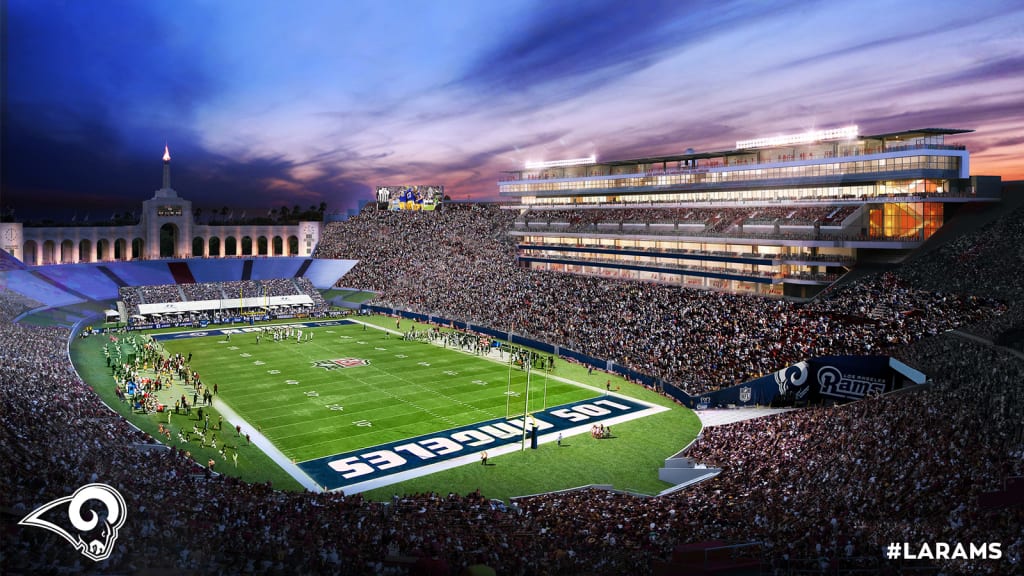
In the National Football League: The Los Angeles Rams beat the Green Bay Packers, 29-27 at the Los Angeles Memorial Coliseum, to move to 8-0. The following week, the Rams fell from the ranks of the undefeated, losing to the New Orleans Saints. The other team in the area, the Los Angeles Chargers, had a bye week, and did not play.
In the National Basketball Association: At the Staples Center (renamed the Crypto.com Arena a year later), the Los Angeles Clippers beat the Washington Wizards, 136-104. The city's main NBA team, the Los Angeles Lakers, were not scheduled.
In the National Hockey League: Later in the day, also at the Staples Center, the Los Angeles Kings beat the New York Rangers, 4-3. The area's other NHL team, the Anaheim Ducks, were also at home, at the Honda Center, but lost to the San Jose Sharks, 4-3. Timo Meier scored the winning goal with 2:48 left in overtime.
In Major League Soccer, the Los Angeles Galaxy lost to the Houston Dynamo 3-2 at Dignity Health Sports Park in Carson. The city's other MLS team, Los Angeles FC, were on the road, losing 2-1 to Sporting Kansas City.
Most importantly, in Major League Baseball: Game 5 of the World Series was held at Dodger Stadium. Andrew Bentinendi hit a 2-run home run for the Boston Red Sox in the top of the 1st inning, while David Freese hit a solo homer for the Dodgers in the bottom of the inning. That 2-1 score held until the 7th, when J.D. Martinez homered to make it 4-1, extending Clayton Kershaw's poor postseason record. Steve Pearce hit a home run in the 8th, cementing his status as the Series' Most Valuable Player.
The Red Sox won, 5-1, taking the Series in 5 games, their 4th World Championship since 2004 -- and their 4th since 1918. There was no steroid-using David Ortiz this time, but they found a new way to cheat: Apple Watches. A little more than 3 months later, Boston would beat Los Angeles for another World Championship, as the New England Patriots beat the Rams in Super Bowl LIII.
UPDATE: The Red Sox have a team Hall of Fame. From the 2018 World Champions, they have inducted 2nd baseman Dustin Pedroia, pitcher Jon Lester; executive Elaine Weddington Steward, guest relations director Al Green, broadcasters Jerry Remy and Joe Castiglione, and longtime vendor Arthur D'Angelo.
*

October 28, 2018 was a Sunday. This was the only baseball game played that day. Aside from the Rams, these games were played in the NFL:

* The New York Giants lost to the Washington Redskins, 20-13 at MetLife Stadium in the Meadowlands.

* The New York Jets lost to the Chicago Bears, 24-10 at the new Soldier Field in Chicago.

* The Philadelphia Eagles beat the Jacksonville Jaguars, 24-18 at the new Wembley Stadium in London. Officially, it was a home game for the Jaguars, who willingly gave up a home game because they weren't drawing well at home.

* The Carolina Panthers beat the Baltimore Ravens, 36-21 at Bank of America Stadium in Charlotte.

* The Pittsburgh Steelers beat their arch-rivals, the Cleveland Browns, 33-18 at Heinz Field (now Acrisure Stadium) in Pittsburgh.

* The Cincinnati Bengals beat the Tampa Bay Buccaneers, 37-34 at Paul Brown Stadium (now Paycor Stadium) in Cincinnati.

* The Seattle Seahawks beat the Detroit Lions, 28-14 at Ford Field in Detroit.

* The New Orleans Saints beat the Minnesota Vikings, 30-23 at U.S. Bank Stadium in Minneapolis.

* The Kansas City Chiefs beat the Denver Broncos, 30-23 at Arrowhead Stadium in Kansas City. It would almost make sense geographically for these teams to be each other's arch-rivals, but both teams have a bigger rivalry with the Raiders, whatever city they're in.

* The Arizona Cardinals beat the San Francisco 49ers, 18-15 at State Farm Stadium in the Phoenix suburb of Glendale, California.

* The Indianapolis Colts beat the Oakland Raiders, 42-28 at the Oakland Coliseum.

* In the week's Thursday night game, the Houston Texans beat the Miami Dolphins, 42-23 at NRG Stadium (as Reliant Stadium was then known) in Houston.

* The following night, on Monday Night Foot ball, the New England Patriots beat the Buffalo Bills, 25-6 at New Era Field (formerly Rich Stadium and Ralph Wilson Stadium)in the Buffalo suburb of Orchard Park, New York.

* And the Atlanta Falcons, the Dallas Cowboys and the Tennessee Titans had a bye week.

In addition to the Clippers' game, there were 3 games played in the NBA:

* The Brooklyn Nets lost to the Golden State Warriors, 120-114 at the Barclays Center. Steph Curry scored 35 points.

* The Oklahoma City Thunder beat the Phoenix Suns, 117-110 at the Chesapeake Energy Arena (now the Paycom Center) in Oklahoma City.

* And the Utah Jazz beat the Dallas Mavericks, 113-104 at the American Airlines Center in Dallas.

In addition to the Kings' and Ducks' games, there were 4 games played in the NHL:

* The New York Islanders beat the Carolina Hurricanes, 2-1 at the PNC Arena (now the Lenovo Center) in Raleigh.

* The Detroit Red Wings beat the Dallas Stars, 4-2 at the Little Caesars Arena in Detroit.

* The Edmonton Oilers beat the Chicago Blackhawks, 2-1 at the United Center in Chicago. Connor McDavid scored the winning goal, 53 seconds into overtime.

* And the Vegas Golden Knights beat the Ottawa Senators, 4-3 at the T-Mobile Arena in the Las Vegas suburb of Paradise, Nevada. Jonathan Marchessault scored the winning goal, with 2:36 in overtime.

In addition to the 2 L.A.-area teams, there were 9 games in Major League Soccer:

* The New York Red Bulls beat Orlando City, 1-0 at Red Bull Arena in Harrison, New Jersey.

* New York City FC beat the Philadelphia Union, 3-1 at Yankee Stadium.

* The New England Revolution beat the Montreal Impact, 1-0 at Gillette Stadium in the Boston suburb of Foxborough, Massachusetts.

* Toronto FC beat Atlanta United, 4-1 at BMO Field in Toronto.

* The Columbus Crew beat Minnesota United, 3-2 at Columbus Crew Stadium in Columbus, Ohio.

* The Chicago Fire and D.C. United played to a draw, 0-0 at SeatGeek Stadium in the Chicago suburb of Bridgeview, Illinois.

* The Colorado Rapids beat FC Dallas, 2-1 at Dick's Sporting Goods Park in the Denver suburb of Commerce City, Colorado.

* The Seattle Sounders beat the San Jose Sharks, 2-1 at CenturyLink Field (now Lumen Field) in Seattle.

* And the Vancouver Whitecaps beat the Portland Timbers, 2-1 at BC Place in Vancouver.

And in English soccer, North London team Arsenal went to South London, but could only manage a 2-2 draw against Crystal Palace at Selhurst Park.

Wednesday, October 5, 2022

October 5, 1959: "Mack the Knife," New York's Biggest-Selling Record

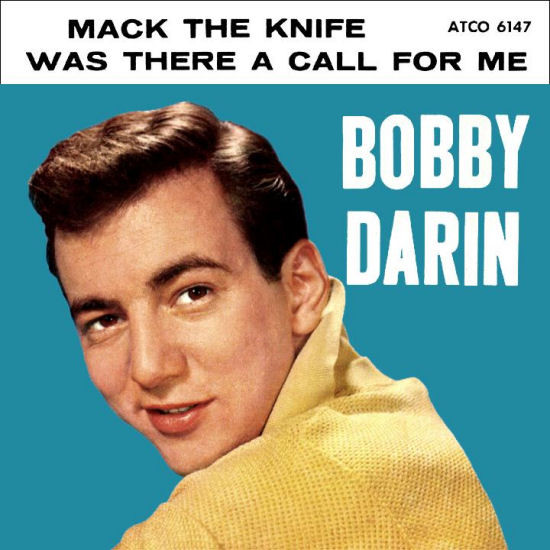
October 5, 1959: Bobby Darin's recording of "Mack the Knife" hits Number 1 on Billboard magazine's Hot 100 chart, the defining "pop music" chart in America. Released by Atco Records, Number 6147, it stayed at Number 1 for 9 weeks, and, according to "oldies" station WCBS-FM, 101.1, eventually became the biggest-selling record in New York City's history.

That the all-time biggest selling platter in the Big Apple was recorded by a New York native was not surprising. That it was not a rock and roll record is a little surprising. That it was written by 2 German guys in 1928 is a bit of a shock.

In 1958, Bobby had his 1st big hit, with "Splish Splash." He followed it with rockers "Queen of the Hop" and "Dream Lover." He was young, handsome and multi-talented, seemingly perfect for the rock and roll generation. But his heart was in the older music, in the style of Frank Sinatra. He used rock as a springboard for what he really wanted to do.

And one of those things was to sing show tunes. On December 19, 1958, at Fulton Studios in New York, he recorded "Mack the Knife," from The Threepenny Opera by Kurt Weill and Bertolt Brecht.

In the original German, the title is "Die Moritat von Mackie Messer.A "moritat" is a medieval version of the "murder ballad" performed by strolling minstrels. In The Threepenny Opera, the Moritat singer with his street organ introduces and closes the drama with the tale of the deadly Mackie Messer, or Mack the Knife, a character based on the dashing highwayman Macheath in Jay Gay's 1728 composition The Beggar's Opera.

The character of Macheath had been based on the historical thief Jack Sheppard (1702-1724). The Brecht-Weill version of the character was far more cruel and sinister, whose crimes included rape and murder, and transforming him into what would now be called an antihero. Because "Mack" rhymes with "Jack," the 2nd word is "the," he used a knife, and it's a period piece set in London, "Mack the Knife" is often incorrectly thought to be based on Jack the Ripper.

The song was a last-minute addition, inserted before the show's premiere on August 31, 1928, at the Theater am Schiffbauerdamm in Berlin (which is still in operation), because Harald Paulsen, the actor who played Macheath, demanded that Brecht and Weill add another number that would more effectively introduce his character. However, Weill and Brecht decided the song should not be sung by Macheath himself, opting instead to write the song for a street singer, in keeping with the Moritat tradition.

At the premiere, the song was sung by Kurt Gerron, who played Police Chief Brown. Weill intended the Moritat to be accompanied by a barrel organ, which was to be played by the singer. At the premiere, the barrel organ failed, and the pit orchestra -- a jazz band, as seen in the musical and film Cabaret, set in Berlin around this time -- had to quickly provide the accompaniment for the street singer.

The original German lyrics compare Macheath, in the danger he presents, to a shark, and go on to tell of his misdeeds, those known, and those suspected: "And now, Macheath spends just like a sailor. Could it be our boy's done something rash?"

A Broadway production with an English translation failed in 1933. Broadway tried in English again in 1954, and this one succeeded, including listing the names of Macheath's victims -- mistakenly mentioning Lotte Lenya, who was married to Weill and a star of the original version, but not one of the characters pursued by Macheath.

It was this version that was turned into hit singles in 1956 by Louis Armstrong and Ella Fitzgerald. Several "Big Band" orchestras had hits with instrumental versions, many of them titling it not "Mack the Knife," but simply "Moritat."

Bobby Darin's recording of the song followed the 1954 version. It starts softly, with mufflehead drums, moves to soft horns, then a light piano, and it all gets louder and louder, until he's singing over a full orchestra going full blast. His version hit Number 1 in America on October 5, 1959, and stayed there for 9 weeks. It went on to become the biggest-selling record in New York City history, because it was a rare thing that teenagers and their parents could agree on.

Darin wanted to be the next Frank Sinatra. He probably came closer to it than anybody else did. Sinatra himself, who recorded the song with Quincy Jones on his album L.A. Is My Lady in 1984, called Darin's the "definitive" version, saying:

Bobby Darin took the song by the scruff of the neck, and turned it into the swing classic widely known today. Unlike the Brecht-Weill original, which remains in the same key throughout, Darin's version changes key, chromatically, no fewer than five times, ratcheting up the tension.

Darin continued to sing the song, including in his short-lived 1972-73 TV variety show, until his death from heart trouble on December 20, 1973.
A personal note: Despite being the right age to be one of the high school girls who screamed over The Beatles, my mother hated rock and roll, preferring classical and folk music. There were 2 songs from 1959 that she especially hated: "Mack the Knife" and "Sixteen Candles" by The Crests. I love both recordings.
*
October 5, 1959 was a Monday. Maya Lin, the architect who designed the Vietnam Veterans Memorial in Washington, D.C., was born.
There was only one score on this historic day. Game 4 of the 1959 World Series was played, at the Los Angeles Memorial Coliseum, where the Los Angeles Dodgers played from their 1958 move from Brooklyn through 1961, after which Dodger Stadium was ready. A record crowd of 92,650 saw them beat the Chicago White Sox, 5-4. Gil Hodges, the 1st baseman from the last few years in Brooklyn, hit a home run in the bottom of the 8th inning to win it. The Dodgers won the Series in 6 games.

Thursday, September 29, 2022

September 29, 1959: The Long Island Expressway Opens

September 29, 1959: The Long Island Expressway opens, running 71 miles from the Queens-Midtown Tunnel in New York City to Calverton, in Riverhead, Sussex County. Bannered as Interstate 495, it is the most important east-west traffic artery on Long Island, consisting of Nassau County to the west and Suffolk County in the east. Although Suffolk County is far larger in area, they have roughly the same population.

The LIE -- and reports of traffic moving well on it are often a lie -- helped to make possible the Island's tremendous growth after World War II.

Other noteworthy east-west highways on Long Island are New York State Routes 25 (the Jericho Turnpike), 25A (known as Northern Boulevard in Queens) and 27 (the Sunrise Highway and, further east, the Montauk Highway); and the Southern State Parkway, which is not bannered as a New York State Route.

The LIE's exits start with 13, in the Hunters Point section of Queens, for the Pulaski Bridge into Brooklyn. Exits 13 to 32 are in Queens, 33 to 48 are in Nassau, and 49 to 73 are in Suffolk. Exits 22A (the Grand Central Parkway) and 22B (the Van Wyck Expressway) can be used to access the New York Mets' Citi Field and La Guardia Airport. Exit 22B can also be used to access John F. Kennedy International Airport, which is the southern terminus of the Van Wyck.

Exit 31 can be used for the Cross Island Parkway, leading to Belmont Park Racetrack and the New York Islanders' new UBS Arena. Exit 39 can be used for the Northern State Parkway, which flows into the Meadowbrook Parkway and leads to the Nassau Coliseum and Hofstra University. However, the LIE stops before the forking of Long Island, and well short of the resort towns known as "The Hamptons."

There have been plans for crossings of Long Island Sound that would have involved the LIE:

* Oyster Bay in Nassau County with Rye in Westchester County.
* Glen Cove in Nassau with Rye.
* Asharoken in Suffolk County with Norwalk, Connecticut.
* Shoreham in Suffolk with New Haven, Connecticut.
* East Marion in Suffolk with Old Saybrook, Connecticut.
* A long bridge from Orient Point, the tip of the North Fork, across Plum Island to Little Gull Island, to Fishers Island, to Napatree Point in Rhode Island.
* Most ambitious of all, a really long bridge from Montauk Point, the tip of the South Fork, across Block Island in Rhode Island, to Point Judith on the Rhode Island mainland.

For now, the only crossings of the Sound are the Bridgeport & Port Jefferson Ferry, and the Cross Sound Ferry from Orient to New London, Connecticut.

*

September 29, 1959 was a Tuesday. There was only one score on this historic day, but it was a significant one. It was Game 2 of the National League Playoff, at the Los Angeles Memorial Coliseum. I have a separate entry for this event.

Only 36,528 fans came out to the 93,000-seat bowl on the edge of South Central, by the campus of the University of Southern California. Like in 1946, but not in 1951, the Los Angeles Dodgers made sure the Playoff series didn't go to a Game 3. Unlike both of those times, it ended in their favor. They scored 3 runs in the bottom of the 9th to send the game to extra innings. With 2 outs in the 12th, 1st baseman Gil Hodges drew a walk, catcher Joe Pignatano singled, and right fielder Carl Furillo singled home Hodges with the Pennant-winning run, 6-5.

Wednesday, September 28, 2022

September 28, 1951: Norm Van Brocklin Passes for 554 Yards

September 28, 1951: The Los Angeles Rams beat the football team named the New York Yanks, 54-14 at the Los Angeles Memorial Coliseum. Rams quarterback Norm Van Brocklin passed for 554 yards. To this day, it is an NFL record.

A 25-year-old native of Walnut Creek, California, in the San Francisco Bay Area, he excelled at the University of Oregon. From 1949 to 1952, he alternated with Bob Waterfield as the Rams' starting quarterback. But, despite having led the Rams, then in Cleveland, to the 1945 NFL Championship, and becoming one of the NFL's earliest "golden boy" players, Waterfield never had a day like this.

Van Brocklin, nicknamed "Van" and "the Dutch Master," through 41 passes, completing 27 of them. He threw 2 interceptions, but also 5 touchdowns. Four of them, ranging from 1 to 47 yards, were to Elroy Hirsch, the receiver known as "Crazy Legs" for his speed. The other was to Verda Thomas Smith, known as V.T. or "Vitamin" Smith. Van Brocklin also ran 1 yard for a touchdown.

Although end Tom Fears, who with Waterfield was one of the NFL's earliest great passing combinations, did not catch any touchdown passes in the game, he caught 7 passes for a game-leading 162 yards, and his longest, 54 yards, was longer than any of Hirsch's. He also kicked 6 extra points.

The Rams had lost the NFL Championship Game to the Philadelphia Eagles in 1949, and lost it to the Cleveland Browns in 1950. In 1951, they went on to beat the Browns in the Championship Game. Van Brocklin, Waterfield, Hirsch and Fears would all be elected to the Pro Football Hall of Fame. So would defensive end Andy Robustelli, although that was mainly for his later play for the New York Giants. So would head coach Joe Stydahar, although that was for his performance as a two-way tackle for the 1940s Chicago Bears.

Not in the Hall of Fame, but should be, were the Rams' top 2 rushers, both among the NFL's earliest black stars: Paul "Tank" Younger and "Deacon" Dan Towler. Another running back on the '51 Rams, in the College Football Hall but not the Pro Football Hall, since his Army service meant that he only played 2 NFL seasons, was 1946 Heisman Trophy winner Glenn Davis.

Van Brocklin would become the Rams' sole starter in 1953, after Waterfield's retirement. In 1958, he was traded to the Philadelphia Eagles. In 1960, in his last game before retiring, he led them to victory in the NFL Championship Game. Until Super Bowl 50 in 2016, Van Brocklin was the only quarterback ever to coach 2 different franchises to the NFL Championship. Peyton Manning and Tom Brady * have since joined him in that distinction.

In 1961, Van Brocklin was named the 1st head coach of the expansion Minnesota Vikings. In 1968, he became the 2nd head coach of the Atlanta Falcons. Like many great players, he was not nearly as good as a coach. He died in 1983, after years of battling brain cancer. At one point, he addressed surgery he'd had: "It was a brain transplant. They gave me a sportswriter's brain, to make sure I got one that hadn't been used."

The previous record for passing yards in a game was 468 yards, by Johnny Lujack of the Chicago Bears, against the crosstown Chicago Cardinals on December 11, 1949. The fact that these marks of 468 and 554 yards were set in the early days of the NFL, when the only superstar quarterbacks yet seen were Sammy Baugh of the Washington Redskins and Sid Luckman, Lujack's predecessor with the Bears, is less surprising than the fact that, 71 years later, Van Brocklin's 554 still stands.

Through September 28, 2022, there have been 25 occurrences of a quarterback passing for 500 or more yards in a regular-season NFL game. The 2nd time didn't happen until October 28, 1962, when Y.A. Tittle passed for 505 yards for the Giants against the Washington Redskins. It's been done by 22 different players, including 3 times by Ben Roethlisberger and twice by Drew Brees.

The 2nd-best performance has been 527 yards, and it's been done twice: By Warren Moon, for the Houston Oilers against the Kansas City Chiefs, on December 16, 1990; and by Matt Schaub, for the Houston Texans against the Jacksonville Jaguars, on November 18, 2012.

But nobody else has done 554, or even 528. Not Tittle, Otto Graham, Bobby Layne, Johnny Unitas, or Van Brocklin himself, or any other star quarterback of the 1950s. Not Unitas, Bart Starr, Sonny Jurgensen, Joe Namath or any of the other "mad bombers" in the freewheeling, pass-happy American Football League, or any other quarterback in the 1960s. Not Fran Tarkenton, Roger Staubach, Bob Griese, Terry Bradshaw, Ken Stabler, or any other 1970s quarterback.

Not Joe Montana, Joe Theismann, Dan Marino, John Elway, Phil Simms, or any other 1980s passer. Not Elway, Troy Aikman, Brett Favre, or any other 1990s quarterback. Not any 21st Century quarterback, whether they used Spygates, deflated footballs, the name Manning, or anything else.

Van Brocklin's 554 passing yards in one game isn't like old-time baseball records, such as Cy Young's 511 career wins or Walter Johnson's 113 career shutouts, where changes in rules and styles have made it harder to pursue the record. If anything, the rules and styles should have made it easier to break this record.

After all, Van Brocklin finished with 23,611 career passing yards. At the time, that was a record. As of this writing, the record is 85,193, held by Brady. That's 3.6 times the record that Van Brocklin set. Until Namath in 1967, no pro quarterback had passed for 4,000 yards in a season. That record is now 5,477, by Peyton Manning in 2013.

But most passing yards in a game? Logic would dictate that a record set in the Truman Administration, a time when pro football trailed not only baseball and college football, but boxing and horse racing as America's most popular sport, would have been far surpassed by now. And yet, no one has come within 23 yards of it.

*

September 28, 1951 was a Friday. This was the only NFL game played on the day. But these Major League Baseball games were played:

* The New York Yankees swept a doubleheader from the Boston Red Sox at Yankee Stadium. In the opener, Allie Reynolds pitched a no-hitter, as the Yankees won, 8-0. It was his 2nd no-hitter of the season. This is an achievement worthy of its own entry, and I've made one.

The nightcap was not as spectacular, but no less effective: A Pennant-clinching 11-3 win. Vic Raschi was the winning pitcher, backed by a home run by Joe DiMaggio, the 361st of his career -- and, as it turned out, his last in regular-season play. He would hit 1 more in the upcoming World Series, and then retire.

* The Philadelphia Phillies beat the Brooklyn Dodgers, 4-3 at Shibe Park in Philadelphia. With the New York Giants not scheduled, this drops the Dodgers, who had been 13 1/2 games ahead of the Giants on August 11, into a tie for 1st place in the National League. The season will end with them tied, forcing a Playoff. And if you don't know how that turned out, you're too young to know baseball history, and/or you're too ignorant to be reading this blog.

* The Cincinnati Reds beat the Pittsburgh Pirates, 4-3 at Forbes Field in Pittsburgh.

* And the Chicago White Sox swept a doubleheader from the St. Louis Browns at Sportsman's Park in St. Louis. The Pale Hose won the opener, 6-2; and the nightcap, 4-3 in 10 innings. 

Thursday, September 22, 2022

September 22, 1944: Disney's Dewey Rally at the L.A. Coliseum

Walt Disney

September 22, 1944: A rally for Governor Thomas E. Dewey of New York, the Republican Party's nominee for President, is held at the Los Angeles Memorial Coliseum. It is organized by Walt Disney, head of America's leading cartoon studio.

Disney had been a supporter of Franklin D. Roosevelt and the Democratic Party in the 1932 and 1936 elections. But in 1940, he became a Republican. In 1944, despite World War II being waged and America and its allies appearing to be doing well, Disney supported Dewey, contributing heavily to his campaign.
Disney was approached by film producer and director Cecil B. DeMille and actor Lionel Barrymore, both dedicated conservatives, to help them organize a rally for Dewey at the Coliseum, designed to make it look like Dewey was popular in Los Angeles, then the 5th-largest city in the country and easily the largest in the American West (with 1.5 million people, then trailing New York, Chicago, Philadelphia and Detroit), and in California overall, then the 5th-largest State and just ahead of Texas as the largest in the West (with 6.9 million, then trailing New York, Pennsylvania, Illinois and Ohio).

Disney agreed, and, with his contacts, he got some of the biggest names in Hollywood to agree to come. A crowd of 93,427 attended. Admission to the rally was free, but, in 2018, a ticket to it was auctioned off at $50.

The whole thing looked like a Hollywood premiere, with floodlights, a giant flag, the Olympic torch being lit, and big signs featuring the names of Dewey and his Vice Presidential nominee, Governor John Bricker of Ohio. (There was a rhyming slogan, which seems ridiculous in hindsight: "Win the war quicker with Dewey and Bricker.")
The spectators heard speeches by Dewey, and Disney; producer David O. Selznick; and these actors, in alphabetical order: Don Ameche, George Burns and his wife Gracie Allen, Gary Cooper, Irene Dunne, Clark Gable, Cary Grant, Fred MacMurray, Raymond Massey, Adolphe Menjou, Ray Milland, George Murphy, Mary Pickford, William Powell, Ginger Rogers and Barbara Stanwyck. Not speaking, but also attending, were directors Howard Hawks, Preston Sturges and King Vidor; and actors Wallace Beery, William Bendix, Janet Blair, Lillian Gish, Jeannette MacDonald and Joel McCrea.

Mary Pickford was a legend of the silent film era, but neither her ex-husband and partner in founding United Artists, Douglas Fairbanks, nor her stepson, Douglas Fairbanks Jr., was at this rally. Douglas Sr. had died in 1939, and Douglas Jr. remained a devoted Democrat throughout his long life. Lillian Gish was another silent film legend, as was her sister, Dorothy Gish, who was not at the rally, although she was also a Republican. (Lillian did admit to voting for FDR in 1936.)

George Murphy, better known as a dancer, was elected a U.S. Senator from California in 1964, but lost his bid for re-election in 1970. William Powell was famous for starring in the Thin Man movies with Myrna Loy, but Loy wasn't there: She was a Democrat. Ginger Rogers was famous for her dance routines with Fred Astaire, but Astaire wasn't there, although he was a lifelong Republican. Jeannette MacDonald was famous for her musical films with Nelson Eddy, but Eddy wasn't there, although he was a Republican.

Also notably not attending, despite being devout Republicans, were Bob Hope and Bing Crosby, who had already starred together in 3 "Road to... " movies since 1940, and would do 4 more.

It was not notable at the time, but is in hindsight, that Ronald Reagan was not there: While he had been appearing in movies since 1937, and was a genuine star from 1940 onward, he didn't being to turn from left to right until 1947, and didn’t switch his party registration from Democratic to Republican until 1962. He was in the U.S. Army Air Force at this point, but was based just outside Hollywood in Culver City, so if he had wanted to attend, he just would have needed to get a pass from his commanding officer.

People born after 1960, who know Reagan as a Republican icon and Hollywood as "liberal," would be shocked to know about this rally. In that year's campaign, FDR got huge crowds to see his motorcades, but in stadiums, he got no crowd bigger than the 40,000 who squeezed themselves into Fenway Park in Boston the weekend before the election.

Did the Coliseum rally for Dewey work? Not by a long shot: FDR won the election, taking 36 States for 432 Electoral Votes, to Dewey's 99 from 12 States. FDR got 55.9 percent of the popular vote nationally, 56.5 percent in the State of California, and 56.7 percent in the County of Los Angeles. Dewey won just 12 of the State's 58 Counties, including only 3 in the South: Orange, Riverside and Imperial. San Diego County, then as now home to a major naval base, has usually voted Republican. At the time, the sailors stationed there must have voted for their Commander-in-Chief.

I can find no reference to any supporter of FDR and the Democrats telling Walt Disney, or any of the people at the rally, "Stick to show business, leave politics out of it." When conservatives say that to liberals today, I remind them that nobody ever says, "Stick to (whatever you do), leave politics out of it" when they agree with your politics.

One more thing: At this point, the Republicans were getting most of the attention in the campaign. Rather than hitting the trail, FDR was staying close to home, and doing his job as head of government and commander-in-chief, and many Democratic activists were telling him to do something. They were not aware of the state of his health, and didn't seem to care that there was a war on.

The night after the Coliseum rally, he had a speech nationally broadcast from a union dinner in Washington, and showed Hollywood what a real showman was, invoking "my little dog, Fala!"

*

September 22, 1944 was a Friday. These baseball games were played that day:

* The New York Yankees beat the Cleveland Indians, 7-3 at Cleveland Municipal Stadium.

* The New York Giants lost to the Chicago Cubs, 8-1 at the Polo Grounds. Giant manager Mel Ott, still playing, did not put himself into the game.

* The Boston Braves beat the St. Louis Cardinals, 11-2 at Braves Field in Boston. Stan Musial went 1-for-4.

* The Detroit Tigers swept a doubleheader from the Boston Red Sox, 7-4 and 8-6 at Briggs Stadium in Detroit. (It was renamed Tiger Stadium in 1961.)

* The St. Louis Browns beat the Philadelphia Athletics, 4-2 at Sportsman's Park in St. Louis.

* The Chicago White Sox and the Washington Senators were rained out at Comiskey Park in Chicago. It was made up as part of a doubleheader 2 days later. The White Sox swept, 9-3 and 2-0, with future Yankee Eddie Lopat pitching a 6-hit shutout in the nightcap.

* And the game scheduled for this day between the Brooklyn Dodgers and the Pittsburgh Pirates at Ebbets Field was moved up, so that they played a doubleheader the day before. The Pirates swept, 10-4 and 14-6.

Saturday, August 20, 2022

August 20, 1972: The Wattstax Concert, the Black Woodstock

The Rev. Jesse Jackson (left) and Issac Hayes

August 20, 1972: Stax Records, based in Memphis, hosts a benefit concert at the Los Angeles Memorial Coliseum, to benefit the black community of Los Angeles, centered around the South Central neighborhood of Watts. It is publicized as "Wattstax."

All seats were reserved and priced at only$1.00 each, as Stax wanted to make it possible for anyone to attend. Pre-sales were quite successful, easing concerns about the financial viability of the concert. The crowd was estimated at over 112,000, counting on-field seating.

Dale Warren, the main arranger for Stax Records, began the show at 2:38 PM Pacific Time (5:38 U.S. Eastern), with a composition titled "Salvation Symphony." Kim Weston, formerly of Motown Records, sang "The Star-Spangled Banner."

The Rev. Jesse Jackson gave an invocation, and included a poem, written in 1950, by the Rev. William Holmes Borders, Sr. He paused to allow the crowd to chant, "I am... Somebody!" along with him. "I may be poor... young... on welfare... small... I may have made mistakes... My clothes... my face... my hair is different, but I am Somebody! I am black, brown,or white. I speak a different language. But I must be respected, protected, never rejected. I am God’s child!"

Having sung the actual National Anthem, Weston then sang "Lift Every Voice and Sing," by James Weldon Johnson, known as "The Black National Anthem." The Staple Singers were the first act. Deborah Manning sang the hymn "Precious Lord, Take My Hand." A few other performers took the stage, leading up to Eddie Floyd singing his 1966 hit "Knock On Wood."

David Porter, who wrote several Stax classics with Isaac Hayes, sang "Reach Out and Touch (Somebody's Hand)," written by Nickolas Ashford and Valerie Simpson as the 1st solo hit for Diana Ross. The Bar-Kays, the reconstituted band of ill-fated Stax singer Otis Redding, played. Carla Thomas, daughter of disc jockey and soul singer Rufus Thomas, and duet partner of Redding's, sang. Blues guitarist Albert King followed her, and he was followed by Rufus Thomas. Luther Ingram sang his current hit "(If Loving You Is Wrong) I Don't Want to Be Right."

As darkness fell, Hayes came on to close the show. It was his 30th birthday. Stripped to the waist, but draped with chains, as he was when he performed it at the Academy Awards, he performed the theme from the film Shaft. It was the highlight of the show. He followed it with "Soulsville," and "Never Can Say Goodbye," written by minister-actor Clifton Davis, already a hit for The Jackson 5, and later a disco hit for Gloria Gaynor.

Months after the festival, Stax released a double LP of the concert's highlights, Wattstax: The Living Word. The concert was filmed by David L. Wolper's film crew, and was made into the 1973 film titled Wattstax, directed by Mel Stuart. Between the show and the subsequent album and film, It was as close to a "black Woodstock" as the world was going to get.

*

August 20, 1972 was a Sunday. These Major League Baseball games were played:

* The New York Yankees beat the Texas Rangers, 2-0 at Arlington Stadium in the Dallas suburb of Arlington, Texas. Bobby Murcer grounded into a fielder's choice in the top of the 10th inning, scoring relief pitcher Sparky Lyle with the winning run. Between them, Rob Gardner and Lyle allowed 6 hits over a 10-inning shutout.

* The New York Mets lost to the Cincinnati Reds, 8-1 at Shea Stadium. Pete Rose went 3-for-5 with a walk and 2 RBIs. Johnny Bench did not play. Willie Mays did, going 1-for-3.

* The Montreal Expos beat the Atlanta Braves, 1-0 at Jarry Park in Montreal. Bill Stoneman pitched a 2-hit shutout. Hank Aaron went 0-for-3 with a walk.

* The Houston Astros beat the Philadelphia Phillies, 3-1 at Veterans Stadium in Philadelphia.

* The Minnesota Twins beat the Baltimore Orioles, 4-1 at Memorial Stadium in Baltimore. Harmon Killebrew did not play. Rod Carew went 1-for-5. Brooks Robinson went 1-for-4.

* The Cleveland Indians beat the Oakland Athletics, 3-1 at Cleveland Municipal Stadium. Reggie Jackson did not play.

* The Detroit Tigers beat the California Angels, 11-9 at Tiger Stadium in Detroit. Al Kaline went 1-for-3 with a walk and an RBI.

* A doubleheader was split at Comiskey Park in Chicago. The Chicago White Sox won the opener, 9-7. The Boston Red Sox won the nightcap, 5-4. Carl Yastrzemski did not play in the opener, but went 1-for-4 with 3 RBIs in the nightcap.

* The Milwaukee Brewers beat the Kansas City Royals, 2-1 at Kansas City Municipal Stadium.

* The Pittsburgh Pirates swept a doubleheader from the San Diego Padres, 9-3 and 5-2 at San Diego Stadium (later Jack Murphy Stadium and Qualcomm Stadium). Roberto Clemente did not play in either game. Willie Stargell went 3-for-7 with a walk and 3 RBIs.

* The Chicago Cubs beat the Los Angeles Dodgers, 5-3 at Dodger Stadium in Los Angeles. In his only season with the Dodgers, Frank Robinson did not play.

* And the San Francisco Giants beat the St. Louis Cardinals, 5-3 at Candlestick Park in San Francisco.

Thursday, July 14, 2022

July 14, 1967: America's 1st "Major League" Soccer Championship

July 14, 1967: For the 1st time, a major American soccer league holds a championship game.

There were 2 "major leagues" that season, both founded in the wake of the 1966 World Cup. The National Professional Soccer League would have its Final on September 18, at Busch Memorial Stadium in St. Louis, with the Oakland Clippers beating the St. Louis Stars, 6-3. Only 8,415 fans paid to see it.

But the United Soccer Association (USA) would have a shorter season, and thus beat them to a championship game. It was held at the Los Angeles Memorial Coliseum.

The season had to be shorter, because the teams were imported from leagues around the world, whose seasons would start again in August:
FranchisesImported clubsStadiums (Capacity)Owners
Boston RoversShamrock RoversManning Bowl (21,000)Weston Adams (Boston Bruins)
Chicago MustangsCagliari CalcioComiskey Park (46,550)Arthur Allyn Jr. (Chicago White Sox)
Cleveland StokersStoke CityCleveland Stadium (78,000)Vernon StoufferGabe Paul (Cleveland Indians)
Dallas TornadoDundee UnitedCotton Bowl (75,504)Lamar Hunt (Kansas City Chiefs)
Detroit CougarsGlentoranTiger Stadium (36,000)William Clay Ford (Detroit Lions)
Houston StarsBangu ACAstrodome (44,500)Judge Roy Hofheinz (Houston Astros)
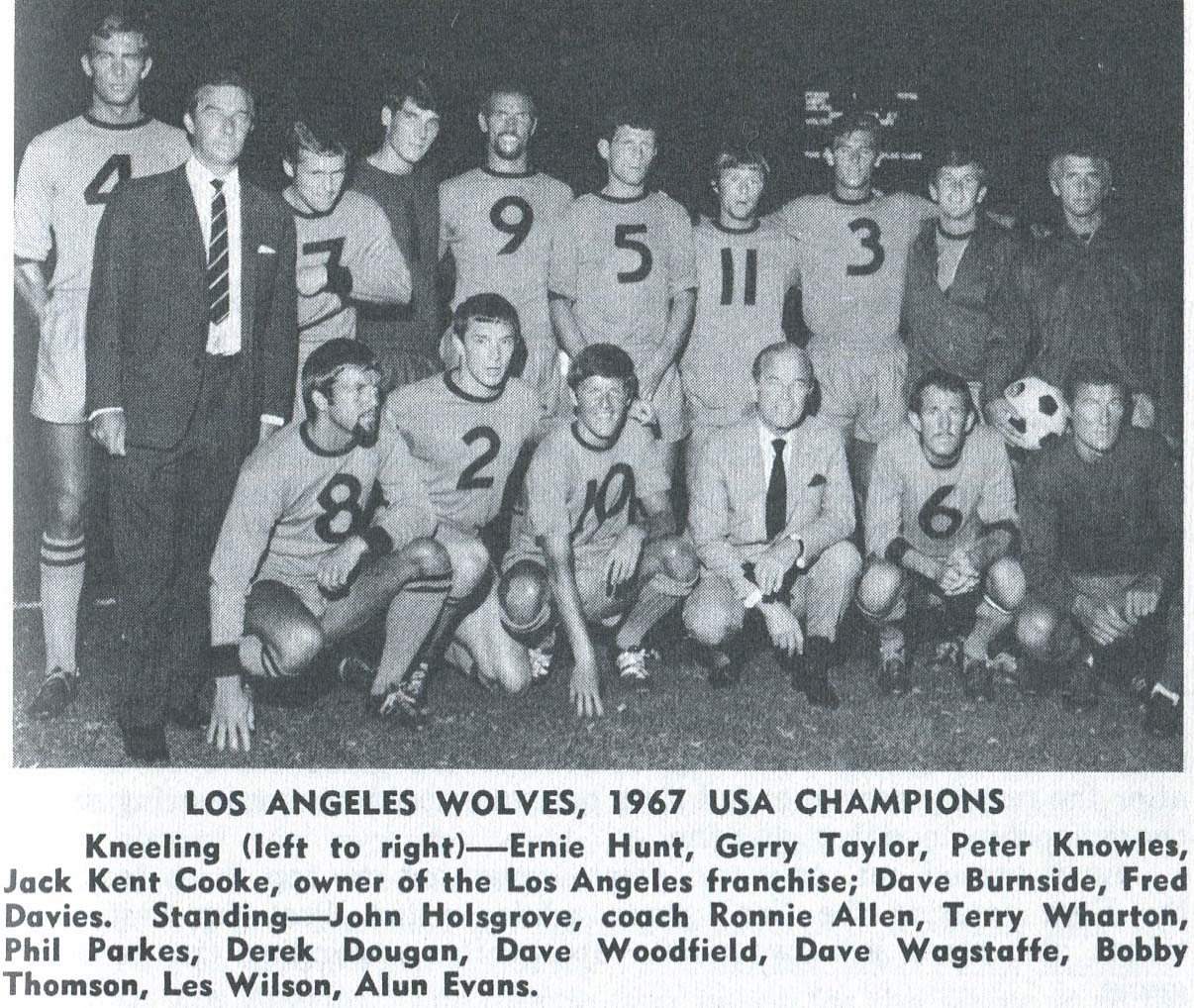
Los Angeles WolvesWolverhampton Wanderers (a.k.a. Wolves)Los Angeles Coliseum (93,000)Jack Kent Cooke (Los Angeles Lakers & Kings, later the Washington Redskins)
New York SkylinersC.A. CerroYankee Stadium (67,000)Madison Square Garden Corporation (New York Knicks & Rangers)
San Francisco Golden Gate GalesADO Den HaagKezar Stadium (59,942)[3]George Fleharty (Ice Follies)
Toronto CityHibernian (a.k.a. Hibs)Varsity Stadium (25,000)Steve Stavro (Toronto Maple Leafs)
Vancouver Royal CanadiansSunderlandEmpire Stadium (33,000)Brigadier General E.G. Eakins
Washington WhipsAberdeenD.C. Stadium (46,000)Earl Foreman (Baltimore Bullets)
Wolves, Sunderland and Stoke were from England; Dundee United, Hibs and Aberdeen from Scotland; Shamrock Rovers from the Republic of Ireland; Glentoran from Northern Ireland; Den Haag from The Hague, the Netherlands; Cagliari from the island of Sardinia, in Italy; Cerro from Montevideo, Uruguay; and Bangu from Rio de Janeiro, Brazil. I guess the league couldn't get any of the really big teams from Rio: Flamengo, Fluminense, Botafogo or Vasco da Gama.

As with the NPSL, attendance was a problem. The compressed 12-game season of May 28 to July 14 didn't help. Washington won the East by 1 point over Cleveland, 2 over Toronto, 3 over Detroit, 5 over New York and 8 over Boston. Los Angeles won the West by 2 points over both San Francisco and Chicago, 3 over Houston, 4 over Vancouver, and 6 over Dallas. Ironically, the Dallas Tornado would be the only USA team that would last more than a couple of seasons in the merged North American Soccer League, winning the title in 1971.

Only 17,842 fans came to the Coliseum for the Final. As an English team, the Wolves were all-English -- except for, oddly enough, their best player, Northern Irish forward Derek Dougan. As a Scottish team, the Whips were all-Scottish, with 1 exception: Jens Petersen, a midfielder from Denmark.

The Whips/Aberdeen were managed by Eddie Turnbull. In the early 1950s, he had been one of the "Famous Five" forwards for the Scottish League Champion Hibernian, known in this league as Toronto City. There was some irony in Wolves' manager: Ronnie Allen had been a star forward for their arch-rivals in England's "Black Country," outside Birmingham: West Bromwich Albion. In 1954, Wolves had beaten West Brom out for the Football League title, while West Brom beat Wolves in the FA Cup Final, each team denying the other the winning of both titles, known as "The Double."

Peter Knowles put Wolves on the board in only the 2nd minute. That lead held until the 21st, when Jimmy Smith equalized. About midway through the 2nd half came a wild sequence: Within 4 minutes, there was a penalty awarded to Wolves, converted by Frank Munro; 2 goals scored by Wolves' Dave Burnside; and a goal scored by Whips' Jim Storrie.

Burnside thought he had the game won with a goal in the 82nd minute, but Munro equalized in the 88th, and the game went to extra time. Dougan thought he'd won it with a goal in the 113th. But in the 119th and next-to-last minute of extra time, a penalty was awarded to Whips, and Munro converted it. It was 5-5.

Under the rules of the contest, the game went to a sudden-death overtime. The next goal would be what would later be called a "Golden Goal," ending the game.

In 1951, a Scottish-born, Staten Island-raised baseball player named Bobby Thomson hit a home run that won a Pennant. On this day, 16 years later, an Englishman of Scottish descent, named Bobby Thomson, recognized as the greatest left back in Wolves history, tried to pass toward the Whip goal in the 126th minute, drawing Whip goalkeeper Bobby Clark out of position.

But Thomson's pass never reached its intended player. Instead, it deflected off the leg of Whips' left back, Ally Shewan. And there was nothing Clark could do. Wolves 6, Whips 5.

For the 1968 season, the USA and the NPSL merged to form the North American Soccer League (NASL). The Los Angeles Aztecs would win that league's title in 1974, and the Los Angeles Galaxy have won the most MLS Cups, 5.

*

July 14, 1967 was a Friday. Why that title game wasn't on a Saturday or a Sunday, I don't know. Baseball star Robin Ventura was born on this day. So was Patrick J. Kennedy, son of Senator Ted Kennedy and eventually a Congressman from Rhode Island.

And these baseball games were played:

* The New York Yankees swept a doubleheader from the Cleveland Indians at Yankee Stadium. They won the opener, 2-1. Al Downing outpitched John O'Donoghue. Joe Pepitone had an RBI double, and Elston Howard hit a home run.

The Yankees won the nightcap, 2-0. Fritz Peterson pitched a 5-hit shutout. Cleveland starter Sonny Siebert left the game after only 5 batters, walking Dick Howser, getting Mike Hegan to fly out, allowing a single to Pepitone, an RBI sacrifice fly to Mickey Mantle, 2 wild pitches, and walking Steve Whitaker. Over the 2 games, Mantle was 2-for-5 with a walk and an RBI.

* The New York Mets lost to the Cincinnati Reds, 1-0 at Crosley Field in Cincinnati. Tony Pérez singled home the only run off Jack Fisher in the bottom of the 10th inning. Fisher had gone the distance, as had the Reds' Gary Nolan. Pete Rose went 2-for-4 with a walk. Jerry Buchek had 3 hits; the rest of the Mets combined, only 2.

* The Boston Red Sox beat the Baltimore Orioles, 11-5 at Fenway Park in Boston. Carl Yastrzemski and Tony Conligliaro both hit home runs, in support of Jim Lonborg. Brooks Robinson went 1-for-4 with 2 RBIs, while Frank Robinson did not enter the game.

* The Washington Senators beat the Detroit Tigers, 3-1 at District of Columbia Stadium. (It was renamed Robert F. Kennedy Memorial Stadium in 1969.) Al Kaline did not play for the Tigers in this game.

* The Atlanta Braves beat the Philadelphia Phillies, 4-2 at Atlanta Stadium. (It was renamed Atlanta-Fulton County Stadium in 1975.) Hank Aaron and Rico Carty both hit home runs, and Joe Torre went 1-for-3.

* A doubleheader was split at Comiskey Park in Chicago. The California Angels won the 1st game, 3-2. The Chicago White Sox won the 2nd game, 8-0. Joe Horlen pitched a 6-hit shutout.

* The Kansas City Athletics beat the Minnesota Twins, 3-2 at Metropolitan Stadium in the Minneapolis suburb of Bloomington, Minnesota. Harmon Killebrew went 0-for-4, but rookie Rod Carew went 3-for-5.

* The St. Louis Cardinals beat the Pittsburgh Pirates, 2-1 at Busch Memorial Stadium in St. Louis. Tommie Sisk of the Pirates held the Cards to just 3 hits, but 2 came in the 7th, singles by Ed Spiezio and Orlando Cepeda, the latter driving in a run, bracketing a walk to Julián Javier. Cepeda's hit was immediately followed by Pirate left fielder José Pagán dropping Dave Ricketts' fly ball, allowing Javier to score. Ironically, the Pirates' run had scored in the top of that inning, when the Cards' left fielder, Lou Brock, dropped a fly ball hit by José Pagán.

* The Los Angeles Dodgers beat the Chicago Cubs, 5-2 at Dodger Stadium in Los Angeles. Ernie Banks went 0-for-3, but he did draw a walk.

* And the Houston Astros beat the San Francisco Giants, 8-6 at Candlestick Park in San Francisco. Juan Marichal only lasted 5 innings. Willie Mays didn't start the game, but came in after Ty Cline was injured, and went 0-for-2.

Also, Senator Ted Kennedy of Massachusetts becomes the father of Patrick J. Kennedy, who later serves in the U.S. House of Representatives, as a Democrat from Rhode Island. Baseball star Robin Ventura was also born that day.

December 31, 1999 & January 1, 2000: The Millennium

December 31, 1999:  The Millennium arrives. The people of planet Earth survived. At a terrible cost. But we hadn't destroyed ourselves. ...