Showing posts with label richard pryor. Show all posts

Thursday, June 9, 2022

June 9, 1980: Richard Pryor Sets Himself On Fire

June 9, 1980: Richard Pryor, perhaps the funniest man in the world, does something that isn't funny at all. Oh, sure, there would be jokes about it, including his own. But it wasn't funny.

He gets high on cocaine, and sets himself on fire.

Somehow, he survives.

Richard Franklin Lennox Thomas Pryor was born on December 1, 1940 in Peoria, Illinois. His father was a boxer and a pimp. His mother was a prostitute. Her mother ran the brothel where she worked. His mother abandoned the family when he was 10. His grandmother raised him, and she was violently abusive. He was expelled from school at age 14, and, by his own admission, did not know how to read. These are not insults or generalizations: He joked about them in his act.

In 1958, he enlisted in the U.S. Army. While serving in West Germany -- as was Elvis Presley at the time, but there's no evidence that the two men ever met, then or ever -- he and some other black soldiers were angry that a white soldier was overly amused at the racially charged scenes of the film Imitation of Life. He and the other black soldiers beat and stabbed him, although he survived. As a result, Pryor spent most of his time in the Army in the stockade, and received a dishonorable discharge.

By 1963, he was appearing in New York comedy clubs, with material far less controversial than he would later produce. This would also be the case with his contemporaries, Bill Cosby (black) and George Carlin (white). By 1966, he was appearing on The Ed Sullivan Show and The Tonight Show Starring Johnny Carson.

In 1967, knowing he still couldn't do so on TV, but could in his nightclub act, he began using profanity, and using "the N-word." He even put it in the title of 3 comedy albums: That (N-word)'s Crazy in 1974 (winner of the Grammy Award for Best Comedy Album the next year), Bicentennial (N-word) in 1976, and Super(N-word) in 1982. His best album title was the 1975 follow-up to That (N-word)'s Crazy: Is It Something I Said?

He also went into acting, and worked with Mel Brooks on the screenplay for the Western parody Blazing Saddles. Pryor was supposed to play the lead, Sheriff Bart. But his cocaine habit was out of control at the time, and he became unreliable: The insurance company for the film wouldn't insure him. So it became a starmaking role for Cleavon Little.

Among the actors in Blazing Saddles was Gene Wilder. He and Pryor would make 4 films together: Silver Streak in 1976, Stir Crazy in 1980, See No Evil, Hear No Evil in 1989, and Another You in 1991. For Stir Crazy, directed by (but not starring) Sidney Poitier, he became the 1st black actor to be paid $1 million for a single film.

But he couldn't stop the coke. He already had a heart attack in 1977, only 36 years old. The drug use was one cause. Somehow, he was a functioning performer -- until the night that he wasn't. Late in the evening of June 9, 1980, on a freebasing binge at his home in Los Angeles, he poured 151-proof rum (that's 75.5 percent alcohol) all over himself, and lit himself on fire.

While ablaze, he ran down Parthenia Street, until being subdued by police. He was taken to a hospital, where he was treated for second- and third-degree burns covering more than half of his body. He spent 6 weeks in recovery at the Grossman Burn Center at Sherman Oaks Hospital in Los Angeles.

In his 1982 concert film Richard Pryor: Live On the Sunset Strip, he said, "I'll tell you one thing: When that fire hits your ass, that will sober your ass up quick! I was standing there, on fire, and something said, 'Why, that's a pretty blue. You know what? That looks like fire!'"

He continued: "Fire is inspirational. They should use it in the Olympics, 'cause I did the 100-yard dash in 4.3. You know something I found out? When you're on fire and running down the street, people will get out of your way. Except for one old drunk, he’s going, 'Can I get a light? How about it? Just a little off the sleeve. Okay?'"

Gives a whole new meaning to the term "black humor."

He was married 6 times, to 5 different women. This does not include his affairs with actresses Pam Grier, who helped him to beat his drug addiction and taught him to read, and Margot Kidder. He had 7 children, each with a different woman. One of them, Rain Pryor, became an actress. In 2004, a poll chose him as the greatest standup comedian of all time. Finishing 2nd was George Carlin.

Despite a 2019 episode of the YouTube series Epic Rap Battles of History that depicted them opposing each other, they were friends and mutual admirers (who probably used cocaine together before they beat their respective addictions, and both made a lot of jokes about drugs), and even appeared together on The Tonight Show Starring Johnny Carson in 1982. The episode turned into a "battle royale," with "Nice" Peter Shukoff playing Carlin; rapper Valin Zamarron, a.k.a. ZEALE, playing Pryor; comedian Gary Anthony Williams playing Bill Cosby; comedian Jackie Tohn playing Joan Rivers; and "Epic" Lloyd Ahlquist playing Robin Williams.

In 1986, Richard was diagnosed with multiple sclerosis. In 1990, he had a 2nd heart attack while on tour in in Australia. The combination of MS and heart trouble left him in a wheelchair for the last few years of his life. He had another heart attack in Los Angeles on December 10, 2005, and died, at the age of 65. A forensic pathologist determined that his heart disease was caused by drugs -- not cocaine, but tobacco. His widow, Jennifer, said, "At the end, there was a smile on his face."

*

June 9, 1980 was a Monday. Basketball player Udonis Haslem, who helped the Miami Heat win 3 NBA Championships, was born on that day.

These Major League Baseball games were played:

* The New York Yankees beat the California Angels, 8-7 at Anaheim Stadium (now Angel Stadium of Anaheim). This was a wild one. The Angels led 4-0 after 6 innings, but the Yankees scored 4 in the 7th and 2 in the 8th to take a 6-4 lead. But the Angels took a 7-6 lead in the bottom of the 8th. Reggie Jackson hit a home run to tie it in the 9th, and Bob Watson singled home the winning run in the 10th, to make a winning pitcher of Goose Gossage.

Mike Griffin had started for the Yankees. Joe Lefebvre had also homered for them. Carney Lansford homered for the Angels, and Rod Carew went 3-for-5 with an RBI.

* The San Francisco Giants beat the Philadelphia Phillies, 3-1 at Veterans Stadium in Philadelphia. Mike Schmidt went 1-for-5. Pete Rose went 1-for-4 with a walk.

* The St. Louis Cardinals beat the Atlanta Braves, 8-5 at Atlanta-Fulton County Stadium. George Hendrick won it with a home run in the top of the 10th inning.

* The San Diego Padres and the Cincinnati Reds were tied 6-6, after 11 innings at Riverfront Stadium in Cincinnati, when the umpires called the game due to rain. The Reds scored 4 runs in the bottom of the 9th, to no avail.

* The Houston Astros beat the Chicago Cubs, 6-2 at the Astrodome in Houston.

* The Baltimore Orioles beat the Oakland Athletics, 3-2 at the Oakland Coliseum. Eddie Murray went 1-for-3 with an RBI. Rookie Rickey Henderson went 2-for-3 with a walk, and, not yet the great base thief, was picked off 1st base.

* And the Seattle Mariners beat the Boston Red Sox, 8-7 at the Kingdome in Seattle. Juan Beníquez won it with a home run in the bottom of the 13th. Carl Yastrzemski went 2-for-6 with an RBI.

* The Cleveland Indians and the Kansas City Royals were rained out at Cleveland Municipal Stadium. The game was made up as part of a doubleheader on June 11. The Royals won the opener, 5-0. Dennis Leonard pitched a 2-hit shutout. The Indians won the nightcap, 8-5. George Brett did not play in either game, but would bat .390 to help the Royals win their 1st Pennant.

* The New York Mets and the Los Angeles Dodgers were rained out at Shea Stadium. The game was made up on the off-day of June 12. The Mets won, 6-5, after they trailed 5-0 after 3 innings. The Dodgers got 3 hits each from Steve Garvey and Dusty Baker, and Baker hit a home run. Elliott Maddox singled home the winning run.

* And the Chicago White Sox, the Detroit Tigers, the Milwaukee Brewers, the Minnesota Twins, the Texas Rangers, the Toronto Blue Jays, the Montreal Expos and the Pittsburgh Pirates were not scheduled.

Monday, February 7, 2022

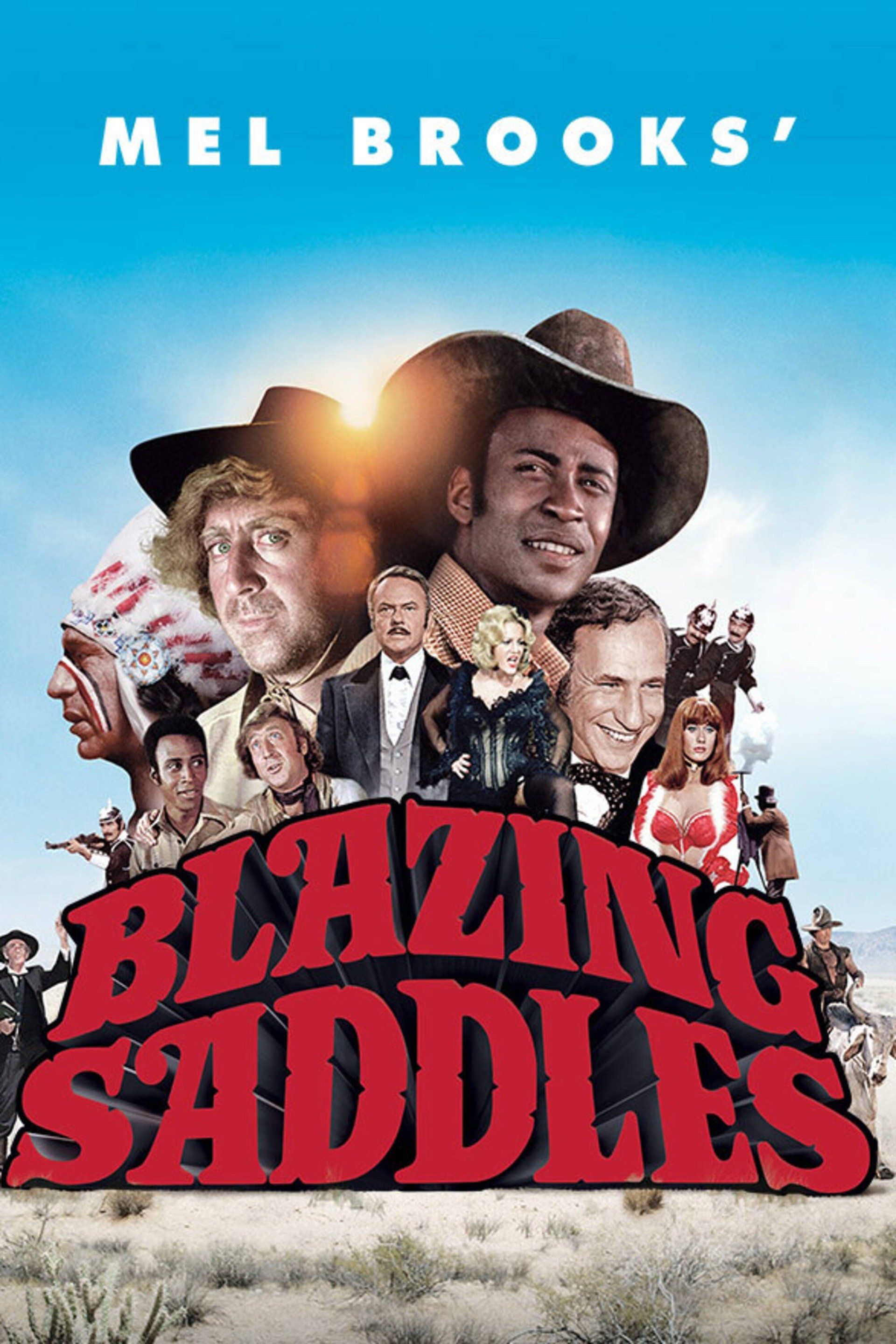
February 7, 1974: "Blazing Saddles" Premieres

February 7, 1974: Blazing Saddles premieres, director Mel Brooks' tribute to, and parody of, classic Western movies.

Hedley Lamarr (played by Harvey Korman) is a railroad executive, and the Attorney General of an unidentified Western territory of the United States. His name always gets turned into that of Hedy Lamarr, a popular actress of the 1930s and '40s. The Territorial Governor, William J. Le Petomane (Brooks), tells him, "This is 1874: You can sue her!" Hedley wants to build his railroad through the town of Rock Ridge, but the residents (who all seemed to have the surname Johnson) won't leave.

So Lamarr sends his flunky Taggart (Slim Pickens) and his goons there, to, as Taggart, says, "go ridin' into town, whompin' and a-whompin'," until the terrified citizens leave. But the move backfires: They are willing to fight for their town, and demand that Governor Le Petomane appoint a Sheriff to protect them.

Lamarr figures out a way around this: Since Le Petomane is an idiot, and Lamarr is clearly the power behind the throne, he convinces Le Petomane to appoint a Sheriff that the people of Rock Ridge will never accept: A black man. This turns out to be a railroad worker named Bart (Cleavon Little). The character's last name is never mentioned. Brooks gave him a badge, but not a surname. I wonder if that was an intentional commentary on racism.

Sure enough, at first, the Rock Ridgers are repulsed, treating Bart badly, and calling him "the N-word." As Jim (Gene Wilder), a former hired gun known as the Waco Kid, who has become his deputy, explains: "You've got to remember that these are just simple farmers. These are people of the land. The common clay of the new West. You know: Morons." The ending was an ad-lib by Wilder. Little cracked up, and Brooks left it in, because it was funny. As Brooks has said, "The only true sin is not being funny.")

In a flashback, where Bart tells Jim his backstory, he mentions his family being the only black family in a wagon train, and thus at the back of it, as if it was a segregation-era bus. When they're attacked by Indians, the chief, also played by Brooks, tells his braves to give them a break: "They're even darker than we are!"

Jim helps Bart win the town over. So Lamarr sends in his version of a "doomsday weapon": Mongo (former football star Alex Karras), a gigantic man of limited intelligence and words. Lamarr figures Bart wouldn't be able to handle him. As Jim says, when Bart suggests shooting him, "Don't do that. It'll only make him mad!" Well, not only does Bart find a way to handle Mongo, but Mongo defects to Bart's side, respecting him as the only man ever to stand up to him.

Sending Mongo in not having worked, Lamarr sends in another secret weapon: Lili von Shtupp, an overtly sexy German singer (Madeline Kahn, in an obvious homage to Marlene Dietrich), who is meant to seduce Bart. But Bart is a lover as well as a fighter, so she defects to his side, too.

So Lamarr decides he needs total war, telling Taggart, "I want you to round up every vicious criminal and gunslinger in the west. Take this down. I want rustlers, cutthroats, murderers, bounty hunters, desperados! Mugs, pugs, thugs! Nitwits, halfwits, dimwits! Vipers, snipers! Con men, Indian agents, Mexican bandits! Muggers, buggerers! Bushwhackers, hornswogglers, horse thieves, bull dykes! Train robbers, bank robbers! Asskickers, shitkickers! And Methodists!"

The final brawl breaks the fourth wall. Well, it breaks a wall, as the fighting Wild Westerners crash through the set of a movie musical in the 1930s style of director Busby Berkeley, directed here by Buddy Bizarre (Dom DeLuise). Then it breaks into the commissary at Warner Brothers' studio, resulting in a food fight, a parody of pie fights in old-time slapstick movies. (Blazing Saddles is now older than most of what it was parodying.) Finally, it spills out onto the streets of Hollywood, where Bart shoots Lamarr in front of the famous Chinese Theatre. In perhaps the most meta moment in movie history, Bart and Jim then go inside to watch the rest of the movie that's telling their story.

Back in 1874, the townspeople thank Bart for his service, and he and Jim start to ride off into the sunset, as Western heroes tend to do. (Although neither gets the girl: Lili stays in Rock Ridge.) Then they get off their horses and into a limousine, and are driven off into the desert -- possibly to Las Vegas.

Brooks wrote the screenplay with black comedy legend Richard Pryor, who was supposed to play Sheriff Bart. But Pryor's cocaine habit was out of control at the time, and he became unreliable: The insurance company for the film wouldn't insure him. So it became a starmaking role for Little.

Brooks also wrote the songs for the film, including the title song. Thinking of Frankie Laine's singing of the theme to the TV show Rawhide, and his big Western-themed hit song "Mule Train," both having the sound effect of a cracking whip, Brooks placed an ad in the trade paper Variety, calling for "a Frankie Laine type." Laine himself answered the ad. Brooks didn't tell him the film was a comedy, and he sang it absolutely straight, and it's a great performance.

(There was precedent for this: Ten years earlier, Stanley Kubrick directed Dr. Strangelove, and told half the cast that the film was a comedy, and the other half that it was a drama, with equally stunning results.)

The studio had a lot of problems with the film. There was a lot of usage of "The N-word." In a 2012 interview, Brooks said, "If they did a remake of Blazing Saddles today, they would leave out the N-word. And then, you've got no movie." The purpose was to satirize racism, to show how rotten it is, and how stupid it is. And Brooks got support on it from both Pryor and Little.

There were also objections to Karras punching a horse. And to the beans scene. Brooks pointed out that, in pretty much every movie with cowboys in it, they're eating beans, but nobody hears the sounds that result. But Brooks' contract gave him final content control, and he refused to make any substantive changes.

Times change. When the film is shown on TV today, the N-word is blanked out. And there's a scene near the beginning where Taggart accuses some of the rail workers of "jumping around like a bunch of Kansas City faggots!" That word is often called the gay version of the N-word, but the TV version could have used a better rewrite than "a bunch of Kansas City dummies!"

And Kahn's German singer? Her name is Lili von Shtupp. "Schtup" is, basically, "fuck" in Yiddish. So the TV version blanks it out, so it sounds like her name is "Lili von Sh." And yet, her name can be seen on the poster for the concert. But they left in the Indian chief's reaction upon seeing Bart's family, the single word "Schwarzes!" (German, or in Brooks' case, Yiddish, for "Blacks!" In the 1979 vampire parody Love at First Bite, George Hamilton's Dracula said it, but, for the TV version, it was replaced with, "Good evening!")

Wilder, who had previously worked with Brooks in The Producers, agreed to be in Blazing Saddles on one condition: He had a special project he wanted to do, and he asked Brooks to direct it. So they made that movie next: Young Frankenstein. Brooks has said that Blazing Saddles is his funniest movie, but Young Frankenstein is his best.

In 1995, I had a terrible cold, a cough that lasted for weeks, and kept me up nights. One night, I saw that Blazing Saddles was going to be on TV. I'd never seen it before, so I figured, it's a classic that's still being talked about, so, what the heck. Big mistake: Every time I laughed, I started coughing again. I began to wonder who would die first, me or Hedley Lamarr. (I didn't see Young Frankenstein until 2021. At least I didn't have a cold at the time. Shame on me for waiting until then to get over the hump.)

Slim Pickens died in 1983, Jack Starrett (Gabby Johnson, a parody of Western actor Gabby Hayes) in 1989, Cleavon Little in 1992, Madeline Kahn in 1999, Richard Pryor in 2005, Frankie Laine in 2007, Harvey Korman in 2008, Dom DeLuise in 2009, Alex Karras in 2012, Gene Wilder and David Huddleston (Olson Johnson) in 2016, and John Hillerman (Howard Johnson) in 2017.

Amazingly, as of February 7, 2022, Mel Brooks is still alive, at age 95. Also of note in the film and still alive on that date are Robyn Hilton, who played Miss Stein, the Governor's top-heavy secretary; and Rodney Allen Rippy, the former hamburger spokeskid who played young Bart, who grew up and left acting for a successful career in marketing.

*

February 7, 1974 was a Thursday. Basketball Hall-of-Famer Steve Nash was born.

Baseball and football were out of season. There was only 1 game played in the NBA that night: The Detroit Pistons beat the Golden State Warriors, 110-86 at the Oakland Coliseum Arena. But there were 3 games played in the American Basketball Association:

* The Virginia Squires beat the Carolina Cougars, 120-97 at the Greensboro Coliseum.

* The Utah Stars beat the San Antonio Spurs, 86-83 at the HemisFair Arena in San Antonio.

* And the Denver Rockets beat the Memphis Tams, 105-94 at the Denver Auditorium Arena. The Tams were not among the ABA teams brought into the NBA. Correctly anticipating that they would be, and that there was already a Houston Rockets, the Denver team changed its name to the Nuggets after this season.

There were 2 games in the NHL. The Boston Bruins beat the St. Louis Blues, 5-3 at the Boston Garden. And the Philadelphia Flyers beat the Pittsburgh Penguins, 5-4 at The Spectrum in Philadelphia. And there was 1 game in the World Hockey Association: The Jersey Knights, based in the Philadelphia suburb of Cherry Hill, New Jersey, beat the Los Angeles Sharks, 7-4 at the Los Angeles Memorial Sports Arena.

December 31, 1999 & January 1, 2000: The Millennium

December 31, 1999:  The Millennium arrives. The people of planet Earth survived. At a terrible cost. But we hadn't destroyed ourselves. ...