Monday, February 28, 2022

March 1, 1905: The 1st Great Los Angeles Trial

March 1, 1905: The City of Los Angeles has seen many big trials since this date. This was when the 1st big one concluded.

Griffith Jenkins Griffith was born on January 4, 1850 in Bettws, Wales. He came to America in 1865. In 1873, he moved to San Francisco, California, and became manager of the Herald Publishing Company. This led to him making contacts in the mining industry, where he made a fortune. In 1882, he moved to Los Angeles. In 1887, he married Mary Agnes Christina Mesmer, known as Tina. Their son, Vandell Mowry Griffith, was born the next year.
In 1896, Griffith J. Griffith donated 3,015 acres to the City of Los Angeles for use as a public park. He told the City Council, "It must be made a place of rest and relaxation for the masses, a resort for the rank and file, for the plain people. I consider it my obligation to make Los Angeles a happy, cleaner, and finer city. I wish to pay my debt of duty in this way to the community in which I have prospered." It was named Griffith Park in his honor.
Had he died on the morning of September 3, 1903, at the age of 53, he would have been mourned as one of the finest citizens in California history. Instead, that day, he and his wife were vacationing at the Arcadia Hotel in Santa Monica, and he shot her in the head. She survived, but was disfigured, and lost her right eye.
He was charged with assault with a deadly weapon with intent to commit murder. The prosecution was led by former Governor Henry T. Gage. The trial revealed that Griffith was an alcoholic and prone to paranoid delusions. The insanity defense was rare at the time, or else it might have been used.
On March 1, 1905, Griffith was convicted of a lesser charge, assault with a deadly weapon. The judge sentenced him to two years in San Quentin State Prison, in the Marin County northern suburbs of San Francisco, and a $5,000 fine, instructing that he be given "medical aid for his condition of alcoholic insanity."
He served a year and 8 months, during which Mrs. Griffith was granted a divorce on the grounds of cruelty, and she was awarded custody of their 16-year-old son, known as Van. The court also stated that the father would pay for his son's education at Stanford University.
He was released after being considered a model prisoner, and began a lecture tour on the subject of prison reform. In 1912, he offered another "Christmas present": An offer to build an amphitheatre in the style of ancient Greece, and a science center. This time, the City rejected the offer.
His liver damaged by his years of hard drinking, he died on July 6, 1919, at the age of 69. His will provided the funds for the constructions he had previously offered. Now that he was dead, and could not personally benefit from the publicity, the Greek Theatre and the Griffith Observatory were built in Griffith Park. The Park would go on to include such landmarks as the Los Angeles Zoo, the Autry Museum of the American West, and the most famous structure in the American West: The HOLLYWOOD Sign.
Tina Griffith lived on until 1948. Her son, Van Griffith, later served as Police Commissioner of Los Angeles, and lived until 1974.
*
March 1, 1905 was a Wednesday. Baseball and football were out of season. Basketball barely existed. And the Ottawa Silver Seven had already wrapped up the Stanley Cup. So there were no scores on this historic day.

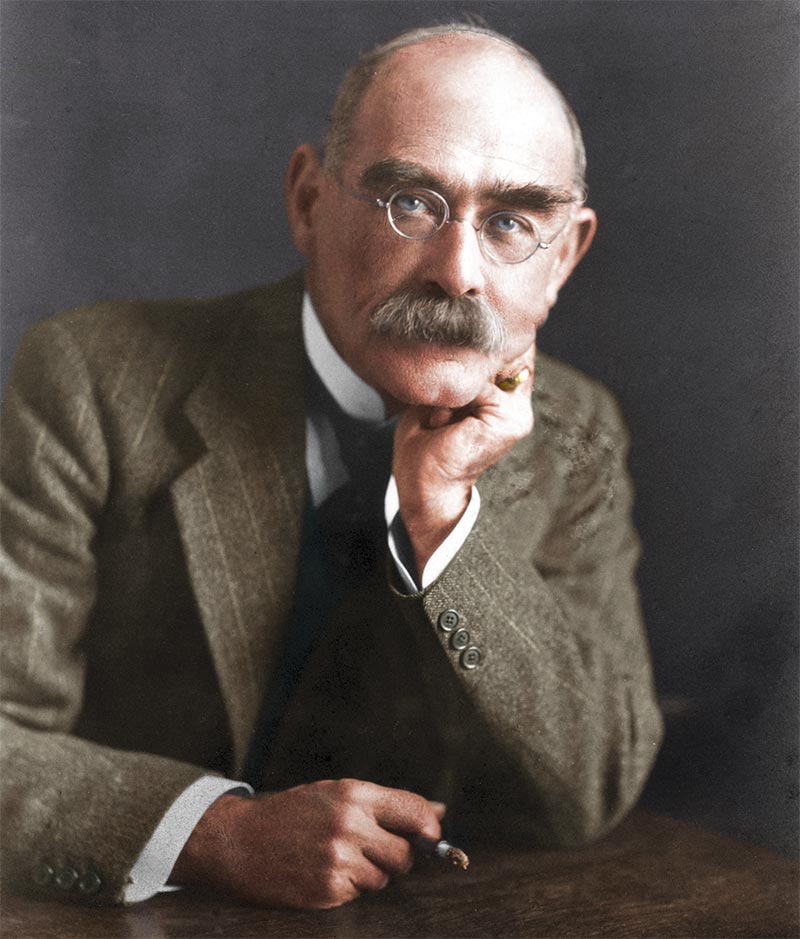
March 1, 1892: Rudyard Kipling Publishes "Barrack-Room Ballads"

March 1, 1892: Rudyard Kipling publishes Barrack-Room Ballads and Other Verses. It marks him as the defining poet of the Victorian Age British Army -- for good, and for ill.

It had been said since the 16th Century that "The Sun never sets on the British Empire," because, at every point during a calendar day, the Sun was shining on some spot of land in the Empire. Stretching east to Asia and Australia, south to Africa, and west to Canada and the Caribbean.

Joseph Rudyard Kipling was a product of this Empire, born in India in 1865. Hearing tales of the British Army from India, Afghanistan, and the African colonies, he immortalized them in verse. Barrack-Room Ballads included perhaps his best-known work, "Gunga Din." The narrator has mistreated the title character, an Indian water-bearer. Then the soldier is shot, but Gunga saves his life, at the cost of his own, forcing the soldier to admit, in the poem's last line, "You're a better man than I am, Gunga Din!"

His tales of brave Brits in far-off lands made him enormously popular throughout the English-speaking world. Author Henry James said, "Kipling strikes me personally as the most complete man of genius, as distinct from fine intelligence, that I have ever known." In 1907, he became the 1st English-language winner of the Nobel Prize for Literature. He was 41, and no one younger has won the award. He died in 1936, still very popular.

A common joke of the era had a man trying to find out a woman's tastes: "How do you like Kipling?" And she said, "I don't know, you naughty boy. I've never kippled!"

But as time went by, people saw the horrid racism in his poems and stories, including in such children's tales as The Jungle Book (published in 1894). Many people have heard the expression "The White Man's Burden," but might not know where it comes from. It was a poem Kipling wrote in 1899, telling America to not only put down the Philippine Insurrection, but to colonize and anglicize -- if not quite "Americanize" -- the island nation.

Kipling's son John was rejected for an officer's commission in World War I, due to poor eyesight. The father bought it off, anyway. The son died in the Battle of Loos in 1915. This left his daughter, Elsie, as his only surviving child. She died in 1976, having married but not having had children, and so the family line died out.

The racism continued after his death: A film based on Gunga Din was released in 1939, with the title role played by Sam Jaffe, not an Indian but an Eastern European Jew with bad makeup. At least when The Jungle Book was filmed in 1942, Mowgli was played by an Indian actor, Sabu Dastagir (using only his first name). But as late as 1967, when Disney did a cartoon version, the stereotypes were still pretty cringey.

Perhaps it would be better to leave on this note: In 1910, Kipling wrote "If-- " an inspirational poem:

If you can keep your head when all about you
    Are losing theirs and blaming it on you;
If you can trust yourself when all men doubt you,
    But make allowance for their doubting too:
If you can wait and not be tired by waiting,
    Or being lied about, don't deal in lies,
Or being hated don't give way to hating,
    And yet don't look too good, nor talk too wise;

If you can dream -- and not make dreams your master;
    If you can think -- and not make thoughts your aim,
If you can meet with Triumph and Disaster
    And treat those two impostors just the same:
If you can bear to hear the truth you've spoken
    Twisted by knaves to make a trap for fools,
Or watch the things you gave your life to, broken,
    And stoop and build 'em up with worn-out tools;

If you can make one heap of all your winnings
    And risk it on one turn of pitch-and-toss,
And lose, and start again at your beginnings
    ⁠And never breathe a word about your loss:
If you can force your heart and nerve and sinew
    To serve your turn long after they are gone,
And so hold on when there is nothing in you
    ⁠Except the Will which says to them: 'Hold on!'

If you can talk with crowds and keep your virtue,
    Or walk with Kings -- nor lose the common touch,
If neither foes nor loving friends can hurt you,
    If all men count with you, but none too much:
If you can fill the unforgiving minute
    With sixty seconds' worth of distance run,
Yours is the Earth and everything that's in it,
    ⁠And -- which is more -- you'll be a Man, my son!

But how wise is it? It sounds like a lot of pressure to put on a young man.

Besides, if you can keep your head when all about you are losing theirs, maybe they know something that you need to know.

*

March 1, 1892 was a Tuesday. There were no scores on this historic day, because baseball and football were out of season, hockey was still all-amateur, and basketball had been invented only a few weeks before.

March 1, 1875: The Civil Rights Act of 1875

March 1, 1875: President Ulysses S. Grant signs the Civil Rights Act of 1875 into law.

Sometimes called the Enforcement Act or the Force Act, it was a United States federal law enacted during the Reconstruction era, in response to civil rights violations against African-Americans. The act was designed to "protect all citizens in their civil and legal rights," providing for equal treatment in public accommodations and public transportation and prohibiting exclusion from jury service.

It was originally drafted in 1870, by Senator Charles Sumner of Massachusetts, who had been one of the leading abolitionists before the American Civil War. However, Sumner died on March 11, 1874, about a year before the Act was passed.

The law was not effectively enforced, partly because Grant had favored different measures to help him suppress election-related violence against blacks and Republicans in the Southern United States. In 1883, in the case of U.S. v. Stanley, the U.S. Supreme Court ruled that the Civil Rights Act of 1875 was unconstitutional, because the 14th Amendment to the Constitution already covered some of its provisions, and that the States had the right to get around some of it.

There would not be another Civil Rights Act passed in America until 1957. By that point, the Supreme Court had issued rulings that made their ruling in U.S. v. Stanley null and void.

*

March 1, 1875 was a Monday. Since it was too soon for baseball, the off-season for what Americans were then calling "football," and over 16 years before the invention of basketball, there were no scores on this historic day.

March 1, 1872: Yellowstone National Park Is Established

Old Faithful

March 1, 1872: President Ulysses S. Grant signs the Yellowstone National Park Protection Act, establishing the park of the same name. It is the beginning of America's National Park Service, and it makes Yellowstone the 1st national park anywhere in the world.

The park is known for its wildlife, its subalpine forest, and its many geothermal features, especially a geyser known as Old Faithful. First observed in 1870, its eruptions can shoot 3,700 to 8,400 gallons of boiling water to a height of 106 to 185 feet, lasting from 1½ to 5 minutes. The average height of an eruption is 145 feet.

The name "Old Faithful" came because it supposedly erupted once an hour. This isn't quite accurate, but close. Intervals between eruptions have ranged from 34 to 125 minutes, averaging 66½ minutes in 1939, slowly increasing to an average of 90 minutes apart since 2000, which may be the result of earthquakes affecting subterranean water levels.

Yellowstone is in the northwestern corner of Wyoming, with some spillover into Montana and Idaho, in the Rocky Mountains, and is far from any major city: 336 miles northeast of Salt Lake City, 403 miles east of Boise, and 589 miles northwest of Denver. It's the kind of place that you have to want to go to, that you don't discover by accident. It includes a portion of the Continental Divide, the point at which the direction of rivers change: East of it, rivers tend to run to the east; west of it, to the west.

It takes in about 3 million visitors every year, exceeded by only a few other parks in the system: Great Smoky Mountains National Park stretching across the State Line of Tennessee and North Carolina, Grand Canyon in Arizona, Zion in Utah, Rocky Mountain in Colorado, Acadia in Maine, and Yosemite in California.

The National Park Service is operated by the U.S. Department of the Interior. It is headquartered at the Main Interior Building, which opened in 1936 at 1849 C Street NW in Washington.

*

March 1, 1872 was a Friday. Since it was too soon for baseball, the off-season for what Americans were then calling "football," and over 19 years before the invention of basketball, there were no scores on this historic day.

February 28, 2014: Mobile Internet Device Users Surpass Desktop Computer Users

February 28, 2014: The number of people in the U.S. using mobile devices to access the internet overtake those using desktop computers for the first time, a feat which would be followed globally in 2016.

Was this a good thing? It means that, now, we can find just about any piece of information we want, anywhere we might be. But, as was previously remarked (by, among others, newspaper columnist William Safer) about the telephone, online communication has harmed face-to-face communication. We are more connected than ever before, and, at the same time, more isolated from each other. Online, we seem to be less "people," and more "accounts."

I think this can be overcome. What journalist Edward R. Murrow once said about the potential, if not enough of the reality, of television, I want to say of the mobile telephone: "This instrument can teach." After all, you can hold in your hand one single device that is, all at the same time, a library, a post office, a department store, a radio station, a television studio from which you broadcast, a newspaper that you publish, a map, a calculator, a calendar, a clock, an alarm clock, a notepad, a flashlight, and, oh yeah, a telephone.
It also makes any old TV show or movie where a mobile phone would be handy obsolete, from the Seinfeld episode "The Parking Garage" to any sitcom episode where anybody is locked in a room -- unless the reception is bad, and they can't get a signal.

*

February 28, 2014 was a Friday. Baseball and football were out of season. There were 7 games in the NBA:

* The New York Knicks lost to the Golden State Warriors, 126-103 at Madison Square Garden.

* The Cleveland Cavaliers beat the Utah Jazz, 99-79 at the Quicken Loans Arena (now the Rocket Arena) in Cleveland.

* The Oklahoma City Thunder beat the Memphis Grizzlies, 113-107 at the Chesapeake Energy Arena (now the Paycom Center) in Oklahoma City. Kevin Durant scored 37 points.

* The Chicago Bulls beat the Dallas Mavericks, 100-91 at the American Airlines Center in Dallas.

* The San Antonio Spurs beat the Charlotte Bobcats, 92-82 at the AT&T Center (now the Frost Bank Center) in San Antonio. With the New Orleans team, formerly the Charlotte team, having become the Pelicans, the new Charlotte team was able to adopt the Hornets name the next season.

* The Phoenix Suns beat the New Orleans Pelicans, 116-104 at the US Airways Center (now the Mortgage Matchup Center) in Phoenix. Goran Dragić of the Suns led all scorers on the night with 40. Anthony Davis scored 32 in defeat for the Pels.

* And the Los Angeles Lakers beat the Sacramento Kings, 126-122 at the Staples Center (now the Crypto.com Arena) in Los Angeles.

And there were 4 games in the NHL:

* The Buffalo Sabres beat the San Jose Sharks, 4-2 at the First Niagara Center (now the KeyBank Center) in Buffalo.

* The Colorado Avalanche beat the Phoenix Coyotes, 4-2 at the Pepsi Center (now the Ball Arena) in Denver.

* The Anaheim Ducks beat the St. Louis Blues, 1-0 at the Honda Center in Anaheim.

* And the Minnesota Wild beat the Vancouver Canucks, 2-1 in a shootout at the Rogers Arena in Vancouver.

February 29, 1940: The 1st Black Oscar Winner

At the time, the winners of Best Supporting Actor
and Best Supporting Actress -- regardless of race --
got a smaller trophy, on a plaque.

Note: I would have written an entry for this event, regardless of the date on it. But I wanted to have an entry that happened on a February 29, and this was the best of the rather small bunch.

February 29, 1940: The 12th Academy Awards are held, at the Coconut Grove ballroom of The Ambassador Hotel in Los Angeles. For the 1st time, the host is actor Bob Hope. He will go on to host "the Oscars" 19 times. Through 2022, this remains a record.

Surprising no one, Gone with the Wind, having been nominated for 13 Oscars, wins 8 of them, including Best Picture for producer David O. Selznick, Best Director for Victor Fleming, Best Actress for Vivien Leigh as Scarlett O'Hara, and Best Screenplay, divided between Margaret Mitchell for the original 1936 novel, and Sidney Howard for his film adaptation. It was the 1st posthumous Oscar: Howard had been killed in an accident on his farm the previous August, so he never even saw the finished film.

The biggest shock of the evening was that Clark Gable, who played Rhett Butler, did not win Best Actor. That award went to Robert Donat for Goodbye, Mr. Chips. Donat had also beaten out Laurence Olivier for Wuthering Heights, James Stewart for Mr. Smith Goes to Washington, and Mickey Rooney for Babes in Arms. At 19, Rooney was the 1st teenager ever to be nominated for an Oscar.

(Rooney had received a special award the year before, for his "juvenile" roles, and would receive an Honorary Award for lifetime achievement in 1983. But despite Olivier, himself often called the best actor of all time, calling him "the best there has ever been," he never won a regular award, going 0-for-4 as a nominee. Olivier would win 4, but only 1 for acting, in Hamlet in 1948. Gable had already gotten the 1 he would ever win, for It Happened One Night in 1934. Stewart won the next year, for The Philadelphia Story.)

Also among GWTW's awards is Best Supporting Actress, to Hattie McDaniel, who played Mammy, Scarlett's black maid. McDaniel thus became the 1st African-American actor, of either gender, to win an Academy Award.

She didn't think she would even get the role, as she had become famous as a comedic actress, but Gable -- like his character in the film, he could alternate between generous and rotten in real life -- personally requested her for the role.

As with the book, the film, made just 64 years after the Civil War ended, was pro-South, took the advancing Union Army of "the Yankees" as the villains, and did not criticize slavery.

McDaniel, 46, a native of Colorado and the daughter of slaves, brushed aside the arguments of her own people that her character was a demeaning stereotype, telling the white press, "I loved Mammy. I think I understood her, because my own grandmother worked on a plantation not unlike Tara." 

When the film premiered at the Loew's Grand Theater in Atlanta on December 15, 1939, due to segregation laws, she was not permitted to attend. Gable threatened to boycott the premiere, but McDaniel herself told him not to, as it would hurt his career, and not help hers at all.

She was permitted to attend the film's Hollywood debut, 13 days later. But for the Oscar ceremony, the Ambassador Hotel had a strict whites-only policy, allowing McDaniel in as a favor. For what would later be called the "afterparty," her white co-stars went to a whites-only club, and she was denied entry.

McDaniel became the 1st black actor to star in her own radio show, Beulah, on CBS, in 1947. Jazz singer Ethel Waters became the 1st to do so on television, also in Beulah, on ABC, in 1950. She quit after a year, because the production was being moved from New York to Hollywood, and she didn't want to leave the New York clubs that were paying her better.

McDaniel was given the role, and one of her co-stars was Thelma "Butterfly" McQueen, who had played Prissy in Gone with the Wind. But McDaniel developed cancer, and only lasted a year as Beulah herself, and died in 1952. Louise Beavers took over the role, and held it until the show was canceled in 1953.

No other black person would be nominated for an Oscar until 1954, when Dorothy Dandridge was nominated for Best Actress for Carmen Jones. The betting favorites were Dandridge and Judy Garland, for A Star Is Born. Supporters of both were outraged when the award went to Grace Kelly for The Country Girl. It was hardly her best role, much less a better performance than either Dandridge's or Garland's. Rumors that she slept her way to that award persist to this day. Dandridge died in 1965.

In 1964, Sidney Poitier became the 1st male actor to win an Oscar, taking Best Actor, for Lilies of the Field. In 1975, Sammy Davis Jr., who never won an Oscar, became the 1st black person to host the ceremony. In 1991, Whoopi Goldberg became the next black woman to win an Oscar, for Best Supporting Actress, for Ghost. In 1994, she became the 1st black woman to host the ceremony.

In 2002, both lead Oscars went to black actors: Denzel Washington for Training Day, and Halle Berry -- who had previously starred as her fellow Cleveland native in the made-for-cable-TV movie Introducing Dorothy Dandridge -- for Monster's Ball.

*

February 29, 1940 was a Thursday. Baseball and football were out of season. The NBA hadn't been founded yet. But there were 3 games played in the NHL:

* The New York Rangers lost to the Chicago Black Hawks, 2-1 at the old Madison Square Garden.

* The Boston Bruins beat the Montreal Canadiens, 4-2 at the Montreal Forum.

* The Toronto Maple Leafs beat the Detroit Red Wings, 3-1 at Maple Leaf Gardens in Toronto.

* At the time, there were 7 teams in the NHL. The New York Americans were not scheduled.

February 28, 1989: Indigo Girls Release Their Self-Titled Debut Album

Emily Saliers (left) and Amy Ray

February 28, 1989: Indigo Girls – officially, no "The" in the name – release their self-titled debut album. They won the Grammy for Best Contemporary Folk Recording, but lost Best New Artist -- to Milli Vanilli. Making them, I suppose, the Mike Greenwell of rock and roll.

This was actually their 2nd album. On May 1, 1987, they released Strange Fire in Canada only. It got the attention of Epic Records, who signed them in 1988.

Emily Ann Saliers was born on July 22, 1963 in New Haven, Connecticut. At age 11, her father, Don Saliers, a noted theologian, got a teaching job in Decatur Georgia, where Amy Elizabeth Ray had been born on April 12, 1964. Emily and Amy attended school together. Although they went to different colleges, they stayed in touch, and, by 1985, both had transferred to Emory University in Atlanta, where they formed Indigo Girls.

By this point, Georgia had already developed a major music scene, particularly among gay performers. R.E.M.'s lead singer Michael Stipe was gay, as were 4 of the 5 members of The 52's, and both bands had become stars out of Athens, seat of the University of Georgia.

Both Indigo Girls are gay, although they've never been a couple. (Emily married their former tour manager, Tristin Chapman.) Since 2001, they've each released solo albums, but the group has never broken up, releasing an album together as recently as 2020. They remain icons of Southern rock, folk rock, and the gay rights and feminist movements.

*

February 28, 1989 was a Tuesday. Baseball and football were out of season. There were 7 games played in the NBA:

* The Boston Celtics beat the Charlotte Hornets, 112-87 at the Charlotte Coliseum.

* The Dallas Mavericks beat the Miami Heat, 111-110 in overtime at the Miami Arena.

* The Cleveland Cavaliers beat the Detroit Pistons, 115-99 at The Coliseum in the Cleveland suburb of Richfield, Ohio.

* The Chicago Bulls beat the San Antonio Spurs, 121-102 at the Chicago Stadium.

* The Philadelphia 76ers beat the Los Angeles Clippers, 123-105 at the Los Angeles Memorial Sports Arena.

* The Portland Trail Blazers beat the Phoenix Suns, 139-134 at the Portland Memorial Coliseum. Terry Porter led the Blazers with 34 points. Tom Chambers scored 42 in defeat for the Suns.

* And the Indiana Pacers beat the Seattle SuperSonics, 108-106 at the Seattle Center Coliseum. Chuck Person led all scorers on the night with 45 points.

And there were 4 games in the NHL:

* The New York Islanders lost to the Hartford Whalers, 3-1 at the Nassau Coliseum.

* The New Jersey Devils and the Boston Bruins played to a tie, 3-3 at the Brendan Byrne Arena at the Meadowlands.

* The Vancouver Canucks beat the Quebec Nordiques, 3-2 at the Colisée de Québec.

* And the Minnesota North Stars beat the Washington Capitals, 4-3 at the Capital Centre in the Washington suburb of Landover, Maryland.

February 28, 1984: "Weird Al" Yankovic Wants You to "Eat It"

February 28, 1984: "Weird Al" Yankovic releases his album "Weird Al" Yankovic in 3-D. It contains his best-known song, "Eat It."

Alfred Matthew Yankovic was born on October 23, 1959 in the Los Angeles suburb of Downey, California, and grows up in neighboring Lynwood. Known as "Weird Al" Yankovic (always billed with the nickname in quotation marks) rose to fame copying Michael Jackson, turning Jacko's songs "Beat It" into "Eat It" (which actually hit Number 12 in the Billboard Hot 100, an extraordinary feat for a parody) and "Bad" into "Fat."

Early on, he seemed to specialize in food, turning The Knack's "My Sharona" into "My Bologna," Joan Jett's "I Love Rock and Roll" into "I Love Rocky Road," and Survivor's "Eye of the Tiger," from the film Rocky III, into "The Rye or the Kaiser." Years later, he became a vegan, and people asked him how he can be a vegan and still sing songs about meat. He said, "The same way I can rationalize playing at a college even though I'm not a student anymore." In a 2011 interview, he said he was still a vegetarian, but not a strict vegan, because he likes cheese on pizza.

Since this was the founding era of MTV, he also had to copy the videos, matching the joke along the way, and he turned out to be every bit as good at it as the original performers. A personal favorite of mine is his copy of James Brown's "Living In America" from Rocky IV as "Living With a Hernia."

He could have remained a briefly popular novelty act, like Jewish comedians and parodists Mickey Katz (father of Joel Grey and grandfather of Jennifer Grey) in the mid-1950s, and Allan Sherman in the early 1960s; or a niche performer, like political comedian and parodist Mark Russell, who, given his age (born in 1932, and still alive, but retired in 2016), specialized in Tin Pan Alley and show tunes.

But a funny thing happened on the way to becoming irrelevant: He didn't. He kept copying the trends of the time, and since he was an admitted joke -- unlike, say, Milli Vanilli or Vanilla Ice -- people accepted it.

He got more famous than ever in 1996, when he turned Coolio's "Gangsta's Paradise" into "Amish Paradise," which had fun with the image of the Amish while still managing to show respect for them. He even had an actual Top 10 hit in 2006, when he turned Chamillionaire's "Ridin' Dirty" into "White and Nerdy."
With his 2014 album Mandatory Fun, he turned Robin Thicke's twisting of Marvin Gaye's "Got to Give It Up," "Blurred Lines," into "Word Crimes," and it may be his best work: You don't even have to know Thicke's version to like it. (Lucky you.)
That same year, he played Isaac Newton against Nice Peter's Bill Nye on an episode of Epic Rap Battles of History, proving that a 54-year-old Polish guy from the L.A. suburbs could flow with the best of them.

In 2022, he produced the film Weird: The Al Yankovic Story. He was played by Harry Potter star Daniel Radcliffe. But it was a parody of rock star biographies. It suggested that Michael Jackson did "Beat It," stealing "Eat It" from him. It suggested an affair with Madonna, played by Evan Rachel Wood. It suggested that his father initially opposed his music career, based on his own experience, having left the Amish to be a musician, leading to "Amish Paradise." Finally, it showed Madonna having him assassinated, then standing over his grave, before a zombie Al pulls her in with him. As with everything else, Al let everyone know that the movie was a joke.

*

February 28, 1984 was a Tuesday. Baseball and football were out of season. There were 9 games played in the NBA:

* The Detroit Pistons beat the Atlanta Hawks, 101-96 at The Omni in Atlanta.

* The Washington Bullets beat the Indiana Pacers, 100-92 at the Market Square Arena in Indianapolis.

* The Los Angeles Lakers beat the Chicago Bulls, 124-108 at the Chicago Stadium.

* The Kansas City Kings beat the Cleveland Cavaliers, 142-137 in double overtime at the Kemper Arena (now the Hy-Vee Arena) in Kansas City. World B. Free scored 35 points.

* The Houston Rockets beat the Seattle SuperSonics, 111-105 at The Summit in Houston. (The arena is now the Central Campus of the Lakewood Church, Joel Osteen's "megachurch." Lewis Lloyd of the Rockets scored 36 points.

* The Dallas Mavericks beat the San Antonio Spurs, 116-104 at the HemisFair Arena in San Antonio. Mike Mitchell scored 44 for the Spurs.

* The Phoenix Suns beat the Utah Jazz, 113-100 at the Arizona Veterans Memorial Coliseum.

* The Golden State Warriors beat the Denver Nuggets, 140-137 in overtime at the Oakland Coliseum Arena. Mickey Johnson of the Warriors scored 40 points.

* And the Portland Trail Blazers beat the San Diego Clippers, 117-99 at the Portland Memorial Coliseum.

And there were 5 games played in the NHL:

* The New York Rangers and the New Jersey Devils, metropolitan area rivals, played to a tie, 3-3 at the Brendan Byrne Arena at the Meadowlands.

* The Quebec Nordiques beat the Detroit Red Wings, 6-2 at the Colisée de Québec.

* The Vancouver Canucks beat the Washington Capitals, 3-2 at the Capital Centre in the Washington suburb of Landover, Maryland.

* The St. Louis Blues beat the Minnesota North Stars, 5-2 at the St. Louis Arena.

* And the Calgary Flames beat the Los Angeles Knigs, 9-1 at the Saddledome in Calgary.

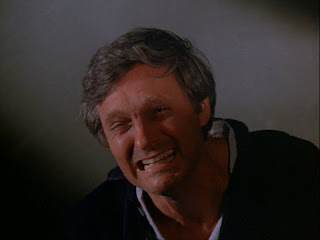
February 28, 1983: The "M*A*S*H" Finale

February 28, 1983: The final episode of M*A*S*H airs on CBS, after 11 seasons, even though the Korean War, which it depicted, lasted 3 years.

In its 1st season, 1972-73, M*A*S*H aired on Sundays at 8:00; 2nd season, Saturdays at 8:30; 3rd, Tuesdays at 8:30; 4th, 5th and 6th, Tuesday at 9:00; and then, late in the 6th season, 1978, to the end, Mondays at 9:00. The finale aired a little earlier, at 8:30 PM on a Monday night, and ran for two and a half hours.

The episode is titled "Goodbye, Farewell and Amen." It was directed by Alan Alda, who played Captain Benjamin Franklin Pierce, M.D., U.S. Army Reserve, a.k.a. Hawkeye. He also wrote it, with several other writers for the series: Longtime producer Burt Metcalfe, John Rappaport, Dan Wilcox, Thad Mumford, Elias Davis, David Pollock and Karen Hall.

The episode got 106 million viewers, making it the most-watched TV show in American history, breaking the record set a little over 2 years earlier, when Dallas revealed "Who shot J.R.?" Since then, a few Super Bowl broadcasts have surpassed it, but no regular TV series episode has.

Synopsis: The war finally comes to an end, but not before Hawkeye, who so often had walked a fine line between genius and madness, finally cracks, and needs treatment from Army psychiatrist Major Sidney Freedman (Allan Arbus). Another surgeon, Major Charles Emerson Winchester III (David Ogden Stiers), sees his love of classical music shattered upon seeing the deaths of North Korean prisoners of war, who happened to be musicians.

The camp's chaplain, Captain Francis Mulcahy (William Christopher), loses his hearing after an explosion. And the formerly cross-dressing, formerly psychiatric-discharge-seeking company clerk, Sergeant Max Klinger (Jamie Farr), falls in love with a Korean woman named Soon-Lee (Rosalind Chao), marries her -- with Mulcahy barely able to conduct the ceremony -- and decides to help her look for her family among the refugees: "I can't believe I'm saying this, but I'm staying in Korea!"

The final scene shows a (mostly?) recovered Hawkeye taking off in the last helicopter to leave the now-packed-up 4077th Mobile Army Surgical Hospital, while his bunkmate and fellow surgeon, Captain B.J. Hunnicutt (Mike Farrell), gets ready to leave on a motorcycle he'd recovered. B.J. yells, "I left you a note!" Hawkeye gets the last word, the last word spoken in the series: Unable to hear B.J. over the chopper's rotor, he yells, "What?" As the chopper takes off, he sees that B.J. has spelled out "GOODBYE" in the rocks that had helped weigh down the tents.

*

February 28, 1983 was a Monday. Baseball and football were out of season. And there were no games scheduled in the NBA.

There were 2 games played in the NHL. The New York Rangers beat the Pittsburgh Penguins, 9-3 at Madison Square Garden. The Broadway Blueshirts got 2 goals from Mike Rogers. And, in an "Original Six" matchup, the Boston Bruins beat the Toronto Maple Leafs, 6-3 at the Boston Garden.

February 28, 1973: The Wounded Knee Occupation

February 28, 1973: A group of 200 Oglala Sioux members of the American Indian Movement (AIM) seized the town of Wounded Knee, South Dakota, located within the borders of the Pine Ridge Indian Reservation.

The town had been the site of the last major conflict between the U.S. government and Native Americans, in 1890, when the U.S. Army shot and killed 250 Natives in one of the worst massacres, committed by any side, in American history.

The occupation was launched after the Oglala Sioux were unable to remove the Oglala Reservation Chairman, Dick Wilson, whom they accused of corruption since his election the year before. Frank Fools Crow, the senior elder of the Oglala, and AIM leader Russell Means led the occupation. Fools Crow later said, "We called our brothers and AIM to help us because we were being oppressed and terrorized. They answered our call."
Frank Fools Crow

The occupation lasted for 71 days, until an agreement was reached between federal officials and a Lakota delegation, which included Fools Crow. Following the occupation, violence increased on the reservation, with residents reporting attacks by Wilson's henchmen. More than 50 of his opponents allegedly died violently in the next three years. He was finally defeated in the next election, in 1976. He was never tried for any crime, and died in 1990.

Fools Crow continued to lead his people. On September 5, 1975, he accepted an invitation to recite the opening prayer before a session of the U.S. Senate. He delivered it in the Lakota language, and it was translated into English. He died in 1989.

Means retired as AIM leader in 1988, saying the organization had achieved its goals. He continued his activism, and ran for President and for Governor of New Mexico on the ticket of the Libertarian Party. He also became an actor, appearing in films as Native heroes Jim Thorpe and Sitting Bull, and was the voice of Powhatan, Chief of the Virginia tribes and father of the title character, in Disney's animated Pocahontas films, even though they flew in the face of history. He lived until 2012.
Russell Means

Wounded Knee is far from any major city. It's 104 miles southeast of Mount Rushmore, 350 miles northeast of Denver and over 400 miles northwest of Omaha. In fact, the Little Bighorn Battlefield is about 350 miles to the northwest, so it's closer to that than to Denver, the closest major league city.

*

February 28, 1973 was a Wednesday. Hockey star Eric Lindros was born.

Baseball and football were out of season. There were 4 games played in the NBA:

* The Boston Celtics beat the Golden State Warriors, 118-111 at the Boston Garden.

* The Philadelphia 76ers beat the Baltimore Bullets, 102-96 at The Spectrum in Philadelphia. This was a rare win for the Sixers, undergoing the worst season in NBA history: 9-73. Phil Chenier scored 36 in defeat for the Bullets, who moved a few miles down Interstate 95 to the suburbs of Washington, D.C. the next season.

* The Milwaukee Bucks beat the Seattle SuperSonics, 124-110 at the Milwaukee Arena. In 1974, it was renamed the Milwaukee Exposition, Convention Center and Arena, or "The MECCA." Since 2014, it has been named the UW-Panther Arena. Spencer Haywood scored 36 for the Sonics, but it wasn't enough.

* And the Kansas City-Omaha Kings beat the Phoenix Suns, 109-107 at the Arizona Veterans Memorial Coliseum in Phoenix. Nate "Tiny" Archibald of the Kings led all pro scorers on the night, with 41 points.

There were 4 games played in the American Basketball Association:

* The New York Nets beat the Memphis Tams, 115-108 at the Nassau Coliseum.

* The Kentucky Colonels beat the Virginia Squires, 117-97 at Freedom Hall in Louisville.

* The Indiana Pacers beat the San Diego Conquistadors, 109-106 at the Indiana State Fairgrounds Coliseum (now the Corteva Coliseum) in Indianapolis.

* And the Carolina Cougars beat the Denver Rockets, 104-96 at the Auditorium Arena in Denver. The Rockets became the Denver Nuggets for the 1974-75 season.

There were 6 games played in the NHL:

* The New York Rangers and the Chicago Black Hawks played to a tie, 3-3 at Madison Square Garden.

* The Montreal Canadiens beat the Los Angeles Kings, 5-2 at the Montreal Forum.

* The Toronto Maple Leafs beat the Vancouver Canucks, 7-2 at Maple Leaf Gardens in Toronto.

* The Pittsburgh Penguins beat the St. Louis Blues, 4-2 at the Civic Arena in Pittsburgh.

* The Detroit Red Wings beat the Philadelphia Flyers, 6-5 at the Olympia Stadium in Detroit.

* The Minnesota North Stars beat the California Golden Seals, 7-3 at the Metropolitan Sports Center in the Minneapolis suburb of Bloomington, Minnesota.

* And the New York Islanders, the Boston Bruins, the Buffalo Sabres and the Atlanta Flames were not scheduled.

There was 1 game played in the World Hockey Association: The Houston Aeros beat the Alberta Oilers, 3-2 in overtime at the Sam Houston Coliseum in Houston.

February 28, 1960: The U.S. Hockey Team Wins Its 1st Gold Medal

February 28, 1960: The U.S. team wins the Gold Medal in hockey at the Winter Olympics in Squaw Valley, California, in the Sierra Nevada mountains, near Lake Tahoe. In 2022, the town changed the name to Olympic Valley, to remove the insensitive Native American name.

Despite being the 2nd-biggest hockey-player-producing country behind Canada, where the sport was invented, America had struggled in the sport in the Olympic Games. We had won the Silver Medal at the 1st tournament in 1920, and again in 1924, '32, '52 and '56; and the Bronze Medal in 1936; but won no medal in 1928 and '48, and had never won the Gold Medal.

All hockey games at the 1960 Winter Olympics, and also the figure skating events, were held at the Blyth Arena, which was torn down in 1983.
The U.S. was put into Group C, and beat Czechoslovakia 7-5 on February 19, and Australia 12-1 on February 21. (This remains the only time Australia has entered a hockey team into the Winter Olympics.) This put them into the final round-robin. They beat Sweden 6-3 on February 22, Germany 9-1 on February 24, and stunned Canada 2-1 on February 25.

With that victory under their belts, the U.S. team had no reason to fear the Soviets, and beat them 3-2 on February 27. That left only a rematch with Czechoslovakia on February 28, and it was no contest: The U.S. won, 9-4. Canada won the Silver, the Soviets the Bronze.

Hail the Champions, coached by Jack Riley of Boston, then the head coach at the U.S. Military Academy at West Point, New York:

* Goaltenders: Jack McCartan of St. Paul, Minnesota; and Lawrence Palmer of Malden, Massachusetts. Palmer never got onto the ice: McCartan, who later briefly played for the New York Rangers, on whose uniform the U.S. team's was based, played every minute of every game.
* Defensemen: John Kirrane of Brookline, Massachusetts; Rod Paavola of Hancock, Michigan; Edwyn Owen of St. Louis Park, Minnesota; John Mayasich of Eveleth, Minnesota.
* Forwards: Bill Cleary of Cambridge, Massachusetts; Bob Cleary, Bill's brother and Harvard University teammate, also of Cambridge, Massachusetts; Dick Rodenheiser of Malden, Massachusetts; Eugene Grazia of West Springfield, Massachusetts; Bob McVey of Hamden, Connecticut; Weldon Olson of Marquette, Michigan; Dick Meredith of South Bend, Indiana; Paul Johnson of West St. Paul, Minnesota, Roger Christian of Warroad, Minnesota; Bill Christian, Roger's brother, also of Warroad, Minnesota; Tom Williams of Duluth, Minnesota.

The U.S. team won the Gold again in 1980, with an even bigger upset over the Soviets; the Silver Medal in 1972, 2002 and '10; but even with the admission of NHL players from 1998 onward, the rest of the world has caught up to America and Canada, and even with post-Soviet Russia.

When the U.S. won the Gold Medal in 1980, the head coach was Herb Brooks, the last player cut from the 1960 team, although he did play on the 1964 U.S. team that did not medal. Bill Christian's son Dave played on the 1980 team.

Williams died in 1992, Paavola in 1995, Owen in 2007, Roger Christian in 2011, Grazia in 2014, Bob Cleary in 2015, Riley, Kirrane and Johnson in 2016. As of February 28, 2022, McCartan, Mayasich, Olson, Rodenheiser, Meredith, McVey, Palmer, Bill Christian and Bill Cleary are still alive.

The 1980 win was shown on television (ABC, albeit on tape delay), and has been shown time and time again, so that we all remember it as "The Miracle On Ice," even those of us who weren't born yet. The 1960 win was not shown on television, and has become known as "The Forgotten Miracle."

*

February 28, 1960 was a Sunday. Baseball and football were out of season. There were 3 games played in the NBA:

* The New York Knicks lost to the Boston Celtics, 129-125 at the old Madison Square Garden. Richie Guerin scored 39 points in defeat.

* The Philadelphia 76ers beat the Detroit Pistons, 113-111 at Cobo Hall (now Huntington Place) in Detroit.

* And the St. Louis Hawks beat the Cincinnati Royals, 122-105 at the Kiel Auditorium in St. Louis.

And there were 2 games in the NHL. The New York Rangers lost to the Toronto Maple Leafs, 5-3, also at the old Madison Square Garden. And the Chicago Black Hawks beat the Detroit Red Wings, 5-2 at the Chicago Stadium. The Montreal Canadiens and the Boston Bruins were not scheduled.

Also on this day, Dorothy Stratten was born. The model was named Playboy magazine's Playmate of the Year in 1980, after she was murdered by her husband, whom she was divorcing.

February 28, 1905: The Murder of Jane Stanford

February 28, 1905: Jane Stanford is murdered -- on the 2nd try.

Jane Elizabeth Lathrop was born on August 25, 1828 in Albany, New York. Like any other good little rich girl of her time, she was expected to have no ambitions, marry a rich man, have as many rich children as possible, and do nothing on her own.

Well, she certainly married a rich man: Leland Stanford, a lawyer from nearby Watervliet. He became one of the wealthiest lawyers in Wisconsin. But in 1852, a fire in his office cost him his law library, a vital thing for a lawyer to have. He took Jane west, opened a dry goods store with his brothers, took advantage of the Gold Rush, and built a fortune. In 1861, he was among the founders of the Central Pacific Railroad, and was elected Governor of California, serving a single 2-year term.

As for the other thing, it didn't work out. For whatever reason, she didn't have a child until she was 39, and he would be the only one. On March 13, 1884, Leland Stanford Jr. died of typhoid fever, and there was nothing his parents and all their money could do.
What would now be called an urban legend spread, eventually being repeated on the radio show of broadcaster Paul Harvey. Supposedly, Leland and Jane Stanford went to Harvard University, offered to fund a big scholarship in their son's name, and were flat-out rejected, because old-money Harvard didn't want their nouveau riche money. So they took matters into their own hands, and founded their own university out of spite, choosing the color red like Harvard.

It wasn't true. They didn't go to Cambridge, Massachusetts to meet with Charles W. Eliot, President of Harvard. He didn't turn them down. The plan, all along, was to found a university near San Francisco, then still far ahead of Los Angeles as the leading city not just in California, but in the American West. The location was Palo Alto, on "The Peninsula," 37 miles southeast of San Francisco, and 24 miles northwest of San Jose.

"The Leland Stanford Junior University" was founded in 1885, and opened on October 1, 1891, and it is officially named that to this day. Reading and hearing "Junior University" makes it sound like a "junior college," but it is, essentially, the Harvard of the West Coast, though its main color is a cardinal shade of red, rather than Harvard's crimson. And its rival isn't another old, fabulously wealthy Ivy League school, as Harvard has with Yale, but the main campus of the greatest State university system in the country, the University of California in Berkeley, across San Francisco Bay.

Leland Stanford was elected to the U.S. Senate in 1884, and was still serving California in that capacity when he died on June 21, 1893, from heart failure brought on by years of locomotor ataxia. Jane, then 74, subsequently effectively took control of the university. It was at her direction that Stanford University gained an early focus on the arts. She also advocated for the admission of women, and the University had been co-educational since its founding.

On January 14, 1905, at age 76, at her mansion in the Nob Hill section of San Francisco, Mrs. Stanford drank mineral water, and found it tasting bitter. She quickly forced herself to vomit the water, with prompting from and assistance by her maid, and when both the maid and her secretary agreed that the bottled water tasted strange, she sent it to a pharmacy to be analyzed. The findings, returned a few weeks later, showed that the water had been poisoned with a lethal dose of strychnine.
Mrs. Stanford moved out of her mansion, and vowed never to return. Elizabeth Richmond, the maid, fell under suspicion and was fired. Richmond had worked in Britain and had reportedly regaled Stanford's domestic staff with tales of English aristocrats being poisoned by their servants.
A private detective agency was hired, but despite coming up with enough subplots to stock a soap opera, it could not come up with evidence pointing to a culprit, or a motive for an attempted murder. Depressed by the conviction that an unknown party had tried to kill her, and suffering from a cold, Mrs. Stanford soon decided to sail to Hawaii, with plans to continue on to Japan.
At the Moana Hotel on the island of Oahu, on the evening of February 28, Mrs. Stanford asked for bicarbonate of soda to settle her stomach while in her room. Her personal secretary, Bertha Berner -- a trusted employee of 20 years' standing, and the only other person present who had also been at the scene of the previous incident -- prepared the solution, which Stanford drank.
Is this the face of a killer?
At 11:15 PM, she cried out for her servants and hotel staff to call for a physician, declared that she had lost control of her body, and believed that she had been poisoned again. This time, attempts to induce vomiting were unsuccessful, and her last words were, "This is a horrible death to die."
The news was telegraphed back to her adopted hometown, and, mere hours later, the March 1, 1905 edition of the San Francisco Evening Bulletin blared the headline: "MRS. STANFORD DIES, POISONED."
After 3 days of testimony, the coroner's jury concluded in less than two minutes that she had died of strychnine "introduced into a bottle of bicarbonate of soda with felonious intent by some person or persons to this jury unknown."
The testimony revealed that the bottle in question had been purchased in California -- after Elizabeth Richmond had been let go, which seemed to rule her out as a suspect this time -- had been accessible to anyone in Stanford's residence during the period when her party was packing, and had not been used until the night of her death.
Stanford University President David Starr Jordan, who wanted to avoid a controversy that could damage the University's reputation, sailed to Hawaii himself, and hired a local doctor to dispute poisoning as the cause of death. He then reported to the press that Stanford had in fact died of heart failure.
The coverup succeeded so well that the likelihood that she was murdered was largely overlooked by historians and commentators until the 1980s. At any rate, no one was ever charged with Mrs. Stanford's murder. Whoever did it got away with it.
Was it Bertha Berner? Mrs. Stanford left her $15,000 in her will -- about $500,000 in 2022 money. She continued to live comfortable life in her house in nearby Menlo Park, California. Her social life revolved around the University, which, in 1935, published her book Mrs. Leland Stanford: An Intimate Account. Tellingly, she did not point a finger at any other suspect. She lived until 1945.
UPDATE: In 2022, Stanford University historian Richard White concluded that Stanford was likely poisoned by Bertha Berner, who was the only person present at both poisonings. White concludes that the first poisoning may have been intended to be non fatal and that Jordan and the San Francisco Police likely suspected Berner, but covered up the murder to suit their own interests.
It's a little interesting (to me, anyway) that the historian's name was White: A "Stanford White." Because, the following year, the architect Stanford White was murdered, and his case quickly replaced that of Jane Stanford as "The Murder of the Century."
*

February 28, 1905 was a Tuesday. Baseball and football were out of season. Basketball and hockey were still nearly all-amateur. So there were no scores on this historic day. 

December 31, 1999 & January 1, 2000: The Millennium

December 31, 1999:  The Millennium arrives. The people of planet Earth survived. At a terrible cost. But we hadn't destroyed ourselves. ...