Showing posts with label yom kippur. Show all posts

Thursday, October 6, 2022

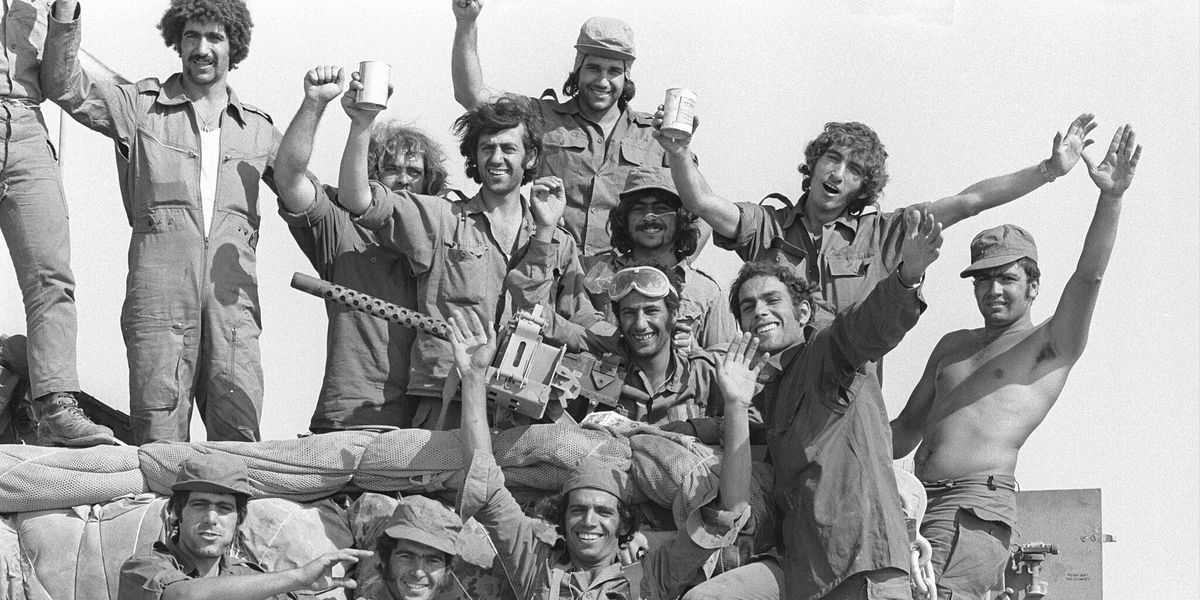
October 6, 1973: The Yom Kippur War Begins

October 6, 1973: The Yom Kippur War begins. Egypt and Syria, 2 of the Arab neighbors that Israel had defeated in the Six-Day War of June 1967, sought revenge. The 3rd of the 1967 opponents, Jordan, sat this one out, not wanting to get clobbered again.

The coalition launched a surprise attack on Israel during Yom Kippur, the holiest day on the Jewish calendar, figuring they could take the Jewish state by surprise. Egyptian and Syrian forces crossed their respective ceasefire lines with Israel, advancing into the Sinai Peninsula and the Golan Heights, respectively.

After 3 days, Israel halted the Egyptian advance and pushed most of the Syrians back to the Purple Line. Israel then launched a counteroffensive into Syria, shelling the outskirts of their capital of Damascus.

Both sides' leading supports kicked in support: The United States for Israel, and the Soviet Union for the Arabs. This heightened tensions between the two superpowers, who had gotten closer following the signing of the SALT I Treaty the year before.

Complicating things further was the political crisis in America: Not only was President Richard Nixon fighting to stay in office as a result of the Watergate scandal, but his Vice President, Spiro Agnew, resigned as part of a plea-bargain on October 10. This meant that, if something happened to Nixon, a Republican, the next man in line was the Speaker of the House of Representatives, Carl Albert, a Democrat. And the event that became known as "The Saturday Night Massacre," further inflaming the public against Nixon, came on October 20, with the war still ongoing.

Egyptian forces attempted to push further into Sinai, but were repulsed, and Israeli forces crossed the Suez Canal, advancing toward Ismailia City on October 18. Israeli forces were then defeated in the Battle of Ismailia, and accepted a United Nations-brokered ceasefire. On October 22, the ceasefire broke down. Israeli forces then advanced on Suez City, but were successfully repulsed in the ensuing battle amid stiff Egyptian resistance.

Nixon sent Henry Kissinger, now both his Secretary of State and his National Security Adviser, back and forth between Prime Minister Golda Meir in Tel Aviv, President Anwar Sadat in Cairo, and President Hafez al-Assad in Damascus, in what became known as "shuttle diplomacy." A second ceasefire was imposed on October 25, officially ending the war.

The Arab world, humiliated by the 1967 defeat, felt psychologically vindicated by its early and late successes in 1973. Meanwhile, Israel, despite battlefield achievements, recognized that future military dominance was uncertain.

Nevertheless, any victory Egypt had was a morale victory (if not a "moral victory") at best, and Sadat, Vice President under Gamal Abdel Nasser in 1967, did not want a 3rd defeat. He began moving Egypt out of the Soviet sphere of influence. When Menachem Begin became Prime Minister of Israel in 1977, Sadat reached out to him. With President Jimmy Carter acting as moderator, Sadat and Begin signed the Camp David Accords in 1978.

In 1994, despite not having fired a shot at Israel since 1967, Jordan signed a peace treaty with Israel. As of October 6, 2022, Israel's peace treaties with Egypt and Jordan remain in effect. Syria, however, would remain an enemy of Israel under Assad, and later his son, Bashar al-Assad. They aided terrorist groups in their attacks on Israel, assisting both Iran and the Palestine Liberation Organization.

*

October 6, 1973 was a Saturday. Both baseball leagues' League Championship Series began that day. In the American League, the Baltimore Orioles beat the Oakland Athletics, 6-0 at Memorial Stadium in Baltimore. Jim Palmer pitched a 5-hit shutout, beating Vida Blue. However, the A's won the series in 5 games.

In the National League, the Cincinnati Reds beat the New York Mets, 2-1 at Riverfront Stadium in Cincinnati. Pete Rose and Johnny Bench hit home runs, enabling Pedro Borbón to outpitch Tom Seaver. However, the Mets won the series in 5 games.

Among the college football games played that day were these:

In a regular-season Big Ten/Pac-8 matchup, Number 1 Ohio State beat Washington State, 27-3 at Ohio Stadium in Columbus. Ohio State won the Big Ten Conference title.

* Number 2 Nebraska beat Minnesota, 48-7 at Memorial Stadium in Minneapolis. Nebraska blew the Big 8 title with a loss to Missouri the next week, and another loss to Oklahoma later on. They were still invited to the Cotton Bowl.

* Number 3 Alabama beat Georgia, 28-14 at Denny Stadium (later renamed Bryant-Denny Stadium) in Tuscaloosa, Alabama. 'Bama won the Southeastern Conference Championship, and went undefeated in the regular-season, setting up a de facto National Championship game in the Sugar Bowl.

* Number 4 University of Southern California beat Oregon State, 21-7 at Parker Stadium (now Reser Stadium) in Corvallis, Oregon. USC won the Pacific-8 Conference title, then lost the Rose Bowl to Ohio State.

In another regular-season Big Ten/Pac-8 matchup, Number 5 Michigan beat Oregon, 24-0 at Michigan Stadium in Ann Arbor. Michigan and Ohio State went into their annual showdown tied for the Big Ten title, and finished in a tie. So it was up to the Conference's university presidents to decide which team went to the Rose Bowl, and by a 6-4 vote, they picked Ohio State. And they had a rule that said the only bowl they could send teams to was the Rose Bowl. That infuriated Michigan fans, and the rule was changed for the 1975 season.

* Number 6 Oklahoma beat Number 17 Miami, 24-20 at Owen Field in Norman, Oklahoma. Oklahoma had tied USC the week before, won the Big 8 Conference title, and finished undefeated at 10-0-1. But they were on probation, and thus ineligible for a bowl game, and only minor polls proclaimed them National Champions. So, like Michigan, Oklahoma were 10-0-1, but not chosen as National Champions. The difference being that Michigan got screwed, while Oklahoma screwed themselves.

* Number 7 Penn State beat Air Force, 19-9 at Falcon Stadium in Colorado Springs, Colorado. With Heisman Trophy-winning running back John Cappelletti, Penn State went undefeated in the regular season.

* Number 8 Notre Dame beat Michigan State, 14-10 at Notre Dame Stadium in South Bend, Indiana. Losses by USC and Nebraska, and the Ohio State-Michigan and USC-Oklahoma ties, opened the door for Notre Dame to rise to Number 2 and face Number 1 Alabama in the Sugar Bowl. Notre Dame won, 24-23.

When the final polls were announced, the Associated Press (AP), the sportswriters, had undefeated-and-untied Notre Dame at Number 1, undefeated-but-tied Ohio State at Number 2, undefeated-but-tied-and-on-probation Oklahoma at Number 3, 1-loss Alabama at Number 4, undefeated-and-untied Penn State at Number 5, and undefeated-but-tied-and-bowlless Michigan at Number 6.

United Press International (UPI), the coaches, selected Alabama at Number 1 in spite of their bowl defeat, Oklahoma at Number 2, Ohio State at Number 3, Notre Dame at Number 4 in spite of their perfect season and their defeat of the outgoing Number 1; Penn State at Number 5 in spite of their perfect season; and Michigan at Number 6 in spite of their undefeated season.

For the 3rd time in 6 seasons, Penn State had finished a season with no losses and no National Championship. Their fans felt it was unfair. They had a case. So did Michigan fans, who were cheated once and it felt like twice. Notre Dame fans felt it was unfair that a team they beat at a not-so-neutral site -- Alabama was used to playing in the Sugar Bowl -- was selected ahead of them by the coaches. And Ohio State fans knew they were undefeated (though not untied), and were the only team to win a major bowl game in a blowout. They may not have deserved the National Championship as much as Notre Dame or Penn State, but they deserved it more than the other 3.

So 4 of the final top 6 had a case to feel at least partially robbed. If any college football season prior to the institution of the Bowl Championship Series 

* Number 9 Tennessee beat Kansas, 28-27 at Neyland Stadium in Knoxville, Tennessee.

* Number 10 Louisiana State University beat Florida, 24-3 at Tiger Stadium in Baton Rouge, Louisiana. LSU started out 9-0, rising to Number 7 but lost their last 3: To then-Number 2 Alabama, costing them the SEC title; to arch-rival Tulane; and then the Orange Bowl to Penn State.

* Number 11 Oklahoma State were upset by Texas Tech, 20-7 at Lewis Field (now Boone Pickens Stadium) in Stillwater, Oklahoma.

* Number 13 Texas beat Wake Forest, 41-0 at Memorial Stadium in Austin, Texas. Texas won the Southwest Conference title, but lost the Cotton Bowl to Nebraska.

* Number 15 Missouri beat Number 19 Southern Methodist University (SMU), 17-7 at Texas Stadium in the Dallas suburb of Irving, Texas.

* Number 20 West Virginia were upset by Indiana, 28-14 at the old Mountaineer Field in Morgantown, West Virginia.

* In another regular-season Big Ten/Pac-8 matchup, Stanford beat Illinois, 24-0 at Memorial Stadium in Champaign, Illinois.

* Army lost to Georgia Tech, 14-10 at Grant Field in Atlanta.

* Navy lost to Boston College, 44-7 at Alumni Stadium in the Boston suburb of Chestnut Hill, Massachusetts.

* Among New Jersey's schools, Rutgers lost to the University of Massachusetts, 25-22 at Rutgers Stadium in Piscataway; and Princeton lost to Columbia, 14-13 at Baker Field in Upper Manhattan.

The NBA season opened 3 days later; the ABA and the NHL, 4 days later. The World Hockey Association opened their season on this day, and the New York Golden Blades, formerly the New York Raiders, and soon to move to the Philadelphia suburb of Cherry Hill and become the Jersey Knights, played the Cleveland Crusaders to a tie, 2-2 at the Cleveland Arena.

Due to the large Jewish community in my hometown of East Brunswick, New Jersey, observing Yom Kippur, the football game between East Brunswick High School and Cedar Ridge High School of Madison Township (which was renamed Old Bridge in 1975), scheduled for Saturday afternoon, October 6, was moved to Friday night, October 5.

This was possible because, along with Memorial Stadium in New Brunswick, Vince Lombardi Field at what was then Madison Township High School had lights, and Cedar Ridge groundshared with them, because they didn't have their own stadium.

For the 1st time in 5 games with E.B., Cedar Ridge won, 21-0, and went on to an undefeated season, winning the Middlesex County Athletic Conference and Central Jersey Group IV Championships, their only football titles. Opened in 1968, in 1994 they were consolidated with the school later renamed Madison Central, to form Old Bridge High School.

And in English soccer, the team I would one day support, Arsenal F.C., beat West Midlands team Birmingham City, 1-0 at the Arsenal Stadium, a.k.a. Highbury, in North London.

October 6, 1965: Sandy Koufax Does Not Pitch On Yom Kippur

October 6, 1965: Game 1 of the World Series at Metropolitan Stadium in the Minneapolis suburb of Bloomington, Minnesota, the 1st World Series game ever played in that State. The Minnesota Twins are hosting the Los Angeles Dodgers, whose ace is Sandy Koufax.
That season, Koufax had gone 26-8, with a 2.08 ERA, 27 complete games, 8 shutouts, a perfect game against the Chicago Cubs, a WHIP of 0.855, and 382 strikeouts, a new single-season record. (That record still stands for National League pitchers, and for lefthanded pitchers in either League.)
But Koufax, being Jewish, does not pitch today, because it is Yom Kippur, the Day of Atonement, the holiest day on the Jewish calendar. So he is pushed back to Game 2, and Don Drysdale is started today. No problem, right? Big D is also a future Hall-of-Famer, right?
Not today: Don Mincher and Zoilo Versalles -- who hit only 2 homers in the regular season, but was named the American League's Most Valuable Player for his contact hitting, speed and defense -- hit home runs off Drysdale. When manager Walter Alston comes to take him out in the 3rd inning, Drysdale says to him, "I bet you wish I was Jewish, too!"
Jim "Mudcat" Grant allows only 1 hit, a home run by Ron Fairly, and the Twins, in the 1st World Series game in their history (unless you count their Washington Senators days, in which case it's their 1st in 32 years), win 8-2.
To make matters worse for the Dodgers, Koufax loses Game 2 as well. The Dodgers will come back, though, and win the Series in 7 games. The Twins will not get this close to a World Championship again for another 22 years.
I wonder: If the Dodgers had lost the World Series, Koufax would have essentially sacrificed a World Series win for the sake of his religious beliefs. Would his place in the pantheon of sports actually be higher if that had happened?
In 1934, baseball's 1st Jewish star, Hank Greenberg, refused to play a regular-season game because it fell on Yom Kippur, and his team, the Detroit Tigers, were in a very tough AL Pennant race. They won the game and the Pennant, anyway, so he was hailed as a hero. So was Koufax.
On September 26, 2001, following the example of Greenberg and Koufax, Dodger right fielder Shawn Green sat out a game that fell on Yom Kippur – and also donated his day's pay of $75,000 to a charity for 9/11 survivors. The Dodgers lost the game to their arch-rivals, the San Francisco Giants, 6-4 at Dodger Stadium. It had little effect on the Playoff race: Neither team made it.
*
October 6, 1965 was a Wednesday. This was also the day that Ian Brady and Myra Hindley were arrested for "The Moors Murders." I have a separate entry for that event.
Football was in midweek. The NBA season wouldn't start for another 9 days, and the NHL season for another 17. So there were no other scores on this historic day.

Monday, September 19, 2022

September 19, 1934: Hank Greenberg Does Not Play On Yom Kippur

September 19, 1934: The Detroit Tigers take the field at their home ballpark of Navin Field. They do so against what is, aside from themselves, the best team in the American League, the New York Yankees. What's more, they do so without their best player, 1st baseman Hank Greenberg.

The Tigers went into the game 7 1/2 games ahead of the Yankees, 8 in the loss column, with 11 games left for them and 10 left for the Yankees. No one thought in terms of a "magic number" to clinch in those days, but the Tigers' was 4: Any number of Tiger wins and Yankee losses the rest of the way, adding up to 4, and the Tigers would win the AL Pennant.

But they hadn't wrapped it up yet. There hadn't yet been a team with a significant lead in September that ended up blowing it. This was before the 1951 Brooklyn Dodgers, the 1964 Philadelphia Phillies, the 1969 Chicago Cubs, the 1978 Boston Red Sox, the 1987 Toronto Blue Jays, the 1995 California Angels, and the 2007 New York Mets. (Indeed, the Jays, the Angels and the Mets didn't even exist yet.)

But the New York Giants, winners of the previous year's World Series, had led the National League by 7 games as late as September 6, and now led the St. Louis Cardinals by only 3 1/2 games, and did end up blowing it in the last 2 days of the regular season. So such a collapse was already considered possible.

And the idea that Greenberg might not play in this game worried Tiger fans. But, as a series of TV commercials for Hebrew National Kosher hot dogs would say, decades later, he answered to a higher authority.

Henry Benjamin Greenberg was born on January 1, 1911 in Manhattan. He grew up in The Bronx, attended James Monroe High School, and became the Tigers' starting 1st baseman in 1933. Henry Aaron was born on February 5, 1934, and would go on to become baseball's all-time home run leader. But his nickname, "Hammerin' Hank," was first given to Hank Greenberg.

On September 18, 1934, Greenberg hit a home run, his 25th of the season, off fellow future Hall-of-Famer Red Ruffing, and the Tigers beat the Yankees, 2-0, as Lynwood "Schoolboy" Rowe pitched a 6-hit shutout.

But, in 1934, from sunset on September 18 to sunset on September 19, was Yom Kippur, the Day of Atonement, the holiest day on the Jewish calendar, the conclusion of Judaism's "high holy days" that begins with the start of the Jewish New Year, Rosh Hashanah.

And Greenberg was Jewish. Rosh Hashanah fell on September 10 and 11 that year, and Greenberg did play on the afternoon of the 11th. (The Tigers' ballpark wouldn't get lights until 1948, making it the last in the AL to do so.) The Tigers lost that game to the Boston Red Sox, 4-3 in 11 innings, as Hall-of-Famer Lefty Grove pitched 3 innings of scoreless relief for the win, and Greenberg went 0-for-3, although he did walk twice and was driven in both times.

Some Jewish people suggested that the defeat, and Greenberg's hitless performance -- few people thought in terms of on-base percentage in those days -- was God's punishment for playing on the holy day. So, with Yom Kippur coming up, he was facing pressure from both sides: Tiger fans who wanted him to play on September 19, and Jews who didn't want him to play.

He announced that he would not play. On the morning of the 19th, he attended a service at a synagogue: Congregation Shaarey Zedek, whose name translates to "Gates of Righteousness." It was located at 2900 Chicago Avenue. Clinton Street Greater Bethlehem Temple Church occupies the site now. In 1962, Shaarey Zedek moved to their current location, is now in suburban Southfield, Michigan, at 27375 Bell Road.

And when the Tigers took the field against the Yankees, their 1st baseman was Frank Doljack. He did reach base twice, with a single and a walk. It was the Tigers' other stars who fell short that day. Between them, Greenberg, 2nd baseman Charlie Gehringer, and left fielder Leon "Goose" Goslin were known as the "G-Men," in this year that was the 1st of big publicity for the FBI, whose agents were also called that (the G standing for "Government men"). Goslin went 0-for-4. Gehringer went 0-for-3 with a walk. And Mickey Cochrane, both the Tigers' manager and their catcher, only appeared as a pinch-hitter, although he had an RBI on a sacrifice fly.

So they had 3 future Hall-of-Famers in their lineup, instead of the usual 4. That, along with their other regulars, should have been enough to help them win. Especially since the Yankees did not have Babe Ruth in this game. (It would be his last season with them.)

But the Yankees did have Lou Gehrig, on his way to becoming the 1st Yankee ever to win the Triple Crown. (In spite of this, Cochrane would be named the AL's Most Valuable Player.) Gehrig went 0-for-3. But they had another Hall-of-Famer, Tony Lazzeri, and his 2-run double in the 6th inning made the difference, and the Yankees won, 5-2.

All over America, Jews celebrated Greenberg for sacrificing an important game for the sake of his faith. Tiger fans? Their concerns faded, and a doubleheader sweep of the Chicago White Sox on September 26 gave the Tigers their 1st Pennant in 25 years. Greenberg became a hero to anyone who wasn't an anti-Semite.

The Tigers lost the World Series to the Cardinals. The next season, they won the Pennant again, with Greenberg being named AL MVP, and won the World Series against the Chicago Cubs, the 1st World Championship for a Detroit baseball team since the 1887 Wolverines, 48 years earlier.

Greenberg would have 184 RBIs in 1937, falling 1 short of Gehrig's AL record. In 1938, he hit 58 home runs, falling 2 short of Ruth's major league record. In 1940, he led the Tigers to another Pennant, having been moved from 1st base to left field, and becoming the 1st player ever to be named MVP at 2 different positions. But he got hurt in the World Series, and they lost to the Cincinnati Reds.

In 1941, he became the 1st major league player to enlist in the U.S. Army, as World War II threatened to drag America into it. He was discharged in 1945, between V-E Day and V-J Day, and returned to the Tigers to hit a grand slam on the last day of the season, to clinch their 4th Pennant with him, and beat the Cubs to win another World Series.

A bad back convinced Greenberg to retire after the 1946 season, but the Pittsburgh Pirates asked him to come back, so he could tutor their young slugger Ralph Kiner. They offered him baseball's 1st $100,000-a-year salary. (With inflation, it would be worth $1.33 million in 2022.) He took it on the condition that it be his last season. Kiner never forgot Greenberg's kindness.

Nor did Jackie Robinson, whose 1st season was Greenberg's last. Facing anti-Semitism on a greater scale than any player ever had, Greenberg was the one player who could, and did, truthfully say to modern baseball's 1st black player, "I know what you're going through."

On May 17, 1947, when the Pirates played the Brooklyn Dodgers, Robinson laid down a bunt, and, in his effort to reach 1st base, collided with Greenberg. Neither man was hurt. Later in the game, Greenberg walked, and, as Robinson was also playing 1st that season (moving to 2nd the next year), they had a chance to talk:

Greenberg, then: "Don't pay attention to these guys who are trying to make it hard for you. Stick in there... I hope you and I can get together for a talk. There are a few things I've learned down through the years that might help you and make it easier."

Robinson, to the press after the game: "Class tells. It sticks out all over Mr. Greenberg."

Despite being just short of 37 years old, due to his injury, Greenberg did indeed retire after the 1947 season. Lifetime batting average: .331. OPS+: 158. Hits: 1,628, including 379 doubles (including 63, 4 off the all-time record, in 1934) and 331 home runs (including the 58 in 1938). RBIs: 1,276 (including the 184 in 1937). All this in what amounted to just 10 full seasons. If he'd been exempt from military service and had been able to play until he was 40, he would have had about 600 home runs, might have collected 3,000 hits, and perhaps joined Ruth and Aaron, Alex Rodriguez and Albert Pujols as the only men with 2,000 RBIs.

In 1999, The Sporting News placed him at Number 37 on its list of the 100 Greatest Baseball Players, in spite of his abbreviated career. In his book Ted Williams' Hit List, Williams named his Top 20 Hitters, and he put Greenberg at Number 11. Whether he was ranked that high (ahead of Tris Speaker and Mickey Mantle) due to peak value or to their friendship, I don't know. But Ted always said Hank was a wonderful guy.

Bill Veeck, owner of the Cleveland Indians, offered him a front-office position, and together they helped make the Indians the 1948 World Champions. Greenberg tutored another young slugger, a Jewish one like himself, third baseman Al Rosen. When Veeck sold the team, the new owners kept Greenberg, promoting him to general manager, and another Pennant-winner was built in 1954. When Veeck bought the Chicago White Sox, he brought in Greenberg as a part-owner, and another Pennant-winner was built in 1959.

That was Greenberg's last job in organized baseball, although his son Steve later played in the minors, not making it to the majors due to injury. Steve later founded Classic Sports Network, bought by ESPN and turned into ESPN Classic, one of the great treasures of American broadcasting.

In one of the weirdest occurrences in baseball history, Hank Greenberg, Ralph Kiner and Al Rosen all retired sooner than they could have due to bad backs. It didn't keep Greenberg out of the Hall of Fame: He was elected in 1956. It almost kept Kiner out: He was elected in 1975, his 15th and last year of eligibility under the baseball writers' vote. It has, thus far, kept Rosen out, although he later went on to become, like Greenberg, one of baseball's finest executives, building postseason teams in New York (the 1978 World Champion Yankees), Houston (the 1986 National League Western Division Champion Astros) and San Francisco (the 1989 NL Champion Giants).
Greenberg never hesitated to speak of his admiration for his heroes, including Babe Ruth, Lou Gehrig, his teammate and manager in Detroit Mickey Cochrane, and, even though he was several years younger, Jackie Robinson. As Jackie said, class tells: Men such as Robinson, Williams, Kiner and Rosen spent the rest of their lives telling of Greenberg's hitting talent and his great decency. Greenberg died on September 4, 1986, at the age of 75.

Tigers principal owner Frank Navin died on November 19, 1935. This made Walter Briggs the team's sole owner. In the 1937-38 off-season, Briggs expanded the ballpark into what became its familiar configuration, and renamed it Briggs Stadium. He died in 1952, and his son Walter Jr., a.k.a. Spike Briggs, inherited the team. In 1956, Spike sold the Tigers to a group led by John Fetzer. In 1961, Fetzer renamed the ballpark Tiger Stadium. The Tigers remained there until the 1999 season, and then moved into their current home, Comerica Park.

In 1965, Sandy Koufax of the Los Angeles Dodgers, then the best pitcher in baseball, refused to start Game 1 of the World Series because it fell on Yom Kippur. The Dodgers lost to the Minnesota Twins, and when manager Walter Alston came to take their other Hall of Fame pitcher, Don Drysdale, out of the game, Drysdale said, "I bet you wish I was Jewish, too!"

To make matters worse, Koufax lost Game 2. But the Dodgers came back, and Koufax pitched shutouts in Games 5 and 7 to win the Series. The fact that Koufax took a bigger risk, and the fact that, unlike Greenberg, a star of radio and black & white newsreels, his sacrifice took place in the era of TV and color film, made Koufax an even bigger legend than Greenberg.

On September 26, 2001, following the example of Greenberg and Koufax, Dodger right fielder Shawn Green sat out a game that fell on Yom Kippur – and also donated his day's pay of $75,000 to a charity for 9/11 survivors. The Dodgers lost the game to their arch-rivals, the San Francisco Giants, 6-4 at Dodger Stadium. It had little effect on the Playoff race: Neither team made it.

But Greenberg did it first. As with anything else, the first one to do something will always be special.

*

September 19, 1934 was a Wednesday. Yom Kippur does not prohibit the birth of Jewish babies, and, in Liverpool, England, Brian Epstein, the man who would go on to manage The Beatles, was born on this day.

These other baseball games were played that day:

* The New York Giants beat the Cincinnati Reds, 6-3 at the Polo Grounds. Bill Terry, the Giants' manager and 1st baseman, went 4-for-5 with an RBI. Mel Ott went 2-for-4.

* The Brooklyn Dodgers swept a doubleheader from the Pittsburgh Pirates at Ebbets Field, 4-1 and 8-4.

* The Philadelphia Phillies beat the Chicago Cubs, 5-4 at Baker Bowl in Philadelphia.

* The Washington Senators beat the Cleveland Indians, 5-2 at League Park in Cleveland.

* The Philadelphia Athletics swept a doubleheader with the Chicago White Sox at Comiskey Park in Chicago. The A's won the opener, 5-3, when Eric McNair and Frankie Hayes hit home runs in the top of the 10th inning. They won the nightcap, 14-0, with Joe Cascarella pitching a 3-hit shutout, and future Hall-of-Famer Ted Lyons getting knocked out of the box after 4 innings. Jimmie Foxx (another Hall-of-Famer), Bob Johnson and Pinky Higgins hit home runs.

* The St. Louis Browns beat the Boston Red Sox, 3-2 at Sportsman's Park in St. Louis.

* And the St. Louis Cardinals and the Boston Braves, intending to make up a game at Braves Field in Boston that had been rained out, were rained out again. They played a doubleheader the next day, and the Cards swept, 4-1 and 1-0. As was their scrappy style, the team that would be nicknamed "The Gashouse Gang" the next season won both games without hitting a home run. Neither game was won by either of the Dean brothers, Jay a.k.a. Dizzy or Paul a.k.a. Daffy. Bill Walker pitched an 8-hit shutout in the 2nd game.

December 31, 1999 & January 1, 2000: The Millennium

December 31, 1999:  The Millennium arrives. The people of planet Earth survived. At a terrible cost. But we hadn't destroyed ourselves. ...