Showing posts with label labor day. Show all posts

Wednesday, September 7, 2022

September 7, 1908: Walter Johnson's 3rd Shutout In 4 Days

September 7, 1908: "The Big Train" arrives. Walter Johnson completes what remains one of the greatest pitching performances of all time.

He had debuted the season before, and had quickly established himself as a great pitcher, with maybe the best fastball of his generation. But this was truly outstanding:

September 4, 1908: The Washington Senators beat the New York Highlanders, 4-0 on a Friday afternoon at Hilltop Park in Upper Manhattan. Johnson, only 20 years old, allows 6 hits and 1 walk, striking out 4. He outpitched Jack Chesbro, and even went 1-for-3 as a hitter.

Four years earlier, Chesbro had been, along with Rube Waddell  of the Philadelphia Athletics, 1 of the top 2 pitchers in the American League. Since then, though, he had been unquestionably surpassed by Waddell, Ed Walsh of the Chicago White Sox, Addie Joss of the Cleveland Naps, and now Johnson.

By itself, it wasn't an exception performance, in spite of the prestige that came from beating Chesbro. But there was more, the next day:

September 5, 1908: The Senators beat the Highlanders, 6-0 on a Saturday afternoon. Johnson went the distance for the 2nd straight day, allowing 4 hits and no walks, striking out 3. In contrast, Highlander starter Rube Manning didn't get out of the 1st inning. Joe Lake took over and went the rest of the way, but he wasn't a lot better.

Oh, yes: Johnson got another hit, going 1-for-4.

September 6, 1908: It was a Sunday, and playing professional sports was still illegal in the State of New York. So Johnson didn't pitch for a 3rd straight day, let alone pitch a shutout.

But the next day:

September 7, 1908: It was a Monday, Labor Day, and the Senators swept a doubleheader from the Highlanders. In the opener, the Senators won, 4-0. On just one day's rest, Johnson went the distance, allowing 2 hits and no walks, striking out 5. Again, he outpitched Chesbro. And, again, he got a hit, going 1-for-2 with an RBI. They won the nightcap, 9-3. Tom Hughes went the distance for the Senators.

So: 4 days, 1 pitcher, 3 wins, 27 innings, no runs, 14 hits, 1 walk, 12 strikeouts, and 3-for-9 with an RBI. A pretty good 4-day holiday weekend. And he was still 2 months short of his 21st birthday.

To be totally fair, the New York Highlanders were a terrible team in 1908. They went 51-103, and those 103 losses remain the most in franchise history. They finished 8th and last in the American League, 39 1/2 games behind the Pennant-winning Detroit Tigers. In 1913, the Highlanders officially took up the name many people were already calling them: The New York Yankees.

On the other hand, the Senators weren't a whole lot better. They finished 7th, 67-85, 22 1/2 games out of 1st. On Friday, they only got 5 hits, 1 fewer than the Highlanders. They did considerably better over the last 3 games.

In his career, Johnson would 417 games, the most in American League history, and 2nd all-time behind the 511 of Cy Young. Of those 417 wins, 113, an all-time record, were by shutout.

Brian Cashman would not have known what to do with Walter Johnson -- any more than American League hitters did for 20 years. He was 1 of the 1st 5 players, and 1 of the 1st 2 pitchers, elected to the Baseball Hall of Fame.

*

September 7, 1908 was a Monday. These other games, all doubleheaders, were played that Labor Day:

* There was a split at the Polo Grounds. The New York Giants won the 1st game, 5-0. George "Hooks" Wiltse allowed 9 hits, but kept the shutout, beating Bill Foxen. The Philadelphia Phillies won the 2nd game, 5-1. Frank Corriden beat Doc Crandall.

* The Brooklyn Superbas got swept by the Boston Doves, 1-0 in both games, at Washington Park in Brooklyn. In the 1st game, Jim Pastorius allowed just 1 hit, but fell to 3-17 on the season, losing to Bill Chappelle, who pitched a 4-hit shutout. In the 2nd game, Vive Lindaman pitched a 6-hit shutout, to beat Harry McIntire. The Superbas became the Brooklyn Dodgers in 1911, and the Doves became the Boston Braves in 1912.

* The Boston Red Sox swept the Philadelphia Athletics, 6-1 and 3-2 at the Huntington Avenue Grounds in Boston. Fred Burchell beat Eddie Plank, and Frank Arellanes beat Chief Bender.

* The Pittsburgh Pirates swept the St. Louis Cardinals, 9-7 and 7-1 at Exposition Park in Pittsburgh. Sam Leever beat Arthur "Bugs" Raymond, and Vic Willis beat Fred Beebe. Honus Wagner went 6-for-9 with a home run, a stolen base, and 5 RBIs.

* The Cleveland Naps beat the Chicago White Sox, 6-0 ant 5-2 at League Park in Cleveland. In the 1st game, Addie Joss pitched a 2-hit shutout to beat Ed Walsh. In the 2nd game, Charlie Chech beat Frank Smith. The Cleveland team was named for its manager, 2nd baseman and best hitter, Napoleon "Nap" Lajoie, who, over the 2 games, went 3-for-8 with 4 RBIs. The team became the Cleveland Indians in 1915, and the Cleveland Guardians in 2022.

* The Detroit Tigers beat the St. Louis Browns, 4-3 and 9-3 at Bennett Park in Detroit. George Winter beat Jack Powell, and George Mullin beat Harry Howell. Over the 2 games, Ty Cobb went 4-for-8 with a stolen base and 2 RBIs.

* And there was a split at the West Side Grounds in Chicago. The Cincinnati Reds won the 1st game, 6-0. Jean Dubuc pitched a 2-hit shutout, beating Charles "Chick Fraser." The Chicago Cubs won the 2nd game, 4-0. Andy Coakley pitched a 4-hit shutout, beating Bob Spade.

Sunday, September 4, 2022

September 4, 1966: The 1st Jerry Lewis Labor Day Telethon

September 4, 1966: The MDA Labor Day Telethon is held for the 1st time, hosted by singer-comedian Jerry Lewis. 

Lewis began hosting telethons to benefit the Muscular Dystrophy Associations of America (MDAA) in 1952, after a plea from a staff member who worked with Lewis and Dean Martin on The Colgate Comedy HourLewis had previously taken part in what has been described as the very first telethon, a marathon 1951 broadcast benefiting a cardiac hospital that was organized by Budd Granoff, which featured the Martin and Lewis comedy team, who were his clients at that time.

Until their split in 1956, Martin and Lewis hosted these local telethons from New York together. Lewis then hosted it alone, and was named national chairman of MDAA, doing it on Thanksgiving Day in 1957 and 1959. In 1966, it went national, and was moved to Labor Day, previously one of the few national holidays without a major television connection.

It allowed for a 21 1/2-hour production, which Lewis would begin by singing Charlie Chaplin's theme song, "Smile"; and end with "You'll Never Walk Alone," from the Rodgers & Hammerstein musical Carousel. In between, there would be a constant stream of celebrities: Singers, dancers, comedians, actors performing scenes from Shakespeare's plays and Broadway musicals; and footage of the children the MDA was trying to help, who became known as "Jerry's Kids." Many critics slammed Lewis for appealing to pity, and sometimes the kids' difficulties were hard to watch, but it worked.

Initially, the Telethon was staged at the Americana Hotel, at 811 7th Avenue at 52nd Street in Midtown Manhattan. (It's now the Sheraton New York Times Square Hotel.) It had the necessary facilities: A ballroom with a stage big enough for a talk show-style desk, a performance area big enough for a 19-piece band, seating space, room for phone banks to take the donation calls, and a tote board to keep track of the donations coming in.

The tote board turned out to be key to the broadcast's success. With each new total coming in, a drumroll would begin, and Lewis would call out, "Tympanies!" and the new total would go up, to a standing ovation. The show's national syndicators were skeptical that it could work, but, at the end of the 1st broadcast, Lewis had to get on a ladder and add a number 1, because they had raised more than $1 million, which was a digit more than the tote board could handle: $1,002,114. (In 2022 money, that works out to a little over $9 million.)

By 1970, the Telethon was shown in 64 cities nationwide on "The Love Network." In 1976, it peaked at 213 stations, making it, if for not quite one full day every year, effectively America's 4th-largest television network behind the old standbys NBC, CBS and ABC. Also in 1976, the show hosted a reunion of, and an end to the 20-year feud between, Lewis and Dean Martin, arranged by their common friend, Frank Sinatra, who usually appeared on the Telethon.

One reason Sinatra appeared is that, in 1973, the broadcast was moved to his favorite city, Las Vegas, Nevada. That year, it broke the $10 million barrier in money raised. The 1976 reunion of Martin & Lewis must have struck a chord with many people, because that show was the first to surpass $20 million in donations.

The Telethon was held at the Sahara, then moved to Caesars Palace in 1982, and to the larger Cashman Center in 1989. In 1990, it moved to the Aquarius Theater in Los Angeles, then back to the Sahara from 1991 to 1995, then to CBS Television City in Los Angeles, and then in 2005 to Beverly Hills, and in 2006 back to Vegas at the South Point Hotel, Casino & Spa until 2011. It was still syndicated to 190 TV stations.

Lewis would always host for 16 of the 21 1/2 hours, taking time out for a nap, with Ed McMahon as his co-host, until 1999. By that point, he was over 70 years old, and had serious health issues, made worse by his obvious weight gain. He began hosting the 1st 5 hours, and the last 5, with McMahon (not exactly young and slim himself) and others filling in the gaps.

As Lewis got older, his health got worse, and his behavior became erratic. In 2011, he was fired as MDA Chairman and host. Starting that year, there were 3 co-hosts, all blonde women: Small Town Big Deal co-host Jann Carl, soap opera (and Hallmark Christmas Movie) actress Alison Sweeney, and Entertainment Tonight co-anchor Nancy O'Dell.

Without Lewis, the show was cut back to 6 hours on the night before Labor Day in 2012, and the last one aired on ABC on August 31, 2014. In 2007, the show topped out at $63,759,478 -- just under $90 million in 2022 money. Even in the last year, 2014, it managed to get a little under $57 million.

Lewis died in 2017, at the age of 91. As with many celebrities, the darker side of his personality came out when he was no longer able to fight back and sue. While he was great with his MDA "Kids," his real children, including rock bandleader Gary Lewis, said he was a rotten father. And many other people mentioned the kind of behavior, much of it misogynistic, that got him fired in 2011.

*

September 4, 1966 was a Sunday. It was a little early for the NFL and AFL seasons to start, and well too early for the NBA and the NHL. But these baseball games were played:

* The New York Yankees lost to the Minnesota Twins, 9-2 at Metropolitan Stadium in the Minneapolis suburb of Bloomington, Minnesota. Mickey Mantle did not play. The Yankees' only runs came on solo home runs by Horace Clarke and Lou Clinton. Harmon Killebrew went 3-for-5 with 2 RBIs.

* The New York Mets lost to the Philadelphia Phillies, 5-0 at Shea Stadium. Chris Short allowed 10 hits, but kept his shutout.

* The Atlanta Braves beat the Houston Astros, 2-0 at Atlanta Stadium (later renamed Atlanta-Fulton County Stadium). Don Schwall allowed 3 hits over 5 innings, and Jay Ritchie allowed 3 hits over the remaining 4. Hank Aaron went 2-for-4.

* The Pittsburgh Pirates beat the Chicago Cubs, 8-5 at Forbes Field in Pittsburgh. Roberto Clemente went 1-for-4 with a home run and 2 RBIs. Ernie Banks went 2-for-4 with a home run, a walk, and 3 RBIs.

* The Detroit Tigers beat the Cleveland Indians, 4-3 at Cleveland Municipal Stadium. Willie Horton won it with a home run in the top of the 12th inning. Al Kaline went 1-for-5 with an RBI.

* The Los Angeles Dodgers beat the Cincinnati Reds, 8-6 at Crosley Field in Cincinnati. Pete Rose went 3-for-5.

* The Baltimore Orioles beat the Chicago White Sox, 8-5 at Comiskey Park in Chicago. Brooks Robinson went 0-for-5, and Frank Robinson went 1-for-5. But Luis Aparicio, once the symbol of Chicago's "Go-Go White Sox," went 5-for-5 with 3 RBIs against his former team.

* The San Francisco Giants beat the St. Louis Cardinals, 9-2 at Busch Memorial Stadium in St. Louis. Willie Mays went 1-for-5. Juan Marichal went the distance, raising his record to 21-5. He would finish 25-6, but Sandy Koufax finished 27-9 to help the Dodgers win the Pennant, and himself win the Cy Young Award.

* A doubleheader was split at Kansas City Municipal Stadium. The Boston Red Sox won the opener, 3-0. Darrell Brandon pitched a 3-hit shutout. The Kansas City Athletics won the nightcap, 7-2. Carl Yastrzemski went 1-for-5 with an RBI in the 1st game, then appeared only as a pinch-hitter in the 2nd game, and did not reach base.

* The Washington Senators beat the California Angels, 5-3 at Anaheim Stadium (now Angel Stadium of Anaheim).

Friday, September 2, 2022

September 2, 1963: The Birth of Half-Hour Evening News On National TV Networks

September 2, 1963: The CBS Evening News becomes the first network TV news broadcast to go from 15 to 30 minutes. NBC and ABC will follow suit later in the month.

CBS' first installment includes videotape footage (which is still not all that common), in black and white, of their anchorman, Walter Cronkite, who had taken over as anchorman a year earlier, interviewing President John F. Kennedy, spending Labor Day weekend at the family compound at Hyannis Port, Massachusetts. It was taped in the morning, Cronkite and the videotape were flown to New York in the afternoon, and the footage was broadcast that night, at 7:00 PM, U.S. Eastern Time.

Among the subjects discussed is civil rights. In June, Kennedy had asked Congress to pass a civil rights bill. He was planning to run for re-election on the success of that bill, which was still working its way through Congress:

Cronkite: How seriously do you think this civil rights situation is going to affect your chances, assuming you will be the nominee of the Democratic Party next year, in 1964?

Kennedy: Well, obviously it is going to be an important matter. It has caused a good deal of feeling, I suppose, against the administration in the South. Also, I suppose, in other parts of the country. Whenever you have an issue upon which people feel so strongly, quite obviously, it has its political effects, so I would say it would be an important matter.

On the other hand, I am hopeful that both parties, Republicans and Democrats, will commit themselves to the same objective of equality of opportunity. I would be surprised if the Republican Party which, after all, is the party of Lincoln, and is proud of that fact, as it should be, I would be surprised if they did not also support the right of every citizen to have equal opportunities, equal chance under the Constitution...

Cronkite: Do you think you will lose some Southern States in '64?

Kennedy: I lost some in '60, so I suppose I will lose some, maybe more in '64. I don't know. It is too early, to tell but I would think -- I am not sure that I am the most popular political figure in the country today in the South, but that is all right. I think that we will have to wait to see a year and a half from now -- a year now. It is not that long.

Cronkite: Are you making any estimate as to who your opponent might be in '64?

Kennedy: No, there are a good many of them. There are a good many of them.

Cronkite: Do you have any choice as to who you would like to run against, either to put the issues before the people or otherwise?

Kennedy: No. That is a great mistake. I know some Republicans chose me in '60 as their favorite candidate, so I don't think I can choose anybody. I will let them choose.

Cronkite also wanted to discuss the war in Vietnam. The interview has been cited as evidence by people who think JFK would have ended the war in 1964, or early in his second term, in 1965:

Cronkite: Mr. President, the only hot war we've got running at the moment is of course the one in Vietnam, and we have our difficulties there, quite obviously.
Kennedy: I don't think that unless a greater effort is made by the government to win popular support that the war can be won out there. In the final analysis, it is their war. They are the ones who have to win it or lose it. We can help them, we can give them equipment, we can send our men out there as advisers, but they have to win it, the people of Vietnam, against the Communists.
We are prepared to continue to assist them, but I don't think that the war can be won unless the people support the effort, and, in my opinion, in the last 2 months, the government has gotten out of touch with the people.
But, a minute later, JFK said something that suggested the opposite, that he would keep troops there beyond the next election, comparing the struggle against Communism in Southeast Asia with the struggle against Fascism in Europe, 20 years earlier:

Kennedy: But I don't agree with those who say we should withdraw. That would be a great mistake. I know people don't like Americans to be engaged in this kind of an effort. Forty-seven Americans have been killed in combat with the enemy, but this is a very important struggle even though it is far away.
We took all this, made this effort to defend Europe. Now, Europe is quite secure. We also have to participate -- we may not like it -- in the defense of Asia.
We'll never know: Just 81 days later, the decision was taken out of Kennedy's hands. Cronkite would deliver that news, too.

A related note: A survey showed that 1963 was the first year in which a majority of Americans said that they got more of their news from TV than from newspapers. Of course, the New York newspaper strike of December 8, 1962 until March 31, 1963 may have had something to do with that.

*

September 2, 1963 was a Monday. Since it was a holiday, Labor Day, several baseball teams played doubleheaders. These games were played:

* The New York Yankees split a doubleheader with the Detroit Tigers, at Tiger Stadium in Detroit. The Yankees won the opener, 5-4. Whitey Ford outpitched Frank Lary, known as "The Yankee Killer" for several wins against the team earlier in his career. Joe Pepitone hit a home run. Yogi Berra went 0-for-2 with 2 walks, Roger Maris went 0-for-3 with a walk, and neither appeared in the nightcap. Mickey Mantle only appeared as a pinch-hitter, and did not reach base.

The Tigers won the nightcap, 2-1. Hank Aguirre outpitched Stan Williams. Mantle went 2-for-4 with a walk. Over the 2 games, Al Kaline went 1-for-6 with a walk and 2 RBIs.

* The New York Mets split with the Cincinnati Reds at the Polo Grounds. The Mets won the 1st game, 5-3. The Reds won the 2nd game, 1-0. Jim Maloney pitched a 3-hit shutout, striking out 13, to gain his 20th win of the season. Frank Robinson left the 1st game early, returned for the 2nd game, and went 0-for-5 on the day. Pete Rose, soon to be named the National League Rookie of the Year, went 4-for-9 with 2 RBIs.

* The Boston Red Sox swept the Baltimore Orioles, 4-3 and 2-0 at Fenway Park in Boston. Though a Red Sox fan, President Kennedy did not make the 75-mile trip northwest from Hyannis Port to Fenway that day. Bob Heffner pitched a 5-hit shutout in the 2nd game. Over the 2 games, Carl Yastrzemski went 3-for-7 with a walk. Brooks Robinson went 0-for-3 in the 1st game, and did not play in the 2nd game.

* A doubleheader was split at Cleveland Municipal Stadium. The Cleveland Indians won the 1st game, 15-3. The Washington Senators won the 2nd game, 8-7.

* A doubleheader was split at Comiskey Park in Chicago. The Los Angeles Angels won the 1st game, 7-5. The Chicago White Sox won the 2nd game, 8-7.

* In the only single game of the day, the Philadelphia Phillies beat the Milwaukee Braves, 9-4 at Milwaukee County Stadium. Hank Aaron hit the 334th home run of his career. He was not yet 30 years old.

* The Minnesota Twins swept the Kansas City Athletics, 6-2 and 3-1 at Metropolitan Stadium in the Minneapolis suburb of Bloomington, Minnesota. Over the 2 games, Harmon Killebrew went 2-for-8 with a home run and 2 RBIs.

* The St. Louis Cardinals swept the Pittsburgh Pirates, 6-1 and 6-2 at the first Busch Stadium (formerly the last Sportsman's Park) in St. Louis. Bob Gibson won the 1st game, and the only run he gave up was a home run to Roberto Clemente. In 1967, Clemente would hit a line drive off Gibson's leg, breaking his fibula, and causing him to miss a month of the season.

Stan Musial, entering his final month as an active player, did not play in the 1st game, but went 1-for-4 with an RBI in the 2nd game.

* The Los Angeles Dodgers swept the Houston Colt .45s, 7-3 and 7-1 at Dodger Stadium in Los Angeles. Sandy Koufax won the 1st game, Johnny Podres the 2nd game. The Colts became the Houston Astros in 1965.

* And the Chicago Cubs swept the San Francisco Giants, 7-5 and 6-0 at Candlestick Park in San Francisco. Ernie Banks went 0-for-1 before getting hurt in the 1st game, and didn't play in the 2nd, in which Ron Santo hit 2 home runs, in support of Glenn Hobbie, who pitched a 2-hit shutout. Willie Mays went 0-for-2 in the 1st game, and did not play in the 2nd.

September 2, 1935: The Labor Day Hurricane

September 2, 1935: The Great Labor Day Hurricane of 1935 hits the Florida Keys. It remains the most intense Atlantic hurricane in American history. Its winds reached as high as 185 miles per hour, making it the 1st measured hurricane that achieved Category 5 status, at least 158 miles per hour.

The town of Islamorada, which occupied 5 islands in the Keys, was totally flattened, and had to be rebuilt. The Key West Extension of the Florida East Coast Railway was seriously damaged. The storm also damaged work camps for the construction workers extending the Overseas Highway to Key West, killing many of them.

Further damage was done on mainland Florida, Georgia, and both South and North Carolina before the storm drifted off to sea. A total of 423 deaths was attributed to the storm.

Hurricanes didn't start to be identified with girls' names until 1953, and with boys' names until 1979. The Labor Day Hurricane was the 3rd of the Atlantic hurricane season, so its name would have started with a C.

*

September 2, 1935, being Labor Day, was a Monday. Being a holiday, baseball teams tended to stage doubleheaders, including these games:

* A doubleheader was split at Fenway Park in Boston. The Boston Red Sox won the opener, 9-8. Jack Wilson won it with a home run in the bottom of the 11th inning. The Washington Senators won the nightcap, 3-2. Red Kress singled home the winning run in the top of the 13th inning. So anyone who showed up paid for 9 innings, expected to get 18 innings, and got 24 innings.

* A doubleheader was split at League Park in Cleveland. The St. Louis Browns won the 1st game, 4-1. The Cleveland Indians won the 2nd game, 7-2.

* The Detroit Tigers swept a doubleheader from the Chicago White Sox at Navin Field (later renamed Briggs Stadium and Tiger Stadium), 6-1 and 5-0. In the 1st game, pitcher Lynwood "Schoolboy" Rowe not only went the distance for the win, but hit a home run. In the 2nd game, "submarine" pitcher Eldon Auker pitched a 7-hit shutout. Hank Greenberg went 0-for-6 on the day, but did draw 2 walks in the 2nd game.

* A doubleheader was split at Wrigley Field in Chicago. The Chicago Cubs won the 1st game, 3-1. The Cincinnati Reds won the 2nd game, 4-2.

* The St. Louis Cardinals swept a doubleheader from the Pittsburgh Pirates at Sportsman's Park in St. Louis. The 1st game went 16 innings before James "Ripper" Collins singled home Joe Medwick off Waite Hoyt. The Cards were leading the 2nd game 4-1 after 5 innings, when the game was called due to darkness. The home fans couldn't complain too much, as they still got 21 innings for the price of 9.

* The New York Yankees and the Philadelphia Athletics were rained out at Shibe Park in Philadelphia. The game was never made up.

* The New York Giants and the Philadelphia Phillies were rained out of their holiday doubleheader at the Polo Grounds, likely from the northern edge of the hurricane. Both games were made up on a common off day, September 24. The Giants won both games, 6-0 and 7-6. Al Smith allowed 9 hits in the 1st game, but kept the shutout. Harry "the Horse" Danning won the 2nd game with a sacrifice fly in the bottom of the 9th. Over the 2 games, Mel Ott went 2-for-8 with a walk, a home run and 2 RBIs. 

* The Brooklyn Dodgers and the Boston Braves were supposed to play a doubleheader at Ebbets Field, but that, too, was rained out. These games were also made up on September 24. And, as with the Giants, the New York City-based team swept, with a walkoff in the finale. The Dodgers won the 1st game, 5-3 in the usual 9 innings. They won the 2nd game, 6-5, when Nick Tremark singled home Vince Sherlock on the bottom of the 11th.

Monday, June 27, 2022

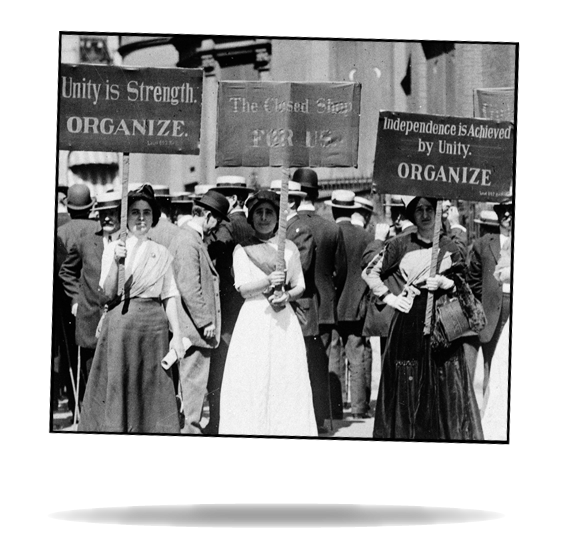
June 28, 1894: Labor Day Is Declared a Federal Holiday

June 28, 1894: President Grover Cleveland signs a bill making Labor Day a federal holiday, on the 1st Monday in September.

Beginning in the late 19th century, as the trade union and labor movements grew, diverse groups of trade unionists chose a variety of days on which to celebrate labor. In the United States, a September holiday called Labor Day was first proposed in the early 1880s.

In 1887, Oregon became the 1st State to make Labor Day an official public holiday. By 1894, 30 States were already officially celebrating Labor Day. In that year, during the Pullman Strike, Congress passed a bill recognizing the 1st Monday of September as Labor Day, and making it an official federal holiday. Cleveland signed the bill into law.

But the law only made it a holiday for federal workers. As late as the 1930s, unions were encouraging workers to strike to make sure they got the day off. All U.S. States, the District of Columbia, and the U.S. Territories have subsequently made Labor Day a statutory holiday.

Labor Day is considered the unofficial end of Summer. Of the 7 percent of Americans who take two-week vacations, many take them during the 2 weeks ending with Labor Day weekend. Many fall activities, such as school and sports, particularly football, begin about this time.

Canada also celebrates Labor Day on the 1st Monday in September. While the U.S. traditionally had baseball doubleheaders on the day, the Canadian Football League plays major rivalries on the day, called "The Labor Day Classic."

*

June 28, 1894 was a Thursday. The only professional sports league in North America at the time was baseball's National League, and these games were played:

* The New York Giants beat the Chicago Colts, 6-5 at West Side Park in Chicago.

* The Brooklyn Bridegrooms beat the Pittsburgh Pirates, 11-7 at Exposition Park in Pittsburgh.

* The Cleveland Spiders beat the Baltimore Orioles, 18-11 at the 1891-1909 version of League Park in Cleveland.

* The Cincinnati Reds beat the Washington Senators, 5-4 at League Park in Cincinnati. Yes, both Ohio teams then played in stadiums named League Park.

* The Louisville Colonels beat the Philadelphia Phillies, 11-9 at the 1893-99 version of Eclipse Park in Louisville, Kentucky.

* And the Boston Beaneaters beat the St. Louis Browns, 12-11 at the version of Sportsman's Park in St. Louis that became Robison Field.

The Spiders, the Orioles, the Senators and the Colonels were tossed out of the League after the 1899 season. The Browns became the St. Louis Cardinals in 1900. The Colts became the Chicago Cubs in 1903. The Bridegrooms became the Brooklyn Superbas in 1899 and the Brooklyn Dodgers in 1911.

And the names Baltimore Orioles, St. Louis Browns and Washington Senators would be adopted by American League teams.

December 31, 1999 & January 1, 2000: The Millennium

December 31, 1999:  The Millennium arrives. The people of planet Earth survived. At a terrible cost. But we hadn't destroyed ourselves. ...