Showing posts with label richard rodgers. Show all posts

Tuesday, November 22, 2022

November 22, 1943: Lorenz Hart Dies

November 22, 1943: Lorenz Hart dies in Manhattan. Years of hard drinking had caught up with him at the age of 48.

Lorenz Milton Hart was born on May 2, 1895 in Manhattan, to Jewish immigrant parents. He was introduced to Richard Rodgers at Columbia University in 1919, and the two of them wrote songs together for the next 24 years. Their hit musicals included On Your Toes, Babes In Arms and Pal Joey. Their individual hits included "Blue Moon," "The Lady Is a Tramp" and "My Funny Valentine."

But "Larry" Hart suffered from depression, which led him to drink heavily. It's been alleged that he was gay and in the closet. When the 1948 film Words and Music was made, with Tom Drake as Rodgers (who wrote the music for their songs) and Mickey Rooney as Hart (who wrote the lyrics), the film covered up for him, attributing his depression and his erratic behavior not to his drinking and his closeted nature, but to an obsession with a woman who rejected him.

In 1943, Rodgers had had enough, and ended their partnership. That same year, Hart's mother, with whom he lived, died. Depression overcame him, and he drank himself into a stupor on November 22, leaving him outside on a cold night, ending his life.

Oscar Hammerstein II, Rodgers' new partner, died in 1960. Rodgers lived on until 1979.

*

November 22, 1943 was a Monday. Baseball was out of season. Football was in midweek. The NBA hadn't been founded yet. The NHL season was underway, but no games were scheduled for this day. So there were no scores on this day. But 2 sports legends were born: Tennis icon Billie Jean King, and hockey star Yvan Cournoyer.

Wednesday, November 16, 2022

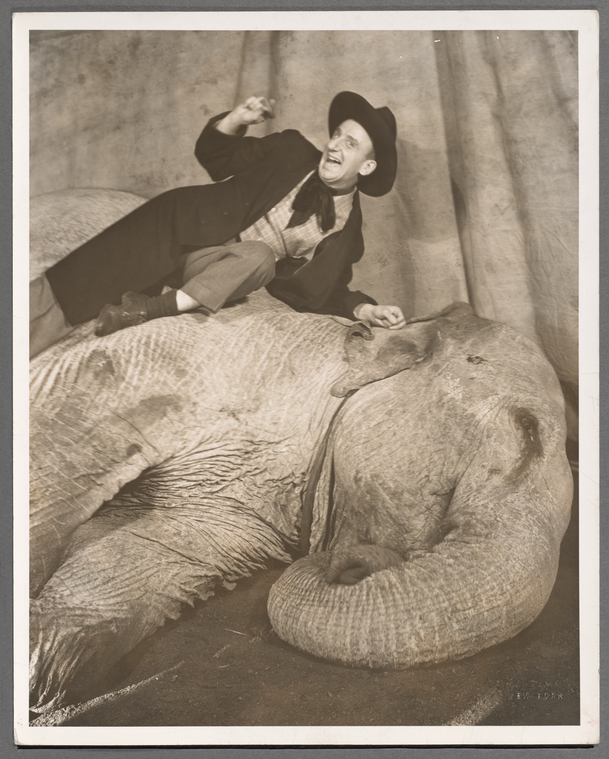
November 16, 1935: Billy Rose's "Jumbo" Premieres, Starring Jimmy Durante

November 16, 1935: Jumbo opens at the New York Hippodrome. The music was written by Richard Rodgers, the lyrics by Lorenz Hart, and the book by Ben Hecht and Charles MacArthur. It was produced by Billy Rose, one of the leading impresarios of the era.

It tells the story of a troubled circus that gets saved by a large elephant, a story based on how the real Jumbo was featured by P.T. Barnum from 1882 until its death in 1885. It is filmed in 1962, as Billy Rose's Jumbo, as Rose made a deal that, if it were ever made into a movie, his name would appear in the title, even if he had nothing to do with it.

William Samuel Rosenberg was born on September 6, 1899 in Manhattan. He began his entertainment career as a songwriter, writing the lyrics for such songs as "Me and My Shadow" with Edward Eliscu, "Does the Spearmint Lose Its Flavor on the Bedpost Overnight" (later "Does Your Chewing Gum Lose... ") with Marty Bloom, "I Found a Million Dollar Baby" with Mort Dixon, and "It's Only a Paper Moon" with Yip Harburg.

He moved into producing shows, including several on Broadway. In 1937, he established Billy Rose's Aquacade, a water stunt show, moving it to the New York World's Fair in 1939. The amphitheater where it was staged was one of the last remaining structures from that Fair.

He was married 5 times to 4 different women. The 1st of these was the famed comedienne Fanny Brice, on whom the musical Funny Girl was based. The 2nd was Olympic Gold Medal swimmer Eleanor Holm, who starred in his Aquacade. Their affair had broken up both of their marriages. His 3rd and 4th wife was showgirl Joyce Matthews, who had also married and divorced comedian Milton Berle twice.

In his later years, Rose continued to run theaters and produce shows, and was an activist for the State of Israel. He died on February 10, 1966, at his vacation home in Montego Bay, Jamaica.

The star of both the Broadway and the film versions of Jumbo was Jimmy Durante. In it, he led a live elephant across the stage. An actor playing a policeman asked him, "What are you doing with that elephant?" Durante said, "What elephant?" Thus was born the expression "the elephant in the room." Doris Day co-starred in the film version.

James Francis Durante was born on February 10, 1893, on the Lower East Side of Manhattan, the son of immigrants from Salerno in southern Italy. In 1918, Durante's Original New Orleans Jazz Band (he was the only member not from New Orleans) was (as far as is known) the 1st racially integrated jazz band. Known as "Ragtime Jimmy," he played piano and sang, but he couldn't resist stopping a song to tell a joke.

He was nicknamed "Schnozzola" (an Italianization of the Yiddish word "schnoz") for his enormous nose, but his heart was bigger. Through vaudeville, film, radio and television, he made people laugh from coast to coast. He was known for singing the 1934 hit "Inka Dinka Doo," the 1944 hit "You Gotta Start Off Each Day With a Song," and his version of the 1954 hit "Young at Heart." His catchphrases included "Ah-cha-cha-cha!" "Everybody wants to get into the act!" and "I got a million of 'em!"

In the 1942 film The Man Who Came to Dinner, he played Banjo, a character based on Harpo Marx of the Marx Brothers. In 1963, he played Smiler Grogan, the dying gangster whose stash of cash kicks off the "cast of thousands" comedy It's a Mad, Mad, Mad, Mad World. In 1969, he voiced the narrator of the Christmas special Frosty the Snowman. He inspired numerous cartoon characters, including Spike the bulldog in the Tom & Jerry cartoons, and Doggie Daddy (father of Augie Doggie) from the Hanna-Barbera cartoons.

He hosted 2 different TV shows in the 1950s, closing by saying, "And goodnight, Mrs. Calabash, wherever you are." "Mrs. Calabash" was his pet name for his 1st wife, Jeanne Olsen, died in 1943.

Jimmy was a poor kid who made it big, and, unlike some, he never forgot. He was a big supporter of President Franklin D. Roosevelt's New Deal. He was one of the performers at the Madison Square Garden fundraiser for President John F. Kennedy's birthday in 1962, which everyone remembered for Marilyn Monroe singing "Happy Birthday."

He died on January 29, 1980. The Shriners had a statue made of him, for his contributions to their cause, with an inscription that truthfully stated that his heart was even bigger than his nose.

The Hippodrome Theatrealso called the New York Hippodrome, was on 6th Avenue between 43rd and 44th Streets, a block east of Times Square. It operated from 1905 to 1939 and was called the world's largest theater by its builders, with a seating capacity of 5,300 and a stage measuring 100 by 200 feet. It had state-of-the-art theatrical technology, including a tank built into the stage apron that could be filled with water for aquatic performances. A modern office tower known as The Hippodrome Center opened on the site in 1952.

*

November 16, 1935 was a Saturday. Political columnist Elizabeth Drew was born.

Baseball was out of season. The NBA hadn't been founded yet. There were 2 games in the NHL. The New York Rangers lost to the Toronto Maple Leafs, 3-2 at Maple Leaf Gardens in Toronto. And the Montreal Maroons beat the Boston Bruins, 1-0 at the Montreal Forum.

And these notable college football games were played:

* Minnesota beat Michigan, 40-0. It was one of the worst defeats the Wolverines have ever sustained at Michigan Stadium in Ann Arbor. The Golden Gophers went on to go undefeated and win the Big Ten Conference and National Championships.

* In a major rivalry, Virginia and Virginia Tech played to a tie, 0-0 at Scott Stadium in Charlottesville, Virginia.

* In a major rivalry, Duke beat North Carolina, 25-0 at Duke Stadium (now Wallace Wade Stadium) in Durham, North Carolina. Duke won the Southern Conference Championship.

* In a major rivalry, Vanderbilt beat Tennessee, 13-7 at Shields-Watkins Field (later Neyland Stadium) in Knoxville, Tennessee. At the time, this was not an upset, let alone a major one, like it would be in the modern era.

* Louisiana State University beat Georgia, 13-0 at Sanford Stadium in Athens, Georgia. This clinched the Southeastern Conference Championship for LSU.

* The University of Pittsburgh beat Nebraska, 6-0 at Pitt Stadium in Pittsburgh. In spite of their defeat, Nebraska won the Big Six Conference title.

* Southern Methodist University beat Arkansas, 17-6 at The Hill in Fayetteville, Arkansas.

* Texas Christian University beat Texas, 28-0 at Memorial Stadium in Austin. Two weeks later, SMU beat TCU to win the Southwest Conference Championship. TCU went on to beat LSU in the Sugar Bowl.

* Stanford beat the University of Montana, 32-0 at Stanford Stadium in the San Francisco suburb of Palo Alto, California. The next week, Stanford beat the University of California, to win the Pacific Coast Conference title. They went on to beat SMU in the Rose Bowl, 7-0, eliminating SMU from National Championship consideration. A 7-6 loss to UCLA earlier in the season cost them an undefeated season and the National Championship.

* Army and Notre Dame played to a 6-6 tie in front of 78,114 people at Yankee Stadium.

* Navy beat Columbia, 28-7 at Thompson Stadium in Annapolis, Maryland.

* Fordham beat Muhlenberg, 45-0 at the Polo Grounds.

* The University of Pennsylvania beat Penn State, 33-6 at Franklin Field in Philadelphia.

* Princeton beat Lehigh, 27-0 at Palmer Stadium in Princeton, New Jersey.

* And the night before, New York University beat Rutgers, 48-0 at Ohio Field in The Bronx.

Tuesday, April 19, 2022

April 19, 1945: "Carousel" Premieres On Broadway

April 19, 1945: The musical Carousel premieres at the Majestic Theatre, 245 West 44th Street in Midtown Manhattan, just off Broadway. It was based on Liliom, a play by Hungarian author Ferenc Molnár.

The music was written by Richard Rodgers, who later called it his favorite among all his musicals. Oscar Hammerstein II wrote the book and the lyrics.

The story begins in 1873, in a seaside community in Maine. Billy Bigelow is a carnival barker, and Julie Jordan is a millworker. Billy romances Julie while he's on the clock. Julie appreciates this, but his boss doesn't, and Billy is fired. Julie stays out late with Billy. Billy appreciates this, but her boss, who sees them, and presumes this means she won't be on time to work tomorrow morning, doesn't, and she's fired.

Billy and Julie get married. A month goes by, and Billy is offered a chance to make a lot of money -- in a robbery. He's not sure he should do it. Julie tells him she's pregnant. Now, he knows he needs the money, and goes in on the robbery. It goes sideways, and Billy dies. Julie is comforted by her cousin and best friend Nettie Fowler, leading to the musical's most familiar song, "You'll Never Walk Alone."

Billy arrives in Heaven, and is told that the good he's done in life is outweighed by the bad. He's told that as long as there's a person alive who remembers him with fondness, he can get into Heaven.

He's taken to the future, to see his now-grown daughter Louise. He makes himself visible to her, telling her not that he's her father, but that he was her father's friend. He offers her a gift: A star that he took from Heaven. She refuses it. He slaps her hand, seemingly ruining his chance at getting back to Heaven. Julie notices the star on the ground, picks it up, and seems to feel Billy's presence.

Invisible, Billy attends Louise's graduation. Dr. Seldon, the town doctor, who resembles the Starkeeper who has been advising Billy "Up There," tells the graduating class that they shouldn't rely on their parents' successes, but also shouldn't be held back by their failures. Still invisible, Billy whispers in Louise's ear, telling her to believe the doctor. Then he whispers to Julie, telling her that he loves her. Both his widow and his daughter join in singing "You'll Never Walk Alone," and Billy is taken to Heaven.

In the original Broadway production, Billy was played by John Raitt, father of rock legend Bonnie Raitt; Julie by Jan Clayton; Louise by Bambi Linn; Nettie by Christine Johnson; and the dual role of the Starkeeper and Dr. Seldon by Russell Collins.

It was made into a film in 1956. Gordon MacRae played Billy, Shirley Jones played Julie, Susan Luckey played Louise, Claramae Turner played Nettie, and Gene Lockhart played the Starkeeper and the doctor.

"You'll Never Walk Alone" became a standard. Jerry Lewis would use it to close his annual Labor Day telethon for research into muscular dystrophy and related conditions. Elvis Presley made it a mainstay of his live performances from his Las Vegas debut in 1969 until his death in 1977.

In 1963, Liverpool rock band Gerry & The Pacemakers recorded a version that hit Number 1 on the British charts. (It was not released as a single in the U.S.) In the 1960s, at Anfield, the home stadium of Liverpool F.C., games would be preceded by the public address system playing the Top 10 songs in the country. "You'll Never Walk Alone" seemed to stick with the fans, as they began to ask to have it played last every week, even after it began to drop from the charts, just before the team walked onto the pitch. This was done, and Liverpool, managed by Bill Shankly, won the Football League in 1964.

After that, in England, the song was irrevocably tied to the Mersey Reds. After the Hillsborough Disaster of 1989, the words of the song gave hope to a grieving city. The words "YOU'LL NEVER WALK ALONE" are now cast in iron atop the Shankly Gates leading into Anfield.

Most Liverpool fans don't even realize that the song debuted on Broadway, in New York, in America, during the waning days of World War II.

*

April 19, 1945 was a Thursday. It was 7 days after the death of President Franklin D. Roosevelt, 11 days before the death of Adolf Hitler, 19 days before Nazi Germany surrendered, and 4 months before Japan surrendered to end World War II.

April 19 was also the day of Game 5 of the Stanley Cup Finals. The Detroit Red Wings beat the Toronto Maple Leafs, 2-0 at the Olympia Stadium in Detroit.

In 1942, the Wings had won the 1st 3 games of the Finals, then the Leafs took the next 4, becoming the 1st team to come back from a 3-0 deficit to win a finals in any sport. It has since happened in other rounds, but never again in a finals. In 1945, it looked like it might be reversed: The Leafs took the 1st 3, then the Wings took the next 3. But the Leafs won Game 7 on April 22, and won the Cup.

And an entire slate of major league baseball games was played, and then some:

* The New York Yankees beat the Boston Red Sox, 4-3 at Yankee Stadium. No home runs, but George "Snuffy" Stirnweiss reached base 5 times: A double, 2 singles and 2 walks. Monk Dubiel went the distance for the win.

* A doubleheader was split at Braves Field in Boston. The New York Giants won the opener, 4-3. The Boston Braves won the nightcap, 13-5.

* The Brooklyn Dodgers beat the Philadelphia Phillies, 3-1 at Ebbets Field.

* The Washington Senators beat the Philadelphia Athletics, 4-3 at Shibe Park in Philadelphia. George Case, better known for his baserunning, won the game with a home run leading off the top of the 12th inning.

* The Chicago White Sox beat the Cleveland Indians, 14-6 at League Park in Cleveland.

* The Pittsburgh Pirates beat the Cincinnati Reds, 5-1 at Crosley Field in Cincinnati.

* The St. Louis Cardinals beat the Chicago Cubs, 8-2 at Wrigley Field in Chicago.

* And the Detroit Red Wings beat the St. Louis Browns, 1-0 at Sportsman's Park in St. Louis. Al Benton pitched a 4-hit shutout. Benton is better remembered as the only pitcher to strike out both Babe Ruth and Mickey Mantle. 

Thursday, April 14, 2022

April 14, 1937: "Babes In Arms" Premieres On Broadway

Mickey Rooney and Judy Garland in the film version

April 14, 1937: Babes In Arms premieres on Broadway, at the Shubert Theatre. Written by Richard Rodgers and Lorenz Hart, its text is not memorable. Most of its actors, led by Mitzi Green, aren't, either. But it did include brothers Harold and Fayard Nicholas, black men known for spectacular dance routines, as you can see if you check out the 1939 film version, with Mickey Rooney and Judy Garland.

It was the 1st of 10 movies that Rooney and Garland would make together. Typically, they would be teenagers deciding to put on a show together, while their parents are either absent -- due to death, or being out of town -- or looking on bemusedly.

The songs include "Where Or When," "My Funny Valentine" and "The Lady Is a Tramp." Considering those 3 songs alone, and what they would eventually mean to his repertoire, in retrospect, Frank Sinatra was right when he sang, "When I was 21, it was a very good year."

"Where Or When" would also be a hit in 1960 for Dion & the Belmonts.

*

April 14, 1937 was a Wednesday. The baseball season began 5 days later. Football was out of season. The NBA hadn't been founded yet. The Stanley Cup Finals were in progress, and, the next day, the Detroit Red Wings beat the New York Rangers, 3-0 at the Olympia Stadium in Detroit, to win the Stanley Cup. So there were no scores on this day.

Sunday, April 3, 2022

April 3, 1961: "Blue Moon" by The Marcels: The Final Triumph of Rock and Roll

The best known photo of The Marcels, but not the original lineup.
 Back row, left to right: Ronaldo "Bingo" Mundy,
Cornelius "Nini" Harp, Walt Maddox.
Front row: Allen Johnson (left) and Fred Johnson.

April 3, 1961: "Blue Moon" by The Marcels hits Number 1 on Billboard magazine's Hot 100. This marks the final triumph of rock and roll over the music it replaced.

How can I say that? Because rock and roll had taken one of the top songs in what had already become unofficially known as "The Great American Songbook," by one of its greatest songwriting teams, and turned it into a rock and roll song, and made it better. Much better.

In 1933, Richard Rodgers and Lorenz "Larry" Hart were hired by Metro-Goldwyn-Mayer to write the songs for its film Hollywood Party. Rodgers recalled:

One of our ideas was to include a scene in which Jean Harlow is shown as an innocent young girl saying, or rather singing, her prayers. How the sequence fitted into the movie I haven't the foggiest notion, but the purpose was to express Harlow's overwhelming ambition to become a movie star.

So it became:

Oh Lord
if You're not busy up there
I ask for help with a prayer.
So please don't give me the air.

But the song was not recorded, and Harlow didn't even appear in the finished movie. Hart wrote new lyrics for the tune, as the title song for the 1934 film Manhattan Melodrama:

Act One:
You gulp your coffee and run.
Into the subway you crowd.
Don't breathe, it isn't allowed.

But, again, the song was cut from the film. The studio then asked for a nightclub number for the film. Rodgers still liked the melody, so Hart wrote a third lyric, titling it "The Bad in Every Man":

Oh Lord
I could be good to a lover
But then I always discover
the bad in ev'ry man.

Finally, the song was included, and sung by Shirley Ross. Jack Robbins, the head of MGM's publishing company, decided that the tune was suited to commercial release, but needed more romantic lyrics and "a punchier title." Hart was initially reluctant to write yet another lyric, but he was persuaded, with these results:

Blue moon, you saw me standing aloneWithout a dream in my heartWithout a love of my own.
Blue moon, you knew just what I was there forYou heard me saying a prayer forSomeone I really could care for.
And then there suddenly appeared before meThe only one my arms will holdI heard somebody whisper, "Please adore me"And when I looked, the moon had turned to gold.
Blue moonNow I'm no longer aloneWithout a dream in my heartWithout a love of my own.
Robbins licensed the final version of the song to Hollywood Hotel, a nationally-syndicated (non-network) radio program, which used it as the theme. The cover of Robbins' 1934 sheet music edition credits the song to Ted Fio Rito, with a vocal by Muzzy Marcellino, recorded on Brunswick 7315, on October 19, 1934. Billboard magazine wasn't yet publishing popular music charts (they started in 1940), but Variety, the "trade paper" for the American film industry, did, and Fio Rito's version of "Blue Moon" hit Number 1 in their January 26, 1935 edition.

The song became a "standard," part of what has come to be called "The Great American Songbook." Billy Eckstine and Mel Tormé each had a hit with it in 1949. In 1954, in one of his earliest recordings, Elvis Presley recorded it, having already recorded Bill Monroe's bluegrass song "Blue Moon of Kentucky," which bears no relation beyond title to "Blue Moon."

On February 15, 1961, The Marcels, a doo-wop group from Pittsburgh, recorded the song for Colpix Records, for an album of the same title. It also included "Over the Rainbow" from The Wizard of Oz

Unusually for a doo-wop group, but like fellow Pittsburghers The Dell-Vikings, The Marcels were racially integrated: Gene Bricker and Richard Knauss were white, while lead singer Cornelius "Nini" Harp, bass singer Fred Johnson, and Ronald "Bingo" Mundy were black. The group was named after Harp's hairstyle, "The Marcel Wave."

They sang "Blue Moon" in doo-wop style, and it hit Number 1 in the April 3 edition of Billboard. It was followed by another rocked-up version of a standard, the 1931 Al Kenner and John Hoffman song "Heartaches," but that would be their last Top 10 hit.

It didn't help that Southern venues wouldn't book an integrated group. So the white members, Bricker and Knauss, left in 1962. The replacements were Walt Maddox and Johnson's brother Allen Johnson.

In 1979, the film An American Werewolf in London was released. Bobby Vinton's soft version of "Blue Moon" plays over the opening credits. Sam Cooke's slow version plays when the main character undergoes his first transformation. And The Marcels' version plays over the closing credits.

In a 1981 episode of Laverne & Shirley, set in 1965, characters argue over music, agree that they both like "Blue Moon," but disagree as to the versions: Frank DeFazio (Laverne's father, played by Phil Foster) loves the 1934 original, while Carmine Ragusa (Shirley's ex-boyfriend and still the group's friend, played by Eddie Mekka) prefers the 1961 doo-wopper. In a fantasy sequence, Leslie Easterbrook, who played group friend Rhonda Lee, sings both versions.

Lorenz Hart died in 1943, Sam Cooke was killed in 1964, Ted Fio Rito died in 1971, Elvis Presley in 1977, Richard Rodgers in 1979, Billy Eckstine in 1993, Maurice "Muzzy" Marcelino in 1997, and Mel Tormé in 1999. As of April 3, 2022, Bobby Vinton is still alive.

Of The Marcels: Gene Bricker died in 1983, Allen Johnson in 1995, lead singer Cornelius "Nini" Harp in 2013, Ronald "Bingo" Mundy in 2017, and Fred Johnson, the bass singer who gave the song it's "Bomp-ba-ba-bomp-a-dang-a-dang-dang," in 2022. Walt Maddox was definitely still alive at that point, and I can find no date of death for Richard Knauss, so he may still be alive, which would make him the last surviving original member.

*

April 3, 1961 was a Monday. Comedian and actor Eddie Murphy was born. So was ill-fated baseball pitcher Tim Crews, who died in a boating accident during Spring Training in 1993.

On this day, as well, baseball was in Spring Training. Football was out of season. No NBA games were scheduled. And while the Stanley Cup Playoffs were in progress, no games were played. So there were no scores on this historic day.

Thursday, March 31, 2022

March 31, 1943: "Oklahoma!" Premieres On Broadway

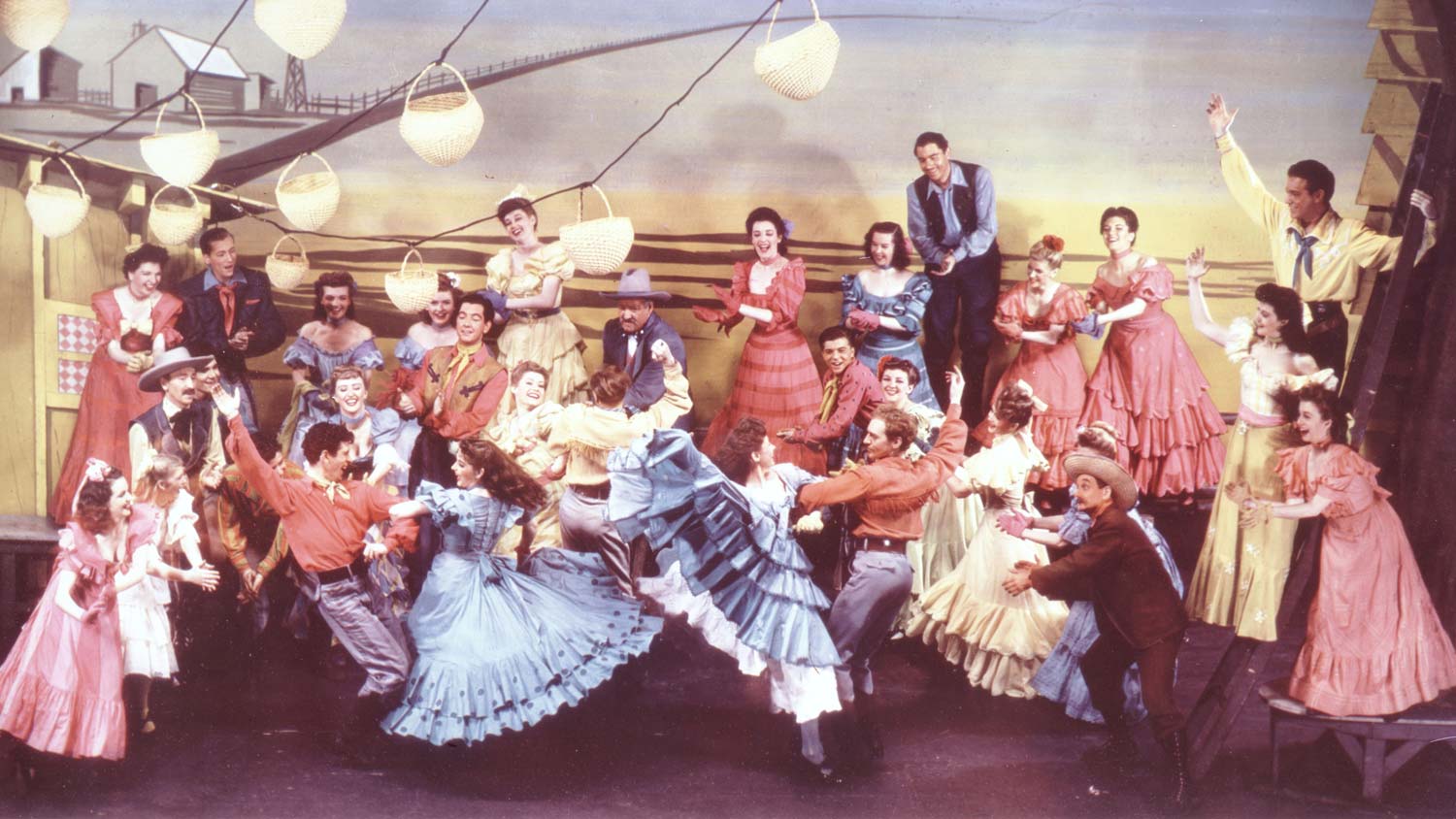
March 31, 1943: The musical Oklahoma! premieres on Broadway, written by Richard Rodgers and Oscar Hammerstein II, beginning one of the great partnerships in musical history -- but also ending another.

In 1919, composer Richard Rodgers began to write songs with lyricist Lorenz "Larry" Hart. It took them until 1925 to have their first Broadway success, The Garrick Gaeties. Over the next 15 years, they would produce many instances of what would later be called "standards" and "The Great American Songbook": "Thou Swell," "Ten Cents a Dance," "Isn't It Romantic?" "Blue Moon," "There's a Small Hotel," "Where Or When," "My Funny Valentine," "The Lady Is a Tramp," and "Bewitched, Bothered and Bewildered."

By 1942, Hart had fallen so deep into alcoholism that he had become unreliable. So when Rodgers wanted to write his next musical, he turned to Oscar Hammerstein II. Neither Hart nor Hammerstein's writing partner, Jerome Kern, objected.

Hammerstein, the grandson and namesake of an opera impresario, and Kern had changed Broadway forever with Show Boat in 1927, including "Old Man River." Later, they wrote "I Won't Dance," "The Way You Look Tonight," and "Smoke Gets In Your Eyes."

Before Show Boat, most musicals were light in tone, light in tune, and light on story. Much like a rock and roll album from the Beatle era onward, a 1920s musical would be lucky to have one of its songs remembered. But Show Boat began the era of the "book musical," a play where the story mattered, might be serious, and the songs and dances were fully integrated into it.

Oklahoma!, based on Green Grow the Lilacs, a 1931 play by Lynn Riggs, took this a step further, featuring musical themes, or motifs, that recurred throughout the show, to connect the music and the story, set in 1907, at the time of Oklahoma gaining Statehood.

And the show would be remembered for considerably more than one song: There would be the title tune, plus "Oh, What a Beautiful Mornin'," "The Surrey with the Fringe on Top," "Kansas City" (not the later Wilbert Harrison song: This is a comedy tune, about how "Everything's up to date" there in 1907), and "People Will Say We're In Love."

It premiered  on March 31, 1943, at the St. James Theatre, at 246 West 44th Street. (It is still in operation.) Rouben Mamoulian directed it, and Agnes de Mille choreographed it. The original stars were Alfred Drake as Curly McLain, Joan Roberts as Laurey Williams, Celeste Holm as Ado Annie Carnes, and Howard Da Silva as Jud Fry.

The show was an absolute smash, just what the public needed during those dark days of World War II. The Tony Awards didn't start until 1948, so it didn't win any. But it ran for 5 years, 2,212 performances, a record that stood until My Fair Lady surpassed it at the end of the 1950s.

Just 8 months after the premiere, Hart was dead, only 48 years old; 2 years after that, so was Kern, at 60. Hammerstein lived on until 1960, Rodgers until 1979.

It was filmed in 1955, with Gordon MacRae as Curly, Shirley Jones (his real-life wife at the time) as Laurey, Gloria Graham as Ado Annie, and Rod Steiger as Jud. The film also had Eddie Albert and James Whitmore.

*

March 31, 1943 was a Wednesday. Actor Christopher Walken was born. But there were no scores on this historic day. The baseball season hadn't yet begun. Football was in the off-season. The NBA hadn't been founded yet. And the NHL had no games scheduled: The Stanley Cup Semifinals had both ended the day before, and the Finals began the next day. The Detroit Red Wings ended up beating the Boston Bruins in 4 straight.

Tuesday, March 29, 2022

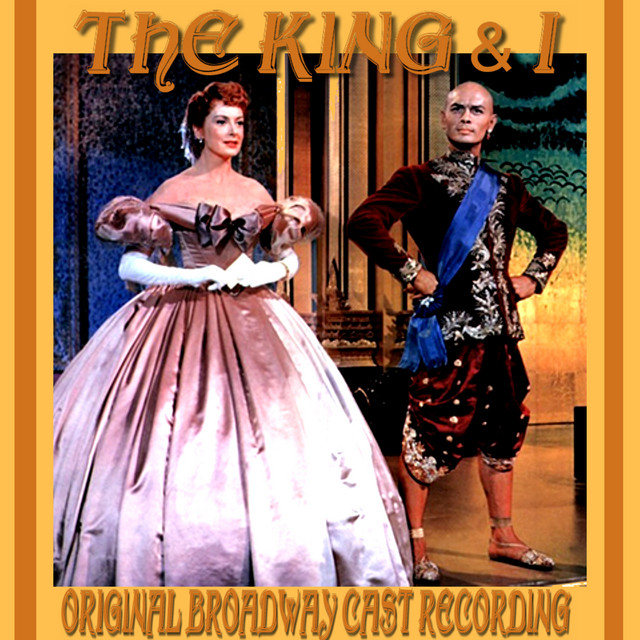
March 29, 1951: “The King and I” Premieres On Broadway

March 29, 1951: The King and I premieres at the St. James Theatre in New York, based on the 1944 novel Anna and the King of Siam by Margaret Landon. That novel was filmed in 1946, with Rex Harrison as King Mongkut and Irene Dunne as Anna Leonowens.

Both the novel and the musical are full of baloney. But then, the real Anna was something of a con artist herself. Born in 1831 in India, to an English father serving in the army there and a mother who may have been mixed-race, she made up a backstory for herself to hide her true background. She became a teacher, married, had 4 children, and was widowed. She spent some time teaching in Australia and Singapore before being hired by the royal court of Siam in 1862. (The country's name was changed to Thailand in 1939.)

Mongkut was born in 1804, and became King, under the regnal name Rama IV, in 1851. He wanted to give his 39 wives, his concubines, and his 82 children a modern Western education on scientific secular lines, which earlier missionaries' wives had not provided.

Leonowens served at court until 1867, nearly 6 years, first as a teacher, and later as language secretary for the King. Although her position carried great respect, and even a degree of political influence, she did not find the terms and condition her employment to her satisfaction. And, despite her position at the king's court, she was never invited into the social circle of the British merchants and traders of the area. She and the King were never romantically involved. She left not long before his death in 1868. In later life, she was a lecturer of Indology and a suffragist. She died in Montreal in 1915.

Richard Rodgers and Oscar Hammerstein wrote the musical, and Jerome Robbins choreographed it. It starred Yul Brynner and Gertrude Lawrence. Both would be touched by tragedy with the play: Lawrence already had cancer, and died on September 6, 1952; while Brynner, a lifelong smoker, began playing the role again in 1977, and did so almost continuously despite his own cancer diagnosis in 1983. In spite of the pain, he never let up, doing the full "Shall We Dance?" number with Mary Beth Peil. He died on October 10, 1985, having played Mongkut for the 4,625th and last time on June 30.

Brynner also starred in the 1956 film version, with Deborah Kerr as Anna. As with Natalie Wood in the film version of West Side Story and Audrey Hepburn in My Fair Lady, Kerr's singing was dubbed by Marni Nixon. Sadly, these would not remain the most famous recordings by someone named Nixon.

The St. James Theatre still stands, at 246 West 44th Street. Among its other original productions: A theatrical version of Richard Wright's Native Son in 1941, Rodgers & Hammerstein's Oklahoma! in 1943, Where's Charley? in 1948, The Pajama Game in 1954, Flower Drum Song in 1958, Becket (not a musical) in 1960, Hello, Dolly! in 1964, Barnum in 1980, and the 1st rock opera to be turned into a Broadway play, The Who's Tommy, in 1993. When COVID shut Broadway down, it was hosting a live musical version of Disney's Frozen. It had been running for 2 years, but they had to let it go.

*

March 29, 1951 was a Thursday. Nick Ut, the Vietnamese photographer who took the photo of Kim Phuc running through her napalm-bombed village, was born on this day. This was also the day that José Ferrer became the 1st Hispanic actor to receive an Academy Award. I have a separate entry for that event.

Baseball was in Spring Training. Football was out of season. There were 2 games in the NBA. The New York Knicks lost to the Syracuse Nationals, 102-80 at the State Fair Coliseum in Syracuse, New York. And the Minneapolis Lakers beat the Rochester Royals, 76-73 at the Minneapolis Auditorium.

There was a Stanley Cup Playoff game that night: The Montreal Canadiens beat the Detroit Red Wings, 1-0 at the Olympia Stadium in Detroit. It took until 2:20 of the 3rd overtime before a goal could be found, and Maurice "the Rocket" Richard of the Canadiens found it.

Friday, March 18, 2022

March 18, 1961: John Coltrane Releases "My Favorite Things"

March 18, 1961: Jazz saxophonist John Coltrane releases his album My Favorite Things. It changes jazz music forever -- and changes pop music forever, too.

Originally influenced by saxophonists Lester Young and Johnny Hodges, he became a fan of Coleman Hawkins, Ben Webster and Tab Smith, citing them in a later interview as doing things "that I didn't understand, but that I felt emotionally." The leading saxophonist of the immediate post-World War II years was Charlie Parker, and Coltrane was fortunate enough to work with him, and with Hodges, and the trumpeter with whom Parker developed "bebop," John "Dizzy" Gillespie.

In 1955, trumpeter Miles Davis invited Coltrane to play with him. This lasted for 2 years, before, like so many other jazz musicians had, including Davis, Coltrane fell to heroin addiction. Once past that, he worked with pianist Thelonious Monk, for a few months, then rejoined Davis, working with him and Julian "Cannonball" Adderley on Davis' magnum opus, Kind of Blue.

In 1960, Coltrane went solo, and recorded the album Giant Steps on Atlantic Records. The following year, he formed a new quartet, with pianist McCoy Tyner, bass fiddler Jimmy Garrison, and drummer Elvin "The Emperor" Jones.

They recorded My Favorite Things, including the title track, a number from the Broadway show The Sound of Music. The character of Maria, played by Mary Martin in the 1959 musical (and, yet to come, Julie Andrews in the 1965 film), sings "My Favorite Things" as a straightforward pop number, talking about things she loves, like raindrops on roses and whiskers on kittens: "When I'm feeling sad, I simply remember my favorite things, and then I don't feel so bad!" It remains the best-known song from the show, and probably would even if Coltrane had never said, "Hey, here's an idea... "

In 13 minutes and 49 seconds, with extended solos from Coltrane on soprano saxophone and Tyner on piano, became something completely different, something composers Richard Rodgers and Oscar Hammerstein had never imagined. On later live versions, the Quartet would add flute player Eric Dolphy, and his high, piercing solo added a new level to it.

It was a revelation, but not a total shock, as Davis had already done something similar with George & Ira Gershwin's 1935 opera Porgy and Bess. Speaking of the Gershwins, the B side of the album was made up of an 11:31 version of "Summertime" from Porgy and Bess; and But Not for Me, from the Gershwins' 1930 musical Girl Crazy. The A side was was "My Favorite Things" and a 5:39 version of Cole Porter's 1944 song "Evry Time We Say Goodbye."

Calendar year 1961 would see another Richard Rodgers classic turned on its head. "Blue Moon," which he'd written with Lorenz Hart in 1934, was recorded by The Marcels, a racially-integrated doo-wop group from Pittsburgh, and it hit Number 1 on Billboard's Hot 100 on April 3.

*

March 18, 1961 was a Saturday. Baseball was in Spring Training. Football was out of season. There were 2 games played in the NBA. The Syracuse Nationals beat the Philadelphia 76ers, 106-103 at the Philadelphia Civic Center. Wilt Chamberlain scored 33 points and grabbed 23 rebounds for the Warriors. In 1962, the Warriors moved to San Francisco. In 1963, the Nationals took their place, becoming the Philadelphia 76ers.

And the Detroit Pistons beat the Los Angeles Lakers, 123-114 at Cobo Hall (now Huntington Place) in Detroit. Elgien Baylor scored 47 points in defeat for the Lakers.

There were 2 games played in the NHL. The Chicago Black Hawks beat the Montreal Canadiens, 4-1 at the Montreal Forum. And the Toronto Maple Leafs beat the Boston Bruins, 6-2 at Maple Leaf Gardens in Detroit. The New York Rangers and the Detroit Red Wings were not scheduled.

And in English soccer, the North London team I would one day root for, Arsenal, played Manchester United to a 1-1 draw at Old Trafford, in Salford, outside Manchester.

Wednesday, March 2, 2022

March 2, 1965: The Film Version of "The Sound of Music" Premieres

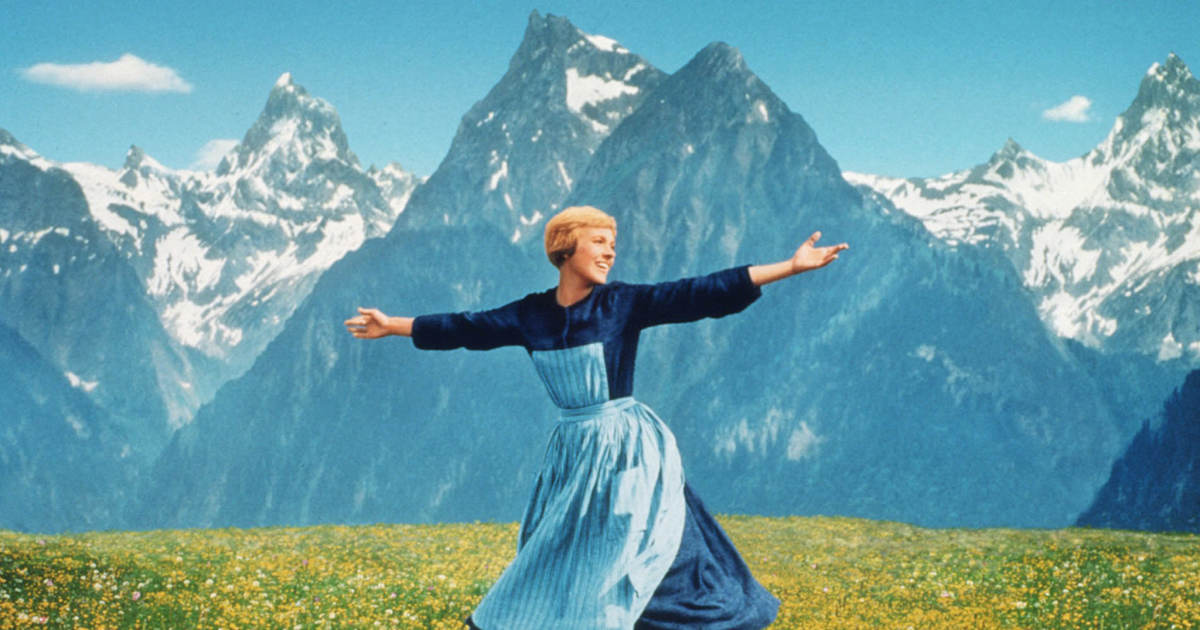
March 2, 1965: The film version of the 1959 musical The Sound of Music premieres, starring Julie Andrews and Christopher Plummer. It proves to be more significant than the musical on which it was based.

The musical was written by Richard Rodgers and Oscar Hammerstein II, and based on The Story of the Trapp Family Singers, published in 1949 by Maria von Trapp. It premiered on November 16, 1959, at the Lunt-Fontanne Theatre. It starred Mary Martin -- already a Broadway legend, and her son Larry Hagman had already begun his acting career) as the woman who begins the story as Sister Maria Rainer and ends it was Mrs. von Trapp; and Theodore Bikel as Captain Georg von Trapp. It ran for 3 1/2 years, and won the Tony Award for Best Musical, with Martin winning the Tony for Best Actress.

Multiple directors were chosen for the film adaptation, before Robert Wise, who had done the film version of West Side Story, was chosen. His only choice to play Maria was Julie Andrews, who had originated the Broadway roles of Eliza Doolittle in My Fair Lady and Queen Guinevere in Camelot. She had been rejected for the film version of My Fair Lady, in favor of Audrey Hepburn, because she'd never been in a movie before. Result? In her 1st movie, Mary Poppins, she beat Hepburn for the Academy Award for Best Actress.

Wise had to talk Broadway veteran Christopher Plummer into playing Captain von Trapp. He ended up hating the film for the rest of his life, but he was great in it. Some of the filming was done in Salzburg, Austria, hometown of the Captain -- and of Wolfgang Amadeus Mozart.

The story begins in 1938, just before Austria was annexed by Nazi Germany in the Anschluss. The nuns at an abbey are wondering about a free-spirited novice: The song is titled "How Do You Solve a Problem Like Maria?" (Definitely not to be confused with the "Maria" song from West Side Story.) She is loaned out to be the governess of the 7 children of the widowed retired naval officer, Captain Georg von Trapp. The children have chased several governesses away, but Maria wins them over.

She even wins over the hard-hearted, strict Captain, who had been engaged to be married to a Baroness, but, seeing that he has feelings for Maria, she breaks the engagement. Maria gets permission from the convent to leave the order and marry Georg. She has been instructing the children in music, and they enter the Salzburg Festival.

But the Anschluss comes first, and Georg is ordered to report to the Kriegsmarine, the Nazi Navy. Georg despises the Nazis, but an agreement is reached: The family will be allowed to compete in the festival, and after it, he will be escorted to the naval base. They sing, and win, but the nuns aid them in escaping. The final scene shows them escaping over the border into Switzerland: The song is "Climb Ev'ry Mountain."

Other songs include the title tract, "Sixteen Going on Seventeen," "The Lonely Goatherd," "Do-Re-Mi," "Edelweiss," "So Long, Farewell," and "My Favorite Things." This last song had been considered one of the most saccharine ever written in its Broadway period, but jazz saxophonist John Coltrane had turned it into a long instrumental masterpiece.

The film was nominated for 10 Oscars, winning 5, including Best Picture, and Best Director for Wise. Andrews was nominated, but lost to Julie Christie for Darling. Plummer was not nominated. These other heavyweights were: Richard Burton for The Spy Who Came In from the Cold, Laurence Olivier for Othello, Rod Steiger for The Pawnbroker, Oskar Werner for Ship of Fools, and the winner, Lee Marvin, for Cat Ballou.

How accurate was the story? Many details were correct, but the names of the children were changed, to protect their real-life privacy. Maria's surname in the movie was Rainer (perhaps a tip of the hat to Oscar-winning German actress Luise Rainer), when, in real life, it was the much harsher Kutschera. And she married Georg not in 1938, but all the way back in 1927. It's been reported that Georg wasn't that strict in real life, that this was exaggerated for dramatic effect. Likewise, the real Maria was, apparently, not very nice. But it was, by all accounts, a loving marriage.

The musical suggests that "Edelweiss," named for a white flower that grows in the Alps, was a traditional Austrian folk song. In fact, it was written for the musical, and was unknown in Austria until after the film was released. It was the last song written by Hammerstein, who died in 1960. Rodgers lived on until 1979.

And the Von Trapps did not try to escape Austria by going over the mountains -- because that would have taken them right into not just Germany, but Berchtesgaden, almost literally into Hitler's backyard. Indeed, their "escape" was not dramatic at all. The family simply walked to the Salzburg Hauptbahnhof and boarded a train to Italy. They were entitled to Italian citizenship since Georg had been born in Zadar, now in Croatia, but then part of the Austro-Hungarian Empire, and had been annexed by Italy after World War I. They were able to emigrate to the United States, via the United Kingdom, on their Italian passports.

The family moved to Stowe, Vermont, where they ran a hotel and ski lodge. Georg died in 1947. Maria never remarried, and lived until 1987. Of the real-life versions of the children: Martina died in 1953 (only 32 years old), Hedwig in 1972, Rupert in 1992, Johanna in 1994, Werner in 2007, Agathe in 2010, Maria Franziska in 2014; and, of the children Georg and Maria had together, Eleonore died in 2021, while Rosemarie and Johannes are still alive. (UPDATE: Rosemarie died on May 13, 2022, age 93.) Various descendants of the various children now make up the touring Trapp Family Singers, while others run the lodge.

Mary Martin died in 1990, Robert Wise in 2005, Theodore Bikel in 2015, and Christopher Plummer in 2021. As of March 2, 2022, Julie Andrews is still alive.

*

March 2, 1965 was a Tuesday. Baseball was in Spring Training. Football was out of season. No NHL games were scheduled. There were 3 games in the NBA:

* The New York Knicks lost to the St. Louis Hawks, 99-98 at the old Madison Square Garden.

* The Cincinnati Royals beat the San Francisco Warriors, 121-105 at the Cincinnati Gardens.

* And the Los Angeles Lakers beat the Philadelphia 76ers, 126-117 at the Los Angeles Memorial Sports Arena. Jerry West scored 34 points.

Monday, January 24, 2022

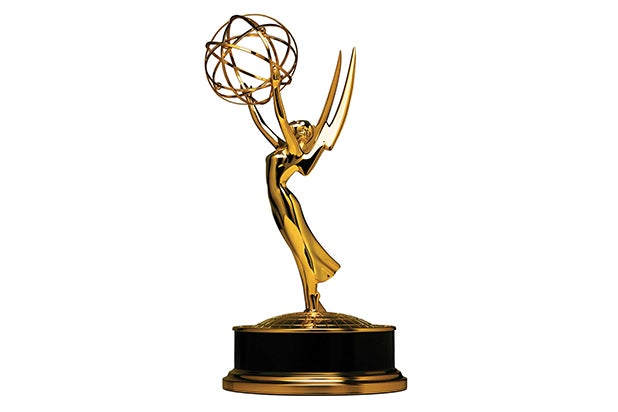
January 25, 1949: The 1st Emmy Awards

January 25, 1949: The 1st Emmy Awards ceremony is held at the Hollywood Athletic Club in Los Angeles, under the auspices of the National Academy of Television Arts and Sciences.

The name "Emmy" is not a derivative of "Emma" or any other feminine name. Nor is the award named after a person, as the Tony Awards were named for Broadway actress and director Antoinette Perry. Rather, it is a corruption of "immy," short for "image orthicon tube," which was common in early TV cameras. So it's a technical term, just as "Grammy" is short for "gramophone," an early term for a record player.

The host was supposed to be Rudy Vallée, already a superstar since the 1920s, but he had to leave town at the last minute, so Walter O'Keefe, host of the NBC game show Double Or Nothing, and the popularizer of the song "The Daring Young Man On the Flying Trapeze," substituted. (He lived until 1983.)

On this occasion, only TV shows produced in Los Angeles County and aired in the Los Angeles metropolitan area were eligible to win. And only 6 awards were given out:

* Most Popular Television Program: Pantomime Quiz, a game show on KTLA-Channel 5, then on the Paramount Television Network, an independent station from 1955 to 1995, on The WB from then until 2006, and on The CW ever since. The show later became Stump the Stars, and lasted from 1947 to 1959, on ABC for most of its run.

* Best Film Made for Television: The Necklace. Unfortunately, there seems to be no surviving footage.

* Most Outstanding Television Personality: Shirley Dinsdale, host of a KTLA show titled Judy Splinters, which was also the name of her ventriloquist's dummy. This made her the 1st woman to win an Emmy. As 2 of the other 4 nominees were Rita LeRoy and Patricia Morison, the chances of a woman winning at the 1st Emmy ceremony were better than you might have thought. By the way: Shirley managed to do this show while attending classes at UCLA.
In 1953, she got married, and, except for a 1958 appearance as a panelist on the game show To Tell the Truth, she retired from show business. In 1970, with her kids now teenagers, she went back to school, and became a pulmonary therapist on Long Island. She lived until 1999.

* Outstanding Overall Performance by a Television Station: KTLA. I'm beginning to notice a pattern.

* Technical Award: Charles Mesak, of Don Lee Television, for his innovation, Phasefader, an improvement for TV cameras.

* And a special award, to the man who designed the Emmy statue, Louis McManus. Instead of his own Emmy, they gave him a plaque. (At least Ed Smith, the NYU football player and male model who modeled for the Heisman Trophy in 1985, eventually got his own copy.)

In 1974, the NATAS (now just "the Academy of Television Arts and Sciences," or ATAS) held the 1st Daytime Emmy Awards. All subsequent broadcasts of the primetime Emmy Awards are called just that: The Primetime Emmy Awards. All previous ceremonies have been retroactively given that name, so that the 1949 ceremony is "The 1st Primetime Emmy Awards." The 2022 edition will be the 74th.

The show with the most Emmy Awards is Saturday Night Live, with 74, but that's understandable, as it's been on the air for 47 years. Number 2 is Game of Thrones, which was on the air for 8 years, and won 59 Emmys.

The actor with the most Emmy wins is Julia Louis-Dreyfus, with 11, in 24 nominations. Angela Lansbury has been nominated 17 times, and has never won. This has attracted far less attention than Susan Lucci got for being nominated for a Daytime Emmy 18 times and never winning, before she finally got hers in 1999. She is now 1-for-21.

The 1st black person to win, in any category (performing or behind the scenes) was Harry Belafonte, in 1960, for his special The Revlon Revue: Tonight With BelafonteThe 1st Hispanic person to win was -- no, not Desi Arnaz for I Love Lucy -- Rita Moreno, in 1977, for Best Supporting Actress for her participation in The Muppet ShowThe 1st Asian person to win was Archie Panjabi, in 2010, for Outstanding Supporting Actress in a Drama Series, for The Good WifeAnd the 1st openly gay person to win was Ellen Degeneres, in 1997, for "The Puppy Episode," the episode of Ellen when her character came out -- but she won for writing it, not for acting in it.

In 1962, songwriter Richard Rodgers won an Emmy, making him not only the 1st person to win one of those and an Oscar, but the first "EGOT": A winner of an Emmy, a Grammy, an Oscar and a Tony.

Venues for the ceremonies:

* 1949: Hollywood Athletic Club

* 1950-51: Ambassador Hotel

* 1952, 1957: Cocoanut Grove

* 1953: Hotel Statler

* 1954, 1962-66, 1968, 1971-72, 1975: Hollywood Palladium

* 1955, 1959, 1961: Moulin Rouge Nightclub

* 1956: Pan-Pacific Auditorium

* 1957, 1960: NBC Studios

* 1967, 1970: Century Plaza Hotel

* 1969: Santa Monica Civic Auditorium

* 1973, 1976, 2001: Shubert Theatre

* 1974: Pantages Theatre

* 1977-97: Pasadena Civic Auditorium

* 1998-2000, 2002-07: Shrine Auditorium

* 2008-19, 2022: Peacock Theater

* 2020: Staples Center (Crypto.com Arena)

* 2021: The Event Deck at L.A. Live


*

January 25, 1949 was a Tuesday. Baseball and football were out of season. There were no games scheduled for the NHL. But there were 3 games scheduled for the Basketball Association of America, the league that was renamed the NBA the next season:

* The Providence Steam Rollers beat the Boston Celtics, 69-54 at the Boston Garden.

* The Indianapolis Jets beat the St. Louis Bombers, 65-53 at the Butler Fieldhouse (now the Hinkle Fieldhouse) at Butler University in Indianapolis.

* And the Philadelphia Warriors beat the Chicago Stags, 86-77 at the Chicago Stadium.

December 31, 1999 & January 1, 2000: The Millennium

December 31, 1999:  The Millennium arrives. The people of planet Earth survived. At a terrible cost. But we hadn't destroyed ourselves. ...