Showing posts with label Phoenix suns. Show all posts

Tuesday, June 28, 2022

June 28, 2001: The Kidd-Marbury Trade

June 28, 2001: The New Jersey Nets trade Stephon Marbury to the Phoenix Suns for Jason Kidd. This is a classic "my headache for your headache" trade, as both had been divas unable to move their teams out of the dumps.

Marbury, the youngest of 5 brothers who had starred for Abraham Lincoln High School in the Coney Island section of Brooklyn, had played 1 season at Georgia Tech, turned pro, was drafted by the Milwaukee Bucks, and was immediately traded to the Minnesota Timberwolves. For 3 years, he underachieved with them, before being traded to the Nets. For 2 seasons at the Meadowlands, he was still an underachiever, and came to be regarded as a bad influence on the team, a "clubhouse cancer."

Kidd came out of Oakland, stayed local by going to the University of California, playing 2 years with them. He was drafted by the Dallas Mavericks, and was traded to the Suns after 2 years. He was a Rookie of the Year, an All-Star, and an NBA assists leader, but wasn't getting along with his teammates.

How did the players react to their respective changes of scenery? Marbury made an All-Star Game with the Suns, but they tired of his act after 3 lackluster seasons, and he went on to the Knicks, becoming one of the few players to mess up two teams in one market.

He last played in the NBA with the Boston Celtics in 2009 -- the year between NBA Finals appearances for them, winning in 2008 and losing in 2010. He was only 32 when he played his last NBA game. Of course, none of his highly-touted brothers played in the NBA, although a cousin, Sebastian Telfair, did. From 2010 to 2018, Marbury played in China's league, and went on to coach there.

In his 1st season with the Meadowlands team, Kidd led the Nets from a hopeless 26-56 to 52-30, their 1st Atlantic Division title, and their 1st NBA Finals. He got them another Division title and Finals berth the next season. He got them another Division title the next season. He got them to the Playoffs the next season. He got them another Division title the next season.

In other words, the Nets had done more in 5 seasons with Kidd than they had done in the previous 25 years without him. Never in the history of team sports has one man made that much difference that fast. So this may have been the most lopsided NBA trade since 1956, when the Boston Celtics traded Cliff Hagan and Ed Macauley to the St. Louis Hawks for the rights to Bill Russell.

After the 2008 season, the Nets, in the process of moving to Brooklyn, traded Kidd back to the Mavericks. Now a respected elder statesman among players, he helped them win their 1st NBA Championship in 2011. He played one more season with them, and then one last season with the Knicks, 2012-13.

He then retired, and crossed town to the Brooklyn Nets, coaching them for a season, then 4 with the Milwaukee Bucks. He won a 2nd ring as an assistant coach with the Los Angeles Lakers in 2020, and in 2021 was hired as head coach of the Mavericks.

He was elected to the Basketball Hall of Fame, was named to the NBA's 75th Anniversary 75 Greatest Players, and had his Number 5 retired by the Nets.

*

June 28, 2001 was a Saturday. These Major League Baseball games were played:

* The New York Mets lost to the Atlanta Braves, 6-2 at Turner Field (now Center Parc Stadium) in Atlanta. Armando Benítez started the bottom of the 10th inning by walking Andruw Jones, who stole 2nd. After he got Chipper Jones out, manager Bobby Valentine ordered him to intentionally walk Keith Lockhart and B.J. Surhoff, to load the bases and set up the double play. But  Javy López hit a grand slam to win the game.

* The Tampa Bay Devil Rays beat the Boston Red Sox, 4-3 at Fenway Park in Boston.

* The Philadelphia Phillies swept a doubleheader from the Florida Marlins, 6-5 and 8-7 at Veterans Stadium in Philadelphia. Bobby Abreu hit home runs in both games.

* The Baltimore Orioles beat the Toronto Blue Jays, 5-0 at the SkyDome (now the Rogers Centre in Toronto). Sidney Ponson pitched a 2-hit shutout. In his final season, his streak well over, Cal Ripken did not play.

* The Pittsburgh Pirates beat the Milwaukee Brewers, 1-0 at PNC Park in Pittsburgh. Todd Ritchie pitched 7 innings of 3-hit shutout ball, while 2 relievers completed a 6-hit shutout.

* The Cincinnati Reds beat the Chicago Cubs, 5-2 at Cinergy Field (formerly Riverfront Stadium) in Cincinnati. Ken Griffey Jr. went 1-for-3 with a walk. Dmitri Young went 4-for-4. Sammy Sosa went 3-for-4.

* The Kansas City Royals beat the Detroit Tigers, 9-2 at Kauffman Stadium in Kansas City.

* The Chicago White Sox beat the Minnesota Twins, 6-3 at the Metrodome in Minneapolis.

* The Los Angeles Dodgers beat the San Diego Padres, 7-4 at Qualcomm Stadium (formerly San Diego Stadium and Jack Murphy Stadium). Tony Gwynn, in his final season, did not play. Rickey Henderson did, but only as a pinch-runner.

* The Texas Rangers beat the Anaheim Angels, 6-3 at Edison International Field of Anaheim (now Angel Stadium of Anaheim).

* The Oakland Athletics beat the Seattle Mariners, 6-3 at Safeco Field (now T-Mobile Park) in Seattle. Ichiro Suzuki went 1-for-4 with a RBI.

* And the New York Yankees, the Cleveland Indians, the Arizona Diamondbacks, the Colorado Rockies, the Houston Astros and the Montreal Expos were not scheduled. 

Saturday, June 4, 2022

June 4, 1976: Triple Overtime at the Boston Garden

Gar Heard's shot

June 4, 1976, 50 years ago: Game 5 of the 1976 NBA Finals is played at the Boston Garden. It’s been called the greatest game in NBA history.

The Boston Celtics made Paul Westphal the 10th pick in the 1972 NBA Draft. In his rookie season, 1972-73, the Celtics went 68-14, still the best record in team history. But they lost the Eastern Conference Finals to the New York Knicks. In 1974, coached by former Celtic star Tommy Heinsohn, they went all the way, beating the Milwaukee Bucks in the Finals. Westphal had a ring in his 2nd season.

But he would not have a place on the Celtics. In 1975, they traded him and a pair of 2nd round draft picks to the Phoenix Suns for Charlie Scott. With a starting five of Westphal and Ricky Sobers at guard, Garfield Heard and Curtis Perry at forward, and Alvan Adams at center, with guard Dick Van Arsdale and center Dennis Awtrey coming off the bench, coach John MacLeod's Suns made the Playoffs for only the 2nd time in team history, beating the Seattle SuperSonics and the defending NBA Champion Golden State Warriors, and advancing to their 1st NBA Finals.

And the Finals would be against Westphal's former team, the Celtics. Heinsohn had a starting five of guards Scott and Jo Jo White, forwards John Havlicek (who'd been with the Celtics since the 1962-63 title) and Paul Silas, and center Dave Cowens, and a bench that included forward Don Nelson, who'd been with them since their 1966 title, Heinsohn's team was strong and battle-hardened.

Surprising no one, the 1st 4 games were all won by the home teams: The Celtics won Games 1 and 2 at the Boston Garden, 98-87 and 105-90; while the Suns won Games 3 and 4, the 1st finals games in Arizona in any sport, at the Arizona Veterans Memorial Coliseum, the 1st saddle-roofed arena in North America, 105-98 and 109-107.

Game 5, at the Boston Garden, has gone down in legend. The Celtics jumped out to a 36-18 lead after 1 quarter, and led 61-45 at the half. But the Suns came back, closed to within 77-72 after 3 quarters, and regulation ended 95-95.

The 1st overtime could not find a winner, ending 101-101. Havlicek appeared to have hit a game-winning shot at the end of the 2nd overtime, making it 111-110 Boston. The fans incorrectly thought the game was over, and stormed the court. When referee Richie Powers tried to get it cleared, a Celtic fan assaulted him. The fan was arrested.

Westphal knew he had 2 seconds left. The recently-folded American Basketball Association had the 3-point field goal, but the NBA would not adopt it until 1979. And the Suns had to inbound the ball under their own basket, and get the ball all the way down the court, 94 feet.
Paul Westphal

Westphal called timeout -- knowing that the Suns didn't have any left. This resulted in a technical foul, giving the Celtics a single free throw, which White made, making it 112-110 Boston. But now, the Suns could inbound at halfcourt, in the hope of trying the game. It was the basketball equivalent of the football tactic of running the ball out of your own end zone, giving the other team 2 points for a safety, but giving your punter more room. It was the kind of tactic that would later make Scottish soccer manager George Graham say, "If it works, you're a hero. And if it doesn't work, you're a villain."

Perry made the inbound pass to Heard, who fired a turnaround jumper at the top of the key, over Nelson. He made it, sending the game to a 3rd overtime. Broadcasting the game on CBS, Brent Musberger yelled, "I don't believe it!" Even after the Bill Russell era, seasoned observers were not used to seeing the Celtics pushed this hard on their own parquet floor.
Gar Heard

But the Suns were exhausted, despite the Celtics' starting 5 averaging 50 minutes, to the Suns' 46, with Heard topping out at 61 minutes out of the 63. The Celtics took control from the opening tipoff of the 3rd overtime, taking a 128-122 lead. The Suns closed to 128-126, but that was as close as they got.

Scoring for the Celtics: White 33, Cowens 26, Havlicek 22, Silas 17, Jim Ard and Glenn McDonald each with 8, Nelson and Steve Kuberski each with 4, and Kevin Stacom played 3 minutes without attempting a shot.
Jo Jo White

For the Suns: Westphal and Sobers each scored 25, Perry 23, Adams 20, Heard 17, Awtrey 7, Van Arsdale 5, Nate Hawthorne 4, and Phil Lumpkin and Keith Erickson did not score, although Lumpkin had 4 assists and a rebound, and Erickson had an assist. Pat Riley, who, like Erickson, had been a reserve on the Los Angeles Lakers' 1972 title, did not get into the game, despite it lasting 63 minutes.

Emotionally drained, the Suns did not recover, and lost Game 6 at home, 87-80, and the Celtics were World Champions again.

Maybe both teams were drained: No player on either roster ever won another title, Havlicek retiring in 1978 with 8. The Celtics got old in a hurry, and needed a serious rebuild. If Kuberski's name doesn't mean anything to you, note this: He was the last Celtic to wear Number 33 before Larry Bird.

The Suns missed the Playoffs the next season, but they didn't need as much tinkering as the Celtics did. They made the Playoffs every season from 1978 to 1985, including returns to the Conference Finals in 1979 and 1984. In 1993, Westphal would coach them to the Western Conference title, but they lost the NBA Finals to the Chicago Bulls. That Finals, too, would have a triple-overtime game, Game 3 in Chicago. That one, the Suns won. So 2 NBA Finals games have gone to three overtimes, and the Phoenix Suns have been in both of them. 

Westphal, Havlicek, Cowens, Scott and White would be elected to the Basketball Hall of Fame. So would the Suns' Riley and the Celtics' Nelson, each as coaches.

The Suns reached the NBA Finals again in 2021, but none of the games went to overtime. They lost to the Milwaukee Bucks. The Celtics have since been to 7 Finals, winning in 1981, 1984, 1986 and 2008; and losing in 1985, 1987 and 2010. (UPDATE: They have since won in 2024, and lost in 2022.)

*

June 4, 1976 was a Friday. Football was out of season. The Stanley Cup Finals had been settled on May 16, with a 4-game sweep by the Montreal Canadiens over the Philadelphia Flyers.
 

Friday, May 6, 2022

May 6, 1965: The Van Arsdale Twins Are Drafted

Dick (left) and Tom

May 6, 1965: The Van Arsdale Twins are selected in the NBA Draft, by different teams. This will put them on separate teams for the first time.

Richard Albert Van Arsdale and Thomas Arthur Van Arsdale were born on February 22, 1943 in Indianapolis. Until the hockey-playing Sedins came along, they were the greatest pair of twins in the history of sports. (And I don’t want to hear about no DeBoers in soccer.) Tom and Dick played basketball together at Emmerich Manual High School in Indianapolis and at Indiana University. But they couldn't play together forever, and they would be split up in the 1965 NBA Draft, which was held at the Plaza Hotel in New York.

There were 3 "territorial picks," for the last time: The 1966 Draft would be the 1st without them. The New York Knicks chose Bill Bradley of Princeton, and the Los Angeles Lakers chose Gail Goodrich of UCLA, and both would make the Basketball Hall of Fame. The Detroit Pistons chose Bill Buntin, of the Michigan team that beat Princeton in the Semifinal of the NCAA Tournament, and then lost to UCLA in the Final.

The top 2 picks were Fred Hetzel of Davidson and Rick Barry of the University of Miami, both chosen by the San Francisco Warriors, picks gained through trades. Hetzel's pro career was undistinguished, although, like Barry, he helped the Warriors win the 1967 Western Conference title. Barry became a Hall-of-Famer.

The Knicks chose Dave Stallworth, a role player on their 1970 NBA Champions. The Baltimore Bullets chose Jerry Sloan, who became a star with the Chicago Bulls, and was elected to the Hall of Fame for his coaching of the Utah Jazz. The Philadelphia 76ers chose Billy Cunningham, and they've never won an NBA Championship without him: As a player in 1967, and as their head coach in 1983.

The St. Louis Hawks chose Jim Washington, a journeyman. The Cincinnati Royals chose Nate Bowman, another 1970 Knick. The Boston Celtics chose Ollie Johnson, but he never played in the NBA. The 2nd Round then started, and the Warriors chose Wilbert Frazier, no relation to Walt of the Knicks, and he barely played in the NBA, playing in the ABA and in minor leagues.

Then, with the 10th pick, the Knicks chose Dick Van Arsdale. With the 11th pick, the Pistons chose Tom Van Arsdale. The Royals went on to choose Flynn Robinson, and he won a title, for the Lakers in 1972.

Dick played 3 seasons for the Knicks, before being lost to the Phoenix Suns in the 1968 expansion draft, preventing him from playing with the Knicks in the 1970, '72 and '73 NBA Finals. He was selected for the NBA All-Star Game in 1969, '70 and '71, and helped the Suns reach their 1st NBA Finals, in 1976, where they lost to the Celtics.

In 1968, Tom was traded to the Cincinnati Royals, moving with them in 1972, as they became the Kansas City Kings. He was also selected for 3 All-Star Games, in 1970, '71 and '72. This made the '70 and '71 Games the 1st and 2nd to have twin brothers in it, but they were still split up: Tom's Royals were in the Eastern Division, and Dick's Suns were in the Western Division.

Tom went to the Philadelphia 76ers in 1973 and the Atlanta Hawks in 1974, before being reunited with Dick on the Suns, as they played their last season, 1976-77, together.

Statistically, they were close, as Dick averaged 16.4 points per game, Tom 15.3; and Tom had 4.2 rebounds per game, Dick 4.1. But Dick played in a Finals, whereas Tom holds the record for most games played in the NBA without having reached the Finals: 929.

In 1978, they appeared together in a commercial for Miller Lite beer, with Dick taking the "Less Filling" side, Tom the "Tastes Great" side. Dick briefly coached the Suns in 1987. They retired his Number 5. (Tom also wore 5 through most of his career, and switched to 4 with the Suns.) Since their retirements from basketball, they have remained in the Phoenix area, and have become artists. They also run the annual "Docs vs. Jocks vs. Drugs" game back in Indianapolis, where their original lockers have been preserved in the display case in the lobby of the Emmerich Manual High School gymnasium..

UPDATE: Dick died on December 16, 2024, at the age of 81.

*

May 6, 1965 was a Thursday. Actress Leslie Hope was born. This was also the day that the Symphony of the New World made its debut performance. I have a separate entry for that event.

The NBA season had ended 11 days earlier, when the Celtics beat the Lakers in the Finals. The NHL season had ended 5 days before this date, with the Montreal Canadiens winning the Stanley Cup over the Chicago Black Hawks. Football was out of season.

There were 4 games played in Major League Baseball:

* The Los Angeles Dodgers beat the Cincinnati Reds, 4-3 at Crosley Field in Cincinnati. Johnny Podres was the winning pitcher. Derrell Griffith and Ron Fairly hit home runs for the Dodgers. Frank Robinson homered for the Reds. Pete Rose went 0-for-4 with a walk.

* The Chicago Cubs beat the Pittsburgh Pirates, 5-3 at Wrigley Field in Chicago. Larry Jackson was the winning pitcher, and aided his own cause by going 3-for-3 with a home run and 3 RBIs. Ernie Banks went 1-for-3 with a walk and an RBI. Willie Stargell hit 2 home runs for the Pirates, and Jim Pagliaroni added 1. Roberto Clemente appeared as a pinch-hitter, and did not reach base.

* The Baltimore Orioles beat the Minnesota Twins, 5-1 at Metropolitan Stadium in the Minneapolis suburb of Bloomington, Minnesota. Brooks Robinson hit a home run off Jim Kaat, and Harmon Killebrew hit a home run off Robin Roberts.

* And the California Angels beat the Kansas City Athletics, 5-4 at Dodger Stadium in Los Angeles, where the Halos were groundsharing with the Dodgers while waiting for their stadium to be finished in Anaheim. Bobby Knoop went 2-for-3 with a home run and 4 RBIs.

Saturday, March 19, 2022

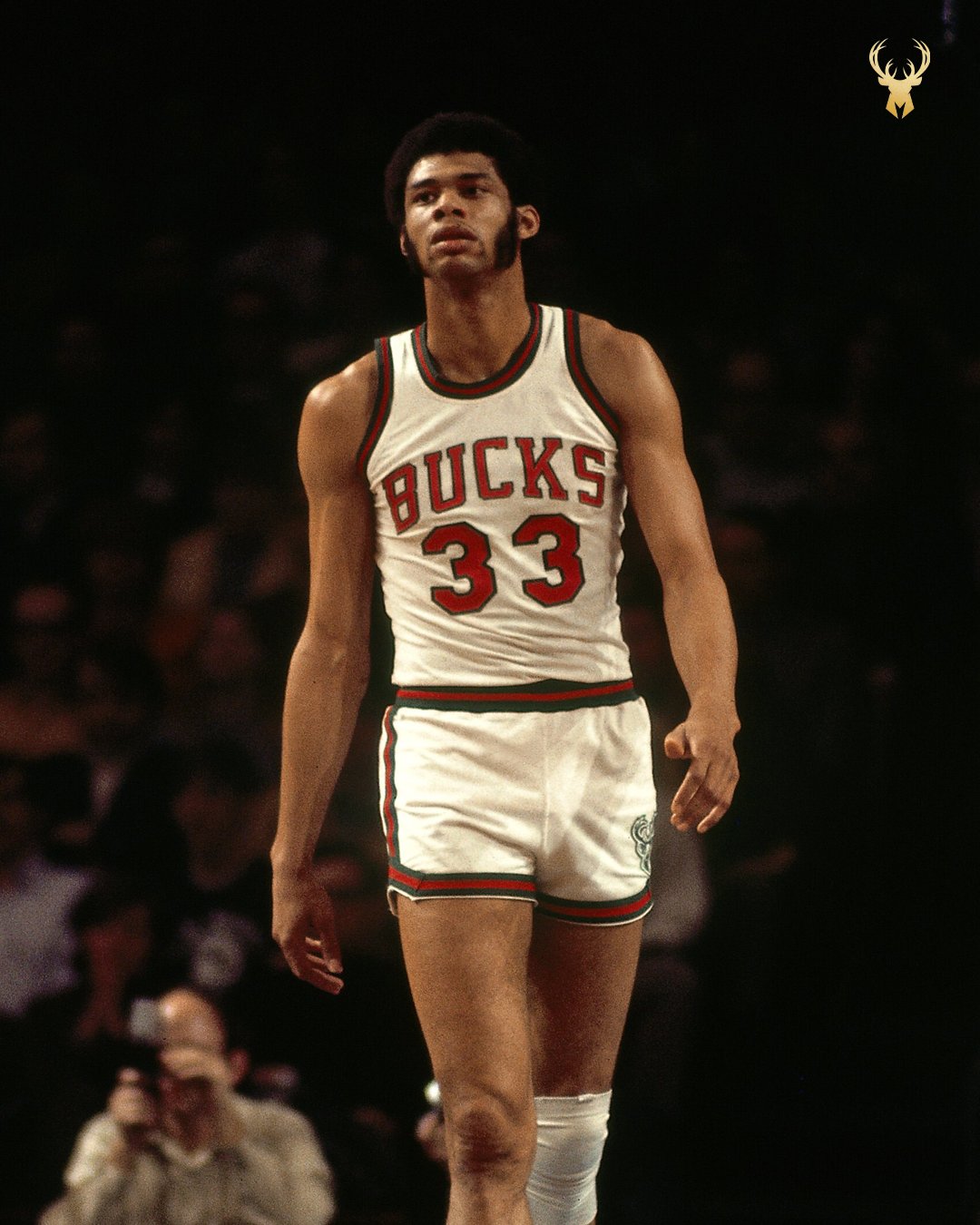
March 19, 1969: The Kareem Coin Flip

March 19, 1969: For much of its early history, the National Basketball Association didn't exactly do things in a major league way. Why would you decide the top pick in your league's draft with a coin flip?

The Milwaukee Bucks and the Phoenix Suns had both come into the NBA as expansion teams for the 1968-69 season. Like most expansion teams, both of them struggled: The Bucks finished last in the Eastern Division with a record of 27 wins and 55 losses, while the Suns finished with the worst record in the entire league, at 16-66. By all rights, they should have had the top pick in the 1969 NBA Draft.

And everyone knew who that top draft pick was going to be: Lew Alcindor. The center had led UCLA to a record of 88-2, and winning the National Championship all 3 seasons (freshmen were not eligible until the 1972-73 season), and winning the Most Outstanding Player of the NCAA Tournament all 3 times. He was 7-foot-2, his "skyhook" was an unstoppable shot, and the NCAA had outlawed the dunk solely because of him. It would be reinstated a few years later. He was, and remains, the greatest player in the history of college basketball.

From 1956 through 1965, NBA teams could use a "territorial pick," in which they forfeited their 1st Round selection in order to choose a player from their immediate area. The player presumably had a strong local following to boost fan interest. Territorial picks were eliminated in 1966, replaced by a coin flip for the rights to the 1st overall pick. The idea was that a team trying to lose in order to get the top pick might end up losing it to the team with the 2nd-worst record.

And so, on March 16, 1969, with the Bucks and the Suns having the 2 worst records, Commissioner J. Walter Kennedy picked up the telephone, and held a conference call with the general managers. The Suns' GM was Jerry Colangelo, who was only 29 years old, but was now with his 2nd expansion team: In 1966, he became the 1st marketing director of the Chicago Bulls. The Bucks' GM was Ray Patterson, and he was older, having played professional basketball in the 1940s.

Kennedy had the coin ready. He flipped it. Colangelo called, "Heads!" It came up "Tails." The Bucks would get the 1st pick, the Suns the 2nd. Naturally, the Bucks picked Alcindor. The Suns picked another center, Neal Walk of the University of Florida.

Younger fans might not be familiar with either name. Alcindor had already converted to Islam, and, after the 1971-72 season, he announced that he had changed his name to Kareem Abdul-Jabbar. Walk's name would be unfamiliar because he didn't have much of a pro career, playing 5 seasons in Phoenix, becoming an original member of the New Orleans Jazz (now the Utah Jazz) in 1974, and playing 1 more season with the New York Knicks, before playing a season in Italy and, being Jewish, playing 3 seasons in Israel's league.

Lew/Kareem immediately turned the Bucks from a 27-55 team into a 56-26 team, and a Division Champion. In the 1970 off-season, the Bucks made a trade with the Seattle SuperSonics, acquiring guard Lucius Allen, Kareem's UCLA teammate, whom the Sonics had made the 3rd pick in the '69 Draft. Now, the Bucks had 2 of the top 3 picks. And they acquired Cincinnati Royals star Oscar Robertson, perhaps the best all-around player the game had ever seen. They went 66-16, and won the NBA Championship, in only their 3rd season, beating the Baltimore Bullets in the Finals. They returned to the Finals in 1974, losing to the Boston Celtics.

In 1975, thinking that Milwaukee had become too small for him, or perhaps that he was too big for it, Kareem demanded a trade.  For most athletes, this would be considered a very arrogant thing, but he had proved that he was now too big for them. And so, he was traded to the Los Angeles Lakers, where he would win 5 more Championships, and become the NBA's all-time leading scorer.

The thing is, while the Suns missed out on Kareem, they didn't suffer much. They made the Playoffs in 1970, anyway. The NBA then had a realignment, and despite winning 48 games in 1971 and 49 in 1972, they didn't make the Playoffs either time. They had 3 losing seasons, and the loss of the coin flip was looking like the kind of moment people could point to, years later, and say, "This team is cursed, and that was where it started."

And yet, in 1976, the Bucks' 1st season without Kareem, the Suns made the NBA Finals for the 1st time. Into the late 1970s, and through the 1980s and 1990s, and up until 2001, when the Suns won 51 games and the Bucks reached the Eastern Conference Finals, both teams were usually good enough to make the Playoffs. And yet, another trip to the Finals by the Suns in 1993, losing to the Bulls, was the only Finals berth for either team after 1974.

It would take until 2021 for the Bucks to win another Championship, and who did they beat in the Finals? The Suns. To this day, the Suns have never won an NBA Championship. They've usually been a good team, but they haven't gone all the way.

Colangelo briefly served as the Suns' head coach, and, in 1987, he led a group that bought the Suns. In 1995, he was awarded another expansion team, for baseball: The Arizona Diamondbacks. Their stadium was built 2 blocks from the Suns' new downtown arena, and in 2001, they did something the Suns hadn't done: They won a World Championship. He sold both teams in 2004.

Kennedy died in 1977, Patterson in 2011, Walk in 2015. As of March 19, 2022, Abdul-Jabbar, Robertson, Allen and Colangelo are still alive.

UPDATE: In 2023, LeBron James surpassed Kareem on the NBA's all-time points scored list. 

The Suns have a Ring of Honor. It includes Colangelo, Dick Van Arsdale, Connie Hawkins, Alvan Adams, Paul Westphal, Walter Davis, Kevin Johnson, Dan Majerle, Tom Chambers, Charles Barkley, Steve Nash, Shawn Marion and Amar'e Stoudemire; head coaches Cottom Fitzsimmons, John MacLeod and Westphal; team trainer Joe Proski; and broadcaster Al McCoy.

The Suns have retired the uniform numbers of Van Arsdale, 5; Davis, 6; Johnson, 7; Majerle, 9; Nash, 13; Chambers, 24; Marion, 31; Stoudemire, 32; Adams, 33; Barkley, 34; Hawkins, 42; and Westphal, 44. And Van Arsdale, Adams, Colangelo, McCoy, Barkley, Fitzsimmons, MacLeod, Majerle, Chambers and Westphal have been elected to the Arizona Sports Hall of Fame.

The Bucks do not have a team Hall of Fame. They have retired numbers 1 for Oscar Robertson, 2 for Junior Bridgeman, 4 for Sidney Moncrief, 8 for Marques Johnson, 10 for Bob Dandridge, 14 for Jon McGlocklin, 16 for Bob Lanier, 32 for Brian Winters, and 33 for Kareem. Robertson, Bridgeman, Moncrief, Johnson, McGlocklin and former owner and U.S. Senator Herb Kohl have been elected to the Wisconsin Athletic Hall of Fame. Kareem has not.

*

March 19, 1969 was a Wednesday. 

Baseball was in Spring Training. Football was out of season. There were 4 games played in the NBA:

* The Baltimore Bullets beat the Seattle SuperSonics, 130-120 at the Baltimore Civic Center (now the CFG Bank Arena) in Baltimore.

* The Los Angeles Lakers beat the Chicago Bulls, 93-92 at the Chicago Stadium.

* The San Diego Rockets beat the Milwaukee Bucks, 128-108 at the San Diego Sports Arena (now the Pechanga Arena).

* And the Atlanta Hawks beat the San Francisco Warriors, 128-115 at the Cow Palace outside San Francisco in Daly City, California.

There were 3 games in the American Basketball Association:

* The New York Nets lost to the Indiana Pacers, 143-114 at the Indiana State Fair Coliseum (now the Indiana Farmers Coliseum) in Indianapolis. Mel Daniels scored 56 points and had 31 rebounds. In case you're wondering, the ABA record for points in a game turned out to be 67, by Larry Miller of the Carolina Cougars, against the Memphis Pros on March 18, 1972.

* The Denver Rockets beat the Miami Floridians, 123-119 at the West Palm Beach Auditorium in West Palm Beach, Florida.

* And the Dallas Chaparrals beat the Oakland Oaks, 117-112 at the Moody Coliseum in Dallas.

And there were 5 games in the NHL:

* The New York Rangers beat the Minnesota North Stars, 4-2 at the Metropolitan Sports Center in the Minneapolis suburb of Bloomington, Minnesota.

* The Boston Bruins beat the Pittsburgh Penguins, 3-2 at the Civic Arena in Pittsburgh.

* The Chicago Black Hawks beat the Montreal Canadiens, 7-5 at the Chicago Stadium.

* The Toronto Maple Leafs and the St. Louis Blues played to a tie, 1-1 at the St. Louis Arena.

* The Detroit Red Wings and the Oakland Seals played to a tie, 4-4 at the Oakland Coliseum Arena.

* And the Philadelphia Flyers and the Los Angeles Kings were not scheduled.

Monday, February 14, 2022

February 14, 1912: Arizona Is Admitted As the 48th State

February 14, 1912: Arizona is admitted to the Union as the 48th State. It produces one of the most distinctive State Flags, and produces, starting the following July 4, one of the most familiar versions of the American Flag, the 48-star version that flew in World War I and World War II.
Arizona was in the Southest. It had been acquired as part of the Mexican Cessation of 1848, after the Mexican-American War, with an addition part of it, in the southeast, coming from Mexico in the Gadsden Purchase of 1853. It has become known for the Grand Canyon, its Native American and Wild West heritage, and for its heat -- but, as the saying goes, it's a dry heat. It's also known as a retirement destination, especially for people from Chicago, as Florida is to New York and New Jersey.

Arizona has been politically conservative, with a Western-style libertarian bent, favoring land rights and gun rights. Senators Barry Goldwater in 1964 and John McCain in 2008 have been nominated for President by the Republican Party. Because of Goldwater, no Democratic nominee won Arizona between Harry Truman in 1948 and Bill Clinton in 1996, but Joe Biden won it in 2020.

Carl Hayden, a Democrat, was the President Pro Tempore of the U.S. Senate from 1957 to 1969, making him the highest-ranking member of Congress from the Grand Canyon State. The highest-ranking Arizonan in a President's Cabinet has been Janet Napolitano, a former Governor who served as the U.S. Secretary of Homeland Security from 2009 to 2013.

The University of Arizona is in Tucson. Arizona State University is in Tempe, a suburb of Phoenix, the State's capital and largest city. The State's 1st major league team was the Phoenix Suns, who arrived in the NBA in 1968. It took a while for sports to catch up to Phoenix's great growth, but the United States Football League had the Arizona Wranglers in 1983 and '84, merging with the Oklahoma Outlaws to become the Arizona Outlaws in 1985. The Philadelphia Eagles were nearly moved to Phoenix that year, and the football version of the St. Louis Cardinals moved there in 1988, taking the name "Phoenix Cardinals" until 1994, when they became the "Arizona Cardinals."

In 1996, the original version of the Winnipeg Jets became the Phoenix Coyotes, becoming the Arizona Coyotes in 2014. And after decades of Spring Training games, and the Pacific Coast League's Phoenix Giants, Phoenix Firebirds, and Tucson Indians, Major League Baseball finally arrived in 1998, with the Arizona Diamondbacks.

The World Hockey Association had the Phoenix Roadrunners from 1974 to 1977. It took me years to notice that they had a team named the Roadrunners, and later a team named the Coyotes. (UPDATE: In 2024, the Coyotes moved to Salt Lake City, becoming the Utah Mammoth.)

*

February 14, 1912 was a Wednesday. There were no games on this day: The only professional sports league then active in North America was Canada's National Hockey Association, but no games were scheduled.

December 31, 1999 & January 1, 2000: The Millennium

December 31, 1999:  The Millennium arrives. The people of planet Earth survived. At a terrible cost. But we hadn't destroyed ourselves. ...