Showing posts with label 1979. Show all posts

Wednesday, December 14, 2022

December 14, 1979: The Clash Release "London Calling"

December 14, 1979: The Clash release their album London Calling. It is considered the leading work in British rock's transition from punk rock to New Wave, and one of the greatest albums in rock and roll history.

Their fans called them "the only band that matters": Lead singer and rhythm guitarist Joe Strummer, lead guitarist Mick Jones (not to be confused with the man of the same stage name who was lead guitarist for the American band Foreigner), bass guitarist Paul Simonon, and drummer Nicky "Topper" Headon.
Left to right: Mick Jones, Paul Simonon,
Topper Headon and Joe Strummer

Mick Gallagher of The Blockheads was added for keyboards. Also playing on the album were The Irish Horns: Ray Bevis on tenor saxophone, John Earle on tenor and baritone saxophone, Chris Gower on Trombone, and Dick Hanson on trumpet and flugelhorn. The album was produced by Guy Stevens.

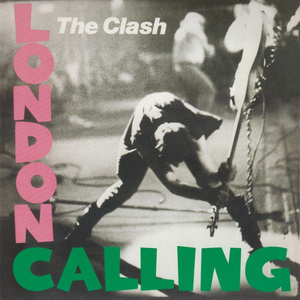
The cover showed Simonon, although a righthanded player, slamming his bass to the floor lefthanded. The word "LONDON" in vertical all-pink letters, and "CALLING" in horizontal all-green letters, was patterned after Elvis Presley's 1st album in 1956.

The Irish Horns were brought in because the bandmembers liked New Orleans-style rhythm & blues, and wanted to experiment with combining that style with their own. They also brought Caribbean influences in, reggae and ska.

They began recording in August 1979, 3 months after British voters elected the most conservative government the United Kingdom had seen since World War I. The new Prime Minister, Margaret Thatcher, had promised to tackle the longstanding problems of a stagnant economy -- which had been in place before the Labour Party last took over in 1974, so the last Conservative Party government wasn't blameless -- but the measures she took clobbered the labor unions, and made her, depending on whether you had money or not, either the most beloved or the most despised person in the country.

The Clash were no longer kids: Strummer was 27 years old, the other members 24. But they were still able to reach England's young people with songs about unemployment, urban decay, drugs, and racial strife. 

The title track was about fear of nuclear war, or some other nuclear disaster, written in the wake of the Three Mile Island near-disaster in Pennsylvania the previous March. The song seemed to have done some direct good: The line is, "London is drowning, and I live by the river!" In fact, the Thames Barrier, designed to prevent flooding of Central London and the East End, had been planned for some time. It was completed in 1982.

"Spanish Bombs" is also about war, specifically the Spanish Civil War of the late 1930s, and the memorials to the artists and musicians who commemorated it. "Lost in the Supermarket" was about runaway consumerism, at a time when most people the bandmembers had grown up with couldn't afford the rising prices. "Clampdown" was about Thatcher's crackdown on factory workers and their unions.

"Rudie Can't Fail" was sympathetic toward black Jamaican immigrants in Britain. So was "The Guns of Brixton," which predated the riots in that South London area in 1981 and 1985. The title of the album's last song, "Train in Vain (Stand By Me)" was confusing: It had nothing to do with the Ben E. King doo-wop standard "Stand By Me"; and, like many of Bob Dylan's songs, didn't include the title in the lyrics, as the words "train in vain" do not appear. Mick Jones said, "The track was like a train rhythm, and there was, once again, that feeling of being lost." This song became the only one on the album to be a hit in on the American charts.

The album sold over 5 million copies, 1 million of them in America. It is regarded as the band's greatest work, and perennially ranks in the Top 20 of all-time greatest albums lists.

*

December 14, 1979 was a Friday. Elsewhere in England, soccer star Michael Owen was born.

Baseball was out of season. Football was in midweek. There were 8 games played in the NBA:

* The New Jersey Nets beat the New York Knicks, 118-105 at the Rutgers Athletic Center (now the Jersey Mike's Arena) in Piscataway, New Jersey.

* The Atlanta Hawks beat the Philadelphia 76ers, 103-98 at The Spectrum in Philadelphia.

* The Boston Celtics beat the Milwaukee Bucks, 97-94 at the Boston Garden.

* The Indiana Pacers beat the Washington Bullets, 111-109 at the Market Square Arena in Indianapolis.

* The Kansas City Kings beat the Utah Jazz, 103-87 at the Kemper Arena (now the Hy-Vee Arena) in Kansas City.

* The San Diego Clippers beat the Denver Nuggets, 112-108 at the San Diego Sports Arena (now the Pechanga Arena). Lloyd Free, later to change his name to World B. Free, led all scorers on the night with 37 points.

* The Los Angeles Lakers beat the Detroit Pistons, 138-122 at The Forum outside Los Angeles in Inglewood, California.

* And the Seattle SuperSonics beat the Houston Rockets, 109-101 at the Kingdome in Seattle.

And there were 3 games in the NHL:

* The Atlanta Flames beat the Minnesota North Stars, 3-2 at The Omni in Atlanta.

* The Edmonton Oilers beat the Montreal Canadiens, 5-3 at the Northlands Coliseum in Edmonton.

* And the Vancouver Canucks beat the Colorado Rockies, 5-3 at the Pacific Coliseum in Vancouver.

Saturday, December 3, 2022

December 3, 1979: The Riverfront Coliseum Disaster

December 3, 1979: Disaster strikes a concert by The Who at the Riverfront Coliseum in Cincinnati.

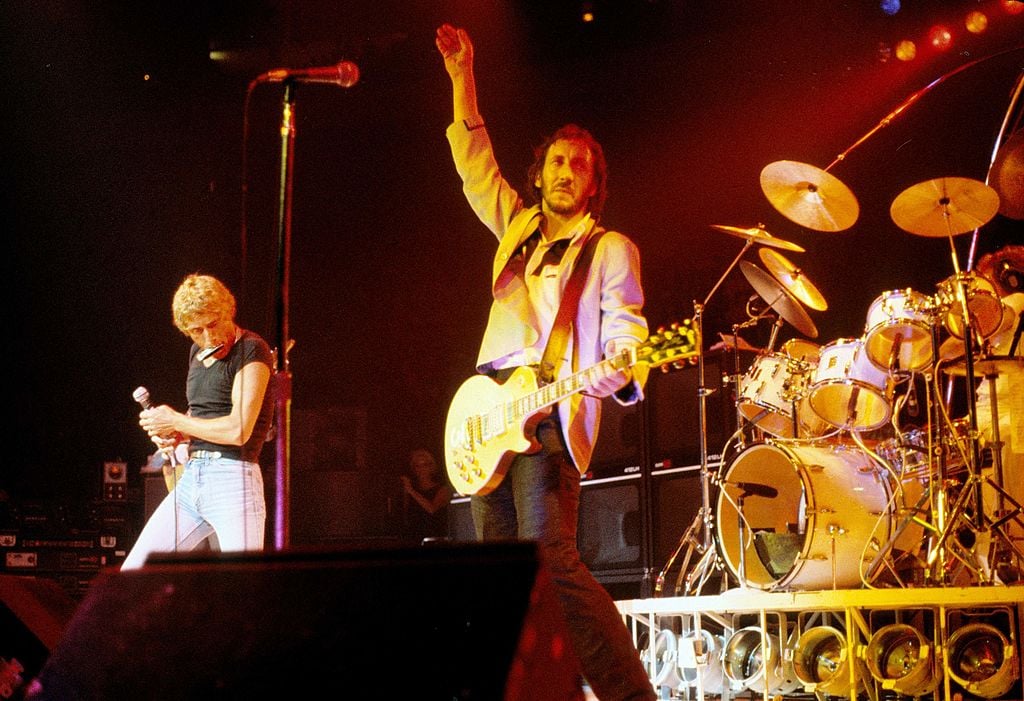
From 1964 to 1978, The Who were Roger Daltrey on lead vocals, Pete Townshend on lead guitar and doing most of the songwriting, John Entwistle on bass guitar, and Keith Moon on drums. On September 7, 1978, Moon's substance abuse reached its inevitable conclusion, and he died. He was replaced on drums by Kenney Jones, formerly of another renowned British rock band, The Faces.

Officially, The Who were recognized by The Guinness Book of World Records as the loudest musical act of all time. Unofficially, many people considered them the best rock band in the world, especially in the early 1970s, when Moon was still mostly functional and possibly the greatest drummer rock and roll has ever known, Townshend was writing some of his best work, The Beatles had broken up, The Rolling Stones were believing their hype a little too much, and Led Zeppelin were still a bit too far out there for mainstream American audiences.

The Who were among the first acts to destroy their instruments at the end of a performance, which sometimes looked like a riot onstage. But there had never been a riot at any of their shows.

They had played the Monterey Pop Festival outside San Francisco in 1967, and Woodstock outside New York City in 1969. They hadn't invented the concept of, well, the concept album. Nor had they invented the concept of the "rock opera." But they had written the 1st truly successful opera to incorporate rock and roll music, Tommy, in 1969. And they had played it at the Metropolitan Opera House at New York's Lincoln Center in 1970. So they were immensely talented and widely respected: They had beaten both rock's best and rock's haters at their respective own games.

Their 1979 tour was their 1st without Moon. Jones was healthier, smarter, and very good. But a lot of the camaraderie had been lost with Moon. Still, they were giving it their best, and had already had a sellout stand at Madison Square Garden.

The Riverfront Coliseum had been built in 1975, on the Ohio River, nearly adjacent to Riverfront Stadium, home of baseball's Cincinnati Reds and football's Cincinnati Bengals. The Cincinnati Stingers of the World Hockey Association had played at the Coliseum, but stopped when the league folded and they weren't invited into the National Hockey League. The Coliseum was hosting selected basketball games of the University of Cincinnati, and the Cincinnati Kids of the Major Indoor Soccer League. And it hosted rock concerts.
The Riverfront Coliseum, now named
the Heritage Bank Center

The Who were scheduled to play there on December 3, 1979. At 5:00 PM, a crowd had formed outside the gate for General Admission seating. At 7:15, 45 minutes before the curtain was due to go up, someone thought they'd heard The Who playing. It could have been a sound check. Or, it could have been a section of a documentary film about them that had recently been released, The Kids Are Alright. Whatever it was, some fans were sure that the band was already playing their show.

And the crowd outside the gate surged, and pushed toward the doors. This caused some people to get trampled. Many were crushed against each other and asphyxiated. It was a situation similar to the one that would happen at Hillsborough Stadium in Sheffield, England before an FA Cup soccer game 10 years later. There were 11 deaths, and 26 other injuries.

The promoters and the arena operators, desperate to keep the money they were going to make, decided not to tell the band members what had happened. Roger, Pete, John and Kenney played their regular show, not knowing. Only afterward were they told.

This was before the age of social media. News of the similar event that took place at the Astroworld complex in Houston in 2021 swept across the world in minutes. But in 1979, that kind of mechanism for delivering information through mass communication simply wasn't there. Many people didn't even read about it in the newspaper the next morning.

It was only when they saw the network evening news on December 4 that they realized the magnitude of what had happened. The band looked very bad for playing after the tragedy, but that wasn't their fault: They didn't know there was a tragedy. Indeed, of the 18,348 paying ticketholders on the night, most of them weren't in the crowd crush, and they didn't know until the next day, either.

The Who continued their tour. On December 4, at the Buffalo Memorial Auditorium, Daltrey told the crowd, "We lost a lot of family last night. This show's for them."

The families of the victims filed a class-action lawsuit against the band; the promoters, Electric Factory Concerts; and the City of Cincinnati, operators of the arena. The case was eventually settled out of court, with each of the families of the deceased receiving around $150,000 -- about $604,000 in 2022 money.

The City banned "unassigned festival seating" on December 27. This was reflected in an episode of the CBS sitcom WKRP in Cincinnati, set at a radio station that had, in that fictional version of the world, promoted the concert. The episode, "In Concert," aired on February 4, 1980.

The Who announced their farewell tour in 1982. But in 1989, they went back on tour, this time with Zak Starkey, son of Beatles drummer Ringo Starr, on drums. In 2001, with the lineup of Daltrey, Townshend, Entwistle and Starkey, the played The Concert for New York City at Madison Square Garden. It was Entwistle's last performance: He died in his hotel room in Las Vegas, just before their 1st show of a planned 2002 tour. Daltrey and Townshend are still alive, and have occasionally reunited with other musicians making up "The Who."

The Riverfront Coliseum still stands, although it's gone through some name changes. In 1997, it became The Crown; in 1999, the Firstar Center; in 2002, the U.S. Bank Arena; and in 2019, the Heritage Bank Center. It has hosted minor-league hockey, mostly the Cincinnati Cyclones of the ECHL; college and minor-league basketball, indoor soccer, arena football -- and, of course, concerts.

*

December 3, 1979 was a Monday. On ABC Monday Night Football, the Oakland Raiders beat the New Orleans Saints, 42-35 at the Superdome in New Orleans.

There was 1 game played in the NBA that night: The Milwaukee Bucks beat the Utah Jazz, 96-89 at the Salt Palace in Salt Lake City. This was the Jazz' 1st season in Utah, after 5 weak seasons in New Orleans, where their name made a lot more sense.

And there was 1 game played in the NHL, a rematch of the previous season's Stanley Cup Finals: The New York Rangers and the defending Champion Montreal Canadiens played to a 3-3 tie at Madison Square Garden. The Rangers took a 1-0 lead on a goal by Warren Miller, and a 2-1 lead on a goal by Phil Esposito. But Larry Robinson canceled out the Miller goal, and Guy Lafleur and Pierre Larouche gave the Habs a 3-2 lead. But Esposito scored again with 13:37 left in regulation, and it ended 3-3.

And actress Tiffany Haddish was born on this day.

Wednesday, November 30, 2022

November 30, 1979: Pink Floyd Release "The Wall"

Left to right: Roger Waters, Nick Mason
David Gilmour and Rick Wright

November 30, 1979: British "progressive rock" band Pink Floyd release their concept album The Wall. It exceeds their 1973 album Dark Side of the Moon, a concept album about mental illness and greed, as their signature work.

(Alecia Moore, the singer known as Pink, was born a few weeks before The Wall was released. Although she has written some deeply emotional songs, she has never suggested that Pink Floyd has been an influence on her work.)

Given that it was released in the year when an election put a Conservative Party government led by right-wing icon Margaret Thatcher into power in the band's home country of Great Britain, a fan hearing this album for the first time could be excused for thinking it's about Thatcher's policies and the effects they were already having. In fact, the source of the album's themes of alienation and hopelessness predated that election by 2 years.

In 1977, touring for their album In the Flesh, bass guitarist and singer-songwriter Roger Waters began to feel that the audience was not listening. The band was now big enough to play multipurpose sports stadiums, where some fans were sitting so far away, Waters though they couldn't see the band. This was before rock concerts began to use giant video screens. He said, "It became a social event rather than a more controlled and ordinary relationship between musicians and an audience." In July 1977, on the tour's final date, at the Olympic Stadium in Montreal, a group of noisy and excited fans near the stage irritated Waters so much that he spat on one of them. Rock fans expected that from punk groups like the Sex PIstols, but not from Pink Floyd.

The Wall is a rock opera that explores abandonment and isolation, symbolized by a wall. The songs create an approximate storyline of events in the life of the protagonist, Pink, a character based on a combination of Waters himself and original band member Syd Barrett, who had to be phased out in 1968 due to his advancing mental illness. 

Waters' father was killed while fighting in World War II, so that was written into the protagonist's story, so that it was where he starts to build a metaphorical wall around himself, resulting in the song "Another Brick in the Wall, Part 1." His teachers are physically and verbally abusive, and that inspires the most famous lines in the entire Floyd canon, from "Another Brick in the Wall, Part 2," which hit Number 1 in America in March 1980:

We don't need no education.We don't need no thought control.No dark sarcasm in the classroom.Teacher, leave them kids alone.
Hey! Teacher! Leave them kids alone!All in all, it's just another brick in the wall!All in all, you're just another brick in the wall!
He grows up to become a rock star, and gets married, but, while he's on the road, he cheats on his wife, and she cheats on him. With "Another Brick in the Wall, Part 3," his wall is complete: No feelings reach him, and no people reach him. He quickly realizes that this was a mistake, leading to the song "Hey You." He becomes catatonic, and his handlers have to give him a drug to make him stageworthy. This leads to the song "Comfortably Numb," is based on Waters' taking an injection of a muscle relaxant to fight the effects of hepatitis during the aforementioned tour.

But the drug makes him hallucinate that he's a fascist dictator, telling ethnic minorities to "Run Like Hell." He puts himself on trial, and his "inner judge" orders him to tear down the wall, where he finally rejoins the outside world.

Backing vocalists included Bruce Johnston of The Beach Boys and Toni Tennille of The Captain & Tennille. Jazz drummer Joe Porcaro played instead of Nick Mason on "Bring the Boys Back Home," and his son Jeff Porcaro, one of rock's top session drummers in the 1970s, played them on "Mother." The kids singing on "Another Brick in the Wall, Part 2" were the Chorus of Islington Green School in North London, now named City of London Academy Islington.

The album was a huge success, and launched a new tour. On that tour, as the band played, a wall was gradually built between them and the audience, until it reached a height of 40 feet. The tour was not a big success, losing £400,000 -- almost $1 million then, and about $3.37 million in 2022 money. The bandmembers were getting sick of each other: Waters and lead guitarist David Gilmour were barely on speaking terms, and keyboardist Rick Wright left afterward. Waters left for a solo career in 1985.

Pink Floyd occasionally reunited until Wright died in 2008. Those reunions never included Barrett, who became a recluse, gaining income by selling paintings, and died in 2006. As of November 30, 2022, Waters is 79, Mason is 78, and Gilmour is 76.

I can't stand Pink Floyd. In the 1980s, I had a girlfriend who was the youngest of 3 sisters, and the middle sister played The Wall over and over again. I found it depressing as hell, and I was already pretty depressed. What I didn't know at the time was that the sisters (there were 3 of them) were watching their parents' marriage dissolve, and the middle sister took it the hardest. All 3 eventually recovered, but, unlike some other bands I didn't like at that age, including AC/DC and Judas Priest, I never came around to liking Pink Floyd.

A little more than a year after the album came out, Ronald Reagan was elected President, and cut spending on education so much that it seemed like he really did believe we didn't "need no education." And Thatcher governed like she agreed. The result was a generation that, in both countries, bought the conservative movement's lies. Gee, thanks, Roger Waters.

UPDATE: It took me until 2024 to think of this, but the 1970s were Schrödinger's Decade. There was too much overwrought music, and, at the same time, not enough of it.

*

November 30, 1979 was a Friday. Baseball was out of season.  Football was in midweek. There were 9 games played in the NBA:

* The New York Knicks lost to the Boston Celtics, 100-97 at the Boston Garden.

* The New Jersey Nets beat the Denver Nuggets, 127-118 at the Rutgers Athletic Center (now the Jersey Mike's Arena) in Piscataway, New Jersey. Mike Newlin scored 39 points for the Nets.

* The Philadelphia 76ers beat the San Diego Clippers, 104-101 at The Spectrum in Philadelphia.

* The Indiana Pacers beat the Washington Bullets, 99-91 at the Capital Centre in the Washington suburb of Landover, Maryland.

* The Houston Rockets beat the Atlanta Hawks, 106-95 at The Summit in Houston. (The arena has since been converted into the Central Campus of the Lakewood Church, Dr. Joel Osteen's "megachurch.")

* The San Antonio Spurs beat the Portland Trail Blazers, 107-100 at the HemisFair Arena in San Antonio.

* The Seattle SuperSonics beat the Kansas City Kings, 107-102 in overtime at the Kemper Arena (now the Hy-Vee Arena) in Kansas City. Gus Williams scored 37 for the defending NBA Champion Sonics.

* The Chicago Bulls beat the Los Angeles Lakers, 107-100 at The Forum outside Los Angeles in Inglewood, California.

* The Utah Jazz beat the Golden State Warriors, 112-104 at the Oakland Coliseum Arena. Adrian Dantley scored 39 points.

And there were 3 games in the NHL:

* The Hartford Whalers beat the Pittsburgh Penguins, 7-5 at the Springfield Civic Center (now the MassMutual Center) in Springfield, Massachusetts, 26 miles north of their usual home, the Hartford Civic Center (now the XL Center) in Hartford, Connecticut, which was being rebuilt after snow caved in the roof in 1978.

Mark Howe scored 2 goals, the 214th and 215th of his major league career (if you count the World Hockey Association, from whence the Whalers came, as a major league; and his father, 51-year-old Gordie Howe, scored 1, the 969th of his career, his 795th in NHL play.

* The Edmonton Oilers beat the New York Islanders, 5-3 at the Northlands Coliseum in Edmonton. Wayne Gretzky scored "only" 1 goal for the Oilers, while Duane Sutter scored 2 for the Isles.

* And the Chicago Black Hawks and the Vancouver Canucks played to a tie, 1-1 at the Pacific Coliseum in Vancouver.
Monday, November 21, 2022

November 21, 1979: The Attack On the U.S. Embassy In Pakistan

November 21, 1979: After false radio reports from the Ayatollah Ruhollah Khomeini that Americans had occupied the Grand Mosque in Mecca, the holiest site in Islam, the U.S. Embassy in the Pakistani capital of Islamabad is attacked by a mob and set afire.

Four Embassy personnel were killed in the attack: A U.S. Marine security guard, a U.S. Army warrant officer, and 2 local Pakistani employees. The American ambassador, Arthur W. Hummel Jr., was outside of the embassy at the time of the attack, and therefore was able to escape from the rioters before being harmed.

Shortly after the riots began, President Jimmy Carter contacted Pakistani President Muhammad Zia-ul-Haq by phone, to warn him against allowing the embassy employees' safety to be compromised. However, Zia proved reluctant to dispatch troops to disperse the crowd.

By the morning of November 22, the Pakistan Army moved in to retake the Embassy grounds. Two of the rioting students were killed, and as many as 70 additional rioters were injured.

The burning of the Embassy in Islamabad played into Khomeini's Islamic Revolution export propaganda amid the Iran Hostage Crisis, and Khomeini himself later publicly praised the Pakistani rioters' actions after hearing about the attack. Zia condemned the embassy burning as "not in keeping with lofty Islamic traditions" while refraining from overtly criticizing Jamaat-i-Islami, which had been a political ally in his Islamization of Pakistan.

All these events of Asia in late 1979, from the Iran Hostage Crisis to the upcoming Soviet invasion of Afghanistan, seemed shocking to a boy not quite 10 years old. As I go through middle age, the shocking thing is that things didn't get more out of control. But that's the difference between having a calm President and a crazy one.

Zia became President in 1977, by leading the army in overthrowing the democratically-elected government of Zulfikar Ali Bhutto. America looked the other way, because, like so many other dictators in the world at the time, he was anti-Communist. He died in office in 1988. Democracy was restored, under his predecessor's daughter, Benazir Bhutto.

*

November 21, 1979 was a Wednesday. Hockey player Alex Tanguay was born on this day.

There were 9 games played in the NBA:

* The New York Knicks lost to the Indiana Pacers, 119-108 at the Market Square Arena in Indianapolis.

* The New Jersey Nets lost to the Boston Celtics, 111-103 at the Boston Garden.

* The Cleveland Cavaliers beat the Washington Bullets, 122-103 at the Capital Centre in the Washington suburb of Landover, Maryland.

* The Detroit Pistons beat the Utah Jazz, 98-93 at the Silverdome in the Detroit suburb of Pontiac, Michigan.

* The Milwaukee Bucks beat the Atlanta Hawks, 96-93 at the Milwaukee Exposition & Convention Center Arena, a.k.a. The MECCA. (It's now the UW-Milwaukee Panther Arena.)

* The Houston Rockets beat the Philadelphia 76ers, 97-94 at The Summit in Houston. (It's been converted into the Central Campus of televangelist Joel Osteen's Lakewood Church.)

* The Phoenix Suns beat the Kansas City Kings, 128-120 at the Arizona Veterans Memorial Coliseum in Phoenix.

* The Denver Nuggets beat the San Diego Clippers, 105-84 at the McNichols Arena in Denver.

* And the Seattle SuperSonics beat the Los Angeles Lakers, 119-110 at the Kingdome in Seattle.

And there were 8 games in the NHL:

* The New York Rangers lost to the Winnipeg Jets, 6-4 at Madison Square Garden.

* The New York Islanders lost to the Minnesota North Stars, 3-1 at the Metropolitan Sports Center in Bloomigton, Minnesota.

* The Hartford Whalers beat the Buffalo Sabres, 5-3 at the Springfield Civic Center in Springfield, Massachusetts. They were playing at the arena now named the MassMutual Center while the Hartford Civic Center, now named the XL Center, was being rebuilt after its 1978 roof collapse.

* The Atlanta Flames beat the Detroit Red Wings, 4-1 at The Omni in Atlanta.

* The Toronto Maple Leafs and the Edmonton Oilers played to a tie, 4-4 at Maple Leaf Gardens in Toronto.

* The Pittsburgh Penguins beat the St. Louis Blues, 5-2 at the Civic Arena in Pittsburgh.

* The Chicago Black Hawks beat the Washington Capitals, 4-0 at the Chicago Stadium.

* The Philadelphia Flyers beat the Los Angeles Kings, 6-4 at The Forum outside Los Angeles in Inglewood, California.

* And the Montreal Canadiens, the Boston Bruins, the Vancouver Canucks, the Colorado Rockies and the Quebec Nordiques were not scheduled.

Sunday, November 13, 2022

November 13, 1979: Darryl Dawkins Breaks a Backboard

November 13, 1979: The Kansas City Kings beat the Philadelphia 76ers, 110-103 at the Kansas City Municipal Auditorium. (Their usual home, the Kemper Arena, now known as the Hy-Vee Arena, was under repairs, due to the roof collapsing in June.) Phil Ford of the Kings led all players with 34 points.

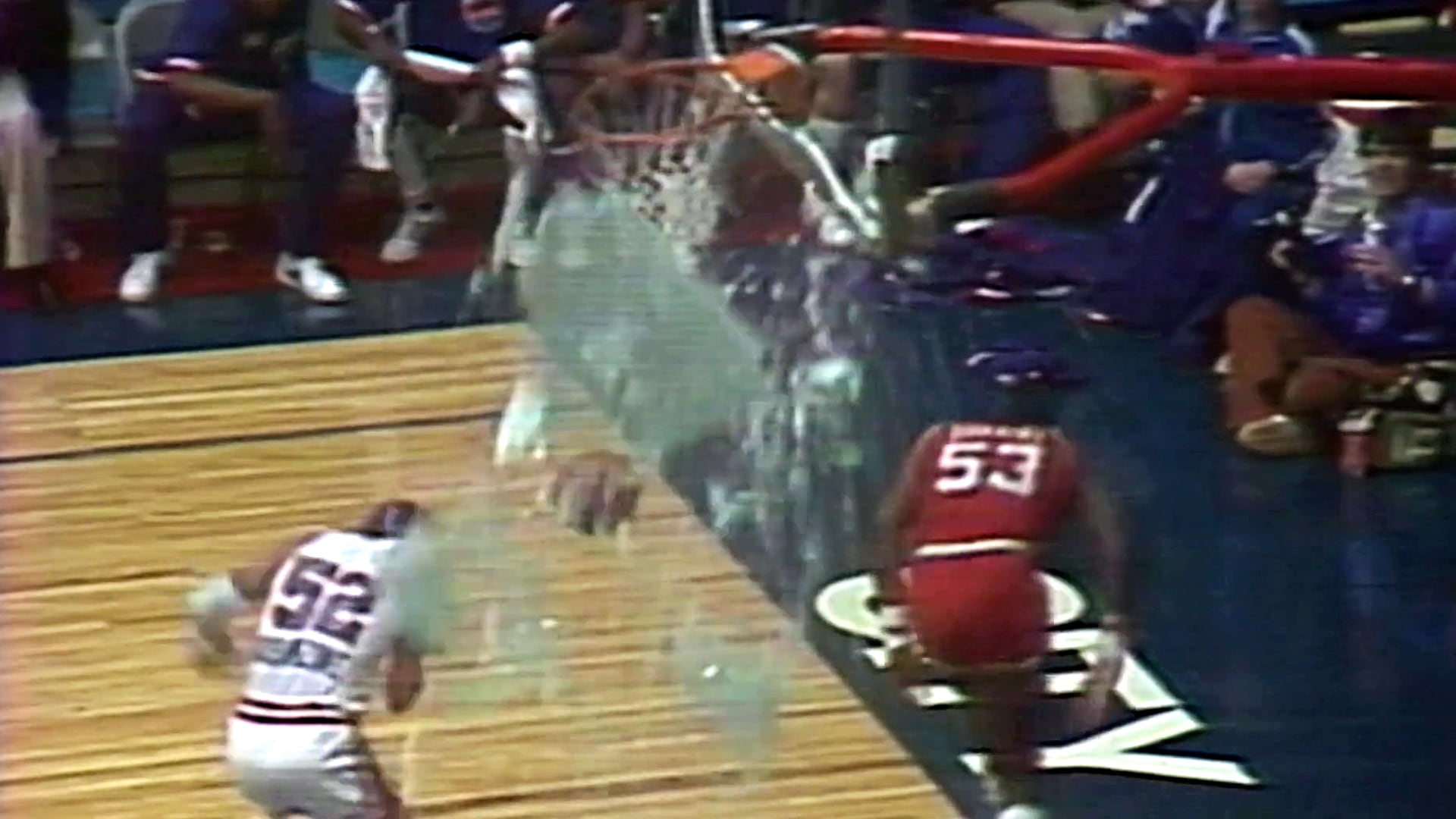
But the Sixers produce a highlight: Darryl Dawkins, the man claiming to be from the planet Lovetron, scores a dunk so hard it breaks the glass backboard.

No one is injured by the falling glass. Fortunately, the Kings player guarding him ducked, so the glass only fell on his back. His name was Bill Robinzine, and Dawkins, nicknamed Chocolate Thunder by singer Stevie Wonder, named the dunk, "The Chocolate-Thunder-Flying, Robinzine-Crying, Teeth-Shaking, Glass-Breaking, Rump-Roasting, Bun-Toasting, Wham-Bam, Glass-Breaker-I-Am-Jam." He also invented the dunking term, "In-Your-Face Disgrace." And, while Dawkins didn't come up with this one himself, thereafter, any player looking bad during an opposing player's highlight, something worthy of being put on a poster, was said to have gotten "posterized."

Dawkins was not the 1st man to break a backboard in the NBA. During pregame warmups for one of the first games ever played by the Boston Celtics in 1946, Chuck Connors -- who also played baseball and became much more famous as an actor -- accidentally broke a wooden backboard with a warmup shot, forcing a delay in the tipoff, as a backboard was brought in from another arena in town.

Gus Johnson of the Baltimore Bullets, one of the NBA's earliest dunk artists, supposedly broke 3 in the late 1960s and early 1970s, which would make him the 1st to do it with a dunk in a game, but no film footage is known to survive.

A native of Orlando, Florida, Dawkins was the 1st player to go directly from high school to the NBA, the ABA having beaten them to it with Moses Malone. He broke a 2nd backboard just a few weeks later, on December 5, 1979, this time pulling the rim down, too.

He helped the 76ers reach the NBA Finals in 1977, 1980 and 1982, but he was traded to the New Jersey Nets, and they brought Malone in, and he led the Sixers to a title in 1983 without Dawkins.
Dawkins, like baseball great Satchel Paige naming his vast array of pitches, started naming his dunks, including the Rim Wrecker, the Spine-Chiller Supreme, and, creating an expression that became a description for big dunks in general, the In-Your-Face Disgrace.

He also gained nicknames for himself. Added to "Chocolate Thunder" were "Sir Slam" and "Doctor Dunkenstein." That last one, however, would become better remembered for Utah Jazz star Darrell Griffith.

Like the aforementioned Paige, his baseball contemporary Dizzy Dean, and Dawkins' own contemporary, football quarterback Terry Bradshaw, Dawkins figured out that if you've got a certain image, use it to your advantage before others can use it to theirs. Possibly inspired by the man known as Doctor Funkenstein, rock bandleader George Clinton and his "P-Funk Empire," with his "Mothership Connection" stage set, Dawkins began telling people he was from the planet Lovetron, where he had a girlfriend named Juicy Lucy, and practiced "interplanetary funkmanship."

(As far as I know, he never explained what "interplanetary funkmanship" meant. I would have liked to have found out. Clinton and James Brown were probably mad that they didn't think of it first.)

He played 14 seasons in the NBA, mostly for the Sixers and the New Jersey Nets, and won a title in his last season, as a backup with the 1989 Detroit Pistons. He played a season with the Harlem Globetrotters, played a few seasons in Europe, and retired in 2000, going into coaching.

By that point, dunking became not the province of enormous centers -- despite the backboard-wrecking actions of Shaquille O'Neal -- but quick guards like Michael Jordan and Vince Carter, and forwards like Dominique "the Human Highlight Reel" Wilkins.

But the legend of Darryl Dawkins never faded away, not even after he died of a heart attack in 2015, only 58 years old. Bill Robinzine wasn't even that lucky: In 1982, only 29 years old, still an active player, he took his own life.

*

November 13, 1979 was a Tuesday. There were 7 other games in the NBA that night:

* The New York Knicks lost to the Washington Bullets, 111-107 at Madison Square Garden.

* The New Jersey Nets beat the Atlanta Hawks, 101-82 at the Rutgers Athletic Center (now the Jersey Mike's Arena) in Piscataway. Calvin Natt scored 33 points for the Nets.

* The Houston Rockets beat the Chicago Bulls, 128-127 at the Chicago Stadium. The aforementioned Moses Malone scored 45 for the Rockets.

* The San Antonio Spurs beat the Golden State Warriors, 131-127 in overtime at the HemisFair Arena in San Antonio. George Gervin led all scorers on the night with 47.

* The Denver Nuggets beat the Cleveland Cavaliers, 116-110 at the McNichols Arena in Denver.

* The Los Angeles Lakers beat the San Diego Clippers, 137-91 at the San Diego Sports Arena (now the Pechanga Arena).

* And the Milwaukee Bucks beat the Portland Trail Blazers, 101-92 at the Portland Memorial Coliseum. Marques Johnson scored 34.

Baseball was out of season. Football was in midweek. There were 5 games in the NHL:

* The New York Islanders beat their arch-rivals, the New York Rangers, 10-5 at the Nassau Coliseum. Denis Potvin, Bryan Trottier and Billy Harris each had 2 goals. The Rangers had reached the Stanley Cup Finals the season before, beating the Isles in the Semifinals, but, this season, the Isles went on to win the whole thing, start a dynasty, and take over New York Tri-State Area hockey -- for a few years, anyway.

* The Edmonton Oilers beat the Washington Capitals, 5-3 at the Capital Centre in the Washington suburb of Landover, Maryland.

* The Vancouver Canucks beat the Atlanta Flames, 5-3 at The Omni in Atlanta.

* The Montreal Canadiens beat the St. Louis Blues, 5-2 at the St. Louis Arena, then known as the Checkerdome.

* And the Los Angeles Kings beat the Colorado Rockies, 4-1 at The Forum outside Los Angeles in Inglewood, California.

Friday, November 4, 2022

November 4, 1979: Ted Kennedy's Disastrous Interview

November 4, 1979: The Iran Hostage Crisis begins. Islamic militants take over the U.S. Embassy in Iran, and take 80 hostages, a number that will drop to 52. At first, the nation rallies around President Jimmy Carter, as the nation tends to rally around the President when a crisis occurs.
It helps Carter that, on this same day, CBS Reports airs "Teddy," an hourlong program focusing on Senator Edward M. "Ted" Kennedy of Massachusetts, who is rumored to be running for President. (He confirms the rumor by announcing his candidacy 3 days later.) Ted made the huge mistake of making what turned out to be his only run for President in the 1 election between 1972 and 1996 when the incumbent President was a fellow Democrat.
He hurts himself further by taking the simple question of host and interviewer Roger Mudd, "Why do you want to be President?" and, unlike his brothers Jack in 1960 and Bobby in 1968, coming up with an answer that is neither direct nor brief.
Roger Mudd

And while both Jack and Bobby had made their announcements in the Senate Caucus Room at the Capitol, Ted literally had the home-field advantage: He was at his house in the so-called "Kennedy Compound" in Hyannis Port, Massachusetts. Then 47 years old, older than either of his brothers lived to be, he was seated, and apparently relaxed. He seemed prepared to answer The Question.
He even agreed to do the interview, because he thought it would help Mudd in his bid for a higher office: The choice to succeed Walter Cronkite, who had famously interviewed Jack across the compound on Labor Day 1963, as anchor of The CBS Evening News was down to Mudd and Dan Rather.
Here's how the announcements went:
Jack, January 2, 1960: "The Presidency is the most powerful office in the Free World. Through its leadership can come a more vital life for our people."
Bobby, March 16, 1968: "I run for the Presidency not merely to oppose any man, but to propose new policy. I run to seek new policies, because I believe our country is on a perilous course, and I feel obliged to do all that I can."
Ted, November 4, 1979: Well, I, uh, were I to, to make the announcement to run, the reasons I would run is because I have a great belief in this country, that it is, there's more natural resources than any nation in the world, has the greatest educated population in the world, the greatest technology of any country in the world, the greatest capacity for innovation in the world and the greatest political system in the world.
And yet, I see at the current time that most of the industrial nations of the world are exceeding us in terms of productivity, or doing better than us in terms of meeting the problems of inflation, that they're dealing with their problems of energy and their problems of unemployment.
It just seems to me that this nation can cope and deal with its problems in a way that it has in the past. We're facing complex issues and problems in this nation at this time, but we have faced similar challenges at other times and the energies and the resourcefulness of this nation, I think, should be focused on these problems in a way that brings a sense of restoration in this country by its people to, in dealing with the problems that we face, primarily the issues on the economy, the problems of inflation and the problems of energy, and I would basically feel that it's imperative for this country either move forward, but it can't stand still or otherwise it moves backward.
  • MUDD: What would you do different from Carter?
  • KENNEDY: Well, in which particular areas?
  • MUDD: Well, just take the question of leadership.
  • KENNEDY: Well, it's, on what, on, you know, you have to come to grips with the different issues that we're facing. I mean we can, we'd have to deal with each of the various questions that we're talking about, whether it's in the questions of the economy, whether it's in the areas of energy.
  • All he had to do was say pretty much the same thing either of his brothers had said. Instead, he stammered, he rambled, and he sounded more like one of the George Bushes than he did like a Kennedy.
  • He also seriously mishandled Mudd's question about the 1969 Chappaquiddick Incident that cast a shadow over his life and career from that moment onward.
  • His campaign never really got off the ground. On February 26, 1980, in the Primary in the next-door State of New Hampshire, he got 37 percent of the vote, to Carter's 47 percent. It shattered his aura of invincibility: If a Kennedy couldn't win New Hampshire, what chance did he have nationally?
  • By April 25, 1980, when the failed "Desert One" rescue attempt occurred, Carter had the Democratic nomination for a 2nd term sewed up, and people (including some Republicans crossing over) started voting for Kennedy as a protest vote, knowing he could no longer win the nomination, but the Primaries he might win could, and did, damage Carter.
Cronkite's last broadcast as anchor was on March 6, 1981. The following Monday, March 9, the new anchor was Rather. Mudd would be forgotten, except for the Ted Kennedy interview. He died in 2021.
*

November 4, 1979 was a Sunday. The baseball season was over. But the NFL held games:

* The New York Giants lost to the Dallas Cowboys, 16-14 at Giants Stadium in the Meadowlands.

* The New York Jets beat the Green Bay Packers, 27-22 at Lambeau Field in Green Bay.

* The Cleveland Browns beat the Philadelphia Eagles, 24-19 at Veterans Stadium in Philadelphia.

* The New England Patriots beat the Buffalo Bills, 26-6 at Rich Stadium (later Ralph Wilson Stadium) in the Buffalo suburb of Orchard Park, New York.

* The Pittsburgh Steelers beat the Washington Redskins, 38-7 at Three Rivers Stadium in Pittsburgh.

* The Baltimore Colts beat the Cincinnati Bengals, 38-28 at Riverfront Stadium in Cincinnati.

* The Atlanta Falcons beat the Tampa Bay Buccaneers, 17-14 at Atlanta-Fulton County Stadium.

* The Chicago Bears beat the Detroit Lions, 35-7 at the old Soldier Field in Chicago.

* The football version of the St. Louis Cardinals beat the Minnesota Vikings, 37-7 at Busch Memorial Stadium in St. Louis.

* The San Diego Chargers beat the Kansas City Chiefs, 20-14 at Arrowhead Stadium in Kansas City.

* The Denver Broncos beat the New Orleans Saints, 10-3 at Mile High Stadium in Denver.

* The Oakland Raiders beat the San Francisco 49ers, 23-10 at the Oakland Coliseum.

* And the Los Angeles Rams beat the Seattle Seahawks, 24-0 at the Kingdome in Seattle.

* The next, on ABC Monday Night Football, the Houston Oilers beat the Miami Dolphins, 9-6 at the Orange Bowl in Miami.

There were 3 games played in the NBA that night:

* The New Jersey Nets beat the Kansas City Kings, 101-98 at the Rutgers Athletic Center in Piscataway, New Jersey. (It's now named the Jersey Mike's Arena)

* The Seattle SuperSonics beat the Milwaukee Bucks, 114-101 at the Milwaukee Exposition, Convention Center and Arena, or "The MECCA." Since 2014, it has been named the UW-Panther Arena.

* And the Portland Trail Blazers beat the San Antonio Spurs, 127-124 in overtime at the Portland Memorial Coliseum. George Gervin led all scorers on the night, with 32 points.

And there were 6 games played in the NHL:

* The New York Rangers beat the Vancouver Canucks, 4-2 at the Pacific Coliseum in Vancouver. The Rangers trailed 2-1 with 4:16 left in regulation, but they got an equalizer on the power play from Anders Hedberg at that point, a go-ahead goal from Phil Esposito with 3:07 to go, and an empty-netter at the end from Don Maloney.

* The New York Islanders played the Winnipeg Jets to a tie, 4-4 at the Winnipeg Arena.

* The Philadelphia Flyers beat the Buffalo Sabres, 3-1 at The Spectrum in Philadelphia.

* The Quebec Nordiques beat the Detroit Red Wings, 5-1 at the Colisée de Québec.

* The Los Angeles Kings beat the Chicago Black Hawks, 5-3 at the Chicago Stadium.

* And the Boston Bruins beat the Edmonton Oilers, 2-1 at the Northlands Coliseum in Edmonton.

November 4, 1979: The Iran Hostage Crisis Begins

November 4, 1979: The Iran Hostage Crisis begins. Islamic militants, inspired by the Islamic Revolution 9 months earlier, led by the Ayatollah Ruhollah Khomeini, a fundamentalist Shia Muslim cleric, take over the U.S. Embassy in Iran, and take 80 hostages, a number that will drop to 52. At first, the nation rallies around President Jimmy Carter, as the nation tends to rally around the President when a crisis occurs.

By April 25, 1980, when the failed "Desert One" rescue attempt occurred, Carter had the Democratic nomination for a 2nd term sewed up, and people (including some Republicans crossing over) started voting for Senator Edward M. "Ted" Kennedy as a protest vote, knowing he could no longer win the nomination, but the Primaries he might win could, and did, damage Carter.

As the Crisis dragged on and on, with ABC News starting its late-night broadcast Nightline, hosted by Ted Koppel, and that show and Walter Cronkite on The CBS Evening News both counting the days up and up and up -- Day 50, Day 100, Day 200, Day 365, and so on -- and as the economy continued to struggle as it had begun to do in 1979, people got more and more fed up with Carter.

The 1980 election was held exactly one year to the date after the Crisis began, and Carter lost very badly to Ronald Reagan.

As the great politically-themed comedian Mort Sahl put it: "Reagan won because he ran against Jimmy Carter. Had he run unopposed, he would have lost."

The hostages:

* From the U.S. Army: Colonels Leland Holland and Charles W. Scott, military attachés; Chief Warrant Officer 3rd Class Joseph M. Hall, USA, military attaché; Master Sergeant Regis Ragan, defense attaché’s office; Staff Sergeant Joseph Subic, military police; Specialist 1st Class Donald Hohman, medic.

From the U.S. Navy: Commander Donald Sharer and Lieutenant Commander Robert Engelmann, military attachés; IS1 Duane Gillette, communications and intelligence specialist.

From the U.S. Air Force: Colonel Thomas Schaefer, Air Force attaché; Lieutenant Colonel David Roeder, deputy Air Force attaché; Captain Neal Robinson, military intelligence officer; Captain Paul Needham, logistics staff officer; Master Sergeant Joseph Vincent and Sergeant James Hughes, administrative managers.

From the U.S. Marine Corps: Staff Sergeant Michael Moeller, head of the Marine Corps guard unit, as every U.S. Embassy is guarded by Marines; Sergeants William Gallegos, Kevin Hermening, Paul Lewis, James Lopez, Ladell Maples, John McKeel, Gregory Persinger, William Quarles, Rodney Sickmann, David Walker and Westley Williams, and Corporal Steven Kirtley, embassy guards.

From the CIA (their roles since declassified): William J. Daugherty, secretary of the U.S. mission; Jerry Miele and Phillip Ward, communications officers.

Civilians: Richard Morefield, consul general; Thomas Ahern, narcotics control officer; Clair Cortland Barnes, communications specialist; William Belk, records officer; Robert Blucker, economics officer; Donald Cooke and Richard Queen, vice consuls; Bruce German, budget officer; Alan Golacinski, chief of embassy security; John Graves, public affairs officer; Michael Howland, assistant regional security officer; Charles A. Jones Jr., teletype operator; Malcolm Kalp and Moorhead Kennedy, commercial officers; Kathryn Koob, cultural officer; Frederick Kupke, electronics specialist; Bruce Laingen, chargé d'affaires; Gary Lee, administrative officer; John Limbert and Michael Metrinko, political officers; Bert Moore, administration counselor; Robert Ode, retired foreign service officer on temporary duty in Tehran; Jerry Plotkin, civilian businessman visiting Tehran; Lloyd Rollins, administrative officer; Barry Rosen, press attaché; William Royer, assistant director of the Iran-American Society; Elizabeth Ann Swift, deputy head of political section; Victor Tomseth, counselor for political affairs; Kathy Gross, Lillian Johnson, Elizabeth Montagne, Terri Tedford and Joan Walsh, secretaries.

Kathy Gross, Ladell Maples and William Quarles were released on November 19, 1979. James Hughes, Lillian Johnson, Elizabeth Montagne, Lloyd Rollins, Neal Robinson, Terri Tedford, Joseph Vincent, David Walker, Joan Walsh and Westley Williams were released on November 20. Richard Queen, for health reasons, was released on July 11, 1980. The remaining 52 had to wait until the end, January 20, 1981, 444 days.

Joan Walsh and Michael Howland married each other in 1982. William Keough died in 1985, Leland Holland in 1990, John McKeel in 1991, Robert Ode in 1995, Jerry Plotkin in 1996, Bert Moore in 2000, Michael Kalp and Richard Queen in 2002, Elizabeth Cronin (formerly Elizabeth Swift) in 2004; Bruce German, Richard Morefield and Gary Lee in 2010, Phillip Ward in 2012, Thomas Schaefer in 2016, Neal Robinson in 2017, Bruce Laingen in 2019, Westley Williams in 2020, Donald Sharer and Donald Hohman in 2021, and Duane Gillette in 2022. As of November 4, 2022, the others are still alive.

UPDATE: Moorhead Kennedy died in 2024.

*

November 4, 1979 was a Sunday. The baseball season was over. But the NFL held games:

* The New York Giants lost to the Dallas Cowboys, 16-14 at Giants Stadium in the Meadowlands.

* The New York Jets beat the Green Bay Packers, 27-22 at Lambeau Field in Green Bay.

* The Cleveland Browns beat the Philadelphia Eagles, 24-19 at Veterans Stadium in Philadelphia.

* The New England Patriots beat the Buffalo Bills, 26-6 at Rich Stadium (later Ralph Wilson Stadium) in the Buffalo suburb of Orchard Park, New York.

* The Pittsburgh Steelers beat the Washington Redskins, 38-7 at Three Rivers Stadium in Pittsburgh.

* The Baltimore Colts beat the Cincinnati Bengals, 38-28 at Riverfront Stadium in Cincinnati.

* The Atlanta Falcons beat the Tampa Bay Buccaneers, 17-14 at Atlanta-Fulton County Stadium.

* The Chicago Bears beat the Detroit Lions, 35-7 at the old Soldier Field in Chicago.

* The football version of the St. Louis Cardinals beat the Minnesota Vikings, 37-7 at Busch Memorial Stadium in St. Louis.

* The San Diego Chargers beat the Kansas City Chiefs, 20-14 at Arrowhead Stadium in Kansas City.

* The Denver Broncos beat the New Orleans Saints, 10-3 at Mile High Stadium in Denver.

* The Oakland Raiders beat the San Francisco 49ers, 23-10 at the Oakland Coliseum.

* And the Los Angeles Rams beat the Seattle Seahawks, 24-0 at the Kingdome in Seattle.

* The next, on ABC Monday Night Football, the Houston Oilers beat the Miami Dolphins, 9-6 at the Orange Bowl in Miami.

There were 3 games played in the NBA that night:

* The New Jersey Nets beat the Kansas City Kings, 101-98 at the Rutgers Athletic Center in Piscataway, New Jersey. (It's now named the Jersey Mike's Arena)

* The Seattle SuperSonics beat the Milwaukee Bucks, 114-101 at the Milwaukee Exposition, Convention Center and Arena, or "The MECCA." Since 2014, it has been named the UW-Panther Arena.

* And the Portland Trail Blazers beat the San Antonio Spurs, 127-124 in overtime at the Portland Memorial Coliseum. George Gervin led all scorers on the night, with 32 points.

And there were 6 games played in the NHL:

* The New York Rangers beat the Vancouver Canucks, 4-2 at the Pacific Coliseum in Vancouver. The Rangers trailed 2-1 with 4:16 left in regulation, but they got an equalizer on the power play from Anders Hedberg at that point, a go-ahead goal from Phil Esposito with 3:07 to go, and an empty-netter at the end from Don Maloney.

* The New York Islanders played the Winnipeg Jets to a tie, 4-4 at the Winnipeg Arena.

* The Philadelphia Flyers beat the Buffalo Sabres, 3-1 at The Spectrum in Philadelphia.

* The Quebec Nordiques beat the Detroit Red Wings, 5-1 at the Colisée de Québec.

* The Los Angeles Kings beat the Chicago Black Hawks, 5-3 at the Chicago Stadium.

* And the Boston Bruins beat the Edmonton Oilers, 2-1 at the Northlands Coliseum in Edmonton.

Thursday, November 3, 2022

November 3, 1979: What's a Rutgers?

November 3, 1979: The football team of Rutgers University travels to Knoxville to play the University of Tennessee. UT's school paper, The Daily Beacon, teased their upcoming opponent by printing the headline, "What's a Rutgers?"

Rutgers is a Dutch surname, from the Christian name Rutger, a variant of the English name Roger, both from the Germanic combination of hrōdχrōþi ("fame", "renown", "honour") and gārgēr ("spear", "lance").

Henry Rutgers was a wealthy New York businessman, a veteran of the War of the American Revolution, and an elder in the Dutch Reformed Church, which founded Queens College in New Brunswick, New Jersey in 1766, and still ran it in 1825. Hearing that it was bankrupt and closing, he gave them the money they needed to stay open, and they renamed themselves for him.

Tennessee fans found out what a Rutgers is: Although the Volunteers were ranked Number 17 in the nation going into the game, and it was their homecoming, and 84,265 fans came to see it (at the time, the biggest crowd ever to see a Rutgers game), the Scarlet Knights beat them 13-7. It remains one of the signature victories of Rutgers football -- which says more about Rutgers than it says about Tennessee. Tennessee finished the season 7-5, while Rutgers finished 8-3.

The '79 win over Tennessee remains a big win in Rutgers' history. By now, it should be a footnote.

*

November 3, 1979 was a Saturday. Some other notable college football games played on the day:

* Number 1 Alabama beat Mississippi State, 24-7 at Bryant-Denny Stadium in Tuscaloosa, Alabama. The Crimson Tide went on to win the Southeastern Conference and the National Championship.

* Number 2 Nebraska beat Missouri, 23-20 at Faurot Field in Columbia, Missouri. That close win should have been a red flag to the Cornhuskers. 

* Number 3 USC beat Arizona, 34-7 at the Los Angeles Memorial Coliseum. USC won the Pac-Ten Championship.

* Number 4 Houston beat Texas Christian, 21-10 at Amon G. Carter Stadium in Fort Worth, Texas. UH won the Southwest Conference Championship.

* Number 5 Ohio State beat Illinois, 44-7 at Memorial Stadium in Champaign, Illinois. Ohio State won the Big Ten Championship, but lost the Rose Bowl to USC.

* Number 7 Oklahoma beat Oklahoma State, 38-7 at Lewis Field in Stillwater, Oklahoma. The Sooners beat Nebraska to win the Big Eight title, and won the Orange Bowl. Nebraska went to the Cotton Bowl and lost to the University of Houston.

* Number 13 Notre Dame beat Navy, 14-0 at Notre Dame Stadium in South Bend, Indiana.

* Number 14 Wake Forest was upset by Clemson, 31-0 at Memorial Stadium in Clemson, South Carolina.

* Number 18 North Carolina was upset by Maryland, 17-14 at Byrd Stadium in the Washington suburb of College Park, Maryland. (It was renamed Maryland Stadium in 2015, in response to Curley Byrd's support of segregation. It was renamed SECU Stadium in 2022.)

* Number 19 Penn State was upset by Miami, 26-10 at Beaver Stadium in State College, Pennsylvania.

* Kansas beat Kansas State, 36-28 at Memorial Stadium in Lawrence, Kansas.

* In New York City, Columbia lost to Dartmouth, 17-0 at Baker Field in Manhattan.

* In Philadelphia, Princeton beat Penn, 38-10 at Franklin Field.

There were 8 games played in the NBA that day:

* The New Jersey Nets lost to the Atlanta Hawks, 110-107 at The Omni in Atlanta. John Drew scored 35 points for the Hawks, while John Williamson scored 32 for the Nets.

* The Boston Celtics beat the Washington Bullets, 118-97 at the Capital Centre in the Washington suburb of Landover, Maryland.

* The Cleveland Cavaliers beat the Kansas City Kings, 123-110 at The Coliseum in the Cleveland suburb of Richfield, Ohio.

* The Houston Rockets beat the Detroit Pistons, 114-111 at the Silverdome in the Detroit suburb of Pontiac, Michigan.

* The Philadelphia 76ers beat the Indiana Pacers, 120-114 in double overtime at the Market Square Arena in Indianapolis. Julius Erving, Dr. J, scored 33 points for the Sixers.

* The Milwaukee Bucks beat the Chicago Bulls, 136-134 in overtime at Chicago Stadium.

* The San Diego Clippers beat the Utah Jazz, 126-109 at the San Diego Sports Arena. (It's now named the Pechanga Arena.)

* And the Golden State Warriors beat the Denver Nuggets, 130-103 at the Oakland Coliseum Arena.

And there were 7 games played in the NHL:

* The New York Rangers lost to the Colorado Rockies, 7-2 at the McNichols Arena in Denver. Not that it mattered, as the Rockies moved in 1982, to become the New Jersey Devils. The Devils have had their moments against the Rangers, but they can't count this one.

* The Philadelphia Flyers beat the Montreal Canadiens, 5-3 at the Montreal Forum.

* The Atlanta Flames played the Pittsburgh Penguins to a tie, 3-3 at the Civic Arena in Pittsburgh.

* The Buffalo Sabres beat the Toronto Maple Leafs, 4-3 at Maple Leaf Gardens in Toronto.

* The Detroit Red Wings beat the Chicago Black Hawks, 2-0 at the Olympia Stadium in Detroit. It was one of the last games there, before they moved into Joe Louis Arena a few weeks later.

* The Minnesota North Stars beat the Washington Capitals, 7-1 at the Metropolitan Sports Center in the Minneapolis suburb of Bloomington, Minnesota.

* And the St. Louis Blues beat the Los Angeles Kings, 4-1 at the St. Louis Arena, then known as the Checkerdome due to St. Louis-based Ralston Purina, with its Checkerboard Square logo, then owning the Blues.

Also, the football team at what would become my high school, East Brunswick in Middlesex County, New Jersey, lost to Ocean County power Brick Township, 21-0 at Jay Doyle Field in East Brunswick.

And the English soccer team I would one day support, Arsenal, beat Brighton & Hove Albion, 3-0 at Highbury in North London.

Wednesday, October 26, 2022

October 26, 1979: The Assassination of Park Chung Hee

October 26, 1979: President Park Chung Hee of the Republic of Korea (a.k.a. "South Korea") is assassinated, shot by Kim Jae-gyu, director of the KCIA, the country's intelligence service, after a banquet at an alleged safehouse in the capital of Seoul. He was a few days short of turning 62.

Kim claimed that Park was an obstacle to democracy, and that his act was one of patriotism. He had a point: Park had been President since 1962, and since the nation was established in 1948 under Syngman Rhee, it had, essentially, been a dictatorship. Nevertheless, for his crime, Kim was hanged 7 months later.

Within a few years, South Korea would be a thriving democracy. In 2013, Park's daughter, Park Geun-hye, was elected President, the 1st popularly elected head of state in East Asia. But she was impeached for corruption, and was removed from office on March 10, 2017.

*

October 26, 1979 was a Friday. Baseball season had ended 9 days earlier, when the Pittsburgh Pirates won the World Series over the Baltimore Orioles. Football was in midweek. There were 7 games played in the NBA:

* The New York Knicks lost to the Philadelphia 76ers, 127-116 at The Spectrum in Philadelphia.

* The New Jersey Nets lost to the Atlanta Hawks, 94-90 at the Rutgers Athletic Center (now the Jersey Mike's Arena) in Piscataway, New Jersey.

* The San Antonio Spurs beat the Detroit Pistons, 129-113 at the Silverdome in the Detroit suburb of Pontiac, Michigan. George Gervin scored 41 points.

* The Indiana Pacers beat the Washington Bullets, 118-108 at the Market Square Arena in Indianapolis.

* The Los Angeles Lakers beat the Kansas City Kings, 116-104 at The Forum outside Los Angeles in Inglewood, California. Otis Birdsong scored 35 in defeat for the Kings.

* The Portland Trail Blazers beat the Chicago Bulls, 95-93 at the Portland Memorial Coliseum.

* And the Phoenix Suns beat the Seattle SuperSonics, 92-86 at the Seattle Center Coliseum.

And there were 4 games played in the NHL:

* The New York Islanders beat the Hartford Whalers, 2-1 at the Springfield Civic Center (now the MassMutual Center) in Springfield, Massachusetts.

* The Atlanta Flames beat the Edmonton Oilers, 7-3 at The Omni in Atlanta.

* The Winnipeg Jets beat the Boston Bruins, 3-2 at the Winnipeg Arena.

* And the Toronto Maple Leafs and the Colorado Rockies played to a tie, 2-2 at the McNichols Arena in Denver.

December 31, 1999 & January 1, 2000: The Millennium

December 31, 1999:  The Millennium arrives. The people of planet Earth survived. At a terrible cost. But we hadn't destroyed ourselves. ...