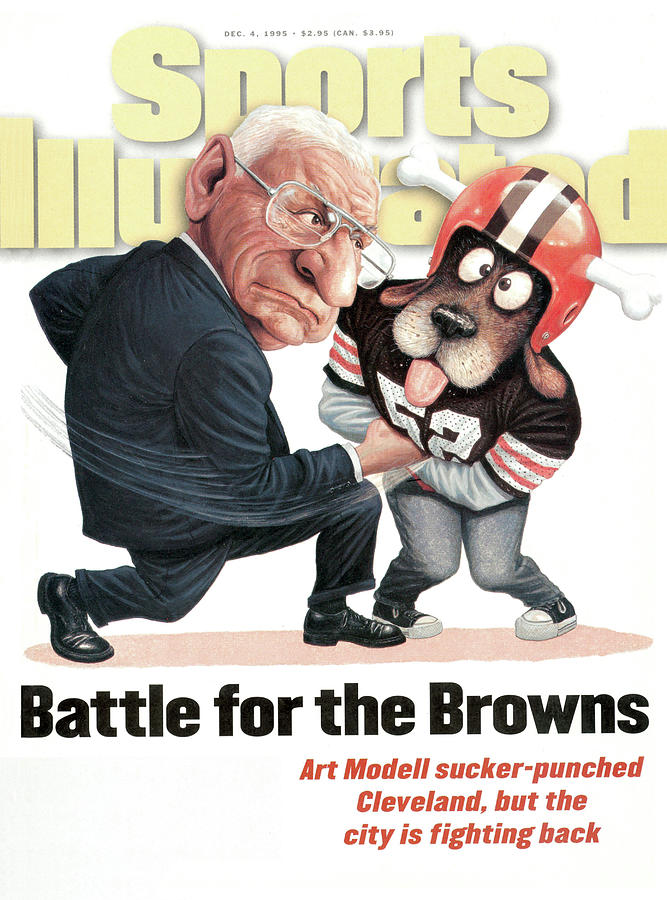
November 6, 1995: Art Modell announces that he's moving the NFL's Cleveland Browns to Baltimore, where they later announced that they will become the Baltimore Ravens.
He does so because the City of Cleveland, the County of Cuyahoga and the State of Ohio refused to listen to his pleas to either build him a new stadium, or at least give him a better lease at the existing Cleveland Municipal Stadium.
Modell owned the Browns/Ravens franchise from 1961 to 2004, then maintaining a minority ownership until his death in 2012. His ownership produced 2 NFL Championships: In Cleveland in 1964, and in Baltimore in the 2000-01 season. The former title is the last World Championship won by a Cleveland-area football team, a drought now reaching 57 years; and was the last won by a Cleveland-based team in any sport until the 2016 Cavaliers, a drought that reached 52 years.
In between, the Browns had lots of close calls, losing the NFL Championship Game to the Baltimore Colts in 1968 and the Minnesota Vikings in 1969; losing a 1980-81 AFC Playoff Game at home that they probably should have won, to the Oakland Raiders; and the AFC Championship Games for the 1986, 1987 and 1989 seasons, all to the Denver Broncos, the 1st at home, and the 1st 2 in traumatic fashion: "The Drive" and "The Fumble."
The Browns and their fans also had to endure their last coach, Bill Belichick, prove, why, yes, he could coach, winning 6 Super Bowls with the New England Patriots... until it was revealed that he'd cheated, suggesting that the Cleveland Belichick may have been the real one, not the Foxborough Belichick.
Modell had been deeply involved in charities in Northern Ohio, and had struggled for years to get a new stadium for his team, or to at least get a better lease on Cleveland Municipal Stadium, which was right on Lake Erie and subject to nasty weather, and was then 64 years old and not in good shape. A mile inland and still susceptible to Great Lakes weather, but a bit less so, right next-door to each other, new buildings were built for baseball's Indians and basketball's Cavaliers.
The City, the County and the State were not willing to build, or to help him build, a new stadium for the Browns. The Maryland Stadium Authority, which had recently built Oriole Park at Camden Yards to prevent the Orioles from moving (most likely down the Parkway to Washington, D.C.), was willing to build a stadium at the Camden Yards site. It did: The facility now known as M&T Bank Stadium opened in 1998, after the Ravens spent 2 years at the old Memorial Stadium, and is generally regarded as one of the best stadiums in the NFL.
There were people to blame for the move, other than Modell. The local authorities could have listened to his calls to help with the stadium situation. Baltimore, which had its Colts taken from them by a greedy owner in 1984, should have known better: Yes, they had been shafted by the NFL expansion of 1993 (for the 1995 season), but stealing another city's team, when your own had been stolen just a few years earlier? That was not right.
And Modell's fellow NFL team owners, who normally roll over for each other, could have stood up and said, "Not this time: The history and the fan base of the Browns needs to be respected." But Art was too good a friend to most of them, and they were all too happy to allow the move.
And the owners did rule that, while the business that ran the team and all its contracts -- players, coaches, executives, etc. -- could be moved to Baltimore, an expansion franchise would be established in 1999, and it would carry the Cleveland Browns name, and that team's trademarks (including its uniforms) and history. Municipal Stadium would be torn down, and a new stadium built on the site.
The name of the stadium was established as Cleveland Browns Stadium, not a corporate name. Sadly, that ended in 2013, when it became FirstEnergy Stadium. And while there were 3 seasons without a team, and the team was horrible at first, it did make the Playoffs in 2002, year 4. Of course, they didn't make the Playoffs again until 2020, 18 years.
There were people to blame for the move, other than Modell. The local authorities could have listened to his calls to help with the stadium situation. Baltimore, which had its Colts taken from them by a greedy owner in 1984, should have known better: Yes, they had been shafted by the NFL expansion of 1993 (for the 1995 season), but stealing another city's team, when your own had been stolen just a few years earlier? That was not right.
And Modell's fellow NFL team owners, who normally roll over for each other, could have stood up and said, "Not this time: The history and the fan base of the Browns needs to be respected." But Art was too good a friend to most of them, and they were all too happy to allow the move.
And the owners did rule that, while the business that ran the team and all its contracts -- players, coaches, executives, etc. -- could be moved to Baltimore, an expansion franchise would be established in 1999, and it would carry the Cleveland Browns name, and that team's trademarks (including its uniforms) and history. Municipal Stadium would be torn down, and a new stadium built on the site.
The name of the stadium was established as Cleveland Browns Stadium, not a corporate name. Sadly, that ended in 2013, when it became FirstEnergy Stadium. And while there were 3 seasons without a team, and the team was horrible at first, it did make the Playoffs in 2002, year 4. Of course, they didn't make the Playoffs again until 2020, 18 years.
In 2005, ESPN used their series The Top 5 Reasons You Can't Blame... to explain why Modell should not be blamed for moving the team. Here were their reasons:
5. Bill Belichick. Suggesting that, if he'd coached the Browns better, Modell would have kept the team there.
4. Al Davis and Bob Irsay. Or, more accurately, The Other NFL Team Owners. Davis moved the Oakland Raiders to Los Angeles in 1982 and back to Oakland in 1995, just before Modell's move. And Irsay moved the Colts from Baltimore to Indianapolis in 1984. The NFL tried to stop Davis the first time, but not hard enough. They didn't lift a finger to stop Irsay, or Davis the second time (although that second time was righting a wrong). Since these moves had established the precedent, the NFL owners bear some responsibility for the Modell move.
3. The Cleveland Indians. Or, more accurately, The Government of the City of Cleveland. The Indians' new ballpark and their new success starting in 1994 turned Cleveland into a baseball town. Modell wondered why the far less successful team, which had nearly moved a few times due to desperate finances, and the even less successful basketball team, the Cleveland Cavaliers, both got new venues, while the Browns weren't getting one.
2. Modell's Finances. He was going broke.
1. Rock and Roll. Or, more accurate, the city's building of things like the Rock and Roll Hall of Fame, the Great Lakes Science Center, the International Women's Air & Space Museum -- all of these within a 10-minute walk of Municipal Stadium. As well as, as previously mentioned, Jacobs Field (now Progressive Field) and Gund Arena (now Rocket Arena).
Makes sense, doesn't it? There was a problem: That ESPN series ran with the intention of making sports fans see controversial actions and in-game blunders in a new light, but had the air of an exoneration project. And it shouldn't have been. It should have been like a trial, with a verdict at the end: Yes, you can still blame the person or franchise in question, at least first and foremost, while the others you blamed were secondary causes at best; or, no, you're right, we should let the accused off the hook.
Letting Modell off the hook for the Browns' move is wrong. The man was guilty as sin.
5. Bill Belichick. Suggesting that, if he'd coached the Browns better, Modell would have kept the team there.
4. Al Davis and Bob Irsay. Or, more accurately, The Other NFL Team Owners. Davis moved the Oakland Raiders to Los Angeles in 1982 and back to Oakland in 1995, just before Modell's move. And Irsay moved the Colts from Baltimore to Indianapolis in 1984. The NFL tried to stop Davis the first time, but not hard enough. They didn't lift a finger to stop Irsay, or Davis the second time (although that second time was righting a wrong). Since these moves had established the precedent, the NFL owners bear some responsibility for the Modell move.
3. The Cleveland Indians. Or, more accurately, The Government of the City of Cleveland. The Indians' new ballpark and their new success starting in 1994 turned Cleveland into a baseball town. Modell wondered why the far less successful team, which had nearly moved a few times due to desperate finances, and the even less successful basketball team, the Cleveland Cavaliers, both got new venues, while the Browns weren't getting one.
2. Modell's Finances. He was going broke.
1. Rock and Roll. Or, more accurate, the city's building of things like the Rock and Roll Hall of Fame, the Great Lakes Science Center, the International Women's Air & Space Museum -- all of these within a 10-minute walk of Municipal Stadium. As well as, as previously mentioned, Jacobs Field (now Progressive Field) and Gund Arena (now Rocket Arena).
Makes sense, doesn't it? There was a problem: That ESPN series ran with the intention of making sports fans see controversial actions and in-game blunders in a new light, but had the air of an exoneration project. And it shouldn't have been. It should have been like a trial, with a verdict at the end: Yes, you can still blame the person or franchise in question, at least first and foremost, while the others you blamed were secondary causes at best; or, no, you're right, we should let the accused off the hook.
Letting Modell off the hook for the Browns' move is wrong. The man was guilty as sin.
Belichick winning with the Browns wouldn't have mattered. That franchise took the place of the Cleveland Rams, who won the NFL Championship in 1945, and moved to Los Angeles the next season anyway. The Raiders won the Super Bowl in the 1980-81 season, but Davis moved the team a year later anyway.
This also holds for other sports: Walter O'Malley moved the Brooklyn Dodgers just 1 year after Walter Alston led them to a Pennant and 2 years after he led them to win the World Series. In 1968, former Knicks All-Star Richie Guerin coached the St. Louis Hawks to the NBA's regular-season Western Division title, but new owner Tom Cousins moved them to Atlanta anyway. In 1973, Gene Shue coached the Baltimore Bullets to an NBA Central Division title, just 2 years after coaching them into the NBA Finals, but owner Abe Pollin moved them to Washington anyway.
This also holds for other sports: Walter O'Malley moved the Brooklyn Dodgers just 1 year after Walter Alston led them to a Pennant and 2 years after he led them to win the World Series. In 1968, former Knicks All-Star Richie Guerin coached the St. Louis Hawks to the NBA's regular-season Western Division title, but new owner Tom Cousins moved them to Atlanta anyway. In 1973, Gene Shue coached the Baltimore Bullets to an NBA Central Division title, just 2 years after coaching them into the NBA Finals, but owner Abe Pollin moved them to Washington anyway.
And earlier in 1995, Marc Crawford led the Quebec Nordiques to a regular-season division title, and Terry Simpson led the Winnipeg Jets to the Playoffs the next year. Yet both of those teams were moved.
As for Davis and Irsay, you'd think the NFL would have learned: Two wrongs -- or three -- don't make a right. And using the Indians as an excuse is weak: Like Baltimore itself, Cleveland is a football town first and a baseball town second.
Modell's finances? This excuse is a joke. The NFL has revenue sharing. It has better licensing than any of the other North American sports leagues. It has higher TV ratings than any of the other leagues. And it has better attendance than any of the other leagues: While Municipal Stadium held 85,703 for football at its peak, and still held over 80,000 at the time, it wasn't hitting that mark for every home game. But, despite going 5-11, the Browns were averaging 66,772 for their home games before the November 6 announcement. It all should have been enough to cover Modell's expenses.
And even if it wasn't, where were Modell's good friends to help him out with the stadium issue? A few NFL owners are also lawyers. At the very least, they all know great lawyers and great accountants. All Modell had to do was go up to Wellington Mara of the New York Giants, or Jerry Jones of the Dallas Cowboys, or even Dan Rooney of the Pittsburgh Steelers, the Browns' arch-rivals, and say, "Hey, old buddy, old pal, I could use some help here. Can you give me a hand?" As far as we know, he didn't do it.
And even if it wasn't, where were Modell's good friends to help him out with the stadium issue? A few NFL owners are also lawyers. At the very least, they all know great lawyers and great accountants. All Modell had to do was go up to Wellington Mara of the New York Giants, or Jerry Jones of the Dallas Cowboys, or even Dan Rooney of the Pittsburgh Steelers, the Browns' arch-rivals, and say, "Hey, old buddy, old pal, I could use some help here. Can you give me a hand?" As far as we know, he didn't do it.
Put these factors together, and you've got to come to an unpalatable conclusion: You've got to be a damn fool to lose money operating a National Football League team. And yet, we're supposed to believe that Art Modell was losing money operating a National Football League team.
And if the City, or the County, or the State had the money for those other building projects, how much harder would it have been to add one more? Remember, this was 1995, the Clinton years. The economy was booming. And after years of "Cleveland jokes," and "the Cleveland Comeback" being one of them, the comeback was real: The city was doing better than ever.
"I had no choice," Art Modell said about moving the Browns. That is complete and utter bullshit. He had a choice. Hell, the likeliest scenario that would have helped him is the one that sports team owners had already been using since at least O'Malley in the mid-1950s: "Build me a new stadium, or I'll move my team."
He never even seriously threatened to move before he actually announced that he was doing it. Unlike O'Malley, Davis, Irsay, and many others, he never put the gun to their head. But if he had, and they'd caved in, he would still have been more honorable than he was when he moved the team.
Like Davis, Irsay, O'Malley, Bob Short, Jeffrey Loria, Marcel Aubut, Peter Karmanos and Clayton Bennett, all the good Modell did -- including restoring the NFL to Baltimore, which was clearly going to happen anyway -- is secondary to his despicable act.
He had a choice. The people of Northern Ohio no longer have that particular knife in their back, but the wound is still bleeding.
UPDATE: FirstEnergy Stadium again became Cleveland Browns Stadium in 2023, then was renamed Huntington Bank Field in 2024. In 2025, Browns owner Jimmy Haslam managed to do what Modell couldn't do, and got the State of Ohio to build him a new stadium, in suburban Brook Park, adjacent to Hopkins International Airport. It will keep the Huntington Bank Field name, with the intent on opening in the 2029 season. The Browns will give the City money to tear down the current stadium and make infrastructure improvements around the airport.
Haslam made a deal to keep the Browns in the Cleveland metropolitan area, if not in the city, because he would have looked like a bit of a hypocrite if he hadn't: He had bought Major League Soccer's Columbus Crew to keep them from moving to Austin, Texas. His brother, Bill Haslam, owns the NHL's Nashville Predators.
*
November 6, 1995 was a Monday. The baseball season was over. But on ABC Monday Night Football, the Dallas Cowboys beat the Philadelphia Eagles, 34-12 at Texas Stadium in the Dallas suburb of Irving, Texas.
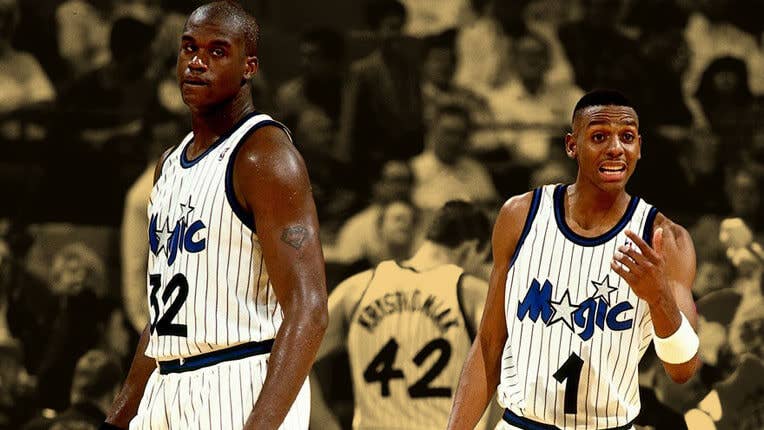
There were 2 games played in the NBA: The Orlando Magic beat the Washington Bullets, 105-95 at the Orlando Arena; and the Utah Jazz beat the Atlanta Hawks, 105-96 at the Delta Center in Salt Lake City.
And 1 game was played in the NHL: The New York Rangers beat the Calgary Flames, 4-2 at Madison Square Garden. Mark Messier scored a hat trick, including his 500th career goal, with Adam Graves getting the other Blueshirt goal.