Showing posts with label michael curtiz. Show all posts

Saturday, November 26, 2022

November 26, 1942: "Casablanca" Premieres

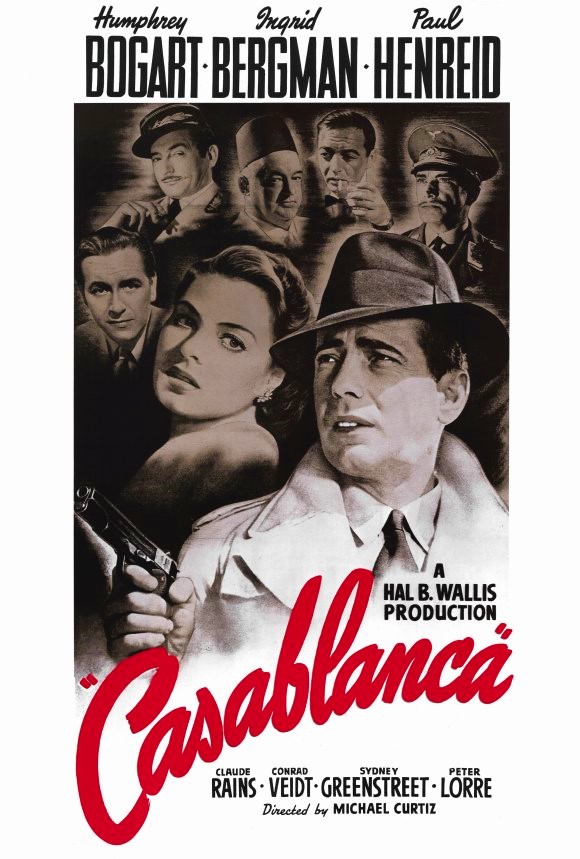
November 26, 1942: Casablanca premieres at the Hollywood Theatre -- not in the Hollywood section, or any other section, of Los Angeles, but in New York. It is the greatest movie of all time.

No, Gone with the Wind is not the greatest. Nor is Citizen Kane. Nor is The Godfather. Nor is Star Wars (and certainly not The Empire Strikes Back).

Casablanca was based on Everybody Comes to Rick's, a play written in 1940 by Murray Burnett and Joan Allson, but not yet staged. It was written after the writers had visited Vienna in 1938, and saw what the Nazis were doing, including the refugee situation they were creating. They couldn't get anyone to produce the play, and sold it to the Warner Brothers film studio for $20,000 -- about $354,000 in today's money.

So the play was re-written by twin brothers Julius and Philip Epstein, and Howard Koch. (Philip's grandson is baseball executive Theo Epstein.) All 3 were Jewish New Yorkers.

The director was Michael Curtiz, a Hungarian Jew, although not a refugee: He came to America in 1926 because the Warner Brothers had been impressed with his work in the film industry in Germany's interwar Weimar Republic. He directed Errol Flynn in Captain Blood and The Adventures of Robin Hood. He directed James Cagney in Yankee Doodle Dandy. He directed both Cagney and Humphrey Bogart in Angels with Dirty Faces. And he would later direct Bing Crosby and Danny Kaye in White Christmas. So he was equally at home with adventure films and musicals, and Casablanca has elements of both.

Casablanca is set in December 1941, apparently just before the Japanese attack on Pearl Harbor, in Casablanca, in French-controlled Morocco -- or, as Captain Renault called it, "Unoccupied France." In the film, as in real life, it was a link in a chain of refugee ports. People would flee their various European homelands as they were taken over by the Nazis, and arrive in North Africa.

The example cited at the beginning of the film: French people would take the train from the capital of Paris to the port city of Marseille; then a ferry across the Mediterranean Sea to Oran, in Algeria, then controlled by France; then, any way they could across the North African desert, on foot if they had to, to Casablanca.

From there, they would try to obtain an exit visa, or a letter of transit, to get on a plane from Casablanca to Lisbon, Portugal. (Like neighboring Spain, Portugal then had a fascist government; but, also like Spain, they were neutral in World War II, not aiding the Nazis, and did not turn refugees over to them.) And from Lisbon, they would get on a transport ship to America. But if they couldn't get an exit visa or a letter of transit, they were stuck in Casablanca, to be preyed upon by the city's price-gougers and con artists.

The major characters:

* Humphrey Bogart plays Rick Blaine, a New York native who, for a reason the film never reveals, cannot return to America. Although he says he is neutral in the war, Captain Renault reveals that Rick aided both Ethiopia when invaded by Fascist Italy in 1935, and the Spanish Republic when the Fascists started the Spanish Civil War in 1936. Rick says he got paid handsomely both times. Renault reminds him that the winning side would have paid him more, and accuses him of secretly being a sentimentalist.

Rick runs what he calls "a saloon," but is also a casino. He does well, and is respected by the refugees, some of whom he employs, one of whom is his girlfriend. But he is also willing to allow Nazi officials inside. He receives 2 letters of transit for safekeeping, because the man who had them had killed 2 Nazi officers to get them, and is soon himself arrested and killed in custody.

* Arthur "Dooley" Wilson plays Sam (his last name is never revealed), Rick's piano player, who had been with him in Paris as well. Although Sam is black, and calls Rick "Boss" to his face and "Mr. Rick" to others, Rick treats him as a friend, and trusts him completely -- to the point where he hides the letters of transit in Sam's piano. In real life, Wilson was a drummer, and had never played piano before, so he had to fake playing it. Elliot Carpenter played the piano for the soundtrack. He and Wilson were the only black people on the film's set.

* Claude Rains, an English actor, plays Captain Louis Renault, police prefect of Casablanca. He tries to stay out of politics: "I blow with the prevailing wind, and the prevailing wind is from Vichy." Meaning the Nazi-dominated new French government. He is the man who must decide whether to approve exit visas from the city, and, with women, is not above trading the exit visas for sex  -- something the film can only imply, due to the Hays Code. But Rick says Louis always keeps his word. And there have been times when Louis has had to close Rick's saloon, and Rick has had to bribe him to reopen it.

* Ingrid Bergman, a Swedish actress, plays Ilsa Lund, a Norwegian woman with a flair for languages. In a flashback sequence, we see Rick and Ilsa in love in Paris. He asks her why she is not already married. She says she was, but that her husband is dead. As the Nazis arrive in June 1940, they have to flee. At the last minute, just as Rick and Sam are to board the last train out of Paris to Marseille, Sam hands Rick a note from Ilsa: She can't come with him. 

* Paul Heinreid, an Austrian actor, plays Victor Laszlo, a Czech resistance fighter, who has escaped from a Nazi concentration camp, and is trying to reach America. He is Ilsa's husband, who had not been killed after all. And they show up at Rick's together.

* Conrad Veidt, a German actor with a Jewish wife, who rather enjoyed playing Nazis in order to make them look bad, plays Major Heinrich Strasser, the Nazi officer pursuing Laszlo.

Laszlo has been promised the letters of transit, to use for himself and Ilsa. Renault finds out that Rick and Ilsa used to be an item, and bets Rick 10,000 francs that he'll end up using the letters for himself and Ilsa, stealing Laszlo's wife and leaving him to the wolves.

Rick has a plan, which includes selling his casino to a rival, Signor Ferrari, played by British actor Sydney Greenstreet, with the promise to keep all his employees, including Sam, on at the same salary. In order for his plan to work, he has to let Renault -- and Ilsa -- think that Renault's prediction that he will sell Victor out is exactly what he's doing.

But when they get to the airport -- filmed at the Van Nuys airport outside Los Angeles, the only scene not filmed on a Hollywood soundstage -- Rick gives Laszlo the letters, and reveals that he's no longer neutral: He's on the Allies' side.

He then tells Ilsa to go with Victor, with the famous speech: "If that plane leaves the ground, and you're not on it, you'll regret it. Maybe not today, maybe not tomorrow, but soon, and for the rest of your life." She asks, "But what about us?" He says, "We'll always have Paris." And he closes by giving her the toast he used to deliver there: "Here's looking at you, kid."

As the plane is taxiing down the runway with the Laszlos aboard, Strasser arrives. He gets on the phone to air-traffic control to try to stop the plane. He and Rick shoot at each other, but, as Han Solo would in Star Wars, 35 years later, Rick shoots first, and kills him.

Renault discovers/recovers his patriotism as well, and covers for Rick, and tells him that the 10,000 francs he owes Rick will cover their escape expenses. As they walk off, not into a sunset like Western movie heroes but into a fog, the same fog into which the plane disappeared, Rick says, "Louis, I think this is the beginning of a beautiful friendship."

(UPDATE: In 2026, for the website Nofilmschool.com, Jason Hellerman reminded us that, when the film was released, not only was The War -- as my grandmother, 18 at the time of its release, taught me, always Capital T, Capital W -- still underway, but nobody yet knew how it would end. In November 1942, in all theaters of operations, the Axis was winning. Hellerman wrote: "I can picture audiences sitting in the dark while World War II raged, hearing words that perfectly captured the exhausting, morally gray reality of a world on fire." And he had a point: Nobody in the movie was all good, not even Ilsa. But, in the end, the people who had to do the right thing did it. Hellerman added, "They had to feel ignited by this movie and its message.")

The 10,000 francs that Rick and Louis had bet? In December 1941, that was worth considerably less than it sounds to current American ears: About $214, or about $4,200 today, 80 years later. Still not an amount you want to lose, if only for pride. In current French money? 3,965 euros.

For the record: Ilsa tells Sam, "Play it, Sam, for old times' sake. Play 'As Time Goes By.'" Later, Rick tells Sam, "You played it for her, you can play it for me. If she can take it, I can. Play it." He never says, "Play it again, Sam."

There was an urban legend that Ronald Reagan, then a rising star in Hollywood, was the original choice to play Rick. It wasn't true, and it probably came about due to the facts that Reagan went on to become President, and "casa blanca" is Spanish for "white house."

It would take until 1991 for Everybody Comes to Rick's to be staged, as written, anywhere in the world, in London, running for 6 weeks. That same year, the Hollywood Theatre in New York, having long since become the Mark Hellinger Theatre, became the new home of the Times Square Church. The address is 237 West 51st Street.

Given how much the characters smoked and drank in the movie, it's enough to make a viewer wonder how any of them survived to see the end of the war. Indeed, Conrad Veidt had a bad heart, and died in 1943, only 50 years old, 2 years and a few days short of V-E Day.

Humphrey Bogart also smoked himself to death, dying in 1957. He was preceded in death by Dooley Wilson, who died in 1953 from an undisclosed long-term illness. Sydney Greenstreet, who played secondary character Ferrari, and co-starred with Bogart in several films, most notably The Maltese Falcon, was well overweight, and died in 1954. Peter Lorre, who played Ugarte, the man who gave Rick the letters of transit, and who was also in The Maltese Falcon, died in 1964, which pretty much buried a plan to film a live-action version of The Lord of the Rings, with Lorre playing Gollum.

Claude Rains lived until 1967, Ingrid Bergman until 1982, and Paul Heinreid made it to 1992. The last living actor from Casablanca was Madeleine Lebeau, who played Yvonne, who starts the film as Rick's girlfriend and ends it as the French refugee who had tearfully sung along with Laszlo's leading of "La Marseillaise." She left us on May 1, 2016.

On March 18, 2021, following the premiere of his version of Justice League, I wrote on Facebook: "If Zack Snyder had directed Casablanca, Major Strasser would have flown the plane that dropped The Bomb on New York. If Joss Whedon had directed Casablanca, Strasser would have captured Ilsa and ordered her to strip."

A friend responded: "If Terence Malick directed, the entire thing would have been narrated in voiceover by Bogie, but filmed with him walking constantly with a Steadicam camera DIRECTLY BEHIND HIS HEAD. Intercut with shots of an empty airport field."

I suppose if Quentin Tarantino had directed it, there would have been a massive shootout at the airport, and the movie would have ended with Victor massaging Ilsa's feet on the plane.

*

November 26, 1942 was a Thursday. In America, it was Thanksgiving Day. What was actually going on in Casablanca at the time? Two weeks earlier, the Allies launched Operation Torch, the invasion of North Africa -- in a manner of speaking, World War II's 1st "D-Day."

Among the Allied troops was the U.S. Third Army, commanded by General George S. Patton. Among those under his command was Sergeant George Goldberg, who later changed his name to George Golden, so his wife wouldn't have to deal with the anti-Semitism that he faced. He hated war, but he hated the Nazis as much as they hated the Jews. So he found himself a non-combat role, but a critical one: He was an Army stenographer, vital in getting communications through.

He rose to the rank of Staff Sergeant, came home, and became a commercial photographer, a New York taxi driver, a husband, a father, and a grandfather -- my grandfather.

The NFL didn't play games on Thanksgiving during World War II. But many college games were played:

* Virginia Tech played, but not against the University of Virginia: The Cavaliers had already finished their season the preceding Saturday. UVa and VT (or VPI, as Virginia Polytechnic Institute was then usually called ) did play on a holiday, but it was Halloween, and Tech won. On Thanksgiving, Tech played the Virginia Military Institute, beating them 20-6 at Victory Stadium in Roanoke.

* Elsewhere in Virginia, the College of William & Mary, ranked Number 19 beat the University of Richmond, 10-0 at City Stadium in Richmond.

* Wake Forest beat South Carolina, 33-14 on more or less neutral ground at American Legion Memorial Stadium in Charlotte, North Carolina.

* Louisiana State beat arch-rival Tulane, 18-6 at Tiger Stadium in Baton Rouge, Louisiana. 

* Missouri beat arch-rival Kansas, 42-13 at Memorial Stadium in Columbia, Missouri.

* The University of Tulsa came in ranked Number 6, and beat Arkansas, 40-7 at Skelly Field in Tulsa. They rose to Number 4, before losing the Sugar Bowl to Tennessee.

* Number 18 Texas beat Texas A&M, 12-6 at Memorial Stadium in Austin.

* The University of Cincinnati beat arch-rival Miami University of Oxford, Ohio, 21-12 at Nippert Stadium in Cincinnati. 

* In those days, Colorado had a major rival, but it wasn't Colorado State or Nebraska. It was the University of Denver. On Thanksgiving Day 1942, Colorado beat Denver, 31-6 at DU Stadium in Denver. That stadium hosted the DU program from 1926 until its suspension in 1960, and also hosted home games for the Air Force Academy from 1955 to 1961, and 1 home game for the Denver Broncos in their expansion season of 1960. It was torn down in 1971.

* Also in the Rocky Mountains, the University of Utah beats the University of Idaho, 13-7 at Ute Stadium in Salt Lake City.

However, most teams, including Rutgers, had already finished their seasons the preceding Saturday. Most of those that didn't played the following Saturday, including Notre Dame, who beat USC in Los Angeles; and Boston College, who blew a shot at the National Championship by getting clobbered by their arch-rivals in that era, Holy Cross. But that led to the cancellation of a victory party at the Cocoanut Grove nightclub in Boston, which caught fire and killed nearly 500 people.

Baseball was out of season, and there was no NBA yet. But there was NHL action, with four of the "Original Six" in action. It's worth noting that Canada does have a holiday named Thanksgiving Day, but it's in mid-October. For that reason, the NHL's 2 Canadian teams, the Montreal Canadiens and the Toronto Maple Leafs, saw no reason to play on the day.

The Detroit Red Wings beat the Toronto Maple Leafs, 2-1 at the Olympia Stadium in Detroit. And the New York Rangers beat the Chicago Black Hawks, 2-1 at the Chicago Stadium. The Ranger goals are scored by Lynn Patrick, son of general manager Lester Patrick; and Clint Smith, who lived until 2009, thus making him the last survivor of not just this game, but of the Rangers' 1940 Stanley Cup winners. 

November 26, 1938: "Angels With Dirty Faces" Premieres

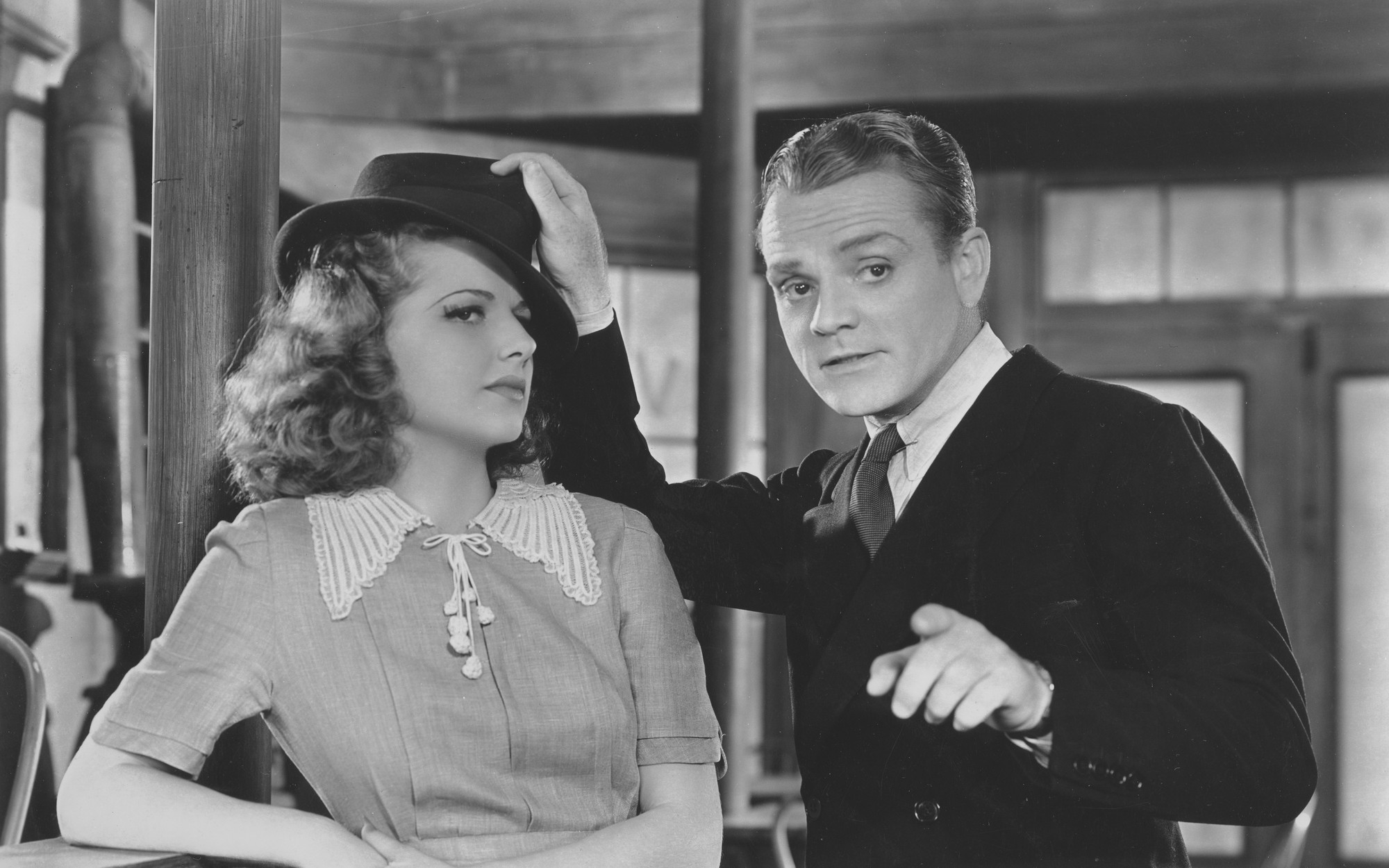
Ann Sheridan and James Cagney

November 26, 1938: Angels with Dirty Faces premieres. To paraphrase a much more recent saying, Everybody thinks they're a gangster until they face James Cagney.

In 1920, William "Rocky" Sullivan and Jerry Connolly are New York boys who commit a petty robbery. Jerry gets away, but Rocky is caught by the police, and goes to reform school. He doesn't reform, and grows up to be a criminal played by Cagney. Jerry is "scared straight" by the experience, and grows up to become a priest played by Pat O'Brien.

In 1935, Rocky is arrested for armed robbery. His lawyer and co-conspirator, Jim Frazier (Humphrey Bogart), asks him to take the blame for the robbery. In exchange, he will keep Rocky's share of the robbery, $100,000 (about $2.1 million in 2022 money), safe until he is released. Rocky agrees, and is sentenced to 3 years in prison.

After serving his sentence, Rocky returns to his old neighborhood, and rents a room in a boardinghouse run by Laury Martin (Ann Sheridan). He goes to Frazier's casino. Frazier promises to have the $100,000 ready by the end of the week, and he gives Rocky $500 spending money.

Rocky has his pocket picked by a gang of teenagers. In various films, these actors, always together, would be known under various names: The East Side Kids, the Bowery Boys, or, as they are here, the Dead End Kids. Rocky tracks them down to his old childhood hideout, and gives them what-for. They admit to an admiration of Rocky's reputation and criminal lifestyle. After retrieving his wallet and all the money therein, Rocky invites them to dinner.

While they are eating, Jerry arrives, and asks the gang why they have not been playing basketball. Laury expresses her concern over the potential negative influence Rocky may be having on the gang, which is echoed by Jerry.
Cagney as Rocky, O'Brien as Father Jerry

Frazier's goons try to kill Rocky, but he escapes. He finds Frazier, raiding his house at gunpoint and stealing $2,000 and a ledger. Rocky then brazenly approaches Frazier's business partner, Mac Keefer (George Bancroft), and requests $100,000 in trade for Frazier's release. With no other option, Mac agrees and pays Rocky, but as Rocky leaves, Mac informs on him to the police. Rocky is arrested, and sets about mocking the police for their lack of evidence, even goading them to ring his lawyer (Frazier).

Frazier approaches Mac and learns of Rocky's arrest. He informs Mac that Rocky is in possession of the ledger. This forces Frazier to tell the police it was all a "misunderstanding" -- Bogart was not yet big enough of a star to play actual tough guys -- and Rocky is released.

Jerry buys time on a radio station to expose corruption in New York. Rocky tries unsuccessfully to stop Jerry, as he knows the other mobsters won't take kindly to what his friend the priest is trying to do. Rocky isn't trying to protect himself, he's trying to protect Jerry. To this end,  Rocky kills Frazier and Keefer. After escaping the casino, he makes his way to an abandoned warehouse, where he is forced to kill a police officer. A standoff ensues with the police.

Jerry tells the police that he can get Rocky to surrender peacefully. Instead, Rocky takes Jerry hostage, but is shot in the leg by the police as he tries to escape. He is convicted of murder, and sentenced to death in the electric chair.

Right before his scheduled execution, Rocky tells Jerry he's not afraid to die. Jerry tells him to at least pretend to be scared, but he refuses, because his reputation is all he has left. In the end, though, he begs for mercy. His execution is shown only in shadow: The Hays Code meant that Rocky had to pay for all he'd done, but the public shouldn't actually see it happen.

The gang read in the newspaper of how Rocky "turned yellow." Soapy (Bill Halop), the gang's leader, asks Jerry if it's true. Jerry tells them it is, and says, "Come on, boys: Let's go say a prayer for a boy who couldn't run as fast as I could." He knows the cliché: "There but for the grace of God go I."

The film was nominated for 3 Academy Awards: Best Actor for Cagney, Best Director for Michael Curtiz, and Best Original Story by Rowland Brown. However, none won. It's hard to argue they were robbed, though. Spencer Tracy won for playing a different priest, the real-life Father Edward Flanagan (who was still alive), in Boys Town. Frank Capra won for directing You Can't Take It With You. And Boys Town also won for Best Original Story, by Eleanore Griffin and Dore Schary.

Cagney and O'Brien remained close friends until the end. In 1983, Cagney had a stroke, and was confined to a wheelchair. Still, CBS offered him the role of an elderly ex-boxer in the TV-movie Terrible Joe Moran. He wasn't sure he could do it, so he called O'Brien, who yelled, "Do it, Cagney! It's medicine!" and slammed the phone down.

O'Brien died a few days later, but Cagney took the role, and the film aired on March 27, 1984, with scenes from his 1932 boxing movie Winner Take All used to portray the younger Moran. Two years later, Cagney was dead. He did not die a coward.

Sadly, Ann Sheridan, known for her foxiness as "The Oomph Girl," died of cancer in 1967, only 52 years old.

*

November 26, 1938 was a Saturday. Impressionist Rich Little and Florida Congressman Porter Goss were born.

These college football games were played:

* Rivalry: Number 2 Texas Christian University (TCU), with Heisman Trophy-winning quarterback Davey O'Brien, beat Southern Methodist University (SMU), 20-7 at Ownby Stadium in Dallas.

* Number 3 Duke beat Number 4 Pittsburgh, 7-0 at Duke Stadium (now Wallace Wade Stadium) in Durham, North Carolina.

* Rivalry: Number 6 Oklahoma beat Oklahoma A&M (now Oklahoma State), 19-0 at Lewis Field (now Boone Pickens Stadium) in Stillwater, Oklahoma.

* Number 7 Carnegie Tech (now Carnegie-Mellon University) beat North Carolina State, 14-0 at Riddick Stadium in Raleigh, North Carolina.

* Rivalry: Number 11 Holy Cross beat Boston College, 29-7 at Fenway Park in Boston.

* Number 13 Dartmouth were upset by Stanford, 23-13 at Stanford Stadium in the San Francisco suburb of Palo Alto, California.

* Number 17 Texas Tech beat Marquette, 21-2 at Tech Field (now Jones Stadium) in Lubbock, Texas.

* Rivalry: Fordham beat New York University (NYU), 25-0, in front of 50,000 at Yankee Stadium.

* Rivalry: Army beat Navy, 14-7 at Municipal Stadium (later John F. Kennedy Stadium) in Philadelphia.

* Florida beat Alabama A&M (now Auburn), 9-7 at Fairfield Stadium in Jacksonville, Florida.

* Rivalry: The University of Mississippi (Ole Miss) beat Mississippi State, 19-6 at Scott Field (now Davis-Wade Stadium) in Starkville, Mississippi.

* Rivalry: Tulane beat Louisiana State (LSU), 14-0 at Tiger Stadium in Baton Rouge, Louisiana.

* Baylor beat Rice, 21-6 at Rice Field in Houston.

* Montana beat Arizona, 7-0 at Arizona Stadium in Tucson.

* Rivalry: Oregon State beat Oregon, 14-0 at Multnomah Stadium (now Providence Park) in Portland.

* Rivalry: Washington beat Washington State, 26-0 at Husky Stadium in Seattle.

* Idle this week: Number 1 Notre Dame, Number 7 USC, Number 9 California, Number 14 Southern California (USC); and, having completed their schedules, the entire Big Ten Conference, including Number 8 Minnesota, these schools in the New York Tri-State Area: City College of New York (CCNY), Rutgers and Princeton.

Two days before, on Thanksgiving, Number 5 Tennessee beat Kentucky, 46-0 at Shields-Watkins Field (now Neyland Stadium) in Knoxville, Tennessee. Also that day, Number 10 Cornell and the University of Pennsylvania played to a tie, 0-0 at Franklin Field in Philadelphia.

Among New York area schools playing on Thanksgiving: Manhattan College lost to Villanova, 20-0 at the Polo Grounds; and Columbia lost to Brown, 36-27 at Brown Stadium in Providence, Rhode Island.

USC and Cal tied for the Pacific Coast Conference title, but USC beat Cal for the tiebreaker. The following week, USC beat Notre Dame. USC went on to beat Duke in the Rose Bowl. St. Mary's, of the San Francisco Bay Area, beat Texas Tech in the Cotton Bowl. Minnesota won the Big Ten Conference title, but did not go to a bowl game.

Tennessee won the Southeastern Conference title. Oklahoma won the Big Six Conference title. Tennessee beat Oklahoma in the Orange Bowl. TCU won the Southwest Conference title, and beat Carnegie Tech in the Sugar Bowl. TCU and Tennessee split the polls for the National Championship.

Baseball was out of season. The NBA hadn't been founded yet. There were 2 games in the NHL. The New York Americans beat the Chicago Black Hawks, 6-4 at the old Madison Square Garden. And the Toronto Maple Leafs beat the Detroit Red Wings, 5-0 at Maple Leaf Gardens in Toronto.

And in English soccer, North London team Arsenal went to Yorkshire, and played Middlesbrough to a draw, 1-1 at Ayresome Park.

Friday, October 28, 2022

October 28, 1933: "The Kennel Murder Case" Premieres

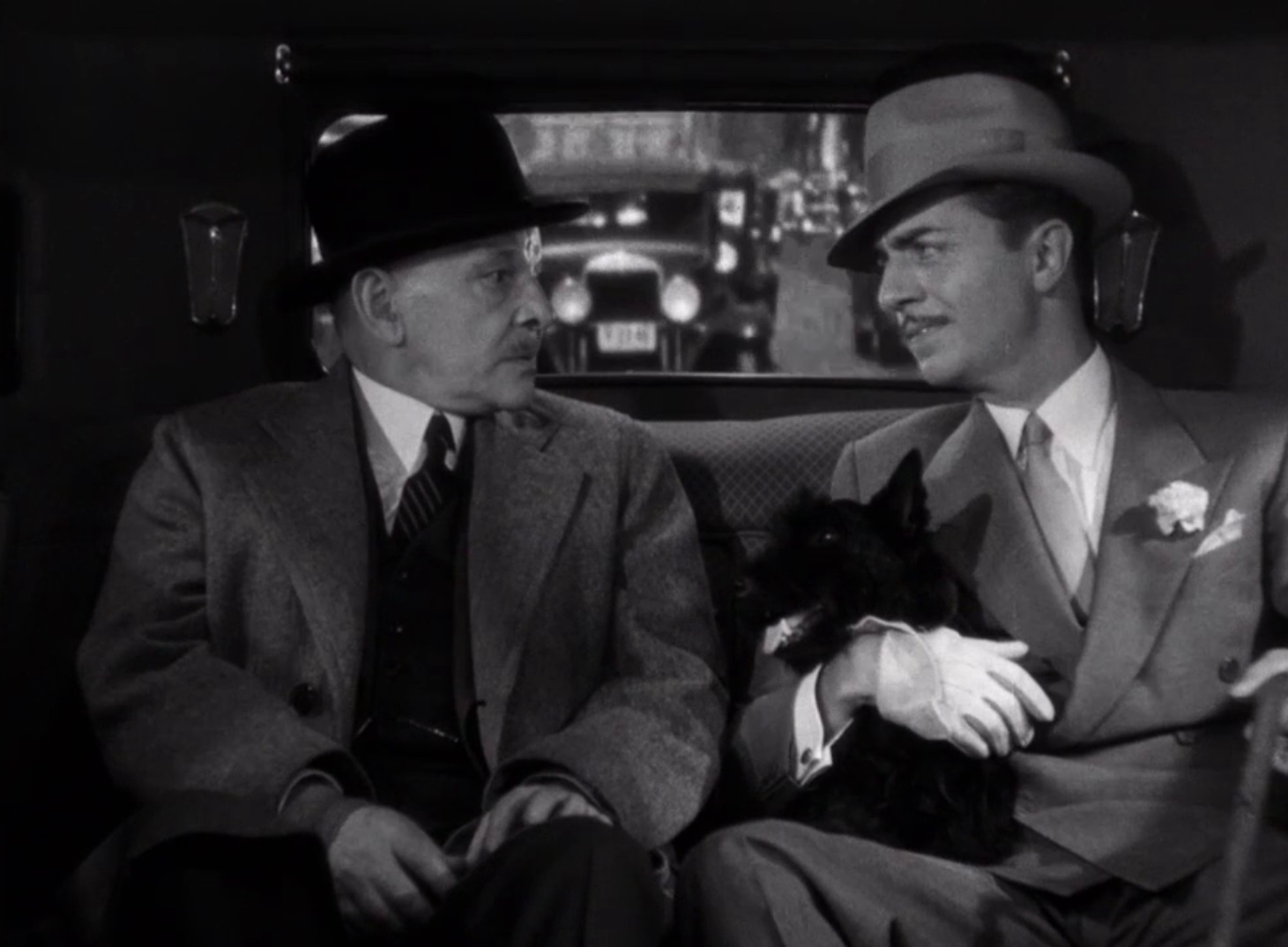
Etienne Girardot (left) and William Powell

October 28, 1933: The Kennel Murder Case premieres. Michael Curtiz directed, and would later direct James Cagney in Angels with Dirty Faces and Yankee Doodle Dandy, Errol Flynn in The Adventures of Robin Hood and The Sea Hawk, Humphrey Bogart and Ingrid Bergman in Casablanca, and Joan Crawford in Mildred Pierce.

William Powell, in what could be seen as a warmup to playing Nick Charles in the Thin Man movies, plays Philo Vance, a private detective created by art critic Willard Huntington Wright, who, to protect his reputation with his main job, wrote mystery novels under the name S.S. Van Dine.

Mary Astor also stars, perhaps as a warmup for playing Brigid O'Shaughnessy in the 1941 version of Dashiell Hammett's The Maltese Falcon opposite Humphrey Bogart's Sam Spade.

French actor Etienne Girardot plays the coroner, Dr. Doremus. In this film, he says, "I'm a doctor, not a detective." A moment later, he says, "I'm a doctor, not a magician." This predates DeForest Kelley using, "I'm a doctor, not a... " on Star Trek by 33 years, although there's no hint that any Trek writer ever used this movie as inspiration.

*

October 28, 1933 was a Saturday. The only team sport then in season in North America was football. Among the notable college games played were these:

* Army beat Yale, 21-0 at the Yale Bowl in New Haven, Connecticut. Army went undefeated until their last game, on December 2, losing to Notre Dame, 13-12 in front of 73,594 fans at Yankee Stadium.

* Navy beat the University of Pennsylvania, 13-0 at Franklin Field in Philadelphia.

* Notre Dame may have gone on to beat Army, but they had a bad season, 3-5-1, including a loss on this day, to the University of Pittsburgh, 14-0 at Notre Dame Stadium in South Bend, Indiana.

* Michigan beat the University of Chicago, 28-0 at Stagg Field in Chicago. Michigan won the Big Ten Conference title, and went undefeated, the only blemish on their record a 0-0 draw at home to Minnesota.

* Stanford lost to the University of Washington, 6-0 at Husky Stadium in Seattle. In spite of this, Stanford won the Pacific Coast Conference title, and go to the Rose Bowl.

* In what would eventually become a major rivalry, Nebraska beat Oklahoma, 16-7 at Memorial Stadium in Lincoln, Nebraska. Nebraska went on to win the Big Six Conference title. (Forerunner of the Big Eight and the Big 12.)

* Among New York City teams: Columbia beat Penn State, 33-0 at Baker Field in Upper Manhattan; Fordham beat Alabama, 2-0 in front of 60,000 fans at the Polo Grounds; New York University (NYU) lost to Georgia, 25-0 at Sanford Stadium in Athens, Georgia.

Columbia's only loss of the season was dealt by Princeton. Columbia went on to beat Stanford in the Rose Bowl.

* Rivalry: Kansas State beat Kansas, 6-0 at Memorial Stadium in Lawrence, Kansas.

* And among New Jersey's teams, Princeton beat Washington & Lee, 6-0 at Palmer Stadium in Princeton; while Rutgers beat Lehigh, 27-0 at Neilson Field in New Brunswick.

Wednesday, September 28, 2022

September 28, 1945: "Mildred Pierce" Premieres

Ann Blyth (left) and Joan Crawford

September 28, 1945: The film Mildred Pierce premieres, directed by Michael Curtiz, and based on the 1941 novel by James M. Cain. Two other Cain novels also became great film noirs: The Postman Always Rings Twice and Double Indemnity.

Joan Crawford plays the title character, whose ex-husband is accused of murdering her 1st husband, but (Spoiler Alert) the real villain of the story is Mildred's daughter. After Crawford died, the idea that her daughter would be bullying her turned out to be ironic.

On an episode of M*A*S*H, Colonel Sherman T. Potter (Harry Morgan) read a letter from his wife, Mildred, which deeply moved him and his officers. Captain B.J. Hunnicutt (Mike Farrell) told him, "You oughta marry that woman." Captain Ben "Hawkeye" Pierce (Alan Alda) told Potter, "If you don't, I will." B.J. said, "Nah, then, she'd be Mildred Pierce!"

*

September 28, 1945 was a Friday. Two baseball games were played. The Brooklyn Dodgers beat the Philadelphia Phillies, 5-2 at Shibe Park in Philadelphia. Luis Olmo, the 1st Puerto Rican to star in the U.S. major leagues, hit a home run. And the St. Louis Browns beat the Cleveland Indians, 2-1 at Sportsman's Park in St. Louis.

And there were 6 college football games played that night:

* Temple beat Syracuse, 7-6 at Temple Stadium in Philadelphia.

* The University of Maryland beat Guilford College, 60-6 at the original Byrd Stadium in the Washington suburb of College Park, Maryland. Maryland had a 1st-year head coach, who moved on to the next stop the following year: Paul "Bear" Bryant. Guilford, in Greensboro, North Carolina, now competes in NCAA Division III.

* This was the last year of World War II, when some military bases fielded football teams that played college teams. The Army Air Forces Eastern Flying Training Command team, based at Maxwell Field outside Montgomery, Alabama, beat Auburn, 7-0 at the Cramton Bowl, in Montgomery.

* The University of Detroit beat Alma College, 32-0 at University of Detroit Stadium. UD dropped football after the 1964 season. In 1990, the all-male UD merged with the all-female Mercy College to form the University of Detroit Mercy. Alma, based in the Michigan town of the same name, now competes in Division III.

* Saint Louis University beat Kirksville State, 96-6 at Walsh Stadium in St. Louis. SLU -- which has always spelled its name out, "Saint Louis," never abbreviated as "St. Louis" -- dropped its football program after the 1949 season, though they remain a notable basketball school.

Kirksville State, actually named Northeast Missouri State Teachers College but based in Kirksville, became Northeast Missouri State College in 1968, Northeast Missouri State University in 1972, and Truman State College in 1996, named for Harry Truman, the Missouri native who became President in 1945. They now compete in NCAA Division II.

* And the University of Kansas beat the University of Denver, 20-19 at Hilltop Stadium in Denver. UD dropped football after the 1961 season.

December 31, 1999 & January 1, 2000: The Millennium

December 31, 1999:  The Millennium arrives. The people of planet Earth survived. At a terrible cost. But we hadn't destroyed ourselves. ...