Showing posts with label rome. Show all posts

Friday, November 18, 2022

November 18, 1959: "Ben-Hur" Premieres

Stephen Boyd (left) and Charlton Heston

November 18, 1959: Ben-Hur premieres, directed by William Wyler, based on the 1880 novel by Lew Wallace. It had previously been filmed in 1925, starring Mexican actor Ramon Navarro in the title role, and Francis X. Bushman as the villain.

That was in black & white, and silent. This was in Technicolor, in full sound, and filmed in Italy with the largest budget ($15.175 million -- about $152 million in 2022 money), and the largest sets built, of any film produced at the time.

The story takes place in Jerusalem, in the early 1st Century AD, in the years immediately before, during, and after the ministry of Jesus of Nazareth. Judah Ben-Hur, played by Charlton Heston, already the preeminent performer of "historical epics," is a wealthy Jewish prince and merchant.

A childhood friend, Messala, played by Stephen Boyd, becomes commander of the nearby Roman fortress. While Judah has remained Jewish, Messala has totally bought into the Roman Empire's way of doing things. One thing leads to another, and Messala throws Judah into slavery, leading to the famous rowing scene.

After 3 years as a galley slave, Judah is assigned to Roman Consul Quintus Arrius' flagship. Arrius (Jack Hawkins) notices Judah's determination and self-discipline, and, after Judah saves his life in a battle with Macedonian pirates, Arrius petitions Emperor Tiberius to free him.

In Rome, Judah becomes a champion charioteer, driving the horses of Sheik Ilderrim (Hugh Griffith), and reunites with former girlfriend Esther (Israeli actress Haya Harareet). He enters a chariot race against Messala, in front of the new Governor of Judea, Pontius Pilate (Frank Thring), resulting in one of the most spectacular scenes ever filmed. Messala attempts to cheat, but, in response, a move by Judah results in Messala's method resulting in his own wreck and death. With his dying breath, Messala tells his friendy-turned-enemy that his mother, Miriam (Martha Scott), and his sister, Tirzah (Cathy O'Donnell), are alive, and where to find them.

Judah hears about a prophet he seeks who preaches love and forgiveness and urges Judah to cast off his consuming hate and vengeance. Judah and Esther attend the Sermon on the Mount. Soon afterward, Judah meets Pilate, who warns him against using his victory to lead a rebellion against Roman rule. Judah renounces his Roman citizenship. He finds out Tirzah is dying, and seeks Jesus to heal her.

But he is too late, and is a witness to the walk down the Via Dolorosa. History repeats itself: He recognizes Jesus (Claude Heater, uncredited) as a man who once tried to give him water as a galley slave, and tries to return the favor; but, as in the earlier incident, the gift is prevented by a Roman soldier (not the same one). After witnessing the Crucifixion, Judah walks through a storm to the cave where Miriam Tirzah and Esther are hiding. As the storm ends, he sees his mother and sister cured of their maladies, and accepts the miracle and forgives his enemies.

Metro-Goldwyn-Mayer spent $14.7 million, almost as much as it cost to make the film in the first place, to market it. It worked: Ben-Hur became the highest-grossing film premiering in 1959, and the 2nd-highest grossing film in history to that point, behind Gone with the Wind (also an MGM film). It became the 1st film to win 11 Academy Awards, including Best Picture, Best Director for Wyler, Best Actor for Heston, and Best Supporting Actor for Griffith.

Cathy O'Donnell (Tirzah) married Robert Wyler, brother of Ben-Hur director William Wyler. She died of cancer in 1970. Haya Harareet (Esther) died in 2021, and was the last surviving credited member of the film's cast.

Also premiering on this date was A Summer Place, based on the previous year's novel by Sloan Wilson. It starred Richard Egan and Dorothy McGuire as lovers reunited after 20 years, with Sandra Dee as the former's daughter and Troy Donahue as the latter's son, who begin their own affair.

The film was pretty steamy by the standards of the time. But now, it’s best known for its theme song, conducted by Percy Faith, which held the Number 1 spot on Billboard magazine's Hot 100 chart for 9 weeks in the Winter and Spring of 1960.

*

November 18, 1959 was a Wednesday. Baseball was out of season. Football was in midweek. No games were scheduled in the NHL. There were 3 games scheduled for the NBA:

* The New York Knicks beat the Minneapolis Lakers, 106-105 at the Minneapolis Armory.

* The Syracuse Nationals beat the Boston Celtics, 138-103 at the Onondaga County War Memorial (now the Upstate Medical University Arena) in Syracuse, New York.

* And the Detroit Pistons beat the Cincinnati Royals, 110-93 at the Cincinnati Gardens.

Saturday, November 5, 2022

November 5, 1943: The Bombing of the Vatican

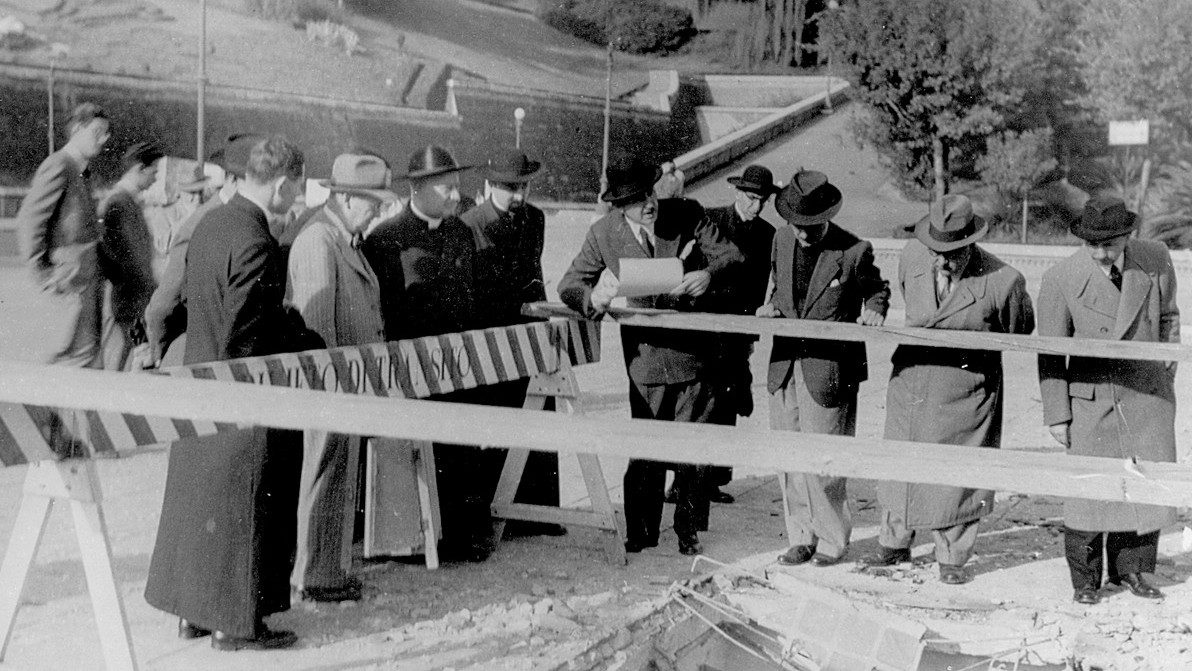
November 5, 1943: Vatican City, the seat of the Roman Catholic Church, and neutral in World War II despite having been completely surrounded by the City of Rome, the capital of (until a few months ago) Fascist Italy, is bombed by Nazi Germany's air force, the Luftwaffe.
Four bombs are dropped on the microstate. There is some damage, but there are no deaths. The aircraft responsible is never identified. There would be another bombing on March 1, 1944, causing less damage, but taking a life. In neither case was Pope Pius XII within range of the bombs.
Vatican City, usually listed as just "The Vatican, is the world's smallest independent nation, with just 121 acres of land, about half of which is parkland; and, as of 2022, 453 permanent residents. It is dominated by St. Peter's Basilica, the center of the Catholic world. The original Basilica was finished around AD 360, and the current one dates to 1626. There are no chain restaurants -- indeed, no public restaurants at all -- but, one block east into Rome, there is a McDonald's.
*
November 5, 1943 was a Friday. Playwright and actor Sam Shepard was born. So was Friedman Paul Erhardt, the TV chef billed as Chef Tell.
Baseball season was over. Football was in midweek. The NBA hadn't been founded yet. And while the NHL season had started, no games were scheduled for this day. So there were no scores on this historic day.

Thursday, October 27, 2022

October 28, 1922: The March On Rome

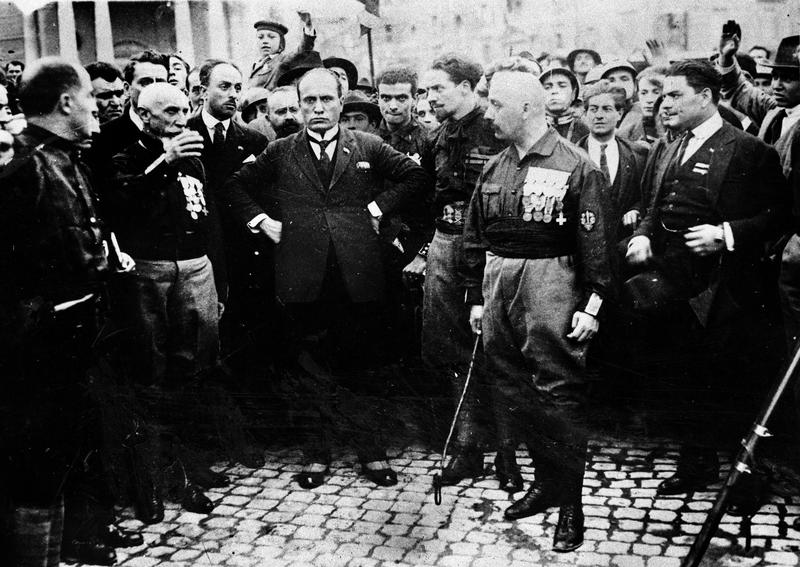
October 28, 1922: The March on Rome takes place. It was an organized mass demonstration by 25,000 right-wing Blackshirt paramilitary men, representing the National Fascist Party, led by Benito Mussolini, seeking to rescue Italy from the economic and social chaos of the post-World War I world.

Prime Minister Luigi Facta told King Victor Emmanuel III that he wanted to declare a state of siege, but the King, conservative like most European monarchs tended to be then, and sympathetic to the Fascists, overruled him. The next day, the King dismissed Facta, and gave the job to Mussolini.

For the next 21 years, Mussolini ruled Italy with an iron fist, having opponents killed, including Socialist Party leader Giacomo Matteotti in 1924; aiding the Fascist movement in Spain during that country's Civil War of 1936 to 1939; and expanding Italy's influence into Africa, taking over Libya and Ethiopia, in an attempt to establish a new Roman Empire with himself as Caesar.

Mussolini considered Fascism to be the direct opposite of liberalism’s opposite. In article in the 1932 edition of the Enciclopedia Italiana, he wrote, “Fascism should more appropriately be called Corporatism because it is a merger of state and corporate power.” As the 1930s proved, Fascism also includes militarism and nationalism, which, inevitably, includes bigotry -- if not at first, then, eventually, lurching toward it and eventually carrying it out on a governmental level.

The American journalist George Seldes, whom Mussolini had befriended on the way up in the hopes of gaining American patrons, turned on him after gaining power. Seldes then wrote a biography of Mussolini, titled Sawdust Caesar. 

And in aiding the Fascists in Spain, led by Generalissimo Francisco Franco, Mussolini sent troops, which became known as Franco's Italian Army. That name would later be adopted by a family that owned an Italian restaurant in Pittsburgh, to honor Pittsburgh Steelers running back Franco Harris, whose mother grew up in Italy under Mussolini -- but whose father was an African-American soldier who participated in the liberation of Italy from Fascism, and married her and took her to America.

While Harris always showed appreciation to the restaurateurs and the other Steeler fans, it is not known if it made him uncomfortable to know what Francisco Franco did in Spain and Benito Mussolini did in Ethiopia, before that country was liberated.

Mussolini was deposed in 1943, and executed in 1945. And that old saying, "At least he made the trains run on time"? It was a myth: On the average, the trains in Italy ran no better than they did before he took over.

At heart, Italy is a conservative country. But, since World War II, more of its governments have been left of center rather than right. When one government falls, it is usually replaced by another leftward one. An exception was Silvio Berlusconi, the broadcast executive whose Forza Italia party is economically and socially conservative. He served as Prime Minister in 1994 and '95, from 2001 to 2006, and 2008 to 2011.

But on September 25, 2022, a right-wing party named Fratelli d'Italia, meaning "Brothers of Italy," won the most seats, and built a coalition that made its Leader -- ironically, given the name of the party, a woman, Giorgia Meloni -- the new Prime Minister. She will be Italy's furthest-right head of government since Mussolini, noticeably further to the right than Berlusconi.

*

October 28, 1922 was a Saturday. The Major League Baseball season had ended earlier in the month, with the New York Giants winning the World Series over the New York Yankees. There was, as yet, no major professional basketball league. The National Hockey League's new season was still a few weeks away. The nascent National Football League did play games that weekend, but all the next day, Sunday.

But, being a Saturday, there were college football games. One was the 1st football game ever broadcast on live nationwide radio. The year before, the University of Chicago had become one of the first colleges to send its football team to play a team outside its home region, beating Princeton University 9-0 at Palmer Stadium. Now, they would have a rematch at Stagg Field on the South Side of Chicago.

The Princeton Tigers entered the game 4-0, the Chicago Maroons 3-0. After 3 quarters, thanks to 3 touchdowns by John Thomas, Chicago led 18-7. Then came the kind of collapse people would still be talking about nearly a century later if it had happened on TV and the footage preserved. The Maroons fumbled, the Tigers recovered, and took it in for a 40-yard touchdown. Harry Crum scored for Princeton in the closing minutes, and, since Princeton made their PATs and Chicago didn't, the Tigers emerged victorious, 21-18. 

Another battle of unbeatens took place at the new Rose Bowl stadium in the Los Angeles suburb of Pasadena. The University of California, from the system's main campus in Berkeley, outside San Francisco, was 4-0, and took on the 5-0 team from the University of Southern California, based in Los Angeles. A safety gave Cal a 2-0 lead at halftime, and the Golden Bears held on 2 goal-line stands, before adding a touchdown and a field goal to win 12-0. I have a separate entry for this event.

On the basis of the win over Chicago, Eastern and Midwestern sportswriters proclaimed Princeton to be the National Champions after the season. Western writers gave the title to Cal. No playoff in those days. Bowl games? Cal had won the Rose Bowl in 1920 and tied it in 1921, but in 1922 and 1923, they didn't go. From September 25, 1920 to October 3, 1925, under coach Andy Smith, the Golden Bears had a 50-game unbeaten streak, still the longest in college football history: Played 50, won 46, tied 4, lost exactly none.

Coaching took a severe toll on Smith, who went just 6-3 with Cal in 1925. On a visit to Philadelphia, where he had coached the University of Pennsylvania from 1909 to 1912, he was hospitalized with pneumonia, and died on January 8, 1926, only 49 years old. His career coaching record was 116-32-13, including 74-16-7 at Cal.

In New York City, New York University played Rhode Island State at Ohio Field in The Bronx, and won 23-7. Fordham University played Westminster College of Pennsylvania at Fordham Field, also in The Bronx, and won 12-0. Columbia University wasn't so lucky: They played Williams College of Massachusetts, at South Field, just south of their famed Low Library in the Morningside Heights section of Manhattan, and lost 13-10.

And, aside from Princeton the main team in New Jersey, Rutgers University went to Morgantown and lost to West Virginia University 28-0.

Also, Arsenal FC lost to Newcastle United, 2-1 at the Arsenal Stadium, a.k.a. Highbury, in North London. 

Sunday, October 16, 2022

October 16, 1943: The Raid of the Ghetto of Rome

October 16, 1943: Nazi Germany's Gestapo round up over 1,000 Jews in Rome, and deport them to the Auschwitz concentration camp in Poland. Only 16 of them survive World War II. The public silence of Pope Pius XII, the Bishop of Rome, on this raid casts a shadow over his legacy.

Born on March 2, 1876 in Rome, Eugenio Maria Giuseppe Giovanni Pacelli rose through the ranks of the Vatican before being elected Pope on March 2, 1939 (his 63rd birthday), taking the name Pius XII, as his much-admired immediate predecessor had been Pius XI. Adolf Hitler's Nazi Germany was already in Austria and Czechoslovakia, and before the year was out, he had invaded Poland and started World War II.
With Vatican City surrounded by the Metropolitan City of Rome, and thus by Italy, and thus by Benito Mussolini's Fascist government, allied with Hitler, there wasn't much that the Pope could do. The same was true of Communism: Joseph Stalin, the Premier of the Soviet Union, was told by British Prime Minister Winston Churchill, at the Tehran Conference, earlier in 1943, that the Pope might be able to help the Allied cause, and responded, "The Pope? How many divisions has he?" As in, army divisions.

Pius maintained the Vatican's neutrality, and refused to denounce the Nazis' persecution of the Jews, before the extent of the horrors of the concentration camps were known to the outside world. As Holocaust survivor, author and Nobel Peace Prize laureate Elie Wiesel put it, "We must always take sides. Neutrality helps the oppressor, never the victim. Silence encourages the tormentor, never the tormented." For that reason, some of have called Pius "Hitler's Pope."

This is grossly unfair. He organized relief efforts from Rome, and, through intermediaries in the Church, all over the world, helped get thousands of refugees, Jewish and otherwise, out of Nazi-controlled territories. He continued to lead the Church until his death on October 9, 1958.

The term "ghetto" originated in the limited area into which medieval Rome put Jews, and even in America, the word was used to describe poor Jewish neighborhoods before it was used for poor black ones -- many of which had once been poor Jewish ones. Ruby Goldstein, before becoming one of boxing's best referees, was a lightweight contender from the Lower East Side of Manhattan, nicknamed "The Jewel of the Ghetto."

*

October 16, 1943 was a Saturday. Scottish soccer star Tommy Gemmell, once of Celtic Football Club's 1967 "Lisbon Lions," was born on this day. So was Paul Rose, one of the Front de Libération du Québec (FLQ) terrorists who kidnapped Pierre Laporte, Minister of Labour for the Province of Quebec, as part of what became known as the October Crisis. Unlike his brother Jacques, Paul was not with the others when Laporte tried to escape, and the others killed him in the attempt.

Although England had suspended Football League and FA Cup play for the duration of The War, there was competition. The North London team I would one day support, Arsenal, played West London team Brentford to a 3-3 draw. The game was played at White Hart Lane, home of Arsenal's rivals Tottenham Hotspur, because the British government had appropriated the Arsenal Stadium, a.k.a. Highbury, for the war effort.

The baseball season had ended 5 days earlier, with the New York Yankees winning the World Series over the St. Louis Cardinals in 5 games. The NBA hadn't been founded yet. The NHL season started 2 weeks later.

There was football. But with the manpower drain of World War II, many military bases had football teams, and were scheduled against college teams. This also enabled the teams at the service academies to be better than usual. Indeed, Army won the National Championship in 1944 and 1945, almost did so in 1943 and 1946; and Navy finished the season ranked Number 4 in 1943 and '44, and Number 3 in '45.

On October 16, 1943, Army were ranked Number 2, and beat Columbia, 52-0 at Baker Field in Upper Manhattan; while Navy were ranked Number 3, and beat Penn State, 14-6 at Thompson Stadium in Annapolis, Maryland. Among the other games:

* Number 1 Notre Dame beat Wisconsin, 50-0 at Camp Randall Stadium, which had been built on an Army base in Madison, Wisconsin.

* Number 4 University of Pennsylvania beat Lakehurst Naval Air Station, the site of the Hindenburg disaster, 74-6 at Franklin Field in Philadelphia.

* Number 5 Purdue beat Ohio State, 30-7 at Ohio Stadium in Columbus, Ohio.

* Number 6 Duke beat their arch-rivals, North Carolina, 14-7 at Duke Stadium, later renamed Wallace Wade Stadium, in Durham, North Carolina.

* During the war, the University of Iowa was represented by a U.S. Navy Pre-Flight School, and "Iowa Pre-Flight" were ranked Number 7 on this day. They beat Missouri, 21-6 at Memorial Stadium (later Faurot Field) in Columbia, Missouri.

* Number 8 University of Southern California beat the University of San Francisco, 34-0 at Kezar Stadium in San Francisco.

* In New York City, in addition to Columbia's loss, City College of New York (CCNY) beat Brooklyn College, 22-6 at Kingsmen Field in Brooklyn; New York University (NYU) suspended their program for the 1942 and '43 seasons; and Fordham suspended their program for the 1943, '44 and '45 seasons.

And among New Jersey's teams, Rutgers had trouble scheduling opponents, and did not play their 1st game until October 30; while Princeton lost to Brown, 28-20 at Palmer Stadium in Princeton.

Tuesday, October 11, 2022

October 11, 1962: The Second Vatican Council Is Convened

October 11, 1962: Pope John XXIII opens the Second Ecumenical Council of the Vatican, the 21st ecumenical council of the Roman Catholic Church, and the 1st since the First Vatican Council in 1869-70. This Second Council becomes widely known as "Vatican II."

The Pope called the Council because he felt the Church needed "updating" -- what he called, in Italian, aggiornamento. In order to connect with 20th Century people in an increasingly secularized world, some of the Church's practices needed to be improved, and its teaching needed to be presented in a way that would appear relevant and understandable to them. For this, Time magazine named him its Man of the Year for 1962.

Many Council participants were sympathetic to this, while others saw little need for change and resisted efforts in that direction. But support for aggiornamento won out over resistance to change, despite the fact that he died while it was in progress, on June 3, 1963. His successor, Pope Paul VI, was a full supporter of John's reforms, and kept the Council going, closing it on December 8, 1965.

As a result, the 16 magisterial documents produced by the council proposed significant developments in doctrine and practice: An extensive reform of the liturgy, a renewed theology of the Church, of revelation and of the laity, a new approach to relations between the Church and the world, to ecumenism, to non-Christian religions, and to religious freedom.

Among the more notable reforms was allowing Mass in each country's native language, so that it was no longer necessary to deliver the Mass in Latin; and removing the restriction on eating meat on Friday. (The exception is during Lent, when it is still forbidden. For those times when St. Patrick's Day, which is usually during Lent, falls on a Friday, exceptions are sometimes made, due to the tradition of corned beef and cabbage.)

John XXIII, born Angelo Giuseppe Roncalli, and known in his time as "The Good Pope," was canonized in 2014: St. John XXIII.

*

October 11, 1962 was a Thursday. Actress Joan Cusack was born.

It was a travel day in the World Series, which the New York Yankees would win over the San Francisco Giants. Football was in midweek. The NBA season started 5 days later.

There were 2 games played in the NHL. The New York Rangers lost to the Detroit Red Wings, 2-1 at the old Madison Square Garden. And the Boston Bruins beat the Montreal Canadiens, 5-0 at the Boston Garden. The Toronto Maple Leafs and the Chicago Black Hawks were not scheduled.

Friday, October 7, 2022

October 7, 1960: "Spartacus" and "Route 66" Premiere

October 7, 1960: The film Spartacus premieres, a dramatization of the story of the Thracian gladiator who led a slave revolt in Rome in 71 BC. The film was based on the 1951 novel by Howard Fast, was directed by Stanley Kubrick, and was written by Dalton Trumbo, one of the Hollywood Ten. All were selected by the film's star, Kirk Douglas, who wanted to break the Hollywood Blacklist for once and for all. He did.
Among the film's other stars: Jean Simmons, Laurence Olivier, Charles Laughton, Peter Ustinov, Tony Curtis, Nina Foch, John Ireland, Herbert Lom, John Hoyt, and Woody Strode, who had previously broken a different barrier: He was 1 of the 4 black players who broke professional football's color barrier in 1946, before becoming an actor, working mainly in Westerns.
The film is best remembered for a scene near the end, where the Roman commander Crassus (Olivier), having surrounded Spartacus' army, offers a pardon (and return to enslavement) if the men will identify Spartacus, living or dead. But this would mean a return to slavery, and they would rather die. So every surviving man responds by shouting "I'm Spartacus!" (Most people trying to quote the movie get that wrong, saying, "I am Spartacus!")
History suggests that Spartacus died in battle, and no marriage or children have been ascribed to him. The film shows the character crucified, but living long enough for his wife to show him his infant son.
In modern times, Spartacus became an icon for the Communist movement. The most popular sports team in the Soviet Union was the soccer team run by Spartak Moscow, ironically because it turned the Spartacus ideal back on the Communist government, and became "the people's team." It remains the most popular sports team in the Russian Federation. Many other teams in former Soviet countries have the Spartak name.
*
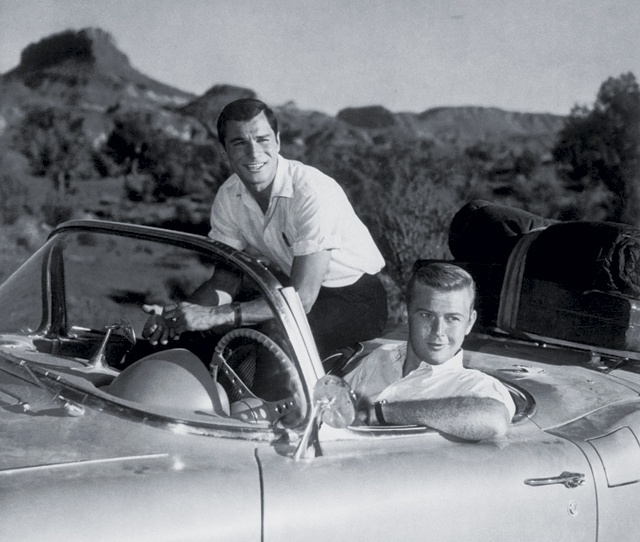
Also on this day, Route 66 premieres on CBS. It stars Martin Milner as Tod Stiles, and George Maharis as Buz Murdock, who travel around the country in a Chevrolet Corvette convertible, helping people wherever they can, because they were no longer needed or wanted where they were.
Maharis (left) and Milner
Tod grew up rich in Rye, Westchester County, New York, the son of a wealthy businessman. When his father died, he learned that his father's company was virtually bankrupt. The only thing his father had to leave him was the Corvette.
In contrast, Buz was a working-class orphan, who worked for the eldery Mr. Stiles in a New York shipyard. He talked Tod into going around the country together in the 'Vette.
U.S. Route 66 was commissioned in 1926. It started on Chicago's Loop, went down through Illinois, crossed the Mississippi River into St. Louis, went southwest across Missouri, briefly across the southeastern corner of Kansas, into Oklahoma through Tulsa to Oklahoma City. Then, it turned west, crossed the Texas Panhandle, and went through New Mexico, Arizona and California, including Los Angeles, before terminating at the Santa Monica Pier.
The federal government decommissioned the highway in 1985, as it had been mostly replaced by Interstate highways that bypassed some of the smaller towns along the route: I-55 in Illinois, I-44 from St. Louis to Oklahoma City, I-40 from there to Barstow, California, and I-15 and I-10 in California. Nevertheless, many of those small towns still call the remaining street "Route 66." For many of those towns, it served as their Main Street, and the road is still remembered as "America's Main Street."
But the show didn't exclusively stick to 66: Many of its adventures took place further east, even showing Tod and Buz working with lobstermen in Maine, and the series finale took place in Florida. 
Maharis came down with hepatitis, and decided to leave the show to focus on his health, saying, "Even if you have $4 million in the bank, you can't buy another liver." This soon proved to be incorrect, as liver transplants were becoming more common.
So, late in the show's 3rd season, with no explanation for what happened to Buz, Tod encountered Lincoln Case, played by Glenn Corbett. (Star Trek fans will recognize his name, as the first actor to play warp-drive inventor Zefram Cochrane.) "Linc" was a former U.S. Army Ranger and prisoner of war in Vietnam. This episode aired on March 22, 1963, so it was the 1st TV series featuring a character who was a Vietnam War veteran, and the earliest pop-culture representation of a Vietnam vet with post-traumatic stress disorder. After a difficult opening encounter, Tod invited Linc to join him on his travels.
Route 66 may have been the 1st regular TV series to have a planned series finale: On March 20, 1964, with the action in Tampa, far from the actual highway for which the show was named, Tod met Margo Tiffin, a commodities trader from Houston, played by Barbara Eden. They got married, and, since Linc was also from Texas, that's where Tod and Linc both ended up.
This show inspired many imitators, including The Fugitive and Run For Your Life in the 1960s, The Incredible Hulk in the 1970s, and Knight Rider and Hot Pursuit in the 1980s.
Despite having to leave the show due to illness, Maharis recovered. As of October 7, 2022, he is still alive, age 93. Milner died in 2015, Corbett in 1993. (UPDATE: Maharis died on May 24, 2023.)

In 1993, NBC tried a reboot, starring James Wilder as Nick Lewis, whose estranged father has recently died. It turns out, his father was Buz Murdock, who left him the Corvette, which suggests that Tod gave it to him at some point between 1964 and 1993. He then picks up Dan Cortese as hitchhiker Arthur Clark, and they start off on their own adventures together. But not many: Fans of the original series hated it, especially the suggestion that the orphaned Buz would gain and then abandon a family; and viewers not old enough to remember the original series didn't like it, either. Only 4 episodes aired.

*

October 7, 1960 was a Friday. So there was neither collegiate nor professional football played. The World Series was in a travel day. The NBA season hadn't started yet. And, while the NHL season had, 2 days earlier, no games were played on this day.

But there was one score, in the Canadian Football League: The Toronto Argonauts beat the Hamilton Tiger-Cats, 24-14 at Varsity Stadium in Toronto.

Wednesday, September 28, 2022

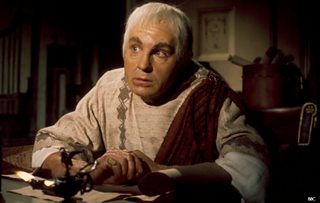
September 28, 1978: Pope John Paul I Dies After Just 33 Days In Office

September 28, 1978: Pope John Paul I dies of a heart attack at the Apostolic Palace in the Vatican. He was 65, young for a Pope, and had been in office only 33 days.

He was born on October 17, 1912 in Canale d'Agordo, in the province of Veneto, Italy, as Albino Luciani. He was ordained as a priest in 1935, and rose to become Patriarch of Venice in 1969. On August 26, 1978, he was elected Pope. He was the 1st Pope to take 2 names, those of the last 2 Popes, both of whom had been very popular: John XXIII and Paul VI, who had died on August 6.

He said he wanted to "humanize" the papacy. Most Popes, recognizing that they were the monarch of the Church, spoke of themselves with "the royal we," but John Paul I publicly called himself "I." Instead of a coronation, he called his ceremony an inauguration, as if he were, instead, a President. He quickly proved popular, and became known as "the Smiling Pope."

And then, on September 29, he was found dead in his bed. It was determined that he had suffered a heart attack the night before. There would have to be a 3rd Pope in a matter of weeks, and on October 16, Karol Wojtyla was elected, taking the name Pope John Paul II. And 1978 became known as "The Year of the Three Popes."

Despite rumors, later encouraged by the film The Godfather Part III, there is no known evidence that Pope John Paul I was murdered. He was beatified in 2022, and is considered a candidate for sainthood.

Although the current Pope, Francis, is of Italian descent, he is from Argentina. Benedict XVI was from Germany, and John Paul II was from Poland. For 455 years, all the Popes had been Italian. John Paul I currently stands as the last Pope from Italy.

*

September 28, 1978 was a Thursday. There were 7 Major League Baseball games played that day:

* The New York Yankees beat the Toronto Blue Jays, 3-1 at Yankee Stadium. The Yankees only got 4 hits, but Thurman Munson got 2 of them. Reggie Jackson went 0-for-3 with a walk. Ron Guidry went the distance to get to 24-3 on the season, and broke Jack Chesbro's team record for strikeouts in a season, 240 in 1904. He would finish 25-3 with 248 strikeouts, and a 1.74 ERA. But that finish would be in a Playoff for the American League Eastern Division title, because...

* The Boston Red Sox beat the Detroit Tigers, 1-0 at Fenway Park in Boston. The only run came on a home run by Jim Rice in the 4th inning. It was his 45th of the season, and he would finish with 46. Rice was named the AL's Most Valuable Player, ahead of Guidry, which, by definition -- Guidry carried his team to the Division title, Rice didn't -- was a fraud. Mike Torrez pitched a 3-hit shutout, and would face Guidry in the Playoff game.

On radio station WBCN, in Boston, perhaps the most Catholic city in America, disc jockey Charles Laquidara earned himself a lot of hate mail by beginning his broadcast with this teaser: "Pope dies, Sox still alive."

* The Baltimore Orioles beat the Cleveland Indians, 3-2 at Memorial Stadium in Baltimore. Eddie Murray went 0-for-2, but an RBI on a sacrifice fly.

* The Houston Astros beat the Atlanta Braves, 4-3 at Atlanta-Fulton County Stadium.

* The Cincinnati Reds beat the Los Angeles Dodgers, 8-7 at Riverfront Stadium in Cincinnati. The Dodgers led 4-0 going into the bottom of the 8th, then the Reds scored 2 runs. The Dodgers scored 2 more in the top of the 9th, but the Reds scored 6 in the bottom of the 9th to win it. Pete Rose went 4-for-6 with an RBI. Dave Concepcion and Ken Griffey Sr. each got 3 hits. Johnny Bench went 1-for-4 with an RBI.

* The California Angels beat the Chicago White Sox, 11-7 at Anaheim Stadium (now Angel Stadium of Anaheim).

* And the Texas Rangers beat the Seattle Mariners, 4-3 at the Kingdome in Seattle.

Also, Peter Cambor, who plays Special Agent Nate Getz on NCIS: Los Angeles, was born on this day.

Monday, September 19, 2022

September 20, 1870: The Unification of Italy

Giuseppe Garibaldi

September 20, 1870: Pope Pius IX ends the Siege of Rome by surrendering the Papal States, ending his temporal control over the city. This is the final step of the Unification of Italy, like many countries an old civilization, but a young nation.

In 1859, Emperor Napoleon III of France met with Emperor Franz Joseph of Austria, and negotiated an end to the war between them. In exchange for peace -- Napoleon III was not nearly as good at war as his great-uncle and namesake, Napoleon I Bonaparte -- the French monarch was willing to transfer control of the province of Lombardy, including Milan, to the Kingdom of Sardinia.

Later in the year, Tuscany (including Florence), Parma and Modena asked to join Sardinia. In 1860, Sardinia made a deal with France for those provinces, giving up Nice and Savoy. King Victor Emmanuel II of Sardinia, of the House of Savoy-Carignano -- Vittorio Emanuele Maria Alberto Eugenio Ferdinando Tommaso di Savoia -- then proclaimed himself the King of Italy (Re d'Italia).
King Victor Emmanuel II

In May, Giuseppe Garibaldi sailed from Genoa, and conquered Sicily, bringing the island into the Kingdom of Italy. In September, he brought Naples into the Kingdom. The Kingdom of Italy was officially proclaimed on March 17, 1861. That left only Austrian-controlled Veneto, including Venice and Verona, and the Papal States, including Rome, among traditionally Italian-speaking lands not under Italian control.

Getting Rome, the Eternal City, seat of the greatest empire the ancient world, and the largest city on the Italian peninsula, in proved more difficult. In 1862, Garibaldi was captured at Aspromonte, and was only released when he gave an order to disband his army. In 1864, Victor Emmanuel II convinced Napoleon III to withdraw French troops from the Papal States within 2 years.

In June 1866, Italy entered the Austro-Prussian War on Prussia's side, with King Wilhelm I (later Kaiser Wilhelm I of a united Germany) promising them control of Veneto if he won. But the war didn't go well for Italy. Nevertheless, in August, Austria and Prussia signed an armistice, and in October, Franz Joseph ceded Veneto to France, as a reward for not entering the war. Napoleon III immediately ceded Veneto to Italy. That left only the Papal States.

Italy's chance came in 1870, with the Franco-Prussian War. Again losing, Napoleon III needed troops, and, in July, he called back the ones he had in Rome. That gave General Raffaele Cadorna, in command of the Italian Army, a chance. On September 11, he began his advance toward Rome. After a siege, the Pope surrendered, and Cardona entered Rome, which was annexed by the Kingdom of Italy. The following June, the capital of Italy was moved from Florence to Rome.
Raffaele Cadorna

This period of Italian history became known as Il Risorgimento, The Resurgence.

For the 1st time since the fall of the Western Roman Empire, 1,400 or so years earlier, Italy was united. Except for 1943 to 1945 during World War II, it has remained so -- at least, as a nation. That nation has often been internally divided, but it remains one nation.

Napoleon III was dethroned after losing the Franco-Prussian War, and died in exile in 1873. Victor Emmanuel II remained King of Italy until his death in 1878. Garibaldi served in the Chamber of Deputies until his death in 1882. Cadorna lived until 1897.

A red shirt, or camicia rossa, became a powerful symbol of Italian nationalism, freedom, and revolutionary spirit. In particular, it became a popular women's fashion item in Europe and the U.S. In 1865, a soccer team in Nottingham, England, was founded: Nottingham Forest Football Club. It wore red shirts, which their fans still call "The Garibaldi that we wear with pride." Former Forest players would later donate red shirts to newly-founded teams that would resound through the history of not just English, but European soccer: The club founded in London in 1886 that would become Arsenal F.C., and Liverpool F.C. in 1892.

And yet, the national team of Italy wear blue shirts, the color of the House of Savoy, and are known as the Azzurri, much like their arch-rivals, France (Les Bleus).

*

September 20, 1870 was a Tuesday. This was the end of the amateur era of baseball. The 1st openly professional team, the Cincinnati Red Stockings, traveled to nearby Hamilton, Ohio, and beat the Resolute club, 36-4.

Saturday, September 10, 2022

September 10, 1960: Abebe Bikila's Barefoot Marathon

September 10, 1960: The marathon is run at the Olympic Games in Rome, Italy. The winner ran the race barefoot.

It sounds made up. Or like one of those stories from the crazy marathon at the 1904 Olympics in St. Louis. But it really happened.

Abebe Bikila (Ah-BAY-bay Bih-KEE-lah) was born on August 7, 1932 in Jato, Ethiopia. Perhaps it was fate: That very day, the marathon was held at the Olympics in Los Angeles, won by Juan Carlos Zambana of Argentina.

He joined his country's Imperial Guard, which led to some confusion: Like the U.S. Secret Service, the Imperial Guard did more than provide physical protection for its country's head of state, in their case the Emperor of Ethiopia, Haile Selassie I. For the most part, it was an elite infantry division. For them, he was a courier, running 12 miles from the hills of Sululta to the capital of Addis Ababa and back, every day.

Two things began during this period: His family, as he entered into a marriage with Yewebdar Wolde-Giorgis, arranged by his mother, when he was 27 and his bride was just 15, although they remained married for the rest of his life; and his training for the Olympic marathon.

In spite of all his training, he didn't actually enter a marathon until July 1960, mere weeks before the Olympics, but he won 2 of them in Addis Ababa, the 2nd of them faster than the Olympic record set by Emil Zátopek of Czechoslovakia in 1952. In preparation for his big run in Rome, Bikila bought new running shoes, but they didn't fit well. He decided to run barefoot. (Baseball legend "Shoeless" Joe Jackson, so nicknamed for once playing in socks due to tight new spikes, had died in 1951, and was thus unavailable for comment.)

As set by the 1908 Olympics, a marathon is 26 miles, 385 yards, not the 25 or so that is the distance from Marathon to Athens in Greece. Usually, the last 385 yards are a lap around the track at the main stadium for the Games. This time, the finish line was at the Arch of Constantine, just outside the Colosseum. With the Mediterranean heat, the death of "the original Marathon runner," Pheidippides, in 490 BC, in mind, the race began in late afternoon, and ended at night.

Twice, the course took the runners past the Obelisk of Axum, built by the Ethiopian civilization of the 4th Century, around the time of Rome's Emperor Constantine. The Fascists stole it in 1937, during Italy's occupation of the country. It was not returned to Ethiopia until 2005.

The 2nd pass of the Obelisk was close to the finish line, and it was near it that Bikila passed the leader, Rhadi Ben Abdesselam of Morocco. He won in 2 hours, 15 minutes, 16.2 seconds, a new world's record. The 26.2 mile distance translates into the metric system as 40 kilometers. Bikila later said he could have run another 10 to 15 kilometers, or another 6 to 9 miles.

He got a parade through the streets of Addis Ababa, effectively his country's version of a ticker-tape parade. Haile Selassie awarded him the country's highest honor, the Star of Ethiopia medal, and gave him a new Volkswagen Beetle -- and a chaffeur, since, for all his running, he had never learned how to drive.

In 1961, he won marathon races in Athens; Osaka, Japan; and Košice, Czechoslovakia (now in Slovakia). In 1963, he came to America, and competed in the Boston Marathon -- and finished 5th. (Aurèle Vandendriessche of Belgium won it, and won it again in 1964.) But he won a marathon in Addis Ababa in 1964, and was ready to defend his title in the 1964 Olympics, in Tokyo.

The race was set for October 21 -- but had his appendix taken out on September 16. This time, he was wearing shoes, manufactured by Puma. He took the lead at the 9-mile mark, and won the race in 2 hours, 12 minutes, 11.2 seconds, a new Olympic record, although the world record was already lower. He was the 1st winner of 2 Olympic marathons. Through the return to Tokyo in 2021, there have been 2 more: Waldemar Cierpinski of East Germany in 1976 and 1980, and Eliud Kipchoge of Kenya in 2016 and 2020 (delayed to 2021 due to COVID).

On April 21, 1965, when the New York World's Fair opened for a 2nd season, Bikila was Ethiopia's official representative. (But there would be no New York City Marathon until 1971.) He entered the Olympic marathon again in 1968 in Mexico City, but had to drop out after 10 miles, due to an injury. Another Ethiopian, Mamo Wolde, won it. The Ethiopian Army promoted Bikila to the rank of Shambel, equivalent to Captain.

And he had learned how to drive. This proved tragic: On March 22, 1969, he lost control of his Beetle, and crashed, leaving him a quadriplegic. He received get-well cards from all over the world, and was visited by Queen Elizabet II of Britain. He regained the use of his arms, and, in 1970, through sheer determination, competed in archery and table tennis in games for the disabled in London and Norway. Also in Norway, he won a sled-dog race -- as a native of a tropical country where snow is rare.

He was named a special ambassador for the 1972 Olympics in Munich, and received a standing ovation at his introduction to the crowd. He presented the marathon's Gold Medal to the American winner, Frank Shorter.

But he never fully recovered from his injuries, and they led to a cerebral hemorrhage on October 25, 1973, ending his life at age 41. The Emperor ordered, and attended, a state funeral for him, complete with burial with full military honors. His tomb is topped with a bronze statue.

Haile Selassie was deposed in a military coup the following year, and was murdered under house arrest the year after that. Ethiopia was ruled by the Army until 1991, and remains one of the poorest countries on Earth. But Abebe Bikila inspired the long-distance running culture of East Africa, and the world's marathon races have been dominated by Ethiopians and Kenyans ever since.

*

September 10, 1960 was a Wednesday. These baseball games were played:

* The New York Yankees beat the Detroit Tigers, 5-1 at Briggs Stadium in Detroit. (The ballpark was renamed Tiger Stadium the next season.) Gil McDougald hit 2 home runs, and Mickey Mantle hit one. Bob Turley went the distance for the win.

* The Philadelphia Phillies beat the St. Louis Cardinals, 7-2 at Connie Mack Stadium in Philadelphia. Stan Musial entered the game as a pinch-hitter, and went 0-for-2.

* The Pittsburgh Pirates beat the Chicago Cubs, 4-1 at Forbes Field in Pittsburgh. Roberto Clemente went 0-for-3 with an RBI. Ernie Banks went 0-for-4.

* The Cleveland Indians beat the Washington Senators, 5-4 at Cleveland Municipal Stadium.

* The Chicago White Sox beat the Baltimore Orioles, 3-2 at Comiskey Park in Chicago. Jim Landis won the game with a home run in the bottom of the 11th inning. Brooks Robinson went 0-for-5.

* The Milwaukee Braves beat the Los Angeles Dodgers, 10-8 at Milwaukee County Stadium. Hank Aaron, Eddie Mathews and relief pitcher Carlton Willey hit home runs for the Braves. Duke Snider hit a home run as a pinch-hitter for the Dodgers.

* The Boston Red Sox beat the Kansas City Athletics, 7-4 at Kansas City Municipal Stadium. Ted Williams, in his last 16 days as an active player, went 2-for-4 with an RBI.

* And the Cincinnati Reds and the San Francisco Giants were rained out at Crosley Field in Cincinnati. The game was made up as part of a doubleheader the next day. The Reds won the opener, 2-1. The Giants won the nightcap, 3-2. Over the 2 games, Willie Mays went 3-for-9 with an RBI, but Frank Robinson didn't play in either game.

And in English soccer, the North London Derby was held. Tottenham Hotspur, on the way to their historic Football League and FA Cup "Double" achievement, beat Arsenal 3-2 at the Arsenal Stadium, a.k.a. Highbury.

Friday, July 8, 2022

July 8, 1990: The 1990 World Cup Final

Manager Franz Beckenbauer, Lothar Matthäus and Andreas Brehme

July 8, 1990: What has often been called the best World Cup ever staged reaches its Final. But that Final turns out to be -- for everybody but fans of the winning team -- a tremendous letdown.

Most of the major stadiums in Italy either received major renovations, or were torn down and completely replaced, in preparation for this World Cup. Two years later, Camden Yards opened in Baltimore, changing stadium and arena architecture forever. Instantly, Italian soccer had 12 major stadiums that went from great to obsolete almost overnight. Today, those stadiums range from merely outdated to in serious need of repair. One of them, a Semifinal host, didn't even last 20 years.

The U.S. team, in the World Cup for the 1st time in 40 years, did not make the Final. They didn't even come close to reaching the knockout stage. In their 1st game, on June 10, they lost, 5-1 to Czechoslovakia, at the Stadio Comunale in Florence. The only U.S. goal was scored by Paul Caliguiri, then playing his club soccer in Germany's lower divisions. (Czech captain Ivan Hašek was not related to later hockey goaltending legend Dominik.)

It could have been much worse. It was already 3-0 to the Czechs when Eric Wynalda, now one of the worst soccer pundits on Earth, was rightly sent off in the 52nd minute. Tony Meola, creator of the Kearny Mullet, was lucky not to be lit up for 10. The U.S. team was like a dog that chased cars, until one day he caught one... and then the car started, and backed up.

After that, the last thing the U.S. team needed in their 2nd World Cup match was to play the host country at their national stadium. Nevertheless, Italy at the Stadio Olimpico in Rome on June 14 it was. Italy fielded some serious legends: Franco Baresi, Giuseppe Bergomi, Paolo Maldini, Roberto Donadoni, Gianluca Vialli and Salvatore Schillaci. (Roberto Baggio was an unused substitute.) And we were going to face them, with our best players being the Kearny Army -- Tony Meola, John Harkes and Tab Ramos? Plus Rutgers University's Peter Vermes of Delran?
Left to right: Tab Ramos, John Harkes, Tony Meola

Giuseppe Giannini scored in the 11th minute, and the worst fears of U.S. fans seemed to be realized. But the U.S. defense held on long enough to give their attack a chance to tie it up. But it just wasn't going to happen. Now, even with a win in their last Group Stage game against Austria, it was unlikely the U.S. would advance to the knockout stage.

On June 19, the campaign ended not with a bang, but with a whimper. Back in Florence, we lost 2-1 to Austria. Bruce Murray, a D.C.-area native who later played in England for London club Millwall and retired as the U.S. team's all-time leading scorer, scored in the 85th minute to make a game of it. But that was it, despite Austria being down to 10 men for 2/3 of the match. (Both their goals came after Peter Artner was sent off with a straight red card.)

The U.S. would qualify for the 1994 World Cup -- as hosts. At least we made more out of that opportunity than with the one we actually earned for 1990.

*

Cameroon was a story, led by Roger Milla. Like baseball pitcher Leroy "Satchel" Paige and boxing champion Archie Moore, Milla seemed more myth than man, partly because he'd been operating for so long on a level that white people hadn't seen, and partly because there was great speculation as to how old he was. Officially, the forward had just turned 38, but some people thought he was older than that.

He had led Léopards Douala to his country's top league's title in 1972, '73 and '74. He had led Tonnerre Yaoundé, in his country's capital city, to the 1975 African Cup Winners' Cup. He went to France's top league, and won the Coupe de France with AS Monaco in 1980 and Corsican team SC Bastia in 1981. And he had led Cameroon to the African Cup of Nations in 1984 and '88.

In the Group Stage, he captained Cameroon to an opening victory over defending Champions Argentina at the San Siro in Milan, and a win over Romania in Bari, guaranteeing advancement, before a bad but meaningless loss to the Soviet Union in Bari.
Roger Milla

The Republic of Ireland was a story: While Northern Ireland had made the World Cup twice before, this was the 1st time the Republic had made it. And their 1st game was to be against arch-rivals England, on June 11, at Stadio Sant'Elia in Cagliari on the island of Sardinia. Gary Lineker of Tottenham Hotspur scored for England in the 9th minute, but Kevin Sheedy of Everton equalized in the 73rd, and the Boys In Green escaped with a 1-1 draw.
Kevin Sheedy

They went to Palermo, on the island of Sicily, and got a 0-0 draw with Egypt. Their last Group Stage game was against the Netherlands, the winners of Euro 88. They needed at least a draw to advance. They followed the same script as against England: They gave up an early goal, to Ruud Gullit in the 11th, and got a late equalizer, from Arsenal's Niall Quinn in the 71st. It ended 1-1, and they moved on.

Then came the knockout stage. Cameroon were put up against Colombia, at Stadio San Paolo in Naples. It was 0-0 after regulation. On to extra time, and Milla scored in the 106th and the 108th minute. They let in a goal in the 115th, but hung on for a 2-1 win.

It was the 1st time any African nation had qualified for the Quarterfinals. Algeria had qualified in 1934, but no African team was admitted again until FIFA began allowing a single qualifier in 1970, which turned out to be Morocco. Zaire was the only team in 1974, making them the 1st team from sub-Saharan Africa to qualify. Tunisia was the 1978 qualifier. They got 2 qualifiers for 1982, '86 and '90; and would get 3 in 1994, expanding to 5 for 1998. South Africa hosting in 2010 meant a 6th qualifier. (UPDATE: In 2022, Morocco became the 1st African team to reach the Semifinals. The expansion of the tournament to 48 teams for 2026 meant 10 African nations qualified.)

As for Ireland, the consensus was, "Okay, lads: You've had your fun, now it's time for some serious football. You're about to be eliminated by a real football nation, Romania." The Boys In Green either didn't get the message, or rejected it: At the Stadio Luigi Ferraris in Genoa, home to Genoa and Sampdoria, they held Romania scoreless through normal time and extra time, and went to penalties. And while Glasgow Celtic goalkeeper Patrick "Packie" Bonner came through on Romania's last spot-kick, Arsenal's ageless defender David O'Leary made Ireland's last, and they were through to the Quarterfinals.

They gave it all they had against Italy in Rome. But Salvatore Schillaci of Juventus scored in the 38th, and Italy won, 1-0. Cameroon had a little more to give, leading England 2-1 after 65 minutes in Naples. But England were awarded 2 penalties, an equalizer in the 83rd, and in extra time, in the 105th. Lineker converted both, and England won, 3-2.

*

Both Semifinals became legendary, much more so than the Final. On July 3, one Semifinal was held in Naples. Hosts Italy played defending champions Argentina, featuring Diego Maradona, the hero (and villain) of the 1986 World Cup. He had just led the venue's main tenant, SSC Napoli, to their 2nd national title in 4 seasons.
Diego Maradona

Maradona had asked the people of Naples to root for Argentina, against Italy. No chance: During the game, a banner was hung, reading, "Maradona, we love you, but Italy is our home." The game was 1-1 after normal time, it went to penalties, and Argentina won. They would play the winner of the next day's Semifinal.

That game was played on July 4, but there was nothing American about it. It was played in the rain at Stadio Delle Alpi in Turin, home to Juventus FC and Torino FC from 1990 until 2009. It was another showdown between England and (West) Germany.

England were managed by Bobby Robson, who had been a forward on their World Cup teams of 1958 and 1962, and was famed for leading Ipswich Town to the 1978 FA Cup and the 1981 UEFA Cup. West Germany were managed by Franz Beckenbauer, who captained their 1974 World Cup winners while starring for Bayern Munich.

Andreas Brehme, familiar with the stadium because he played his "club football" for Internazionale Milano, opened the scoring at the hour mark. Gary Lineker of North London team Tottenham Hotspur tied it up in the 80th minute, and the game went to extra time.

Lineker's Tottenham teammate, Paul Gascoigne, had been one of the heroes of the tournament. This Newcastle-area native with the great skills, but also the great self-destructive streak, had thrilled TV audiences, and "Gazzamania" was born. For the first generation of English people not old enough to remember their country's win in 1966, the 1990 edition remains their favorite World Cup.

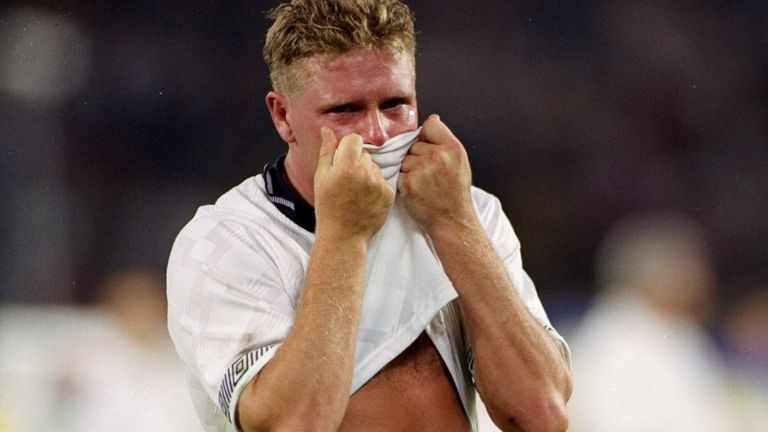
But in extra time, in the 99th minute, Gazza fouled Thomas Berthold, another German player in the Italian league, playing for A.S. Roma. Gazza could remain in this game, but, due to yellow card accumulation, he would be suspended for the Final if England won this game. The sight of Gazza wiping both tears and rain out of his eyes became an iconic image, and summed up what happened to England in this tournament:

Lineker told Robson to substitute Gazza off, because his head was no longer in the game: Using a classic English expression, Lineker told Robson, "He's lost the plot!" Robson left him Gazza, but he was useless for the game's last 20 minutes. So much passion, so much promise, but, in the end...
Paul Gascoigne

In the end, Bodo Illgner, goalkeeper for F.C. Köln of Cologne, held off the penalty of Stuart Pearce, and Chris Waddle -- a former teammate of Gazza at Newcastle, and of both Gazza and Lineker at Spurs, now with French club Olympique de Marseille -- blasted his shot over the bar, and the Germans advanced to the Final. They'd lost the last 2 Finals, to Italy in 1982 and to Argentina in 1986. Now, they would play Argentina again.

But after 2 great Semifinals, the Final, on July 8 at the Stadio Olimpico, was an anticlimax. TNT, Turner Network Television, broadcast it live in the U.S. The Germans had a few chances in the 1st half, but could not capitalize on them. Argentina played its usual dirty game, and were getting away with it. Twice, the Germans appealed for penalties, on a handball in the box by Oscar Ruggeri in the 13th minute, and a dirty tackle in the box by Simón on Rudi Völler in the 18th. Referee Edgardo Codesal, born in Uruguay but a citizen of Mexico, refused to grant either. Argentina had just one chance in the half, late, but Maradona sent a kick over the crossbar.

In the 58th minute, Argentine goalkeeper Sergio Goycochea took Klaus Augenthaler down inside the penalty area. Again, Codesal refused to award a penalty. Finally, in the 65th minute, Pedro Monzón of Independiente became the 1st player ever sent off in a World Cup Final, with Codesal showing him a straight red card for a reckless studs-up challenge on Jürgen Klinsmann. Still, despite Argentina being down to 10 men, West Germany couldn't score.

Finally, in the 83rd minute, Roberto Sensini brought Völler down in the box, and Codesal awarded a penalty. Brehme took it, and it was 1-0 to West Germany.

Gustavo Dezotti had already been cautioned in the 5th minute. In the 87th, he received a straight red card when he hauled Jürgen Kohler down with what The New York Times described as a "neck tackle right out of professional wrestling." After dismissing Dezotti, Codesal was surrounded and jostled by the rest of the Argentinian team, with Maradona receiving a yellow card for dissent.

Argentina were down to 9 men, and they were lucky to end the game with that many. West Germany hung on for the 1-0 win, as their opponents now had over half of their intended squad unavailable due to injury or suspension.

Beckenbauer joined Brazil's Mário Zagallo as only the 2nd man to both play on and manage a World Cup winner. He has been followed by France's Didier Deschamps.

UPDATE: An article for ESPN.com, published after the 2026 World Cup, ranking all 23 tournaments, rated this one 16th, citing the amount of dull games seeming to cancel out the large amount of star power.

*

July 8, 1990 was a Sunday. These Major League Baseball games were played:

* The New York Yankees lost to the Minnesota Twins, 6-3 at Yankee Stadium. David West outpitched Tim Leary. Mike Blowers hit a home run, but it was a rotten season for the Yankees, who finished last for only the 4th time in their history -- and, through the 2021 season, the last.

* The New York Mets beat the Atlanta Braves, 2-1 at Atlanta-Fulton County Stadium. Frank Viola was the winning pitcher.

* The Houston Astros beat the Montreal Expos, 5-3 at the Olympic Stadium in Montreal.

* The Philadelphia Phillies beat the Cincinnati Reds, 4-3 at Veterans Stadium in Philadelphia.

* The Seattle Mariners beat the Toronto Blue Jays, 6-3 at the SkyDome (now the Rogers Centre) in Toronto. Ken Griffey Jr. went 2-for-4 with a walk.

* The Oakland Athletics beat the Cleveland Indians, 8-3 at Cleveland Municipal Stadium. Rickey Henderson went 1-for-3 with 2 walks, a stolen base and an RBI.

* The Detroit Tigers beat the Kansas City Royals, 10-4 at Tiger Stadium in Detroit. George Brett went 1-for-3 with 2 walks and an RBI.

* The Baltimore Orioles beat the Chicago White Sox, 8-6 at Comiskey Park in Chicago. Mike Devereaux doubled home 2 runs in the top of the 11th inning. Cal Ripken went 1-for-5.

* The Milwaukee Brewers beat the California Angels, 20-7 at Milwaukee County Stadium. The Brewers scored 6 runs in the 4th inning, and 13 in the 5th inning.

* The Texas Rangers beat the Boston Red Sox, 4-3 at Arlington Stadium in the Dallas suburb of Arlington, Virginia. Gary Pettis hit a ground ball that Boston shortstop Luis Rivera bobbled, allowing Jack Daugherty to score the winning run in the bottom of the 11th.

* The St. Louis Cardinals beat the San Diego Padres, 4-1 at Jack Murphy Stadium in San Diego. Tony Gwynn did not play.

* The Pittsburgh Pirates beat the Los Angeles Dodgers, 7-2 at Dodger Stadium in Los Angeles. Barry Bonds went 2-for-4 with a walk and 3 RBIs.

* And the San Francisco Giants swept a doubleheader from the Chicago Cubs, 5-3 and 10-4 at Candlestick Park in San Francisco.

December 31, 1999 & January 1, 2000: The Millennium

December 31, 1999:  The Millennium arrives. The people of planet Earth survived. At a terrible cost. But we hadn't destroyed ourselves. ...