Showing posts with label casey kasem. Show all posts

Tuesday, September 13, 2022

September 13, 1969: "Scooby-Doo, Where Are You!" Premieres

September 13, 1969: Scooby-Doo, Where Are You! premieres on CBS. It becomes one of the most popular "Saturday morning cartoons" of all time.

The voices of the characters:

* Don Messick as Scooby-Doo, a talking Great Dane, which is known as a cowardly breed of dog, and Scooby was a coward. And always hungry.

* Frank Welker as Fred Jones, the preppy blond leader of the gang, known as Mystery, Inc., and driver of their van, the Mystery Machine. Welker voiced several cartoon dogs, including Astro Jetson, and would take over as the voice of Scooby after Messick's death.

* Casey Kasem as Shaggy Rogers, a hippie who was as cowardly and as hungry as Scooby. Scooby seemed to be closer to Shaggy than to any of the others, though he would often steal Shaggy's food. Kasem was a superstar disc jockey in Los Angeles, and gave Shaggy the frightened exclamation "Zoinks!"

As a boy, I would read anything. And I noticed that Shaggy had the same voice as the Super Friends' version of Batman's crimefighting partner Robin. So I read the closing credits of both cartoons, wrote the names of the voice actors down, and looked to see if any of them matched. Sure enough, Kasem was the voice of both. As Shaggy would say, "Like, wow!" Or, as Robin would say, "Holy coincidence!" (Kasem's version did pretty much copy Burt Ward's from the 1966-68 Batman show.)

* Indira Stefanianna (Season 1, credited as Stefanianna Christopherson) and Heather North (Season 2) as Daphne Blake, the redhead who seemed to be not very bright, and also seemed to be Fred's girlfriend. This would be played up in the 2002 live-action film, in which Fred and Daphne were played by real-life husband and wife Freddie Prinze Jr. and Sarah Michelle Gellar.

* Nicole Jaffe as Velma Dinkley, a bespectacled intellectual who was probably the best detective of the group. When surprised, she would say, "Jinkees!"

As time went by, Velma was rumored to be a lesbian. This was unconsciously deepened by the fact that the character was based on Zelda K. Gilroy of The Many Loves of Dobie Gillis, played by Sheila Kuehl, who later became the 1st openly gay person elected to California's State Legislature.

As the cartoon debuted mere weeks after the Stonewall Riot, the idea that any of the characters could be gay couldn't have been said on the air. Even as late as the 2002 and 2004 live-action films, Velma was shown as being interested in male characters, including, on occasion, Shaggy. It was finally made canon that Velma was gay in a 2022 cartoon.

CBS aired 17 episodes from September 13, 1969 to January 17, 1970; then a 2nd season of 8 episodes from September 12 to October 31, 1970.

The theme song was written by David Mook and Ben Raleigh, performed by Larry Marks in Season 1 and George A. Robertson Jr. in Season 2.

What was in the Scooby Snacks? Many people have thought they were laced with marijuana. After all, Scooby and Shaggy always "had the munchies." But pot doesn't make you braver or more active. Quite the opposite: It makes you lazy.

There was an unmasking in every show, where the "ghost" or "monster" was shown to be all too human, usually trying to pull off some sort of fraud. In the public memory, their tagline is, "And I would have gotten away with it, too, if it wasn't for you meddling kids!"

But that wasn't used very often. The first variation was in Episode 11, "A Gaggle of Galloping Ghosts," when a master of disguise, who'd impersonated a vampire, a werewolf, a Frankenstein-style monster and a gypsy fortune-teller, called them "these blasted kids and their dog!"

It wasn't until Episode 20, "Scooby's Night with a Frozen Fright," in Season 2, before a professor studying ocean life, seeking to steal his partner's potentially lucrative invention, used the words "meddling kids," but he didn't use the words "And I would have gotten away with it, too." Nor did Mr. Carswell, the bank president who was embezzling from his own bank, and pretending to be the titular monstrous robber in Episode 21, "Jeepers It's the Creeper": He just yelled, "Meddling kids!"

In Episode 22, "Haunted House Hang-Up," the main "ghost" turned out to be the good guy, with an additional "ghost" admitting, "And I'd a-found it, if it wasn't for you snoopers!" Fred preceded this by saying, "Now, let's see who our phony phantom really is!" In the finale, Episode 25, "Don't Fool With a Phantom," Fred said, "Time to find out who you really are!" But Fred never, in the original run, ever said, "Now, let's see who you really are!"

Eventually, ABC bought the rights, and built a whole media franchise around Scooby and the gang, where the tropes became more common. But the 25 episodes of 1969 and '70 are generally considered to be not just the original, but the best episodes.

Don Messick died in 1997, Casey Kasem in 2014, Heather North in 2017. As of September 13, 2022, Nicole Jaffe is 82, Frank Welker is 76 and Indira Stefanianna is 75.

*

September 13, 1969 was a Saturday. Actor, director and playwright Tyler Perry was born. This was also the day of the Toronto Rock and Roll Revival concert. I have a separate entry for that event.

These Major League Baseball games were played that day:

* The New York Yankees lost to the Boston Red Sox, 5-2 at Yankee Stadium. Zoinks! Like, Gary Wagner outpitched Fritz Peterson. Rico Petrocelli hit a home run, Reggie Smith went 3-for-4 with an RBI, Tony Conigliaro went 1-for-3 with an RBI, and Carl Yastrzemski went 0-for-2, but did draw 2 walks. And they got away with it, too, because the Yankees didn't have enough meddling kids. Bobby Murcer went 1-for-3 with a walk and an RBI, but rookie Thurman Munson went 0-for-4.

* The New York Mets beat the Pittsburgh Pirates, 5-2 at Forbes Field in Pittsburgh. Tom Seaver went the distance for the win. Ron Swoboda hit a grand slam. Roberto Clemente went 1-for-4. Willie Stargell went 1-for-5 with an RBI.

* The Montreal Expos beat the Philadelphia Phillies, 7-5 at Connie Mack Stadium in Philadelphia.

* The Baltimore Orioles beat the Cleveland Indians, 10-5 at Memorial Stadium in Baltimore. Brooks Robinson went 1-for-1 with 2 walks and an RBI. Frank Robinson did not play.

* The Washington Senators beat the Detroit Tigers, 11-6 at Robert F. Kennedy Stadium in Washington. Al Kaline entered the game as a pinch-hitter, and went 0-for-2.

* The Atlanta Braves beat the Houston Astros, 3-2 at Atlanta Stadium (later Atlanta-Fulton County Stadium). Phil Niekro pitched 11 shutout innings for the Braves, allowing 6 hits. Larry Dierker pitched 12 shutout innings for the Astros, allowing 4 hits. Jimmy Wynn singled home 2 runs for the Astros in the top of the 13th.

But in the bottom of the 13th, Fred Gladding allowed single, double, walk, single. Jack Billingham got an out, but was immediately replaced by Wade Blasingame, who intentionally walked Hank Aaron, and then unintentionally walked Bob Aspromonte to give the Braves the win.

This game did not make a fellow proud to be an Astro. Maybe manager Harry Walker should have brought in Jim Bouton, whom the Astros had acquired from the Seattle Pilots on August 24. He was in the process of writing his diary of the season, which became the book Ball Four.

* The Oakland Athletics beat the Chicago White Sox, 4-0 at Comiskey Park in Chicago. John "Blue Moon" Odom pitched 8 shutout innings for the A's, before being relieved by Fred Talbot, who had been liberated from the expansion Seattle Pilots 16 days earlier. Paul Edmondson pitched 9 innings of 3-hit shutout ball for the ChiSox, but Wilbur Wood gave up 4 runs in the top of the 10th, including a 3-run home run to Dave Duncan. Reggie Jackson did not enter the game for the A's.

* The Kansas City Royals beat the Minnesota Twins, 1-0 at Metropolitan Stadium in the Minneapolis suburb of Bloomington, Minnesota. Dean Chance went the distance, allowing 4 hits -- and lost for the Twins. The expansion Royals started Roger Nelson, but he only pitched 1 inning before leaving the game with an injury. He didn't pitch again that season, and pitched only 9 major league innings in 1970, and battled injury thereafter, missing all of 1975, and last pitched in 1976, age 32.

Mike Hedlund pitched 6 innings, allowing just 2 hits. Ed Kirkpatrick singled home the only run of the game in the top of the 9th, making a winning pitcher out of Moe Drabowsky, who completed the 2-hit shutout. Shortstop Leo Cárdenas got both Twin hits. Harmon Killebrew went 0-for-3 with a walk, and Rod Carew went 0-for-2 with 2 walks.

* The St. Louis Cardinals beat their arch-rivals, the Chicago Cubs, 7-4 at Busch Memorial Stadium in St. Louis. The Cubs led 4-3 going into the bottom of the 8th, but the Cards scored 4 runs off Fergie Jenkins, Ken Johnson and Phil Regan. Lou Brock went 2-for-4 with a walk. Joe Torre went 3-for-4 with 2 RBIs.

In this 1st season of Divisional play, the Cubs led the National League Eastern Division by as much as 9 games on August 16, but went 17-26 the rest of the way, falling behind the Mets on September 10, a collapse known as the September Swoon.

* The Los Angeles Dodgers beat the San Diego Padres, 7-2 at Dodger Stadium in Los Angeles.

* The Cincinnati Reds beat the San Francisco Giants, 6-4 at Candlestick Park in San Francisco. Pete Rose went 1-for-5. Johnny Bench went 2-for-3 with a walk and an RBI. Willie Mays entered the game as a pinch-hitter, and went 0-for-2.

* And a doubleheader was split at Sick's Stadium in Seattle. The Seattle Pilots won the opener, 6-4. Steve Hovley, Danny Walton and Don Mincher each got 2 hits, to make a winning pitcher of Diego SeguĂ­, in relief of Marty Pattin. The California Angels won the nightcap, 4-2. Eddie Fisher (not the singer) outpitched Miguel Fuentes, the Dooley Womack and John Gelnar.

This was also the opening weekend of the college football season. But only 1 team ranked in the Top 20 played that day: Number 17 UCLA beat Oregon State, 37-0 at the Los Angeles Memorial Coliseum.

And in English soccer, North London team Arsenal traveled to Lancashire, and beat Burnley, 1-0 at Turf Moor. George Graham, later to manage them to success in the late 1980s and early 1990s, scored the game's only goal.

Thursday, September 8, 2022

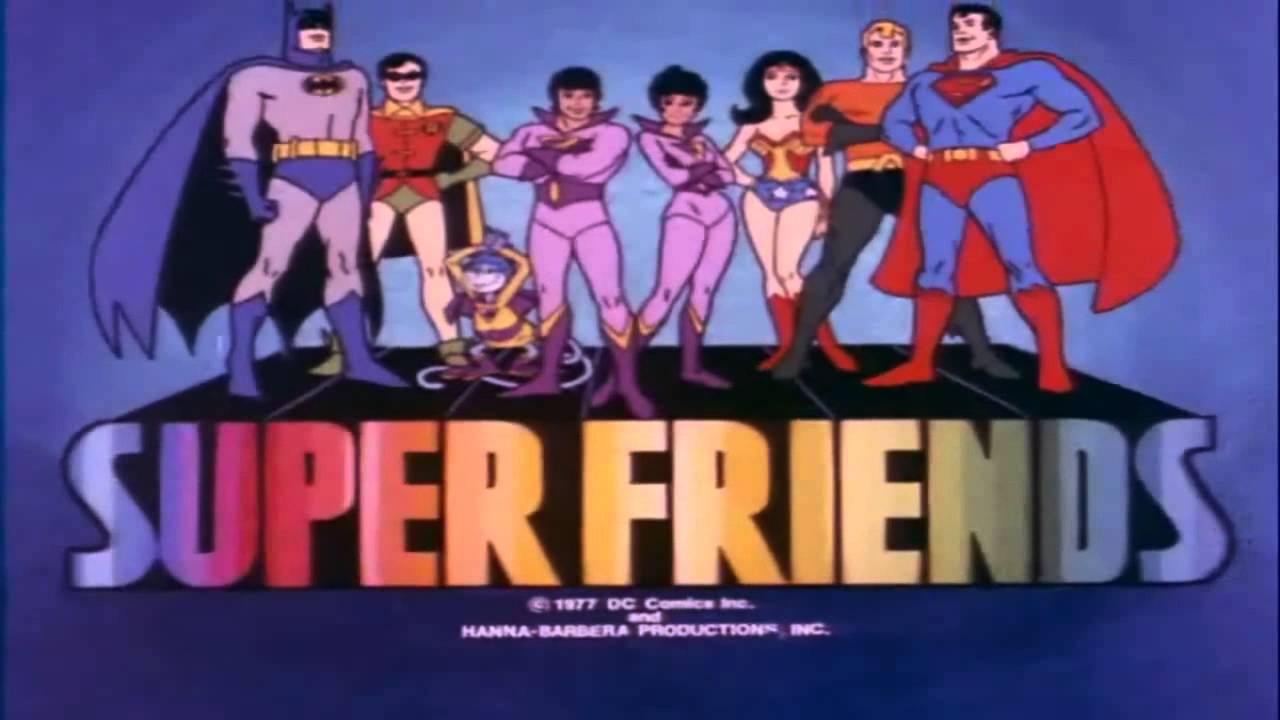
September 8, 1973: "Super Friends" Premieres

Left to right: Wonder Dog, Aquaman, Robin, Batman,
Superman, Wonder Woman, Wendy and Marvin.
Note the early '70s bell-bottom pants on both teenagers.

September 8, 1973: Super Friends premieres on ABC, based on the superheroes of DC Comics. Produced by Hanna-Barbera Productions, it runs in one form or another until 1986. The animation was crude by today's standards, but, as a kid, I didn't care.

The original series, narrated by Ted Knight, a.k.a. Ted Baxter of The Mary Tyler Moore Show -- "Later, at the Hall of Justice... " -- was kid-centric. Wendy Harris (voiced by Sherry Alberoni) and Marvin White (Frank Welker) were ordinary teenagers, who had no powers, but considered themselves superheroes, or at least detectives, in training.

They had a dog named Wonder Dog (also voiced by Welker, who specialized in voicing cartoon dogs), whose only special abilities were a higher intelligence than most dogs and, sort of, the ability to talk. They were taken in by the Super Friends, who can be recognized as a subset of the Justice League.

It's understandable that the show used Superman (Danny Dark), Batman (Olan Soule), Robin (Casey Kasem) and Wonder Woman (Shannon Farnon). After all, Kal-El/Clark Kent, Bruce Wayne and Princess Diana of Themiscyra/Diana Prince are what are now called "the DC Trinity"; and, as the original Robin, Dick Grayson was Batman's sidekick. It had only been 5 years since the Adam West Batman series had gone off the air, and this version of the Dynamic Duo was more like West and Burt Ward than like later "Dark Knights" and their "Boy Wonders."

Less obvious as a choice to round out the main superhero cast was Aquaman (Norman Alden). For those of you who only know later versions, showing him with long hair and looking more like Marvel Comics' Thor -- or in the darker-skinned, dark-haired, long-haired, tattooed version played by Jason Momoa in the DC Extended Universe movies -- his appearance as a very pale white man with short but curly hair might make him seem like an anachronism.

There were occasional visits from other superheroes. Knight also voiced The Flash. Alden also voiced Green Arrow and Plastic Man. But each of these characters appeared in only one episode. In flashback sequences, we saw Superman's Kryptonian parents, Jor-El (Kasem) and Lara (Farnon); and his earthly parents, Jonathan Kent (Soule) and Martha Kent (Farnon again).

In later versions, Dark would also play Batman's ally, Gotham City Police Commissioner James Gordon. Farnon would also play Wonder Woman's mother, Queen Hippolyta; Superman's girlfriend and Daily Planet co-worker, Lois Lane; and, from Greek mythology, goddess of love Aphrodite and monster Medusa.

Super Friends taught me to read closing credits. I noticed that Robin sounded an awful lot like Shaggy from Scooby-Doo, Where Are You? So I looked at the credits of both shows, and wrote them down, and found two names in common: Kasem and Welker. When I found out from other shows that Welker was also the voices of Fred from Scooby, Astro from The Jetsons, Dynomutt the Dog Wonder (with Laugh-In's Gary Owens as the Batman-like Blue Falcon) and the title character in Jabberjaw, that narrowed him down to Marvin and Wonder Dog, and showed me that Kasem was Robin.

In the 1976-77 TV season, ABC's The Krofft Supershow had a segment titled Electra Woman and Dyna Girl, played by soap opera star Deidre Hall and car pitchwoman (as "Mean Mary Jean") Judy Strangis, respectively. This show copied Wonder Woman by having female superheroes, copied Batman by having an older hero and a younger sidekick with a corny catchphrase ("Electra-Wow!"), and copied Superman by making them reporters in civilian life. And Alden, the voice of Aquaman, played Frank Heflin, who was less their version of Batman and Robin's butler/all-around tech whiz Alfred than he was Oscar Goldman to their Six Million Dollar Man and Bionic Woman.

Only one season of 16 episodes of Super Friends was made, although they continued to be shown in reruns. But the ABC success of Lynda Carter's Wonder Woman series and Electra Woman and Dyna Girl, and The Shazam/Isis Hour on CBS, gave ABC and Hanna-Barbera the idea to try again.

In 1977, they brought us The All-New Super Friends Hour. Noting that the core audience was a little older, Wendy, Marvin and Wonder Dog were phased out. Phased in were the Wonder Twins. They were teenagers, from the planet Exor, and they were obviously geared toward not just older kids and teenagers, but Trekkies, because they looked like Vulcans: Vaguely Asian faces, the same hairstyles, and pointed ears.
Left to right: Batman, Robin, Gleek, Zan,
Jayna, Wonder Woman, Aquaman, Superman

Unlike Wendy, Marvin and Wonder Dog, Zan (Michael Bell) and Jayna (Liberty Williams) had powers. Not a mind-meld or a nerve pinch like Vulcans. When they touched their hands, and said, "Wonder Twin powers, activate!" Jayna could say, "Shape of... " any animal, and transform into that animal. Zan could say, "Form of... " any version of water, from ice to boiling water to fog to a solid wall of liquid water.

Suddenly, Aquaman's sea-based powers didn't seem so silly: Zan was mainly comic relief. But if that wasn't enough, they had a pet monkey named Gleek (also voiced by Bell), with a rubber tail that could be used as a weapon and, if he spun it in the air like a helicopter's rotor, he could use to fly.

It still wasn't a full Justice League of America, but there were, again, cameos from other heroes, usually one guest appearance per episode. Barney Phillips took over as The Flash (the Barry Allen version). Michael Rye voiced Green Lantern (the Hal Jordan version). Jack Angel voiced Hawkman, and Farnon voiced Hawkgirl (never "Hawkwoman"). Wally Burr voiced The Atom.

Then there were the heroes created just for this series, having never before appeared in comic books. This was an attempt to appear diverse, or, as we would now say, multicultural. But the characters, all too often, seemed like stereotypes anyway.

While there were black superheroes before this, including DC's electric-powered Black Lightning and the John Stewart version of Green Lantern, they didn't use any of them for Super Friends. They wanted to use Black Lightning, but there was a legal wrinkle that prevented them from doing so. So, they created Black Vulcan (Buster Jones). No, it wasn't a black version of Star Trek's Mr. Spock: Basically, he was Black Lightning, with electric powers and a somewhat different black-and-gold costume. That and the name allowed them to meet the legal requirements. (The original Vulcan was the Roman name for the god of fire, known as Hephaestus to the ancient Greeks.)

The Asian hero was Samurai (also Jack Angel), who had wind-based powers, similar to the DC character Red Tornado. And there was a Native American hero, Apache Chief (also Michael Rye). He could grow to enormous size, which also gave him super strength and near-invulnerability. But their costumes were little better than how John Wayne would have imagined their peoples.
Clockwise from top: Superman, Hawkman, Samurai, Green Lantern,
Robin, Batman, Wonder Woman, Aquaman, Flash,
Jayna, Zan, Gleek, Black Vulcan and Apache Chief.
The Hall of Justice was based on Union Terminal in Cincinnati,
hometown of the owners of Hanna-Barbera Productions,
Taft Broadcasting (and related to President William Howard Taft).

For the 1978-79 season, Challenge of the Superfriends (one word) was made. Now, the denizens of the Hall of Justice are a full 11-member Justice League of America (JLA): Superman, Batman, Robin, Wonder Woman, Aquaman, Flash, Green Lantern, Hawkman, Black Vulcan, Samurai and Apache Chief. (But no Green Arrow, Plastic Man, Hawkgirl or Wonder Twins. By this point, Plastic Man had gotten his own show.)

And now, they had regular enemies, with a headquarters looking like Star Wars character Darth Vader's helmet (come on, let's call a spade a spade) rising out of a swamp: The Legion of Doom. Its members:

* Lex Luthor (Stanley Jones), arch-enemy of Superman. (In this series, Jones also did the voices of Superman's fathers, Jor-El and Jonathan Kent. What Sigmund Freud would have thought of that, I have no idea.)

* Bizarro (Bill Callaway), imperfect duplicate of Superman.

* Brainiac (Ted Cassidy, formerly Lurch on The Addams Family and the narrator of the opening sequence to CBS' The Incredible Hulk), robotic enemy of Superman. (Cassidy died of heart trouble during the season, only 46 years old.)

* Mr. Mxyzptlk (another Frank Welker role), magical enemy of Superman.

* Solomon Grundy (Jimmy Weldon), an incredibly strong and durable zombielike creature that debuted in the 1940s an enemy of the "Golden Age" Green Lantern, Alan Scott, but later became an enemy of Superman and, occasionally, other heroes.

* The Toyman (another Frank Welker role), enemy of Superman, but hardly on the same level as the preceding.

* The Riddler (Michael Bell, also Zan and Gleek), enemy of Batman. (The Riddler was chosen because they couldn't get the legal rights to use the Joker or the Penguin. It's just as well: The Riddler is smarter than either one.)

* The Scarecrow (Don Messick), enemy of Batman. (Messick was also the original voice of Scooby-Doo.)

* The Cheetah (Marlene Aragon), catlike arch-enemy of Wonder Woman.

* Black Manta (also Ted Cassidy), arch-enemy of Aquaman.

* Sinestro (also Don Messick), arch-enemy of Green Lantern.

* Gorilla Grodd (Stanley Ralph Ross), a member of The Flash's "Rogues Gallery." (Ross had been a writer on the 1966-68 Batman series, and a co-creator of the 1975-79 Wonder Woman series.)

* Captain Cold (Dick Ryal), also a Flash enemy. (Cold's sometimes partner, at the other extreme of temperature, Heat Wave, never appeared. Nor did the Flash's true nemesis, Professor Zoom, a.k.a. the Reverse-Flash. In a flashback sequence, Ryal also voiced Abin Sur, the dying Green Lantern who gave his power ring to Hal Jordan.)

* The Pied Piper (Bob Hastings), also a Flash enemy.

* Giganta (Ruth Forman), a giantess created for the series. Being a woman, she would seem to be an opponent for Wonder Woman. However, an episode explained that she got her powers at the same time, and from the same source, that Apache Chief got his, making for a dual origin story.

New versions of the series would continue until 1986, by which point I was too old to watch. But there would be live-action versions to come, with Superman getting 4 movies and 2 TV shows (Superboy and Lois & Clark: The New Adventures of Superman, plus a Supergirl movie), Batman getting 4 movies, and The Flash getting a single-season TV series on CBS. There would be the NBC special Legends of the Superheroes in 1979, which had the first live-action versions of The Flash, Green Lantern, The Atom and Hawkman. However, a typically small TV special-effects budget rendered it ridiculous.

Superman: The Movie came out in late 1978, and when Lois Lane (Margot Kidder) meets Superman (Christopher Reeve) for the first time, she asks him, "Who are you?" Not yet having been named Superman (in this version, it was Lois who gave him the name in her article), he says simply, "A friend." It may not have been intentional, but, in hindsight, it seems like an "Easter Egg" for Super Friends fans like me.

In 1992, Batman: The Animated Series would launch "The DC Animated Universe," which ran until 2006. Among the other series included in it were Superman: The Animated Series, The New Batman Adventures, Batman Beyond (set in a future with an elderly Bruce Wayne training a teenager, Terry McGinnis, to be a new, updated Batman, rather than the latest in a long line of Robins), Justice League and Justice League Unlimited. These shows were definitely meant for older kids, who would understand the dark themes of the Batman mythos, not little kids.

A 1997 Justice League of America movie would have only second-tier heroes, including the first live-action version of J'onn J'onzz, the Martian Manhunter, because getting the legal rights to use Superman, Batman and Wonder Woman would have been prohibitively expensive. Between 2005 and 2010, The CW's Superman prequel series Smallville would feature the first live-action versions of Aquaman, Green Arrow, and the Wonder Twins, plus new versions of some other heroes.

And, in 2020, in the last episode of The CW's Crisis On Infinite Earths, a Justice League consisting of Superman (Tyler Hoechlin), Supergirl (Melissa Benoist), Batwoman (Ruby Rose), The Flash (Grant Gustin), the White Canary (Caity Lotz), the Martian Manhunter (Dorian Harewood) and Black Lightning (Cress Williams) gathered for the first time, with an empty seat at the table in memory of Green Arrow (Stephen Amell), who had sacrificed his life to restart the multiverse.

Their building looked like the Hall of Justice. And at the end, while the old Super Friends theme played, the camera panned up to an open cage marked "GLEEK." I have to say, despite having just turned 50, I got a kick out of that.

*

September 8, 1973 was a Saturday. These games were played in Major League Baseball:

* The New York Yankees beat the Milwaukee Brewers, 15-1 at the original Yankee Stadium, in its last month before closing for a 2-season renovation. George "Doc" Medich went the distance for the win. Graig Nettles hit a home run (not a big surprise), as did Fred "Chicken" Stanley (a huge surprise).

* The New York Mets lost to the Montreal Expos, 3-1 at Jarry Park in Montreal. Steve Rogers -- no, not Captain America -- outpitched Tom Seaver.

* The Detroit Tigers beat the Boston Red Sox, 6-1 at Fenway Park in Boston. Al Kaline did not play. He was better off than Carl Yastrzemski, who went 0-for-5.

* The Pittsburgh Pirates beat the Philadelphia Phillies, 5-3 at Veterans Stadium in Philadelphia. Willie Stargell went 3-for-3 with an RBI. Rookie Mike Schmidt went 2-for-3 with a walk and an RBI.

* The Atlanta Braves beat the Cincinnati Reds, 3-2 at Atlanta Stadium (later Atlanta-Fulton County Stadium). Hank Aaron hit the 709th home run of his career. Dusty Baker and Davey Johnson, both now better known for being managers, also homered for the Braves. For the Reds, Joe Morgan hit a home run, but Pete Rose and Johnny Bench each went 0-for-3 with a walk.

* The Baltimore Orioles beat the Cleveland Indians, 6-1 at Cleveland Municipal Stadium. Brooks Robinson went 3-for-4 with a solo homer. Jim Palmer went the distance for the win.

* The Chicago Cubs beat the St. Louis Cardinals, 3-1 at Wrigley Field in Chicago. Ron Santo homered for the Cubs. Lou Brock went 1-for-3 with a walk and 2 stolen bases.

* The Minnesota Twins beat the Chicago White Sox, 6-2 at Metropolitan Stadium in the Minneapolis suburb of Bloomington, Minnesota. Neither Harmon Killebrew nor Rod Carew played for the Twins in this game.

* The California Angels swept a doubleheader from the Kansas City Royals at Royals Stadium (now Kauffman Stadium) in Kansas City, 9-6 and 4-3. Frank Robinson went 1-for-10 with an RBI for the Angels. George Brett, who had made his major league debut a month earlier, did not appear in the opener, and only appeared in the nightcap as a pinch-runner and a defensive replacement, never coming to bat.

* The Texas Rangers beat the Oakland Athletics, 4-3 at Arlington Stadium in the Dallas suburb of Arlington, Texas. Reggie Jackson went 0-for-1, then left the game due to an injury.

* The San Diego Padres beat their arch-rivals, the Los Angeles Dodgers, 9-6 at Dodger Stadium in Los Angeles. Jerry Morales doubled home the winning run in the top of the 11th inning.

* And the Houston Astros beat the San Francisco Giants, 9-7 at Candlestick Park in San Francisco.

Since it was Saturday, there was college football. However, most teams, including Number 1 USC, Number 2 Ohio State, Number 3 Texas, Number 5 Michigan, Number 6 Alabama, Number 7 Penn State and unranked Navy, opened the next week. Number 8 Notre Dame, unranked Army, and, locally, Rutgers opened the week after that; and Princeton and Columbia the week after that.

The only game this week involving a Top 5 team also happened to involve another Top 10 team: Number 4 Nebraska beat Number 10 UCLA, 40-13 at Memorial Stadium in Lincoln, Nebraska. It was the Cornhuskers' 1st game under head coach Tom Osborne.

Also, Arsenal lost 2-0 at home at Highbury to Leicester City. 

Thursday, September 1, 2022

September 1, 1978: "Battle of the Planets" Premieres

Left to right: Princess, Tiny, Keyop, Jason, Mark

September 1, 1978: Battle of the Planets -- sometimes incorrectly called G-Force, after the name of the team in it -- premieres in syndication on U.S. TV. It was a redubbing of Science Ninja Team Gatchaman, a Japanese cartoon that had premiered in 1972. Of the 105 episodes of that series, 85 were adapted and aired over the next year and a half.

Knowing where the money was, the American producers, led by Sandy Frank, chose a title that echoed that of Star Wars, and made it look as much like Star Wars as possible, including introducing 7-Zark-7, a robot expositioner who looked a lot like R2-D2, and sounded a lot like C-3PO.

G-Force were ordinary teenagers, all of them orphans, except for Keyop, an artificial lifeform. They were students by day, heroes by night. And if the later cartoons Captain Planet & the Planeteers, Mighty Morphin Power Rangers and Sailor Moon (the latter 2 also being Japanese imports) now sound like ripoffs, that's not my fault.

Some of the voices were familiar:

* Los Angeles disc jockey Casey Kasem, who voiced Shaggy in the Scooby-Doo franchise, Alex Cabot on Josie and the Pussycats, and the Super Friends' version of Robin, was Mark, the team leader and tactician. In his civilian guise, he wore a shirt with the number 1 on it. But, like all 5 of them, his costume resembled a bird, including a helmet with birds' eyes on the front. His was an eagle.

* Ronnie Schell, Duke Slater on Gomer Pyle, U.S.M.C., was Jason, the team's leading weapons expert. He was impulsive, a bit of a hothead, like Johnny Storm/the Human Torch in The Fantastic Four, but he respected the chain of command: Anderson, then Mark, then the rest of the team. He wore a shirt with the number 2 on it, and his bird was a condor.

* Janet Waldo, whose repertoire included Josie, Judy Jetson and Penelope Pitstop, was Princess. The only female member of the team, her expertise was electronics and demolition, making her similar to the later character of Nikki Franco on the TV show V.I.P.

"Princess" is clearly a nickname, and her real name is never revealed. Although it was never explicitly stated that she and Mark were in a relationship, the dialogue suggests that they were close, which, alone, was enough to contradict the Japanese original, where Ken, the Mark equivalent, was, to use an American expression, "married to the job." She wore a shirt with the number 3 on it, and her bird was a swan.

* Alan Young, Wilbur on Mister Ed, was both Keyop and 7-Zark-7. Keyop was an artificial lifeform, who appeared to be the youngest and the smallest of the kids, and also had the least self-confidence. He was the team's reconnaissance expert. He wore a shirt with the number 4 on it, and his bird was a swallow.

* Alan Dinehart was Tiny Harper, and also Security Chief Anderson. Dinehart had mainly been a writer and/or a producer of TV shows until this point, including with Young on The Alan Young Show. Tiny, the only 1 of the 5 whose last name was ever mentioned, was the tech wizard of the show, equivalent to Scotty on Star Trek, Barney Collier on Mission: Impossible, or Kato on The Green Hornet. But he also had a bit of a gruff demeanor, and yet was intelligent enough to be trusted to be the team's pilot, like Ben Grimm/The Thing of the Fantastic Four. He wore a shirt with the number 5 on it, and his bird was an owl.

Anderson was G-Force's boss, equivalent to M in the James Bond films, the unseen voice that gave Jim Phelps the missions in Mission: Impossible, the Chief of CONTROL on Get Smart, or Oscar Goldman on The Six Million Dollar Man and The Bionic Woman.

Mark and Jason are said to be 18 years old, Tiny 17, Princess 16 (making any relationship with Mark a little sketchy), and Keyop 11.

The G-Force members stay in contact through a wrist-band communicator device, which also serves as a way for them to change or "transmute" instantly from their civilian clothes into their G-Force uniforms, and back again. At one point, Princess, in civilian clothes, lost a shoe, and, in a nod to the Cinderella story, without the shoe, as part of a complete outfit, she could not transmute into her G-Force costume.

Other weapons seen displayed by various team members include Mark's sonic boomerang, a bird-shaped boomerang with razor-sharp wings; Jason's and Tiny's multi-purpose gadget guns, which can be outfitted with grappling hook and line, drill bits, etc.; and Keyop's and Princess's yo-yo bombs, which could be used as bolas, darts, and explosive devices. Other weapons include feathers with a sharpened steel quill that could be used as deadly throwing darts, and mini-grenades shaped like ball bearings with spike studs.

The G-Force team themselves would use a combination of martial arts skills, ninja-like weapons, and their "cerebonic" powers to dispatch hordes of enemy soldiers and overcome other obstacles. Their bird-like costumes include wing-like capes that could fan out and function nearly identically to parachutes and/or wingsuits, enabling the G-Force members to, if not quite "fly," then to drift or glide down to safety from heights that would otherwise prove fatal.

The main ship of the G-Force team was, in keeping with the bird theme, called the Phoenix, which could carry, transport, and deploy 4 smaller vehicles, each operated by one team member:

* A futuristic race car with various hidden weapons, driven by Jason, and concealed within the Phoenix's nosecone.
* The "galacti-cycle," a futuristic motorcycle ridden by Princess, stored within the left-wing capsule of the Phoenix.
* Keyop's "Space Bubble," an all-terrain, tank-like vehicle capable of vertical takeoff and landing (VTOL), as well as being a submersible craft, held in the right storage capsule of the Phoenix.
* And a futuristic jet fighter that Mark piloted, stored in the top rear section of the Phoenix command island structure, and which used its tail fin to make up the center tail fin of the Phoenix.
* Tiny was assigned to pilot the Phoenix rather than one of the detachable craft.
The Phoenix

A regularly featured plot device was the transformation of the Phoenix into a flaming bird-shaped craft able to handle virtually any exceptional situation for a brief period by essentially turning itself into pure energy, called the Fiery Phoenix. How the occupants were protected was never explained.

The Phoenix's primary weapon was a supply of rockets called "TBX missiles" in the series. It also occasionally flaunted a powerful solar-powered energy blaster, although the team had the misfortune of choosing very cloudy days to use it.

Keye Luke, who played all kinds of Asian roles in his long career, voiced Zoltar, who, like Darth Vader, turned out not to be in charge of the villainous activities, but most people (myself included) forgot this. Zoltar would receive his orders directly from a being he would refer to as the Luminous One. This being would appear as a ghost-like, disembodied, floating head. Who, or what, this being actually was, was never explained in any detail throughout the series.

There were significant differences from the Japanese original. A literal translation of the script would have led to showing more violence, and even deaths, than a U.S. children's show would have been allowed to show. The original version also included Japanese profanities, and these had to be edited out in English.

Indeed, there was a rumor that explained why Keyop, originally known in Japan as Jinpei, had a bizarre verbal tic of stuttering, chirping, and burbling every time he started to speak: Supposedly, it was done because the original character used a lot of profanity, and that Keyop's excess mouth motion would cover up deleting the words. This was not true: Jinpei rarely, if ever, used profanity. The in-story explanation for Keyop's unique manner of speech is that he is an artificial life form, with a speech impediment because of slightly defective genetic engineering.

Keye Luke died in 1991, Alan Dinehart in 1992, Casey Kasem in 2014, and Alan Young and Janet Waldo in 2016. As of September 1, 2022, Sandy Frank and Ronnie Schell are still alive.

A live-action Japanese version bombed in 2013. As of 2022, filmmaking brothers Joe and Anthony Russo were planning a new live-action version.

*

September 1, 1978 was a Friday. These Major League Baseball games were played:

* The New York Yankees lost to the Seattle Mariners, 3-0 at Yankee Stadium. Paul Mitchell outpitched Catfish Hunter, ending a streak of 6 straight decisions won for him, a big reason why the Yankees had closed the gap on the Red Sox. Mickey Rivers hit doubles, but the only other Yankee baserunners were Thurman Munson and Lou Piniella with singles, and Reggie Jackson and Chris Chambliss each with a walk.

* The New York Mets lost to the Los Angeles Dodgers, 4-3 at Dodger Stadium in Los Angeles. Dusty Baker singled Steve Garvey home with the winning run in the bottom of the 12th inning. This made a winning pitcher of Terry Forster in relief of Doug Rau, and a losing pitcher of Kevin Kobel, after Jerry Koosman pitched 11 innings.

* The Oakland Athletics beat the Boston Red Sox, 5-1 at Fenway Park in Boston. So the Yankees lost no ground in their attempt to come back from 14 games behind the Red Sox. Carl Yastrzemski went 0-for-4, but had an RBI on a groundout.

* The Baltimore Orioles swept a doubleheader from the Chicago White Sox, 3-0 and 9-3 at Memorial Stadium in Baltimore. Over the 2 games, Eddie Murray went 2-for-7 with a home run and 4 RBIs.

* The California Angels beat the Toronto Blue Jays, 6-4 at Exhibition Stadium in Toronto.

* The Pittsburgh Pirates swept a doubleheader from the Atlanta Braves, 8-3 and 3-0 at Three Rivers Stadium in Pittsburgh. Willie Stargell went 3-for-4 with a home run and 2 RBIs in the opener, then got the nightcap off. In that game, Bruce Kison (7 2/3rds innings) and Kent Tekulve combined on a 3-hit shutout.

* The Chicago Cubs beat the Houston Astros, 14-11 at Wrigley Field in Chicago. J.R. Richard started for the Astros, but didn't get out of the 4th inning, giving up 3 home runs, 1 to once and future Yankee Bobby Murcer. Mike Krukow didn't get out of the 2nd inning, but the Cubs won the game, anyway.

* The Texas Rangers beat the Milwaukee Brewers, 5-4 at Milwaukee County Stadium. Don Money hit 2 home runs. Robin Yount went 1-for-4 with an RBI. Rookie Paul Molitor went 0-for-3 with a walk.

* The Cleveland Indians beat the Minnesota Twins, 4-1 at Metropolitan Stadium in the Minneapolis suburb of Bloomington, Minnesota. Rod Carew drew a walk as a pinch-hitter.

* The Cincinnati Reds beat the St. Louis Cardinals, 5-2 at Busch Memorial Stadium in St. Louis. Pete Rose went 2-for-5. Johnny Bench went 1-for-3 with a walk and an RBI. Lou Brock went 1-for-4.

* The Detroit Tigers beat the Kansas City Royals, 6-2 at Royals Stadium (now Kauffman Stadium) in Kansas City. George Brett went 0-for-4.

* The Montreal Expos beat the San Diego Padres, 3-2 at San Diego Stadium (later renamed Jack Murphy Stadium and Qualcomm Stadium). Sam MejĂ­as singled Larry Parrish home with the winning run in the top of the 12th inning, ruining a great complete game for Randy Jones, and making a winning pitcher of Mike Garman in relief of Ross Grimsley Jr.

* And the San Francisco Giants beat the Philadelphia Phillies, 4-3 at Candlestick Park in San Francisco. Steve Carlton used to tell his Phillies teammates, "It's Win Day" when he started. Not this time: He gave up a home run to Jack Clark in the 8th to lose it. Mike Schmidt went 0-for-3 with a walk.

December 31, 1999 & January 1, 2000: The Millennium

December 31, 1999:  The Millennium arrives. The people of planet Earth survived. At a terrible cost. But we hadn't destroyed ourselves. ...