Showing posts with label pcha. Show all posts

Monday, December 26, 2022

December 26, 1919: The Yankees Purchase Babe Ruth

Yankee owner Jacob Ruppert,
manager Miller Huggins, and slugger Babe Ruth

December 26, 1919: The New York Yankees purchase the contract of outfielder George Herman "Babe" Ruth from the Boston Red Sox. It is the most famous transaction in the history of North American professional sports -- or, if you're a Red Sox fan, the most infamous.

Let's take a step back, to properly set it up: On July 30, 1919, Harry Frazee, owner of the Red Sox, traded pitcher Carl Mays to the Yankees for pitchers Bob McGraw and Allen Russell (neither of whom ever did much for either club) and $40,000. There was a hell of a to-do about this, as Mays had left, or "jumped" the Sox and gone home, and was suspended. At the time, the rules said you couldn't trade a suspended player.

This trade pretty much split the American League: Frazee, Yankee owner Jacob Ruppert, and Chicago White Sox owner Charlie Comiskey were on one side; on the other were AL founder and President Ban Johnson and the owners of the other 5 clubs. They were the brothers John and Ben Shibe and Connie Mack of the Philadelphia Athletics, former Yankee manager Clark Griffith of the Washington Senators, Frank Navin and Walter Briggs of the Detroit Tigers, Phil Ball of the St. Louis Browns, and Sunny Jim Dunn of the Cleveland Indians.

The National Commission, which oversaw baseball in those days, ruled in favor of Frazee and Ruppert, and Mays became the 1st major player to go from Frazee's Sox to Ruppert's Yanks. There would be more. (Mays' role in the death of Cleveland Indians player Ray Chapman is a story for another time.)

As a result of the Mays contretemps, Frazee, Ruppert, and Comiskey, now known as "the Insurrectos," could pretty much now only make deals with each other, as the other AL owners, "the Loyal Five," wanted nothing to do with them.

Due to circumstances that Frazee should have been able to control, but didn't, he had to get rid of Babe Ruth, who, in 1918 and '19, had gone from being baseball's best lefthanded pitcher to being the biggest power hitter in the game, but also the biggest headache. He was already a carouser, and he was demanding that his salary be doubled from $10,000 to $20,000 for the 1920 season.

So Frazee sold the Babe to the Yankees, mainly because Ruppert was willing to pay $125,000 for Ruth's contract; while the other possibility, the White Sox, were run by Comiskey, a notorious cheapskate. (His parsimony led to a problem with that year's World Series, as you may be aware.)

So if you're a Red Sox fan, don't blame Frazee for what happened: He didn't have much choice, unless he wanted the press and the public to think Ruth was running the team.

The deal was announced on January 5, 1920. People in Boston weren't happy about it. But nobody could have foreseen what would result from it. Ruth revolutionized the game with the Yankees, turning the home run from a rare thing into a common occurrence. And there would be more deals between Ruppert and Frazee, as Mays would be joined on the Yankee pitching staff by former Sox Waite Hoyt, "Bullet Joe" Bush and "Sad Sam" Jones.

From 1918 to the present... Yankees 27, Red Sox 0. Without cheating, anyway.

UPDATE: The Red Sox have a team Hall of Fame. From their 1912, 1915, 1916 and 1918 World Champions: Manager Bill Carrigan, shortstop Everett Scott, 3rd baseman Larry Gardner, left fielder Duffy Lewis, center fielder Tris Speaker, right fielder Harry Hooper, and pitchers Smoky Joe Wood, Dutch Leonard, Herb Pennock and Babe Ruth.

But from the 1920s, they have inducted only outfielder Ira Flagstead and pitcher Red Ruffing -- and, in Ruffing's case, it's only because he's in the main Baseball Hall of Fame in Cooperstown, New York, and that for what he did later, after he was... traded to the Yankees. From the 1930s: Team owner Tom Yawkey, general manager Eddie Collins, shortstop and manager Joe Cronin, catcher Rick Ferrell, and pitchers Lefty Grove and Wes Ferrell. That should give you an idea of how bad the Sox were from the 1919 sale of Ruth until Yawkey bought the team in 1933.

*

December 26, 1919 was a Friday. It was the off-season for baseball, The NFL and the NBA did not yet exist. The NHL did, but it held no games that day.

In Western Canada, there was 1 game in the Pacific Coast Hockey Association. The Victoria Cougars beat the Seattle Metropolitans, 2-1, at the Patrick Arena, built by the hockey-playing brothers Lester and Frank Patrick, in Victoria, the capital of the Province of British Columbia. 

This was no mean feat, as the Metros had won the PCHA title and reached the Stanley Cup Final in the previous season, against the NHL Champion Montreal Canadiens, but it was called off due to the Spanish Flu epidemic. In 1917, they had beaten the Canadiens to become the 1st American-based team to win the Stanley Cup. They would go on to win the PCHA title again in 1920, but lose the Stanley Cup Final to the Ottawa Senators, and fold in 1924.

The Cougars would win the West Coast Hockey League title in 1925, and beat the Canadiens, making them the last team from outside the NHL to win the Stanley Cup. They moved to the Western Hockey League, and won their title in 1926, but lost the Stanley Cup Final to the Montreal Maroons. Along with their league, they folded, but the bulk of their players were signed for a new team in the NHL. While not officially true, it can legitimately said that the Victoria Cougars still exist today, as the Detroit Red Wings.

In Britain, December 26 is known as Boxing Day, and England's Football League plays on the day, usually nearby rivals, to make it easier for people to travel. In this era, there tended to be what Americans would call a split doubleheader: Two teams facing each other at one's ground on Christmas Day, and at the other's ground the next day.

For North London team Arsenal, it wasn't a nearby team on this occasion. On the 25th, they lost to Derby County, 2-1 at The Baseball Ground, so named because Derbyshire was one of the few parts of the British Isles where baseball caught on, but only briefly. By this point, the stadium had been redeveloped so that playing baseball there was just about impossible, and you had a stadium which, like the Polo Grounds in New York, was named for a sport that was not being played there. On the 26th, Arsenal and Derby played at Highbury, and Arsenal won, 1-0.

Wednesday, March 30, 2022

March 30, 1916: The 1st Canadien Cup

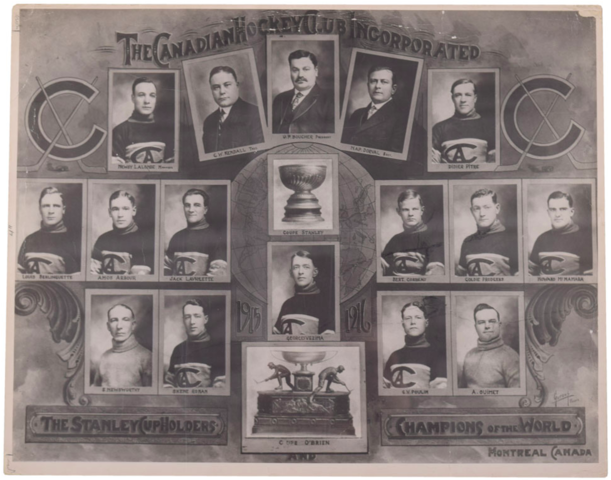
The 1916 Canadiens. Note the "CA" logo instead of "CH,"
the much smaller Stanley Cup, and the O'Brien Trophy.

Every great sporting institution had to start its greatness at some point. For hockey's greatest franchise, this was it.

March 30, 1916: The Montreal Canadiens win the Stanley Cup for the 1st time. They defeat the Portland Rosebuds, the 1st American-based team to compete for the Cup.

The team was founded in 1909, as Club Athlétique Canadien -- Canadian Athletic Club. The original logo was a Gothic C inside a maple leaf. Later, it became a "CA," for "Canadian Athletic." In the 1st NHL season of 1917-18, it became "Club de Hockey Canadien," and the logo became a "CH."

George "Tex" Rickard, the boxing promoter who built the 3rd Madison Square Garden and founded the Rangers, was once asked what the H in the Canadiens' "CH" logo stood for, and he said, "Habitantes," a reference to the early French settlers of Québec, especially farmers. This got shortened to "Habs," leading to the English chant, "Go, Habs, go!"

But at their founding, they quickly became the team of Montreal's French speakers, or "Francophones." The Montreal Wanderers, "the Little Men of Iron," Stanley Cup winners of 1906, 1908, 1909 and 1910, remained the team of the English speakers, of "Anglophones."

The Canadiens reached the Playoffs for the 1st time in 1914, and in 1916, won the Championship of the National Hockey Association, the O'Brien Cup, which was named after their founder, J. Ambrose O'Brien. This, effectively, made them the hockey champions of Eastern Canada, and entitled them to play the champions of Western Canada, the champions of the Pacific Coast Hockey Association. Only this time, it was the Portland Rosebuds, of Portland, Oregon, who won the PCHA title, becoming the 1st American team to play for the Cup.

The format was a best-3-out-of-5, and, because of the distance required for train travel in that pre-jet plane era, all the games were played at the Montreal Arena, so the Rosebuds would never have home-ice advantage. To make up for this, Games 2 and 4 would be played under Western rules, with 7 men on a side, including the "rover" position that the NHA had already eliminated, in favor of 6-a-side: Goaltender, 2 defensemen, left wing, center, right wing.

The Arena, also known as the Westmount Arena, because it was built just west over the city line, in the City of Westmount. It opened in 1898, as the 1st arena ever built specifically for ice hockey, with rounded corners, a style copied by hockey arenas ever since.
Despite playing under Eastern rules, the Rosebuds won Game 1, 2-0, holding the Canadiens to 6 shots. The Habs' Captain and best defender, Jean-Baptiste "Jack" Laviolette, got his jaw broken. And their head coach and best all-around player, Édouard Cyrille "Newsy" Lalonde, developed a bad cold, and would also miss Game 2, which would be played under Western rules. It looked like a major upset was in the making.

But the Canadiens won Game 2, anyway, 2-1, with a much tighter-checking defense. Laviolette and Lalonde both returned for Game 3. Lalonde got into a fight with Rosebuds star Ernie "Moose" Johnson, remembered by Montreal fans for his time with the Wanderers. The police had to come onto the ice to break up the fight, and Lalonde and Laviolette were both ejected from the game. Despite this, Didier "Cannonball" Pitre scored three goals -- the term "hat trick" didn't come into wide use until the 1950s -- and the Canadiens won, 6-3.

In Game 4, the Rosebuds blew a 3-0 lead, then the Canadiens blew a 4-3 lead, and the Rosebuds won, 6-5, to send the series to the distance. In Game 5, the Rosebuds took a 1-0 lead, but the Canadiens tied it, and George "Goldie" Prodgers won it for Montreal, 2-1.

It was the 26th time (counting the Cup's tenure as a "challenge cup") in 24 seasons that a Montreal team had won the Stanley Cup. But it was the first time for the Montreal Canadiens. Through the 2020-21 season, they have won 24. The only team in all of North American major league sports with more World Championships is the New York Yankees, with 27. From their 22nd Cup in 1979 until the Yankees' 24th World Series win in 1999, the Canadiens were actually in, or at least tied with the Yankees for, 1st place overall.

Hail the Champions: Goaltender, Number 1, Georges Vézina; defensemen, 2, Bert Corbeau; 3, Howard McNamara; and 8, Goldie Prodgers; centers, 4, Newsy Lalonde; 5, Didier Pitre; 6, George "Skinner" Poulin; and 12, Erskine "Skene" Ronan; and wingers, 7, Jack Laviolette; 9, Louis Berlinguette; 10, Albert John "Jack" Fournier; and 11, Amos Arbour. (Amos was a cousin of later New York Islanders coach Al Arbour.) Vézina, Lalonde, Pitre, Laviolette and O'Brien would be elected to the Hockey Hall of Fame.

The Canadiens won the NHL Championship again in 1917, but lost the Stanley Cup Finals to the Seattle Metropolitans, who thus became the 1st American team to win the Stanley Cup. They lost the 1st NHL Finals in 1918, to the team now known as the Toronto Maple Leafs. They faced the Metropolitans again in the 1919 Stanley Cup Finals, but they were called off due to the Spanish Flu epidemic hitting both teams, killing Canadien defenseman Joe Hall (who was with the Quebec Bulldogs in 1916). The Canadiens didn't win the Cup again until 1924.

The Montreal/Westmount Arena burned down in 1918, dooming the Wanderers franchise. Condominums are on the site today. The Montreal Forum was built a block away, on the other side of the Montreal City Line, in 1924. Place Alexis Nihon, a shopping mall, was built between the sites, on the Westmount side.

From the opening of the Forum in 1924 until 1938, the Montreal Maroons played there, taking the Wanderers' place as the team of Anglophone Montrealers. But despite winning the Cup in 1926 and 1935, the Great Depression did them in. The Canadiens united the city for the next 40 years.

In 1979, the NHL took on the World Hockey Association's Quebec Nordiques, and the dynamic was reversed: In the Province of Quebec, the Canadiens began to be seen as the team of Quebec's Anglophones and Canadian nationalists/federalists, while the Nords were seen as the team of Francophones and Quebec nationalists/separatists. And the rivalry got very nasty, including "the Good Friday Massacre" in the 1985 Playoffs. But in 1995, unable to get a new arena, the Nordiques' owners moved them to Denver, making them the Colorado Avalanche.

After the founding of the NHL, the O'Brien Trophy was given to the NHL Champion (even if they didn't beat the Western Champions for the Stanley Cup) until 1927, then the winners of the NHL Canadian Division until 1938, and then to the team that lost the Stanley Cup Final until the trophy was retired in 1950. In my opinion, it should be brought back, and given to the last Canadian team standing in the Stanley Cup Playoffs.

In 1998, The Hockey News released their list of the 100 Greatest Hockey Players. Lalonde was ranked 33rd, and Vézina 75th.

*

March 30, 1916 was a Thursday. There were no other scores on this historic day: Baseball was in Spring Training, and professional football and basketball only existed on a minor-league level. 

Saturday, March 26, 2022

March 26, 1917: The 1st American Stanley Cup

March 26, 1917: For the 1st time, the Stanley Cup is won by a team from outside Canada. It would be the biggest shock to Canadian hockey until the 1972 Summit Series.

The Montreal Canadiens won the National Hockey Association title in 1916, and beat the Portland Rosebuds for their 1st Stanley Cup. The Rosebuds were the Champions of the Pacific Coast Hockey Association, and the 1st American-based team -- the 1st team from outside Canada -- to play for the Cup.

The Canadiens had some of the earliest members of the Hockey Hall of Fame: Centers Edouard "Newsy" Lalonde and Didier "Cannonball" Pitre, right wing Jack Fournier, left wing Jack Laviolette, and goaltender Georges Vézina, for whom the trophy for the NHL's top goalie would be named. (The Vezina Trophy has no accent mark over the E in its official name.)

In 1917, the Canadiens won the NHA title again. This time, the PCHA title was won by the Seattle Metropolitans. Founded in 1915, they included some future Hall-of-Famers: Centers Frank Foyston and Jack Walker, and goalie Harry "Hap" Holmes.
A surviving Seattle Metropolitans sweater

The entire Stanley Cup Finals, best-3-out-of-5, would be played at the Seattle Ice Arena, due to the huge distance between the competing teams' cities. But the rules would alternate between those of the NHA and the PCHA. The Canadiens surprised no one by winning Game 1, 8-4. Pitre scored 4 goals. But in Game 2, also played under NHA rules, the Metros took a 6-0 lead before the Canadiens got a late consolation goal.
Seattle Ice Arena

The PCHA rules took effect, and Seattle lead only 1-0 after 2 periods in Game 3, but Vézina couldn't hold the Metros off forever, and the game ended 4-0. Game 4 was played on March 26, and an early goal by Bernie Morris set the tone. The Metropolitans won, 9-1. Pete Muldoon, who had previously played for the Vancouver Millionaires of the PCHA, was just 29 years old, and remains the youngest head coach ever to win the Stanley Cup.

The shock to Canadian hockey sensibilities was great. In November, the National Hockey League was founded, to replace the NHA. However, there was no connection between the events: The real reason the NHL was formed was so that the member teams could get away from a troublesome owner, Eddie Livingstone of the Toronto Blueshirts. Essentially, they all dropped out of the NHA and formed the NHL, leaving Livingstone with control of a league with one team in it.

And the NHL took the NHA's place as the PCHA's challenger for the Stanley Cup. In 1918, the Toronto Arenas won the 1st NHL title, and beat the Vancouver Millionaires for the Cup. In 1919, Montreal and Seattle played each other again, but the worldwide flu epidemic forced a halt in the Finals, and no deciding game was ever played. The Ottawa Senators beat the Metropolitans in 1920 and the Millionaires in 1921. The Arenas, having become the Toronto St. Patricks, beat the Millionaires in 1922.

The PCHA folded, and was replaced by the West Coast Hockey League. The Senators beat the Edmonton Eskimos in the 1923 Finals. In 1924, the Canadiens beat the Calgary Tigers. In 1925, the Victoria Cougars beat the Canadiens, and remain the last non-NHL team to win the Cup. In 1926, the Cougars were dethroned by the Montreal Maroons.

The WCHL folded, and the freeing of their players led to the expansion of the NHL, which put teams in New York (2 of them), Boston, Pittsburgh, Detroit and Chicago. In 1928, the New York Rangers became the 2nd U.S.-based team to win the Stanley Cup.

The Seattle Ice Arena was bought in 1924, and the Metropolitans had no place else to go, so they went out of business. Seattle had minor-league teams for decades, not getting a team in either the NHL or the World Hockey Association, until finally getting the Seattle Kraken in the NHL in 2021.

*

March 26, 1917 was a Monday. There were no other hockey games. Professional basketball barely existed. Baseball was in Spring Training. And football was out of season. So there were no other scores on this historic day.

But on this day, disc jockey and soul singer Rufus Thomas was born. His daughter, Carla Thomas, would also be a big soul singer.

Friday, March 25, 2022

March 26, 1915: Vancouver Win the Stanley Cup


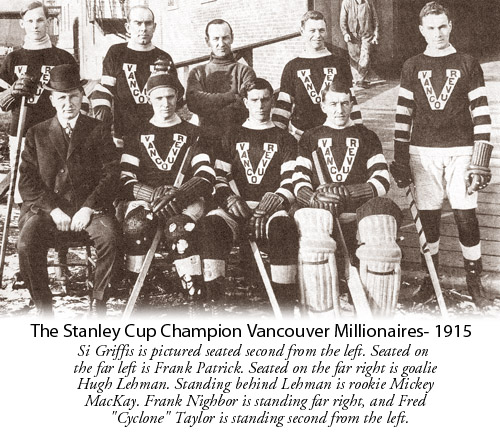
March 26, 1915: The Vancouver Millionaires, Champions of the Pacific Coast Hockey Association, beat the Ottawa Senators, Champions of the National Hockey League, by a whopping score of 12-3, at the Denman Arena in Vancouver, completing a 3-game sweep and winning the Stanley Cup. It remains the only one ever won by a Vancouver-based team.

The Millionaires were founded by the brothers Frank and Lester Patrick – the same Lester Patrick who would build the Rangers into one of the NHL's early successes, winning 3 Stanley Cups in 6 trips to the Finals between 1928 and 1940.

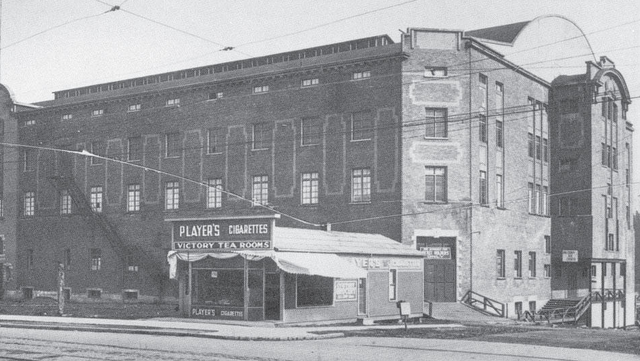
In 1911, the Patricks spent $300,000 to build the 10,500-seat Denman Arena, at Denman Street and West Georgia Street in Vancouver's West End. At the time, it was one of the world's largest arenas. They also built the Patrick Arena in Victoria, British Columbia's other large city and its Provincial capital. It was home to the Victoria Cougars, who in 1925 would become the last team outside the NHL to win the Stanley Cup, the last team from British Columbia to do so, and the last team from Western Canada (west of Toronto, anyway) to win it until the 1984 Edmonton Oilers.
Denman Arena (1911-1936)

The Millionaires won the Cup in 1915, the 1st team west of Winnipeg ever to do it. They did it in spite of losing Griffis to a broken leg, rendering him unable to play in the Finals.

The Millionaires, whose colors were maroon and white and played with a large block V on their sweaters (Canada still calls them that, even though they've long since become jerseys), won the PCHA title 6 times: 1915, 1918, 1921, 1922, 1923 and 1924. But only the 1st time, against the Ottawa Senators (not the current team with that name), did they win the Cup. They lost to the Toronto team now known as the Maple Leafs in 1918 and 1922, to the Senators in 1921 and 1923, and to the Montreal Canadiens in 1924.

Hockey rosters were smaller in those days. Goaltender: Hugh "Bull" Lehman. Defensemen: Frank Patrick (also head coach and team president, Lester no longer involved), Silas "Si" Griffis (team Captain), Lloyd Cook, Ken Mallen and Jim Seaborn; wingers, Frank Nighbor and Barney Stanley; centers, Fred "Cyclone" Taylor, Duncan "Mickey" MacKay, and Johnny Matz. Both Patricks, Lehman, Griffis, Nighbor, Stanley, Taylor and MacKay are all in the Hockey Hall of Fame – 8 guys on 1 team, which is pretty strong by the standards of any era.

But the Millionaires, and the Cougars, folded with the PCHA in 1926, making the Rangers, the Chicago Blackhawks, the Detroit Red Wings and the now-defunct Montreal Maroons and Pittsburgh Pirates (named for the baseball team) possible. Their arena burned down in 1936.

The Pacific Coast Hockey League and the Western Hockey League had a team called the Vancouver Canucks, from 1945 (riding the post-World War II sports boom) until 1970 (when the NHL gave the city an expansion franchise, along with the Buffalo Sabres). They won 6 league titles: 1946 and 1948 in the PCHL, and 1958, 1960, 1969 and 1970 in the WHL. Gee, maybe they should have stayed in the high minors: They were doing so well.

The Vancouver Canucks began play in the National Hockey League in the 1970-71 season. They have been a star-crossed team, known for their failures, and for their awful uniforms. They have been to the Stanley Cup Finals 3 times, and lost them all. They did not win a Cup while playing at the Pacific Coliseum from 1970 to 1995, and haven't won one playing home games at the Rogers Arena (formerly General Motors Place).

In 1982, they got blown away by the New York Islander dynasty. No shame in that. In 1994, they won Game 1 against the New York Rangers, at Madison Square Garden, then dropped 3 straight, before fighting back, winning Game 5 at The Garden and Game 6 at the Pacific Coliseum, but fell 1 goal short in Game 7 at The Garden. In 2011, the Boston Bruins cheated (Don't all New England teams?) by letting the ice melt just enough to slow them down in Game 6 at the TD Garden, before beating the Canucks at Rogers Arena in Game 7.

The Canucks won the President's Trophy for best regular-season record in 2011 and 2012, and have won 10 Division titles: 1975, 1992, 1993, 2004, 2007, 2009, 2010, 2011, 2012 and 2013. But never the Cup.

On October 1, 2010, the Canucks' parent company acquired the Millionaires' trademark. So far, this overdue embrace of the city's hockey history hasn't led them to the Cup. Here's a recent photo of Canucks players wearing the Millionaires-style uniform, so you can get a better idea of what it looked like.
March 26, 1915 was a Friday. Baseball was in Spring Training. Football was out of season. And professional basketball barely existed. So there were no other scores on this historic day.

Thursday, March 10, 2022

March 10, 1919: Arsenal Are Elected to the Football League's Division One

Sir Henry Norris

March 10, 1919: With World War I over, the Football League, England's soccer organization, holds a meeting to reorganize. In the leadup to this meeting, it was suggested -- as it turned out, correctly, even more than they suspected -- that the postwar market for football would be insatiable, and that Division One should be expanded from 20 to 22 teams.

This would seem to have been great news for West London team Chelsea, which had finished 19th in Division One; and for Middlesex team Tottenham Hotspur (in North London from 1965 onward), which had finished 20th and last. Now, in spite of their grand ineptitude, these 2 teams could keep their spaces in Division One and not be relegated; while the top 2 teams from Division Two in the last completed season, 1914-15, Derby County and Preston North End, could still keep their hard-earned promotions.

But it was revealed that the April 2, 1915 game at Old Trafford, which Manchester United had won 2-0 over Liverpool. had been fixed. There you have it: Proof that Manchester United were cheating bastards 26 years before Alex Ferguson was even born.

Man U were then desperate to avoid relegation: Had they lost, they, rather than Chelsea, would have finished 19th. Liverpool were willing to accept this loss: Man United were only 33 miles away, and, with transportation costs being what they were, the Scousers didn't want to lose a close, therefore relatively cheap, roadtrip.

Imagine Liverpool giving the club that has become their most hated opponents a break that saves them from relegation. Better yet: Imagine Man United being in position to be relegated. A wonderful thought.

By all rights, Chelsea were screwed out of 18th place and safety. By all rights, Man U should have been kicked out of the League. After all, it's not as though people in the Manchester area would be without a team: Manchester City, Manchester Central, Bolton Wanderers, Oldham Athletic, Bury F.C., Rochdale F.C. and Stockport County were all already in business. (Wigan Athletic would come later, in 1932, effectively if not geographically replacing Manchester Central, who went out of business due to the Great Depression.) But Man U were already one of the biggest clubs in the North of England, and a lot of people didn't want them kicked out.

Enter Sir Henry Norris, a real estate developer, a Member of Parliament who had been knighted for his work supporting the war effort, and also the chairman of Arsenal Football Club, of North London. He had a plan: He would bring several clubs in to vote to keep Man U in the League... if Man U and their allies would vote to bring Arsenal into Division One.

It worked: Chelsea rightly got the 21st spot, and Arsenal got the 22nd, even though they had finished 6th in Division Two in 1915. (A later check of the results showed they should have been listed as 5th, but that doesn't matter now.)

This election would seem to have screwed not only Tottenham, but Barnsley F.C. (a Yorkshire club that had finished 3rd in Division Two), Birmingham-area team Wolverhampton Wanderers (a.k.a. Wolves, 4th), and Birmingham City (a.k.a. Brum or the Brummies, officially 5th) out of that 22nd place. Yet all 3 of those clubs have been in the Premier League in recent years, and while their fans don't particularly like Arsenal (many fans admire Arsenal, but few genuinely like them), they never bring up the fact that "You screwed us out of the first division in 1919!"

Only Tottenham fans, separated from Arsenal by 4.7 miles, do that. To this day, Tottenham fans claim that there must have been bribery, that Norris must have paid off some of the club chairmen to vote Arsenal into Division One.

It has been over 100 years. More than a full century. Not one shred of evidence has ever been publicly produced that Norris bribed anyone to make it happen.

You want to call Norris' move underhanded? It might have been. But it was not corrupt. Not until 1987 would the League make a team's promotion be automatic: Until then, it was always by election. Granted, those elections nearly always turned a rightful promotion into a formality and a reality. But not always. Sometimes, it was based on other factors, such as convenience for the clubs' business managers.

This was one of the times that it was decided based on something other than finishing position, and, while it may have been odd, it was done within the rules of the time. Norris did not break the rules, he used the rules to his advantage. Possibly unfair, but absolutely legal at the time.

Indeed, there is more evidence that Tottenham bribed their way into the League at all in 1908 than there is that Arsenal bribed their way into Division One in 1919. Certainly, no one at the time publicly suggested that Norris had bribed anyone.

According to Andy Kelly from the website Untold Arsenal:

It looks like no one really questioned the events of 1919 for 33 years. Bernard Joy suggested that something underhand may have occurred in his book "Forward, Arsenal!" in 1952. Since then, every Arsenal history seems to have built on this, and Tottenham fans have latched on to it.

Why was nothing questioned at the time or in 1927, 1929, 1934 (when he died), or at any other time before someone decided to write a book?

Brian Glanville wrote an Arsenal history around the same time as Joy, but didn't feel the need to question the decision. However, following Joy's book, Glanville has increasingly vilified Norris even though no new evidence has come to light since.

And with Joy's and Glanville's histories full of holes and second-hand accounts, it's difficult to give them any credibility.

And, besides, as the team that finished last in the last season, Tottenham had far less right to gripe about Arsenal screwing them over than did Barnsley, Wolves or Brum. Spurs were last, and on merit, too.

Yet the story persists, and fans of other clubs who hate Arsenal are more than happy to pass the lie along.

Tottenham did rightly win promotion to Division One at the end of the 1919-20 season. You would think that, since (presuming that they were screwed at all) they were only screwed for 1 year, they would have gotten over it by then.

But since they can't claim to be a more successful club than Arsenal, or a bigger one, or a more admired one around the world, Tottenham fans hang onto this myth that Arsenal were corrupt in 1919 and cheated them.

It makes me wonder why they never blame Man United for screwing them. After all, if United hadn't fixed that game in 1915, they would have been 19th, and thus entitled to remain in Division One, and Arsenal wouldn't have been able to make arrangements, legal or otherwise, to get that 22nd spot. So why don't Spurs fans hate United?

Because hating Manchester United requires taste. And if Tottenham fans had any taste, they wouldn't be Tottenham fans.

On May 24, 1919, a friendly (what Americans would call an exhibition game) was played between Arsenal and Tottenham, at the Arsenal Stadium, known as Highbury for its neighborhood. This was technically a home game for Tottenham, as White Hart Lane, their home stadium since 1899, had been impounded by the British government for war-related activities. (The reverse was done for World War II: The government impounded Highbury, and Arsenal were forced to play at White Hart Lane until League play resumed in 1946.) The game ended 0-0.

It had been 10 weeks since the decision to give promotion to Arsenal and deny it to Tottenham had been made. And yet, not only had Tottenham decided to continue playing matches (there had been matches during the war, just not League or FA Cup matches) at Highbury until The Lane was given back to them at the start of the next season, they agreed to play this completely unnecessary friendly against their local rivals.

If Tottenham -- management, players or fans -- were so angry at that time about Arsenal using corrupt means to keep them out of Division One, then why would they have agreed to play this game at all? And why play this game, or any game, at Highbury? Why not find some other place to play, if The Lane hadn't yet come back under their control? Money? If the money was that good, surely, another nearby club could have gotten them a similar amount.

Yet another fact to demolish the lie that there was any thought, at the time, to Arsenal's "corruption." Whenever that story started, it wasn't in the Spring of 1919.

*

March 10, 1919 was a Monday. In North American major league sports, Baseball was in Spring Training, football was out of season, professional basketball barely existed.

In hockey, the Vancouver Millionaires beat their arch-rivals, the Victoria Cougars, 11-8 at the Denman Arena in Vancouver, to win the regular-season title in the Pacific Coast Hockey Association. And yet, over the next 4 days, they would lose the league's playoff title to the Seattle Metropolitans.

The Metros would play the Montreal Canadiens, Champions of the NHL, for the Stanley Cup. But the worldwide flu epidemic would interrupt the Finals, and no winner was crowned.

Saturday, February 12, 2022

February 12, 1924: "Rhapsody In Blue" Premieres

George (left) & Ira Gershwin

February 12, 1924: "An Experiment in Modern Music" is held at Aeolian Hall, at 29 West 42nd Street between 5th and 6th Avenues in Midtown Manhattan. It was intended as an educational demonstration on how far American music had progressed since the Civil War, and on how the relatively new form of jazz could be performed in a concert hall.

The Paul Whiteman Orchestra, led by the man with perhaps the most unfortunate name in jazz (Whiteman was then the best-selling practitioner of an art form invented by black men) played each piece. They began with a suite by Victor Herbert, and closed with Pomp and Circumstance (a.k.a. "The Graduation Song") by Edward Elgar.

In between, they played Rhapsody In Blue, with the piano part played by its composer: George Gershwin, by this point the biggest name in Broadway musicals. Gershwin, known for light, airy tunes written with his brother Ira as lyricist, wanted to show he was a serious musical composer. Part of this was sitting for an interview with Isaac Goldberg, who had written a biography of the late 19th Century British composing team of William S. Gilbert and Arthur Sullivan, and would publish the interview again as he wrote Gershwin's 1st authorized biography, in 1931:

It was on the train, with its steely rhythms, its rattle-ty bang, that is so often so stimulating to a composer.... I frequently hear music in the very heart of the noise. And there I suddenly heard -- and even saw on paper -- the complete construction of the rhapsody, from beginning to end. No new themes came to me, but I worked on the thematic material already in my mind and tried to conceive the composition as a whole. I heard it as a sort of musical kaleidoscope of America, of our vast melting pot, of our unduplicated national pep, of our metropolitan madness. By the time I reached Boston I had a definite plot of the piece, as distinguished from its actual substance.

The piece was a smashing success. To this day, its premiere is considered a defining event, not just of the "Roaring Twenties," also known as the "Jazz Age," but in the cultural history of New York City. In 2003, Orrin Howard, a Los Angeles-based music critic, wrote:

Beginning with that incomparable, flamboyant clarinet solo, Rhapsody is irresistible still, with its syncopated rhythmic vibrancy, its abandoned, impudent flair that tells more about the Roaring Twenties than could a thousand words, and its genuine melodic beauty colored a deep, jazzy blue by the flatted sevenths and thirds that had their origins in the African-American slave songs.

Lang Lang, the great Chinese concert pianist, has said, "When I hear Rhapsody in Blue, I see the Empire State Building somehow. I see the New York skyline in Midtown Manhattan, and I already see the coffee shops of Times Square." The fact that the Empire State Building wouldn't open until 7 years after the piece premiered does nothing to detract from Lang's perception.

Brian Wilson of the Beach Boys has called Rhapsody In Blue one of his favorite pieces. In 1979, Woody Allen used the piece to open his film Manhattan. In the 1980s, it became the backing music for United Airlines' TV commercials. When Ken Burns made his Baseball miniseries in the early 1990s, he used it as the soundtrack for the story of the building of the original Yankee Stadium, although that had happened a year earlier, in 1923. Gershwin's piano playing seemed a perfect complement to old silent film of Babe Ruth trotting around the bases. In the 1920s, Gershwin was nearly as big a figure as Ruth.

F. Scott Fitzgerald had praised the piece in 1925, the year he published The Great Gatsby, which is often considered the defining American novel of the decade. In 2013, the piece was used as a theme for a new film version of the novel.

There is a surviving recording with George himself tickling the ivories. It's not quite the same as having a recording of Wolfgang Amadeus Mozart conducting his own orchestra, but unlike Mozart (who died of a fever in 1791, not quite age 36) and Gershwin (who died of a brain tumor in 1937, not quite 39), it does survive.

The Aeolian Building still stands, although it has been retrofitted, so that Aeolian Hall no longer exists.

*

February 12, 1924 was a Tuesday. Baseball and football were out of season. Professional basketball was not yet major league. And while the hockey season was underway, there were no games scheduled in either the National Hockey League or the Pacific Coast Hockey Association. So there were no scores on this historic day.

Saturday, January 22, 2022

January 22, 1915: The Guadalajara Train Disaster

January 22, 1915: The Guadalajara Train Disaster occurs, and kills over 600 people. It remains the deadliest rail disaster in North American history.

The Mexican Revolution was in full swing by 1915. After the assassination of President Francisco Madero, 2 years earlier, the presidency of the country was assumed by Victoriano Huerta. But revolutionary forces led by Venustiano Carranza and Pancho Villa overthrew him, and Carranza became President in 1914.

Villa, however, wanted to continue the revolution, and an armed struggle ensued. On January 18, 1915, Carranza's troops captured Guadalajara, in western Mexico. He immediately ordered that the families of his troops be transported by train from Colima n the Pacific coast to his newly captured stronghold.

On January 22, a special train of 20 cars left Colima. It was packed, with people even clinging to the roofs and undercarriages. After entering the state of Jalisco, between Ciudad Guzmán and Sayula, the engineer lost control on a long steep descent. As the train gathered speed, many people were thrown off as the train negotiated curves. Eventually, the entire train derailed into a deep canyon, with fewer than 300 of the 900 on board surviving.

Some of Carranza's troops, Yaqui Indians, committed suicide when hearing of the death of their families. Others swore vengeance on the train crew, but they had also been killed in the disaster.

*

January 22, 1915 was a Friday. Baseball and football were out of season. Professional basketball barley existed. The National Hockey Association season was in progress, but no games were scheduled. There was 1 game played in the Pacific Coast Hockey Association: The Victoria Aristocrats beat the Vancouver Millionaires, 4-1 at the Patrick Arena in Victoria, British Columbia. However, the Millionaires went on to win the PCHA title and the Stanley Cup.

December 31, 1999 & January 1, 2000: The Millennium

December 31, 1999:  The Millennium arrives. The people of planet Earth survived. At a terrible cost. But we hadn't destroyed ourselves. ...