Showing posts with label gene tunney. Show all posts

Saturday, October 22, 2022

October 22, 1926: The Tragedy of Harry Greb

October 22, 1926: Harry Greb, a former Middleweight Champion of the World, dies in Atlantic City, New Jersey. He was only 32 years old.

Edward Henry Greb was born on June 6, 1894 in Pittsburgh, leading to his nicknames: "The Pittsburgh Windmill," "The Smoke City Wildcat" and "The Pittsburgh Bearcat." I thought his surname might have been shortened (either by him or his father) from a longer one, either Slavic or Italian, but, apparently, that was it, and he was of German descent.

By 1915, he was fighting world-class opposition, including 2 fights, though not sanctioned for the title, against Middleweight Champion George Chip. He lost both fights by what was then called a "newspaper decision." In 1917, he set a record that will almost certainly never be broken with 37 officially sanctioned fights -- an average of 1 every 9.8 days. He won 34 of them. He beat Barney "Battling" Levinsky, the Light Heavyweight Champion, although, again, the title was not officially on the line. Starting in 1918, he won 52 straight fights, including fights against Levinsky, and Billy Miske and Mike Gibbons, both of whom would later fight Jack Dempsey for the Heavyweight Championship.

In 1921, during a fight with light heavyweight Kid Norfolk, he was thumbed in the right eye, which is believed to have resulted in a retinal tear. He would eventually lose all sight in the eye, and lose some vision in his left eye as well. He kept this a secret from everybody except his wife and his closest friends. If even one State boxing commission found out, it would have notified the commissions in the other 47 States then in the Union, and Greb wouldn't have been able to box anywhere in America.

Despite the injury, Greb won the fight via a newspaper decision, and got a fight for the American light heavyweight title. On May 23, 1922, he faced champion Gene Tunney at the 2nd Madison Square Garden. In the 1st round, Greb broken Tunney's nose. Somehow, Tunney, a wealthy and cultured man who had learned to box while serving in the Marine Corps during World War I, managed to avoid getting knocked down, let alone out. Greb was announced as the winner, and The Ring magazine named it Fight of the Year.

It was the only professional fight Tunney ever lost. They fought at the 2nd Garden again on February 23, 1923, and Tunney won by a split decision. They fought there a 3rd time on December 10, 1923, and Tunney won by a unanimous decision. They fought a 4th time, on September 17, 1924 at the Olympic Arena in Cleveland, and it was ruled a draw. They fought a 5th time on March 27, 1925 at the St. Paul Auditorium in Minnesota, and Tunney won another unanimous decision.

A boxer facing a man 5 times? Greb fought Levinsky 6 times, and won them all. He also faced former Light Heavyweight Champion Tommy Loughran 6 times, losing the 4th, drawing the 6th, and winning the rest.

On August 31, 1923, Greb finally got his shot at a World Championship, winning a unanimous decision over Middleweight Champion Johnny Wilson at the Polo Grounds. He successfully defended the title 5 times, including a rematch against Wilson at The Garden in 1924; and one over then-Welterweight, later Middleweight, Champion Mickey Walker, "The Toy Bulldog," at the Polo Grounds in 1925.

On February 26, 1926, 2 months after the 3rd Madison Square Garden, the building that would become known as "The Old Garden," opened, he lost the title in a split decision to Theodore "Tiger" Flowers, who thus became the 1st black fighter to win the Middleweight title. After winning 2 tuneup fights, Greb fought a rematch, but Flowers won on an even more controversial split decision. This time, the fans stormed the ring to protest the outcome. Greb later stated, "Well, that was one fight I won, if I ever won any."

Officially, he won 108, lost 8, and drew 3. Of those 8 losses, 3 were to Tunney and 2 were to Flowers. Of those 108 wins, 33 of them were over 16 different members of the International Boxing Hall of Fame, and Greb is still the all-time leader in that category.

But he had to retire. His health, as had his face, had taken a beating. Not only did he have to have his right eye removed and replaced with a glass prosthesis, but damage to his nose had led to breathing issues. It forced him to turn down a job as a sparring partner for Dempsey, who was about to defend the Heavyweight Championship against Tunney in Philadelphia. Knowing both men's styles well, Greb was sure that Tunney would win that fight. He was right, and Tunney won the rematch as well, which became known as the "Long Count Fight."

Greb He checked into a hospital in Atlantic City for surgery, but complications set in, causing a heart attack that killed him on October 22, 1926. He has been called the greatest middleweight fighter of all time, and one of the very greatest boxers, pound-for-pound, who has ever lived. But the thing that stands out the most about him isn't his fight totals, or his holding of a championship for 3 years, but the fact that he was the only man ever to beat Tunney, who remains the only man ever to retire while still Heavyweight Champion and stay retired.

*

October 22, 1926 was a Friday. This was also the day that The Sun Also Rises by Ernest Hemingway was published. I have a separate entry for that event.

The baseball season had just ended, with the St. Louis Cardinals beating the Yankees in the World Series. Football was in midweek. The NBA hadn't yet been founded. And the NHL season wouldn't begin until November 16. So there were no scores on this historic day. 

Friday, September 23, 2022

September 23, 1926: Tunney Defeats Dempsey

September 23, 1926: Jack Dempsey, Heavyweight Champion of the World, defends his title against Gene Tunney at Sesquicentennial Stadium, the centerpiece of Philadelphia's World's Fair celebrating the 150th Anniversary of American independence. The huge horseshoe was packed with 120,557 fans, the largest crowd in boxing history to that point.
Dempsey hadn't fought in 3 years, and it showed. Once the most fearsome puncher ever, the Manassa Mauler couldn't handle the quickness of Tunney, who learned what he called "scientific pugilism" while serving in the U.S. Marine Corps in World War I.

It didn't help that this fight was outdoors, and it rained. By the 10th and final round, it was pouring, and Dempsey could do little to hurt Tunney.

For the 1st time ever, the Heavyweight Championship changed hands on a decision, rather than a knockout. Previously, decisions were considered unsatisfying, and judges were reluctant to take the title away from the Champion unless the challenger had knocked him out.

But this decision was an obvious one, and nobody objected at the time. Dempsey knew he had been fairly beaten: When his wife, actress Estelle Taylor, asked him what happened, he said, "Honey, I forgot to duck." A 15-year-old Illinois kid named Ronald Reagan read this in the newspaper, and, 55 years later, said it to his wife Nancy after he was shot.

Ironically, being dethroned made Dempsey more popular, as he had previously been called a "slacker" and a "draft dodger" for his avoidance of service in World War I. And Tunney, though the more skilled boxer, never developed the same kind of popularity as Dempsey.

Even after Tunney won by decision again a year later, in what became known as "The Long Count Fight," Dempsey's popularity grew, as some people thought he was robbed, not that they considered it Tunney's fault. Tunney, who retired as Champion rather than lose his title in the ring, was respected, but he was never truly loved.

In 1931, the 105,000-seat Sesquicentennial Stadium was renamed Municipal Stadium, and became famous as the neutral site of the Army-Navy Game. It hosted the 1952 fight where Rocky Marciano knocked out Jersey Joe Walcott to take the title.

In 1964, it was renamed John F. Kennedy Stadium. In 1966, it hosted the Beatles. In 1967, The Spectrum was built across the street; in 1971, Veterans Stadium to the north of the Spectrum, creating the South Philly sports complex. In 1985, it hosted the U.S. half of Live Aid. It was demolished in 1992, and the 76ers & Flyers arena now named the Xfinity Mobile Arena was built on the site.

*

September 23, 1926 was a Thursday. Jazz icon John Coltrane was born that day, and would later establish his home in Philadelphia, the city where Dempsey-Tunney I was held.

There were 2 games played in major league baseball that day. The Boston Braves beat the Pittsburgh Pirates, 2-1 at Braves Field in Boston. And the Cincinnati Reds played the Philadelphia Phillies to a 6-6 tie at Baker Bowl in Philadelphia, before it was called due to darkness after 15 innings.

Thursday, September 22, 2022

September 22, 1927: The Long Count Fight

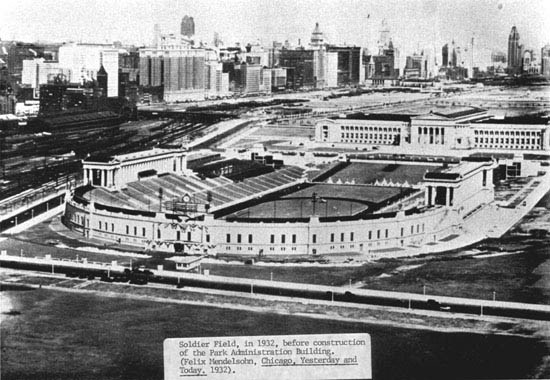
September 22, 1927: One of the most legendary prizefights ever takes place at Soldier Field in Chicago. The crowd has been listed at as high as 150,000, but was, officially, 104,943.

Jack Dempsey became Heavyweight Champion of the World on July 4, 1919, right after World War I. He was a polarizing figure, a devastating puncher known for his early knockouts, but also for being called a "slacker," because he had worked in a shipyard and continued to box during the war. 

Gene Tunney, grew up a poor Irish-American kid as well. That aside, he couldn't have been much more different from Dempsey: Instead of a rural area, he grew up in Manhattan, and was a highly intelligent, very cultured, well-read man. He enlisted in the U.S. Marine Corps, and that's where he learned to box, earning him the rather redundant nickname "The Fighting Marine."

He was no stereotypical gruff "leatherneck" (an old term for Marines). He decided to treat boxing as a science. The term "the sweet science" had not yet been used, but Tunney treated it as such. He even preferred to call it "pugilism" rather than "boxing" or even "prizefighting."

On September 23, 1926, Dempsey got into the ring with Tunney, at the 105,000-seat Municipal Stadium in Philadelphia, later renamed John F. Kennedy Stadium. The crowd was listed at 120,557, which is still the highest official total for a prizefight, ever, anywhere in the world. Dempsey was not in shape, and was incredibly rusty. Tunney sensed this before the fight, and saw his suspicions confirmed during it. Tunney won the fight on a decision.

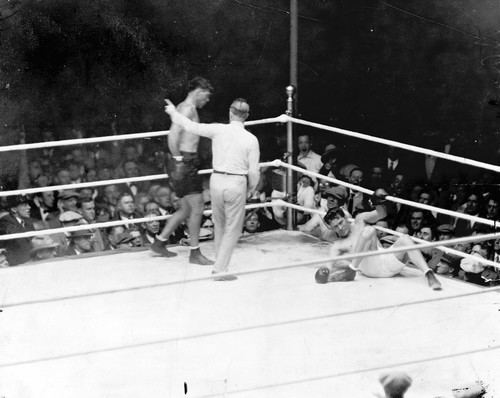
A rematch was set for Soldier Field in Chicago a year later, on September 22, 1927, in front of 104,000 people. Tunney led for the 1st 6 rounds. But in the 7th, Dempsey made a breakthrough, and knocked Tunney down. against the ropes. The Mauler smashed 2 right hands and 2 lefts into Tunney's chin, and he was staggered. Four punches later, and Tunney's knee had hit the canvas. For the 1st time in his boxing career, Gene Tunney had been knocked down.
Soldier Field, in 1932, 5 years after the fight

People listening on the radio reported that they couldn't hear any of what happened next, such was the noise from the crowd in the stadium. Talk about the "Roaring Twenties": That term first came about in regard to the rising stock market, but the decade may never have had a louder roar than this one.

But Dempsey did not immediately go to his corner when Tunney went down. As he had usually done in his previous fights, he just stood there. Referee Dave Barry remembered the new rule, and told Dempsey to get to a neutral corner. Dempsey still didn't do so: He just stood there, watching Tunney, waiting for him to get up.

Finally, Barry seemed to give Dempsey a little push, and point, and Dempsey got the hint. Only then did Barry turn back to Tunney, and swing his arm down, with his index finger pointed, and yell, "One!"

The fight was filmed, and, at some point, an early expert in film graphics put a graphic of a stopwatch in the corner of the screen. From the moment Tunney's knee hit the floor until Barry counted, "One!" it was a full 5 seconds. In other words, Tunney got 4 seconds more than he should have.

Tunney was clear-headed and clear-eyed, and he was going to stay down until the count of, "Nine!" so that he could get all the rest to which he was legally entitled. Having done exactly that, Tunney got up before Barry could bring his arm back down and yell, "Ten!" He had spent a total of 14 seconds down, 4 more than the usual limit.

In the 8th round, Tunney managed to knock Dempsey down. Interestingly, Barry began counting without checking that Tunney had reached a neutral corner -- and he hadn't gotten there yet. Dempsey got up, and finished the round and the fight, but it was no contest. When the bell rang to end the 10th and final round, Dempsey knew he'd lost. 

Dempsey's fans, and people who may not have liked him much but bet money on him, were furious. It became known as "The Long Count Fight." At the time, there was a federal law prohibiting the transportation of boxing movies across State Lines, meaning that most people never actually saw the fight until years later. People who heard the legend of the Long Count presumed it was true, based solely on hearsay, not on seeing the film.

And people who didn't previously like Dempsey began to sympathize with him. The sense that he may have been treated unfairly actually helped him: He had lost the fight, but won over a lot of fans, many of whom began appreciating him more in hindsight than they did when he was knocking out Jess Willard, Georges Carpentier and Luis Firpo.

Tunney defended his title once more, and retired as Champion, never making a comeback. He and Dempsey, like many other pairs of boxing rivals, became and remained good friends. Tunney lived until 1978, Dempsey until 1983.

In 1950, the Associated Press named Dempsey the greatest boxer of the 1st half of the 20th Century. Their other honorees: Babe Ruth for baseball, George Mikan for basketball, Howie Morenz for hockey, Bill Tilden -- despite his recent scandal -- for men's tennis, Suzanne Lenglen for women's tennis, Man o' War as the greatest racehorse; and Jim Thorpe for football and track and field, and as greatest athlete overall.

*

September 22, 1927 was a Thursday. Tommy Lasorda, the Hall of Fame manager of the Los Angeles Dodgers, was born.

Often a travel day in Major League Baseball, this time, there was a full slate of games:

* The New York Yankees beat the Detroit Tigers, 8-7 at Yankee Stadium -- the old one, but still new. The Yankees led 6-4 going into the 9th inning. The Tigers took a 7-6 lead. Cliché Alert: Walks can kill you, especially the leadoff variety. Mark Koenig drew a walk to lead off the bottom of the 9th, and Babe Ruth hit a walkoff home run.

Herb Pennock was the winning pitcher, in relief of Wilcy Moore. The other way around was much more common. The home run was Ruth's 56th home run of the season. A new record of 60 was within reach.

* The New York Giants split a doubleheader with the Pittsburgh Pirates at Forbes Field. The Pirates won the 1st game, 5-2; and the Giants won the 2nd game, 7-1.

* The Brooklyn Dodgers were swept by the Cincinnati Reds, in a doubleheader at Crosley Field in Cincinnati. In the opener, Chuck Dressen, later to manage the Dodgers to 2 Pennants, and Pid Purdy hit back-to-back doubles to give the Reds a 2-1 win in 12 innings. The Reds won the nightcap, 4-3.

* The Boston Red Sox beat the Chicago White Sox, 2-1 at Fenway Park in Boston. Cleo Carlyle's single won it for the BoSox in the bottom of the 10th.

* The Philadelphia Athletics swept a doubleheader with the Cleveland Indians at Shibe Park in Philadelphia. The A's won the 1st game 4-3, when Jimmie Foxx singled home a run in the bottom of the 13th inning. The A's won the 2nd game 5-2.

* The Washington Senators beat the St. Louis Browns, 10-7 at Griffith Stadium in Washington.

* The Chicago Cubs beat the Philadelphia Phillies, 8-4 at Wrigley Field in Chicago.

* And the St. Louis Cardinals beat the Boston Braves, 6-5 at Sportsman's Park in St. Louis.

Tuesday, July 26, 2022

July 26, 1928: Gene Tunney's Last Fight, and His Million-Dollar Check

July 26, 1928: Yankee Stadium hosts its 1st fight for the Heavyweight Championship of the World. Champion Gene Tunney knocks Australian fighter Tom Heeney out in the 11th round.

George "Tex" Rickard, king of boxing promoters, and builder of the 1925-68 version of Madison Square Garden, had promised Tunney a percentage of the gate. It turned out to be $970,000. Tunney wanted a check for $1 million, so he gave Rickard a check for $30,000, to make up the difference, and got what he wanted. That million bucks, with inflation factored in, would be about $17.3 million today.

Tunney was a cultured man, but also a veteran of the U.S. Marine Corps, where he learned what he called "scientific boxing." He didn't even like to call himself a "boxer," instead preferring the term "pugilist." He once said, "Boxing is a chess game with gloves. You don't win by hitting hardest, but by hitting smartest. Every move must have a purpose, and every punch must set up the next."

Tunney then retired while still Champion. Unlike most fighters, he stayed retired. He was only 31 years old. His only professional loss was to Harry Greb, later Light Heavyweight Champion, in 1922 at the 2nd Madison Square Garden. He would beat Greb 3 times.

He died in 1978, living long enough to see his son, John, be elected to the U.S. Senate from California.

*

July 26, 1928 was a Thursday. These baseball games were played:

* The New York Yankees and the Detroit Tigers played a doubleheader at Navin Field, the ballpark that became Briggs Stadium in 1938 and Tiger Stadium in 1961. In the opener, Waite Hoyt and Vic Sorrell were even for 11 innings, but in the top of the 12th, the Yankees pummeled Sorrell for 11 runs, and won, 12-1. Bob Meusel hit for the cycle. Those 11 runs in an extra inning would remain a record, tied by the 1969 Minnesota Twins, until the Texas Rangers scored 12 runs in a 15th inning in 1983.

The Tigers won the nightcap, 13-10. In other words, the Yankees scored 22 runs, but only came away with a split.

* The New York Giants lost to the Pittsburgh Pirates, 7-5 at the Polo Grounds. Burleigh Grimes went the distance for the win. Rookie Carl Hubbell didn't get out of the 2ndinning, but would straighten things out by the end of the season.

For the Bucs, Harold "Pie" Traynor went 2-for-5 with an RBI, Paul Waner went 3-for-5 with 2 RBIs, and Lloyd Waner went 1-for-5 with an RBI. For the Jints, Bill Terry went 1-for-4 with an RBI. So did Travis Jackson, whose hit was a home run. Lefty O'Doul went 1-for-4 with a walk and 2 RBIs, and Mel Ott went 2-for-4 with a walk and an RBI.

* The Brooklyn Robins, as the Dodgers were known when Wilbert Robinson was their manager from 1914 to 1931, lost to the St. Louis Cardinals, 6-1 at Ebbets Field. Grover Cleveland Alexander collected his 357th career win.Frankie Frisch went 2-for-5 with a home run and 2 RBIs.

* The Boston Braves beat the Chicago Cubs, 7-6 at Braves Field in Boston. Lance Richbourg singled Doc Farrell home with the winning run in the bottom of the 14th inning.

* The Cincinnati Reds beat the Philadelphia Phillies, 6-4 at Baker Bowl in Philadelphia. The Reds scored 4 runs in the top of the 9th, and the Phils could only come back with 1 in the bottom half.

* The Cleveland Indians swept the Boston Red Sox, 4-2 and 4-3 at League Park in Cleveland.

* The Philadelphia Athletics beat the Chicago White Sox, 5-1 at Comiskey Park in Chicago. Playing the last season of their respective legendary careers, Ty Cobb went 2-for-5, and Tris Speaker did not play. Jimmie Foxx went 2-for-5 with an RBI. Mickey Cochrane went 1-for-4 with a walk. Al Simmons went 2-for-4 with a walk and an RBI. Lefty Grove outpitched Tommy Thomas.

* And a doubleheader was split at Sportsman's Park in St. Louis. The St. Louis Browns won the 1st game, 7-5. The Washington Senators won the 2nd game, 6-4.

December 31, 1999 & January 1, 2000: The Millennium

December 31, 1999:  The Millennium arrives. The people of planet Earth survived. At a terrible cost. But we hadn't destroyed ourselves. ...