Showing posts with label john lennon. Show all posts

Thursday, December 8, 2022

December 8, 1980: John Lennon is Killed

Howard Cosell and John Lennon, December 9, 1974.
Six years later, John would be dead.

December 8, 1980: The New England Patriots are playing the Miami Dolphins at the Orange Bowl in Miami, a game being broadcast on ABC Monday Night Football. As John Smith of the Patriots comes onto the field to attempt a last-play game-winning field goal, Howard Cosell gives an announcement about another Englishman named John:

Cosell: But it's suddenly been placed in total perspective for us. I'll finish this. They're in the hurry-up offense.

Frank Gifford: Third down, four. Foreman. (Chuck Foreman is stopped on a run.) It'll be fourth down. (Quarterback Matt) Cavanaugh will let it run down for one final attempt. He'll let the seconds tick off to give Miami no opportunity whatsoever. (Whistle blows.) Timeout is called with three seconds remaining. John Smith is on the line. And I don't care what's on the line, Howard: You have got to say what we know in the booth.

Cosell: Yes, we have to say it. Remember: This is just a football game, no matter who wins or loses. An unspeakable tragedy confirmed to us by ABC News in New York City: John Lennon, outside of his apartment building on the West Side of New York City -- the most famous, perhaps, of all of The Beatles -- shot twice in the back, rushed to Roosevelt Hospital, dead on arrival. Hard to go back to the game after that newsflash, which, in duty bound, we have to take. Frank?

Gifford: Indeed, it is.

Lennon had been shot at 10:50 PM, Eastern Standard Time. Cosell had read an initial report, before the full facts were known: Five shots had been fired, four of them hit Lennon, and, according to the doctors who tried in vain to save him, any one of the four that hit him, had it been the only one, would have done enough damage to kill him. He was pronounced dead at 11:15. He was 40 years old.

Cosell made the announcement a few minutes later. On December 9, 1974, Monday Night Football had broadcast a game between the Los Angeles Rams and the Washington Redskins at the Los Angeles Memorial Coliseum. The Redskins won, 23-17. Lennon had attended, and Cosell interviewed him at halftime.

Cosell was already 43 years old when The Beatles first arrived in America, and hardly in their target group, but his journalistic instincts kicked in, and, surprising those of us who knew him only as a blowhard who tried to convince people he knew more about things than he did, he handled it like a complete professional.

Lennon had been living in America for a little over 3 years, and knew who Cosell was, and said of American football, "It makes rock concerts look like tea parties." The interview went very well, and, off-camera, Cosell even introduced Lennon to another attendee, the outgoing Governor of California, Ronald Reagan. (I was sure I had seen video footage of Lennon and Reagan talking and laughing together that night, but I can't find a still photo of it anywhere.)

Now, 6 years earlier, almost to the day, Lennon was dead, and Reagan was the President-elect, having defeated incumbent President Jimmy Carter a month earlier. Less than 4 months later, Reagan would be shot as well, but would barely survive.

When Cosell spoke the words, "dead on arrival," the camera caught Smith looking right into it, and nodding, as if he had heard what Cosell had said. Of course, none of the players knew anything about it until the game was over. Smith missed his game-winning field goal. The game went to overtime, and Uwe von Schamann, born in West Berlin, Germany but raised in Fort Worth, Texas, won it for the Dolphins with a field goal, 16-13.

This being a Monday, the Pats-'Phins game was the only NFL game scheduled. This being December, no MLB games were scheduled. Only one game was played in the NBA: The Seattle SuperSonics beat the San Antonio Spurs, 104-99 at the Seattle Center Coliseum.

Only one game was played in the NHL: The Calgary Flames beat the Los Angeles Kings, 4-2 at the Forum in the Los Angeles suburb of Inglewood, California.

Saturday, December 3, 2022

December 3, 1965: The Greatest Day In British Rock

December 3, 1965: This might have been the greatest day in the history of British rock and roll.

The Beatles release their album Rubber Soul. Rock historian Dave Marsh said it proved they could have been stars even if they never released a single uptempo song.

John Lennon songs, listed in the order in which they appear on the album: "Norwegian Wood (This Bird Has Flown)," supposedly about an affair the married John had with British journalist Maureen Cleave, who soon did the interview in which John said, "We're more popular than Jesus now"; "Nowhere Man," which he later said was describing his own feelings of feeling "lost" at that point; "The Word"; "Girl," which upset some people with its reference to death; "In My Life," which might be my favorite Beatles song; "Wait"; and "Run for Your Life."

That last one starts by borrowing a line from an early Elvis Presley song, "Baby Let's Play House": "I'd rather see you dead, little girl, than to be with another man." John later regretted using that line, among the many things he came to regret, including his own history of domestic violence toward his 1st wife, Cynthia Twist, and some of the women he used to cheat on Cynthia.

Paul McCartney songs: "Drive My Car," inspiring many radio stations' traffic reports; "You Won't See Me"; "Michelle," which translates the words, "These are words that go together well" into French as "Sont des mots qui vont très bien ensemble"; and "I'm Looking Through You." This was much more a John album than a Paul album. Every remaining Beatle album, all 7 of them, would be more of a Paul albums, in some cases much more.

George Harrison songs: "Think for Yourself" and "If I Needed Someone." Having begun his study of Eastern music and philosophy, George also made "Norwegian Wood" the 1st recorded song outside India to have a sitar on it. Ringo Starr's obligatory one song on the album: "What Goes On," which he co-wrote with John and Paul.

On the exact same day, The Rolling Stones released December's Children (And Everybody's). It included the original Mick Jagger & Keith Richards-written "Get Off of My Cloud," which hit Number 1, and "As Tears Go By," which had already been a hit for Marianne Faithfull, soon to leave her husband and become Jagger's girlfriend.
It also included covers, of Sonny & Cher's "She Said Yeah," Chuck Berry's "Talkin' About You," Arthur Alexander's "You Better Move On," Muddy Waters' "Look What You've Done," Bobby Troup's "Route 66," and Hank Snow's "I'm Moving On."

And The Who released their debut album, My Generation. It included the title track, with its unforgettable line, "Hope I die before I get old." Songwriter and guitarist Pete Townshend explained that lead singer Roger Daltrey was stuttering because the character he was playing was high on amphetamines, the main drug of choice for English "mods." There was also the line, "Why don't you all just... f... f... f... fade away!" It was lost on American audiences: They only heard the stutter, because they were not yet familiar with the English expression, "Fuck off!"
The album also included "The Kids Are Alright," and covers of James Brown's "Please, Please, Please" and Bo Diddley's "I'm a Man."

While The Beatles were trying to move forward as songwriters and musicians, the Stones and The Who were embracing their roots as fans of American blues and rhythm & blues (R&B), or in the case of the Snow cover, country music -- exemplified by their album's cover photo being in black & white. The Who would come to call what they played "Maximum R&B," even though it sounded nothing like R&B as Americans understood the term.

Later British acts would follow in the footsteps of these 2 bands, with Led Zeppelin covering blues songs in such a way that they seemed to be among the inventors of what became known as "heavy metal."

John Mayall had formed a band known as the Bluesbreakers, whose members, at various times, included Eric Clapton and Jack Bruce of Cream; Mick Taylor, who would replace Brian Jones in the Stones, before being himself replaced by Faces guitarist Ron Wood; Peter Green, John McVie and Mick Fleetwood of Fleetwood Mac; and drummer Aynsley Dunbar of Frank Zappa's Mothers of Invention, Journey, and Jefferson Starship.

And there was a band named Bluesology, whose members included saxophonist Elton Dean, singer Long John Baldry, and a young pianist named Reginald Dwight, who took the names of each of the preceding, becoming Elton John.

*

December 3, 1965 was a Friday. Olympic figure skater Katarina Witt, arguably both the first and the last person from the nation known in the West as "East Germany" to be popular in the West, was born.

Baseball was out of season. Football was in midweek. And no games were scheduled for the NHL. There were 2 games in the NBA. The Philadelphia 76ers beat the Boston Celtics, 119-103 at the Boston Garden. Just another day at the office for Wilt Chamberlain: With Bill Russell guarding him, he scored 28 points and grabbed 30 rebounds. And the Cincinnati Royals beat the Los Angeles Lakers, 122-118 at the Los Angeles Memorial Sports Arena. Jerry West scored 51 points.

Monday, November 28, 2022

November 28, 1974: Elton John & John Lennon at The Garden On Thanksgiving

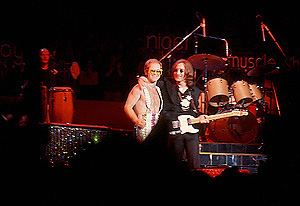
November 28, 1974: On Thanksgiving night, close to the height of his musical talent, fame and charisma, Elton John rocked Madison Square Garden in New York with considerable gusto. But that, by itself, wouldn't have put this concert on this blog.

At the end of the show, Elton brought on a special guest. He had made a bet with an old friend, former Beatle John Lennon, that if John's song "Whatever Gets You Through the Night," on which Elton had sung backup, hit Number 1 in the U.S., John would join him for this show. It did.

John kept his word, and the audience, totally unaware that he was coming, gave the building its greatest ovation ever, with the possible exception of the one when Willis Reed limped onto the court for the New York Knicks before Game 7 of the 1970 NBA Finals.

Together, the Walrus and the Rocket Man played 3 songs: "Whatever Gets You Through the Night," Elton's reworking of John's Beatle classic "Lucy in the Sky with Diamonds," and a song John introduced as being "by an old friend named Paul": "I Saw Her Standing There."

Those 3 songs -- possibly the inspiration for Lorne Michaels' never-accepted (except by George alone) invitation for the Beatles to reunite for 3 songs, getting paid $3,000, on Saturday Night Live in 1976 -- made this show a legend.

That, and the fact that it was John's last concert appearance of any kind. In 1982, referencing flower gardens and, perhaps, also Madison Square Garden, Elton had a hit with "Empty Garden (Hey, Hey, Johnny)":

And I've been knocking
but no one answers.
And I've been knocking
for most of the day.
Oh, and I've been calling:
Oh, hey, hey, Johnny
can you come out to play?

*

November 28, 1974, like all Thanksgiving Days, was a Thursday. The Dallas Cowboys beat the Washington Redskins, 24-23 at Texas Stadium in the Dallas suburb of Irving, Texas. This was the Clint Longley Game, and I have a separate entry for it.

And the Denver Broncos beat the Detroit Lions, 31-27. This was the Lions' last game at Tiger Stadium. They played their last 2 regular-season games on the road, did not make the Playoffs, and moved into the Silverdome in suburban Pontiac, Michigan the next season.

There was one college football game that day, and, at the time, it was a major rivalry. Penn State, then ranked Number 10 in the country beat the 18th-ranked University of Pittsburgh, 31-18 at Three Rivers Stadium in Pittsburgh. Since Pitt joined the Big East Conference in 1991, Penn State joined the Big Ten Conference in 1993, and especially since Pitt switched to the Atlantic Coast Conference in 2013, this rivalry has not been played annually anymore.

In recent times, to avoid losing television viewers to football, the NBA and the NHL usually don't play on Thanksgiving Day. However, there were 2 games in the NBA. The Cleveland Cavaliers beat the Philadelphia 76ers, 110-103 at The Coliseum in the Cleveland suburb of Richfield, Ohio. And the Portland Trail Blazers beat the Phoenix Suns, 88-85 at the Arizona Veterans Memorial Coliseum in Phoenix.

And 1 game was played in the American Basketball Association. The Kentucky Colonels beat the Virginia Squires, 108-95 at The Scope in Norfolk.

There was 1 game in the NHL, and Detroit was involved, but not at home. The Detroit Red Wings lost to the Buffalo Sabres, 5-2 at the Buffalo Memorial Auditorium. There were 4 games played in the World Hockey Association:

* The Vancouver Blazers beat the Toronto Toros, 6-2 at Maple Leaf Gardens in Toronto.

* The Quebec Nordiques beat the Indianapolis Racers, 7-5 at the new Market Square Arena in Indianapolis.

* The Houston Aeros beat the Edmonton Oilers, 2-0 at the Sam Houston Coliseum in Houston.

* And the Chicago Cougars beat the San Diego Mariners, 3-2 at the San Diego Sports Arena (now the Pechanga Arena).

Wednesday, November 9, 2022

November 9, 1967: Rolling Stone Magazine Debuts

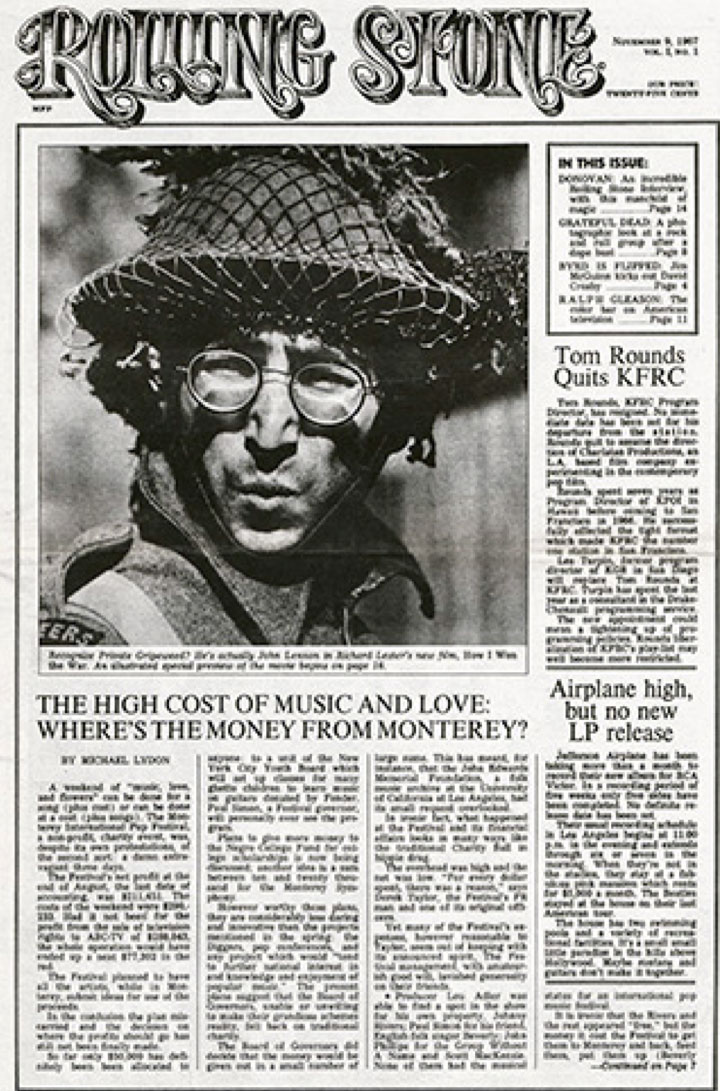
November 9, 1967: The 1st issue of Rolling Stone magazine hits newsstands. It was named not for the band The Rolling Stones, but for the 1965 Bob Dylan song "Like a Rolling Stone," itself named after a blues song by Muddy Waters, "Rollin' Stone," which is where the band got its name. As opposed to The New York Times' slogan of "All the News That's Fit to Print," the magazine's slogan is "All the News That Fits."

The magazine was founded in San Francisco, right after its "Summer of Love," by Jann S. Wenner, and has chronicled popular culture, especially rock and roll music, ever since. John Lennon of The Beatles, in a still photo from his appearance in the recent film How I Won the War, was on the 1st issue's cover.

The magazine would become known for its periodic "The Rolling Stone Interview," with personalities ranging from rock stars to politicians, including a notable one with Lennon in 1971, after The Beatles broke up; and in 1980, as he was making a comeback, but not printed until after he was murdered, with the famous cover of him naked, lying next to his wife Yoko Ono, who was fully dressed.

The magazine has also had pretensions to journalism, starting with the "gonzo journalism" of Dr. Hunter S. Thompson. In the 2000s, Matt Taibbi became one of the country's top left-of-center journalists, before people began to notice that his obsession with Senator Bernie Sanders, the Socialist from Vermont, began to show that he and other Sanders supporters had more in common with the political right than previously thought.

Collectively or separately, The Beatles -- Lennon, Paul McCartney, George Harrison and Ringo Starr -- lead all music acts with 30 cover appearances. Madonna has appeared on the cover more times than any other woman, 23.

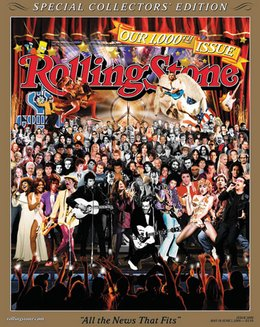
Its 1,000th issue, dated May 18, 2006, was something of a tribute to Sgt. Pepper's Lonely Hearts Club Band, the album The Beatles had released 5 months before the magazine debuted.

*

November 9, 1967 was a Thursday. Baseball season was over. Football was in midweek. There were 3 games played in the NBA:

* A doubleheader was played at the old Madison Square Garden. In the opener, the Detroit Pistons beat the expansion Seattle SuperSonics, 119-118. Dave Bing scored 39 points for the Pistons.

* In the nightcap, the New York Knicks beat the Cincinnati Royals, 123-106. Walt Bellamy scored 30 for the Knicks. For the Royals, Jerry Lucas had 41 points and 27 rebounds, while Oscar Robertson had 14 points.

* And the Boston Celtics beat the Chicago Bulls, 107-93 at the Chicago Stadium.

There were 2 games in the new American Basketball Association. The Pittsburgh Pipers beat the Minnesota Muskies, 97-86 at the Civil Arena in Pittsburgh. And the Oakland Oaks beat the Houston Mavericks, 99-98 at the Oakland Coliseum Arena.

And there were 2 games played in the NHL. The Detroit Red Wings beat the Pittsburgh Penguins, 5-1 at the Olympia Stadium in Detroit. And the Los Angeles Kings beat the Toronto Maple Leafs, 4-1 at the Los Angeles Memorial Sports Arena.

Tuesday, October 11, 2022

October 11, 1971: John Lennon Releases "Imagine"

October 11, 1971: John Lennon releases his song "Imagine." It becomes one of the most beloved songs in the world, and remains the most popular song written by any of the men who were in The Beatles.

It was the title track to an album he released on September 9. The album also included songs he wrote to his wife, Yoko Ono, such as "Jealous Guy" and "Oh Yoko!" It also included a swipe at the previous most important person in his life, former Beatle Paul McCartney, attacking him for what John would later call "silly love songs," and for the business disputes between them: "How Do You Sleep?" And it includes "Gimme Some Truth," which is self-explanatory.

The following year, John released a promotional film based on the album -- they weren't called "music videos" yet -- including a performance of "Imagine," filmed at his home at Tittenhurst Park, near Ascot, Berkshire, England, a town known for its horse-racing track. The film shows Yoko slowly opening the windows of the room as John plays, and letting more light in. John had originally recorded the song there on May 27, 1971. He co-produced the song with Phil Spector, who added an orchestra.

(This was before a Los Angeles recording session at which Spector pulled a gun on Lennon, and Lennon actually dared him to pull the trigger. Not used to people standing up to him, Spector put the gun down.)

People who claim to be Christians have hated John for this song ever since. They haven't listened to the lyrics. He didn't say there is no Heaven, no Hell, no religion; he asked the listener to imagine that there wasn't. It's actually an implication that those things do exist.

Of course, asking people to imagine there's no countries might feel like an attack on people's patriotism. And asking people to imagine there's no possessions seems like an attack on capitalism. And they take those things personally.

In contrast, in 1970, for his solo album John Lennon/Plastic Ono Band, John recorded a song titled "God," in which he rattled off things and people he said he didn't believe in: Magic, the I-Ching, the Bible, tarot cards, Adolf Hitler, Jesus, John F. Kennedy, Buddha, mantras, Gita, yoga, kings, Elvis, Zimmerman (meaning Bob Dylan), and, finally, The Beatles. He said, "I just believe in me. Yoko and me. And that's reality."

Talk about a concurrence of events: The day after Imagine was released, October 12, 1971, the musical Jesus Christ Superstar opened on Broadway.

A few weeks later, on November 24, John and Yoko released "Happy Xmas (War Is Over)," with backing from the Plastic Ono Band and the Harlem Community Choir. They also rented Times Square billboards with the messages "Happy Xmas from John & Yoko" and "War is over (if you want it)."
Eight years later, on November 16, 1979, Paul released "Wonderful Christmastime." How is it that John, who dared to "Imagine there's no heaven... and no religion, too" wrote such a fantastic Christmas song? While his former musical partner, Paul, one of the world's greatest songwriters and one of its greatest sentimentalists, facing that most sentimental of holidays, wrote such a weak one?

*

October 11, 1971 was a Monday. In America, it was Columbus Day.

Game 2 of the World Series, delayed a day by rain, was played at Memorial Stadium in Baltimore. The Baltimore Orioles beat the Pittsburgh Pirates, 11-3. The Pirates would win the Series in 7 games.

The NHL season was underway, but no games were scheduled. The NBA season began the following night. The American Basketball Association's season began the night after that.

On ABC Monday Night Football, The Dallas Cowboys beat the New York Giants, 20-13. It was the last game the Cowboys played at their original home field, the Cotton Bowl. After losing away to the New Orleans Saints the next week, the week after that, they opened their new Texas Stadium in suburban Irving, with a win over the New England Patriots.

Tuesday, September 13, 2022

September 13, 1969: The Toronto Rock 'n' Roll Revival Concert

September 13, 1969: The Toronto Rock 'n' Roll Revival Concert is held, at Varsity Stadium on the campus of the University of Toronto. It was one of the earliest examples of a rejection of the awful world of the present, and an embrace of the previous, seemingly simpler and more peaceful era.

The organizers managed to sign several of the founding fathers of rock and roll: Chuck Berry, Little Richard, Fats Domino, Bo Diddley, Jerry Lee Lewis and Gene Vincent. They also signed The Doors, and a young, as-yet-unknown, Alice Cooper.

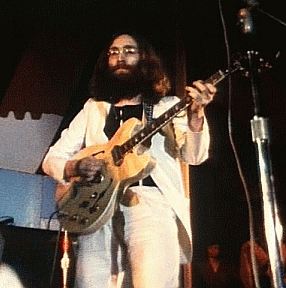
But they weren't selling tickets. They needed a bigger name. One thing led to another, and John Lennon said yes. With him came his wife, Yoko Ono, and "The Plastic Ono Band": Guitarist Eric Clapton, bass guitarist Klaus Voorman (who had designed the cover of The Beatles' album Revolver), and drummer Alan White.

The concert was an overwhelming success, although, in his 1st concert without any of the other Beatles in 12 years, Lennon was far from at his best. But he found it liberating. Seven months later, Paul McCartney announced that The Beatles had broken up.

Actually, the best-remembered moment from the concert was when someone threw a live chicken onstage at Cooper, and Cooper threw it back, thinking it could fly. It couldn't, it fell into the audience, and they tore it apart. Just as Ozzy Osbourne would later be remembered for biting the head off a bat onstage, Cooper got remembered for killing a chicken onstage -- which he didn't do. But it launched his career as a "shock rocker."

*

September 13, 1969 was a Saturday. Actor, director and playwright Tyler Perry was born. This was also the day of the Toronto Rock and Roll Revival concert. I have a separate entry for that event.

These Major League Baseball games were played that day:

* The New York Yankees lost to the Boston Red Sox, 5-2 at Yankee Stadium. Zoinks! Like, Gary Wagner outpitched Fritz Peterson. Rico Petrocelli hit a home run, Reggie Smith went 3-for-4 with an RBI, Tony Conigliaro went 1-for-3 with an RBI, and Carl Yastrzemski went 0-for-2, but did draw 2 walks. And they got away with it, too, because the Yankees didn't have enough meddling kids. Bobby Murcer went 1-for-3 with a walk and an RBI, but rookie Thurman Munson went 0-for-4.

* The New York Mets beat the Pittsburgh Pirates, 5-2 at Forbes Field in Pittsburgh. Tom Seaver went the distance for the win. Ron Swoboda hit a grand slam. Roberto Clemente went 1-for-4. Willie Stargell went 1-for-5 with an RBI.

* The Montreal Expos beat the Philadelphia Phillies, 7-5 at Connie Mack Stadium in Philadelphia.

* The Baltimore Orioles beat the Cleveland Indians, 10-5 at Memorial Stadium in Baltimore. Brooks Robinson went 1-for-1 with 2 walks and an RBI. Frank Robinson did not play.

* The Washington Senators beat the Detroit Tigers, 11-6 at Robert F. Kennedy Stadium in Washington. Al Kaline entered the game as a pinch-hitter, and went 0-for-2.

* The Atlanta Braves beat the Houston Astros, 3-2 at Atlanta Stadium (later Atlanta-Fulton County Stadium). Phil Niekro pitched 11 shutout innings for the Braves, allowing 6 hits. Larry Dierker pitched 12 shutout innings for the Astros, allowing 4 hits. Jimmy Wynn singled home 2 runs for the Astros in the top of the 13th.

But in the bottom of the 13th, Fred Gladding allowed single, double, walk, single. Jack Billingham got an out, but was immediately replaced by Wade Blasingame, who intentionally walked Hank Aaron, and then unintentionally walked Bob Aspromonte to give the Braves the win.

This game did not make a fellow proud to be an Astro. Maybe manager Harry Walker should have brought in Jim Bouton, whom the Astros had acquired from the Seattle Pilots on August 24. He was in the process of writing his diary of the season, which became the book Ball Four.

* The Oakland Athletics beat the Chicago White Sox, 4-0 at Comiskey Park in Chicago. John "Blue Moon" Odom pitched 8 shutout innings for the A's, before being relieved by Fred Talbot, who had been liberated from the expansion Seattle Pilots 16 days earlier. Paul Edmondson pitched 9 innings of 3-hit shutout ball for the ChiSox, but Wilbur Wood gave up 4 runs in the top of the 10th, including a 3-run home run to Dave Duncan. Reggie Jackson did not enter the game for the A's.

* The Kansas City Royals beat the Minnesota Twins, 1-0 at Metropolitan Stadium in the Minneapolis suburb of Bloomington, Minnesota. Dean Chance went the distance, allowing 4 hits -- and lost for the Twins. The expansion Royals started Roger Nelson, but he only pitched 1 inning before leaving the game with an injury. He didn't pitch again that season, and pitched only 9 major league innings in 1970, and battled injury thereafter, missing all of 1975, and last pitched in 1976, age 32.

Mike Hedlund pitched 6 innings, allowing just 2 hits. Ed Kirkpatrick singled home the only run of the game in the top of the 9th, making a winning pitcher out of Moe Drabowsky, who completed the 2-hit shutout. Shortstop Leo CĂ¡rdenas got both Twin hits. Harmon Killebrew went 0-for-3 with a walk, and Rod Carew went 0-for-2 with 2 walks.

* The St. Louis Cardinals beat their arch-rivals, the Chicago Cubs, 7-4 at Busch Memorial Stadium in St. Louis. The Cubs led 4-3 going into the bottom of the 8th, but the Cards scored 4 runs off Fergie Jenkins, Ken Johnson and Phil Regan. Lou Brock went 2-for-4 with a walk. Joe Torre went 3-for-4 with 2 RBIs.

In this 1st season of Divisional play, the Cubs led the National League Eastern Division by as much as 9 games on August 16, but went 17-26 the rest of the way, falling behind the Mets on September 10, a collapse known as the September Swoon.

* The Los Angeles Dodgers beat the San Diego Padres, 7-2 at Dodger Stadium in Los Angeles.

* The Cincinnati Reds beat the San Francisco Giants, 6-4 at Candlestick Park in San Francisco. Pete Rose went 1-for-5. Johnny Bench went 2-for-3 with a walk and an RBI. Willie Mays entered the game as a pinch-hitter, and went 0-for-2.

* And a doubleheader was split at Sick's Stadium in Seattle. The Seattle Pilots won the opener, 6-4. Steve Hovley, Danny Walton and Don Mincher each got 2 hits, to make a winning pitcher of Diego SeguĂ­, in relief of Marty Pattin. The California Angels won the nightcap, 4-2. Eddie Fisher (not the singer) outpitched Miguel Fuentes, the Dooley Womack and John Gelnar.

This was also the opening weekend of the college football season. But only 1 team ranked in the Top 20 played that day: Number 17 UCLA beat Oregon State, 37-0 at the Los Angeles Memorial Coliseum.

And in English soccer, North London team Arsenal traveled to Lancashire, and beat Burnley, 1-0 at Turf Moor. George Graham, later to manage them to success in the late 1980s and early 1990s, scored the game's only goal. 

Sunday, September 4, 2022

September 4, 1962: The Beatles' 1st Recording Session

September 4, 1962: The Beatles have their 1st recording session with EMI-Parlophone Records. No one could yet foresee that the band would be so successful, they would pretty much own what was once Electrical & Mechanical Industries, and it would be renamed Apple Records.

To set the scene: For less than a year, the band from Liverpool, England had been managed by Brian Epstein, who took them out of their black leather jackets and pants, and put them in business suits, but encouraged their continued efforts to write their own songs with nice harmonies.

He had gotten them signed to EMI, on the provision that rhythm guitarist John Lennon, bass guitarist Paul McCartney and lead guitarist George Harrison fire drummer Pete Best, and replace him with Richard Starkey, a.k.a. Ringo Starr, a drummer from another Liverpool band, with whom they were already familiar and liked.

Now, they were at EMI's Abbey Road Studios in London, ready to record professionally for the first time. And what would become famous as their "quirky Liverpool sense of humor" was already apparent. Producer George Martin, who would become integral in their success, told them, "Let me know if there's anything you don't like." And Harrison said, "Well, for starters, I don't like your tie."

The band rehearsed 6 songs. One was "Please Please Me," which would become their 2nd single and their 1st really big hit. One was "How Do You Do It?" which Mitch Murray had written for Adam Faith, one of the earliest British rock stars. Martin insisted that this be the band's 1st single. They recorded it, but it wasn't very good. John sang lead, and it's clear that none of them had their hearts in it. The song would be recorded the next year as the 1st single by another Liverpool band, Gerry & The Pacemakers, and there version was a lot better.

Martin wanted them to play a pre-written song: "It wasn't a question of what they could do, as they hadn't written anything great at that time. But what impressed me most was their personalities. Sparks flew off them when you talked to them."

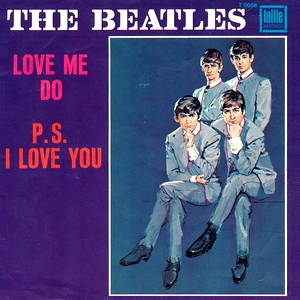
But he let them record 2 songs that they had written. One was "Love Me Do." In later interviews, John said that it was mostly Paul's composition, saying, "Maybe I helped out in the middle." But Paul, for once deflecting some credit, said it was a 50-50 writing effort, as a lot of their early songs were. The other was "P.S. I Love You," which, clearly, was all Paul. Paul sang lead on both.

Martin agreed to let them record "Love Me Do" because he liked the harmonica that John played on it. Although Martin was used to recording jazz, he said John's harmonica part on a version of the song they had previously recorded with Best on drums reminded him of blues records he liked by Sonny Terry and Brownie McGhee. So it was recorded, the 1st session with what would become the familiar lineup: "John, Paul, George and Ringo."

And Martin didn't like it. He had them come back in a week later, on September 11, 1962, and record it again. This time, a session drummer, Andy White, was brought in to play drums, and Ringo was relegated to playing the tambourine.

The version with Ringo on drums was released as the single -- and proved Martin's point. It only reached Number 17 on the British music charts. The version with White on drums was put on the group's 1st album, titled Please Please Me, after the 2nd single which was released around the same time. This would be the version released as the U.S. version of the single. The way to tell the difference is that the one where Ringo plays drums has no tambourine on it. I have to admit: The White version is better. Even the vocals are better on it.

By the time that album was recorded, in a single all-day session on February 11, 1963, Ringo had been with the band a bit longer, and was more integrated into them, and they sounded better together. "Please Please Me" was their 1st U.K. Number 1, and even Mimi Smith, John's hyper-critical aunt, who practically raised him, and told them "Love Me Do" was no good, said she liked it. The rest is history. 

Andy White, a Scotsman, was 32 years old at the time, 10 years older than Ringo, the oldest Beatle. He was the drummer every British producer wanted, a Scottish version of New York's Buddy Saltzman, New Orleans' Earl Palmer and Los Angeles' Hal Blaine. He would end up drumming on some of the biggest soloists' hits to come off the Sceptered Isle in the Swinging Sixties, including "It's Not Unusual" by Tom Jones and Lulu's version of The Isley Brothers' "Shout."

Despite his name, he had nothing to do with The Beatles, the 1968 production nicknamed "The White Album" for its all-white cover. In the 1980s, he moved to New Jersey, taught drumming, and lived until 2015, at the age of 85.

*

September 4, 1962 was a Tuesday. It was a few days before the NFL and AFL seasons would begin, and several weeks before the starts of the NBA and NHL seasons. These Major League Baseball games were played that day:

* The New York Yankees lost to the Los Angeles Angels, 7-6 at the old Yankee Stadium. Mickey Mantle did not play. Clete Boyer hit a home run, but Whitey Ford ran out of gas in the 7th inning, and the Angels scored 6 runs, including a home run by Lee Thomas. The Yankees tied it 6-6 in the 8th, but a single by future Angels, Milwaukee Brewers and Montreal Expos manager Robert "Buck" Rodgers off Bud Daley won it for the Halos in the 9th.

* The New York Mets lost to the Pittsburgh Pirates, 5-1 at Forbes Field in Pittsburgh. The expansion Mets went 40-120 that year, the most losses in any season in the 20th Century. There would be only 14 days in 1962 that the Mets won and the Yankees lost, and this was not one of them.

* The Kansas City Athletics beat the Boston Red Sox, 7-2 at Fenway Park in Boston.

* The Chicago White Sox beat the Cleveland Indians, 3-2 at Comiskey Park in Chicago. Dick Donovan, on the staff of Chicago's 1959 Pennant-winning "Go-Go White Sox," pitched all 13 innings for the Indians. This was a mistake by manager Al Lopez, as Al Smith singled home the winning run off him.

* The Cincinnati Reds beat the Milwaukee, Braves, 9-6 at Milwaukee County Stadium. Warren Spahn didn't have it that day. Eddie Mathews hit 2 home runs, and Hank Aaron hit a double, but it wasn't enough.

* The St. Louis Cardinals beat the Chicago Cubs, 7-1 at the original Busch Stadium, formerly Sportsman's Park, in St. Louis. Stan Musial hit a home run.

* The Houston Colt .45s beat the Philadelphia Phillies, 4-1 at Colt Stadium in Houston. In 1965, the Colts would move into the Astrodome, and change their name to the Houston Astros.

* The Baltimore Orioles were supposed to host the Detroit Tigers at Memorial Stadium, but the game was rained out. It was played the next day, as part of a doubleheader. The Tigers won both games, taking the 1st 5-2, and the 2nd 6-0, as Hank Aguirre pitched a 5-hit shutout.

* The Minnesota Twins and the Washington Senators were also rained out that day -- not surprising, as Washington and Baltimore are so close, although the Yankees' game with the Angels in New York was played as scheduled. This game was also rescheduled as part of a doubleheader the next day. The Twins won the opener 9-7, on a Vic Power double in the 11th inning. The Senators won the 2nd game 3-0, as Claude Osteen pitched a 3-hit shutout.

* And the Los Angeles Dodgers beat the San Francisco Giants, 5-4 at Dodger Stadium in Los Angeles. Tom Haller and Jose Pagan hit home runs in defeat. Willie Mays went 0-for-3. This win put the Dodgers 3 1/2 games ahead of the Giants with 23 games left to play (24 for the Giants). But they would finish tied for the Pennant, and, as in 1951 on the other coast, the Giants would win the Playoff. Also as in 1951, the Giants would lose the World Series to the Yankees.

Tuesday, August 30, 2022

August 30, 1972: John Lennon Performs the One to One Concert

August 30, 1972: The "One To One Concert" is held at Madison Square Garden in Midtown Manhattan. It is a benefit for developmentally disabled children. The headliners are John Lennon and Yoko Ono.

The former Beatle was asked to do it by journalist Geraldo Rivera, as a benefit for the children at Willowbrook State School on Staten Island in New York City. Rivera, in his first big scoop as a journalist, had exposed abuses of the children there. Lennon had seen Rivera's report on WABC-Channel 7, and contacted him about the story. Rivera asked him to do a benefit concert, he agreed, and Rivera introduced him.

There were actually 2 concerts at The Garden that day, an afternoon show and an evening show. Among the other performers were Stevie Wonder, Roberta Flack and the doo-wop tribute group Sha Na Na.

The concerts were filmed and recorded, and later served as the basis for the live album Live in New York City, released in 1986. Backed by the band Elephant's Memory, John sang mostly his solo material, plus a cover of "Hound Dog," which Elvis Presley had sung there a few weeks earlier, and exactly one Beatle song: "Come Together."

Of his own material, he sang, "New York City," "It's So Hard," "Well Well Well," "Instant Karma," "Mother," "Cold Turkey" and "Power to the People." Yoko sang "Sisters, O Sisters" and "Born in a Prison. Together, John and Yoko sang "Woman Is the (N-word) of the World" and "Imagine," and closed the show with "Give Peace a Chance." The Vietnam War was still going on.

These turned out to be Lennon's only full-length concerts after leaving The Beatles, and the evening show was his last full concert anywhere. Two years later, he returned to The Garden to play 3 songs with Elton John. But that would be it, for the worst of reasons.

When Elton wrote a tribute song, it was titled "Empty Garden (Hey, Hey, Johnny)."

A few years ago, somebody took footage of John singing "Come Together" at the One To One Concert, and matched it up with George Harrison and Ringo Starr from the Concert for Bangladesh in 1971, and Paul McCartney from the Wings Over America tour in 1976, all at Madison Square Garden, so it looked like they were all together again. But that video no longer seems to be on YouTube.

*

August 30, 1972 was a Wednesday. American actress Cameron Diaz and Czech soccer player Pavel NedvÄ›d were born on this day.

These Major League Baseball games were played that day:

* The New York Yankees beat the Texas Rangers, 3-1 at Yankee Stadium. Rob Gardner was the winning pitcher, and helped his own cause with an RBI single in the bottom of the 2nd inning, something that American League pitchers can only do for another month, as the designated hitter was coming in.

* The New York Mets lost to the Cincinnati Reds, 4-2 at Riverfront Stadium in Cincinnati. Don Gullett outpitched Jon Matlack. Willie Mays appeared as a pinch-hitter, and did not reach base. Pete Rose went 1-for-3 and was hit with a pitch. Johnny Bench went 0-for-2 with 2 walks. Joe Morgan went 0-for-4.

* The Boston Red Sox beat the Chicago White Sox, 4-2 at Fenway Park in Boston. Carl Yastrzemski went 0-for-4.

* The Montreal Expos beat the Atlanta Braves, 3-2 at Atlanta Stadium (later Atlanta-Fulton County Stadium). Ernie McAnally came into the game 2-14, but outpitched Phil Niekro. Hank Aaron appeared as a pinch-hitter, and drew a walk.

* The Pittsburgh Pirates beat the San Diego Padres, 11-0 at Three Rivers Stadium in Pittsburgh. Willie Stargell hit a home run. Roberto Clemente went 2-for-5 with an RBI.

* The Chicago Cubs beat the Los Angeles Dodgers, 9-8 at Wrigley Field in Chicago. Jim Hickman won the game with a home run in the bottom of the 11th inning.

* The Kansas City Royals beat the Milwaukee Brewers, 6-2 at Milwaukee County Stadium.

* The Minnesota Twins beat the Baltimore Orioles, 7-1 at Metropolitan Stadium in the Minneapolis suburb of Bloomington, Minnesota. Harmon Killebrew went 1-for-3. Rod Carew went 3-for-4 with 2 RBIs. Brooks Robinson went 1-for-4.

* The San Francisco Giants beat the St. Louis Cardinals, 3-2 at Busch Memorial Stadium in St. Louis.

* The Houston Astros beat the Philadelphia Phillies, 5-3 at the Astrodome in Houston.

* The California Angels beat the Detroit Tigers, 4-1 at Anaheim Stadium (now Angel Stadium of Anaheim). Al Kaline appeared as a pinch-hitter, and did not reach base.

* And the Oakland Athletics beat the Cleveland Indians, 2-0 at the Oakland Coliseum. John "Blue Moon" Odom went 7 1/3 innings, with with Darold Knowles and Rollie Fingers finishing off a 7-hit shutout, beating Gaylord Perry. Mike Epstein, who apparently didn't mind being called "Superjew" but was traded away after the season because he couldn't get along with his teammates, hit a home run. Reggie Jackson went 1-for-4.

Monday, August 29, 2022

August 29, 1966: The Beatles' Last Official Concert

August 29, 1966: The Beatles conclude their World Tour at Candlestick Park in San Francisco, home of Major League Baseball's San Francisco Giants. It turns out to be the last time all four of them would play together before a paying audience.

The tour had been tough. It had started in June 24, in Munich, West Germany, followed by shows the next night in Essen, then in Hamburg, where they had "grown up as a band" in 1960. They went to the Far East, doing 5 shows in 3 days at Nippon Budokan in Tokyo, which had become a shrine for the sport of sumo wrestling, and it led to objections that they were soiling an ancient art. The art may have been ancient, but the venue was less than 2 years old, having been built for the 1964 Olympics. As it turned out, it has become better-known for its rock concerts.

Then came 2 shows at Rizal Memorial Stadium in Manila on July 4. The night before, exhausted, the band had failed to show up for social engagement held by Imelda Marcos, wife of President Ferdinand Marcos. This led to a backlash from the President's supporters, and the group left the country under a cloud. It would be years before anybody realized how bad both halves of the Marcos couple were.

On July 29, while they were resting up for their upcoming U.S. tour, Datebook magazine published Maureen Cleave's interview with John Lennon, in which he said, "We're more popular than Jesus now." Within a week, as only Americans can do, Americans overreacted: Radio stations from coast to coast, North to South were banning Beatle records, and "Beatle bonfires" were being held.

On August 11, The Beatles arrived in Chicago, and, for the only time in his life, Lennon ate crow, and offered an apology. The tour began: August 12, 2 shows at the International Amphitheatre in Chicago; August 13, 2 shows at the Detroit Red Wings' Olympia Stadium; August 14, Cleveland Municipal Stadium, home of the Indians and the Browns; August 15, District of Columbia Stadium, then the home of the teams named the Washington Senators and the Washington Redskins, a stadium later renamed for Robert F. Kennedy; August 16, John F. Kennedy Stadium in Philadelphia; August 17, 2 shows at Maple Leaf Gardens in Toronto, the only building they played on all 3 of their North American tours; and August 18, Suffolk Downs, a horse-racing track in Boston.

Then came August 19, and 2 shows at the Mid-South Coliseum in Memphis. This was the Bible Belt, and lots of people were still pretty mad. The Ku Klux Klan had nailed a Beatles LP to a wooden cross and burned it. During the evening show, someone threw a firecracker onto the stage. No one was hit, but when it went off, lots of people thought it was a gunshot. All 3 of the others turned to John after the firecracker, to make sure he was all right. He was.

August 20 had been scheduled for Crosley Field, the ballpark of the Cincinnati Reds, but it rained. That gave the Fab Four a little rest, but it forced an unusual doubleheader: Two concerts in two cities in one day. They did an afternoon show at Crosley, then flew to St. Louis to play at the new Busch Memorial Stadium.

So many music historians have ripped Elvis Presley's manager, Tom Parker, for running his man ragged, and praised Beatles manager Brian Epstein for "taking care of" "the boys." With many things, he did. But he was every bit as determined to make as much money from his charges as he could as Parker was, and their 3 North American tours were always inches away from disaster. And, despite the aural damp squib that was their concert at Shea Stadium in New York the year before, people still hadn't yet figured out how to stage a rock concert in a baseball park or a football stadium.

And John kept talking. At a press conference in New York before their return to Shea on August 23, John he said the Vietnam War was "wrong." He was right, but America wasn't ready to hear that yet. The year before, they had filled all 55,000 available seats at the Flushing Meadow stadium. This time, "only" 40,000 showed up, with pickets both for and against them facing off against each other.

It was their most stressful tour ever, and George Harrison said he'd rather leave the band than ever go on another tour. They decided they wouldn't, and would be only a recording band from that point onward. George agreed to stay -- for now.

After Shea, it was off to the West coast. They did 2 shows at the Seattle Center Coliseum on August 25. After 2 days of rest, they played the 1st concert at Dodger Stadium in Los Angeles. The next concerts there wouldn't be until 1975, with 2 by Elton John; and the next ones until 1984, with The Jacksons' Victory Tour.

The last concert on the tour was at Candlestick Park in San Francisco on August 29. They were supported by The Ronettes, The Cyrkle, Bobby Hebb, and The Remains. (The Cyrkle were also managed by Epstein's company.) Attendance: 25,000, meaning about 17,000 empty seats. (In 1971, the NFL's San Francisco 49ers joined baseball's San Francisco Giants there, leading to an expansion to 69,000 seats.)

As usual, they roared through their set, unable to hear themselves over the all the screaming, playing 11 songs in 33 minutes:

1. John Lennon singing Chuck Berry's "Rock and Roll Music."
2. Paul McCartney singing his song "She's a Woman."
3. George Harrison singing his song "If I Needed Someone." (Every show would have a George song and a Ringo song, so "the other guys" wouldn't feel left out.)
4. Paul singing his song "Day Tripper."
5. John singing his song "Baby's In Black."
6. John singing his song "I Feel Fine."
7. Paul singing his song "Yesterday."
8. Ringo Starr singing Paul's song "I Wanna Be Your Man."
9. John singing his song "Nowhere Man."
10. Paul singing his song "Paperback Writer."
11. And the last song anybody would ever pay to hear The Beatles sing live, Paul singing Little Richard's song "Long Tall Sally."

Reviews of the concert were not good, with the San Francisco Chronicle headlining "Bedlam at the Ball Park." Ringo was 26 years old, John 25, Paul 24 and George 23, so age wasn't an issue. But they they were physically, mentally and emotionally wiped-out, and the sound system was insufficient, and the overall atmosphere wasn't what it had been, even a year earlier, when it could still be adequately described as "Beatlemania."

They had already released Rubber Soul, and had just released Revolver on August 5. They were weary. They were examining their feelings, and expressing them on their recordings. These were no longer "The Lovable Mop Tops" who had dazzled people on The Ed Sullivan Show: When John sang "Help!" the year before, he wasn't just singing a song as a character in a story, he was being himself.

 As I said, they were between 23 and 26 years old. A kid who was 13 when they first arrived at John F. Kennedy International Airport on February 7, 1964 would now be only 15. How many 15-year-olds were going to "get" the content of "Norwegian Wood," "She Said She Said" or "Tomorrow Never Knows"? Or even understand the grownup love stories of "Girl" and "For No One"?

A lot of people couldn't handle what the Liverpudlians were offering in 1966, and that was one reason NBC made the TV show The Monkees, to fill that void.

The gap would grow. The next time anyone saw The Beatles in public, they weren't wearing black suits. They were wearing the wild colors of Swinging London and San Francisco's Haight-Ashbury. They had mustaches. And they had recorded "Penny Lane" and "Strawberry Fields Forever," and released promotional films (what would later be called "music videos") for them, in which they looked... weird. "Tomorrow Never Knows," indeed.

While they'd decided not to tour again, even the four of them did not know that the Candlestick Park show would be their last paying concert together, ever. There would be the concert on the roof of the building where Apple Records was based, on January 30, 1969. And each of them would have notable solo gigs, with Paul and Ringo living and continuing to tour into the 2020s. But The Beatles would never have another official concert.

If, in the Summer of 1966, you had told people that the last official concert by The Beatles would be 11 years before the last one by Elvis Presley, few of them would have believed you. But it turned out to be true.

Built in 1960, Candlestick Park hosted its last event on August 14, 2014. It was a concert by 72-year-old former Beatle Paul McCartney. A crowd of 53,477 attended, and it got great reviews. The stadium's demolition began 3 months later.

*

August 29, 1966 was a Monday. These baseball games were played that day:

* The New York Yankees beat the Kansas City Athletics, 7-2 at Kansas City Municipal Stadium. Future Seattle Pilot Fred Talbot started, but didn't get out of the 3rd inning. The winning pitcher was another future Seattle Pilot, THE Dooley Womack. Lou Clinton hit a home run. Mickey Mantle went 2-for-4. Roger Maris drew a walk as a pinch-hitter, and scored a run.

* The New York Mets beat the Los Angeles Dodgers, 5-3 at Shea Stadium. Bob Shaw went the distance for the win, while Claude Osteen didn't get out of the 2nd inning. Former Cardinals MVP Ken Boyer went 3-for-5 with an RBI.

* The Philadelphia Phillies beat the San Francisco Giants, 5-1 at Connie Mack Stadium in Philadelphia. Jim Bunning went the distance for the win, while Ray Sadecki didn't get out of the 3rd inning. Johnny Callison went 3-for-4 with 2 RBIs. Willie Mays went 1-for-4 with an RBI.

* The Detroit Tigers beat the Baltimore Orioles, 6-3 at Memorial Stadium in Baltimore. Denny McLain outpitched Dave McNally. The Tigers got 2 home runs from Willie Horton, and 1 from Bill Freehan. Horton had 5 RBIs. Al Kaline went 2-for-5. Frank Robinson hit a home run for the O's, and Brooks Robinson went 1-for-5.

* The Chicago Cubs beat the Atlanta Braves, 4-2 at Atlanta Stadium (later renamed Atlanta-Fulton County Stadium). George Altman singled Ron Campbell and Adolfo Phillips home in the top of the 14th inning. Fergie Jenkins pitched into the 9th inning, but the winning pitcher, for the 286th and last time in his career, was Robin Roberts.

* The Houston Astros beat the Pittsburgh Pirates, 2-0 at Forbes Field in Pittsburgh. Mike Cuellar pitched a 5-hit shutout, striking out 12, to outpitch Bob Veale. Roberto Clemente went 0-for-4. Willie Stargell did not play.

* The Cincinnati Reds beat the St. Louis Cardinals, 2-0 at Crosley Field in Cincinnati. Deron Johnson hit 2 home runs. Pete Rose went 1-for-4.

* The Chicago White Sox beat the Cleveland Indians, 2-0 at Comiskey Park in Chicago. Tommy John pitched a 5-hit shutout. The Pale Hose's runs came on a home run by Tommie Agee. Neither John nor Agee would be remembered as White Sox, however.

* The Minnesota Twins beat the Washington Senators, 6-1 at Metropolitan Stadium in the Minneapolis suburb of Bloomington, Minnesota. Harmon Killebrew went 1-for-4.

* The Boston Red Sox beat the California Angels, 4-3 at Anaheim Stadium (now Angel Stadium of Anaheim). Carl Yastrzemski drew a walk as a pinch-hitter.

For the record, 11 stadiums that hosted Major League Baseball also hosted Beatle concerts:

1. Kansas City Municipal Stadium, home of the Athletics, later home of the Royals, September 17, 1964.
2. Shea Stadium, New York, home of the Mets, August 15, 1965 and August 23, 1966.
3. Atlanta-Fulton County Stadium, home of the Braves, August 18, 1965.
4. Comiskey Park, Chicago, home of the White Sox, August 20, 1965.
5. Metropolitan Stadium, Bloomington, home of the Minnesota Twins, August 21, 1965.
6. Cleveland Municipal Stadium, home of the Indians, August 14, 1966.
7. District of Columbia/Robert F. Kennedy Stadium, home of the Washington Senators, later home of the Washington Nationals, August 15, 1966.
8. Crosley Field, Cincinnati, home of the Reds, August 21, 1966.
9. Busch Memorial Stadium, St. Louis, home of the Cardinals, August 21, 1966.
10. Dodger Stadium, Los Angeles,  home of the Dodgers, August 28, 1966.
11. Candlestick Park, San Francisco, home of the Giants, August 29, 1966.

UPDATE: As of August 19, 2025, Paul McCartney was still alive, and had performed at least one concert, either as a Beatle or solo, at at least one home field of 26 out of the 30 current MLB teams. On October 11, he is scheduled to play Coors Field in Denver, home of the Colorado Rockies. If that concert goes off as planned, that will leave 3 teams: The Pittsburgh Pirates, the Arizona Diamondbacks, and the Tampa Bay Rays. Given the Rays' stadium situation, and Paul's current age of 83, the odds are against him getting all 30 done.

Sunday, August 28, 2022

August 28, 1964: Bob Dylan Meets The Beatles

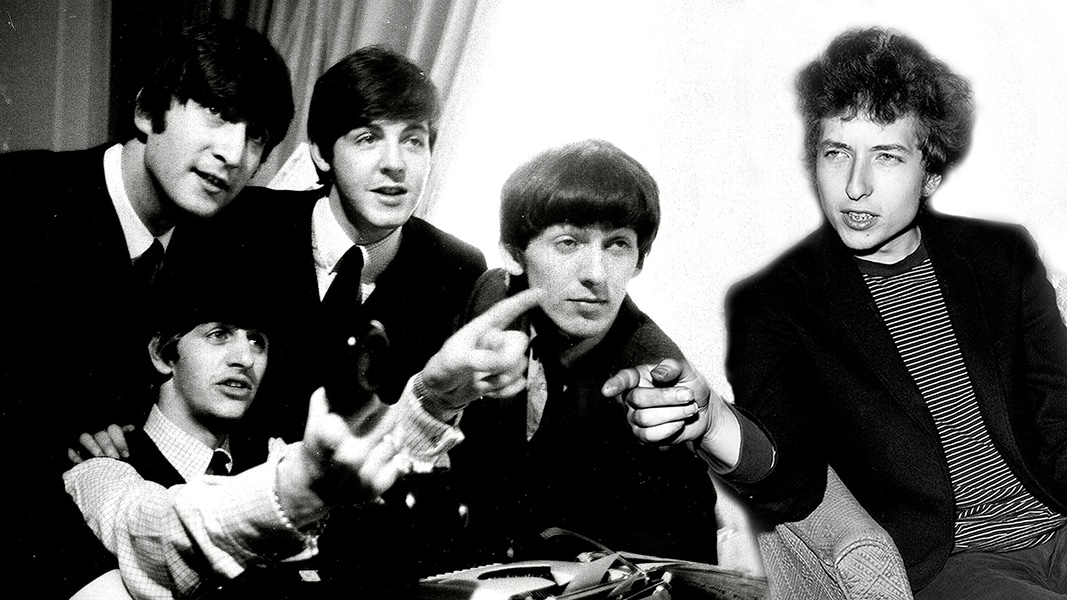
A simulation. There were no photographers at the meeting.

August 28, 1964: The 1st of the 2 great summits of rock and roll occurs: Bob Dylan meets The Beatles.

Dylan released his 3rd album, The Times They Are a-Changin', on February 10, 1964, the day after The Beatles made their 1st American TV appearance, on The Ed Sullivan Show. Among the songs they played was "I Want to Hold Your Hand," then the Number 1 song in America. The bridge goes as follows:

And when I touch you
I feel happy inside.
It's such a feeling that
my love, I can't hide, I can't hide, I can't hide!

But between the music and their Liverpudlian accents, Dylan thought they were singing, "I get high, I get high, I get high!" Dylan, a marijuana smoker, assumed that The Beatles were potheads, too.

In fact, the Fab Four did get high, many times -- but on amphetamines, pep pills. They used them to stay up all night when they were cutting their teeth in the clubs of the Reeperbahn in Hamburg, Germany before they made it big in their homeland. They had never smoked weed yet. It wasn't popular in Britain yet.

When The Beatles returned to America for their Summer 1964 tour, a meeting was set up between them and the leader of American music's protest movement. The band was staying in a 6th floor suite at the Hotel Delmonico, at 502 Park Avenue at 59th Street. Al Aronowitz, covering the tour for The Saturday Evening Post, was friendly with both the band and Dylan, and brought Dylan in.

Dylan brought joints in with him. He first offered one to Ringo Starr. According to one account, the drummer, "ignorant of dope etiquette, chugged through that first joint like a stevedore attacking his first Woodbine of the morning and collapsed in a giggling mess." Next was their manager, Brian Epstein, who was affected very quickly, saying, "I'm so high, I'm up on the ceiling."

Paul McCartney believed he'd attained true mental clarity for the first time in his life, and instructed Beatles roadie and major-domo Mal Evans to write down everything he said henceforth. Whatever John Lennon and George Harrison said or felt, it appears not to have been recorded.

At one point, the phone rang, and Dylan answered, "This is Beatlemania here!" They drank some wine, and got along great.

The 2nd great summit happened exactly 365 days later, on August 27, 1965: Elvis Presley met The Beatles. It didn't go nearly as well.

The effect that marijuana had on the music of Dylan, and on that of The Beatles, is debatable. The effect that the meeting had on each is undeniable. Dylan "went electric," and, within 2 years, produced 3 albums that are regarded as absolute classics: Bringing It All Back Home, Highway 61 Revisited (including "Like a Rolling Stone"), and Blonde On Blonde.

As for The Beatles, most of the effects of the meeting with Dylan were, by his own admission, on John. Without Dylan, he almost certainly would not have written "I'm a Loser," "I Don't Want to Spoil the Party," "Help!", "You've Got to Hide Your Love Away," "Nowhere Man," "Norwegian Wood," "She Said She Said" and "Tomorrow Never Knows" -- to say nothing of what he did from Sgt. Pepper onward.

In 1988, each in their 1st year of eligibility, Dylan and The Beatles were elected to the Rock and Roll Hall of Fame. That same year, George invited Bob to be in his "supergroup," The Traveling Wilburys, along with Roy Orbison, Tom Petty, and Jeff Lynne of Electric Light Orchestra. In 1992, at the Dylan tribute concert at Madison Square Garden, George sang "If Not For You," not one of Bob's better songs; and "Absolutely Sweet Marie," a good one that he probably wouldn't have written without The Beatles' influence.

Al Aronowitz lived until 2005. Built in 1929, the Delmonico was converted into apartments in 1974. In 2018, it was bought by the Trump Organization, and renamed Trump Park Avenue. Disgusting.

*

August 28, 1964 was a Friday. Golfer Lee Janzen was born. This was also the day the North Philadelphia race riot broke out. I have a separate entry for that event.

It was the off-season for the NFL, the AFL, the NBA and the NHL, but games were played in Major League Baseball:

* The New York Yankees lost to the Boston Red Sox, 5-3 at Yankee Stadium. Felix Mantilla, the former Milwaukee Brave and original Met, and Dick Stuart, the powerful slugger but awful-fielding 1st baseman known as "Dr. Strangeglove," both hit home runs off Al Downing. Joe Pepitone hit one for the Yankees, but Mickey Mantle went 0-for-4.

* The New York Mets beat the Chicago Cubs, 12-10 at Wrigley Field in Chicago.

* A doubleheader was split at Memorial Stadium in Baltimore. The Chicago White Sox won the 1st game, 2-1. The Baltimore Orioles won the 2nd game, 8-3.

* The Pittsburgh Pirates beat the Philadelphia Phillies, 4-2 at Forbes Field in Pittsburgh. The Phillies took a 2-0 lead in the top of the 8th, but blew it in the bottom of the 9th, thanks to Smoky Burgess' home run.

* The San Francisco Giants beat the Milwaukee Braves, 3-2 at Milwaukee County Stadium. Willie Mays went 1-for-2 with a 2-run home run, and Hank Aaron went 1-for-2 with 2 walks. Joe Torre hit a home run for the Braves.

* The Washington Senators beat the Minnesota Twins, 3-1 at Metropolitan Stadium in the Minneapolis suburb of Bloomington, Minnesota.

* The St. Louis Cardinals beat the Los Angeles Dodgers, 5-3 at the original Busch Stadium (formerly Sportsman's Park).

* The Cleveland Indians beat the Kansas City Athletics, 4-1 at Kansas City Municipal Stadium.

* The Detroit Tigers swept a doubleheader from the Los Angeles Angels at Dodger Stadium in Los Angeles, where the Angels played from 1962 to 1965 while waiting for their stadium in Anaheim to be built. The Tigers won the opener, 12-1; and the nightcap, 8-7.

* The Cincinnati Reds were supposed to host the Houston Colt .45s at Crosley Field in Cincinnati, but the game was rained out. They played a doubleheader the next day, and the Reds swept it. They won the 1st game, 2-1, on a walkoff single by Steve Boros in the 11th inning. They won the 2nd game, 8-7. The Colt .45s changed their name to the Astros the next season.  

Saturday, August 27, 2022

August 27, 1965: Elvis Presley Meets The Beatles

The only known photograph connected to the meeting

August 27, 1965: The 2nd great summit of rock and roll occurs, exactly 365 days after the 1st, on August 28, 1964: The Beatles met Bob Dylan. It went great.

This 2nd one was The Beatles meeting the King of Rock and Roll, Elvis Presley. It didn't go nearly as well.

The Beatles were huge fans of Elvis, and considered him an inspiration for their career. However, Elvis was initially reluctant to meet them. Both record labels and managers from both sides pushed for the meeting to happen, knowing how iconic it would be.

It took place at Elvis' villa on Perugia Way, in the Bel-Air section of Los Angeles. When the Beatles arrived, they were excited, but also intimidated. Elvis welcomed them with a relaxed attitude, sitting on a couch and playing an electric bass. However, the first moment was a bit tense: No one knew exactly what to say.

Breaking the ice, Elvis said, "If you guys are just going to sit there and stare at me, I’m going to bed!" This joke put everyone at ease, and kicked off the conversation.

The evening soon turned into an informal and fun moment. It is said that Elvis and the Beatles played together in an improvised jam session, although no official recording or photograph of the meeting was ever released. Among the songs played were probably some of Elvis' hits and a few classic rock and roll tracks that both sides knew well.

John Lennon was particularly fascinated by Elvis, and bombarded him with questions about his career and movies. However, Lennon didn't hide his disappointment with the musical direction Elvis had taken in the 1960s, preferring the early rock and roll style from his beginnings.

Paul McCartney was the most diplomatic, and showed enthusiasm for everything. He must have realized that, here, he could not be the control freak.

George Harrison was intrigued by the fact that Elvis had multiple televisions to watch different channels at the same time. Elvis had heard that President Lyndon Johnson had 3 TV sets installed in the Oval Office, so he could watch the evening news on ABC, CBS and NBC at the same time, and he wanted a similar setup. He had it at Graceland, too.

Ringo Starr spent most of the time playing with Elvis' pets, especially his dogs.

The Beatles were struck by Elvis' charismatic presence, while Elvis was impressed by the group's humility and liveliness. However, there was a subtle note of rivalry: Although Elvis respected the Beatles, he feared their popularity might overshadow his own.

The meeting ended on friendly terms, but there were no further contacts between Elvis and the Beatles. Nevertheless, they continued to influence each other: The Beatles always kept their admiration for Elvis alive, while when Elvis returned to live performing in 1969, he included "Yesterday" and "Hey Jude" in his repertoire.

In 1970, the Beatles broke up. And Elvis... well, he didn't quite rat them out, but he sent a letter to President Richard Nixon, telling him that he was concerned about the rise of drug culture in America, and partially blaming the Beatles. That set up an even more famous meeting, at the White House, between the King and Tricky Dick.

*

August 27, 1965 was a Friday. Australian-born soccer manager Ange Postecoglou was born. And these baseball games were played:

* The New York Yankees lost to the Kansas City Athletics, 1-0 at Kansas City Municipal Stadium. Whitey Ford and John O'Donoghue were both pitching shutouts until the bottom of the 9th, when Dick Green singled JosĂ© Tartabull home. Mickey Mantle went 1-for-3 with a walk.

* The New York Mets lost to the San Francisco Giants, 9-2 at Shea Stadium. Willie McCovey hit 2 home runs, and Willie Mays hit one, the 469th home run of his career. Warren Spahn, formerly of the Boston and Milwaukee Braves, was the winning pitcher. He had been with the Mets earlier in the season. It was his 2nd win of the season, and the 362nd game he won. There would be one more, and then he finally hung up his spikes.

* The Los Angeles Dodgers beat the Philadelphia Phillies, 9-8 at Connie Mack Stadium in Philadelphia. Don Drysdale was the winning pitcher. The Phils had the tying run on 1st in the bottom of the 9th,but couldn't get him home.

* The Washington Senators beat the Baltimore Orioles, 2-1 at District of Columbia Stadium in Washington. (D.C. Stadium was renamed Robert F. Kennedy Stadium in 1969.) Jim King singled Ken Hamlin home with the winning run in the bottom of the 10th inning. Brooks Robinson went 2-for-5.

* The Pittsburgh Pirates beat the Houston Astros, 10-9 at Forbes Field in Pittsburgh. Andre Rogers singled Al McBean home, off future Baltimore star Mike Cuellar, in the bottom of the 11th inning. McBean was also the winning pitcher, having gone 2 innings. Pirate starter Vernon Law, the 1960 Cy Young Award winner, only went 4. Roberto Clemente and Willie Stargell each went 1-for-4.

* The St. Louis Cardinals beat the Cincinnati Reds, 6-5 at Crosley Field in Cincinnati. Ken Boyer doubled Lou Brock home with what turned out to be the winning run in the top of the 14th inning. Boyer went 3-for-7 with 2 RBIs. So did the Reds' Frank Robinson. Pete Rose went 1-for-7.

* A doubleheader was split at Comiskey Park in Chicago. The Chicago White Sox won the opener, 3-2. The Boston Red Sox won the nightcap, 6-1. Over the 2 games, Carl Yastrzemski went 4-for-7.

* The Chicago Cubs beat the Milwaukee Braves, 5-3 at Milwaukee County Stadium. Ernie Banks went 0-for-4, but Billy Williams hit a home run. For the Braves, Hank Aaron went 0-for-4, but home runs were hit by Felipe Alou and Mack Jones.

* The Minnesota Twins beat the Cleveland Indians, 7-0 at Metropolitan Stadium in the Minneapolis suburb of Bloomington, Minnesota. Jim "Mudcat" Grant pitched a 2-hit shutout. Harmon Killebrew did not play.

* And the California Angels beat the Detroit Tigers, 3-2 at Dodger Stadium in Los Angeles, where the Angels groundshared until their Anaheim stadium was ready the next Spring. Al Kaline did not play.

December 31, 1999 & January 1, 2000: The Millennium

December 31, 1999:  The Millennium arrives. The people of planet Earth survived. At a terrible cost. But we hadn't destroyed ourselves. ...