Showing posts with label syria. Show all posts

Saturday, November 5, 2022

November 5, 1956: The Swans That Nearly Started World War III

A Soviet MiG-15

Note: I added this entry in 2024, having heard the story for the first time on an episode of NCIS.

November 5, 1956: With the Suez Crisis and the crushing of the Hungarian Revolution underway, and America electing a President the next day, there is a close call that nearly starts World War III.

The North American Aerospace Defense Command (NORAD) received a number of simultaneous reports, including unidentified aircraft over Turkey, Soviet MiG-15 fighters over Syria, a downed British Canberra medium bomber, and unexpected maneuvers by the Soviet Black Sea Fleet through the Dardanelles (also in Turkey) that appeared to signal a Soviet offensive.

Considering previous Soviet threats to use conventional missiles against Britain and France if they intervened in the Suez Crisis, U.S. forces believed these events could trigger a NATO nuclear strike against the Soviet Union, and went on high alert.

As it turned out, all reports of Soviet action turned out to be erroneous, misinterpreted, or exaggerated. The perceived threat was due to a coincidental combination of harmless events:

* The "unidentified aircraft over Turkey" was a flock of swans.
* The MiGs were a fighter escort for President Shukri al-Quawatli of Syria, returning from a meeting with Premier Nikita Khrushchev in Moscow. A check with the Turkish government proved the flight to have been previously cleared with them.
* The British reported that their bomber had been brought down by mechanical issues.
* And a check of records showed that the Black Sea Fleet's exercises had been previously scheduled.

Had any one of these things, alone, happened, it probably wouldn't have concerned too many people. The fact that they all seemed to be happening at once was nerve-rattling. Over the next few days, things calmed down. The Egyptians won in the Suez, the Soviets won in Hungary, President Dwight D. Eisenhower was re-elected, no new wars -- conventional or otherwise -- got started, and the status quo was restored.

It was the closest call since the Chinese invasion during the Korean War, 6 years earlier. The next close call would be in another 6 years, over missiles in Cuba.

*

November 5, 1956 was a Monday. Baseball season was over. Football was in midweek: There would be no Monday Night Football for another 14 years. And while both leagues' new seasons had gotten underway, there were no games were scheduled in either the NBA or the NHL. So there were no scores on this historic day.

Friday, October 7, 2022

October 7, 1985: The Hijacking of the Achille Lauro

October 7, 1985: The Italian cruise ship MS Achille Lauro is hijacked by 4 members of the Palestine Liberation Front, as she was sailing from Alexandria to Port Said, Egypt, a stopover on its way from its home port of Naples, Italy to Ashdod, Israel.

Holding the passengers and crew hostage, they directed the vessel to sail to Tartus, Syria, and demanded the release of 50 Palestinians then in Israeli prisons. After being refused permission to dock at Tartus, the hijackers killed 69-year-old disabled Jewish-American passenger Leon Klinghoffer, and then threw his body overboard. He turned out to be the only person who died in the story.

The ship then headed back towards Port Said, and after two days of negotiations, the hijackers agreed to abandon the liner in exchange for safe conduct, and were flown towards Tunisia aboard an Egyptian commercial airliner. This plane, however, was intercepted by U.S. fighter aircraft and directed to land in Sicily, where the hijackers were arrested and later tried for murder. All 4 were imprisoned, but all lived long enough to be released

* Ahmad Marrouf al-Assadi, 22 years old at the time of the hijacking, disappeared in 1991 while on parole. In 1994, Spanish authorities believed him to be in their country.

* Bassam al-Asker, 16, was granted parole in 1991. He was last heard from in 2007, in Lebanon, training Palestinian militiamen to fight the U.S. Army alongside Iraqi rebels.

* Ibrahim Fatayer Abdelatif, 19, served 20 years. On July 7, 2008, he was expelled from an illegal immigrant detention center in Rome. He has not been heard from since.

* Youssef Majed al-Molqi, 22, convicted of killing Leon Klinghoffer. He was sentenced to 30 years. He left the Rebibbia prison in Rome on February 16, 1996, on a 12-day furlough, and fled to Spain, where he was recaptured and extradited back to Italy. On April 29, 2009, Italian officials released him from prison early, for good behavior, and then deported to Syria. That's the most recently the West has heard about any of the hijackers.

The ship was stricken by bad luck throughout its history. It was launched in 1947, as the Dutch passenger liner MS Willem Ruys. It had a collison in 1953. In 1965, it was bought by Achille Lauro, a Mayor of Naples, and a member of Italy's national legislature, the Chamber of Deputies. He was an opportunist, a fascist in the Mussolini years and a social democrat afterward. He named the ship for himself, but before he could complete its renovation, there was an onboard explosion. Lauro died in 1982, before the hijacking. A fire off the coast of Somalia finally sank the ship in 1994.

*

October 7, 1985 was a Monday. Baseball player Evan Longoria was born. This was the day after Major League Baseball's regular season ended, and the Playoffs had not yet begun. Therefore, the only score on this history day was on ABC Monday Night Football: The Washington Redskins beat the football version of the St. Louis Cardinals, 27-10 at Robert F. Kennedy Memorial Stadium in Washington.

Thursday, October 6, 2022

October 6, 1973: The Yom Kippur War Begins

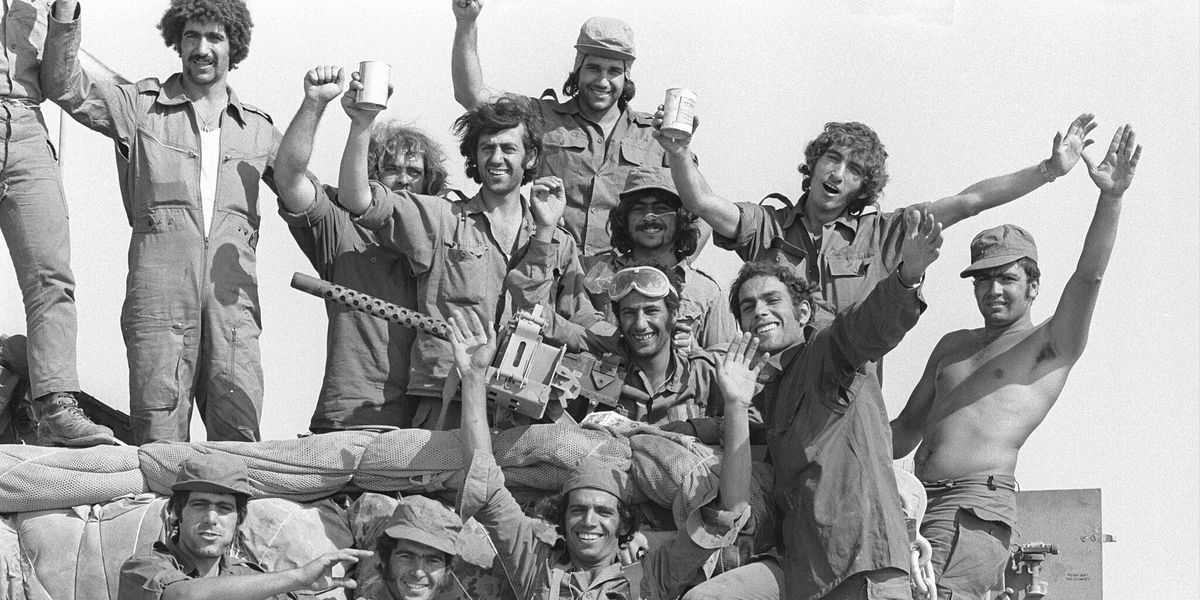
October 6, 1973: The Yom Kippur War begins. Egypt and Syria, 2 of the Arab neighbors that Israel had defeated in the Six-Day War of June 1967, sought revenge. The 3rd of the 1967 opponents, Jordan, sat this one out, not wanting to get clobbered again.

The coalition launched a surprise attack on Israel during Yom Kippur, the holiest day on the Jewish calendar, figuring they could take the Jewish state by surprise. Egyptian and Syrian forces crossed their respective ceasefire lines with Israel, advancing into the Sinai Peninsula and the Golan Heights, respectively.

After 3 days, Israel halted the Egyptian advance and pushed most of the Syrians back to the Purple Line. Israel then launched a counteroffensive into Syria, shelling the outskirts of their capital of Damascus.

Both sides' leading supports kicked in support: The United States for Israel, and the Soviet Union for the Arabs. This heightened tensions between the two superpowers, who had gotten closer following the signing of the SALT I Treaty the year before.

Complicating things further was the political crisis in America: Not only was President Richard Nixon fighting to stay in office as a result of the Watergate scandal, but his Vice President, Spiro Agnew, resigned as part of a plea-bargain on October 10. This meant that, if something happened to Nixon, a Republican, the next man in line was the Speaker of the House of Representatives, Carl Albert, a Democrat. And the event that became known as "The Saturday Night Massacre," further inflaming the public against Nixon, came on October 20, with the war still ongoing.

Egyptian forces attempted to push further into Sinai, but were repulsed, and Israeli forces crossed the Suez Canal, advancing toward Ismailia City on October 18. Israeli forces were then defeated in the Battle of Ismailia, and accepted a United Nations-brokered ceasefire. On October 22, the ceasefire broke down. Israeli forces then advanced on Suez City, but were successfully repulsed in the ensuing battle amid stiff Egyptian resistance.

Nixon sent Henry Kissinger, now both his Secretary of State and his National Security Adviser, back and forth between Prime Minister Golda Meir in Tel Aviv, President Anwar Sadat in Cairo, and President Hafez al-Assad in Damascus, in what became known as "shuttle diplomacy." A second ceasefire was imposed on October 25, officially ending the war.

The Arab world, humiliated by the 1967 defeat, felt psychologically vindicated by its early and late successes in 1973. Meanwhile, Israel, despite battlefield achievements, recognized that future military dominance was uncertain.

Nevertheless, any victory Egypt had was a morale victory (if not a "moral victory") at best, and Sadat, Vice President under Gamal Abdel Nasser in 1967, did not want a 3rd defeat. He began moving Egypt out of the Soviet sphere of influence. When Menachem Begin became Prime Minister of Israel in 1977, Sadat reached out to him. With President Jimmy Carter acting as moderator, Sadat and Begin signed the Camp David Accords in 1978.

In 1994, despite not having fired a shot at Israel since 1967, Jordan signed a peace treaty with Israel. As of October 6, 2022, Israel's peace treaties with Egypt and Jordan remain in effect. Syria, however, would remain an enemy of Israel under Assad, and later his son, Bashar al-Assad. They aided terrorist groups in their attacks on Israel, assisting both Iran and the Palestine Liberation Organization.

*

October 6, 1973 was a Saturday. Both baseball leagues' League Championship Series began that day. In the American League, the Baltimore Orioles beat the Oakland Athletics, 6-0 at Memorial Stadium in Baltimore. Jim Palmer pitched a 5-hit shutout, beating Vida Blue. However, the A's won the series in 5 games.

In the National League, the Cincinnati Reds beat the New York Mets, 2-1 at Riverfront Stadium in Cincinnati. Pete Rose and Johnny Bench hit home runs, enabling Pedro Borbón to outpitch Tom Seaver. However, the Mets won the series in 5 games.

Among the college football games played that day were these:

* In a regular-season Big Ten/Pac-8 matchup, Number 1 Ohio State beat Washington State, 27-3 at Ohio Stadium in Columbus. Ohio State won the Big Ten Conference title.

* Number 2 Nebraska beat Minnesota, 48-7 at Memorial Stadium in Minneapolis. Nebraska blew the Big 8 title with a loss to Missouri the next week, and another loss to Oklahoma later on. They were still invited to the Cotton Bowl.

* Number 3 Alabama beat Georgia, 28-14 at Denny Stadium (later renamed Bryant-Denny Stadium) in Tuscaloosa, Alabama. 'Bama won the Southeastern Conference Championship, and went undefeated in the regular-season, setting up a de facto National Championship game in the Sugar Bowl.

* Number 4 University of Southern California beat Oregon State, 21-7 at Parker Stadium (now Reser Stadium) in Corvallis, Oregon. USC won the Pacific-8 Conference title, then lost the Rose Bowl to Ohio State.

* In another regular-season Big Ten/Pac-8 matchup, Number 5 Michigan beat Oregon, 24-0 at Michigan Stadium in Ann Arbor. Michigan and Ohio State went into their annual showdown tied for the Big Ten title, and finished in a tie. So it was up to the Conference's university presidents to decide which team went to the Rose Bowl, and by a 6-4 vote, they picked Ohio State. And they had a rule that said the only bowl they could send teams to was the Rose Bowl. That infuriated Michigan fans, and the rule was changed for the 1975 season.

* Number 6 Oklahoma beat Number 17 Miami, 24-20 at Owen Field in Norman, Oklahoma. Oklahoma had tied USC the week before, won the Big 8 Conference title, and finished undefeated at 10-0-1. But they were on probation, and thus ineligible for a bowl game, and only minor polls proclaimed them National Champions. So, like Michigan, Oklahoma were 10-0-1, but not chosen as National Champions. The difference being that Michigan got screwed, while Oklahoma screwed themselves.

* Number 7 Penn State beat Air Force, 19-9 at Falcon Stadium in Colorado Springs, Colorado. With Heisman Trophy-winning running back John Cappelletti, Penn State went undefeated in the regular season.

* Number 8 Notre Dame beat Michigan State, 14-10 at Notre Dame Stadium in South Bend, Indiana. Losses by USC and Nebraska, and the Ohio State-Michigan and USC-Oklahoma ties, opened the door for Notre Dame to rise to Number 2 and face Number 1 Alabama in the Sugar Bowl. Notre Dame won, 24-23.

When the final polls were announced, the Associated Press (AP), the sportswriters, had undefeated-and-untied Notre Dame at Number 1, undefeated-but-tied Ohio State at Number 2, undefeated-but-tied-and-on-probation Oklahoma at Number 3, 1-loss Alabama at Number 4, undefeated-and-untied Penn State at Number 5, and undefeated-but-tied-and-bowlless Michigan at Number 6.

United Press International (UPI), the coaches, selected Alabama at Number 1 in spite of their bowl defeat, Oklahoma at Number 2, Ohio State at Number 3, Notre Dame at Number 4 in spite of their perfect season and their defeat of the outgoing Number 1; Penn State at Number 5 in spite of their perfect season; and Michigan at Number 6 in spite of their undefeated season.

For the 3rd time in 6 seasons, Penn State had finished a season with no losses and no National Championship. Their fans felt it was unfair. They had a case. So did Michigan fans, who were cheated once and it felt like twice. Notre Dame fans felt it was unfair that a team they beat at a not-so-neutral site -- Alabama was used to playing in the Sugar Bowl -- was selected ahead of them by the coaches. And Ohio State fans knew they were undefeated (though not untied), and were the only team to win a major bowl game in a blowout. They may not have deserved the National Championship as much as Notre Dame or Penn State, but they deserved it more than the other 3.

So 4 of the final top 6 had a case to feel at least partially robbed. If any college football season prior to the institution of the Bowl Championship Series 

* Number 9 Tennessee beat Kansas, 28-27 at Neyland Stadium in Knoxville, Tennessee.

* Number 10 Louisiana State University beat Florida, 24-3 at Tiger Stadium in Baton Rouge, Louisiana. LSU started out 9-0, rising to Number 7 but lost their last 3: To then-Number 2 Alabama, costing them the SEC title; to arch-rival Tulane; and then the Orange Bowl to Penn State.

* Number 11 Oklahoma State were upset by Texas Tech, 20-7 at Lewis Field (now Boone Pickens Stadium) in Stillwater, Oklahoma.

* Number 13 Texas beat Wake Forest, 41-0 at Memorial Stadium in Austin, Texas. Texas won the Southwest Conference title, but lost the Cotton Bowl to Nebraska.

* Number 15 Missouri beat Number 19 Southern Methodist University (SMU), 17-7 at Texas Stadium in the Dallas suburb of Irving, Texas.

* Number 20 West Virginia were upset by Indiana, 28-14 at the old Mountaineer Field in Morgantown, West Virginia.

* In another regular-season Big Ten/Pac-8 matchup, Stanford beat Illinois, 24-0 at Memorial Stadium in Champaign, Illinois.

* Army lost to Georgia Tech, 14-10 at Grant Field in Atlanta.

* Navy lost to Boston College, 44-7 at Alumni Stadium in the Boston suburb of Chestnut Hill, Massachusetts.

* Among New Jersey's schools, Rutgers lost to the University of Massachusetts, 25-22 at Rutgers Stadium in Piscataway; and Princeton lost to Columbia, 14-13 at Baker Field in Upper Manhattan.

The NBA season opened 3 days later; the ABA and the NHL, 4 days later. The World Hockey Association opened their season on this day, and the New York Golden Blades, formerly the New York Raiders, and soon to move to the Philadelphia suburb of Cherry Hill and become the Jersey Knights, played the Cleveland Crusaders to a tie, 2-2 at the Cleveland Arena.

Due to the large Jewish community in my hometown of East Brunswick, New Jersey, observing Yom Kippur, the football game between East Brunswick High School and Cedar Ridge High School of Madison Township (which was renamed Old Bridge in 1975), scheduled for Saturday afternoon, October 6, was moved to Friday night, October 5.

This was possible because, along with Memorial Stadium in New Brunswick, Vince Lombardi Field at what was then Madison Township High School had lights, and Cedar Ridge groundshared with them, because they didn't have their own stadium.

For the 1st time in 5 games with E.B., Cedar Ridge won, 21-0, and went on to an undefeated season, winning the Middlesex County Athletic Conference and Central Jersey Group IV Championships, their only football titles. Opened in 1968, in 1994 they were consolidated with the school later renamed Madison Central, to form Old Bridge High School.

And in English soccer, the team I would one day support, Arsenal F.C., beat West Midlands team Birmingham City, 1-0 at the Arsenal Stadium, a.k.a. Highbury, in North London.

Sunday, August 14, 2022

August 14, 2013: The End of the Arab Spring

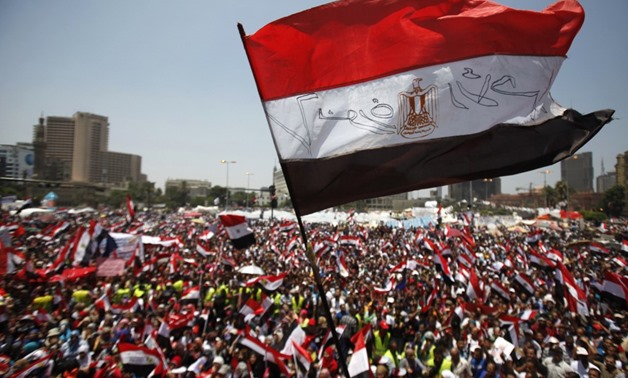
August 14, 2013: The Egyptian police and armed forces, under the command of General Abdel Fattah el-Sisi raided two camps of protesters in the national capital of Cairo: One at al-Nahda Square, and a larger one at Rabaa al-Adawiya Square.

The two sites had been occupied by supporters of President Mohamed Morsi, who had been removed from office by the military a little over a month earlier in the Egyptian coup d'état. Initiatives to end the six-week sit-ins by peaceful means had failed, and the camps were cleared out within hours.

Human Rights Watch described the raids as crimes against humanity and "one of the world's largest killings of demonstrators in a single day in recent history." It alleged that at least 904 protesters were killed: 817 in Rabaa Square and 87 in al-Nahda Square. There were strong suggestions that at least 1,000 protesters died during the dispersal.

The Egyptian Health Ministry announced that 595 civilians and 43 police officers were killed, and at least 3,994 were injured. The official Forensic Medical Authority stated that the number of police officers killed was eight. Egypt's National Council for Human Rights announced that at least 624 civilians were killed.

The Muslim Brotherhood and the National Coalition for Supporting Legitimiacy stated the number of deaths from the Rabaa al-Adawiya Mosque sit-in alone was about 2,600. The total casualty count made August 14 the deadliest day in Egypt since the 2011 revolution which toppled former President Hosni Mubarak.

The editors of Time magazine had named "The Protestor," as a generic representative of various causes, as their Person of the Year for 2011. The Arab Spring was a part of that. By 2013, the hope was over.

While this was going on in Egypt, Bashar al-Assad, the dictator of Syria, was launching poison gas on his own citizens who were protesting his evil regime. The civilized world was appalled, but, with the ongoing American occupation of Afghanistan and the recent American withdrawal from Iraq, the desire of the West to intervene in either Egypt or Syria -- especially with Russian dictator Vladimir Putin seeming to support Assad -- means the end of what had been called the Arab Spring, a hopeful period that had suggested a freer future for the Middle East.

*

August 14, 2013 was a Wednesday. These Major League Baseball games were played that day:

* The New York Yankees beat the Los Angeles Angels of Anaheim, 11-3 at Yankee Stadium. Iván Nova was the winning pitcher. Alfonso Soriano hit 2 home runs.

* The New York Mets lost to the Los Angeles Dodgers, 5-4 at Dodger Stadium in Los Angeles. Back-to-back doubles by Yasiel Puig and Adrián González won the game in the bottom of the 12th inning.

* The Washington Nationals beat the San Francisco Giants, 6-5 at Nationals Park in Washington.

* The Atlanta Braves beat the Philadelphia Phillies, 6-3 at Turner Field (now Center Parc Stadium) in Atlanta.

* The Tampa Bay Rays beat the Seattle Mariners, 5-4 at Tropicana Field in St. Petersburg, Florida.

* The Toronto Blue Jays beat the Boston Red Sox, 4-3 at the Rogers Centre in Toronto. Brett Lawrie singled home Rajai Davis to win the game in the bottom of the 10th inning.

* The Detroit Tigers beat the Chicago White Sox, 6-4 at U.S. Cellular Field (now Rate Field) in Chicago.

* The Cincinnati Reds beat the Chicago Cubs, 5-0 at Wrigley Field in Chicago. Yes, both Chicago teams were at home on the same day, and both lost. Bronson Arroyo pitched 7 innings of 2-hit shutout ball, and then Alfredo Simon and Jonathan Broxton each pitched a perfect inning.

* The Cleveland Indians beat the Minnesota Twins, 9-8 at Target Field in Minneapolis. Michael Brantley drove Nick Swisher home with a sacrifice fly in the top of the 12th inning to win it.

* The Pittsburgh Pirates beat the St. Louis Cardinals, 5-1 at Busch Stadium in St. Louis.

* The Miami Marlins beat the Kansas City Royals, 5-2 at Kauffman Stadium in Kansas City.

* The Texas Rangers beat the Milwaukee Brewers, 5-4 at Rangers Ballpark (now Choctaw Stadium) in the Dallas suburb of Arlington, Texas.

* The Colorado Rockies beat the San Diego Padres, 4-2 at Coors Field in Denver.

* The Arizona Diamondbacks beat the Baltimore Orioles, 5-4 at Chase Field in Phoenix. Aaron Hill singled home Gerardo Parra in the bottom of the 14th inning.

* And the Houston Astros beat the Oakland Athletics, 2-1 at the Oakland Coliseum (then named the O.co Coliseum). Carlos Corporán doubled home José Altuve in the top of the 11th inning.

Friday, June 10, 2022

June 10, 1967: Israel Wins the Six-Day War

June 10, 1967: One of the most stunning victories in the history of warfare occurs. Israel defeats its Arab neighbors in just 6 days.

Those nations -- Egypt, Syria and Jordan -- had declared war on Israel at the moment of its independence in 1948, and lost. They had fought Israel again in 1956, and lost. The third time would not be the charm, either.

In April 1967, Syria shot at an Israeli tractor ploughing in the demilitarized zone, which Syria considered an ongoing practice of Israeli encroachment on contested land. The event occasioned an escalation into a prewar aerial clash.

In May 1967, following misinformation about Israeli intentions provided by the Soviet Union, President Gamal Abdel Nasser of Egypt expelled United Nations peacekeepers who had been stationed in the Sinai Peninsula since the Suez Crisis of 1956-57, which included the 2nd Arab-Israeli War. Nasser announced a blockade of Israel's access to the Red Sea, which was international waters, via the Straits of Tiran. Israel considered this an act of war. Both sides' armies were mobilized.

In early June, Israeli Foreign Minister Abba Eban flew to Washington, to tell President Lyndon B. Johnson of what was going on. LBJ had intelligence on each side's capabilities, and, despite the numerical advantage for the Arabs, he knew the Israelis were better-equipped to win a war. He told Eban, "You'll lick 'em. If you attack first, you'll lick 'em in 7 days. If they attack first, you'll lick 'em in 10. But if you attack first, we can't help you."

The implication was that the Arab nations had the support of the Soviet Union. And, for the 1st time since its installation in 1963, as a better means of communication after the Cuban Missile Crisis, the Washington-Moscow "hot line" was used. LBJ spoke to Soviet Premier Alexei Kosygin, and asked him to stay out of it, and wait and see what developed.

Kosygin agreed: He was 14 years old when World War I broke out, and a People's Commissar when World War II began. He realized that the falling of alliance "dominoes" had led to those wars, and he knew the damage that was caused in them. He did not want a World War III any more than Johnson did.

On June 5, Israel launched a series of airstrikes against Egyptian airfields, catching Egypt by surprise: Nearly its entire air force was wiped out at a stroke. At the same time, Israel launched ground offensives into the Sinai, and into the Gaza Strip, which Egypt also controlled. Nasser quickly realized that both positions were untenable, and ordered both territories evacuated.

A week earlier, Nasser and King Hussein I of Jordan had signed a defense treaty. The idea was that, if Israel attacked, Jordan would not attack, but would be the main defensive force, tying Israeli forces down. After Egypt was attacked, Egyptian commanders ordered the Jordanian commanders to attack. They did, and it was an absolute fiasco. It took years for relations between Egypt and Jordan to recover.

Syrian troops attacked from the north, and got clobbered, to the point where Israel took Syrian territory, the Golan Heights. It cannot be emphasized enough: It's not just that the Israelis -- in command and in the theater of war -- knew what they were doing, it's that the Arab forces didn't know what they were doing. It was proper training and well-retained know-how vs. near-complete incompetence.

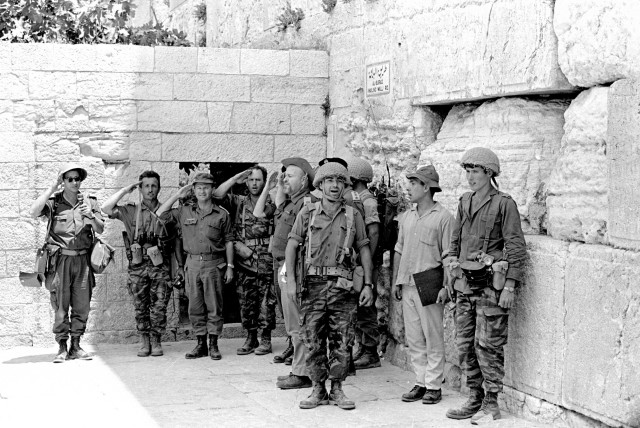
On June 8, the 4th day, Egypt and Jordan agreed to a ceasefire. On June 9, the 5th day, Syria agreed as well. On June 10, Israel had the Sinai, Gaza, the Golan, and, most importantly from their perspective, the West Bank region of Jordan, from the Jordan River to the previous Israeli border. This included the entirety of the city of Jerusalem, the holiest site in Judaism. "Next year in Jerusalem" was finally possible. They lost fewer than 1,000 personnel; the Arabs, over 20,000.

In the tradition of generals becoming heads of government, Yitzhak Rabin, Chief of Staff of the Israeli Defense Forces, and Ariel Sharon, the leading field commander of the Six-Day War, each eventually won election as Prime Minister.

Levi Eshkol, Prime Minister of Israel at the time, died in office in 1969. He was succeeded by Golda Meir, the country's 1st female head of government. Nasser died in 1970, replaced by his Vice President, Anwar Sadat. In 1973, Egypt and Syria tried again, without Jordan: King Hussein wanted no part of another war with Israel.

Sadat and Syrian President Hafez Assad thought that the element of surprise made the difference against them in '67, so it could make the difference for them in '73: They attacked on Yom Kippur, the holiest day on the Jewish calendar, thinking they could catch Israeli soldiers in temple and away from their posts. It didn't work: After initial gains, the war turned into a dangerous stalemate, and American mediation ended it on terms favorable to the Israelis after 3 weeks.

Now, Sadat had had enough, too. In 1977, with Menachem Begin having ended Rabin's 1st tenure as Prime Minister, Sadat approached Begin about a peace treaty. With negotiations led by President Jimmy Carter, the Camp David Accords were signed on the White House lawn in 1978. That peace still holds. It involved Israel returning the Sinai Peninsula -- but not the Gaza Strip -- to Egypt.

A state of war still officially existed between Israel and Jordan. But, following the Gaza-Jericho Accords between Israel and the Palestinian Authority in 1993, signed by Rabin, who had been elected back into office, King Hussein and Rabin signed a peace treaty in 1994. That peace still holds, after the assassinations of Sadat and Rabin, and the natural deaths of Meir, Sharon, Hussein and Assad. However, Assad was succeeded by his son, Bashar Assad, and he has been an even more brutal dictator than his father. And, at least officially, a state of war still exists between Syria and Israel.

*

June 10, 1967 was a Saturday. Darren Robinson, of the rap group The Fat Boys, was born. This was also the day that the Gateway Arch opened in St. Louis. I have a separate entry for that event.

These games were played in Major League Baseball that day:

* The New York Yankees lost nearly as badly as the Arab nations did -- and, like them, on home soil. They lost 9-0 to the Chicago White Sox at Yankee Stadium. Gary Peters went the distance for the Pale Hose, giving up just 4 hits, all singles: To Mickey Mantle, Joe Pepitone, Horace Clarke and Charlie Smith, for whom the Yankees traded Roger Maris to St. Louis, even-up. Dumb trade, although Roger was happier.

Thad Tillotson didn't get out of the 5th inning, giving up home runs to Don Buford and to Peters himself. Peters got 2 hits, and Pete Ward reached base 5 times: 2 doubles, a single and 2 walks.

* The Washington Senators beat the Boston Red Sox, 7-3 at Fenway Park in Boston. The Senators got 2 home runs, both from Frank Howard. The Red Sox got 2 home runs, from George Scott and Rico Petrocelli. Carl Yastrzemski went 1-for-2 with 2 walks, while Tony Conigliaro went 0-for-4.

* The San Francisco Giants beat the Atlanta Braves, 7-4 at Atlanta Stadium. (It was renamed Atlanta-Fulton County Stadium in 1975.) The Giants got homers from Willie McCovey, Tom Haller and Jim Ray Hart. Willie Mays went 1-for-4. The Braves got homers from Felipe Alou and Gary Geiger. Hank Aaron went 3-for-4, but Joe Torre went 0-for-4.

* The Pittsburgh Pirates beat the Philadelphia Phillies, 4-3 at Forbes Field in Pittsburgh. Roberto Clemente went 2-for-4, and Willie Stargell went 1-for-4 with an RBI.

* The Cincinnati Reds beat the Houston Astros, 9-4 at Crosley Field in Cincinnati. Pete Rose went 1-for-4 with an RBI. For the Astros, Jimmy Wynn, a Cincinnati native, hit a home run over the left-field scoreboard, and onto Interstate 75, the Mill Creek Expressway.

* The St. Louis Cardinals beat the Los Angeles Dodgers, 5-2 at Busch Memorial Stadium in St. Louis. 
* The Kansas City Athletics beat the Cleveland Indians, 10-1 at Kansas City Municipal Stadium.

* The Minnesota Twins beat the Baltimore Orioles, 8-1 at Metropolitan Stadium in the Minneapolis suburb of Bloomington, Minnesota. Rich Rollins hit 2 home runs, Tony Oliva hit 1, and Harmon Killebrew went 0-for-2, but drew 3 walks. The only Oriole run came on a solo homer by Boog Powell. Frank Robinson went 0-for-4, and Brooks Robinson went 1-for-3.

* The California Angels beat the Detroit Tigers, 2-0 at Anaheim Stadium. (It was renamed Edison International Field in 1997, and Angel Stadium of Anaheim in 2004.) Clyde Wright pitched 7 innings of 4-hit ball, and Minnie Rojas went 2 perfect to finish the shutout. Al Kaline went 0-for-4.

* And the New York Mets and the Chicago Cubs were rained out at Wrigley Field in Chicago. Since a doubleheader was already scheduled for the next day, this game was moved to August 31. The Cubs won, 2-1. Rookie Tom Seaver pitched 9 innings, to no avail. Ernie Banks went 1-for-5, and was replaced for a pinch-runner -- Fergie Jenkins, usually a pitcher. Al Spangler singled home the winning run in the bottom of the 11th inning.

December 31, 1999 & January 1, 2000: The Millennium

December 31, 1999:  The Millennium arrives. The people of planet Earth survived. At a terrible cost. But we hadn't destroyed ourselves. ...