Showing posts with label nba all-star game. Show all posts

Friday, April 1, 2022

April 1, 1984: The Death of Marvin Gaye

April 1, 1984: Singer Marvin Gaye is shot and killed -- by his father, of all people -- a day before what would have been his 45th birthday.

Marvin Pentz Gay Jr. was born on April 2, 1939, in Washington, D.C., the son of a Pentecostal minister who beat him and the other children. His love of music developed early, and he formed one doo-wop singing group, then another, before his father kicked him out of the house. He found the U.S. Air Force no better than an abusive father, and faked mental illness, getting a general discharge.

He returned to Washington, and formed The Marquees. Harvey Fuqua, lead singer of The Moonglows, heard them, took them to Chicago, and hired them for Chess Records, renaming them the New Moonglows, singing backup on Chuck Berry's "Back in the U.S.A." and "Almost Grown."

In 1960, Fuqua took Gaye to Detroit, and introduced him to Berry Gordy Jr., who had just founded Motown Records. At the time, "gay" still usually meant "lightly happy" rather than "homosexual," but this was changing. But there were other reasons to change his name: He wanted to distance himself from his father's name, and it was a tribute to someone else who had put an E on the end of his name: Sam Cooke.

While Marvin could sing and play piano, Gordy was impressed with his drumming, and put him on sessions with The Miracles (led by Smokey Robinson) and The Marvelettes. The Miracles' "Shop Around" very nearly became the 1st Motown song to hit Number 1. When The Marvelettes' "Please Mr. Postman" did, in December 1961, Marvin Gaye was the drummer on the recording.

In 1962, Marvin played drums on a song he co-wrote for The Marvelettes, "BEechwood 4-5789," a song that came out just before telephone numbers were converted to all-number. And he had his 1st hit as a singer, "Stubborn Kind of Fellow." In 1963, he broke into the Top 40 with "Hitch Hike," and then the Top 10 with "Pride and Joy" and "Can I Get a Witness."

Starting in late 1962, he was one of the acts on the Motortown Revue, which toured all over the country, and even allowed its performers on ABC-TV's American Bandstand. In 2002, the NBC 1960s tribute series American Dreams recreated one of these Bandstand performances, with Usher playing Marvin singing "Can I Get a Witness."

By this point, Marvin was married to Anna Gordy, Berry's sister, and his love songs like "Pride and Joy" had been written about her. But things were already complicated. According to official Motown releases, they had a son, named Marvin Pentz Gaye III (with the E on the end). But that was a half-truth: Marvin Jr. was the father, but the mother was Denise Gordy, Berry's and Anna's 16-year-old niece, and Marvin and Anna subsequently adopted the baby.

This wasn't a traditional infidelity: Anna couldn't have children, and everybody agreed to it beforehand. But Anna was still only 16. Had it been revealed at the time, it would have destroyed Marvin, much like the revelation of marriage to his 13-year-old cousin while still married to someone else derailed the career of Jerry Lee Lewis.

By 1965, Motown was more than keeping up with rock and roll's "British Invasion," and Marvin's contributions that year included "I'll Be Doggone" and "Ain't That Peculiar." And he recorded a series of hit duets with Supremes lead singer Diana Ross, Kim Weston, and especially Tammi Terrell. Tammi was married, but the musical chemistry between them was such that rumors of an affair between them persist to this day. No evidence of them being anything more than close friends has ever been discovered.

In 1968, the Detroit Tigers won the American League Pennant. Their broadcaster, Ernie Harwell, was asked to select the National Anthem singers for the World Series games in Detroit. For Game 3, he selected Margaret Whiting, a white Detroit native known for singing standards. For Game 4, he selected Marvin, who sang it straight, and got a nice hand. For Game 5, he selected José Feliciano, a blind Puerto Rican known as a great virtuoso on Spanish-style classical guitar.

So Harwell, a 50-year-old white man from the South, and a Marine who served in World War II, and an ordained minister and a published songwriter, selected 3 performers: 1 white, 1 black, 1 Hispanic. Feliciano sang the Anthem with a totally different arrangement, and the NBC switchboard was flooded with nasty calls, almost destroying Feliciano's career. Marvin's performance was forgotten.

But the world was changing, and Marvin thought his music should change with it. But Berry Gordy was a control freak, and he thought having black singers address social ills would hurt Motown's profile. He began to relent in 1968, letting The Supremes sing "Love Child" (which hit Number 1) and "Living In Shame."

But Marvin wasn't allowed to sing about social ills. At the end of the turbulent year of 1968, he had the Number 1 song in the country, and it was a spectacular recording, but it was "I Heard It Through the Grapevine," a traditional love song. In 1969, he had a hit with "Too Busy Thinking About My Baby." This was a decent song, and, with its line of, "I ain't got time to do no studying once I get out of class," it would have been a fine start for an 18-year-old rookie singer at Motown. Marvin Gaye was 30 years old.

The year 1970 would prove to be a turning point. Tammi Terrell died from a brain tumor, and Marvin couldn't handle it. And his brother Frankie Gaye -- he, too, became a singer and added the E -- returned from serving in Vietnam, and told Marvin of the awful things he had experienced there. Marvin knew that Berry had complete creative control. But he also knew that something had to be done.

Even more important, he now had an ally: Stevie Wonder, now 20, was also ready to move on to topical material. Together, Marvin and Stevie went on strike, and Berry relented. He let Stevie record "Higher Ground," and that was the start of a bunch of great songs about issues. And he let Marvin record "What's Going On," which became the title track to a landmark album that also included "Inner City Blues" and the environmental song "Mercy Mercy Me."

The title track included Lem Barney and Mel Farr of the NFL's Detroit Lions singing backup. Marvin had been so disillusioned by his career, and perhaps inspired by Paper Lion, the film based on writer George Plimpton's book about trying out for the Lions, that he asked them for a tryout. They turned him down, fearing that injuries could hurt his music career. But when "What's Going On" the single hit Number 2 and sold over 1 million copies, everyone who played or sang on it, including Barney and Farr, received gold records.

Berry Gordy saw that he was wrong, and Marvin and Stevie were right. He began to move Motown from Detroit to Los Angeles, which had become the center of the recording industry on planet Earth. But Marvin and Anna split up, and he began seeing Janis Hunter, who became the mother of his daughter Nona, who became a singer and actress, and his son Frankie, named for his brother.

Berry wasn't the only one who saw the light: What's Going On sold over 2 million copies within a year of its release. It is often rated as one of the Top 10 rock and roll albums of all time.  Even my father, a fan of classical, folk and country music, admitted (years after Marvin's shocking death) that this album made him a fan of Marvin's.

Having gotten that out of his system, on August 28, 1973, Marvin released Let's Get It On, another concept album, one about... getting it out of your system. The title track became his 2nd Number 1 hit. He had a 3rd in 1977, "Got to Give It Up." This song inspired many other performers, from Michael Jackson, whose 1st solo Number 1, "Don't Stop 'Til You Get Enough," was very close in lyrics and style; to Robin Thicke, Pharrell Williams and T.I., whose 2013 chart-topper "Blurred Lines" was so close to it that, 2 years later, a court awarded $7.4 million in royalties/damages to Marvin's children.

In spite of this success, Marvin had become, to borrow the title of David Ritz's posthumous biography of him, a divided soul. His divorce from Anna had cost him a lot of money, and so had his increasing cocaine habit. He moved to Europe, where he was already popular, and lived and toured there.

In 1982, having kicked drugs for the moment, a deal was made to release Marvin from his Motown contract. He signed with CBS Records, and recorded the album Midnight Love, including the single "Sexual Healing." It was a smash, and he was back in the spotlight, winning his 1st 2 Grammy Awards, and being invited to sing the National Anthem before the NBA All-Star Game at The Forum outside Los Angeles. He made it sound like a gospel song. It had been 15 years since he sang it straight at the World Series, and Jose Feliciano hadn't. Times had changed, and everyone loved Marvin's new version.

But the comeback was all too brief, as he fell back on cocaine, and suffered bouts of paranoia. He had bought his parents a house in the Hancock Park area of Los Angeles. But his father had never really changed, and was always arguing with everyone else in the family, including Marvin and his mother Alberta.

On April 1, 1984, at that house, an argument between Marvin Gay Sr. and Marvin Gaye Jr. turned into a shoving match, and Marvin Jr. got the upper hand, beating his father severely.

It was understood among Marvin Jr. and his siblings that if any of them ever tried to get revenge on their father for the abuse they'd suffered, the father would take it to the next level and kill them. After Alberta separated the Marvins, Marvin Sr. did just that: He went to get a gun, a .38 pistol that Marvin Jr. had bought him to protect the house from intruders, walked back into Marvin Jr.'s room, and, at 12:38 PM Pacific Time (3:38 in New York, their native Washington, and Detroit), calmly shot him in the chest.

Brother Frankie lived in a smaller house on the property, and he found Marvin, and heard his last words: "I got what I wanted. I couldn't do it myself, so I had him do it. It's good. I ran my race. There's no more left in me." At 1:01 PM, he was pronounced dead.

Since it happened on April 1, many people's reaction was that it couldn't be real, that it had to be the sickest April Fool's joke of all time. It wasn't.

Marvin Gay Sr. was examined, and found to have a brain tumor. It was small and benign, and removed. Given this, and the amount of drugs that Marvin Gaye Jr. had in his system at the time of the shooting, a deal was reached: Marvin Sr. pleaded no contest to voluntary manslaughter. He was given a 6-year suspended sentence and 5 years' probation.

Later in 1984, The Commodores paid tribute to Marvin, and to Jackie Wilson, who had worked with Berry Gordy Jr. before Motown was founded, with the song "Nightshift." And Diana Ross recorded "Missing You." Both hit the Top 10.

Alberta died in 1987, Marvin Sr. in 1998, Frankie in 2001, Anna Gordy Gaye in 2014. As of April 1, 2022, Berry Gordy Jr., Denise Gordy and Janis Hunter are still alive. Marvin Jr. has 2 grandchildren through Marvin III, including Marvin IV, and 3 through Nona. The younger Frankie Gaye is not known to have any children. (UPDATE: Janis died on December 3, 2022.)

*

April 1, 1984 was a Sunday. Baseball was in Spring Training. Football was out of season. There were 3 games played in the NBA:

* The Washington Bullets, founded long after Marvin Gaye left D.C., beat the Dallas Mavericks, 102-98 at the Capital Centre in the Washington suburb of Landover, Maryland. Despite the Mavs' defeat, Mark Aguirre led all scorers on the day with 35 points.

* The Denver Nuggets beat the San Diego Clippers, 129-103 at the McNichols Arena in Denver. After this season, the Clippers moved up the Coast to Los Angeles.

* And the Los Angeles Lakers beat the Golden State Warriors, 121-110 at The Forum in Inglewood, California.

There were 7 games played in the NHL, including all 3 teams in the New York Tri-State Area:

* The New York Rangers beat the Hartford Whalers, 2-0 at Madison Square Garden.

* The New York Islanders, 4-time defending Stanley Cup Champions about to start their "Drive for Five," beat the Pittsburgh Penguins, 2-1 at the Civic Arena in Pittsburgh.

* The New Jersey Devils lost to the Boston Bruins, 3-1 at the Brendan Byrne Arena at the Meadowlands.

* The Washington Capitals, also founded long after Marvin Gaye left D.C., beat the Philadelphia Flyers, 4-1 at The Spectrum in Philadelphia.

* The Buffalo Sabres beat the Toronto Maple Leafs, 4-2 at the Buffalo Memorial Auditorium.

* The Detroit Red Wings, who, unlike the Tigers, the Lions and the NBA's Pistons, had little connection to Motown Records, lost to their arch-rivals, the Chicago Black Hawks, 4-3 at the Chicago Stadium.

* And the Winnipeg Jets beat the Calgary Flames, 3-2 at the Winnipeg Arena.

Wednesday, March 2, 2022

March 2, 1951: The 1st NBA All-Star Game

Walter Brown, owner of the Boston Garden,
and thus owner of the Boston Celtics (and Bruins),
and host of the game, flanked by the Celtics named to the game,
Ed Macauley (22) and Bob Cousy (14).

March 2, 1951: The 1st NBA All-Star Game is played, at the Boston Garden.

The players for this game were chosen by sportswriters, without regard to position, and the only rule was that a writer could not select a player from his own city. On February 13, the NBA's President (the title wouldn't be "Commissioner" until 1967), Maurice Podoloff, announced the 10 players on each team.

From the Eastern Division, wearing white jerseys, coached by Joe Lapchick of New York:

* From the Baltimore Bullets: Center Red Rocha. This version of the Bullets went out of business in 1954. In 1961, the Chicago Packers were formed. They became the Chicago Zephyrs in 1962, the new Baltimore Bullets in 1963, then moved to the D.C. area for 1973-74, becoming the Capital Bullets. That name was every bit as dumb as a football fan might perceive "Chicago Packers" to be, so for 1974-75, they became the Washington Bullets. In 1997, they became the Washington Wizards.

* From the Boston Celtics: Guard Bob Cousy and center Ed Macauley.

* From the New York Knickerbockers: Forwards Vince Boryla and Harry Gallatin, and guard Dick McGuire. Then as now, hardly anybody used the team's full name: To all and sundry, they have been, and are, the Knicks.

* From the Philadelphia Warriors: Forwards Joe Fulks and Paul Arizin, and guard Andy Phillip. They became the San Francisco Warriors in 1962, then moved across the Bay to Oakland in 1971, becoming the Golden State Warriors. Despite moving back to San Francisco in 2019, they have kept the Golden State name.

* From the Syracuse Nationals: Forward Dolph Schayes. They moved in 1963, taking the Warriors' place in the City of Brotherly Love, becoming the Philadelphia 76ers.

From the Western Division, wearing blue jerseys, coached by John Kundla of Minneapolis:

* From the Fort Wayne Pistons: Forwards Larry Foust and Fred Schaus. They moved to Detroit in 1957.

* From the Indianapolis Olympians: Guard Ralph Beard and center Alex Groza. They went out of business in 1953.

* From the Minneapolis Lakers: Center George Mikan, and forwards Jim Pollard and Vern Mikkelsen. They moved to Los Angeles in 1960.

* From the Rochester Royals: Guard Bob Davies. They became the Cincinnati Royals in 1957, the Kansas City Kings in 1972, and the Sacramento Kings in 1985.

* From the Tri-Cities Blackhawks: Guard Frank Brian and forward Dwight Eddleman. This team was based in Moline, Illinois, and the region, which also includes Rock Island, Illinois and Davenport and Bettendorf, Iowa is now widely known as the Quad Cities. They became the Milwaukee Hawks the next season, the St. Louis Hawks in 1955, and the Atlanta Hawks in 1968.

Due to the limited size of the rosters, the NBA is the only one of the "Big Four" North American sports leagues that doesn't guarantee every team at least one player in its All-Star Game. Nevertheless, all 10 teams were represented. (The season had started with 11, but the Washington Capitols had gone out of business early on.)

The game was not broadcast on television, only on radio. At the end of the 1st quarter, the East led 31-22. At halftime, the East led 53-42. After 3 quarters, the East led 83-64. The final score was East 111, West 94.

Points scored, East: Macauley 20 for the game's Most Valuable Player award, Fulks 19, Schayes 15, Arizin 15, Boryla 9, Cousy 8, Rocha 8, Phillip 6, McGuire 6, Gallatin 5. West: Groza 17, Brian 14, Davies 13, Mikan 12, Mikkelsen 11, Schaus 8, Eddleman 7, Beard 6, Pollard 4, Foust 2. So everybody who got into the game scored. Schayes led all players with 14 rebounds, and McGuire did so with 10 assists.

As of March 2, 2022, Cousy is the only surviving player.

*

March 2, 1951 was a Friday. Obviously, there were no other NBA games on this day. Baseball was entering Spring Training. Football was out of season. And while the NHL was in season, no games were scheduled. So there were no other scores on this historic day.

Saturday, February 26, 2022

February 26, 2012: Trayvon Martin Is Murdered

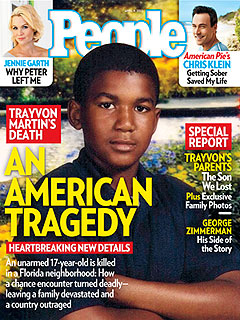
February 26, 2012: Trayvon Martin is murdered, and the murderer got away with it.

Martin was a 17-year-old African-American high school junior, living with his mother in Miami. He'd been having a difficult time, and his mother had him transferred to a new school. It didn't help, and his father thought another change of scenery might up. He took Trayvon to his fiancée's at The Retreat at Twin Lakes, a gated community in Sanford, about 20 miles north of Orlando.

From January 1, 2011 to February 26, 2012, police were called to The Retreat 402 times. Among the crimes they investigated were 8 burglaries, 9 thefts, and a shooting. In September 2011, residents created a neighborhood watch program. The coordinator they chose was George Zimmerman, a 28-year-old native of Manassas, Virginia, Hispanic on his mother's side. At the time, he was an employee of a car dealership. He was a registered Democrat, and had voted for Barack Obama in the 2008 Presidential election, but had become highly critical of Obama's Presidency.

From 2004 to 2012, including well before his appointment, he had made nearly 50 calls to the police. Each time he reported a suspicious person, the person in question was a black male.

On February 26, 2012, at 6:24 PM, Trayvon Martin walked into a 7-Eleven store, and bought a packet of Skittles and an AriZona brand Watermelon Fruit Juice Cocktail. (Somehow, the drink mistakenly got into the public mind as an iced tea.)

At 7:09, Martin was walking through The Retreat, wearing a gray hooded sweatshirt over his head. In public, he was almost never seen without a hoodie. Zimmerman saw him walking on Twin Trees Lane, and called the police. At 7:11 (the time, not the store), the dispatcher on the phone asked Zimmerman, "Are you following him?" He said, "Yes." The dispatcher told him, "Okay, we don't need you to do that." He responded with, "Okay," as if he had agreed to stop his pursuit. Had he done that, both he and Martin would likely have been fine.

At 7:16, a witness made a 9-1-1 call about a fight, and the dispatcher hears a gunshot. Within seconds, an officer arrived on the scene. He saw Martin on the ground, shot. He arrested Zimmerman at 7:19. At 7:30, a paramedic pronounced Martin dead at the scene. He was just 70 yards from his temporary residence.

Zimmerman was found to be bleeding from his nose and from the back of his head. He claimed that Martin had thrown him to the ground and tried to choke him to death, and so he pulled his gun and shot Martin in self-defense. Because there was no other living witness to the shooting, and because the State of Florida had a "stand your ground" law, Zimmerman was released by the police, without being charged.

When the national media reported the story, it seemed as though an unarmed black teenager had been murdered by an armed white adult in a Southern State. Did Zimmerman act in self-defense? Or... did Martin do exactly what Zimmerman said he did, which could be interpreted as Martin acting in self-defense?

In March, at a White House press conference, President Obama, who has 2 daughters but no sons, was asked about the case. He said, "If I had a son, he would look like Trayvon. And I think they are right to expect that all of us, as Americans, are going to take this with the seriousness it deserves." Former Governor Mitt Romney of Massachusetts, the presumptive Presidential nominee of the Republican Party, refused to demagogue the issue, essentially agreeing with Obama, saying a full inquiry was needed, "so that justice could be carried out with impartiality and integrity."

Finally, due to the public outcry, there was no choice: Zimmerman was indicted, charged with second-degree murder. On July 13, 2013, he was acquitted. He had gotten away with murder.

Within 2 years of his acquittal, Zimmerman was charged with domestic assault 3 times. Each time, the charges were dropped.

Trayvon Martin was not the only black person in America murdered by an apparently racist person during the Obama and Trump Administrations. Far from it. He wasn't the first, nor was he the last, nor was he even the youngest. (Tamir Rice, killed in Cleveland 2 years later, was only 12.) Nor was he the only one whose killer got away with it.

But there was something about Martin's case that stuck in the public memory. He seemed to symbolize the unfairness of it all.

In response to the acquittal, Patrisse Marie Cullors-Brignac creates the #BlackLivesMatter hashtag.

*

February 26, 2012 was a Sunday. Baseball and football were out of season. The NBA played its All-Star Game that day, not far from the site of the shooting, at the Amway Center in Orlando. The West beat the East, 152-149. LeBron James for the East, and Kevin Durant for the West, each scored 36 points. Durant was named the game's Most Valuable Player.

There were 7 games played in the National Hockey League that day:

* The New Jersey Devils lost to the Tampa Bay Lightning, 4-3 at the Prudential Center in Newark. Martin St. Louis scored a hat trick for the Bolts.

* The New York Islanders lost to the Ottawa Senators, 5-2 at Scotiabank Place (now the Canadian Tire Centre) in Ottawa.

* The Florida Panthers beat the Montreal Canadiens, 4-2 at the BankAtlantic Center (now the Amerant Bank Arena) in the Miami suburb of Sunrise, Florida.

* The Pittsburgh Penguins beat the Columbus Blue Jackets, 4-2 at the Consol Energy Center (now the PPG Paints Arena) in Pittsburgh.

* The Minnesota Wild beat the San Jose Sharks, 4-3 at the Xcel Energy Center in St. Paul.

* The Dallas Stars beat the Vancouver Canucks, 3-2 at the American Airlines Center in Dallas. Loui Eriksson scored the winning goal with 1:08 left in overtime.

* And the Anaheim Ducks beat the Chicago Blackhawks, 3-1 at the Honda Center in Anaheim.

And in English soccer's Premier League, the North London Derby was contested between Arsenal and Tottenham Hotspur at the Emirates Stadium, Arsenal's home. "Spurs" took a 2-0 lead, and Arsenal came storming back, winning 5-2. I have a separate entry for this event.

Wednesday, February 16, 2022

February 16, 2004: The A-Rod Trade

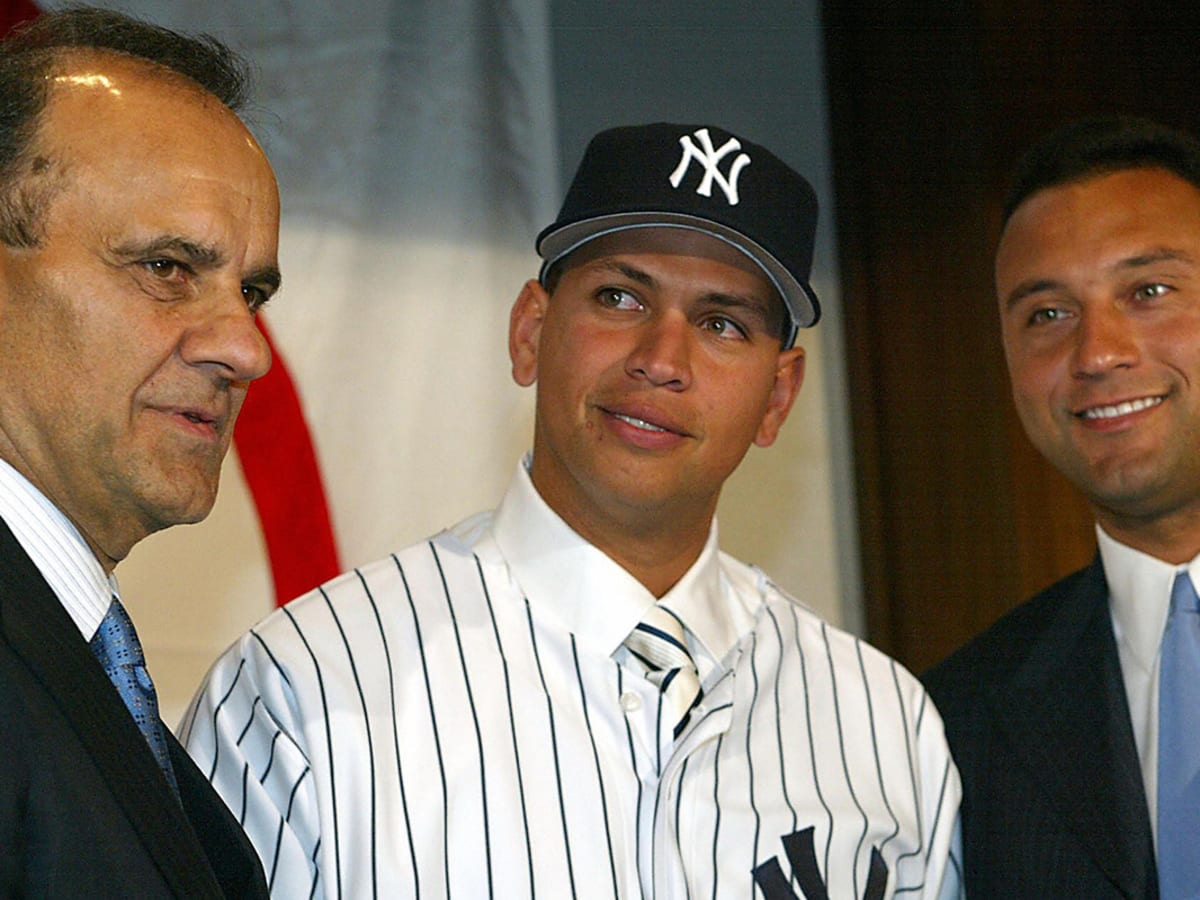
February 16, 2004: The biggest trade in baseball history -- in terms of money and hype, if not in terms of number of players -- is announced.

The Texas Rangers got Alfonso Soriano, age 28, one of the most exciting talents in baseball, who had mainly been a 2nd baseman, but could also play shortstop and 3rd base; and a player to be named later, who, on April 23, turned out to be Joaquin Arias, 19, a minor-league infielder who ended up playing 474 games in the major leagues, including winning 2 World Series rings as a backup with the 2012 and 2014 San Francisco Giants.

The New York Yankees got Alex Rodriguez, a shortstop, soon to be 29, accepted by some as the best player in baseball, and the last 7 years of the biggest contract ever signed in professional sports to that point: $252 million.

I had to explain about Arias. But we know what happened to the 2 big names. Soriano bounced around, including back to the Yankees at the end, finishing with 412 home runs and 289 stolen bases, including (as far as we know, he was clean) the only honest season in MLB history with at least 40 home runs and 40 stolen bases, with the 2006 Washington Nationals. (UPDATE: In 2023, Ronald Acuña Jr. did it with the Atlanta Braves, cleanly as far as we know.)

And yet, he got traded again, not because the Nats no longer wanted to deal with him, but because the Chicago Cubs were going for broke, and he did help them reach the postseason in 2007 and 2008.

These are all the players, through the 2021 season, who have exceeded Soriano's totals in both home runs and stolen bases, in chronological order: Willie Mays (660 HRs and 338 SBs), Andre Dawson (438 and 314), Barry Bonds (762 and 514, the only man to have 400 of each, let alone 500), Carlos Beltrán (435 and 312)... and Alex Rodriguez.

(So, really, only Mays and Dawson.)

As for A-Rod: The Yankees were able to make the trade because their arch-rivals, the Boston Red Sox, had already tried and failed to trade their All-Star shortstop, Nomar Garciaparra, to the Rangers for him. On July 31, 2004, as part of a 4-team deal, the Sox sent Nomar to the Chicago Cubs, getting Doug Mientkiewicz from the Minnesota Twins and Orlando Cabrera from the Montreal Expos.

The Yankees made the trade because he was right up there with their own All-Star shortstop, Derek Jeter, as one of the biggest stars in baseball; and team owner George Steinbrenner was in one of his "I want it now!" phases that many people thought had stopped after his 1990 suspension, but really hadn't.

A-Rod moved to 3rd base, because Jeter had earned the right to keep playing at shortstop for the Yankees. A-Rod ended up helping the Yankees reach the postseason 7 times, but won only 1 Pennant, in 2009, also winning the World Series. His regular seasons were solid, sometimes spectacular. His postseasons, 2009 excepted, were horrendous.

He seemed to be personally responsible for the Yankees' failures to "show up" in the 2005 American League Division Series, the 2006 ALDS, the 2007 ALDS, the 2010 AL Championship Series, the 2011 ALDS, the 2012 ALCS, and the 2015 AL Wild Card Game. And it all seemed to start with his stupid "Slap Play" in Game 6 of the 2004 ALCS.

He finished his career with 14 All-Star berths, 3,115 hits, 696 home runs, 2,086 RBIs, 329 stolen bases, a batting title (before he was a Yankee), 2 Gold Gloves (both before he was a Yankee), 3 AL Most Valuable Player awards (2 as a Yankee)... and 1 World Championship, the category that Yankee Fans should care about.

And he frequently embarrassed the Yankees, both on and off the field. If it was just little things, like the various manifestations of his huge ego, I could have lived with it. After all, my favorite player of all time is Reggie Jackson, and I lived with his similar issues, although none were as weird as that painting of A-Rod as a centaur.

But Reggie never cheated, as far as we know. A-Rod got caught cheating with performance-enhancing drugs. Twice. And that was on top of his many postseason failures, and his single postseason success.

No player in the history of baseball has ever polarized fans more. If that's incorrect, then, certainly, none has ever done so within the fandom of his own team.

He retired on August 12, 2016. The Yankees did not give uniform Number 13 back out until 2021, to Joey Gallo, who, at the least, was only an embarrassment in terms of his performance. They probably won't officially retire it for A-Rod, and he may never get a Plaque in Monument Park at Yankee Stadium.

And, while he is now eligible for the Baseball Hall of Fame, don't count on him being elected. Ever. Meanwhile, David Ortiz, who cheated, lied about it, got caught, and still lies about it, became eligible at the same time, and, oh-so-predictably, got in on his first chance.

So, who won the trade of Alex Rodriguez to the Yankees for Alfonso Soriano to the Rangers? The Boston Red Sox, of course.

*

February 16, 2004 was a Monday -- the Presidents Day holiday. Baseball and football were out of season. You would think that a national holiday would be a good day for the NBA to have a nationally-televised matinee of league powers, or a great historic rivalry, or both. But they didn't: The day before was their All-Star Game, at the Staples Center (now the Crypto.com Arena) in Los Angeles. The West beat the East, 132-126. Shaquille O'Neal of the Los Angeles Lakers, playing on his home court, was named the game's Most Valuable Player.

There were 11 games played in the NHL:

* The New York Rangers lost to the Ottawa Senators, 4-1 at Madison Square Garden.

* The New York Islanders played the Los Angeles Kings to a tie, 1-1 at the Nassau Coliseum. (The New Jersey Devils were not scheduled.)

* The San Jose Sharks beat the Philadelphia Flyers, 5-2 at the Wachovia Center (now the Xfinity Mobile Arena) in Philadelphia.

* The Carolina Hurricanes beat the Florida Panthers, 3-1 at the RBC Center (now the Lenovo Center) in Raleigh.

* The Buffalo Sabres beat the Atlanta Thrashers, 7-2 at the HSBC Arena (now the KeyBank Arena) in Buffalo.

* The Toronto Maple Leafs beat the Pittsburgh Penguins, 8-4 at the Consol Energy Center (now the PPG Paints Arena) in Pittsburgh.

* The Columbus Blue Jackets beat the Nashville Predators, 4-2 at the Nationwide Arena in Columbus.

* The Detroit Red Wings beat the Edmonton Oilers, 2-1 at the Joe Louis Arena in Detroit.

* The St. Louis Blues beat the Phoenix Coyotes, 4-2 at the Savvis Center (now the Enterprise Center) in St. Louis.

* The Vancouver Canucks beat the Colorado Avalanche, 1-0 at the Pepsi Center (now the Ball Arena) in Denver.

* The Mighty Ducks of Anaheim beat the Dallas Stars, 3-1 at the Arrowhead Pond of Anaheim (now the Honda Center).

Monday, February 14, 2022

February 14, 2010: Basketball's Biggest Crowd

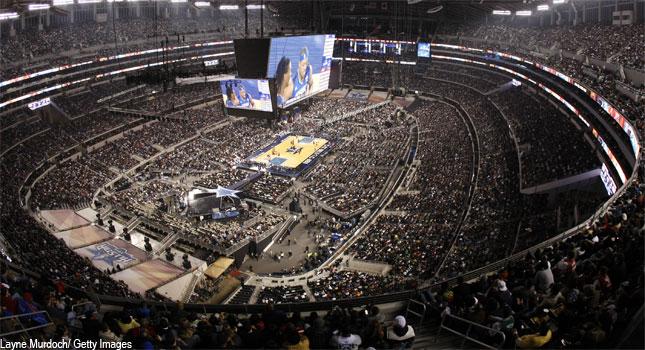
February 14, 2010: The NBA holds its All-Star Game at Cowboys Stadium (now AT&T Stadium) in the Dallas suburb of Arlington, Texas. Instead of holding it at the American Airlines Center, the home of the Dallas Mavericks, it was decided to move it into the massive new home of the NFL's Dallas Cowboys, in an attempt to set a record for the largest crowd ever to attend a basketball game. It works: The announced paid attendance was 108,713.

The East All-Stars: Guard Joe Johnson and center Al Horford of the Atlanta Hawks; forwards Kevin Garnett and Paul Pierce, and guard Rajon Rondo, of the Boston Celtics; forward Gerald Wallace of the Charlotte Bobcats; guard Derrick Rose of the Chicago Bulls; forward LeBron James of the Cleveland Cavaliers; guard Dwyane Wade of the Miami Heat; center David Lee of the New York Knicks; center Dwight Howard of the Orlando Magic; guard Allen Iverson of the Philadelphia 76ers; and forward Chris Bosh of the Toronto Raptors. Stan Van Gundy of Orlando was named head coach.

The West All-Stars: Forward Dirk Nowitzki and guard Jason Kidd of the host Dallas Mavericks; forward Carmelo Anthony and guard Chauncey Billups of the Denver Nuggets; center Chris Kama of the Los Angeles Clippers; guard Kobe Bryant and forward Pau Gasol of the Los Angeles Lakers; forward Zach Randolph of the Memphis Grizzlies; guard Chris Paul of the New Orleans Hornets; forward Kevin Durant of the Oklahoma City Thunder; guard Steve Nash and center Amar'e Stoudemire of the Phoenix Suns; guard Brandon Roy of the Portland Trail Blazers; forward Tim Duncan of the San Antonio Spurs; and guard Deron Williams of the Utah Jazz. George Karl of Denver was named head coach.

Unlike the other sports, there is no rule that says every team must have at least one representative. Teams without a selection: The New Jersey Nets, the Detroit Pistons, the Golden State Warriors, the Houston Rockets, the Indiana Pacers, the Milwaukee Bucks, the Minnesota Timberwolves, the Sacramento Kings and the Washington Wizards. 

Bryant was injured, and replaced by Kidd. Paul was injured, and replaced by Billups. Roy was injured, and replaced by Kama. Iverson did not play, due to "personal reasons," and was replaced by Lee.

The East won the game, 141-139. Wade was named the game's Most Valuable Player, as he led all scorers with 28 points, with Anthony right behind with 27.

*

February 14, 2010 was a Sunday. There were no other NBA games played. Baseball and football were out of season. But 6 NHL games were played:

* The New York Rangers beat the Tampa Bay Lightning, 5-2 at Madison Square Garden.

* The New York Islanders lost to the Ottawa Senators, 4-3 at the Nassau Coliseum. (The New Jersey Devils did not play.)

* The Nashville Predators beat the Pittsburgh Penguins, 4-3 in a shootout at the Mellon Arena in Pittsburgh. This was the last season of play for what was usually known as the Civic Arena.

* The Chicago Blackhawks beat the Columbus Blue Jackets, 5-4 in a shootout at the Nationwide Arena in Columbus.

* The Minnesota Wild beat the Vancouver Canucks, 6-2 at the Xcel Energy Center in St. Paul.

* And the Anaheim Ducks beat the Edmonton Oilers, 7-3 at Rexall Place (as the Northlands Coliseum was then known) in Edmonton.

Sunday, February 13, 2022

February 13, 1983: Marvin Gaye Sings the National Anthem

February 13, 1983: The NBA All-Star Game is held at The Forum, outside Los Angeles in Inglewood, California. The Eastern Conference beat the Western Conference, 132-123. Julius "Dr. J" Erving of the Philadelphia 76ers (and thus the East) led all scorers with 25 points, and was named the game’s Most Valuable Player.

Nobody remembers. What they do remember was the National Anthem sung by Marvin Gaye. Gaye had sung the Anthem before Game 4 of the 1968 World Series in Detroit, done it straight, and gotten a nice hand. The next day, before Game 5, Jose Feliciano sang it differently, and got hate mail.

Times changed: This time, Marvin sang the Anthem as if it was a gospel song, and, along with Whitney Houston before Super Bowl XXV 8 years later, is regarded as one of the most beloved renditions ever. How beloved? Today, if you type "Marvin Gaye" into the Search feature of YouTube, this rendition is the 1st thing that comes up. The 2nd is his song "Let's Get It On," his 1973 Number 1 hit about sex.

Sadly, 14 months later, he was dead.

*

February 13, 1983 was a Sunday. Baseball and football were out of season. And, this being the NBA's All-Star Break, there were no regular-season games. But there were 5 games in the NHL that day:

* The Boston Bruins beat the Vancouver Canucks, 3-1 at the Boston Garden.

* The Hartford Whalers beat the Toronto Maple Leafs, 5-3 at the Hartford Civic Center (now the PeoplesBank Arena).

* The Los Angeles Kings beat the Philadelphia Flyers, 5-4 at The Spectrum in Philadelphia.

* The Washington Capitals beat the Winnipeg Jets, 6-1 at the Capital Centre in the Washington suburb of Landover, Maryland.

* And the Quebec Nordiques beat the Chicago Black Hawks, 5-4 at the Chicago Stadium.

Friday, February 11, 2022

February 11, 1990: Nelson Mandela Is Freed

February 11, 1990: Nelson Mandela is released from prison after 27 years.

Viewing him through the prism of his life having reached extraordinary heights after his release, and then coming to a conclusion, it is easy to lose the context that landed him in prison in the first place: His homeland was a terribly unfair place.

He was born on July 18, 1918, in Mvezo, in the Eastern Cape province of what was then known as the Union of South Africa, a self-governing dominion of the British Empire (and, after 1947, the British Commonwealth). As a result, the white minority, a combination of British and Dutch-ancestry "Boers" or "Afrikaners," instituted policies of racial segregation, called "apartheid," far beyond what Great Britain ever had.

Mandela claimed to have inherited a "proud rebelliousness" and a "stubborn sense of fairness" from his father. He was at university when World War II broke out, and supported the British Empire and opposed Nazi Germany. He became a lawyer, and rose through the ranks of the African National Congress, the leading advocacy organization for black South Africans. In 1958, his work with the ANC got him charged with treason. The charges were dropped, but, at the age of 40, he was already on the apartheidists' radar.

On October 5, 1960, a referendum -- with only white people voting -- to become the Republic of South Africa was narrowly approved, and the country officially left the British Commonwealth on May 31, 1961. This permitted a tightening of the apartheid laws.

In response to these whites-only actions, the ANC passed a resolution declaring "No Constitution or form of Government decided without the participation of the African people who form an absolute majority of the population can enjoy moral validity or merit support either within South Africa or beyond its borders." Mandela himself wrote:

The adoption of this part of the resolution did not mean that conference preferred a monarchy to a republican form of government. Such considerations were unimportant and irrelevant. The point at issue, and which was emphasised over and over again by delegates, was that a minority Government had decided to proclaim a White Republic under which the living conditions of the African people would continue to deteriorate.

In response to this, the government cracked down as never before. Mandela and 2 others founded uMkhonto we Sizwe, meaning "Spear of the Nation," or "MK" for short. Inspired by the success of Fidel Castro's revolution in Cuba -- and, in spite of his virtues, Castro and Mandela would be lifelong friends -- the group carried out a bombing campaign in December 1961.

On August 5, 1962 -- the day Marilyn Monroe died -- Mandela was arrested, and was held prisoner in Pretoria, the administrative capital of South Africa, before his trial. (Unusually, the nation has three capitals. Cape Town is the legislative capital, and Bloemfontein is the judicial capital. Johannesburg is the largest city, and the unofficial capital of South African culture, but not in any official way a capital.)

On April 20, 1964, in what became known as the Rivonia Trial, Mandela testified on his own behalf, delivering what became known as the "I Am Prepared to Die Speech." He closed:

I have dedicated my life to this struggle of the African people. I have fought against white domination, and I have fought against black domination. I have cherished the ideal of a democratic and free society in which all persons will live together in harmony and with equal opportunities. It is an ideal for which I hope to live for and to see realized. But, My Lord, if it needs to be, it is an ideal for which I am prepared to die.

On June 12, Mandela was convicted. The prosecution asked for the death penalty. Instead, the presiding judge, Justice Quartus de Wet, sentence him to life in prison. Mandela was taken to Robben Island, where he was imprisoned for the next 18 years.

By the 1970s, the Black Consciousness Movement had succeeded the ANC as the leading advocacy group, and Steven Biko became the new hope of the people. But the 1976 Soweto Uprising led to a new crackdown, and in 1977, Biko was arrested, and beaten to death in custody.

Since Mandela, however removed from the struggle, was still alive, attention turned back toward him. By 1981, in absentia, he received an honorary doctorate from a university in Lesotho, a black-led independent nation completely surrounded by South Africa (but, like Switzerland, heavily mountainous and thus hard to conquer); the Jawaharlal Nehru Award for International Understanding from the government of India; the Freedom of the City of Glasgow, Scotland; and a resolution demanding his release from the United Nations Security Council.

But, by this point, the President of the United States was Ronald Reagan, and the Prime Minister of Britain was Margaret Thatcher. They both viewed Mandela as a Communist and a terrorist, so he could count on no official help from either of their countries.

And in 1982, he was transferred to Pollsmoor Prison in Cape Town. Although conditions were considerably better -- he and the white commanding officer managed to build a friendship -- the reason for the move is that he was having too great an influence on the younger prisoners at Robben Island, who would see their sentences end and then take his ideas back home.

In 1986, both houses of the Congress of the United States passed the Comprehensive Anti-Apartheid Act of 1986, a resolution imposing economic sanctions on South Africa. Reagan vetoed it. To override the veto required a 2/3rds vote of each house: 290 in the House of Representatives, 67 in the Senate. And Reagan's party, the Republicans, controlled the Senate with 52 members, and had 180 members in the House.

And yet, on September 29, 1986, the House voted 315-84 to override Reagan's veto. Three days later, the Senate voted 78-21 to do so. That's how shameful apartheid had come to be seen outside South Africa. (For the record: Mitch McConnell, now seen as the leading voice of white supremacy in the U.S. Senate, voted to override Reagan's veto. Chuck Grassley, also still there, voted for the Act, but against overriding the veto.)

On June 11, 1988, to celebrate his upcoming 70th birthday, a tribute concert was held at the original Wembley Stadium in London, with a full house of over 100,000 people on hand, and an estimated 200 million watching on television worldwide. Being greedy and wanting the money from the ratings, Rupert Murdoch bought the U.S. TV rights; being a right-wing maniac, he had it broadcast in America on tape delay, so he could censor the more political aspects of the show.

The show was launched by the Farafina Drummers, from the West African nation of Burkina Faso (formerly Upper Volta). Speakers and other performers included Harry Belafonte, Sting, George Michael, Richard Attenborough, Whoopi Goldberg, Eurythmics, Graham Chapman, Tracy Chapman (no relation), Al Green, Joe Cocker, Ashford & Simpson, Natalie Cole, Stephen Fry & Hugh Laurie, Phil Collins, Joan Armatrading, Paul Carrack, Paul Young, Curt Smith of Tears for Fears, Bryan Adams, The Bee Gees, Youssou N'Dour, Jackson Browne, UB40, Chrissie Hynde of The Pretenders, Hugh Masekela and Miriam Makeba (South African performers, once married to each other), Denzel Washington, Simple Minds, Peter Gabriel, Meat Loaf, Whitney Houston, Salt-N-Pepa, Stevie Wonder, Chubby Checker, Dire Straits with Eric Clapton sitting in (despite Clapton's previous racist remarks), and, closing the show, opera singer Jessye Norman singing "Amazing Grace."

Millions of people who had never heard Mandela's story before now knew. But one mind had to be changed in order to get him released. That was the mind of the President of South Africa. And that was P.W. Botha, and he was a committed apartheidist, and was never going to release Mandela. Mandela was moved to Victor Verster Prison.

But in 1989, Botha suffered a stroke, and the National Party removed him from power, installing Frederick W. de Klerk. On February 2, 1990, de Klerk announced a series of reforms, including striking down the ban on the African National Congress. This meant that its leaders could be freed from prison.

On February 11, 1990, Nelson Mandela was released from Victor Verster Prison, and, surrounded by a large crowd, he and Winnie held hands, and raised their other hands in fists.

Mandela visited America in June, including receiving a ticker-tape parade up Broadway in New York, and holding a rally at Yankee Stadium, wearing a Yankee cap at both, a gift from David Dinkins, the City's 1st black Mayor. In 1994, de Klerk permitted an all-races election, even though he knew it would mean his defeat. The ANC won, and on May 10, 1994, Mandela was sworn in as President of South Africa.

He served a full five-year term, and then walked away. The work of building a new nation was not finished -- and still isn't, long past his death on December 5, 2013 -- but, despite having spent more than 27 years of it in prison, Nelson Mandela became one of the giants of the 20th Century.

*

February 11, 1990 was a Sunday. This was also the day that James "Buster" Douglas knocked Mike Tyson out. I have a separate entry for that event.

Baseball and football were out of season. On that day, the NBA held its All-Star Game, at the Miami Arena. The East beat the West, 130-113. Magic Johnson was named the game's Most Valuable Player.

There were 6 games played in the NHL that day: 

* The New York Rangers lost to the Calgary Flames, 5-2 at Madison Square Garden.

* The Vancouver Canucks beat the Boston Bruins, 4-2 at the Boston Garden.

* The Pittsburgh Penguins beat the Philadelphia Flyers, 4-1 at The Spectrum in Philadelphia.

* The Washington Capitals beat the Minnesota North Stars, 5-3 at the Capital Centre in the Washington suburb of Landover, Maryland.

* The St. Louis Blues beat the Buffalo Sabres, 4-2 at the St. Louis Arena.

* And the Edmonton Oilers beat the Winnipeg Jets, 7-4 at the Northlands Coliseum in Edmonton.

February 11, 1983: The Megapolitan Blizzard

Manhattan, February 12, 1983

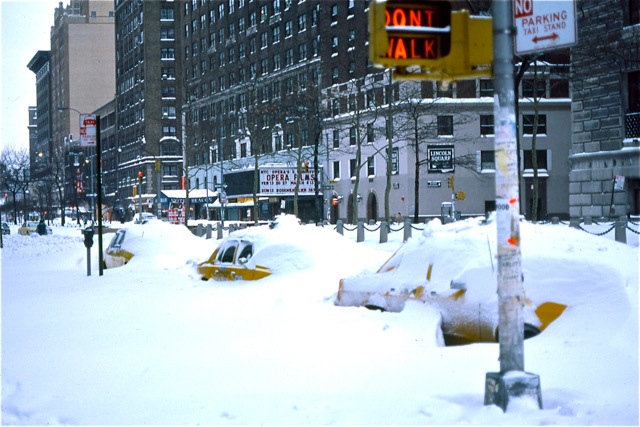
February 11, 1983: A blizzard hits the Northeastern U.S. It becomes known as the Megapolitan Blizzard.

It was a Friday, and I was in the 8th grade in East Brunswick, New Jersey. Snow began to fall around 11:00 AM, and they let us out around 12:00 Noon. I spent much of the night dipping a yardstick into the backyard to get measurements. By the time I went to bed, it was 22 inches. That would be the most that East Brunswick got between the day-after-Christmas blizzard of 1947 and the big one of January 1996.

New York reported 24 inches, or 2 full feet, in some spots. Philadelphia reported 21. Even southwestern Virginia reported 20. Glen Cary, West Virginia reported the most: 35 inches, or an inch under 3 feet. A total of 46 deaths were attributed to the blizzard.

And yet, by Monday morning, February 14, we were back in school. We only missed a shade over 2 hours. We got gypped. At that age, you think of snow as fun. As you get older, and snow means you lose a day's pay because you don't go to work, you realize that "snow" is a four-letter word.

*

February 11, 1983, as I said, was a Friday. Baseball and football were out of season. The NBA was lucky: They were in their All-Star Break, so they didn't get any games postponed due to the snow. On Sunday, February 13, at The Forum, outside Los Angeles in Inglewood, California, the East beat the West, 132-123. Julius Erving, "Dr. J," was named the game's Most Valuable Player.

The NHL wasn't so lucky, as some games were postponed. Only 1 game was played: The Edmonton Oilers beat the Quebec Nordiques, 7-3 at the Northlands Coliseum in Edmonton. It was 2-1 Nords 8 minutes into the 2nd period. Then Jari Kurri scored his 2nd of the game to tie it. In the 3rd period, the Oilers just unloaded, getting goals from Laurie Boschman, Mark Messier, Ken Linseman, Dave Semenko and Wayne Gretzky.

Also on this day, Dutch soccer star Rafael van der Vaart was born.

Wednesday, February 9, 2022

February 9, 1997: The NBA's 50th Anniversary 50 Greatest Players

February 9, 1997: The NBA hosts its All-Star Game at the Gund Arena (now the Rocket Arena) in Cleveland. The East beat the West, 132-120. Glen Rice, then with the Charlotte Hornets, was named the game's Most Valuable Player.

But the game was secondary to the halftime entertainment. Although the names had already been announced a few weeks earlier, to coincide with the NBA's actual 50th Anniversary -- the 1st game was played on November 1, 1946 -- the 50 Greatest Players, as chosen by a special panel (including, as it turned out, some of the players in question) were introduced.

Of the 50, 49 were still alive at the time. The only one who had died was Pete Maravich, who suffered a heart attack in 1988, only 40 years old. He was represented at the ceremony by his sons, Jaeson and Josh.

Of the 49 living players, 47 were on hand. The two who weren't? One had a good excuse: Jerry West, the legendary guard and executive of the Los Angeles Lakers, was in a hospital, recovering from surgery. (He did recover, and was still alive to be selected to the 75th Anniversary 75 Greatest Players.)

The other player who didn't show up did not have a good excuse. It was Shaquille O'Neal. He'd played 4 seasons, thrilling fans with ferocious dunks, and leading the Orlando Magic to the 1995 NBA Finals. This was his 1st season with the Lakers, and there were people who said his worthiness as a selection as an all-time great was premature. (That turned out to be true.)

But it wasn't humility, a belief that he didn't yet belong, that kept him away. No, it was an injury. He decided that, if he couldn't play in the game, he wouldn't show up. So he didn't. And so, when his name was announced, the crowd in Cleveland -- a city which had absolutely no reason to dislike him, or the Lakers, or even the Magic -- booed him hard.

Hakeem Olajuwon of the Houston Rockets was selected, for both the All-Star Game and the 50 Greatest Players. So was Patrick Ewing of the New York Knicks. Like Shaq, both of these men were injured, and unable to play in the game. But both of them showed up, anyway, wearing suits instead of their uniforms. And each of them was solidly cheered by a crowd in a city for which he had never played.

The members of the 50 Greatest Players who were still active, and selected for the games, wore their East or West uniforms. All the others wore suits. All of them were given special leather jackets, with the NBA 50th Anniversary logo, white sleeves, and torsos in the solid color of the team with which they were the most identified.

Only 4 of the NBA's 1st 50 Championship teams were not represented: The 1947 Philadelphia Warriors, the 1948 Baltimore Bullets, the 1951 Rochester Royals, and the 1979 Seattle SuperSonics, although their head coach, Lenny Wilkens, was named as one of the 50 Greatest Players.

Here they were, in (roughly) chronological order:

* From the Minneapolis Lakers' dynasty of the 1950s: George Mikan.

* From the Syracuse Nationals' 1955 NBA Champions: Dolph Schayes.

* From the Philadelphia Warriors' 1956 NBA Champions: Paul Arizin.

* From the St. Louis Hawks' 1958 NBA Champions: Bob Pettit.

* From the Boston Celtics' dynasty of the 1950s and '60s: Bob Cousy, Bill Sharman, Bill Russell, Sam Jones, John Havlicek.

* From the Philadelphia 76ers' 1967 NBA Champions: Wilt Chamberlain, Hal Greer and Billy Cunningham.

* From the New York Knicks' 1970 NBA Champions: Willis Reed, Walt "Clyde" Frazier and Dave DeBusschere. From their 1973 Champions: Those 3, plus Jerry Lucas and Earl "the Pearl" Monroe. But not, interestingly, Bill Bradley.

* From the Milwaukee Bucks' 1971 NBA Champions: Oscar Robertson and Kareem Abdul-Jabbar.

* From the Los Angeles Lakers' 1972 NBA Champions: Chamberlain and Jerry West.

* From the Celtics' Champions of 1974 and '76: Havlicek and Dave Cowens.

* From the Golden State Warriors' 1975 NBA Champions: Rick Barry.

* From the Portland Trail Blazers' 1977 NBA Champions: Bill Walton.

* From the Washington Bullets' 1978 NBA Champions: Wes Unseld and Elvin Hayes.

* From the Lakers' dynasty of the 1980s: Abdul-Jabbar, Earvin "Magic" Johnson and James Worthy.

* From the Celtics' dynasty of the 1980s: Larry Bird, Kevin McHale and Robert Parish. Nate "Tiny" Archibald was selected, and played on their 1981 title team. Walton was selected, and played on their 1986 title team.

* From the 76ers' 1983 NBA Champions: Julius "Dr. J" Erving and Moses Malone.

* From the Detroit Pistons' back-to-back titlists of 1989 and '90: Isiah Thomas.

* From the Chicago Bulls' dynasty of the 1990s: Michael Jordan and Scottie Pippen.

* From the Houston Rockets' 1994 NBA Champions: Hakeem Olajuwon. From their 1995 Champions: Olajuwon and Clyde Drexler.

* From a sort-of dynasty yet to begin, that of the San Antonio Spurs of 1999-2007: David Robinson. Tim Duncan was still in college at this point.

* From a dynasty yet to begin, that of the Lakers in the early 2000s: Shaquille O'Neal. Kobe Bryant was a rookie, but was selected for the All-Star Game, and led all scorers with 31 points.

* Selected, but never won a title, though they did reach the NBA Finals at least once: Elgin Baylor, 1959 Minneapolis Lakers, Los Angeles Lakers of 1962, '63, '65, '66, '68, '69 and '70; Lenny Wilkens, 1961 St. Louis Hawks; Nate Thurmond, 1964 and '67 San Francisco Warriors; Charles Barkley, 1993 Phoenix Suns; Patrick Ewing, 1994 and '99 Knicks; and Karl Malone and John Stockton, both 1997 and '98 Utah Jazz.

* Selected, but never even made the NBA Finals: Dave Bing, 1970s Pistons; Pete Maravich, 1970s Atlanta Hawks and New Orleans Jazz; and George Gervin, 1970s and '80s Spurs.

Every one of these players has been elected to the Basketball Hall of Fame, including those who were still active at the time. Shaq was the last one still active, in 2011.

And every one of these players was also re-selected in 2021 for the 75 Greatest Players. No one was demoted. One player already retired in 1997 who was not selected for the 50, but was promoted to the 75, was Bob McAdoo, who played on the Lakers' 1982 and '85 Champions. And Dominique Wilkens, still playing in 1997 (with the Spurs) but close to the end of the line, whatever legacy he had already secure (and, as a 1980s Atlanta Hawk, his dunking got him nicknamed "The Human Highlight Reel"), was not selected for the 50, but was selected for the 75.

One final note: In the locker room, waiting for the ceremony to begin, Michael Jordan was holding court, smoking a cigar, and telling anyone who would listen that he was the greatest basketball player of all time.

Wilt Chamberlain heard this. He'd been hearing for a few years that Jordan was the greatest, and not just from Jordan himself. He decided to put an end to this. He walked over, towering over the seated Jordan, and said, "Michael, my man, when you played, they changed the rules to make it easier for you. When I played, they changed the rules to make it harder for me. And it didn't work."

And he walked off. Dead silence in the room. Talk about "dropping the Mike."

It didn't put an end to it: There are still people who consider Jordan the greatest ever. LeBron James was then 12 years old, and now, some people think he was greater than either of them. But neither Jordan nor LeBron can ever touch Wilt.

UPDATE: Added for the 75th Anniversary, in addition to McAdoo and Wilkins, were: Dennis Rodman, who won the titled with the 1989 and '90 Pistons, and the 1996, '97 and '98 Bulls; Tim Duncan, 1999, 2003, '05, '07 and '14 Spurs; Kobe Bryant, 2000, '01, '02, '09 and '10 Lakers; Gary Payton and Dwyane Wade, 2006 Miami Heat; Kevin Garnett and Paul Pierce, 2008 Celtics; Ray Allen, 2008 Celtics and 2012 and '13 Heat; Jason Kidd and Dirk Nowitzki, 2011 Dallas Mavericks; LeBron James, 2012 and '13 Heat, 2016 Cleveland Cavaliers, 2020 Lakers; Kawhi Leonard, 2014 Spurs and 2019 Toronto Raptors; Steph Curry, 2015, '17, '18 and '22 Warriors; Kevin Durant, 2017 and '18 Warriors; Anthony Davis, 2020 Lakers; Giannis Antetokounmpo, 2021 Bucks; Reggie Miller, who reached the Finals on the 2000 Indiana Pacers; Allen Iverson, who reached the Finals on the 2001 76ers; Russell Westbrook and James Harden, who reached the Finals with Durant on the 2012 Oklahoma City Thunder; Chris Paul, who reached the Finals on the 2021 Suns; and never-finalists Carmelo Anthony, Steve Nash and, so far, Damian Lillard.

*

February 9, 1997 was a Sunday. There were no other NBA games played that day. Baseball and football were out of season. But there were 5 NHL games played:

* The New York Rangers lost to the Florida Panthers, 4-3 at the Miami Arena.

* The Buffalo Sabres beat the Ottawa Senators, 2-1 at the Marine Midland Arena (now the KeyBank Center) in Buffalo.

* The Dallas Stars beat the Los Angeles Kings, 2-1 at the Reunion Arena in Dallas. Neal Broten scored the winning goal with 44 seconds left in overtime.

* The Calgary Flames beat the Mighty Ducks of Anaheim, 6-1 at the Saddledome in Calgary.

* And the Edmonton Oilers beat the Washington Capitals, 4-1 at the Edmonton Coliseum (as the Northlands Coliseum was known at the time).

And football star Saquon Barkley was born on this day.

December 31, 1999 & January 1, 2000: The Millennium

December 31, 1999:  The Millennium arrives. The people of planet Earth survived. At a terrible cost. But we hadn't destroyed ourselves. ...