Showing posts with label oklahoma state cowboys. Show all posts

Thursday, October 20, 2022

October 20, 1951: The Johnny Bright Incident

October 20, 1951: Drake University of Des Moines, Iowa plays football against Oklahoma A&M – the name will be changed to Oklahoma State in 1958 – at Lewis Field in Stillwater, Oklahoma.
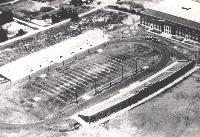
Drake quarterback Johnny Bright, one of the 1st black players to receive serious consideration for the Heisman Trophy, is assaulted by white A&M defensive tackle Wilbanks Smith. "Unnecessary roughness"? Smith knocked Bright unconscious 3 times in the 1st 7 minutes of the game, the last time breaking his jaw.

A&M won the game, 27-14. It was Drake's 1st loss of the season. Photographs of what becomes known as "the Johnny Bright Incident," by Don Ultang and John Robinson, were featured on the front page of the next day’s Des Moines Register, and won the Pulitzer Prize.
Neither his school nor the Missouri Valley Conference disciplined Smith, nor did the Conference discipline the school or any of its coaches, in any way. As a result, Drake left the league in protest. So did Bradley University of Peoria, Illinois, also integrated by that point. The NCAA issued new rules about blocking and tackling, and mandated better head protection, including facemasks for helmets. The NFL followed suit in 1954.

Drake returned to the MVC for sports other than football in 1956, and for football in 1971. In 1978, along with the entire MVC, Drake dropped its program to NCAA Division I-AA, then to NCAA Division III in 1987, and back to I-AA (now the Football Championship Subdivision, or FCS) in 1991, where they remain. Today, aside from this incident, Drake's athletics department is best known for the Drake Relays, 2nd only to the Penn Relays as America's leading track & field meet.

Bright recovered from his injuries, played one last game at the college level, and finished 5th in the 1951 Heisman Trophy balloting, which was won by Dick Kazmaier of Princeton, who will likely remain the last Ivy Leaguer to win it. (Ed Marinaro of Cornell finished 2nd in 1971, and remains the last one to even come close. He later played a cop on the TV drama Hill Street Blues.)

Drafted by the Philadelphia Eagles, Bright didn't want to play there -- not because he thought Philadelphia was a racist city (long before Dick Allen and Curt Flood thought so, and Jackie Robinson had been already notoriously subjected to racist abuse there), but because he knew there were a lot of Southern players in the NFL. He would play in Canada, and receive many honors (or, as they would spell it, "honours") there, including 3 straight Grey Cups with the Edmonton Eskimos.
When he retired in 1964, he was the CFL's all-time leading rusher, with 10,909 yards, a total then surpassed in the NFL only by Jim Brown, but Brown's amazing 5.2 yards per carry, often cited as a reason why he's the game's greatest ever player, never mind running back, is actually surpassed by Bright, with 5.5, making him North America's all-time leader in that stat at the time. Only 2 CFL players have passed him in rushing yardage since.

He is a member of the Wall of Honour of the team now known as "The Edmonton Football Team," and the College Football and Canadian Football Halls of Fame. Drake retired his Number 43 (he wore 24 with the Esks) and named the field at Drake Stadium after him. After serving as a teacher and principal at an Edmonton high school, he died in 1983 from complications from surgery. Ernie Davis of Syracuse became the 1st black Heisman winner in 1961.

With some irony, the name of his pro team was cited as racist, insensitive to Native North Americans. In 2020, the name was dropped. With the CFL having canceled its entire season due to COVID restrictions, they didn't have to play a season as "The Edmonton Football Team." In 2021, they became the Edmonton Elks, allowing them to keep their familiar "EE" helmet logo, and projecting a favorable image: Western Canada has lots of elks, a strong animal with good speed for its size.

Oklahoma State offered Drake a formal apology for the actions of Wilbanks Smith -- in 2005, 54 years later, and 22 years after Bright's death.

In 2012, Smith gave an interview. He said that, when the Drake Bulldogs and the Oklahoma A&M Cowboys played each other in 1950, a Drake player had purposely hit an A&M player, and injured him, and he wanted revenge. He pointed out that he had hit the returning offending Drake player, who was white, in the same game the same way he had hit Bright. He did not play pro football, and worked as an engineer for Exxon. He died in 2020, at the age of 90.

*

October 20, 1951 was a Saturday. It was also the date of the suspensions being handed out in the basketball point-shaving scandal. I have an entry for that as well.

The biggest game of the day came at California Memorial Stadium in Berkeley, where Number 11 USC upset Number 1 California, 21-14. Number 2 Tennessee beat Alabama, 27-13 at Legion Field in Birmingham. (The Vols winning this traditional 3rd Saturday in October game wasn't so rare back then.) Tennessee would remain undefeated until blowing the National Championship by losing to Maryland in the Sugar Bowl.

Number 3 Michigan State beat Penn State, 32-21 at old Beaver Field in State College, Pennsylvania. Number 4 Texas was shocked by Arkansas, 16-14 at Razorback Stadium in Fayetteville.

Notre Dame beat the University of Pittsburgh, 33-0 at Pitt Stadium. Harvard beat Army, 22-21 at Harvard Stadium in Boston. The University of San Francisco, putting together an undefeated season that would nonetheless see them end with a ranking of only Number 14, beat fellow Catholic school Fordham, 32-26 at Randall's Island Stadium (later Downing Stadium) in the East River.

New York University lost to Holy Cross, 53-6 at Fitton Field in Worcester, Massachusetts. NYU played one more season of football, winning just 2 more games, and dropped their program. Columbia lost to Penn, 28-13 at Franklin Field in Philadelphia.

Princeton, with the aforementioned Heisman winner Kazmaier, went undefeated, finishing as the Number 5 team in the country. On October 20, they beat Lafayette, 60-7 at Palmer Stadium. And Rutgers lost to Lehigh, 21-6 at Rutgers Stadium in Piscataway, New Jersey.

The baseball season had ended 10 days earlier, with the New York Yankees beating the New York Giants in Game 6 of the World Series. The NBA season didn't begin until November 1. Only 2 NHL games were played:

* The New York Rangers beat the Toronto Maple Leafs, 3-2 at Maple Leaf Gardens in Toronto. Nick Mickoski scored the winner for the Broadway Blueshirts with 3:15 left, to beat the defending Stanley Cup Champions.

* And the Detroit Red Wings beat the Montreal Canadiens, 3-0 at the Olympia Stadium in Detroit. This would be repeated in that season's Stanley Cup Finals, as the Wings swept the Habs.

Also, Arsenal beat Charlton Athletic, 3-1 at The Valley in Southeast London. Also in English soccer, Claudio Ranieri, the Italian manager who led Leicester City to the 2016 Premier League title, was born.

Tuesday, March 29, 2022

March 29, 1945: College Basketball's 1st "Game of the Century"

Cappy Lane, game timekeeper at the old Madison Square Garden,
flanked by Bob Kurland (left) and George Mikan

March 29, 1945: College basketball has its 1st "Game of the Century." It's a benefit for the Red Cross at Madison Square Garden, between the 2 main claimants for the National Championship. NCAA Tournament Champion Oklahoma A&M (now Oklahoma State), coached by Henry Iba, defeats NIT Champion DePaul, coached by Ray Meyer, 52-44. Sadly, there appears to be no surviving footage.

It's also basketball's 1st real "battle of the big men," with Oklahoma State's 7-foot-even Bob Kurland getting the better of DePaul's 6-foot-10 George Mikan. Iba and Kurland would make it back-to-back NCAA titles in 1946.

But while "Foothills" Kurland would only play semipro ball, Mikan would dominate the early NBA, winning 6 league titles in 7 years with the Minneapolis Lakers, from 1948 to 1954.

Both men were among the earliest players elected to the Basketball Hall of Fame, Mikan with the 1st class of inductees in 1959, Kurland in 1961. Mikan lived until 2005, Kurland until 2013. Iba was elected to the Hall in 1969, Meyer in 1979 -- both men while still coaching at their respective schools. In fact, the year he was elected, Meyer finally got to the NCAA Final Four for the 1st time since 1941. He finally retired in 1984. Iba lived until 1993, Meyer until 2006.

*

March 29, 1945 was a Thursday. This was a big day in basketball for another reason, although it wouldn't be known for many years: New York Knicks Hall-of-Famer Walt Frazier was born.

Baseball was in Spring Training. Football was out of season. There was no NBA yet, not for another year and a half.

Both Stanley Cup Semifinals contested their Game 5s that night. The Montreal Canadiens beat the Toronto Maple Leafs, 10-3 at the Montreal Forum. Maurice "the Rocket" Richard, having finished the 1st-ever 50-goal regular season, scored 4 in this game. But the Leafs came back to win the series in Game 6.

And the Detroit Red Wings beat the Boston Bruins, 3-2 at the Olympia Stadium in Detroit. Mud Bruneteau, whose 6th-overtime goal had won the NHL's longest game ever, 9 years earlier, won this one as well, with 2 minutes and 48 seconds left in the 1st overtime. The Wings would need 7 games to win this series, and the Leafs beat them for the Cup.

Wednesday, January 12, 2022

January 12, 1907: The Big Eight Conference Is Founded

January 12, 1907: The Missouri Valley Intercollegiate Athletic Association is founded in Kansas City, Missouri. It eventually became known as the Big Eight Conference, or the Big 8.

The 5 original members were the University of Kansas, the University of Missouri, the University of Nebraska, Washington University of St. Louis, and the University of Iowa. Iowa only competed in the MVIAA for football and track, remaining in the league that would become the Big Ten Conference, and left the MVIAA entirely in 1911, leading to a split between Iowa and Iowa State that lasts to this day, and one between Iowa and neighboring Nebraska that lasted until 2011.

Iowa State University and Drake University of Des Moines, Iowa joined in 1908. Kansas State University joined in 1913. Grinnell College of Grinnell, Iowa was admitted in 1919, the University of Oklahoma in 1920, and Oklahoma State University (known as Oklahoma A&M until 1958) in 1925.

In 1928, Iowa State, Kansas, Kansas State, Missouri, Nebraska and Oklahoma left to form a new league. The remainders -- Drake, Grinnell, Oklahoma A&M and Washington University formed the Missouri Valley Conference. The 6 schools that left took on the MVIAA name, but began to informally call themselves the Big Six Conference. Both leagues traced their founding to the original MVIAA of 1907.

The University of Colorado was added in 1928, making the MVIAA a Big Seven. In 1957, Oklahoma State left the MVC and joined the MVIAA, making it the Big Eight. In 1964, the Big Eight name was made official.

From 1954 to 1995, the Orange Bowl in Miami usually invited the Big 8 football champion to participate. Of those 42 appearances: Oklahoma and Nebraska, the league's biggest football rivals, each made 15. In 1978, Nebraska beat Oklahoma in the regular season, then lost their last regular-season game, setting up a rematch in the Orange Bowl, which Oklahoma won.

Colorado appeared 5 times, Missouri 2, Kansas 1. Iowa State, Kansas State and Oklahoma State never made it. No Big 8 school appeared in the Orange Bowls of 1965, 1967, 1974 and 1975.

Kansas and Missouri, and to a lesser extent Kansas and Kansas State, would be heated rivals in basketball first, football second. Oklahoma and Oklahoma State would be college wrestling's greatest rivalry, but their "Bedlam" rivalry in football became heavily favored in OU's favor, and OU considers both Nebraska and Texas to be bigger rivals than OSU.

Iowa State also developed a great wrestling program, though not as great as Iowa, their Big 10 rivals. Kansas became, far and away, the league's greatest basketball program, and, to a lesser extent, in soccer; Oklahoma, its best in track & field; Oklahoma State, its best in baseball.

In the 1995-96 schoolyear, 4 schools from the Southwest Conference applied for, and received, membership to the Big 8: The University of Texas, Texas A&M, Texas Tech, and Baylor University of Waco, Texas. The 4 remaining SWC schools -- Texas Christian, Southern Methodist, Houston and its crosstown rival Rice -- joined other leagues.

Thus did 2 of the great college sports leagues, the Big 8 and the SWC, come to an end, but a better league, the Big Twelve Conference, was formed. The 4 Texas schools and the 2 Oklahoma schools formed the South Division, the other teams the North Division.

But that league did not hold: Nebraska went to the Big Ten, Colorado went to the Pac-10, and Texas, Texas A&M and Oklahoma all left for the Southeastern Conference. The Big 12 resembled the old Big 8, but little remains of that Great Plains collegiate sports tradition.

*

January 12, 1907 was a Saturday. Baseball and football were out of season. Professional basketball barely existed. There were no hockey games on this day, but, a few days later, the Kenora Thistles would beat the Montreal Wanderers for the Stanley Cup.

English soccer played the 1st Round Proper of its Football Association (FA) Cup. Teams winning that day were Aston Villa, Bolton Wanderers, Bradford City, Brentford, Bristol City, Burslem Port Vale, Bury, Crystal Palace (beating eventual League Champions Newcastle United in a big upset), Everton, Liverpool, Middlesbrough, Millwall, Norwich City, Notts County, Oldham Athletic, Sheffield Wednesday, Southampton Sunderland and West Ham United.

Playing to draws, and requiring a replay: Woolwich Arsenal, 1-1 away to Grimsby Town at Blundell Park, winning the replay 3-0; Accrington Stanley over Crewe Alexandra; Barnsley over Nottingham Forest; Blackburn Rovers over Manchester City; Bristol Rovers over Queens Park Rangers, Derby County needing a 2nd replay to defeat Chesterfield; Fulham over Stockport County, Lincoln City over Chelsea; Luton Town over Gainsborough Trinity; New Brompton needing a 2nd replay to defeat Burton United; Portsmouth over Manchester United, Tottenham Hotspur needing a 2nd replay to defeat Hull City; and West Bromwich Albion over Stoke City.

Sheffield Wednesday would go on to win the Final over Everton.

December 31, 1999 & January 1, 2000: The Millennium

December 31, 1999:  The Millennium arrives. The people of planet Earth survived. At a terrible cost. But we hadn't destroyed ourselves. ...