Showing posts with label griffith stadium. Show all posts

Thursday, December 8, 2022

December 8, 1940: Bears 73, Redskins 0

The starting offense of the 1940 Chicago Bears,
the Monsters of the Midway. Back row, left to right:
5, George McAfee; 9, Bill Osmanski; 42, Sid Luckman; and 25, Ray Nolting.
Front low, left to right: 4, Harry Clarke; 35, Lee Artoe; 16, George Musso;
66, Clyde "Bulldog" Turner; 7, Edgar "Eggs" Manske;
28, Chet Chesney; and 30, George Wilson.

December 8, 1940: A score that doesn't seem possible in a major league sports final happened. Even Bill Belichick and Tom Brady -- together or separately -- haven't been able to cheat their way to anything remotely resembling this. But this was all too real.

George Halas, founding owner, general manager and head coach of the Chicago Bears, had built a new T-formation offense, led by quarterback Sid Luckman. The T had been around for a while, but Halas put in some new features, from a friend, Stanford University head coach Clark Shaughnessy. They got off to a 6-1 start, then dropped 2 straight, away to the Detroit Lions and away to the Washington Redskins.

Redskins owner George Preston Marshall and head coach Ray Flaherty had the other great quarterback of the era, Sammy Baugh. When Baugh was a rookie in 1937, he led the Redskins to victory over the Bears in the NFL Championship Game. He remains the only rookie quarterback ever to win the NFL title, either before or during the Super Bowl era.

In 1940, the Redskins won their 1st 7 games, before losing to the football version of the Brooklyn Dodgers. On November 17, at Griffith Stadium in Washington, the Redskins beat the Bears, 7-3. In one of the earliest examples in sports of what would one day be called "trash-talking," Marshall let it loose with the Washington newspapers: "The Bears are a bunch of crybabies," "They're frontrunners. They can't take defeat," and "rulebook weepers" following an official's call that went against them. He punctuated it all by saying, "The Bears are quitters when the going gets tough."

Halas was a tough and proud man, and he didn't like that. He thought Marshall was a friend. Between the 2 of them, they had done more to make the National Football League what it was -- for good and for ill. But now, Halas was mad.

He put a couple of extra tweaks into the T, and they beat the Cleveland Rams 47-25 and the Chicago Cardinals 31-23, to clinch the NFL Western Division. The Redskins lost their next game, to the New York Giants, before winning their season finale against the Philadelphia Eagles. So they won the Eastern Division title.

The Bears were 8-3, the Redskins 9-2. But home-field advantage was not determined by better record at the time: Under the system then in use, since it was an even-numbered year, the Eastern Division Champions hosted the Championship Game. So it was a return trip to Washington, 3 weeks after Marshall said the Bears had "quit."

Marshall certainly didn't quit: He told the press that teams from the West were "definitely inferior to our brand of football." One of the titles of a newspaper article in the leadup to the game was, "Gutless Bears Hit Capitol."

Halas didn't waste his time talking to the press. He talked to Shaughnessy. Shaughnessy had looked at film of the Redskins, and noticed their linebacker shifts. He gave Halas ideas to counter them. Halas trusted Shaughnessy completely. Shaughnessy was in the process of becoming football's 1st real offensive coordinator, but it was totally unofficial: I don't think he and Halas even met face-to-face during the season.

As the Bears prepared for the rematch, Halas showed his team newspaper articles containing Marshall's comments, then said, "Gentlemen, this is what George Preston Marshall thinks of you. Well, I think you're a great football team! Now, go out there and prove it!"

They went out there, all right: Luckman said the team was so fired up that they broke down the locker room doors on their way to the field for kickoff.
Griffith Stadium

Kickoff was 1:30 PM Eastern Time. The attendance was 36,034. That doesn't sound like much, but that's all that would fit into Griffith Stadium. And moving the game to a larger stadium was not an option: There was no larger stadium anywhere near the District of Columbia. (Georgetown and the University of Maryland had small stadiums at the time. Municipal Stadium in Baltimore seated 70,000, but that was too far away to be an advantage for the Redskins.) There was no television coverage, but the Mutual Broadcasting System sent it coast-to-coast over radio, with Red Barber as the announcer.

On the Bears' 2nd play from scrimmage, Bill Osmanski ran 68 yards for a touchdown. Baugh was unfazed, driving the Redskins to the Bears' 26-yard line. On the next play, he saw Charlie Malone uncovered in the end zone, and threw to him. But Malone dropped the pass that, presuming a successful extra point, would have made it 7-7.

Luckman didn't need a written invitation to capitalize on this gridiron faux pas by Washington. He drove the Bears back down the field, and scored himself on a 1-yard run. The Redskins could do nothing on their next drive, and before the 1st quarter ended, the Bears had a 21-0 lead, on a 42-yard touchdown run by Joe Maniaci.

The 2nd quarter was relatively quiet: The only score was a 30-yard touchdown pass from Luckman to Ken Kavanaugh. But, at 28-0 at the half, the game was pretty much over. Halas recognized that Marshall and his team had been punished enough, so he took his starters out.

But his reserves had their pride, too. Baugh threw 3 interceptions that the Bears returned for touchdowns in the 3rd quarter: Hampton Pool for 15 yards, George McAfee for 35, and Clyde "Bulldog" Turner for 20. And Ray Nolting ran 23 yards for a touchdown. All that was in a span of 14 minutes. Two missed extra points made it 54-0, instead of 56-0.

The reserves couldn't stop scoring. Harry Clarke scored on a 44-yard run, to make it 60-0, before another PAT attempt was missed. Now, referee Red Friesall made a request of Halas that no referee had ever had to ask of a coach before -- and, with this game in mind, provisions were made so that the request would never have to be made again: He told Halas that the officials were running out of footballs; so, in the event that they scored any more touchdowns, they should run or pass for the PAT, instead of kicking the ball into the stands. Halas, always with an eye on saving money, agreed.

And, at that point, it wasn't a ridiculous request. Gary Famiglietti scored on a 2-yard run. For the conversion, Solly Sherman threw a pass to Maniaci. (Sid Luckman and Solly Sherman: The 1940 Bears remain the only team in NFL history to have 2 Jewish quarterbacks play in a single game. Finally, Clarke scored another touchdown, on a 1-yard run.

The Bears had 501 yards of total offense, including 382 rushing yards. They intercepted Baugh 8 times. The final score was 73-0. That is not a typographical error: The Bears scored seventy-three points, and the Redskins scored none.

When Friesall fired his gun to signal the end of the game, a sportswriter yelled, "Marshall just shot himself!" Nevertheless, Marshall was man enough to face the press, and he said, "We needed a 50-man line against their power." 

Baugh also faced the media after the game. He was asked if the game would have been different if, when it was still only 7-0 Bears, Malone had not dropped a sure touchdown pass. Baugh said, "Sure. The final score would have been 73-7."

One more note about the game: Dick Plasman played in this game for the Bears, without a helmet. It was the last time an NFL player played without a helmet. Plasman played 4 more seasons, with a helmet, and eventually became one of the earliest recognized examples of football-related head injuries causing permanent damage, in his case both blindness and dementia. He died in 1981.

And Clark Shaughnessy's Stanford? They used the T formation to finish 9-0 and beat Nebraska in the Rose Bowl, to win the National Championship.

The Bears' 73-0 win was the biggest, most shocking win in NFL history. The biggest previous win in the League's history was a 64-0 win by the Philadelphia Eagles over the football version of the Cincinnati Reds on November 6, 1934. And it's worth repeating that the Bears' starters scored 28, and their reserves scored 45. The media, which had called the Bears all kinds of uncomplimentary things after their 7-3 loss to the Redskins, now gave them the nickname "The Monsters of the Midway."

John Siegal, a rookie that season, became a 3-time Pro Bowl end, and lived until 2015, making him the last surviving player from the 1940 NFL Championship Game.

The Bears won the NFL Championship again in 1941, defeating the Giants in the Championship Game. In 1942, they went undefeated during the regular season, but the Redskins got revenge in the Championship Game.

In 1943, Baugh had the single greatest season any player has ever had. He led the NFL in passing yards, interceptions by a defensive player, and punting yardage. He got the Redskins into another Championship Game. The Bears had lost several players to the World War II draft, but they had Bronko Nagurski, 35 years old and 6 years after a back injury led to his 1st retirement, coming back, and they beat the Redskins.

Neither team made it to the Championship Game in 1944. The Redskins made it in 1945, but lost to the Cleveland Rams, who still couldn't draw fans in a football city, and moved to Los Angeles the next season. In that 1946 season, the Bears won another title, beating the Giants.

From the 1940s Bears, Sid Luckman, George McAfee, Danny Fortmann, Bulldog Turner, George Musso, Joe Stydahar, Bronko Nagurski and George Halas were eventually elected to the Pro Football Hall of Fame. For the 1940s Redskins, Sammy Baugh, Wayne Millner, head coach Ray Flaherty and owner George Preston Marshall were elected -- although Flaherty was elected for his playing with the Giants.

There have been 2 other examples of an NFL team scoring 70 or more points in a game. On October 22, 1950, the Los Angeles Rams beat the Baltimore Colts, 70-27 at the Los Angeles Memorial Coliseum. The '50 Rams set a record for most points per game in an NFL season: 38.8. And the '50 Colts set a record for most points allowed per game in an NFL season: 38.5. Both of those records still stand, so we know what would happen if "the best offense in NFL history" met "the worst defense in NFL history," because it actually happened. No computer or video game simulation is necessary.

The Colts went 1-11, while the Rams -- coached by 1940s Bear Stydahar -- reached the NFL Championship Game, losing it to the Cleveland Browns, a loss they would avenge the following season, almost breaking their record for most points per game.

And on November 27, 1966, the Redskins beat the New York Giants, 72-41 at Griffith Stadium's successor, District of Columbia Stadium (now Robert F. Kennedy Stadium). Since then, the highest point total for a single team in a single game is 62, which has bene done on 5 occasions: By the 1972 Giants, the 1973 Atlanta Falcons, the 1985 New York Jets, the 1999 Jacksonville Jaguars and the 2011 New Orleans Saints.

The most points scored in an NFL Championship Game since? 59, by the 1957 Detroit Lions. The most in a Super Bowl? 55, by the 1989-90 San Francisco 49ers. Biggest margin of victory in an NFL Championship Game since 1940? 46, when the 1954 Cleveland Browns beat the Lions, 56-10. In the Super Bowl era? 45, when the aforementioned 49ers beat the Denver Broncos 55-10.

In 1981, John Thorn left his comfort zone, baseball, and published Pro Football's 10 Greatest Games. He included this game as one of them.

In 2019, in connection with their 100th Season (not their 100th Anniversary, which was the next year), the Bears did fan balloting for their 100 Greatest Players. From their 1940s title teams, they chose quarterback Sid Luckman, running backs Bill Osmanski and George McAfee, center Clyde "Bulldog" Turner; guards George Musso, Danny Fortmann and Ray Bray; tackle Joe Stydahar, and ends Ken Kavanaugh and Ed Sprinkle.

Also named, from the period between their 1946 and 1963 titles, were quarterbacks Johnny Lujack, George Blanda and Ed Brown; guard Dick Barwegen, and flankers Jim Dooley and Harlan Hill.In 1999, The Sporting News released their list of the 100 Greatest Football Players. In 2010, the NFL Network released their list of the 100 Greatest Players.


In 1999, The Sporting News released their list of the 100 Greatest Football Players. Luckman was ranked 39th. In 2010, the NFL Network released their list of the 100 Greatest Players. He was moved up to 33rd, despite not having played in 60 years.


*


December 8, 1940 was a Sunday. This was the only NFL game played that day. There was a "rebel" league named the American Football League, playing that season and the next, but their season ended on November 24. Baseball was out of season. There was no NBA yet.

There were 2 games played in the NHL. The New York Rangers lost to the Detroit Red Wings, 3-1 at Madison Square Garden. And the Chicago Black Hawks beat the Boston Bruins, 3-2 at the Chicago Stadium. Carl "Cully" Dahlstrom scored the winner, 7:22 into overtime. (In that era, overtime was a full period, 20 minutes, unless somebody scored.) 

Thursday, October 13, 2022

October 14, 1892: Football Pushes Baseball Back

The 1892 Princeton University football team

October 14, 1892: The scheduled game between the Boston Beaneaters and the Washington Senators is postponed, because the Senators' ballpark, Boundary Field, has already been reserved by the Columbia Athletic Club for a football game against The College of New Jersey.
The Beaneaters were the forerunners of the Braves. The Senators went on to fold in 1899, and are not to be confused with any later D.C. team. The Columbia Athletic Club was based in D.C., and is not to be confused with Columbia University in New York City. In 1896, The College of New Jersey was renamed Princeton University, and should not be confused with the current TCNJ, formerly Trenton State College.
As far as I know, this is the 1st time football has ever asserted its authority, whatever that might be, over baseball.
It's just as well: Princeton were a juggernaut that year. They began the season beating Rutgers 30-0 at home, beat Lehigh 16-0 away just 4 days later, beat Lafayette 40-0 at home only 3 days after that, won this game 42-0, beat Navy 28-0 in Annapolis the very next day, beat Lehigh 52-0 at home only 4 days later, beat the New York Athletic Club 40-0 at the Polo Grounds only 2 days later, beat the Crescent Athletic Club 42-0 at Eastern Park in Brooklyn (then the home of the team that would become known as the Dodgers) the very next day, beat the Manhattan Athletic Club 46-0 at home 5 days later, beat Wesleyan University 60-0 at Manhattan Field only 2 days later, and beat the Chicago Athletic Association 12-0 at home only 4 days later. That's 11-0, by an average score of 39-0.
Finally, it all caught up with them. Three days after beating the Chicago A.A., they went to Philadelphia, and lost 6-4 to the University of Pennsylvania at the Germantown Cricket Club. Three days later, they beat the Orange Athletic Club, 23-0 at the Orange Oval in East Orange, New Jersey. Then they had their longest break of the season, 16 days, playing again on Thanksgiving, again at Manhattan Field, next-door to the Polo Grounds and the home of baseball's New York Giants in the 1890 season only, and lost to Yale, 12-0. This finished them at 12-2, and handed the National Championship to Yale.
Boundary Park became the home of the American League's Washington Senators in 1904, after 3 seasons at American League Park. In 1907, it became the 1st major league home field of the Senators' greatest player, Walter Johnson, perhaps the best pitcher in baseball history. On April 14, 1910, President William Howard Taft began the tradition of the President throwing out the ceremonial first ball, at Boundary Field.
The wooden stands were destroyed by fire on March 17, 1911. The clubhouse in the northeast corner and a portion of the open bleachers in left field were saved. A meeting of the directors of the club was held that afternoon to discuss the future of the field. The option to start the season on the old Union League grounds or have Boston or New York host the opening series of the games at their parks were considered.
By Opening Day, April 12, 16,000 temporary stands were up, allowing the team to open the season at home. Piece by piece, a new concrete-and-steel stand went up, and the renamed National Park was declared open on July 24. It hosted Washington baseball for the next 50 years, mostly under the name Griffith Stadium.
*
October 14, 1892 was a Friday. The Beaneaters probably didn't mind much that their game for this day was postponed, because they'd already clinched the National League Pennant. Here's the 3 games that were played as scheduled:
* The New York Giants lost to the Philadelphia Phillies, 3-1 at the Philadelphia Base Ball Grounds. This facility would burn down in 1894, and be rebuilt the next year, eventually becoming known as Baker Bowl.
* The Brooklyn Bridegrooms and the Baltimore Orioles played to a 2-2 tie. Baseball-Reference.com has no indication as to why they did not play until a winner was found. It could have been due to darkness, but that usually didn't happen in those days unless a game went to extra innings, and there's no mention of a number of innings played. There wouldn't be, unless it was anything other than 9. More than that would suggest being called due to darkness; fewer would suggest rain. But neither is mentioned.
* The Cleveland Spiders beat the Louisville Colonels, 16-10 at League Park in Cleveland. Yes, that's a baseball game, not a football game.
* At any rate, the Beaneaters and Senators played a doubleheader the next day, the last day of the regular season. The Beaneaters swept, 7-4 and 4-0.
* The Chicago Colts and the St. Louis Browns were not scheduled. The Browns became the Cardinals in 1900, and the Colts became the Cubs in 1903. These teams, already having faced each other in postseason play in 1885 and 1886, would become arch-rivals in the 20th Century.
* And the Cincinnati Reds and the Pittsburgh Pirates were also not scheduled. They would also form something of a rivalry, though it took until the 1970s to develop.
The Bridegrooms became the Superbas in 1899, and the Dodgers in 1911. The Beaneaters became the the Doves in 1907, the Rustlers in 1911, and the Braves in 1912. The Senators, Orioles, Spiders and Colonels went out of business after the 1899 season.

Monday, October 10, 2022

October 11, 1925: The 1st FBI Agent Killed In the Line of Duty

October 11, 1925: Special Agent Edwin C. Shanahan becomes the 1rst FBI Agent killed in the line of duty. He was 32 years old.

He was born in 1893 in Chicago, and joined the Federal Bureau of Investigation in 1920. On October 11, 1925, he and the team he was working with received word from underworld sources that Martin J. Durkin, a car thief who had previously wounded 4 police officers to avoid capture in Chicago, was planning to hide a stolen automobile in a certain Chicago garage.

Born in 1901 in Ireland, Durkin was investigated for violation of the Dyer Act, a law that made transporting stolen cars across State borders a federal crime, to be prosecuted by federal law enforcement. Hence, it fell under the jurisdiction of the FBI.

Shanahan and officers of the Chicago Police Department proceeded to that garage to wait for Durkin to appear. When Durkin drove the stolen car into the garage, Shanahan, who was alone at the time, attempted to arrest him. However, Durkin swept a revolver from the front seat of the car, and shot the Agent in the chest. Shanahan returned fire, but Durkin escaped as his victim collapsed. Death was almost instantaneous.

J. Edgar Hoover, then 31 years old, had been Director of the FBI for a little under a year and a half at that point, and with the 1st federal agent to be murdered, from any agency, happening to one from his agency, he took it personally. He launched a nationwide manhunt for Durkin, saying, "We've got to get Durkin. If one man from the Bureau is killed, and the killer is permitted to get away, our agents will never be safe. We can't let him get away with it."

It lasted 3 months through 5 States, before Durkin was captured at a train station outside St. Louis on January 20, 1926. He was sentenced to 35 years in prison for the murder, and received an additional 15 years on stolen motor vehicle charges.

Because the murder of a federal agent was not yet a federal crime, he served in State prison for it, for 20 years. Parole on the State charges meant that the federal government then took custody of him on the federal car theft charge, and he served an addition 9 years, being released in 1954. He died in 1981, outliving his victim by 55 years, and Hoover by 9 years.

As of October 11, 2022, 98 FBI employees have died in the line of duty, 62 of them by murder, 1 of them in the terrorist attacks on September 11, 2001, and another 11 from long-term illnesses that have been ascribed to those attacks.

*

October 11, 1925 was a Sunday. Writer Elmore Leonard was born.

Game 4 of the World Series was played at Griffith Stadium in Washington. The Washington Senators beat the Pittsburgh Pirates, 4-0, with Walter Johnson pitching a shutout. The Senators were up 3 games to 1, but the Pirates won the next 3 games to take the Series.

And these 9 games were played in the NFL:

* The New York Giants, a 1st-year team, played their 1st game against another NFL team, losing to the Providence Steam Roller (no S on the end), 14-0 at the Cycledrome in Providence, Rhode Island.

* The Pottsville Maroons beat the Canton Bulldogs, 28-0 at Minersville Park in Pottsville, Pennsylvania.

* The Buffalo Bisons and the Akron Pros played to a tie, 0-0 at Bison Stadium, later Offermann Stadium, in Buffalo.

* The Cleveland Bulldogs beat the Kansas City Cowboys, 16-13 at League Park in Cleveland.

* The Detroit Panthers beat the Frankford Yellow Jackets, 3-0 at Navin Field (later Briggs Stadium and Tiger Stadium) in Detroit.

* The Chicago Cardinals beat the Columbus Tigers, 19-9 at Normal Park in Chicago.

* The Chicago Bears beat the Hammond Pros, 28-7 at Cubs Park (renamed Wrigley Field the next year) in Chicago.

* The Green Bay Packers beat the Milwaukee Badgers, 31-0 at Green Bay City Stadium.

* And the Rock Island Independents beat the Duluth Kelleys, 12-0 at Athletic Park, the minor-league baseball park in Duluth, Minnesota.

October 10, 1924: The Washington Senators Win the World Series

Bucky Harris

October 10, 1924: With the score tied at 3-3 and one out in the bottom of the 12th in Game 7 of the World Series at Griffith Stadium in Washington, Muddy Ruel, catcher for the Washington Senators, lifts a high catchable foul pop-up, which New York Giants catcher Hank Gowdy misses when he stumbles over his own mask.
Griffith Stadium

Given a second chance, Ruel doubles. Earl McNeely then hits a grounder that strikes a pebble, and soars over the head of rookie Giant 3rd baseman Freddie Lindstrom, and drives home Ruel with the winning run making the Senators World Champions.
Walter Johnson, who had brilliantly toiled 18 seasons for a team known as "Washington: First in war, first in peace, and last in the American League," and had lost Games 1 and 4, pitched the 9th through 12th innings in relief, and not only had finally won a World Series game, but had won a World Series.
Walter Johnson
President Calvin Coolidge, running for a term in office in his own right after succeeding the late Warren Harding the year before, and his wife Grace were in attendance. He didn't like baseball, but Grace did.
Left to right: Grace Coolidge, Calvin Coolidge, Secretary of State Frank Kellogg
The Senators had their 1st World Championship in 24 years of trying. Outfielder George "Showboat" Fisher was the last survivor of the 1924 Senators, living until 1994, age 95. It took 95 years for another Washington baseball team has won another postseason series, but Nationals, having squandered National League Eastern Division titles in 2012, '14, '16 and '17, won the 2019 World Series.
In 1981, baseball historian John Thorn published Baseball's 10 Greatest Games. He included this game as one of them.

In 1949, Ogden Nash, my grandmother's favorite poet, wrote "Line-Up for Yesterday" for Sport magazine, an alphabetical list of star players. For the letter J, he wrote: 

J is for Johnson
The Big Train in his prime
Was so fast he could throw
Three strikes at a time.

*

October 10, 1924 was a Monday. There were no other baseball games. The NHL season hadn't started yet. The NBA hadn't been founded yet. The NFL played the previous day.

But there were other scores on this historic day, 2 of them, in college football. Kansas State beat Emporia State, 19-6 at World War Memorial Stadium in Manhattan, Kansas. And Southern Methodist University (SMU) beat Austin College, 7-0 at Fair Park Stadium in Dallas. (The Cotton Bowl would be built on the site of Fair Park Stadium.)

And film director Ed Wood was born on this day.

Friday, October 7, 2022

October 7, 1933: Ott Homers Giants to Title

October 7, 1933: Prior to Game 5 of the World Series‚ at Griffith Stadium in Washington, flags are lowered to half-staff to honor William L. Veeck‚ president of the Chicago Cubs, who died suddenly. He is not well remembered with the passage of more than 80 years, but his son, Bill Veeck, already working in the Cubs' front office by 1933, will become one of baseball’s most remarkable men.

In the meantime, the Series comes to a close when Mel Ott homers in the top of the 10th inning, for a 4-3 New York Giants victory over the Washington Senators. Adolfo "Dolf" Luque, Cuban but light-skinned enough to play in the majors of the time, gets the win in relief. The Giants are World Champions for the 4th time, tying the Yankees and the Philadelphia Athletics for the most all-time.
However, it was the 1st title for the Giants with a manager other than John McGraw. The previous year, he had handed the job over to his 1st baseman, Bill Terry. Terry, Ott, shortstop Travis Jackson and pitcher Carl Hubbell would all be elected to the Baseball Hall of Fame.
Terry retired as a player after the 1936 season, having led the Giants to another Pennant. He led them to another in 1937. However, on both of those occasions, the Giants lost the World Series to the New York Yankees. They would win one more World Series in New York, in 1954, before moving to San Francisco for the 1958 season. And then, they wouldn't win another until 2010.
Because the Giants didn't have a Roger Kahn to write a book about them, the way the Brooklyn Dodgers did in The Boys of Summer, their achievements tend to get forgotten. Few people are alive today who remember the 3 Pennants and the World Series that the Giants won in the 1930s. Fans not old enough to remember them in New York at all tend to overlook Ott, Terry, Hubbell, and earlier stars like Frankie Frisch, Ross Youngs and Christy Mathewson. Because of the clips we've seen on TV, time and time again, we tend to limit our thinking of the New York baseball Giants to only the Bobby Thomson home run of 1951 and the Willie Mays catch of 1954.
And that's not fair: The Giants achieved a great deal in New York, and should be remembered.
For 86 years, this was the last World Series game played by a Washington team, and the last one played in the District of Columbia. The Washington Nationals finally put an end to that in 2019.
The last surviving member of the 1933 Giants was left fielder Joseph "Jo-Jo" Moore, who lived until 2001.

In 1949, Ogden Nash, my grandmother's favorite poet, wrote "Line-Up for Yesterday" for Sport magazine, an alphabetical list of star players. For the letter O, he wrote:

O is for Ott
Of the restless right foot.
When he leaned on the pellet,
The pellet stayed put.

*

October 7, 1933 was a Saturday. This was also the day that the Depression-themed film Wild Boys of the Road premiered. I have a separate entry for that event.

The only other scores on this historic day were in college football:

* The University of Michigan, with future President Gerald Ford as center on both their offensive and their defensive line, beat Michigan State, 20-6 at Michigan Stadium in Ann Arbor. The Wolverines would go on to be Big Ten and National Champions.

* Ohio State beat Virginia, 75-0 at Ohio Stadium in Columbus.

* Notre Dame and Kansas played to a 0-0 tie at Notre Dame Stadium in South Bend, Indiana. It was the 1st game of a bad season for Notre Dame: They went 3-5-1, although they did close the season with a win over Army at Yankee Stadium.

* The University of Pittsburgh won their annual "Backyard Brawl" with West Virginia, 21-0 at the old Mountaineer Field in Morgantown, West Virginia.

* Alabama and Mississippi played to a 0-0 tie at Legion Field in Birmingham, Alabama. 'Bama would end up winning the Championship of the Southeastern Conference, in this 1st season of SEC history.

* Most SEC schools had previously been members of the Southern Conference, which was also a progenitor of the Atlantic Coast Conference. Duke won the Southern Conference, including, on this day, beating Wake Forest, 22-0 at Duke Stadium in Durham, North Carolina. In 1967, the stadium would be renamed Wallace Wade Stadium, for Duke's coach at this time, and previously a National Championship winner at Alabama.

* Arkansas beat Texas Christian University (TCU), 13-0 at The Hill in Fayetteville, Arkansas, their home field before Razorback Stadium was built in 1938. They finished 1st in the Southwest Conference, but it was discovered that they had unknowingly used an ineligible player. The SWC did not recognize a champion for that season, but since intentional misrepresentation on the Razorbacks' part could not be proven, that denial was the only punishment they received.
 
* Nebraska beat Texas, 26-0 at Memorial Stadium in Lincoln, Nebraska. The Cornhuskers went on to win the Big Six Conference, which would become the Big Eight (and, later, most of the Big Twelve).

* Stanford beat Santa Clara, 7-0 at the old Stanford Stadium in Palo Alto, California. Stanford and Oregon were named Co-Champions of the Pacific Coast Conference, forerunner of the Pac-12, but Stanford was selected as the league's Rose Bowl participant.

* Army beat Virginia Military Institute (VMI), 32-0 at Michie Stadium in West Point, New York.

* Navy beat Mercer University, 25-6 at Thompson Stadium in Annapolis, Maryland.

* In New York City, Columbia beat Lehigh, 39-0 at Baker Field in the Inwood section of Upper Manhattan. The Lions went 8-1, and were invited to play Stanford in the Rose Bowl on New Year's Day. Columbia won, 7-0, in a great upset. It remains the last time that any of the teams now in the Ivy League participated in a bowl game.

* New York University lost to West Virginia Wesleyan, 3-0 at Yankee Stadium. Located in Buckhannon, West Virginia, WVW now plays in NCAA Division II. Even at that time, this was considered an upset.

* City College of New York had an embarrassing loss of their own, 33-0 to Rensselaer Polytechnic Institute, at (Class of 18) '86 Field in Troy, New York, across the Hudson River from Albany. RPI now play in NCAA Division III.

* Fordham beat Muhlenberg, 57-0 at Murphy Field in The Bronx. Muhlenberg now compete in NCAA Division III.

* In New Jersey, Princeton beat Amherst, 40-0 at Palmer Stadium in Princeton. Amherst now compete in NCAA Division III.

* And Rutgers beat Providence College, 21-0 at Neilson Field in New Brunswick. Providence suspended their program after the 1941 season, due to World War II, and have never restarted it.

Monday, September 26, 2022

September 26, 1960: The 1st Televised Presidential Debate

September 26, 1960: For the 1st time, the major-party candidates for President of the United States hold a nationally-televised debate, at the CBS studios in Chicago (home of WBBM-Channel 2). The moderator is Howard K. Smith, then of CBS News.

In this corner, at 5-foot-11, weighing in at 175 pounds, and wearing a light blue suit, the Republican nominee, and the current Vice President of the United States, from Yorba Linda, California, Richard Milhous Nixon.

And in this corner, at 6-feet-even, weighing in at 173 pounds, and wearing a dark blue suit, the Democratic nominee, currently a U.S. Senator, from Boston, Massachusetts, John Fitzgerald Kennedy.

This was the 1st election with 50 States, and Nixon promised to campaign in all 50. He kept that promise, a bit too soon: He was exhausted, and he caught the flu. And, on black & white television, his light blue suit blended into the background, gray on gray, and he looked pale, except for his 5:00 shadow.

In contrast, Kennedy had rested up at his family's 2nd home in Palm Beach, Florida, got tan, and looked great in his dark suit.

Nixon was only 4 years older, and both men had started in politics 14 years earlier, elected to Congress. But Nixon had been elected Vice President the year Kennedy was elected to the Senate, so he was seen as having more and better experience. That actually worked against him: Kennedy's quick mind and good delivery made him look like Nixon's equal in facing the problems of the day – and, while looks shouldn't have mattered, that essentially broke the tie.

There would be a total of 4 debates, none of them remembered as much as the 1st one. Maybe the 1st one was all that Kennedy needed: On November 8, he won the election, the popular vote incredibly close, the Electoral Vote (which really mattered) much less so.

Years later, President Bill Clinton, who counted JFK as his all-time political hero, joked to an audience, "People who watched the debate on television thought Kennedy won, while people who listened to it on the radio thought, 'When am I gonna get a TV?'"

Major League Baseball scores on this Monday:

* The New York Yankees beat the Washington Senators, 4-2, in 10 innings at Griffith Stadium in Washington, D.C. This win clinched the Yankees' 25th American League Pennant. Dale Long hit a home run in the 2nd inning.

Bob Cerv led off the 10th with a double. Tony Kubek's flyout to center moved Cerv to 3rd base. Roger Maris was intentionally walked to set up the double play. Hector Lopez, batting 4th because Mickey Mantle had been injured earlier in the game, singled Cerv home, then Long singled Maris home. Duke Maas was the winning pitcher, in relief of Bill Stafford.

There were only 3 other games played that day:

* The Chicago White Sox beat the Detroit Tigers, 6-3 at Comiskey Park in Chicago.

* The Kansas City Athletics beat the Cleveland Indians, 6-1 at Kansas City Municipal Stadium. The Baltimore Orioles and the Boston Red Sox were not scheduled.

* The only National League game played that day was its greatest rivalry: The San Francisco Giants beat the Los Angeles Dodgers, 6-2 at the Los Angeles Memorial Coliseum. The rest of the NL was off: The Chicago Cubs, the Cincinnati Reds, the Milwaukee Braves, the Philadelphia Phillies, the Pittsburgh Pirates and the St. Louis Cardinals. 

Thursday, August 4, 2022

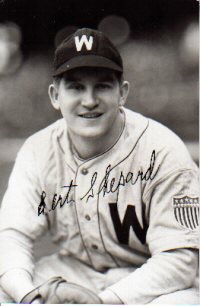
August 4, 1945: The Bert Shepard Game

August 4, 1945: Bert Shepard pitches in a game in what would later be called Major League Baseball. This was incredibly unlikely, because he had only one leg.

Bert Robert Shepard was born on June 28, 1920 in Dana, Indiana, hard by the Illinois State Line, and home to a museum dedicated to another native who became a hero of World War II, journalist Ernie Pyle. A lefthanded pitcher, Shepard grew up in nearby Clifton, Indiana, and made his professional debut in the Detroit Tigers' organization in 1939. But by the conclusion of the 1942 season, he hadn't risen above Class C ball (roughly equivalent to "Long A" today).

He enlisted in the U.S. Army Air Forces in World War II, became a pilot, and achieved the rank of 1st Lieutenant. On May 21, 1944, his fighter group was strafing a German airfield northwest of Berlin, when his plane, a Lockheed P-38 Lightning, was hit. He crashed, and was thrown clear, saving his life, as the plane exploded in flames.

He was found by 1st Lieutenant Ladislaus Loidl, an Austrian doctor in the Nazis' air force, the Luftwaffe. Although Shepard's right foot had already been severed, Loidl managed to save his life. Although the Nazis were the enemy, Shepard would always be grateful for the medical services the Germans provided him, even as he recovered in a prisoner-of-war camp.

He was released in a prisoner exchange in February 1945, and he was determined to resume his baseball career. Part of his rehabilitation was spent at the Walter Reed Army Medical Center in Washington. There, he met Under Secretary of War Robert Patterson, and told him of his desire to keep playing baseball despite needing an prosthesis for his right leg. Patterson told Clark Griffith, owner of the Washington Senators, and himself a Hall of Fame pitcher.

On March 29, Griffith signed Shepard, then only 24 years old, as a pitching coach, thinking it would be good publicity. All season long, with his prosthesis being the leg on which he landed in his pitching motion, he pitched batting practice, and visited veterans' hospitals, offering encouragement to other wounded soldiers. On July 10, he pitched 4 innings against the Brooklyn Dodgers in an exhibition game for the War Relief Fund.

However, the Senators couldn't simply put him in a game just for the publicity. Despite their reputation as legendary losers -- the saying was, "Washington: First in war, first in peace, and last in the American League" -- this was a rare season in which they were in the Pennant race. When dawn arrived on August 4, 1945, the Detroit Tigers led the American League, the Senators were only 3 games behind, the New York Yankees were 4 back, and every other team except the Philadelphia Athletics was within 9 1/2 games. The AL race was still anybody's ballgame, and the Senators had as good a chance at the Pennant as anybody.

But despite World War II winding down -- V-E Day was 3 months earlier, and, while no one yet knew it, V-J Day would come in 10 days -- wartime travel restrictions, designed to save fuel for the war effort, were very much in place, to the point where that season's All-Star Game had been canceled, the only time since the game was founded in 1933 that it happened until the COVID epidemic in 2020. This led to teams staying in place longer than usual.

And, in early August, the Senators had a run of 5 straight days of doubleheaders, with the 4th being the 4th of them. Throw in the war's "manpower drain," and finding "warm bodies" was difficult, especially to flesh out a pitching staff. Shepard's time had come.

The 1st game that day was a 4-0 Senators win over the Boston Red Sox. Wally Holborow did the best thing he could for his team: He went the distance, and allowed just 2 hits. In the 2nd game, the Senators wouldn't be so lucky: Even with such talent as Ted Williams, Bobby Doerr, Dom DiMaggio and Johnny Pesky all in the service, the Sox knocked starting pitcher Sandy Ullrich out of the box in the 4th inning.

Senators manager Ossie Bluege brought in Joe Cleary, who was another player who was only playing due to The War's manpower drain. It was his only big-league appearance as well, and he only got 1 batter out, allowing 7 runs on 5 hits and 3 walks. There are pitchers who allowed baserunners and didn't get anybody out, thus having an earned run average of infinity. Cleary has the highest career ERA of anybody who did actually get someone out: 189.00. The Red Sox scored 12 runs in the top of the 4th, and were up 14-2. Tom McBride tied a major league record for most RBIs in an inning: 6, in the 4th, all off Cleary.

So Bluege brought in Shepard, wearing Number 34. There is a sad connection here: Elmer Gedeon, 1 of the 2 MLB players who ended up being killed in World War II (Harry O'Neill of the 1939 Athletics was the other), had also worn 34 for the Senators, playing 5 games in the outfield in 1939. Shepard being assigned 34 was probably a coincidence.

The 1st batter that Shepard faced was George "Catfish" Metkovich, a center fielder who had a decent 10-season career in the majors. Shepard struck him out. He pitched the rest of the way, going 5 1/3rd innings, allowing 1 run on 3 hits, walking 1 and striking out 2. The Red Sox won, 15-4.

The Senators remained in the race until the final day of the season, and finished 1 game behind the Tigers, who then beat the Chicago Cubs to win the World Series. Bluege never brought Shepard into another game. Who knows, that may have cost the Senators the Pennant. They hadn't won one since 1933, they left town in 1971, and no Washington team would win another major league Pennant until the 2019 Nationals.

In 1946, the veteran players returned home, and, war hero or no, there was no place for Shepard on the major league roster. He pitched in the minors that season, and was released by the Senators afterward. He pitched semi-pro ball in 1947, but needed further surgery on his leg, causing him to miss the 1948 season. In 1949, he was a player-manager in Class B ball, going 5-6.

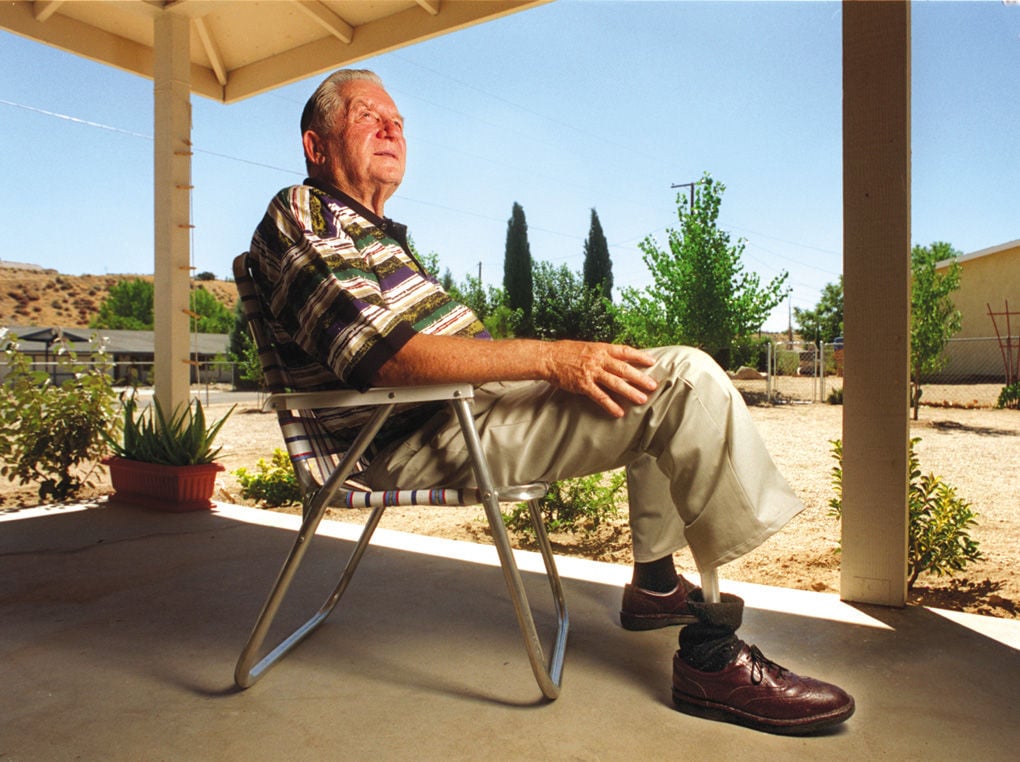
He became a typewriter salesman, making brief comebacks in 1952 and 1955. Then he got back into aeronautics, becoming a safety engineer for Hughes Aircraft, one of Howard Hughes' companies. He won competitions for amputees in both running and golf, even in his 70s.
In 1993, This Week In Baseball did a piece on him, nearly half a century after the fact, covering his trip back to Europe, following his return to the site of his crash, and to a reunion with Dr. Loidl again, where he thanked him for saving his life, and (if only for 1 game) his baseball career.

Bert Shepard died on June 16, 2008 in Highland, California, outside San Bernardino. He was 87 years old, and was survived by his wife and their 2 daughters. Senators center fielder José Zardón was the last surviving player from his lone big-league appearance, living until 2017. I can find no record of how long Loidl lived, beyond 1993; as of August 4, 2022, there are hundreds thousands of World War II veterans, from all countries, still alive, and it is possible that he is one of them.

*

August 4, 1945 was a Saturday. In addition to the Senators-Red Sox doubleheader, these games were played that day:

* The New York Yankees beat the Philadelphia Athletics, 5-1 at Shibe Park in Philadelphia.

* The New York Giants beat the Philadelphia Phillies, 5-4 at the Polo Grounds. The Phillies took a 4-3 lead in the top of the 10th inning. But in the bottom of the 10th, Clyde Kluttz tied it with a home run, and then the Giants loaded the bases, and Whitey Lockman drew a walk to force the winning run home.

* The Brooklyn Dodgers lost to the Boston Braves, 1-0 at Braves Field in Boston. Bill Lee (no relation to the later Red Sox pitcher of the same name) pitched a 6-hit shutout.

* The St. Louis Cardinals beat the Pittsburgh Pirates, 6-5 at Forbes Field in Pittsburgh.

* The Cincinnati Reds beat the Chicago Cubs, 4-3 at Crosley Field in Cincinnati.

* The Chicago White Sox beat the Detroit Tigers, 3-2 at Comiskey Park in Chicago.

* And the St. Louis Browns beat the Cleveland Indians, 8-2 at Sportsman's Park in St. Louis.

Thursday, July 7, 2022

July 7, 1937: Fractured? Dizzy Dean Is Broken

July 7, 1937: Baseball holds its All-Star Game at Griffith Stadium in Washington. President Franklin D. Roosevelt makes the short trip from the White House to throw out the ceremonial first ball. His action, alone, would make the game historic. But nobody knew at the time that the course of baseball history would be changed, right in front of his eyes, and those of 31,390 others. (That was a full house: Griffith Stadium was a small ballpark.)

The starting pitcher for the National League is Dizzy Dean of the St. Louis Cardinals. He was born Jay Hanna Dean, but sometimes told people his name was Jerome Herman Dean. He was born in 1910, but sometimes told people it was 1911, or 1912. He was born in Lucas, Arkansas, but sometimes told people that he was born elsewhere in Arkansas. Or places in Tennessee. Or Mississippi. Or Louisiana. Or Texas. Or Oklahoma. He was one of three, or four, or five, or more siblings. He explained that he wanted every reporter to have an exclusive.

He had a brother who was born in 1912, in Lucas, Arkansas: Paul Dee Dean. Because Jay was called Dizzy, Paul was called Daffy. And Paul really hated that, because, unlike is freewheeling brother, he was a very thoughtful man.

Dizzy was not. He once said, "The Good Lord was good to me. He gave me a strong right arm, a good body and a weak mind." He later went into broadcasting, and took his homespun talk with him. He was a lot like later football star Terry Bradshaw, figuring out that if people think you're an under-educated hick who knows nothing except his sport, but knows that very well, use it to your advantage before they can use it to theirs.

At any rate, Paul was a very good pitcher. Not as good as Dizzy, but capable of winning 19 games in 1934, including a no-hitter in the the 2nd game of a doubleheader, after Dizzy pitched a 3-hit shutout in the 1st game. Dizzy said, "Gee, Paul, if I'd a-known you was gonna throw a no-hitter, I'd a-thrown one, too!"

Another of Dizzy's quotes was, "If you can do it, it ain't braggin'." Before the 1934 season, he said, "Me an' Paul is gonna win 50 games." Not quite: Diz won 30, and Paul won 19, for a total of 49. But by going 30-7, Diz became the last National League pitcher, to this day, to win 30 games in a season. He also said, "Men an' Paul are gonna win this here World Series." This time, he was right: The Cardinals beat the Detroit Tigers, 4 games to 3, and each brother won 2 games, including Diz pitching a shutout in Game 7.

From 1933 to 1937, Diz was, along with Carl Hubbell and the Negro Leagues' Satchel Paige, 1 of the 3 best pitchers on the planet. Then, in this All-Star Game, he did fine over the 1st 2 innings, keeping the American League off the scoreboard. In the bottom of the 3rd, he gave up a single to Joe DiMaggio of the New York Yankees. DiMaggio's Yankee teammate, Lou Gehrig, took him deep for a home run.

And then, Earl Averill, the Hall of Fame center fielder for the Cleveland Indians, hit a line drive back up the middle, off his foot. It ricocheted to the 2nd baseman, Billy Herman of the Chicago Cubs, who threw Averill out. But there was no way Dean could continue.
Earl Averill

Despite a 4-for-5 with an RBI day for his Cardinal teammate, Joe Medwick, the NL didn't do much in this game. With Lefty Gomez of the Yankees, Tommy Bridges of the Detroit Tigers, and Mel Harder of the Cleveland Indians each pitching 3 innings, the AL won, 8-3.

After the game, Dean was examined, and the doctor told him his big toe was fractured. And the undereducated country boy said, "Fractured, hell, the damn thing's broken!"

He came back too soon, and, to favor the toe, he altered his pitching motion, and wrecked his elbow. At age 27, he went from one of the best pitchers in baseball to a man who couldn't pitch without pain. The Cardinals traded him to the Cubs before the 1938 season, and he was only able to make 10 starts. But he went 7-1 with a 1.81 ERA, and the Cubs made a big comeback to win the Pennant. Dean pitched well in Game 2, but the Yankees beat him.

Dizzy Dean retired after the 1941 season, plus a one-game comeback in 1947, with a record of 150-83. The injury may have cost him at least 100 wins. Ordinarily, 150 wins wouldn't be enough to get a player into the Baseball Hall of Fame. But his 5 years of dominance got him there. He became a beloved broadcaster, and died in 1974. Paul went 50-34 in a career lasting from 1934 to 1943, and died in 1981.

Earl Averill, a native of Snohomish, Washington (and thus known as the Earl of Snohomish), should have been so lucky. Despite a career that saw him bat .318, appear in the 1st 6 All-Star Games, be elected to the Hall of Fame himself, and have his Number 3 retired by the team now known as the Cleveland Guardians, he has been virtually forgotten since his death in 1983. When he is remembered at all, it is usually for accidentally curtailing Dizzy Dean's career. His son, Earl Averill Jr., also played in the major leagues.

*

July 7, 1937 was a Wednesday. Since baseball was the only sport in season at the time, this was the only score on this historic day.

Sunday, April 17, 2022

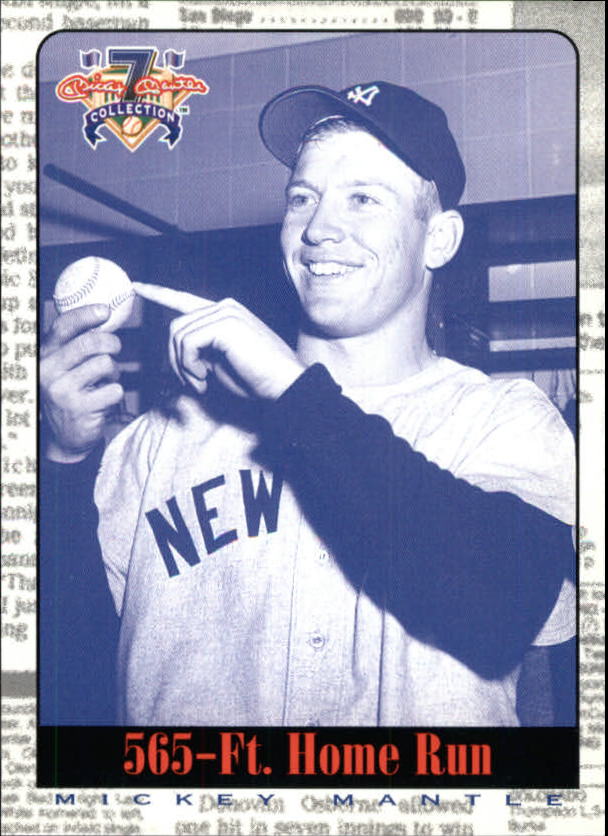
April 17, 1953: Mickey Mantle's "565-Foot" Home Run

April 17, 1953: The New York Yankees beat the Washington Senators, 7-3 at Griffith Stadium. It was 2 days after Opening Day, when the new President, Dwight D. Eisenhower, threw out the ceremonial first ball. So instead of a sellout of around 30,000 people, only 4,206 fans attended.

Eddie Lopat went 8 innings to get the win for the Yankees. Billy Martin and Gene Woodling each had 2 hits. So did Mickey Mantle, the Yankees' 21-year-old center field phenom. One of Martin's hits was a home run. So was one of Mantle's.

It was 2 years to the day after Mantle's major league debut, and he found a way to celebrate the anniversary. In the top of the 5th, with 2 out and Yogi Berra on 1st base, the switch-hitting Mantle batted righthanded against Chuck Stobbs, a lefthander.

Mantle admitted that he was a better hitter for average from the left side, but he also knew that he clearly had more power from the right side. Stobbs threw him a fastball, and Mantle hit one of the most powerful drives anyone had ever seen. It glanced off a scoreboard at the back of the bleachers, a 460-foot drive. The ball caromed off the board, and kept going.

Arthur "Red" Patterson, then the Yankees' public-relations director, noted that nobody had ever hit a ball out of the left side of Griffith Stadium. This probably was not true: Josh Gibson, whose Homestead Grays divided their Negro League home games between Washington and Pittsburgh, probably did it a few times.

Patterson left the ballpark, and looked for the ball. He finally found a 10-year-old boy, in the backyard of a house at 434 Oakdale Place NW, across 5th Street from the left-field bleachers. Patterson asked for the ball. The boy wanted 75 cents -- about the standard price at the time for a fresh baseball from a store. Patterson gave him a dollar (about $11 in 2022 money), and got the ball.

Then he paced off the distance to the wall of the bleachers. Then he got the width of the bleachers. Then he saw the 391-foot marker on the wall where the ball had crossed the fence. He put it all together, and decided that Mantle had hit the ball 565 feet.
Griffith Stadium. The scoreboard in question
can be seen at the back of the left field bleachers.
5th Street is behind them. Oakdale Place extends
from the scoreboard, and 434 is 4 houses down.

He did not use a tape measure. But, later in the season, Mantle would also hit long home runs over the left field pavilion at Busch Stadium in St. Louis and the double-decked left field bleachers at Connie Mack Stadium in Philadelphia. Patterson did use a tape measure for those, and so, whenever Mantle hit a particularly long home run, it became known as a "tape measure home run."

(Both of those ballparks had their names changed that season: From their joint openings in 1909 until this point, Connie Mack Stadium had been Shibe Park; and the first ballpark to be known as Busch Stadium had been the last ballpark to be known as Sportsman's Park.)

The ball Mantle hit in Washington on this date went into The Guinness Book of World Records, recognized as the longest home run ever hit in a Major League Baseball game. In fact, he did not hit that ball 565 feet. A batted ball is supposed to be measured from home plate to where it first hit something. The ball made contact with the scoreboard, 460 feet away. That's the distance that should count for it. Still, that is a very long drive, and it would remain the longest authenticated home run in that ballpark's history. (As I said, Gibson may have hit one longer, but no one measured his drives.)

Did Mantle hit a baseball 565 feet, ever? Possibly: In addition to the preceding, he hit 2 drives over the left-field roof at Comiskey Park in Chicago, which probably exceeded 550 feet. He hit one over the right field roof at Tiger Stadium in Detroit that may have gone that far, although the 643-foot distance suggested by Mark Gallagher in Explosion!, a book about Mantle's home runs that was published in 1987, is almost certainly a gross miscalculation. (Gallagher admitted he'd used trigonometry to determine the distance.)

And there were at least 3 occasions when Mantle hit the facade atop the right field roof at the old Yankee Stadium, which came close to clearing the roof. It's been suggested that, had those balls been just a little higher, they would have gone over 600 feet.

Did Mantle hit the longest home run in baseball history? The evidence for that is flimsy. Home runs were not measured in the 1920s and 1930s, when Babe Ruth was hitting them lefthanded, and Jimmie Foxx was hitting them righthanded -- in each case, further than anybody had that way until Mantle. Ruth has been suggested as having hit them further than 565, sometimes even 600.

Ted Williams is said to have the longest home run at Fenway Park, in 1946; while Mantle is said to have the longest home run at the original Yankee Stadium, in 1964; and each is said to have gone 502 feet. But Ruth has been alleged to have exceeded those distances in previous configurations of those parks.

One thing is for sure: At a time when pitching was paramount, but a few sluggers hit the ball over 500 feet -- including Luke Easter, Frank Robinson, Harmon Killebrew, Frank Howard, Dick Allen, and the player most often compared to Mantle, Willie Mays -- Mickey Mantle hit the ball further than anybody, and hit long home runs more frequently than anybody. Despite a seemingly unending run of injuries, he played 18 seasons, and finished his career with 536 home runs. At the time, he was 3rd on the all-time list, behind Ruth and Mays.

Griffith Stadium was replaced by District of Columbia Stadium in 1961, and torn down in 1965. The Howard University Hospital was built on the site. D.C. Stadium became Robert F. Kennedy Stadium in 1969.

*

April 17, 1953 was a Friday. These other Major League Baseball games were played that day:

* A doubleheader was split between arch-rivals at the Polo Grounds. The New York Giants won the 1st game, beating the Brooklyn Dodgers, 6-3. Sal Maglie outpitched Johnny Podres, getting a home run from Wes Westrum. The Dodgers won the 2nd game, 12-4. Billy Loes pitched a complete game, Jim Hearn got knocked out of the box, and Carl Furillo hit a home run.

Jackie Robinson went 5-for-7, with 2 walks, but no RBIs, in the doubleheader. Willie Mays was serving in the Korean War, and did not play in these games.

* The Philadelphia Athletics beat the Boston Red Sox, 5-0 at Connie Mack Stadium in Philadelphia. Charlie Bishop pitched a 5-hit shutout for the A's. Like Mays, Ted Williams was in the war, and unavailable for the Red Sox.

* The Cincinnati Reds beat the Milwaukee Braves, 10-9 at Crosley Field in Cincinnati.

* The Detroit Tigers beat the Cleveland Indians, 6-5 at Briggs Stadium in Detroit. (It was renamed Tiger Stadium in 1961.)

* And the St. Louis Browns beat the Chicago White Sox, 6-4 at Comiskey Park in Chicago.

Football was out of season. The NHL season had ended the day before, with the Montreal Canadiens beating the Boston Bruins, 1-0 at the Montreal Forum, to win the Stanley Cup in 5 games. Elmer Lach scored the winning goal, 1 minute and 22 seconds into overtime. And the NBA season had ended the preceding Friday, with the Minneapolis Lakers winning the NBA Championship, beating the New York Knicks in 5 games.

Thursday, April 14, 2022

April 14, 1958: Van Cliburn Becomes a Cold War Cause Célèbre

April 14, 1958: The 1st International Tchaikovsky Competition is held in Moscow, as a means of using artistic competition to ease Cold War tensions. Named for 19th Century Russian composer Pyotr Ilyich Tchaikovsky, it was open to classical pianists, violinists and cellists between the ages of 16 and 32, and singers between the ages of 19 and 32.

The 1st edition had only 2 categories, piano and violin. No one was surprised when the violin competition was won by a Soviet, Valery Klimov, a 26-year-old native of Kyiv, Ukraine. But the world was shocked when the piano competition was won by an American, 23-year-old Van Cliburn.

Harvey Lavan Cliburn Jr. was born on July 12, 1934 in Shreveport, Louisiana, and grew up outside Dallas in Kilgore, Texas. At the age of 12, he won a Statewide piano competition, which led to his debut with the Houston Symphony Orchestra. He entered the Julliard School in New York City at 17. The following year, 1952, he won the International Chopin Competition at the Kosciuszko Foundation in New York. In 1954, he made his debut at Carnegie Hall.

Cliburn entered the Tchaikovsky Competition, and played Tchiakovsky's own Piano Concerto No. 1, and Sergei Rachmaninoff's Piano Concerto No. 3. It earned him an 8-minute standing ovation from the Moscow crowd. After that, he made a brief speech in Russian, and then resumed his seat at the piano and began to play, to the surprise and delight of the Russian musicians visible behind him in the film made of his part in the competition, his own piano arrangement of the much-beloved song "Moscow Nights," which further endeared him to the Russians.

When it was time to announce the winner, on April 14, the judges felt obliged to ask permission of the Soviet leader Nikita Khrushchev to give the first prize to an American. "Is he the best?" Khrushchev asked. He was told, "Yes." He said, "Then give him the prize!"

Cliburn returned home to a ticker-tape parade in New York, the only time the honor has been accorded a classical musician. Arriving at City Hall after the parade, Cliburn told the audience:

I appreciate more than you will ever know that you are honoring me, but the thing that thrills me the most is that you are honoring classical music. Because I'm only one of many. I'm only a witness and a messenger.  

Because I believe so much in the beauty, the construction, the architecture invisible, the importance for all generations, for young people to come that it will help their minds, develop their attitudes, and give them values. That is why I'm so grateful that you have honored me in that spirit.

By extolling classical music so much, was Cliburn firing a warning shot at rock and roll? Only he knew for sure, but for parents of teenagers, this had to be very encouraging.

Cliburn appeared on The Steve Allen Show -- Allen was a pianist and and composer, albeit of pop songs -- and met with President Dwight D. Eisenhower. He received a recording contract with RCA Victor Records. His recording of the Tchiakovsky No. 1 earned the 1st-ever Grammy Award for classical recording the following year.

In 1967, Cliburn -- over any and all jazz and rock performers -- was chosen as the American representative for the worldwide satellite broadcast Our World. Britain chose The Beatles.

He returned to the Soviet Union many times, including during the 1972 summit meeting between Presidents Richard Nixon and Leonid Brezhnev that led to the SALT I and Anti-Ballistic Missile Treaties. He never married, and in 1996 was forced by a lawsuit to come out of the closet, which would have destroyed him in the first wave of his fame. He met with every President from Eisenhower to Barack Obama, until his death on February 27, 2013, at the age of 78. 

The Tchaikovsky Competition was held every 4 years thereafter, until 2022, when it was boycotted due to the Russian invasion of Ukraine. The only other Americans ever to win, in any discipline, have been Jane Marsh in female vocal in 1966, Elmar Oliveira in violin in 1978, Nathaniel Rosen in cello in 1978, Hans Choi in male vocal in 1990, and Deborah Voigt in female vocal in 1990.

Initial violin winner Valery Klimov died in 2022.

*

April 14, 1958 was a Sunday. Peter Capaldi, the Scottish actor who starred as the Twelfth Doctor on Doctor Who, was born on this day.

The baseball season opened that day, and only 1 game was played: The Washington Senators beat the Boston Red sox, 5-2 at Griffith Stadium in Washington. President Dwight D. Eisenhower threw out the ceremonial first ball. Pedro Ramos went the distance for the Senators. Jim Lemon hit a home run. Jackie Jensen hit a home run for the Red Sox, but Ted Williams did not play.

Football was out of season. The NBA season had ended the night before. Game 3 of the Stanley Cup Finals was played at the Boston Garden, and the Montreal Canadiens beat the Boston Bruins, 3-0, to take a 2-1 lead in the series. The Canadiens would in it in 6 games. 

December 31, 1999 & January 1, 2000: The Millennium

December 31, 1999:  The Millennium arrives. The people of planet Earth survived. At a terrible cost. But we hadn't destroyed ourselves. ...