Showing posts with label jewish. Show all posts

Wednesday, November 23, 2022

November 11, 1938: The Truth of the Nazis' Gun Control Law

November 11, 1938: You may have heard, from American "gun rights" advocates, that the Nazis passed a gun control law. That is a lie: Here is the truth of the law passed on this date:

The 1938 German Weapons Act superseded a 1928 law. As under the 1928 law, citizens were required to have a permit to carry a firearm and a separate permit to acquire a firearm. But under the new law:

Gun restriction laws applied only to handguns, not to long guns or ammunition. The 1938 revisions completely deregulated the acquisition and transfer of rifles and shotguns, and the possession of ammunition.

The legal age at which guns could be purchased was lowered from 20 to 18.

Permits were valid for three years, rather than one year.

Holders of annual hunting permits, government workers, and NSDAP members (the National Socialist German Workers' Party, or "Nazis") were no longer subject to gun ownership restrictions. Prior to the 1938 law, only officials of the central government, the states, and employees of the German Reichsbahn Railways were exempted.

* The manufacture of arms and ammunition continued to require a permit, with the proviso that such permits would no longer be issued to any company even partly owned by Jews. Jews could not manufacture or deal in firearms or ammunition.

In other words, this law made it easier to get guns -- and it didn't prohibit Jews from owning them.

Also, if the Jews of Germany – or any other country – had guns, they would not have defeated the Nazis, as we saw when they fought back in Berlin in 1938, in Prague in 1942, and in Warsaw in 1944.

*

November 11, 1938 was a Friday. Baseball was out of season. The NBA hadn't been founded yet. The NHL season was underway, but no games were scheduled.

There were 9 college football games, but none was between 2 teams that would now be considered major. New York University (NYU) beat Colgate, 13-7 at Yankee Stadium. And Boston College beat Boston University, 21-14 at Fenway Park.

Friday, November 18, 2022

November 18, 1959: "Ben-Hur" Premieres

Stephen Boyd (left) and Charlton Heston

November 18, 1959: Ben-Hur premieres, directed by William Wyler, based on the 1880 novel by Lew Wallace. It had previously been filmed in 1925, starring Mexican actor Ramon Navarro in the title role, and Francis X. Bushman as the villain.

That was in black & white, and silent. This was in Technicolor, in full sound, and filmed in Italy with the largest budget ($15.175 million -- about $152 million in 2022 money), and the largest sets built, of any film produced at the time.

The story takes place in Jerusalem, in the early 1st Century AD, in the years immediately before, during, and after the ministry of Jesus of Nazareth. Judah Ben-Hur, played by Charlton Heston, already the preeminent performer of "historical epics," is a wealthy Jewish prince and merchant.

A childhood friend, Messala, played by Stephen Boyd, becomes commander of the nearby Roman fortress. While Judah has remained Jewish, Messala has totally bought into the Roman Empire's way of doing things. One thing leads to another, and Messala throws Judah into slavery, leading to the famous rowing scene.

After 3 years as a galley slave, Judah is assigned to Roman Consul Quintus Arrius' flagship. Arrius (Jack Hawkins) notices Judah's determination and self-discipline, and, after Judah saves his life in a battle with Macedonian pirates, Arrius petitions Emperor Tiberius to free him.

In Rome, Judah becomes a champion charioteer, driving the horses of Sheik Ilderrim (Hugh Griffith), and reunites with former girlfriend Esther (Israeli actress Haya Harareet). He enters a chariot race against Messala, in front of the new Governor of Judea, Pontius Pilate (Frank Thring), resulting in one of the most spectacular scenes ever filmed. Messala attempts to cheat, but, in response, a move by Judah results in Messala's method resulting in his own wreck and death. With his dying breath, Messala tells his friendy-turned-enemy that his mother, Miriam (Martha Scott), and his sister, Tirzah (Cathy O'Donnell), are alive, and where to find them.

Judah hears about a prophet he seeks who preaches love and forgiveness and urges Judah to cast off his consuming hate and vengeance. Judah and Esther attend the Sermon on the Mount. Soon afterward, Judah meets Pilate, who warns him against using his victory to lead a rebellion against Roman rule. Judah renounces his Roman citizenship. He finds out Tirzah is dying, and seeks Jesus to heal her.

But he is too late, and is a witness to the walk down the Via Dolorosa. History repeats itself: He recognizes Jesus (Claude Heater, uncredited) as a man who once tried to give him water as a galley slave, and tries to return the favor; but, as in the earlier incident, the gift is prevented by a Roman soldier (not the same one). After witnessing the Crucifixion, Judah walks through a storm to the cave where Miriam Tirzah and Esther are hiding. As the storm ends, he sees his mother and sister cured of their maladies, and accepts the miracle and forgives his enemies.

Metro-Goldwyn-Mayer spent $14.7 million, almost as much as it cost to make the film in the first place, to market it. It worked: Ben-Hur became the highest-grossing film premiering in 1959, and the 2nd-highest grossing film in history to that point, behind Gone with the Wind (also an MGM film). It became the 1st film to win 11 Academy Awards, including Best Picture, Best Director for Wyler, Best Actor for Heston, and Best Supporting Actor for Griffith.

Cathy O'Donnell (Tirzah) married Robert Wyler, brother of Ben-Hur director William Wyler. She died of cancer in 1970. Haya Harareet (Esther) died in 2021, and was the last surviving credited member of the film's cast.

Also premiering on this date was A Summer Place, based on the previous year's novel by Sloan Wilson. It starred Richard Egan and Dorothy McGuire as lovers reunited after 20 years, with Sandra Dee as the former's daughter and Troy Donahue as the latter's son, who begin their own affair.

The film was pretty steamy by the standards of the time. But now, it’s best known for its theme song, conducted by Percy Faith, which held the Number 1 spot on Billboard magazine's Hot 100 chart for 9 weeks in the Winter and Spring of 1960.

*

November 18, 1959 was a Wednesday. Baseball was out of season. Football was in midweek. No games were scheduled in the NHL. There were 3 games scheduled for the NBA:

* The New York Knicks beat the Minneapolis Lakers, 106-105 at the Minneapolis Armory.

* The Syracuse Nationals beat the Boston Celtics, 138-103 at the Onondaga County War Memorial (now the Upstate Medical University Arena) in Syracuse, New York.

* And the Detroit Pistons beat the Cincinnati Royals, 110-93 at the Cincinnati Gardens.

Friday, November 11, 2022

November 11, 1947: "Gentlemen's Agreement" Premieres

Gregory Peck

November 11, 1947: The film Gentlemen's Agreement premieres, based on the recent novel by Laura Z. Hobson. It had been just 2 years since America defeated the greatest force for anti-Semitism the world has ever known. But the book and the film exposed America's own discrimination against Jews like nothing else ever has.

The term "gentlemen's agreement" refers to any unofficial, but still absolute agreement between a group to exclude people from joining the group based on race, religion, gender, or anything else. This included private clubs, hotels, and corporations. The choice of Major League Baseball team owners to exclude black men from playing, finally broken earlier that year with the debut of Jackie Robinson, had often been described as a "gentlemen's agreement." Such men are not gentlemen.

Producer Darryl F. Zanuck decided to make a film version of the novel after being refused membership in the Los Angeles Country Club, because it was incorrectly assumed that he was Jewish, which many Hollywood studio executives of the time were.

Before filming commenced, some of those executives, led by Samuel Goldwyn, approached Zanuck and asked him not to make the film, fearing it would "stir up trouble." They also warned that Hays Code enforcer Joseph Breen might not allow the film to pass the censors, as he had been known to make disparaging remarks about Jews. There was also concern that Dorothy McGuire's character being divorced would offend the National Legion of Decency, the Catholic group that had objected to racy films of the early 1930s, leading to the establishment of the Code.

The lead role was first offered to Cary Grant, but he turned it down. Gregory Peck decided to accept the role, although his agent advised him to refuse, believing Peck would be endangering his career. Jewish actor John Garfield agreed to play a lesser role in the film to be a part of it.

Widowed journalist Philip Schuyler Green (Peck) moves to New York with his aging mother (Anne Revere, identified only as "Mrs. Green") and his young son Tommy (Dean Stockwell, then 11, but who became a fine adult actor as well). Phil meets with magazine publisher John Minify (Albert Dekker), who asks Green, a Christian, to write an article on anti-Semitism.

At a lunch party, Phil meets Minify's niece, Kathy Lacey (Dorothy McGuire), who is actually the person who suggested the story idea. Phil then tries to explain anti-Jewish prejudice to his son. Realizing how difficult it is to explain these topics, he decides to write the story.

Phil and Kathy begin dating, and Phil adopts a Jewish identity to write the story from a fresh perspective. They agree to keep it secret that Phil is not Jewish. At the magazine, Phil is assigned a secretary, Elaine Wales. She turns out to be Jewish (as was her portrayer, June Havoc), but changed her name to get the job. After learning of Wales' experience from Phil, Minify orders the magazine to adopt hiring policies that are open to Jews. Phil meets fashion editor Anne Dettrey (Celeste Holm), who becomes a good friend and potentially more, particularly as strains develop between Phil and Kathy.

Having completed his service in World War II, Dave Goldman (Garfield), Phil's childhood friend, moves to New York, and lives with the Greens while searching a job and a home for his family. Being Jewish, Dave also experiences anti-Semitism. Housing is scarce in the city, but it is particularly difficult for him, since not all landlords will rent to a Jewish family.

While researching his story, Phil experiences several incidents of bigotry. When Phil's mother becomes ill with a heart condition, the doctor discourages him from consulting a specialist with a Jewish name. After hearing Phil is Jewish, the doctor becomes uncomfortable and leaves.

In addition, the janitor is shocked to see that a Jewish name is listed on the mail box. Furthermore, when Phil wants to celebrate his honeymoon at a swanky hotel, the manager refuses to register Phil, whom he tells to go elsewhere.

Tommy also becomes the target of bullies because of this. Phil is troubled by the way Kathy consoles Tommy, telling him their taunts of "dirty Jew" are wrong because he is not Jewish, not that the slur is wrong in and of itself.

Kathy's attitudes are revealed further when she and Phil announce their engagement. Her sister Jane invites them to a celebration in her home in the nearby suburb of Darien, Connecticut, which is known to be a community where Jews are not welcome. Fearing an awkward scene, Kathy wants to tell her family and friends that Phil only pretends to be Jewish, but he dissuades her. At the party, everyone is friendly to Phil, though many people cancel at the last minute.

Dave announces he will have to quit his job, because he cannot find a residence for his family. Kathy owns a vacant cottage in Darien, and Phil sees it as a solution to Dave's problem. Kathy, however, is unwilling to offend her neighbors by renting it to a Jewish family. Phil breaks his engagement to her, and announces he will be moving away from New York when his article is published. When it comes out, it is well received by the magazine staff.

Kathy meets with Dave and tells him how sick she felt when a party guest told a bigoted joke. However, she has no answer when Dave asks her what she did about it. She realizes that remaining silent condones the prejudice.

The next day, Dave announces that he and his family will be moving into the cottage in Darien and Kathy will be moving in with her sister next door to make sure they are treated well. Moved by this, Phil reconciles with Kathy. His mother, still recovering from her heart condition, tells Phil that his article has given her new hope for the future, a new motivation to get well.

The New York Herald Tribune described the film as a "brilliant blow against racial and religious intolerance." It won 3 Academy Awards: Best Picture for Zanuck, Best Director for Elia Kazan, and Best Supporting Actress for Holm.

The political nature of the film, however, upset the House Un-American Activities Committee (HUAC), which called Kazan, Zanuck, Garfield and Revere to testify before it. Kazan chose to "name names," which saved his career, but led to many actors refusing to work with him. His later film On the Waterfront is often considered his apology for that.

Revere, whose membership in the Communist Party was a barely-kept secret, refused to testify. Garfield was called in 1951, and appeared, but he refused to "name names." Both were placed in the Red Channels of the Hollywood Blacklist. Garfield remained there for a year, was called again to testify against his wife, Roberta Seidman, who made no secret of her Party membership. and died of a heart attack at the age of 39, before his second hearing date. HUAC had driven him to the grave -- although he was also a heavy drinker.

Albert Dekker died in 1968, Darryl F. Zanuck in 1979, Laura Z. Hobson in 1986, Anne Revere in 1990, Dorothy McGuire in 2001, Gregory Peck and Eliza Kazan in 2003, June Havoc in 2010, Celeste Holm in 2012, and Dean Stockwell in 2021. As events from the 2017 "United the Right" rally in Charlottesville, Virginia onward have proven, American anti-Semitism is alive and well. It should be neither.

*

November 11, 1947 was a Tuesday. Baseball was out of season. The Basketball Association of America, which became the NBA 2 years later, began its 2nd season the next night. No games were scheduled in the NHL.

There were 2 college football games played. New York University (NYU) beat Bucknell University, 19-6 at Yankee Stadium, And the U.S. Merchant Marine Academy beat Brooklyn College, 22-14 at Tomb Memorial Field in Great Neck, Long Island, New York.

Wednesday, November 9, 2022

November 9, 1945: "The House I Live In" Premieres

Still photo from the film

November 9, 1945: The House I Live In premieres, a 10-minute film about tolerance, directed by Mervyn LeRoy, and starring one of the biggest young singers in the country as himself.

The film is written by Albert Maltz. Frank Sinatra, approaching his 30th birthday, having been a star for 5 years, and a year past his launch to superstardom via the fan demonstration known as "The Columbus Day Riot," plays himself. The film begins with a recording session that isn't going well. He takes a break, and steps outside to smoke a cigarette.

In the alley, he sees several boys chasing a smaller boy, and intervenes. It turns out that the bullies are going after the other boy because he's Jewish. It has been just 6 months since V-E Day, when America united to defeat the greatest force of anti-Semitism the world has ever known.

Being Italian and Catholic -- his mother was from Genoa, in the north, and his father was from Sicily, in the south -- Frank certainly knew what it was like to face discrimination. His cinematic portrayal of himself isn't having it, and he lectures the boys, telling them that discrimination based on race and religion is un-American.

He sings the title song, with music by Earl Robinson, who had previously written the labor song "Joe Hill"; and lyrics by Abel Meeropol, the author of Billie Holiday's anti-lynching song "Strange Fruit." They wrote "The House I Live In" for a 1942 music revue, Let Freedom Sing. With the Nazis having been defeated, but with bigotry, both racial and religious, alive and well in America, the message was still needed. Given his popularity with young people at that time, Sinatra was the ideal messenger.

Maltz became one of "The Hollywood Ten," screenwriters who were blacklisted and jailed for refusal to expose fellow Communists before the House Un-American Activities Committee. He wrote the screenplay for The Robe, but it was many years before his name was restored to the official print of the movie. He later wrote the screenplays for Two Mules for Sister Sara and The Execution of Private Slovik, and died in 1985.

Robinson was also blacklisted, but in 1954, he and David Arkin -- father of actor Alan Arkin and grandfather of actor Adam Arkin -- wrote a song in tribute to the Supreme Court's decision in Brown v. Board of Education: "Black and White." Despite being recorded by both Sammy Davis Jr. and Pete Seeger, it took until the 1972 recording by Three Dog Night to become a hit, but it hit Number 1. Robinson lived long enough to see it, and died in 1991.

Meeropol and his wife Anne adopted the sons of the executed Julius and Ethel Rosenberg, Michael and Robert. He died in 1986.

LeRoy had previously directed Little Caesar, I Am a Fugitive from a Chain Gang, Gold Diggers of 1933, Fools for Scandal, Blossoms in the Dust, and Thirty Seconds Over Tokyo. He went on to direct the 1949 version of Little Women, Quo Vadis? Million Dollar Mermaid, Mister Roberts, The Bad Seed, No Time for Sergeants, The FBI Story, and Gypsy. He died in 1987.

Sinatra continued to sing the song. Even after his 1972 heel turn from Democrat to Republican, he sang it at a state dinner at the White House in front of Richard Nixon, and at the 1985 Inaugural Ball of Ronald Reagan.

*

November 9, 1945 was a Friday. Actor Charlie Robinson, who played court clerk Mac Robinson on the 1980s sitcom Night Court, was born on this day.

Baseball was out of season. The NBA hadn't been founded yet. No games were scheduled for the NHL.

There was 1 game in college football. The University of South Carolina and the University of Miami played to a 13-13 tie at Burdine Stadium in Miami, the stadium that would later be renamed the Orange Bowl.

November 9, 1938: Kristallnacht, the Night of Broken Glass

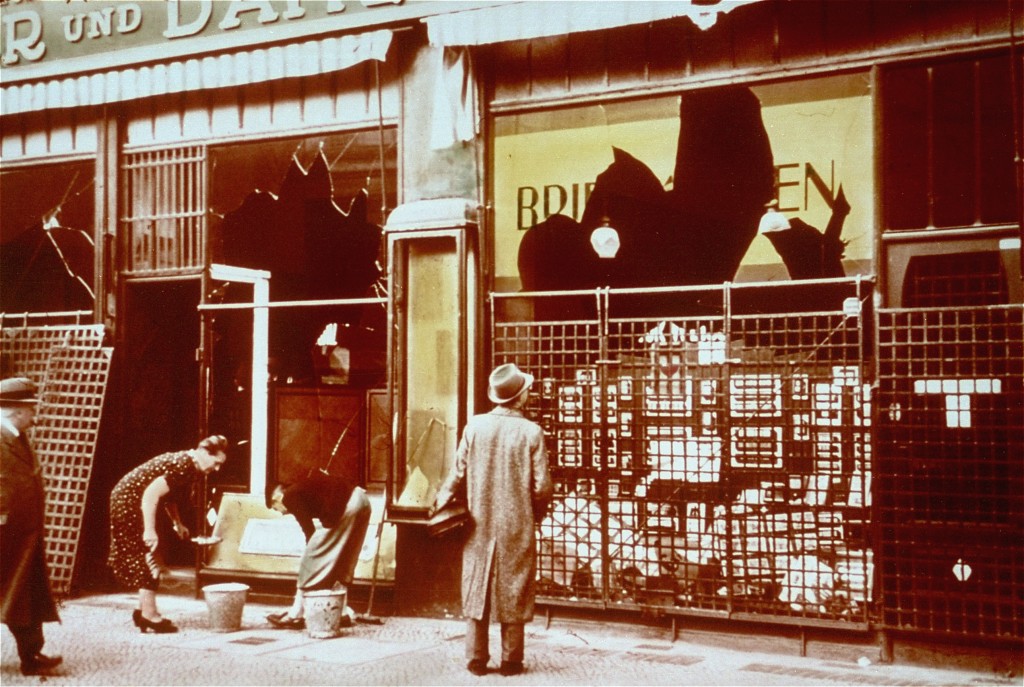
November 9, 1938: Nazi paramilitary troops destroy 267 synagogues and over 7,000 Jewish businesses, all over Germany.

It had been nearly 6 years since the Nazi Party took power in Germany, with their leader, Adolf Hitler, becoming the Chancellor, the country's head of government. It had been a little over 4 years since Hitler also became President, thus becoming the country's head of state, and its absolute ruler.

He had told the people of Germany that their national woes -- from losing World War I and the deprivations that followed, to the difficulties of the worldwide Great Depression -- were the fault of Jews and Communists, and he linked them wherever he could. He told them it wasn't the country's own excesses that did it. It wasn't the fault of the people. It was some other group with an evil ideology.

Sound familiar?

And it had been a year and a half since he annexed his native Austria into his Third Reich. And it had been 40 days since the Munich Agreement, in which Britain and France, terrified of getting into a second world war with Germany, betrayed their ally, Czechoslovakia, and let Hitler take that country.

On November 7, Ernst vom Rath, the third secretary of the German Embassy in Paris -- a minor diplomat, only 29 years old -- was shot by Herschel Grynszpan, a 17-year-old Jew, born in Germany of Polish descent. His parents had been deported to Poland, and he blamed vom Rath. It took vom Rath 2 days to die.

Just as the Reichstag Fire of 1933 was the pretext the Nazis needed for their previous big round of persecutions, vom Rath's death on November 9 gave them the excuse they needed to do it again. The Party's paramilitary wing, the Sturmabteilung (SA, or "Storm Detachment," often called the "Brownshirts"), broke into Jewish people's homes, ransacking them and stealing valuables. They broke into Jewish-owned businesses, destroying both goods and property.

All the broken glass storefronts gave the event its name: Kristallnacht, or "Crystal Night," or "The Night of Broken Glass." It wasn't just in the national capital of Berlin: It was all over the Reich, including in Austria, and even on Polish soil in what was then "The Free City of Danzig." (Now GdaÅ„sk.)

Over 30,000 people were arrested, and taken to concentration camps. The official death toll, from all over Germany, was 91. No one truly believes the figure was that low: It's been suggested that it might be over 600.

French police arrested Grynszpan for shooting vom Rath, and he was handed over to the Gestapo after the fall of France in June 1940, and brought him back to Germany. He was taken to the Sachenhausen concentration camp in 1942.

History loses track of him after that. Nazi war criminal Adolf Eichmann claimed he had been ordered to "examine" Grynszpan (there may have been something lost in translation), but couldn't remember whether this was in 1943 or 1944. A photograph taken in Paris in 1946 showed a man resembling Grzyszpan, but this is hardly definitive. The prevailing theory is that an epidemic went through Sachenhausen, Grynszpan died as a result, and the record-keepers covered this up, because Grynszpan hadn't yet gone to trial, and they were supposed to keep him alive until he could be tried.

Kristallnacht was a message, from the Nazis to the Jews: "We are the masters, and we can do whatever we want, including to you."

And, since the world's democracies stood by and did nothing about it, it was allowed to be a prelude to what the Nazis eventually decided to have, calling that "The Final Solution."

The world's democracies finally decided to do something about that. For the 120 million people who eventually lived under the Swastika Flag, it meant liberation from the most barbarous regime in human history. But for 6 million people, it was much too late.

November 9 has become Germany's "Day of Destiny": On that date, in 1918, the Kaiser abdicated and the 1st German Republic was proclaimed; in 1923, the Beer Hall Putsch failed; in 1938, Kristallnacht was carried out by the Nazis; and in 1989, the Berlin Wall was rendered legally moot.

*

November 9, 1938 was a Wednesday. There were no scores in America on that historic day. Baseball season was over, there was no NBA, the NHL season hadn't started yet, and it was a Wednesday, so no football. 

Tuesday, November 8, 2022

November 8, 1956: "The Ten Commandments" Premieres

November 8, 1956: The Ten Commandments premieres, produced, directed and narrated by Cecil B. DeMille, in big, splashy color, and with over-the-top dialogue.
DeMille had previously made a film with that title in 1923, in black-and-white, and silent. This was his last film (he died in 1959, age 77), and he got lucky on the timing: He got to film at the actual locations (in Egypt, including Mount Sinai) before the Suez Canal crisis began later in the year, at which point filming on location would have been harder than parting the Red Sea.
It was, up to that point, the most expensive movie ever made, costing $13 million -- about $141 million in today's money, which doesn't sound like the big deal it would have been even at the turn of the 21st Century. It made more money than any movie released that year, including My Fair Lady, Around the World In 80 Days and The King and I.
ABC has aired it in connection with the Jewish holiday of Passover and the Christian Easter season, every year since 1973, except in 1999. In theaters, it ran 3 hours and 40 minutes. With commercials, it runs 4 hours and 44 minutes, so it has to begin at 7:00 PM Eastern Time, and pushes back the local 11:00 news. It was usually aired on Palm Sunday or Easter Sunday, but since 2006 has aired on Easter Saturday.
The film tells the story of the Bible's book of Exodus, from the birth to the death of Moses, played as an adult by Charlton Heston. Yul Brynner (who also starred in The King and I) plays the main antagonist, the Pharoah Rameses II (as his name was spelled in the film's credits). The real Ramesses II (as it's usually spelled in English) reigned 66 years, 1279 to 1213 BC, and may not have been as vindictive as Brynner's portrayal; and the Exodus, if it happened at all, may have preceded him.
(An estimated date of 1300 BC has been suggested. This would put it at about 100 years before the Trojan War is said to have been fought, and about 300 years before the time of King David. However, it has been suggested that the loss of hundreds of thousands of people would have been noted in Egyptian records, and the surviving records make no such mention.)
The film is star-studded: Anne Baxter, Edward G. Robinson, Yvonne De Carlo, Debra Paget, John Derek, Cedric Hardwicke, Nina Foch, Judith Anderson and Vincent Price.
In the 1980s, Billy Crystal, himself Jewish, developed a comedy routine about the film, based largely on the campy dialogue, including his belief that Robinson, best known for his gangster roles in the 1930s, should never be in a biblical movie.
I guess he forgot that Robinson was Jewish, born Emanuel Goldenberg. (And, like Price, he was an amateur painter and a major art collector.) What's more, Robinson had been not quite blacklisted, but "graylisted" for alleged Communist activities. The virulently anti-Communist DeMille's casting of him restored his career.
In the years to come, Heston would become a gun rights activist, and it was said by his detractors that he acted as if he thought he really was Moses, bringing the Word of God, and treating the 2nd Amendment like it was one of the Commandments.
In a 2012 episode of the YouTube series Epic Rap Battles of History, "Nice" Peter Shukoff played Santa Claus, with "Epic" Lloyd Ahlquist played 3 different elves, against rapper Snoop Dogg as Moses.
A movie like The Ten Commandments could not be made today. Not because it would cost so much, or because it reminds us that the Jews were oppressed, but because it reminds us that people believing the lies of a demagogue and worshiping a golden idol look like the bad guys.
*
November 8, 1956 was a Thursday. Baseball season was over. Football was in midweek. Although the NBA season had begun, there were no games scheduled for this day.

But the NHL's entire "Original Six" was in action.

* The New York Rangers lost to the Montreal Canadiens, 4-2 at the Montreal Forum. 

* The Boston Bruins beat the Detroit Red Wings, 3-1 at the Boston Garden.

* And the Chicago Black Hawks beat the Toronto Maple Leafs, 5-2 at the Chicago Stadium.

Friday, November 4, 2022

November 4, 1995: Yitzhak Rabin Is Assassinated

November 4, 1995: I got home from watching the football team at my Alma Mater, East Brunswick High School, defeat neighboring Sayreville, 36-29, at Jay Doyle Field in East Brunswick, Middlesex County, New Jersey. I turned on the TV, to ABC, and began watching a college football game: Michigan State ended up defeating arch-rival Michigan, then ranked Number 7 in the country, 28-25 in East Lansing.

At around 5:00 PM, U.S. Eastern Time, the game was interrupted by a Special Report from ABC News. There was no music over the announcement. I knew from experience that such a report was not going to be one of good news.
The announcer, Kevin Newman -- apparently, anchor Peter Jennings hadn't yet gotten to the studio -- announced that Prime Minister Yitzhak Rabin of Israel had been assassinated at a peace rally in Tel Aviv.

Rabin, a 73-year-old native of Jerusalem, was one of the founding fathers of the State of Israel in 1948. He was Chief of Staff of the Israel Defense Forces during the 1967 Six-Day War. Levi Eshkol was Prime Minister, Abba Eban was Foreign Minister, Moshe Dayan was Minister of Defense, and the leading General was Ariel Sharon.

Rabin then served as Israel's Ambassador to the United States, and as Minister of Labor. In 1974, upon the retirement of Golda Meir, he was named to succeed her as Leader of the Labor Party, and thus as Prime Minister, but fell into a corruption scandal, and lost the 1977 election as a result.

Slowly but surely, he returned to influence. He was named Minister of Defense in 1984, serving until 1990, and then became Labor's leader again. In 1992, he led them to victory, and returned to the Premiership. He served as his own Minister of Defense, and negotiated the Oslo Accords with Palestinian Chairman Yasser Arafat in 1993. The following year, he negotiated a peace treaty with King Hussein I of Jordan, ending an official status of war (though not a continuous shooting) between those nations that had lasted from Israel's independence.

The process of implementing the Oslo Accords was not going well in 1995, so he called the rally in Tel Aviv, hoping to show the nation that the peace process should be supported. But at 9:30 PM -- 2:30 PM, U.S. Eastern Time -- he was shot by Yigal Amir, a 25-year-old extremist who was part of a right-wing movement that considered any concession to the Palestinians, no matter how small, to be treason. He remains in prison 30 years later, serving a life sentence, and both he and the leaders of the movement remain unrepentant.

Israel has never fully recovered. Most of its governments since have been conservative and belligerent. There is some justification for this, but not nearly as much as the conservative parties would have you believe.

*

November 4, 1995 was a Saturday. The baseball season was over. In addition to the Michigan vs. Michigan State game I mentioned, these other noteworthy college football games were played:

* Number 1 Nebraska beat Iowa State, 73-14 at Memorial Stadium in Lincoln. They won the Big Eight Conference title -- the last one, before the league took on half the Southwest Conference and became the Big Twelve -- and went on to win their 2nd straight National Championship.

* Number 3 Florida beat Northern Illinois, 58-20 at Ben Hill Griffin Stadium in Gainesville, Florida. They went on to beat Number 6 Florida State, which had played 2 days before the Rabin assassination, and lost, but still went on to win the Atlantic Coast Conference title. Florida then beat Georgia in the Southeastern Conference Championship Game, rising to Number 2 in the country, but got walloped by Nebraska in the Fiesta Bowl, 62-24.

* Number 4 Ohio State beat Minnesota, 49-21 at the Metrodome in Minneapolis. But they blew the Big Ten title by losing to Michigan, and then lost the Citrus Bowl to Tennessee..

* Number 6 Northwestern beat Number 12 Penn State, 21-10 at Dyche Stadium (a.k.a. Ryan Field) in the Chicago suburb of Evanston, Illinois. Northwestern won their 1st Big Ten title since 1936, and made their 1st Rose Bowl since the 1948 season.

* Number 8 Notre Dame beat Navy, 35-17 at Notre Dame Stadium in South Bend, Indiana. They ended up losing to Florida State in the Orange Bowl.

* Number 13 Texas beat Number 23 Texas Tech, 48-7 at Memorial Stadium in Austin, Texas. They won the last Southwest Conference title.

* Number 14 USC beat Stanford, 31-30 at the Los Angeles Memorial Coliseum. USC went on to win the Pac-10 title, and beat Northwestern in the Rose Bowl.

* Number 16 Alabama beat Louisiana State, 10-3 at Bryant-Denny Stadium in Tuscaloosa, Alabama.

* Virginia Tech beat Number 20 Syracuse, 31-7 at Lane Stadium in Blacksburg, Virginia. This got Tech into the Top 20, and they won the Big East Conference Championship, and then beat Texas in the Sugar Bowl.

* Rutgers lost to West Virginia, 59-26 at Mountaineer Field in Morgantown, West Virginia.

* And Princeton beat Penn, 22-9 at Franklin Field in Philadelphia. They went on to win the Ivy League title.

There were 10 games played in the NBA that day:

* The New York Knicks beat the Milwaukee Bucks, 84-71 at the Bradley Center in Milwaukee.

* The Washington Bullets beat the Detroit Pistons, 100-89 at the USAir Arena (formerly the Capital Centre) in the Washington suburb of Landover, Maryland.

* The Charlotte Hornets beat the Philadelphia 76ers, 119-108 at the Charlotte Coliseum.

* The Atlanta Hawks beat the Orlando Magic, 124-91 at The Omni in Atlanta.

* The Miami Heat beat the Cleveland Cavaliers, 85-71 at the Miami Arena.

* The Dallas Mavericks beat the Golden State Warriors, 99-84 at the Reunion Arena in Dallas.

* The Indiana Pacers beat the expansion Toronto Raptors, 97-89 at the Market Square Arena in Indianapolis.

* The Chicago Bulls beat the Boston Celtics, 107-85 at the United Center in Chicago. Michael Jordan only played 21 minutes and scored 15 points, while Scottie Pippen led all scorers with 21.

* The San Antonio Spurs beat the Denver Nuggets, 116-108 at the McNichols Arena in Denver. Sean Elliott scored 32.

* And the Seattle SuperSonics beat the Los Angeles Lakers, 103-89 at the KeyArena in Seattle.

And there were 9 games played in the NHL:

* The New Jersey Devils beat the Los Angeles Kings, 4-2 at The Forum in Inglewood, California, outside Los Angeles. The Stanley Cup holders got 2 goals from Neal Broten, and 1 each from Mike Peluso and Captain Scott Stevens. Stevens, Martin Brodeur, and the rest of the New Jersey defense held Wayne Gretzky to an assist and no goals.

* The New York Islanders lost to the Washington Capitals, 3-2 at the Nassau Coliseum.

* The Montreal Canadiens beat the Boston Bruins, 4-1 in one of the last games at the Montreal Forum. Within a few weeks, it was replaced with what's now named the Bell Centre.

* The Hartford Whalers beat the Ottawa Senators, 5-4 at the Corel Centre in Ottawa. (It's now named the Canadian Tire Centre.)

* The Pittsburgh Penguins beat the Philadelphia Flyers, 7-4 at the Civic Arena in Pittsburgh.

* The Detroit Red Wings beat the Dallas Stars, 5-1 at the Joe Louis Arena in Detroit.

* The Vancouver Canucks and the Calgary Flames played to a tie, 4-4 at the Saddledome in Calgary.

* The Toronto Maple Leafs and the Edmonton Oilers played to a tie, 3-3 at the Northlands Coliseum in Edmonton.

* And the San Jose Sharks beat the St. Louis Blues, 7-3 at the San Jose Arena. (It's now named the HP Pavilion at San Jose.)

Also, Arsenal beat Manchester United, 1-0 at Highbury in North London, on an early goal by new signing Dennis Bergkamp.

Thursday, November 3, 2022

November 3, 1943: Operation Harvest Festival

November 3, 1943: The Nazis carry out Aktion Erntefest -- in English, Operation Harvest Festival. Across Poland and Ukraine, they kill 43,000 Jews.

After a series of Jewish uprisings in ghettos and extermination camps, SS leader Heinrich Himmler ordered the murder of the remaining Jewish forced laborers in the Lublin District of German-occupied southeastern Poland. Jewish laborers in the camps had to dig zigzag trenches, supposedly for air defense, in late October. Thousands of SS and police personnel arrived in Lublin on November 2. That day, SS and Police Leader Jacob Sporrenberg, who was in charge of the operation, held a conference to plan it.

The killings began on the morning of November 3 at Majdanek, outside Lublin, where Jewish prisoners were separated from non-Jewish prisoners, and encompassed the Lipowa 7 and Lublin airfield camps, which imprisoned Jews in the city. A total of 18,400 people were shot by the early evening. The same day, 6,000 people were murdered at Trawniki, including some from Dorohucza.

After finishing the Majdanek operation, several of the involved units proceeded to Poniatowa, where they murdered the camp's 14,500 prisoners on November 4. In all three camps, Jews were forced to strip naked and walk into the previously dug trenches, where they were shot. Loud music was played to cover the sound of gunfire.

After the operation, about 10,000 Jews were left alive in various labor camps in the Lublin District. The bodies of the victims were burned by other Jews, who had been spared temporarily from death. With around 40,000 victims, Operation Harvest Festival was the largest single massacre of Jews by German forces during the Holocaust.

In May 1945, shortly before V-E Day, Sporrenberg and his staff were captured by British forces. Sporrenberg was extradited to Poland in October 1946, and sentenced to death by a Polish court in Warsaw in 1950. He was hanged on December 6, 1952. He was 50 years old.

*

November 3, 1943 was a Wednesday. Baseball was out of season. Football was in midweek. The NBA hadn't been founded yet. And while the NHL season had started, there were no games scheduled. So there were no scores on this historic day.

Wednesday, November 2, 2022

November 2, 1917: The Balfour Declaration

November 2, 1917: Arthur Balfour, Foreign Secretary to Prime Minister David Lloyd George of Britain, writes a letter to Walter, 2nd Baron Rothschild, a leader of the country's Jewish community, to give to the Zionist Federation of Great Britain and Ireland. It was published on November 9:

His Majesty's government view with favour the establishment in Palestine of a national home for the Jewish people, and will use their best endeavours to facilitate the achievement of this object, it being clearly understood that nothing shall be done which may prejudice the civil and religious rights of existing non-Jewish communities in Palestine, or the rights and political status enjoyed by Jews in any other country.

Whether the British government truly did "use their best endeavours," what becomes known as the Balfour Declaration was a big step forward in the process that led to the establishment and the independence of the State of Israel on May 14, 1948, the day the British Mandate of Palestine ran out.

Arthur Balfour served in the House of Commons from 1874 to 1922. He had previously served as Prime Minster from 1902 to 1905, and First Lord of the Admiralty in 1915 and '16 (succeeding a young Winston Churchill). He left the House of Commons upon being named First Earl of Balfour in 1922, and served in the House of Lords for the rest of his life, until 1930.

*

November 2, 1917 was a Tuesday. Baseball season was over. Football was in midweek. Hockey season hadn't started yet. And professional basketball barely existed. So there were no scores on this historic day.

Saturday, October 29, 2022

October 29, 1941: The Kaunas Massacre

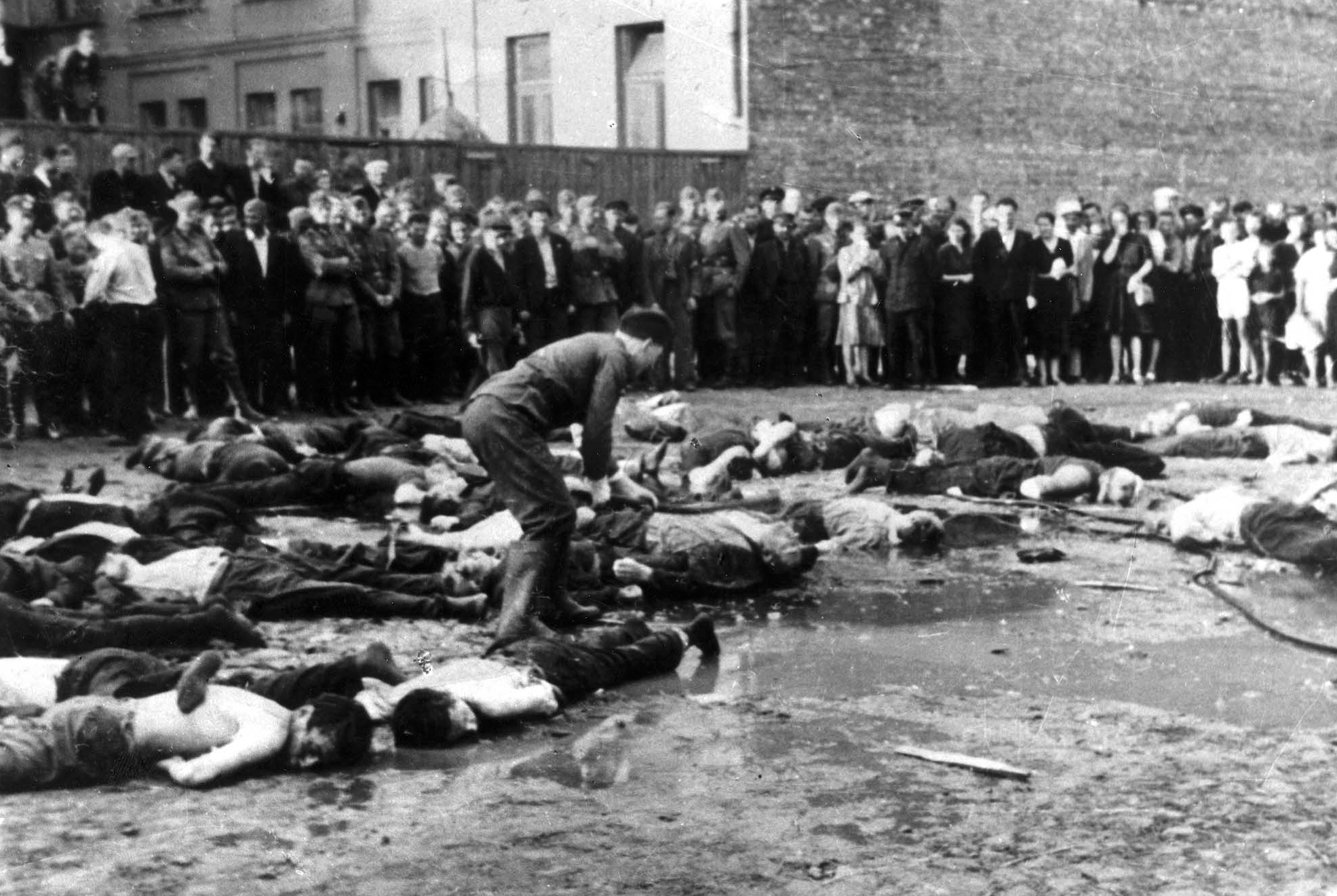
October 29, 1941: Nazi Germany's SS carries out its largest massacre of Lithuanian Jews, in the city of Kaunas. Unlike many of of their massacres, this was not in reprisal for an act of resistance. They just did it.

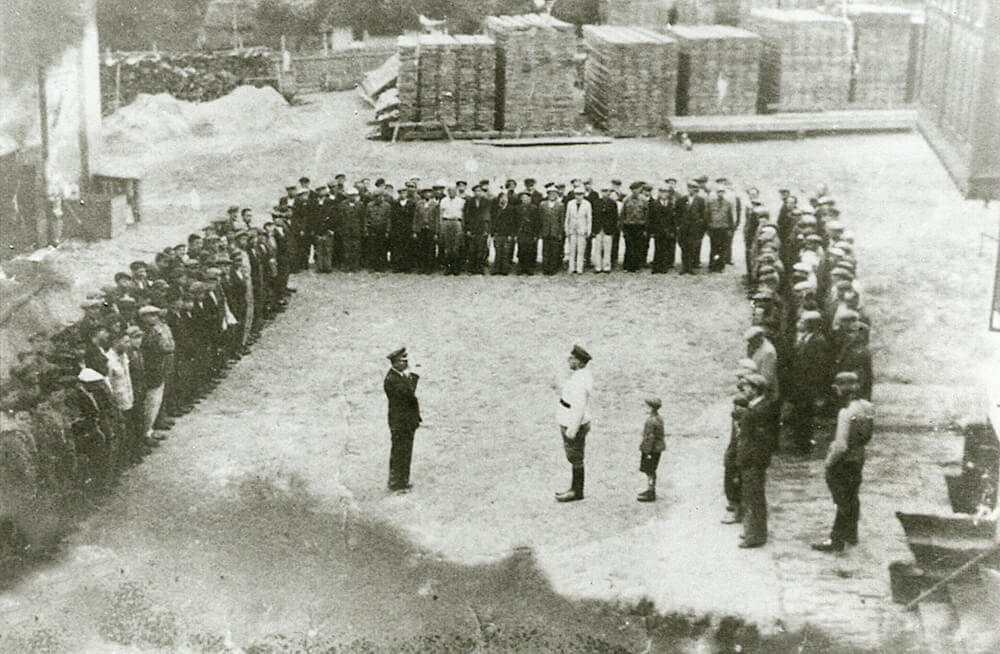
It started on October 4, when the Nazis destroyed a ghetto, killing almost all of its inhabitants. On October 28, SS-Rottenführer (section leader) Helmut Rauca, acting under the orders of SS-Obersturmführer (senior storm leader) Joachim Hamann, selected 9,180 Jewish men, women and children, about 1/3rd of the population of the largest ghetto in Kaunas. This included 2,007 men, 2,920 women, and 4,273 children. The next day, they were shot at the Ninth Fort, in huge pits dug in advance.

The Soviet Union's Red Army retook Kaunas on August 1, 1944. It would take until 1991 for Lithuania to liberate itself from Communism.

*

October 29, 1941 was a Wednesday. This was also the day on which former New York Yankees player Harvey Hendrick committed suicide. I have a separate entry for that event.

Baseball season had ended 23 days earlier, with the New York Yankees winning the World Series over the Brooklyn Dodgers. Football was in midweek. The NBA hadn't been founded yet. And the NHL season wouldn't start for another 3 days. So there were no scores on this historic day. 

Sunday, October 23, 2022

October 23, 1943: The Last Dance of Franceska Mann

October 23, 1943: Franceska Mann is executed at the Auschwitz concentration camp in Poland. She was 26 years old. A Pole, a Jew, and a famous ballerina in her time, she served as the distraction for an escape attempt, doing a striptease. Down to just one shoe, she held the other shoe in her hand, and used its sharpened heel to stab a guard. She was shot, but the guard died, too.

Born on February 4, 1917 in Warsaw as Franceska Manheimer, she was considered one of the most beautiful and promising dancers of her generation in Poland, both in the classical and modern repertoire.

At the beginning of the Second World War, she was a performer at the Melody Palace nightclub in Warsaw. But she became a prisoner, first in the Warsaw Ghetto, then at Auschwitz.

According to some versions of the story, the new arrivals were not registered, but were told that they had to be disinfected before crossing the border into Switzerland. They were taken into the undressing room next to the gas chamber and ordered to undress. Other versions of the story mention the events that follow taking place at either the selection ramp or a labor area of the camp.

Regardless of location, what is confirmed is that she fatally wounded the roll call, officer, Oberscharführer Josef Schillinger, using a pistol (many accounts say his own), and fired two shots, wounding him in the stomach. Then she fired a third shot, which wounded another SS Sergeant named Emmerich.

Many Resistance heroes of World War II, including women, have had their stories told in films. As of October 23, 2022, Franceska Mann has not been one of them. (UPDATE: In 2024, she was the subject of a documentary, titled Francesca, directed by Lena Chaplin -- no relation to Charlie Chaplin.)

*

October 23, 1943 was a Saturday. Baseball season had ended 12 days earlier, when the New York Yankees beat the St. Louis Cardinals in the World Series. The NBA hadn't been founded yet. And the NHL season started a week later.

Among the college football games played that day were these:

* Number 1 Notre Dame beat Illinois, 47-0 at Notre Dame Stadium in South Bend, Indiana.

* Number 2 Army beat Yale, 39-7 at the Yale Bowl in New Haven, Connecticut.

* Number 3 Navy beat Georgia Tech, 28-14 at Thompson Stadium in Annapolis, Maryland.

* Number 4 Purdue beat Iowa, 28-7 at Ross-Ade Stadium in West Lafayette, Indiana.

* Number 5 University of Pennsylvania beat Columbia, 33-0 at Franklin Field in Philadelphia.

* Number 6 College of the Pacific were defeated by Number 7 University of Southern California, 6-0 at the Los Angeles Memorial Coliseum.

* Rivalry, the Little Brown Jug: Number 10 Michigan beat Number 11 Minnesota, 49-6 at Michigan Stadium in Ann Arbor.

* Number 13 Texas A&M were held to a 0-0 tie by the University of Texas at Arlington (not the main campus in Austin), at Kyle Field in College Stadium.

* Number 14 March Field, the team fielded by what was then designated the U.S. Army Air Forces' 4th Air Force at Riverside, California, were upset by the University of Washington, 27-7 at Husky Stadium in Seattle.

* Rivalry: Number 18 Colorado College beat the University of Colorado, 16-6 at Colorado Stadium (now Folsom Field) in Boulder, Colorado.

* Among New Jersey's teams, Princeton had the week off, and, due to the wartime manpower drain, Rutgers only scheduled 5 games, and didn't start until the next week.

Sunday, October 16, 2022

October 16, 1943: The Raid of the Ghetto of Rome

October 16, 1943: Nazi Germany's Gestapo round up over 1,000 Jews in Rome, and deport them to the Auschwitz concentration camp in Poland. Only 16 of them survive World War II. The public silence of Pope Pius XII, the Bishop of Rome, on this raid casts a shadow over his legacy.

Born on March 2, 1876 in Rome, Eugenio Maria Giuseppe Giovanni Pacelli rose through the ranks of the Vatican before being elected Pope on March 2, 1939 (his 63rd birthday), taking the name Pius XII, as his much-admired immediate predecessor had been Pius XI. Adolf Hitler's Nazi Germany was already in Austria and Czechoslovakia, and before the year was out, he had invaded Poland and started World War II.
With Vatican City surrounded by the Metropolitan City of Rome, and thus by Italy, and thus by Benito Mussolini's Fascist government, allied with Hitler, there wasn't much that the Pope could do. The same was true of Communism: Joseph Stalin, the Premier of the Soviet Union, was told by British Prime Minister Winston Churchill, at the Tehran Conference, earlier in 1943, that the Pope might be able to help the Allied cause, and responded, "The Pope? How many divisions has he?" As in, army divisions.

Pius maintained the Vatican's neutrality, and refused to denounce the Nazis' persecution of the Jews, before the extent of the horrors of the concentration camps were known to the outside world. As Holocaust survivor, author and Nobel Peace Prize laureate Elie Wiesel put it, "We must always take sides. Neutrality helps the oppressor, never the victim. Silence encourages the tormentor, never the tormented." For that reason, some of have called Pius "Hitler's Pope."

This is grossly unfair. He organized relief efforts from Rome, and, through intermediaries in the Church, all over the world, helped get thousands of refugees, Jewish and otherwise, out of Nazi-controlled territories. He continued to lead the Church until his death on October 9, 1958.

The term "ghetto" originated in the limited area into which medieval Rome put Jews, and even in America, the word was used to describe poor Jewish neighborhoods before it was used for poor black ones -- many of which had once been poor Jewish ones. Ruby Goldstein, before becoming one of boxing's best referees, was a lightweight contender from the Lower East Side of Manhattan, nicknamed "The Jewel of the Ghetto."

*

October 16, 1943 was a Saturday. Scottish soccer star Tommy Gemmell, once of Celtic Football Club's 1967 "Lisbon Lions," was born on this day. So was Paul Rose, one of the Front de Libération du Québec (FLQ) terrorists who kidnapped Pierre Laporte, Minister of Labour for the Province of Quebec, as part of what became known as the October Crisis. Unlike his brother Jacques, Paul was not with the others when Laporte tried to escape, and the others killed him in the attempt.

Although England had suspended Football League and FA Cup play for the duration of The War, there was competition. The North London team I would one day support, Arsenal, played West London team Brentford to a 3-3 draw. The game was played at White Hart Lane, home of Arsenal's rivals Tottenham Hotspur, because the British government had appropriated the Arsenal Stadium, a.k.a. Highbury, for the war effort.

The baseball season had ended 5 days earlier, with the New York Yankees winning the World Series over the St. Louis Cardinals in 5 games. The NBA hadn't been founded yet. The NHL season started 2 weeks later.

There was football. But with the manpower drain of World War II, many military bases had football teams, and were scheduled against college teams. This also enabled the teams at the service academies to be better than usual. Indeed, Army won the National Championship in 1944 and 1945, almost did so in 1943 and 1946; and Navy finished the season ranked Number 4 in 1943 and '44, and Number 3 in '45.

On October 16, 1943, Army were ranked Number 2, and beat Columbia, 52-0 at Baker Field in Upper Manhattan; while Navy were ranked Number 3, and beat Penn State, 14-6 at Thompson Stadium in Annapolis, Maryland. Among the other games:

* Number 1 Notre Dame beat Wisconsin, 50-0 at Camp Randall Stadium, which had been built on an Army base in Madison, Wisconsin.

* Number 4 University of Pennsylvania beat Lakehurst Naval Air Station, the site of the Hindenburg disaster, 74-6 at Franklin Field in Philadelphia.

* Number 5 Purdue beat Ohio State, 30-7 at Ohio Stadium in Columbus, Ohio.

* Number 6 Duke beat their arch-rivals, North Carolina, 14-7 at Duke Stadium, later renamed Wallace Wade Stadium, in Durham, North Carolina.

* During the war, the University of Iowa was represented by a U.S. Navy Pre-Flight School, and "Iowa Pre-Flight" were ranked Number 7 on this day. They beat Missouri, 21-6 at Memorial Stadium (later Faurot Field) in Columbia, Missouri.

* Number 8 University of Southern California beat the University of San Francisco, 34-0 at Kezar Stadium in San Francisco.

* In New York City, in addition to Columbia's loss, City College of New York (CCNY) beat Brooklyn College, 22-6 at Kingsmen Field in Brooklyn; New York University (NYU) suspended their program for the 1942 and '43 seasons; and Fordham suspended their program for the 1943, '44 and '45 seasons.

And among New Jersey's teams, Rutgers had trouble scheduling opponents, and did not play their 1st game until October 30; while Princeton lost to Brown, 28-20 at Palmer Stadium in Princeton.

Saturday, October 15, 2022

October 15, 1940: "The Great Dictator" Premieres

October 15, 1940: The Great Dictator premieres, at a time in World War II when things are looking good for the real-life dictators. Charlie Chaplin directs, and plays 2 roles: A poor Jewish man identified only as "The Barber," for his profession, and living in the fictional European country of Tomania (a play on "ptomaine poisoning"); and that nation's dictator, Adenoid Hynkel, who physically resembles Adolf Hitler, except for having curly hair like Chaplin's silent-film era "Tramp" character.

Indeed, when Hitler first became famous, he was said to look like Chaplin, because of the small black mustache. They were born 4 days apart: Chaplin on April 16, 1889 in Walworth, South London; and Hitler on April 20, 1889 in Branau am Inn, northern Austria, on the border with Germany.

Paulette Goddard, Chaplin's real-life wife at the time, plays Hannah, the Barber's girlfriend, and would turn out to be the film's last surviving castmember, living until 1990. Jack Oakie plays Benzino Napaloni, dictator of Tomania's ally, Bacteria. He is meant to invoke Italy's Benito Mussolini, although his name is also a nod toward the chemical benzene and an earlier European dictator, Napoleon Bonaparte.

It is a "prince and the pauper" story: Through a turn of events involving an aide to Hynkel, remembering the Barber as a soldier who saved his life in the previous war, the Barber impersonates Hynkel, who is about to give a radio speech, to be broadcast all over the world (television is still in its infancy), which everyone believes will be justifying Tomania's upcoming invasion of Osterlich (based on Austria), an invasion that Bacteria supports. (Italy also borders Austria, and they've fought a few times.) But with Hynkel secretly out of the picture, the Barber, impersonating him, tells the world that he has had a change of heart, and wants peace, and human rights for all.

Chaplin, a known leftist, had continued to make silent films into the era of "talkies," and this was his 1st full-length sound film. Most people around the world had heard of him and, at the least, had seen his picture, but had never heard his voice before. So he put it to good use.

Chaplin would not have lasted in the #MeToo era. He married 4 times, to women then ages 16, 16, 26 (Goddard) and 18 (Oona O'Neill, daughter of playwright Eugene O'Neill, and together she and Charlie were grandparents of Game of Thrones actor Oona Chaplin). And he did get a little too friendly with the Soviet Union after World War II. But he was a pioneer of one of the great arts, and should still be celebrated.

*

October 15, 1940 was a Tuesday. Baseball season had just ended, with the Cincinnati Reds defeating the Detroit Tigers in the World Series. Football was in midweek. The NBA hadn't been founded yet. And the NHL season wouldn't begin until November 2. So there were no scores on this historic day.

Friday, October 14, 2022

October 14, 1943: The Sobibor Uprising

The memorial statue

October 14, 1943: The Sobibor Uprising occurs, at the concentration camp of the same name, in the town of the same name in eastern Poland.

It opened in April 1942, after the Wannsee Conference, and was the 1st camp specifically for extermination of Jewish prisoners, not just detention and slave labor, with earlier camps being adapted for extermination. There were 47 prisoners who managed to escape before the uprising.

After postponing their original escape plan by one day, due to a personnel changeover, the escape was launched. The prisoners killed 12 SS officers. There were 365 prisoners who escaped, but only 200 reached the nearby forest, and the rest were captured. There were 60 others who were stopped in their escape attempt. All were shot and killed.

The Nazi government ordered that the camp be shut down, burned to the ground, and a simple farm put on the site, so that no one would ever know what happened there. But the surviving escapees knew, and told the story. A statue of a mother and child was erected on the site of one of the gas chambers.

*

October 14, 1943 was a Thursday. Former Dallas Cowboys receiver Lance Rentzel and former Utah Jazz owner Karen Miller were born.

The baseball season ended 3 days earlier, when the New York Yankees beat the St. Louis Cardinals to win the World Series. Football was in midweek. The NBA hadn't been founded yet. And the NHL season didn't start until October 30. So there were no scores on this historic day.


Friday, October 7, 2022

October 7, 2023: Hamas Starts a War With Israel

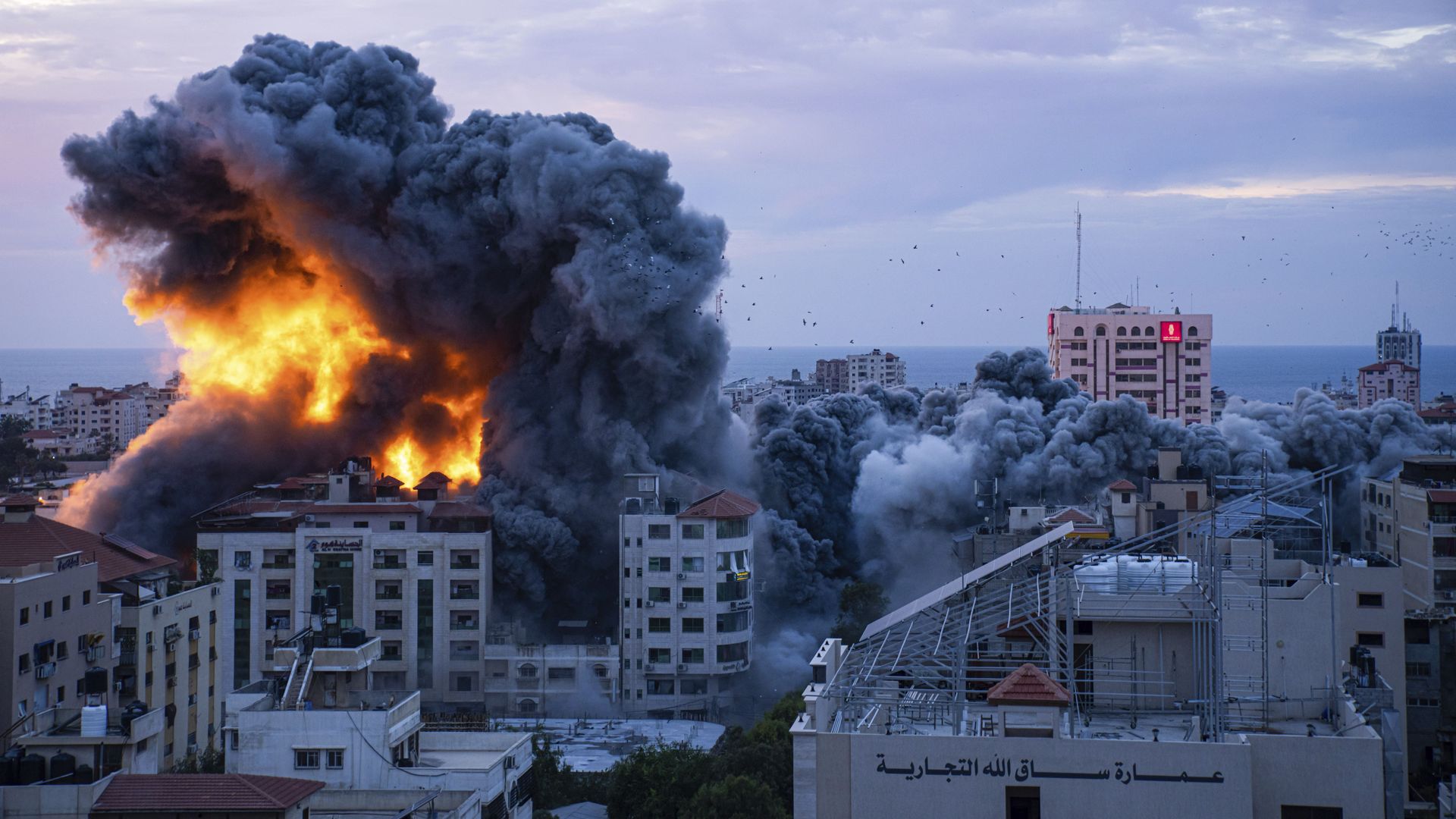
October 7, 2023: Palestinian militant groups, led by Hamas, launch a large-scale invasion of Israel from the Gaza Strip.

NOTE: While these entries are dated 2022, I decided to backdate the posting dates of events from 2023 onward to the same date in 2022.

It began with an early-morning rocket barrage of over 3,000 missiles, killing at least 1,200 people in one day. It was the largest murder of Jewish people in a single day since the end of the Holocaust, 78 years earlier. It included a massacre at the Re'im Music Festival, 6 miles in from the border with Gaza, in which over 260 people were killed.

To put this in perspective: As of 2023, Israel is home to 9.8 million people, about 1/34th that of the U.S. Proportionally, 1,200 times 34 = 40,800. Not only is that proportionally equivalent to over 13 "9/11s," but it's about 2/3rds of what the U.S. lost over 8 years in Vietnam -- in one day.

The Gaza Strip is about 25 miles long, and about 4 miles wide. Not that Israel is a large nation: They are about 300 miles north-to-south, and 43 miles east-to-west from Jerusalem to Tel Aviv. Jerusalem traffic is notoriously bad, but, theoretically, a driver can cross Israel in less than an hour.

Because Israel has limited the Palestinians to Gaza, and to parts of the West Bank, people all over the world accuse Israel of being an "apartheid state." This is a lie. Arabs living in Israel have more rights there than they do in countries where they are the overwhelming majority.

But the Arabs living in Gaza, which Israel willingly gave up in 2005, elected Hamas to lead them the following year. The Arabs living in the West Bank subsequently elected a Palestinian government without Hamas.

"Hamas" is an Arabic word meaning "zeal," "strength" or "bravery." It is also an acronym of the Arabic phrase "Harakah al-Muqawamah al-Islamiyyah," meaning "Islamic Resistance Movement." The terrorist organization with the name was founded in 1987, with the First Intifada. They are Islamic fundamentalists, and have no interest in the freedom of anyone: Not the Palestinians, and certainly not the Israelis.

It has long been said that if the Arabs laid down their arms, the would be no more war; but if the Israelis laid down their arms, there would be no more Israel. Hamas, and their affiliated groups like the Iranian-backed Hezbollah (meaning "Army of God"), have long wanted to "drive them into the sea." Which is ironic, because, if Israel really wanted to, it could do that to the people of Gaza.

With the war that began on October 7, 2023, it became clear: The Israeli position is, "This is our land, and as soon as you begin to leave us alone, we will do the same to you": while the Hamas position is, "This is our land, and we are going to kill you all until those of you who are left leave it." Hamas has released videos showing what the BBC called "ISIS-level savagery."

Why did Hamas act now? It has been suggested that it was because Israel was moving closer to a diplomatic agreement with Saudi Arabia, the capital of the Islamic world, and Hamas couldn't handle that.

Benjamin Netanyahu, in his 3rd go-round as Prime Minister, and the longest-serving -- and most corrupt -- holder of that post, had made Israel's security his reason for staying in office. He failed in a spectacular way. Yet he had the country convinced that only he could protect the country from then on. Americans had seen this before, with George W. Bush after the 9/11 attacks.

The Saudis stayed quiet. The only nation openly on Hamas' side was Iran -- the government, that is. The people of Iran, as they demonstrated at a soccer game, were not. Most of the world has sided with Israel. Even the Federal Republic of Germany, the successor state to the perpetrator of the Holocaust, has expressed support, putting a hologram of the Israeli flag on the Brandenburg Gate in the capital of Berlin.
Israel, of course, retaliated. For the 1st time since the Yom Kippur War, 50 years to the week earlier, the nation declared war on an enemy. At the time of this writing, the war was in its early stages.

UPDATE: Eventually, the propaganda campaign launched by Hamas convinced much of the world that the Palestinians were innocent victims of acts of genocide -- not the guilty perpetrators of them, as they were on October 7, 2023.

The world turned against Israel, and a wave of anti-Semitism swept over America. Millions of people refused to support first Joe Biden, then Kamala Harris, in the 2024 Presidential election, because they "supported genocide," which was a pernicious and stupid lie. It probably cost Kamala the election, and led to the re-installation of Donald Trump.

Back in office, Trump announced plans for the redevelopment of Gaza, to do to it what he couldn't do to Atlantic City: Turn it into a personal fiefdom. Netanyahu was not willing to go along with this. But Netanyahu wanted to launch a war against Iran, and Trump was willing to go along with this, to distract Americans from the declining economy and the Epstein Files scandal.

On February 28, 2026, with most but not all of the hostages having been returned -- some alive, some dead -- and the Gaza War having no end in sight, Trump and Netanyahu started a war with Iran. Over its 1st month, it had done neither country any good.

It has never occurred to the people who refused to vote for Harris that they bear some responsibility for this. They loved the Palestinians more than they loved their fellow Americans, but Trump was far worse for both peoples than Harris would have been.

*

October 7, 2023 was a Saturday. Baseball began all 4 of its Division Series. In the American League, the Texas Rangers beat the Baltimore Orioles, 3-2 at Oriole Park at Camden Yards in Baltimore; 
and the Houston Astros beat the Minnesota Twins, 6-4 at Minute Maid Park (now Daikin Park) in Houston. In the National League, the Philadelphia Phillies beat the Atlanta Braves, 3-0 at Truist Park in the Atlanta suburb of Cumberland, Georgia; and the Arizona Diamondbacks beat the Los Angeles Dodgers, 11-2 at Dodger Stadium in Los Angeles.

Some of the notable college football games that were played that day:

* Number 1 Georgia beat Number 20 Kentucky, 51-13 at Sanford Stadium in Athens, Georgia.

* In the rivalry known as, with a trophy named, the Little Brown Jug, Number 2 Michigan beat Minnesota, 52-10 at Huntington Bank Stadium in Minneapolis.

* In the Red River Rivalry, Number 3 Texas were upset by Number 12 Oklahoma, 34-30 at the Cotton Bowl in Dallas.

* Number 4 Ohio State beat Maryland, 37-17 at Ohio Stadium in Columbus.

* Number 5 Florida State beat Virginia Tech, 39-17 at Doak Campbell Stadium in Tallahassee, Florida.

* Number 9 University of Southern California (USC) needed overtime to beat Arizona, 43-41 at the Los Angeles Memorial Coliseum.

* Number 10 Notre Dame were upset by Number 25 Louisville, 33-7 at L&N Federal Credit Union Stadium in Louisville.

* Number 11 Alabama won a hard-fought contest against nearly-ranked Texas A&M, 26-20 at Kyle Field in College Station, Texas. As good as Nick Saban's Crimson Tide have been the last few years, the Aggies are one of the few teams to regularly give them trouble.

* Number 13 Washington State were upset by the University of California at Los Angeles (UCLA), 25-17 at the Rose Bowl in the Los Angeles suburb of Pasadena, California.

* Number 17 Miami were upset by Georgia Tech, 23-20 at Hard Rock Stadium in suburban Miami Gardens, Florida.

* Number 21 Missouri were mildly upset by Number 23 Louisiana State University (LSU), 49-39 at Faurot Field in Columbia, Missouri.

* And Rutgers lost to Wisconsin, 24-13 at Camp Randall Stadium in Madison, Wisconsin.

December 31, 1999 & January 1, 2000: The Millennium

December 31, 1999:  The Millennium arrives. The people of planet Earth survived. At a terrible cost. But we hadn't destroyed ourselves. ...