Showing posts with label pro football hall of fame. Show all posts

Friday, September 16, 2022

September 17, 1920: The NFL Is Founded

September 17, 1920: The National Football League is founded. As the website of the Pro Football Hall of Fame says:
 
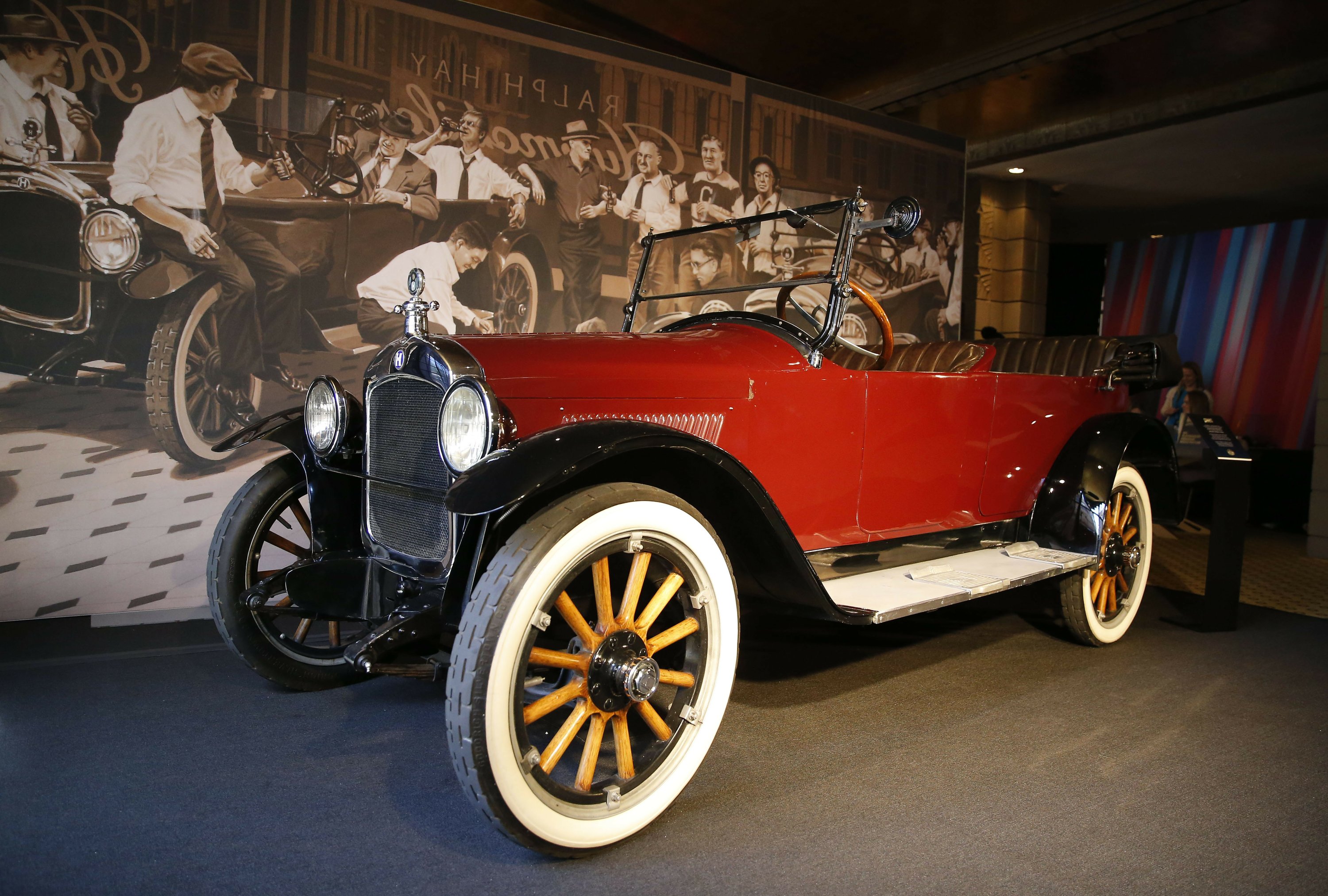
On September 17, 1920, a group of men gathered in Canton, Ohio at the Hupmobile showroom of Ralph Hay, owner of the hometown Bulldogs. The result of the meeting was the birth of the National Football League.
First known as the American Professional Football Association (APFA) and later renamed the NFL in 1922, the league's first president was Jim Thorpe. Without a doubt the most famous athlete of his time, Thorpe helped add credibility to the sport. While not front-page news in 1920, the league's formation was the start of a journey that has made the NFL this country's favorite sport.
Pro football began in 1892 in Pittsburgh, Pennsylvania when former Yale star William "Pudge" Heffelfinger was paid a notable sum of $500 to play in a single game for the Allegheny Athletic Association on November 12. For nearly the next three decades, pro football faced its ups and downs as the game was played primarily in small towns throughout western Pennsylvania and the Midwest.
Many problems plagued the game of pro football with increasing regularity. The need for a sense of order brought these men, which among others included George Halas, together in Canton to form the first professional football league. Eleven franchises were represented at the meeting: The Akron Pros, the Canton Bulldogs, the Chicago Cardinals, the Cleveland Indians, the Dayton Triangles, the Decatur Staleys, the Hammond Pros, the Massillon Tigers, the Muncie Flyers, the Rock Island Independents and the Rochester Jeffersons.
The first matter of business was Massillon's withdrawal from professional football for the 1920 season. The team never joined the NFL. However, by season's start, the membership also included the Buffalo All-Americans, Chicago Tigers, Columbus Panhandles, and Detroit Heralds. Only two of the franchises still exist today. The Decatur Staleys moved to Chicago in 1921 and were renamed the Bears one year later. The Chicago Cardinals franchise now calls Arizona home.
On September 26, 1920, the first game featuring a team from the APFA was played at Douglas Park in Rock Island, Illinois. The Independents were victorious as they rolled to a 48-0 win over the St. Paul Ideals. One week later, two league teams battled head-to-head for the fist time. The Dayton Triangles shutout the Columbus Panhandles, 14-0 in Triangle Park. (Video: Two minutes of pro football history: The NFL's first games)

The Akron Pros, with an 8-0-3 regular season record, were crowned the league's first champion.

*

The meeting was held in the Odd Fellows Building in Canton. The ground floor included the showroom of the Hupmobile dealership owned by Ralph Hay, who had used his profits from that dealership to buy the most successful pro football team of the 1910s, the Canton Bulldogs, who had once included Thorpe.

Hay was a key figure in the NFL's founding. Oddly, he has never been elected to the Pro Football Hall of Fame. And I don't know why. True, he only owned the Bulldogs for 4 years, but those 4 years included the 1919 Ohio League title, the closest thing pro football then had to a "World Championship"; and the 1922 NFL title. (He then sold them, and they won the title again in 1923 and '24.)

But it's not like he is known to have done anything to not deserve election. As far as I can tell, he was reasonably well-liked by his fellow team owners, and there seems to be no scandal attached to his name. The only reason he sold the Bulldogs was because he was losing money. In 1988, the Professional Football Researchers Association -- the game's answer to baseball's SABR (Society for American Baseball Research) -- established the Ralph Hay Award, for "lifetime achievement in pro football research and historiography." So why isn't he in the Hall of Fame?

At any rate, being the founding city of the NFL is the reason that, when the Pro Football Hall of Fame was established, Canton was chosen as the location for its members' gallery and museum, just as Cooperstown, New York was (erroneously) thought to be the location of the invention of baseball (in 1839); and Springfield, Massachusetts was chosen for the Basketball Hall of Fame because the sport absolutely was invented there, in 1891.

The Hockey Hall of Fame is in Toronto, because that's where the NHL's offices were. It's not clear where or when ice hockey was invented, although what's recognized as the 1st organized game was played in 1875 in Montreal.

It is a common belief that the actual Hall of Fame complex, which includes Tom Benson Hall of Fame Stadium (formerly Fawcett Stadium, and now named for the late New Orleans Saints owner who financed its renovation), the site of the annual preseason Hall of Fame Game, was built on the site of the showroom.

But this is incorrect: The Odd Fellows Building site is now occupied by the Frank T. Bow Federal Building, at 201 Cleveland Avenue SW, downtown. (Bow was a Canton native who served in Congress from 1951 to 1972.) The Hall of Fame is 2 1/2 miles to the northwest, across Nimishillen Creek, at 2121 George Halas Drive NW.

(Halas usually gets the most credit for founding the NFL, since, unlike Hay, he was involved beyond the founding era, all the way until his death in 1983, the last survivor of the founders. Halas Drive did not exist until the Hall complex was built, so it wasn't named anything before it was named for him.)

And what, you may ask, are the Odd Fellows? They're a fraternal organization, like the Masons and the Elks, made up of "people who exercised unusual, miscellaneous odd trades."
*
Needless to say, there were no NFL games played on September 17, 1920. But there were Major League Baseball games played that day, a Friday:
* The New York Yankees lost to the Chicago White Sox, 6-4 at Comiskey Park in Chicago. Babe Ruth went 0-for-3, although he did draw a walk. Shoeless Joe Jackson went 1-for-3 with an RBI triple, not knowing that he was days away from being suspended, never to play again.
* The Brooklyn Robins (Dodgers) beat the Cincinnati Reds, 3-2 at Ebbets Field in Brooklyn.
* The New York Giants beat the Pittsburgh Pirates, 4-3 in 10 innings, at the Polo Grounds in New York.
* The Chicago Cubs beat the Philadelphia Athletics, 3-1 at Shibe Park in Philadelphia.
* The St. Louis Cardinals beat the Boston Braves, 9-4 at Braves Field in Boston. Rogers Hornsby went 2-for-5.
* The Cleveland Indians beat the Washington Senators, 9-3 at League Park in Cleveland. Tris Speaker went 1-for-3 with an RBI, and Bill Wambsganss, not knowing he would soon pull off an unassisted triple play in a World Series game, hit a home run.
* The Detroit Tigers beat the Boston Red Sox, 14-13 in 12 innings, at Navin Field (later renamed Tiger Stadium) in Detroit. Ty Cobb went 1-for-3 with 4 walks, and Bobby Veach hit a home run. And that wasn't the most runs anybody scored on the day:
* The St. Louis Browns beat the Philadelphia Athletics, 17-8 at Sportsman's Park in St. Louis. George Sisler went 4-for-5 with a walk and 2 RBIs.

Wednesday, September 7, 2022

September 7, 1963: The Pro Football Hall of Fame Opens

The Hall of Fame, with Benson Stadium in the background

September 7, 1963: The Pro Football Hall of Fame opens in Canton, Ohio, about 55 miles south of Cleveland. The location was chosen because the National Football League was founded in the city in 1920.

The opening includes an induction ceremony, with 17 charter members of the Hall:

* George "Papa Bear" Halas, founder, owner, coach, end, Chicago Bears -- yes, he played.
* Joseph F. Carr, founder, Columbus Panhandles; NFL President, 1921-39.
* Earl "Curly" Lambeau, founder, owner, coach, running back, Green Bay Packers.
* Tim Mara, founder, owner, New York Giants.
* Bert Bell, founder, owner, Philadelphia Eagles; Commissioner, 1946-59.
* George Preston Marshall, founder, owner, Washington Redskins.
* Jim Thorpe, running back, Canton Bulldogs; figurehead league President, 1920.
* Wilbur "Pete" or "Fats" Henry, tackle, Canton Bulldogs.
* Harold "Red" Grange, "the Galloping Ghost," running back, Chicago Bears.
* Bronislau "Bronko" Nagurski, running back, Chicago Bears.
* Ernie Nevers, running back, Chicago Cardinals.
* Earl "Dutch" Clark, quarterback, Detroit Lions.
* Cal Hubbard, tackle, Green Bay Packers -- also in Baseball Hall as umpire.
* Don Hutson, receiver, Green Bay Packers.
* John "Johnny Blood" McNally, running back, Green Bay Packers.
* Mel Hein, center, New York Giants.
* "Slingin'" Sammy Baugh, quarterback, Washington Redskins.

Carr had died in 1939, Henry in 1952, Thorpe in 1953, Bell and Mara in 1959. The rest were alive and on hand for the ceremony. Lambeau died in 1965, Marshall in 1969, Hubbard in 1977, Clark in 1978, Halas in 1983, McNally in 1985, Nagurski in 1990, Grange in 1991, Hein in 1992, Hutson in 1997, and Baugh was the last survivor, living until 2008.

Halas, McNally and Grange would be interviewed in 1976 for an NFL Films production about the early days of the game, titled Old Leather.

Hubbard was also elected to the Baseball Hall of Fame, as an umpire. He is the only member of both of those Halls of Fame.

So Mara and Hein -- and, while they only briefly played for Big Blue, Thorpe, Henry and Hubbard -- were the first New York Giants in the Hall of Fame. The first New York Jet? Coach Weeb Ewbank, elected 1978. The first Jet player, as you might guess, was Joe Namath, in 1985.

Another Giant, 1950s safety Emlen Tunnell, once the NFL's all-time leader in interceptions, was elected in 1967, making him the 1st black player elected.

It's "The Pro Football Hall of Fame," not "The National Football League Hall of Fame." Yet there is one player in it who never played in the NFL: Billy Shaw, who played 9 seasons as a guard for the Buffalo Bills, all in the American Football League of the 1960s before the merger with the NFL.

Some players in the Hall had significant performances in the AFL, the All-America Football Conference of the late 1940s, the United States Football League of the early 1980s, and the Canadian Football League. However, no player who only played in the CFL has been elected to Canton. (As with "Cooperstown" for baseball, the Hall's location, "Canton," has become a byword for the Hall itself.)

Each member of the Hall is given a yellow jacket with the Hall of Fame logo on it, similar to the green jacket worn by the winners of the Masters golf tournament; and a bronze bust of himself, a copy of which goes into the Hall of Fame Gallery. Because of the criminal charges against him, O.J. Simpson is the one member whose bust cannot be displayed, for fear of vandalism.

The address of the Hall of Fame is 2121 George Halas Drive NW. Adjacent is Tom Benson Hall of Fame Stadium, site of the annual season-opening exhibition Hall of Fame Game. Formerly Fawcett Stadium, it was renamed for the late New Orleans Saints owner, who funded its renovation.

*

September 7, 1963 was a Saturday. The college football season started the next week. So did the NFL season. The AFL played 2 games on this day. The Oakland Raiders beat the Houston Oilers, 24-13 at Jeppesen Stadium in Houston. And the Kansas City Chiefs, in their 1st game under that name after being the AFL's flagship franchise, the Dallas Texans, beat the Denver Broncos 59-7 at Bears Stadium (later renamed Mile High Stadium) in Denver.

These baseball games were played:

* The New York Yankees beat the Detroit Tigers, 11-6 at Yankee Stadium. The Yankees scored 8 runs in the 5th inning. Mickey Mantle went 2-for-4. Roger Maris went 3-for-5 with a home run and 4 RBIs. Al Kaline did not play for the Tigers in this game.

* The New York Mets lost to the Cincinnati Reds, 4-2 at Crosley Field in Cincinnati. Frank Robinson did not play in this game for the Reds. Rookie Pete Rose went 0-for-4.

* The Milwaukee Braves beat the Philadelphia Phillies, 6-4 at Connie Mack Stadium in Philadelphia. Shortstop Bobby Wine went 3-for-4, raising his batting average to .212, but his error in the top of the 10th inning doomed the Phils. Hank Aaron and Joe Torre hit home runs for the Braves.

* The Boston Red Sox beat the Baltimore Orioles, 4-1 at Memorial Stadium in Baltimore. Carl Yastrzemski went 1-for-4. Brooks Robinson went 2-for-4.

* The Cleveland Indians beat the Washington Senators, 9-2 at District of Columbia Stadium (later Robert F. Kennedy Stadium) in Washington.

* The St. Louis Cardinals beat the Pittsburgh Pirates, 6-5 at Forbes Field in Pittsburgh. The Cards scored 2 runs in the 8th and 1 in the 9th, on an RBI single by Curt Flood, to come from behind to win this game. The runner he drove in was Bob Gibson, pinch-running for Stan Musial, in his final month as an active player. He had drawn a walk as a pinch-hitter. Roberto Clemente also appeared only as a pinch-hitter, and did not reach base.

* The Minnesota Twins beat the Chicago White Sox, 4-2 at Comiskey Park in Chicago. Rich Rollins singled home the winning runs in the top of the 12th inning. Harmon Killebrew went 0-for-4.

* The Houston Colt .45s beat the Chicago Cubs, 2-1 at Colt Stadium in Houston. Richard "Turk" Farrell, with 1 run on 4 hits, 1 walk, and 10 strikeouts, outpitched Dick Ellsworth, with 2 runs on 5 hits, 3 walks and 11 strikeouts. Ernie Banks only appeared as a defensive replacement, and did not come to bat. The Colts became the Houston Astros in 1965.

* The Kansas City Athletics beat the Los Angeles Angels, 5-2 at Dodger Stadium in Los Angeles, where the Angels were groundsharing while their Anaheim stadium was being built.

* And speaking of the Dodgers, they were beaten by their arch-rivals, the San Francisco Giants, 5-3 at Candlestick Park in San Francisco. Juan Marichal outpitched Don Drysdale. Willie Mays, Willie McCovey and Orlando Cepeda all hit home runs. The Dodgers went on to win the World Series, anyway.

And in English soccer, Arsenal beat Manchester-area team Bolton Wanderers, 4-3 at the Arsenal Stadium, a.k.a. Highbury, in North London.
December 31, 1999 & January 1, 2000: The Millennium

December 31, 1999:  The Millennium arrives. The people of planet Earth survived. At a terrible cost. But we hadn't destroyed ourselves. ...