Showing posts with label winter olympics. Show all posts

Monday, February 28, 2022

February 28, 1960: The U.S. Hockey Team Wins Its 1st Gold Medal

February 28, 1960: The U.S. team wins the Gold Medal in hockey at the Winter Olympics in Squaw Valley, California, in the Sierra Nevada mountains, near Lake Tahoe. In 2022, the town changed the name to Olympic Valley, to remove the insensitive Native American name.

Despite being the 2nd-biggest hockey-player-producing country behind Canada, where the sport was invented, America had struggled in the sport in the Olympic Games. We had won the Silver Medal at the 1st tournament in 1920, and again in 1924, '32, '52 and '56; and the Bronze Medal in 1936; but won no medal in 1928 and '48, and had never won the Gold Medal.

All hockey games at the 1960 Winter Olympics, and also the figure skating events, were held at the Blyth Arena, which was torn down in 1983.
The U.S. was put into Group C, and beat Czechoslovakia 7-5 on February 19, and Australia 12-1 on February 21. (This remains the only time Australia has entered a hockey team into the Winter Olympics.) This put them into the final round-robin. They beat Sweden 6-3 on February 22, Germany 9-1 on February 24, and stunned Canada 2-1 on February 25.

With that victory under their belts, the U.S. team had no reason to fear the Soviets, and beat them 3-2 on February 27. That left only a rematch with Czechoslovakia on February 28, and it was no contest: The U.S. won, 9-4. Canada won the Silver, the Soviets the Bronze.

Hail the Champions, coached by Jack Riley of Boston, then the head coach at the U.S. Military Academy at West Point, New York:

* Goaltenders: Jack McCartan of St. Paul, Minnesota; and Lawrence Palmer of Malden, Massachusetts. Palmer never got onto the ice: McCartan, who later briefly played for the New York Rangers, on whose uniform the U.S. team's was based, played every minute of every game.
* Defensemen: John Kirrane of Brookline, Massachusetts; Rod Paavola of Hancock, Michigan; Edwyn Owen of St. Louis Park, Minnesota; John Mayasich of Eveleth, Minnesota.
* Forwards: Bill Cleary of Cambridge, Massachusetts; Bob Cleary, Bill's brother and Harvard University teammate, also of Cambridge, Massachusetts; Dick Rodenheiser of Malden, Massachusetts; Eugene Grazia of West Springfield, Massachusetts; Bob McVey of Hamden, Connecticut; Weldon Olson of Marquette, Michigan; Dick Meredith of South Bend, Indiana; Paul Johnson of West St. Paul, Minnesota, Roger Christian of Warroad, Minnesota; Bill Christian, Roger's brother, also of Warroad, Minnesota; Tom Williams of Duluth, Minnesota.

The U.S. team won the Gold again in 1980, with an even bigger upset over the Soviets; the Silver Medal in 1972, 2002 and '10; but even with the admission of NHL players from 1998 onward, the rest of the world has caught up to America and Canada, and even with post-Soviet Russia.

When the U.S. won the Gold Medal in 1980, the head coach was Herb Brooks, the last player cut from the 1960 team, although he did play on the 1964 U.S. team that did not medal. Bill Christian's son Dave played on the 1980 team.

Williams died in 1992, Paavola in 1995, Owen in 2007, Roger Christian in 2011, Grazia in 2014, Bob Cleary in 2015, Riley, Kirrane and Johnson in 2016. As of February 28, 2022, McCartan, Mayasich, Olson, Rodenheiser, Meredith, McVey, Palmer, Bill Christian and Bill Cleary are still alive.

The 1980 win was shown on television (ABC, albeit on tape delay), and has been shown time and time again, so that we all remember it as "The Miracle On Ice," even those of us who weren't born yet. The 1960 win was not shown on television, and has become known as "The Forgotten Miracle."

*

February 28, 1960 was a Sunday. Baseball and football were out of season. There were 3 games played in the NBA:

* The New York Knicks lost to the Boston Celtics, 129-125 at the old Madison Square Garden. Richie Guerin scored 39 points in defeat.

* The Philadelphia 76ers beat the Detroit Pistons, 113-111 at Cobo Hall (now Huntington Place) in Detroit.

* And the St. Louis Hawks beat the Cincinnati Royals, 122-105 at the Kiel Auditorium in St. Louis.

And there were 2 games in the NHL. The New York Rangers lost to the Toronto Maple Leafs, 5-3, also at the old Madison Square Garden. And the Chicago Black Hawks beat the Detroit Red Wings, 5-2 at the Chicago Stadium. The Montreal Canadiens and the Boston Bruins were not scheduled.

Also on this day, Dorothy Stratten was born. The model was named Playboy magazine's Playmate of the Year in 1980, after she was murdered by her husband, whom she was divorcing.

Wednesday, February 23, 2022

February 23, 1980: Eric Heiden: 5 Gold Medals, 5 Olympic Records

With his Medals arranged so that they looked
like the 5-ringed Olympic logo.

February 23, 1980: It is the next-to-last day of the Winter Olympics, held in Lake Placid, New York. When the medals are tallied up the next day, the United States of America, the host nation, will have won 6 Gold Medals. The 6th will come on the last day, in the Final of the hockey tournament, in a win over Finland, following the legendary win over the Soviet Union.

The other 5 were all won by 1 man: Speed skater Eric Heiden.

Eric Arthur Heiden was born on June 14, 1958 in Madison, Wisconsin, and grew up there, as did 2 of the hockey team's players, Mark Johnson and Bob Suter. His sister, Beth Heiden, was also an outstanding athlete, and won a Bronze Medal in the 3,000 meters in women's speed skating at Lake Placid. Had the U.S. not boycotted the Summer Olympics in Moscow, she, as a cyclist, would have had the chance to become one of the few athletes ever to compete in both the Winter and the Summer Olympics -- and to do so in the same year, which, with the alternating schedule that began in 1994, is no longer possible.

Eric was the favorite in all 5 men's speed skating events in Lake Placid because he had won the World Allround Championships in each of the last 3 years: In 1977 in Heerenveen, the Netherlands; in 1978 in Gothenburg, Sweden; and in 1979 in Oslo, Norway.

On February 15, he won the shortest event, the 500 meters, in 38.03 seconds. Heiden was skating at an average of 29.42 miles per hour. For comparison's sake: Bobby Hull, then wrapping up his hockey career, is generally regarded as the fastest skater in NHL history, topping out at 29.7 MPH.

On February 16, Heiden won the 5,000 meters in 7 minutes, 2.29 seconds. On February 19, he won the 1,000 meters in 1 minute, 15. 18 seconds. On February 21, he won the 1,500 meters in 1:55.44. And on February 23, he won the longest race, the 10,000 meters, in 14:28.13. In all 5 events, he set a new Olympic record. In the 10,000, he set a new world record.

He had won more Gold Medals, by himself, than any country at the Games, except for the Soviet Union (which won 10) and East Germany (9) -- and, of course, those countries' medal hauls were always suspicious. Even without taking the record times into account, Heiden remains the most successful performer at any single Winter Olympics. He was awarded the James E. Sullivan Memorial Award, given to the American amateur athlete of the year.

After the Olympics, Heiden became an orthopedic surgeon, as was his father before him. He lived in Sacramento, California, and was the team physician for the NBA's Sacramento Kings and the WNBA's Sacramento Monarchs. In 2002, 2006, 2010 and 2014, he was team physician for the U.S. Olympic speed skating team. 

*

February 23, 1980 was a Saturday. Baseball and football were out of season. There were 8 games played in the NBA:

* The New York Knicks lost to the Washington Bullets, 112-97 at the Capital Centre in the Washington suburb of Landover, Maryland.

* The New Jersey Nets beat the San Antonio Spurs, 129-123 at the Rutgers Athletic Center (now the Jersey Mike's Arena) in Piscataway, New Jersey. George Gervin scored 41 points in defeat for the Spurs.

* The Portland Trail Blazers beat the Cleveland Cavaliers, 115-100 at The Coliseum in the Cleveland suburb of Richfield, Ohio.

* The Phoenix Suns beat the Indiana Pacers, 113-105 at the Market Square Arena in Indianapolis.

* The Chicago Bulls beat the San Diego Clippers, 110-102 at the Chicago Stadium. Lloyd "World B." Free scored 35 points in defeat for the Clippers.

* The Milwaukee Bucks beat the Kansas City Kings, 94-72 at the Kemper Arena (now the Hy-Vee Arena) in Kansas City.

* The Los Angeles Lakers beat the Houston Rockets, 112-100 at The Forum outside Los Angeles in Inglewood, California.

* And the Philadelphia 76ers beat the Golden State Warriors, 103-100 at the Oakland Coliseum Arena.

There were 9 games played in the NHL:

* The New York Rangers lost to the Minnesota North Stars, 6-3 at the Metropolitan Sports Center in the Minneapolis suburb of Bloomington, Minnesota.

* The New York Islanders beat the St. Louis Blues, 3-2 at the St. Louis Arena, then known as the Checkerdome, due to the team's ownership by St. Louis-based Ralston Purina, with their "Checkerboard Square" logo.

* In an "Original Six" matchup, the Montreal Canadiens beat the Detroit Red Wings, 5-1 at the Montreal Forum.

* The Washington Capitals beat the Chicago Black Hawks, 6-2 at the Capital Centre. Yes, it hosted an NBA game and an NHL game on the same day.

* The Hartford Whalers beat the Atlanta Flames, 6-5 at The Omni in Atlanta.

* The Pittsburgh Penguins beat the Quebec Nordiques, 2-1 at the Civic Arena in Pittsburgh.

* The Toronto Maple Leafs beat the Winnipeg Jets, 9-3 at the Winnipeg Arena. Rock Saganiuk had a had trick.

* The Philadelphia Flyers beat the Los Angeles Kings, 5-1 at The Forum. So that's 2 arenas that hosted an NBA game and an NHL game on this day.

* The Boston Bruins and the Vancouver Canucks played to a tie, 4-4 at the Pacific Coliseum in Vancouver.

* And the Buffalo Sabres, the Colorado Rockies, the Edmonton Oilers were not scheduled.

And in English soccer, Arsenal beat Manchester-area team Bolton Wanderers, 2-0 at the Arsenal Stadium, a.k.a. Highbury, in North London.

Tuesday, February 22, 2022

February 22, 1980: The Miracle On Ice

February 22, 1980: The "Miracle On Ice" occurs, as the American national hockey team beats the Soviet Union, 4-3 at what was then named the Olympic Fieldhouse in Lake Placid, New York.

It was considered a miracle because of the records of the teams involved:

* The United States: Won the Gold Medal in 1960; the Silver Medal in 1920, 1924, 1932, 1952, 1956 and 1972; the Bronze Medal in 1936; 5th in 1964 and 1976; 6th in 1968; 9th and last in 1948; and did not compete in 1928.

* The Soviet Union: Beat the U.S. for the Gold Medal in 1956; lost to the U.S. in the Semifinal and won the Bronze Medal in 1960; won the Gold Medal in 1964; won the Gold Medal in 1968; beat the U.S. on the way to winning the Gold Medal in 1972; and beat the U.S. on the way to winning the Gold Medal in 1976.

In addition, the Soviets had taken on professional teams with notable success: They won 3 of the 1st 5 games of a "Summit Series" against a team of NHL All-Stars before losing the last 3 and the series in 1972; easily defeated a team of World Hockey Association All-Stars in 1974; only lost 1 game in a 1976 tour of NHL teams; and embarrassed an NHL All-Star team in a "Challenge Cup" at Madison Square Garden in New York in 1979.

And in the U.S. team's last warmup game before the 1980 Winter Olympics, they lost to the Soviets, 10-3.

This was the U.S. team going into Lake Placid, coached by Herb Brooks of the University of Minnesota:

* From Massachusetts, all from Boston University: Goaltender Jim Craig, right wing and team Captain Mike Eruzione, right wing Dave Silk and defenseman Jack O'Callahan.

* From Michigan, but attending Ohio's Bowling Green State University: Defenseman Ken Morrow and center Mark Wells.

* From Wisconsin, and the University of Wisconsin: Center Mark Johnson and defenseman Bob Suter. UW was coached by later Pittsburgh Penguins coach "Badger Bob" Johnson, Mark's father.

* From Minnesota, and the University of Minnesota, already coached by Brooks: Defensemen Mike Ramsey and Bill Baker, center Neal Broten, right wings Steve Christoff and Eric Strobel, goaltender Steve Janaszak, left wings Rob McClanahan, William "Buzz" Schneider and Phil Verchota. Schneider had also played on the '76 U.S. Olympic team. 

* From Minnesota, and the University of Minnesota's Duluth campus and team: Right wing John Harrington and center Mark Pavelich.

* And from Minnesota, but attending the University of North Dakota: Right wing Dave Christian.

Brooks had played on the '64 team, and was the last player cut from the '60 team that won the Gold Medal on home ice at Squaw Valley (since renamed Palisades Tahoe), California, a team that included Christian's father and uncle.

Sports Illustrated didn't have much faith in this team: They called the players "19 fuzzy-cheeked college kids and a tall guy with a beard." The tall guy with the beard was Morrow.

It's important to note that this was before the 1998 rule change that allowed professional hockey players in the Winter Olympics. A player could be drafted by a pro team (and Morrow had been drafted by the New York Islanders), but once he signed a contract with a pro team, even if he'd only played in the minor leagues thus far, he was ineligible.

But since Communist countries had officially outlawed professional sports, but, like an American "semipro" team, had given their players easy or even no-show jobs at places that sponsored teams, the Soviets -- and also the East Germany and Czechoslovakia players -- were essentially professionals playing against amateurs. They were following the letter of the law, but breaking the spirit of the law.

The action got underway on February 12, and the U.S. opened against Sweden. They needed a goal by Baker with 27 seconds left to escape with a tie. (No overtime in those days.) But that tie seemed to give them a lift. On February 14, they beat Czechoslovakia 7-3, with Schneider scoring twice. On February 16, they beat Norway, 5-1, with 5 different scorers.

On February 18, they beat Romania, 7-2, with Schneider again scoring twice. And on February 20, they beat West Germany, 4-2, with 2 goals from McClanahan. This brought them to a record of 4-0-1, and clinched a spot in the medal round.

But the Soviets were playing true to form: 16-0 over Japan, 17-4 over the Netherlands, 8-1 over Poland, 4-2 over Finland, and 6-4 over Canada.

The Final Round was set, and it wasn't strictly 2 Semifinals and a Final. On Friday, February 22, the U.S. would play the U.S.S.R. at 5:00 PM Eastern Time, and Finland would play Sweden at 8:30. On Sunday, February 24, regardless of the Friday results, the U.S. would play Finland at 11:00 AM, and the Soviets would play the Swedes at 2:30 PM.

The Soviets had Vladislav Tretiak, who had been considered perhaps the best goaltender in the world ever since he shut down the Canadian stars in the 1st half of the 1972 Summit Series. They had Valery Kharlamov, whose speed and goals had also stunned Canada in 1972. They had Boris Mikhailov, team Captain and possibly the best leader in the sport. And they had some sensational young players, including defenseman Viacheslav Fetisov and forward Sergei Makarov.

The U.S. team had an average age of 21, the youngest in the tournament, and the youngest U.S. Olympic hockey team ever. And Brooks, then 42, took the Vince Lombardi approach: He figured out how far he could push each player and then, realizing what the limit was, backed off from there. He became known as "the Ayatollah of Hockey."

Which brings up an important point: Where America was at this point. This was 2 months into the Iran Hostage Crisis. Although the economy was not yet in a recession, unemployment was higher than normal; inflation and interest rates were both considerably higher than usual. It was also a few weeks into the Soviets' invasion of Afghanistan. Because of this, President Jimmy Carter announced that the U.S. would boycott the Summer Olympics that would be held in Moscow.

Although this one decision did more to paint the Soviets as "an evil empire" than anything Ronald Reagan would go on to do, it was an incredibly unpopular decision at the time: Conservatives thought it was a show of weakness, not strength; and a sports-mad nation was furious at the inability to show the Soviets we were better, just as we had done to Nazi Germany when the Olympics were held in Berlin in 1936.

So America was in a bad spot. We needed a lift. And here was this game, being played on American soil, albeit about 70 miles south of the Canadian border.
Brooks later said, "The Russians were ready to cut their own throats. But we had to get to the point to be ready to pick up the knife and hand it to them." He told his players, "You were born to be a player. You were meant to be here. This moment is yours."

The Soviets scored first, with Vladimir Krutov deflecting a slap shot from Alexei Kasatonov. About 5 minutes later, Schneider fired from 50 feet out, and Tretiak couldn't stop it. Within 4 minutes, Makarov made it 2-1 Soviets. As the clock ticked down to end the 1st period, Christian shot on Tretiak from 100 feet away. Tretiak could only deflect it, and Johnson put it past him with 1 second left. The teams went into the locker rooms 2-2.

Angry at this, Soviet coach Viktor Tikhonov pulled Tretiak, and put in backup goalie Vladimir Myshkin. Tikhonov later called it "the turning point of the game" and "the biggest mistake of my career." It didn't look like it at first, as Myshkin held the Americans off for the entirety of the 2nd period, while Aleksandr Maltsev scored, and the period ended 3-2 to the Soviets.

At 6:47 of the 3rd period, Krutov was sent to the penalty box for high-sticking. At 8:39, with the power play almost over, Johnson put a shot between Myskin's legs, and the game was tied. Only a minute or so later, Eruzione took a pass from Pavelich and went on a breakaway, and scored on Myshkin. With exactly 10 minutes left, it was USA 4, USSR 3.

The crowd of 8,500 began to sing "God Bless America." There had already been flags waving in the stands, but now, pretty much everybody who had brought one was waving it at once.

There would be no sitting on this lead -- or, in modern soccer parlance, "parking the bus." Brooks kept yelling, "Play your game! Play your game!" And the Americans kept attacking, and even got a few more shots. But the Soviets turned on the jets, and kept shooting. A Maltsev shot hit the post, and the shots kept coming. Craig would stop a shot and immediately pass it to a teammate. He later admitted to telling his teammates, "I don't want it, man, you take it!"

Used to the Canadian version of the game, the Americans expected the Soviets to pull the goaltender for an extra attacker. But Myshkin stayed in their net. Sergei Starikov, who later admitted, "We were panicking," said, "We never did 6-on-5. Tikhonov just didn't believe in it." That's another decision that may have come back to haunt him.

With a minute left, an unguarded Vladimir Petrov fired, but missed. With 33 seconds left, Petrov fired a slap shot, but Craig made a fantastic kick-save. With 20 seconds left, Kharlamov fired, but missed.

The crowd began to count the seconds down. Al Michaels was broadcasting on ABC, with color commentary from the recently retired Montreal Canadiens Hall of Fame goalie, Ken Dryden. Michaels had watched this whole thing for 59 minutes, and acted as though he still wasn't convinced it was actually going to be finished off:

Michaels: "You've got 10 seconds! The countdown going on right now! Morrow, up to Silk. Five seconds left in the game! Do you believe in miracles? Yes!"

Dryden, who'd seen his share of amazing moments in the sport: "Unbelievable!"

Good Guys 4, Bad Guys 3. Ignoring the fact that Russia was part of a larger Soviet Union, the tagline became, "We beat the Russians!" "God Bless America" was sung both inside and outside the arena, all over town. ABC Sports anchor Jim McKay had trouble making his announcements because of the celebrating and singing.

And yet, the Gold Medal had not yet been won. There was still another game to play. And the way it worked out, since games already played against each other in the Divisional rounds were counted in this round-robin:

* If the U.S. could only get a tie with Finland, and the Soviets beat Sweden by at least 3 goals, the Soviets would win the Gold Medal anyway. The U.S. would get the Silver Medal.

* If the U.S. could only get a tie with Finland, and Sweden beat the Soviets by at least 4 goals, then Sweden would get the Gold, and the U.S. would get the Silver.

* If the U.S. lost to Finland, even if it was only by 1 goal, they could still win the Gold Medal if the Soviets and Swedes tied, due to goal difference with the Soviets. But if the Soviets beat Sweden, and Finland beat the U.S., the U.S. would only get the Bronze Medal. And if the goal difference in each game was big enough, theoretically, the U.S. could have walked away having beaten the Soviets, and lost only 1 game in the whole tournament, and come away with no medal at all.

So anyone who says the last game against Finland was anticlimactic doesn't know what they're talking about: It was pretty important. So much so that it became the most-watched hockey game ever with 33 million viewers.

And, as had usually been the case in this tournament, the opposition scored first. Finland led 1-0 after the 1st period. But at 4:39 of the 2nd, Christoff scored. Just 2 minutes later, the Finns retook the lead, and led 2-1 after 2 periods.

But it was all U.S. from then on. Verchota tied it at 2:25 of the 3rd period. McClanahan made it 3-2 at 6:05. And with 3:35 left, Johnson capped the scoring. The U.S. won, 4-2, and the result of the Soviet-Sweden game didn't matter. (Good thing it didn't: The Soviets won, 9-2.)

The U.S. had worn white jerseys for the game against the Soviets, and blue ones for the finale against Finland. The defining image of the Finland game was of goaltender Craig, with an American flag draped over his shoulders, looking for his father, finding him, and hugging him.

At the medal ceremony, the Captains of the medal-winning teams stood in for their entire team. After "The Star-Spangled Banner" was played, Eruzione invited the rest of the team onto the medal stand. They all raised a "We're Number 1" finger.

Sports Illustrated, so unsure of this team at the beginning, put out a cover with no headline, showing the end of the Soviet game. At the end of the year, SI did something it had never done before, though has since: Named an entire team is "Sportsmen of the Year."

Harrington and Verchota played on the U.S. team again in '84, but they only finished 7th, as the Soviets once again took the Gold Medal, in Tretiak's finale.

The 1980 U.S. team wasn't just "20 college kids." The majority of them, 13 out of 20, went on to play in the NHL. That was a record: No previous Olympic team, including Canadian teams, had ever produced 13 future NHL players.

And some of them did rather well in the NHL. Morrow went right to the Islanders, and helped them win the next 4 Stanley Cups. Ramsey became an All-Star defenseman with the Buffalo Sabres. Broten and his brothers Aaron and Paul all played in the NHL, and all for the New Jersey Devils, as did Mark Johnson. Aside from Morrow, Neal Broten would be the only 1980 U.S. Olympian to win a Stanley Cup, with the 1995 Devils. Suter's brother Gary became an NHL star, and Bob's son Ryan played for the 2010 U.S. team, which won the Silver Medal.

(Ramsey was born on December 3, 1960, the same day as Khimik Voskresensk star Igor Larionov. However, while Larionov had played for the Soviet Union at the junior level in 1980, and would star in the Olympics, and for CSKA Moscow, and a few NHL teams, winning 3 Stanley Cups with the Detroit Red Wings and making the Hockey Hall of Fame, he was not on the Soviet roster for the 1980 Winter Olympics.)

It took until 1989 for the Soviet Union to allow its players to play in the NHL. By that point, Tretiak was retired, and Kharlamov had been killed in a car crash. But Fetisov was able to show he was still one of the top defensemen in the game, and Makarov also became a star in North America.

Fetisov helped the Detroit Red Wings win the Stanley Cup in 1997, 1998 and 2002. Before that, he and Johnson were teammates on the Devils. Johnson said he asked Fetisov why Tikhonov had pulled Tretiak. Fetisov shrugged his shoulders, and said, "Coach crazy!"

At the 2002 Winter Olympics in Salt Lake City, Utah, Eruzione was invited to light the Olympic cauldron. All his teammates were still alive at that point, and, pre-planned, he invited them onto the stand with him as he lit it. Brooks was brought back to coach the 2002 U.S. team, but Canada beat them in the Gold Medal Game.

Brooks died in a car crash in Minnesota in 2003. In 2005, on the 25th Anniversary of the event, the Olympic Fieldhouse was renamed the Herb Brooks Arena. Bob Suter died in 2014, Mark Pavelich in 2021. As of February 22, 2022, the rest of the "Miracle On Ice" players are still alive.

To this day, the Miracle On Ice is considered by many to be the greatest upset in the history of sports. And yet, it wasn't that big of an upset.

People call the story of a team or a person that wins when supposedly overmatched a "David vs. Goliath story." The funny thing is, people forget that David didn't kill Goliath with a slingshot, which sounds like a child's toy. He knocked Goliath out with a sling, which can be a very formidable weapon, and then used a sword to hack the giant's head off. David was smart enough to think to use a sling, while Goliath wasn't smart enough to put his shield up and block the stone from the sling. Tactics matter, and Brooks outcoached Tikhonov.

And, as I said, that U.S. team had several solid NHL players. And the Soviets didn't play an 80-or-so-game schedule the way North American players did. We know how Fetisov and a few others adjusted to a full season of NHL competition; we don't know how Tretiak and Kharlamov would have. Besides, Tretiak did allow those 2 1st-period goals. He was great, but he was only human.

It's also worth pointing out that, by February 1980, those Soviet players and their tactics were no longer a mystery. We knew their tendencies, their strengths, their weaknesses. On top of that, the U.S. had already tied a strong Sweden team and beaten a Czech team that was stronger than the Swedes. The Soviets were great, no question about it. But familiarity bred courage. The Americans weren't afraid of the big Red bastards anymore.

Was it a bigger upset than the New York Jets beating the Baltimore Colts in Super Bowl III in 1969? Yes. Was it a bigger upset than Miami beating Nebraska in the 1984 Orange Bowl? Yes. Was it a bigger upset than Buster Douglas knocking Mike Tyson out in 1990? I don't know: Supposedly, Douglas was a 42-1 betting underdog, but that may not have been fair to him.

Still, the U.S. hockey win over the Soviets at the 1980 Winter Olympics is the greatest moment in the history of American sports, maybe sports anywhere on Earth.

One more thing: I'm sure there are many people in this country who think that Ronald Reagan must have been President during this great patriotic moment, that it couldn't possibly have been the weak, inept, soft Jimmy Carter. But it was Carter who was President at the time. While Reagan was President, the U.S. hockey team flopped in 2 Winter Olympics.

*

February 22, 1980 was a Friday. Baseball and football were out of season. There were 2 games played in the NHL that night. The Colorado Rockies beat the Edmonton Oilers, 3-1 at the McNichols Arena in Denver. And the Philadelphia Flyers beat the Vancouver Canucks, 7-3 at the Pacific Coliseum in Denver.

And there were 5 games played in the NBA:

* The New Jersey Nets lost to the Los Angeles Lakers, 132-110 at The Forum outside Los Angeles in Inglewood, California.

* The Washington Bullets beat the San Antonio Spurs, 123-117 at the Capital Centre in the Washington suburb of Landover, Maryland. Elvin Hayes had 30 points and 17 rebounds for the Bullets.

* The Atlanta Hawks beat the Phoenix Suns, 111-104 at The Omni in Atlanta.

* The Houston Rockets beat the Utah Jazz, 94-82 at the Salt Palace in Salt Lake City. Adrian Dantley scored 37 in defeat for the Jazz, but the Rockets got 24 from Moses Malone and 21 from Calvin Murphy.

* And the Denver Nuggets beat the Golden State Warriors, 122-121 in overtime at the Oakland Coliseum Arena.

Friday, February 18, 2022

February 18, 1994: The Redemption of Dan Jansen

February 18, 1994: Dan Jansen, the American speed skater who fell in 2 different races in the 1988 Winter Olympics in Calgary, and staying on his feet but winning no medal in 1992 in Albertville, France, writes a happy ending, winning the Gold Medal in the 1,000 meters in Lillehammer, Norway.

He was inspired to try speed skating by his sister, Jane. In 1984, in the Winter Olympics in Sarajevo, Yugoslavia (now in Bosnia), he finished 4th in the 500 meters. He won a Gold Medal at the World Sprint Championships in 1988, leading up to the Olympics in Calgary. He looked ready.

But Jane had leukemia. On the morning of February 14, 1988, the day of the 500 meters, he was told she was dying. He spoke to her over the phone for the last time. She died a few hours later, and he found out shortly before the race. He fell in the first turn. Four days later, in the 1,000-meter race, he began with record-breaking speed, but fell again, just past the 800-meter mark. He left the 1988 Olympics with no medals but became the recipient of the U.S. Olympic Spirit Award for his valiant efforts.

In 1992, he tried again. He stayed on his feet, but could do no better than 4th, in the 500 meters. IN 1993, at the World Championships, he won the 500 meters in world record time. In 1994, he won his second World Sprint Championship title. He arrived in Lillehammer looking like a medal challenger.

In the 500-meter event, he finished 8th. He had 1 last chance, in the 1,000 meters, not his best event. But he defied expectations and finished 1st, setting a new world record. He not only got his one and only Olympic Medal, it was Gold. He was chosen by his fellow Olympians to bear the U.S. flag at the Closing Ceremony. At the end of the year, he was given the James E. Sullivan Award, as the year's outstanding U.S. amateur athlete.

*

February 18, 1994 was a Friday. Baseball and football were out of season. There were 9 games played in the NBA:

* The New Jersey Nets beat the Washington Bullets, 113-110 at the USA Arena (formerly the Capital Centre) in the Washington suburb of Landover, Maryland. Kenny Anderson scored 42 points for the Nets.

* The Milwaukee Bucks beat the Charlotte Hornets, 106-99 at the Charlotte Coliseum.

* The Orlando Magic beat the Seattle SuperSonics, 124-93 at the Orlando Arena. Shaquille O'Neal scored 38 points and grabbed 20 rebounds.

* The Denver Nuggets beat the Chicago Bulls, 109-84 at the Chicago Stadium.

* The Cleveland Cavaliers beat the Minnesota Timberwolves, 85-78 at the Target Center in Minneapolis.

* The Phoenix Suns beat the Los Angeles Lakers, 113-96 at the America West Arena (now the Mortgage Matchup Center) in Phoenix.

* The Atlanta Hawks beat the Los Angeles Clippers, 97-91 at the Los Angeles Memorial Sports Arena.

* The Sacramento Kings beat the Utah Jazz, 90-81 at the ARCO Arena in Sacramento.

* And the Portland Trail Blazers, 109-93 at the Portland Memorial Coliseum.

There were 9 games played in the NHL:

* The New York Rangers beat the Ottawa Senators, 3-0 at Madison Square Garden

* The New York Islanders lost to the Washington Capitals, 3-1 at the USAir Arena (formerly the Capital Centre) in the Washington suburb of Landover, Maryland.

* The Buffalo Sabres beat the Florida Panthers, 4-1 at the Buffalo Memorial Auditorium.

* The Detroit Red Wings beat the Edmonton Oilers, 5-1 at the Joe Louis Arena in Detroit.

* The St. Louis Blues beat the Boston Bruins, 3-1 at the St. Louis Arena.

* The Chicago Blackhawks beat the Winnipeg Jets, 7-2 at the Winnipeg Arena.

* The Dallas Stars beat the Calgary Flames, 4-2 at the Reunion Arena in Dallas.

* The Quebec Nordiques beat the Mighty Ducks of Anaheim, 1-0 at the Arrowhead Pond of Anaheim (now the Honda Center).

* And the Philadelphia Flyers beat the Los Angeles Kings, 4-3 at The Forum outside Los Angeles in Inglewood, California.

Thursday, February 17, 2022

February 17, 1968: Peggy Fleming Wins a Gold Medal

February 17, 1968: Peggy Fleming wins the Gold Medal in the ladies' figure skating competition at the Winter Olympics, in Grenoble, in the French Alps.

It marked a comeback for American figure skating following the death of the entire team in a plane crash en route to a European competition in 1961.

It was the only Gold Medal at these Games for any American competitor. The other major star of the Games was Jean-Claude Killy, who won 3 Gold Medals in skiing for his home country, on home soil -- or home snow, if you prefer.
Fleming, because she represented them, and Killy, because he was seen as a heartthrob, both became heroes to American teenage girls. Their status was boosted by the fact that this was the 1st Olympics broadcast on American television in color, with Fleming's dark hair and green dress standing out against the white ice.

It also helped that Killy's English was good, allowing him to be interviewed by ABC's reporters. Over the next few years, both Fleming and Killy became regulars on ABC Wide World of Sports.
Left to right: Fleming, Killy, and Marielle Goitschel,
Gold Medalist in women's slalom for France, 2008
on the 40th Anniversary of the Grenoble Winter Olympics.
Goitschel also won the giant slalom at Innsbruck, Austria in 1964.

*

February 17, 1968 was a Saturday. Baseball and football were out of season. There were 4 games played in the NBA:

* The New York Knicks beat the Seattle SuperSonics, 134-111, in only the 2nd game they'd ever played at the new Madison Square Garden.

* The Cincinnati Royals beat the Baltimore Bullets, 117-115 at the Cincinnati Gardens. Oscar Robertson had 24 points, 16 assists and 14 rebounds. In defeat, Earl "the Pearl" Monroe scored 44.

* The Boston Celtics beat the St. Louis Hawks, 113-99 at the Kiel Auditorium.

* And the Philadelphia 76ers beat the Los Angeles Lakers, 135-134 in double overtime at The Forum outside Los Angeles in Inglewood, California. Wilt Chamberlain scored 32 points, Hal Greer 29, and Chet Walker 24. In defeat, Jerry West scored 49, Elgin Baylor 28, and Tom Hawkins 24.

There were 4 games in the new American Basketball Association:

* The Pittsburgh Pipers beat the New Orleans Buccaneers, 129-121 at the Civic Arena in Pittsburgh. This turned out to be a preview of the 1st ABA Finals, which the Pipers also won.

* The Indiana Pacers beat the Houston Mavericks, 115-99 at the Indiana State Fair Coliseum (now the Corteva Coliseum) in Indianapolis.

* The Dallas Chaparrals beat the Anaheim Amigos, 107-100 at the Moody Coliseum in Dallas.

* The Denver Rockets beat the Kentucky Colonels, 116-106 at the Denver Auditorium Arena. Darel Carrier scored 40 points.

There were 5 games in the NHL:

* The New York Rangers beat the Toronto Maple Leafs, 3-2 at Maple Leaf Gardens in Toronto.

* The Montreal Canadiens beat the Pittsburgh Penguins, 4-3 at the Montreal Forum.

* The Chicago Black Hawks beat the Detroit Red Wings, 7-4 at the Olympia Stadium in Detroit.

* The Oakland Seals beat the Boston Bruins, 3-1 at the Oakland Coliseum Arena.

* The St. Louis Blues and the Minnesota North Stars played to a tie, 2-2 at the Metropolitan Sports Center in the Minneapolis suburb of Bloomington, Minnesota.

* And the Philadelphia Flyers and the Los Angeles Kings were not scheduled.

And in English soccer, North London team Arsenal traveled to Wales, and beat Swansea Town, 1-0 at the Vetch Field, in the 4th Round of the FA Cup.  

Monday, February 14, 2022

February 14, 1984: Torvill and Dean and Boléro

February 14, 1984: Jayne Torvill and Christopher Dean win the Gold Medal in ice dancing at the Winter Olympics in Sarajevo, Yugoslavia.

Their routine, to Maurice Ravel's Boléro, seems tame now, but in 1984, it was a bit much for a 14-year-old kid, who was used to figure skating being the innocent kind done by Peggy Fleming, Dorothy Hamill, and, even in these Games, by Scott Hamilton. My entire class believed they were having an affair, but, apparently, not. At least, not with each other. Oh well, it was, after all, Valentine's Day.

Ravel had composed Boléro in 1928, commissioned by the Russian ballerina Ida Rubinstein. Boléro was a form of Spanish dance, popular in the New World in Cuba, and he based his composition on the dance. So there was a connection of the piece to dance, if not to ice.

The piece was used in the 1979 film comedy 10, bringing it to a modern audience. Bolero had already been the title of 2 films before Bo Derek, who had starred in 10, starred in a film with the title, directed by her husband John Derek, released 6 months after the Winter Olympics. It didn't help: Unlike Torvill and Dean and 10, the Dereks' Bolero was a flop.

As usual, the Olympic Games began with an Opening Ceremony, which had a Parade of Nations, featuring all the athletes and officials from each participating country. As usual, the Parade began with the original Olympic nation, Greece; ended with the host nation; and, in between, the countries paraded in alphabetical order -- according to the host country's language. And so, "United States of America" became "Sjedinjene Američke Države" -- or, as was printed on the sign, "SAD." It was appropriate, as we didn't do too well in those Games.

For America, the highlight of the 1984 Winter Olympics was twin skiers Phil and Steve Mahre taking Gold and Silver Medals in the slalom, and Scott Hamilton winning in men's figure skating. For the Soviet Union, it was redemption in hockey following their shock defeat to the U.S. in 1980. (But who remembers when the Soviets won? People only remember when they lost, like in 1980, and in the 1972 Summit Series against Canada) For pretty much everybody else, the highlight was Torvill and Dean inventing ice porn.

By the time of the 1994 Winter Olympics in Lillehammer, Norway -- the 1st time the Winter Games were held in the even-numbered off-years between Summer Games -- Yugoslavia had broken up into several smaller nations, including Bosnia, whose capital was Sarajevo. And Serbia was committing countless war crimes in Bosnia.

Torvill and Dean made a comeback in Lillehammer, winning the Bronze Medal. The Games concluded with a night of skating in tribute to the victims of Sarajevo, and Torvill and Dean performed Boléro again. By this point, I was used to seeing performances hot enough to melt the ice, so it wasn't as shocking. But they were still on top of their game, if not on top of each other.

Both of them were from Nottinghamshire. Torvill is now 66 and married. Dean is 65, and twice divorced, both times from skaters: France’s Isabelle Duchesnay, and America’s Jill Trenary. Each has 2 children.

The main stadium for the Games, Koševo Stadium, now named Asim Ferhatović Stadium after a player for soccer team FK (football club) Sarajevo, was built in 1947, seats 37,500 (down from a standing peak of 80,000), and is still used as the home of FK Sarajevo, FK Zeljeznicar and the Bosnian national team. While it did sustain mortar damage during the Bosnian Civil War, it was not, unlike some notable stadiums (including the national stadiums in Austria in the 1940s and Chile in the 1970s) used as a prison camp.

*

February 14, 1984 was a Tuesday. Baseball and football were out of season. There were 8 games in the NBA:

* The New York Knicks beat the Kansas City Kings, 106-100 at the Kemper Arena (now the Hy-Vee Arena) in Kansas City. Bernard King, as he so often did that season, led all scorers on the night, with 40 points.

* The Washington Bullets beat the Denver Nuggets, 108-96 at the McNichols Arena in Denver.

* The New Jersey Nets lost to the Cleveland Cavaliers, 103-93 at The Coliseum in the Cleveland suburb of Richfield, Ohio.

* The Chicago Bulls beat the San Diego Clippers, 112-99 at the Chicago Stadium.

* The Milwaukee Bucks beat the Phoenix Suns, 92-83 at the Milwaukee Exposition, Convention Center and Arena, or "The MECCA." Since 2014, it has been named the UW-Panther Arena.

* The Detroit Pistons beat the Houston Rockets, 126-119 at The Summit in Houston. (It's now the Central Campus of Joel Osteen's Lakewood Church.) Isiah Thomas scored 39 points.

* The Utah Jazz beat the Atlanta Hawks, 100-98 at the Salt Palace in Salt Lake City, Utah.

* And the Golden State Warriors beat the Seattle SuperSonics, 105-102 at the Oakland Coliseum Arena.

There were 2 games in the NHL. One was a rare win by the 1983-84 New Jersey Devils, 6-4 over the Los Angeles Kings at the Brendan Byrne Arena in the Meadowlands. The other was the Montreal Canadiens, beating the Hartford Whalers, 5-3 at the Hartford Civic Center (now the PeoplesBank Arena).

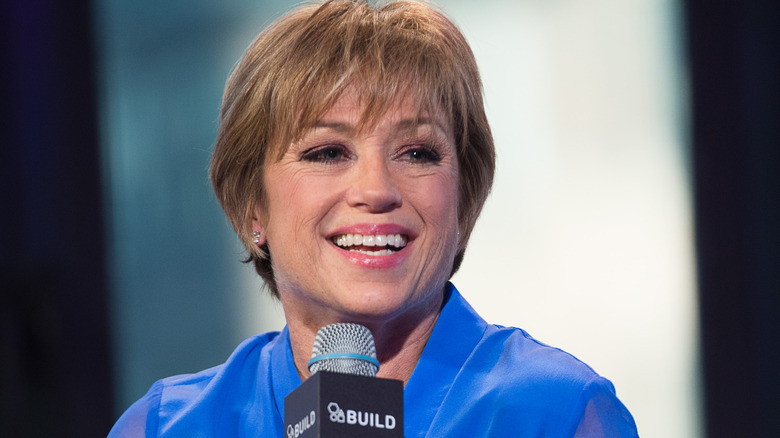
February 14, 1976: Dorothy Hamill Wins a Gold Medal

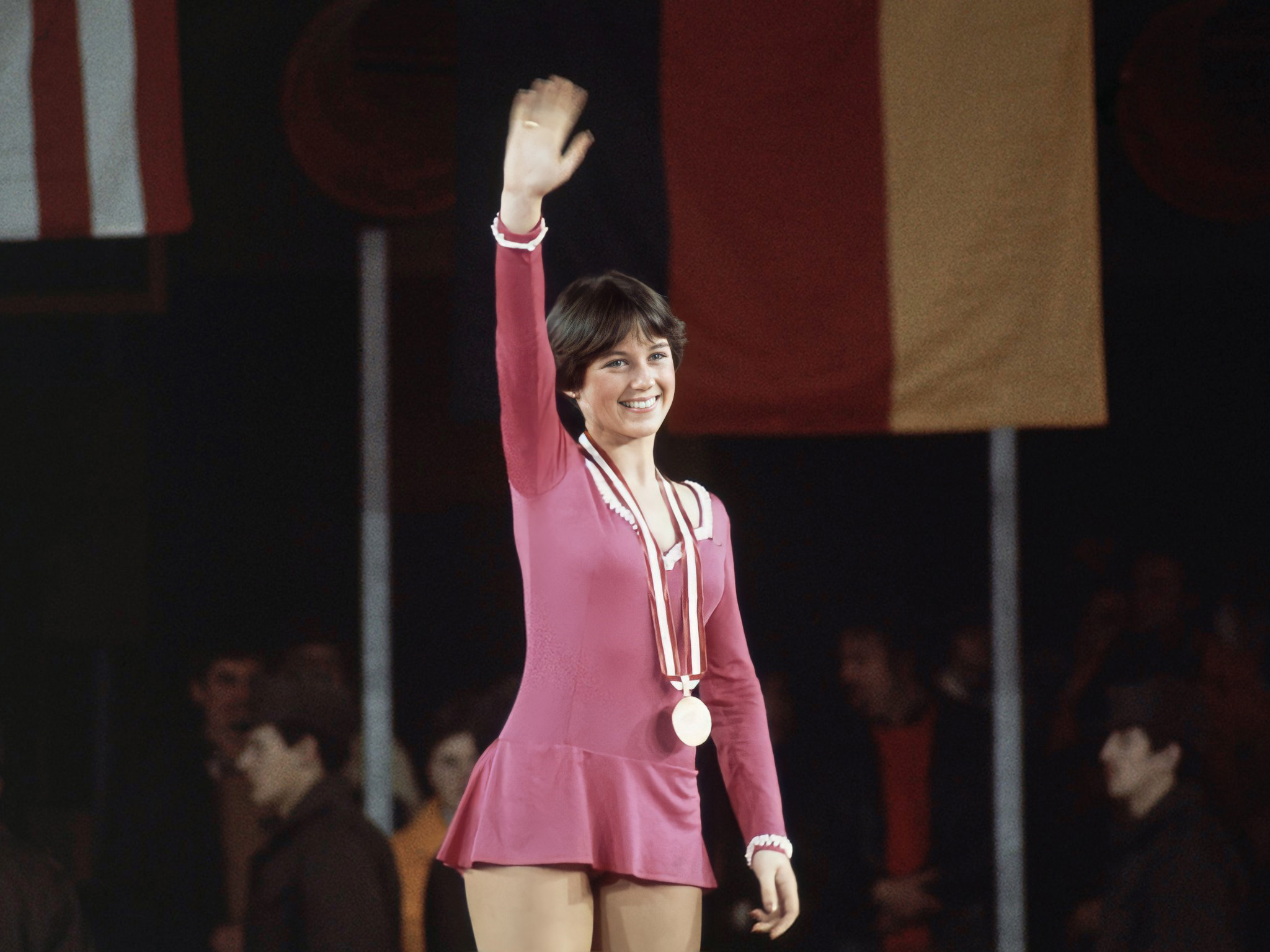
February 14, 1976: Dorothy Hamill wins the Gold Medal in ladies' figure skating at the Winter Olympics at Innsbruck, in the Austrian Alps.

A 19-year-old native of the New York suburb of Greenwich, Connecticut, she had won the Silver Medal at the World Championships in 1974 and 1975, and the Gold Medal a few weeks earlier. Still, in spite of previous U.S. Gold Medalists Tenley Albright, Carol Heiss and Peggy Fleming, she was not considered the favorite in Innsbruck. But she won, and became "America's Sweetheart."

Hamill was credited with developing a new skating move, a "camel spin" that turned into a "sit spin," which became known as the "Hamill camel." The bobbed hairstyle that she wore during her Olympic performance was created by stylist Yusuke Suga, and started a fad, known as the "short and sassy" look, leading to a contract with Clairol hair products.

The following year, the film Star Wars premiered, starring Mark Hamill. He and Dorothy are not related, and it appears they have never even met.

She starred in the Ice Capades, and as late as 1993, a poll showed her tied with Olympic gymnast Mary Lou Retton as the most popular athlete in America, ahead of Michael Jordan, Joe Montana and Wayne Gretzky.
She has married 3 times, including to singer Dean Paul Martin (son of singer-actor Dean Martin), and had a daughter with her 2nd husband. As of 2022, she still appears in skating shows.

*

February 14, 1976 was a Saturday. Baseball and football were out of season. There were 7 games played in the NBA:

* The New York Knicks beat the Philadelphia 76ers, 101-97 in overtime at Madison Square Garden.

* The Washington Bullets beat the Houston Rockets, 108-89 at the Capital Center in the Washington suburb of Landover, Maryland.

* The Cleveland Cavaliers beat the Buffalo Braves, 114-111 at the Buffalo Memorial Auditorium. Bob McAdoo scored 41 points in defeat for the Braves.

* The Milwaukee Bucks beat their arch-rivals, the Chicago Bulls, 95-89 at the Chicago Stadium.

* The Phoenix Suns beat the New Orleans Jazz, 112-93 at the Arizona Veterans Memorial Coliseum in Phoenix.

* The Golden State Warriors beat the Detroit Pistons, 106-105 at the Oakland Coliseum Arena. Phil Smith scored 45 for the Warriors.

* And the Seattle SuperSonics beat their arch-rivals, the Portland Trail Blazers, 122-108 at the Portland Memorial Coliseum.

There were 3 games played in the American Basketball Association:

* The New York Nets lost to the Denver Nuggets, 108-103 in overtime at the McNichols Arena in Denver. This result would be reversed in that year's ABA Finals, which turned out to be the last games before the NBA-ABA partial merger.

* The Kentucky Colonels beat the Virginia Squires, 100-89 at The Scope in Norfolk, Virginia.

* And the San Antonio Spurs beat the Indiana Pacers, 105-101 at the Market Square Arena in Indianapolis. Billy Knight scored 37 in defeat for the Pacers. He is not related to Bobby Knight, who was, then, in the process of coaching Indiana University to an undefeated National Championship season.


Thursday, January 6, 2022

January 6, 1994: Harding vs. Kerrigan

January 6, 1994: Figure skater Nancy Kerrigan is attacked while preparing to compete in the U.S. Figure Skating Championships, at Cobo Hall (now named Huntington Place) in downtown Detroit. It starts one of the greatest "soap operas" in the history of sports -- if, that is, you consider figure skating to be a "sport."

In 1989, at the U.S. Championships, Tonya Harding finished 3rd. In 1990, Kerrigan finished 4th. In 1991, Harding won, while Kerrigan finished 3rd. In 1992, Kerrigan was 2nd, Harding 3rd. In the 1992 Winter Olympics in Albertville, France, Kerrigan finished 3rd for the Bronze Medal, Harding 4th. In 1993, Kerrigan won the U.S. Championship, and Harding was 4th.

In 1994, a Winter Olympic year -- the 1st time it was held in the even-numbered year between Summer Olympic years, instead of in the same year -- both Kerrigan and Harding really, really wanted to win. It could be said that Harding wanted to win in the worst way.

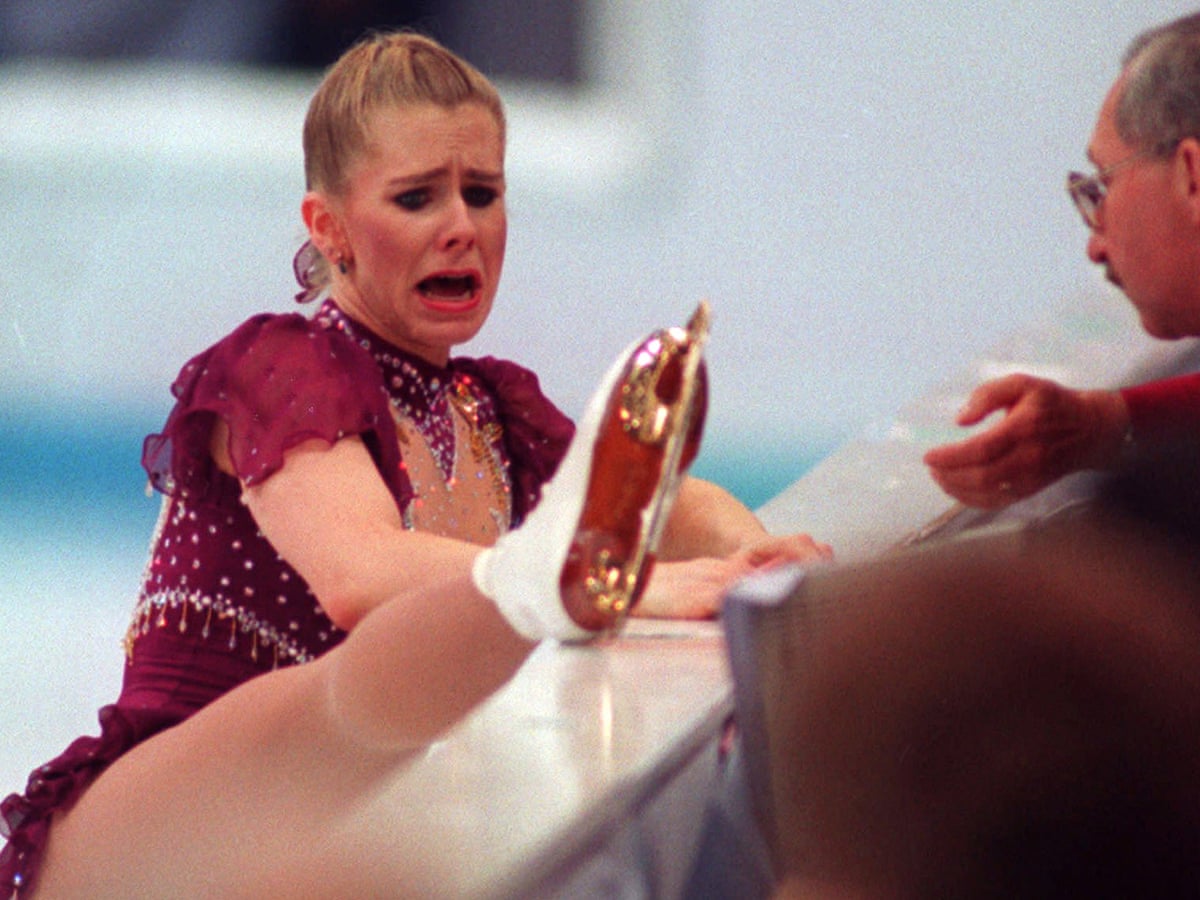
After a practice session, Kerrigan was hit on the right leg, right above the knee, with a police baton. The attack was not captured on video, but its aftermath was, with Kerrigan sitting on the floor holding her knee, surrounded by attendants, and crying out, "Why?" over and over. "Why?... Why?... Why?... "

The assailant was soon captured, and identified as Shane Stant. He was hired by Jeff Gillooly, Harding's ex-husband -- in other words, they were already divorced. I won't get into Harding's personal life here, but that's some dedication to an ex.

Kerrigan had to drop out of the tournament, and Harding won it, with Michelle Kwan finishing 2nd. But the other skaters petitioned the U.S. Figure Skating Association to allow Kerrigan on the team anyway. Since 2 spots were available, Kerrigan was named along with Harding, with Kwan as an alternate, with the very real possibility that Harding could be disqualified.

The media firestorm was intense, and it has since been labeled an event that, had it happened during the era of social media, would have "broken the Internet." It meant that the ladies singles figure skating competition at the 1994 Winter Olympics in Lillehammer, Norway would be among the most-watched sporting events in the history of American television, right up there with the most-watched Super Bowls, watched by more people than had ever watched a baseball game or a basketball game.

Harding had her own moment of tears when she had a problem with the laces on her skates, and could be heard begging for a re-skate: "Please!" She was awarded it, but she only finished 8th.
Say what you want about Tonya, but Karma can be a real bitch.

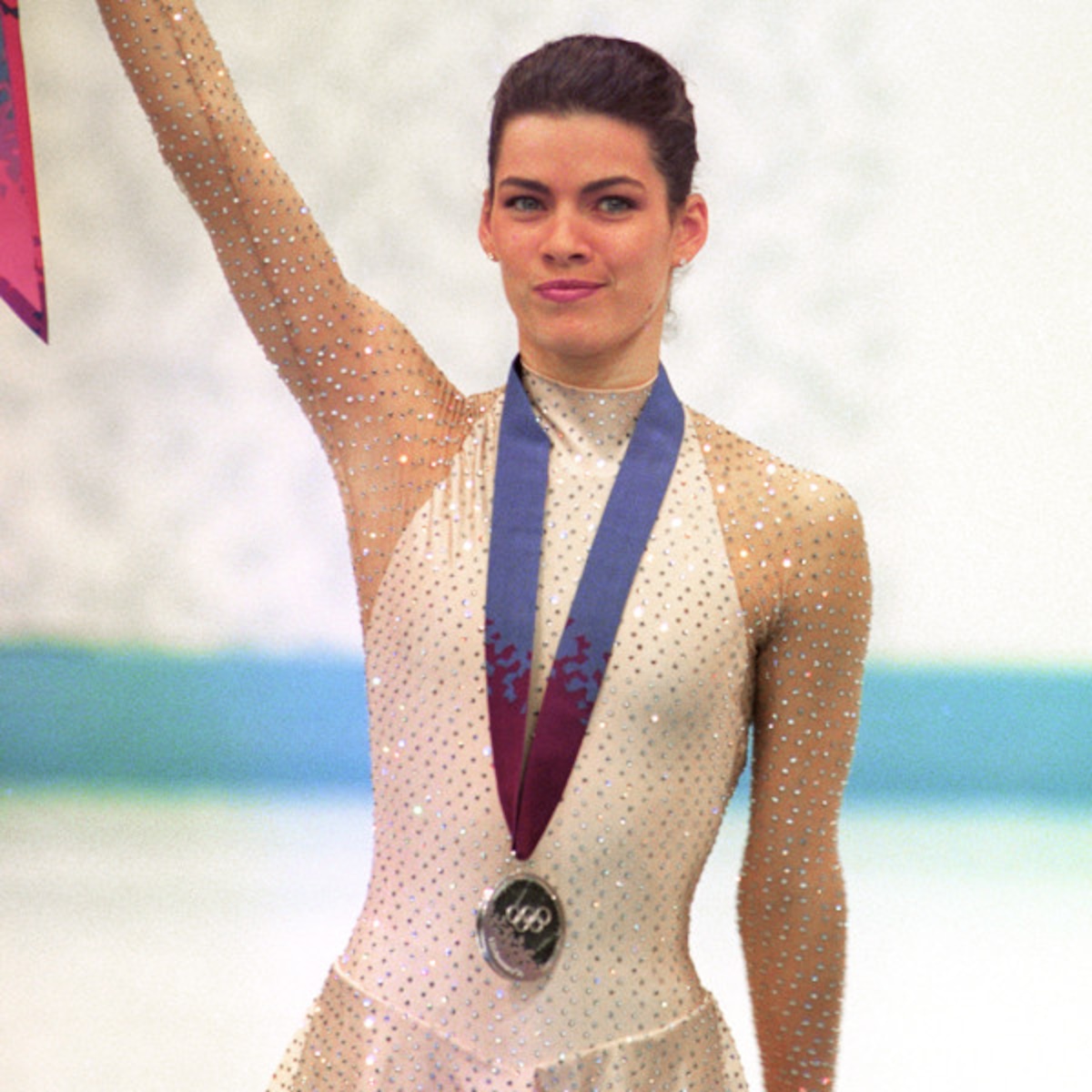
Kerrigan gave what she thought was the best performance of her life, and the American media, obviously wanting her to win, was nearly unanimous in its belief that she should have won the Gold Medal. She didn't: In a very close decision, the Gold Medal was awarded to Oksana Baiul of Ukraine, who had won the World Championship the year before. In other words: After all that, neither Kerrigan nor Harding won the Gold.
It looks as though gymnast McKayla Maroney,
born the next year, copied Nancy Kerrigan's facial expression.
But McKayla has an Olympic Gold Medal, while Nancy doesn't.

The fact that the final result of figure skating competitions is dependent upon judges, rather than tangible results like time, distance, or runs or points scored, is the reason I believe that, however athletic and artistic it might be, figure skating is not a sport.
Oksana Baiul

Kerrigan and Harding both turned professional after the Olympics, but Kerrigan was in demand on the pro skating circuit, and Harding was not. The USFSA banned her for life.

Harding denied any involvement in the planning of the attack, but later pleaded guilty to conspiracy to hinder the prosecution. She served no jail time. Gilooly made a plea deal, ratting the others out, publicly apologized to Kerrigan, admitting that, "Any apology coming from me rings hollow," and served 2 years.

As of January 6, 2022, Kerrigan is 52 years old, married to her former manager, with 2 sons and a daughter. Harding, 51, is married for the 3rd time, and has a son with her 3rd husband. Baiul, 44, moved to the U.S. shortly after the Olympics, eventually settling in the suburbs of Philadelphia. She is married to her former manager, and has a daughter.

Harding competed on Celebrity Boxing, and did well; while Kerrigan, throwing all irony to the wind, competed on Dancing With the Stars, and was eliminated by the judges 7 weeks in. Baiul did ice shows until she needed to step aside due to a drinking problem, and became a fashion designer.

Although a native of the Boston area, and a Boston Red Sox fan -- she was invited to throw out the ceremonial first ball at Fenway Park for their 1994 home opener -- Nancy is not related to former Red Sox manager Joe Kerrigan. Harding is not related to 1920s President Warren Harding.

Figure skating remains the most-watched Winter Olympic sport on American television, ahead of hockey, although it has never again reached the heights of attention that it did in the Winter of 1994.

*

January 6, 1994 was a Thursday. Baseball was in the off-season. The NFL was in the week between the end of the regular season and the start of the Playoffs. There were 3 games played in the NBA:

* The New York Knicks beat the Milwaukee Bucks, 92-86 at the Bradley Center in Milwaukee.

* The Portland Trail Blazers beat the Charlotte Hornets, 116-110 at the Charlotte Coliseum.

* And the Golden State Warriors beat the San Antonio Spurs, 102-98 at the Oakland Coliseum Arena.
And there were 6 games played in the NHL, none involving any of the New York Tri-State Area teams:

* The Boston Bruins beat the Winnipeg Jets, 5-4 at the Boston Garden. Ray Bourque, though a defenseman, had a goal and 3 assists. After assisting on the Bruins' last 5 goals in their previous game, an 8-2 home win over the Washington Capitals 4 days earlier, he had now had a hand in the Bruins' last 9 goals, and that remains an NHL record.

* The Toronto Maple Leafs beat the Ottawa Senators, 6-3 at Maple Leaf Gardens in Toronto.

* The St. Louis Blues beat the Hartford Whalers, 2-1 -- not at the St. Louis Arena or the Hartford Civic Center (now the PeoplesBank Arena), but in a neutral-site game, at The Coliseum in Richfield, Ohio. Playing games at neutral sites, as was done in 1992-93 and 1993-94, was understandable, as a way to grow the game. Why these teams, instead of a closer one like Pittsburgh or Detroit, had a game scheduled for the Cleveland suburbs, I don't know. I've looked for an attendance figure, but haven't found one.

* The Mighty Ducks of Anaheim beat the Chicago Blackhawks, 6-2 at Chicago Stadium. The Ducks were in their expansion season, the Hawks in their 66th and last season at "The Madhouse on Madison."

* The Dallas Stars beat the Philadelphia Flyers, 8-0 at the Reunion Arena in Dallas. Brothers Neal and Paul Broten both scored for the Stars. Neal added 3 assists, Paul 1.

* And the Detroit Red Wings beat the San Jose Sharks, 10-3 at the San Jose Arena (now the SAP Center). Ray Sheppard and Vyacheslav Kozlov both had hat tricks. But the Sharks would eliminate the Wings from that season's Playoffs.

December 31, 1999 & January 1, 2000: The Millennium

December 31, 1999:  The Millennium arrives. The people of planet Earth survived. At a terrible cost. But we hadn't destroyed ourselves. ...