Showing posts with label upton sinclair. Show all posts

Thursday, June 30, 2022

June 30, 1906: The Pure Food and Drug Act

June 30, 1906: President Theodore Roosevelt signs the Pure Food and Drug Act into law. This was one of the most important pieces of legislation in American history, and it may have saved your life and mine.

It was necessary because, with the growth of American cities in the 19th Century, the time food took to get from farm to table got longer, and food spoiled and became poisonous before many people could get to it. Methods of preventing this including chemicals that were every bit as poisonous as the natural process would have been, including alcohol, opium and cocaine.

(Coca-Cola was invented in 1886, and, yes, it did contain a small amount of cocaine at the time, about 9 milligrams per glass. A typical "line" of cocaine is between 50 and 75 milligrams. In 1903, they dropped the ingredient for something safer -- but hardly completely safe.)

On February 25, 1906, Upton Sinclair's novel The Jungle was published. A Socialist, Sinclair had hoped it would lead to workers rising up to object to the poor working conditions in places designed for the production in food, including the place where he did his research, the stockyards and meat-packing plants of Chicago.

But "The Law of Unintended Consequences" reared its head, and the book's readers were horrified not by the working conditions, but the actual preparation of the food products. Six months later, the Pure Food and Drug Act was passed by Congress and signed by Roosevelt.

Did Sinclair think, "Oh well, some good came out of my book"? No, he thought it offered protection to the food bosses he was trying to bring down. He was furious.

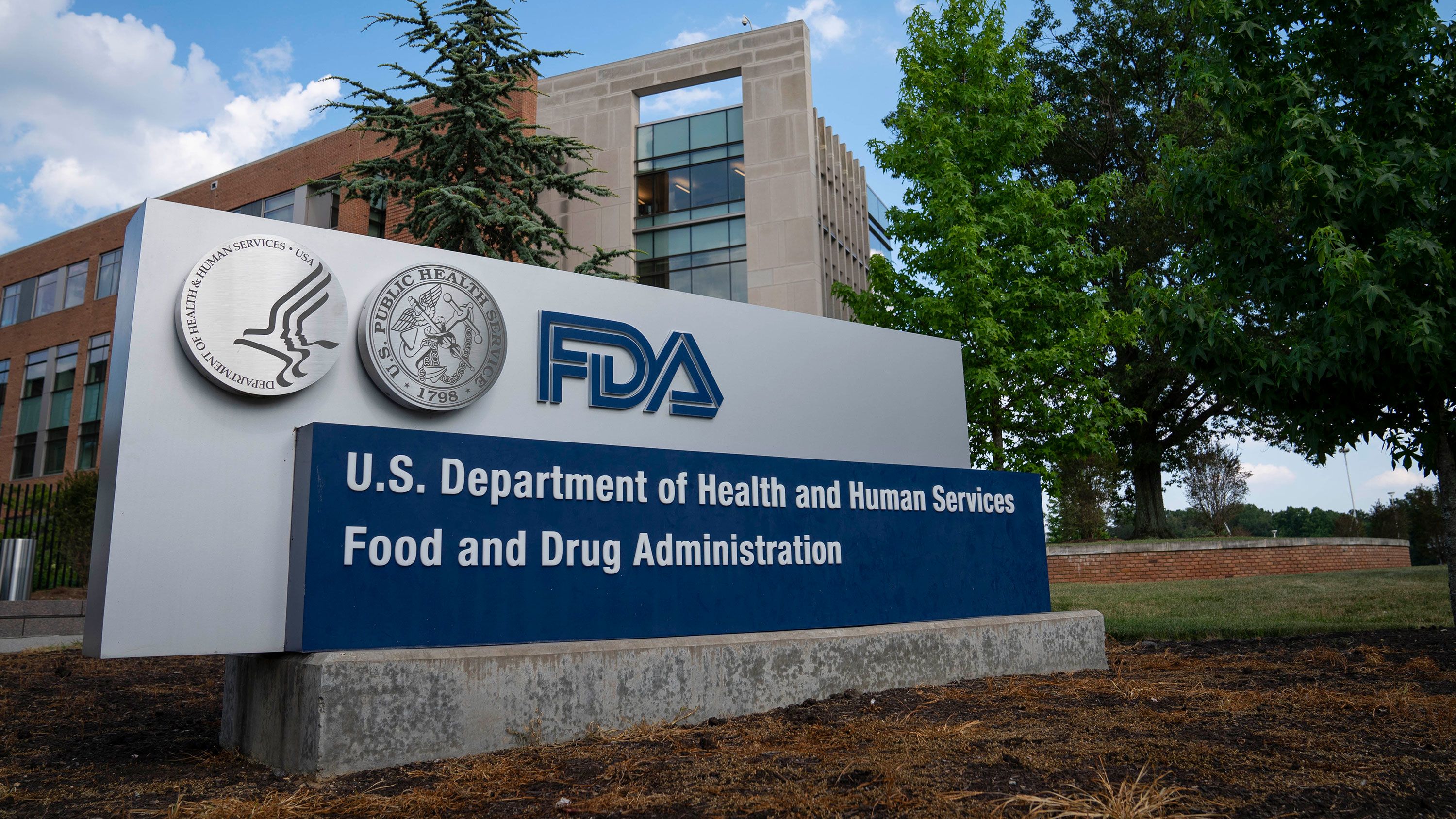
Anyway, the Pure Food and Drug Act created the Food and Drug Administration, the FDA. It banned foreign and interstate traffic in adulterated or mislabeled food and drug products. It resulted in federal inspection of food, especially meat. It required that active ingredients be placed on the label of the packaging of food and drugs.

It also set definitions for certain foods, and if a food did not meet that definition, the company selling it legally could not call it that.

For example, the Taylor Provisions Company of Trenton, New Jersey had created and sold a product it called "Taylor's Ham." But with the passage of the Pure Food and Drug Act, their product did not meet the new legal definition of "ham": "Pork from a leg cut that has been preserved by wet or dry curing, with or without smoking."

So they changed the name of the product to "pork roll," and they have sold it under that name ever since. Trenton is in Central Jersey, and in Central Jersey and South Jersey, most people call the product what the inventors and largest producers of it call it: "Pork roll." But most people in North Jersey still call it "Taylor ham."

*

June 30, 1906 was a Saturday. The NFL, the NBA and the NHL hadn't been founded yet. In fact, those sports had only barely approached professionalism. But there were games played in what we would now call Major League Baseball:

* The New York Highlanders were supposed to play the Boston Americans at the Huntington Avenue Grounds in Boston, but the game was rained out. It was moved to July 6, as part of a doubleheader. The Highlanders swept it, 4-0 with Jack Chesbro outpitching Bill Dinneen, and 8-0 with Doc Newton outpitching Cy Young. The Americans became the Boston Red Sox in 1908, and the Highlanders became the New York Yankees in 1913.

* The New York Giants lost to the Boston Beaneaters, 4-3 at the Polo Grounds. The Boston team of the National League went through several name changes, before settling on "Braves" in 1912 -- and even then, they tried "Bees" from 1936 to 1940, before going back to "Braves," and then moving to Milwaukee in 1953 and Atlanta in 1966. The Giants moved to San Francisco in 1958.

* The Brooklyn Superbas beat the Philadelphia Phillies, 5-4 at Baker Bowl in Philadelphia. They became the Dodgers in 1911, then the Robins for manager Wilbert Robinson from 1914 to 1931, and then the Dodgers again. They moved to Los Angeles in 1958.

* The Philadelphia Athletics beat the Washington Senators, 6-5 at Boundary Field in Washington. Both Boundary Field at the current version of the Giants' Polo Grounds burned down in 1911, and were replaced that year, by Griffith Stadium and the modern Polo Grounds, respectively.

* The Chicago White Sox swept a doubleheader from the Cleveland Naps at League Park in Cleveland. The Cleveland team was named for their manager and 2nd baseman, Napoleon "Nap" Lajoie. When he left after the 1914 season, they became the Cleveland Indians. The South Siders won the 1st game 6-4 in 12 innings, and the 2nd game 12-11.

* The Detroit Tigers swept a doubleheader from the St. Louis Browns at Bennett Park in Detroit, It was torn down in 1911, and the ballpark that would eventually be named Tiger Stadium was built on the site. They won the opener 2-1, and the nightcap 3-2.

* The Chicago Cubs beat the Cincinnati Reds, 2-1 at West Side Park in Chicago.

* The Pittsburgh Pirates beat the St. Louis Cardinals, 6-3 at Robison Field in St. Louis. That's "Robison," named for the brothers who then owned the Cardinals, not "Robinson." 

Thursday, April 14, 2022

April 14, 1906: TR and the Man With the Muck-Rake

April 14, 1906: President Theodore Roosevelt gives a speech at the dedication of the House of Representatives office building that will later be named for Speaker of the House Joseph Cannon of Illinois, a fellow Republican, albeit of a rather different outlook.

TR -- he didn't mind the use of his initials, but he hated being called "Teddy" -- invokes John Bnnyan's 1678 novel Pilgrim's Progress:

You may recall the description of the Man with the Muck-rake, the man who could look no way but downward with the muck-rake in his hands; who was offered a celestial crown for his muck-rake, but who would neither look up nor regard the crown he was offered, but continued to rake to himself the filth of the floor.

While cautioning about possible pitfalls of keeping one's attention ever trained downward, "on the muck," Roosevelt emphasized the social benefit of investigative muckraking reporting, saying:

There are, in the body politic, economic and social, many and grave evils, and there is urgent necessity for the sternest war upon them. There should be relentless exposure of, and attack upon, every evil man, whether politician or business man; every evil practice, whether in politics, in business, or in social life.
I hail as a benefactor every writer or speaker, every man who, on the platform, or in book, magazine, or newspaper, with merciless severity, makes such attack, provided always that he in his turn remembers that the attack is of use only if it is absolutely truthful.
And so, the name "muckrakers" was applied to reform-minded journalists, writers, and photographers, who claimed to expose corruption and wrongdoing in established institutions, often through sensationalist publications, in the Progressive Era in America, roughly from TR's inauguration into the Presidency in 1901 until the U.S. entry into World War I in 1917.

Such journalists included Lincoln Steffens, whose 1904 book The Shame of the Cities exposed municipal corruption; Ida Tarbell, whose 1904 book The History of Standard Oil led to the breakup of that company's monopoly; Upton Sinclair, whose 1906 novel The Jungle exposed the working conditions in meat-packing plants, and led to both labor reform and the establishment of the Food and Drug Administration (FDA); and Ray Stannard Baker, whose 1907 book Adventures in Contentment exposed rural poverty.
Lincoln Steffens

Steffens, who later claimed his book made him "the first muckraker," Tarbell and Baker each had their books serialized in McClure's magazine, run by S.S. McClure, before they were published in book form. In 1907, dissatisfied with with the "muckraker" label, they left McClure's, and founded The American Magazine. That publication continued until 1956, while McClure's only lasted until 1929.

Steffens died in 1936, Tarbell in 1944, McClure in 1949, Baker in 1946, and Sinclair in 1968.

*

April 14, 1906 was a Saturday. This was also the day A Trip Down Market Street was filmed in San Francisco. I have a separate entry for that event, just 4 days before the city was devastated by an earthquake and fires. And Faisal, King of Saudi Arabia from 1964 to 1975, was born on this day.

It was the Opening Day of the American League season in baseball, but only 2 games were played:

* The New York Highlanders beat the Boston Americans, 2-1 in 12 innings at Hilltop Park in Upper Manhattan. Jack Chesbro outpitched Cy Young, with both men going the distance. It was one of the best, and earliest, pitching duels in this long and hard rivalry: In 2 years, the Americans would become the Red Sox; in 5 more, the Highlanders would become the Yankees.

* The Philadelphia Athletics beat the Washington Senators, 4-3 at American League Park in Washington.

There were 3 games played in the National League, which had opened earlier:

* The New York Giants beat the Philadelphia Phillies, 2-1 in 11 innings at National League Park (later rename Baker Bowl) in Philadelphia.

* The Boston Beaneaters beat the Brooklyn Superbas, 1-0 at Washington Park in Brooklyn. Vivan "Vive" Lindaman pitched a 4-hit shutout. The Superbas became the Dodgers in 1911. By the next season, the Boston team was named the Braves.

* And the Cincinnati Reds beat the Chicago Cubs, 1-0 at The Palace of the Fans in Cincinnati. Jake Weimer pitched a 7-hit shutout.

And in English soccer, Woolwich Arsenal, later to become Arsenal Football Club, the North London team I would support, beat Manchester-area team Bury, 4-0 at the Manor Ground in Plumstead, South-East London.

Saturday, February 26, 2022

February 26, 1906: Upton Sinclair Publishes "The Jungle"

February 26, 1906: The Jungle by Upton Sinclair is published. It has a great effect on American life -- but not the one its author intended.

Upton Beall Sinclair Jr. was born on September 20, 1878 in Baltimore, but, due to his father's alcoholism and inability to hold a job, he grew up in many places. He turned out to be a child genius, and, just days before his 14th birthday, living in Queens, he entered City College of New York. He wrote for local magazines, and made enough money to not only pay his tuition -- CCNY did not yet offer free tuition for City residents -- but, by age 17, to pay his parents' rent.

He graduated from CCNY, but then dropped out of Columbia University School of Law to focus on writing. He published his 1st novel, King Midas, in 1901. By 1904, he had written 4 novels, 3 with a Socialist theme, and Manassas, a story of the American Civil War.

That year, for 7 weeks, he worked undercover in Chicago's meatpacking plants to see the working conditions. The result was The Jungle, which exposed those conditions, and the lives of the immigrants working there, many of whom continued to work while sick, because they couldn't afford not to. The novel was serialized in the Socialist newspaper Appeal to Reason the following year, and published in novel form the year after that.

What Sinclair wanted was to have America see that unregulated capitalism was destroying the lives of its workers, and call upon their government to do something about it. What he got was very different: Most people were appalled not by the working conditions and the living conditions on the South Side of Chicago and its slums, but by the process of the production of food.

It was like reading Moby Dick and moving toward electricity because whale oil is hard to obtain, instead of learning the lesson that when you seek revenge, you should dig two graves. Or reading On the Road, and instead of realizing that "kicks" are temporary, while art is forever, and beauty, friendship and love are what you should really seek, you go out and buy a car and drive out to California. Or reading All the President's Men, and instead of demanding that your government not do things like what the Nixon Administration did in Watergate, believing that all government is corrupt, and you need a "white knight" to fix it all, and turning to Ronald Reagan -- or Donald Trump.

The President then, Theodore Roosevelt, launched an investigation of the meatpacking industry. This led to the Pure Food and Drug Act, which revolutionized food safety. Sinclair wrote that this was not enough, and he considered it a way of buying the meat and meatpacking barons off.

Nevertheless, TR publicly said that a Republican crook is as bad as a Democratic crook. In a 1907 speech, he denounced "malefactors of great wealth," going on to say that there was a great contest between himself and them: "I regard this contest as one to determine who shall rule this free country: The people through their governmental agents, or a few ruthless and domineering men, whose wealth makes them peculiarly formidable, because they hide behind the breastworks of corporate organization."

Sinclair didn't give up, ripping one great industry after another with his books: Wall Street in The Moneychangers in 1908, King Coal in 1917, education with The Goslings: A Study of the American Schools in 1924, Oil! in 1927 (which would be adapted into the 2007 film There Will Be Blood), the American justice system in Boston the same year (in the wake of the execution of Nicola Sacco and Bartolomeo Vanzetti), and the auto industry in The Flivver King: A Story of Ford-America in 1937 (in the wake of Henry Ford's private armies firing on pro-union demonstrators).

One of the oil barons he detested was Harry Sinclair, who was also a sports mogul, running the Indianapolis-turned-Newark franchise of the Federal League, and breeding horses that, between them, won 3 Kentucky Derbies and 3 Belmont Stakes. He spent 6 months in prison for jury tampering during the Teapot Dome scandal. He and Upton Sinclair were not related.

Nor was either related to Sinclair Lewis, 7 years younger, who spent most of the 1920s publishing similar exposés of American life, and published anti-fascist literature in the 1930s. Sinclair Lewis admired Upton Sinclair, who nonetheless wrote to him and offered a criticism alternately glowing and stinging, but, in my opinion, accurate in both cases:

Everything of yours that I have read is about half and half… Wherever you are writing about the underworld, you are at your best, and when you come up to your own social level or higher, you are no good.

In 1934, with TR's cousin Franklin Roosevelt having become President and implemented the early part of his New Deal, Upton Sinclair left the Socialist Party and joined the Democratic Party, and ran for Governor of California. He called his movement EPIC: End Poverty In California. Although he had no experience in public office, he meant it, and people believed that he meant it.

No one believed it more than the Hollywood studio bosses, all of them conservative Calvin Coolidge-style, FDR-hating Republicans because they were very wealthy. They used the media, including the San Francisco-based empire of William Randolph Hearst (once a Democratic Congressman representing a district in New York City, but now one of the most conservative men in America), to make false propaganda claims, including the idea that a Governor Sinclair would turn California "Communist." They also pressured their employees to vote for the incumbent Republican Governor, Frank Merriam.

Merriam won with 48.9 percent of the vote, the Sinclair's 37.8, and Progressive Party nominee Raymond Haight's 13.0. In popular votes, Merriam won 1,138,000 to Sinclair's 879,000. Of California's 58 Counties, Sinclair won only 6, while Haight won 3.

Because of the 3-way vote, Sinclair didn't top 46 percent in any County, topping out at 45.6 in Contra Costa County, in the East Bay across from San Francisco. He got 42.0 percent in Los Angeles County, and 38.9 percent in San Francisco County (contiguous with the City of San Francisco), 37.7 percent in Alameda County (including Oakland and Berkeley), and 36.6 percent in San Diego -- but didn't win any of those big Counties. Haight's presence on the ballot didn't cost him the election; the Red-baiting media buy did.

In 1951, the year that Sinclair Lewis died, Upton Sinclair wrote, "The American People will take Socialism, but they won't take the label. I certainly proved it in the case of EPIC... I think we simply have to recognize the fact that our enemies have succeeded in spreading the Big Lie. There is no use attacking it by a front attack, it is much better to out-flank them."

He died in a nursing home in Bound Brook, Somerset County, New Jersey on November 25, 1968, a few weeks after his 90th birthday. Ironically, Bound Brook was then, and for many years thereafter, the home of the publishing house for the extreme right-wing John Birch Society. He is buried in Rock Creek Cemetery in Washington, D.C.

*

February 26, 1906 was a Monday. Baseball was about to start Spring Training. Football was in the off-season. Basketball and hockey were still all-amateur. There were no games on this historic day. However, the next 2 days saw a challenge for the Stanley Cup, then a "challenge trophy": You won the series, you got the Cup.

The Ottawa Hockey Club, a.k.a. the Silver Seven and forerunners of the original Ottawa Senators (who went out of business in 1934, during Upton Sinclair's campaign for Governor), defeated Queen's University of Kingston, Ontario, 16-7 on February 27, and 12-7 on February 8, to retain the Cup.

On March 6 and 8, they defeated Smiths Falls Hockey Club to keep the Cup again. Then they took on the Montreal Wanderers, a bunch of small but tough guys known as "The Little Men of Iron." Featuring future NHL team bosses Art Ross and Lester Patrick on defense, the Wanderers beat Ottawa 9-1 in Montreal on March 14. Ottawa won 9-3 in Ottawa on March 17. But since it was a two-games, total-goals series, Montreal beat Ottawa on aggregated, 12-10, and won the Cup. It was the 1st of 4 times in 5 years that they would win it.

December 31, 1999 & January 1, 2000: The Millennium

December 31, 1999:  The Millennium arrives. The people of planet Earth survived. At a terrible cost. But we hadn't destroyed ourselves. ...