Showing posts with label william randolph hearst. Show all posts

Friday, November 4, 2022

November 5, 1911: America's 1st Transcontinental Flight

November 5, 1911: The 1st airplane flight across America is completed. It is not as well remembered as the aerial achievements of Charles Lindbergh and Amelia Earhart, mainly because most people weren't yet used to hearing about aerial achievements, and it took so long to do. It didn't help that the man who did it didn't have long to brag about it. But it hadn't been done before, and deserves mention.

And his name sounds a bit hoity-toity: Calbraith Perry Rodgers. He might have been better remembered as "Cal Rodgers," just as Lindbergh was well-remembered due to the nickname "Lucky Lindy." And he was born rich, preventing the advantage of a poor-boy-makes-good story.

Born in Pittsburgh in 1879, he was a grandson of Oliver Hazard Perry, the hero of the War of 1812's Battle of Lake Erie; and a great-grandnephew of Matthew Calbraith Perry, whose naval expedition of 1853 opened Japan to the Western world.

He went deaf as a boy, keeping him out of the family business, the U.S. Navy. Nevertheless, his family's wealth meant that he could pursue his interests without having to work for a living. In August 1911, he became a licensed pilot, and became one of the earliest civilians to purchase an airplane. He entered the Chicago International Aviation Meet, and won $11,285.

As with Lindbergh, he achieved his big moment with the goal of winning prize money. In 1910, William Randolph Hearst offered the Hearst Prize to the 1st pilot to fly coast to coast, in either direction, in less than 30 days, requiring a stop in Chicago. The prize was $50,000 -- about $1.54 million in 2022 money. Rodgers talked Chicago meatpacking mogul J. Ogden Armour to sponsor it, and named the plane, a Wright Model EX, after Armour's grape soft drink: The Vin Fiz Flyer

On September 17, 1911, at 4:30 PM Eastern Time, he took off from Sheepshead Bay Race Track in Brooklyn. He made the required stop in Chicago on October 8, attracting national attention. To avoid the Rocky Mountains, he took a southerly route, flying through the Midwest until reaching Texas. He turned west after passing San Antonio. 

Although the plan called for a large number of stops along the way, there turned out to be 75 of them, including 16 crashes, and Rodgers was injured several times. His team of mechanics rebuilt the Vin Fiz Flyer when necessary, and only a few pieces of the original plane actually made the entire trip.
The Vin Fiz Flyer

On November 5, at 4:04 PM Pacific Time, a crowd of 20,000 people saw him land at Tournament Park in Pasadena, outside Los Angeles. He had flown a single plane from New York City to California without getting himself (or anyone else) killed, which had never been done before. But he had missed the prize deadline by 19 days, and Hearst refused to pay. Hearst never awarded the prize.

On April 3, 1912, while making an exhibition flight in a Wright Model B, over Long Beach, California, Rodgers flew into a flock of birds, causing the plane to crash into the ocean. His neck was broken and his thorax damaged by the engine of the airplane. He died within minutes. He was 33 years old, and left behind a wife, but no children.

In 1925, his cousin, John Rodgers, set a record for the longest nonstop flight be seaplane, 1,992 miles, trying to fly from San Francisco to Honolulu. He and his crew ran out of fuel, and had to turn a wing of their plane into a sail to get to the nearest Hawaiian Island, before they were rescued. He was killed in a crash in Philadelphia the next year.

The version of the Vin Fiz Flyer that completed the flight is now on display at the Smithsonian Institution's National Air and Space Museum, on the National Mall in Washington, D.C.

*

November 5, 1911 was a Sunday. Baseball season was over. Professional basketball and hockey barely existed. There was professional football, but it was still very minor-league at this point. So there were no scores on this historic day. 

Saturday, June 4, 2022

June 5, 1900: The Death of Stephen Crane

June 5, 1900: Stephen Crane died of tuberculosis. Already America's top war correspondent, and one of its top authors, he was only 28 years old.

Stephen Crane (no middle name) was born on November 1, 1871 in Newark, New Jersey. He published his 1st novel in 1893: Maggie: A Girl of the Streets. Its themes of poverty, including alcoholism and prostitution, made it incredibly controversial for its time. In 1895, despite having no military experience -- indeed, he was born 6 years after the end of the war depicted in it, the American Civil War -- he published The Red Badge of Courage, and made himself a legend of American letters.

He was soon hired as a foreign correspondent for William Randolph Hearst's New York Journal, covering the Greco-Turkish War of 1897, the Spanish-American War of 1898, and the Boer War. But he developed tuberculosis, and died from it at the world-famous health spa in Badenweiler, Germany on June 5, 1900, only 28 years old.

*

June 5, 1900 was a Tuesday. The only major sports league in operation at the time was baseball's National League. There were 4 games played:

* The New York Giants lost to the Cincinnati Reds, 14-8 at the 1890-1911 version of the Polo Grounds.

* The Brooklyn Superbas beat the Chicago Orphans, 5-4 at Washington Park in Brooklyn. Since Cap Anson, also known as "Pop" retired, the Chicago team formerly known as the White Stockings and the Colts were called the Orphans because "they missed their Pop." They became the Cubs in 1903. The Brooklyn team was named the Superbas because their manager was Ned Hanlon, and there was then a famous circus troupe named Hanlon's Superbas. They became the Dodgers in 1911.

* The Boston Beaneaters beat the St. Louis Cardinals, 15-11 at the 1894-1914 version of the South End Grounds in Boston.

* And the Philadelphia Phillies beat the Pittsburgh Pirates, 6-5 at National League Park (later renamed Baker Bowl) in Philadelphia.

Sunday, May 1, 2022

May 1, 1941: "Citizen Kane" Premieres

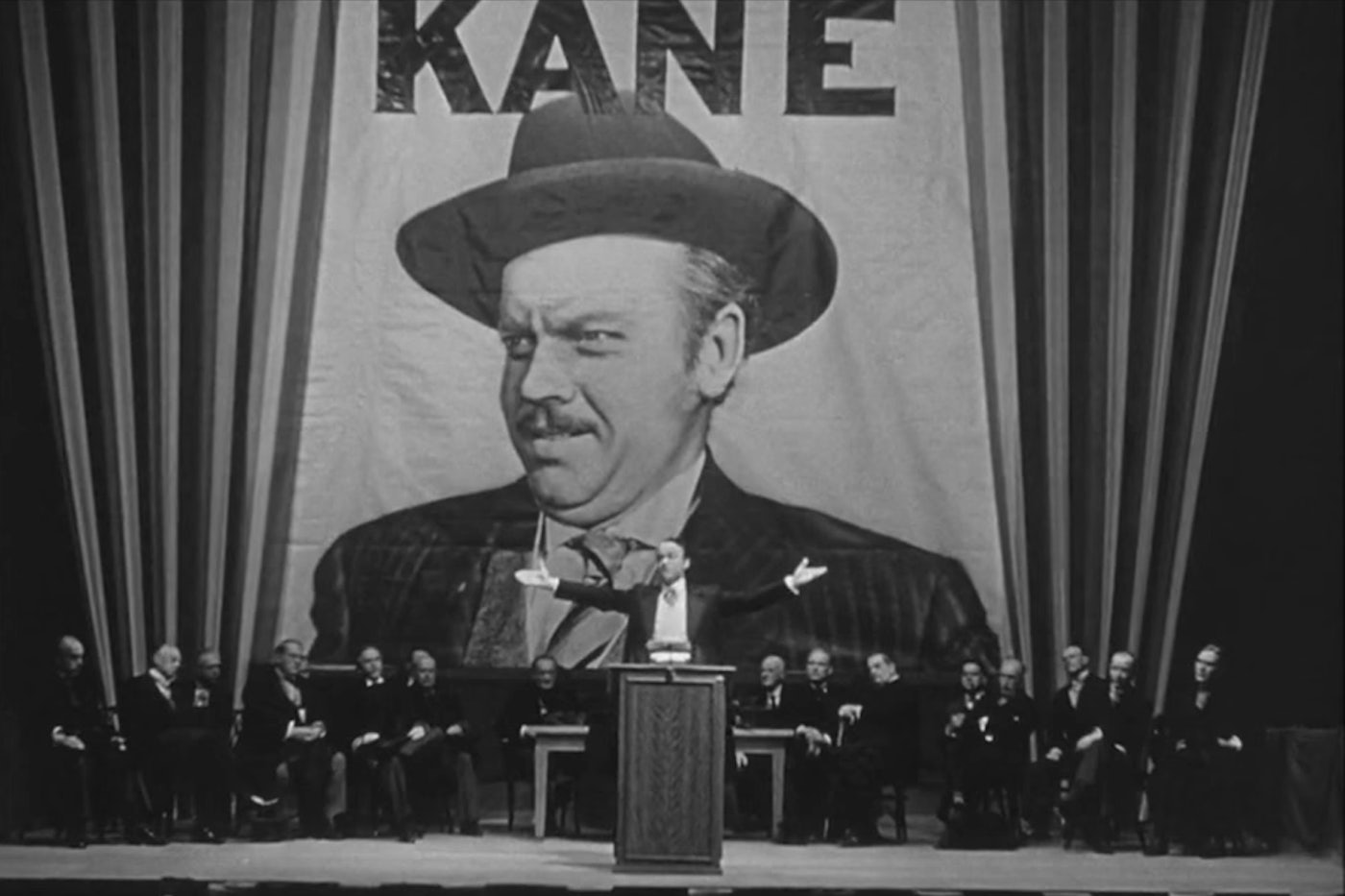
Welles, 25, as Kane, 53, in 1916

May 1, 1941: The film Citizen Kane premieres in New York, at the Palace Theatre at 1564 Broadway at 47th Street. Orson Welles, a few days short of his 26th birthday, and 2 1/2 years past his famous War of the Worlds national broadcast over CBS radio, is the film's star, its director, its producer, and co-writer of its screenplay along with Herman Mankiewicz. Bernard Herrmann wrote and conducted the music for it.

Welles plays Charles Foster Kane, a newspaper magnate who starts his career as a liberal crusader, but is corrupted, piece by piece, until he loses everything he cares about, except his fame. You might say that Kane spends the movie breaking bad.

Actually -- Spoiler Alert for an 81-year-old movie -- Kane begins the movie by dying, saying one word: "Rosebud." A newsreel gives the details of Kane's life, starting in Colorado in 1863, where he inherited a gold mine that makes him fabulously wealthy. He gets full title to it as he grows up, and buys a newspaper.

The man who acted as his legal guardian, and now manages his finances, doesn't like how Kane is using the newspaper, and tells him that he lost a million dollars last year (1893 -- about $31 million in today's money). Kane says, "At the rate I'm going, I'm going to have to close this paper down in about 60 years."
Welles, 25, as Kane, 30, in 1893,
delivering that classic line

He starts out with good intentions; a good friend, Jedediah Leland, played by Joseph Cotten; a good business manager for his paper, Mr. Bernstein, played by Everett Sloane; and a good wife, Emily, niece of a President, played by Ruth Warrick. It was Warrick's 1st film, but Cotten and Sloane had previously worked with Welles on radio with his Mercury Theatre of the Air.

But his desire to sell more newspapers, even after his New York Inquirer becomes the biggest-selling paper in the country, is insatiable. He uses his paper to start the Spanish-American War in 1898, which in turns helps him sell more papers than ever, and he doesn't seem to care about the cost.

Kane runs for Governor of New York in 1916, promising to crack down on the corrupt Tammany Hall political machine -- meaning the Democratic Party, meaning Kane is running as a Republican. In real life, Woodrow Wilson was re-elected President that year, but by a very slim margin, with no "coattails," and the Governor, a Republican named Charles S. Whitman, was re-elected. But Kane loses, because his affair with a showgirl is exposed. He never runs for office again.

He divorces Emily, and marries the showgirl, Susan Alexander, played by Dorothy Comingore. She ends up hating him as much as Emily did. He loses a big chunk of his fortune in the stock market crash of 1929. Soon, he's all alone in his castle on his estate in Florida, with all the expensive stuff he's collected over the years.
Welles, 25, as Kane, 70, in 1933

As Mr. Bernstein told the reporter investigating Kane's last word, "Mr. Kane was a man who lost everything he had. Perhaps 'Rosebud' was something he lost." He proves to have come closer than anybody else to getting it right: In the film's last scene, after the reporter has given up, workmen are seen tossing some things into a furnace. One is the sled he had as a child, with the name "ROSEBUD" on it. That sled represented the life had before he got rich and things got complicated.

*

Citizen Kane is regarded as one of the greatest movies ever made. The camera tricks and editing tricks that Welles and editor Robert Wise used were groundbreaking -- sometimes literally, as holes were cut in the soundstage floor to get some shots.

But it wasn't regarded as a great film at first. In fact, it tanked. Why? Because William Randolph Hearst, a real-life media baron, thought it hit too close to home. Kane used three names, was wealthy through his family's mining fortune, bought a struggling newspaper, turned it into a media empire, used it to egg the federal government on into starting the Spanish-American War, became an isolationist in the run-ups to World Wars I and II, built a castle full of his weird art collections and even had a zoo on the property, ended up deeply in debt, and ended his first marriage with an affair with an actress -- the joke, never proven, was that Hearst called a certain part of Marion Davies' anatomy "Rosebud."

There were, of course, significant differences. The Hearst family was already rich when he was born, he started across the country in San Francisco before moving east to New York (with the Journal), he actually won an election (3, in fact, for the U.S. House of Representatives, but never got closer to the Presidency than that), his castle was in California instead of Florida; and, of course, Hearst was still alive, if mortgaged up to his eyeballs in order to preserve his wealth.

And he used that wealth and influence to stop Citizen Kane. He told the theater chain he owned not to screen it. He told the newspapers and radio stations he owned to give it bad reviews. His wishes were carried out.

When the 1942 Academy Award nominations when out, Citizen Kane got 9 of them. But when the Awards were announced, it got only one "Oscar," to Welles and Mankiewicz, for Best Screenplay. Best Picture went to How Green Was My Valley. A dumb choice: The other nominees included Here Comes Mr. Jordan, Hold Back the Dawn, The Little Foxes, The Maltese Falcon, Sergeant York and Suspicion, so there were plenty of good choices, and Citizen Kane never had a chance.

For Best Actor, Welles was up against Cary Grant for Penny Serenade, Walter Huston for All That Money Can Buy, Robert Montgomery for Here Comes Mr. Jordan, and Gary Cooper, who won for playing Sergeant York. Also a tough category, and I can't blame the Academy for picking someone other than Welles.

Welles, directing a film for the 1st time, was also up against some heavyweights for Best Director: Alexander Hall for Here Comes Mr. Jordan, William Wyler for The Little Foxes, Howard Hawks for Sergeant York, and John Ford, who ended up winning, for How Green Was My Valley. Ford was worthy of several considerations for Best Director, but this was not one of them. Here, Welles got robbed, and if you think Hearst had nothing to do with influencing the Academy's vote, I've got bridges in both New York and San Francisco to sell you.

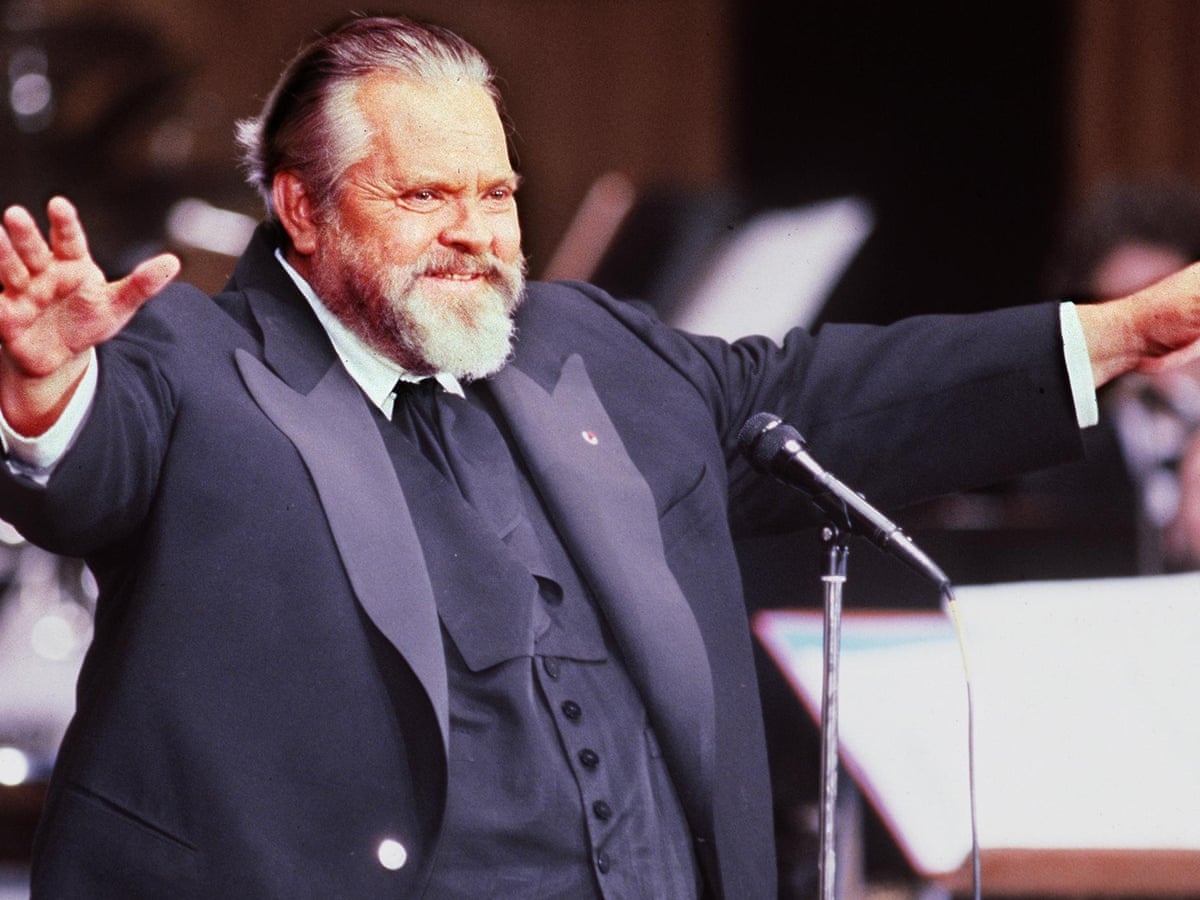
Hearst died in 1951. By that point, Welles was thoroughly discredited, and began putting on so much weight, he was heavier than he appeared to be when playing the older Kane. He kept acting, because he needed the money, but rarely directed again.
By 1974, when the name Hearst was more associated with William Randolph's troubled granddaughter Patty, Welles was better known for appearing on late-night talk shows, chatting about Hollywood with the hosts, performing magic tricks with them, and doing commercials for Paul Masson wine. However, he was now recognized as the genius behind Citizen Kane.

He died in 1985, age 70, by which point, for those people who knew the name William Randolph Hearst at all, they knew him as the fraud behind "yellow journalism" and the Spanish-America War, whose ego was so fragile he tried to destroy "the greatest movie ever made."

*

May 1, 1941 was a Thursday. It was also the day that General Mills introduced the cereal Cheerios.

It was the off-season for the NFL. The NHL season had ended the month before. The NBA hadn't been founded yet. But there were Major League Baseball games played on the day:

* The New York Yankees beat the St. Louis Browns, 14-5 at Sportsman's Park in St. Louis. Charlie "King Kong" Keller hit a home run in support of pitcher Ernie "Tiny" Bonham. Joe DiMaggio got a hit. The Yankees were struggling, in 4th place. Two weeks later, DiMaggio's 56-game hitting streak began, and the Yankees were on their way to running away with the Pennant.

* The Brooklyn Dodgers lost to the Cincinnati Reds, 2-1 at Ebbets Field. The defending World Champion Reds won in the 11th inning on a single by Eddie Joost. In spite of this loss, the Dodgers would dethrone them as National League Champions, before losing to the Yankees in the World Series.

* The New York Giants lost to the St. Louis Cardinals, 5-0 at the Polo Grounds. Lon Warneke, "the Arkansas Hummingbird," allowed 9 hits, but still pitched a shutout to defeat "King" Carl Hubbell.

* The Pittsburgh Pirates beat the Philadelphia Phillies, 15-2 at Shibe Park in Philadelphia.

* The Cleveland Indians beat the Philadelphia Athletics, 13-9 at League Park in Cleveland.

* The Boston Red Sox beat the Detroit Tigers, 15-9 at Briggs Stadium in Detroit. (It would be renamed Tiger Stadium in 1961.) 

* The Washington Senators beat the Chicago White Sox, 7-0 at Comiskey Park in Chicago. Dutch Leonard allowed 8 hits, but pitched a shutout.

* And a game at Braves Field in Boston was rained out, and rescheduled for June 8. The Chicago Cubs beat the Boston Braves, 5-1. 

Monday, April 18, 2022

April 19, 1903: The Kishinev Pogrom & the Changes It Wrought

April 19, 1903: The Kishinev Pogrom occurs, in what was then Kishniev, the capital of the Bessarabia Governate of the Russian Empire, now Chișinău, the capital and largest city of the Republic of Moldova.

The most popular newspaper in Kishinev was Bessarabetz (The Bassarabian), published in the Russian language by Pavel Krushevan. Krushevan was a proud anti-Semite, regularly publishing articles with headlines like "Death to the Jews!" and "Crusade against the Hated Race!"

When a Ukrainian boy, Mikhail Rybachenko, was found murdered in the town of Dubăsari, about 25 miles  north of Kishinev, and a girl who committed suicide by poisoning herself was declared dead in a Jewish hospital, Bessarabetz insinuated that both children had been murdered by the Jewish community for the purpose of using their blood in the preparation of matzo for the upcoming holiday of Passover. This lie was already known, as "the blood libel," the title indicating that most of the world knew it was a lie. Another newspaper, Свет (meaning, "Light") made similar insinuations.

In his paper, Krushevan called for a pogrom, which is defined as "a violent riot incited with the aim of massacring or expelling an ethnic or religious group, particularly Jews." He called for it on April 19, because it was a confluence of the Christian holiday of Easter and the Jewish holiday of Passover. Starting that day, and over the following two days, 49 Jews were killed, another 92 were badly injured, an indeterminate number of Jewish women were raped, and over 1,500 homes were damaged.

It backfired. It was instrumental in convincing tens of thousands of Russian Jews to leave for Western Europe, North America, or what was then Palestine in the Ottoman Empire. It became a rallying point for early Zionists, inspiring early self-defense leagues, leading to the Haganah and its successor, the Israeli Defense Forces.

American media mogul William Randolph Hearst "adopt[ed] Kishinev as little less than a crusade," according to Stanford University historian Steven Zipperstein. As part of this publicity, Hearst sent the Irish nationalist journalist Michael Davitt to Kishinev as "special commissioner to investigate the massacres of the Jews," becoming one of the first foreign journalists to report on the pogrom. Due to their involvement in the pogrom, two men were sentenced to 5 and 7 years' imprisonment, respectively, and a further 22 were sentenced to 1 or 2 years.

In 1907, Pavel Krushevan was elected to Russia's parliament, the State Duma. He died in 1909. He did not live to see the fall of the Russian Empire in 1917, the fall of the Ottoman Empire in 1918, or the establishment of a Jewish state of Israel in 1948.

*

April 19, 1903 was a Sunday. There was only one major professional sport at the time, baseball. And only 2 games were played that day, both in the National League, as Sunday baseball was still illegal in many States:

* The Pittsburgh Pirates beat the Cincinnati Reds, 6-4 at the Palace of the Fans in Cincinnati. Honus Wagner went 1-for-4.

* And the St. Louis Cardinals led the Chicago Cubs, 3-0 after 5 innings at Robison Field in St. Louis, when the game was called due to rain.

Thursday, April 14, 2022

April 14, 1906: "A Trip Down Market Street" Is Filmed -- Just In Time

April 14, 1906: A Trip Down Market Street is filmed in downtown San Francisco. It was just in time.

The film was produced by the Miles Brothers -- Harry, Herbert, Joseph and Earl -- who had become known as early producers of boxing films. Harry had mounted a film camera in front of one of San Francisco's already-famous cable cars, which had been running since 1873.

The film shows details of daily life in a major early 20th Century American city, including the transportation, fashions and architecture of the era. The film begins at 8th Street and continues eastward to the cable car turntable, at the Embarcadero, in front of the Ferry Building, built in 1898.
The Ferry Building, with the Bay Bridge in the background

The film records a total of 30 cable cars, 4 horsecars, and 4 streetcars. At first, there also appear to be many automobiles. But a careful tracking shows that almost all of the autos circle the camera many times; one of them does so 10 times. This traffic was apparently staged by the producer to give Market Street the appearance of a prosperous modern boulevard, with many automobiles.

The film was originally thought to have been made in September or October 1905, based on the angles of shadows showing the Sun's position. Film historian David Kiehn noticed that there were puddles of water seen in the street, and after he examined contemporary newspapers and weather reports, he realized that the early estimates were wrong: No rain had fallen in those months.

Kiehn located the February 1906 registration record for a car license plate recorded in the film, and he found that the Sun's angle would be the same in March as it had been in September. In 2009, he suggested that it was filmed in late March or early April 1906, a period with many rainy days reported. He also found a San Francisco newspaper article published on March 29, 1906, describing the Miles Brothers' intent to film aboard a cable car. Other details narrowed down a date: April 14, 1906.

On April 17, Harry and Joseph Miles boarded a train for New York, taking the film with them. On April 18, San Francisco was struck by an earthquake, which, by itself, caused a considerable amount of damage. But it also ruptured the city's water lines, and when fires broke out, there was no way to stop them, and the fires caused more damage than the quake.

While on the train, Harry and Joseph were told by the conductor, who had received word by telegraph at one of the stops. The brothers sent the films to New York by mail, while they boarded another train headed back to San Francisco. The Turk Street house of brother Earl Miles survived the earthquake and the subsequent fire, but their studio did not.

With surviving cameras, the brothers were able to film the devastation, and when copies reached the East, the governmental capital of Washington and the cultural capital of New York, relief began to come in at a rate far beyond what mere newspaper advertising could accomplish -- even with San Francisco's own William Randolph Hearst blasting reports through his New York Journal.

Harry Miles was plagued by epilepsy, and killed himself in 1908, by jumping from his apartment window on the 7th floor. I can find little information on the remaining Miles Brothers after that. Herbert acted in some short films, the last of these in 1915.

*

April 14, 1906 was a Saturday. This was also the day that President Theodore Roosevelt gave a speech about investigative journalists, giving them a name that would stick: "The Man With the Muck-Rake." I have a separate entry for this event. And Faisal, King of Saudi Arabia from 1964 to 1975, was born on this day.

These baseball games were played:

* The New York Highlanders beat the Boston Americans, 2-1 at Hilltop Park in Upper Manhattan. This early game in the long rivalry between the teams that will become known, respectively, as the New York Yankees in 1913 and the Boston Red Sox in 1908 is forgotten now, but is worth remembering. The game went 12 innings, with the eventually-disgraced Hal Chase singling home the winning run. Jack Chesbro outpitched Cy Young, and both went the distance. Chesbro had doubled home the proto-Yankees' earlier run, in the 2nd inning.

* The New York Giants beat the Philadelphia Phillies, 2-1 at National League Park (later Baker Bowl) in Philadelphia. "Turkey" Mike Donlin singled home the winning run in the top of the 11th inning. English soccer fans, take note: The losing pitcher for the Phillies, despite allowing just 1 run over the 1st 10 innings, was named Harry Kane.

* The Boston Beaneaters beat the Brooklyn Superbas, 1-0 at Washington Park in Brooklyn. Vivan "Vive" Lindaman pitched a 4-hit shutout. Dave Brain singled home the winning run in the top of the 9th inning. In 1911, the Brooklyn team became the Dodgers. The following year, the Boston team became the Braves.

* The Philadelphia Athletics beat the Washington Senators, 4-3 at American League Park in Washington.

* The Cincinnati Reds beat the Chicago Cubs, 1-0 at The Palace of the Fans in Cincinnati. Cy Seymour hit a home run in the bottom of the 7th. Jake Weimer pitched a 7-hit shutout, beating Mordecai "Three-Finger" Brown. It was a rare loss for the Cubs, who set a major league record, since tied but not broken, by winning 116 games, en route to winning the National League Pennant -- but losing the World Series to the crosstown Chicago White Sox.

* Not scheduled: The Chicago White Sox, the Cleveland Naps (Indians/Guardians), the Detroit Tigers, the St. Louis Browns, the Pittsburgh Pirates and the St. Louis Cardinals.

And in English soccer, Woolwich Arsenal defeated Manchester-area team Bury, 4-0 at the Manor Ground in Plumstead, South-East London.

Thursday, March 31, 2022

March 31, 1933: "Gabriel Over the White House" Premieres

March 31, 1933: The film Gabriel Over the White House premieres, directed by Gregory LaCava, and written by Carey Wilson, based upon the recently-published novel Rinehard: A Melodrama of the Nineteen-Thirties by Thomas F. Tweed. (He was a British author and hero of World War I, and no relation to the legendary American political "boss" William M. Tweed.)

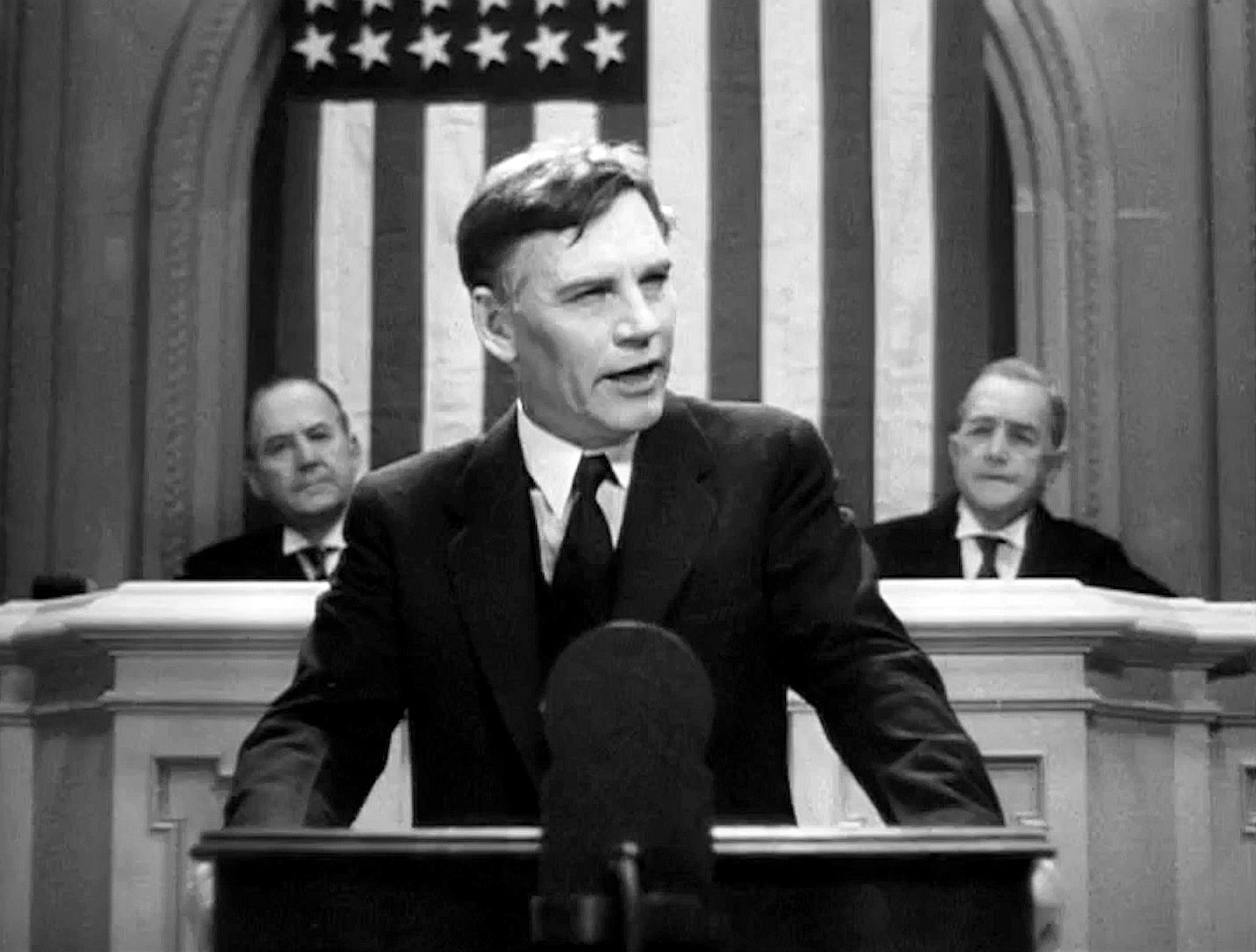
Walter Huston plays a corrupt and philandering President, Judd Hammond, who nearly dies in a car crash, and, believing himself to have been visited by the Archangel Gabriel, changes his ways, using broad executive power to solve the nation's problems, before dying of a heart attack.

The film was backed by media mogul William Randolph Hearst, whose own Presidential ambitions were thwarted about 30 years earlier. He thought, at the depth of the Great Depression, that America needed a dictator to get out of it.

President Franklin D. Roosevelt, in office for merely 27 days, is said to have seen and liked the film. He didn't go as far as Hammond, but he did take steps few Presidents before him would have. Among these was, on this day, the founding of the Civilian Conservation Corps.

The CCC, one of the "alphabet soup" programs of FDR's "New Deal," was not only a major blow against unemployment, it was also one of the country's earliest steps forward in environmental work. It ran until 1942, when World War II made the CCC's staffing impossible, and no longer necessary from a jobs standpoint.

*

March 31, 1933 was a Wednesday. Country singer Anita Carter was born. She was a member of the singing Carter Family. Through her sister June, she was a sister-in-law of Johnny Cash. And she was a distant cousin of later President Jimmy Carter.

Baseball was in Spring Training. Football was out of season. The NBA hadn't been founded yet. And the Stanley Cup Playoffs were underway, but no games were scheduled. So there were no scores on this historic day.

Wednesday, March 30, 2022

March 31, 1914: "The Perils of Pauline" Premieres

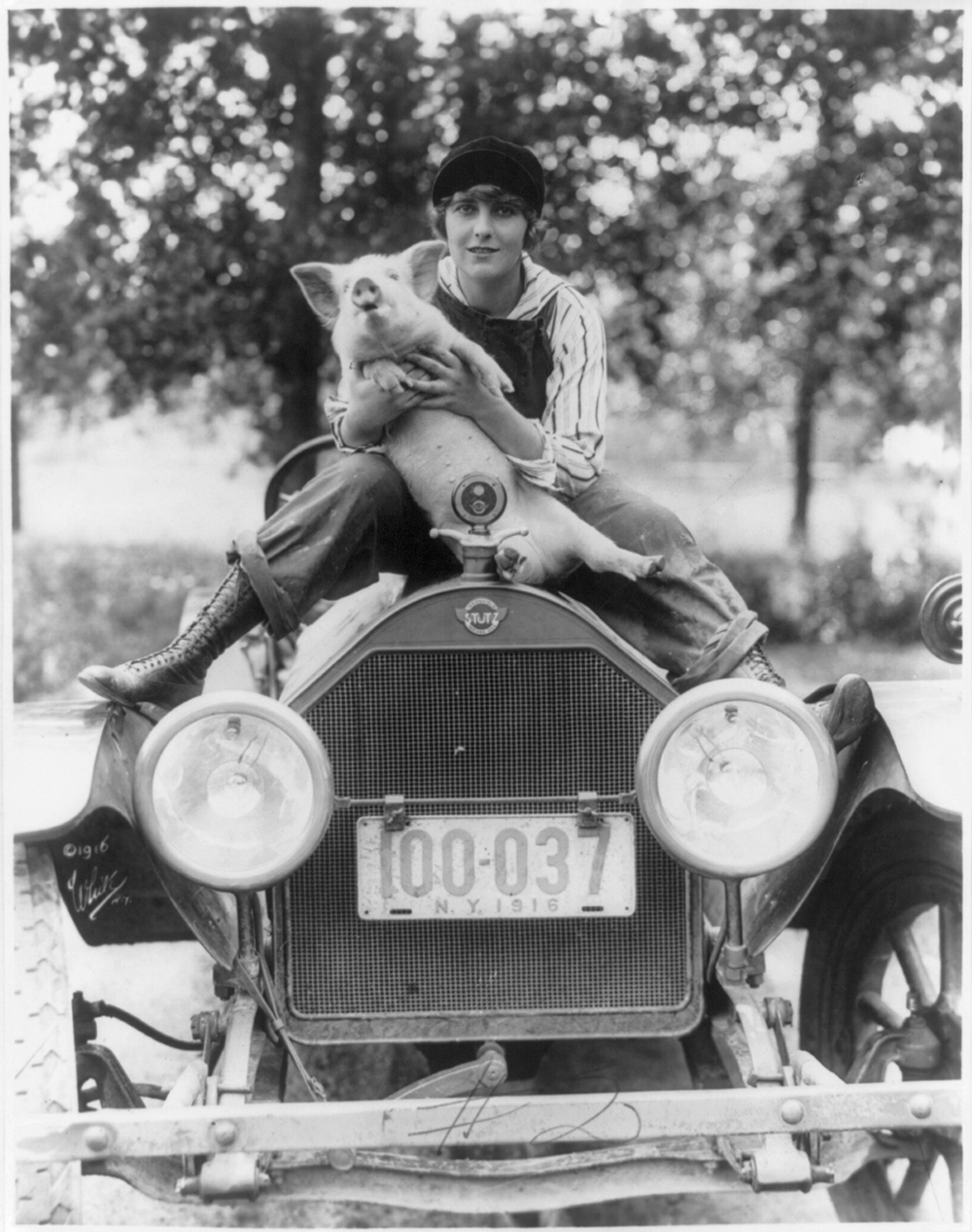
Pearl White, 1916. No, I don't know why
she's holding a pig on a car's hood.

March 31, 1914: The Perils of Pauline premieres, one of the earliest film serials, starring Pearl White, one of the top film stars of the era.

It set the tone for serials to come: Every 2 weeks (eventually serials would be cut to every week), a hero would be put into a seemingly impossible situation, and, there, the installment would end, and you would have to come back and see the next installment to see how he -- or, in this case, she -- would get out of it.

White played Pauline, an ambitious young heiress with an independent nature and a desire for adventure. Her wealthy guardian had left her inheritance in the care of his secretary, Raymond Owen, who was legally obligated to release it as soon as she was married. Of course, if she should die before getting married, then the money would go to Owen. So he continually sets her up for calamity. There were 20 chapters, averaging 20 1/2 minutes apiece.

The complete serial, 6 hours and 50 minutes, has been lost: The only known version is a condensed 9-chapter version, running about 3 hours and 34 minutes, that was released for the European market.

Pearl Fay White was born on March 4, 1889 in Green Ridge, Missouri, and grew up in Springfield, Missouri. An accomplished bareback rider in a circus by the time she was 13, she did most of her own stunts in her films, becoming known as the Queen of the Serials. She married and divorced twice, and had no children.

She retired from films in 1924, moved to Paris, owned a nightclub there and a hotel-casino in Biarritz in southwestern France, and also owned racehorses. But injuries from her stunts caught up with her, and she drank to ease the pain, and died of liver failure in 1938, only 49 years old.

The alliterative title of her best-known serial, and the serial's style, was quickly copied by the even more adventurous Helen Holmes in The Hazards of Helen, which ran in a massive 119 chapters, from November 7, 1914 to February 24, 1917. Holmes would be the 1st film heroine put in danger by being tied to a railroad track.

But because White's films were more popular, people mistakenly thought she was the "damsel in distress" who had to be saved by a dashing hero as a steam locomotive came ever closer. She didn't, but she did inspire the term "cliffhanger ending," by actually having one where she was hanging off a cliff.

In 1921, William S. Hart starred in O'Malley of the Mounted, as an officer of the Royal Canadian Mounted Police. This character would be parodied as Dudley Do-Right in the Rocky and Bullwinkle cartoons of the early 1960s, with the villain, the black-suited, top-hatted, mustachoied Snidely Whiplash often tying a young woman to railroad tracks. But Whiplash was a stereotype that never appeared in The Perils of Pauline.

Another homage to Pauline was the 1969 Hanna-Barbera TV cartoon The Perils of Penelope Pitstop, a companion cartoon to The Wacky Races, itself a parody of the 1965 film The Great Race, which was set in 1908. Janet Waldo voiced heiress Penelope as a Southern belle (often yelling "Help!" -- or, more accurately, "Hay-elp!"), whose inheritance was placed with lawyer Sylvester Sneekly, voiced by Paul Lynde.

Wanting to get his hands on that loot without restrictions, since Penelope had no heirs, Sylvester adopted the villainous identity of the Hooded Claw, and set elaborate traps for her. Sometimes, he would break the fourth wall, and banter with the narrator. That was the Los Angeles disc jockey Gary Owens, better known as the announcer on Rowan & Martin's Laugh-In, and voice of the cartoon superheroes Space Ghost on the show of the same title, and later the Blue Falcon on Dynomutt, Dog Wonder.

Sometimes, Penelope got out of the Claw's traps on her own. Sometimes, she needed help from a bunch of dwarf gangsters, the Ant Hill Mob, who had been villains on Wacky Races but had turned heroes for this series. Sometimes, in trying to rescue her, the Mob, complete with their talking Model T, Chuggaboom, would need help themselves; and Penelope, having gotten out of her own jam, would get them out of theirs. She turned out to be pretty ingenious, always foiling the Claw, who would yell, "Blast!" (with his henchmen mumbling, "Right."), but she never seemed to figure out that Sylvester was the Claw.

*

March 31, 1914 was a Tuesday. Mexican poet Octavio Paz, a winner of the Nobel Prize for Literature, was born on this day.

Baseball was in Spring Training. Football was out of season. Professional basketball barely existed. And the hockey season had ended 12 days earlier, with the NHA Champion Toronto Blue shirts beating the PCHA Champion Victoria Aristocrats for the Stanley Cup. So there were no scores on this historic day.

Monday, February 14, 2022

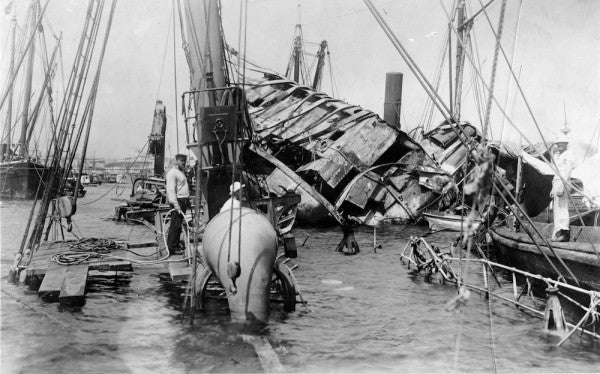
February 15, 1898: The Sinking of the USS Maine

The USS Maine, before

February 15, 1898: The battleship USS Maine sinks in Havana Harbor, Cuba, killing 261 sailors.

The Maine, launched on November 18, 1889, was there to protect U.S. interests in Cuba, then controlled by Spain. In the 1890s, the people of Cuba rebelled against their colonial overlords. Many Americans wanted to go to war to free Cuba. Most of those, however, were business lords who wanted to exploit Cuba's natural resources, without Spain keeping them out. They had tried to make deals with Spain, and failed. So they needed to get Spain out of Cuba. All they needed was an excuse.

On February 15, 1898, they got their excuse. An official U.S. Navy investigation ruled that an external mine caused the explosion. Witnesses among the American survivors denied this, and a much more likely cause for the explosion was a coal fire in the boiler.
The USS Maine, after

Amidst cries of "Remember the Maine!" American newspapers did whatever they could to outdo each other for headlines. Joseph Pulitzer of The New York World had practically invented what became known as "yellow journalism." But he found he could not top the rich kid from San Francisco, William Randolph Hearst. ("Kid"? Hearst was 34 years old. Pulitzer was 50.)

Hearst had sent artist Frederic Remington to Cuba to draw pictures of Spanish atrocities that Hearst could use for his national chain of papers, starting with the San Francisco Examiner and now including the New York Journal. Remington sent a telegram to New York, saying there was nothing he could find that would lead to war. Hearst wired back, "Please remain. You furnish the pictures and I'll furnish the war."

And he did: On April 25, the U.S. Congress declared war on Spain. President William McKinley had wanted to avoid it, but he no longer could.

This was America's 1st war with a European power since facing Britain in the War of 1812, which ended in 1815, 83 years earlier. And it was a mismatch: Spain was a nation of a crumbling bureaucracy, and the war only lasted until August 13, 1898. There were 2 signature battles, 1 naval, 1 land. The naval battle was in Manila Bay, helping America to take the Philippines on May 1, led by Commodore George Dewey. The other was San Juan Hill, on July 1, led by Colonel Theodore Roosevelt.

"The Splendid Little War" -- in which 385 Americans died of combat wounds, and another 2,061 died from disease -- ended when Spain surrendered on August 13, 6 months after the sinking of the Maine. America took Cuba, Puerto Rico and the Philippines. Each of these would cause problems in the years to come.

The last surviving veteran of the Spanish-American War was Jones Morgan, a man of color, who lived until August 29, 1993, at the age of 110. 

A new battleship USS Maine was launched on July 27, 1901, and was part of the U.S. fleet during World War I. But it didn't last much longer than its predecessor did: It was decommissioned on May 15, 1920, and scrapped 2 years later.

*

February 15, 1898 was a Tuesday. It was the off-season for baseball, there was no pro hockey, pro football was in its infancy, and basketball had barely been invented. So there were no scores on that historic day.

December 31, 1999 & January 1, 2000: The Millennium

December 31, 1999:  The Millennium arrives. The people of planet Earth survived. At a terrible cost. But we hadn't destroyed ourselves. ...