
William B. Williams
December 11, 1992: Perhaps it was fitting that the end of the era of "Big Band" music came while George H.W. Bush, the last President who served in World War II, was a "lame duck," and Bill Clinton, the 1st President born after The War, and the 1st President to grow up in the Rock and Roll Era, was President-elect.
Radio station WNEW debuted February 13, 1934, as "New York's newest radio station," at 1280 on the AM dial, and with new call letters representing its city of license: "NEWark, NEW Jersey."
In 1935, WNEW moved into a new studio in New York, at 501 Madison Avenue at 53rd Street. That year, pioneered the concept of a disc jockey when staff announcer Martin Block needed to fill time between news bulletins during his coverage of the trial of Bruno Hauptmann, accused (and eventually convicted) of kidnapping Charles Lindbergh Jr., a.k.a. "The Lindbergh Baby." Block did not have access to a live orchestra to play music during the breaks, as most network stations did, so he played records instead.
Soon afterward, he piloted a 15-minute experimental show called the Make Believe Ballroom, during which he played records from popular bands and singers, posed as a live performance in an imaginary ballroom. During Block's tenure as host of Make Believe Ballroom, the show attracted 25 percent of the listening audience in New York City.
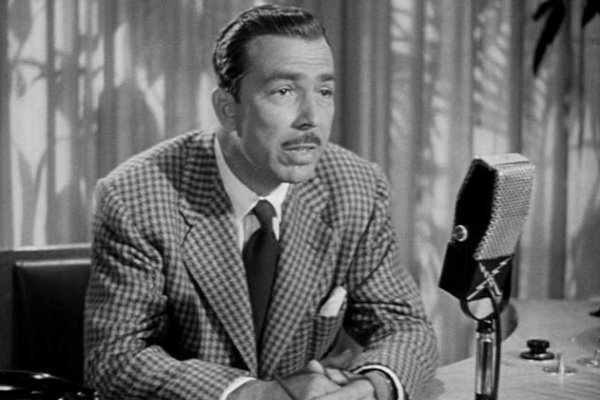
Thus did WNEW -- its call letters eventually redefined, with retroactive irony, as "the NEWest thing in radio" -- become known for its popular adult music selection, as well as its staff of radio personalities including Block, Dee Finch, Gene Klavan, Al "Jazzbo" Collins, Ted Brown, William B. Williams, and, from 1948 to 1952, future TV game show host Gene Rayburn. From 1935 to 1959, its general manager was a woman, a rarity for that era: Bernice Judis.
In addition to its music and entertainment programming, WNEW featured an award-winning news staff and became "The Voice of New York Sports," for broadcasting games of the NFL's New York Giants, the NBA's New York Knicks, and the NHL's New York Rangers.
As an independent radio station, WNEW lacked the funds larger networks like NBC, CBS and Mutual Broadcasting System used to produce daily programming, such as comedy shows, soap operas, game shows and dramatic programs. However, Judis was not discouraged, and welcomed the opportunity to develop her own schedule of innovative programming that included creating the first all-night radio show, dubbed Stan Shaw's Milkman's Matinee, and cultivating a line-up of popular morning radio show personalities.
On November 12, 1941, WNEW moved to 1130 on the AM dial, where it remained. In 1957, the DuMont Broadcasting Company, having given up the ghost on television, tried to expand its radio base, and bought WNEW, making it a sister station of their TV station, WADB (named for founder Allen B. DuMont) on Channel 5. In 1958, DuMont was bought out by Metromedia, and Channel 5's call letters were changed to reflect the flagship radio station, WNEW.
The rise of rock and roll in the mid-1950s led some stations to change their formats, including New York's WINS, WMCA and WABC. Not WNEW: They continued to play popular adult standards, or softer hits from the current charts. People called them "Middle of the Road," or "MOR for short -- and while young rock and roll fans considered this an insult, grownups and the WNEW staff and executives did not. Martin Block kept playing it until his death in 1967.
By 1972, some radio stations, like WCBS-FM, were treating early rock and roll, from the mid-1950s to the early 1960s, essentially the pre-Beatles era, as "oldies." But WNEW kept on playing songs from the Big Band Era, the late 1920s (when it replaced "Tin Pan Alley") to the late 1950s (when rock and roll fully took over).
I remember a TV commercial with a woman dressed like a showgirl, complete with top hat and cane, dancing around a stage, with names of old-time bandleaders hung on a stage behind her. Nearly all of them were already dead. The refrain of her song was "Where the music is king!" (As if it wasn't on other stations?")
One of my grandmothers, who grew up on that kind of music, kept her radio on in her house, always tuned to 1130, no matter what, until her death. (The other grandmother was younger, but she liked music even older than that, the kind that Guy Lombardo and Mitch Miller played.)
But, as that story suggests, the core audience for WNEW was dying of old age. Symbolizing this, William B. Williams, who was to Big Band what "Cousin" Brucie Morrow was to early rock and roll, and appeared in some of the station's commercials, died in 1986. They began a "Sundays with Sinatra" show, trying to get the people who may have listened to both early rock and Frank Sinatra's peak music in the 1950s, hoping to peel off some people now in their 50s and 60s.
But Williams wasn't the only departure in 1986: Fox Broadcasting Company bought WNEW-Channel 5, converting it into a Fox Network station and switching the call letters to WNYW. In 1988, Metromedia sold WNEW 1130 to Westwood One. They convinced Larry King to do an overnight show, since he grew up on the Big Band music. This didn't work, so they went back to their 1960s format of playing softer songs current to that era. That alienated both those artists' fans and the station's aging fans, and they backed off from it in 1991.
Finally, on August 15, 1992, Westwood One sold the station to Michael Bloomberg's company, Bloomberg L.P. As a fan of that kind of music, but more a fan of business-themed programming on both radio and television, Bloomberg gave them a chance to say goodbye. On December 11, 1992, at 8:15 PM, with several former WNEW personalities by his side, Mark Simone played the last song: Sinatra's version of the World War II song "We'll Meet Again."
The station became WBBR, and remains at 1130 AM, broadcasting business news and business-themed talk shows.
A few Big Band Era performers outlived the station. Sinatra lived until 1998. The last of the old Big Band leaders, Artie Shaw, lived until 2004, having lived long enough to sit for an interview with Ken Burns for his 2001 documentary miniseries Jazz.
*
December 11, 1992 was a Friday. This was also the day the film version of Aaron Sorkin's play A Few Good Men premiered. I have a separate entry for that event.
Baseball was out of season. Football was in midweek. There were 8 games played in the NBA:
* The Seattle SuperSonics beat the Boston Celtics, 100-90 at the Boston Garden.
* The Los Angeles Clippers beat the Philadelphia 76ers, 125-110 at The Spectrum in Philadelphia. Jeff Hornacek led all scorers on the night with 36 in defeat for the Sixers.
* The Atlanta Hawks beat the Denver Nuggets, 112-107 in overtime at The Omni in Atlanta. Dominique Wilkins scored 33 points.
* The Phoenix Suns beat the Orlando Magic, 108-107 at the Orlando Arena.
* The Detroit Pistons beat the Cleveland Cavaliers, 107-103 at The Palace in the Detroit suburb of Auburn Hills, Michigan.
* The Houston Rockets beat the Chicago Bulls, 110-96 at the Chicago Stadium.
* The Los Angeles Lakers beat the Washington Bullets, 118-93 at The Forum outside Los Angeles in Inglewood, California.
* And the Indiana Pacers beat the Portland Trail Blazers, 134-124 in double overtime at the Veterans Memorial Coliseum in Portland. Detlef Schrempf scored 32 for the Pacers.
And there were 6 games in the NHL:
* The New York Rangers beat the Tampa Bay Lightning, 5-4 at the ThunderDome (now Tropicana Field) in St. Petersburg, Florida.
* The New Jersey Devils beat the Pittsburgh Penguins, 2-1 at the Brendan Byrne Arena at the Meadowlands.
* The Washington Capitals beat the Winnipeg Jets, 8-6 at the Capital Centre in the Washington suburb of Landover, Maryland. Teemu Selänne scored a hat trick in defeat for the Jets.
* The Calgary Flames beat the Toronto Maple Leafs, 6-3 at Maple Leaf Gardens in Toronto.
* The Buffalo Sabres beat the Hartford Whalers, 9-3 at the Buffalo Memorial Auditorium.
* And the Detroit Red Wings beat the Philadelphia Flyers, 4-2 at the Joe Louis Arena in Detroit.


No comments:
Post a Comment