
August 5, 1981: President Ronald Reagan fires the air-traffic controllers. After 50 years, the right wing began to get its revenge on the working man. And woman.
The Professional Air Traffic Controllers Organization (PATCO) had gone on strike 2 days earlier. The union's demand was for each employee to have a $10,000 annual wage increase, a 32-hour workweek (a 4-day week and an 8-hour day, combined), and increased benefits.
But, as employees of the Federal Aviation Administration (FAA), they were employees of the federal government. Reagan, citing the law that prohibited federal government employees from striking, ordered them to return to work before 11:00 AM Eastern Time on August 5, or they would be fired.
Of the 16,395 Americans who guided airplane takeoffs and landings, 4,199 stayed on the job. The FAA responded by using a central control station to send clearances to the nation's airports, which operated at 50 percent capacity.
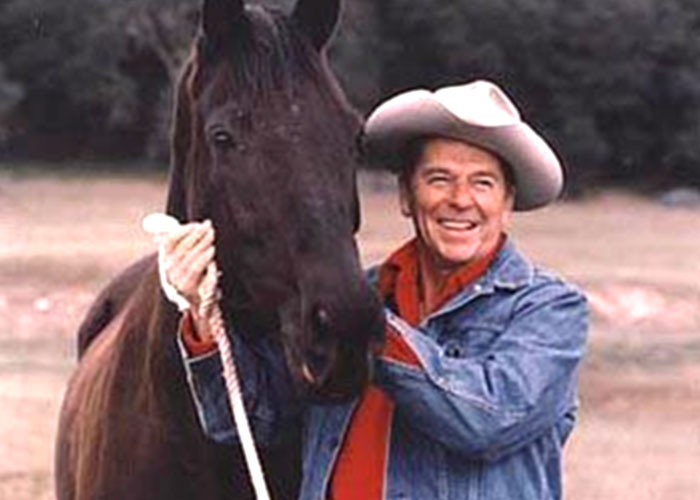
Less than 900 of the controllers obeyed Reagan's order and returned to work. And so, he fired the rest. It was a message from the old actor, who had played a few cowboys, to organized labor: You've had things your way since the New Deal of Franklin Roosevelt, and, well, there's a new sheriff in town, and this town ain't big enough for the both of us.
American organized labor has never recovered from the Reagan Years. Unions no longer seemed strong enough, or brave enough, to protect its workers from being laid off, or getting their hours or benefits cut. Meanwhile, thanks to the tax cut that Reagan signed into law 8 days later, the richest Americans got richer than ever before.
Shortly after the strike, Johnny Carson brought Betty White onto The Tonight Show, and they did a sketch where they played Tarzan and Jane. Betty said, "Tarzan, you're late!" And Johnny said, "Not Tarzan fault! Vine controllers strike!"
Just 5 months later, on January 13, 1982, Air Florida Flight 90, at the beginning of a flight from Washington National Airport to Tampa, crashes into the 14th Street Bridge, over an icy Potomac River. There were 78 people killed.
It was in a snowstorm, in the middle of one of the Northeast's worst cold snaps in recent memory, and the plane was not sufficiently de-iced. So it was due to pilot error. That Reagan had fired the air-traffic controllers, and that they had been replaced by less-experienced people, had nothing to do with it.
Nevertheless, Reagan had fired the air-traffic controllers. And National Airport was the airport closest to the White House. Did the public turn on Reagan for this?
No. Many people turned on him because his stupid tax cut had made the national economy significantly worse. But it was understood that his firing of the air-traffic controllers had nothing to do with the Air Florida crash.
Still, it was in very bad taste for a Republican-controlled Congress, in 1998, to rename the facility Ronald Reagan Washington National Airport. But when have Congressional Republicans ever been accused of doing something in good taste?
Historian Henry Graff once compared the luck that Reagan had to that of his predecessor, Jimmy Carter: He said of the firing of the air-traffic controllers, "If Carter had done it, there would have been a crash the next week."
In the 2020s, with a labor-friendly President in Joe Biden, the tide is turning. The conservatives only call it "class warfare" when the liberals fight back.
UPDATE: But when Donald Trump got back into office after the 2024 election, and he let Elon Musk's falsely-named Department of Government Efficiency (DOGE) run wild, air-traffic controllers were among the first jobs it cut back on. This time, there were plane crashes that could legitimately be blamed on it.
*
August 5, 1981 was a Wednesday. Baseball All-Star Carl Crawford was born on this day.
The only sport in season at the time was baseball, and the Major League Baseball players were, like the air-traffic controllers, on strike. So there were no scores on this historic day. But neither Reagan nor Commissioner Bowie Kuhn had the power to fire the players. To the contrary: Reagan asked his Secretary of Labor, Raymond J. Donovan, to help settle the strike. It resulted in a minor victory for the team owners, but one that the players could live with. And so the baseball strike had been settled by this point, with the games resuming on August 9,
Reagan did not ask Donovan to intervene in the PATCO strike.


No comments:
Post a Comment